the Creative Commons Attribution 4.0 License.
the Creative Commons Attribution 4.0 License.
 | 07 Sep 2026
Invited perspectives: Towards usable compound event research

Emanuele Bevacqua
Mariana Madruga de Brito
Wiebke S. Jäger
Pauline Rivoire
Cassandra D. W. Rogers
Fabiola Banfi
Fulden Batibeniz
James Carruthers
Carlo De Michele
Silvia De Angeli
Cristina Deidda
Marleen C. de Ruiter
Andreas H. Fink
Henrique M. D. Goulart
Katharina Küpfer
Patrick Ludwig
Douglas Maraun
Gabriele Messori
Shruti Nath
Fiachra O'Loughlin
Joaquim G. Pinto
Benjamin Poschlod
Alexandre M. Ramos
Colin Raymond
Andreia F. S. Ribeiro
Deepti Singh
Laura Suarez Gutierrez
Philip J. Ward
Christopher J. White
Related authors
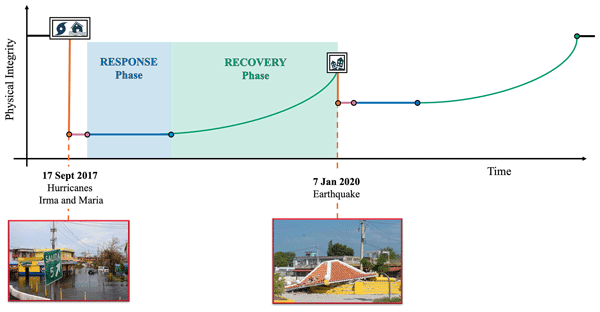
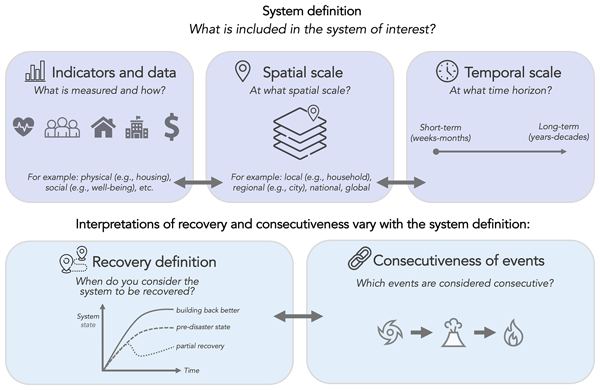
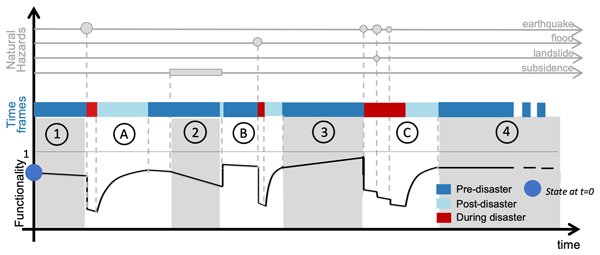
We explored how disasters that occur before recovery from earlier events is complete can complicate recovery, using examples from science and the real world across different societal domains. We then reflect on why recovery under repeated disasters is more complex than simply returning to normal, and how the way we define recovery and the system we study shapes our understanding. These insights can help us better understand, study, and manage recovery from disasters.


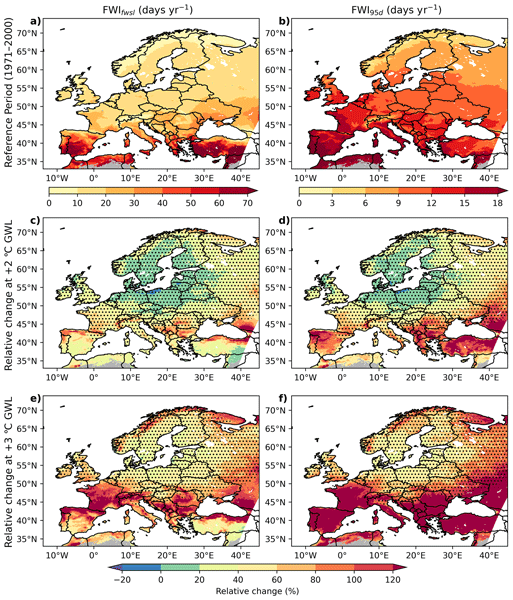
Europe is warming faster than the global average, raising concerns about future wildfire risks. Using regional climate models, we find that extreme fire weather is projected to become more severe, more frequent, and more widespread across the continent, especially if global warming reaches 3 °C. The projected increase is mainly linked to a drier atmosphere. Our findings highlight the need to limit warming and strengthen adaptation practices to protect vulnerable ecosystems and communities.

Climate extremes threaten society and ecosystems, making impact understanding critical. Wikimpacts 1.0 provides an automated pipeline processing Wikipedia texts with underexploited information on climate impacts, yielding comprehensive socio-economic impact data for 2726 climate events from 1034–2024. It offers broader storm-related impacts and finer spatial resolution than established databases, showcasing natural language processing's potential to advance climate impact data.
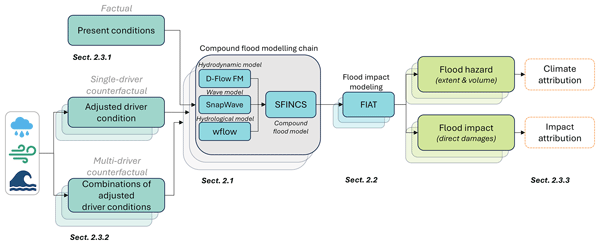
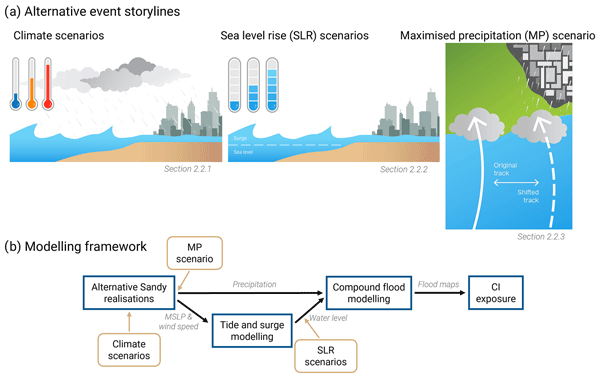
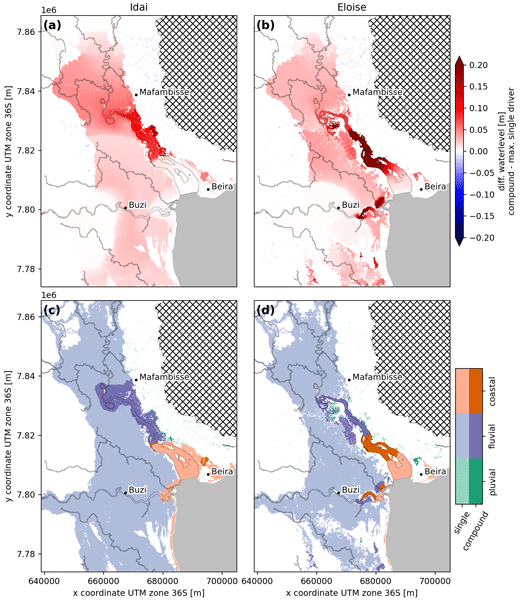
This study highlights the need to disentangle climate change effects on flood drivers using storyline attribution. Whether information is presented as change in one or multiple drivers, or as change in hazard or impact, determines the attribution statement. For compound flooding from tropical cyclone Idai, that hit Mozambique in 2019, we attribute 1–19 % of the flood hazard and 8–35 % of the damage to climate change. The attribution framework can be applied to other events worldwide.

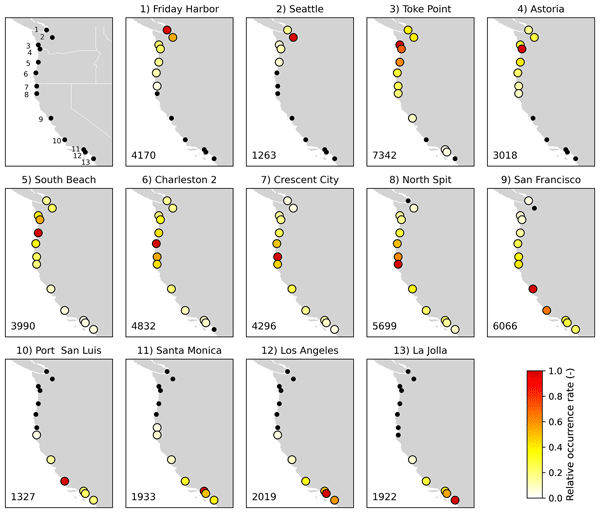
Restoring wetlands mitigates climate change, yet fears persist that they spread mosquito-borne diseases. We mapped environmental data across Indonesia to test this. Surprisingly, we found no significant link between high conservation value and disease risk. This proves that protecting nature does not necessarily endanger public health. Our results identify safe areas for conservation, demonstrating that we can safeguard both ecosystems and human communities simultaneously.
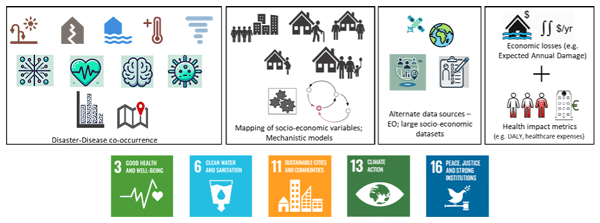
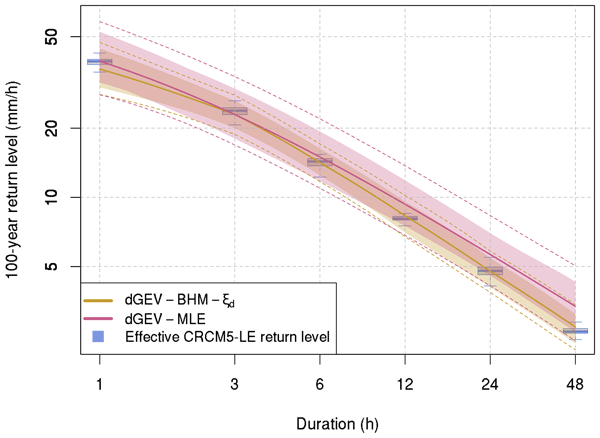
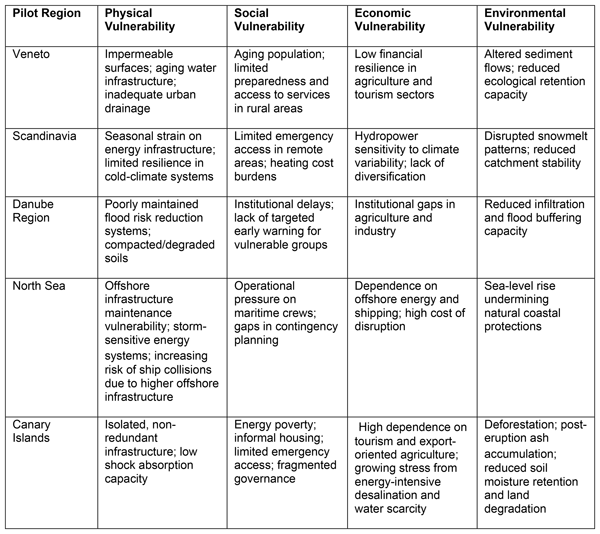

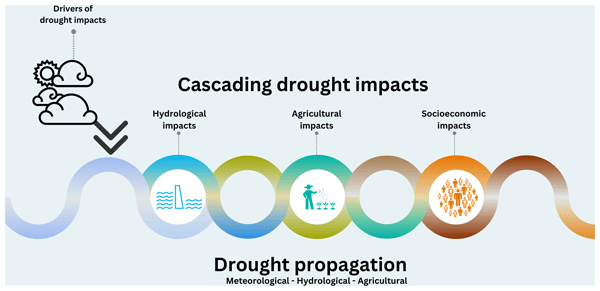
Drought affects not only water availability but also agriculture, the economy, and communities. This study explores how public policies help reduce these impacts in Ceará, Northeast Brazil. Using qualitative drought monitoring data, interviews, and policy analysis, we found that policies supporting local economies help lessen drought effects. However, most reported impacts are still related to water shortages, showing the need for broader strategies beyond water supply investment.



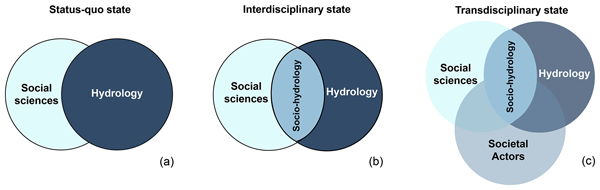
socialmeans in socio-hydrology, and monodisciplinary studies prevail. We expect to encourage socio-hydrologists to investigate different disasters using a more integrative approach that combines natural and social sciences tools by involving stakeholders and broadening the use of mixed methods.