
Articles | Volume 24, issue 8
https://doi.org/10.5194/nhess-24-2727-2024
© Author(s) 2024. This work is distributed under
the Creative Commons Attribution 4.0 License.
the Creative Commons Attribution 4.0 License.
https://doi.org/10.5194/nhess-24-2727-2024
© Author(s) 2024. This work is distributed under
the Creative Commons Attribution 4.0 License.
the Creative Commons Attribution 4.0 License.
Research article
| 
15 Aug 2024
Research article |
| 15 Aug 2024
| 15 Aug 2024
A large-scale validation of snowpack simulations in support of avalanche forecasting focusing on critical layers
Florian Herla
CORRESPONDING AUTHOR

Department of Geography, School of Resource & Environmental Management, and Centre for Natural Hazards Research, Simon Fraser University, Burnaby, BC, Canada
Pascal Haegeli
Department of Geography, School of Resource & Environmental Management, and Centre for Natural Hazards Research, Simon Fraser University, Burnaby, BC, Canada
Simon Horton
Avalanche Canada, Revelstoke, BC, Canada
Patrick Mair
Department of Psychology, Harvard University, Cambridge, MA, USA
Related authors
Florian Herla, Pascal Haegeli, Simon Horton, and Patrick Mair
Nat. Hazards Earth Syst. Sci., 25, 625–646, https://doi.org/10.5194/nhess-25-625-2025, https://doi.org/10.5194/nhess-25-625-2025, 2025
Short summary
Short summary
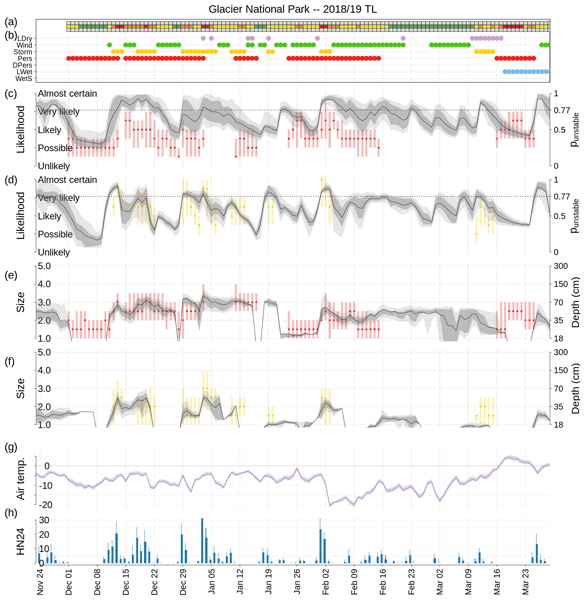
We present a spatial framework for extracting information about avalanche problems from detailed snowpack simulations and compare the numerical results against operational assessments from avalanche forecasters. Despite good agreement in seasonal summary statistics, a comparison of daily assessments revealed considerable differences, while it remained unclear which data source represented reality the best. We discuss how snowpack simulations can add value to the forecasting process.
Simon Horton, Florian Herla, and Pascal Haegeli
Geosci. Model Dev., 18, 193–209, https://doi.org/10.5194/gmd-18-193-2025, https://doi.org/10.5194/gmd-18-193-2025, 2025
Short summary
Short summary
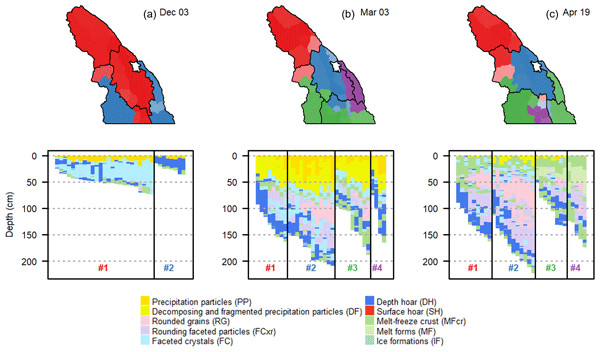
We present a method for avalanche forecasters to analyze patterns in snowpack model simulations. It uses fuzzy clustering to group small regions into larger forecast areas based on snow characteristics, locations, and temporal history. Tested in the Columbia Mountains in two winter seasons, it closely matched real forecast regions regions and identified major avalanche hazard patterns. This approach simplifies complex model outputs, helping forecasters make informed decisions.
Florian Herla, Pascal Haegeli, and Patrick Mair
The Cryosphere, 16, 3149–3162, https://doi.org/10.5194/tc-16-3149-2022, https://doi.org/10.5194/tc-16-3149-2022, 2022
Short summary
Short summary
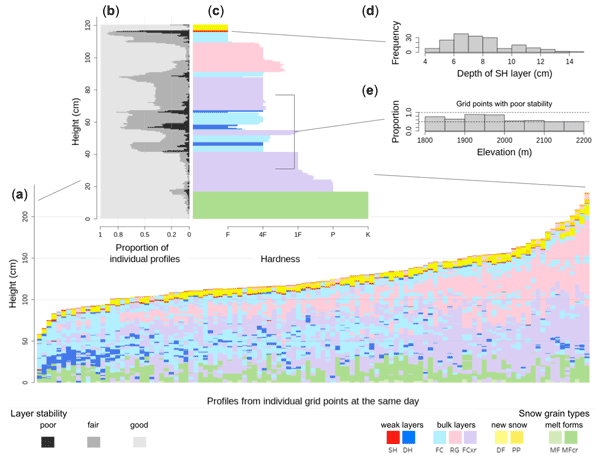
We present an averaging algorithm for multidimensional snow stratigraphy profiles that elicits the predominant snow layering among large numbers of profiles and allows for compiling of informative summary statistics and distributions of snowpack layer properties. This creates new opportunities for presenting and analyzing operational snowpack simulations in support of avalanche forecasting and may inspire new ways of processing profiles and time series in other geophysical contexts.
John Sykes, Pascal Haegeli, Roger Atkins, Patrick Mair, and Yves Bühler
Nat. Hazards Earth Syst. Sci., 25, 1255–1292, https://doi.org/10.5194/nhess-25-1255-2025, https://doi.org/10.5194/nhess-25-1255-2025, 2025
Short summary
Short summary
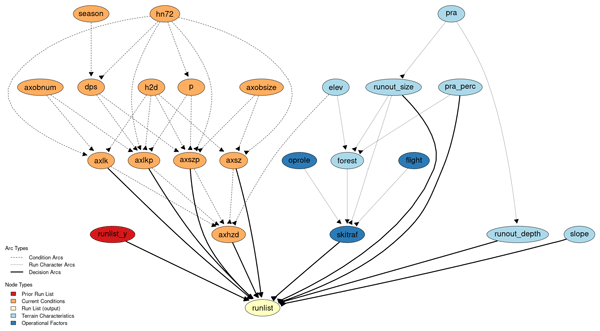
We model the decision-making of professional ski guides and develop decision support tools to assist with determining appropriate terrain based on current conditions. Our approach compares a manually constructed Bayesian network with machine learning classification models. The models accurately capture the real-world decision-making outcomes in 85–93 % of cases. Our conclusions focus on strengths and weaknesses of each model and discuss ramifications for practical applications in ski guiding.
Florian Herla, Pascal Haegeli, Simon Horton, and Patrick Mair
Nat. Hazards Earth Syst. Sci., 25, 625–646, https://doi.org/10.5194/nhess-25-625-2025, https://doi.org/10.5194/nhess-25-625-2025, 2025
Short summary
Short summary
We present a spatial framework for extracting information about avalanche problems from detailed snowpack simulations and compare the numerical results against operational assessments from avalanche forecasters. Despite good agreement in seasonal summary statistics, a comparison of daily assessments revealed considerable differences, while it remained unclear which data source represented reality the best. We discuss how snowpack simulations can add value to the forecasting process.
Simon Horton, Florian Herla, and Pascal Haegeli
Geosci. Model Dev., 18, 193–209, https://doi.org/10.5194/gmd-18-193-2025, https://doi.org/10.5194/gmd-18-193-2025, 2025
Short summary
Short summary
We present a method for avalanche forecasters to analyze patterns in snowpack model simulations. It uses fuzzy clustering to group small regions into larger forecast areas based on snow characteristics, locations, and temporal history. Tested in the Columbia Mountains in two winter seasons, it closely matched real forecast regions regions and identified major avalanche hazard patterns. This approach simplifies complex model outputs, helping forecasters make informed decisions.
John Sykes, Håvard Toft, Pascal Haegeli, and Grant Statham
Nat. Hazards Earth Syst. Sci., 24, 947–971, https://doi.org/10.5194/nhess-24-947-2024, https://doi.org/10.5194/nhess-24-947-2024, 2024
Short summary
Short summary
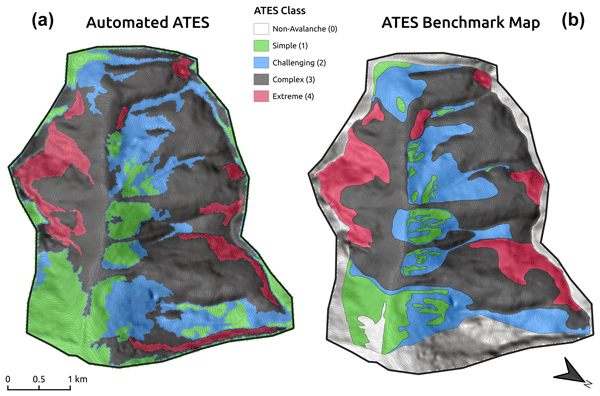
The research validates and optimizes an automated approach for creating classified snow avalanche terrain maps using open-source geospatial modeling tools. Validation is based on avalanche-expert-based maps for two study areas. Our results show that automated maps have an overall accuracy equivalent to the average accuracy of three human maps. Automated mapping requires a fraction of the time and cost of traditional methods and opens the door for large-scale mapping of mountainous terrain.
Abby Morgan, Pascal Haegeli, Henry Finn, and Patrick Mair
Nat. Hazards Earth Syst. Sci., 23, 1719–1742, https://doi.org/10.5194/nhess-23-1719-2023, https://doi.org/10.5194/nhess-23-1719-2023, 2023
Short summary
Short summary
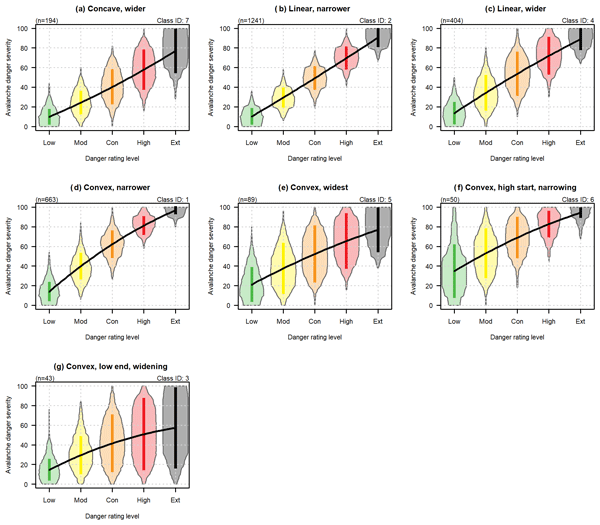
The avalanche danger scale is a critical component for communicating the severity of avalanche hazard conditions to the public. We examine how backcountry recreationists in North America understand and use the danger scale for planning trips into the backcountry. Our results provide an important user perspective on the strengths and weaknesses of the existing scale and highlight opportunities for future improvements.
John Sykes, Pascal Haegeli, and Yves Bühler
Nat. Hazards Earth Syst. Sci., 22, 3247–3270, https://doi.org/10.5194/nhess-22-3247-2022, https://doi.org/10.5194/nhess-22-3247-2022, 2022
Short summary
Short summary
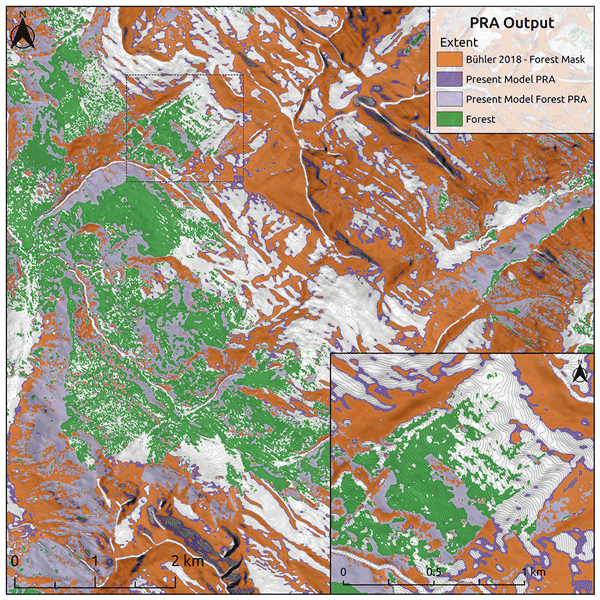
Automated snow avalanche terrain mapping provides an efficient method for large-scale assessment of avalanche hazards, which informs risk management decisions for transportation and recreation. This research reduces the cost of developing avalanche terrain maps by using satellite imagery and open-source software as well as improving performance in forested terrain. The research relies on local expertise to evaluate accuracy, so the methods are broadly applicable in mountainous regions worldwide.
Simon Horton and Pascal Haegeli
The Cryosphere, 16, 3393–3411, https://doi.org/10.5194/tc-16-3393-2022, https://doi.org/10.5194/tc-16-3393-2022, 2022
Short summary
Short summary
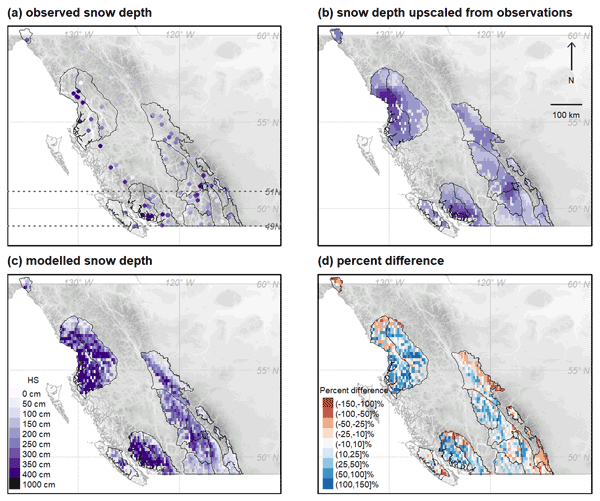
Snowpack models can help avalanche forecasters but are difficult to verify. We present a method for evaluating the accuracy of simulated snow profiles using readily available observations of snow depth. This method could be easily applied to understand the representativeness of available observations, the agreement between modelled and observed snow depths, and the implications for interpreting avalanche conditions.
Florian Herla, Pascal Haegeli, and Patrick Mair
The Cryosphere, 16, 3149–3162, https://doi.org/10.5194/tc-16-3149-2022, https://doi.org/10.5194/tc-16-3149-2022, 2022
Short summary
Short summary
We present an averaging algorithm for multidimensional snow stratigraphy profiles that elicits the predominant snow layering among large numbers of profiles and allows for compiling of informative summary statistics and distributions of snowpack layer properties. This creates new opportunities for presenting and analyzing operational snowpack simulations in support of avalanche forecasting and may inspire new ways of processing profiles and time series in other geophysical contexts.
Kathryn C. Fisher, Pascal Haegeli, and Patrick Mair
Nat. Hazards Earth Syst. Sci., 22, 1973–2000, https://doi.org/10.5194/nhess-22-1973-2022, https://doi.org/10.5194/nhess-22-1973-2022, 2022
Short summary
Short summary
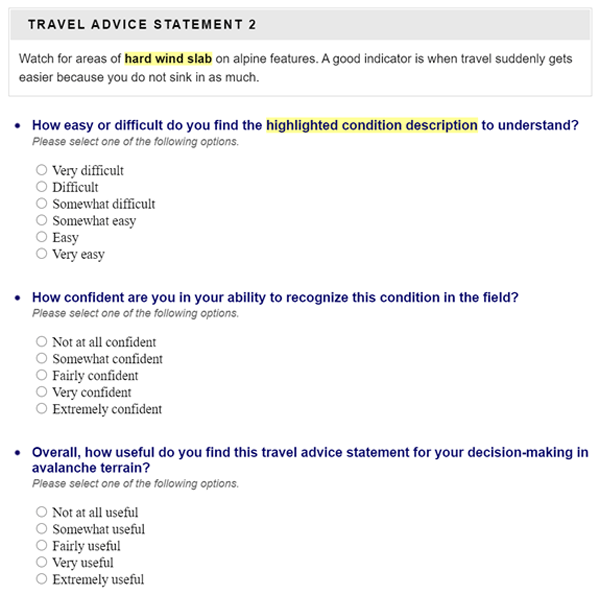
Avalanche bulletins include travel and terrain statements to provide recreationists with tangible guidance about how to apply the hazard information. We examined which bulletin users pay attention to these statements, what determines their usefulness, and how they could be improved. Our study shows that reducing jargon and adding simple explanations can significantly improve the usefulness of the statements for users with lower levels of avalanche awareness education who depend on this advice.
Animesh K. Gain, Yves Bühler, Pascal Haegeli, Daniela Molinari, Mario Parise, David J. Peres, Joaquim G. Pinto, Kai Schröter, Ricardo M. Trigo, María Carmen Llasat, and Heidi Kreibich
Nat. Hazards Earth Syst. Sci., 22, 985–993, https://doi.org/10.5194/nhess-22-985-2022, https://doi.org/10.5194/nhess-22-985-2022, 2022
Short summary
Short summary
To mark the 20th anniversary of Natural Hazards and Earth System Sciences (NHESS), an interdisciplinary and international journal dedicated to the public discussion and open-access publication of high-quality studies and original research on natural hazards and their consequences, we highlight 11 key publications covering major subject areas of NHESS that stood out within the past 20 years.
Kathryn C. Fisher, Pascal Haegeli, and Patrick Mair
Nat. Hazards Earth Syst. Sci., 21, 3219–3242, https://doi.org/10.5194/nhess-21-3219-2021, https://doi.org/10.5194/nhess-21-3219-2021, 2021
Short summary
Short summary
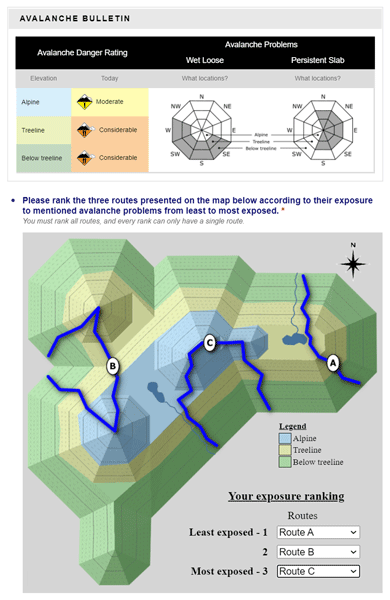
Avalanche warning services publish condition reports to help backcountry recreationists make informed decisions about when and where to travel in avalanche terrain. We tested how different graphic representations of terrain information can affect users’ ability to interpret and apply the provided information. Our study shows that a combined presentation of aspect and elevation information is the most effective. These results can be used to improve avalanche risk communication products.
Cited articles
Bartelt, P., Lehning, M., Bartelt, P., Brown, B., Fierz, C., and Satyawali, P.: A physical SNOWPACK model for the Swiss avalanche warning: Part I: Numerical model, Cold Reg. Sci. Technol., 35, 123–145, https://doi.org/10.1016/s0165-232x(02)00074-5, 2002. a
Bellaire, S. and Jamieson, J. B.: Forecasting the formation of critical snow layers using a coupled snow cover and weather model, Cold Reg. Sci. Technol., 94, 37–44, https://doi.org/10.1016/j.coldregions.2013.06.007, 2013. a
Bellaire, S., van Herwijnen, A., Mitterer, C., and Schweizer, J.: On forecasting wet-snow avalanche activity using simulated snow cover data, Cold Reg. Sci. Technol., 144, 28–38, https://doi.org/10.1016/j.coldregions.2017.09.013, 2017. a
Brun, E., David, P., Sudul, M., and Brunot, G.: A numerical model to simulate snow-cover stratigraphy for operational avalanche forecasting, J. Glaciol., 38, 13–22, https://doi.org/10.3189/s0022143000009552, 1992. a
Calonne, N., Richter, B., Löwe, H., Cetti, C., Ter Schure, J., Van Herwijnen, A., Fierz, C., Jaggi, M., and Schneebeli, M.: The RHOSSA campaign: Multi-resolution monitoring of the seasonal evolution of the structure and mechanical stability of an alpine snowpack, The Cryosphere, 14, 1829–1848, https://doi.org/10.5194/tc-14-1829-2020, 2020. a
Campbell, C., Conger, S., Gould, B., Haegeli, P., Jamieson, J. B., and Statham, G.: Technical Aspects of Snow Avalanche Risk Management–Resources and Guidelines for Avalanche Practitioners in Canada, Revelstoke, BC, Canada, ISBN 978-1-926497-00-6, 2016. a
Canty, A. and Ripley, B.: boot: Bootstrap R (S-Plus) Functions, CRAN [code], https://cran.r-project.org/package=boot (last access: 13 August 2024), 2022. a
Davison, A. C. and Hinkley, D. V.: Bootstrap Methods and Their Applications, Cambridge University Press, Cambridge, ISBN 0-521-57391-2, 1997. a
Durand, Y., Giraud, G., Brun, E., Mérindol, L., and Martin, E.: A computer-based system simulating snowpack structures as a tool for regional avalanche forecasting, J. Glaciol., 45, 469–484, https://doi.org/10.3189/s0022143000001337, 1999. a
Ebert, P. A. and Milne, P.: Methodological and conceptual challenges in rare and severe event forecast verification, Nat. Hazards Earth Syst. Sci., 22, 539–557, https://doi.org/10.5194/nhess-22-539-2022, 2022. a, b
Fierz, C.: Field observation and modelling of weak-layer evolution, Ann. Glaciol., 26, 7–13, https://doi.org/10.3189/1998AoG26-1-7-13, 1998. a
Fierz, C. and Lehning, M.: Verification of Snow Cover Models on Slopes, in: Proceedings of the 2004 International Snow Science Workshop, Jackson Hole, WY, USA, 94–98, https://arc.lib.montana.edu/snow-science/item/1059 (last access: 13 August 2024), 2004. a
Fierz, C., Armstrong, R. L., Durand, Y., Etchevers, P., Greene, E., McClung, D. M., Nishimura, K., Satyawali, P., and Sokratov, S. A.: The International Classification for Seasonal Snow on the Ground, vol. 5, UNESCO/IHP, https://unesdoc.unesco.org/ark:/48223/pf0000186462 (last access: 13 August 2024), 2009. a
Haegeli, P. and McClung, D. M.: Expanding the snow-climate classification with avalanche-relevant information: Initial description of avalanche winter regimes for southwestern Canada, J. Glaciol., 53, 266–276, https://doi.org/10.3189/172756507782202801, 2007. a
Herla, F., Haegeli, P., and Mair, P.: A data exploration tool for averaging and accessing large data sets of snow stratigraphy profiles useful for avalanche forecasting, The Cryosphere, 16, 3149–3162, https://doi.org/10.5194/tc-16-3149-2022, 2022. a, b
Herla, F., Haegeli, P., Horton, S., and Mair, P.: Critical Layer Validation – Data and Code, OSF [code and data set], https://doi.org/10.17605/OSF.IO/W7PJY, 2023. a
Hordowick, H. and Haegeli, P.: Understanding avalanche problem assessments: A concept mapping study with public avalanche forecasters, mathesis, http://www.avalancheresearch.ca/pubs/2022_hordowick_mrm/ (last access: 13 August 2024), 2022. a
Horton, S. and Haegeli, P.: Using snow depth observations to provide insight into the quality of snowpack simulations for regional-scale avalanche forecasting, The Cryosphere, 16, 3393–3411, https://doi.org/10.5194/tc-16-3393-2022, 2022. a, b, c
Horton, S. and Jamieson, J. B.: Modelling hazardous surface hoar layers across western Canada with a coupled weather and snow cover model, Cold Reg. Sci. Technol., 128, 22–31, https://doi.org/10.1016/j.coldregions.2016.05.002, 2016. a
Horton, S., Nowak, S., and Haegeli, P.: Enhancing the operational value of snowpack models with visualization design principles, Nat. Hazards Earth Syst. Sci., 20, 1557–1572, https://doi.org/10.5194/nhess-20-1557-2020, 2020a. a, b
Horton, S., Towell, M., and Haegeli, P.: Examining the operational use of avalanche problems with decision trees and model-generated weather and snowpack variables, Nat. Hazards Earth Syst. Sci., 20, 3551–3576, https://doi.org/10.5194/nhess-20-3551-2020, 2020b. a, b
Hothorn, T. and Zeileis, A.: Partykit: A modular toolkit for recursive partytioning in R, J. Mach. Learn. Res., 16, 3905–3909, 2015. a
Hothorn, T., Hornik, K., and Zeileis, A.: Unbiased recursive partitioning: A conditional inference framework, J. Comput. Graph. Stat., 15, 651–674, https://doi.org/10.1198/106186006X133933, 2006. a
LaChapelle, E. R.: The fundamental processes in conventional avalanche forecasting, J. Glaciol., 26, 75–84, https://doi.org/10.3189/s0022143000010601, 1980. a, b
Lafaysse, M., Morin, S., Coléou, C., Vernay, M., Serça, D., Besson, F., Willemet, J.-M., Giraud, G., and Durand, Y.: Toward a new chain of models for avalanche hazard forecasting in French mountain ranges, including low altitude mountains, in: Proceedings of the 2013 International Snow Science Workshop, 7–11 October 2013, Grenoble, France, 162–166, https://arc.lib.montana.edu/snow-science/item.php?id=1741 (last access: 13 August 2024), 2013. a
Lafaysse, M., Cluzet, B., Dumont, M., Lejeune, Y., Vionnet, V., and Morin, S.: A multiphysical ensemble system of numerical snow modelling, The Cryosphere, 11, 1173–1198, https://doi.org/10.5194/tc-11-1173-2017, 2017. a
Lehning, M., Fierz, C., and Lundy, C.: An objective snow profile comparison method and its application to SNOWPACK, Cold Reg. Sci. Technol., 33, 253–261, https://doi.org/10.1016/s0165-232x(01)00044-1, 2001. a
Lehning, M., Bartelt, P., Brown, B., and Fierz, C.: A physical SNOWPACK model for the Swiss avalanche warning Part III: Meteorological forcing, thin layer formation and evaluation, Cold Reg. Sci. Technol., 35, 169–184, https://doi.org/10.1016/S0165-232X(02)00072-1, 2002a. a
Lehning, M., Bartelt, P., Brown, B., Fierz, C., and Satyawali, P.: A physical SNOWPACK model for the Swiss avalanche warning Part II. Snow microstructure, Cold Reg. Sci. Technol., 35, 147–167, https://doi.org/10.1016/S0165-232X(02)00073-3, 2002b. a, b
Lundquist, J., Hughes, M., Gutmann, E., and Kapnick, S.: Our skill in modeling mountain rain and snow is bypassing the skill of our observational networks, B. Am. Meteorol. Soc., 100, 2473–2490, https://doi.org/10.1175/BAMS-D-19-0001.1, 2019. a
McClung, D. M.: The Elements of Applied Avalanche Forecasting, Part I: The Human Issues, Nat. Hazards, 26, 111–129, https://doi.org/10.1023/a:1015665432221, 2002a. a, b
McClung, D. M.: The Elements of Applied Avalanche Forecasting, Part II: The Physical Issues and the Rules of Applied Avalanche Forecasting, Nat. Hazards, 26, 131–146, https://doi.org/10.1023/a:1015604600361, 2002b. a
Michlmayr, G., Lehning, M., Koboltschnig, G., Holzmann, H., Zappa, M., Mott, R., and Schöner, W.: Application of the Alpine 3D model for glacier mass balance and glacier runoff studies at Goldbergkees, Austria, in: Hydrological Processes, vol. 22, John Wiley and Sons, Ltd, 3941–3949, https://doi.org/10.1002/hyp.7102, 2008. a
Milbrandt, J. A., Bélair, S., Faucher, M., Vallée, M., Carrera, M. L., and Glazer, A.: The pan-canadian high resolution (2.5 km) deterministic prediction system, Weather Forecast., 31, 1791–1816, https://doi.org/10.1175/WAF-D-16-0035.1, 2016. a
Monti, F. and Schweizer, J.: A relative difference approach to detect potential weak layers within a snow profile, in: Proceedings of the 2013 International Snow Science Workshop, 7–11 October 2013, Grenoble, France, 339–343, https://arc.lib.montana.edu/snow-science/item.php?id=1861 (last access: 13 August 2024), 2013. a, b, c
Monti, F., Schweizer, J., Gaume, J., and Fierz, C.: Deriving snow stability information from simulated snow cover stratigraphy, in: Proceedings of the 2014 International Snow Science Workshop, Banff, AB, Canada, 465–469, https://arc.lib.montana.edu/snow-science/item.php?id=2096 (last access: 13 August 2024), 2014. a, b, c
Monti, F., Gaume, J., van Herwijnen, A., and Schweizer, J.: Snow instability evaluation: calculating the skier-induced stress in a multi-layered snowpack, Nat. Hazards Earth Syst. Sci., 16, 775–788, https://doi.org/10.5194/nhess-16-775-2016, 2016. a, b
Morin, S., Fierz, C., Horton, S., Bavay, M., Dumont, M., Hagenmuller, P., Lafaysse, M., Mitterer, C., Monti, F., Olefs, M., Snook, J. S., Techel, F., Van Herwijnen, A., and Vionnet, V.: Application of physical snowpack models in support of operational avalanche hazard forecasting : A status report on current implementations and prospects for the future, Cold Reg. Sci. Technol., 170, 1098–1107, https://doi.org/10.1016/J.COLDREGIONS.2019.102910, 2020. a, b, c
Quéno, L., Vionnet, V., Dombrowski-Etchevers, I., Lafaysse, M., Dumont, M., and Karbou, F.: Snowpack modelling in the Pyrenees driven by kilometric-resolution meteorological forecasts, The Cryosphere, 10, 1571–1589, https://doi.org/10.5194/tc-10-1571-2016, 2016. a
Raleigh, M. S., Lundquist, J., and Clark, M. P.: Exploring the impact of forcing error characteristics on physically based snow simulations within a global sensitivity analysis framework, Hydrol. Earth Syst. Sci., 19, 3153–3179, https://doi.org/10.5194/hess-19-3153-2015, 2015. a
R Core Team: R: A Language and Environment for Statistical Computing, https://www.r-project.org/ (last access: 13 August 2024), 2020. a
Reuter, B. and Bellaire, S.: On combining snow cover and snow instability modelling, in: Proceedings of the 2018 international snow science workshop, Innsbruck, AUT, 949—-953, https://arc.lib.montana.edu/snow-science/item/2684 (last access: 13 August 2024), 2018. a
Reuter, B. and Schweizer, J.: Describing Snow Instability by Failure Initiation, Crack Propagation, and Slab Tensile Support, Geophys. Res. Lett., 45, 7019–7027, https://doi.org/10.1029/2018GL078069, 2018. a, b
Reuter, B., Schweizer, J., and van Herwijnen, A.: A process-based approach to estimate point snow instability, The Cryosphere, 9, 837–847, https://doi.org/10.5194/tc-9-837-2015, 2015. a, b
Reuter, B., Viallon-Galinier, L., Horton, S., van Herwijnen, A., Mayer, S., Hagenmuller, P., and Morin, S.: Characterizing snow instability with avalanche problem types derived from snow cover simulations, Cold Reg. Sci. Technol., 194, 103462, https://doi.org/10.1016/j.coldregions.2021.103462, 2021. a, b, c, d, e, f
Richter, B., Schweizer, J., Rotach, M. W., and Van Herwijnen, A.: Validating modeled critical crack length for crack propagation in the snow cover model SNOWPACK, The Cryosphere, 13, 3353–3366, https://doi.org/10.5194/tc-13-3353-2019, 2019. a, b, c
Richter, B., Van Herwijnen, A., Rotach, M. W., and Schweizer, J.: Sensitivity of modeled snow stability data to meteorological input uncertainty, Nat. Hazards Earth Syst. Sci., 20, 2873–2888, https://doi.org/10.5194/nhess-20-2873-2020, 2020. a, b
Schirmer, M., Schweizer, J., and Lehning, M.: Statistical evaluation of local to regional snowpack stability using simulated snow-cover data, Cold Reg. Sci. Technol., 64, 110–118, https://doi.org/10.1016/j.coldregions.2010.04.012, 2010. a
Schweizer, J., Jamieson, J. B., and Schneebeli, M.: Snow avalanche formation, Rev. Geophys., 41, 1016, https://doi.org/10.1029/2002rg000123, 2003. a
Schweizer, J., Bellaire, S., Fierz, C., Lehning, M., and Pielmeier, C.: Evaluating and improving the stability predictions of the snow cover model SNOWPACK, Cold Reg. Sci. Technol., 46, 52–59, https://doi.org/10.1016/j.coldregions.2006.05.007, 2006. a
Schweizer, J., Reuter, B., Van Herwijnen, A., and Gaume, J.: Avalanche Release 101, in: Proceedings of the 2016 International Snow Science Workshop, Breckenridge, CO, USA, https://arc.lib.montana.edu/snow-science/item/2235 (last access: 13 August 2024), 2016. a
Shandro, B. and Haegeli, P.: Characterizing the nature and variability of avalanche hazard in western Canada, Nat. Hazards Earth Syst. Sci., 18, 1141–1158, https://doi.org/10.5194/nhess-18-1141-2018, 2018. a, b
Sing, T., Sander, O., Beerenwinkel, N., and Lengauer, T.: ROCR: visualizing classifier performance in R, Bioinformatics, 21, 3940–3941, https://doi.org/10.1093/bioinformatics/bti623, 2005. a
Statham, G., Haegeli, P., Greene, E., Birkeland, K. W., Israelson, C., Tremper, B., Stethem, C., McMahon, B., White, B., and Kelly, J.: A conceptual model of avalanche hazard, Nat. Hazards, 90, 663–691, https://doi.org/10.1007/s11069-017-3070-5, 2018a. a, b, c, d
Statham, G., Holeczi, S., and Shandro, B.: Consistency and Accuracy of Public Avalanche Forecasts in Western Canada, in: Proceedings of the 2018 International Snow Science Workshop, Innsbruck, Austria, https://arc.lib.montana.edu/snow-science/item.php?id=2806 (last access: 13 August 2024), 2018b. a, b
Storm, I.: Public Avalanche Forecast Challenges: Canada's Large Data-Sparse Regions, in: Proceedings, 2012 International Snow Science Workshop, Anchorage, AK, USA, 908–912, https://arc.lib.montana.edu/snow-science/item.php?id=1668 (last access: 13 August 2024), 2012. a
Storm, I. and Helgeson, R. G.: Hot-spots and hot times: exploring alternatives to public avalanche forecasts in Canada's data sparse Northern Roeckies region, in: Proceedings of the 2014 International Snow Science Workshop, Banff, AB, Canada, https://arc.lib.montana.edu/snow-science/item/2034 (last access: 13 August 2024), 2014. a
Techel, F., Mitterer, C., Ceaglio, E., Coléou, C., Morin, S., Rastelli, F., and Purves, R. S.: Spatial consistency and bias in avalanche forecasts – a case study in the European Alps, Nat. Hazards Earth Syst. Sci., 18, 2697–2716, https://doi.org/10.5194/nhess-18-2697-2018, 2018. a
Vernay, M., Lafaysse, M., Mérindol, L., Giraud, G., and Morin, S.: Ensemble forecasting of snowpack conditions and avalanche hazard, Cold Reg. Sci. Technol., 120, 251–262, https://doi.org/10.1016/j.coldregions.2015.04.010, 2015. a
Viallon-Galinier, L., Hagenmuller, P., and Lafaysse, M.: Forcing and evaluating detailed snow cover models with stratigraphy observations, Cold Reg. Sci. Technol., 180, 103163, https://doi.org/10.1016/j.coldregions.2020.103163, 2020. a
Vionnet, V., Brun, E., Morin, S., Boone, A., Faroux, S., Le Moigne, P., Martin, E., and Willemet, J.-M.: The detailed snowpack scheme Crocus and its implementation in SURFEX v7.2, Geosci. Model Dev., 5, 773–791, https://doi.org/10.5194/gmd-5-773-2012, 2012. a
Vionnet, V., Six, D., Auger, L., Dumont, M., Lafaysse, M., Quéno, L., Réveillet, M., Dombrowski-Etchevers, I., Thibert, E., and Vincent, C.: Sub-kilometer Precipitation Datasets for Snowpack and Glacier Modeling in Alpine Terrain, Front. Earth Sci., 7, 182, https://doi.org/10.3389/feart.2019.00182, 2019. a
Wilks, D. S.: Statistical Methods in the Atmospheric Sciences, Elsevier, https://doi.org/10.1016/c2017-0-03921-6, 2019. a, b, c
Short summary
Snowpack simulations are increasingly employed by avalanche warning services to inform about critical avalanche layers buried in the snowpack. However, validity concerns limit their operational value. We present methods that enable meaningful comparisons between snowpack simulations and regional assessments of avalanche forecasters to quantify the performance of the Canadian weather and snowpack model chain to represent thin critical avalanche layers on a large scale and in real time.
Snowpack simulations are increasingly employed by avalanche warning services to inform about...


Altmetrics
Final-revised paper
Preprint