
Articles | Volume 25, issue 3
https://doi.org/10.5194/nhess-25-1139-2025
© Author(s) 2025. This work is distributed under
the Creative Commons Attribution 4.0 License.
the Creative Commons Attribution 4.0 License.
https://doi.org/10.5194/nhess-25-1139-2025
© Author(s) 2025. This work is distributed under
the Creative Commons Attribution 4.0 License.
the Creative Commons Attribution 4.0 License.
Research article
| 
17 Mar 2025
Research article |
| 17 Mar 2025
| 17 Mar 2025
Using random forests to forecast daily extreme sea level occurrences at the Baltic Coast
Kai Bellinghausen
CORRESPONDING AUTHOR

Institute for Coastal System Analysis and Modeling, Helmholtz-Zentrum Hereon, Geesthacht, Germany
Birgit Hünicke
Institute for Coastal System Analysis and Modeling, Helmholtz-Zentrum Hereon, Geesthacht, Germany
Eduardo Zorita
Institute for Coastal System Analysis and Modeling, Helmholtz-Zentrum Hereon, Geesthacht, Germany
Related authors
Kai Bellinghausen, Birgit Hünicke, and Eduardo Zorita
EGUsphere, https://doi.org/10.5194/egusphere-2026-523, https://doi.org/10.5194/egusphere-2026-523, 2026
Preprint archived
Short summary
Short summary
Storm extremes across Northern Hemisphere land areas have a structured synchronised pattern. Using ERA5 data (1940–2023) and a storm index based on local wind‑speed extremes, we find that northern regions above 50° N vary together, opposite to more southern areas. Links to SST, SKT and pressure fields point to climate modes like the NAO as possible drivers. ACE2 emulator experiments confirm that surface‑temperature patterns can drive jet‑stream shifts possibly altering the mode of storminess.
Brenna Mei Concolis, Birgit Hünicke, and Eduardo Zorita
EGUsphere, https://doi.org/10.5194/egusphere-2026-4382, https://doi.org/10.5194/egusphere-2026-4382, 2026
This preprint is open for discussion and under review for Ocean Science (OS).
Short summary
Short summary
Marine heatwaves are prolonged periods of unusually warm ocean temperatures, while marine cold spells are prolonged cooling events. Both can have major impacts on marine ecosystems. This study investigates how these extreme events have changed in the Philippine seas over the last 33 years. Marine heatwaves became more frequent, whereas marine cold spells became less frequent. We also discussed the oceanic and atmospheric conditions that drove the prolonged marine heatwaves during 2022–2025.
Proshonni Aziz, Birgit Hünicke, and Eduardo Zorita
Weather Clim. Dynam., 7, 1307–1330, https://doi.org/10.5194/wcd-7-1307-2026, https://doi.org/10.5194/wcd-7-1307-2026, 2026
Short summary
Short summary
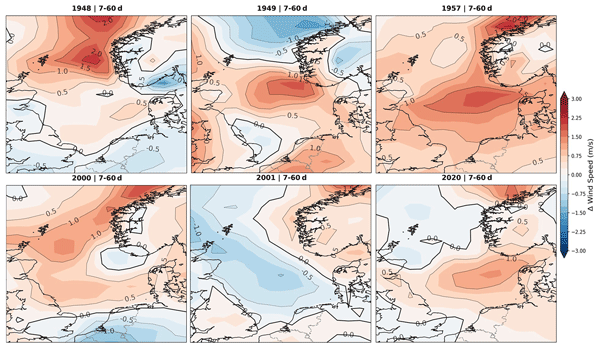
By analysing data from 1940 to 2024, we found that upper atmosphere conditions in early winter directly influence the number of North Sea storms occurring weeks or months later. We used a climate model and machine learning to improve these forecasts. Results show that December patterns can predict January storminess with high accuracy, with effects persisting for up to 60 d. Stratospheric data and machine learning together improve winter storm prediction for this region.
Nele Tim, Birgit Hünicke, and Eduardo Zorita
EGUsphere, https://doi.org/10.5194/egusphere-2026-806, https://doi.org/10.5194/egusphere-2026-806, 2026
Short summary
Short summary
We analysed extreme precipitation over Southern Africa by use of high-resolution atmospheric simulations. The strongest precipitation occurs over Madagascar, the Mozambique Channel, and the adjacent mainland. Extremes are generally stronger in the Summer Rainfall Zone than in the Winter Rainfall Zones, are projected to become more intense along the South African coast, and the Agulhas Current does not have a discernible impact on rainfall events along the South African coast.
Kai Bellinghausen, Birgit Hünicke, and Eduardo Zorita
EGUsphere, https://doi.org/10.5194/egusphere-2026-523, https://doi.org/10.5194/egusphere-2026-523, 2026
Preprint archived
Short summary
Short summary
Storm extremes across Northern Hemisphere land areas have a structured synchronised pattern. Using ERA5 data (1940–2023) and a storm index based on local wind‑speed extremes, we find that northern regions above 50° N vary together, opposite to more southern areas. Links to SST, SKT and pressure fields point to climate modes like the NAO as possible drivers. ACE2 emulator experiments confirm that surface‑temperature patterns can drive jet‑stream shifts possibly altering the mode of storminess.
Marlene Klockmann, Udo von Toussaint, and Eduardo Zorita
Geosci. Model Dev., 17, 1765–1787, https://doi.org/10.5194/gmd-17-1765-2024, https://doi.org/10.5194/gmd-17-1765-2024, 2024
Short summary
Short summary
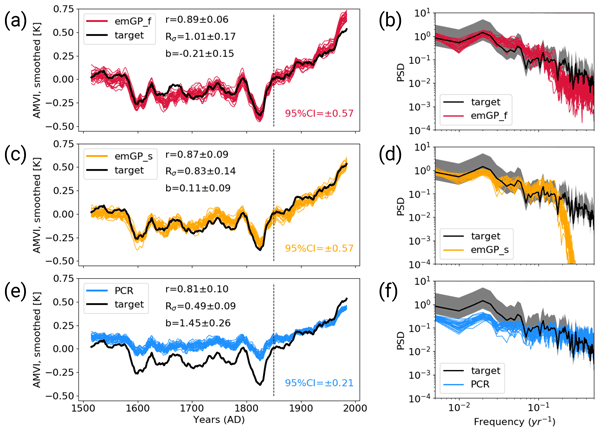
Reconstructions of climate variability before the observational period rely on climate proxies and sophisticated statistical models to link the proxy information and climate variability. Existing models tend to underestimate the true magnitude of variability, especially if the proxies contain non-climatic noise. We present and test a promising new framework for climate-index reconstructions, based on Gaussian processes, which reconstructs robust variability estimates from noisy and sparse data.
Nele Tim, Birgit Hünicke, and Eduardo Zorita
Nat. Hazards Earth Syst. Sci. Discuss., https://doi.org/10.5194/nhess-2023-147, https://doi.org/10.5194/nhess-2023-147, 2023
Manuscript not accepted for further review
Short summary
Short summary
Our study analyses extreme precipitation over southern Africa in regional high-resolution atmospheric simulations of the past and future. We investigated heavy precipitation over Southern Africa, coastal South Africa, Cape Town, and the KwaZulu-Natal province in eastern South Africa. Coastal precipitation extremes are projected to intensify, double in intensity in KwaZulu-Natal, and weaken in Cape Town. Extremes are not projected to occur more often in the 21st century than in the last decades.
Nele Tim, Eduardo Zorita, Birgit Hünicke, and Ioana Ivanciu
Weather Clim. Dynam., 4, 381–397, https://doi.org/10.5194/wcd-4-381-2023, https://doi.org/10.5194/wcd-4-381-2023, 2023
Short summary
Short summary
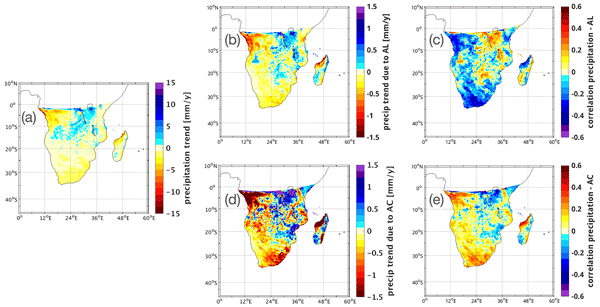
As stated by the IPCC, southern Africa is one of the two land regions that are projected to suffer from the strongest precipitation reductions in the future. Simulated drying in this region is linked to the adjacent oceans, and prevailing winds as warm and moist air masses are transported towards the continent. Precipitation trends in past and future climate can be partly attributed to the strength of the Agulhas Current system, the current along the east and south coasts of southern Africa.
Kai Bellinghausen, Birgit Hünicke, and Eduardo Zorita
Nat. Hazards Earth Syst. Sci. Discuss., https://doi.org/10.5194/nhess-2023-21, https://doi.org/10.5194/nhess-2023-21, 2023
Manuscript not accepted for further review
Short summary
Short summary
The prediction of extreme coastal sea level, e.g. caused by a storm surge, is operationally carried out with dynamical computer models. These models are expensive to run and still display some limitations in predicting the height of extremes. We present a successful purely data-driven machine learning model to predict extreme sea levels along the Baltic Sea coast a few days in advance. The method is also able to identify the critical predictors for the different Baltic Sea regions.
Zeguo Zhang, Sebastian Wagner, Marlene Klockmann, and Eduardo Zorita
Clim. Past, 18, 2643–2668, https://doi.org/10.5194/cp-18-2643-2022, https://doi.org/10.5194/cp-18-2643-2022, 2022
Short summary
Short summary
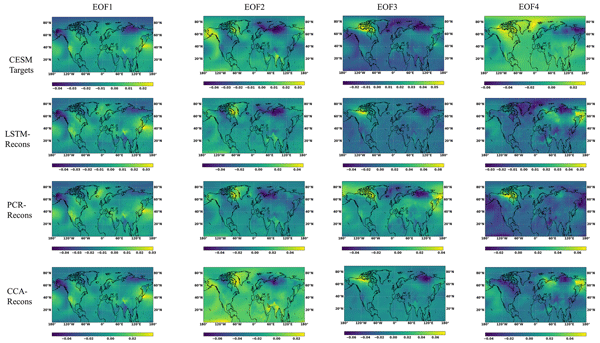
A bidirectional long short-term memory (LSTM) neural network was employed for the first time for past temperature field reconstructions. The LSTM method tested in our experiments using a limited calibration and validation dataset shows worse reconstruction skills compared to traditional reconstruction methods. However, a certain degree of reconstruction performance achieved by the nonlinear LSTM method shows that skill can be achieved even when using small samples with limited datasets.
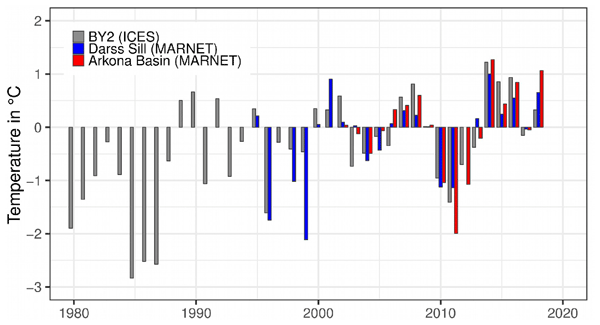
H. E. Markus Meier, Madline Kniebusch, Christian Dieterich, Matthias Gröger, Eduardo Zorita, Ragnar Elmgren, Kai Myrberg, Markus P. Ahola, Alena Bartosova, Erik Bonsdorff, Florian Börgel, Rene Capell, Ida Carlén, Thomas Carlund, Jacob Carstensen, Ole B. Christensen, Volker Dierschke, Claudia Frauen, Morten Frederiksen, Elie Gaget, Anders Galatius, Jari J. Haapala, Antti Halkka, Gustaf Hugelius, Birgit Hünicke, Jaak Jaagus, Mart Jüssi, Jukka Käyhkö, Nina Kirchner, Erik Kjellström, Karol Kulinski, Andreas Lehmann, Göran Lindström, Wilhelm May, Paul A. Miller, Volker Mohrholz, Bärbel Müller-Karulis, Diego Pavón-Jordán, Markus Quante, Marcus Reckermann, Anna Rutgersson, Oleg P. Savchuk, Martin Stendel, Laura Tuomi, Markku Viitasalo, Ralf Weisse, and Wenyan Zhang
Earth Syst. Dynam., 13, 457–593, https://doi.org/10.5194/esd-13-457-2022, https://doi.org/10.5194/esd-13-457-2022, 2022
Short summary
Short summary
Based on the Baltic Earth Assessment Reports of this thematic issue in Earth System Dynamics and recent peer-reviewed literature, current knowledge about the effects of global warming on past and future changes in the climate of the Baltic Sea region is summarised and assessed. The study is an update of the Second Assessment of Climate Change (BACC II) published in 2015 and focuses on the atmosphere, land, cryosphere, ocean, sediments, and the terrestrial and marine biosphere.
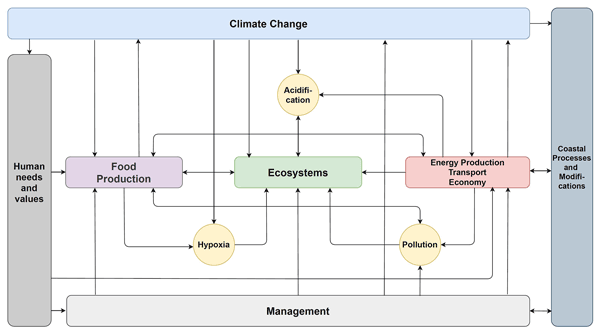
Marcus Reckermann, Anders Omstedt, Tarmo Soomere, Juris Aigars, Naveed Akhtar, Magdalena Bełdowska, Jacek Bełdowski, Tom Cronin, Michał Czub, Margit Eero, Kari Petri Hyytiäinen, Jukka-Pekka Jalkanen, Anders Kiessling, Erik Kjellström, Karol Kuliński, Xiaoli Guo Larsén, Michelle McCrackin, H. E. Markus Meier, Sonja Oberbeckmann, Kevin Parnell, Cristian Pons-Seres de Brauwer, Anneli Poska, Jarkko Saarinen, Beata Szymczycha, Emma Undeman, Anders Wörman, and Eduardo Zorita
Earth Syst. Dynam., 13, 1–80, https://doi.org/10.5194/esd-13-1-2022, https://doi.org/10.5194/esd-13-1-2022, 2022
Short summary
Short summary
As part of the Baltic Earth Assessment Reports (BEAR), we present an inventory and discussion of different human-induced factors and processes affecting the environment of the Baltic Sea region and their interrelations. Some are naturally occurring and modified by human activities, others are completely human-induced, and they are all interrelated to different degrees. The findings from this study can largely be transferred to other comparable marginal and coastal seas in the world.
Cited articles
Andrée, E., Drews, M., Su, J., Larsen, M. A. D., Drønen, N., and Madsen, K. S.: Simulating wind-driven extreme sea levels: Sensitivity to wind speed and direction, Weather and Climate Extremes, 36, 100422, https://doi.org/10.1016/j.wace.2022.100422, 2022. a
Bellinghausen, K.: Storm Surge Model for the Baltic Sea, Zenodo [code], https://doi.org/10.5281/zenodo.7409633, 2022. a, b
Bevacqua, E., Maraun, D., Vousdoukas, M. I., Voukouvalas, E., Vrac, M., Mentaschi, L., and Widmann, M.: Higher probability of compound flooding from precipitation and storm surge in Europe under anthropogenic climate change, Science Advances, 5, eaaw5531, https://doi.org/10.1126/sciadv.aaw5531, 2019. a
Breiman, L.: Random Forests, Mach. Learn., 45, 5–32, https://doi.org/10.1023/A:1010933404324, 2001. a
Chen, D. and Omstedt, A.: Climate-induced variability of sea level in Stockholm: Influence of air temperature and atmospheric circulation, Adv. Atmos. Sci., 22, 655–664, https://doi.org/10.1007/BF02918709, 2005. a
Eakins, B. W. and Sharman, G. F.: Volumes of the World's Oceans from ETOPO1, U.S. Department of Commerce, https://www.ngdc.noaa.gov/mgg/global/etopo1_ocean_volumes.html (last access: 12 July 2024), 2010. a
Field, C. B., Barros, V., Stocker, T. F., and Dahe, Q. (Eds.): Managing the Risks of Extreme Events and Disasters to Advance Climate Change Adaptation: Special Report of the Intergovernmental Panel on Climate Change, Cambridge University Press, Cambridge, https://doi.org/10.1017/CBO9781139177245, ISBN 978-1-139-17724-5, 2012. a
Géron, A.: Hands-On Machine Learning with Scikit-Learn and TensorFlow, O'Reilly Media, Inc, 564 pp., ISBN: 978-1-491-96229-9, 2017. a
Gönnert, G. and Sossidi, K.: A new approach to calculate extreme storm surges: analysing the interaction of storm surge components, WIT Trans. Ecol. Envir., 149, 139–150, https://doi.org/10.2495/CP110121, 2011. a
Guillory, A.: ERA5, ECMWF, https://www.ecmwf.int/en/forecasts/datasets/reanalysis-datasets/era5 (last access: 3 November 2024), 2017. a
Haigh, I. D., Marcos, M., Talke, S. A., Woodworth, P. L., Hunter, J. R., Hague, B. S., Arns, A., Bradshaw, E., and Thompson, P.: GESLA Version 3: A major update to the global higher-frequency sea-level dataset, Geosci. Data J., 10, 293–314, https://doi.org/10.1002/gdj3.174, 2021. a, b, c
Harris, D. L.: The equivalence between certain statistical prediction methods and linearized dynamical methods, Mon. Weather Rev., 90, 331–340, https://doi.org/10.1175/1520-0493(1962)090<0331:TEBCSP>2.0.CO;2, 1962. a
Hersbach, H., de Rosnay, P., Bell, B., Schepers, D., Simmons, A., Soci, C., Abdalla, S., Alonso-Balmaseda, M., Balsamo, G., Bechtold, P., Berrisford, P., Bidlot, J.-R., de Boisséson, E., Bonavita, M., Browne, P., Buizza, R., Dahlgren, P., Dee, D., Dragani, R., Diamantakis, M., Flemming, J., Forbes, R., Geer, A., Haiden, T., Hólm, E., Haimberger, L., Hogan, R., Horányi, A., Janiskova, M., Laloyaux, P., Lopez, P., Munoz-Sabater, J., Peubey, C., Radu, R., Richardson, D., Thépaut, J.-N., Vitart, F., Yang, X., Zsótér, E., and Zuo, H.: Operational global reanalysis: progress, future directions and synergies with NWP, ECMWF, ERA Report no. 27, https://doi.org/10.21957/tkic6g3wm, 2018. a
Hersbach, H., Bell, B., Berrisford, P., Hirahara, S., Horányi, A., Muñoz-Sabater, J., Nicolas, J., Peubey, C., Radu, R., Schepers, D., Simmons, A., Soci, C., Abdalla, S., Abellan, X., Balsamo, G., Bechtold, P., Biavati, G., Bidlot, J., Bonavita, M., De Chiara, G., Dahlgren, P., Dee, D., Diamantakis, M., Dragani, R., Flemming, J., Forbes, R., Fuentes, M., Geer, A., Haimberger, L., Healy, S., Hogan, R. J., Hólm, E., Janisková, M., Keeley, S., Laloyaux, P., Lopez, P., Lupu, C., Radnoti, G., de Rosnay, P., Rozum, I., Vamborg, F., Villaume, S., and Thépaut, Jean-N.: The ERA5 global reanalysis, Q. J. Roy. Meteorol. Soc., 146, 1999–2049, 2020. a
Holfort, J., Wisniewski, B., Lydeikaite, Z., Kowalewska-Kalkowska, H., Wolski, T., Boman, H., Hammarklint, T., Giza, A., and Grabbi-Kaiv, S.: Extreme sea levels at selected stations on the Baltic Sea coast, Oceanologia, 56, 259–290, https://doi.org/10.5697/oc.56-2.259, 2014. a, b
Hünicke, B. and Zorita, E.: Influence of temperature and precipitation on decadal Baltic Sea level variations in the 20th century, Tellus A, 58, 141–153, https://doi.org/10.1111/j.1600-0870.2006.00157.x, 2006. a
Hünicke, B., Zorita, E., Soomere, T., Madsen, K. S., Johansson, M., and Suursaar, Ü.: Recent Change – Sea Level and Wind Waves, in: Second Assessment of Climate Change for the Baltic Sea Basin, edited by: The BACC II Author Team, Regional Climate Studies, Springer International Publishing, Cham, 155–185, https://doi.org/10.1007/978-3-319-16006-1_9, ISBN 978-3-319-16006-1, 2015. a, b, c
Janssen, F., Schrum, C., Hübner, U., and Backhaus, J.: Uncertainty analysis of a decadal simulation with a regional ocean model for the North Sea and Baltic Sea, Clim. Res., 18, 55–62, https://doi.org/10.3354/cr018055, 2001. a
Mohrholz, V.: Major Baltic Inflow Statistics – Revised, 5, 384, https://doi.org/10.3389/fmars.2018.00384, 2018. a
Mudersbach, C. and Jensen, J.: Küstenschutz an der Deutschen Ostseeküste – Zur Ermittlung von Eintrittswahrscheinlichkeiten extremer Sturmflutwasserstände, 5, 10 pp., https://doi.org/10.3243/kwe2010.03.003, 2010. a, b, c
Rutgersson, A., Kjellström, E., Haapala, J., Stendel, M., Danilovich, I., Drews, M., Jylhä, K., Kujala, P., Larsén, X. G., Halsnæs, K., Lehtonen, I., Luomaranta, A., Nilsson, E., Olsson, T., Särkkä, J., Tuomi, L., and Wasmund, N.: Natural hazards and extreme events in the Baltic Sea region, Earth Syst. Dynam., 13, 251–301, https://doi.org/10.5194/esd-13-251-2022, 2022. a, b, c, d, e
Sztobryn, M.: Forecast of storm surge by means of artificial neural network, J. Sea Res., 49, 317–322, https://doi.org/10.1016/S1385-1101(03)00024-8, 2003. a, b, c
Tadesse, M., Wahl, T., and Cid, A.: Data-Driven Modeling of Global Storm Surges, Frontiers in Marine Science, 7, 260, https://doi.org/10.3389/fmars.2020.00260, 2020. a, b
Tiggeloven, T., Couasnon, A., van Straaten, C., Muis, S., and Ward, P. J.: Exploring deep learning capabilities for surge predictions in coastal areas, Scientific Reports, 11, 17224, https://doi.org/10.1038/s41598-021-96674-0, 2021. a, b, c
Tyralis, H., Papacharalampous, G., and Langousis, A.: A Brief Review of Random Forests for Water Scientists and Practitioners and Their Recent History in Water Resources, Water, 11, 910, https://doi.org/10.3390/w11050910, 2019. a, b
von Storch, H.: Storm Surges: Phenomena, Forecasting and Scenarios of Change, Proc. IUTAM, 10, 356–362, https://doi.org/10.1016/j.piutam.2014.01.030, 2014. a
Vousdoukas, M. I., Voukouvalas, E., Annunziato, A., Giardino, A., and Feyen, L.: Projections of extreme storm surge levels along Europe, Clim. Dynam., 47, 3171–3190, https://doi.org/10.1007/s00382-016-3019-5, 2016. a
Weisse, R. and Weidemann, H.: Baltic Sea extreme sea levels 1948-2011: Contributions from atmospheric forcing, Proc. IUTAM, 25, 65–69, https://doi.org/10.1016/j.piutam.2017.09.010, 2017. a
Wiśniewski, B. and Wolski, T.: Physical aspects of extreme storm surges and falls on the Polish coast, Oceanologia, 53, 373–390, https://doi.org/10.5697/oc.53-1-TI.373, 2011. a
Wolski, T. and Wiśniewski, B.: Geographical diversity in the occurrence of extreme sea levels on the coasts of the Baltic Sea, J. Sea Res., 159, 101890, https://doi.org/10.1016/j.seares.2020.101890, 2020. a, b, c
Woodworth, P. L., Hunter, J. R., Marcos, M., Caldwell, P., Menéndez, M., and Haigh, I.: Towards a global higher-frequency sea level dataset, Geosci. Data J., 3, 50–59, https://doi.org/10.1002/gdj3.42, 2016. a
Short summary
We designed a tool to predict the storm surges at the Baltic Sea coast with satisfactory predictability (80 % correct predictions), using lead times of a few days. The proportion of false warnings is typically as low as 10 % to 20 %. We were able to identify the relevant predictor regions and their patterns – such as low-pressure systems and strong winds. Due to its short computing time, the method can be used as a pre-warning system to trigger the application of more sophisticated algorithms.
We designed a tool to predict the storm surges at the Baltic Sea coast with satisfactory...


Altmetrics
Final-revised paper
Preprint