Articles | Volume 16, issue 9
https://doi.org/10.5194/nhess-16-2159-2016
© Author(s) 2016. This work is distributed under
the Creative Commons Attribution 3.0 License.
https://doi.org/10.5194/nhess-16-2159-2016
© Author(s) 2016. This work is distributed under
the Creative Commons Attribution 3.0 License.
Aerosol properties and meteorological conditions in the city of Buenos Aires, Argentina, during the resuspension of volcanic ash from the Puyehue-Cordón Caulle eruption
Ana Graciela Ulke
CORRESPONDING AUTHOR
Departamento de Ciencias de la Atmósfera y los Océanos,
Facultad de Ciencias Exactas y Naturales, Universidad de Buenos Aires,
Buenos Aires, Argentina
Unidad Mixta Internacional (UMI) – Instituto Franco
Argentino sobre Estudios de Clima y sus Impactos (IFAECI), CNRS –
UMI-IFAECI-CNRS-3351, Buenos Aires, Argentina
Marcela M. Torres Brizuela
Departamento de Ciencias de la Atmósfera y los Océanos,
Facultad de Ciencias Exactas y Naturales, Universidad de Buenos Aires,
Buenos Aires, Argentina
Graciela B. Raga
Centro de Ciencias
de la Atmósfera, Universidad Nacional Autónoma de México, Mexico City,
CDMX, Mexico
Darrel Baumgardner
Droplet Measurement Technologies, Boulder, CO, USA
Related authors
No articles found.
Almuth Neuberger, Rahul Ranjan, Hao Ding, Fredrik Mattsson, Lea Haberstock, Darrel Baumgardner, Stefano Decesari, Annica M. L. Ekman, Dagen D. Hughes, Claudia Mohr, Marco Paglione, Ilona Riipinen, Matteo Rinaldi, and Paul Zieger
Atmos. Chem. Phys., 26, 11991–12017, https://doi.org/10.5194/acp-26-11991-2026, https://doi.org/10.5194/acp-26-11991-2026, 2026
Short summary
Short summary
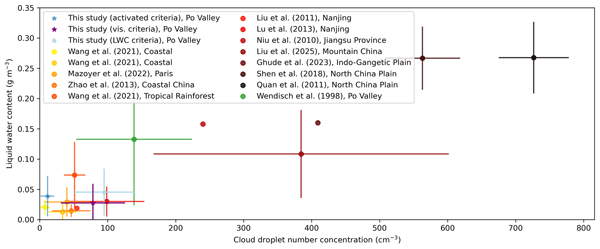
We studied how particles from air pollution that absorb water but do not yet form fog droplets influence fog and visibility in northern Italy’s Po Valley. Using detailed field observations and computer modeling, we found that these “hydrated” particles can explain many low-visibility events. Recognizing their role helps improve forecasts of fog, air quality, and climate effects in polluted regions.
Evelyn Freney, Karine Sellegri, Therese Barthelmeß, Anja Engel, Darrel Baumgardner, and Dagen Hughes
EGUsphere, https://doi.org/10.5194/egusphere-2026-87, https://doi.org/10.5194/egusphere-2026-87, 2026
Short summary
Short summary
The exchange of material between the ocean and atmosphere plays an important role in regulating Earth’s climate. Through wave action, the ocean releases tiny airborne particles that influence atmospheric processes. This study examines how biological and chemical processes in seawater affect the properties of particles emitted from the ocean, highlighting the complex links between ocean biology and marine aerosols.
M. Fernanda Córdoba, Rachel Chang, Harry Alvarez-Ospina, Aramis Olivos-Ortiz, Graciela B. Raga, Daniel Rosas-Ramírez, Guadalupe Campos, Isabel Márquez, Telma Castro, and Luis A. Ladino
Atmos. Meas. Tech., 18, 2463–2479, https://doi.org/10.5194/amt-18-2463-2025, https://doi.org/10.5194/amt-18-2463-2025, 2025
Short summary
Short summary
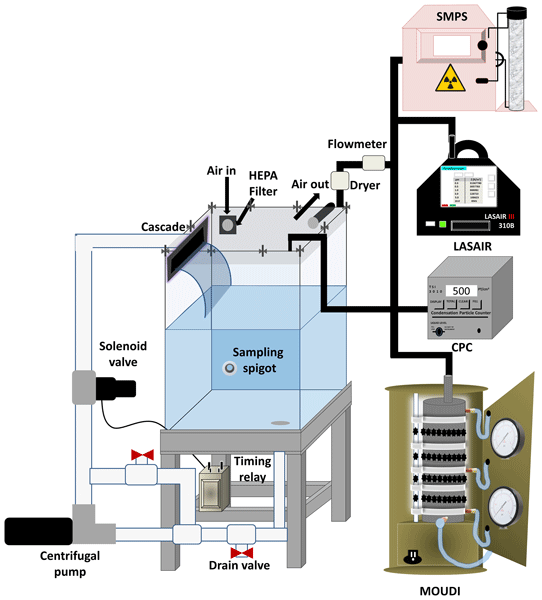
The present study shows the development of the UNAM-MARine Aerosol Tank (UNAM-MARAT), a device that simulates wave breaking to generate marine aerosol particles. The portable and automatic tank is able to generate particle concentrations as high as 2000 cm-3, covering a wide range of sizes, similar to those found in the ambient marine boundary layer. The sea spray aerosol generated from three natural seawater samples was found to act as ice-nucleating particles (INPs) via immersion freezing.
Bighnaraj Sarangi, Darrel Baumgardner, Ana Isabel Calvo, Benjamin Bolaños-Rosero, Roberto Fraile, Alberto Rodríguez-Fernández, Delia Fernández-González, Carlos Blanco-Alegre, Cátia Gonçalves, Estela D. Vicente, and Olga L. Mayol-Bracero
Atmos. Chem. Phys., 25, 843–865, https://doi.org/10.5194/acp-25-843-2025, https://doi.org/10.5194/acp-25-843-2025, 2025
Short summary
Short summary
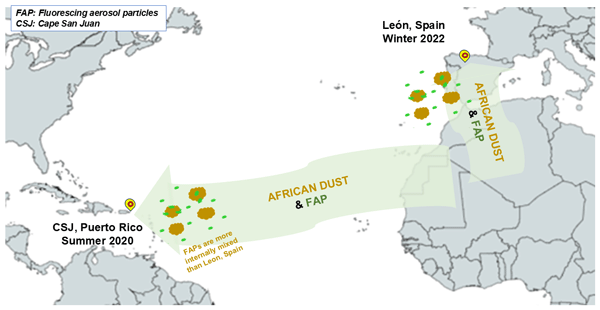
Measurements of fluorescing aerosol particle properties have been made during two major African dust events, one over the island of Puerto Rico and the other over the city of León, Spain. The measurements were made with two wideband integrated bioaerosol spectrometers. A significant change in the background aerosol properties, at both locations, is observed when the dust is in the respective regions.
Mahen Konwar, Benjamin Werden, Edward C. Fortner, Sudarsan Bera, Mercy Varghese, Subharthi Chowdhuri, Kurt Hibert, Philip Croteau, John Jayne, Manjula Canagaratna, Neelam Malap, Sandeep Jayakumar, Shivsai A. Dixit, Palani Murugavel, Duncan Axisa, Darrel Baumgardner, Peter F. DeCarlo, Doug R. Worsnop, and Thara Prabhakaran
Atmos. Meas. Tech., 17, 2387–2400, https://doi.org/10.5194/amt-17-2387-2024, https://doi.org/10.5194/amt-17-2387-2024, 2024
Short summary
Short summary
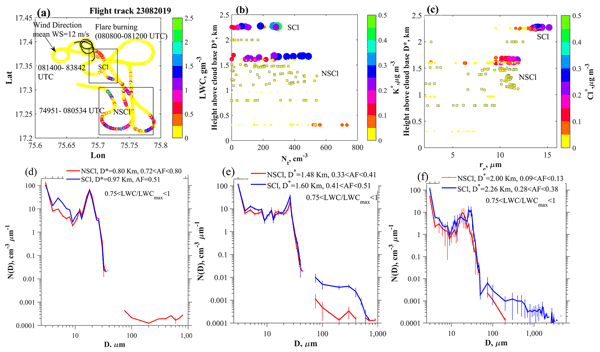
In a warm cloud seeding experiment hygroscopic particles are released to alter cloud processes to induce early raindrops. During the Cloud–Aerosol Interaction and Precipitation Enhancement Experiment, airborne mini aerosol mass spectrometers analyse the particles on which clouds form. The seeded clouds showed higher concentrations of chlorine and potassium, the oxidizing agents of flares. Small cloud droplet concentrations increased, and seeding particles were detected in deep cloud depths.
Bighnaraj Sarangi, Darrel Baumgardner, Benjamin Bolaños-Rosero, and Olga L. Mayol-Bracero
Atmos. Chem. Phys., 22, 9647–9661, https://doi.org/10.5194/acp-22-9647-2022, https://doi.org/10.5194/acp-22-9647-2022, 2022
Short summary
Short summary
Here, the fluorescent characteristics and cloud-forming efficiency of aerosols at an urban site in Puerto Rico are discussed. The results from this pilot study highlight the capabilities of ultraviolet-induced fluorescence (UV-IF) measurements for characterizing the properties of fluorescing aerosol particles, as they relate to the daily evolution of primary biological aerosol particles. This work has established a database of measurements on which future, longer-term studies will be initiated.
Diana L. Pereira, Irma Gavilán, Consuelo Letechipía, Graciela B. Raga, Teresa Pi Puig, Violeta Mugica-Álvarez, Harry Alvarez-Ospina, Irma Rosas, Leticia Martinez, Eva Salinas, Erika T. Quintana, Daniel Rosas, and Luis A. Ladino
Atmos. Chem. Phys., 22, 6435–6447, https://doi.org/10.5194/acp-22-6435-2022, https://doi.org/10.5194/acp-22-6435-2022, 2022
Short summary
Short summary
Airborne particles were i) collected in an agricultural fields and ii) generated in the laboratory from agricultural soil samples to analyze their ice nucleating abilities. It was found that the size and chemical composition of the Mexican agricultural dust particles influence their ice nucleating behavior, where the organic components are likely responsible for their efficiency as INPs. The INP concentrations from the present study are comparable to those from higher latitudes.
Graciela B. Raga, Darrel Baumgardner, Blanca Rios, Yanet Díaz-Esteban, Alejandro Jaramillo, Martin Gallagher, Bastien Sauvage, Pawel Wolff, and Gary Lloyd
Atmos. Chem. Phys., 22, 2269–2292, https://doi.org/10.5194/acp-22-2269-2022, https://doi.org/10.5194/acp-22-2269-2022, 2022
Short summary
Short summary
The In-Service Aircraft for a Global Observing System (IAGOS) is a small fleet of commercial aircraft that carry a suite of meteorological, gas, aerosol, and cloud sensors and have been measuring worldwide for almost 9 years, since late 2011. Extreme ice events (EIEs) have been identified from the IAGOS cloud measurements and linked to surface emissions for biomass and fossil fuel consumption. The results reported here are highly relevant for climate change and flight operations forecasting.
Elvis Torres-Delgado, Darrel Baumgardner, and Olga L. Mayol-Bracero
Atmos. Chem. Phys., 21, 18011–18027, https://doi.org/10.5194/acp-21-18011-2021, https://doi.org/10.5194/acp-21-18011-2021, 2021
Short summary
Short summary
African dust aerosols can travel thousands of kilometers and reach the Caribbean and other places, where they can serve as ice and cloud condensation nuclei and alter precipitation patterns. Cloud microphysical properties (droplet number and size) were measured in a Caribbean tropical montane cloud forest along with models and satellite products. The results of the study suggest that meteorology and air mass history are more important for cloud processes than aerosols transported from Africa.
Cited articles
Bonadonna, C., Cioni, R., Pistolesi, M., Elissondo, M., and Baumann, V.: Sedimentation of long-lasting wind-affected volcanic plumes: The example of the 2011 rhyolitic Cordón Caulle eruption, Chile, B. Volcanol., 77, 1–19, https://doi.org/10.1007/s00445-015-0900-8, 2015a.
Bonadonna, C., Pistolesi, M., Cioni, R., Degruyter, W., Elissondo, M., and Baumann V.: Dynamics of wind-affected volcanic plumes: The example of the 2011 Cordón Caulle eruption, Chile, J. Geophys. Res. Earth, 120, 2244–2261, https://doi.org/10.1002/2014JB011478, 2015b.
Casadevall, T. J.: Volcanic Hazards and Aviation Safety: Lessons of the Past Decade, Flight Safety Foundation – Flight Safety Digest, 1–9, available at: http://flightsafety.org/archives-and-resources/publications/flight-safety-digest/flight-safety-digest-1993 (last access: 20 December 2015), 1993.
Casadevall, T. J.: The 1989–1990 eruption of Redoubt Volcano, Alaska: impacts on aircraft operations, J. Volcanol. Geoth. Res., 62, 301–316, https://doi.org/10.1016/0377-0273(94)90038-8, 1994.
Collini, E., Osores, S., Folch, A., Viramonte, J. G., Villarosa, G., and Salmuni, G.: Volcanic ash forecast during the June 2011 Cordón Caulle eruption, Nat. Hazards, 66, 389–412, https://doi.org/10.1007/s11069-012-0492-y, 2013.
Draxler, R. R. and Hess, G. D.: An overview of the HYSPLIT-4 modelling system for trajectories, dispersion, and deposition, Aust. Meteorol. Mag., 47, 295–308, 1998.
Draxler, R. R., Gillette, D. A., Kirkpatrick, J. S., and Heller, J.: Estimating PM10 Air Concentrations from Dust Storms in Iraq, Kuwait, and Saudi Arabia, Atmos. Environ., 35, 4315–4330, https://doi.org/10.1016/S1352-2310(01)00159-5, 2001.
Draxler, R. R., Stunder B., Rolph, G. Stein, A., and Taylor, A.: HYSPLIT4 Users Guide, NOAA Air Resources Laboratory, Silver Spring, MD, USA, 212 pp., available at: http://ready.arl.noaa.gov/HYSPLIT.php (last access: 20 December 2015), 2013.
Dubovik, O., Holben, B., Eck, T. F., Smirnov, A., Kaufman, Y. J., King, M. D., Tanre, D., and Slutsker, I.: Variability of absorption and optical properties of key aerosol types observed in worldwide locations, J. Atmos. Sci., 59, 590–608, https://doi.org/10.1175/1520-0469(2002)059<0590:VOAAOP>2.0.CO;2, 2002.
Dupart, Y., King, S. M., Nekat, B., Nowak, A., Wiedensohler, A., Herrmann, H., David, G., Thomas, B., Miffre, A., Rairoux, P., D'Anna, B., and George, C.: Mineral dust photochemistry induces nucleation events in the presence of SO2, P. Natl. Acad. Sci. USA, 109, 20842–20847, https://doi.org/10.1073/pnas.1212297109, 2012.
Eck, T. F., Holben, B. N., Reid, J. S., Dubovik, O., Smirnov, A., O'Neill, N. T., Slutsker, I., and Kinne, S.: Wavelength dependence of the optical depth of biomass burning, urban, and desert dust aerosols, J. Geophys. Res., 104, 31333–31349, https://doi.org/10.1029/1999jd900923, 1999.
Eck, T. F., Holben, B. N., Dubovik, O., Smirnov, A., Goloub, P., Chen, H. B., Chatenet, B., Gomes, L., Zhang, X. Y., Tsay, S. C., Ji, Q., Giles, D., and Slutsker, I.: Columnar aerosol optical properties at AERONET sites in Central Eastern Asia and aerosol transport to the Tropical Mid-Pacific, J. Geophys. Res., 110, D06202, https://doi.org/10.1029/2004JD005274, 2005.
Eck, T. F., Holben, B. N., Sinyuk, A., Pinker, R. T., Goloub, P., Chen, H., Chatenet, B., Li, Z., Singh, R. P., Tripathi S. N., Reid, J. S., Giles, D. M, Dubovik, O., O'Neill, N. T., Smirnov, A., Wang, P., and Xia, X.: Climatological aspects of the optical properties of fine/coarse mode aerosol mixtures, J. Geophys. Res., 115, D19205, https://doi.org/10.1029/2010JD014002, 2010.
Ellrod, G. P., Connell, B., and Hillger, D.: Improved detection of airborne volcanic ash using multispectral infrared satellite data, J. Geophys. Res., 108, 4356, https://doi.org/10.1029/2002JD002802, 2003.
Escudero, M., Stein, A., Draxler, R. R., Querol, X., Alastuey, A., Castillo, S., and Avila, A.: Determination of the contribution of northern Africa dust source areas to PM10 concentrations over the central Iberian Peninsula using the Hybrid Single-Particle Lagrangian Integrated Trajectory model (HYSPLIT) model, J. Geophys. Res., 111, D06210, https://doi.org/10.1029/2005JD006395, 2006.
Fabricante, I., Oesterheld, M., and Paruelo, J. M.: Annual and seasonal variation of NDVI explained by current and previous precipitation across Northern Patagonia, J. Arid Environ., 73, 745–753, https://doi.org/10.1016/j.jaridenv.2009.02.006, 2009.
Folch, A., Mingari, L., Osores, M. S., and Collini, E.: Modeling volcanic ash resuspension – application to the 14–18 October 2011 outbreak episode in Central Patagonia, Argentina, Nat. Hazards Earth Syst. Sci., 14, 119–133, https://doi.org/10.5194/nhess-14-119-2014, 2014.
Freudenthaler, V.: Depolarization ratio profiling at several wavelengths in pure Saharan dust using SAMUM 2006, Tellus B, 61, 165–179, https://doi.org/10.1111/j.1600-0889.2008.00396.x, 2006.
Gaitán, J. J., Ayesa, J. A., Umaña, F., Raffo, F., and Bran, D. B.: Cartography of affected area by volcanic ashes at Rio Negro and Neuquen Provinces, INTA Technical Report, 8 pp., available at http://inta.gob.ar/sites/default/files/script-tmp-cartografa_cenizas.pdf, (last access: 7 November 2015), 2011.
GCBA: Monthly Report: available at http://www.buenosaires.gob.ar/sites/gcaba/files/pm10_laboca_octubre_2011.pdf, (last access: 13 October 2015), 6 pp., 2016).
Gillette, D. and Passi, R.: Modeling dust emission caused by wind erosion, J. Geophys. Res., 93, 14233–14242, https://doi.org/10.1029/JD093iD11p14233, 1988.
Gu, Y., Rose, W. I., and Bluth, G. S.: Retrieval of mass and sizes of particles in sandstorms using two MODIS IR bands: A case study of April 7, 2001 sandstorm in China, Geophys. Res. Lett., 30, 1805, https://doi.org/10.1029/2003GL017405, 2003.
Hadley, D. and Hufford, G. L.: Resuspension of relic volcanic ash and dust from Katmai: still an aviation hazard, Weather Forecast., 19, 829–840, https://doi.org/10.1175/1520-0434(2004)019<0829:RORVAA>2.0.CO;2, 2004.
Holben, B. N., Eck, T. F., Slutsker, I., Tanré, D., Buis, J. P., Setzer, A., Vermote, E., Reagan, J. A., Kaufman, Y., Nakajima, T., Lavenu, F., Jankowiak, I., and Smirnov, A.: AERONET – A federated instrument network and data archive for aerosol characterization, Remote Sens. Environ., 66, 1–16, https://doi.org/10.1016/S0034-4257(98)00031-5, 1998.
Hu, Y., Winker D., Vaughan M., Lin B., Omar, A., Trepte, C., Flittner, D. Yang, P., Nasiri, S. L., Baum, B., Sun, W., Liu, Z., Wang, Z., Young, S., Stamnes, K. Huang, J. Kuehn, R., and Holz, R.: CALIPSO/CALIOP Cloud Phase Discrimination Algorithm, J. Atmos. Ocean. Tech., 26, 2293–2309, https://doi.org/10.1175/2009JTECHA1280.1, 2009.
Jones, A. R., Thomson, D. J., Hort, M., and Devenish, B.: The U.K. Met Office's next-generation atmospheric dispersion model, NAME III, in Air Pollution Modeling and Its Application XVII (Proceedings of the 27th NATO/CCMS International Technical Meeting on Air Pollution Modelling and its Application), edited by: Borrego, C. and Norman, A. L., Springer, New York, 580–589, 2007.
Jugder, D., Shinoda, M., Sugimoto, N., Matsui, I., Nishikawa, M., Park, S.-U., Chun, Y.-S., and Park, M.-S.: Spatial and temporal variations of dust concentrations in the Gobi Desert of Mongolia, Global Planet. Change, 78, 14–22, https://doi.org/10.1016/j.gloplacha.2011.05.003, 2011.
Kim, D., Chin, M., Yu, H., Eck, T. F., Sinyuk, A., Smirnov, A., and Holben, B. N.: Dust optical properties over North Africa and Arabian Peninsula derived from the AERONET dataset, Atmos. Chem. Phys., 11, 10733–10741, https://doi.org/10.5194/acp-11-10733-2011, 2011.
Lathem, T. L., Kumar, P., Nenes, A., Dufek, J., Sokolik, I. N., Trail, M., and Russell, A.: Hygroscopic properties of volcanic ash, Geophys. Res. Lett., 38, L11802, https://doi.org/10.1029/2011GL047298, 2011.
Leadbetter, S. J., Hort, M. C., Von Lowis, S., Weber, K., and Witham, C. S.: Modeling the resuspension of ash deposited during the eruption of Eyjafjallajökull in 2010, J. Geophys. Res., 117, D00U10, https://doi.org/10.1029/2011JD016802, 2012.
Liu, Z., Vaughan, M., Winker, D., Kittaka, C., Getzewich, B., Kuehn, R., Omar, A., Powell, K., Trepte, C., and Hostetler, C.: The CALIPSO lidar cloud and aerosol discrimination: version 2 algorithm and initial assessment of performance, J. Atmos. Ocean. Tech., 26, 1198–1213, https://doi.org/10.1175/2009JTECHA1229.1, 2009.
Lyamani, H., Valenzuela, A., Perez-Ramirez, D., Toledano, C., Granados-Muñoz, M. J., Olmo, F. J., and Alados-Arboledas, L.: Aerosol properties over the western Mediterranean basin: temporal and spatial variability. Atmos. Chem. Phys., 15, 2473–2486, https://doi.org/10.5194/acp-15-2473-2015, 2015.
Miffre, A., David, G., Thomas, B., Abou Chacra, M., and Rairoux, P.: Interpretation of accurate UV polarization lidar measurements: application to volcanic ash number concentration retrieval, J. Atmos. Ocean. Tech., 29, 558–568, https://doi.org/10.1175/JTECH-D-11-00124.1, 2012.
Omar, A. H., Winker, D. M., Kittaka, C., Vaughan, M. A., Liu, Z., Hu, Y., Trepte, C. R., Rogers, R. R., Ferrare, R. A., Lee, K., Kuehn, R. E., and Hostetler, C. A.: The CALIPSO automated aerosol classification and lidar ratio selection algorithm, J. Atmos. Ocean. Tech., 26, 1994–2014, https://doi.org/10.1175/2009JTECHA1231.1, 2009.
O'Neill, N. T., Dubovik, O., and Eck, T. F.: Modified Ångström coefficient for the characterization of sub-micron aerosols, App. Opt., 40, 15, 2368–2374, 2001a.
O'Neill, N. T., Eck, T. F., Holben, B. N., Smirnov, A., Dubovik, O., and Roger, A.: Bimodal size distribution influences on the variation of Ångström derivatives in spectral and optical depth space, J. Geophys. Res., 106, 9787–9806, https://doi.org/10.1029/2000JD900245, 2001b.
O'Neill, N. T., Eck, T. F., Smirnov, A., Holben, B. N., and Thulasiraman, S.: Spectral discrimination of coarse and fine mode optical depth, J. Geophys. Res., 108, 4559–4573, https://doi.org/10.1029/2002JD002975, 2003.
O'Neill, N. T., Eck, T. F., Smirnov, A., Holben, B., and Thulasiraman, S.: Spectral Deconvolution algorithm Technical memo, revised 26 April 2006, 15 pp., available at: http://aeronet.gsfc.nasa.gov/new_web/system_descriptions.html (last access: 11 April 2016), 2006.
Papayannis, A., Mamouri, R. E., Amiridis, V., Giannakaki, E., Veselovskii, I., Kokkalis, P., Tsaknakis, G., Balis, D., Kristiansen, N. I., Stohl, A., Korenskiy, M., Allakhverdiev, K., Huseyinoglu, M. F., and Baykara, T.: Optical properties and vertical extension of aged ash layers over the Eastern Mediterranean as observed by Raman lidars during the Eyjafjallajökull eruption in May 2010, Atmos. Environ., 48, 56–65, https://doi.org/10.1016/j.atmosenv.2011.08.037, 2012.
Pistolesi, M., Cioni, R., Bonadonna, C., Elissondo, M., Baumann, V., Bertagnini, A., Chiari, L., Gonzales, R., Rossi, M., and Francalanci, L.: Complex dynamics of small-moderate volcanic events: the example of the 2011 rhyolitic Cordón Caulle eruption, Chile, B. Volcanol., 77, 1–24, 2015.
Powell, K., Vaughan, M., Winker, D., Lee, K.-P., Pitts, M., Trepte, C., Detweiler, P., Hunt, W., Lambeth, J., Lucker, P., Murray, T., Hagolle, O., Lifermann, A., Faivre, M., Garnier, A., and Pelon, J.: Cloud – Aerosol LIDAR Infrared Pathfinder Satellite Observations (CALIPSO) Data Management System Data Products Catalog Document No: PC-SCI-503 Release 3.6, 122 pp., 2013.
Prata, A. J.: Infrared Radiative transfer calculations for volcanic ash clouds, Geophys. Res. Lett., 16, 1293–1296, 1989.
Pujol, G. C., Toyos, G., Rabolli, M., and Kalemkarian, M.: Space-borne Products for Operational Volcanic Ash Cloud Monitoring in Argentina, presented at 2nd IUGG-WMO workshop on: ASH DISPERSAL FORECAST AND CIVIL AVIATION, 18–20 November 2013, Geneva, Switzerland, available at: http://www.unige.ch/sciences/terre/mineral/CERG/Workshop2/Program/P-07_Pujol.pdf, (last access: 19 May 2016), 2013.
Raga, G. B., Baumgardner, D., Ulke, A. G., Torres Brizuela, M. M., and Kucienska, B.: The environmental impact of the Puyehue-Cordon Caulle 2011 volcanic eruption on Buenos Aires, Nat. Hazards Earth Syst. Sci., 13, 2319–2330, https://doi.org/10.5194/nhess-13-2319-2013, 2013.
Schumann, U., Weinzierl, B., Reitebuch, O., Schlager, H., Minikin, A., Forster, C., Baumann, R., Sailer, T., Graf, K., Mannstein, H., Voigt, C., Rahm, S., Simmet, R., Scheibe, M., Lichtenstern, M., Stock, P., Rüba, H., Schäuble, D., Tafferner, A., Rautenhaus, M., Gerz, T., Ziereis, H., Krautstrunk, M., Mallaun, C., Gayet, J.-F., Lieke, K., Kandler, K., Ebert, M., Weinbruch, S., Stohl, A., Gasteiger, J., Groß, S., Freudenthaler, V., Wiegner, M., Ansmann, A., Tesche, M., Olafsson, H., and Sturm, K.: Airborne observations of the Eyjafjalla volcano ash cloud over Europe during air space closure in April and May 2010, Atmos. Chem. Phys., 11, 2245–2279, https://doi.org/10.5194/acp-11-2245-2011, 2011.
Seinfeld, J. H. and Pandis, S. N.: Atmospheric Chemistry and Physics: From Air Pollution to Climate Change (2nd ed.), Hoboken, New Jersey, John Wiley & Sons, Inc., 1232 pp., 2006.
Smirnov, A., Holben, B., Eck, T. F., Dubovik, O., and Slutsker, I.: Cloud-screening and quality control algorithms for the AERONET database, Remote Sens. Environ., 73, 337–349, https://doi.org/10.1016/S0034-4257(00)00109-7, 2000.
Stein, A. F., Draxler, R. R., Rolph, G. D., Stunder, B. J. B., Cohen, M. D., and Ngan, F.: NOAA'S HYSPLIT atmospheric transport and dispersion modeling system, B. Am. Meteor. Soc., 96, 2059–2077, https://doi.org/10.1175/bams-d-14-00110.1, 2015.
Ulke, A. G., Torres Brizuela, M. M., Raga, G., and Baumgardner, D.: Microphysical and optical properties of aerosols in Buenos Aires, Ciência e Natura, special issue, 291–294, available at: https://periodicos.ufsm.br/cienciaenatura/article/view/9442, 2011.
Vaughan, M. A., Powell, K. A, Kuehn, R. E., Young, S. A., Winker, D. M., Hostetler, C. A., Hunt, W. H., Liu, Z., McGill, M. J., and Getzewich, B. J.: Fully automated detection of cloud and aerosol layers in the CALIPSO lidar measurements, J. Atmos. Ocean. Tech., 26, 2034–2050, https://doi.org/10.1175/2009JTECHA1228.1, 2009.
Velasco, I. and Necco, G. V.: Mean values, extremes and standard deviation of aerological data in Argentina, Internal Report, Department of Meteorology, University of Buenos Aires, 275 pp., 1980.
Vernier, J.-P., Fairlie, T. D., Murray, J. J., Tupper, A., Trepte, C., Winker, D., Pelon, J.Garnier, A., Jumelet, J., Pavolonis, M., Omar, A. H., and Powell, K. A.: An advanced system to monitor the 3D structure of diffuse volcanic ash clouds, J. Appl. Meteorol. Clim., 52, 2125–2138, https://doi.org/10.1175/JAMC-D-12-0279.1, 2013.
Winker, D. M., Liu, Z., Omar, A., Tackett, J., and Fairlie, D: CALIOP observations of the transport of ash from the Eyjafjallajökull volcano in April 2010, J. Geophys. Res., 117, D00U15, https://doi.org/10.1029/2011JD016499, 2012.
Short summary
The eruption in June 2011 of the Puyehue-Cordón Caulle Volcanic Complex (Chile) impacted air traffic around the Southern Hemisphere for several months. The ash deposited in vast areas of the Patagonian steppe was subjected to the strong wind conditions prevalent during the austral winter and spring. An ash resuspension event impacted Buenos Aires and resulted in the closure of airports in the area on 16 October 2011. Measurements of aerosol properties clearly indicate the enhanced concentrations
The eruption in June 2011 of the Puyehue-Cordón Caulle Volcanic Complex (Chile) impacted air...
Altmetrics
Final-revised paper
Preprint