the Creative Commons Attribution 4.0 License.
the Creative Commons Attribution 4.0 License.
 | 27 Feb 2026
Lessons learned in institutional preparedness and response during the 2022 European drought
Riccardo Biella

Anastasiya Shyrokaya
Ilias Pechlivanidis
Daniela Cid
Maria Carmen Llasat
Faranak Tootoonchi
Marthe Wens
Marleen Lam
Elin Stenfors
Samuel Sutanto
Elena Ridolfi
Serena Ceola
Pedro Alencar
Giuliano Di Baldassarre
Monica Ionita
Mariana Madruga de Brito
Scott J. McGrane
Benedetta Moccia
Viorica Nagavciuc
Fabio Russo
Svitlana Krakovska
Andrijana Todorovic
Patricia Trambauer
Raffaele Vignola
Claudia Teutschbein
Related authors

Climate extremes threaten society and ecosystems, making impact understanding critical. Wikimpacts 1.0 provides an automated pipeline processing Wikipedia texts with underexploited information on climate impacts, yielding comprehensive socio-economic impact data for 2726 climate events from 1034–2024. It offers broader storm-related impacts and finer spatial resolution than established databases, showcasing natural language processing's potential to advance climate impact data.
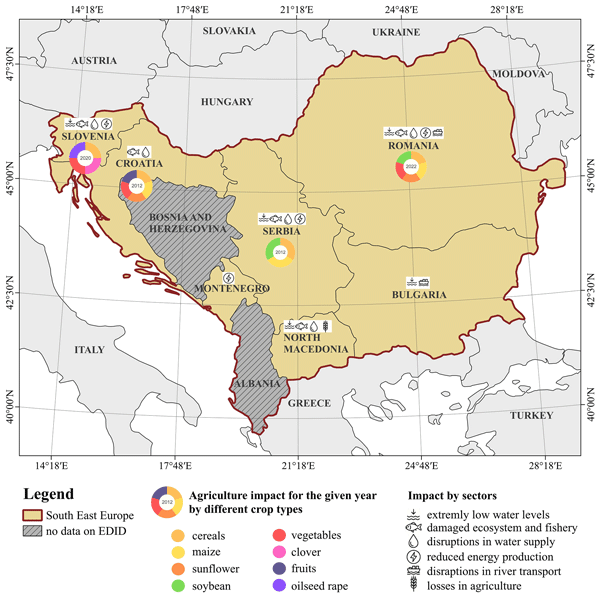
Droughts pose a major threat to Europe’s food security, yet adaptation lags behind rapid climate shifts. This paper reviews ten years of drought research in nine Southeast European countries using SCOPUS data, identifying major gaps—especially in Montenegro, Albania, Slovenia, and North Macedonia. Using CDI v4 and EDID data, it highlights regional drought patterns and the legacy of drought impacts.
Drought affects not only water availability but also agriculture, the economy, and communities. This study explores how public policies help reduce these impacts in Ceará, Northeast Brazil. Using qualitative drought monitoring data, interviews, and policy analysis, we found that policies supporting local economies help lessen drought effects. However, most reported impacts are still related to water shortages, showing the need for broader strategies beyond water supply investment.

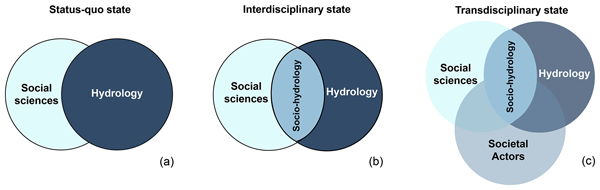
socialmeans in socio-hydrology, and monodisciplinary studies prevail. We expect to encourage socio-hydrologists to investigate different disasters using a more integrative approach that combines natural and social sciences tools by involving stakeholders and broadening the use of mixed methods.