
Articles | Volume 16, issue 8
https://doi.org/10.5194/nhess-16-2009-2016
© Author(s) 2016. This work is distributed under
the Creative Commons Attribution 3.0 License.
the Creative Commons Attribution 3.0 License.
https://doi.org/10.5194/nhess-16-2009-2016
© Author(s) 2016. This work is distributed under
the Creative Commons Attribution 3.0 License.
the Creative Commons Attribution 3.0 License.
Research article
| 
30 Aug 2016
Research article |
| 30 Aug 2016
Decision support system for emergency management of oil spill accidents in the Mediterranean Sea
Svitlana Liubartseva
CORRESPONDING AUTHOR
Fondazione CMCC – Centro Euro-Mediterraneo sui Cambiamenti Climatici, via M. Franceschini 31, 40128 Bologna, Italy
Giovanni Coppini
Fondazione CMCC – Centro Euro-Mediterraneo sui Cambiamenti Climatici, via Augusto Imperatore 16, 73100 Lecce, Italy
Nadia Pinardi
Dipartimento di Fisica e Astronomia (DIFA) Università degli Studi di Bologna, viale Berti-Pichat 6/2, 40127 Bologna, Italy
Michela De Dominicis
Istituto Nazionale di Geofisica e Vulcanologia, via D. Creti 12, 40128 Bologna, Italy
National Oceanography Centre, 6 Brownlow Street, Liverpool, Merseyside, L3 5DA, UK
Rita Lecci
Fondazione CMCC – Centro Euro-Mediterraneo sui Cambiamenti Climatici, via Augusto Imperatore 16, 73100 Lecce, Italy
Giuseppe Turrisi
Fondazione CMCC – Centro Euro-Mediterraneo sui Cambiamenti Climatici, via Augusto Imperatore 16, 73100 Lecce, Italy
Sergio Cretì
Fondazione CMCC – Centro Euro-Mediterraneo sui Cambiamenti Climatici, via Augusto Imperatore 16, 73100 Lecce, Italy
Sara Martinelli
Fondazione CMCC – Centro Euro-Mediterraneo sui Cambiamenti Climatici, via Augusto Imperatore 16, 73100 Lecce, Italy
Paola Agostini
Fondazione CMCC – Centro Euro-Mediterraneo sui Cambiamenti Climatici, via Augusto Imperatore 16, 73100 Lecce, Italy
Palmalisa Marra
Links Management and Technology S.p.A. – via R. Scotellaro 55, 73100 Lecce, Italy
Francesco Palermo
Fondazione CMCC – Centro Euro-Mediterraneo sui Cambiamenti Climatici, via Augusto Imperatore 16, 73100 Lecce, Italy
Related authors

Jennifer Veitch, Enrique Alvarez-Fanjul, Arthur Capet, Stefania Ciliberti, Mauro Cirano, Emanuela Clementi, Fraser Davidson, Ghada el Serafy, Guilherme Franz, Patrick Hogan, Sudheer Joseph, Svitlana Liubartseva, Yasumasa Miyazawa, Heather Regan, and Katerina Spanoudaki
State Planet, 5-opsr, 6, https://doi.org/10.5194/sp-5-opsr-6-2025, https://doi.org/10.5194/sp-5-opsr-6-2025, 2025
Short summary
Short summary
Ocean forecast systems provide information about a future state of the ocean. This information is provided in the form of decision support tools, or downstream applications, that can be accessed by various stakeholders to support livelihoods, coastal resilience and the good governance of the marine environment. This paper provides an overview of the various downstream applications of ocean forecast systems that are utilized around the world.
Seimur Shirinov, Ivan Federico, Simone Bonamano, Salvatore Causio, Nicolás Biocca, Viviana Piermattei, Daniele Piazzolla, Jacopo Alessandri, Lorenzo Mentaschi, Giovanni Coppini, Marco Marcelli, and Nadia Pinardi
Nat. Hazards Earth Syst. Sci., 25, 3737–3758, https://doi.org/10.5194/nhess-25-3737-2025, https://doi.org/10.5194/nhess-25-3737-2025, 2025
Short summary
Short summary
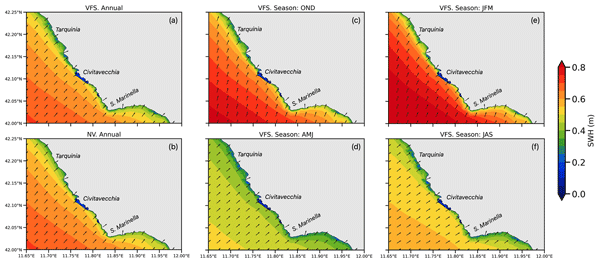
This research investigates how seagrass meadows attenuate coastal waves. Our methodology integrates site measurements with numerical simulations, revealing that plant flexibility and seasonal growth cycles are crucial factors that enhance model fidelity for predicting wave damping. These insights aid ecosystem-based coastal protection and conservation of these vital habitats. Future work should address current–sediment–vegetation interactions for a more complete hydrodynamic understanding.
Skyler Kern, Mary E. McGuinn, Katherine M. Smith, Nadia Pinardi, Kyle E. Niemeyer, Nicole S. Lovenduski, and Peter E. Hamlington
EGUsphere, https://doi.org/10.5194/egusphere-2025-3795, https://doi.org/10.5194/egusphere-2025-3795, 2025
Short summary
Short summary
The parameters that control a model's behavior determine its ability to represent a system. In this work, multiple cases test how to estimate the parameters of a model with components corresponding to both the physics and the chemical and biological processes (i.e. the biogeochemistry) of the ocean. While demonstrating how to approach this problem type, the results show estimating both sets of parameters simultaneously is better than estimating the physics then the biogeochemistry separately.
Mahmud Hasan Ghani, Nadia Pinardi, Antonio Navarra, Lorenzo Mentaschi, Silvia Bianconcini, Francesco Maicu, and Francesco Trotta
EGUsphere, https://doi.org/10.5194/egusphere-2025-2867, https://doi.org/10.5194/egusphere-2025-2867, 2025
Short summary
Short summary
Using the same SST and the same bulk formula, but different atmospheric reanalysis and analysis surface variable datasets, we show that higher resolution (ECMWF) dataset is crucial for evaluating the heat budget closure hypothesis in the Mediterranean Sea. For the first time, we investigate the impact of extreme heat loss events in the Mediterranean Sea in the long-term mean basin-averaged heat budget.
Salvatore Causio, Seimur Shirinov, Ivan Federico, Giovanni De Cillis, Emanuela Clementi, Lorenzo Mentaschi, and Giovanni Coppini
Ocean Sci., 21, 1105–1123, https://doi.org/10.5194/os-21-1105-2025, https://doi.org/10.5194/os-21-1105-2025, 2025
Short summary
Short summary
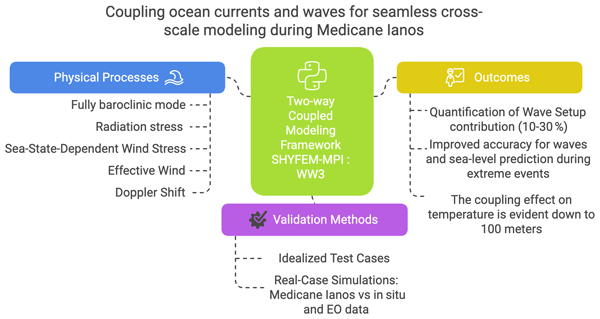
This study examines how waves and ocean currents interact during severe weather, focusing on Medicane Ianos, one of the strongest storms in the Mediterranean. Using advanced modeling, we created a unique system to simulate these interactions, capturing effects like wave-induced water levels and wave-induced effects on the vertical structure of the ocean. We validated our approach with ideal tests and real data from the storm.
Paolo Oddo, Mario Adani, Francesco Carere, Andrea Cipollone, Anna Chiara Goglio, Eric Jansen, Ali Aydogdu, Francesca Mele, Italo Epicoco, Jenny Pistoia, Emanuela Clementi, Nadia Pinardi, and Simona Masina
EGUsphere, https://doi.org/10.5194/egusphere-2025-1553, https://doi.org/10.5194/egusphere-2025-1553, 2025
Short summary
Short summary
This study present a data assimilation scheme that combines ocean observational data with ocean model results to better understand the ocean and predict its future state. The method uses a variational approach focusing on the physical relationships between all the state vector variables errors. Testing in the Mediterranean Sea showed that a complex sea level operator based on a barotropic model works best.
Rita Lecci, Robyn Gwee, Kun Yan, Sanne Muis, Nadia Pinardi, Jun She, Martin Verlaan, Simona Masina, Wenshan Li, Hui Wang, Salvatore Causio, Antonio Novellino, Marco Alba, Etiënne Kras, Sandra Gaytan Aguilar, and Jan-Bart Calewaert
EGUsphere, https://doi.org/10.5194/egusphere-2025-1763, https://doi.org/10.5194/egusphere-2025-1763, 2025
Short summary
Short summary
This study explored how sea level is changing along the China-Europe Sea Route. By combining satellite and in-situ observations with advanced modeling, the research identified ongoing sea level rise and an increasing frequency of extreme water level events in some regions. These findings underscore the importance of continued monitoring and provide useful knowledge to support long-term planning, coastal resilience, and informed decision-making.
Jennifer Veitch, Enrique Alvarez-Fanjul, Arthur Capet, Stefania Ciliberti, Mauro Cirano, Emanuela Clementi, Fraser Davidson, Ghada el Serafy, Guilherme Franz, Patrick Hogan, Sudheer Joseph, Svitlana Liubartseva, Yasumasa Miyazawa, Heather Regan, and Katerina Spanoudaki
State Planet, 5-opsr, 6, https://doi.org/10.5194/sp-5-opsr-6-2025, https://doi.org/10.5194/sp-5-opsr-6-2025, 2025
Short summary
Short summary
Ocean forecast systems provide information about a future state of the ocean. This information is provided in the form of decision support tools, or downstream applications, that can be accessed by various stakeholders to support livelihoods, coastal resilience and the good governance of the marine environment. This paper provides an overview of the various downstream applications of ocean forecast systems that are utilized around the world.
Italo R. Lopes, Ivan Federico, Michalis Vousdoukas, Luisa Perini, Salvatore Causio, Giovanni Coppini, Maurilio Milella, Nadia Pinardi, and Lorenzo Mentaschi
EGUsphere, https://doi.org/10.5194/egusphere-2025-1695, https://doi.org/10.5194/egusphere-2025-1695, 2025
Short summary
Short summary
We improved a computer model to simulate coastal flooding by including temporary barriers like sand dunes. We tested it where sand dunes are built seasonally to protect the shoreline for two real storms: one that broke through the dunes and another where dunes held strong. Our model showed how important it is to design these defenses carefully since even if a small part of a dune fails, a major flooding can happen. Overall, our work helps create better tools to manage and protect coastal areas.
Mohammad Hadi Bahmanpour, Alois Tilloy, Michalis Vousdoukas, Ivan Federico, Giovanni Coppini, Luc Feyen, and Lorenzo Mentaschi
EGUsphere, https://doi.org/10.5194/egusphere-2025-843, https://doi.org/10.5194/egusphere-2025-843, 2025
Short summary
Short summary
As natural hazards evolve, understanding how extreme events interact over time is crucial. While single extremes have been widely studied, joint extremes remain challenging to analyze. We present a framework that combines advanced statistical modeling with copula theory to capture changing dependencies. Applying it to historical data reveals dynamic patterns in extreme events. To support broader use, we provide an open-source tool for improved hazard assessment.
José A. Jiménez, Gundula Winter, Antonio Bonaduce, Michael Depuydt, Giulia Galluccio, Bart van den Hurk, H. E. Markus Meier, Nadia Pinardi, Lavinia G. Pomarico, and Natalia Vazquez Riveiros
State Planet, 3-slre1, 3, https://doi.org/10.5194/sp-3-slre1-3-2024, https://doi.org/10.5194/sp-3-slre1-3-2024, 2024
Short summary
Short summary
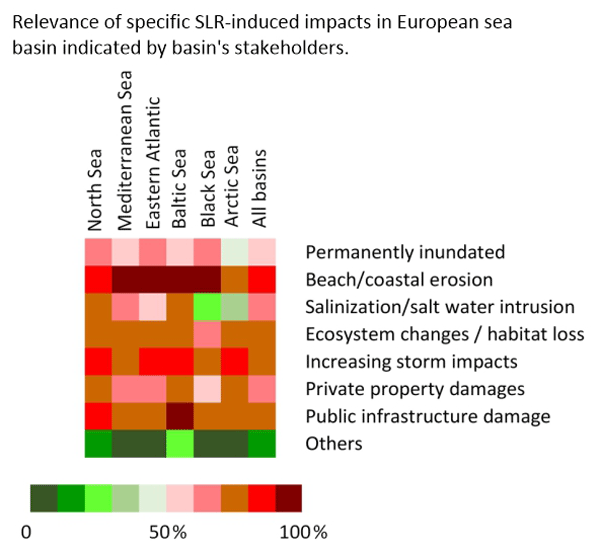
The Knowledge Hub on Sea Level Rise (SLR) has done a scoping study involving stakeholders from government and academia to identify gaps and needs in SLR information, impacts, and policies across Europe. Gaps in regional SLR projections and uncertainties were found, while concerns were raised about shoreline erosion and emerging problems like saltwater intrusion and ineffective adaptation plans. The need for improved communication to make better decisions on SLR adaptation was highlighted.
Nadia Pinardi, Bart van den Hurk, Michael Depuydt, Thorsten Kiefer, Petra Manderscheid, Lavinia Giulia Pomarico, and Kanika Singh
State Planet, 3-slre1, 2, https://doi.org/10.5194/sp-3-slre1-2-2024, https://doi.org/10.5194/sp-3-slre1-2-2024, 2024
Short summary
Short summary
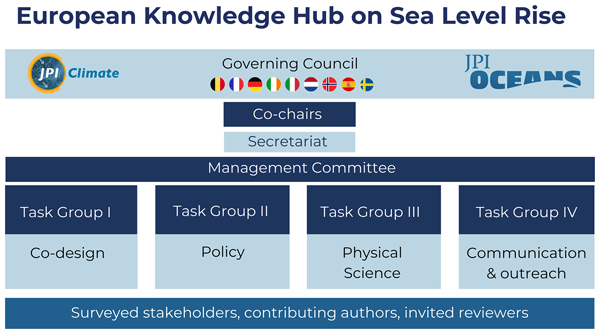
The Knowledge Hub on Sea Level Rise (KH-SLR), a joint effort between JPI Climate and JPI Oceans, addresses the critical need for science-based information on sea level changes in Europe. The KH-SLR actively involves stakeholders through a co-design process discussing the impacts, adaptation planning, and policy requirements related to SLR in Europe. Its primary output is the KH Assessment Report (KH-AR), which is described in this volume.
Bart van den Hurk, Nadia Pinardi, Alexander Bisaro, Giulia Galluccio, José A. Jiménez, Kate Larkin, Angélique Melet, Lavinia Giulia Pomarico, Kristin Richter, Kanika Singh, Roderik van de Wal, and Gundula Winter
State Planet, 3-slre1, 1, https://doi.org/10.5194/sp-3-slre1-1-2024, https://doi.org/10.5194/sp-3-slre1-1-2024, 2024
Short summary
Short summary
The Summary for Policymakers compiles findings from “Sea Level Rise in Europe: 1st Assessment Report of the Knowledge Hub on Sea Level Rise”. It covers knowledge gaps, observations, projections, impacts, adaptation measures, decision-making principles, and governance challenges. It provides information for each European basin (Mediterranean, Black Sea, North Sea, Baltic Sea, Atlantic, and Arctic) and aims to assist policymakers in enhancing the preparedness of European coasts for sea level rise.
Bethany McDonagh, Emanuela Clementi, Anna Chiara Goglio, and Nadia Pinardi
Ocean Sci., 20, 1051–1066, https://doi.org/10.5194/os-20-1051-2024, https://doi.org/10.5194/os-20-1051-2024, 2024
Short summary
Short summary
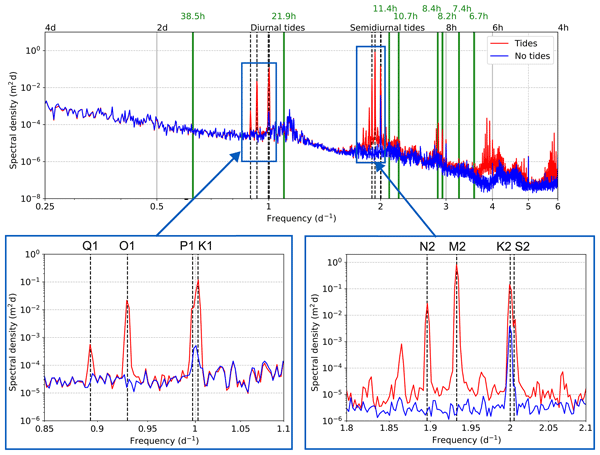
Tides in the Mediterranean Sea are typically of low amplitude, but twin experiments with and without tides demonstrate that tides affect the circulation directly at scales away from those of the tides. Analysis of the energy changes due to tides shows that they enhance existing oscillations, and internal tides interact with other internal waves. Tides also increase the mixed layer depth and enhance deep water formation in key regions. Internal tides are widespread in the Mediterranean Sea.
Roberta Benincasa, Giovanni Liguori, Nadia Pinardi, and Hans von Storch
Ocean Sci., 20, 1003–1012, https://doi.org/10.5194/os-20-1003-2024, https://doi.org/10.5194/os-20-1003-2024, 2024
Short summary
Short summary
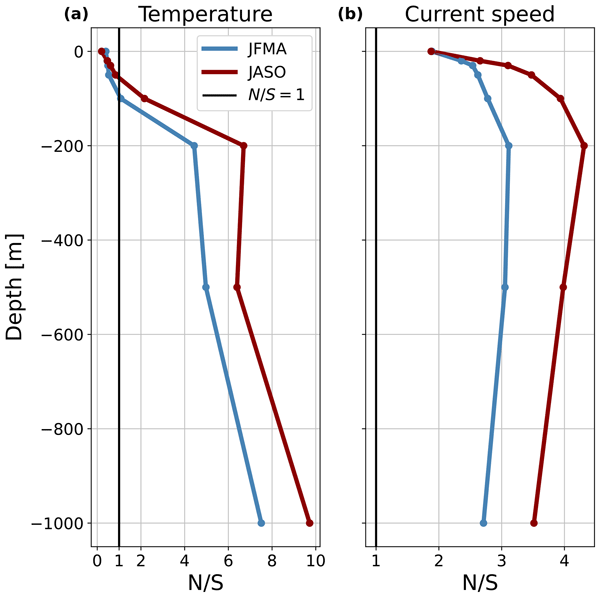
Ocean dynamics result from the interplay of internal processes and external inputs, primarily from the atmosphere. It is crucial to discern between these factors to gauge the ocean's intrinsic predictability and to be able to attribute a signal under study to either external factors or internal variability. Employing a simple analysis, we successfully characterized this variability in the Mediterranean Sea and compared it with the oceanic response induced by atmospheric conditions.
Skyler Kern, Mary E. McGuinn, Katherine M. Smith, Nadia Pinardi, Kyle E. Niemeyer, Nicole S. Lovenduski, and Peter E. Hamlington
Geosci. Model Dev., 17, 621–649, https://doi.org/10.5194/gmd-17-621-2024, https://doi.org/10.5194/gmd-17-621-2024, 2024
Short summary
Short summary
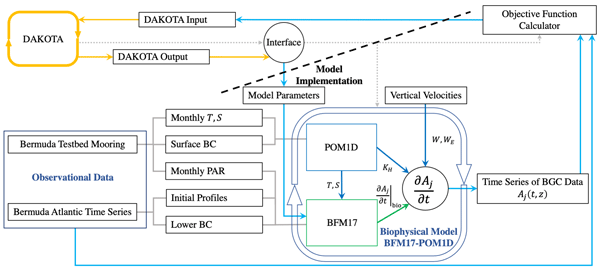
Computational models are used to simulate the behavior of marine ecosystems. The models often have unknown parameters that need to be calibrated to accurately represent observational data. Here, we propose a novel approach to simultaneously determine a large set of parameters for a one-dimensional model of a marine ecosystem in the surface ocean at two contrasting sites. By utilizing global and local optimization techniques, we estimate many parameters in a computationally efficient manner.
Giovanni Coppini, Emanuela Clementi, Gianpiero Cossarini, Stefano Salon, Gerasimos Korres, Michalis Ravdas, Rita Lecci, Jenny Pistoia, Anna Chiara Goglio, Massimiliano Drudi, Alessandro Grandi, Ali Aydogdu, Romain Escudier, Andrea Cipollone, Vladyslav Lyubartsev, Antonio Mariani, Sergio Cretì, Francesco Palermo, Matteo Scuro, Simona Masina, Nadia Pinardi, Antonio Navarra, Damiano Delrosso, Anna Teruzzi, Valeria Di Biagio, Giorgio Bolzon, Laura Feudale, Gianluca Coidessa, Carolina Amadio, Alberto Brosich, Arnau Miró, Eva Alvarez, Paolo Lazzari, Cosimo Solidoro, Charikleia Oikonomou, and Anna Zacharioudaki
Ocean Sci., 19, 1483–1516, https://doi.org/10.5194/os-19-1483-2023, https://doi.org/10.5194/os-19-1483-2023, 2023
Short summary
Short summary
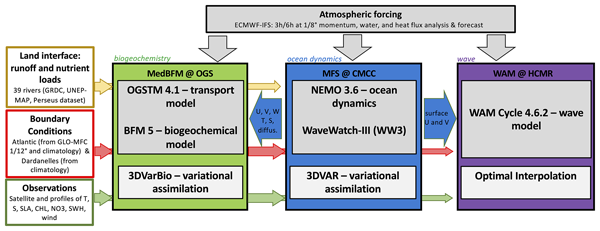
The paper presents the Mediterranean Forecasting System evolution and performance developed in the framework of the Copernicus Marine Service.
Jeff Polton, James Harle, Jason Holt, Anna Katavouta, Dale Partridge, Jenny Jardine, Sarah Wakelin, Julia Rulent, Anthony Wise, Katherine Hutchinson, David Byrne, Diego Bruciaferri, Enda O'Dea, Michela De Dominicis, Pierre Mathiot, Andrew Coward, Andrew Yool, Julien Palmiéri, Gennadi Lessin, Claudia Gabriela Mayorga-Adame, Valérie Le Guennec, Alex Arnold, and Clément Rousset
Geosci. Model Dev., 16, 1481–1510, https://doi.org/10.5194/gmd-16-1481-2023, https://doi.org/10.5194/gmd-16-1481-2023, 2023
Short summary
Short summary
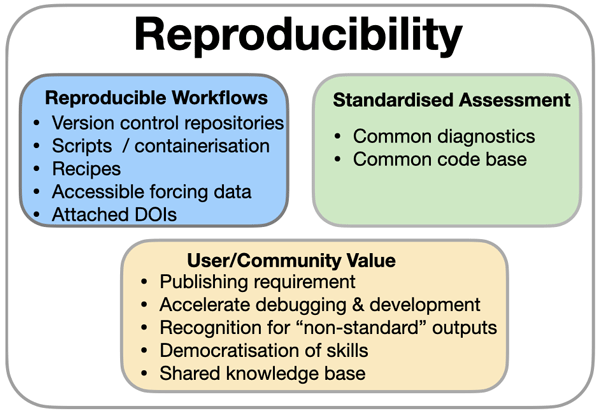
The aim is to increase the capacity of the modelling community to respond to societally important questions that require ocean modelling. The concept of reproducibility for regional ocean modelling is developed: advocating methods for reproducible workflows and standardised methods of assessment. Then, targeting the NEMO framework, we give practical advice and worked examples, highlighting key considerations that will the expedite development cycle and upskill the user community.

Umesh Pranavam Ayyappan Pillai, Nadia Pinardi, Ivan Federico, Salvatore Causio, Francesco Trotta, Silvia Unguendoli, and Andrea Valentini
Nat. Hazards Earth Syst. Sci., 22, 3413–3433, https://doi.org/10.5194/nhess-22-3413-2022, https://doi.org/10.5194/nhess-22-3413-2022, 2022
Short summary
Short summary
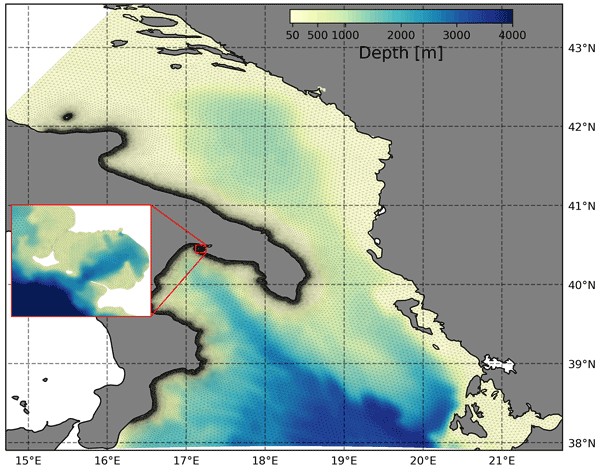
The study presents the application of high-resolution coastal modelling for wave hindcasting on the Emilia-Romagna coastal belt. The generated coastal databases which provide an understanding of the prevailing wind-wave characteristics can aid in predicting coastal impacts.
Giorgio Micaletto, Ivano Barletta, Silvia Mocavero, Ivan Federico, Italo Epicoco, Giorgia Verri, Giovanni Coppini, Pasquale Schiano, Giovanni Aloisio, and Nadia Pinardi
Geosci. Model Dev., 15, 6025–6046, https://doi.org/10.5194/gmd-15-6025-2022, https://doi.org/10.5194/gmd-15-6025-2022, 2022
Short summary
Short summary
The full exploitation of supercomputing architectures requires a deep revision of the current climate models. This paper presents the parallelization of the three-dimensional hydrodynamic model SHYFEM (System of HydrodYnamic Finite Element Modules). Optimized numerical libraries were used to partition the model domain and solve the sparse linear system of equations in parallel. The performance assessment demonstrates a good level of scalability with a realistic configuration used as a benchmark.
Katherine M. Smith, Skyler Kern, Peter E. Hamlington, Marco Zavatarelli, Nadia Pinardi, Emily F. Klee, and Kyle E. Niemeyer
Geosci. Model Dev., 14, 2419–2442, https://doi.org/10.5194/gmd-14-2419-2021, https://doi.org/10.5194/gmd-14-2419-2021, 2021
Short summary
Short summary
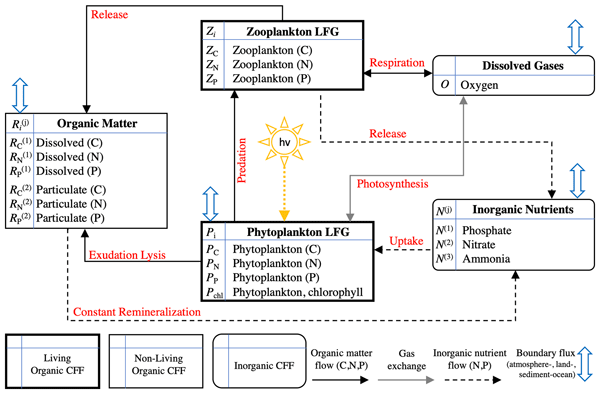
We present a newly developed reduced-order biogeochemical flux model that is complex and flexible enough to capture open-ocean ecosystem dynamics but reduced enough to incorporate into highly resolved numerical simulations with limited additional computational cost. The model provides improved correlations between model output and field data, indicating that significant improvements in the reproduction of real-world data can be achieved with a small number of variables.
Cited articles
Al-Rabeh, A., Lardner, R., and Gunay, N.: Gulfspill version 2.0: A software package for oil spills in the Arabian Gulf, Environ. Modell. Softw., 15, 425–442, https://doi.org/10.1016/S1364-8152(00)00013-X, 2000.
Alves, T., Kokinou, E., Zodiatis, G., Lardner, R., Panagiotakis, C., and Radhakrishnan, H.: Modelling of oil spills in confined maritime basins: The case for early response in the Eastern Mediterranean Sea, Environ. Pollut., 206, 390–399, https://doi.org/10.1016/j.envpol.2015.07.042, 2015.
Ambjorn, C.: SeatrackWeb, forecasts of oil spills, a new version, Environ. Res. Eng. Manage., 3, 60–66, https://doi.org/10.1109/BALTIC.2006.7266187, 2007.
Anderson, S., Uiboupin, R., Verjovkina, S., and Raudsepp, U.: SAR imagery and SeatrackWeb as decision making tools for illegal oil spill combating – a case study, in: 4th IEEE/OES US/EU Baltic International Symposium, Riga, Latvia, 25–27 August 2010, 1–6, https://doi.org/10.1109/BALTIC.2010.5621629, 2010.
Artegiani, A., Bregant, D., Paschini, E., Pinardi, N., Raicich, F., and Russo, A.: The Adriatic Sea general circulation, Part II: baroclinic circulation structure, J. Phys. Oceanogr., 27, 1515–1532, https://doi.org/10.1175/1520-0485(1997)027<1515:TASGCP>2.0.CO;2, 1997.
Bergin, M., Noblet, G., Petrini, K., Dhieux, J., Milford, J., and Harley, R.: Formal uncertainty analysis of a Lagrangian photochemical air pollution model, Environ. Sci. Technol., 33, 1116–1126, https://doi.org/10.1021/es980749y, 1999.
Carracedo, P., Torres-Lopez, S., Barreiro, M., Montero, P., Balseiro, C., Penabad, E., Leitao, P., and Perez-Munuzuri, V.: Improvement of pollutant drift forecast system applied to the Prestige oil spills in Galicia Coast (NW of Spain): Development of an operational system, Mar. Pollut. Bull., 53, 350–360, https://doi.org/10.1016/j.marpolbul.2005.11.014, 2006.
Coppini, G., De Dominicis, M., Zodiatis, G., Lardner, R., Pinardi, N., Santoleri, R., Colella, S., Bignami, F., Hayes, D., Soloviev, D., Georgiou, G., and Kallos, G.: Hindcast of oil spill pollution during the Lebanon Crisis, July–August 2006, Mar. Pollut. Bull., 62, 140–153, https://doi.org/10.1016/j.marpolbul.2010.08.021, 2011.
Daniel, P.: Operational forecasting of oil spill drift at Meteo-France, Spill Sci. Technol. B., 3, 53–64, 1996.
De Dominicis, M., Pinardi, N., Zodiatis, G., and Lardner, R.: MEDSLIK-II, a Lagrangian marine surface oil spill model for short-term forecasting – Part 1: Theory, Geosci. Model Dev., 6, 1851–1869, https://doi.org/10.5194/gmd-6-1851-2013, 2013a.
De Dominicis, M., Pinardi, N., Zodiatis, G., and Archetti, R.: MEDSLIK-II, a Lagrangian marine surface oil spill model for short-term forecasting – Part 2: Numerical simulations and validations, Geosci. Model Dev., 6, 1871–1888, https://doi.org/10.5194/gmd-6-1871-2013, 2013b.
De Dominicis, M., Falchetti, S., Trotta, F., Pinardi, N., Giacomelli, L., Napolitano, E., Fazioli, L., Sorgente, R., Haley, P., Lermusiaux, P., Martins, F., and Cocco, M.: A relocatable ocean model in support of environmental emergencies – the Costa Concordia emergency case, Ocean Dynam., 64, 667–688, https://doi.org/10.1007/s10236-014-0705-x, 2014.
De Dominicis, M., Bruciaferri, D., Gerin, R., Pinardi, N., Poulain, P.M., Garreau, P., Zodiatis, G., Perivoliotis, L., Fazioli, L., Sorgente, R., and Manganiello, C.: A multi-model assessment of the impact of currents, waves and wind in modelling surface drifters and oil spill, Deep-Sea Res. Pt. II, https://doi.org/10.1016/j.dsr2.2016.04.002, in press, 2016.
Dobricic, S. and Pinardi, N.: An oceanographic three-dimensional variational data assimilation scheme, Ocean Model., 22, 89–105, https://doi.org/10.1016/j.ocemod.2008.01.004, 2008.
ERMA: Environmental Response Management Application. Web application. Technical Information, in: National Oceanic and Atmospheric Administration, available atL http://response.restoration.noaa.gov/maps-and-spatial-data/environmental-response-management-application-erma (last access: 26 August 2016), 2014.
Fernandes, R., Neves, R., and Viegas, C.: Probabilities of oil exceeding thresholds of concern: examples from an evaluation for Florida Power and Light, in: AMOP 36 Technical Seminar, 4–6 June 2013, Halifax, Nova Scotia, Canada, 326–353, 2013.
French McCay, D., Rowe, J., Whittier, N., Sankaranarayanan, S., and Etkin, D. S.: Estimation of potential impacts and natural resource damages of oil, J. Hazard. Mater., 107, 11–25, https://doi.org/10.1016/j.jhazmat.2003.11.013, 2004.
Hasselmann, K., Barnett, T., Bouws, E., Carlson, H., Cartwright, D., Enke, K., Ewing, J., Gienapp, H., Hasselmann, D., Kruseman, P., Meerburg, A., Mller, P., Olbers, D., Richter, K., Sell, W., and Walden, H.: Measurements of wave growth and swell decay during the Joint North Sea Wave Project (JONSWAP), Ergänzungsheft zur Deutschen Hydrographischen Zeitschrift Reihe, Deutsches Hydrographisches Institut, Hamburg, Germany, A8–12, 1973.
Istituto Nazionale di Geofisica e Vulcanologia, Italy: Mediterranean sea physics analysis and forecast, available at: http://marine.copernicus.eu/services-portfolio/access-to-products/?option=com_csw&task=results&simplesearch=ok&advancedsearch-geographical_area[]=advancedsearch-geographical_area-mediterranean-sea, last access: 12 August 2016a.
Istituto Nazionale di Geofisica e Vulcanologia, Italy: MEDSLIK-II, available at: http://medslikii.bo.ingv.it, last access: 24 August 2016b.
Jensen, J., Ramsey, E., Holmes, J., Michel, J., Savitsky, B., and Davis, B.: Environmental sensitivity index (ESI) mapping for oil spills using remote sensing and geographic information system technology, Geograph. Inf. Sys, 4, 181–201, https://doi.org/10.1080/02693799008941539, 1990.
Lecci, R., Coppini, G., Cretì, S., Turrisi, G., D'Anca, A., Palazzo, C., Aloisio, G., Fiore, S., Bonaduce, A., Mannarini, G., Kumkar, Y., Ciliberti, S., Federico, I., Agostini, P., Bonarelli, R., Martinelli, S., Marra, P., Scalas, M., Tedesco, L., Rollo, D., Cavallo, A., Tumolo, A., Monacizzo, T., Spagnulo, M., Pinardi, N., Fazioli, L., Olita, A., Cucco, A., Sorgente, R., Tonani, M., and Drudi, M.: SeaConditions: present and future sea conditions for safer navigation, in: OCEANS–2015, 18–21 May 2015, Genoa, Italy, 1–6, available at: http://www.sea-conditions.com (last access: 12 May 2016), 2015.
Lehr, W., Jones, R., Evans, M., and Simecek-Beatty, D.: Revisions of the ADIOS oil spill model, Environ. Modell. Softw., 17, 191–199, 2002.
Liubartseva, S., De Dominicis, M., Oddo, P., Coppini, G., Pinardi, N., and Greggio, N.: Oil spill hazard from dispersal of oil along shipping lanes in the Southern Adriatic and Northern Ionian Seas, Mar. Pollut. Bull., 90, 259–272, https://doi.org/10.1016/j.marpolbul.2014.10.039, 2015.
Mackay, D., Buist, I., Mascarenhas, R., and Paterson, S.: Oil spill processes and models, Report to Research and Development Division, Environment Emergency Branch, Environmental Impact Control Directorate, Environmental Protection Service, Environment Canada, Ottawa, Canada, 1979.
Muskat, J.: The evolution of applied geographic information systems for oil spill response in California: Rapid data dissemination for informed decision making, in: International Oil Spill Conference (IOSC), 5–8 May, 2014, Savannah, Georgia, USA, 1583–1595, 2014.
Nittis, K., Perivoliotis, L., Korres, G., Tziavos, C., and Thanos, I.: Operational monitoring and forecasting for marine environmental applications in the Aegean Sea, Environ. Modell. Softw., 21, 243–257, https://doi.org/10.1016/j.envsoft.2004.04.023, 2006.
Oddo, P., Pinardi, N., and Zavatarelli, M.: A numerical study of the interannual variability of the Adriatic Sea (2000–2002), Sci. Total Environ., 353, 39–56, https://doi.org/10.1016/j.scitotenv.2005.09.061, 2005.
Oddo, P., Adani, M., Pinardi, N., Fratianni, C., Tonani, M., and Pettenuzzo, D.: A nested Atlantic-Mediterranean Sea general circulation model for operational forecasting, Ocean Sci., 5, 461–473, https://doi.org/10.5194/os-5-461-2009, 2009.
Pinardi, N., Allen, I., Demirov, E., De Mey, P., Korres, G., Lascaratos, A., Le Traon, P.-Y., Maillard, C., Manzella, G., and Tziavos, C.: The Mediterranean ocean forecasting system: first phase of implementation (1998–2001), Ann. Geophys., 21, 3–20, https://doi.org/10.5194/angeo-21-3-2003, 2003.
Reed, M., Aamo, O., and Daling, P.: Quantitative analysis of alternate oil spill response strategies using OSCAR, Spill Sci. Technol. B., 2, 67–74, https://doi.org/10.1016/1353-2561(95)00020-5, 1995.
Samaras, A. G., De Dominicis, M., Archetti, R., Lamberti, A., and Pinardi, N.: Towards improving the representation of beaching in oil spill models: A case study, Mar. Pollut. Bull., 88, 91–101, https://doi.org/10.1016/j.marpolbul.2014.09.019, 2014.
Sebastiao, P. and Guedes Soares, C.: Uncertainty in predictions of oil spill trajectories in open sea, Ocean Eng., 34, 576–584, https://doi.org/10.1016/j.oceaneng.2006.01.014, 2007.
Tonani, M., Pinardi, N., Dobricic, S., Pujol, I., and Fratianni, C.: A high-resolution free-surface model of the Mediterranean Sea, Ocean Sci., 4, 1–14, https://doi.org/10.5194/os-4-1-2008, 2008.
Wirtz, K. and Liu, X.: Integrating economy, ecology and uncertainty in an oil-spill DSS: The Prestige accident in Spain, 2002, Estuar. Coast. Shelf S., 70, 525–532, https://doi.org/10.1016/j.ecss.2006.06.016, 2006.
Xu, H., Chen, J., Wang, S., and Liu, Y.: Oil spill forecast model based on uncertainty analysis: A case study of Dalian oil spill, Estuar. Coast. Shelf S., 54, 206–212, https://doi.org/10.1016/j.oceaneng.2012.07.019, 2012.
Zelenke, B., O'Connor, C., Barker, C., Beegle-Krause, C. J., and Eclipse, L.: General NOAA Operational Modeling Environment (GNOME) Technical Documentation, U.S. Dept. of Commerce, NOAA Technical Memorandum NOS OR and R 40. Seattle, WA, USA: Emergency Response Division, NOAA, 2012.
Zhuravel, V., Zhuravel, I., Zatsepa, S., Zelenko, A., Ivchenko, A., Kulakov, M., Lobov, A., Popov, S., Resnyansky, Y., Svetov, S., Smolyanitsky, V., Solbakov, V., and Stanovoy, V.: Modeling of potential oil spill behavior when operating Prirazlomnaya OIFP. Assessment of possible oil spill emergency response. Research report, RGC Risk Informatics, Moscow, Russia, 2013.
Zodiatis, G., Lardner, R., Hayes, D. R., Georgiou, G., Sofianos, S., Skliris, N., and Lascaratos, A.: Operational ocean forecasting in the Eastern Mediterranean: implementation and evaluation, Ocean Sci., 4, 31–47, https://doi.org/10.5194/os-4-31-2008, 2008.
Short summary
An innovative fully operational 24/7 web-based decision support system, WITOIL (Where Is The Oil), has been developed to support oil pollution response. The system meets the real-time requirements in terms of performance and dynamic service delivery. Comprehensive computational resources and network bandwidth efficiently support the multi-user regime. The eight-language graphical user interface incorporates a great variety of user services, e.g., help and support, tooltips, and video tutorials.
An innovative fully operational 24/7 web-based decision support system, WITOIL (Where Is The...


Altmetrics
Final-revised paper
Preprint