
Articles | Volume 26, issue 3
https://doi.org/10.5194/nhess-26-1537-2026
© Author(s) 2026. This work is distributed under
the Creative Commons Attribution 4.0 License.
the Creative Commons Attribution 4.0 License.
https://doi.org/10.5194/nhess-26-1537-2026
© Author(s) 2026. This work is distributed under
the Creative Commons Attribution 4.0 License.
the Creative Commons Attribution 4.0 License.
Research article
| 
25 Mar 2026
Research article |
| 25 Mar 2026
| 25 Mar 2026
Tracking the slopes: a spatio-temporal prediction model for backcountry skiing activity in the Swiss Alps using user-generated content
Leonie Schäfer
CORRESPONDING AUTHOR

Department of Geography, University of Zurich, Winterthurerstrasse 190, 8057 Zürich, Switzerland
Digital Society Initiative, University of Zurich, Rämistrasse 69, 8001 Zürich, Switzerland
Frank Techel
WSL Institute for Snow and Avalanche Research SLF, Flüelastrasse 11, 7260 Davos, Switzerland
Günter Schmudlach
Skitourenguru GmbH, Markusstrasse 12, 8006 Zürich, Switzerland
Ross S. Purves
Department of Geography, University of Zurich, Winterthurerstrasse 190, 8057 Zürich, Switzerland
Related authors
No articles found.
Frank Techel, Karsten Müller, Christopher Marquardt, and Christoph Mitterer
Nat. Hazards Earth Syst. Sci., 26, 1161–1181, https://doi.org/10.5194/nhess-26-1161-2026, https://doi.org/10.5194/nhess-26-1161-2026, 2026
Short summary
Short summary
We examined how avalanche forecasters across Europe use the EAWS (European Avalanche Warning Services) Matrix, a decision-support tool for determining regional avalanche danger levels. Although warning services apply the Matrix differently, we identified both consistent patterns and notable inconsistencies in its application. Our findings highlight where the Matrix works well and where clarification is needed, supporting more consistent and transparent avalanche information for the public.
Karsten Müller, Frank Techel, and Christoph Mitterer
Nat. Hazards Earth Syst. Sci., 25, 4503–4525, https://doi.org/10.5194/nhess-25-4503-2025, https://doi.org/10.5194/nhess-25-4503-2025, 2025
Short summary
Short summary
This paper presents the updated EAWS (European Avalanche Warning Services) Matrix, developed to support consistent avalanche danger assessments across Europe. It links snowpack stability, its frequency, and avalanche size to the five danger levels. Based on expert surveys and operational testing, the Matrix supports expert judgment and aligns with the Conceptual Model of Avalanche Hazard while addressing known ambiguities in practice.
Frank Techel, Ross S. Purves, Stephanie Mayer, Günter Schmudlach, and Kurt Winkler
Nat. Hazards Earth Syst. Sci., 25, 3333–3353, https://doi.org/10.5194/nhess-25-3333-2025, https://doi.org/10.5194/nhess-25-3333-2025, 2025
Short summary
Short summary
We tested how well fully data- and model-driven avalanche forecasts compare to human-made forecasts, which also integrate added context like field observations or model output. Using data from Switzerland over three winters, we found that models – even without this extra input – performed nearly as well. While human forecasts still have a slight edge, model predictions already offer reliable support for daily avalanche forecasting.
Inhye Kong, Jan Seibert, and Ross S. Purves
Hydrol. Earth Syst. Sci., 29, 3795–3808, https://doi.org/10.5194/hess-29-3795-2025, https://doi.org/10.5194/hess-29-3795-2025, 2025
Short summary
Short summary
This study examines the timing and topics of newspaper coverage of droughts in England. Media attention correlated with drought-prone hydroclimatic conditions, particularly low precipitation and low groundwater levels, but also showed a seasonality bias, with more coverage in spring and summer, as exemplified by the 2022 summer drought. The findings reveal complex media dynamics in science communication, suggesting potential gaps in how droughts are framed by scientists versus the media.
Annika Kunz, Ross S. Purves, and Bruna Rohling
AGILE GIScience Ser., 6, 33, https://doi.org/10.5194/agile-giss-6-33-2025, https://doi.org/10.5194/agile-giss-6-33-2025, 2025
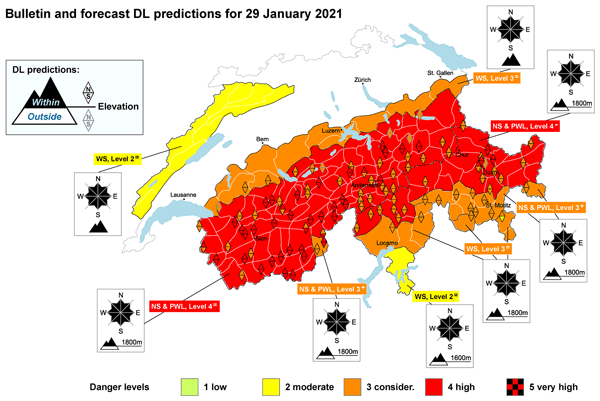
Cristina Pérez-Guillén, Frank Techel, Michele Volpi, and Alec van Herwijnen
Nat. Hazards Earth Syst. Sci., 25, 1331–1351, https://doi.org/10.5194/nhess-25-1331-2025, https://doi.org/10.5194/nhess-25-1331-2025, 2025
Short summary
Short summary
This study assesses the performance and explainability of a random-forest classifier for predicting dry-snow avalanche danger levels during initial live testing. The model achieved ∼ 70 % agreement with human forecasts, performing equally well in nowcast and forecast modes, while capturing the temporal dynamics of avalanche forecasting. The explainability approach enhances the transparency of the model's decision-making process, providing a valuable tool for operational avalanche forecasting.
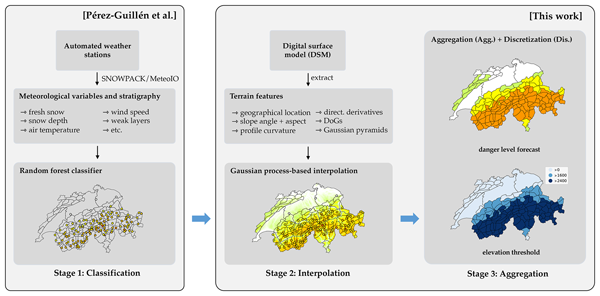
Alessandro Maissen, Frank Techel, and Michele Volpi
Geosci. Model Dev., 17, 7569–7593, https://doi.org/10.5194/gmd-17-7569-2024, https://doi.org/10.5194/gmd-17-7569-2024, 2024
Short summary
Short summary
By harnessing AI models, this work enables processing large amounts of data, including weather conditions, snowpack characteristics, and historical avalanche data, to predict human-like avalanche forecasts in Switzerland. Our proposed model can significantly assist avalanche forecasters in their decision-making process, thereby facilitating more efficient and accurate predictions crucial for ensuring safety in Switzerland's avalanche-prone regions.
Inhye Kong and Ross S. Purves
AGILE GIScience Ser., 5, 33, https://doi.org/10.5194/agile-giss-5-33-2024, https://doi.org/10.5194/agile-giss-5-33-2024, 2024
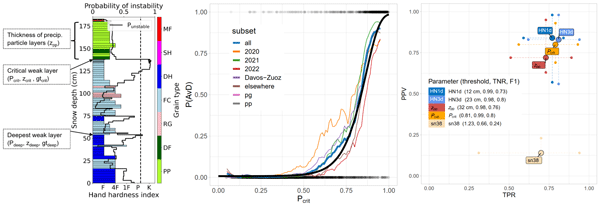
Stephanie Mayer, Frank Techel, Jürg Schweizer, and Alec van Herwijnen
Nat. Hazards Earth Syst. Sci., 23, 3445–3465, https://doi.org/10.5194/nhess-23-3445-2023, https://doi.org/10.5194/nhess-23-3445-2023, 2023
Short summary
Short summary
We present statistical models to estimate the probability for natural dry-snow avalanche release and avalanche size based on the simulated layering of the snowpack. The benefit of these models is demonstrated in comparison with benchmark models based on the amount of new snow. From the validation with data sets of quality-controlled avalanche observations and danger levels, we conclude that these models may be valuable tools to support forecasting natural dry-snow avalanche activity.
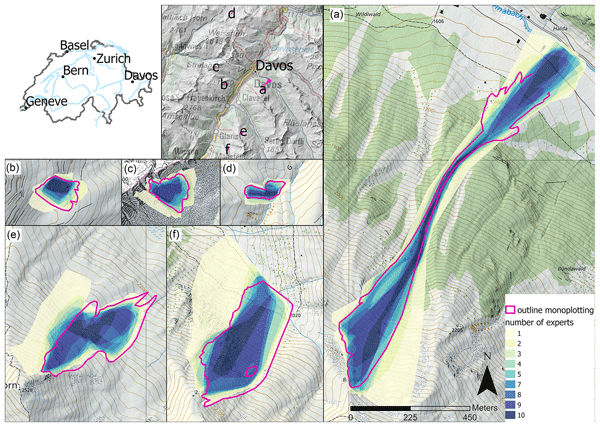
Elisabeth D. Hafner, Frank Techel, Rodrigo Caye Daudt, Jan Dirk Wegner, Konrad Schindler, and Yves Bühler
Nat. Hazards Earth Syst. Sci., 23, 2895–2914, https://doi.org/10.5194/nhess-23-2895-2023, https://doi.org/10.5194/nhess-23-2895-2023, 2023
Short summary
Short summary
Oftentimes when objective measurements are not possible, human estimates are used instead. In our study, we investigate the reproducibility of human judgement for size estimates, the mappings of avalanches from oblique photographs and remotely sensed imagery. The variability that we found in those estimates is worth considering as it may influence results and should be kept in mind for several applications.
Stephanie Mayer, Alec van Herwijnen, Frank Techel, and Jürg Schweizer
The Cryosphere, 16, 4593–4615, https://doi.org/10.5194/tc-16-4593-2022, https://doi.org/10.5194/tc-16-4593-2022, 2022
Short summary
Short summary
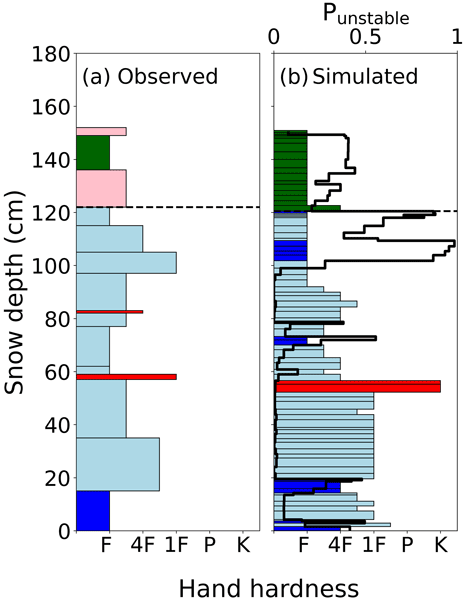
Information on snow instability is crucial for avalanche forecasting. We introduce a novel machine-learning-based method to assess snow instability from snow stratigraphy simulated with the snow cover model SNOWPACK. To develop the model, we compared observed and simulated snow profiles. Our model provides a probability of instability for every layer of a simulated snow profile, which allows detection of the weakest layer and assessment of its degree of instability with one single index.
Mina Karimi, Mohammad Saadi Mesgari, Ross Stuart Purves, and Omid Reza Abbasi
Abstr. Int. Cartogr. Assoc., 5, 54, https://doi.org/10.5194/ica-abs-5-54-2022, https://doi.org/10.5194/ica-abs-5-54-2022, 2022
Cristina Pérez-Guillén, Frank Techel, Martin Hendrick, Michele Volpi, Alec van Herwijnen, Tasko Olevski, Guillaume Obozinski, Fernando Pérez-Cruz, and Jürg Schweizer
Nat. Hazards Earth Syst. Sci., 22, 2031–2056, https://doi.org/10.5194/nhess-22-2031-2022, https://doi.org/10.5194/nhess-22-2031-2022, 2022
Short summary
Short summary
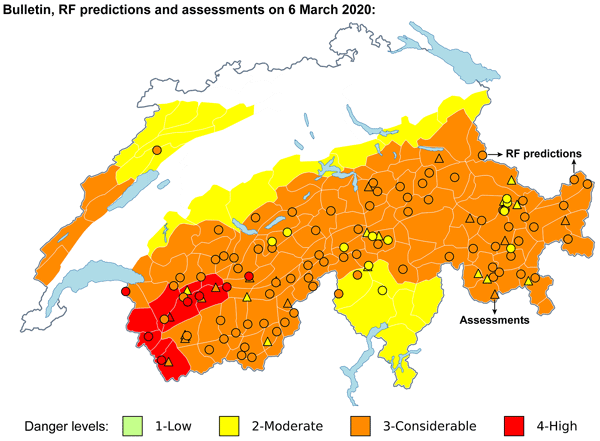
A fully data-driven approach to predicting the danger level for dry-snow avalanche conditions in Switzerland was developed. Two classifiers were trained using a large database of meteorological data, snow cover simulations, and danger levels. The models performed well throughout the Swiss Alps, reaching a performance similar to the current experience-based avalanche forecasts. This approach shows the potential to be a valuable supplementary decision support tool for assessing avalanche hazard.
Stefan S. Ivanovic and Ross Purves
AGILE GIScience Ser., 3, 39, https://doi.org/10.5194/agile-giss-3-39-2022, https://doi.org/10.5194/agile-giss-3-39-2022, 2022

Frank Techel, Stephanie Mayer, Cristina Pérez-Guillén, Günter Schmudlach, and Kurt Winkler
Nat. Hazards Earth Syst. Sci., 22, 1911–1930, https://doi.org/10.5194/nhess-22-1911-2022, https://doi.org/10.5194/nhess-22-1911-2022, 2022
Short summary
Short summary
Can the resolution of forecasts of avalanche danger be increased by using a combination of absolute and comparative judgments? Using 5 years of Swiss avalanche forecasts, we show that, on average, sub-levels assigned to a danger level reflect the expected increase in the number of locations with poor snow stability and in the number and size of avalanches with increasing forecast sub-level.

Veronika Hutter, Frank Techel, and Ross S. Purves
Nat. Hazards Earth Syst. Sci., 21, 3879–3897, https://doi.org/10.5194/nhess-21-3879-2021, https://doi.org/10.5194/nhess-21-3879-2021, 2021
Short summary
Short summary
How is avalanche danger described in public avalanche forecasts? We analyzed 6000 textual descriptions of avalanche danger in Switzerland, taking the perspective of the forecaster. Avalanche danger was described rather consistently, although the results highlight the difficulty of communicating conditions that are neither rare nor frequent, neither small nor large. The study may help to refine the ways in which avalanche danger could be communicated to the public.
Cited articles
Ahas, R., Aasa, A., Roose, A., Mark, Ü., and Silm, S.: Evaluating passive mobile positioning data for tourism surveys: An Estonian case study, Tourism Manage., 29, 469–486, https://doi.org/10.1016/j.tourman.2007.05.014, 2008. a
Ahonen, L., Mannberg, A., Hetland, A., Stefan, M., Pfuhl, G., Rong, G., Landrø, M., and Cowley, B.: Combining Avalanche Nowcasts With GPS Tracks and “In Situ” Participant Reports to Understand Decision-Making in Avalanche Terrain, in: Proceedings of the International Snow Science Workshop, Tromsø, Norway, https://arc.lib.montana.edu/snow-science/item.php?id=3343 (last access: 26 February 2026), 2024. a, b
Akter, S. and Wamba, S. F.: Big data analytics in E-commerce: a systematic review and agenda for future research, Electron. Mark., 26, 173–194, https://doi.org/10.1007/s12525-016-0219-0, 2016. a
Arts, I., Fischer, A., Duckett, D., and van der Wal, R.: Information technology and the optimisation of experience – The role of mobile devices and social media in human-nature interactions, Geoforum, 122, 55–62, https://doi.org/10.1016/j.geoforum.2021.03.009, 2021. a
Bielański, M., Taczanowska, K., Muhar, A., Adamski, P., González, L.-M., and Witkowski, Z.: Application of GPS tracking for monitoring spatially unconstrained outdoor recreational activities in protected areas – A case study of ski touring in the Tatra National Park, Poland, Appl. Geogr., 96, 51–65, https://doi.org/10.1016/j.apgeog.2018.05.008, 2018. a
Breiman, L.: Random Forests, Mach. Learn., 45, 5–32, https://doi.org/10.1023/a:1010933404324, 2001. a, b, c
Bucklin, R. E. and Sismeiro, C.: Click Here for Internet Insight: Advances in Clickstream Data Analysis in Marketing, J. Interact. Mark., 23, 35–48, https://doi.org/10.1016/j.intmar.2008.10.004, 2009. a
Bundesamt für Umwelt BAFU: Bundesinventar der eidgenössischen Jagdbanngebiete inkl. Routennetz Jagdbanngebiete, Bundesamt für Umwelt BAFU [data set], https://opendata.swiss/de/dataset/bundesinventar-der-eidgenossi schen-jagdbanngebiete-inkl-routennetz-jagdbanngebiete (last access: 19 May 2025), 2025. a
Chen, X., Li, X., Yao, D., and Zhou, Z.: Seeking the support of the silent majority: are lurking users valuable to UGC platforms?, J. Acad. Market. Sci., 47, 986–1004, https://doi.org/10.1007/s11747-018-00624-8, 2019. a
Clark, M., Wilkins, E. J., Dagan, D. T., Powell, R., Sharp, R. L., and Hillis, V.: Bringing forecasting into the future: Using Google to predict visitation in U.S. national parks, J. Environ. Manage., 243, 88–94, https://doi.org/10.1016/j.jenvman.2019.05.006, 2019. a
Darst, B. F., Malecki, K. C., and Engelman, C. D.: Using recursive feature elimination in random forest to account for correlated variables in high dimensional data, BMC Genetics, 19, 65, https://doi.org/10.1186/s12863-018-0633-8, 2018. a
Degraeuwe, B., Schmudlach, G., Winkler, K., and Köhler, J.: SLABS: An improved probabilistic method to assess the avalanche risk on backcountry ski tours, Cold Reg. Sci. Technol., 221, 104169, https://doi.org/10.1016/j.coldregions.2024.104169, 2024. a, b, c, d
Dodge, Y.: Spearman Rank Correlation Coefficient, Springer, New York, 502–505, https://doi.org/10.1007/978-0-387-32833-1_379, ISBN 9780387328331, 2008. a
Ebert, P. A. and Milne, P.: Methodological and conceptual challenges in rare and severe event forecast verification, Nat. Hazards Earth Syst. Sci., 22, 539–557, https://doi.org/10.5194/nhess-22-539-2022, 2022. a
Fedosov, A. and Langheinrich, M.: From Start to Finish: Understanding Group Sharing Behavior in a Backcountry Skiing Community, in: Proceedings of the 17th International Conference on Human-Computer Interaction with Mobile Devices and Services Adjunct, MobileHCI '15, Copenhagen Denmark, 24–27 August 2015, Association for Computing Machinery, New York, NY, USA, 758–765, https://doi.org/10.1145/2786567.2793698, ISBN 9781450336536, 2015. a
Fisher, D. M., Wood, S. A., Roh, Y.-H., and Kim, C.-K.: The Geographic Spread and Preferences of Tourists Revealed by User-Generated Information on Jeju Island, South Korea, Land, 8, 73, https://doi.org/10.3390/land8050073, 2019. a
Francisco, G., Apodaka, J., Travesset-Baro, O., Vilella, M., Margalef, A., and Pons, M.: Exploring the potential of mobile phone data (Call Detail Records) to track and analyze backcountry skiers dynamics in avalanche terrain, in: Proceedings of the International Snow Science Workshop 2018, Innsbruck, Austria, 7–12 October 2018, 1600–1603, https://www.researchgate.net/profile/Oriol-Travesset-Baro/publication/336085578_Exploring_the_potential_of_mobi bile_phone_data_Call_Detail_Records_to_track_and_analyze_ backcountry_skiers'_dynamics_in_avalanche_terrain/links/5d8 dc73192851c33e9408ee2/Exploring-the-potential-of-mobile-phone-data-Call-Detail-Records-to-track-and-analyze-backcoun try-skiers-dynamics-in-avalanche-terrain.pdf (last access: 26 Febraury 2026), 2018. a, b
Furman, N., Shooter, W., and Schumann, S.: The Roles of Heuristics, Avalanche Forecast, and Risk Propensity in the Decision Making of Backcountry Skiers, Leisure Sci., 32, 453–469, https://doi.org/10.1080/01490400.2010.510967, 2010. a, b, c, d
Furman, N., Shooter, W., and Tarlen, J.: Environmental factors affecting the predicted decisions of backcountry skiers: An examination of the obvious clues method decision aid, Journal of Outdoor Recreation, Education, and Leadership, 5, 226–241, https://doi.org/10.7768/1948-5123.1168, 2013. a, b
Gasser, B.: Equipment Became Better in Backcountry Skiing – Did Severity of Injuries Decrease? An Analysis from the Swiss Alps, Int. J. Env. Res. Pub. He., 17, 901, https://doi.org/10.3390/ijerph17030901, 2020. a
Gilpin, L. H., Bau, D., Yuan, B. Z., Bajwa, A., Specter, M., and Kagal, L.: Explaining Explanations: An Overview of Interpretability of Machine Learning, in: 2018 IEEE 5th International Conference on Data Science and Advanced Analytics (DSAA), Turin, Italy, 1–3 October 2018, IEEE, 80–89, https://doi.org/10.1109/DSAA.2018.00018, ISBN 978-1-5386-5090-5, 2018. a
Goodchild, M. F.: Citizens as sensors: the world of volunteered geography, GeoJournal, 69, 211–221, https://doi.org/10.1007/s10708-007-9111-y, 2007. a, b
Greenwell, B. M.: pdp: An R Package for Constructing Partial Dependence Plots, The R Journal, 9, 421–436, https://doi.org/10.32614/RJ-2017-016, 2017. a
Grímsdóttir, H. and Mcclung, D.: Avalanche risk during backcountry skiing – An analysis of risk factors, Nat. Hazards, 39, 127–153, https://doi.org/10.1007/s11069-005-5227-x, 2006. a
Guo, X., Yin, Y., Dong, C., Yang, G., and Zhou, G.: On the Class Imbalance Problem, in: 2008 Fourth International Conference on Natural Computation, Jinan, Shandong, China, 18–20 October 2008, IEEE, 192–201, https://doi.org/10.1109/ICNC.2008.871, ISBN 978-0-7695-3304-9, 2008. a
Haegeli, P., Haider, W., Longland, M., and Beardmore, B.: Amateur decision-making in avalanche terrain with and without a decision aid: a stated choice survey, Nat. Hazards, 52, 185–209, https://doi.org/10.1007/s11069-009-9365-4, 2010. a
Hanssen, A. and Kuipers, W.: On the Relationship between the Frequency of Rain and Various Meteorological Parameters, Koninkl. Nederlands Meterologisch Institut, Mededelingen en Verhandelingen, Koninklijk Nederlands Meteorologisch Instituut, https://books.google.ch/books?id=nTZ8OgAACAAJ (last access: 26 February 2026), 1965. a
Happ, E., Scholl-Grissemann, U., and Schnitzer, M.: Ski touring: Analyzing risk-taking behavior and risk avoidance associated with an emerging outdoor activity in the Alps, JSAMS Plus, 2, 100030, https://doi.org/10.1016/j.jsampl.2023.100030, 2023. a
Heikinheimo, V., Minin, E. D., Tenkanen, H., Hausmann, A., Erkkonen, J., and Toivonen, T.: User-Generated Geographic Information for Visitor Monitoring in a National Park: A Comparison of Social Media Data and Visitor Survey, ISPRS Int. J. Geo-Inf., 6, 85, https://doi.org/10.3390/ijgi6030085, 2017. a
Hendrikx, J., Johnson, J., and Mannberg, A.: How do we really use terrain in the backcountry? A comparison between stated terrain preferences and observed backcountry travel behaviour, in: Proceedings of the International Snow Science Workshop, Innsbruck, Austria, 7–12 October 2018, 1298–1300, https://www.researchgate.net/publication/328891291_How_do_we_really_use_terrain_in_the_backcountry_A_comparison_between_stated_terrain_preferences_and_observed_backcountry_travel_behaviour (last access: 27 February 2026), 2018. a
Hendrikx, J., Johnson, J., and Mannberg, A.: Tracking decision-making of backcountry users using GPS tracks and participant surveys, Appl. Geogr., 144, 102729, https://doi.org/10.1016/j.apgeog.2022.102729, 2022. a, b, c
Intercantonal Measurement and Information System IMIS: IMIS measuring network, EnviDat, https://doi.org/10.16904/envidat.406, 2023. a, b, c
Joachims, T.: Optimizing search engines using clickthrough data, in: Proceedings of the eighth ACM SIGKDD international conference on Knowledge discovery and data mining, Edmonton, Alberta, Canada, 23–26 July 2002, ACM, 133–142, https://doi.org/10.1145/775047.775067, ISBN 978-1-58113-567-1, 2002. a
Johnson, J. and Hendrikx, J.: Using Citizen Science to Document Terrain Use and Decision-Making of Backcountry Users, Citizen Science: Theory and Practice, 6, 8, https://doi.org/10.5334/cstp.333, 2021. a
Kandula, S. and Shaman, J.: Reappraising the utility of Google flu trends, PLoS Comput. Biol., 15, e1007258, https://doi.org/10.1371/journal.pcbi.1007258, 2019. a
King, M. A., Abrahams, A. S., and Ragsdale, C. T.: Ensemble methods for advanced skier days prediction, Expert Syst. Appl., 41, 1176–1188, https://doi.org/10.1016/j.eswa.2013.08.002, 2014. a, b, c
Koppen, G., Sang, Å. O., and Tveit, M. S.: Managing the potential for outdoor recreation: Adequate mapping and measuring of accessibility to urban recreational landscapes, Urban For. Urban Gree., 13, 71–83, https://doi.org/10.1016/j.ufug.2013.11.005, 2014. a, b
Krawczyk, B.: Learning from imbalanced data: open challenges and future directions, Progress in Artificial Intelligence, 5, 221–232, https://doi.org/10.1007/s13748-016-0094-0, 2016. a
Kroes, E. P. and Sheldon, R. J.: Stated Preference Methods: An Introduction, J. Transp. Econ. Policy, 22, 11–25, 1988. a
Ladle, R. J., Correia, R. A., Do, Y., Joo, G., Malhado, A. C., Proulx, R., Roberge, J., and Jepson, P.: Conservation culturomics, Front. Ecol. Environ., 14, 269–275, https://doi.org/10.1002/fee.1260, 2016. a
Lamprecht, M., Fischer, A., and Stamm, H.: Sport Schweiz 2014: Sportaktivität und Sportinteresse der Schweizer Bevölkerung, Tech. rep., Bundesamt für Sport BASPO, Magglingen, 56 pp., https://doi.org/10.13140/2.1.2930.0166, 2014. a
Lamprecht, M., Bürgi, R., and Stamm, H.: Sport Schweiz 2020: Sportaktivität und Sportinteresse der Schweizer Bevölkerung, Tech. rep., Bundesamt für Sport BASPO, Magglingen, 62 pp., 2020. a
Lesmerises, F., Déry, F., Johnson, C. J., and St-Laurent, M.-H.: Spatiotemporal response of mountain caribou to the intensity of backcountry skiing, Biol. Conserv., 217, 149–156, https://doi.org/10.1016/j.biocon.2017.10.030, 2018. a
Levin, N., Lechner, A. M., and Brown, G.: An evaluation of crowdsourced information for assessing the visitation and perceived importance of protected areas, Appl. Geogr., 79, 115–126, https://doi.org/10.1016/j.apgeog.2016.12.009, 2017. a, b
Loumiotis, I., Demestichas, K., Adamopoulou, E., Kosmides, P., Asthenopoulos, V., and Sykas, E.: Road Traffic Prediction Using Artificial Neural Networks, in: 2018 South-Eastern European Design Automation, Computer Engineering, Computer Networks and Society Media Conference (SEEDA_CECNSM), Kastoria, Greece, 22–24 September 2018, IEEE, 1–5, https://doi.org/10.23919/SEEDA-CECNSM.2018.8544943, 2018. a
Madden, K., Lukoseviciute, G., Ramsey, E., Panagopoulos, T., and Condell, J.: Forecasting daily foot traffic in recreational trails using machine learning, Journal of Outdoor Recreation and Tourism, 44, 100701, https://doi.org/10.1016/j.jort.2023.100701, 2023. a, b, c
Manley, K. and Egoh, B. N.: Mapping and modeling the impact of climate change on recreational ecosystem services using machine learning and big data, Environ. Res. Lett., 17, 054025, https://doi.org/10.1088/1748-9326/ac65a3, 2022. a, b
Mannberg, A., Hendrikx, J., Landrø, M., and Ahrland Stefan, M.: Who's at risk in the backcountry? Effects of individual characteristics on hypothetical terrain choices, J. Environ. Psychol., 59, 46–53, https://doi.org/10.1016/j.jenvp.2018.08.004, 2018. a
Marengo, D., Monaci, M. G., and Miceli, R.: Winter recreationists' self-reported likelihood of skiing backcountry slopes: Investigating the role of situational factors, personal experiences with avalanches and sensation-seeking, J. Environ. Psychol., 49, 78–85, https://doi.org/10.1016/j.jenvp.2016.12.005, 2017. a, b, c
Marsland, S.: Machine Learning, Chapman and Hall/CRC, https://doi.org/10.1201/9781420067194, ISBN 978-1-4200-6719-4, 2011. a, b
Mashhadi, A., Winder, S. G., Lia, E. H., and Wood, S. A.: Quantifying Biases in Social Media Analysis of Recreation in Urban Parks, in: 2020 IEEE International Conference on Pervasive Computing and Communications Workshops (PerCom Workshops), Austin, TX, USA, 23–27 March 2020, IEEE, 1–7, https://doi.org/10.1109/PerComWorkshops48775.2020.9156262, ISBN 978-1-72814-716-1, 2020. a
McCammon, I.: Heuristic Traps in Recreational Avalanche Accidents: Evidence and Implications, Avalanche News, No. 68, 2004. a
McClung, D.: The Avalanche Handbook, Mountaineers Books, 4th edn., ISBN 978-1-68051-539-8, 2023. a
MeteoSwiss: Klimabulletin Winter 2016/2017, https://www.meteoschweiz.admin.ch/service-und-publikationen/publikationen/berichte-und-bulletins/2017/klimabulletin-winter-2016-2017.html (last access: 27 Febraury 2026), 2017. a
MeteoSwiss: Documentation of MeteoSwiss Grid-Data Products: Hourly Precipitation Estimation through Rain-Gauge and Radar: CombiPrecip, Tech. rep., Federal Office of Meteorology and Climatology MeteoSwiss, https://www.meteoswiss.admin.ch/dam/jcr:2691db4e-7253-41c6-a413-2c75c9de11e3/ProdDoc_CPC.pdf (last access: 27 Febraury 2026), 2021a. a
MeteoSwiss: MeteoSwiss Spatial Climate Analyses: Documentation of Datasets for Users, Tech. rep., Federal Office of Meteorology and Climatology MeteoSwiss, 7 pp., https://www.meteoswiss.admin.ch/climate/the-climate-of-switzerland/spatial-climate-analyses.html (last access: 27 Febraury 2026), 2021b. a
MeteoSwiss: Daily Precipitation (final analysis): RhiresD, Tech. rep., Federal Office of Meteorology and Climatology MeteoSwiss, 6 pp., https://www.meteoschweiz.admin.ch/dam/jcr:4f51f0f1-0fe3-48b5-9de0-15666327e63c/ProdDoc_RhiresD.pdf (last access: 27 Febraury 2026), 2021c. a
MeteoSwiss: Documentation of MeteoSwiss Grid-Data Products: Daily Relative Sunshine Duration: SrelD 1.0, Tech. rep., Federal Office of Meteorology and Climatology MeteoSwiss, 6 pp., https://www.meteoswiss.admin.ch/dam/jcr:981891db-30d1-47cc-a2e1-50c270bdaf22/ProdDoc_SrelD.pdf (last access: 27 Febraury 2026), 2021d. a
MeteoSwiss: Documentation of MeteoSwiss Grid-Data Products: Daily Mean, Minimum and Maximum Temperature: TabsD, TminD, TmaxD 1.2, Tech. rep., Federal Office of Meteorology and Climatology MeteoSwiss, 5 pp., https://www.meteoschweiz.admin.ch/dam/jcr:818a4d17-cb0c-4e8b-92c6-1a1bdf5348b7/ProdDoc_TabsD.pdf (last access: 27 Febraury 2026), 2021e. a
MeteoSwiss: Automatic weather stations, MeteoSwiss [data], https://opendatadocs.meteoswiss.ch/de/a-data-groundbased/a1-
automatic-weather-stations#daten-automatisch-herunterladen (last access: 3 March 2026), 2026. a
Minehart, K., Antonio, A. D., Creany, N., Monz, C., and Gutzwiller, K.: Predicting trail condition using random forest models in urban-proximate nature reserves, Environmental Challenges, 15, 100937, https://doi.org/10.1016/j.envc.2024.100937, 2024. a
Mittermeier, J. C., Correia, R., Grenyer, R., Toivonen, T., and Roll, U.: Using Wikipedia to measure public interest in biodiversity and conservation, Conserv. Biol., 35, 412–423, https://doi.org/10.1111/cobi.13702, 2021. a
Montgomery, D. C., Peck, E. A., and Vining, G. G.: Introduction to Linear Regression Analysis, 4th edn., Wiley & Sons, ISBN 0471754951, 2006. a
Moss, G.: Avalanche hazard and visitor numbers – a study in Lochaber, Scotland, in: Proceedings ISSW 2009, International Snow Science Workshop Davos, Switzerland, 27 September–2 October 2009, 628–632, https://arc.lib.montana.edu/snow-science/objects/issw-2009-0628-0632.pdf (last access: 27 Febraury 2026), 2009. a, b, c
Müller, K., Techel, F., and Mitterer, C.: The EAWS matrix, a decision support tool to determine the regional avalanche danger level (Part A): conceptual development, Nat. Hazards Earth Syst. Sci., 25, 4503–4525, https://doi.org/10.5194/nhess-25-4503-2025, 2025. a
Müllner, A., Eduard Linsenmair, K., and Wikelski, M.: Exposure to ecotourism reduces survival and affects stress response in hoatzin chicks (Opisthocomus hoazin), Biol. Conserv., 118, 549–558, https://doi.org/10.1016/j.biocon.2003.10.003, 2004. a
Nichols, T. B., Hawley, A. C., Smith, W. R., Wheeler, A. R., and McIntosh, S. E.: Avalanche Safety Practices Among Backcountry Skiers and Snowboarders in Jackson Hole in 2016, Wild. Environ. Med., 29, 493–498, https://doi.org/10.1016/j.wem.2018.05.004, 2018. a
Niemann, D., Paul, S., and Rahman, H. H.: Avalanche Preparedness and Accident Analysis Among Backcountry Skier, Sidecountry, and Snowmobile Fatalities in the United States: 2009 to 2019, Wild. Environ. Med., 33, 197–203, https://doi.org/10.1016/j.wem.2022.03.006, 2022. a, b
Nonnecke, B. and Preece, J.: Shedding light on lurkers in online communities, Ethnographic studies in real and virtual environments: Inhabited information spaces and connected communities, Edinburgh, 24–26 January 1999, 123–128, 1999. a
Norman, P., Pickering, C. M., and Castley, G.: What can volunteered geographic information tell us about the different ways mountain bikers, runners and walkers use urban reserves?, Landscape Urban Plan., 185, 180–190, https://doi.org/10.1016/j.landurbplan.2019.02.015, 2019. a, b
Nyelele, C., Keske, C., Chung, M. G., Guo, H., and Egoh, B. N.: Using social media data and machine learning to map recreational ecosystem services, Ecol. Indic., 154, 110606, https://doi.org/10.1016/j.ecolind.2023.110606, 2023. a, b
Olson, L. E., Squires, J. R., Roberts, E. K., Miller, A. D., Ivan, J. S., and Hebblewhite, M.: Modeling large-scale winter recreation terrain selection with implications for recreation management and wildlife, Appl. Geogr., 86, 66–91, https://doi.org/10.1016/j.apgeog.2017.06.023, 2017. a, b
Otis, D. L. and White, G. C.: Autocorrelation of Location Estimates and the Analysis of Radiotracking Data, J. Wildlife Manage., 63, 1039, https://doi.org/10.2307/3802819, 1999. a
Owuor, I., Hochmair, H. H., and Paulus, G.: Use of social media data, online reviews and wikipedia page views to measure visitation patterns of outdoor attractions, Journal of Outdoor Recreation and Tourism, 44, 100681, https://doi.org/10.1016/j.jort.2023.100681, 2023. a
Peirce, C. S.: The Numerical Measure of the Success of Predictions, Science, ns-4, 453–454, https://doi.org/10.1126/science.ns-4.93.453.b, 1884. a
Pfeifer, C.: On probabilities of avalanches triggered by alpine skiers. An empirically driven decision strategy for backcountry skiers based on these probabilities, Nat. Hazards, 48, 425–438, https://doi.org/10.1007/s11069-008-9270-2, 2009. a
Pfeifer, C., Höller, P., and Zeileis, A.: Spatial and temporal analysis of fatal off-piste and backcountry avalanche accidents in Austria with a comparison of results in Switzerland, France, Italy and the US, Nat. Hazards Earth Syst. Sci., 18, 571–582, https://doi.org/10.5194/nhess-18-571-2018, 2018. a, b
Pielmeier, C., Marty, C., and Techel, F.: Schnee und Lawinen in den Schweizer Alpen 2021/22: Wetter, Schneedecke und Lawinengefahr in den Schweizer Alpen, WSL-Institut für Schnee- und Lawinenforschung SLF, Davos, Switzerland, WSL Berichte, 128, 72 pp., https://doi.org/10.55419/wsl:32462, 2023. a
Rutty, M. and Andrey, J.: Weather Forecast Use for Winter Recreation, Weather Clim. Soc., 6, 293–306, https://doi.org/10.1175/WCAS-D-13-00052.1, 2014. a, b
Santos, M. L. B. D.: The “so-called” UGC: an updated definition of user-generated content in the age of social media, Online Inform. Rev., 46, 95–113, https://doi.org/10.1108/OIR-06-2020-0258, 2022. a
Scherrer, S. C. and Appenzeller, C.: Fog and low stratus over the Swiss Plateau – a climatological study, Int. J. Climatol., 34, 678–686, https://doi.org/10.1002/joc.3714, 2014. a
Schäfer, L.: Code and data for: Tracking the slopes: a spatio-temporal prediction model for backcountry skiing activity in the Swiss Alps using user-generated content, Version v1, Zenodo [data set/code], https://doi.org/10.5281/zenodo.18838099, 2026. a, b
Schirpke, U., Meisch, C., Marsoner, T., and Tappeiner, U.: Revealing spatial and temporal patterns of outdoor recreation in the European Alps and their surroundings, Ecosyst. Serv., 31, 336–350, https://doi.org/10.1016/j.ecoser.2017.11.017, 2018. a, b, c
Schmudlach, G.: Avalanche Risk Property Dataset (ARPD) User Manual (V3.1.2), https://wiki.skitourenguru.com/common/data/ARPD_Manual_3.1.2.pdf (last access: 27 February 2026), 2022. a
Schmudlach, G., Winkler, K., and Köhler, J.: Quantitative risk reduction method (QRM), a data-driven avalanche risk estimator, in: Proceedings ISSW, 1272–1278, 2018. a
Schönenberger, C.: Analysis of planned route trajectories to gain insights into route planning behaviour for backcountry ski tours, Master's thesis, University of Zurich, https://lean-gate.geo.uzh.ch/typo3conf/ext/qfq/Classes/Api/download.php/mastersThesis/67 (last access: 26 February 2026), 2018. a, b, c
Schweizer, J. and Techel, F.: Lawinenunfälle Schweizer Alpen. Zahlen und Fakten der letzten 20 Jahre, Bergundsteigen, 98, 44–48, 2017. a
Schwietering, A., Steinbauer, M., Mangold, M., Sand, M., and Audorff, V.: Digitalization of planning and navigating recreational outdoor activities, German Journal of Exercise and Sport Research, 54, 107–114, https://doi.org/10.1007/s12662-023-00927-1, 2024. a
Sharp, E., Haegeli, P., and Welch, M.: Patterns in the exposure of ski guides to avalanche terrain, in: Proceedings of the International Snow Science Workshop, Innsbruck, Austria, https://api.semanticscholar.org/CorpusID:226225194 (last access: 26 February 2026), 2018. a
Silverton, N. A., McIntosh, S. E., and Kim, H. S.: Risk Assessment in Winter Backcountry Travel, Wild. Environ. Med., 20, 269–274, https://doi.org/10.1580/08-WEME-OR-209R1.1, 2009. a
Skitourenguru GmbH: Avalanche Risk Property Dataset (ARPD), Skitourenguru GmbH [data set], https://wiki.skitourenguru.com/de/articles/a0065.html (last access: 3 March 2026), 2026a. a
Skitourenguru GmbH: Route Click Statistics Dataset (RCSD), Skitourenguru GmbH [data set], https://wiki.skitourenguru.com/de/articles/a0068.html (last access: 3 March 2026), 2026b. a
SLF: Long-term Avalanche Statistics, https://www.slf.ch/en/avalanches/avalanches-and-avalanche-accidents/long-term-statistics (last access: 8 December 2025), 2025. a
Sonter, L. J., Watson, K. B., Wood, S. A., and Ricketts, T. H.: Spatial and Temporal Dynamics and Value of Nature-Based Recreation, Estimated via Social Media, PLoS ONE, 11, e0162372, https://doi.org/10.1371/journal.pone.0162372, 2016. a
Spreafico, M. and Weingartner, R.: The hydrology of Switzerland: Selected aspects and results, Reports of the FOWG, Water Series, Berne, https://scnat.ch/en/uuid/i/a122cfa5-aba4-56c4-bc56-f79d0139f936-The_Hydrology_of_Switzerland (last access: 27 February 2026), 2005. a
Stahl Olafsson, A., Purves, R. S., Wartmann, F. M., Garcia-Martin, M., Fagerholm, N., Torralba, M., Albert, C., Verbrugge, L. N., Heikinheimo, V., Plieninger, T., Bieling, C., Kaaronen, R., Hartmann, M., and Raymond, C. M.: Comparing landscape value patterns between participatory mapping and geolocated social media content across Europe, Landscape Urban Plan., 226, 104511, https://doi.org/10.1016/j.landurbplan.2022.104511, 2022. a
Swets, J.: Measuring the accuracy of diagnostic systems, Science, 240, 1285–1293, 1988. a
Sykes, J., Hendrikx, J., Johnson, J., and Birkeland, K. W.: Combining GPS tracking and survey data to better understand travel behavior of out-of-bounds skiers, Appl. Geogr., 122, 102261, https://doi.org/10.1016/j.apgeog.2020.102261, 2020. a
Sykes, J., Haegeli, P., Atkins, R., Mair, P., and Bühler, Y.: Development of operational decision support tools for mechanized ski guiding using avalanche terrain modeling, GPS tracking, and machine learning, Nat. Hazards Earth Syst. Sci., 25, 1255–1292, https://doi.org/10.5194/nhess-25-1255-2025, 2025. a
Taczanowska, K., Bielański, M., González, L.-M., Garcia-Massó, X., and Toca-Herrera, J.: Analyzing Spatial Behavior of Backcountry Skiers in Mountain Protected Areas Combining GPS Tracking and Graph Theory, Symmetry, 9, 317, https://doi.org/10.3390/sym9120317, 2017. a
Techel, F., Zweifel, B., Winkler, K., and Baur, R.: Patterns of Recreational Backcountry Usage—Analyzing Data from Social Media Mountaineering Networks and Avalanche Statistics, in: Proceedings of the International Snow Science Workshop, Banff, Canada, 29 September–3 October 2014, https://doi.org/10.13140/2.1.2491.7761, 2014. a, b, c, d
Techel, F., Mitterer, C., Ceaglio, E., Coléou, C., Morin, S., Rastelli, F., and Purves, R. S.: Spatial consistency and bias in avalanche forecasts – a case study in the European Alps, Nat. Hazards Earth Syst. Sci., 18, 2697–2716, https://doi.org/10.5194/nhess-18-2697-2018, 2018. a
Tenkanen, H., Di Minin, E., Heikinheimo, V., Hausmann, A., Herbst, M., Kajala, L., and Toivonen, T.: Instagram, Flickr, or Twitter: Assessing the usability of social media data for visitor monitoring in protected areas, Scientific Reports, 7, 17615, https://doi.org/10.1038/s41598-017-18007-4, 2017. a, b, c, d
Toft, H., Sirotkin, A., Landrø, M., Engeset, R. V., and Hendrikx, J.: Challenges of Using Signaling Data From Telecom Network in Non-Urban Areas, Journal of Trial and Error, 3, 72–84, https://doi.org/10.36850/e14, 2023. a, b
Tversky, A. and Kahneman, D.: Judgment under Uncertainty: Heuristics and Biases: Biases in judgments reveal some heuristics of thinking under uncertainty, Science, 185, 1124–1131, https://doi.org/10.1126/science.185.4157.1124, 1974. a
Valle, E. A., Cobourn, A. P., Trivitt, S. J., Hendrikx, J., Johnson, J. D., and Fiore, D. C.: Perceptions Among Backcountry Skiers During the COVID-19 Pandemic: Avalanche Safety and Backcountry Habits of New and Established Skiers, Wild. Environ. Med., 33, 429–436, https://doi.org/10.1016/j.wem.2022.08.005, 2022. a
Venter, Z. S., Gundersen, V., Scott, S. L., and Barton, D. N.: Bias and precision of crowdsourced recreational activity data from Strava, Landscape Urban Plan., 232, 104686, https://doi.org/10.1016/j.landurbplan.2023.104686, 2023. a
Verbos, R. I., Altschuler, B., and Brownlee, M. T. J.: Weather Studies in Outdoor Recreation and Nature-Based Tourism: A Research Synthesis and Gap Analysis, Leisure Sci., 40, 533–556, https://doi.org/10.1080/01490400.2017.1325794, 2018. a, b
Walcher, M., Haegeli, P., and Fuchs, S.: Risk of Death and Major Injury from Natural Winter Hazards in Helicopter and Snowcat Skiing in Canada, Wild. Environ. Med., 30, 251–259, https://doi.org/10.1016/j.wem.2019.04.007, 2019. a
Wardman, M.: A Comparison of Revealed Preference and Stated Preference Models of Travel Behaviour, J. Transp. Econ. Policy, 22, 71–91, 1988. a
Wartmann, F., Baer, M., Hegetschweiler, K., Fischer, C., Hunziker, M., and Purves, R.: Assessing the potential of social media for estimating recreational use of urban and peri-urban forests, Urban For. Urban Gree., 64, 127261, https://doi.org/10.1016/j.ufug.2021.127261, 2021. a, b
Wegelin, P., Von Arx, W., and Thao, V. T.: Weather myths: how attractive is good weather really for same-day visits to outdoor recreation destinations?, Tourism Recreation Research, 49, 1–13, https://doi.org/10.1080/02508281.2022.2148076, 2022. a, b
Willibald, F., Van Strien, M. J., Blanco, V., and Grêt-Regamey, A.: Predicting outdoor recreation demand on a national scale – The case of Switzerland, Appl. Geogr., 113, 102111, https://doi.org/10.1016/j.apgeog.2019.102111, 2019. a, b, c
Winkler, K., Fischer, A., and Techel, F.: Avalanche Risk in Winter Backcountry Touring: Status and Recent Trends in Switzerland, in: Proceedings of the International Snow Science Workshop, Breckenridge, CO, USA, 3–7 October 2016, 270–276, 2016. a
Wood, S. A., Guerry, A. D., Silver, J. M., and Lacayo, M.: Using social media to quantify nature-based tourism and recreation, Scientific Reports, 3, 2976, https://doi.org/10.1038/srep02976, 2013. a, b, c
WSL Institute for Snow and Avalanche Research SLF: Manual measuring network, EnviDat, https://doi.org/10.16904/envidat.408, 2023. a, b
WSL Institute for Snow and Avalanche Research SLF: Lawinenbulletin 2013–2024, https://www.slf.ch/de/lawinenbulletin-und-schneesituation/archiv/ (last access: 27 February 2026), 2024. a
Zweifel, B., Pielmeier, C., Marty, C., and Techel, F.: Schnee und Lawinen in den Schweizer Alpen. Hydrologisches Jahr 2016/17, in: WSL Berichte 61, 79 pp., WSL-Institut für Schnee- und Lawinenforschung SLF; Eidg. Forschungsanstalt für Wald, Schnee und Landschaft WSL, Davos; Birmensdorf, https://www.slf.ch/de/lawinenbulletin-und-schneesituation/winterberichte/schnee-und-lawinen-in-den-
schweizer-alpen-hydrologisches-jahr-201617/#c271093 (last access: 27 February 2026), 2017. a
Short summary
Backcountry skiing is a popular form of recreation in Switzerland and worldwide, despite numerous avalanche accidents and fatalities that are recorded each year. There is a need for spatially explicit information on backcountry usage for effective risk estimations and avalanche forecast verification. We used GPS tracks and online engagement data to model and predict daily backcountry skiing base rates in the Swiss Alps based on a set of snow, weather, temporal and environmental variables.
Backcountry skiing is a popular form of recreation in Switzerland and worldwide, despite...


Altmetrics
Final-revised paper
Preprint