
Articles | Volume 24, issue 12
https://doi.org/10.5194/nhess-24-4385-2024
© Author(s) 2024. This work is distributed under
the Creative Commons Attribution 4.0 License.
the Creative Commons Attribution 4.0 License.
https://doi.org/10.5194/nhess-24-4385-2024
© Author(s) 2024. This work is distributed under
the Creative Commons Attribution 4.0 License.
the Creative Commons Attribution 4.0 License.
Research article
| 
05 Dec 2024
Research article |
| 05 Dec 2024
| 05 Dec 2024
Integrating susceptibility maps of multiple hazards and building exposure distribution: a case study of wildfires and floods for the province of Quang Nam, Vietnam
Faculty of Hydraulic Engineering, Hanoi University of Civil Engineering, Hanoi, 100000, Vietnam
Giuseppe Forino
School of Science, Engineering & Environment, University of Salford, Manchester, M5 4WT, UK
Lynda Yorke
School of Environmental and Natural Sciences, Bangor University, Bangor, Gwynedd, LL57 2DG, UK
Department of Geodesy, Hanoi University of Civil Engineering, Hanoi, 100000, Vietnam
Quynh Duy Bui
Department of Geodesy, Hanoi University of Civil Engineering, Hanoi, 100000, Vietnam
Hanh Hong Tran
Faculty of Geomatics and Land Administration, Hanoi University of Mining and Geology, Hanoi, 100000, Vietnam
Dinh Quoc Nguyen
Environmental Chemistry and Ecotoxicology Lab, Phenikaa University, Hanoi, 12116, Vietnam
Hieu Cong Duong
Institute of Geodesy Engineering Technology, Hanoi University of Civil Engineering, Hanoi, 100000, Vietnam
Matthieu Kervyn
Department of Geography, Vrije Universiteit Brussel, Brussels, 1050, Belgium
Related authors
No articles found.
Kinh Bac Dang, Hieu Nguyen, Thanh Dat Do, Thi Phuong Nga Pham, Tuan Linh Giang, Thi Dieu Linh Nguyen, Huu Hao Ngo, and Giuseppe Forino
EGUsphere, https://doi.org/10.5194/egusphere-2026-160, https://doi.org/10.5194/egusphere-2026-160, 2026
Preprint archived
Short summary
Short summary
This study aims to better predict landslides and debris flows in mountainous regions where heavy rain and human activities increase risk. We combined environmental conditions, land use, and local infrastructure in a probabilistic network model using maps, satellite images, and field information. Results show that prolonged heavy rainfall greatly raises risk, especially in farming areas, while protective embankments can strongly reduce threats to people and property.
Daniel O'Hara, Liran Goren, Roos M. J. van Wees, Benjamin Campforts, Pablo Grosse, Pierre Lahitte, Gabor Kereszturi, and Matthieu Kervyn
Earth Surf. Dynam., 12, 709–726, https://doi.org/10.5194/esurf-12-709-2024, https://doi.org/10.5194/esurf-12-709-2024, 2024
Short summary
Short summary
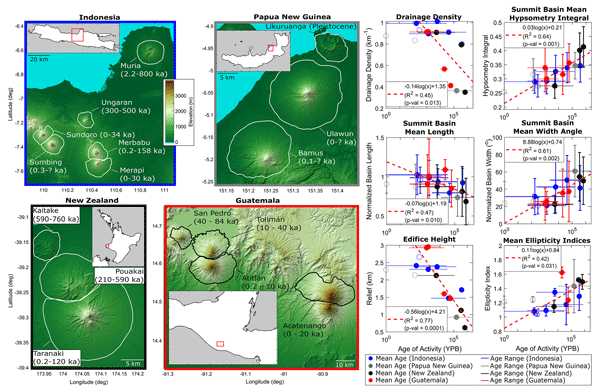
Understanding how volcanic edifices develop drainage basins remains unexplored in landscape evolution. Using digital evolution models of volcanoes with varying ages, we quantify the geometries of their edifices and associated drainage basins through time. We find that these metrics correlate with edifice age and are thus useful indicators of a volcano’s history. We then develop a generalized model for how volcano basins develop and compare our results to basin evolution in other settings.
Blaise Mafuko Nyandwi, Matthieu Kervyn, François Muhashy Habiyaremye, François Kervyn, and Caroline Michellier
Nat. Hazards Earth Syst. Sci., 23, 933–953, https://doi.org/10.5194/nhess-23-933-2023, https://doi.org/10.5194/nhess-23-933-2023, 2023
Short summary
Short summary
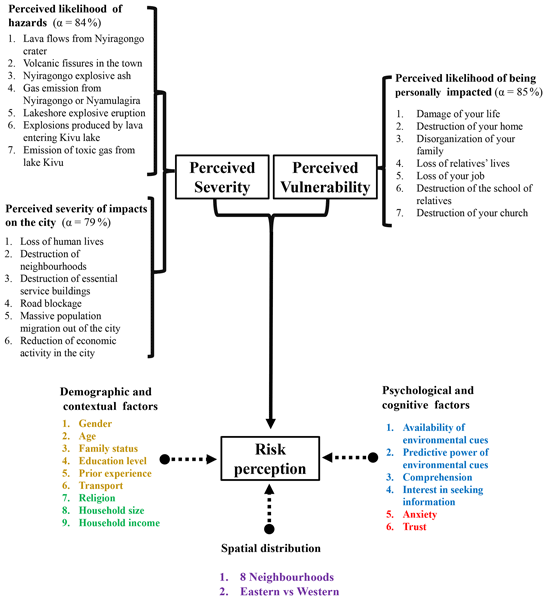
Risk perception involves the processes of collecting, selecting and interpreting signals about the uncertain impacts of hazards. It may contribute to improving risk communication and motivating the protective behaviour of the population living near volcanoes. Our work describes the spatial variation and factors influencing volcanic risk perception of 2204 adults of Goma exposed to Nyiragongo. It contributes to providing a case study for risk perception understanding in the Global South.
Ante Ivčević, Hubert Mazurek, Lionel Siame, Raquel Bertoldo, Vania Statzu, Kamal Agharroud, Isabel Estrela Rego, Nibedita Mukherjee, and Olivier Bellier
Nat. Hazards Earth Syst. Sci., 21, 3749–3765, https://doi.org/10.5194/nhess-21-3749-2021, https://doi.org/10.5194/nhess-21-3749-2021, 2021
Short summary
Short summary
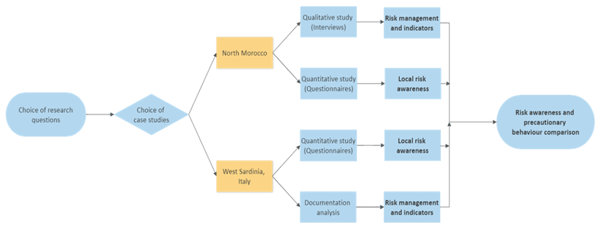
The results from two Mediterranean case studies, in north Morocco and west Sardinia, confirm the importance of interdisciplinarity and risk awareness sessions for risk management. The policy literature and interviews held with the administration, associations and scientists indicate that although recognised, the importance of risk awareness sessions is not necessarily put into practice. As a consequence, this could lead to a failure of risk management policy.
Cited articles
Abedi Gheshlaghi, H., Feizizadeh, B., Blaschke, T., Lakes, T., and Tajbar, S.: Forest fire susceptibility modeling using hybrid approaches, T. GIS, 25, 311–333, https://doi.org/10.1111/tgis.12688, 2021.
Abram, N. J., Henley, B. J., Sen Gupta, A., Lippmann, T. J. R., Clarke, H., Dowdy, A. J., Sharples, J. J., Nolan, R. H., Zhang, T., Wooster, M. J., Wurtzel, J. B., Meissner, K. J., Pitman, A. J., Ukkola, A. M., Murphy, B. P., Tapper, N. J., and Boer, M. M.: Connections of climate change and variability to large and extreme forest fires in southeast Australia, Commun. Earth Environ., 2, 8, https://doi.org/10.1038/s43247-020-00065-8, 2021.
Adab, H., Kanniah, K. D., and Solaimani, K.: Modeling forest fire risk in the northeast of Iran using remote sensing and GIS techniques, Nat. Hazards, 65, 1723–1743, https://doi.org/10.1007/s11069-012-0450-8, 2013.
Agus, C., Ilfana, Z., Azmi, F., Rachmanadi, D., Widiyatno, Wulandari, D., Santosa, P., Harun, M., Yuwati, T., and Lestari, T.: The effect of tropical peat land-use changes on plant diversity and soil properties, Int. J. Environ. Sci. Te., 17, 1703–1712, https://doi.org/10.1007/s13762-019-02579-x, 2020.
Ahmadlou, M., Karimi, M., Alizadeh, S., Shirzadi, A., Parvinnejhad, D., Shahabi, H., and Panahi, M.: Flood susceptibility assessment using integration of adaptive network-based fuzzy inference system (ANFIS) and biogeography-based optimization (BBO) and BAT algorithms (BA), Geocarto Int., 34, 1252–1272, https://doi.org/10.1080/10106049.2018.1474276, 2018.
Ahmadlou, M., Ebrahimian Ghajari, Y., and Karimi, M.: Enhanced classification and regression tree (CART) by genetic algorithm (GA) and grid search (GS) for flood susceptibility mapping and assessment, Geocarto Int., 37, 13638–13657, https://doi.org/10.1080/10106049.2022.2082550, 2022.
Ansori, S.: The Politics of Forest Fires in Southeast Asia, Contemp. S. E. Asia, 43, 179–202, 2021.
Arabameri, A., Pradhan, B., Rezaei, K., Yamani, M., Pourghasemi, H. R., and Lombardo, L.: Spatial modelling of gully erosion using evidential belief function, logistic regression, and a new ensemble of evidential belief function–logistic regression algorithm, Land Degrad. Dev., 29, 4035–4049, https://doi.org/10.1002/ldr.3151, 2018.
Askar, R., Bragança, L., and Gervásio, H.: Adaptability of Buildings: A Critical Review on the Concept Evolution, Appl. Sci., 11, 4483, https://doi.org/10.3390/app11104483, 2021.
Balica, S. F., Dinh, Q., and Popescu, I.: Chapter 5 – Vulnerability and Exposure in Developed and Developing Countries: Large-Scale Assessments, in: Hydro-Meteorological Hazards, Risks and Disasters, edited by: Baldassarre, J. F., Paron, P. and Di Baldassarre, G., Elsevier, Boston, https://doi.org/10.1016/B978-0-12-394846-5.00005-9, 125–162, 2015.
Banerjee, P.: Maximum entropy-based forest fire likelihood mapping: analysing the trends, distribution, and drivers of forest fires in Sikkim Himalaya, Scand. J. Forest Res., 36, 275–288, https://doi.org/10.1080/02827581.2021.1918239, 2021.
Bangalore, M., Smith, A., and Veldkamp, T.: Exposure to Floods, Climate Change, and Poverty in Vietnam, Economics of Disasters and Climate Change, 3, 79–99, https://doi.org/10.1007/s41885-018-0035-4, 2018.
Berhanu, B. and Bisrat, E.: Identification of surface water storing sites using topographic wetness index (TWI) and normalized difference vegetation index (NDVI), Journal of Natural Resources and Development, 8, 91–100, https://doi.org/10.5027/jnrd.v8i0.09, 2018.
Beven, K. J. and Kirkby, M. J.: A physically based, variable contributing area model of basin hydrology/Un modèle à base physique de zone d'appel variable de l'hydrologie du bassin versant, Hydrolog. Sci. B., 24, 43–69, https://doi.org/10.1080/02626667909491834, 1979.
Bhandari, A. K., Kumar, A., and Singh, G. K.: Feature Extraction using Normalized Difference Vegetation Index (NDVI): A Case Study of Jabalpur City, Proc. Tech., 6, 612–621, https://doi.org/10.1016/j.protcy.2012.10.074, 2012.
Bountzouklis, C., Fox, D. M., and Di Bernardino, E.: Environmental factors affecting wildfire-burned areas in southeastern France, 1970–2019, Nat. Hazards Earth Syst. Sci., 22, 1181–1200, https://doi.org/10.5194/nhess-22-1181-2022, 2022.
Breiman, L.: Random Forests, Mach. Learn., 45, 5–32, https://doi.org/10.1023/a:1010933404324, 2001.
Breiman, L., Friedman, J., Olshen, R. A., and Stone, C. J.: Classification and Regression Trees, in: 1st Edn., Chapman and Hall/CRC, https://doi.org/10.1201/9781315139470, 1984.
Bui, Q. D., Luu, C., Mai, S. H., Ha, H. T., Ta, H. T., and Pham, B. T.: Flood risk mapping and analysis using an integrated framework of machine learning models and analytic hierarchy process, Risk Anal., 43, 1478–1495, https://doi.org/10.1111/risa.14018, 2023a.
Bui, Q. D., Ha, H., Khuc, D. T., Nguyen, D. Q., von Meding, J., Nguyen, L. P., and Luu, C.: Landslide susceptibility prediction mapping with advanced ensemble models: Son La province, Vietnam, Nat. Hazards, 116, 2283–2309, https://doi.org/10.1007/s11069-022-05764-3, 2023b.
Carreño, M. L., Cardona, O. D., and Barbat, A. H.: A disaster risk management performance index, Nat. Hazards, 41, 1–20, https://doi.org/10.1007/s11069-006-9008-y, 2007.
Carter, J. V., Pan, J., Rai, S. N., and Galandiuk, S.: ROC-ing along: Evaluation and interpretation of receiver operating characteristic curves, Surgery, 159, 1638–1645, https://doi.org/10.1016/j.surg.2015.12.029, 2016.
Chau, V. N., Cassells, S., and Holland, J.: Economic impact upon agricultural production from extreme flood events in Quang Nam, central Vietnam, Nat. Hazards, 75, 1747–1765, https://doi.org/10.1007/s11069-014-1395-x, 2014.
Chen, W., Xie, X., Peng, J., Shahabi, H., Hong, H., Bui, D. T., Duan, Z., Li, S., and Zhu, A. X.: GIS-based landslide susceptibility evaluation using a novel hybrid integration approach of bivariate statistical based random forest method, CATENA, 164, 135–149, https://doi.org/10.1016/j.catena.2018.01.012, 2018.
Chen, X. and Hu, Q.: Groundwater influences on soil moisture and surface evaporation, J. Hydrol., 297, 285–300, https://doi.org/10.1016/j.jhydrol.2004.04.019, 2004.
Cirella, G. T. and Iyalomhe, F. O.: Flooding conceptual review: Sustainability-focalized best practices in Nigeria, Appl. Sci., 8, 1558, https://doi.org/10.3390/app8091558, 2018.
Cochrane, M. A. and Barber, C. P.: Climate change, human land use and future fires in the Amazon, Glob. Change Biol., 15, 601–612, https://doi.org/10.1111/j.1365-2486.2008.01786.x, 2009.
De Angeli, S., Malamud, B. D., Rossi, L., Taylor, F. E., Trasforini, E., and Rudari, R.: A multi-hazard framework for spatial-temporal impact analysis, Int. J. Disast. Risk Re., 73, 102829, https://doi.org/10.1016/j.ijdrr.2022.102829, 2022.
Desalegn, H. and Mulu, A.: Mapping flood inundation areas using GIS and HEC-RAS model at Fetam River, Upper Abbay Basin, Ethiopia, Scientific African, 12, e00834, https://doi.org/10.1016/j.sciaf.2021.e00834, 2021.
Dottori, F., Martina, M. L. V., and Figueiredo, R.: A methodology for flood susceptibility and vulnerability analysis in complex flood scenarios, J. Flood Risk Manag., 11, S632-S645, https://doi.org/10.1111/jfr3.12234, 2018.
Douven, W. and Buurman, J.: Planning practice in support of economically and environmentally sustainable roads in floodplains: The case of the Mekong delta floodplains, J. Environ. Manage., 128, 161–168, https://doi.org/10.1016/j.jenvman.2013.04.048, 2013.
Du, T. L. T., Bui, D. D., Nguyen, M. D., and Lee, H.: Satellite-Based, Multi-Indices for Evaluation of Agricultural Droughts in a Highly Dynamic Tropical Catchment, Central Vietnam, Water, 10, 659, https://doi.org/10.3390/w10050659, 2018.
Earth Engine Data Catalog: Open Buildings V3 Polygons, Earth Engine Data Catalog [data set], https://developers.google.com/earth-engine/datasets/catalog/GOOGLE_Research_open-buildings_v3_polygons (last access: 3 December 2024), 2024.
Eftekharian, E., Ghodrat, M., He, Y., Ong, R. H., Kwok, K. C. S., Zhao, M., and Samali, B.: Investigation of terrain slope effects on wind enhancement by a line source fire, Case Studies in Thermal Engineering, 14, 100467, https://doi.org/10.1016/j.csite.2019.100467, 2019.
Eisenbies, M. H., Aust, W. M., Burger, J. A., and Adams, M. B.: Forest operations, extreme flooding events, and considerations for hydrologic modeling in the Appalachians—A review, Forest Ecol. Manag., 242, 77–98, https://doi.org/10.1016/j.foreco.2007.01.051, 2007.
Esri: Sentinel-2 10-Meter Land Use/Land Cover, Esri [data set], https://livingatlas.arcgis.com/landcover/ (last access: 3 December 2024), 2024.
Fasching, C., Wilson, H. F., D'Amario, S. C., and Xenopoulos, M. A.: Natural land cover in agricultural catchments alters flood effects on DOM composition and decreases nutrient levels in streams, Ecosystems, 22, 1530–1545, https://doi.org/10.1007/s10021-019-00354-0, 2019.
Fox, E. W., Hill, R. A., Leibowitz, S. G., Olsen, A. R., Thornbrugh, D. J., and Weber, M. H.: Assessing the accuracy and stability of variable selection methods for random forest modeling in ecology, Environ. Monit. Assess., 189, 1–20, https://doi.org/10.1007/s10661-017-6025-0, 2017.
Gan, C. C. R., Oktari, R. S., Nguyen, H. X., Yuan, L., Yu, X., Kc, A., Hanh, T. T. T., Phung, D. T., Dwirahmadi, F., Liu, T., Musumari, P. M., Kayano, R., and Chu, C.: A scoping review of climate-related disasters in China, Indonesia and Vietnam: Disasters, health impacts, vulnerable populations and adaptation measures, Int. J. Disast. Risk Re., 66, 102608, https://doi.org/10.1016/j.ijdrr.2021.102608, 2021.
Genuer, R., Poggi, J.-M., and Tuleau-Malot, C.: Variable selection using random forests, Pattern Recogn. Lett., 31, 2225–2236, https://doi.org/10.1016/j.patrec.2010.03.014, 2010.
Gibeau, M. L., Clevenger, A. P., Herrero, S., and Wierzchowski, J.: Grizzly bear response to human development and activities in the Bow River Watershed, Alberta, Canada, Biol. Conserv., 103, 227–236, https://doi.org/10.1016/S0006-3207(01)00131-8, 2002.
Giglio, L., Csiszar, I., Restás, Á., Morisette, J. T., Schroeder, W., Morton, D., and Justice, C. O.: Active fire detection and characterization with the advanced spaceborne thermal emission and reflection radiometer (ASTER), Remote Sens. Environ., 112, 3055–3063, https://doi.org/10.1016/j.rse.2008.03.003, 2008.
Gonzalez-Arqueros, M. L., Mendoza, M. E., Bocco, G., and Solis Castillo, B.: Flood susceptibility in rural settlements in remote zones: The case of a mountainous basin in the Sierra-Costa region of Michoacan, Mexico, J. Environ. Manage., 223, 685–693, https://doi.org/10.1016/j.jenvman.2018.06.075, 2018.
Gray, J. M., Bishop, T. F. A., and Wilford, J. R.: Lithology and soil relationships for soil modelling and mapping, CATENA, 147, 429–440, https://doi.org/10.1016/j.catena.2016.07.045, 2016.
Guo, X., Ge, Y., Zhan, M., and Yan, H.: Failure process of a lateral slope deposit and its effect on debris flood formation, B. Eng. Geol. Environ., 81, 324, https://doi.org/10.1007/s10064-022-02789-7, 2022.
Ha, H., Bui, Q. D., Khuc, T. D., Tran, D. T., Pham, B. T., Mai, S. H., Nguyen, L. P., and Luu, C.: A machine learning approach in spatial predicting of landslides and flash flood susceptible zones for a road network, Model. Earth Syst. Environ., 8, 4341–4357, https://doi.org/10.1007/s40808-022-01384-9, 2022.
Ha, H., Bui, Q. D., Nguyen, H. D., Pham, B. T., Lai, T. D., and Luu, C.: A practical approach to flood hazard, vulnerability, and risk assessing and mapping for Quang Binh province, Vietnam, Environ. Dev. Sustain., 25, 1101–1130, https://doi.org/10.1007/s10668-021-02041-4, 2023.
Hasan, M. F., Smith, R., Vajedian, S., Pommerenke, R., and Majumdar, S.: Global land subsidence mapping reveals widespread loss of aquifer storage capacity, Nat. Commun., 14, 6180, https://doi.org/10.1038/s41467-023-41933-z, 2023.
Hasanzadeh Nafari, R., Ngo, T., and Mendis, P.: An Assessment of the Effectiveness of Tree-Based Models for Multi-Variate Flood Damage Assessment in Australia, Water, 8, 282, https://doi.org/10.3390/w8070282, 2016.
Hosseini, M. and Lim, S.: Gene expression programming and data mining methods for bushfire susceptibility mapping in New South Wales, Australia, Nat. Hazards, 113, 1349–1365, https://doi.org/10.1007/s11069-022-05350-7, 2022.
Houston, J.: Evaporation in the Atacama Desert: An empirical study of spatio-temporal variations and their causes, J. Hydrol., 330, 402–412, https://doi.org/10.1016/j.jhydrol.2006.03.036, 2006.
IPCC: Climate Change 2022: Impacts, Adaptation and Vulnerability, Working Group II Contribution to the Sixth Assessment Report of the Intergovernmental Panel on Climate Change, Cambridge University Press, https://doi.org/10.1017/9781009325844.002, 2022.
Jansen, J. D.: Flood magnitude–frequency and lithologic control on bedrock river incision in post-orogenic terrain, Geomorphology, 82, 39–57, https://doi.org/10.1016/j.geomorph.2005.08.018, 2006.
Javidan, N., Kavian, A., Pourghasemi, H. R., Conoscenti, C., Jafarian, Z., and Rodrigo-Comino, J.: Evaluation of multi-hazard map produced using MaxEnt machine learning technique, Sci. Rep., 11, 6496, https://doi.org/10.1038/s41598-021-85862-7, 2021.
Jenkins, L. T., Creed, M. J., Tarbali, K., Muthusamy, M., Trogrlić, R. Š., Phillips, J. C., Watson, C. S., Sinclair, H. D., Galasso, C., and McCloskey, J.: Physics-based simulations of multiple natural hazards for risk-sensitive planning and decision making in expanding urban regions, Int. J. Disast. Risk Re., 84, https://doi.org/10.1016/j.ijdrr.2022.103338, 2023.
Kalantar, B., Ueda, N., Idrees, M. O., Janizadeh, S., Ahmadi, K., and Shabani, F.: Forest fire susceptibility prediction based on machine learning models with resampling algorithms on remote sensing data, Remote Sens.-Basel, 12, 3682, https://doi.org/10.3390/rs12223682, 2020.
Khan, A., Gupta, S., and Gupta, S. K.: Multi-hazard disaster studies: Monitoring, detection, recovery, and management, based on emerging technologies and optimal techniques, Int. J. Disast. Risk Re., 47, 101642, https://doi.org/10.1016/j.ijdrr.2020.101642, 2020.
Khan, A. N.: Analysis of 2010-flood causes, nature and magnitude in the Khyber Pakhtunkhwa, Pakistan, Nat. Hazards, 66, 887–904, https://doi.org/10.1007/s11069-012-0528-3, 2013.
Khatakho, R., Gautam, D., Aryal, K. R., Pandey, V. P., Rupakhety, R., Lamichhane, S., Liu, Y.-C., Abdouli, K., Talchabhadel, R., and Thapa, B. R.: Multi-hazard risk assessment of Kathmandu Valley, Nepal, Sustainability, 13, 5369, https://doi.org/10.3390/su13105369, 2021.
Kim, J.-C., Lee, S., Jung, H.-S., and Lee, S.: Landslide susceptibility mapping using random forest and boosted tree models in Pyeong-Chang, Korea, Geocarto Int., 33, 1000–1015, https://doi.org/10.1080/10106049.2017.1323964, 2017.
Komolafe, A., Awe, B., Olorunfemi, I., and Oguntunde, P.: Modelling flood-prone area and vulnerability using integration of multi-criteria analysis and HAND model in the Ogun River Basin, Nigeria, Hydrolog. Sci. J., 65, 1766–1783, https://doi.org/10.1080/02626667.2020.1764960, 2020.
Kumari, B. and Pandey, A. C.: MODIS based forest fire hotspot analysis and its relationship with climatic variables, Spatial Information Research, 28, 87–99, https://doi.org/10.1007/s41324-019-00275-z, 2020.
Lambert, J., Denux, J.-P., Verbesselt, J., Balent, G., and Cheret, V.: Detecting clear-cuts and decreases in forest vitality using MODIS NDVI time series, Remote Sens.-Basel, 7, 3588–3612, https://doi.org/10.3390/rs70403588, 2015.
Langston, A. L. and Temme, A. J. A. M.: Bedrock erosion and changes in bed sediment lithology in response to an extreme flood event: The 2013 Colorado Front Range flood, Geomorphology, 328, 1–14, https://doi.org/10.1016/j.geomorph.2018.11.015, 2019.
Lauber, U., Kotyla, P., Morche, D., and Goldscheider, N.: Hydrogeology of an Alpine rockfall aquifer system and its role in flood attenuation and maintaining baseflow, Hydrol. Earth Syst. Sci., 18, 4437–4452, https://doi.org/10.5194/hess-18-4437-2014, 2014.
Lee, J., Perera, D., Glickman, T., and Taing, L.: Water-related disasters and their health impacts: A global review, Progress in Disaster Science, 8, 100123, https://doi.org/10.1016/j.pdisas.2020.100123, 2020.
Lu, M., Ikejiri, T., and Lu, Y.: A synthesis of the Devonian wildfire record: Implications for paleogeography, fossil flora, and paleoclimate, Palaeogeogr. Palaeocl., 571, 110321, https://doi.org/10.1016/j.palaeo.2021.110321, 2021.
Luu, C., Von Meding, J., and Kanjanabootra, S.: Assessing flood hazard using flood marks and analytic hierarchy process approach: a case study for the 2013 flood event in Quang Nam, Vietnam, Nat. Hazards, 90, 1031–1050, https://doi.org/10.1007/s11069-017-3083-0, 2018.
Luu, C., Bui, Q. D., and von Meding, J.: Mapping direct flood impacts from a 2020 extreme flood event in Central Vietnam using spatial analysis techniques, International Journal of Disaster Resilience in the Built Environment, 14, 85–99, https://doi.org/10.1108/ijdrbe-07-2021-0070, 2021.
Ma, Y., Ma, B., Jiao, H., Zhang, Y., Xin, J., and Yu, Z.: An analysis of the effects of weather and air pollution on tropospheric ozone using a generalized additive model in Western China: Lanzhou, Gansu, Atmos. Environ., 224, 117342, https://doi.org/10.1016/j.atmosenv.2020.117342, 2020.
Meghanadh, D., Kumar Maurya, V., Tiwari, A., and Dwivedi, R.: A multi-criteria landslide susceptibility mapping using deep multi-layer perceptron network: A case study of Srinagar-Rudraprayag region (India), Adv. Space Res., 2022, 69, 1883–1893, https://doi.org/10.1016/j.asr.2021.10.021, 2022.
Mai Sy, H., Luu, C., Bui, Q. D., Ha, H., and Nguyen, D. Q.: Urban flood risk assessment using Sentinel-1 on the google earth engine: A case study in Thai Nguyen city, Vietnam, Remote Sensing Applications: Society and Environment, 31, 100987, https://doi.org/10.1016/j.rsase.2023.100987, 2023.
Meles, M. B., Younger, S. E., Jackson, C. R., Du, E., and Drover, D.: Wetness index based on landscape position and topography (WILT): Modifying TWI to reflect landscape position, J. Environ. Manage., 255, 109863, https://doi.org/10.1016/j.jenvman.2019.109863, 2020.
Menoni, S., Molinari, D., Parker, D., Ballio, F., and Tapsell, S.: Assessing multifaceted vulnerability and resilience in order to design risk-mitigation strategies, Nat. Hazards, 64, 2057–2082, https://doi.org/10.1007/s11069-012-0134-4, 2012.
Miao, F., Zhao, F., Wu, Y., Li, L., and Török, Á.: Landslide susceptibility mapping in Three Gorges Reservoir area based on GIS and boosting decision tree model, Stoch. Env. Res. Risk A., 37, 2283–2303, https://doi.org/10.1007/s00477-023-02394-4, 2023.
Minár, J., Evans, I. S., and Jenčo, M.: A comprehensive system of definitions of land surface (topographic) curvatures, with implications for their application in geoscience modelling and prediction, Earth-Sci. Rev., 211, 103414, https://doi.org/10.1016/j.earscirev.2020.103414, 2020.
Mohamed, M. A.: Classification of landforms for digital soil mapping in urban areas using LiDAR data derived terrain attributes: a case study from Berlin, Germany, Land, 9, 319, https://doi.org/10.3390/land9090319, 2020.
Moore, I. D., Grayson, R., and Ladson, A.: Digital terrain modelling: a review of hydrological, geomorphological, and biological applications, Hydrol. Process., 5, 3–30, https://doi.org/10.1002/hyp.3360050103, 1991.
Mueller, J. M., Lima, R. E., Springer, A. E., and Schiefer, E.: Using matching methods to estimate impacts of wildfire and postwildfire flooding on house prices, Water Resour. Res., 54, 6189–6201, https://doi.org/10.1029/2017WR022195, 2018.
Nachappa, T., Ghorbanzadeh, O., Gholamnia, K., and Blaschke, T.: Multi-Hazard Exposure Mapping Using Machine Learning for the State of Salzburg, Austria, Remote Sens.-Basel, 12, 2757, https://doi.org/10.3390/rs12172757, 2020.
Naghibi, S. A., Pourghasemi, H. R., and Dixon, B.: GIS-based groundwater potential mapping using boosted regression tree, classification and regression tree, and random forest machine learning models in Iran, Environ. Monit. Assess., 188, 1–27, https://doi.org/10.1007/s10661-015-5049-6, 2016.
Nandi, A., Mandal, A., Wilson, M., and Smith, D.: Flood hazard mapping in Jamaica using principal component analysis and logistic regression, Environ. Earth Sci., 75, 1–16, https://doi.org/10.1007/s12665-016-5323-0, 2016.
NASA: The NASA POWER Project's Data Access Viewer, NASA [data set], https://power.larc.nasa.gov/data-access-viewer/ (last access: 3 December 2024), 2024.
National Forest Protection Department: https://watch.pcccr.vn/thongKe/diemChay/ (last access: 5 December 2024), 2024.
Nguyen, T. V., Allen, K. J., Le, N. C., Truong, C. Q., Tenzin, K., and Baker, P. J.: Human-Driven Fire Regime Change in the Seasonal Tropical Forests of Central Vietnam, Geophys. Res. Lett., 50, e2022GL100687, https://doi.org/10.1029/2022gl100687, 2023.
Orellana, F., Verma, P., Loheide, S. P., and Daly, E.: Monitoring and modeling water-vegetation interactions in groundwater-dependent ecosystems, Rev. Geophys., 50, RG3003, https://doi.org/10.1029/2011RG000383, 2012.
Papaioannou, G., Alamanos, A., and Maris, F.: Evaluating Post-Fire Erosion and Flood Protection Techniques: A Narrative Review of Applications, GeoHazards, 4, 380–405, https://doi.org/10.3390/geohazards4040022, 2023.
Piao, Y., Lee, D., Park, S., Kim, H. G., and Jin, Y.: Multi-hazard mapping of droughts and forest fires using a multi-layer hazards approach with machine learning algorithms, Geomat. Nat. Haz. Risk, 13, 2649–2673, https://doi.org/10.1080/19475705.2022.2128440, 2022.
Pourghasemi, H. R., Kariminejad, N., Amiri, M., Edalat, M., Zarafshar, M., Blaschke, T., and Cerda, A.: Assessing and mapping multi-hazard risk susceptibility using a machine learning technique, Sci. Rep., 10, 3203, https://doi.org/10.1038/s41598-020-60191-3, 2020.
Pourghasemi, H. R., Pouyan, S., Bordbar, M., Golkar, F., and Clague, J. J.: Flood, landslides, forest fire, and earthquake susceptibility maps using machine learning techniques and their combination, Nat. Hazards, 116, 3797–3816, https://doi.org/10.1007/s11069-023-05836-y, 2023.
Pourtaghi, Z. S., Pourghasemi, H. R., Aretano, R., and Semeraro, T.: Investigation of general indicators influencing on forest fire and its susceptibility modeling using different data mining techniques, Ecol. Indic., 64, 72–84, https://doi.org/10.1016/j.ecolind.2015.12.030, 2016.
Pouyan, S., Pourghasemi, H. R., Bordbar, M., Rahmanian, S., and Clague, J. J.: A multi-hazard map-based flooding, gully erosion, forest fires, and earthquakes in Iran, Sci. Rep., 11, 14889, https://doi.org/10.1038/s41598-021-94266-6, 2021.
Rentschler, J., Salhab, M., and Jafino, B. A.: Flood exposure and poverty in 188 countries, Nat. Commun., 13, 3527, https://doi.org/10.1038/s41467-022-30727-4, 2022.
Rusk, J., Maharjan, A., Tiwari, P., Chen, T.-H. K., Shneiderman, S., Turin, M., and Seto, K. C.: Multi-hazard susceptibility and exposure assessment of the Hindu Kush Himalaya, Sci. Total Environ., 804, 150039, https://doi.org/10.1016/j.scitotenv.2021.150039, 2022.
Šakić Trogrlić, R., Thompson, H. E., Menteşe, E. Y., Hussain, E., Gill, J. C., Taylor, F. E., Mwangi, E., Öner, E., Bukachi, V. G., and Malamud, B. D.: Multi-Hazard Interrelationships and Risk Scenarios in Urban Areas: A Case of Nairobi and Istanbul, Earths Future, 12, e2023EF004413, https://doi.org/10.1029/2023ef004413, 2024.
Schneiderbauer, S. and Ehrlich, D.: Risk, hazard and people's vulnerability to natural hazards, A review of definitions, concepts and data, EUR, 21410, 40, European Commission Joint Research Centre, 2004.
Schratz, P., Muenchow, J., Iturritxa, E., Richter, J., and Brenning, A.: Hyperparameter tuning and performance assessment of statistical and machine-learning algorithms using spatial data, Ecol. Model., 406, 109–120, https://doi.org/10.1016/j.ecolmodel.2019.06.002, 2019.
Sibold, J. S., Veblen, T. T., and González, M. E.: Spatial and temporal variation in historic fire regimes in subalpine forests across the Colorado Front Range in Rocky Mountain National Park, Colorado, USA, J. Biogeogr., 33, 631–647, https://doi.org/10.1111/j.1365-2699.2005.01404.x, 2006.
Sirko, W., Kashubin, S., Ritter, M., Annkah, A., Bouchareb, Y. S. E., Dauphin, Y., Keysers, D., Neumann, M., Cisse, M., and Quinn, J.: Continental-scale building detection from high resolution satellite imagery, arXiv [preprint], arXiv:2107.12283, 2021.
Skilodimou, H. D., Bathrellos, G. D., Chousianitis, K., Youssef, A. M., and Pradhan, B.: Multi-hazard assessment modeling via multi-criteria analysis and GIS: a case study, Environ. Earth Sci., 78, 1–21, https://doi.org/10.1007/s12665-018-8003-4, 2019.
Skilodimou, H. D., Bathrellos, G. D., and Alexakis, D. E.: Flood hazard assessment mapping in burned and urban areas, Sustainability, 13, 4455, https://doi.org/10.3390/su13084455, 2021.
Stoof, C. R., Vervoort, R. W., Iwema, J., van den Elsen, E., Ferreira, A. J. D., and Ritsema, C. J.: Hydrological response of a small catchment burned by experimental fire, Hydrol. Earth Syst. Sci., 16, 267–285, https://doi.org/10.5194/hess-16-267-2012, 2012.
Sun, Q., Miao, C., Hanel, M., Borthwick, A. G. L., Duan, Q., Ji, D., and Li, H.: Global heat stress on health, wildfires, and agricultural crops under different levels of climate warming, Environ. Int., 128, 125–136, https://doi.org/10.1016/j.envint.2019.04.025, 2019.
Tamiminia, H., Salehi, B., Mahdianpari, M., Quackenbush, L., Adeli, S., and Brisco, B.: Google Earth Engine for geo-big data applications: A meta-analysis and systematic review, ISPRS J. Photogramm., 164, 152–170, https://doi.org/10.1016/j.isprsjprs.2020.04.001, 2020.
Tang, R. and Zhang, X.: CART decision tree combined with Boruta feature selection for medical data classification, in: 2020 5th IEEE International Conference on Big Data Analytics (ICBDA), 8–11 May 2020, Xiamen, China, 80–84, https://doi.org/10.1109/ICBDA49040.2020.9101199, 2020.
Tavakkoli Piralilou, S., Einali, G., Ghorbanzadeh, O., Nachappa, T. G., Gholamnia, K., Blaschke, T., and Ghamisi, P.: A Google Earth Engine approach for wildfire susceptibility prediction fusion with remote sensing data of different spatial resolutions, Remote Sens.-Basel, 14, 672, https://doi.org/10.3390/rs14030672, 2022.
Tedim, F., Xanthopoulos, G., and Leone, V.: Chapter 5 – Forest Fires in Europe: Facts and Challenges, in: Wildfire Hazards, Risks and Disasters, edited by: Shroder, J. F., and Paton, D., Elsevier, Oxford, https://doi.org/10.1016/B978-0-12-410434-1.00005-1, 77–99, 2015.
Teodoro, A. C. and Duarte, L.: Chapter 10 – The role of satellite remote sensing in natural disaster management, in: Nanotechnology-Based Smart Remote Sensing Networks for Disaster Prevention, edited by: Denizli, A., Alencar, M. S., Nguyen, T. A., and Motaung, D. E., Elsevier, 189–216, https://doi.org/10.1016/B978-0-323-91166-5.00015-X, 2022.
Trang, P. T., Andrew, M. E., Chu, T., and Enright, N. J.: Forest fire and its key drivers in the tropical forests of northern Vietnam, Int. J. Wildland Fire, 31, 213–229, https://doi.org/10.1071/wf21078, 2022.
USGS: The U.S. Geological Survey – EarthExplorer, USGS [data set], https://earthexplorer.usgs.gov/ (last access: 3 December 2024), 2024.
Vasilakos, C., Kalabokidis, K., Hatzopoulos, J., and Matsinos, I.: Identifying wildland fire ignition factors through sensitivity analysis of a neural network, Nat. Hazards, 50, 125–143, https://doi.org/10.1007/s11069-008-9326-3, 2009.
VDMA – Vietnam Disaster Management Authority: Flash Update No. 4: Viet Nam Floods, Landslides and Storms (As of 28 October 2020), https://phongchongthientai.mard.gov.vn/en/Pages/flash-update-no-4-viet-nam-floods-landslides-and-storms-as-of (last access: 28 October 2020), 2020.
Velev, D. and Zlateva, P.: Challenges of artificial intelligence application for disaster risk management, Int. Arch. Photogramm. Remote Sens. Spatial Inf. Sci., XLVIII-M-1-2023, 387–394, https://doi.org/10.5194/isprs-archives-XLVIII-M-1-2023-387-2023, 2023.
Wang, J., He, Z., and Weng, W.: A review of the research into the relations between hazards in multi-hazard risk analysis, Nat. Hazards, 104, 2003–2026, https://doi.org/10.1007/s11069-020-04259-3, 2020.
Wang, S.-H., Wang, W.-C., Wang, K.-C., and Shih, S.-Y.: Applying building information modeling to support fire safety management, Automat. Constr., 59, 158–167, https://doi.org/10.1016/j.autcon.2015.02.001, 2015.
Wing, O. E. J., Bates, P. D., Smith, A. M., Sampson, C. C., Johnson, K. A., Fargione, J., and Morefield, P.: Estimates of present and future flood risk in the conterminous United States, Environ. Res. Lett., 13, 034023, https://doi.org/10.1088/1748-9326/aaac65, 2018.
Wösten, J. H. M., Clymans, E., Page, S. E., Rieley, J. O., and Limin, S. H.: Peat–water interrelationships in a tropical peatland ecosystem in Southeast Asia, CATENA, 73, 212–224, https://doi.org/10.1016/j.catena.2007.07.010, 2008.
Wu, W., Zhang, Q., Singh, V. P., Wang, G., Zhao, J., Shen, Z., and Sun, S.: A Data-Driven Model on Google Earth Engine for Landslide Susceptibility Assessment in the Hengduan Mountains, the Qinghai–Tibetan Plateau, Remote Sens.-Basel, 14, 4662, https://doi.org/10.3390/rs14184662, 2022.
Ye, J., Wu, M., Deng, Z., Xu, S., Zhou, R., and Clarke, K. C.: Modeling the spatial patterns of human wildfire ignition in Yunnan province, China, Appl. Geogr., 89, 150–162, https://doi.org/10.1016/j.apgeog.2017.09.012, 2017.
Yousefi, S., Pourghasemi, H. R., Emami, S. N., Pouyan, S., Eskandari, S., and Tiefenbacher, J. P.: A machine learning framework for multi-hazards modeling and mapping in a mountainous area, Sci. Rep., 10, 12144, https://doi.org/10.1038/s41598-020-69233-2, 2020.
Yu, G., Liu, T., McGuire, L. A., Wright, D. B., Hatchett, B. J., Miller, J. J., Berli, M., Giovando, J., Bartles, M., and Floyd, I. E.: Process-Based Quantification of the Role of Wildfire in Shaping Flood Frequency, Water Resour. Res., 59, e2023WR035013, https://doi.org/10.1029/2023WR035013, 2023.
Yu, W., Zhao, L., Fang, Q., and Hou, R.: Contributions of runoff from paved farm roads to soil erosion in karst uplands under simulated rainfall conditions, CATENA, 196, 104887, https://doi.org/10.1016/j.catena.2020.104887, 2021.
Zaharia, L., Costache, R., Prăvălie, R., and Ioana-Toroimac, G.: Mapping flood and flooding potential indices: a methodological approach to identifying areas susceptible to flood and flooding risk. Case study: the Prahova catchment (Romania), Front. Earth Sci., 11, 229–247, https://doi.org/10.1007/s11707-017-0636-1, 2017.
Zakerinejad, R. and Maerker, M.: An integrated assessment of soil erosion dynamics with special emphasis on gully erosion in the Mazayjan basin, southwestern Iran, Nat. Hazards, 79, 25–50, https://doi.org/10.1007/s11069-015-1700-3, 2015.
Zhou, Y., Liu, Y., Wu, W., and Li, N.: Integrated risk assessment of multi-hazards in China, Nat. Hazards, 78, 257–280, https://doi.org/10.1007/s11069-015-1713-y, 2015.
Short summary
This study presents a novel and integrated approach to assessing the climate hazards of floods and wildfires. We explore multi-hazard assessment and risk through a machine learning modeling approach. The process includes collecting a database of topography, climate, geology, environment, and building data; developing models for multi-hazard assessment and coding in the Google Earth Engine; and producing credible multi-hazard susceptibility and building exposure maps.
This study presents a novel and integrated approach to assessing the climate hazards of floods...


Altmetrics
Final-revised paper
Preprint