the Creative Commons Attribution 4.0 License.
the Creative Commons Attribution 4.0 License.
 | 23 Jan 2026
Soil moisture monitoring with cosmogenic neutrons: an asset for the development and assessment of soil moisture products in the state of Brandenburg (Germany)
Maik Heistermann

Daniel Altdorff
Till Francke
Martin Schrön
Peter M. Grosse
Arvid Markert
Albrecht Bauriegel
Peter Biró
Sabine Attinger
Frank Beyrich
Peter Dietrich
Rebekka Eichstädt
Jakob Terschlüsen
Ariane Walz
Steffen Zacharias
Sascha E. Oswald
Related authors
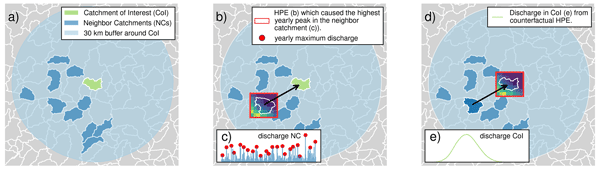
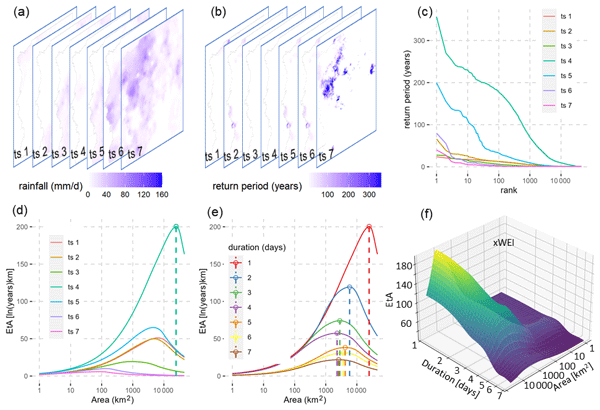
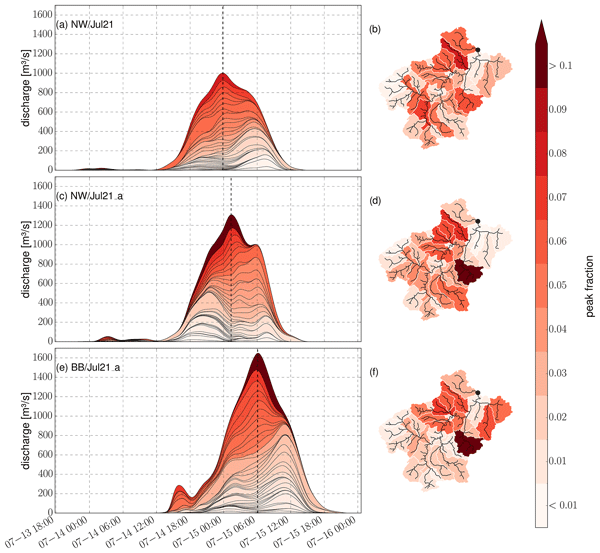
what ifscenarios, simulate historical rainfall in different locations to estimate flood levels. Our new study refines this by deriving more-plausible local scenarios, using the June 2024 Bavaria flood as a case study. This method could improve preparedness for future floods.
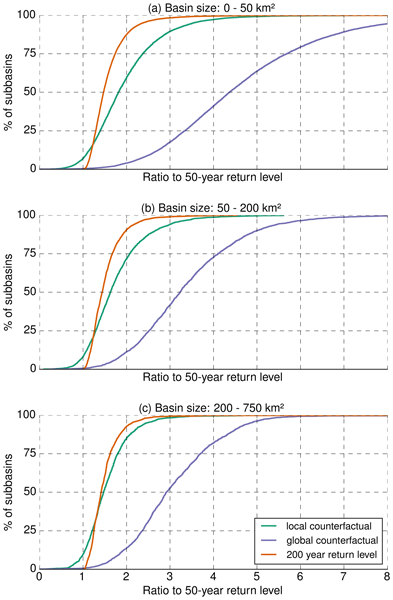
To identify flash flood potential in Germany, we shifted the most extreme rainfall events from the last 22 years systematically across Germany and simulated the consequent runoff reaction. Our results show that almost all areas in Germany have not seen the worst-case scenario of flood peaks within the last 22 years. With a slight spatial change of historical rainfall events, flood peaks of a factor of 2 or more would be achieved for most areas. The results can aid disaster risk management.

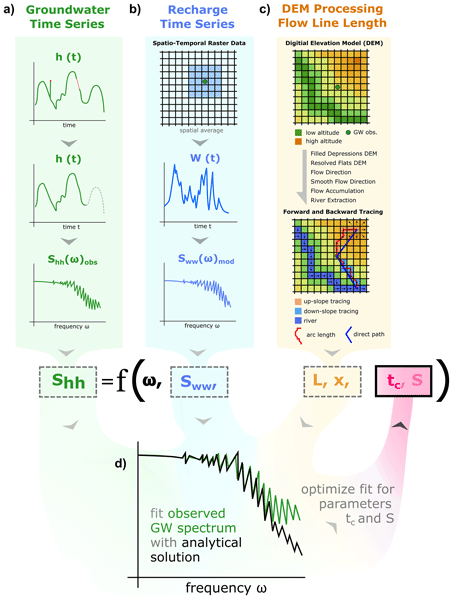
Groundwater is vital but increasingly stressed by climate change and rising water demand. This study estimates how quickly aquifers respond to changes in recharge using a signal-analysis method. Most aquifers reacted within one to ten months, while deeper responded more slowly and proved more resilient to short droughts. The method uses existing monitoring data, offering a practical way to identify vulnerable aquifers and guide groundwater management under climate change.

what ifscenarios, simulate historical rainfall in different locations to estimate flood levels. Our new study refines this by deriving more-plausible local scenarios, using the June 2024 Bavaria flood as a case study. This method could improve preparedness for future floods.
To identify flash flood potential in Germany, we shifted the most extreme rainfall events from the last 22 years systematically across Germany and simulated the consequent runoff reaction. Our results show that almost all areas in Germany have not seen the worst-case scenario of flood peaks within the last 22 years. With a slight spatial change of historical rainfall events, flood peaks of a factor of 2 or more would be achieved for most areas. The results can aid disaster risk management.
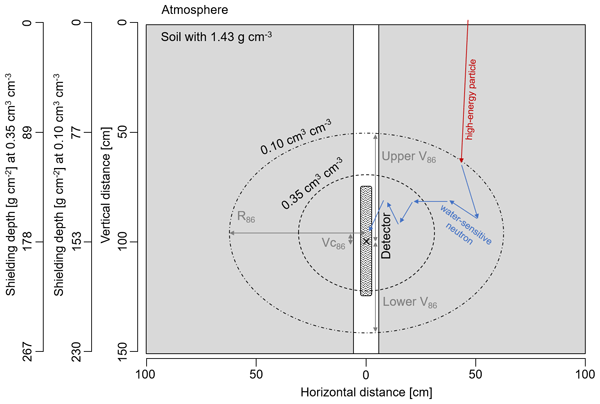

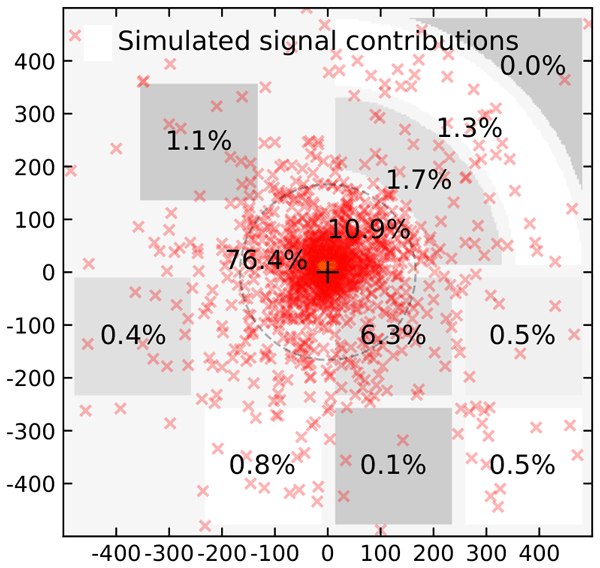
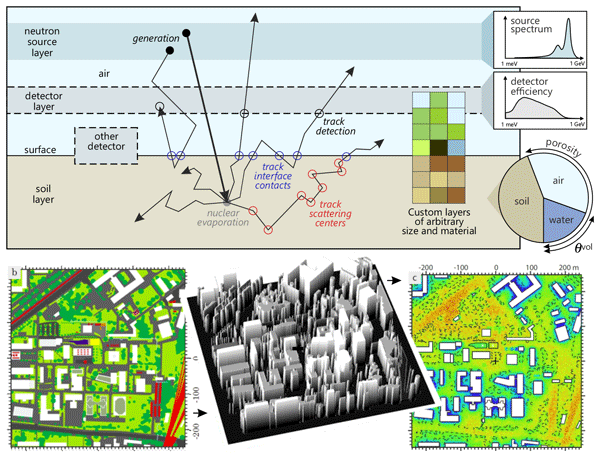
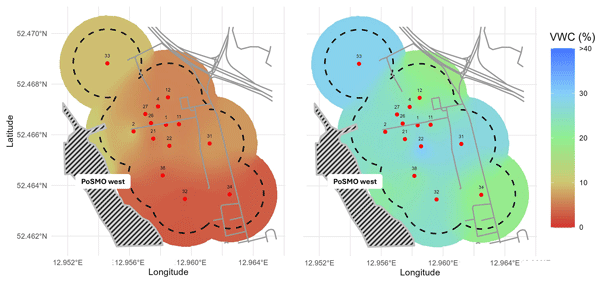
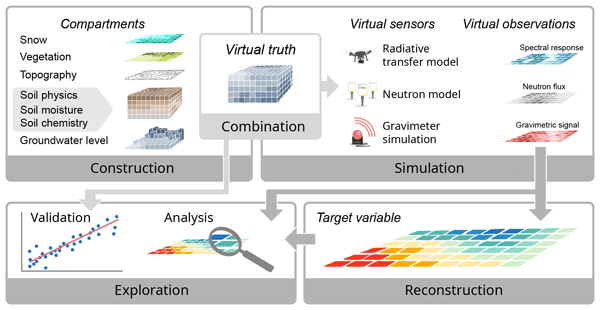
what is the influence of a distant area or patches of different land use on the measurement signal?or
is the detector sensitive enough to detect a change of soil moisture (e.g. due to irrigation) in a remote field at a certain distance?The concept may support signal interpretation and sensor calibration, particularly in heterogeneous terrain.