
Articles | Volume 26, issue 1
https://doi.org/10.5194/nhess-26-411-2026
© Author(s) 2026. This work is distributed under
the Creative Commons Attribution 4.0 License.
the Creative Commons Attribution 4.0 License.
https://doi.org/10.5194/nhess-26-411-2026
© Author(s) 2026. This work is distributed under
the Creative Commons Attribution 4.0 License.
the Creative Commons Attribution 4.0 License.
Research article
| 
22 Jan 2026
Research article |
| 22 Jan 2026
| 22 Jan 2026
Autonomous and efficient large-scale snow avalanche monitoring with an Unmanned Aerial System (UAS)

Autonomous Systems Lab, ETH Zürich, Zürich 8092, Switzerland
Elisabeth Hafner-Aeschbacher
WSL Institute for Snow and Avalanche Research SLF, Davos 7260, Switzerland
Climate Change, Extremes, and Natural Hazards in Alpine Regions Research Center CERC, Davos Dorf 7260, Switzerland
EcoVision Lab, Photogrammetry and Remote Sensing, ETH Zürich, Zürich 8093, Switzerland
Florian Achermann
Autonomous Systems Lab, ETH Zürich, Zürich 8092, Switzerland
Rik Girod
Autonomous Systems Lab, ETH Zürich, Zürich 8092, Switzerland
David Rohr
Autonomous Systems Lab, ETH Zürich, Zürich 8092, Switzerland
Nicholas Lawrance
Autonomous Systems Lab, ETH Zürich, Zürich 8092, Switzerland
CSIRO Robotics, Data61, QLD 4069, Pullenvale, Australia
Yves Bühler
WSL Institute for Snow and Avalanche Research SLF, Davos 7260, Switzerland
Climate Change, Extremes, and Natural Hazards in Alpine Regions Research Center CERC, Davos Dorf 7260, Switzerland
Roland Siegwart
Autonomous Systems Lab, ETH Zürich, Zürich 8092, Switzerland
Related authors
No articles found.
Gwendolyn Dasser, Valentin T. Bickel, Marius Rüetschi, Mylène Jacquemart, Mathias Bavay, Elisabeth Hafner-Aeschbacher, Alec van Herwijnen, David Small, and Andrea Manconi
The Cryosphere, 20, 4811–4837, https://doi.org/10.5194/tc-20-4811-2026, https://doi.org/10.5194/tc-20-4811-2026, 2026
Short summary
Short summary
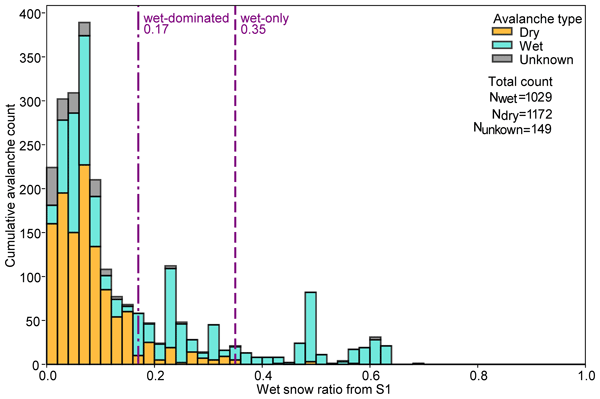
Understanding snowpack wetness is key to predicting wet snow avalanche releases, but detailed data is often limited. Using satellite radar, we monitored snowmelt over several seasons. We extracted a wet snow ratio threshold where the change from dry to wet snow avalanche dominated conditions is expected. By using local resolution weighting composites, we improved spatial resolution and showed our product to be more feasible for use in practice than the publicly available SAR Wet Snow layer.
Feiko Bernard van Zadelhoff, Yves Bühler, and Michael Bründl
EGUsphere, https://doi.org/10.5194/egusphere-2026-4604, https://doi.org/10.5194/egusphere-2026-4604, 2026
Short summary
Short summary
Debris flows are a major hazard in mountainous areas, causing millions of francs in damage in Switzerland every year. Therefore, the Swiss national railway company aims to identify dangerous areas along their infrastructure. We perform this analysis by identifying critical areas using machine learning and detailed simulation modelling of debris flow events caused by extreme rainfall. The results are a valuable baseline to plan mitigation measures and be better prepared for the future.
Jan Kleinn, Dörte Aller, Yves Bühler, Julia Glaus, Adrian Peter, and Nils Hählen
EGUsphere, https://doi.org/10.5194/egusphere-2026-3799, https://doi.org/10.5194/egusphere-2026-3799, 2026
This preprint is open for discussion and under review for Natural Hazards and Earth System Sciences (NHESS).
Short summary
Short summary
We have demonstrated that it is possible to apply an approach to hazard and risk modelling of avalanches, which is commonly used for seismic risks and other hazards. This approach provides more differentiated results and additional information compared to the current approach used in Switzerland for hazard assessment. The applicability of the approach has been demonstrated with an avalanche model commonly used in Switzerland and can be applied to other avalanche models.
Pia Ruttner, Nora Helbig, Annelies Voordendag, Andreas Wieser, and Yves Bühler
The Cryosphere, 20, 4185–4208, https://doi.org/10.5194/tc-20-4185-2026, https://doi.org/10.5194/tc-20-4185-2026, 2026
Short summary
Short summary
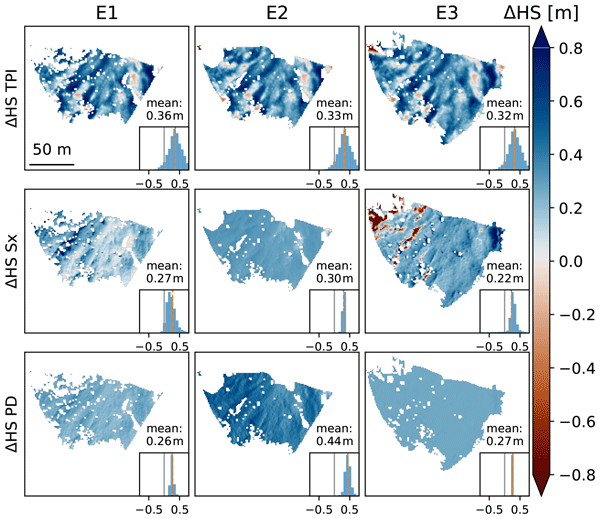
The spatial variability of snow depth distribution in avalanche release areas is key for avalanche forecasting but is strongly influenced by the interaction of wind with the terrain. We generate maps of high resolution snow depth changes during three snowfall events by using low-cost terrestrial laser scanner measurements and compare them to the results of selected snow depth distribution models. We show that basic terrain derivations have the highest correlations to our measurement results.
Elizabeth Fischer, Gabriel J. Wolken, Yves Bühler, Marc Christen, and Rick Lader
EGUsphere, https://doi.org/10.5194/egusphere-2026-1345, https://doi.org/10.5194/egusphere-2026-1345, 2026
Short summary
Short summary
Snow avalanches are a major hazard in Southeast Alaska, where limited data and climate change complicate risk planning. We created the first regional hazard maps using past and projected climate conditions. Results show hazard decreasing at lower elevations as rain replaces snow but increasing at high elevations due to more snow and longer avalanche runouts. These maps provide an important tool for informed land-use and infrastructure planning as Alaska’s landscapes adapt to a changing climate.
Julia Glaus, Jan Kleinn, Lukas Stoffel, Pia Ruttner, Katreen Wikstrom Jones, Johan Gaume, and Yves Bühler
EGUsphere, https://doi.org/10.5194/egusphere-2026-999, https://doi.org/10.5194/egusphere-2026-999, 2026
Short summary
Short summary
Snow avalanches threaten roads, ski areas, and communities in mountain regions. We present a practical method to create daily maps showing where avalanches are likely to travel and how strong they may be. By combining weather data, snow measurements, and computer simulations, our approach supports safer decisions on road closures and avalanche control and helps protect people and infrastructure.

Julia Glaus, Katreen Wikstrom Jones, Perry Bartelt, Marc Christen, Lukas Stoffel, Johan Gaume, and Yves Bühler
Nat. Hazards Earth Syst. Sci., 25, 2399–2419, https://doi.org/10.5194/nhess-25-2399-2025, https://doi.org/10.5194/nhess-25-2399-2025, 2025
Short summary
Short summary
This study assesses RAMMS::EXTENDED's predictive power in estimating avalanche runout distances critical for mountain road safety. Leveraging meteorological data and sensitivity analyses, it offers meaningful predictions, aiding near real-time hazard assessments and future model refinement for improved decision-making.
Pia Ruttner, Annelies Voordendag, Thierry Hartmann, Julia Glaus, Andreas Wieser, and Yves Bühler
Nat. Hazards Earth Syst. Sci., 25, 1315–1330, https://doi.org/10.5194/nhess-25-1315-2025, https://doi.org/10.5194/nhess-25-1315-2025, 2025
Short summary
Short summary
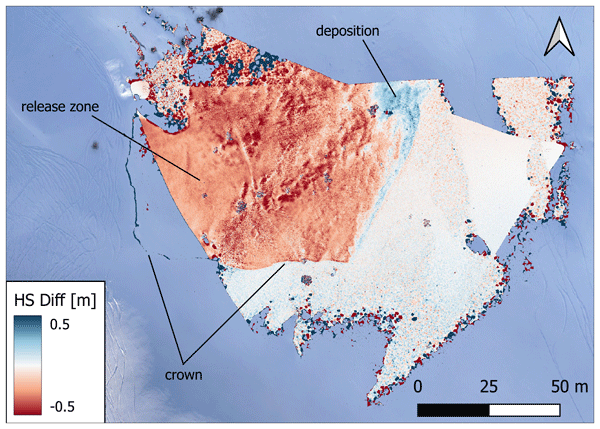
Snow depth variations caused by wind are an important factor in avalanche danger, but detailed and up-to-date information is rarely available. We propose a monitoring system, using lidar and optical sensors, to measure the snow depth distribution at high spatial and temporal resolution. First results show that we can quantify snow depth changes with an accuracy on the low decimeter level, or better, and can identify events such as avalanches or displacement of snow during periods of strong winds.
John Sykes, Pascal Haegeli, Roger Atkins, Patrick Mair, and Yves Bühler
Nat. Hazards Earth Syst. Sci., 25, 1255–1292, https://doi.org/10.5194/nhess-25-1255-2025, https://doi.org/10.5194/nhess-25-1255-2025, 2025
Short summary
Short summary
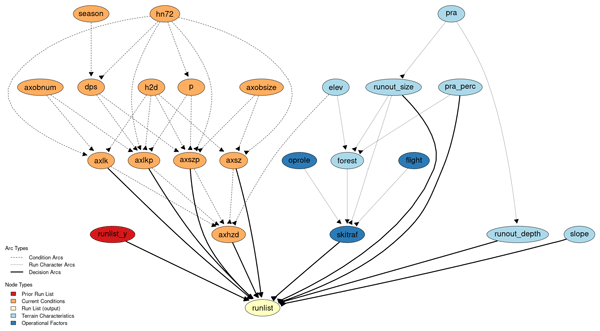
We model the decision-making of professional ski guides and develop decision support tools to assist with determining appropriate terrain based on current conditions. Our approach compares a manually constructed Bayesian network with machine learning classification models. The models accurately capture the real-world decision-making outcomes in 85–93 % of cases. Our conclusions focus on strengths and weaknesses of each model and discuss ramifications for practical applications in ski guiding.
Jan Magnusson, Yves Bühler, Louis Quéno, Bertrand Cluzet, Giulia Mazzotti, Clare Webster, Rebecca Mott, and Tobias Jonas
Earth Syst. Sci. Data, 17, 703–717, https://doi.org/10.5194/essd-17-703-2025, https://doi.org/10.5194/essd-17-703-2025, 2025
Short summary
Short summary
In this study, we present a dataset for the Dischma catchment in eastern Switzerland, which represents a typical high-alpine watershed in the European Alps. Accurate monitoring and reliable forecasting of snow and water resources in such basins are crucial for a wide range of applications. Our dataset is valuable for improving physics-based snow, land surface, and hydrological models, with potential applications in similar high-alpine catchments.
Andrea Manconi, Yves Bühler, Andreas Stoffel, Johan Gaume, Qiaoping Zhang, and Valentyn Tolpekin
Nat. Hazards Earth Syst. Sci., 24, 3833–3839, https://doi.org/10.5194/nhess-24-3833-2024, https://doi.org/10.5194/nhess-24-3833-2024, 2024
Short summary
Short summary
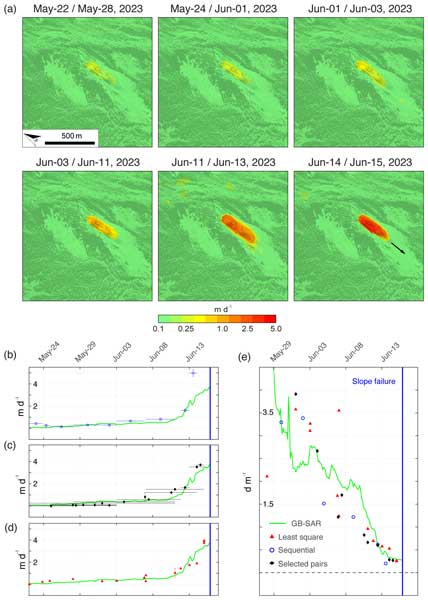
Our research reveals the power of high-resolution satellite synthetic-aperture radar (SAR) imagery for slope deformation monitoring. Using ICEYE data over the Brienz/Brinzauls instability, we measured surface velocity and mapped the landslide event with unprecedented precision. This underscores the potential of satellite SAR for timely hazard assessment in remote regions and aiding disaster mitigation efforts effectively.
Elisabeth D. Hafner, Theodora Kontogianni, Rodrigo Caye Daudt, Lucien Oberson, Jan Dirk Wegner, Konrad Schindler, and Yves Bühler
The Cryosphere, 18, 3807–3823, https://doi.org/10.5194/tc-18-3807-2024, https://doi.org/10.5194/tc-18-3807-2024, 2024
Short summary
Short summary
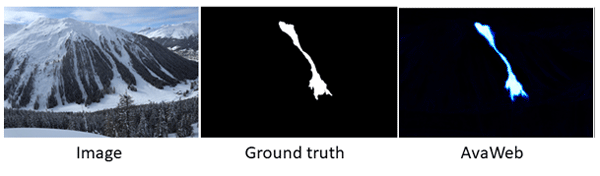
For many safety-related applications such as road management, well-documented avalanches are important. To enlarge the information, webcams may be used. We propose supporting the mapping of avalanches from webcams with a machine learning model that interactively works together with the human. Relying on that model, there is a 90% saving of time compared to the "traditional" mapping. This gives a better base for safety-critical decisions and planning in avalanche-prone mountain regions.
Elisabeth D. Hafner, Frank Techel, Rodrigo Caye Daudt, Jan Dirk Wegner, Konrad Schindler, and Yves Bühler
Nat. Hazards Earth Syst. Sci., 23, 2895–2914, https://doi.org/10.5194/nhess-23-2895-2023, https://doi.org/10.5194/nhess-23-2895-2023, 2023
Short summary
Short summary
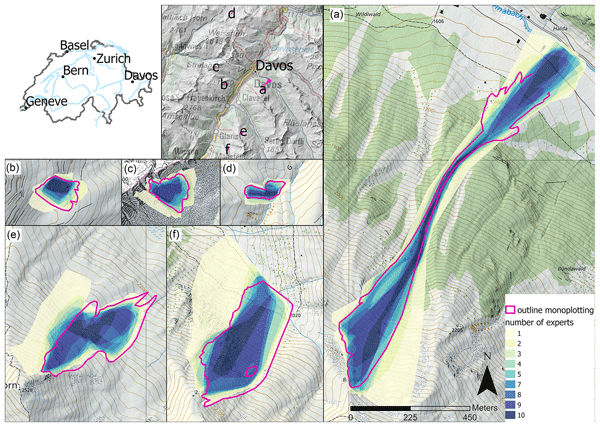
Oftentimes when objective measurements are not possible, human estimates are used instead. In our study, we investigate the reproducibility of human judgement for size estimates, the mappings of avalanches from oblique photographs and remotely sensed imagery. The variability that we found in those estimates is worth considering as it may influence results and should be kept in mind for several applications.
Leon J. Bührle, Mauro Marty, Lucie A. Eberhard, Andreas Stoffel, Elisabeth D. Hafner, and Yves Bühler
The Cryosphere, 17, 3383–3408, https://doi.org/10.5194/tc-17-3383-2023, https://doi.org/10.5194/tc-17-3383-2023, 2023
Short summary
Short summary
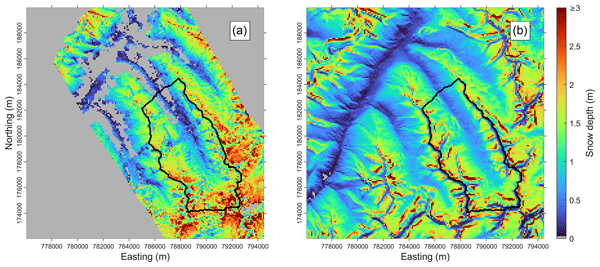
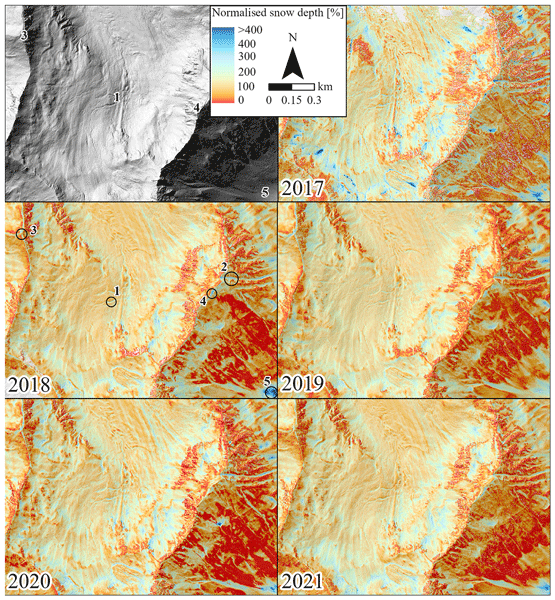
Information on the snow depth distribution is crucial for numerous applications in high-mountain regions. However, only specific measurements can accurately map the present variability of snow depths within complex terrain. In this study, we show the reliable processing of images from aeroplane to large (> 100 km2) detailed and accurate snow depth maps around Davos (CH). We use these maps to describe the existing snow depth distribution, other special features and potential applications.
Adrian Ringenbach, Peter Bebi, Perry Bartelt, Andreas Rigling, Marc Christen, Yves Bühler, Andreas Stoffel, and Andrin Caviezel
Earth Surf. Dynam., 11, 779–801, https://doi.org/10.5194/esurf-11-779-2023, https://doi.org/10.5194/esurf-11-779-2023, 2023
Short summary
Short summary
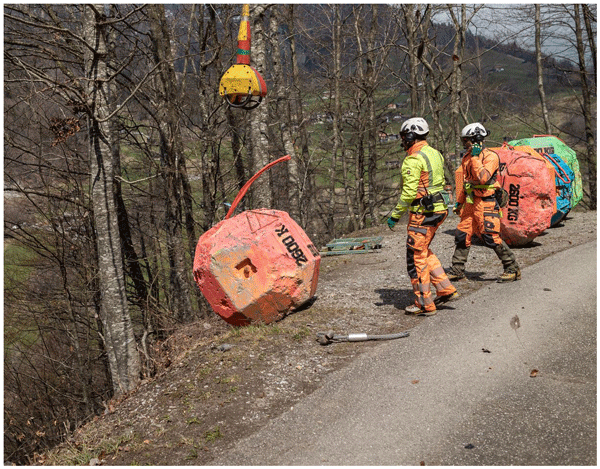
Swiss researchers carried out repeated rockfall experiments with rocks up to human sizes in a steep mountain forest. This study focuses mainly on the effects of the rock shape and lying deadwood. In forested areas, cubic-shaped rocks showed a longer mean runout distance than platy-shaped rocks. Deadwood especially reduced the runouts of these cubic rocks. The findings enrich standard practices in modern rockfall hazard zoning assessments and strongly urge the incorporation of rock shape effects.
Gregor Ortner, Michael Bründl, Chahan M. Kropf, Thomas Röösli, Yves Bühler, and David N. Bresch
Nat. Hazards Earth Syst. Sci., 23, 2089–2110, https://doi.org/10.5194/nhess-23-2089-2023, https://doi.org/10.5194/nhess-23-2089-2023, 2023
Short summary
Short summary
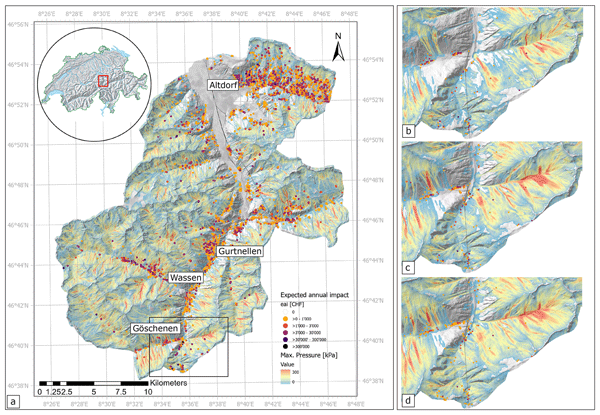
This paper presents a new approach to assess avalanche risk on a large scale in mountainous regions. It combines a large-scale avalanche modeling method with a state-of-the-art probabilistic risk tool. Over 40 000 individual avalanches were simulated, and a building dataset with over 13 000 single buildings was investigated. With this new method, risk hotspots can be identified and surveyed. This enables current and future risk analysis to assist decision makers in risk reduction and adaptation.

Adrian Ringenbach, Peter Bebi, Perry Bartelt, Andreas Rigling, Marc Christen, Yves Bühler, Andreas Stoffel, and Andrin Caviezel
Earth Surf. Dynam., 10, 1303–1319, https://doi.org/10.5194/esurf-10-1303-2022, https://doi.org/10.5194/esurf-10-1303-2022, 2022
Short summary
Short summary
The presented automatic deadwood generator (ADG) allows us to consider deadwood in rockfall simulations in unprecedented detail. Besides three-dimensional fresh deadwood cones, we include old woody debris in rockfall simulations based on a higher compaction rate and lower energy absorption thresholds. Simulations including different deadwood states indicate that a 10-year-old deadwood pile has a higher protective capacity than a pre-storm forest stand.
John Sykes, Pascal Haegeli, and Yves Bühler
Nat. Hazards Earth Syst. Sci., 22, 3247–3270, https://doi.org/10.5194/nhess-22-3247-2022, https://doi.org/10.5194/nhess-22-3247-2022, 2022
Short summary
Short summary
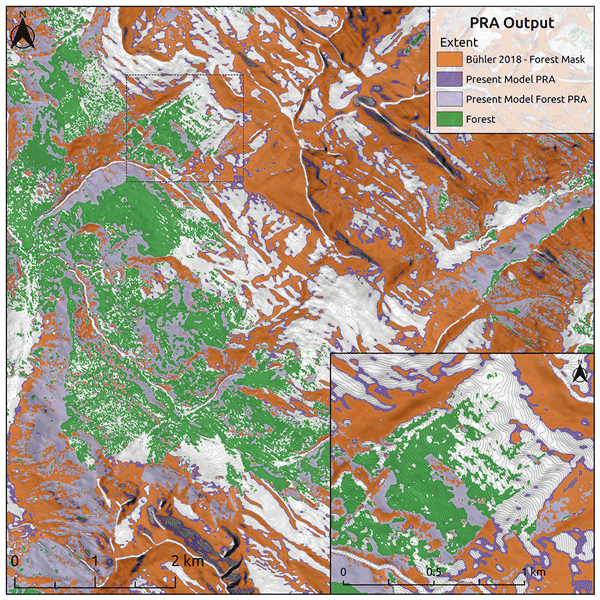
Automated snow avalanche terrain mapping provides an efficient method for large-scale assessment of avalanche hazards, which informs risk management decisions for transportation and recreation. This research reduces the cost of developing avalanche terrain maps by using satellite imagery and open-source software as well as improving performance in forested terrain. The research relies on local expertise to evaluate accuracy, so the methods are broadly applicable in mountainous regions worldwide.
Elisabeth D. Hafner, Patrick Barton, Rodrigo Caye Daudt, Jan Dirk Wegner, Konrad Schindler, and Yves Bühler
The Cryosphere, 16, 3517–3530, https://doi.org/10.5194/tc-16-3517-2022, https://doi.org/10.5194/tc-16-3517-2022, 2022
Short summary
Short summary
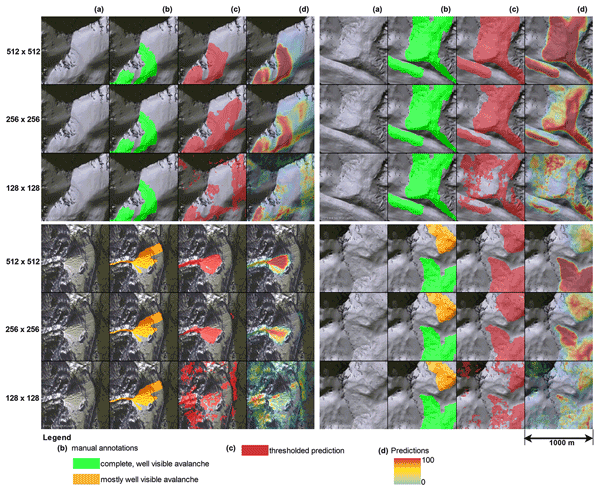
Knowing where avalanches occur is very important information for several disciplines, for example avalanche warning, hazard zonation and risk management. Satellite imagery can provide such data systematically over large regions. In our work we propose a machine learning model to automate the time-consuming manual mapping. Additionally, we investigate expert agreement for manual avalanche mapping, showing that our network is equally as good as the experts in identifying avalanches.
Aubrey Miller, Pascal Sirguey, Simon Morris, Perry Bartelt, Nicolas Cullen, Todd Redpath, Kevin Thompson, and Yves Bühler
Nat. Hazards Earth Syst. Sci., 22, 2673–2701, https://doi.org/10.5194/nhess-22-2673-2022, https://doi.org/10.5194/nhess-22-2673-2022, 2022
Short summary
Short summary
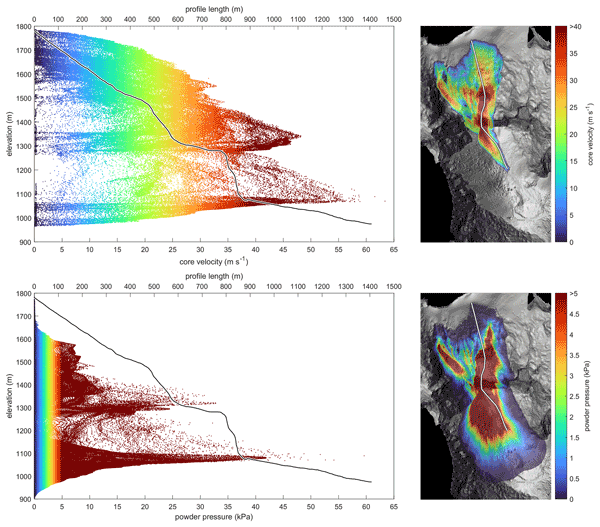
Natural hazard modelers simulate mass movements to better anticipate the risk to people and infrastructure. These simulations require accurate digital elevation models. We test the sensitivity of a well-established snow avalanche model (RAMMS) to the source and spatial resolution of the elevation model. We find key differences in the digital representation of terrain greatly affect the simulated avalanche results, with implications for hazard planning.
Adrian Ringenbach, Elia Stihl, Yves Bühler, Peter Bebi, Perry Bartelt, Andreas Rigling, Marc Christen, Guang Lu, Andreas Stoffel, Martin Kistler, Sandro Degonda, Kevin Simmler, Daniel Mader, and Andrin Caviezel
Nat. Hazards Earth Syst. Sci., 22, 2433–2443, https://doi.org/10.5194/nhess-22-2433-2022, https://doi.org/10.5194/nhess-22-2433-2022, 2022
Short summary
Short summary
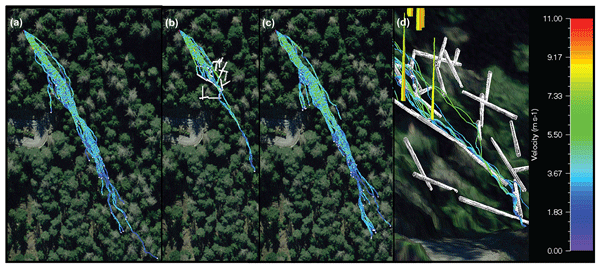
Forests have a recognized braking effect on rockfalls. The impact of lying deadwood, however, is mainly neglected. We conducted 1 : 1-scale rockfall experiments in three different states of a spruce forest to fill this knowledge gap: the original forest, the forest including lying deadwood and the cleared area. The deposition points clearly show that deadwood has a protective effect. We reproduced those experimental results numerically, considering three-dimensional cones to be deadwood.
Yves Bühler, Peter Bebi, Marc Christen, Stefan Margreth, Lukas Stoffel, Andreas Stoffel, Christoph Marty, Gregor Schmucki, Andrin Caviezel, Roderick Kühne, Stephan Wohlwend, and Perry Bartelt
Nat. Hazards Earth Syst. Sci., 22, 1825–1843, https://doi.org/10.5194/nhess-22-1825-2022, https://doi.org/10.5194/nhess-22-1825-2022, 2022
Short summary
Short summary
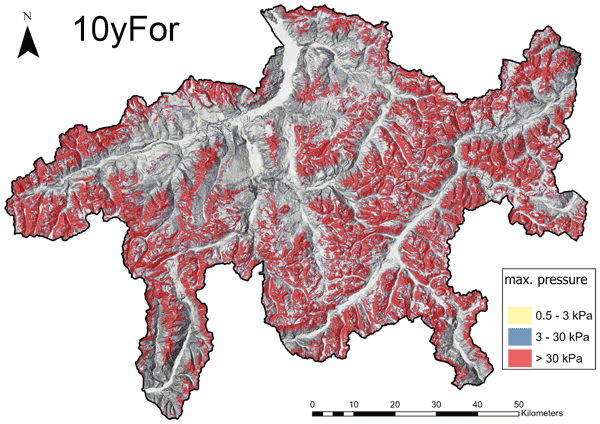
To calculate and visualize the potential avalanche hazard, we develop a method that automatically and efficiently pinpoints avalanche starting zones and simulate their runout for the entire canton of Grisons. The maps produced in this way highlight areas that could be endangered by avalanches and are extremely useful in multiple applications for the cantonal authorities, including the planning of new infrastructure, making alpine regions more safe.
Animesh K. Gain, Yves Bühler, Pascal Haegeli, Daniela Molinari, Mario Parise, David J. Peres, Joaquim G. Pinto, Kai Schröter, Ricardo M. Trigo, María Carmen Llasat, and Heidi Kreibich
Nat. Hazards Earth Syst. Sci., 22, 985–993, https://doi.org/10.5194/nhess-22-985-2022, https://doi.org/10.5194/nhess-22-985-2022, 2022
Short summary
Short summary
To mark the 20th anniversary of Natural Hazards and Earth System Sciences (NHESS), an interdisciplinary and international journal dedicated to the public discussion and open-access publication of high-quality studies and original research on natural hazards and their consequences, we highlight 11 key publications covering major subject areas of NHESS that stood out within the past 20 years.
Natalie Brožová, Tommaso Baggio, Vincenzo D'Agostino, Yves Bühler, and Peter Bebi
Nat. Hazards Earth Syst. Sci., 21, 3539–3562, https://doi.org/10.5194/nhess-21-3539-2021, https://doi.org/10.5194/nhess-21-3539-2021, 2021
Short summary
Short summary
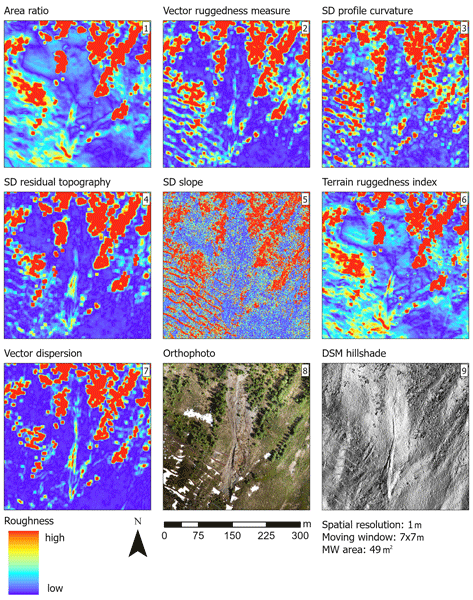
Surface roughness plays a great role in natural hazard processes but is not always well implemented in natural hazard modelling. The results of our study show how surface roughness can be useful in representing vegetation and ground structures, which are currently underrated. By including surface roughness in natural hazard modelling, we could better illustrate the processes and thus improve hazard mapping, which is crucial for infrastructure and settlement planning in mountainous areas.
Cited articles
Astuti, G., Giudice, G., Longo, D., Melita, C. D., Muscato, G., and Orlando, A.: An overview of the “volcan project”: An UAS for exploration of volcanic environments, in: Unmanned Aircraft Systems: International Symposium On Unmanned Aerial Vehicles, UAV’08, Springer, 471–494, https://doi.org/10.1007/s10846-008-9275-9, 2009. a, b
Bähnemann, R., Lawrance, N., Chung, J. J., Pantic, M., Siegwart, R., and Nieto, J.: Revisiting Boustrophedon Coverage Path Planning as a Generalized Traveling Salesman Problem, in: Field and Service Robotics, edited by: Ishigami, G. and Yoshida, K., 277–290, https://doi.org/10.1007/978-981-15-9460-1_20, 2021. a, b
Bekris, K. E.: Avoiding inevitable collision states: Safety and computational efficiency in replanning with sampling-based algorithms, in: Workshop on Guaranteeing Safe Navigation in Dynamic Environments, in: International Conference on Robotics and Automation (ICRA-10), https://people.cs.rutgers.edu/~kb572/pubs/ics_tradeoffs.pdf (last access: 9 January 2026), 2010. a
Bianchi, F. M., Grahn, J., Eckerstorfer, M., Malnes, E., and Vickers, H.: Snow Avalanche Segmentation in SAR Images With Fully Convolutional Neural Networks, IEEE Journal of Selected Topics in Applied Earth Observations and Remote Sensing, 14, 75–82, https://doi.org/10.1109/JSTARS.2020.3036914, 2021. a
Bircher, A., Kamel, M., Alexis, K., Burri, M., Oettershagen, P., Omari, S., Mantel, T., and Siegwart, R.: Three-dimensional coverage path planning via viewpoint resampling and tour optimization for aerial robots, Autonomous Robots, 40, 1059–1078, 2016. a
Browne, C. B., Powley, E., Whitehouse, D., Lucas, S. M., Cowling, P. I., Rohlfshagen, P., Tavener, S., Perez, D., Samothrakis, S., and Colton, S.: A survey of monte carlo tree search methods, IEEE Transactions on Computational Intelligence and AI in games, 4, 1–43, 2012. a
Bry, A., Richter, C., Bachrach, A., and Roy, N.: Aggressive flight of fixed-wing and quadrotor aircraft in dense indoor environments, The International Journal of Robotics Research, 34, 969–1002, 2015. a
Bühler, Y., Marty, M., Egli, L., Veitinger, J., Jonas, T., Thee, P., and Ginzler, C.: Snow depth mapping in high-alpine catchments using digital photogrammetry, The Cryosphere, 9, 229–243, https://doi.org/10.5194/tc-9-229-2015, 2015. a
Bühler, Y., Adams, M. S., Bösch, R., and Stoffel, A.: Mapping snow depth in alpine terrain with unmanned aerial systems (UASs): potential and limitations, The Cryosphere, 10, 1075–1088, https://doi.org/10.5194/tc-10-1075-2016, 2016. a, b, c
Bühler, Y., Adams, M. S., Stoffel, A., and Boesch, R.: Photogrammetric reconstruction of homogenous snow surfaces in alpine terrain applying near-infrared UAS imagery, International Journal of Remote Sensing, 38, 3135–3158, https://doi.org/10.1080/01431161.2016.1275060, 2017. a, b
Bühler, Y., Hafner, E. D., Zweifel, B., Zesiger, M., and Heisig, H.: Where are the avalanches? Rapid SPOT6 satellite data acquisition to map an extreme avalanche period over the Swiss Alps, The Cryosphere, 13, 3225–3238, https://doi.org/10.5194/tc-13-3225-2019, 2019. a, b, c, d
Bühler, Y., Bebi, P., Christen, M., Margreth, S., Stoffel, L., Stoffel, A., Marty, C., Schmucki, G., Caviezel, A., Kühne, R., Wohlwend, S., and Bartelt, P.: Automated avalanche hazard indication mapping on a statewide scale, Nat. Hazards Earth Syst. Sci., 22, 1825–1843, https://doi.org/10.5194/nhess-22-1825-2022, 2022. a
Bührle, L. J., Marty, M., Eberhard, L. A., Stoffel, A., Hafner, E. D., and Bühler, Y.: Spatially continuous snow depth mapping by aeroplane photogrammetry for annual peak of winter from 2017 to 2021 in open areas, The Cryosphere, 17, 3383–3408, https://doi.org/10.5194/tc-17-3383-2023, 2023. a
Chao, I.-M., Golden, B. L., and Wasil, E. A.: A fast and effective heuristic for the orienteering problem, European journal of operational research, 88, 475–489, 1996. a
Chitsaz, H. and LaValle, S. M.: Time-optimal paths for a Dubins airplane, in: 46th IEEE Conference on Decision and Control, New Orleans, LA, USA, 2379–2384, https://doi.org/10.1109/CDC.2007.4434966, 2007. a, b, c
Choset, H. and Pignon, P.: Coverage path planning: The boustrophedon cellular decomposition, in: Field and service robotics, Springer, 203–209, https://doi.org/10.1007/978-1-4471-1273-0_32, 1998. a
Coombes, M., Chen, W. H., and Liu, C.: Boustrophedon coverage path planning for UAV aerial surveys in wind, in: International Conference on Unmanned Aircraft Systems, ICUAS, 1563–1571, https://doi.org/10.1109/ICUAS.2017.7991469, 2017. a
De Michele, C., Avanzi, F., Passoni, D., Barzaghi, R., Pinto, L., Dosso, P., Ghezzi, A., Gianatti, R., and Della Vedova, G.: Using a fixed-wing UAS to map snow depth distribution: an evaluation at peak accumulation, The Cryosphere, 10, 511–522, https://doi.org/10.5194/tc-10-511-2016, 2016. a
Duan, Y., Achermann, F., Lim, J., and Siegwart, R.: Energy-Optimized Planning in Non-Uniform Wind Fields with Fixed-Wing Aerial Vehicles, arXiv [preprint], https://doi.org/10.48550/arXiv.2404.02077, 2024a. a
Duan, Y., Achermann, F., Lim, J., and Siegwart, R.: Energy-Optimized Planning in Non-Uniform Wind Fields with Fixed-Wing Aerial Vehicles, in: International Conference on Intelligent Robots and Systems (IROS), 3116–3122, https://doi.org/10.1109/IROS58592.2024.10801294, 2024b. a
Dubins, L. E.: On Curves of Minimal Length with a Constraint on Average Curvature, and with Prescribed Initial and Terminal Positions and Tangents, American Journal of Mathematics, 79, 497, https://doi.org/10.2307/2372560, 1957. a
Dunbabin, M. and Marques, L.: Robots for environmental monitoring: Significant advancements and applications, IEEE Robotics & Automation Magazine, 19, 24–39, 2012. a
Eckerstorfer, M. and Malnes, E.: Manual detection of snow avalanche debris using high-resolution Radarsat-2 SAR images, Cold Regions Science and Technology, 120, 205–218, https://doi.org/10.1016/j.coldregions.2015.08.016, 2015. a
Eckerstorfer, M., Bühler, Y., Frauenfelder, R., and Malnes, E.: Remote sensing of snow avalanches: Recent advances, potential, and limitations, Cold Regions Science and Technology, 121, 126–140, https://doi.org/10.1016/j.coldregions.2015.11.001, 2016. a
Eckerstorfer, M., Vickers, H., Malnes, E., and Grahn, J.: Near-real time automatic snow avalanche activity monitoring system using Sentinel-1 SAR data in norway, Remote Sensing, 11, 2863, https://doi.org/10.3390/rs11232863, 2019. a
Fraichard, T. and Asama, H.: Inevitable collision states — a step towards safer robots?, Advanced Robotics, 18, 1001–1024, https://doi.org/10.1163/1568553042674662, 2004. a, b, c
Galceran, E. and Carreras, M.: A survey on coverage path planning for robotics, Robotics and Autonomous Systems, 61, 1258–1276, https://doi.org/10.1016/j.robot.2013.09.004, 2013. a
Gomez, C. and Purdie, H.: UAV-based photogrammetry and geocomputing for hazards and disaster risk monitoring – a review, Geoenvironmental Disasters, 3, 1–11, 2016. a
Hafner, E. D., Techel, F., Leinss, S., and Bühler, Y.: Mapping avalanches with satellites – evaluation of performance and completeness, The Cryosphere, 15, 983–1004, https://doi.org/10.5194/tc-15-983-2021, 2021. a, b
Hafner, E. D., Barton, P., Daudt, R. C., Wegner, J. D., Schindler, K., and Bühler, Y.: Automated avalanche mapping from SPOT 6/7 satellite imagery with deep learning: results, evaluation, potential and limitations, The Cryosphere, 16, 3517–3530, https://doi.org/10.5194/tc-16-3517-2022, 2022. a, b, c
Hafner, E. D., Techel, F., Daudt, R. C., Wegner, J. D., Schindler, K., and Bühler, Y.: Avalanche size estimation and avalanche outline determination by experts: reliability and implications for practice, Nat. Hazards Earth Syst. Sci., 23, 2895–2914, https://doi.org/10.5194/nhess-23-2895-2023, 2023. a, b
Harder, P., Schirmer, M., Pomeroy, J., and Helgason, W.: Accuracy of snow depth estimation in mountain and prairie environments by an unmanned aerial vehicle, The Cryosphere, 10, 2559–2571, https://doi.org/10.5194/tc-10-2559-2016, 2016. a
Hepp, B., Dey, D., Sinha, S. N., Kapoor, A., Joshi, N., and Hilliges, O.: Learn-to-score: Efficient 3D scene exploration by predicting view utility, Lecture Notes in Computer Science (including subseries Lecture Notes in Artificial Intelligence and Lecture Notes in Bioinformatics), 11219 LNCS, 455–472, ISBN 9783030012663, https://doi.org/10.1007/978-3-030-01267-0_27, 2018a. a
Hepp, B., Nießner, M., and Hilliges, O.: Plan3D: Viewpoint and Trajectory Optimization for Aerial Multi-View Stereo Reconstruction, ACM Transactions on Graphics, 38, 1–17, https://doi.org/10.1145/3233794, 2018b. a
Islam, S. T. and Hu, X.: Real-time on-board path planning for uas-based wildfire monitoring, in: 2021 International Conference on Unmanned Aircraft Systems (ICUAS), IEEE, 527–535, https://doi.org/10.1109/ICUAS51884.2021.9476725, 2021. a
Jouvet, G., Weidmann, Y., Van Dongen, E., Lüthi, M. P., Vieli, A., and Ryan, J. C.: High-endurance UAV for monitoring calving glaciers: Application to the Inglefield Bredning and Eqip Sermia, Greenland, Frontiers in Earth Science, 7, 206, https://doi.org/10.3389/feart.2019.00206, 2019. a, b
Karaman, S. and Frazzoli, E.: Incremental Sampling-based Algorithms for Optimal Motion Planning, arXiv [preprint], https://doi.org/10.48550/arXiv.1005.0416, 2010. a
Kim, A. and Eustice, R. M.: Real-time visual SLAM for autonomous underwater hull inspection using visual saliency, IEEE Transactions on Robotics, 29, 719–733, 2013. a
Land, A. H. and Doig, A. G.: An Automatic Method for Solving Discrete Programming Problems, Springer Berlin Heidelberg, Berlin, Heidelberg, 105–132, ISBN 978-3-540-68279-0, https://doi.org/10.1007/978-3-540-68279-0_5, 2010. a
Lato, M. J., Frauenfelder, R., and Bühler, Y.: Automated detection of snow avalanche deposits: segmentation and classification of optical remote sensing imagery, Nat. Hazards Earth Syst. Sci., 12, 2893–2906, https://doi.org/10.5194/nhess-12-2893-2012, 2012. a
Leinss, S., Wicki, R., Holenstein, S., Baffelli, S., and Bühler, Y.: Snow avalanche detection and mapping in multitemporal and multiorbital radar images from TerraSAR-X and Sentinel-1, Nat. Hazards Earth Syst. Sci., 20, 1783–1803, https://doi.org/10.5194/nhess-20-1783-2020, 2020. a
Lim, J.: ethz-asl/active-terrain-mapping: v1.0, Zenodo [code], https://doi.org/10.5281/zenodo.18256214, 2026. a
Lim, J., Achermann, F., Bähnemann, R., Lawrance, N., and Siegwart, R.: Circling Back: Dubins set Classification Revisited, in: Workshop on Energy Efficient Aerial Robotic Systems, International Conference on Robotics and Automation 2023, https://doi.org/10.3929/ethz-b-000615185, 2023a. a
Lim, J., Lawrance, N., Achermann, F., Stastny, T., Bähnemann, R., and Siegwart, R.: Fisher information based active planning for aerial photogrammetry, in: 2023 IEEE International Conference on Robotics and Automation (ICRA), IEEE, 1249–1255, https://doi.org/10.1109/ICRA48891.2023.10161136, 2023b. a, b, c, d
Lim, J., Achermann, F., Lawrance, N., and Siegwart, R.: Autonomous Active Mapping in Steep Alpine Environments with Fixed-wing Aerial Vehicles, arXiv [preprint], https://doi.org/10.48550/arXiv.2405.02011, 2024b. a
Lim, J., Hafner, E., Achermann, F., (Bähnemann) Girod, R., Rohr, D., Lawrance, N., Bühler, Y., and Siegwart, R.: Data for “Autonomous and efficient large-scale snow avalanche monitoring”, Zenodo [data set], https://doi.org/10.5281/zenodo.18198188, 2026. a
Mannadiar, R. and Rekleitis, I.: Optimal coverage of a known arbitrary environment, in: 2010 IEEE International conference on robotics and automation IEEE, 5525–5530, https://doi.org/10.1109/ROBOT.2010.5509860, 2010. a
Meier, L., Honegger, D., and Pollefeys, M.: PX4: A node-based multithreaded open source robotics framework for deeply embedded platforms, in: 2015 IEEE international conference on robotics and automation (ICRA), IEEE, 6235–6240, https://doi.org/10.1109/ICRA.2015.7140074, 2015. a
Meyer, J., Deems, J. S., Bormann, K. J., Shean, D. E., and Skiles, S. M.: Mapping snow depth and volume at the alpine watershed scale from aerial imagery using Structure from Motion, Frontiers in Earth Science, 10, 989792, https://doi.org/10.3389/feart.2022.989792, 2022. a
mfe: Make Fly Easy Freeman 2300: http://en.makeflyeasy.com/index.php/freeman-2300/, last access: 3 July 2024. a
Morilla-Cabello, D., Bartolomei, L., Teixeira, L., Montijano, E., and Chli, M.: Sweep-your-map: Efficient coverage planning for aerial teams in large-scale environments, IEEE Robotics and Automation Letters, 7, 10810–10817, 2022. a
Oettershagen, P., Achermann, F., Müller, B., Schneider, D., and Siegwart, R.: Towards fully environment-aware UAVs: Real-time path planning with online 3D wind field prediction in complex terrain, arXiv [preprint], https://doi.org/10.48550/arXiv.1712.03608, 2017. a
Owen, M., Beard, R. W., and McLain, T. W.: Implementing Dubins Airplane Paths on Fixed-Wing UAVs, Handbook of Unmanned Aerial Vehicles, 1677–1701, https://doi.org/10.1007/978-90-481-9707-1_120, 2015. a
Peng, C. and Isler, V.: View Selection with Geometric Uncertainty Modeling, in: Proceedings of Robotics: Science and Systems, Pittsburgh, Pennsylvania, https://doi.org/10.15607/RSS.2018.XIV.025, 2018. a
Schimmel, A., Hübl, J., Koschuch, R., and Reiweger, I.: Automatic detection of avalanches: evaluation of three different approaches, Natural Hazards, 87, 83–102, https://doi.org/10.1007/s11069-017-2754-1, 2017. a
Schweizer, J.: Snow avalanche formation and dynamics, Cold Regions Science and Technology, 54, 153–154, 2008. a
Schweizer, J., Bartelt, P., and van Herwijnen, A.: Snow avalanches, in: Snow and Ice-Related Hazards, Risks, and Disasters, edited by: Haeberli, W. and Whiteman, C., chap. 12, 2nd Edn., Elsevier, 377–416, https://doi.org/10.1016/B978-0-12-817129-5.00001-9, 2021. a
Shah, K., Ballard, G., Schmidt, A., and Schwager, M.: Multidrone aerial surveys of penguin colonies in Antarctica, Science Robotics, 5, eabc3000, https://doi.org/10.1126/scirobotics.abc3000, 2020. a
Smith, N., Moehrle, N., Goesele, M., and Heidrich, W.: Aerial path planning for urban scene reconstruction: a continuous optimization method and benchmark, ACM Trans. Graph., 37, https://doi.org/10.1145/3272127.3275010, 2018. a
Stastny, T. and Siegwart, R.: On flying backwards: Preventing run-away of small, low-speed, fixed-wing UAVs in strong winds, in: 2019 IEEE/RSJ International Conference on Intelligent Robots and Systems (IROS), IEEE, 5198–5205, https://doi.org/10.1109/IROS40897.2019.8968573, 2019. a, b
Teisberg, T. O., Schroeder, D. M., Broome, A. L., Lurie, F., and Woo, D.: Development of a UAV-borne pulsed ice-penetrating radar system, in: IGARSS 2022-2022 IEEE International Geoscience and Remote Sensing Symposium, 7405–7408, https://doi.org/10.1109/IGARSS46834.2022.9883583, 2022. a, b
Vander Jagt, B., Lucieer, A., Wallace, L., Turner, D., and Durand, M.: Snow depth retrieval with UAS using photogrammetric techniques, Geosciences, 5, 264–285, 2015. a
Short summary
As avalanches occur in remote and potentially dangerous locations, data relevant to avalanche monitoring is difficult to obtain. Uncrewed fixed-wing aerial vehicles are promising platforms for gathering aerial imagery to map avalanche activity over a large area. In this work, we present an unmanned aerial system (UAS) capable of autonomously navigating and mapping avalanches in steep mountainous terrain. We expect our work to enable efficient large-scale autonomous avalanche monitoring.
As avalanches occur in remote and potentially dangerous locations, data relevant to avalanche...


Altmetrics
Final-revised paper
Preprint