
Articles | Volume 26, issue 1
https://doi.org/10.5194/nhess-26-391-2026
© Author(s) 2026. This work is distributed under
the Creative Commons Attribution 4.0 License.
the Creative Commons Attribution 4.0 License.
https://doi.org/10.5194/nhess-26-391-2026
© Author(s) 2026. This work is distributed under
the Creative Commons Attribution 4.0 License.
the Creative Commons Attribution 4.0 License.
Research article
| 
22 Jan 2026
Research article |
| 22 Jan 2026
| 22 Jan 2026
Assessing the spatial correlation of potential compound flooding in the United States

Institute for Environmental Studies (IVM), Vrije Universiteit Amsterdam, Amsterdam, the Netherlands
Robert A. Jane
Department of Civil, Environmental and Construction Engineering, National Center for Integrated Coastal Research, University of Central Florida, Orlando, FL 32816, USA
Dirk Eilander
Institute for Environmental Studies (IVM), Vrije Universiteit Amsterdam, Amsterdam, the Netherlands
Deltares, Delft, the Netherlands
Alejandra R. Enríquez
Institute for Environmental Studies (IVM), Vrije Universiteit Amsterdam, Amsterdam, the Netherlands
Department of Civil, Environmental and Construction Engineering, National Center for Integrated Coastal Research, University of Central Florida, Orlando, FL 32816, USA
School of Geosciences, College of Arts & Sciences, University of South Florida, St Petersburg, FL 33701, USA
Toon Haer
Institute for Environmental Studies (IVM), Vrije Universiteit Amsterdam, Amsterdam, the Netherlands
Philip J. Ward
Institute for Environmental Studies (IVM), Vrije Universiteit Amsterdam, Amsterdam, the Netherlands
Deltares, Delft, the Netherlands
Related authors
No articles found.
Robert Jane, Thomas Wahl, Pravin Maduwantha, and Gabriele Villarini
EGUsphere, https://doi.org/10.5194/egusphere-2026-5872, https://doi.org/10.5194/egusphere-2026-5872, 2026
This preprint is open for discussion and under review for Natural Hazards and Earth System Sciences (NHESS).
Short summary
Short summary
Rainfall and coastal flooding often occur together because they're driven by the same storms. In New Jersey's Mullica River watershed, tropical storms show higher but more spatially variable rainfall–surge correlations and contribute more to yearly flood risk than non-tropical storms. A simulation method using basin-average rainfall showed some bias, particularly for tropical storms, and underestimated tide-driven water levels.
Philip J. Ward, Marleen C. de Ruiter, Kees Boersma, Tomris Cesuroglu, Nathan Clark, Tina Comes, Ashok Dahal, Sonja Fransen, Jasper Verschuur, Carmen Anthonj, Srijith Balakrishnan, Jens de Bruijn, Eefje Hendriks, Rodrigo Mena Fluhmann, Goda Perlaviciute, Linda Steg, Marc J. C. van den Homberg, Cees van Westen, Funda Atun, Anja Schreijer, and Nicole van Maanen
Nat. Hazards Earth Syst. Sci., 26, 4589–4609, https://doi.org/10.5194/nhess-26-4589-2026, https://doi.org/10.5194/nhess-26-4589-2026, 2026
Short summary
Short summary
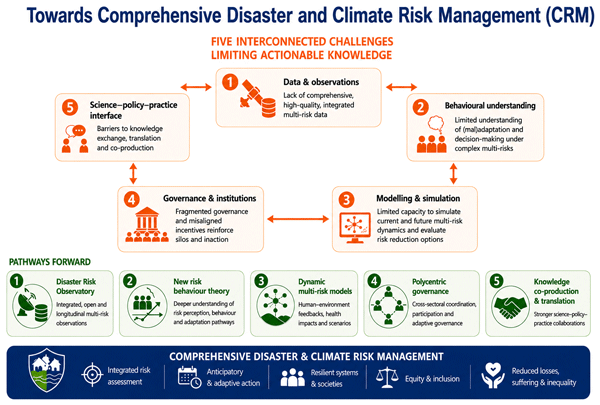
We explore five core challenges that need to be addressed in order to move towards the Comprehensive Disaster and Climate Risk Management approach. This approach has been proposed within the newly emerging paradigm of a more holistic approach to managing the risks associated with climatic and/or non-climatic hazards and non-climatic risk drivers. We elaborate on each challenge, discuss why they matter for comprehensive disaster risk management, and provide ideas of how to overcome them.
Kai Kornhuber, Emanuele Bevacqua, Mariana Madruga de Brito, Wiebke S. Jäger, Pauline Rivoire, Cassandra D. W. Rogers, Fabiola Banfi, Fulden Batibeniz, James Carruthers, Carlo De Michele, Silvia De Angeli, Cristina Deidda, Marleen C. de Ruiter, Andreas H. Fink, Henrique M. D. Goulart, Katharina Küpfer, Patrick Ludwig, Douglas Maraun, Gabriele Messori, Shruti Nath, Fiachra O'Loughlin, Joaquim G. Pinto, Benjamin Poschlod, Alexandre M. Ramos, Colin Raymond, Andreia F. S. Ribeiro, Deepti Singh, Laura Suarez Gutierrez, Philip J. Ward, and Christopher J. White
Nat. Hazards Earth Syst. Sci., 26, 4309–4334, https://doi.org/10.5194/nhess-26-4309-2026, https://doi.org/10.5194/nhess-26-4309-2026, 2026
Short summary
Short summary
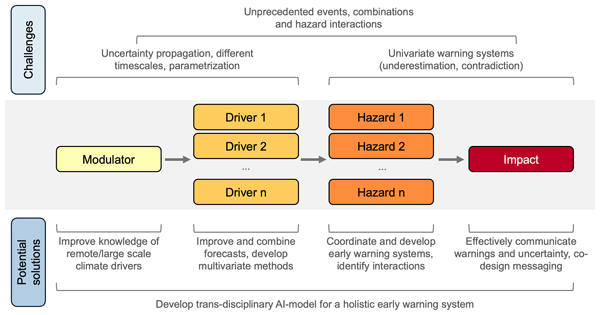
Impacts from extreme weather events may become more severe due to increased likelihood of compounding events under global warming, which challenge present day climate modelling and forecasting capacities. In this perspective we reflect on the usability of compound event research to bridge the gap between academic research and real-world applications.
Tarun Sadana, Jeroen C. J. H. Aerts, Dirk Eilander, Bruno Merz, Hans de Moel, Tim Busker, Veerle C. Bril, and Jens de Bruijn
Hydrol. Earth Syst. Sci., 30, 5491–5519, https://doi.org/10.5194/hess-30-5491-2026, https://doi.org/10.5194/hess-30-5491-2026, 2026
Short summary
Short summary
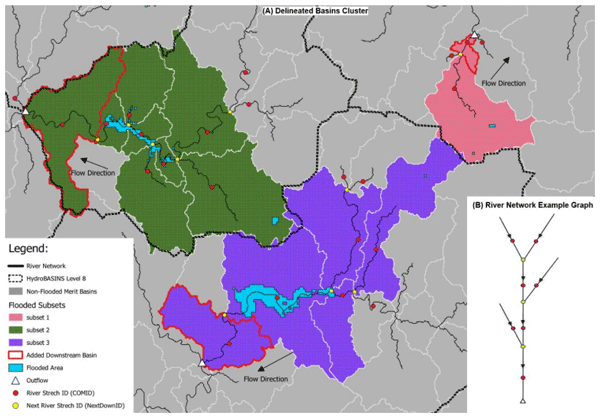
We evaluated the open-source hydrodynamic model SFINCS using satellite data from 499 historical flood events across 96 countries. Our study shows that larger upstream river basins are modelled more accurately, while using observed river gauges and high-resolution elevation data can improve results. Our findings highlight the importance of large-scale validation with satellite data and sensitivity analyses to enhance future global flood hazard assessments and prediction accuracy.
Timothy Tiggeloven, Colin Raymond, Marleen C. de Ruiter, Jana Sillmann, Annegret H. Thieken, Sophie L. Buijs, Roxana Ciurean, Emma Cordier, Julia M. Crummy, Lydia Cumiskey, Kelley De Polt, Melanie Duncan, Davide M. Ferrario, Wiebke S. Jäger, Elco E. Koks, Nicole van Maanen, Heather J. Murdock, Jaroslav Mysiak, Sadhana Nirandjan, Benjamin Poschlod, Peter Priesmeier, Nivedita Sairam, Pia-Johanna Schweizer, Tristian R. Stolte, Marie-Luise Zenker, James E. Daniell, Alexander Fekete, Christian M. Geiß, Marc J. C. van den Homberg, Sirkku K. Juhola, Christian Kuhlicke, Karen Lebek, Robert Šakić Trogrlić, Stefan Schneiderbauer, Silvia Torresan, Cees J. van Westen, Judith N. Claassen, Bijan Khazai, Virginia Murray, Julius Schlumberger, and Philip J. Ward
Geosci. Commun., 9, 185–221, https://doi.org/10.5194/gc-9-185-2026, https://doi.org/10.5194/gc-9-185-2026, 2026
Short summary
Short summary
Natural hazards like floods, earthquakes, and landslides are often interconnected which may create bigger problems than when they occur alone. We studied expert discussions from an international conference to understand how scientists and policymakers can better prepare for these multi-hazards and use new technologies to protect its communities while contributing to dialogues about future international agreements beyond the Sendai Framework and supporting global sustainability goals.
Philip J. Ward, Sophie L. Buijs, Roxana Ciurean, Judith N. Claassen, James Daniell, Kelley De Polt, Melanie Duncan, Stefania Gottardo, Stefan Hochrainer-Stigler, Robert Šakić Trogrlić, Julius Schlumberger, Timothy Tiggeloven, Silvia Torresan, Nicole van Maanen, Andrew Warren, Carmen D. Álvarez-Albelo, Vanessa Banks, Benjamin Blanz, Veronica Casartelli, Jordan Correa, Julia Crummy, Anne Sophie Daloz, Marleen C. de Ruiter, Juan José Díaz-Hernández, Jaime Díaz-Pacheco, Pedro Dorta Antequera, Davide Ferrario, David Geurts, Sara García-González, Joel C. Gill, Raúl Hernández-Martín, Wiebke S. Jäger, Abel López-Díez, Lin Ma, Jaroslav Mysiak, Diep Ngoc Nguyen, Noemi Padrón Fumero, Eva-Cristina Petrescu, Karina Reiter, Jana Sillmann, Lara Smale, and Tristian Stolte
Nat. Hazards Earth Syst. Sci., 26, 1325–1345, https://doi.org/10.5194/nhess-26-1325-2026, https://doi.org/10.5194/nhess-26-1325-2026, 2026
Short summary
Short summary
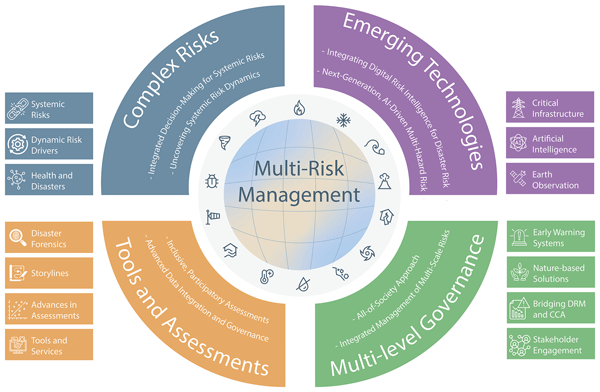
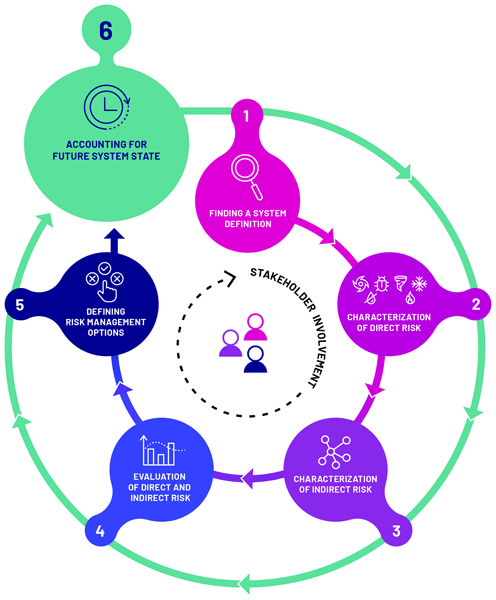
Disasters often result from interactions between different hazards, like floods triggering landslides, or earthquakes followed by tropical cyclones, so-called multi-hazards. People and societies are increasingly exposed and vulnerable to these multi-hazards. Assessing these aspects is referred to as multi-risk assessment and management. In this paper we synthesise key learnings from the MYRIAD-EU (Multi-hazard and sYstemic framework for enhancing Risk-Informed mAnagement and Decision-making in the E.U.) project, reflecting on progress and challenges faced in addressing multi-hazards and multi-risk.
Sara Santamaria-Aguilar, Pravin Maduwantha, Alejandra R. Enriquez, and Thomas Wahl
Nat. Hazards Earth Syst. Sci., 26, 571–586, https://doi.org/10.5194/nhess-26-571-2026, https://doi.org/10.5194/nhess-26-571-2026, 2026
Short summary
Short summary
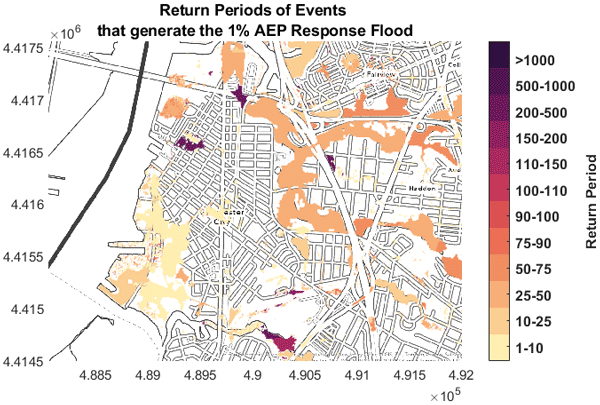
Traditional flood assessments use an event-based approach, assuming flood risk matches the chance of flood drivers. However, flooding also depends on topography and the spatio-temporal features of events. The response-based approach uses many events to estimate flood hazard directly. In Gloucester City (NJ, U.S.), we find that frequent events can cause rare (1 %) flood levels due to their spatio-temporal characteristics. Including these factors is key for accurate flood hazard estimates.

Pravin Maduwantha, Thomas Wahl, Sara Santamaria-Aguilar, Robert Jane, Sönke Dangendorf, Hanbeen Kim, and Gabriele Villarini
Hydrol. Earth Syst. Sci., 30, 401–420, https://doi.org/10.5194/hess-30-401-2026, https://doi.org/10.5194/hess-30-401-2026, 2026
Short summary
Short summary
Compound flooding occurs when multiple drivers, such as heavy rain and storm surge, occur simultaneously. Comprehensive compound flood risk assessments require simulating many storm events using flood models, but such historical data are limited. To address this, we developed a statistical framework to generate large numbers of synthetic yet realistic storm events for use in compound flood modeling.
Julius Schlumberger, Tristian R. Stolte, Helena M. Garcia, Antonia Sebastian, Wiebke Jäger, Philip J. Ward, Marleen C. de Ruiter, Robert Šakić Trogrlić, Annegien Tijssen, and Mariana Madruga de Brito
EGUsphere, https://doi.org/10.5194/egusphere-2025-6132, https://doi.org/10.5194/egusphere-2025-6132, 2026
Short summary
Short summary
Flood vulnerability is too often analysed for one moment in time (static), whereas vulnerability is highly dynamic. We reviewed 67 articles for their flood vulnerability methodologies and found that traditional methods for unraveling flood vulnerability deal differently with dynamic vulnerability. Each method seems to lend itself well for specific concepts of dynamics and different aspects of vulnerability. We recommend to use the complementary strengths of these approaches to improve the field.
Nicole van Maanen, Marleen de Ruiter, Wiebke Jäger, Veronica Casartelli, Roxana Ciurean, Noemi Padrón-Fumero, Anne Sophie Daloz, David Geurts, Stefania Gottardo, Stefan Hochrainer-Stigler, Abel López Diez, Jaime Díaz Pacheco, Pedro Dorta Antequera, Tamara Febles Arévalo, Sara García González, Raúl Hernández-Martín, Carmen Alvarez-Albelo, Juan José Diaz-Hernandez, Lin Ma, Letizia Monteleone, Karina Reiter, Tristian Stolte, Robert Šakić Trogrlić, Silvia Torresan, Sharon Tatman, David Romero Manrique de Lara, Yeray Hernández González, and Philip J. Ward
Earth Syst. Dynam., 16, 2295–2311, https://doi.org/10.5194/esd-16-2295-2025, https://doi.org/10.5194/esd-16-2295-2025, 2025
Short summary
Short summary
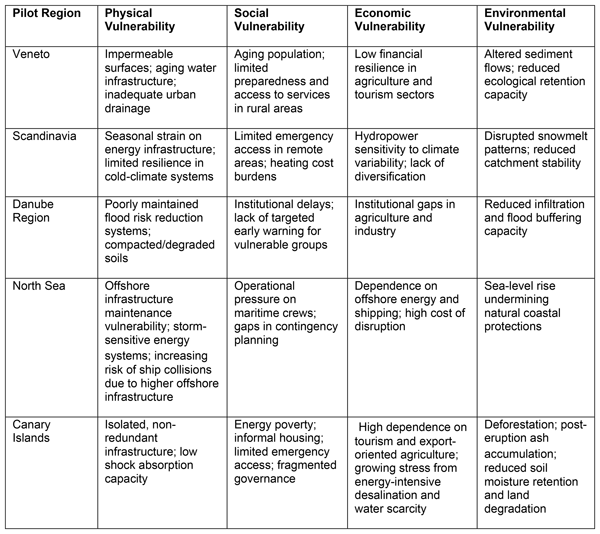
Disaster risk management faces growing challenges from multiple, changing hazards. Interviews with stakeholders in five European regions reveal that climate change, urban growth, and socio-economic shifts increase vulnerability and exposure. Measures to reduce one risk can worsen others, highlighting the need for better coordination. The study calls for flexible, context-specific strategies that connect scientific risk assessments with real-world decision-making.
Wei Li, Philip J. Ward, and Lia van Wesenbeeck
EGUsphere, https://doi.org/10.5194/egusphere-2025-4663, https://doi.org/10.5194/egusphere-2025-4663, 2025
Short summary
Short summary
This study presents a novel model that captures the interactions among water, energy, and food, revealing how human activities and natural processes mutually shape one another. It shows how human activities alter water quantity and quality, and how these changes reshape resource availability and subsequent human resource use. The Beijing-Tianjin-Hebei case study demonstrates the model's value for advancing hydrological science and informing sustainable and equitable resource management.
Christopher J. White, Mohammed Sarfaraz Gani Adnan, Marcello Arosio, Stephanie Buller, YoungHwa Cha, Roxana Ciurean, Julia M. Crummy, Melanie Duncan, Joel Gill, Claire Kennedy, Elisa Nobile, Lara Smale, and Philip J. Ward
Nat. Hazards Earth Syst. Sci., 25, 4263–4281, https://doi.org/10.5194/nhess-25-4263-2025, https://doi.org/10.5194/nhess-25-4263-2025, 2025
Short summary
Short summary
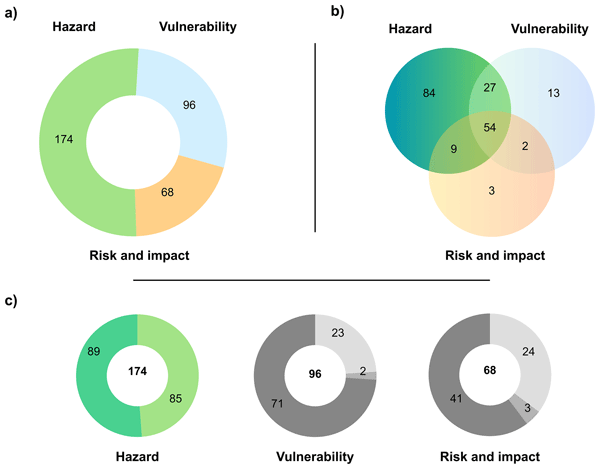
Indicators contain observable and measurable characteristics to understand the state of a concept or phenomenon and/or monitor it over time. There have been limited efforts to understand how indicators are being used in multi-hazard and multi-risk contexts. We find most of existing indicators do not include the interactions between hazards or risks. We propose a set of recommendations to enable the development and uptake of multi-hazard and multi-risk indicators.
Wiebke S. Jäger, Marleen C. de Ruiter, Timothy Tiggeloven, and Philip J. Ward
Nat. Hazards Earth Syst. Sci., 25, 2751–2769, https://doi.org/10.5194/nhess-25-2751-2025, https://doi.org/10.5194/nhess-25-2751-2025, 2025
Short summary
Short summary
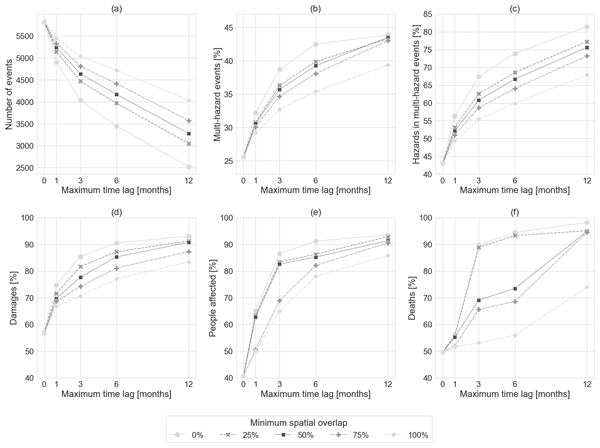
Multiple hazards, occurring simultaneously or consecutively, can have more extreme impacts than single hazards. We examined the disaster records in the global emergency events database EM-DAT to better understand this phenomenon. We developed a method to identify such multi-hazards and analysed their reported impacts using statistics. Multi-hazards have accounted for a disproportionate number of the impacts, but there appear to be different archetypal patterns in which the impacts compound.
Lou Brett, Christopher J. White, Daniela I. V. Domeisen, Bart van den Hurk, Philip Ward, and Jakob Zscheischler
Nat. Hazards Earth Syst. Sci., 25, 2591–2611, https://doi.org/10.5194/nhess-25-2591-2025, https://doi.org/10.5194/nhess-25-2591-2025, 2025
Short summary
Short summary
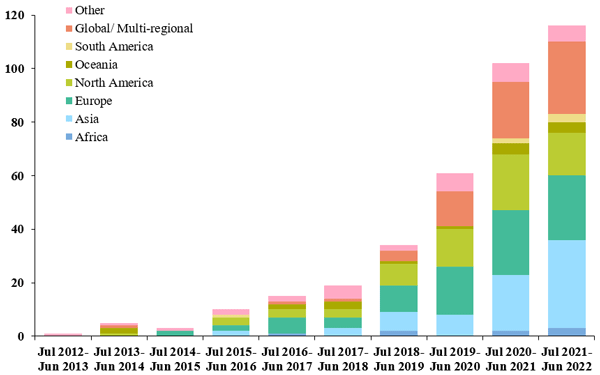
Compound events, where multiple weather or climate hazards occur together, pose significant risks to both society and the environment. These events, like simultaneous wind and rain, can have more severe impacts than single hazards. Our review of compound event research from 2012–2022 reveals a rise in studies, especially on events that occur concurrently, hot and dry events, and compounding flooding. The review also highlights opportunities for research in the coming years.
Irene Benito, Jeroen C. J. H. Aerts, Philip J. Ward, Dirk Eilander, and Sanne Muis
Nat. Hazards Earth Syst. Sci., 25, 2287–2315, https://doi.org/10.5194/nhess-25-2287-2025, https://doi.org/10.5194/nhess-25-2287-2025, 2025
Short summary
Short summary
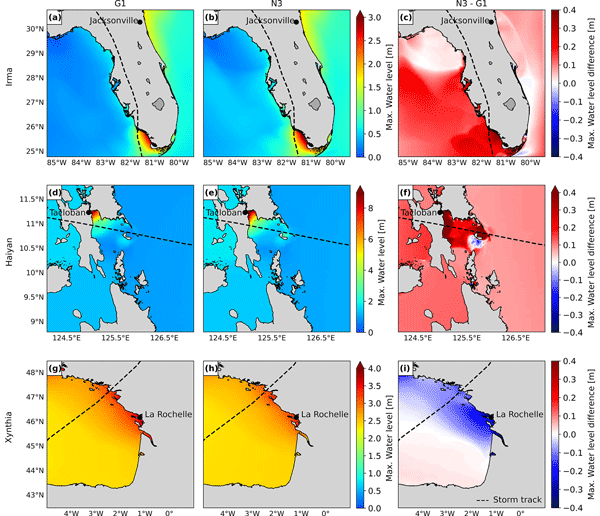
Global flood models are key to the mitigation of coastal flooding impacts, yet they still have limitations when providing actionable insights locally. We present a multiscale framework that couples dynamic water level and flood models and bridges the fully global and local modelling approaches. We apply it to three historical storms. Our findings reveal that the importance of model refinements varies based on the study area characteristics and the storm’s nature.
Nicole van Maanen, Joël J.-F. G. De Plaen, Timothy Tiggeloven, Maria Luisa Colmenares, Philip J. Ward, Paolo Scussolini, and Elco Koks
Nat. Hazards Earth Syst. Sci., 25, 2075–2080, https://doi.org/10.5194/nhess-25-2075-2025, https://doi.org/10.5194/nhess-25-2075-2025, 2025
Short summary
Short summary
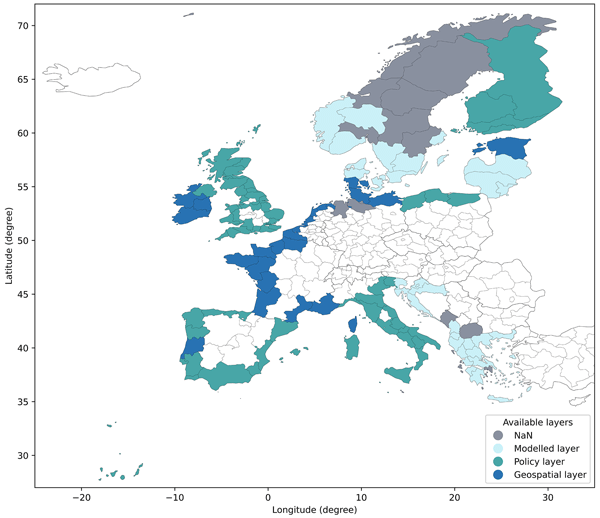
Understanding coastal flood protection is vital for assessing risks from natural disasters and climate change. However, current global data on coastal flood protection are limited and based on simplified assumptions, leading to potential uncertainties in risk estimates. As a step in this direction, we propose a comprehensive dataset, COASTtal flood PROtection Standards within EUrope (COASTPROS-EU), which compiles coastal flood protection standards in Europe.
Lucas Terlinden-Ruhl, Anaïs Couasnon, Dirk Eilander, Gijs G. Hendrickx, Patricia Mares-Nasarre, and José A. Á. Antolínez
Nat. Hazards Earth Syst. Sci., 25, 1353–1375, https://doi.org/10.5194/nhess-25-1353-2025, https://doi.org/10.5194/nhess-25-1353-2025, 2025
Short summary
Short summary
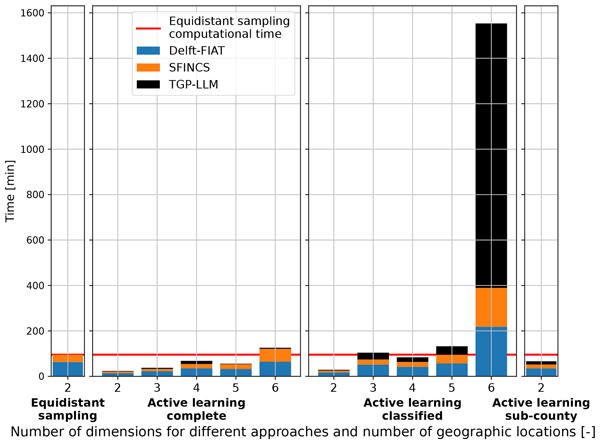
This study develops a conceptual framework that uses active learning to accelerate compound flood risk assessments. A case study of Charleston County shows that the framework achieves faster and more accurate risk quantification compared to the state-of-the-art. This win–win allows for an increase in the number of flooding parameters, which results in an 11.6 % difference in the expected annual damages. Therefore, this framework allows for more comprehensive compound flood risk assessments.
Julius Schlumberger, Tristian Stolte, Helena Margaret Garcia, Antonia Sebastian, Wiebke Jäger, Philip Ward, Marleen de Ruiter, Robert Šakić Trogrlić, Annegien Tijssen, and Mariana Madruga de Brito
EGUsphere, https://doi.org/10.5194/egusphere-2025-850, https://doi.org/10.5194/egusphere-2025-850, 2025
Preprint archived
Short summary
Short summary
The risk flood of flood impacts is dynamic as society continuously responds to specific events or ongoing developments. We analyzed 28 studies that assess such dynamics of vulnerability. Most research uses surveys and basic statistics data, while integrated, flexible models are seldom used. The studies struggle to link specific events or developments to the observed changes. Our findings highlight needs and possible directions towards a better assessment of vulnerability dynamics.
Joshua Green, Ivan D. Haigh, Niall Quinn, Jeff Neal, Thomas Wahl, Melissa Wood, Dirk Eilander, Marleen de Ruiter, Philip Ward, and Paula Camus
Nat. Hazards Earth Syst. Sci., 25, 747–816, https://doi.org/10.5194/nhess-25-747-2025, https://doi.org/10.5194/nhess-25-747-2025, 2025
Short summary
Short summary
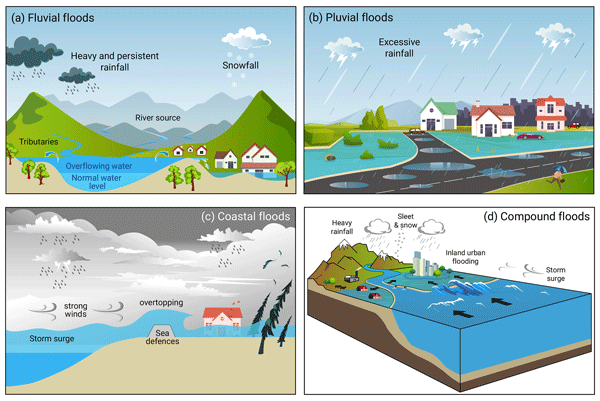
Compound flooding, involving the combination or successive occurrence of two or more flood drivers, can amplify flood impacts in coastal/estuarine regions. This paper reviews the practices, trends, methodologies, applications, and findings of coastal compound flooding literature at regional to global scales. We explore the types of compound flood events, their mechanistic processes, and the range of terminology. Lastly, this review highlights knowledge gaps and implications for future practices.
Sadhana Nirandjan, Elco E. Koks, Mengqi Ye, Raghav Pant, Kees C. H. Van Ginkel, Jeroen C. J. H. Aerts, and Philip J. Ward
Nat. Hazards Earth Syst. Sci., 24, 4341–4368, https://doi.org/10.5194/nhess-24-4341-2024, https://doi.org/10.5194/nhess-24-4341-2024, 2024
Short summary
Short summary
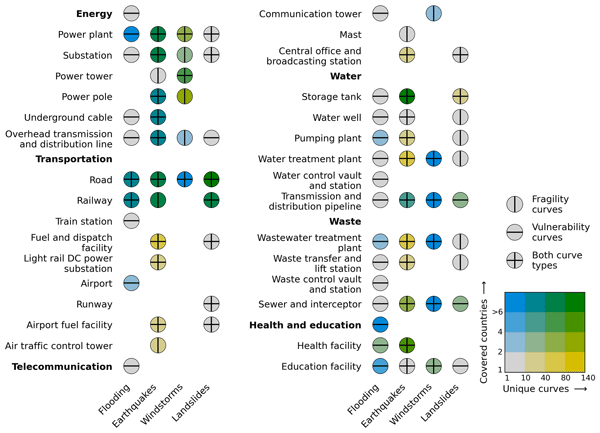
Critical infrastructures (CIs) are exposed to natural hazards, which may result in significant damage and burden society. Vulnerability is a key determinant for reducing these risks, yet crucial information is scattered in the literature. Our study reviews over 1510 fragility and vulnerability curves for CI assets, creating a unique publicly available physical vulnerability database that can be directly used for hazard risk assessments, including floods, earthquakes, windstorms, and landslides.
Pravin Maduwantha, Thomas Wahl, Sara Santamaria-Aguilar, Robert Jane, James F. Booth, Hanbeen Kim, and Gabriele Villarini
Nat. Hazards Earth Syst. Sci., 24, 4091–4107, https://doi.org/10.5194/nhess-24-4091-2024, https://doi.org/10.5194/nhess-24-4091-2024, 2024
Short summary
Short summary
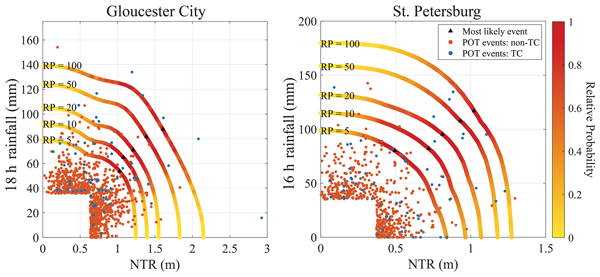
When assessing the likelihood of compound flooding, most studies ignore that it can arise from different storm types with distinct statistical characteristics. Here, we present a new statistical framework that accounts for these differences and shows how neglecting these can impact the likelihood of compound flood potential.
Willem J. van Verseveld, Albrecht H. Weerts, Martijn Visser, Joost Buitink, Ruben O. Imhoff, Hélène Boisgontier, Laurène Bouaziz, Dirk Eilander, Mark Hegnauer, Corine ten Velden, and Bobby Russell
Geosci. Model Dev., 17, 3199–3234, https://doi.org/10.5194/gmd-17-3199-2024, https://doi.org/10.5194/gmd-17-3199-2024, 2024
Short summary
Short summary
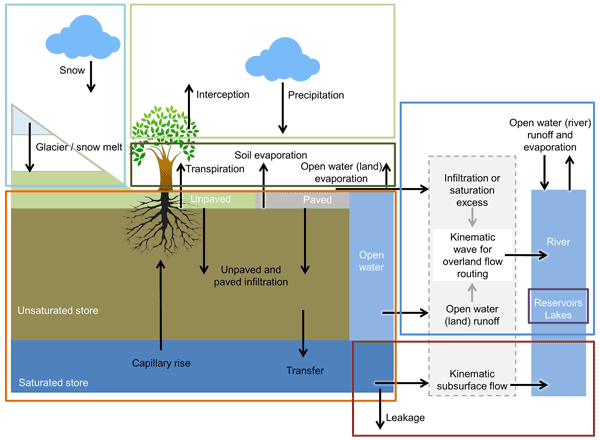
We present the wflow_sbm distributed hydrological model, recently released by Deltares, as part of the Wflow.jl open-source modelling framework in the programming language Julia. Wflow_sbm has a fast runtime, making it suitable for large-scale modelling. Wflow_sbm models can be set a priori for any catchment with the Python tool HydroMT-Wflow based on globally available datasets, which results in satisfactory to good performance (without much tuning). We show this for a number of specific cases.
Eric Mortensen, Timothy Tiggeloven, Toon Haer, Bas van Bemmel, Dewi Le Bars, Sanne Muis, Dirk Eilander, Frederiek Sperna Weiland, Arno Bouwman, Willem Ligtvoet, and Philip J. Ward
Nat. Hazards Earth Syst. Sci., 24, 1381–1400, https://doi.org/10.5194/nhess-24-1381-2024, https://doi.org/10.5194/nhess-24-1381-2024, 2024
Short summary
Short summary
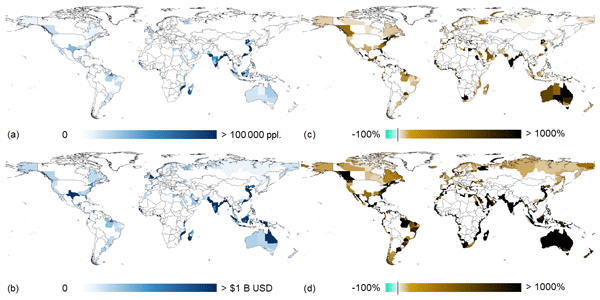
Current levels of coastal flood risk are projected to increase in coming decades due to various reasons, e.g. sea-level rise, land subsidence, and coastal urbanization: action is needed to minimize this future risk. We evaluate dykes and coastal levees, foreshore vegetation, zoning restrictions, and dry-proofing on a global scale to estimate what levels of risk reductions are possible. We demonstrate that there are several potential adaptation pathways forward for certain areas of the world.
Laurine A. de Wolf, Peter J. Robinson, W. J. Wouter Botzen, Toon Haer, Jantsje M. Mol, and Jeffrey Czajkowski
Nat. Hazards Earth Syst. Sci., 24, 1303–1318, https://doi.org/10.5194/nhess-24-1303-2024, https://doi.org/10.5194/nhess-24-1303-2024, 2024
Short summary
Short summary
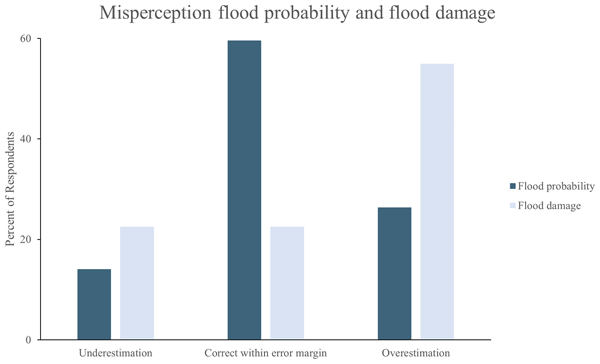
An understanding of flood risk perceptions may aid in improving flood risk communication. We conducted a survey among 871 coastal residents in Florida who were threatened to be flooded by Hurricane Dorian. Part of the original sample was resurveyed after Dorian failed to make landfall to investigate changes in risk perception. We find a strong influence of previous flood experience and social norms on flood risk perceptions. Furthermore, flood risk perceptions declined after the near-miss event.
Dirk Eilander, Anaïs Couasnon, Frederiek C. Sperna Weiland, Willem Ligtvoet, Arno Bouwman, Hessel C. Winsemius, and Philip J. Ward
Nat. Hazards Earth Syst. Sci., 23, 2251–2272, https://doi.org/10.5194/nhess-23-2251-2023, https://doi.org/10.5194/nhess-23-2251-2023, 2023
Short summary
Short summary
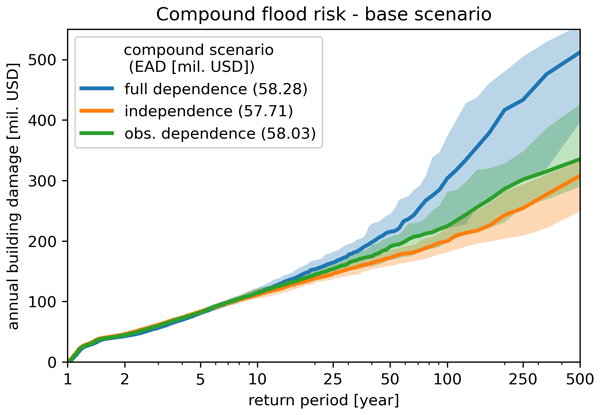
This study presents a framework for assessing compound flood risk using hydrodynamic, impact, and statistical modeling. A pilot in Mozambique shows the importance of accounting for compound events in risk assessments. We also show how the framework can be used to assess the effectiveness of different risk reduction measures. As the framework is based on global datasets and is largely automated, it can easily be applied in other areas for first-order assessments of compound flood risk.
Job C. M. Dullaart, Sanne Muis, Hans de Moel, Philip J. Ward, Dirk Eilander, and Jeroen C. J. H. Aerts
Nat. Hazards Earth Syst. Sci., 23, 1847–1862, https://doi.org/10.5194/nhess-23-1847-2023, https://doi.org/10.5194/nhess-23-1847-2023, 2023
Short summary
Short summary
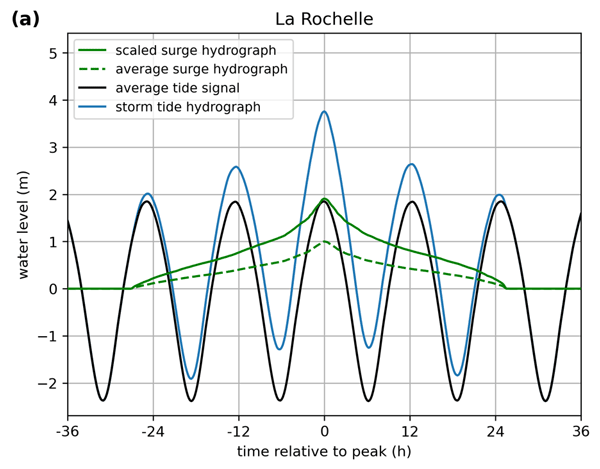
Coastal flooding is driven by storm surges and high tides and can be devastating. To gain an understanding of the threat posed by coastal flooding and to identify areas that are especially at risk, now and in the future, it is crucial to accurately model coastal inundation and assess the coastal flood hazard. Here, we present a global dataset with hydrographs that represent the typical evolution of an extreme sea level. These can be used to model coastal inundation more accurately.
Heidi Kreibich, Kai Schröter, Giuliano Di Baldassarre, Anne F. Van Loon, Maurizio Mazzoleni, Guta Wakbulcho Abeshu, Svetlana Agafonova, Amir AghaKouchak, Hafzullah Aksoy, Camila Alvarez-Garreton, Blanca Aznar, Laila Balkhi, Marlies H. Barendrecht, Sylvain Biancamaria, Liduin Bos-Burgering, Chris Bradley, Yus Budiyono, Wouter Buytaert, Lucinda Capewell, Hayley Carlson, Yonca Cavus, Anaïs Couasnon, Gemma Coxon, Ioannis Daliakopoulos, Marleen C. de Ruiter, Claire Delus, Mathilde Erfurt, Giuseppe Esposito, Didier François, Frédéric Frappart, Jim Freer, Natalia Frolova, Animesh K. Gain, Manolis Grillakis, Jordi Oriol Grima, Diego A. Guzmán, Laurie S. Huning, Monica Ionita, Maxim Kharlamov, Dao Nguyen Khoi, Natalie Kieboom, Maria Kireeva, Aristeidis Koutroulis, Waldo Lavado-Casimiro, Hong-Yi Li, Maria Carmen LLasat, David Macdonald, Johanna Mård, Hannah Mathew-Richards, Andrew McKenzie, Alfonso Mejia, Eduardo Mario Mendiondo, Marjolein Mens, Shifteh Mobini, Guilherme Samprogna Mohor, Viorica Nagavciuc, Thanh Ngo-Duc, Huynh Thi Thao Nguyen, Pham Thi Thao Nhi, Olga Petrucci, Nguyen Hong Quan, Pere Quintana-Seguí, Saman Razavi, Elena Ridolfi, Jannik Riegel, Md Shibly Sadik, Nivedita Sairam, Elisa Savelli, Alexey Sazonov, Sanjib Sharma, Johanna Sörensen, Felipe Augusto Arguello Souza, Kerstin Stahl, Max Steinhausen, Michael Stoelzle, Wiwiana Szalińska, Qiuhong Tang, Fuqiang Tian, Tamara Tokarczyk, Carolina Tovar, Thi Van Thu Tran, Marjolein H. J. van Huijgevoort, Michelle T. H. van Vliet, Sergiy Vorogushyn, Thorsten Wagener, Yueling Wang, Doris E. Wendt, Elliot Wickham, Long Yang, Mauricio Zambrano-Bigiarini, and Philip J. Ward
Earth Syst. Sci. Data, 15, 2009–2023, https://doi.org/10.5194/essd-15-2009-2023, https://doi.org/10.5194/essd-15-2009-2023, 2023
Short summary
Short summary
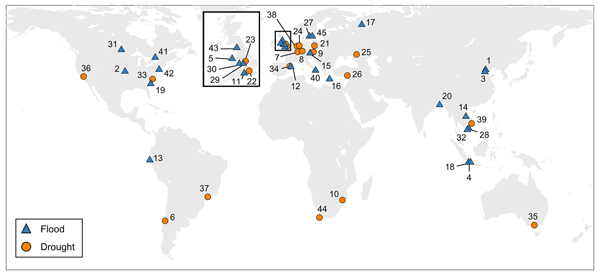
As the adverse impacts of hydrological extremes increase in many regions of the world, a better understanding of the drivers of changes in risk and impacts is essential for effective flood and drought risk management. We present a dataset containing data of paired events, i.e. two floods or two droughts that occurred in the same area. The dataset enables comparative analyses and allows detailed context-specific assessments. Additionally, it supports the testing of socio-hydrological models.
Dirk Eilander, Anaïs Couasnon, Tim Leijnse, Hiroaki Ikeuchi, Dai Yamazaki, Sanne Muis, Job Dullaart, Arjen Haag, Hessel C. Winsemius, and Philip J. Ward
Nat. Hazards Earth Syst. Sci., 23, 823–846, https://doi.org/10.5194/nhess-23-823-2023, https://doi.org/10.5194/nhess-23-823-2023, 2023
Short summary
Short summary
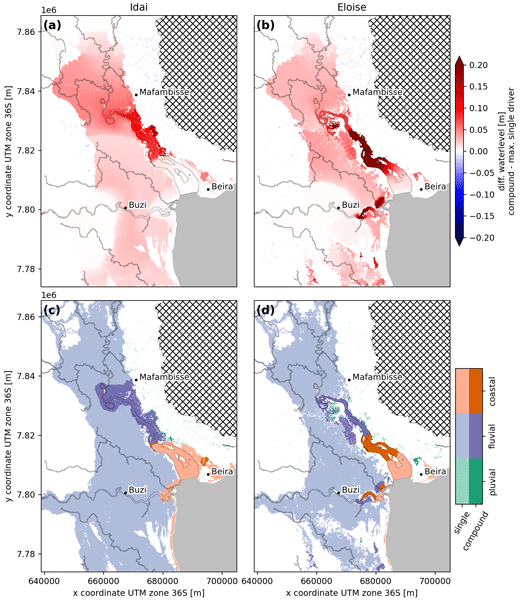
In coastal deltas, flooding can occur from interactions between coastal, riverine, and pluvial drivers, so-called compound flooding. Global models however ignore these interactions. We present a framework for automated and reproducible compound flood modeling anywhere globally and validate it for two historical events in Mozambique with good results. The analysis reveals differences in compound flood dynamics between both events related to the magnitude of and time lag between drivers.
Paolo Scussolini, Job Dullaart, Sanne Muis, Alessio Rovere, Pepijn Bakker, Dim Coumou, Hans Renssen, Philip J. Ward, and Jeroen C. J. H. Aerts
Clim. Past, 19, 141–157, https://doi.org/10.5194/cp-19-141-2023, https://doi.org/10.5194/cp-19-141-2023, 2023
Short summary
Short summary
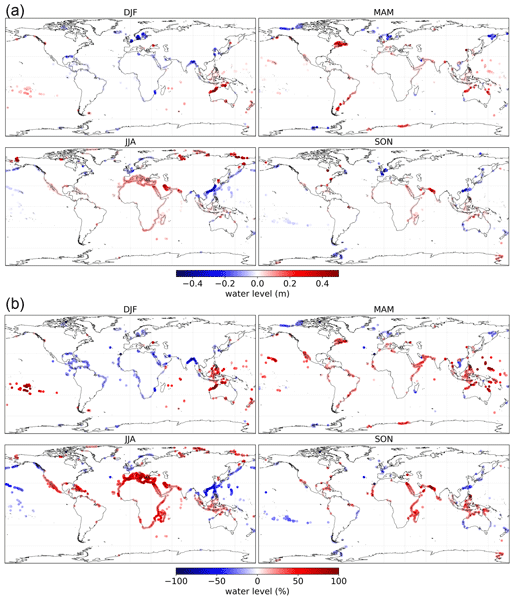
We reconstruct sea level extremes due to storm surges in a past warmer climate. We employ a novel combination of paleoclimate modeling and global ocean hydrodynamic modeling. We find that during the Last Interglacial, about 127 000 years ago, seasonal sea level extremes were indeed significantly different – higher or lower – on long stretches of the global coast. These changes are associated with different patterns of atmospheric storminess linked with meridional shifts in wind bands.
Weihua Zhu, Kai Liu, Ming Wang, Philip J. Ward, and Elco E. Koks
Nat. Hazards Earth Syst. Sci., 22, 1519–1540, https://doi.org/10.5194/nhess-22-1519-2022, https://doi.org/10.5194/nhess-22-1519-2022, 2022
Short summary
Short summary
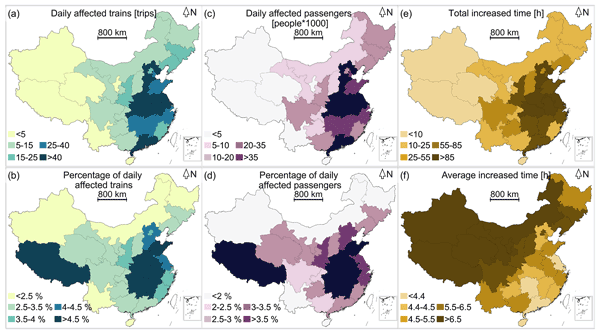
We present a simulation framework to analyse the system vulnerability and risk of the Chinese railway system to floods. To do so, we develop a method for generating flood events at both the national and river basin scale. Results show flood system vulnerability and risk of the railway system are spatially heterogeneous. The event-based approach shows how we can identify critical hotspots, taking the first steps in developing climate-resilient infrastructure.
Philip J. Ward, James Daniell, Melanie Duncan, Anna Dunne, Cédric Hananel, Stefan Hochrainer-Stigler, Annegien Tijssen, Silvia Torresan, Roxana Ciurean, Joel C. Gill, Jana Sillmann, Anaïs Couasnon, Elco Koks, Noemi Padrón-Fumero, Sharon Tatman, Marianne Tronstad Lund, Adewole Adesiyun, Jeroen C. J. H. Aerts, Alexander Alabaster, Bernard Bulder, Carlos Campillo Torres, Andrea Critto, Raúl Hernández-Martín, Marta Machado, Jaroslav Mysiak, Rene Orth, Irene Palomino Antolín, Eva-Cristina Petrescu, Markus Reichstein, Timothy Tiggeloven, Anne F. Van Loon, Hung Vuong Pham, and Marleen C. de Ruiter
Nat. Hazards Earth Syst. Sci., 22, 1487–1497, https://doi.org/10.5194/nhess-22-1487-2022, https://doi.org/10.5194/nhess-22-1487-2022, 2022
Short summary
Short summary
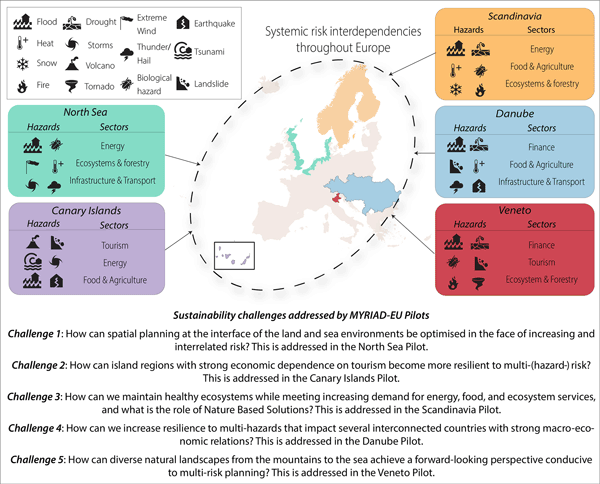
The majority of natural-hazard risk research focuses on single hazards (a flood, a drought, a volcanic eruption, an earthquake, etc.). In the international research and policy community it is recognised that risk management could benefit from a more systemic approach. In this perspective paper, we argue for an approach that addresses multi-hazard, multi-risk management through the lens of sustainability challenges that cut across sectors, regions, and hazards.
Katherine L. Towey, James F. Booth, Alejandra Rodriguez Enriquez, and Thomas Wahl
Nat. Hazards Earth Syst. Sci., 22, 1287–1300, https://doi.org/10.5194/nhess-22-1287-2022, https://doi.org/10.5194/nhess-22-1287-2022, 2022
Short summary
Short summary
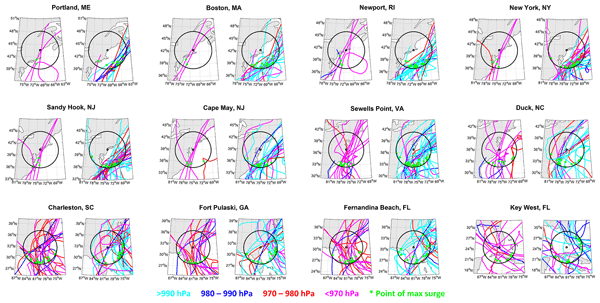
Coastal flooding due to storm surge from tropical cyclones is a significant hazard. The influence of tropical cyclone characteristics, including its proximity, intensity, path angle, and speed, on the magnitude of storm surge is examined along the eastern United States. No individual characteristic was found to be strongly related to how much surge occurred at a site, though there is an increased likelihood of high surge occurring when tropical cyclones are both strong and close to a location.
Cited articles
Benito, I., Eilander, D., Kelder, T., Ward, P. J., Aerts, J. C. J. H., and Muis, S.: Pooling Seasonal Forecast Ensembles to Estimate Storm Tide Return Periods in Extra-Tropical Regions, Journal of Geophysical Research: Oceans, 130, e2025JC022614, https://doi.org/10.1029/2025JC022614, 2025.
Berghuijs, W. R., Woods, R. A., Hutton, C. J., and Sivapalan, M.: Dominant flood generating mechanisms across the United States, Geophysical Research Letters, 43, 4382–4390, https://doi.org/10.1002/2016GL068070, 2016.
Bevacqua, E., Maraun, D., Hobæk Haff, I., Widmann, M., and Vrac, M.: Multivariate statistical modelling of compound events via pair-copula constructions: analysis of floods in Ravenna (Italy), Hydrol. Earth Syst. Sci., 21, 2701–2723, https://doi.org/10.5194/hess-21-2701-2017, 2017.
Bevacqua, E., Maraun, D., Vousdoukas, M. I., Voukouvalas, E., Vrac, M., Mentaschi, L., and Widmann, M.: Higher probability of compound flooding from precipitation and storm surge in Europe under anthropogenic climate change, Sci. Adv., 5, eaaw5531, https://doi.org/10.1126/sciadv.aaw5531, 2019.
Bevacqua, E., Vousdoukas, M. I., Shepherd, T. G., and Vrac, M.: Brief communication: The role of using precipitation or river discharge data when assessing global coastal compound flooding, Nat. Hazards Earth Syst. Sci., 20, 1765–1782, https://doi.org/10.5194/nhess-20-1765-2020, 2020.
Bloemendaal, N., Haigh, I. D., de Moel, H., Muis, S., Haarsma, R. J., and Aerts, J. C. J. H.: Generation of a global synthetic tropical cyclone hazard dataset using STORM, Scientific Data, 7, 1–12, https://doi.org/10.1038/s41597-020-0381-2, 2020.
Booth, J. F., Rieder, H. E., and Kushnir, Y.: Comparing hurricane and extratropical storm surge for the Mid-Atlantic and Northeast Coast of the United States for 1979–2013, Environ. Res. Lett., 11, 094004, https://doi.org/10.1088/1748-9326/11/9/094004, 2016.
Brunner, M. I.: Floods and droughts: a multivariate perspective, Hydrol. Earth Syst. Sci., 27, 2479–2497, https://doi.org/10.5194/hess-27-2479-2023, 2023.
Camus, P., Haigh, I. D., Nasr, A. A., Wahl, T., Darby, S. E., and Nicholls, R. J.: Regional analysis of multivariate compound coastal flooding potential around Europe and environs: sensitivity analysis and spatial patterns, Nat. Hazards Earth Syst. Sci., 21, 2021–2040, https://doi.org/10.5194/nhess-21-2021-2021, 2021.
Cosgrove, B., Gochis, D., Flowers, T., Dugger, A., Ogden, F., Graziano, T., Clark, E., Cabell, R., Casiday, N., Cui, Z., Eicher, K., Fall, G., Feng, X., Fitzgerald, K., Frazier, N., George, C., Gibbs, R., Hernandez, L., Johnson, D., Jones, R., Karsten, L., Kefelegn, H., Kitzmiller, D., Lee, H., Liu, Y., Mashriqui, H., Mattern, D., McCluskey, A., McCreight, J. L., McDaniel, R., Midekisa, A., Newman, A., Pan, L., Pham, C., RafieeiNasab, A., Rasmussen, R., Read, L., Rezaeianzadeh, M., Salas, F., Sang, D., Sampson, K., Schneider, T., Shi, Q., Sood, G., Wood, A., Wu, W., Yates, D., Yu, W., and Zhang, Y.: NOAA's National Water Model: Advancing operational hydrology through continental-scale modeling, JAWRA Journal of the American Water Resources Association, 60, 247–272, https://doi.org/10.1111/1752-1688.13184, 2024.
Couasnon, A., Sebastian, A., and Morales-Nápoles, O.: A Copula-based bayesian network for modeling compound flood hazard from riverine and coastal interactions at the catchment scale: An application to the houston ship channel, Texas, Water (Switzerland), 10, https://doi.org/10.3390/w10091190, 2018.
Couasnon, A., Eilander, D., Muis, S., Veldkamp, T. I. E., Haigh, I. D., Wahl, T., Winsemius, H. C., and Ward, P. J.: Measuring compound flood potential from river discharge and storm surge extremes at the global scale, Nat. Hazards Earth Syst. Sci., 20, 489–504, https://doi.org/10.5194/nhess-20-489-2020, 2020.
Dullaart, J. C. M., Muis, S., Bloemendaal, N., Chertova, M. V., Couasnon, A., and Aerts, J. C. J. H.: Accounting for tropical cyclones more than doubles the global population exposed to low-probability coastal flooding, Commun. Earth Environ., 2, 1–11, https://doi.org/10.1038/s43247-021-00204-9, 2021.
Eilander, D., Couasnon, A., Sperna Weiland, F. C., Ligtvoet, W., Bouwman, A., Winsemius, H. C., and Ward, P. J.: Modeling compound flood risk and risk reduction using a globally applicable framework: a pilot in the Sofala province of Mozambique, Nat. Hazards Earth Syst. Sci., 23, 2251–2272, https://doi.org/10.5194/nhess-23-2251-2023, 2023.
Enríquez, A. R., Wahl, T., Marcos, M., and Haigh, I. D.: Spatial footprints of storm surges along the global coastlines, Journal of Geophysical Research: Oceans, 125, https://doi.org/10.1029/2020JC016367, 2020.
Falter, D., Schröter, K., Dung, N.V., Vorogushyn, S., Kreibich, H., Hundecha, Y., Apel, H., and Merz, B.: Spatially coherent flood risk assessment based on long-term continuous simulation with a coupled model chain, Journal of Hydrology, 524, 182–193, https://doi.org/10.1016/j.jhydrol.2015.02.021, 2015.
Feng, D., Tan, Z., Xu, D., and Leung, L. R.: Understanding the compound flood risk along the coast of the contiguous United States, Hydrol. Earth Syst. Sci., 27, 3911–3934, https://doi.org/10.5194/hess-27-3911-2023, 2023.
Ghanbari, M., Arabi, M., Kao, S.-C., Obeysekera, J., and Sweet, W.: Climate Change and Changes in Compound Coastal-Riverine Flooding Hazard Along the U. S. Coasts, Earths Future, 9, e2021EF002055, https://doi.org/10.1029/2021EF002055, 2021.
Gori, A. and Lin, N.: Projecting Compound Flood Hazard Under Climate Change With Physical Models and Joint Probability Methods, Earths Future, 10, e2022EF003097, https://doi.org/10.1029/2022EF003097, 2022.
Haigh, I. D., Marcos, M., Talke, S. A., Woodworth, P. L., Hunter, J. R., Hague, B. S., Arns, A., Bradshaw, E., and Thompson, P.: GESLA Version 3: A major update to the global higher-frequency sea-level dataset, Geoscience Data Journal, 10, 293–314, https://doi.org/10.1002/gdj3.174, 2023.
Hallegatte, S., Green, C., Nicholls, R. J., and Corfee-Morlot, J.: Future flood losses in major coastal cities, Nature Climate Change, https://doi.org/10.1038/nclimate1979, 2013.
Harrigan, S., Zsoter, E., Alfieri, L., Prudhomme, C., Salamon, P., Wetterhall, F., Barnard, C., Cloke, H., and Pappenberger, F.: GloFAS-ERA5 operational global river discharge reanalysis 1979–present, Earth Syst. Sci. Data, 12, 2043–2060, https://doi.org/10.5194/essd-12-2043-2020, 2020.
Heffernan, J. E.: A Directory of Coefficients of Tail Dependence, Extremes, 3, 279–290, https://doi.org/10.1023/A:1011459127975, 2001.
Heffernan, J. E. and Tawn, J. A.: A conditional approach for multivariate extreme values (with discussion), Journal of the Royal Statistical Society, Series B: Statistical Methodology, 66, 497–546, https://doi.org/10.1111/j.1467-9868.2004.02050.x, 2004.
Hodson, T. O., Hariharan, J. A., Black, S., and Horsburgh, J. S.: dataretrieval (Python): a Python package for discovering and retrieving water data available from U. S. federal hydrologic web services, U. S. Geological Survey software release, https://doi.org/10.5066/P94I5TX3, 2023.
Jane, R., Cadavid, L., Obeysekera, J., and Wahl, T.: Multivariate statistical modelling of the drivers of compound flood events in south Florida, Nat. Hazards Earth Syst. Sci., 20, 2681–2699, https://doi.org/10.5194/nhess-20-2681-2020, 2020.
Jane, R., Santiago-Collazo, F. L., Serafin, K. A., Gori, A., Peña, F., and Wahl, T.: Chapter 5 – Compound hazards during tropical cyclones, in: Tropical Cyclones and Associated Impacts, edited by: Villarini, G., Vecchi, G. A., and Scoccimarro, E., Elsevier, 95–119, https://doi.org/10.1016/B978-0-323-95390-0.00005-4, 2025.
Jane, R., Wahl, T., Pena, F., Obeysekera, J., Murphy-Barltrop, C., Ali, J., Maduwantha, P., Li, H., and Santos, V. M.: MultiHazard: Copula-based Joint Probability Analysis in R, Journal of Open Source Software, 11, 8350, https://doi.org/10.21105/joss.08350, 2026.
JEC: Flooding Costs the U. S. Between $179.8 and $496.0 Billion Each Year, United States Joint Economic Committee, 2024.
Keef, C., Papastathopoulos, I., and Tawn, J. A.: Estimation of the conditional distribution of a multivariate variable given that one of its components is large: Additional constraints for the Heffernan and Tawn model, Journal of Multivariate Analysis, 115, 396–404, https://doi.org/10.1016/j.jmva.2012.10.012, 2013.
Kim, H., Villarini, G., Jane, R., Wahl, T., Misra, S., and Michalek, A.: On the generation of high-resolution probabilistic design events capturing the joint occurrence of rainfall and storm surge in coastal basins, International Journal of Climatology, 43, 761–771, https://doi.org/10.1002/joc.7825, 2023.
Lai, Y., Li, J., Gu, X., Liu, C., and Chen, Y. D.: Global Compound Floods from Precipitation and Storm Surge: Hazards and the Roles of Cyclones, Journal of Climate, 34, 8319–8339, https://doi.org/10.1175/JCLI-D-21-0050.1, 2021.
Leijnse, T. W. B., van Dongeren, A., van Ormondt, M., de Goede, R., and Aerts, J. C. J. H.: The importance of waves in large-scale coastal compound flooding: A case study of Hurricane Florence (2018), Coastal Engineering, 199, 104726, https://doi.org/10.1016/j.coastaleng.2025.104726, 2025.
Li, H.: 10,000 years of spatially joint events of extreme sea levels and river discharges in the U. S., Zenodo [data set], https://doi.org/10.5281/zenodo.15728000, 2025a.
Li, H.: Scripts for “Assessing the spatial correlation of potential compound flooding in the United States”, Zenodo [code], https://doi.org/10.5281/zenodo.17464793, 2025b.
Li, H., Haer, T., Couasnon, A., Enríquez, A. R., Muis, S., and Ward, P. J.: A spatially-dependent synthetic global dataset of extreme sea level events, Weather and Climate Extremes, 41, 100596, https://doi.org/10.1016/j.wace.2023.100596, 2023.
Maduwantha, P., Wahl, T., Santamaria-Aguilar, S., Jane, R., Booth, J. F., Kim, H., and Villarini, G.: A multivariate statistical framework for mixed storm types in compound flood analysis, Nat. Hazards Earth Syst. Sci., 24, 4091–4107, https://doi.org/10.5194/nhess-24-4091-2024, 2024.
Makkonen, L.: Plotting Positions in Extreme Value Analysis, Journal of Applied Meteorology and Climatology, 45, 334–340, https://doi.org/10.1175/JAM2349.1, 2006.
Martius, O., Pfahl, S., and Chevalier, C.: A global quantification of compound precipitation and wind extremes, Geophysical Research Letters, 43, 7709–7717, https://doi.org/10.1002/2016GL070017, 2016.
McGranahan, G., Balk, D., and Anderson, B.: The rising tide: assessing the risks of climate change and human settlements in low elevation coastal zones, Environment & Urbanization, 19, 17–37, https://doi.org/10.1177/0956247807076960, 2007.
Metin, A. D., Dung, N. V., Schröter, K., Vorogushyn, S., Guse, B., Kreibich, H., and Merz, B.: The role of spatial dependence for large-scale flood risk estimation, Nat. Hazards Earth Syst. Sci., 20, 967–979, https://doi.org/10.5194/nhess-20-967-2020, 2020.
Moftakhari, H., Schubert, J. E., AghaKouchak, A., Matthew, R. A., and Sanders, B. F.: Linking statistical and hydrodynamic modeling for compound flood hazard assessment in tidal channels and estuaries, Advances in Water Resources, 128, 28–38, https://doi.org/10.1016/j.advwatres.2019.04.009, 2019.
Moftakhari, H. R., Salvadori, G., AghaKouchak, A., Sanders, B. F., and Matthew, R. A.: Compounding effects of sea level rise and fluvial flooding, Proceedings of the National Academy of Sciences, 114, 9785–9790, https://doi.org/10.1073/pnas.1620325114, 2017.
Muis, S., Aerts, J. C. J. H., Á. Antolínez, J. A., Dullaart, J. C., Duong, T. M., Erikson, L., Haarsma, R. J., Apecechea, M. I., Mengel, M., Le Bars, D., O'Neill, A., Ranasinghe, R., Roberts, M. J., Verlaan, M., Ward, P. J., and Yan, K.: Global Projections of Storm Surges Using High-Resolution CMIP6 Climate Models, Earths Future, 11, e2023EF003479, https://doi.org/10.1029/2023EF003479, 2023.
Nasr, A. A., Wahl, T., Rashid, M. M., Camus, P., and Haigh, I. D.: Assessing the dependence structure between oceanographic, fluvial, and pluvial flooding drivers along the United States coastline, Hydrol. Earth Syst. Sci., 25, 6203–6222, https://doi.org/10.5194/hess-25-6203-2021, 2021.
NOAA: Economics and Demographics, https://coast.noaa.gov/states/fast-facts/economics-and-demographics.html (last access: 1 December 2024), 2020.
Quinn, N., Bates, P. D., Neal, J., Smith, A., Wing, O., Sampson, C., Smith, J., and Heffernan, J.: The Spatial Dependence of Flood Hazard and Risk in the United States, Water Resources Research, 55, 1890–1911, https://doi.org/10.1029/2018WR024205, 2019.
Roberge, M.: HydroFunctions: A suite of convenience functions for exploring water data in Python, https://hydrofunctions.readthedocs.io/en/master/ (last access: 21 January 2026), 2018.
Rueda, A., Camus, P., Tomás, A., Vitousek, S., and Méndez, F. J.: A multivariate extreme wave and storm surge climate emulator based on weather patterns, Ocean Modelling, 104, 242–251, https://doi.org/10.1016/j.ocemod.2016.06.008, 2016.
Salvadori, G., Durante, F., De Michele, C., Bernardi, M., and Petrella, L.: A multivariate copula-based framework for dealing with hazard scenarios and failure probabilities, Water Resources Research, 52, 3701–3721, https://doi.org/10.1002/2015WR017225, 2016.
Seabold, S. and Perktold, J.: Statsmodels: Econometric and Statistical Modeling with Python, SciPy 2010 [code], https://doi.org/10.25080/Majora-92bf1922-011, 2010.
Sohrabi, M., Moftakhari, H., and Moradkhani, H.: Analyzing Compound Flooding Drivers Across the US Gulf Coast States, Geophysical Research Letters, 52, e2025GL114769, https://doi.org/10.1029/2025GL114769, 2025.
Solari, S., Egüen, M., Polo, M. J., and Losada, M. A.: Peaks Over Threshold (POT): A methodology for automatic threshold estimation using goodness of fit p-value, Water Resources Research, 53, 2833–2849, https://doi.org/10.1002/2016WR019426, 2017.
Southworth, H., Heffernan, J. E., Metcalfe, P. D., Papastathopoulos, Y., Stephenson, A., and Coles, S.: texmex: Statistical Modelling of Extreme Values, https://cran.r-project.org/web/packages/texmex/ (last access: 21 January 2026), 2024.
Sweet, W., Dusek, G., Obeysekera, J., and Marra, J.: Patterns and Projections of High Tide Flooding Along the U. S. Coastline Using a Common Impact Threshold, https://doi.org/10.7289/V5/TR-NOS-COOPS-086, 2018.
Tilloy, A., Malamud, B. D., Winter, H., and Joly-Laugel, A.: A review of quantification methodologies for multi-hazard interrelationships, Earth-Science Reviews, 196, 102881, https://doi.org/10.1016/j.earscirev.2019.102881, 2019.
Ullrich, S. L., Hegnauer, M., Nguyen, D. V., Merz, B., Kwadijk, J., and Vorogushyn, S.: Comparative evaluation of two types of stochastic weather generators for synthetic precipitation in the Rhine basin, Journal of Hydrology, 601, 126544, https://doi.org/10.1016/j.jhydrol.2021.126544, 2021.
Valle-Levinson, A., Dutton, A., and Martin, J. B.: Spatial and temporal variability of sea level rise hot spots over the eastern United States, Geophysical Research Letters, 44, 7876–7882, https://doi.org/10.1002/2017GL073926, 2017.
Valle-Levinson, A., Olabarrieta, M., and Heilman, L.: Compound flooding in Houston-Galveston Bay during Hurricane Harvey, Science of The Total Environment, 747, 141272, https://doi.org/10.1016/j.scitotenv.2020.141272, 2020.
Wahl, T., Jain, S., Bender, J., Meyers, S. D., and Luther, M. E.: Increasing risk of compound flooding from storm surge and rainfall for major US cities, Nature Clim Change, 5, 1093–1097, https://doi.org/10.1038/nclimate2736, 2015.
Ward, P. J., Couasnon, A., Eilander, D., Haigh, I. D., Hendry, A., Muis, S., Veldkamp, T. I. E., Winsemius, H. C., and Wahl, T.: Dependence between high sea-level and high river discharge increases flood hazard in global deltas and estuaries, Environ. Res. Lett., 13, 084012, https://doi.org/10.1088/1748-9326/aad400, 2018.
Woodruff, J. D., Irish, J. L., and Camargo, S. J.: Coastal flooding by tropical cyclones and sea-level rise, Nature, 504, 44–52, https://doi.org/10.1038/nature12855, 2013.
Wyncoll, D., Haigh, I., Gouldby, B., Hames, D., Laeger, S., Wall, A., Hawkes, P., and Hammond, A.: Spatial analysis and simulation of extreme coastal flooding scenarios for national-scale emergency planning, E3S Web Conf., 7, 01001, https://doi.org/10.1051/e3sconf/20160701001, 2016.
Short summary
We assess the likelihood of widespread compound flooding along the U.S. coastline. Using a large set of generated plausible events preserving observed dependence, we find that nearly half of compound floods on the West coast affect multiple sites. Such events are rarer on the East coast while most compound events affect single sites on the Gulf coast. Our results underscore the importance of including spatial dependence in compound flood risk assessment and can help in better risk management.
We assess the likelihood of widespread compound flooding along the U.S. coastline. Using a large...


Altmetrics
Final-revised paper
Preprint