
Articles | Volume 26, issue 7
https://doi.org/10.5194/nhess-26-3395-2026
© Author(s) 2026. This work is distributed under
the Creative Commons Attribution 4.0 License.
the Creative Commons Attribution 4.0 License.
https://doi.org/10.5194/nhess-26-3395-2026
© Author(s) 2026. This work is distributed under
the Creative Commons Attribution 4.0 License.
the Creative Commons Attribution 4.0 License.
Research article
| 
21 Jul 2026
Research article |
| 21 Jul 2026
| 21 Jul 2026
Severe convective weather in Italy: Current understanding and Research Priorities in the TIM campaign
Mario Marcello Miglietta
CORRESPONDING AUTHOR

National Research Council, Institute of Atmospheric Sciences and Climate (CNR-ISAC), Padua, Italy
Department of Atmospheric and Cryospheric Sciences, University of Innsbruck, Innsbruck, Austria
Elenio Avolio
National Research Council, Institute of Atmospheric Sciences and Climate (CNR-ISAC), Lamezia Terme, Italy
Alessandro Bracci
National Research Council, Institute of Atmospheric Sciences and Climate (CNR-ISAC), Rome, Italy
Massimiliano Burlando
Department of Civil, Chemical and Environmental Engineering, University of Genoa, Genoa, Italy
Francesco Cairo
National Research Council, Institute of Atmospheric Sciences and Climate (CNR-ISAC), Rome, Italy
Federico Canepa
Department of Civil, Chemical and Environmental Engineering, University of Genoa, Genoa, Italy
Vincenzo Capozzi
Department of Science and Technology, University of Naples “Parthenope”, Naples, Italy
Sebastiano Carpentari
Department of Civil Environmental and Mechanical Engineering (DICAM), University of Trento, Trento, Italy
Federico Cassola
Regional Agency for Environmental Protection of Liguria (ARPAL), Genoa, Italy
Alessandro Ceppi
Department of Civil and Environmental Engineering (D.I.C.A.), Politecnico di Milano, Milan, Italy
Pegaso Telematic University, Faculty of Engineering and Computer Science, Department of Engineering, Naples, Italy
Silvio Davolio
Dipartimento di Scienze della Terra, Università degli studi di Milano, Milan, Italy
National Research Council, Institute of Atmospheric Sciences and Climate (CNR-ISAC), Bologna, Italy
Francesco De Martin
School of Meteorology, University of Oklahoma, Norman, Oklahoma, USA
Giorgio Doglioni
Department of Civil Environmental and Mechanical Engineering (DICAM), University of Trento, Trento, Italy
Costanza Di Felice Fabrizi
Center Agriculture Food Environment (C3A), University of Trento, Trento, Italy
National Doctoral School in Polar Sciences, University of Venice “Ca' Foscari”, Venice, Italy
Luca Di Liberto
National Research Council, Institute of Atmospheric Sciences and Climate (CNR-ISAC), Rome, Italy
Francesco Domenichini
Regional Agency for Environmental Protection of Veneto (ARPAV), Teolo, Italy
Stefano Federico
National Research Council, Institute of Atmospheric Sciences and Climate (CNR-ISAC), Rome, Italy
Massimo Enrico Ferrario
Regional Agency for Environmental Protection of Veneto (ARPAV), Teolo, Italy
Federico Grazzini
Regional Agency for Prevention, Environment and Energy of Emilia-Romagna (ARPAE-SIMC), Bologna, Italy
Antonio Iengo
Regional Agency for Environmental Protection of Liguria (ARPAL), Genoa, Italy
Sante Laviola
National Research Council, Institute of Atmospheric Sciences and Climate (CNR-ISAC), Bologna, Italy
Agostino Manzato
Regional Agency for Environmental Protection of Friuli Venezia Giulia, Osservatorio Meteorologico Regionale (ARPA FVG–OSMER), Palmanova, Italy
Paolo Paganini
Section of Geophysics, National Institute of Oceanography and Applied Geophysics (OGS), Sgonico, Italy
Antonio Parodi
Centro Internazionale in Monitoraggio Ambientale (CIMA), Savona, Italy
Alessandro Pavan
Section of Geophysics, National Institute of Oceanography and Applied Geophysics (OGS), Sgonico, Italy
Andrea Piazza
Provincia Autonoma di Trento, Servizio Prevenzione e Rischi e CUE, Ufficio Previsioni e Pianificazione (DPC), Trento, Italy
Arturo Pucillo
Regional Agency for Environmental Protection of Friuli Venezia Giulia, Osservatorio Meteorologico Regionale (ARPA FVG–OSMER), Palmanova, Italy
Giovanni Ravezzani
Department of Civil and Environmental Engineering (D.I.C.A.), Politecnico di Milano, Milan, Italy
Francesco Sioni
Regional Agency for Environmental Protection of Friuli Venezia Giulia, Osservatorio Meteorologico Regionale (ARPA FVG–OSMER), Palmanova, Italy
Barbara Turato
Regional Agency for Environmental Protection of Liguria (ARPAL), Genoa, Italy
Gianfranco Vulpiani
Department of Civil Protection, Rome, Italy
Marco Zanatta
National Research Council, Institute of Atmospheric Sciences and Climate (CNR-ISAC), Bologna, Italy
Dino Zardi
Department of Civil Environmental and Mechanical Engineering (DICAM), University of Trento, Trento, Italy
Center Agriculture Food Environment (C3A), University of Trento, Trento, Italy
Related authors
Matteo Berton, Elenio Avolio, and Mario Marcello Miglietta
EGUsphere, https://doi.org/10.5194/egusphere-2026-2573, https://doi.org/10.5194/egusphere-2026-2573, 2026
Short summary
Short summary
To understand the 2022 Marche flood, we used a high-resolution weather numerical model. We found that the Apennine mountains anchored the storm, causing continuous, extreme rainfall. Furthermore, our tests reveal the storm's extreme sensitivity to initial and boundary conditions. We show that a slight timing mismatch between the low-level incoming moisture and upper-level dynamics produces completely different rain patterns, making these catastrophic events incredibly difficult to predict.
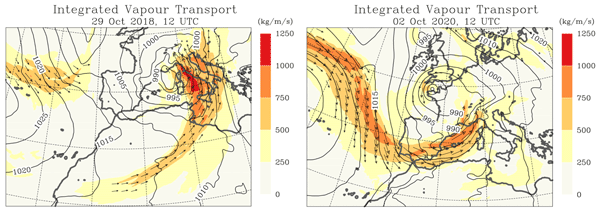
Silvio Davolio, Isacco Sala, Alessandro Comunian, Daniele Mastrangelo, Mario Marcello Miglietta, Lucia Drago Pitura, and Federico Grazzini
Nat. Hazards Earth Syst. Sci., 26, 2291–2304, https://doi.org/10.5194/nhess-26-2291-2026, https://doi.org/10.5194/nhess-26-2291-2026, 2026
Short summary
Short summary
Atmospheric rivers, narrow and long corridors of intense horizontal moisture transport, may produce heavy precipitation where they are forced to rise over the orography. This has been recently shown to occur also in the Mediterranean basin, especially over the Alps and Apennines in Italy. The present study analyses the presence of atmospheric rivers in this area, in the period 1961–2024, and reveals a strong connection with extreme rainfall over northern-central Italy.
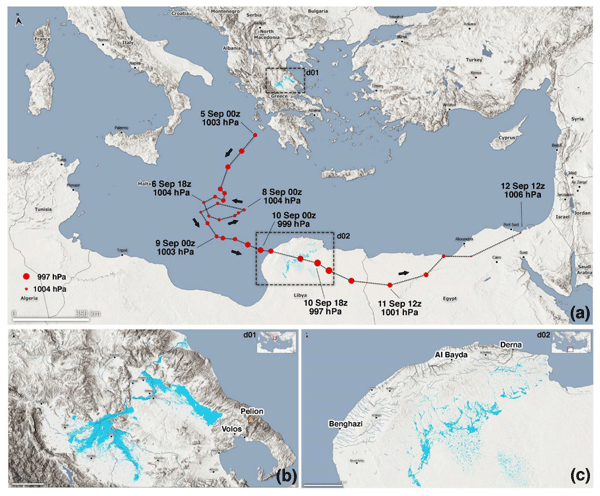
Emmanouil Flaounas, Stavros Dafis, Silvio Davolio, Davide Faranda, Christian Ferrarin, Katharina Hartmuth, Assaf Hochman, Aristeidis Koutroulis, Samira Khodayar, Mario Marcello Miglietta, Florian Pantillon, Platon Patlakas, Michael Sprenger, and Iris Thurnherr
Weather Clim. Dynam., 6, 1515–1538, https://doi.org/10.5194/wcd-6-1515-2025, https://doi.org/10.5194/wcd-6-1515-2025, 2025
Short summary
Short summary
Storm Daniel (2023) is one of the most catastrophic storms ever documented in the Mediterranean. Our results highlight the different dynamics and therefore the different predictability skill of precipitation, its extremes and impacts that have been produced in Greece and Libya, the two most affected countries. Our approach concerns an analysis of the storm by articulating dynamics, weather prediction, hydrological and oceanographic implications, climate extremes, and attribution theory.
Kerry Emanuel, Tommaso Alberti, Stella Bourdin, Suzana J. Camargo, Davide Faranda, Emmanouil Flaounas, Juan Jesus Gonzalez-Aleman, Chia-Ying Lee, Mario Marcello Miglietta, Claudia Pasquero, Alice Portal, Hamish Ramsay, Marco Reale, and Romualdo Romero
Weather Clim. Dynam., 6, 901–926, https://doi.org/10.5194/wcd-6-901-2025, https://doi.org/10.5194/wcd-6-901-2025, 2025
Short summary
Short summary
Storms strongly resembling hurricanes are sometimes observed to form well outside the tropics, even in polar latitudes. They behave capriciously, developing very rapidly and then dying just as quickly. We show that strong dynamical processes in the atmosphere can sometimes cause it to become much colder locally than the underlying ocean, creating the conditions for hurricanes to form but only over small areas and for short times. We call the resulting storms "CYCLOPs".
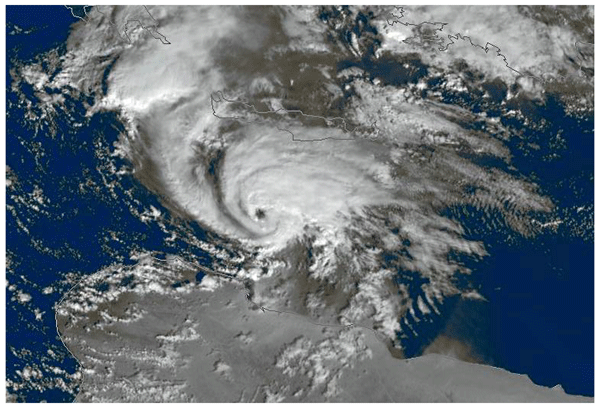
Florian Pantillon, Silvio Davolio, Elenio Avolio, Carlos Calvo-Sancho, Diego Saul Carrió, Stavros Dafis, Emanuele Silvio Gentile, Juan Jesus Gonzalez-Aleman, Suzanne Gray, Mario Marcello Miglietta, Platon Patlakas, Ioannis Pytharoulis, Didier Ricard, Antonio Ricchi, Claudio Sanchez, and Emmanouil Flaounas
Weather Clim. Dynam., 5, 1187–1205, https://doi.org/10.5194/wcd-5-1187-2024, https://doi.org/10.5194/wcd-5-1187-2024, 2024
Short summary
Short summary
Cyclone Ianos of September 2020 was a high-impact but poorly predicted medicane (Mediterranean hurricane). A community effort of numerical modelling provides robust results to improve prediction. It is found that the representation of local thunderstorms controlled the interaction of Ianos with a jet stream at larger scales and its subsequent evolution. The results help us understand the peculiar dynamics of medicanes and provide guidance for the next generation of weather and climate models.
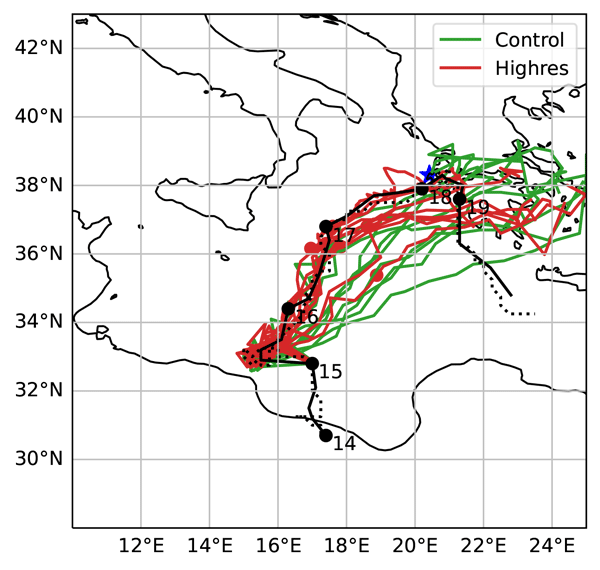
Emmanouil Flaounas, Leonardo Aragão, Lisa Bernini, Stavros Dafis, Benjamin Doiteau, Helena Flocas, Suzanne L. Gray, Alexia Karwat, John Kouroutzoglou, Piero Lionello, Mario Marcello Miglietta, Florian Pantillon, Claudia Pasquero, Platon Patlakas, María Ángeles Picornell, Federico Porcù, Matthew D. K. Priestley, Marco Reale, Malcolm J. Roberts, Hadas Saaroni, Dor Sandler, Enrico Scoccimarro, Michael Sprenger, and Baruch Ziv
Weather Clim. Dynam., 4, 639–661, https://doi.org/10.5194/wcd-4-639-2023, https://doi.org/10.5194/wcd-4-639-2023, 2023
Short summary
Short summary
Cyclone detection and tracking methods (CDTMs) have different approaches in defining and tracking cyclone centers. This leads to disagreements on extratropical cyclone climatologies. We present a new approach that combines tracks from individual CDTMs to produce new composite tracks. These new tracks are shown to correspond to physically meaningful systems with distinctive life stages.
Roberto Ingrosso, Piero Lionello, Mario Marcello Miglietta, and Gianfausto Salvadori
Nat. Hazards Earth Syst. Sci., 23, 2443–2448, https://doi.org/10.5194/nhess-23-2443-2023, https://doi.org/10.5194/nhess-23-2443-2023, 2023
Short summary
Short summary
Tornadoes represent disruptive and dangerous weather events. The prediction of these small-scale phenomena depends on the resolution of present weather forecast and climatic projections. This work discusses the occurrence of tornadoes in terms of atmospheric variables and provides analytical expressions for their conditional probability. These formulas represent a tool for tornado alert systems and for estimating the future evolution of tornado frequency and intensity in climate projections.
Christian Ferrarin, Florian Pantillon, Silvio Davolio, Marco Bajo, Mario Marcello Miglietta, Elenio Avolio, Diego S. Carrió, Ioannis Pytharoulis, Claudio Sanchez, Platon Patlakas, Juan Jesús González-Alemán, and Emmanouil Flaounas
Nat. Hazards Earth Syst. Sci., 23, 2273–2287, https://doi.org/10.5194/nhess-23-2273-2023, https://doi.org/10.5194/nhess-23-2273-2023, 2023
Short summary
Short summary
The combined use of meteorological and ocean models enabled the analysis of extreme sea conditions driven by Medicane Ianos, which hit the western coast of Greece on 18 September 2020, flooding and damaging the coast. The large spread associated with the ensemble highlighted the high model uncertainty in simulating such an extreme weather event. The different simulations have been used for outlining hazard scenarios that represent a fundamental component of the coastal risk assessment.
Emmanouil Flaounas, Silvio Davolio, Shira Raveh-Rubin, Florian Pantillon, Mario Marcello Miglietta, Miguel Angel Gaertner, Maria Hatzaki, Victor Homar, Samira Khodayar, Gerasimos Korres, Vassiliki Kotroni, Jonilda Kushta, Marco Reale, and Didier Ricard
Weather Clim. Dynam., 3, 173–208, https://doi.org/10.5194/wcd-3-173-2022, https://doi.org/10.5194/wcd-3-173-2022, 2022
Short summary
Short summary
This is a collective effort to describe the state of the art in Mediterranean cyclone dynamics, climatology, prediction (weather and climate scales) and impacts. More than that, the paper focuses on the future directions of research that would advance the broader field of Mediterranean cyclones as a whole. Thereby, we propose interdisciplinary cooperation and additional modelling and forecasting strategies, and we highlight the need for new impact-oriented approaches to climate prediction.
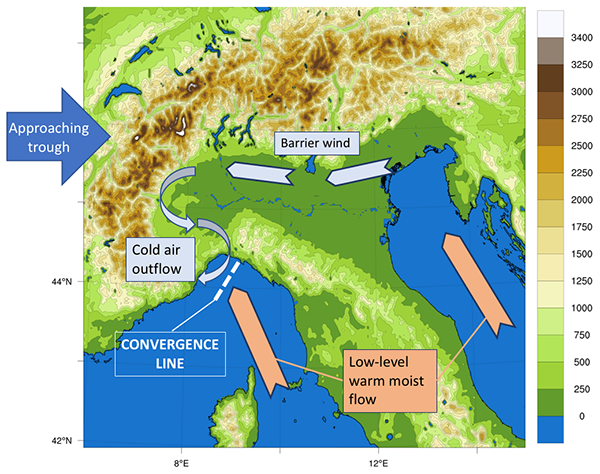
Mario Marcello Miglietta and Silvio Davolio
Hydrol. Earth Syst. Sci., 26, 627–646, https://doi.org/10.5194/hess-26-627-2022, https://doi.org/10.5194/hess-26-627-2022, 2022
Short summary
Short summary
The main results emerging from the HyMeX SOP1 campaign and in the subsequent research activity in three Italian target areas are highlighted through conceptual models and through the identification of the relevant mesoscale environmental characteristics conducive to heavy rain events.
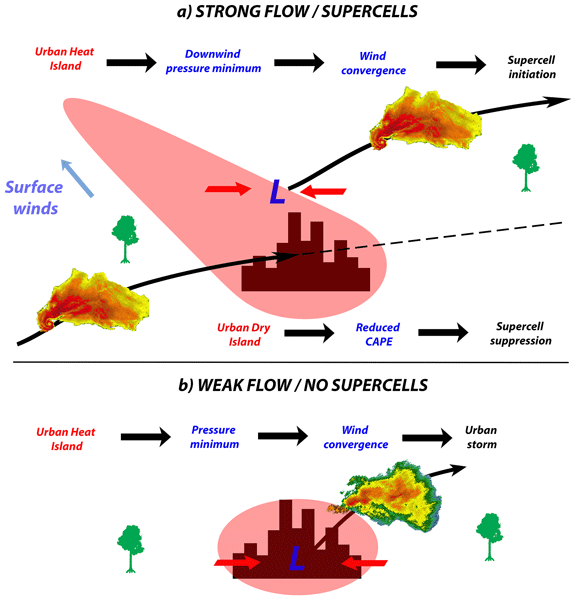
Francesco De Martin, Christopher Rozoff, Andrea Zonato, Stefano Alessandrini, and Silvana Di Sabatino
Weather Clim. Dynam., 7, 2015–2042, https://doi.org/10.5194/wcd-7-2015-2026, https://doi.org/10.5194/wcd-7-2015-2026, 2026
Short summary
Short summary
Most convective storm losses occur in urban areas, raising the question of whether cities can intensify severe storms, such as supercells. We found that cities can weaken an approaching supercell by reducing low-level moisture, but can also trigger a new one downwind. More urban vegetation reduces city effects on storm evolution, while building height has little impact. This conceptual model improves understanding of supercell–city interactions and supports advances in early warning systems.
Paolo Cristofanelli, Francesca Marcucci, Claudia Roberta Calidonna, Francescopiero Calzolari, Felice Dipace, Simonetta Montaguti, Fabrizio Roccato, Maurizio Busetto, Angela Marinoni, Davide Putero, Laura Renzi, Pamela Trisolino, Marco Zanatta, and Christoph Zellweger
EGUsphere, https://doi.org/10.5194/egusphere-2026-5833, https://doi.org/10.5194/egusphere-2026-5833, 2026
This preprint is open for discussion and under review for Atmospheric Measurement Techniques (AMT).
Short summary
Short summary
We compared six years of carbon dioxide and methane measurements from two nearby laboratories at the high mountain station on Mount Cimone, Italy. Both recorded similar long-term and seasonal changes, but hourly readings often differed beyond limits recommended by WMO. Sampling location, data selection and moisture removal contributed to these differences; human presence may also have played a role. Standardization of sampling and procedures can make greenhouse gas measurements more consistent.
Johannes Heuser, Claudia Di Biagio, Jérôme Yon, Mathieu Cazaunau, Antonin Bergé, Edouard Pangui, Marco Zanatta, Laura Renzi, Angela Marinoni, Chenjie Yu, Servanne Chevaillier, Daniel Ferry, Michel Maillé, Paola Formenti, Benedicte Picquet-Varrault, and Jean-François Doussin
Aerosol Research Discuss., https://doi.org/10.5194/ar-2026-31, https://doi.org/10.5194/ar-2026-31, 2026
Preprint under review for AR
Short summary
Short summary
We retrieve refractive indices of laboratory-generated soot from measured particle properties using Mie and RDG-FA optical calculations, and quantify uncertainties via Monte Carlo simulations. The inferred refractive indices strongly depend on the theory employed, highlighting the need for consistency between optical theory and refractive index. Mie retrievals are sensitive to coagulation and size growth, while RDG-FA retrievals depend strongly on the uncertainty of assumed particle morphology.
Dawit Y. Meskele, Antonio Parodi, Anna Napoli, Gianluca Loffredo, and Maurizio Brocchini
EGUsphere, https://doi.org/10.5194/egusphere-2026-4780, https://doi.org/10.5194/egusphere-2026-4780, 2026
Short summary
Short summary
The Misa River basin in Italy, hit by a devastating flood in 2022, faces growing rainfall risks. Two climate models were used to project rainfall changes there by mid-century under a high-emissions scenario. Results show less rainfall overall but more intense single-day downpours. Both models project extremes 10 to 20 times more frequent relative to their own historical baselines but diverge when compared against past observed flood events, leaving flood risk uncertain.
Shuhan Yang, Weijie Zhao, Giovanni Ravazzani, Hui Qian, Yixin Liu, and Zhiming Cao
EGUsphere, https://doi.org/10.5194/egusphere-2026-4113, https://doi.org/10.5194/egusphere-2026-4113, 2026
Short summary
Short summary
In 2022, the Po River in northern Italy suffered a much worse drought than rainfall alone could explain. Using satellite data on underground water, soil moisture, and river flow records spanning twenty-five years, we found that groundwater had already been dropping for a year, weakening its natural link with the river and worsening the drought. Rainfall and flow recovered within a year, but groundwater stayed low far longer. Tracking groundwater, not just rainfall, is key to managing drought.
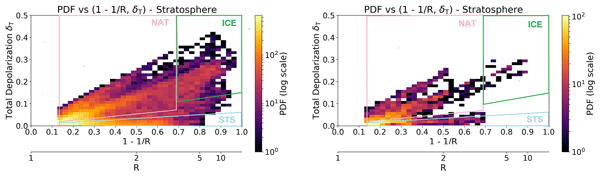
Francesco Cairo, Luca Di Liberto, Alessandro Bracci, and Marcel Snels
Atmos. Meas. Tech., 19, 5193–5210, https://doi.org/10.5194/amt-19-5193-2026, https://doi.org/10.5194/amt-19-5193-2026, 2026
Short summary
Short summary
Using three years of laser observations above Dome C, Antarctica, we examined high clouds made of liquid droplets, nitric-acid particles, and ice crystals. We found clear differences in how these clouds scatter light, while ice-rich clouds were the most variable because they are often layered or mixed. The results provide more realistic inputs for satellite checks and climate calculations, improving estimates of how polar clouds affect sunlight, heat, and ozone loss.
Matteo Berton, Elenio Avolio, and Mario Marcello Miglietta
EGUsphere, https://doi.org/10.5194/egusphere-2026-2573, https://doi.org/10.5194/egusphere-2026-2573, 2026
Short summary
Short summary
To understand the 2022 Marche flood, we used a high-resolution weather numerical model. We found that the Apennine mountains anchored the storm, causing continuous, extreme rainfall. Furthermore, our tests reveal the storm's extreme sensitivity to initial and boundary conditions. We show that a slight timing mismatch between the low-level incoming moisture and upper-level dynamics produces completely different rain patterns, making these catastrophic events incredibly difficult to predict.
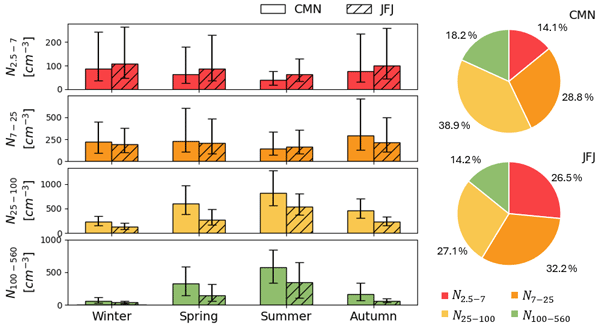
Martina Mazzini, Diego Aliaga, Janne Lamphilati, Martin Gysel-Beer, Benjamin Tobias Brem, Robin Lewis Modini, Dominic Heslin-Rees, Tareq Hussein, Marco Zanatta, Paolo Cristofanelli, Federico Bianchi, Markku Kulmala, and Angela Marinoni
Atmos. Chem. Phys., 26, 8893–8912, https://doi.org/10.5194/acp-26-8893-2026, https://doi.org/10.5194/acp-26-8893-2026, 2026
Short summary
Short summary
This study investigates particle number size distribution at two high-altitude European stations to better understand the mechanisms driving new particle formation (NPF) in the free troposphere. Interestingly, despite a consistently higher background of freshly nucleated particles at Jungfraujoch, NPF events were more frequent and intense at Monte Cimone, which also shows higher formation and growth rates, likely due to the proximity of the polluted planetary boundary layer from the Po Valley.
Silvio Davolio, Isacco Sala, Alessandro Comunian, Daniele Mastrangelo, Mario Marcello Miglietta, Lucia Drago Pitura, and Federico Grazzini
Nat. Hazards Earth Syst. Sci., 26, 2291–2304, https://doi.org/10.5194/nhess-26-2291-2026, https://doi.org/10.5194/nhess-26-2291-2026, 2026
Short summary
Short summary
Atmospheric rivers, narrow and long corridors of intense horizontal moisture transport, may produce heavy precipitation where they are forced to rise over the orography. This has been recently shown to occur also in the Mediterranean basin, especially over the Alps and Apennines in Italy. The present study analyses the presence of atmospheric rivers in this area, in the period 1961–2024, and reveals a strong connection with extreme rainfall over northern-central Italy.
Pauline Nibert, Yi Wu, Muriel Joly, Pierre Amato, Paolo Cristofanelli, Francescopiero Calzolari, Jean-Luc Piro, Davide Putero, Simonetta Montaguti, Laura Renzi, Franziska Vogel, Marco Rapuano, Marcello Brigante, Christophe Verhaege, Jean-Luc Baray, Laurent Deguillaume, Angela Marinoni, Marco Zanatta, and Angelica Bianco
Atmos. Chem. Phys., 26, 6489–6506, https://doi.org/10.5194/acp-26-6489-2026, https://doi.org/10.5194/acp-26-6489-2026, 2026
Short summary
Short summary
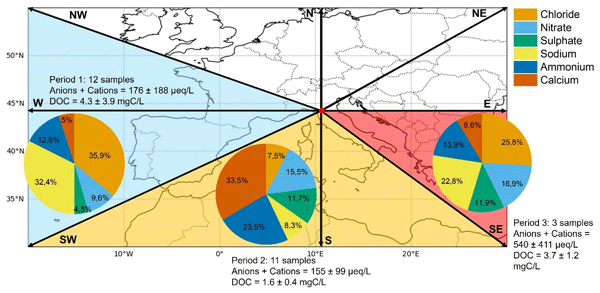
This study provides the first chemical and microbiological characterization of cloud samples collected at Mt. Cimone (acronym CMN in ACTRIS, ICOS and GAW) in the Mediterranean basin. The chemical characterization is deeply discussed in relationship with back-trajectories and cloud processing. Air mass history do not fully explain the variability observed in the chemical composition. This highlights the complexity of emission sources, multiphasique exchanges, and transformations in clouds.
Marco Zanatta, Paolo Bonasoni, Francescopiero Calzolari, Paolo Cristofanelli, Sabine Eckhardt, Nikolaos Evangeliou, Cecilia Magnani, Camilla Perfetti, Davide Putero, Laura Renzi, Franziska Vogel, and Angela Marinoni
Earth Syst. Sci. Data Discuss., https://doi.org/10.5194/essd-2026-211, https://doi.org/10.5194/essd-2026-211, 2026
Revised manuscript under review for ESSD
Short summary
Short summary
This work presents 18 years of high-quality observations of equivalent black carbon concentration measured at the Monte Cimone mountain site in Italy. We provide a detailed description of the measurement setup, data processing, and associated uncertainties to ensure consistency over time. The openly available dataset offers information for long-term studies, including the integration of renaltysis data parameters and comparison with atmospheric models.
Johannes Heuser, Claudia Di Biagio, Jérôme Yon, Mathieu Cazaunau, Antonin Bergé, Edouard Pangui, Marco Zanatta, Laura Renzi, Angela Marinoni, Chenjie Yu, Servanne Chevaillier, Daniel Ferry, Paolo Laj, Michel Maillé, Paola Formenti, Benedicte Picquet-Varrault, and Jean-Francois Doussin
EGUsphere, https://doi.org/10.5194/egusphere-2026-1867, https://doi.org/10.5194/egusphere-2026-1867, 2026
Short summary
Short summary
Large simulation chamber experiments were performed to investigate the impact of non-absorbing coating on the absorption of fractal BC-containing soot. Results show the strong and combined effect of morphological modifications and mixing state heterogeneity on BC absorption, both depending on the reaction dynamics of coating formation and ageing of the coated soot. The range of measured absorption cannot be captured by common model approximations, highlighting the need for new formalisms.
Paolo Stocchi, Francesco Cavalleri, Mohsin Tariq, Michele Brunetti, Stefania Camici, Daniele Mastrangelo, Fabio Di Sante, and Silvio Davolio
Earth Syst. Sci. Data Discuss., https://doi.org/10.5194/essd-2025-789, https://doi.org/10.5194/essd-2025-789, 2026
Preprint under review for ESSD
Short summary
Short summary
The MORE (MOLOCH Reanalysis over Italy) dataset provides high-resolution (~1.7 km) hourly weather data for Italy from 1990 to today, including precipitation, near-surface temperature, and 40 atmospheric variables. Validation shows it accurately reproduces local rainfall, temperature patterns, and extreme events, outperforming coarser datasets. MORE enables improved climate studies, flood risk assessment, and serves as a reference for climate services and advanced modeling applications.
Federico Canepa, Anthony Guibert, Andi Xhelaj, Josip Žužul, Djordje Romanic, Alessio Ricci, Horia Hangan, Jean-Paul Bouchet, Philippe Delpech, Olivier Flamand, and Massimiliano Burlando
Earth Syst. Sci. Data, 18, 2133–2152, https://doi.org/10.5194/essd-18-2133-2026, https://doi.org/10.5194/essd-18-2133-2026, 2026
Short summary
Short summary
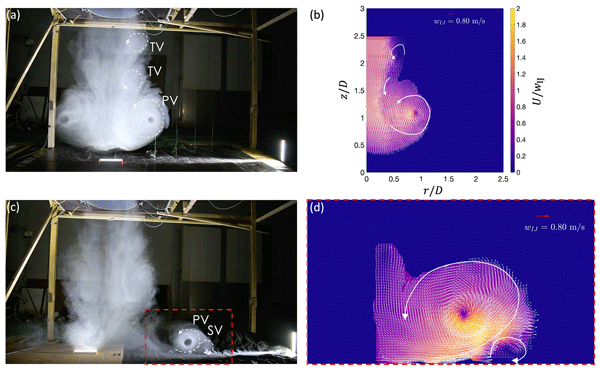
Thunderstorm downbursts are intense wind events that can cause severe damage to the environment and infrastructure. To better understand these phenomena, we conducted experiments in a specialized climatic wind tunnel. By simulating thermal and wind dynamics, we studied how these winds form, develop, and interact with the landscape. Our findings provide new insights into downburst behavior and offer valuable data for improving models to predict their impacts in a changing climate.
Laura Renzi, Claudia Di Biagio, Johannes Heuser, Marco Zanatta, Mathieu Cazaunau, Antonin Bergé, Edouard Pangui, Jérôme Yon, Tommaso Isolabella, Dario Massabò, Virginia Vernocchi, Martina Mazzini, Franziska Vogel, Chenjie Yu, Paola Formenti, Benedicte Picquet-Varrault, Jean-Francois Doussin, and Angela Marinoni
Atmos. Meas. Tech., 19, 1365–1383, https://doi.org/10.5194/amt-19-1365-2026, https://doi.org/10.5194/amt-19-1365-2026, 2026
Short summary
Short summary
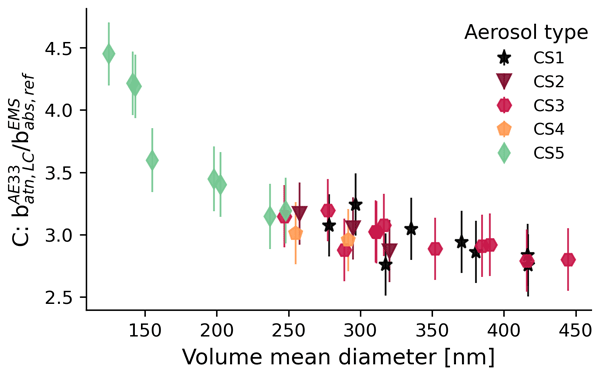
This study investigates how particle properties affect the accuracy of a common air pollution instrument, the dual-spot aethalometer. By combining lab experiments with real-world data from a mountain site in Italy, we found that the correction factor for this instrument varies mainly due to particle size and measurement conditions. Understanding these influences helps improve air quality monitoring, which is important for assessing pollution impacts on health and climate.
Stefano Federico, Rosa Claudia Torcasio, Claudio Transerici, Mario Montopoli, Cinzia Cambiotti, Francesco Manconi, Alessandro Battaglia, and Maryam Pourshamsi
Weather Clim. Dynam., 7, 165–183, https://doi.org/10.5194/wcd-7-165-2026, https://doi.org/10.5194/wcd-7-165-2026, 2026
Short summary
Short summary
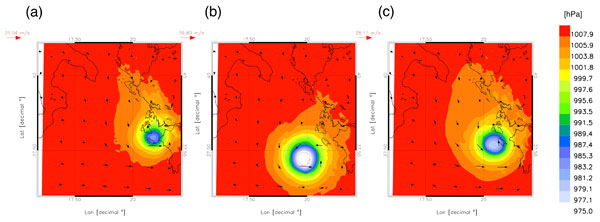
The Wind Velocity Radar Nephoscope (WIVERN) mission will be the first space-based mission to provide global in-cloud wind, cloud and precipitation measurements. The mission is proposed as a candidate for the ESA Earth Explorer 11. Its data could be beneficial to several sectors, including numerical weather prediction performance enhancement. This paper aims to contribute to the last point by analyzing the impact that WIVERN would have in the case of a Tropical-like cyclone event.
Emmanouil Flaounas, Stavros Dafis, Silvio Davolio, Davide Faranda, Christian Ferrarin, Katharina Hartmuth, Assaf Hochman, Aristeidis Koutroulis, Samira Khodayar, Mario Marcello Miglietta, Florian Pantillon, Platon Patlakas, Michael Sprenger, and Iris Thurnherr
Weather Clim. Dynam., 6, 1515–1538, https://doi.org/10.5194/wcd-6-1515-2025, https://doi.org/10.5194/wcd-6-1515-2025, 2025
Short summary
Short summary
Storm Daniel (2023) is one of the most catastrophic storms ever documented in the Mediterranean. Our results highlight the different dynamics and therefore the different predictability skill of precipitation, its extremes and impacts that have been produced in Greece and Libya, the two most affected countries. Our approach concerns an analysis of the storm by articulating dynamics, weather prediction, hydrological and oceanographic implications, climate extremes, and attribution theory.
Franziska Vogel, Davide Putero, Paolo Bonasoni, Paolo Cristofanelli, Marco Zanatta, and Angela Marinoni
Atmos. Chem. Phys., 25, 15453–15468, https://doi.org/10.5194/acp-25-15453-2025, https://doi.org/10.5194/acp-25-15453-2025, 2025
Short summary
Short summary
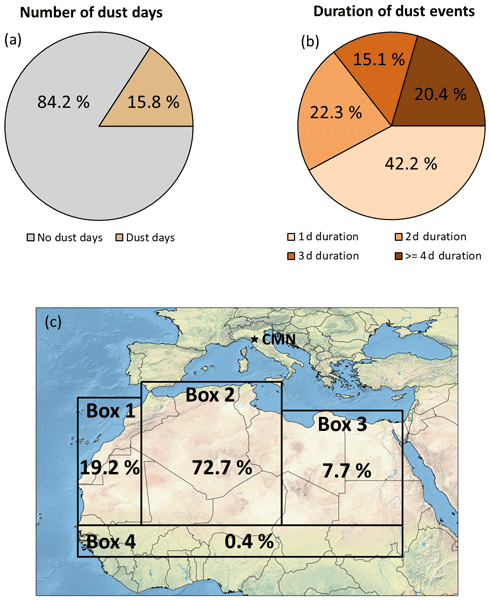
Dust is in terms of mass the most abundant aerosol in the atmosphere. It can have a significant influence on e.g. the scattering and absorption of light, cloud formation, and solar energy production. We present 21 years of optical particle size distribution measurements at a mountain station in Italy, from which we assess Saharan dust transport events. A peak in the number of events was observed in summer and autumn, while a trend in the number of events over the 21 years was not detected.
Marco Zanatta, Pia Bogert, Patrick Ginot, Yiwei Gong, Gholam Ali Hoshyaripour, Yaqiong Hu, Feng Jiang, Paolo Laj, Yanxia Li, Claudia Linke, Ottmar Möhler, Harald Saathoff, Martin Schnaiter, Nsikanabasi Silas Umo, Franziska Vogel, and Robert Wagner
Aerosol Research, 3, 477–502, https://doi.org/10.5194/ar-3-477-2025, https://doi.org/10.5194/ar-3-477-2025, 2025
Short summary
Short summary
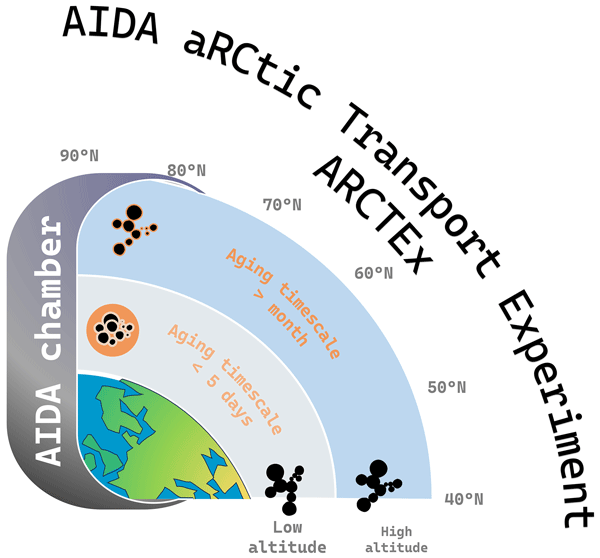
Back carbon is an atmospheric pollutant from combustion and contributes to the Arctic warming. However, its properties change as it travels through the atmosphere, affecting its impact. We recreated Arctic transport conditions in a laboratory to study how black carbon evolves over time. Our findings show that temperature and altitude strongly influence its transformation, providing key insights for improving climate models and understanding Arctic pollution.
Kerry Emanuel, Tommaso Alberti, Stella Bourdin, Suzana J. Camargo, Davide Faranda, Emmanouil Flaounas, Juan Jesus Gonzalez-Aleman, Chia-Ying Lee, Mario Marcello Miglietta, Claudia Pasquero, Alice Portal, Hamish Ramsay, Marco Reale, and Romualdo Romero
Weather Clim. Dynam., 6, 901–926, https://doi.org/10.5194/wcd-6-901-2025, https://doi.org/10.5194/wcd-6-901-2025, 2025
Short summary
Short summary
Storms strongly resembling hurricanes are sometimes observed to form well outside the tropics, even in polar latitudes. They behave capriciously, developing very rapidly and then dying just as quickly. We show that strong dynamical processes in the atmosphere can sometimes cause it to become much colder locally than the underlying ocean, creating the conditions for hurricanes to form but only over small areas and for short times. We call the resulting storms "CYCLOPs".
Johannes Heuser, Claudia Di Biagio, Jérôme Yon, Mathieu Cazaunau, Antonin Bergé, Edouard Pangui, Marco Zanatta, Laura Renzi, Angela Marinoni, Satoshi Inomata, Chenjie Yu, Vera Bernardoni, Servanne Chevaillier, Daniel Ferry, Paolo Laj, Michel Maillé, Dario Massabò, Federico Mazzei, Gael Noyalet, Hiroshi Tanimoto, Brice Temime-Roussel, Roberta Vecchi, Virginia Vernocchi, Paola Formenti, Bénédicte Picquet-Varrault, and Jean-François Doussin
Atmos. Chem. Phys., 25, 6407–6428, https://doi.org/10.5194/acp-25-6407-2025, https://doi.org/10.5194/acp-25-6407-2025, 2025
Short summary
Short summary
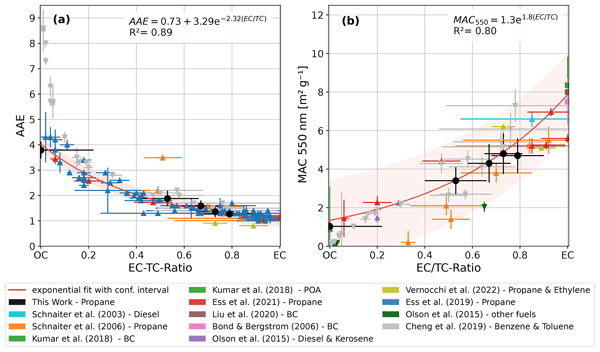
The spectral optical properties of combustion soot aerosols with varying black (BC) and brown carbon (BrC) content were studied in an atmospheric simulation chamber. Measurements of the mass spectral absorption cross section (MAC), supplemented by literature data, allowed us to establish a generalised exponential relationship between the spectral absorption and the elemental-to-total-carbon ratio (EC / TC) in soot. This relationship can provide a useful tool for modelling the properties of soot.
Giulio Bongiovanni, Michael Matiu, Alice Crespi, Anna Napoli, Bruno Majone, and Dino Zardi
Earth Syst. Sci. Data, 17, 1367–1391, https://doi.org/10.5194/essd-17-1367-2025, https://doi.org/10.5194/essd-17-1367-2025, 2025
Short summary
Short summary
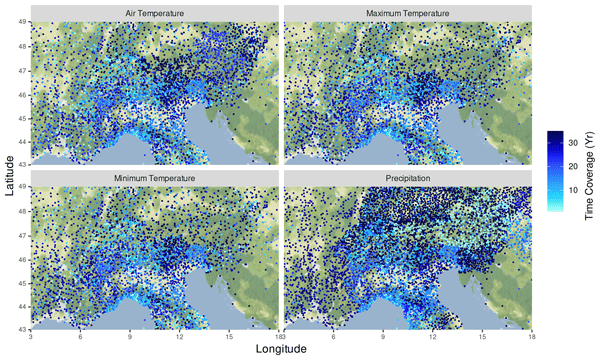
EEAR-Clim is a new and unprecedented observational dataset gathering in situ daily measurements of air temperature and precipitation from a network of about 9000 weather stations covering the European Alps. Data collected, including time series from recordings up to 2020 and time series significantly enhancing data coverage at high elevations, were tested for quality and homogeneity. The dataset aims to serve as a powerful tool for better understanding climate change over the European Alpine region.
Vincenzo Capozzi, Francesco Serrapica, Armando Rocco, Clizia Annella, and Giorgio Budillon
The Cryosphere, 19, 565–595, https://doi.org/10.5194/tc-19-565-2025, https://doi.org/10.5194/tc-19-565-2025, 2025
Short summary
Short summary
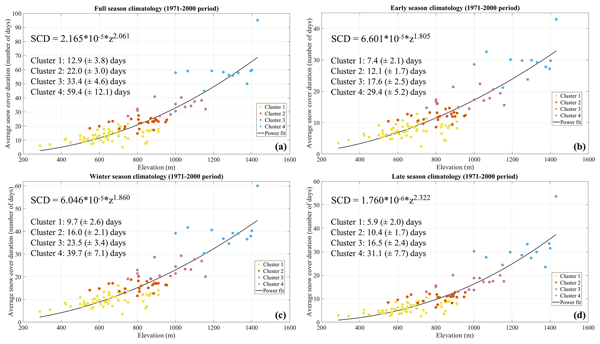
This “journey through time” discovers historical information about snow precipitation in the Italian Apennines. In this area, in the second half of the past century, a gradual decline in snow persistence on the ground, as well as in the frequency of occurrence of snowfall events, has been observed, especially in sites located above 1000 m above sea level. The old data rescued in this study strongly enhance our knowledge about past snowfall variability and climate in the Mediterranean area.
Claudio Sánchez, Suzanne Gray, Ambrogio Volonté, Florian Pantillon, Ségolène Berthou, and Silvio Davolio
Weather Clim. Dynam., 5, 1429–1455, https://doi.org/10.5194/wcd-5-1429-2024, https://doi.org/10.5194/wcd-5-1429-2024, 2024
Short summary
Short summary
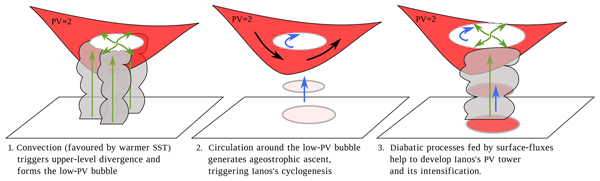
Medicane Ianos was a very intense cyclone that led to harmful impacts over Greece. We explore what processes are important for the forecasting of Medicane Ianos, with the use of the Met Office weather model. There was a preceding precipitation event before Ianos’s birth, whose energetics generated a bubble in the tropopause. This bubble created the necessary conditions for Ianos to emerge and strengthen, and the processes are enhanced in simulations with a warmer Mediterranean Sea.

Annachiara Bellini, Henri Diémoz, Luca Di Liberto, Gian Paolo Gobbi, Alessandro Bracci, Ferdinando Pasqualini, and Francesca Barnaba
Atmos. Meas. Tech., 17, 6119–6144, https://doi.org/10.5194/amt-17-6119-2024, https://doi.org/10.5194/amt-17-6119-2024, 2024
Short summary
Short summary
We provide a comprehensive overview of the Italian Automated LIdar-CEilometer network, ALICENET, describing its infrastructure, aerosol retrievals, and main applications. The supplement covers data-processing details. We include examples of output products, comparisons with independent data, and examples of the network capability to provide near-real-time aerosol fields over Italy. ALICENET is expected to benefit the sectors of air quality, radiative budget/solar energy, and aviation safety.
Florian Pantillon, Silvio Davolio, Elenio Avolio, Carlos Calvo-Sancho, Diego Saul Carrió, Stavros Dafis, Emanuele Silvio Gentile, Juan Jesus Gonzalez-Aleman, Suzanne Gray, Mario Marcello Miglietta, Platon Patlakas, Ioannis Pytharoulis, Didier Ricard, Antonio Ricchi, Claudio Sanchez, and Emmanouil Flaounas
Weather Clim. Dynam., 5, 1187–1205, https://doi.org/10.5194/wcd-5-1187-2024, https://doi.org/10.5194/wcd-5-1187-2024, 2024
Short summary
Short summary
Cyclone Ianos of September 2020 was a high-impact but poorly predicted medicane (Mediterranean hurricane). A community effort of numerical modelling provides robust results to improve prediction. It is found that the representation of local thunderstorms controlled the interaction of Ianos with a jet stream at larger scales and its subsequent evolution. The results help us understand the peculiar dynamics of medicanes and provide guidance for the next generation of weather and climate models.
Joshua Dorrington, Marta Wenta, Federico Grazzini, Linus Magnusson, Frederic Vitart, and Christian M. Grams
Nat. Hazards Earth Syst. Sci., 24, 2995–3012, https://doi.org/10.5194/nhess-24-2995-2024, https://doi.org/10.5194/nhess-24-2995-2024, 2024
Short summary
Short summary
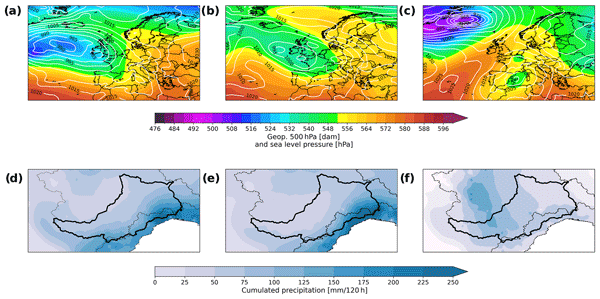
Extreme rainfall is the leading weather-related source of damages in Europe, but it is still difficult to predict on long timescales. A recent example of this was the devastating floods in the Italian region of Emiglia Romagna in May 2023. We present perspectives based on large-scale dynamical information that allows us to better understand and predict such events.
Annalina Lombardi, Barbara Tomassetti, Valentina Colaiuda, Ludovico Di Antonio, Paolo Tuccella, Mario Montopoli, Giovanni Ravazzani, Frank Silvio Marzano, Raffaele Lidori, and Giulia Panegrossi
Hydrol. Earth Syst. Sci., 28, 3777–3797, https://doi.org/10.5194/hess-28-3777-2024, https://doi.org/10.5194/hess-28-3777-2024, 2024
Short summary
Short summary
The accurate estimation of precipitation and its spatial variability within a watershed is crucial for reliable discharge simulations. The study is the first detailed analysis of the potential usage of the cellular automata technique to merge different rainfall data inputs to hydrological models. This work shows an improvement in the performance of hydrological simulations when satellite and rain gauge data are merged.
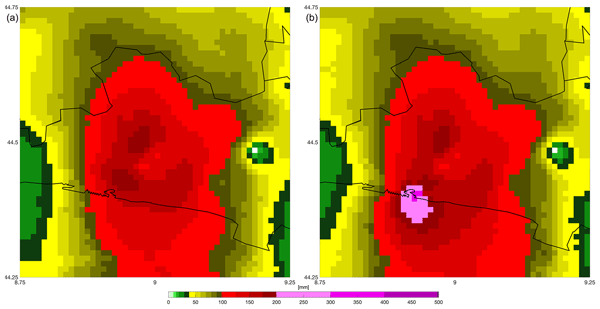
Nicola Loglisci, Giorgio Boni, Arianna Cauteruccio, Francesco Faccini, Massimo Milelli, Guido Paliaga, and Antonio Parodi
Nat. Hazards Earth Syst. Sci., 24, 2495–2510, https://doi.org/10.5194/nhess-24-2495-2024, https://doi.org/10.5194/nhess-24-2495-2024, 2024
Short summary
Short summary
We analyse the meteo-hydrological features of the 27 and 28 August 2023 event that occurred in Genoa. Rainfall observations were made using rain gauge networks based on either official networks or citizen science networks. The merged analysis stresses the spatial variability in the precipitation, which cannot be captured by the current spatial density of authoritative stations. Results show that at minimal distances the variations in cumulated rainfall over a sub-hourly duration are significant.
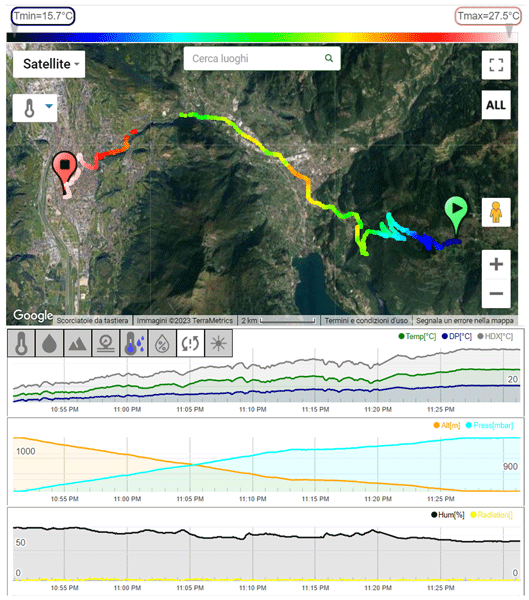
Francesco Barbano, Erika Brattich, Carlo Cintolesi, Abdul Ghafoor Nizamani, Silvana Di Sabatino, Massimo Milelli, Esther E. M. Peerlings, Sjoerd Polder, Gert-Jan Steeneveld, and Antonio Parodi
Atmos. Meas. Tech., 17, 3255–3278, https://doi.org/10.5194/amt-17-3255-2024, https://doi.org/10.5194/amt-17-3255-2024, 2024
Short summary
Short summary
The characterization of the urban microclimate starts with atmospheric monitoring using a dense array of sensors to capture the spatial variations induced by the different morphology, land cover, and presence of vegetation. To provide a new sensor for this scope, this paper evaluates the outdoor performance of a commercial mobile sensor. The results mark the sensor's ability to capture the same atmospheric variability as the reference, making it a valid solution for atmospheric monitoring.

Andi Xhelaj and Massimiliano Burlando
Nat. Hazards Earth Syst. Sci., 24, 1657–1679, https://doi.org/10.5194/nhess-24-1657-2024, https://doi.org/10.5194/nhess-24-1657-2024, 2024
Short summary
Short summary
The study provides an in-depth analysis of a severe downburst event in Sânnicolau Mare, Romania, utilizing an analytical model and optimization algorithm. The goal is to explore a multitude of generating solutions and to identify potential alternatives to the optimal solution. Advanced data analysis techniques help to discern three main distinct storm scenarios. For this particular event, the best overall solution from the optimization algorithm shows promise in reconstructing the downburst.
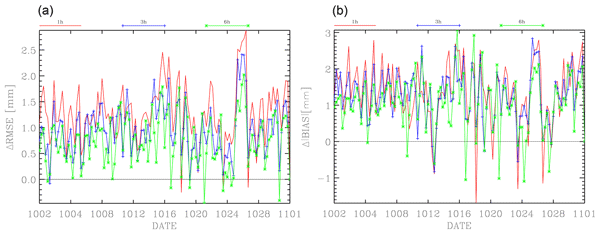
Rosa Claudia Torcasio, Alessandra Mascitelli, Eugenio Realini, Stefano Barindelli, Giulio Tagliaferro, Silvia Puca, Stefano Dietrich, and Stefano Federico
Nat. Hazards Earth Syst. Sci., 23, 3319–3336, https://doi.org/10.5194/nhess-23-3319-2023, https://doi.org/10.5194/nhess-23-3319-2023, 2023
Short summary
Short summary
This work shows how local observations can improve precipitation forecasting for severe weather events. The improvement lasts for at least 6 h of forecast.
Emmanouil Flaounas, Leonardo Aragão, Lisa Bernini, Stavros Dafis, Benjamin Doiteau, Helena Flocas, Suzanne L. Gray, Alexia Karwat, John Kouroutzoglou, Piero Lionello, Mario Marcello Miglietta, Florian Pantillon, Claudia Pasquero, Platon Patlakas, María Ángeles Picornell, Federico Porcù, Matthew D. K. Priestley, Marco Reale, Malcolm J. Roberts, Hadas Saaroni, Dor Sandler, Enrico Scoccimarro, Michael Sprenger, and Baruch Ziv
Weather Clim. Dynam., 4, 639–661, https://doi.org/10.5194/wcd-4-639-2023, https://doi.org/10.5194/wcd-4-639-2023, 2023
Short summary
Short summary
Cyclone detection and tracking methods (CDTMs) have different approaches in defining and tracking cyclone centers. This leads to disagreements on extratropical cyclone climatologies. We present a new approach that combines tracks from individual CDTMs to produce new composite tracks. These new tracks are shown to correspond to physically meaningful systems with distinctive life stages.
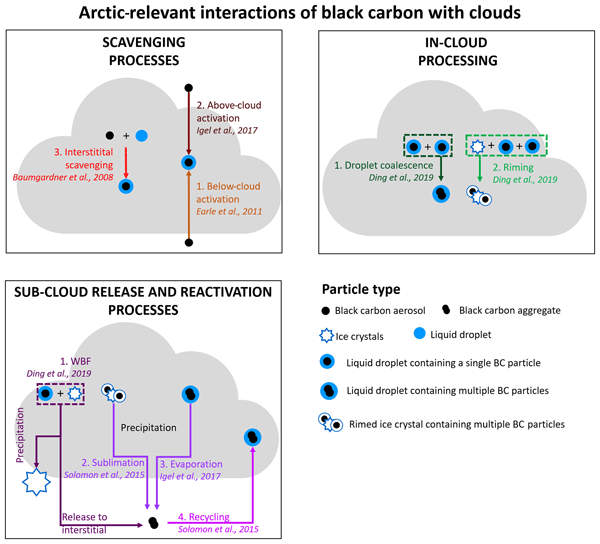
Marco Zanatta, Stephan Mertes, Olivier Jourdan, Regis Dupuy, Emma Järvinen, Martin Schnaiter, Oliver Eppers, Johannes Schneider, Zsófia Jurányi, and Andreas Herber
Atmos. Chem. Phys., 23, 7955–7973, https://doi.org/10.5194/acp-23-7955-2023, https://doi.org/10.5194/acp-23-7955-2023, 2023
Short summary
Short summary
Black carbon (BC) particles influence the Arctic radiative balance. Vertical measurements of black carbon were conducted during the ACLOUD campaign in the European Arctic to study the interaction of BC with clouds. This study shows that clouds influence the vertical variability of BC properties across the inversion layer and that multiple activation and transformation mechanisms of BC may occur in the presence of low-level, persistent, mixed-phase clouds.
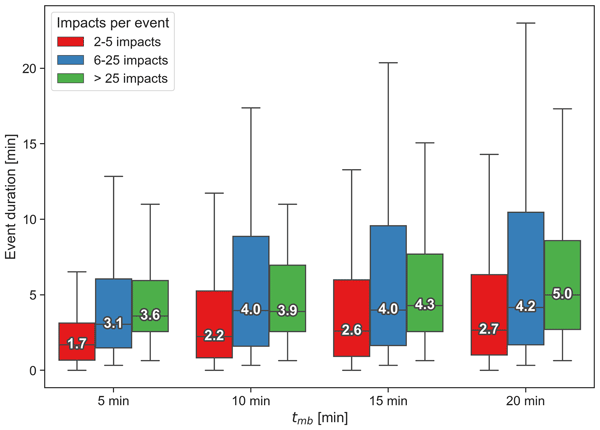
Jérôme Kopp, Agostino Manzato, Alessandro Hering, Urs Germann, and Olivia Martius
Atmos. Meas. Tech., 16, 3487–3503, https://doi.org/10.5194/amt-16-3487-2023, https://doi.org/10.5194/amt-16-3487-2023, 2023
Short summary
Short summary
We present the first study of extended field observations made by a network of 80 automatic hail sensors from Switzerland. The sensors record the exact timing of hailstone impacts, providing valuable information about the local duration of hailfall. We found that the majority of hailfalls lasts just a few minutes and that most hailstones, including the largest, fall during a first phase of high hailstone density, while a few remaining and smaller hailstones fall in a second low-density phase.
Roberto Ingrosso, Piero Lionello, Mario Marcello Miglietta, and Gianfausto Salvadori
Nat. Hazards Earth Syst. Sci., 23, 2443–2448, https://doi.org/10.5194/nhess-23-2443-2023, https://doi.org/10.5194/nhess-23-2443-2023, 2023
Short summary
Short summary
Tornadoes represent disruptive and dangerous weather events. The prediction of these small-scale phenomena depends on the resolution of present weather forecast and climatic projections. This work discusses the occurrence of tornadoes in terms of atmospheric variables and provides analytical expressions for their conditional probability. These formulas represent a tool for tornado alert systems and for estimating the future evolution of tornado frequency and intensity in climate projections.
Christian Ferrarin, Florian Pantillon, Silvio Davolio, Marco Bajo, Mario Marcello Miglietta, Elenio Avolio, Diego S. Carrió, Ioannis Pytharoulis, Claudio Sanchez, Platon Patlakas, Juan Jesús González-Alemán, and Emmanouil Flaounas
Nat. Hazards Earth Syst. Sci., 23, 2273–2287, https://doi.org/10.5194/nhess-23-2273-2023, https://doi.org/10.5194/nhess-23-2273-2023, 2023
Short summary
Short summary
The combined use of meteorological and ocean models enabled the analysis of extreme sea conditions driven by Medicane Ianos, which hit the western coast of Greece on 18 September 2020, flooding and damaging the coast. The large spread associated with the ensemble highlighted the high model uncertainty in simulating such an extreme weather event. The different simulations have been used for outlining hazard scenarios that represent a fundamental component of the coastal risk assessment.
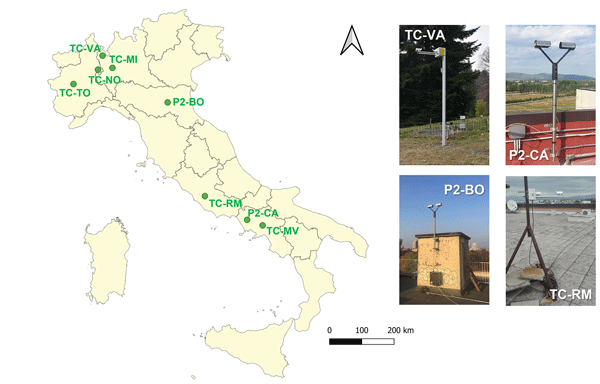
Elisa Adirosi, Federico Porcù, Mario Montopoli, Luca Baldini, Alessandro Bracci, Vincenzo Capozzi, Clizia Annella, Giorgio Budillon, Edoardo Bucchignani, Alessandra Lucia Zollo, Orietta Cazzuli, Giulio Camisani, Renzo Bechini, Roberto Cremonini, Andrea Antonini, Alberto Ortolani, Samantha Melani, Paolo Valisa, and Simone Scapin
Earth Syst. Sci. Data, 15, 2417–2429, https://doi.org/10.5194/essd-15-2417-2023, https://doi.org/10.5194/essd-15-2417-2023, 2023
Short summary
Short summary
The paper describes the database of 1 min drop size distribution (DSD) of atmospheric precipitation collected by the Italian disdrometer network over the last 10 years. These data are useful for several applications that range from climatological, meteorological and hydrological uses to telecommunications, agriculture and conservation of cultural heritage exposed to precipitation. Descriptions of the processing and of the database organization, along with some examples, are provided.
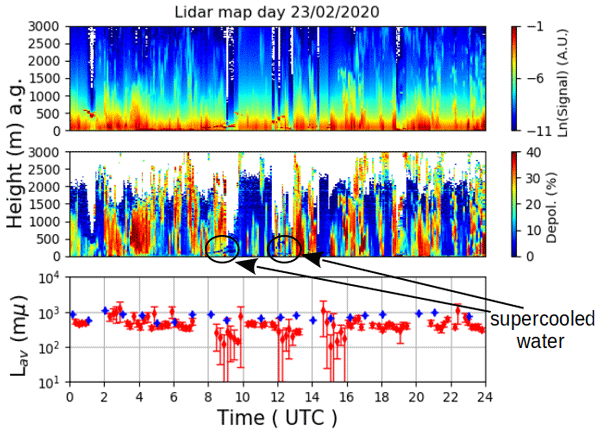
Gianluca Di Natale, David D. Turner, Giovanni Bianchini, Massimo Del Guasta, Luca Palchetti, Alessandro Bracci, Luca Baldini, Tiziano Maestri, William Cossich, Michele Martinazzo, and Luca Facheris
Atmos. Meas. Tech., 15, 7235–7258, https://doi.org/10.5194/amt-15-7235-2022, https://doi.org/10.5194/amt-15-7235-2022, 2022
Short summary
Short summary
In this paper, we describe a new approach to test the consistency of the precipitating ice cloud optical and microphysical properties in Antarctica, Dome C, retrieved from hyperspectral measurements in the far-infrared, with the reflectivity detected by a co-located micro rain radar operating at 24 GHz. The retrieved ice crystal sizes were found in accordance with the direct measurements of an optical imager, also installed at Dome C, which can collect the falling ice particles.
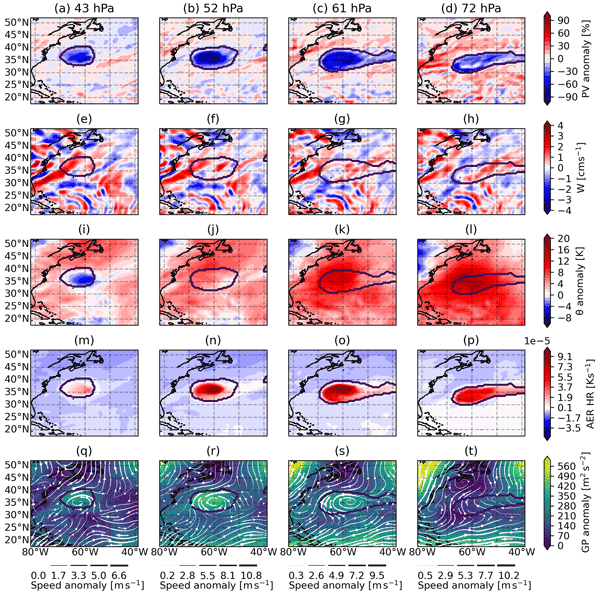
Giorgio Doglioni, Valentina Aquila, Sampa Das, Peter R. Colarco, and Dino Zardi
Atmos. Chem. Phys., 22, 11049–11064, https://doi.org/10.5194/acp-22-11049-2022, https://doi.org/10.5194/acp-22-11049-2022, 2022
Short summary
Short summary
We use a global chemistry climate model to analyze the perturbations to the stratospheric dynamics caused by an injection of carbonaceous aerosol comparable to the one caused by a series of pyrocumulonimbi that formed over British Columbia, Canada on 13 August 2017. The injection of light-absorbing aerosol in an otherwise clean lower stratosphere causes the formation of long-lasting stratospheric anticyclones at the synoptic scale.
Laura Tositti, Erika Brattich, Claudio Cassardo, Pietro Morozzi, Alessandro Bracci, Angela Marinoni, Silvana Di Sabatino, Federico Porcù, and Alessandro Zappi
Atmos. Chem. Phys., 22, 4047–4073, https://doi.org/10.5194/acp-22-4047-2022, https://doi.org/10.5194/acp-22-4047-2022, 2022
Short summary
Short summary
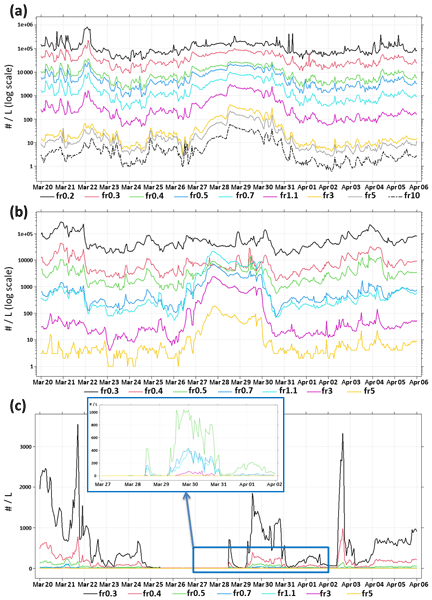
We present a thorough investigation of an anomalous transport of mineral dust over a region renowned for excess airborne particulate matter, the Italian Po Valley, which occurred in late March 2021. Both the origin of this dust outbreak, which was localized in central Asia (i.e., the so-called Aralkum Desert), and the upstream synoptic conditions, investigated here in extreme detail using multiple integrated observations including in situ measurements and remote sensing, were atypical.
Anna Napoli, Fabien Desbiolles, Antonio Parodi, and Claudia Pasquero
Atmos. Chem. Phys., 22, 3901–3909, https://doi.org/10.5194/acp-22-3901-2022, https://doi.org/10.5194/acp-22-3901-2022, 2022
Short summary
Short summary
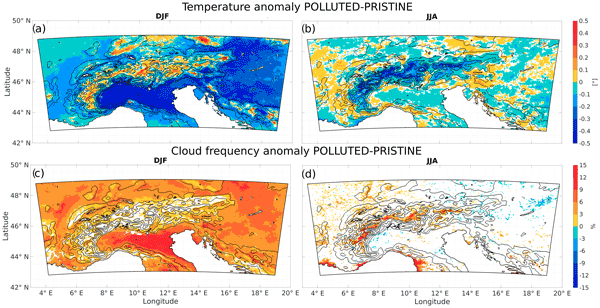
Aerosols are liquid or solid particles suspended in the air that can interact with radiation and clouds, modifying the meteoclimatic conditions. Using an atmospheric model, we study the climatological impact of aerosols through their effects on clouds in the Alps, a region characterized by high pollution levels in the densely populated surrounding flatlands. Results show that cloud cover, temperature, and precipitation are affected by aerosols, and the response varies with elevation and season.
Emmanouil Flaounas, Silvio Davolio, Shira Raveh-Rubin, Florian Pantillon, Mario Marcello Miglietta, Miguel Angel Gaertner, Maria Hatzaki, Victor Homar, Samira Khodayar, Gerasimos Korres, Vassiliki Kotroni, Jonilda Kushta, Marco Reale, and Didier Ricard
Weather Clim. Dynam., 3, 173–208, https://doi.org/10.5194/wcd-3-173-2022, https://doi.org/10.5194/wcd-3-173-2022, 2022
Short summary
Short summary
This is a collective effort to describe the state of the art in Mediterranean cyclone dynamics, climatology, prediction (weather and climate scales) and impacts. More than that, the paper focuses on the future directions of research that would advance the broader field of Mediterranean cyclones as a whole. Thereby, we propose interdisciplinary cooperation and additional modelling and forecasting strategies, and we highlight the need for new impact-oriented approaches to climate prediction.
Mario Marcello Miglietta and Silvio Davolio
Hydrol. Earth Syst. Sci., 26, 627–646, https://doi.org/10.5194/hess-26-627-2022, https://doi.org/10.5194/hess-26-627-2022, 2022
Short summary
Short summary
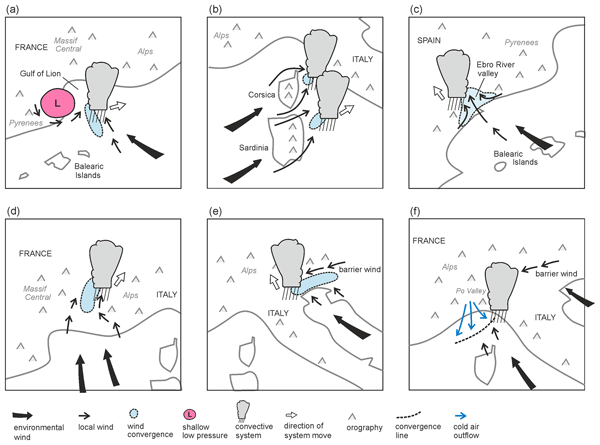
The main results emerging from the HyMeX SOP1 campaign and in the subsequent research activity in three Italian target areas are highlighted through conceptual models and through the identification of the relevant mesoscale environmental characteristics conducive to heavy rain events.
Samira Khodayar, Silvio Davolio, Paolo Di Girolamo, Cindy Lebeaupin Brossier, Emmanouil Flaounas, Nadia Fourrie, Keun-Ok Lee, Didier Ricard, Benoit Vie, Francois Bouttier, Alberto Caldas-Alvarez, and Veronique Ducrocq
Atmos. Chem. Phys., 21, 17051–17078, https://doi.org/10.5194/acp-21-17051-2021, https://doi.org/10.5194/acp-21-17051-2021, 2021
Short summary
Short summary
Heavy precipitation (HP) constitutes a major meteorological threat in the western Mediterranean. Every year, recurrent events affect the area with fatal consequences. Despite this being a well-known issue, open questions still remain. The understanding of the underlying mechanisms and the modeling representation of the events must be improved. In this article we present the most recent lessons learned from the Hydrological Cycle in the Mediterranean Experiment (HyMeX).
Cited articles
Adirosi, E., Porcù, F., Montopoli, M., Baldini, L., Bracci, A., Capozzi, V., Annella, C., Budillon, G., Bucchignani, E., Zollo, A. L., Cazzuli, O., Camisani, G., Bechini, R., Cremonini, R., Antonini, A., Ortolani, A., Melani, S., Valisa, P., and Scapin, S.: Database of the Italian disdrometer network, Earth Syst. Sci. Data, 15, 2417–2429, https://doi.org/10.5194/essd-15-2417-2023, 2023.
Allen, J. T., Giammanco, I. M., Kumjian, M. R., Jurgen Punge, H., Zhang, Q., Groenemeijer, P., and Ortega, K.: Understanding hail in the earth system, Rev. Geophys., 58, 2019 000665, https://doi.org/10.1029/2019RG000665, 2020.
Areggeret, M. and Germann, H.: Differential reflectivity columns and hail: Linking C-band radar-based estimated column characteristics to crowdsourced hail observations in Switzerland, Q. J. Roy. Meteor. Soc., 151, 5003, https://doi.org/10.1002/qj.5003, 2025.
Avolio, E. and Miglietta, M. M.: Multiple tornadoes in the Italian Ionian regions: Observations, sensitivity tests and mesoscale analysis of convective storm environmental parameters, Atmos. Res., 263, 105800, https://doi.org/10.1016/j.atmosres.2021.105800, 2021.
Avolio, E. and Miglietta, M. M.: Tornadoes in the Tyrrhenian regions of the Italian peninsula: The case study of 28 July 2019, Atmos. Res., 278, 106285, https://doi.org/10.1016/j.atmosres.2022.106285, 2022.
Bagaglini, L., Ingrosso, R., and Miglietta, M. M.: Synoptic patterns and mesoscale precursors of Italian tornadoes, Atmos. Res., 253, 105503, https://doi.org/10.1016/j.atmosres.2021.105503, 2021.
Ballard, S. P., Li, Z., Simonin, D., and Caron, J.-F.: Performance of 4D-Var NWP-based nowcasting of precipitation at the Met Office for summer 2012, Q. J. Roy. Meteor. Soc., 142, 472–487, https://doi.org/10.1002/qj.2665, 2016.
Battaglioli, F., Groenemeijer, P., Púčik, T., Taszarek, M., Ulbrich, U., and Rust, H.: Modeled multidecadal trends of lightning and (very) large hail in Europe and North America (1950–2021), J. Appl. Meteorol. Clim., 62, 1627–1653, 2023.
Battaglioli, F., Taszarek, M., Groenemeijer, P., Púčik, T., and Rädler, A.: Contrasting trends in very large hail events and related economic losses across the globe, Nat. Geosci., 19, 52–58, https://doi.org/10.1038/s41561-025-01868-0, 2026.
Bougeault, P., Binder, P., Buzzi, A., Dirks, R., Houze, R., Kuettner, J., Smith, R. B., Steinacker, R., and Volkert, H.: The MAP special observing period, B. Am. Meteorol. Soc., 82, 433–462, 2001.
Bowen, S., Kerschner, B., and Zheng, J.: Natural Catastrophe and Climate Report (Gallagher Re), https://www.ajg.com/gallagherre/news-and-insights/2024/january/2023-natural-catastrophe-and-climate-report/ (last access: 16 July 2026), 2024.
Bozkurt, D., Ezber, Y., and Sen, O. L.: Role of the East Asian Trough on the eastern Mediterranean temperature variability in early spring and the extreme case of 2004 warm spell, Clim. Dynam., 53, 2309–2326, https://doi.org/10.1007/s00382-019-04847-5, 2019.
Brennan, K. P. and Wilhelm, L.: Saharan dust linked to European hail events, Atmos. Chem. Phys., 25, 10823–10836, https://doi.org/10.5194/acp-25-10823-2025, 2025.
Burlando, M., Romanić, D., Solari, G., Hangan, H., and Zhang, S.: Field Data Analysis and Weather Scenario of a Downburst Event in Livorno, Italy, on 1 October 2012, Mon. Weather Rev., 145, 3507–3527, https://doi.org/10.1175/MWR-D-17-0018.1, 2017.
Burlando, M., Zhang, S., and Solari, G.: Monitoring, cataloguing, and weather scenarios of thunderstorm outflows in the northern Mediterranean, Nat. Hazards Earth Syst. Sci., 18, 2309–2330, https://doi.org/10.5194/nhess-18-2309-2018, 2018.
Burlando, M., Romanic, D., Boni, G., Lagasio, M., and Parodi, A.: Investigation of the Weather Conditions During the Collapse of the Morandi Bridge in Genoa on 14 August 2018 Using Field Observations and WRF Model, Atmosphere-Basel, 11, 724, https://doi.org/10.3390/atmos11070724, 2020.
Buzzi, A., Davolio, S., Malguzzi, P., Drofa, O., and Mastrangelo, D.: Heavy rainfall episodes over Liguria in autumn 2011: numerical forecasting experiments, Nat. Hazards Earth Syst. Sci., 14, 1325–1340, https://doi.org/10.5194/nhess-14-1325-2014, 2014.
Calvo-Sancho, C., Díaz-Fernández, J., González-Alemán, J. J., Halifa-Marín, A., Miglietta, M. M., Azorin-Molina, C., Prein, A. F., Montoro-Mendoza, A., Bolgiani, P., Morata, A., and Martín, M. L.: Human-induced climate change amplification on storm dynamics in Valencia's 2024 catastrophic flash flood, Nat. Commun., 17, 1492, https://doi.org/10.1038/s41467-026-68929-9, 2026.
CCanepa, F., Burlando, M., and Solari, G.: Vertical profile characteristics of thunderstorm outflows, J. Wind Eng. Ind. Aerod., 206, 104332, https://doi.org/10.1016/j.jweia.2020.104332, 2020.
Canepa, F., Repetto, M. P., and Burlando, M.: Full-scale measurements of thunderstorm outflows in the Northern Mediterranean, Geosci. Data J., gdj3.247, https://doi.org/10.1002/gdj3.247, 2024.
Canepa, F., Guibert, A., Xhelaj, A., Žužul, J., Romanic, D., Ricci, A., Hangan, H., Bouchet, J.-P., Delpech, P., Flamand, O., and Burlando, M.: CLIMATHUNDERR: experimental database of buoyancy-driven downbursts, Earth Syst. Sci. Data, 18, 2133–2152, https://doi.org/10.5194/essd-18-2133-2026, 2026.
Capozzi, V., Annella, C., and Budillon, G.: Classification of daily heavy precipitation patterns and associated synoptic types in the Campania Region (southern Italy), Atmos. Res., 289, https://doi.org/10.1016/j.atmosres.2023.106781, 2023a.
Capozzi, V., Rocco, A., Annella, C., Cretella, V., Fusco, G., and Budillon, G.: Signals of change in the Campania region rainfall regime: An analysis of extreme precipitation indices (2002–2021), Meteorol. Appl., 30, 2168, https://doi.org/10.1002/met.2168, 2023b.
Cassola, F., Ferrari, F., Mazzino, A., and Miglietta, M. M.: The role of the sea on the flash floods events over Liguria (northwestern Italy), Geophys. Res. Lett., 43, 3534–3542, https://doi.org/10.1002/2016GL068265, 2016.
Cavalleri, F., Lussana, C., Viterbo, F., Brunetti, M., Bonanno, R., Manara, V., Lacavalla, M., and Maugeri, M.: Hourly Precipitation Patterns and Extremization over Italy using convection-permitting reanalysis data, Nat. Hazards Earth Syst. Sci., 26, 279–297, https://doi.org/10.5194/nhess-26-279-2026, 2026.
Ceppi, A., Gambini, E., Lombardi, G., Ravazzani, G., and Mancini, M.: SOL40: Forty Years of Simulations under Climate and Land Use Change, Water-Sui, 14, https://doi.org/10.3390/w14060837, 2022.
Ceppi, A., Chaves González, N. A., Davolio, S., and Ravazzani, G.: Can meteorological model forecasts initialize hydrological simulations rather than observed data in ungauged basins?, Meteorol. Appl., 30, 2165, https://doi.org/10.1002/met.2165, 2023.
Ceppi, A., Gambini, E., Ravazzani, G., Lombardi, G., Cerri, L., Meucci, S., and Mancini, M.: Attribution of Flood Forecasting Errors From a Multi-Model Perspective in Milan Urbanized River Basins, J. Flood Risk Manag., 18, 70023, https://doi.org/10.1111/jfr3.70023, 2025.
Cristofanelli, P., Brattich, E., Decesari, S., Landi, T. C., Maione, M., Putero, D., Tositti, L., and Bonasoni, P.: Aerosol Chemical Composition at the Mt. Cimone WMO/GAW Global Station, in: High-Mountain Atmospheric Research: The Italian Mt. Cimone WMO/GAW Global Station (2165 m a.s.l.), edited by: Cristofanelli, P., Brattich, E., Decesari, S., Landi, T. C., Maione, M., Putero, D., Tositti, L., and Bonasoni, P., Springer International Publishing, Cham, 99–118, https://doi.org/10.1007/978-3-319-61127-3_5, 2018.
Cui, R.: A European hail and lightning climatology from an 11-year kilometer-scale regional climate simulation, J. Geophys. Res.-Atmos., 130, 2024JD042828, https://doi.org/10.1029/2024JD042828, 2025.
Dallan, E., Borga, M., Zaramella, M., and Marra, F.: Enhanced summer convection explains observed trends in extreme subdaily precipitation in the eastern Italian Alps, Geophys. Res. Lett., 49, e202GL096727, https://doi.org/10.1029/2021GL096727, 2022.
Da Silva, N. A. and Haerter, J. O.: Super-Clausius–Clapeyron scaling of extreme precipitation explained by shift from stratiform to convective rain type, Nat. Geosci., 18, 382–388, 2025.
Davolio, S., Volonté, A., Manzato, A., Pucillo, A., Cicogna, A., and Ferrario, M. E.: Mechanisms producing different precipitation patterns over north-eastern Italy: insights from HyMeX-SOP1 and previous events, Q. J. Roy. Meteor. Soc., 142, 188–205, 2016.
Davolio, S., Silvestro, F., and Gastaldo, T.: Impact of rainfall assimilation on high-resolution hydrometeorological forecasts over Liguria, Italy, J. Hydrometeorol., 18, 2659–2680, 2017.
Davolio, S., Della Fera, S., Laviola, S., Miglietta, M. M., and Levizzani, V.: Heavy precipitation over Italy from the Mediterranean storm “Vaia” in October 2018: Assessing the role of an atmospheric river, Mon. Weather Rev., 148, 3571–3588, 2020.
Davolio, S., Vercellino, M., Miglietta, M. M., Drago Pitura, L., Laviola, S., and Levizzani, V.: The influence of an atmospheric river on a heavy precipitation event over the Alps, Wea. Clim. Extremes, 39, 100542, https://doi.org/10.1016/j.wace.2022.100542, 2023.
Davolio, S., Sala, I., Comunian, A., Mastrangelo, D., Miglietta, M. M., Drago Pitura, L., and Grazzini, F.: Detection of atmospheric rivers affecting the western Mediterranean and producing extreme rainfall over northern-central Italy, Nat. Hazards Earth Syst. Sci., 26, 2291–2304, https://doi.org/10.5194/nhess-26-2291-2026, 2026.
De Martin, F., Carlon, N., Pavan, F., Carpentari, S., Giazzi, M., Peressutti, G., Miglietta, M. M., and Davolio, S.: Toward a dedicated warning system of severe storms in Italy: the PRETEMP project, METMED2023, 22–24 May 2023, Genoa (Italy), https://doi.org/10.5194/ecss2023-18, 2023.
De Martin, F., Davolio, S., Miglietta, M. M., and Levizzani, V.: A Conceptual Model for the Development of Tornadoes in the Complex Orography of the Po Valley, Mon. Weather Rev., 152, 1357–1377, 2024.
De Martin, F., Miglietta, M. M., Gastaldo, T., Martinazzo, M., Pavan, F., Siena, M., and Sabatino, S.: The Bayesian sinking in Porticello: a predictable convective windstorm?, Weather, 80, 365–373, https://doi.org/10.1002/wea.7715, 2025a.
De Martin, F., Manzato, A., Carlon, N., Setvák, M., and Miglietta, M. M.: Dynamic and statistical analysis of giant hail environments in northeast Italy, Q. J. Roy. Meteor. Soc., 151, 4945, https://doi.org/10.1002/qj.4945, 2025b.
De Martin, F., Zonato, A., and Di Sabatino, S.: Effects of the urban land use on a severe convective windstorm, Q. J. Roy. Meteor. Soc., 151, 5058, https://doi.org/10.1002/qj.5058, 2025c.
De Martin, F., Pavan, F., Carlon, N., Cioni, G., Rozoff, C., Poli, V., Carpentari, S., and Miglietta, M. M.: A Significant Tornado Event near a Dryline Bulge in Northern Italy, Weather Forecast., 40, 2293–2315, https://doi.org/10.1175/WAF-D-25-0071.1, 2025d.
Dotzek, N., Groenemeijer, P., Feuerstein, B., and Holzer, A. M.: Overview of ESSL's severe convective storms research using the European Severe Weather Database (ESWD), Atmos. Res., 93, 575–586, 2009.
Ducrocq, V., Braud, I., Davolio, S., Ferretti, R., Flamant, C., Jansa, A., Kalthoff, N., Richard, E., Taupier-Letage, I., Ayral, P.-A., Belamari, S., Berne, A., Borga, M., Boudevillain, B., Bock, O., Boichard, J.-L., Bouin, M.-N., Bousquet, O., Bouvier, C., Chiggiato, J., Cimini, D., Corsmeier, U., Coppola, L., Cocquerez, P., Defer, E., Drobinski, P., Dufournet, Y., Fourrié, N., Gourley, J. J., Labatut, L., Lambert, D., Le Coz, J., Marzano, F. S., Molinié, G., Montani, A., Nord, G., Nuret, M., Ramage, K., Rison, B., Roussot, O., Said, F., Schwarzenboeck, A., Testor, P., Van Baelen, J., Vincendon, B., Aran, M., and Tamayo, J.: HyMeX SOP1, the field campaign dedicated to heavy precipitation and flash flooding in the northwestern Mediterranean, B, Am. Meteorol. Soc., 95, 1083–1100, https://doi.org/10.1175/BAMS-D-12-00244.1, 2014.
Faccani, C., Ferretti, R., Pacione, R., Paolucci, T., Vespe, F., and Cucurull, L.: Impact of a high density GPS network on the operational forecast, Adv. Geosci., 2, 73–79, https://doi.org/10.5194/adgeo-2-73-2005, 2005.
Federico, S., Torcasio, R. C., Popova, J., Sokol, Z., Pop, L., Lagasio, M., Lynn, B. H., Puca, S., and Dietrich, S.: Improving the lightning forecast with the WRF model and lightning data assimilation: Results of a two-seasons numerical experiment over Italy, Atmos. Res., 304, 107382, https://doi.org/10.1016/j.atmosres.2024.107382, 2024.
Federico, S., Torcasio, R. C., Transerici, C., Realini, E., Song, X., and Venuti, G.: Forecasting convective precipitation over northern Italy: A comparison of lightning and GNSS-ZTD data assimilation, Atmos. Res., 331, 108687, https://doi.org/10.1016/j.atmosres.2025.108687, 2026.
Ferrari, F., Rizza, U., Morichetti, M., Cassola, F., Miglietta, M. M., and Mazzino, A.: The role of atmospheric aerosols on severe convective precipitation in a Mediterranean coastal region, Atmos. Res., 305, 107421, https://doi.org/10.1016/j.atmosres.2024.107421, 2024.
Ferrarin, C., Bajo, M., Benetazzo, A., Cavaleri, L., Chiggiato, J., Davison, S., Davolio, S., Lionello, P., Orlić, M., and Umgiesser, G.: Local and large-scale controls of the exceptional Venice floods of November 2019, Prog. Oceanogr., 197, 102628, https://doi.org/10.1016/j.pocean.2021.102628, 2021.
Fiori, E., Ferraris, L., Molini, L., Siccardi, F., Kranzlmueller, D., and Parodi, A.: Triggering and evolution of a deep convective system in the Mediterranean Sea: modelling and observations at a very fine scale, Q. J. Roy. Meteor. Soc., 143, 927–941, https://doi.org/10.1002/qj.2977, 2017.
Fischer, J., Groenemeijer, P., Holzer, A., Feldmann, M., Schröer, K., Battaglioli, F., Schielicke, L., Púčik, T., Antonescu, B., Gatzen, C., and TIM Partners: Invited perspectives: Thunderstorm intensification from mountains to plains, Nat. Hazards Earth Syst. Sci., 25, 2629–2656, https://doi.org/10.5194/nhess-25-2629-2025, 2025.
Fornasiero, A., Campana, V., Cremonini, R., Alberoni, P. P., and Vulpiani, G.: Comparative Analysis of two algorithms for estimating large hail occurrence using radar data, ERAD24, Rome (Italy), https://s1.easyabstract.it/congressi/ERAD2024/ePoster/dcf62494-8e37-4ed2-99b8-5bfacbb441e0.pdf (last access: 20 July 2026), 2024.
Franch, G., Tomasi, E., Wanjari, R., Poli, V., Cardinali, C., Alberoni, P. P., and Cristoforetti, M.: GPTCast: a weather language model for precipitation nowcasting, Geosci. Model Dev., 18, 5351–5371, https://doi.org/10.5194/gmd-18-5351-2025, 2025.
Francis, D., Fonseca, R., Nelli, N., Bozkurt, D., Picard, G., and Guan, B.: Atmospheric river drive exceptional Saharan dust transport towards Europe, Atmos. Res., 266, 105959, https://doi.org/10.1016/j.atmosres.2021.105959, 2025.
Gambini, E., Ravazzani, G., Mancini, M., Valsecchi, I. Q., Cucchi A., Negretti A., Davolio, S., Drofa, O., Lombardi, G., and Ceppi, A.: Uncertainty Quantification and Spatial Biases Assessment in Precipitation Forecasts: A Methodology for Real-Time Flood Forecasting Applications, J. Hydrometeorol., 26, 1423–1436, https://doi.org/10.1175/JHM-D-24-0140.1, 2025.
Gastaldo, T., Poli, V., Marsigli, C., Cesari, D., Alberoni, P. P., and Paccagnella, T.: Assimilation of radar reflectivity volumes in a pre-operational framework, Q. J. Roy. Meteor. Soc., 147, 1031–1054, https://doi.org/10.1002/qj.3957, 2021.
Giazzi, M., Peressutti, G., Cerri, L., Fumi, M., Riva, I. F., Chini, A., Ferrari, G., Cioni, G., Franch, G., Tartari, G., Galbiati, F., Condemi, V., and Ceppi, A.: Meteonetwork, An Open Crowdsourced Weather Data System, Atmosphere-Basel, 13, 928, https://doi.org/10.3390/atmos13060928, 2022.
Giordani, A., Kunz, M., Bedka, K. M., Punge, H. J., Paccagnella, T., Pavan, V., Cerenzia, I. M. L., and Di Sabatino, S.: Characterizing hail-prone environments using convection-permitting reanalysis and overshooting top detections over south-central Europe, Nat. Hazards Earth Syst. Sci., 24, 2331–2357, https://doi.org/10.5194/nhess-24-2331-2024, 2024.
González-Alemán, J. J., Insua-Costa, D., Bazile, E., González-Herrero, S., Miglietta, M. M., Groenemeijer, P., and Donat, M. G.: Anthropogenic warming had a crucial role in triggering the historic and destructive Mediterranean Derecho in summer 2022, B. Am. Meteorol. Soc., 104, 1526–1532, https://doi.org/10.1175/BAMS-D-23-0119.1, 2023.
Grazzini, F., Craig, G. C., Keil, C., Antolini, G., and Pavan, V.: Extreme precipitation events over northern Italy. Part I: A systematic classification with machine-learning techniques, Q. J. Roy. Meteorol. Soc., 146, 69–85, 2020.
Grazzini, F., Fragkoulidis, G., Teubler, F., Wirth, V., and Craig, G. C.: Extreme precipitation events over northern Italy. Part II: Dynamical precursors, Q. J. Roy. Meteorol. Soc., 147, 1237–1257, https://doi.org/10.1002/qj.3969, 2021.
Haslinger, K., Breinl, K., and Pavlin, L.: Increasing hourly heavy rainfall in Austria reflected in flood changes, Nature, 639, 667–672, https://doi.org/10.1038/s41586-025-08647-2, 2025.
Hawkins, E., Compo, G. P., and Sardeshmukh, P. D.: ESD Ideas: Translating historical extreme weather events into a warmer world, Earth Syst. Dynam., 14, 1081–1084, https://doi.org/10.5194/esd-14-1081-2023, 2023.
Hu, G. and Franzke, C. L. E.: Evaluation of daily precipitation extremes in reanalysis and gridded observation-based data sets over Germany, Geophys. Res. Lett., 47, e2020GL089624, https://doi.org/10.1029/2020GL089624, 2020.
Iacomino, C., Pascale, S., and Zappa, G.: A Classification of High-Risk Atmospheric Circulation Patterns for Italian Precipitation Extremes, Int. J. Climatol., 45, 70118, https://doi.org/10.1002/joc.70118, 2025.
Ingrosso, R., Lionello, P., Miglietta, M. M., and Salvadori, G.: A statistical investigation of mesoscale precursors of significant tornadoes: The Italian case study, Atmosphere, 11, 301, https://doi.org/10.3390/atmos11030301, 2020.
Jameson, A. R., Larsen, M. L., and Kostinski, A. B.: Disdrometer Network Observations of Finescale Spatial–Temporal Clustering in Rain, J. Atmos. Sci., 72, 1648–1666, https://doi.org/10.1175/JAS-D-14-0136.1, 2015.
Kahraman, A., Kendon, E. J., and Fowler, H. J.: Climatology of severe hail potential in Europe based on a convection-permitting simulation, Clim. Dynam., 62, 6625–6642, 2024.
Kopp, J., Manzato, A., Hering, A., Germann, U., and Martius, O.: How observations from automatic hail sensors in Switzerland shed light on local hailfall duration and compare with hailpad measurements, Atmos. Meas. Tech., 16, 3487–3503, https://doi.org/10.5194/amt-16-3487-2023, 2023.
Kunz, M.: An interdisciplinary field campaign for investigating convective storms and their event chains, Front. Earth Sci., 10, https://doi.org/10.3389/feart.2022.999593, 2021.
Lagasio, M., Parodi, A., Pulvirenti, L., Meroni, A. N., Boni, G., Pierdicca, N., Marzano, F. S., Luini, L., Venuti, G., Realini, E., Gatti, A., Tagliaferro, G., Barindelli, S., Monti Guarnieri, A., Goga, K., Terzo, O., Rucci, A., Passera, E., Kranzlmueller, D., and Rommen, B.: A synergistic use of a high-resolution numerical weather prediction model and high-resolution earth observation products to improve precipitation forecast, Remote Sens.-Basel, 11, 2387, https://doi.org/10.3390/rs11202387, 2019a.
Lagasio, M., Silvestro, F., Campo, L., and Parodi, A.: Predictive Capability of a High-Resolution Hydrometeorological Forecasting Framework Coupling WRF Cycling 3DVAR and Continuum, J. Hydrometeorol., 20, 1307–1337, https://doi.org/10.1175/JHM-D-18-0219.1, 2019b.
Lavers, D. A. and Villarini, G.: The contribution of atmospheric rivers to precipitation in Europe and the United States, J. Hydrol., 522, 382–390, 2015.
Laviola, S., Levizzani, V., Ferraro, R. R., and Beauchamp, J.: Hailstorm Detection by Satellite Microwave Radiometers, Remote Sens.-Basel, 12, 621, https://doi.org/10.3390/rs12040621, 2020a.
Laviola, S., Monte, G., Levizzani, V., Ferraro, R. R., and Beauchamp, J.: A new method for hail detection from the GPM constellation. A prospective for a global hailstorm climatology, Remote Sens.-Basel, 12, 3553, https://doi.org/10.3390/rs12213553, 2020b.
Laviola, S., Monte, G., Cattani, E., and Levizzani, V.: Hail climatology in the Mediterranean basin using the GPM constellation (1999–2021), Remote Sens.-Basel, 14, 4320, https://doi.org/10.3390/rs14174320, 2022.
Leuenberger, D., Haefele, A., Omanovic, N., Fengler, M., Martucci, G., Calpini, B., Fuhrer, O., and Rossa, A.: Improving High-Impact Numerical Weather Prediction with Lidar and Drone Observations, B. Am. Meteorol. Soc., 101, 1036–1051, https://doi.org/10.1175/BAMS-D-19-0119.1, 2020.
Lin, Y. and Kumjian, M. R.: Influences of CAPE on Hail Production in Simulated Supercell Storms, J. Atmos. Sci., 79, 179–204, https://doi.org/10.1175/JAS-D-21-0054.1, 2022.
Loglisci, N., Boni, G., Cauteruccio, A., Faccini, F., Milelli, M., Paliaga, G., and Parodi, A.: The role of citizen science in assessing the spatiotemporal pattern of rainfall events in urban areas: a case study in the city of Genoa, Italy, Nat. Hazards Earth Syst. Sci., 24, 2495–2510, https://doi.org/10.5194/nhess-24-2495-2024, 2024.
López Carrillo, C. and Raymond, D. J.: Retrieval of three-dimensional wind fields from Doppler radar data using an efficient two-step approach, Atmos. Meas. Tech., 4, 2717–2733, https://doi.org/10.5194/amt-4-2717-2011, 2011.
Lorente-Plazas, R., Montavez, J. P., Ramos, A. M., Jerez, S., Trigo, R. M., and Jimenez-Guerrero, P.: Unusual atmospheric-river-like structures coming from Africa induced extreme precipitation over the western Mediterranean Sea, J. Geophys. Res.-Atmos, 125, e2019JD031280, https://doi.org/10.1029/2019JD031280, 2019.
Maggioni, E. C., Manzoni, T., and Perotto, A.: WRF data assimilation of weather stations and lightning data for a convective event in northern Italy, B. Atmos. Sci. Technol., 4, 8, https://doi.org/10.1007/s42865-023-00061-8, 2023.
Maiello, I., Gentile, S., Ferretti, R., Baldini, L., Roberto, N., Picciotti, E., Alberoni, P. P., and Marzano, F. S.: Impact of multiple radar reflectivity data assimilation on the numerical simulation of a flash flood event during the HyMeX campaign, Hydrol. Earth Syst. Sci., 21, 5459–5476, https://doi.org/10.5194/hess-21-5459-2017, 2017.
Manzato, A.: A climatology of instability indices derived from Friuli Venezia Giulia soundings, using three different methods, Atmos. Res., 67–68, 417–454, 2003.
Manzato, A.: The 6 Hours Climatology of Thunderstorms and Rainfalls in the Friuli Venezia Giulia Plain, ECSS 2004 special issue, Atmos. Res., 83, 336–348, 2007a.
Manzato, A.: Sounding-Derived Indices for Neural Network Based Short-Term Thunderstorm and Rainfall Forecasts, Atmos. Res., 83, 349–365, https://doi.org/10.1016/j.atmosres.2005.10.021, 2007b.
Manzato, A.: Hail in northeast Italy: Climatology and bivariate analysis with the sounding-derived indices, J. Appl. Meteorol. Clim., 51, 449–467, 2012.
Manzato, A.: Heavy rain, hailstorms, and lightning in Alpine areas, https://doi.org/10.13140/RG.2.2.33321.98403, 2023.
Manzato, A., Pucillo, A., and Cicogna, A.: Improving ECMWF-based 6 h maximum rain using instability indices and neural networks, Atmos. Res., 217, 184–197, https://doi.org/10.1016/j.atmosres.2018.10.020, 2019.
Manzato, A., Serafin, S., Miglietta, M. M., Kirshbaum, D., and Schulz, D. W.: A pan-Alpine climatology of lightning and convective initiation, Mon. Weather Rev., 150, 2213–2230, https://doi.org/10.1175/MWR-D-21-0149.1, 2022a.
Manzato, A., Cicogna, A., Centore, M., Battistutta, P., and Trevisan, M.: Hailstone Characteristics in Northeast Italy from 29 Years of Hailpad Data, J. Appl. Meteorol. Clim., 61, 1779–1795, https://doi.org/10.1175/JAMC-D-21-0251.1, 2022b.
Manzato, A., Fasano, G., Cicogna, A., Sioni, F., and Pucillo, A.: Relationships between Environmental Parameters and Storm Observations in Po Valley: Are They Climate Change Invariant?, J. Appl. Meteorol. Clim., 64, 267–298, https://doi.org/10.1175/JAMC-D-24-0034.1, 2025.
Martinković, M., Strelec Mahović, N,. Mikuš Jurković, P., Renko, T., Pelajić, I., and Smiljanić, I.: Relationship between atmospheric rivers and extreme precipitation events, in: Perspectives on Atmospheric Sciences, edited by: Karacostas, T., Bais, A., and Nastos, P., Springer Atmospheric Sciences, Springer, Cham, https://doi.org/10.1007/978-3-319-35095-0_54, 2017.
Mazzarella, V., Maiello, I., Ferretti, R., Capozzi, V., Picciotti, E., Alberoni, P. P., Marzano, F. S., and Budillon, G.: Reflectivity and velocity radar data assimilation for two flash flood events in central Italy: A comparison between 3D and 4D variational methods, Q. J. Roy. Meteorol. Soc., 146, 348–366, https://doi.org/10.1002/qj.3679, 2020.
Mazzoglio, P., Viglione, A., Ganora, D., and Claps, P.: Mapping the Uneven Temporal Changes in Ordinary and Extraordinary Rainfall Extremes in Italy, Journal of Hydrology: Regional Studies, 58, 102287, https://doi.org/10.1016/j.ejrh.2025.102287, 2025.
Meroni, A. N., Parodi, A., and Pasquero, C.: Role of SST patterns on surface wind modulation of a heavy midlatitude precipitation event, J. Geophys. Res.-Atmos., 123, 9081–9096, 2018.
Miglietta, M. M. and Buzzi, A.: A numerical study of moist stratified flow regimes over isolated topography, Q. J. Roy. Meteor. Soc., 130, 1749–1770, https://doi.org/10.1256/qj.02.225, 2004.
Miglietta, M. M. and Davolio, S.: Dynamical forcings in heavy precipitation events over Italy: lessons from the HyMeX SOP1 campaign, Hydrol. Earth Syst. Sci., 26, 627–646, https://doi.org/10.5194/hess-26-627-2022, 2022.
Miglietta, M. M., and Rotunno, R.: An EF3 multi-vortex tornado over the Ionian region: Is it time for a dedicated warning system over Italy?, B. Am. Meteorol. Soc., 97, 23–30, 2016.
Miglietta, M. M. and Matsangouras, I. T.: An updated climatology of tornadoes and waterspouts in Italy, Int. J. Climatol., 1–17, https://doi.org/10.1002/joc.5526, 2018.
Miglietta, M. M. and Rotunno, R.: Numerical simulations of sheared conditionally unstable flows over a mountain ridge, J. Atmos. Sci., 71, 1747–1762, https://doi.org/10.1175/JAS-D-13-0297.1, 2014.
Miglietta and Rotunno: An EF3 Multivortex Tornado over the Ionian Region: Is It Time for a Dedicated Warning System over Italy?, B. Am. Meteorol. Soc., 97, 337–344, https://doi.org/10.1175/BAMS-D-14-00227.1, 2016.
Miglietta, M. M., Manzato, A., and Rotunno, R.: Characteristics and predictability of a supercell during HyMeX SOP1, Q. J. Roy. Meteor. Soc., 142, 2839–2853, https://doi.org/10.1002/qj.2872, 2016.
Miglietta, M. M., Mazon, J., Motola, V., and Pasini, A.: Effect of a positive sea surface temperature anomaly on a Mediterranean tornadic supercell, Sci. Rep.-UK, 7, 1–8, 2017a.
Miglietta, M. M., Mazon, J., and Rotunno, R.: Numerical simulations of a Tornadic supercell over the Mediterranean, Weather Forecast., 32, 1209–1226, https://doi.org/10.1175/WAF-D-16-0223.1, 2017b.
Miglietta, M. M., Buscemi, F., Dafis, S., Papa, A., Tiesi, A., and Conte, D.: A high-impact meso-beta vortex in the Adriatic Sea, Q. J. Roy. Meteor. Soc., 149, 637–656, https://doi.org/10.1002/qj.4432, 2023.
Milan, M., Macpherson, B., Tubbs, R., Dow, G., Inverarity, G., and Mittermaier, M.: Hourly 4D-Var in the Met Office UKV operational forecast model, Q. J. Roy. Meteor. Soc., 146, 1281–1301, 2020.
Molini, L., Parodi, A., Rebora, N., and Craig, G. C.: Classifying severe rainfall events over Italy by hydrometeorological and dynamical criteria, Q. J. Roy. Meteor. Soc., 137, 148–154, 2011.
Moore, B. J., Neiman, P. J., Ralph, F. M., and Barthold, F. E.: Physical Processes Associated with Heavy Flooding Rainfall in Nashville, Tennessee, and Vicinity during 1–2 May 2010: The Role of an Atmospheric River and Mesoscale Convective Systems, Mon. Weather Rev., 140, 358–378, https://doi.org/10.1175/MWR-D-11-00126.1, 2012.
Murray, B. J., Carslaw, K. S., and Field, P. R.: Opinion: Cloud-phase climate feedback and the importance of ice-nucleating particles, Atmos. Chem. Phys., 21, 665–679, https://doi.org/10.5194/acp-21-665-2021, 2021.
Napoli, A., Desbiolles, F., Parodi, A., and Pasquero, C.: Aerosol indirect effects in complex-orography areas: a numerical study over the Great Alpine Region, Atmos. Chem. Phys., 22, 3901–3909, https://doi.org/10.5194/acp-22-3901-2022, 2022.
Panosetti, D. and Tomassetti, U.: The July 2023 Northern Italy hailstorms from a climatological and (re)insurance market perspective, EGU General Assembly 2024, Vienna, Austria, 14–19 Apr 2024, EGU24-5962, https://doi.org/10.5194/egusphere-egu24-5962, 2024.
Púčik, T., Castellano, C., Groenemeijer, P., Kühne, T., Rädler, A. T., and Antonescu, B.: Large hail incidence and its economic and societal impacts across Europe, Mon. Weather Rev., 147, 159–184, 2019.
Punge, H. J., Bedka, K. M., Kunz, M., and Reinbold, A.: Hail frequency estimation across Europe based on a combination of overshooting top detections and the ERA-INTERIM reanalysis, Atmos. Res., 198, 34–43, https://doi.org/10.1016/j.atmosres.2017.07.025, 2017.
Ralph, F. M., Dettinger, M. D., Rutz, J. J., and Waliser, D. E. (Eds.): Atmospheric Rivers, Springer Nature, 252 pp., ISBN 978-3-030-28905-8, 2020.
Repetto, M. P., Burlando, M., Solari, G., Gaetano, P., Pizzo, M., and Tizzi, M.: A web-based GIS platform for the safe management and risk assessment of complex structural and infrastructural systems exposed to wind, Adv. Eng. Softw., 117, 29–45, https://doi.org/10.1016/j.advengsoft.2017.03.002, 2018.
Ricchi, A., Rotunno, R., Miglietta, M. M., Picciotti, E., Montopoli, M., Marzano, F. S., Baldini, L., Vulpiani, G., Tiesi, A., and Ferretti, R.: Analysis of the development mechanisms of a large-hail storm event on the Adriatic Sea, Atmos. Res., 296, 107079, https://doi.org/10.1016/j.atmosres.2023.107079, 2023a.
Ricchi, A., Sangelantoni, L., Redaelli, G., Mazzarella, V., Montopoli, M., Miglietta, M. M., Tiesi, A., Mazzà, S., Rotunno, R., and Ferretti, R.: Impact of the SST and topography on the development of a large-hail storm event, on the Adriatic Sea, Atmos. Res., 296, 107078, https://doi.org/10.1016/j.atmosres.2023.107078, 2023b.
Rosso, R. and Ceppi, A.: Land–Sea Distribution of Ground Precipitation in Mediterranean Storms, Water-Sui, 15, https://doi.org/10.3390/w15101894, 2023.
Rotach, M. W., Serafin, S., Ward, H. C., Arpagaus, M., Colfescu, I., Cuxart, J., De Wekker, S. F. J., Grubišic, V., Kalthoff, N., Karl, T., Kirshbaum, D. J., Lehner, M., Mobbs, S., Paci, A., Palazzi, E., Bailey, A., Schmidli, J., Wittmann, C., Wohlfahrt, G., and Zardi, D.: A collaborative effort to better understand, measure and model atmospheric exchange processes over mountains, B. Am. Meteorol. Soc., 103, E1282–E1295, https://doi.org/10.1175/BAMS-D-21-0232.1, 2022.
Segadelli, S., Grazzini, F., Adorni, M., Nardo, M. T., Fornasiero, A., Chelli, A., and Cantonati, M.: Predicting Extreme-Precipitation Effects on the Geomorphology of Small Mountain Catchments: Towards an Improved Understanding of the Consequences for Freshwater Biodiversity and Ecosystems, Water-Sui, 12, 79, https://doi.org/10.3390/w12010079, 2020.
Serafin, S., Rotach, M. W., Arpagaus, M., Colfescu, I., Cuxart, J., De Wekker, S. F. J., Evans, M., Grubišić, V., Kalthoff, N., Karl, T., Kirshbaum, D. J., Lehner, M., Mobbs, S., Paci, A., Palazzi, E., Raudzens Bailey, A., Schmidli, J., Wohlfahrt, G., and Zardi, D.: Multi-scale transport and exchange processes in the atmosphere over mountains - Programme and experiment. Innsbruck University Press, 42 pp. ISBN 978-3-99106-003-1, https://doi.org/10.15203/99106-003-1, 2020.
Sioni, F., Davolio, S., Grazzini, F., and Giovannini, L.: Revisiting the atmospheric dynamics of the two century floods over north-eastern Italy, Atmos. Res., 286, 106662, https://doi.org/10.1016/j.atmosres.2023.106662, 2023.
Solari, G., Repetto, M. P., Burlando, M., Gaetano, P., Pizzo, M., Tizzi, M., and Parodi, M.: The wind forecast for safety management of port areas, J. Wind Eng. Ind. Aerod., 104–106, 266–277, https://doi.org/10.1016/j.jweia.2012.03.029, 2012.
Solari, G., Burlando, M., Gaetano, P., and Repetto, M. P.: Characteristics of thunderstorms relevant to the wind loading of structures, Wind Struct., 20, 763–791, https://doi.org/10.12989/WAS.2015.20.6.763, 2015.
Stier, P., van den Heever, S. , Christensen, M., Gryspeerdt, E. , Dagan, G. , Bollasina, M. , Donner, L., Emanuel, K., Ekman, A., Feingold, G., Field, P., Forster, P., Haywood, J., Kahn, R., Koren, I., Kummerow, C., L'Ecuyer, T., Lohmann, U., Ming, Y., Myhre, G., Quaas, J., Rosenfeld, D., Samset, B., Seifert, A., Stephens, G., and Tao, W.-K.: Multifaceted aerosol effects on precipitation, Nat. Geosci., 17, 719–732, https://doi.org/10.1038/s41561-024-01482-6, 2024.
Torcasio, R. C., Mascitelli, A., Realini, E., Barindelli, S., Tagliaferro, G., Puca, S., Dietrich, S., and Federico, S.: The impact of global navigation satellite system (GNSS) zenith total delay data assimilation on the short-term precipitable water vapor and precipitation forecast over Italy using the Weather Research and Forecasting (WRF) model, Nat. Hazards Earth Syst. Sci., 23, 3319–3336, https://doi.org/10.5194/nhess-23-3319-2023, 2023.
Torcasio, R. C., Papa, M., Del Frate, F., Mascitelli, A., Dietrich, S., Panegrossi, G., and Federico, S.: Data assimilation of satellite-derived rain rates estimated by neural network in convective environments: a study over Italy, Remote Sens.-Basel, 16, 1769, https://doi.org/10.3390/rs16101769, 2024.
Tsai, C.-L., Kim, K., Liou, Y.-C., and Lee, G.: Advantages of using multiple Doppler radars with different wavelengths for three dimensional wind retrieval, Atmos. Meas. Tech., 18, 6371–6392, https://doi.org/10.5194/amt-18-6371-2025, 2025.
Twomey, S.: The Influence of Pollution on the Shortwave Albedo of Clouds, J. Atmos. Sci., 34, 1149–1152, 1977.
Vogel, F., Putero, D., Bonasoni, P., Cristofanelli, P., Zanatta, M., and Marinoni, A.: Saharan dust transport event characterization in the Mediterranean atmosphere using 21 years of in-situ observations, Atmos. Chem. Phys., 25, 15453–15468, https://doi.org/10.5194/acp-25-15453-2025, 2025.
Xu, C., Zhong, P.-A., Davolio, S., Drofa, O., Gambini, E., Ravazzani, G., and Ceppi, A.: Testing machine learning algorithms as post-processing tools for hydro-meteorological modelling over a small river basin, Environ. Modell. Softw., https://doi.org/10.1016/j.envsoft.2025.106592, 2025.
Zanatta, M., Mertes, S., Jourdan, O., Dupuy, R., Järvinen, E., Schnaiter, M., Eppers, O., Schneider, J., Jurányi, Z., and Herber, A.: Airborne investigation of black carbon interaction with low-level, persistent, mixed-phase clouds in the Arctic summer, Atmos. Chem. Phys., 23, 7955–7973, https://doi.org/10.5194/acp-23-7955-2023, 2023.
Zanini, M. A., Hoferl, L., Faleschinil, F., and Pellegrino, C.: Building damage assessment after the Riviera del Brenta tornado, northeast Italy, Nat. Hazards, 86, 1247–1273, https://doi.org/10.1007/s11069-017-2741-6, 2017.
Zhang, S., Solari, G., Gaetano, P., Burlando, M., and Repetto, M. P.: A refined analysis of thunderstorm outflow characteristics relevant to the wind loading of structures, Probabilist. Eng. Mech., 54, 9–24, https://doi.org/10.1016/j.probengmech.2017.06.003, 2018.
Zhao, C., Sun, Y., Yang, J., Li, J., Zhou, Y., Yang, Y., Fan, H., and Zhao, X.: Observational evidence and mechanisms of aerosol effects on precipitation, Sci. Bull., 69, 1569–1580, https://doi.org/10.1016/j.scib.2024.03.014, 2024.
Short summary
This paper represents a summary of the contribution that the Italian meteorological community is willing to provide to the forthcoming European field campaign on Thunderstorm Intensification from Mountains to plains, planned in 2028–2030. Critical issues regard both the available instrumentation and the accuracy of numerical models. These limitations, in the context of climate change making severe convective episodes more frequent, make the need for a dedicated field campaign urgent.
This paper represents a summary of the contribution that the Italian meteorological community is...


Altmetrics
Final-revised paper
Preprint