
Articles | Volume 26, issue 4
https://doi.org/10.5194/nhess-26-1685-2026
© Author(s) 2026. This work is distributed under
the Creative Commons Attribution 4.0 License.
the Creative Commons Attribution 4.0 License.
https://doi.org/10.5194/nhess-26-1685-2026
© Author(s) 2026. This work is distributed under
the Creative Commons Attribution 4.0 License.
the Creative Commons Attribution 4.0 License.
Research article
| 
14 Apr 2026
Research article |
| 14 Apr 2026
| 14 Apr 2026
A geospatial database of coastal characteristics for erosion assessment of Europe's coastal floodplains
Tyndall Centre for Climate Change Research, University of East Anglia, Norwich NR4 7TJ, UK
Robert J. Nicholls
Tyndall Centre for Climate Change Research, University of East Anglia, Norwich NR4 7TJ, UK
School of Engineering, University of Southampton, Southampton SO17 1 BJ, UK
Floris R. Calkoen
Faculty of Civil Engineering and Geosciences, Department of Hydraulic Engineering, Delft University of Technology, Delft, the Netherlands
Deltares, Boussinesqweg 1, 2629 HV Delft, the Netherlands
Gonéri Le Cozannet
Bureau de Recherches Géologiques et Minières (BRGM), French Geological Survey, Orléans 45060, France
Arjen P. Luijendijk
Faculty of Civil Engineering and Geosciences, Department of Hydraulic Engineering, Delft University of Technology, Delft, the Netherlands
Deltares, Boussinesqweg 1, 2629 HV Delft, the Netherlands
Related authors
Floris R. Calkoen, Arjen P. Luijendijk, Susan Hanson, Robert J. Nicholls, Antonio Moreno-Rodenas, Hugo De Heer, and Fedor Baart
Earth Syst. Sci. Data Discuss., https://doi.org/10.5194/essd-2025-388, https://doi.org/10.5194/essd-2025-388, 2025
Manuscript not accepted for further review
Short summary
Short summary
This study presents the first global, high-resolution (100 m) coastal classification dataset derived from Earth observation data using deep learning. It offers a consistent view of coastal landforms, sediment types, and human modifications across nearly 10 million transects—covering one million kilometers of coastline. The dataset supports a wide range of applications, from coastal change monitoring and erosion risk assessment to climate adaptation planning, conservation, and coastal geology.
Hideo Aochi, Masumi Yamada, Tung-Cheng Ho, Gonéri Le Cozannet, Arno Christian Hammann, and Ruth Mottram
Nat. Hazards Earth Syst. Sci., 26, 3291–3304, https://doi.org/10.5194/nhess-26-3291-2026, https://doi.org/10.5194/nhess-26-3291-2026, 2026
Short summary
Short summary
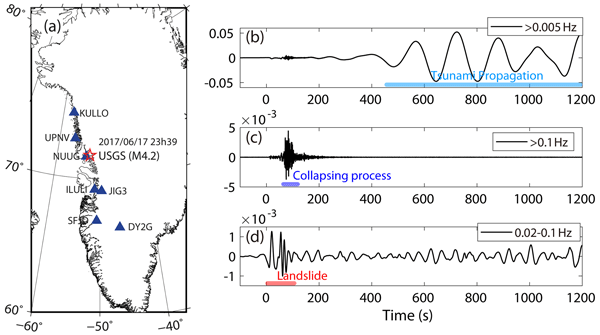
The 2017 Landslide-made tsunami in Greenland occurred in a context of global warming and heavily impacted local communities. We analyze this event using seismic data to reconstruct the whole chain of processes from the landslide to the tsunami. Our results validate a new approach to analyze crustal deformations caused by tsunami propagation in fjords, suggesting that alert systems based on seismic data are feasible, potentially allowing to reduce tsunami risks in polar regions.
Roger Cremades, Carlo Giupponi, Sebastian Raimondo, Stefano Battiston, Francesco Bosello, Tatiana Filatova, Marjolijn Haasnoot, Stephane Hallegatte, Jochen Hinkel, Piero Lionello, Antoine Mandel, Irene Monasterolo, Robert Nicholls, Athanasios Vafeidis, Kees van Ginkel, and Vanessa Völz
EGUsphere, https://doi.org/10.5194/egusphere-2026-792, https://doi.org/10.5194/egusphere-2026-792, 2026
Preprint archived
Short summary
Short summary
Current economic models for coastal adaptation are very simplistic. They underestimate sea-level rise risks by ignoring real-world complexities like inequality, financial domino effects, and human behaviour. This leads to policies that could waste millions and lock communities into dangerous paths. A solution is using models with complex systems science to inform policy. By modelling interconnected social and environmental systems, we can design reliable adaptation plans.
Jeremy Rohmer, Heiko Goelzer, Tamsin L. Edwards, Goneri Le Cozannet, and Gael Durand
The Cryosphere, 19, 6421–6444, https://doi.org/10.5194/tc-19-6421-2025, https://doi.org/10.5194/tc-19-6421-2025, 2025
Short summary
Short summary
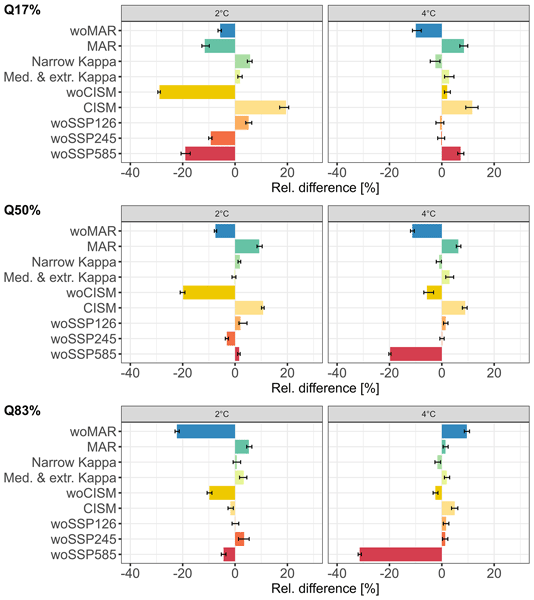
Developing robust protocols to design multi-model ensembles is of primary importance for the uncertainty quantification of sea level projections. Here, we set up a series of computer experiments to reflect design decisions for the prediction of future sea level contribution of the Greenland ice sheet in 2100. We show the importance of including the most extreme climate scenario and the implications of using a single type of numerical model for ice sheets or regional climate.
Mirna Badillo-Interiano, Jérémy Rohmer, Gonéri Le Cozannet, and Virginie Duvat
Nat. Hazards Earth Syst. Sci., 25, 4527–4543, https://doi.org/10.5194/nhess-25-4527-2025, https://doi.org/10.5194/nhess-25-4527-2025, 2025
Short summary
Short summary
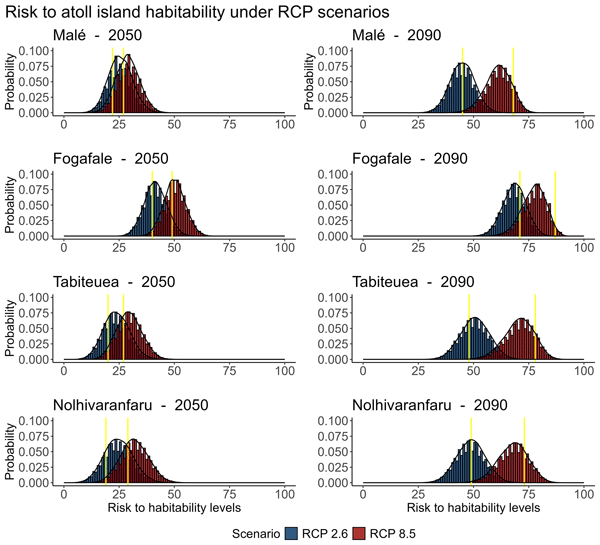
Small islands face increasing threats from climate change. In this context, exploring new modeling approaches is needed to improve climate risk assessments. We applied Bayesian Networks to assess the risk to future habitability on four atoll islands. The findings show that Bayesian Networks are powerful tools for efficiently assessing climate-related risks by combining expert judgments and confidence levels, providing a comprehensive framework to assess risks in data-limited island settings.
Floris R. Calkoen, Arjen P. Luijendijk, Susan Hanson, Robert J. Nicholls, Antonio Moreno-Rodenas, Hugo De Heer, and Fedor Baart
Earth Syst. Sci. Data Discuss., https://doi.org/10.5194/essd-2025-388, https://doi.org/10.5194/essd-2025-388, 2025
Manuscript not accepted for further review
Short summary
Short summary
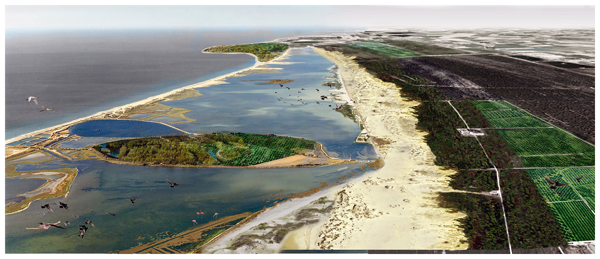
This study presents the first global, high-resolution (100 m) coastal classification dataset derived from Earth observation data using deep learning. It offers a consistent view of coastal landforms, sediment types, and human modifications across nearly 10 million transects—covering one million kilometers of coastline. The dataset supports a wide range of applications, from coastal change monitoring and erosion risk assessment to climate adaptation planning, conservation, and coastal geology.
Alexander Bisaro, Giulia Galluccio, Elisa Fiorini Beckhauser, Fulvio Biddau, Ruben David, Floortje d'Hont, Antonio Góngora Zurro, Gonéri Le Cozannet, Sadie McEvoy, Begoña Pérez Gómez, Claudia Romagnoli, Eugenio Sini, and Jill Slinger
State Planet, 3-slre1, 7, https://doi.org/10.5194/sp-3-slre1-7-2024, https://doi.org/10.5194/sp-3-slre1-7-2024, 2024
Short summary
Short summary
This paper assesses coastal adaptation governance by examining socio-economic and political contexts, reviewing policy frameworks, and identifying challenges. Results show that regional and basin-scale frameworks lack sea level rise provisions, but significant national progress is observed. The main governance challenges are time horizons and uncertainty, coordination, and social vulnerability. These, however, can be addressed if flexible planning and nature-based solutions are implemented.
Roderik van de Wal, Angélique Melet, Debora Bellafiore, Paula Camus, Christian Ferrarin, Gualbert Oude Essink, Ivan D. Haigh, Piero Lionello, Arjen Luijendijk, Alexandra Toimil, Joanna Staneva, and Michalis Vousdoukas
State Planet, 3-slre1, 5, https://doi.org/10.5194/sp-3-slre1-5-2024, https://doi.org/10.5194/sp-3-slre1-5-2024, 2024
Short summary
Short summary
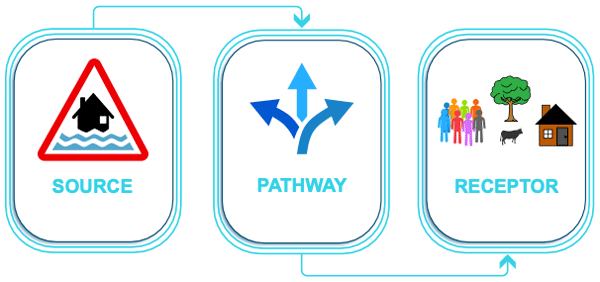
Sea level rise has major impacts in Europe, which vary from place to place and in time, depending on the source of the impacts. Flooding, erosion, and saltwater intrusion lead, via different pathways, to various consequences for coastal regions across Europe. This causes damage to assets, the environment, and people for all three categories of impacts discussed in this paper. The paper provides an overview of the various impacts in Europe.
Melissa Wood, Ivan D. Haigh, Quan Quan Le, Hung Nghia Nguyen, Hoang Ba Tran, Stephen E. Darby, Robert Marsh, Nikolaos Skliris, Joël J.-M. Hirschi, Robert J. Nicholls, and Nadia Bloemendaal
Nat. Hazards Earth Syst. Sci., 23, 2475–2504, https://doi.org/10.5194/nhess-23-2475-2023, https://doi.org/10.5194/nhess-23-2475-2023, 2023
Short summary
Short summary
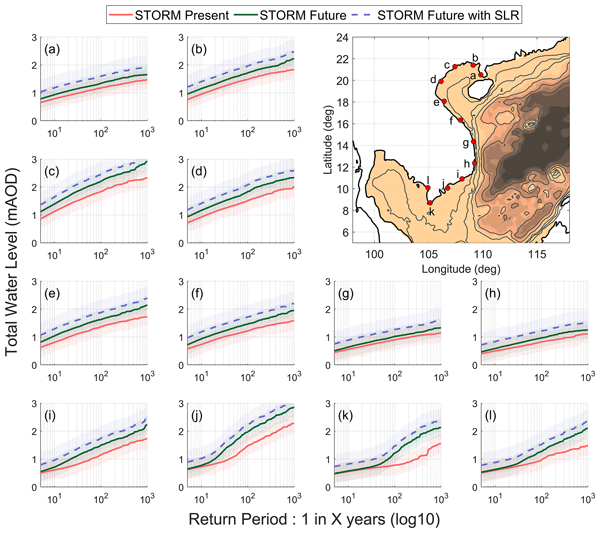
We used a novel database of simulated tropical cyclone tracks to explore whether typhoon-induced storm surges present a future flood risk to low-lying coastal communities around the South China Sea. We found that future climate change is likely to change tropical cyclone behaviour to an extent that this increases the severity and frequency of storm surges to Vietnam, southern China, and Thailand. Consequently, coastal flood defences need to be reviewed for resilience against this future hazard.
Jeremy Rohmer, Remi Thieblemont, Goneri Le Cozannet, Heiko Goelzer, and Gael Durand
The Cryosphere, 16, 4637–4657, https://doi.org/10.5194/tc-16-4637-2022, https://doi.org/10.5194/tc-16-4637-2022, 2022
Short summary
Short summary
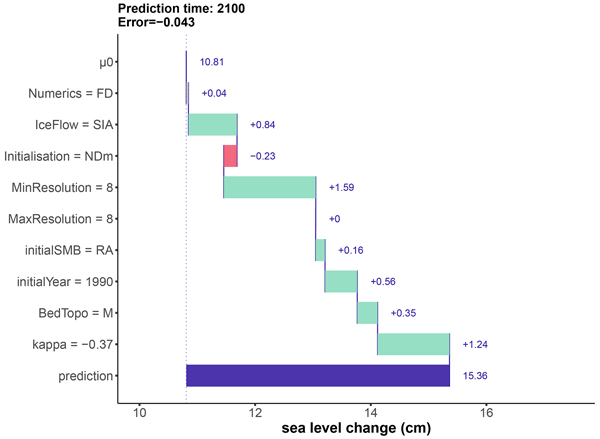
To improve the interpretability of process-based projections of the sea-level contribution from land ice components, we apply the machine-learning-based
SHapley Additive exPlanationsapproach to a subset of a multi-model ensemble study for the Greenland ice sheet. This allows us to quantify the influence of particular modelling decisions (related to numerical implementation, initial conditions, or parametrisation of ice-sheet processes) directly in terms of sea-level change contribution.
Jeremy Rohmer, Deborah Idier, Remi Thieblemont, Goneri Le Cozannet, and François Bachoc
Nat. Hazards Earth Syst. Sci., 22, 3167–3182, https://doi.org/10.5194/nhess-22-3167-2022, https://doi.org/10.5194/nhess-22-3167-2022, 2022
Short summary
Short summary
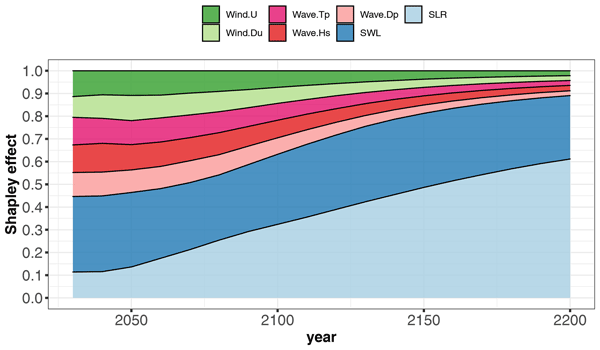
We quantify the influence of wave–wind characteristics, offshore water level and sea level rise (projected up to 2200) on the occurrence of flooding events at Gâvres, French Atlantic coast. Our results outline the overwhelming influence of sea level rise over time compared to the others. By showing the robustness of our conclusions to the errors in the estimation procedure, our approach proves to be valuable for exploring and characterizing uncertainties in assessments of future flooding.
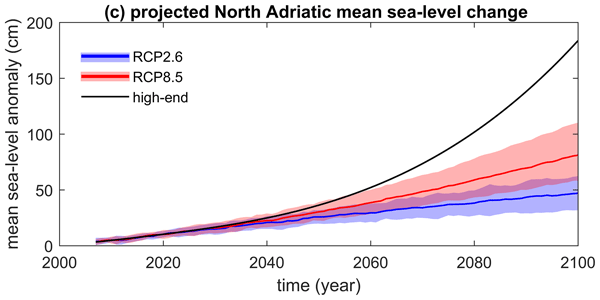
Davide Zanchettin, Sara Bruni, Fabio Raicich, Piero Lionello, Fanny Adloff, Alexey Androsov, Fabrizio Antonioli, Vincenzo Artale, Eugenio Carminati, Christian Ferrarin, Vera Fofonova, Robert J. Nicholls, Sara Rubinetti, Angelo Rubino, Gianmaria Sannino, Giorgio Spada, Rémi Thiéblemont, Michael Tsimplis, Georg Umgiesser, Stefano Vignudelli, Guy Wöppelmann, and Susanna Zerbini
Nat. Hazards Earth Syst. Sci., 21, 2643–2678, https://doi.org/10.5194/nhess-21-2643-2021, https://doi.org/10.5194/nhess-21-2643-2021, 2021
Short summary
Short summary
Relative sea level in Venice rose by about 2.5 mm/year in the past 150 years due to the combined effect of subsidence and mean sea-level rise. We estimate the likely range of mean sea-level rise in Venice by 2100 due to climate changes to be between about 10 and 110 cm, with an improbable yet possible high-end scenario of about 170 cm. Projections of subsidence are not available, but historical evidence demonstrates that they can increase the hazard posed by climatically induced sea-level rise.
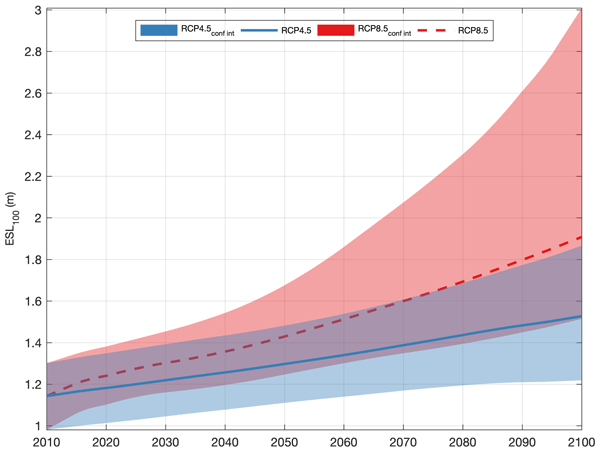
Piero Lionello, David Barriopedro, Christian Ferrarin, Robert J. Nicholls, Mirko Orlić, Fabio Raicich, Marco Reale, Georg Umgiesser, Michalis Vousdoukas, and Davide Zanchettin
Nat. Hazards Earth Syst. Sci., 21, 2705–2731, https://doi.org/10.5194/nhess-21-2705-2021, https://doi.org/10.5194/nhess-21-2705-2021, 2021
Short summary
Short summary
In this review we describe the factors leading to the extreme water heights producing the floods of Venice. We discuss the different contributions, their relative importance, and the resulting compound events. We highlight the role of relative sea level rise and the observed past and very likely future increase in extreme water heights, showing that they might be up to 160 % higher at the end of the 21st century than presently.
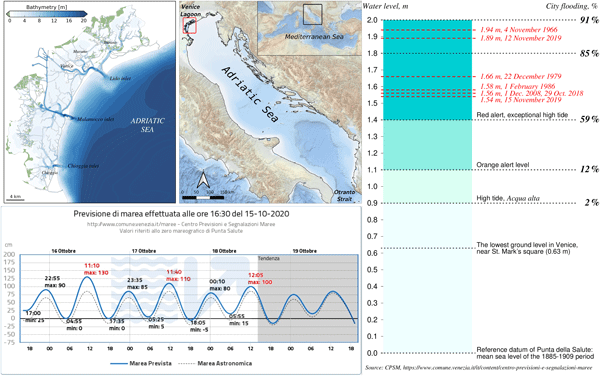
Georg Umgiesser, Marco Bajo, Christian Ferrarin, Andrea Cucco, Piero Lionello, Davide Zanchettin, Alvise Papa, Alessandro Tosoni, Maurizio Ferla, Elisa Coraci, Sara Morucci, Franco Crosato, Andrea Bonometto, Andrea Valentini, Mirko Orlić, Ivan D. Haigh, Jacob Woge Nielsen, Xavier Bertin, André Bustorff Fortunato, Begoña Pérez Gómez, Enrique Alvarez Fanjul, Denis Paradis, Didier Jourdan, Audrey Pasquet, Baptiste Mourre, Joaquín Tintoré, and Robert J. Nicholls
Nat. Hazards Earth Syst. Sci., 21, 2679–2704, https://doi.org/10.5194/nhess-21-2679-2021, https://doi.org/10.5194/nhess-21-2679-2021, 2021
Short summary
Short summary
The city of Venice relies crucially on a good storm surge forecast to protect its population and cultural heritage. In this paper, we provide a state-of-the-art review of storm surge forecasting, starting from examples in Europe and focusing on the Adriatic Sea and the Lagoon of Venice. We discuss the physics of storm surge, as well as the particular aspects of Venice and new techniques in storm surge modeling. We also give recommendations on what a future forecasting system should look like.
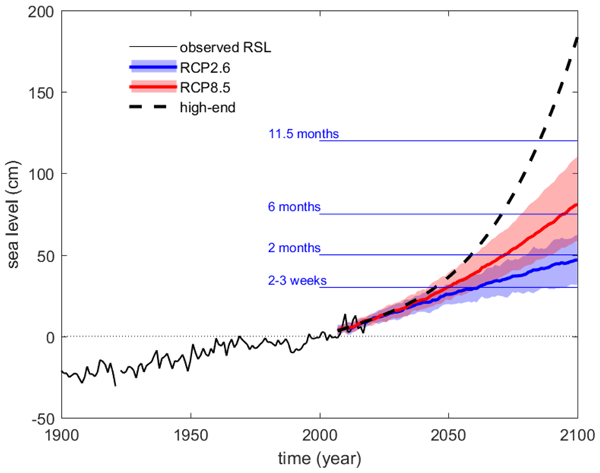
Piero Lionello, Robert J. Nicholls, Georg Umgiesser, and Davide Zanchettin
Nat. Hazards Earth Syst. Sci., 21, 2633–2641, https://doi.org/10.5194/nhess-21-2633-2021, https://doi.org/10.5194/nhess-21-2633-2021, 2021
Short summary
Short summary
Venice is an iconic place, and a paradigm of huge historical and cultural value is at risk. The threat posed by floods has dramatically increased in recent decades and is expected to continue to grow – and even accelerate – through this century. There is a need to better understand the future evolution of the relative sea level and its extremes and to develop adaptive planning strategies appropriate for present uncertainty, which might not be substantially reduced in the near future.
Rémi Thiéblemont, Gonéri Le Cozannet, Jérémy Rohmer, Alexandra Toimil, Moisés Álvarez-Cuesta, and Iñigo J. Losada
Nat. Hazards Earth Syst. Sci., 21, 2257–2276, https://doi.org/10.5194/nhess-21-2257-2021, https://doi.org/10.5194/nhess-21-2257-2021, 2021
Short summary
Short summary
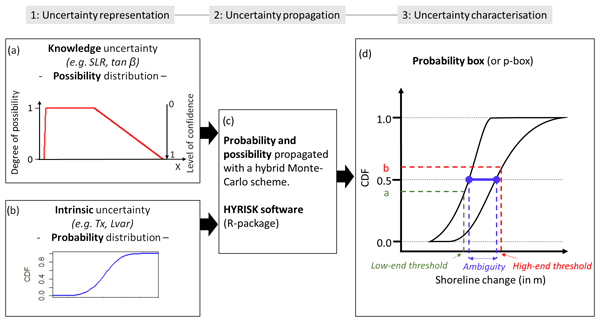
Sea level rise and its acceleration are projected to aggravate coastal erosion over the 21st century. Resulting shoreline projections are deeply uncertain, however, which constitutes a major challenge for coastal planning and management. Our work presents a new extra-probabilistic framework to develop future shoreline projections and shows that deep uncertainties could be drastically reduced by better constraining sea level projections and improving coastal impact models.
Cited articles
Almar, R., Ranasinghe, R., Bergsma, E. W. J., Diaz, H., Melet, A., Papa, F., Vousdoukas, M., Athanasiou, P., Dada, O., Almeida, L. P., and Kestenare, E.: A global analysis of extreme coastal water levels with implications for potential coastal overtopping, Nat. Commun., 12, 3775, https://doi.org/10.1038/s41467-021-24008-9, 2021.
Andrade, M. J., Jiménez-Morales, E., Rodríguez-Ramos, R., and Martínez-Ramírez, P.: Reuse of port industrial heritage in tourist cities: Shipyards as case studies, Frontiers of Architectural Research, 13, 164–183, https://doi.org/10.1016/j.foar.2023.09.005, 2024.
Athanasiou, P., van Dongeren, A., Pronk, M., Giardino, A., Vousdoukas, M., and Ranasinghe, R.: Global Coastal Characteristics (GCC): a global dataset of geophysical, hydrodynamic, and socioeconomic coastal indicators, Earth Syst. Sci. Data, 16, 3433–3452, https://doi.org//10.5194/essd-16-3433-2024, 2024.
Bateman, M. D., McHale, K., Bayntun, H. J., and Williams, N.: Understanding historical coastal spit evolution: A case study from Spurn, East Yorkshire, UK, Earth Surf. Proc. Land., 45, 3670–3686, https://doi.org/10.1002/esp.4991, 2020.
BGS: GeoCoastOpen, British Geological Society, https://www.bgs.ac.uk/datasets/geocoast-open/ (last access: 16 May 2025), 2023.
Bird, E.: Coastal changes: a global review, Wiley, New York, USA, 219 pp., ISBN 0-471-90646-8, 1985.
Brand, E., Ramaekers, G., and Lodder, Q.: Dutch experience with sand nourishments for dynamic coastline conservation – An operational overview, Ocean Coast. Manage., 217, 106008, https://doi.org/10.1016/j.ocecoaman.2021.106008, 2022.
Calkoen, F. R., Luijendijk, A. P., Vos, K., Kras, E., and Baart, F.: Enabling coastal analytics at planetary scale, Environ. Modell. Softw., 183, 106257, https://doi.org/10.1016/j.envsoft.2024.106257, 2025.
Castelle, B., Guillot, B., Marieu, V., Caumillon, E., Hanquiez, V., Bujan, S., and Poppeschi, C.: Spatial and temporal patterns of shoreline change of a 280-km high-energy disrupted sandy coast from 1950 to 2014: SW France, Estuar. Coast. Shelf S., 200, 212–223, https://doi.org/10.1016/j.ecss.2017.11.005, 2018.
CLC: CORINE Land Cover 2018 (vector), Europe, 6-yearly - version 2020_20u1, May 2020, EEA geospatial data catalogue [data set], https://doi.org/10.2909/71c95a07-e296-44fc-b22b-415f42acfdf0, 2020.
de Schipper, M. A., Ludka, B. C., Raubenheimer, B., Luijendijk, A. P., and Schlacher, T. A.: Beach nourishment has complex implications for the future of sandy shores, Nature Reviews Earth & Environment, 2, 70–84, https://doi.org/10.1038/s43017-020-00109-9, 2021.
Dullaart, J. C. M., Muis, S., Bloemendaal, N., Chertova, M. V., Couasnon, A., and Aerts, J. C. J. H.: Accounting for tropical cyclones more than doubles the global population exposed to low-probability coastal flooding, Communications Earth & Environment, 2, 135, https://doi.org/10.1038/s43247-021-00204-9, 2021.
EA: National Coastal Erosion Risk Mapping (NCERM): https://environment.data.gov.uk/dataset/9fede91f-5acd-4fd2-9bd8-98153fa3c2ff, last access: 19 November 2025.
EEA: Geology and geomorphology (EUROSION), Retrieved April 2023, from https://www.eea.europa.eu/data-and-maps/figures/geology-and-geomorphology, 2004.
EEA: coastline for analysis [dataset]: Retrieved April 2023, from https://sdi.eea.europa.eu/catalogue/srv/api/records/af40333f-9e94-4926-a4f0-0a787f1d2b8f, 2017.
Enwright, N. M., Griffith, K. T., and Osland, M. J.: Barriers to and opportunities for landward migration of coastal wetlands with sea-level rise, Frontiers in Ecology and the Environment, 14, 307–316, https://doi.org/10.1002/fee.1282, 2016.
Esri: Esri World Imagery, https://www.arcgis.com/home/item.html?id=10df2279f9684e4a9f6a7f08febac2a9 (last access: 19 November 2024), 2024.
EU-DEM: Copernicus European Digital Elevation Model, Eurostat [dataset], https://ec.europa.eu/eurostat/web/gisco/geodata/digital-elevation-model/eu-dem (last access: 10 April 2023), 2016.
Eurosion: D2.3.3 Eurosion Dataset Structure Description, European Commission Contract nr. B4-3301/2001/329175/MAR/B3, http://www.eurosion.org/reports-online/databasestructure.pdf (last access: 19 April 2023), 2003.
Eurosion: EUROSION portal, http://www.eurosion.org/home/main.html (last access: 18 January 2025), 2004.
Finkl, C. W.: Coastal classification: Systematic approaches to consider in the development of a comprehensive scheme, J. Coastal Res., 20, 166–213, https://doi.org/10.2112/1551-5036(2004)20[166:CCSATC]2.0.CO;2, 2004.
Foster, N. M., Hudson, M. D., Bray, S., and Nicholls, R. J.: Intertidal mudflat and saltmarsh conservation and sustainable use in the UK: A review, J. Environ. Manage., 126, 96–104, https://doi.org/10.1016/j.jenvman.2013.04.015, 2013.
Georgic, W. and Klaiber, H. A.: A flood of construction: The role of levees in urban floodplain development, Land Econ., 98, 78–97, https://doi.org/10.3368/le.98.1.071520-0106R1, 2022.
Gerard, F. and Lang, M.: Xynthia : analyse des causes et des conséquences de la catastrophe, La Houille Blanche, 105, 149–156, https://doi.org/10.1051/lhb/2019025, 2019.
Google Earth: https://earth.google.com/web (last access: 23 May 2025), 2024.
Grases, A., Gracia, V., García-León, M., Lin-Ye, J., and Sierra, J. P.: Coastal flooding and erosion under a changing climate: Implications at a low-lying coast (Ebro Delta), Water, 12, https://doi.org/10.3390/w12020346, 2020.
Hagenaars, G., de Vries, S., Luijendijk, A. P., de Boer, W. P., and Reniers, A. J. H. M.: On the accuracy of automated shoreline detection derived from satellite imagery: A case study of the sand motor mega-scale nourishment, Coast. Eng., 133, 113–125, https://doi.org/10.1016/j.coastaleng.2017.12.011, 2018.
Hanson, H., Brampton, A., Capobianco, M., Dette, H. H., Hamm, L., Laustrup, C., Lechuga, A., and Spanhoff, R.: Beach nourishment projects, practices, and objectives – a European overview, Coast. Eng., 47, 81–111, https://doi.org/10.1016/S0378-3839(02)00122-9, 2002.
Hanson, S., Nicholls, R. J., Balson, P., Brown, I., French, J. R., Spencer, T., and Sutherland, W. J.: Capturing coastal geomorphological change within regional integrated assessment: An outcome-driven fuzzy logic approach, J. Coastal Res., 26, 831–842, https://doi.org/10.2112/jcoastres-d-09-00078.1, 2010.
Hinkel, J., Nicholls, R. J., Tol, R. S. J., Wang, Z. B., Hamilton, J. M., Boot, G., Vafeidis, A. T., McFadden, L., Ganopolski, A., and Klein, R. J. T.: A global analysis of erosion of sandy beaches and sea-level rise: An application of DIVA, Global Planet. Change, 111, 150–158, https://doi.org/10.1016/j.gloplacha.2013.09.002, 2013.
Hudson, R., Kenworthy, J., and Best, M. (Eds.): Saltmarsh Restoration Handbook: UK and Ireland, UK Environment Agency, Bristol, UK, https://catchmentbasedapproach.org/learn/saltmarsh-restoration-handbook/ (last access: 25 March 2026), 2021.
Hulskamp, R., Luijendijk, A., van Maren, B., Moreno-Rodenas, A., Calkoen, F., Kras, E., Lhermitte, S., and Aarninkhof, S.: Global distribution and dynamics of muddy coasts, Nat. Commun., 14, 8259, https://doi.org/10.1038/s41467-023-43819-6, 2023.
Jiménez, J. A., Winter, G., Bonaduce, A., Depuydt, M., Galluccio, G., van den Hurk, B., Meier, H. E. M., Pinardi, N., Pomarico, L. G., and Vazquez Riveiros, N.: Sea Level Rise in Europe: Knowledge gaps identified through a participatory approach, in: Sea Level Rise in Europe: 1st Assessment Report of the Knowledge Hub on Sea Level Rise, edited by: , Copernicus Publications, State Planet, 3-slre1, 3, https://doi.org/10.5194/sp-3-slre1-3-2024, 2024.
Kennedy, D. M., McInnes, K. L., and Ierodiaconou, D.: Understanding coastal erosion on beaches: A guide for managers, policy makers and citizen scientists, Earth System and Climate Change Hub of the Australian Government's National Environmental Science Program (National Centre for Coasts & Climate) and the Department of Environment, Land, Water and Planning (Victorian Coastal Monitoring Program), https://www.marineandcoasts.vic.gov.au/__data/assets/pdf_file/0029/444683/Understanding-coastal-erosion-on-beaches-booklet.pdf (last access: 25 March 2026), 2019.
Leaman, C. K., Harley, M. D., Splinter, K. D., Thran, M. C., Kinsela, M. A., and Turner, I. L.: A storm hazard matrix combining coastal flooding and beach erosion, Coast. Eng., 170, 104001, https://doi.org/10.1016/j.coastaleng.2021.104001, 2021.
Le Cozannet, G., Bulteau, T., Garcin, M., Garnier, C., Müller, H., Hoareau, A., and Mallet, C.: Detecting errors in coastal databases using Bayesian Networks, J. Coastal Res., 75, 1162–1166, https://doi.org/10.2112/si75-233.1, 2016.
Le Cozannet, G., Nicholls, R. J., Hinkel, J., Sweet, W. V., McInnes, K. L., Van de Wal, R. S. W., Slangen, A. B. A., Lowe, J. A., and White, K. D.: Sea level change and Coastal Climate Services: The way forward, Journal of Marine Science and Engineering, 5, 49, https://doi.org/10.3390/jmse5040049, 2017.
Le Cozannet, G., Oliveros, C., Brivois, O., Giremus, A., Garcin, M., and Lavigne, F.: Detecting changes in European shoreline evolution trends using Markov chains and the Eurosion database, Frontiers in Marine Science, 7, 326, https://doi.org/10.3389/fmars.2020.00326, 2020.
Le Cozannet, G., Nicholls, R. J., Durand, G., Slangen, A. B. A., Lincke, D., and Chapuis, A.: Adaptation to multi-meter sea-level rise should start now, Environ. Res. Lett., 18, 091001, https://doi.org/10.1088/1748-9326/acef3f, 2023.
Le Cozannet, G., Sayers, P., Nicholls, R. J., Hinkel, J., Losada, I. J., Melet, A., Luijendijk, A., Koks, E., Lincke, D., Loukogeorgaki, E., Sannino, G., Vafeidis, A. T., Castañer, C. M., Kras, E., Menendez, M., Toimil, A., Völz, V., Thiéblemont, R., Bascoul, V., Bonatz, H., and Penning-Rowsell, E.: Coastal zones are under pressure from climate change: Transformational adaptation is needed, Zenodo, https://doi.org/10.5281/zenodo.15176253, 2025.
Lincke, D.: European coastline/floodplain segmentation for CoCliCo project, Zenodo [data set], https://doi.org/10.5281/zenodo.19233592, 2026.
Lincke, D. and Hinkel, J.: Report and final GIS layer of flood risk management units, CoCliCo project deliverable 6.2, https://coclicoservices.eu/wp-content/uploads/2021/11/WP6_D6.2.Report-and-final-GIS-layer-of-flood-risk-management-units.pdf (last access: 25 March 2026), 2023.
Linnér, H. and Messing, I.: Agricultural land needs protection, Acta Agr. Scand. B-S. P., 62, 706–710, https://doi.org/10.1080/09064710.2012.697574, 2012.
Luijendijk, A., Hagenaars, G., Ranasinghe, R., Baart, F., Donchyts, G., and Aarninkhof, S.: The state of the world's beaches, Scientific Reports, 8, 6641, https://doi.org/10.1038/s41598-018-24630-6, 2018.
Marine Scotland: Coastal erosion and flood risk management, https://marine.gov.scot/sma/assessment/coastal-erosion-and-flood-risk-management (last access: 25 March 2026), 2020.
Masselink, G., Russell, P., Rennie, A., Brooks, S., and Spencer, T.: Impacts of climate change on coastal geomorphology and coastal erosion relevant to the coastal and marine environment around the UK, MCCIP Science Review, 158–189, https://doi.org/10.14465/2020.arc08.cgm, 2020.
McInnes, K. L., Nicholls, R. J., van de Wal, R., Behar, D., Haigh, I. D., Hamlington, B. D., Hinkel, J., Hirschfeld, D., Horton, B. P., Melet, A., Palmer, M. D., Robel, A. A., Stammer, D., and Sullivan, A.: Perspective on regional sea-level change and coastal impacts, Cambridge Prisms: Coastal Futures, 2, e16, https://doi.org/10.1017/cft.2024.15, 2024.
Mentaschi, L., Vousdoukas, M. I., Pekel, J.-F., Voukouvalas, E., and Feyen, L.: Global long-term observations of coastal erosion and accretion, Scientific Reports, 8, 12876, https://doi.org/10.1038/s41598-018-30904-w, 2018.
Morales, J. A.: Coastal elements: Types of coasts and criteria in coastal classifications, in: Coastal Geology, edited by: Morales, J. A., Springer Nature Switzerland, Cham, 31–44, https://doi.org/10.1007/978-3-030-96121-3_4, 2022.
Oppenheimer, M., Glavovic, B. C., Hinkel, J., van de Wal, R., Magnan, A. K., Abd-Elgawad, A., Cai, R., Cifuentes-Jara, M., DeConto, R. M., Ghosh, T., Hay, J., Isla, F., Marzeion, B., Meyssignac, B., and Sebesvari, Z.: Chapter 4: Sea level rise and implications for low-lying islands, coasts and communities, in: Special Report on the Ocean and Cryosphere in a Changing Climate, edited by: Pörtner, H.-O., Roberts, D. C., Masson-Delmotte, V., Zhai, P., Tignor, M., Poloczanska, E., Mintenbeck, K., Alegría, A., Nicolai, M., Okem, A., Petzold, J., Rama, B., and Weyer, N. M., IPCC, 321–445, https://doi.org/10.1017/9781009157964.006, 2019.
Pang, T., Wang, X., Nawaz, R. A., Keefe, G., and Adekanmbi, T.: Coastal erosion and climate change: A review on coastal-change process and modeling, Ambio, 52, 2034–2052, https://doi.org/10.1007/s13280-023-01901-9, 2023.
Pedreros, R., Garcin, M., Krien, Y., Monfort Climent, D., Mujica, J., and Francois, B.: Tempête Xynthia : compte rendu de mission préliminaire, BGRM, Rapport BRGM/RP-58261-FR, 53 pp., https://infoterre.brgm.fr/rapports/RP-58261-FR.pdf (last access: 25 March 2026), 2010.
Pollard, J., Spencer, T., and Brooks, S.: The interactive relationship between coastal erosion and flood risk, Prog. Phys. Geog., 43, 574–585, https://doi.org/10.1177/0309133318794498, 2019.
Pollard, J. A.: Climate change and coastal policy: the need to address erosion-flooding interactions for effective coastal risk management, Geography, 104, 60–70, 2019.
Pontee, N.: Defining coastal squeeze: A discussion, Ocean Coast. Manage., 84, 204–207, https://doi.org/10.1016/j.ocecoaman.2013.07.010, 2013.
Pranzini, E. and Williams, A. (Eds.): Coastal erosion and protection in Europe, 1st edn., Routledge, https://doi.org/10.4324/9780203128558, 2013.
Pranzini, E., Wetzel, L., and Williams, A. T.: Aspects of coastal erosion and protection in Europe, J. Coast. Conserv., 19, 445–459, https://doi.org/10.1007/s11852-015-0399-3, 2015.
Quelennec, R. E., De Moor, G., Dillingh, D., Lewis, A. W., Marques, M. A., May, V., Møller, J. T., Oliveros, C., Soares de Carvalho, G., and Zamani, A.: Corine Coastal Erosion: Atlas of the geomorphology and evolutionary trends of the European coasts of the European Community, Office for Official Publications of the EC, Luxembourg, GD Luxembourg, http://hdl.handle.net/1854/LU-113409 (last access: 25 March 2026), 1998
Schuerch, M., Spencer, T., Temmerman, S., Kirwan, M. L., Wolff, C., Lincke, D., McOwen, C. J., Pickering, M. D., Reef, R., Vafeidis, A. T., Hinkel, J., Nicholls, R. J., and Brown, S.: Future response of global coastal wetlands to sea-level rise, Nature, 561, 231–234, https://doi.org/10.1038/s41586-018-0476-5, 2018.
Scott, C. R., Harris, E., and Townend, I. H.: Lessons in applying adaptive management on a dynamic coastline: a case study at the inlet to Pagham Harbour, UK, Anthropocene Coasts, 3, 86–115, https://doi.org/10.1139/anc-2019-0002, 2020.
Stéphan, P., Suanez, S., Guérin, T., Rivier, A., Leballeur, L., Waeles, B., Ammann, J., and Houron, J.: Breaching of the Sillon de Talbert gravel spit (North Brittany, France) and coastal flooding risk assessment, Geomorphology, 461, 109302, https://doi.org/10.1016/j.geomorph.2024.109302, 2024.
Stive, M. J. F., Aarninkhof, S. G. J., Hamm, L., Hanson, H., Larson, M., Wijnberg, K. M., Nicholls, R. J., and Capobianco, M.: Variability of shore and shoreline evolution, Coast. Eng., 47, 211–235, https://doi.org/10.1016/S0378-3839(02)00126-6, 2002.
Toimil, A., Álvarez-Cuesta, M., and Losada, I. J.: Neglecting the effect of long- and short-term erosion can lead to spurious coastal flood risk projections and maladaptation, Coast. Eng., 179, 104248, https://doi.org/10.1016/j.coastaleng.2022.104248, 2023.
van de Wal, R., Melet, A., Bellafiore, D., Camus, P., Ferrarin, C., Oude Essink, G., Haigh, I. D., Lionello, P., Luijendijk, A., Toimil, A., Staneva, J., and Vousdoukas, M.: Sea Level Rise in Europe: Impacts and consequences, in: Sea Level Rise in Europe: 1st Assessment Report of the Knowledge Hub on Sea Level Rise (SLRE1), edited by: van den Hurk, B., Pinardi, N., Kiefer, T., Larkin, K., Manderscheid, P., and Richter, K., Copernicus Publications, State Planet, 3-slre1, 5, https://doi.org/10.5194/sp-3-slre1-5-2024, 2023.
van Rijn, L. C.: Coastal erosion and control, Ocean Coast. Manage., 54, 867–887, https://doi.org/10.1016/j.ocecoaman.2011.05.004, 2011.
Vos, K., Splinter, K. D., Palomar-Vázquez, J., Pardo-Pascual, J. E., Almonacid-Caballer, J., Cabezas-Rabadán, C., Kras, E. C., Luijendijk, A. P., Calkoen, F., Almeida, L. P., Pais, D., Klein, A. H. F., Mao, Y., Harris, D., Castelle, B., Buscombe, D., and Vitousek, S.: Benchmarking satellite-derived shoreline mapping algorithms, Communications Earth & Environment, 4, 345, https://doi.org/10.1038/s43247-023-01001-2, 2023.
Vousdoukas, M. I., Ranasinghe, R., Mentaschi, L., Plomaritis, T. A., Athanasiou, P., Luijendijk, A., and Feyen, L.: Sandy coastlines under threat of erosion, Nat. Clim. Change, 10, 260–263, https://doi.org/10.1038/s41558-020-0697-0, 2020.
Wen, L., Glasby, T. M., and Hughes, M. G.: The race for space: Modelling the landward migration of coastal wetlands under sea level rise at regional scale, Sci. Total Environ., 859, 160483, https://doi.org/10.1016/j.scitotenv.2022.160483, 2023.
Wolff, C., Vafeidis, A. T., Muis, S., Lincke, D., Satta, A., Lionello, P., Jimenez, J. A., Conte, D., and Hinkel, J.: A Mediterranean coastal database for assessing the impacts of sea-level rise and associated hazards, Scientific Data, 5, 180044, https://doi.org/10.1038/sdata.2018.44, 2018.
Woodroffe, C. D.: Coasts: Form, Process and Evolution, Cambridge University Press, Cambridge, https://doi.org/10.1017/CBO9781316036518, 2002.
Zuo, J., Zhang, L., Chen, B., Zhang, B., Ruan, L., Hu, Y., Mamun, M. M. A. A., and Raza, S. A.: GCSD: A comprehensive coastal indicators database for global coastal sustainable development assessment, Scientific Data, 12, 1562, https://doi.org/10.1038/s41597-025-05668-4, 2025.
Short summary
The CoasTER geographic database provides erosion relevant characteristics (sediment type, land use, geomorphology, historical shoreline movement trend) for Europe’s coastal floodplains. Building on earlier erosion research, it also includes a coastal geomorphological typology incorporating hard engineering and other infrastructure. Analysis demonstrates that episodic/long-term erosion and coastal flooding interactions are widespread and an important aspect within any management strategy.
The CoasTER geographic database provides erosion relevant characteristics (sediment type, land...


Altmetrics
Final-revised paper
Preprint