
Articles | Volume 26, issue 3
https://doi.org/10.5194/nhess-26-1457-2026
© Author(s) 2026. This work is distributed under
the Creative Commons Attribution 4.0 License.
the Creative Commons Attribution 4.0 License.
https://doi.org/10.5194/nhess-26-1457-2026
© Author(s) 2026. This work is distributed under
the Creative Commons Attribution 4.0 License.
the Creative Commons Attribution 4.0 License.
Research article
| 
24 Mar 2026
Research article |
| 24 Mar 2026
| 24 Mar 2026
Comparing flood forecasting and early warning systems in northwestern Europe

Institute for Environmental Studies (IVM), Vrije Universiteit (VU) Amsterdam, Amsterdam, the Netherlands
Invited contribution by Tim Busker, recipient of the EGU Hydrological Sciences Outstanding Student Poster and PICO Award 2023.
Daniela Rodriguez Castro
Research Group of Hydraulics in Environmental and Civil Engineering (HECE), University of Liège, Liège, Belgium
Sergiy Vorogushyn
GFZ Helmholtz Centre for Geosciences, Potsdam, Germany
Jaap Kwadijk
Deltares, Delft, the Netherlands
Faculty of Engineering Technology, University of Twente, Enschede, the Netherlands
Davide Zoccatelli
Luxembourg Institute of Science and Technology (LIST), Esch-sur-Alzette, Luxembourg
Rafaella G. L. Oliveira
Institute for Environmental Studies (IVM), Vrije Universiteit (VU) Amsterdam, Amsterdam, the Netherlands
Heather J. Murdock
Institute of Environmental Science and Geography, University of Potsdam, Potsdam, Germany
Laurent Pfister
Luxembourg Institute of Science and Technology (LIST), Esch-sur-Alzette, Luxembourg
Benjamin Dewals
Research Group of Hydraulics in Environmental and Civil Engineering (HECE), University of Liège, Liège, Belgium
Kymo Slager
Deltares, Delft, the Netherlands
Annegret H. Thieken
Institute of Environmental Science and Geography, University of Potsdam, Potsdam, Germany
Jan Verkade
Deltares, Delft, the Netherlands
Patrick Willems
Hydraulics and Geotechnics Section, KU Leuven, Leuven, Belgium
Jeroen C. J. H. Aerts
Institute for Environmental Studies (IVM), Vrije Universiteit (VU) Amsterdam, Amsterdam, the Netherlands
Deltares, Delft, the Netherlands
Related authors
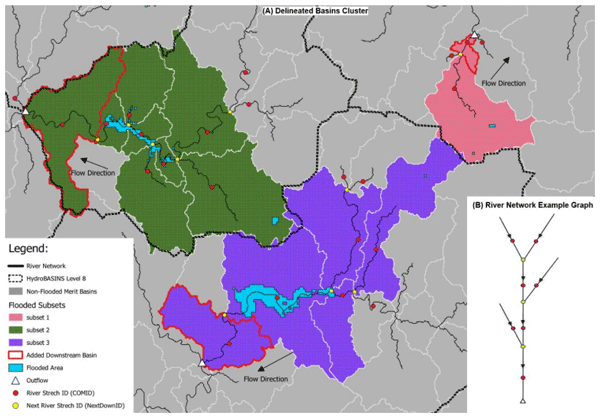
Tarun Sadana, Jeroen C. J. H. Aerts, Dirk Eilander, Bruno Merz, Hans de Moel, Tim Busker, Veerle C. Bril, and Jens de Bruijn
Hydrol. Earth Syst. Sci., 30, 5491–5519, https://doi.org/10.5194/hess-30-5491-2026, https://doi.org/10.5194/hess-30-5491-2026, 2026
Short summary
Short summary
We evaluated the open-source hydrodynamic model SFINCS using satellite data from 499 historical flood events across 96 countries. Our study shows that larger upstream river basins are modelled more accurately, while using observed river gauges and high-resolution elevation data can improve results. Our findings highlight the importance of large-scale validation with satellite data and sensitivity analyses to enhance future global flood hazard assessments and prediction accuracy.
Tarun Sadana, Jeroen C. J. H. Aerts, Dirk Eilander, Bruno Merz, Hans de Moel, Tim Busker, Veerle C. Bril, and Jens de Bruijn
Hydrol. Earth Syst. Sci., 30, 5491–5519, https://doi.org/10.5194/hess-30-5491-2026, https://doi.org/10.5194/hess-30-5491-2026, 2026
Short summary
Short summary
We evaluated the open-source hydrodynamic model SFINCS using satellite data from 499 historical flood events across 96 countries. Our study shows that larger upstream river basins are modelled more accurately, while using observed river gauges and high-resolution elevation data can improve results. Our findings highlight the importance of large-scale validation with satellite data and sensitivity analyses to enhance future global flood hazard assessments and prediction accuracy.
Clément Delhez, Philippe Boxho, Werner Jacobs, Sébastien Erpicum, Michel Pirotton, Pierre Archambeau, and Benjamin Dewals
EGUsphere, https://doi.org/10.5194/egusphere-2026-5071, https://doi.org/10.5194/egusphere-2026-5071, 2026
This preprint is open for discussion and under review for Natural Hazards and Earth System Sciences (NHESS).
Short summary
Short summary
Climate change is increasing extreme weather events such as floods and heatwaves. Heatwaves encourage people to bathe in urban rivers, increasing drowning risk worldwide. We studied 50 real-world drowning cases to understand why some victims remain at or return to the surface sooner than others. Older individuals and those with higher body mass were more likely to remain afloat, while colder water delayed their return. These findings can improve search and rescue operations.
Isis Brangers, Jan Staes, Sarah Garré, and Patrick Willems
EGUsphere, https://doi.org/10.5194/egusphere-2026-4557, https://doi.org/10.5194/egusphere-2026-4557, 2026
This preprint is open for discussion and under review for Hydrology and Earth System Sciences (HESS).
Short summary
Short summary
Drainage systems are often used to remove excess water from agricultural land, but can also increase vulnerability to drought. We used a land surface model covering Flanders to investigate how raising drainage levels affects water storage and river flows across different regions. We found that retaining more water generally reduces drought impacts, while effects on flooding depend strongly on local conditions. The results can help design targeted climate-resilient water management strategies.
Guilherme Samprogna Mohor, Sarah Lindenlaub, and Annegret H. Thieken
EGUsphere, https://doi.org/10.5194/egusphere-2026-3462, https://doi.org/10.5194/egusphere-2026-3462, 2026
Short summary
Short summary
Here we present the Flood Damage Estimation Tool FlooDEsT, an algorithm for estimating flood damage caused by pluvial floods or surface water flooding. The tool is flexible in handling missing data. Once a hazard map is available, the application can provide damage estimates for a thousand buildings within seconds because geographical information and computational tools were optimised. This meets the demands for rapid impact assessments in the context of early warning.
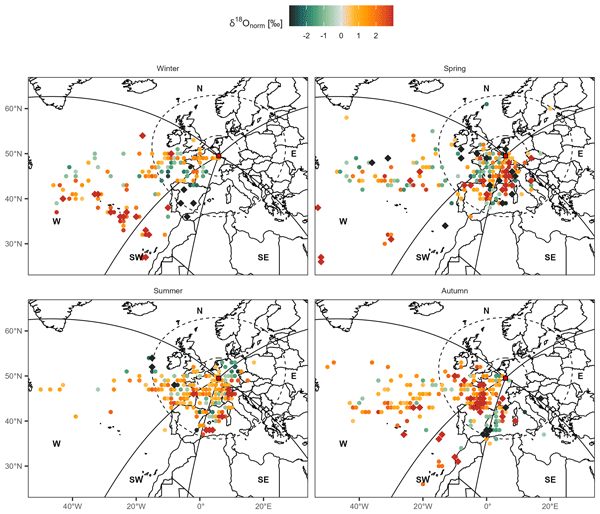
Guilhem Türk, Christoph J. Gey, Bernd R. Schöne, and Laurent Pfister
Hydrol. Earth Syst. Sci., 30, 2859–2878, https://doi.org/10.5194/hess-30-2859-2026, https://doi.org/10.5194/hess-30-2859-2026, 2026
Short summary
Short summary
Stable isotopes of oxygen (O16/O18) are powerful tools in eco-hydrology. Yet, a limitation is that the influence of atmospheric circulation on precipitation isotope signals is not well known. Here, we mapped isotope signals from different moisture origins with an air mass trajectory model, revealing contrasted contributions to precipitation isotope signals in Western Europe. These insights are key for interpreting isotope signals to assess changes in the water cycle.
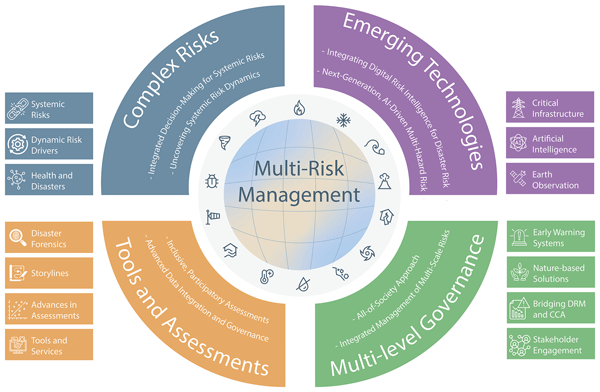
Timothy Tiggeloven, Colin Raymond, Marleen C. de Ruiter, Jana Sillmann, Annegret H. Thieken, Sophie L. Buijs, Roxana Ciurean, Emma Cordier, Julia M. Crummy, Lydia Cumiskey, Kelley De Polt, Melanie Duncan, Davide M. Ferrario, Wiebke S. Jäger, Elco E. Koks, Nicole van Maanen, Heather J. Murdock, Jaroslav Mysiak, Sadhana Nirandjan, Benjamin Poschlod, Peter Priesmeier, Nivedita Sairam, Pia-Johanna Schweizer, Tristian R. Stolte, Marie-Luise Zenker, James E. Daniell, Alexander Fekete, Christian M. Geiß, Marc J. C. van den Homberg, Sirkku K. Juhola, Christian Kuhlicke, Karen Lebek, Robert Šakić Trogrlić, Stefan Schneiderbauer, Silvia Torresan, Cees J. van Westen, Judith N. Claassen, Bijan Khazai, Virginia Murray, Julius Schlumberger, and Philip J. Ward
Geosci. Commun., 9, 185–221, https://doi.org/10.5194/gc-9-185-2026, https://doi.org/10.5194/gc-9-185-2026, 2026
Short summary
Short summary
Natural hazards like floods, earthquakes, and landslides are often interconnected which may create bigger problems than when they occur alone. We studied expert discussions from an international conference to understand how scientists and policymakers can better prepare for these multi-hazards and use new technologies to protect its communities while contributing to dialogues about future international agreements beyond the Sendai Framework and supporting global sustainability goals.
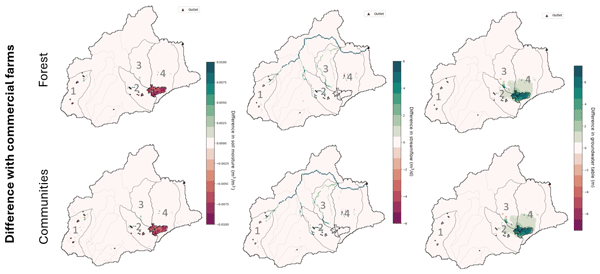
Ileen N. Streefkerk, Jeroen C. J. H. Aerts, Jens de Bruijn, Khalid Hassaballah, Rhoda Achieng' Odongo, Teun Schrieks, Oliver Wasonga, and Anne F. Van Loon
Hydrol. Earth Syst. Sci., 30, 2225–2245, https://doi.org/10.5194/hess-30-2225-2026, https://doi.org/10.5194/hess-30-2225-2026, 2026
Short summary
Short summary
In East Africa are conflict over water and vegetation prominent. On top of that, water abstraction of commercial farms are increasing the competition of water. Therefore, this study has developed a model which can investigate what the influence is of these farming activities on the water balance of the region and people's livelihood activities in times of dry periods. We do that by ‘replacing’ the farms in the model, and see what the effect would be if there were communities or forests instead.
Erwin Zehe, Laurent Pfister, Dan Elhanati, and Brian Berkowitz
Hydrol. Earth Syst. Sci., 30, 2093–2106, https://doi.org/10.5194/hess-30-2093-2026, https://doi.org/10.5194/hess-30-2093-2026, 2026
Short summary
Short summary
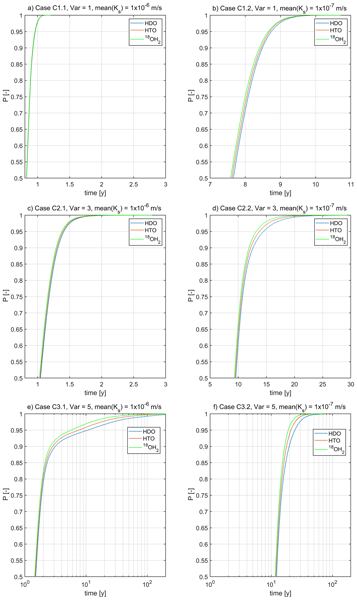
Travel or transit time distributions play a key role in contaminant leaching from the partially saturated zone into groundwater. Here we show that average travel times are of different water isotopes may differ by 5 %–10 %. These difference arise in case of imperfect mixing due to trapping of isotope molecules in bottle necks of very small hydraulic conductivity. Molecules with smaller diffusion coefficient stay there for a longer time.
Thi Dieu My Pham, Paul Hudson, Annegret H. Thieken, and Philip Bubeck
Nat. Hazards Earth Syst. Sci., 26, 1207–1230, https://doi.org/10.5194/nhess-26-1207-2026, https://doi.org/10.5194/nhess-26-1207-2026, 2026
Short summary
Short summary
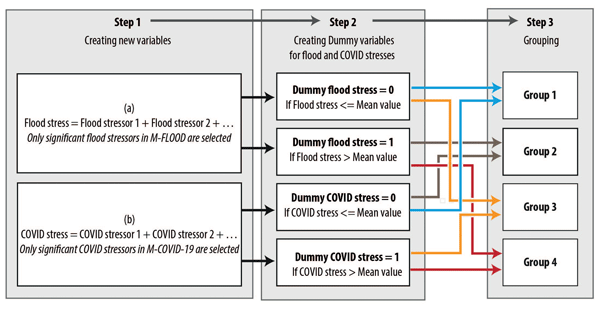
Experiencing severe flooding and COVID-19 together adversely affects mental health. A 2020 survey in Vietnam found that 20 % of participants experienced mental distress, whereas 80 % did not. Flood risk factors include livelihood difficulties, seeing dead human bodies, and being rescued; COVID-19 stressors relate to individual health impacts and interrupted education. These findings highlight the need to address health risks from multiple sources and provide more support for at-risk communities.
Karen Eva Lebek and Annegret Henriette Thieken
EGUsphere, https://doi.org/10.5194/egusphere-2026-645, https://doi.org/10.5194/egusphere-2026-645, 2026
Short summary
Short summary
As disasters worsen worldwide, "forensic" analysis is vital to uncover their root causes. This study evaluates a program at the University of Potsdam where PhD candidates formed rapid-response Task Forces to investigate recent events. We found this approach serves a dual purpose: it offers students hands-on, "real-world" training while providing the expert workforce needed for quick post-disaster research. To succeed, we suggest using diverse teams and providing early, targeted support.
Heather J. Murdock, Daniela Rodriguez Castro, Benjamin Dewals, Anna Heidenreich, and Annegret H. Thieken
EGUsphere, https://doi.org/10.5194/egusphere-2025-6376, https://doi.org/10.5194/egusphere-2025-6376, 2026
Short summary
Short summary
In July 2021, a severe flood occurred in the Walloon Region of Belgium, causing tragic losses and raising concerns about the warning system. With household survey data, we find that many affected people did not receive warnings and did not know how to respond. Statistical models show that information reception and demographic variables among other factors influence response behaviour. These findings highlight the importance of considering behaviour to enhance flood warning and response.
Guilhem Türk, Christoph J. Gey, Bernd R. Schöne, Marius G. Floriancic, James W. Kirchner, Loic Leonard, Laurent Gourdol, Richard F. Keim, and Laurent Pfister
Hydrol. Earth Syst. Sci., 30, 343–369, https://doi.org/10.5194/hess-30-343-2026, https://doi.org/10.5194/hess-30-343-2026, 2026
Short summary
Short summary
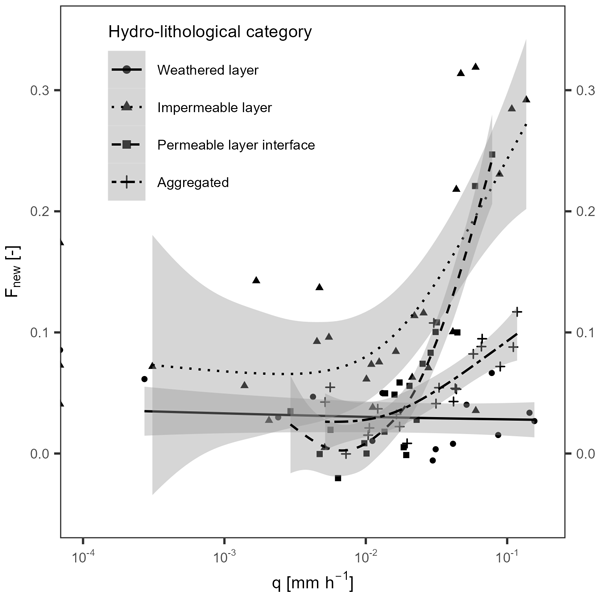
How landscape features affect water storage and release in catchments remains poorly understood. Here we used water stable isotopes in 12 streams to assess the fraction of precipitation reaching streamflow in less than 2 weeks. More recent precipitation was found when streamflow was high and the fraction was linked to the geology (i.e. high when impermeable, low when permeable). Such information is key for better anticipating streamflow responses to a changing climate.
Ravikumar Guntu, Guilherme Samprogna Mohor, Annegret H. Thieken, Meike Müller, and Heidi Kreibich
Nat. Hazards Earth Syst. Sci., 26, 163–186, https://doi.org/10.5194/nhess-26-163-2026, https://doi.org/10.5194/nhess-26-163-2026, 2026
Short summary
Short summary
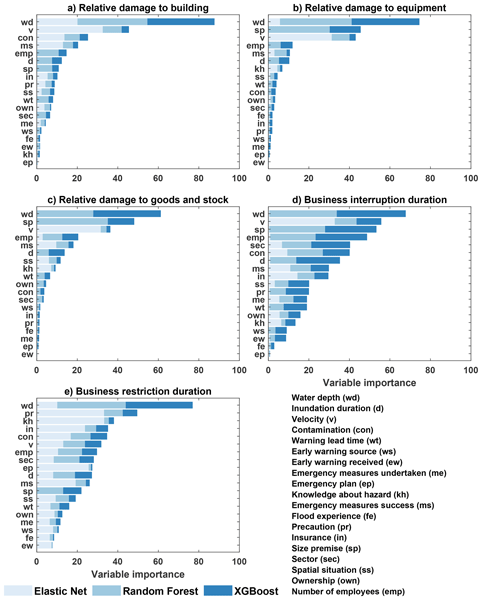
The 2021 flood in Germany caused severe damage to companies, with over half reporting losses above € 100 000. Using probabilistic models, we identify key factors driving direct damage and business interruption. Water depth, flow velocity and company exposure were key factors, but preparedness played a crucial role. Companies that took good precaution recovered faster. Our findings stress the value of early warnings and risk communication to reduce damage from unprecedented flood events.
Susen Shrestha, Stefano Terzi, Davide Zoccatelli, Mattia Zaramella, Marco Borga, Andrea Galletti, Mattia Callegari, Roberto Dinale, Massimiliano Pittore, and Giacomo Bertoldi
EGUsphere, https://doi.org/10.5194/egusphere-2025-6387, https://doi.org/10.5194/egusphere-2025-6387, 2026
Short summary
Short summary
Glaciers and snow contribute to buffer river streamflow during droughts. Due to climate change, their role is shrinking with severe implications for water management. Here we investigated the role of glaciers to buffer the 2003, 2005 and 2022 droughts that occurred in the upper Adige River Basin (Italy). Glaciers provided 4 to 12 % of summer water during droughts and their buffering is weakening due to their retreat with lower contribution in 2022 compared to the similar drought of 2003.
Huibin Gao, Laurent Pfister, and James W. Kirchner
Hydrol. Earth Syst. Sci., 29, 6529–6547, https://doi.org/10.5194/hess-29-6529-2025, https://doi.org/10.5194/hess-29-6529-2025, 2025
Short summary
Short summary
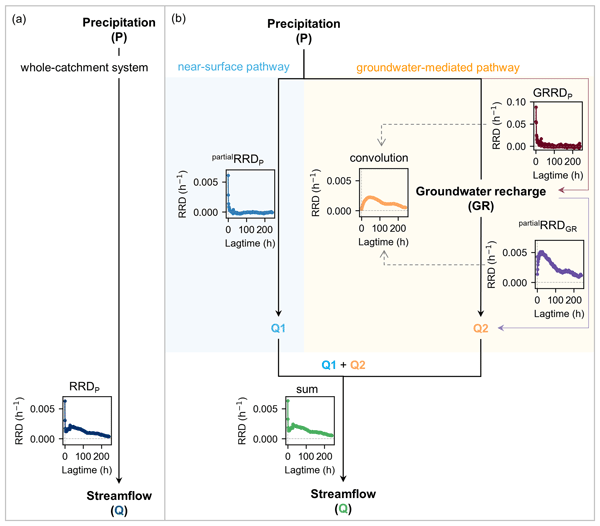
Some streams respond to rainfall with flow that peaks twice: a sharp first peak followed by a broad second peak. We analyzed data from a catchment in Luxembourg to better understand the processes behind this phenomenon. Our results show that the first peak is mostly driven directly by rainfall, and the second peak is mostly driven by rain that infiltrates to groundwater. We also show that the relative importance of these two processes depends on how wet the landscape is before the rain falls.

Vylon Ooms, Thijs Endendijk, Jeroen C. J. H. Aerts, W. J. Wouter Botzen, and Peter J. Robinson
Nat. Hazards Earth Syst. Sci., 25, 4283–4298, https://doi.org/10.5194/nhess-25-4283-2025, https://doi.org/10.5194/nhess-25-4283-2025, 2025
Short summary
Short summary
Intense rainfall events cause increasingly severe damages to urban areas globally. We use unique insurance claims data to study the effect of nature-based and other adaptation measures on damage. We compare an area in Amsterdam where measures have been implemented to a similar, adjacent area without measures using an innovative method. We find a significant reduction of damage where the adaptation measures were implemented. Urban areas can reduce rain damage by implementing adaptation measures.
Julius Schlumberger, Robert Šakić Trogrlić, Jeroen C. J. H. Aerts, Jung-Hee Hyun, Stefan Hochrainer-Stigler, Marleen de Ruiter, and Marjolijn Haasnoot
Nat. Hazards Earth Syst. Sci., 25, 4089–4113, https://doi.org/10.5194/nhess-25-4089-2025, https://doi.org/10.5194/nhess-25-4089-2025, 2025
Short summary
Short summary
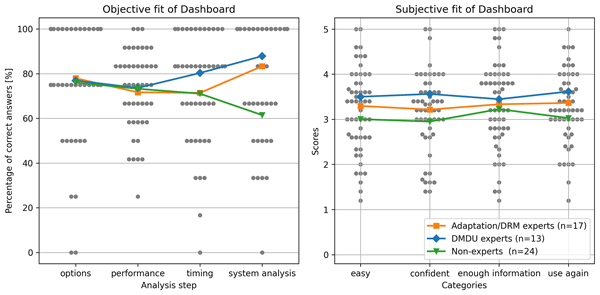
This study presents a dashboard to help decision-makers manage risks in a changing climate. Using interactive visualizations, it simplifies complex choices, even with uncertain information. Tested with 54 users of varying expertise, it enabled accurate responses to 71–80 % of questions. Users valued its scenario exploration and detailed data features. While effective, the guidance and set of visualizations could be extended and the prototype could be adapted for broader applications.
Łukasz Gruss, Patrick Willems, Paweł Tomczyk, Jaroslav Pollert Jr., Jaroslav Pollert Sr., Christoph Märtner, Stanisław Czaban, and Mirosław Wiatkowski
Hydrol. Earth Syst. Sci., 29, 5165–5184, https://doi.org/10.5194/hess-29-5165-2025, https://doi.org/10.5194/hess-29-5165-2025, 2025
Short summary
Short summary
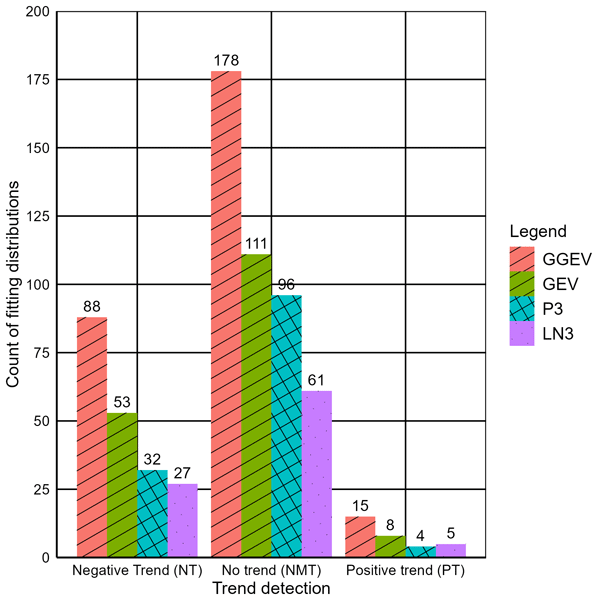
A new extension of the generalized extreme value distribution, namely the Dual Gamma Generalized Extreme Value distribution developed by Nascimento, Bourguignony, and Leão (2015), displays superior performance in fitting most samples and is sensitive to trends, especially under non-stationary conditions such as climate change.
Jayson Gabriel Pinza, Ona-Abeni Devos Stoffels, Robrecht Debbaut, Jan Staes, Jan Vanderborght, Patrick Willems, and Sarah Garré
SOIL, 11, 681–714, https://doi.org/10.5194/soil-11-681-2025, https://doi.org/10.5194/soil-11-681-2025, 2025
Short summary
Short summary
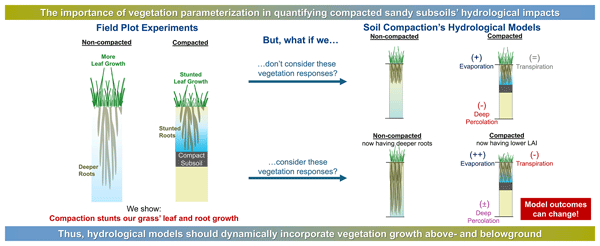
We can use hydrological models to estimate how water is allocated in soils with compaction. However, compaction can also affect how much plants can grow in the field. Here, we show that when we consider this affected plant growth in our sandy soil compaction model, the resulting water allocation can change a lot. Thus, to get more reliable model results, we should know the plant growth (above and below the ground) in the field and include them in the models.

Lisa Dillenardt and Annegret H. Thieken
Nat. Hazards Earth Syst. Sci., 25, 3257–3278, https://doi.org/10.5194/nhess-25-3257-2025, https://doi.org/10.5194/nhess-25-3257-2025, 2025
Short summary
Short summary
The influence of flood types, i.e., fluvial, flash, and urban pluvial floods, on whether and how flood-affected people prepare for flooding is unclear but relevant for effective risk communication. Survey data revealed the influence of flood type on the adaptive behavior of households recently affected by flooding. Most respondents were motivated to protect themselves, but flood-type-specific differences have been identified to enhance future risk communication strategies.
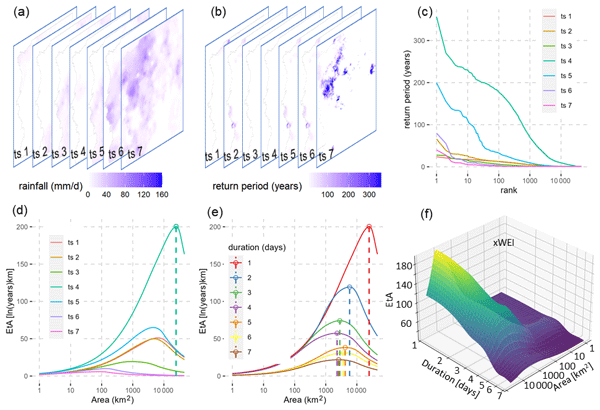
Xiaoxiang Guan, Viet Dung Nguyen, Paul Voit, Bruno Merz, Maik Heistermann, and Sergiy Vorogushyn
Nat. Hazards Earth Syst. Sci., 25, 3075–3086, https://doi.org/10.5194/nhess-25-3075-2025, https://doi.org/10.5194/nhess-25-3075-2025, 2025
Short summary
Short summary
We evaluated a multi-site stochastic regional weather generator (nsRWG) for its ability to capture the cross-scale extremity of heavy-precipitation events (HPEs) in Germany. We generated 100 realizations of 72 years of daily synthetic precipitation data. The performance was assessed using WEI and xWEI indices, which measure event extremity across spatiotemporal scales. The results show that nsRWG simulates the extremity patterns of HPEs well, although it overestimates short-duration small-extent events.
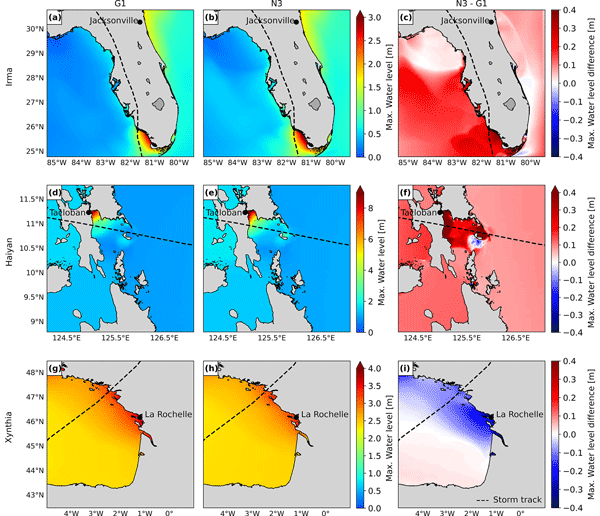
Irene Benito, Jeroen C. J. H. Aerts, Philip J. Ward, Dirk Eilander, and Sanne Muis
Nat. Hazards Earth Syst. Sci., 25, 2287–2315, https://doi.org/10.5194/nhess-25-2287-2025, https://doi.org/10.5194/nhess-25-2287-2025, 2025
Short summary
Short summary
Global flood models are key to the mitigation of coastal flooding impacts, yet they still have limitations when providing actionable insights locally. We present a multiscale framework that couples dynamic water level and flood models and bridges the fully global and local modelling approaches. We apply it to three historical storms. Our findings reveal that the importance of model refinements varies based on the study area characteristics and the storm’s nature.
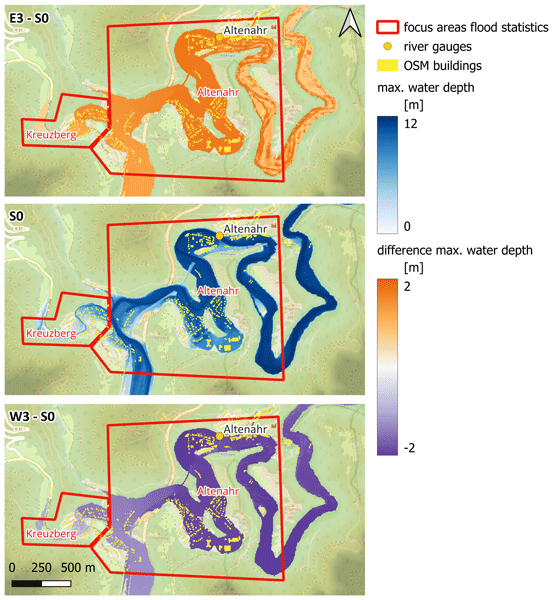
Sergiy Vorogushyn, Li Han, Heiko Apel, Viet Dung Nguyen, Björn Guse, Xiaoxiang Guan, Oldrich Rakovec, Husain Najafi, Luis Samaniego, and Bruno Merz
Nat. Hazards Earth Syst. Sci., 25, 2007–2029, https://doi.org/10.5194/nhess-25-2007-2025, https://doi.org/10.5194/nhess-25-2007-2025, 2025
Short summary
Short summary
The July 2021 flood in central Europe was one of the deadliest floods in Europe in the recent decades and the most expensive flood in Germany. In this paper, we show that the hydrological impact of this event in the Ahr valley could have been even worse if the rainfall footprint trajectory had been only slightly different. The presented methodology of spatial counterfactuals generates plausible unprecedented events and helps to better prepare for future extreme floods.
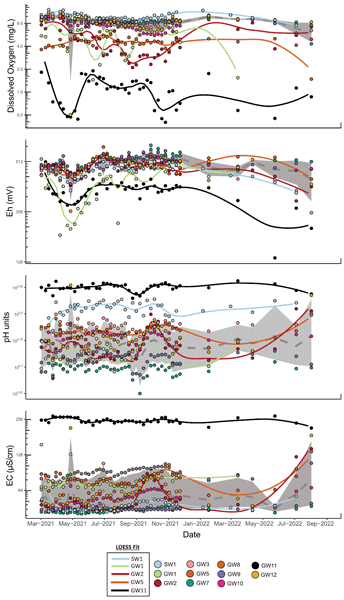
Karl Nicolaus van Zweel, Laurent Gourdol, Jean François Iffly, Loïc Léonard, François Barnich, Laurent Pfister, Erwin Zehe, and Christophe Hissler
Earth Syst. Sci. Data, 17, 2217–2229, https://doi.org/10.5194/essd-17-2217-2025, https://doi.org/10.5194/essd-17-2217-2025, 2025
Short summary
Short summary
Our study monitored groundwater in a Luxembourg forest over a year to understand water and chemical changes. We found seasonal variations in water chemistry, influenced by rainfall and soil interactions. These data help predict environmental responses and manage water resources better. By measuring key parameters like pH and dissolved oxygen, our research provides valuable insights into groundwater behaviour and serves as a resource for future environmental studies.
Judith Nijzink, Ralf Loritz, Laurent Gourdol, Davide Zoccatelli, Jean François Iffly, and Laurent Pfister
Earth Syst. Sci. Data Discuss., https://doi.org/10.5194/essd-2024-482, https://doi.org/10.5194/essd-2024-482, 2025
Revised manuscript under review for ESSD
Short summary
Short summary
The CAMELS-LUX dataset (Catchment Attributes and MEteorology for Large-sample Studies – LUXembourg) contains hydrologic, meteorologic and thunderstorm formation relevant atmospheric time series of 56 Luxembourgish catchments (2004–2021). These catchments are characterized by a large physiographic variety on a relatively small scale in a homogeneous climate. The dataset can be applied for (regional) hydrological analyses.
Sarah Lindenlaub, Guilherme Samprogna Mohor, and Annegret Thieken
Abstr. Int. Cartogr. Assoc., 9, 22, https://doi.org/10.5194/ica-abs-9-22-2025, https://doi.org/10.5194/ica-abs-9-22-2025, 2025
Maurice W. M. L. Kalthof, Jens de Bruijn, Hans de Moel, Heidi Kreibich, and Jeroen C. J. H. Aerts
Nat. Hazards Earth Syst. Sci., 25, 1013–1035, https://doi.org/10.5194/nhess-25-1013-2025, https://doi.org/10.5194/nhess-25-1013-2025, 2025
Short summary
Short summary
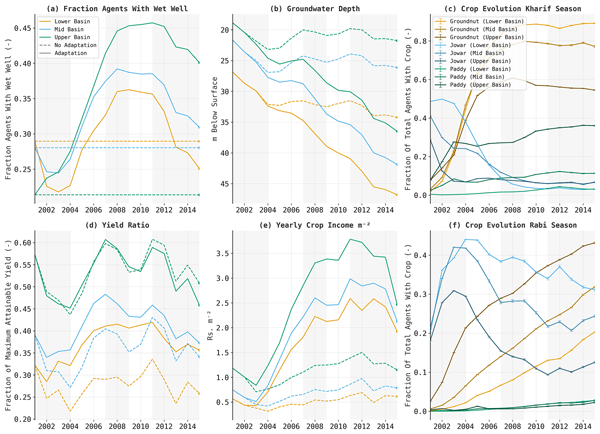
Our study explores how farmers in India's Bhima basin respond to consecutive droughts. We simulated farmers' individual choices – like changing crops or digging wells – and their effects on profits, yields, and water resources. Results show these adaptations, while improving incomes, ultimately increase drought vulnerability and damage. Such insights emphasize the need for alternative adaptations and highlight the value of socio-hydrological models in shaping policies to lessen drought impacts.
Nadja Veigel, Heidi Kreibich, Jens A. de Bruijn, Jeroen C. J. H. Aerts, and Andrea Cominola
Nat. Hazards Earth Syst. Sci., 25, 879–891, https://doi.org/10.5194/nhess-25-879-2025, https://doi.org/10.5194/nhess-25-879-2025, 2025
Short summary
Short summary
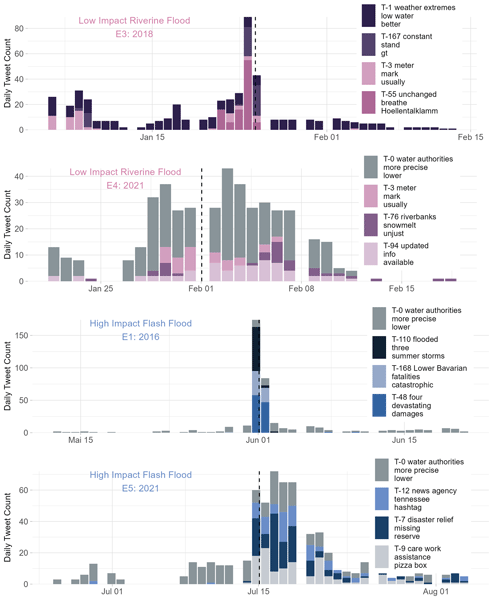
This study explores how social media, specifically Twitter (X), can help us understand public reactions to floods in Germany from 2014 to 2021. Using large language models, we extract topics and patterns of behavior from flood-related tweets. The findings offer insights to improve communication and disaster management. Topics related to low-impact flooding contain descriptive hazard-related content, while the focus shifts to catastrophic impacts and responsibilities during high-impact events.
Elena Macdonald, Bruno Merz, Viet Dung Nguyen, and Sergiy Vorogushyn
Hydrol. Earth Syst. Sci., 29, 447–463, https://doi.org/10.5194/hess-29-447-2025, https://doi.org/10.5194/hess-29-447-2025, 2025
Short summary
Short summary
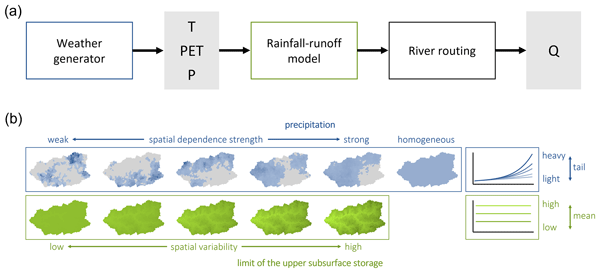
Flood peak distributions indicate how likely the occurrence of an extreme flood is at a certain river. If the distribution has a so-called heavy tail, extreme floods are more likely than might be anticipated. We find heavier tails in small catchments compared to large catchments, and spatially variable rainfall leads to a lower occurrence probability of extreme floods. Spatially variable runoff does not show effects. The results can improve estimations of probabilities of extreme floods.
Paolo Nasta, Günter Blöschl, Heye R. Bogena, Steffen Zacharias, Roland Baatz, Gabriëlle De Lannoy, Karsten H. Jensen, Salvatore Manfreda, Laurent Pfister, Ana M. Tarquis, Ilja van Meerveld, Marc Voltz, Yijian Zeng, William Kustas, Xin Li, Harry Vereecken, and Nunzio Romano
Hydrol. Earth Syst. Sci., 29, 465–483, https://doi.org/10.5194/hess-29-465-2025, https://doi.org/10.5194/hess-29-465-2025, 2025
Short summary
Short summary
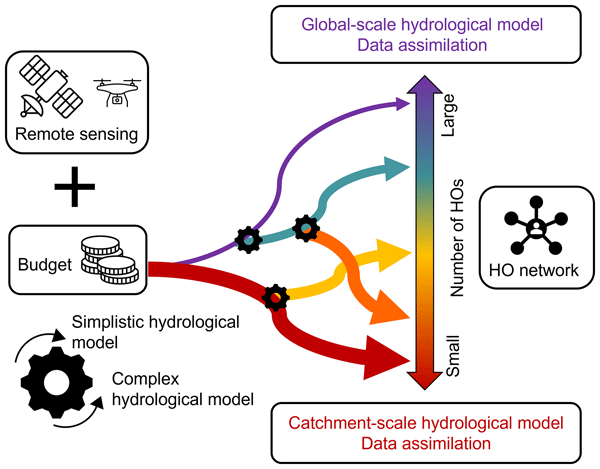
The Unsolved Problems in Hydrology (UPH) initiative has emphasized the need to establish networks of multi-decadal hydrological observatories to tackle catchment-scale challenges on a global scale. This opinion paper provocatively discusses two endmembers of possible future hydrological observatory (HO) networks for a given hypothesized community budget: a comprehensive set of moderately instrumented observatories or, alternatively, a small number of highly instrumented supersites.
Kushagra Pandey, Jens A. de Bruijn, Hans de Moel, W. J. Wouter Botzen, and Jeroen C. J. H. Aerts
Nat. Hazards Earth Syst. Sci., 24, 4409–4429, https://doi.org/10.5194/nhess-24-4409-2024, https://doi.org/10.5194/nhess-24-4409-2024, 2024
Short summary
Short summary
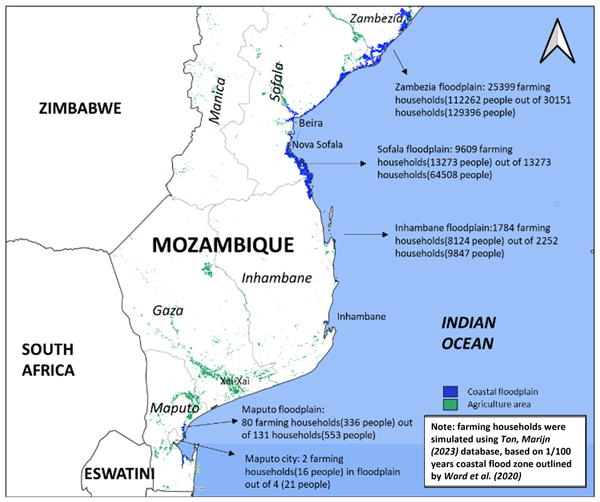
As sea levels rise, coastal areas will experience more frequent flooding, and salt water will start seeping into the soil, which is a serious issue for farmers who rely on good soil quality for their crops. Here, we studied coastal Mozambique to understand the risks from sea level rise and flooding by looking at how salt intrusion affects farming and how floods damage buildings. We find that 15 %–21 % of coastal households will adapt and 13 %–20 % will migrate to inland areas in the future.
Sadhana Nirandjan, Elco E. Koks, Mengqi Ye, Raghav Pant, Kees C. H. Van Ginkel, Jeroen C. J. H. Aerts, and Philip J. Ward
Nat. Hazards Earth Syst. Sci., 24, 4341–4368, https://doi.org/10.5194/nhess-24-4341-2024, https://doi.org/10.5194/nhess-24-4341-2024, 2024
Short summary
Short summary
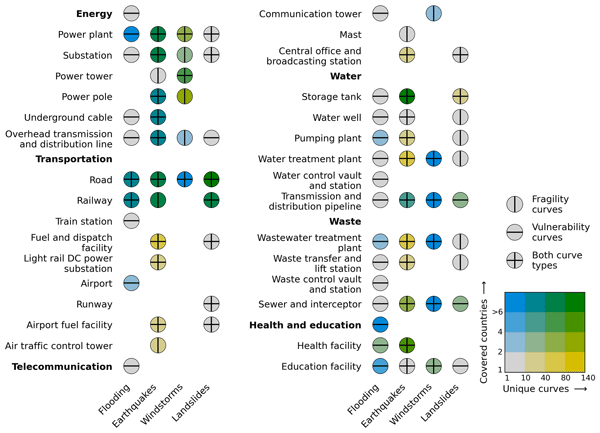
Critical infrastructures (CIs) are exposed to natural hazards, which may result in significant damage and burden society. Vulnerability is a key determinant for reducing these risks, yet crucial information is scattered in the literature. Our study reviews over 1510 fragility and vulnerability curves for CI assets, creating a unique publicly available physical vulnerability database that can be directly used for hazard risk assessments, including floods, earthquakes, windstorms, and landslides.
Viet Dung Nguyen, Sergiy Vorogushyn, Katrin Nissen, Lukas Brunner, and Bruno Merz
Adv. Stat. Clim. Meteorol. Oceanogr., 10, 195–216, https://doi.org/10.5194/ascmo-10-195-2024, https://doi.org/10.5194/ascmo-10-195-2024, 2024
Short summary
Short summary
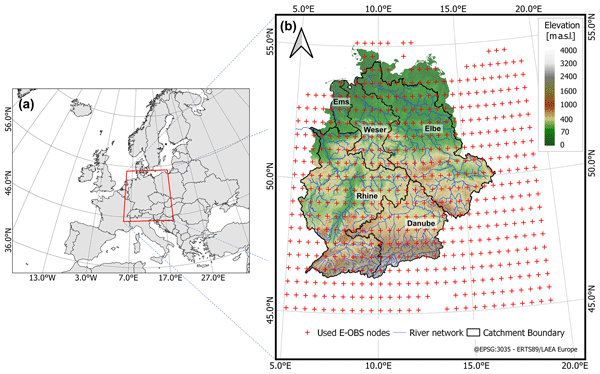
We present a novel stochastic weather generator conditioned on circulation patterns and regional temperature, accounting for dynamic and thermodynamic atmospheric changes. We extensively evaluate the model for the central European region. It statistically downscales precipitation for future periods, generating long, spatially and temporally consistent series. Results suggest an increase in extreme precipitation over the region, offering key benefits for hydrological impact studies.
Bruno Merz, Günter Blöschl, Robert Jüpner, Heidi Kreibich, Kai Schröter, and Sergiy Vorogushyn
Nat. Hazards Earth Syst. Sci., 24, 4015–4030, https://doi.org/10.5194/nhess-24-4015-2024, https://doi.org/10.5194/nhess-24-4015-2024, 2024
Short summary
Short summary
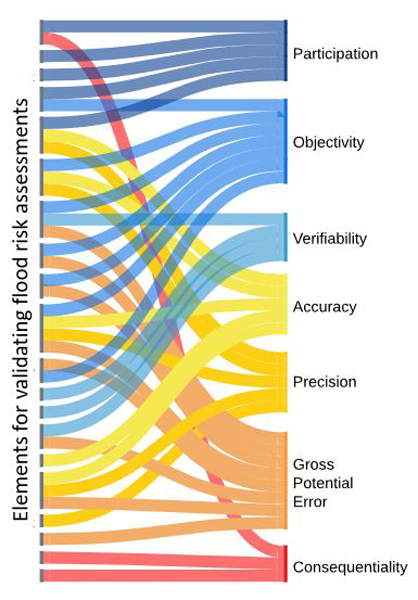
Flood risk assessments help us decide how to reduce the risk of flooding. Since these assessments are based on probabilities, it is hard to check their accuracy by comparing them to past data. We suggest a new way to validate these assessments, making sure they are practical for real-life decisions. This approach looks at both the technical details and the real-world situations where decisions are made. We demonstrate its practicality by applying it to flood emergency planning.
Cristina Prieto, Dhruvesh Patel, Dawei Han, Benjamin Dewals, Michaela Bray, and Daniela Molinari
Nat. Hazards Earth Syst. Sci., 24, 3381–3386, https://doi.org/10.5194/nhess-24-3381-2024, https://doi.org/10.5194/nhess-24-3381-2024, 2024
Cassiano Bastos Moroz and Annegret H. Thieken
Nat. Hazards Earth Syst. Sci., 24, 3299–3314, https://doi.org/10.5194/nhess-24-3299-2024, https://doi.org/10.5194/nhess-24-3299-2024, 2024
Short summary
Short summary
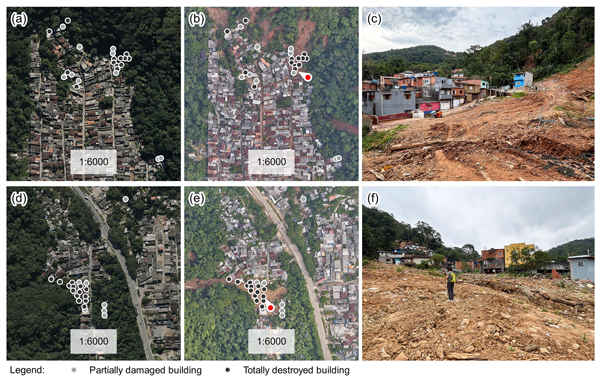
We evaluate the influence of urban processes on the impacts of the 2023 disaster that hit the North Coast of São Paulo, Brazil. The impacts of the disaster were largely associated with rapid urban expansion over the last 3 decades, with a recent occupation of risky areas. Moreover, lower-income neighborhoods were considerably more severely impacted, which evidences their increased exposure to such events. These results highlight the strong association between disaster risk and urban poverty.
Viet Dung Nguyen, Jeroen Aerts, Max Tesselaar, Wouter Botzen, Heidi Kreibich, Lorenzo Alfieri, and Bruno Merz
Nat. Hazards Earth Syst. Sci., 24, 2923–2937, https://doi.org/10.5194/nhess-24-2923-2024, https://doi.org/10.5194/nhess-24-2923-2024, 2024
Short summary
Short summary
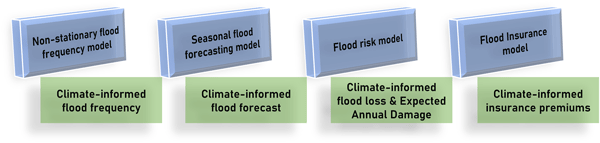
Our study explored how seasonal flood forecasts could enhance insurance premium accuracy. Insurers traditionally rely on historical data, yet climate fluctuations influence flood risk. We employed a method that predicts seasonal floods to adjust premiums accordingly. Our findings showed significant year-to-year variations in flood risk and premiums, underscoring the importance of adaptability. Despite limitations, this research aids insurers in preparing for evolving risks.
Marie-Luise Zenker, Philip Bubeck, and Annegret H. Thieken
Nat. Hazards Earth Syst. Sci., 24, 2837–2856, https://doi.org/10.5194/nhess-24-2837-2024, https://doi.org/10.5194/nhess-24-2837-2024, 2024
Short summary
Short summary
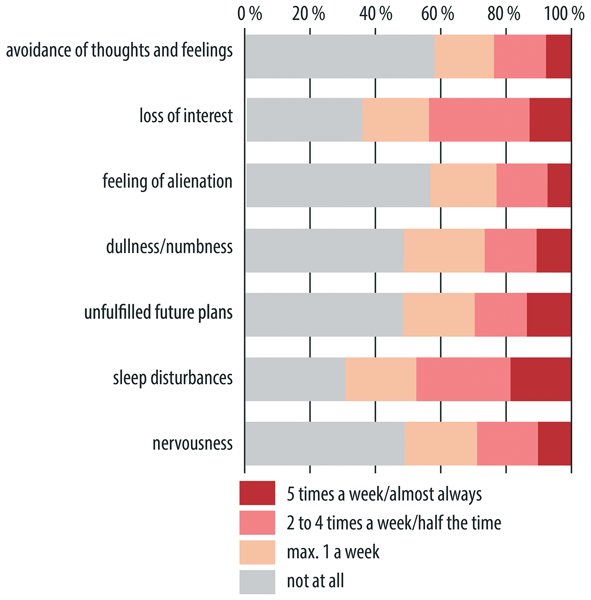
Despite the visible flood damage, mental health is a growing concern. Yet, there is limited data in Germany on mental health impacts after floods. A survey in a heavily affected region revealed that 28 % of respondents showed signs of post-traumatic stress disorder 1 year later. Risk factors include gender, serious injury or illness due to flooding, and feeling left alone to cope with impacts. The study highlights the need for tailored mental health support for flood-affected populations.
Laurent Gourdol, Michael K. Stewart, Uwe Morgenstern, and Laurent Pfister
Hydrol. Earth Syst. Sci., 28, 3519–3547, https://doi.org/10.5194/hess-28-3519-2024, https://doi.org/10.5194/hess-28-3519-2024, 2024
Short summary
Short summary
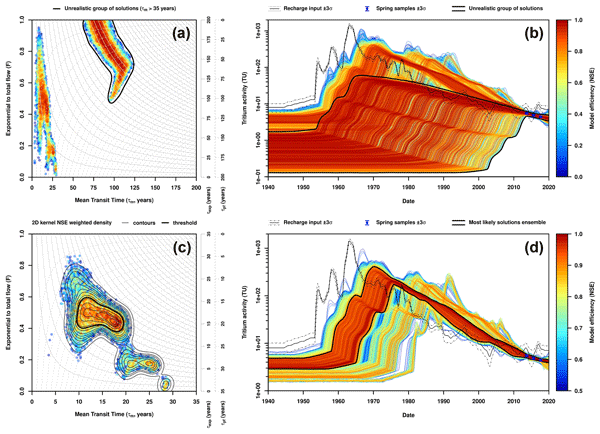
Determining water transit times in aquifers is key to a better understanding of groundwater resources and their sustainable management. For our research, we used high-accuracy tritium data from 35 springs draining the Luxembourg Sandstone aquifer. We assessed the mean transit times of groundwater and found that water moves on average more than 10 times more slowly vertically in the vadose zone of the aquifer (~12 m yr-1) than horizontally in its saturated zone (~170 m yr-1).
Elena Macdonald, Bruno Merz, Björn Guse, Viet Dung Nguyen, Xiaoxiang Guan, and Sergiy Vorogushyn
Hydrol. Earth Syst. Sci., 28, 833–850, https://doi.org/10.5194/hess-28-833-2024, https://doi.org/10.5194/hess-28-833-2024, 2024
Short summary
Short summary
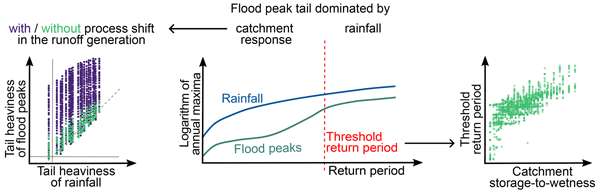
In some rivers, the occurrence of extreme flood events is more likely than in other rivers – they have heavy-tailed distributions. We find that threshold processes in the runoff generation lead to such a relatively high occurrence probability of extremes. Further, we find that beyond a certain return period, i.e. for rare events, rainfall is often the dominant control compared to runoff generation. Our results can help to improve the estimation of the occurrence probability of extreme floods.
Job C. M. Dullaart, Sanne Muis, Hans de Moel, Philip J. Ward, Dirk Eilander, and Jeroen C. J. H. Aerts
Nat. Hazards Earth Syst. Sci., 23, 1847–1862, https://doi.org/10.5194/nhess-23-1847-2023, https://doi.org/10.5194/nhess-23-1847-2023, 2023
Short summary
Short summary
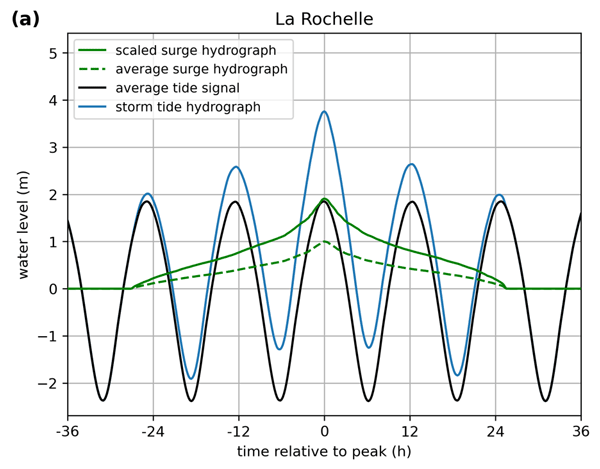
Coastal flooding is driven by storm surges and high tides and can be devastating. To gain an understanding of the threat posed by coastal flooding and to identify areas that are especially at risk, now and in the future, it is crucial to accurately model coastal inundation and assess the coastal flood hazard. Here, we present a global dataset with hydrographs that represent the typical evolution of an extreme sea level. These can be used to model coastal inundation more accurately.
Heidi Kreibich, Kai Schröter, Giuliano Di Baldassarre, Anne F. Van Loon, Maurizio Mazzoleni, Guta Wakbulcho Abeshu, Svetlana Agafonova, Amir AghaKouchak, Hafzullah Aksoy, Camila Alvarez-Garreton, Blanca Aznar, Laila Balkhi, Marlies H. Barendrecht, Sylvain Biancamaria, Liduin Bos-Burgering, Chris Bradley, Yus Budiyono, Wouter Buytaert, Lucinda Capewell, Hayley Carlson, Yonca Cavus, Anaïs Couasnon, Gemma Coxon, Ioannis Daliakopoulos, Marleen C. de Ruiter, Claire Delus, Mathilde Erfurt, Giuseppe Esposito, Didier François, Frédéric Frappart, Jim Freer, Natalia Frolova, Animesh K. Gain, Manolis Grillakis, Jordi Oriol Grima, Diego A. Guzmán, Laurie S. Huning, Monica Ionita, Maxim Kharlamov, Dao Nguyen Khoi, Natalie Kieboom, Maria Kireeva, Aristeidis Koutroulis, Waldo Lavado-Casimiro, Hong-Yi Li, Maria Carmen LLasat, David Macdonald, Johanna Mård, Hannah Mathew-Richards, Andrew McKenzie, Alfonso Mejia, Eduardo Mario Mendiondo, Marjolein Mens, Shifteh Mobini, Guilherme Samprogna Mohor, Viorica Nagavciuc, Thanh Ngo-Duc, Huynh Thi Thao Nguyen, Pham Thi Thao Nhi, Olga Petrucci, Nguyen Hong Quan, Pere Quintana-Seguí, Saman Razavi, Elena Ridolfi, Jannik Riegel, Md Shibly Sadik, Nivedita Sairam, Elisa Savelli, Alexey Sazonov, Sanjib Sharma, Johanna Sörensen, Felipe Augusto Arguello Souza, Kerstin Stahl, Max Steinhausen, Michael Stoelzle, Wiwiana Szalińska, Qiuhong Tang, Fuqiang Tian, Tamara Tokarczyk, Carolina Tovar, Thi Van Thu Tran, Marjolein H. J. van Huijgevoort, Michelle T. H. van Vliet, Sergiy Vorogushyn, Thorsten Wagener, Yueling Wang, Doris E. Wendt, Elliot Wickham, Long Yang, Mauricio Zambrano-Bigiarini, and Philip J. Ward
Earth Syst. Sci. Data, 15, 2009–2023, https://doi.org/10.5194/essd-15-2009-2023, https://doi.org/10.5194/essd-15-2009-2023, 2023
Short summary
Short summary
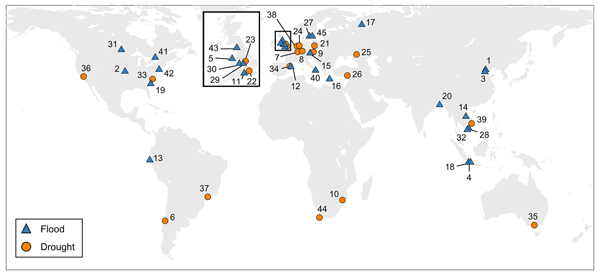
As the adverse impacts of hydrological extremes increase in many regions of the world, a better understanding of the drivers of changes in risk and impacts is essential for effective flood and drought risk management. We present a dataset containing data of paired events, i.e. two floods or two droughts that occurred in the same area. The dataset enables comparative analyses and allows detailed context-specific assessments. Additionally, it supports the testing of socio-hydrological models.
Jens A. de Bruijn, Mikhail Smilovic, Peter Burek, Luca Guillaumot, Yoshihide Wada, and Jeroen C. J. H. Aerts
Geosci. Model Dev., 16, 2437–2454, https://doi.org/10.5194/gmd-16-2437-2023, https://doi.org/10.5194/gmd-16-2437-2023, 2023
Short summary
Short summary
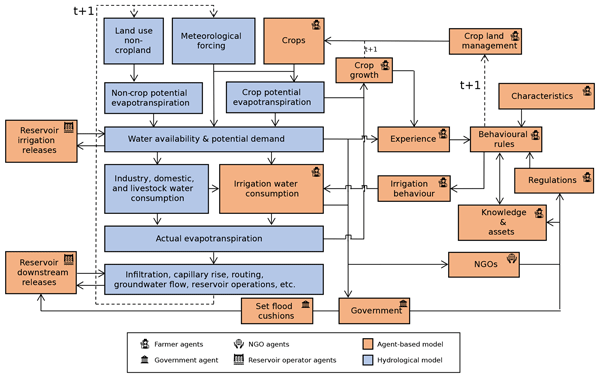
We present a computer simulation model of the hydrological system and human system, which can simulate the behaviour of individual farmers and their interactions with the water system at basin scale to assess how the systems have evolved and are projected to evolve in the future. For example, we can simulate the effect of subsidies provided on investment in adaptation measures and subsequent effects in the hydrological system, such as a lowering of the groundwater table or reservoir level.
Annegret H. Thieken, Philip Bubeck, Anna Heidenreich, Jennifer von Keyserlingk, Lisa Dillenardt, and Antje Otto
Nat. Hazards Earth Syst. Sci., 23, 973–990, https://doi.org/10.5194/nhess-23-973-2023, https://doi.org/10.5194/nhess-23-973-2023, 2023
Short summary
Short summary
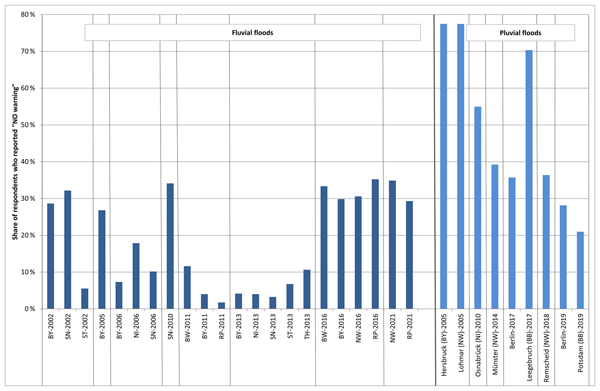
In July 2021 intense rainfall caused devastating floods in western Europe with 184 fatalities in the German federal states of North Rhine-Westphalia (NW) and Rhineland-Palatinate (RP), calling their warning system into question. An online survey revealed that 35 % of respondents from NW and 29 % from RP did not receive any warning. Many of those who were warned did not expect severe flooding, nor did they know how to react. The study provides entry points for improving Germany's warning system.
Raed Hamed, Sem Vijverberg, Anne F. Van Loon, Jeroen Aerts, and Dim Coumou
Earth Syst. Dynam., 14, 255–272, https://doi.org/10.5194/esd-14-255-2023, https://doi.org/10.5194/esd-14-255-2023, 2023
Short summary
Short summary
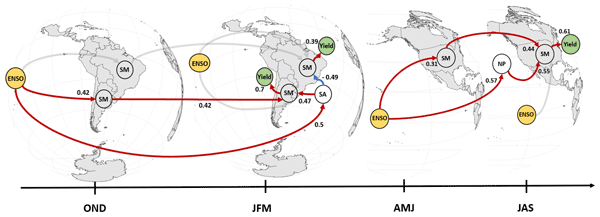
Spatially compounding soy harvest failures can have important global impacts. Using causal networks, we show that soy yields are predominately driven by summer soil moisture conditions in North and South America. Summer soil moisture is affected by antecedent soil moisture and by remote extra-tropical SST patterns in both hemispheres. Both of these soil moisture drivers are again influenced by ENSO. Our results highlight physical pathways by which ENSO can drive spatially compounding impacts.
Paolo Scussolini, Job Dullaart, Sanne Muis, Alessio Rovere, Pepijn Bakker, Dim Coumou, Hans Renssen, Philip J. Ward, and Jeroen C. J. H. Aerts
Clim. Past, 19, 141–157, https://doi.org/10.5194/cp-19-141-2023, https://doi.org/10.5194/cp-19-141-2023, 2023
Short summary
Short summary
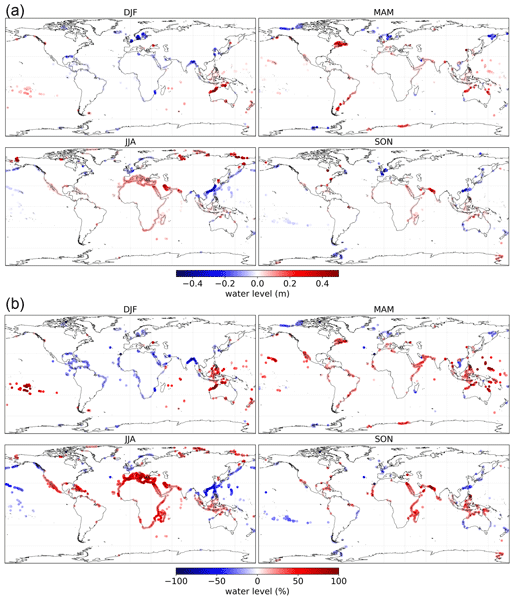
We reconstruct sea level extremes due to storm surges in a past warmer climate. We employ a novel combination of paleoclimate modeling and global ocean hydrodynamic modeling. We find that during the Last Interglacial, about 127 000 years ago, seasonal sea level extremes were indeed significantly different – higher or lower – on long stretches of the global coast. These changes are associated with different patterns of atmospheric storminess linked with meridional shifts in wind bands.
Judith Meyer, Malte Neuper, Luca Mathias, Erwin Zehe, and Laurent Pfister
Hydrol. Earth Syst. Sci., 26, 6163–6183, https://doi.org/10.5194/hess-26-6163-2022, https://doi.org/10.5194/hess-26-6163-2022, 2022
Short summary
Short summary
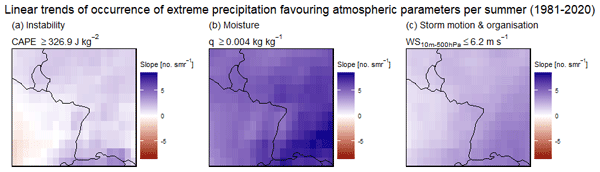
We identified and analysed the major atmospheric components of rain-intense thunderstorms that can eventually lead to flash floods: high atmospheric moisture, sufficient latent instability, and weak thunderstorm cell motion. Between 1981 and 2020, atmospheric conditions became likelier to support strong thunderstorms. However, the occurrence of extreme rainfall events as well as their rainfall intensity remained mostly unchanged.
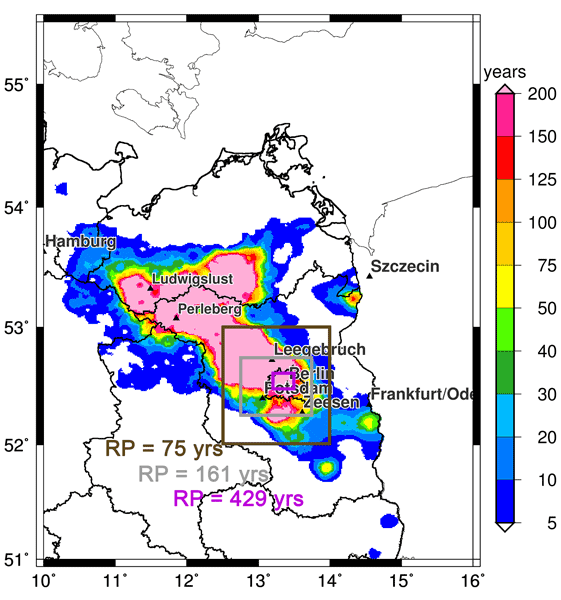
Alberto Caldas-Alvarez, Markus Augenstein, Georgy Ayzel, Klemens Barfus, Ribu Cherian, Lisa Dillenardt, Felix Fauer, Hendrik Feldmann, Maik Heistermann, Alexia Karwat, Frank Kaspar, Heidi Kreibich, Etor Emanuel Lucio-Eceiza, Edmund P. Meredith, Susanna Mohr, Deborah Niermann, Stephan Pfahl, Florian Ruff, Henning W. Rust, Lukas Schoppa, Thomas Schwitalla, Stella Steidl, Annegret H. Thieken, Jordis S. Tradowsky, Volker Wulfmeyer, and Johannes Quaas
Nat. Hazards Earth Syst. Sci., 22, 3701–3724, https://doi.org/10.5194/nhess-22-3701-2022, https://doi.org/10.5194/nhess-22-3701-2022, 2022
Short summary
Short summary
In a warming climate, extreme precipitation events are becoming more frequent. To advance our knowledge on such phenomena, we present a multidisciplinary analysis of a selected case study that took place on 29 June 2017 in the Berlin metropolitan area. Our analysis provides evidence of the extremeness of the case from the atmospheric and the impacts perspectives as well as new insights on the physical mechanisms of the event at the meteorological and climate scales.

Audrey Douinot, Jean François Iffly, Cyrille Tailliez, Claude Meisch, and Laurent Pfister
Hydrol. Earth Syst. Sci., 26, 5185–5206, https://doi.org/10.5194/hess-26-5185-2022, https://doi.org/10.5194/hess-26-5185-2022, 2022
Short summary
Short summary
The objective of the paper is to highlight the seasonal and singular shift of the transfer time distributions of two catchments (≅10 km2).
Based on 2 years of rainfall and discharge observations, we compare variations in the properties of TTDs with the physiographic characteristics of catchment areas and the eco-hydrological cycle. The paper eventually aims to deduce several factors conducive to particularly rapid and concentrated water transfers, which leads to flash floods.
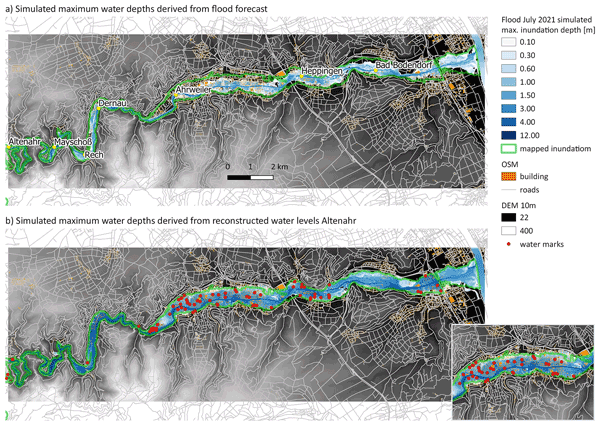
Heiko Apel, Sergiy Vorogushyn, and Bruno Merz
Nat. Hazards Earth Syst. Sci., 22, 3005–3014, https://doi.org/10.5194/nhess-22-3005-2022, https://doi.org/10.5194/nhess-22-3005-2022, 2022
Short summary
Short summary
The paper presents a fast 2D hydraulic simulation model for flood propagation that enables operational forecasts of spatially distributed inundation depths, flood extent, flow velocities, and other flood impacts. The detailed spatial forecast of floods and flood impacts is a large step forward from the currently operational forecasts of discharges at selected gauges, thus enabling a more targeted flood management and early warning.

Alessandro Montemagno, Christophe Hissler, Victor Bense, Adriaan J. Teuling, Johanna Ziebel, and Laurent Pfister
Biogeosciences, 19, 3111–3129, https://doi.org/10.5194/bg-19-3111-2022, https://doi.org/10.5194/bg-19-3111-2022, 2022
Short summary
Short summary
We investigated the biogeochemical processes that dominate the release and retention of elements (nutrients and potentially toxic elements) during litter degradation. Our results show that toxic elements are retained in the litter, while nutrients are released in solution during the first stages of degradation. This seems linked to the capability of trees to distribute the elements between degradation-resistant and non-degradation-resistant compounds of leaves according to their chemical nature.
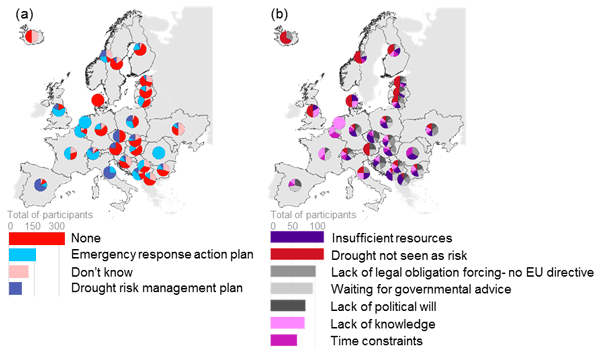
Veit Blauhut, Michael Stoelzle, Lauri Ahopelto, Manuela I. Brunner, Claudia Teutschbein, Doris E. Wendt, Vytautas Akstinas, Sigrid J. Bakke, Lucy J. Barker, Lenka Bartošová, Agrita Briede, Carmelo Cammalleri, Ksenija Cindrić Kalin, Lucia De Stefano, Miriam Fendeková, David C. Finger, Marijke Huysmans, Mirjana Ivanov, Jaak Jaagus, Jiří Jakubínský, Svitlana Krakovska, Gregor Laaha, Monika Lakatos, Kiril Manevski, Mathias Neumann Andersen, Nina Nikolova, Marzena Osuch, Pieter van Oel, Kalina Radeva, Renata J. Romanowicz, Elena Toth, Mirek Trnka, Marko Urošev, Julia Urquijo Reguera, Eric Sauquet, Aleksandra Stevkov, Lena M. Tallaksen, Iryna Trofimova, Anne F. Van Loon, Michelle T. H. van Vliet, Jean-Philippe Vidal, Niko Wanders, Micha Werner, Patrick Willems, and Nenad Živković
Nat. Hazards Earth Syst. Sci., 22, 2201–2217, https://doi.org/10.5194/nhess-22-2201-2022, https://doi.org/10.5194/nhess-22-2201-2022, 2022
Short summary
Short summary
Recent drought events caused enormous damage in Europe. We therefore questioned the existence and effect of current drought management strategies on the actual impacts and how drought is perceived by relevant stakeholders. Over 700 participants from 28 European countries provided insights into drought hazard and impact perception and current management strategies. The study concludes with an urgent need to collectively combat drought risk via a European macro-level drought governance approach.
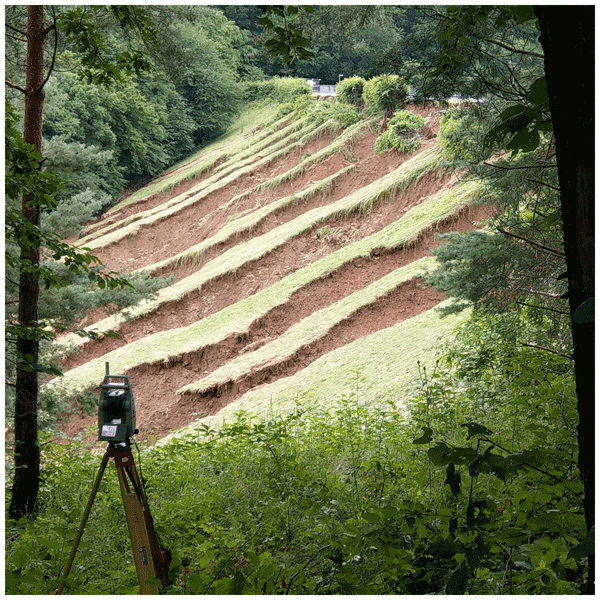
Michael Dietze, Rainer Bell, Ugur Ozturk, Kristen L. Cook, Christoff Andermann, Alexander R. Beer, Bodo Damm, Ana Lucia, Felix S. Fauer, Katrin M. Nissen, Tobias Sieg, and Annegret H. Thieken
Nat. Hazards Earth Syst. Sci., 22, 1845–1856, https://doi.org/10.5194/nhess-22-1845-2022, https://doi.org/10.5194/nhess-22-1845-2022, 2022
Short summary
Short summary
The flood that hit Europe in July 2021, specifically the Eifel, Germany, was more than a lot of fast-flowing water. The heavy rain that fell during the 3 d before also caused the slope to fail, recruited tree trunks that clogged bridges, and routed debris across the landscape. Especially in the upper parts of the catchments the flood was able to gain momentum. Here, we discuss how different landscape elements interacted and highlight the challenges of holistic future flood anticipation.

Anna Rita Scorzini, Benjamin Dewals, Daniela Rodriguez Castro, Pierre Archambeau, and Daniela Molinari
Nat. Hazards Earth Syst. Sci., 22, 1743–1761, https://doi.org/10.5194/nhess-22-1743-2022, https://doi.org/10.5194/nhess-22-1743-2022, 2022
Short summary
Short summary
This study presents a replicable procedure for the adaptation of synthetic, multi-variable flood damage models among countries that may have different hazard and vulnerability features. The procedure is exemplified here for the case of adaptation to the Belgian context of a flood damage model, INSYDE, for the residential sector, originally developed for Italy. The study describes necessary changes in model assumptions and input parameters to properly represent the new context of implementation.
Philip J. Ward, James Daniell, Melanie Duncan, Anna Dunne, Cédric Hananel, Stefan Hochrainer-Stigler, Annegien Tijssen, Silvia Torresan, Roxana Ciurean, Joel C. Gill, Jana Sillmann, Anaïs Couasnon, Elco Koks, Noemi Padrón-Fumero, Sharon Tatman, Marianne Tronstad Lund, Adewole Adesiyun, Jeroen C. J. H. Aerts, Alexander Alabaster, Bernard Bulder, Carlos Campillo Torres, Andrea Critto, Raúl Hernández-Martín, Marta Machado, Jaroslav Mysiak, Rene Orth, Irene Palomino Antolín, Eva-Cristina Petrescu, Markus Reichstein, Timothy Tiggeloven, Anne F. Van Loon, Hung Vuong Pham, and Marleen C. de Ruiter
Nat. Hazards Earth Syst. Sci., 22, 1487–1497, https://doi.org/10.5194/nhess-22-1487-2022, https://doi.org/10.5194/nhess-22-1487-2022, 2022
Short summary
Short summary
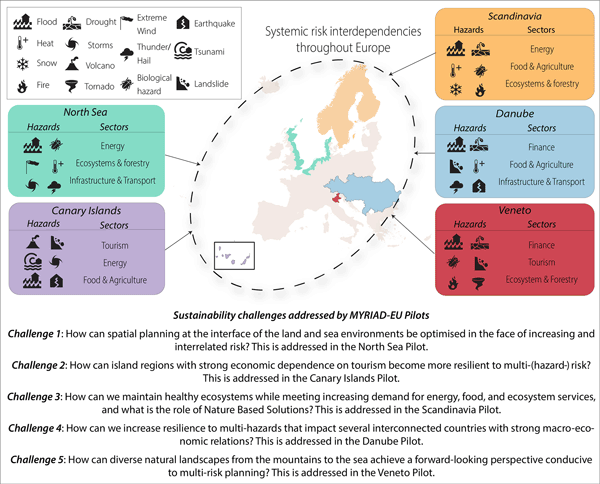
The majority of natural-hazard risk research focuses on single hazards (a flood, a drought, a volcanic eruption, an earthquake, etc.). In the international research and policy community it is recognised that risk management could benefit from a more systemic approach. In this perspective paper, we argue for an approach that addresses multi-hazard, multi-risk management through the lens of sustainability challenges that cut across sectors, regions, and hazards.
Marthe L. K. Wens, Anne F. van Loon, Ted I. E. Veldkamp, and Jeroen C. J. H. Aerts
Nat. Hazards Earth Syst. Sci., 22, 1201–1232, https://doi.org/10.5194/nhess-22-1201-2022, https://doi.org/10.5194/nhess-22-1201-2022, 2022
Short summary
Short summary
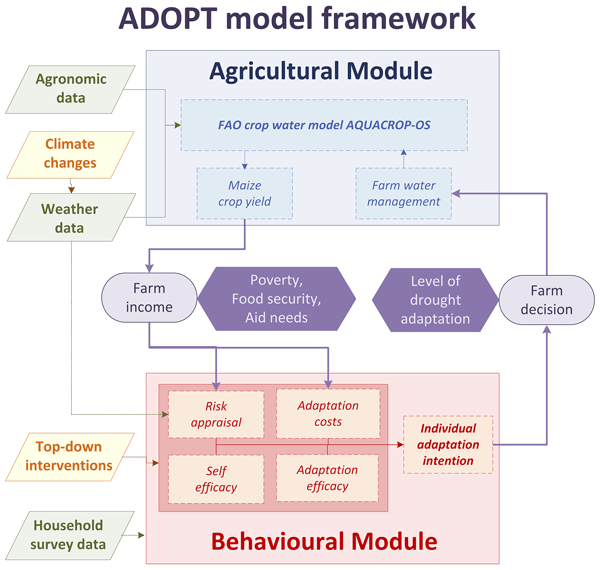
In this paper, we present an application of the empirically calibrated drought risk adaptation model ADOPT for the case of smallholder farmers in the Kenyan drylands. ADOPT is used to evaluate the effect of various top-down drought risk reduction interventions (extension services, early warning systems, ex ante cash transfers, and low credit rates) on individual and community drought risk (adaptation levels, food insecurity, poverty, emergency aid) under different climate change scenarios.
Karen Gabriels, Patrick Willems, and Jos Van Orshoven
Nat. Hazards Earth Syst. Sci., 22, 395–410, https://doi.org/10.5194/nhess-22-395-2022, https://doi.org/10.5194/nhess-22-395-2022, 2022
Short summary
Short summary
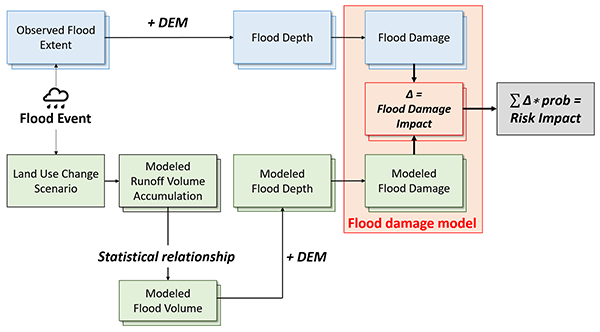
As land use influences hydrological processes (e.g., forests have a high water retention and infiltration capacity), it also impacts floods downstream in the river system. This paper demonstrates an approach quantifying the impact of land use changes on economic flood damages: damages in an initial situation are quantified and compared to damages of simulated floods associated with a land use change scenario. This approach can be used as an explorative tool in sustainable flood risk management.
Annegret H. Thieken, Guilherme Samprogna Mohor, Heidi Kreibich, and Meike Müller
Nat. Hazards Earth Syst. Sci., 22, 165–185, https://doi.org/10.5194/nhess-22-165-2022, https://doi.org/10.5194/nhess-22-165-2022, 2022
Short summary
Short summary
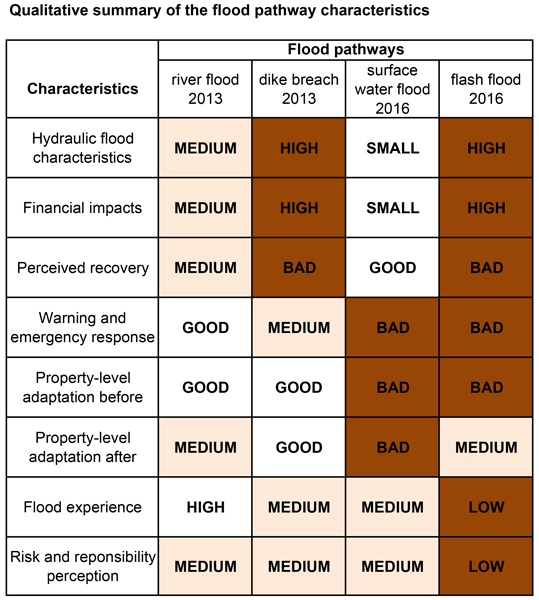
Various floods hit Germany recently. While there was a river flood with some dike breaches in 2013, flooding in 2016 resulted directly from heavy rainfall, causing overflowing drainage systems in urban areas and destructive flash floods in steep catchments. Based on survey data, we analysed how residents coped with these different floods. We observed significantly different flood impacts, warnings, behaviour and recovery, offering entry points for tailored risk communication and support.
Raed Hamed, Anne F. Van Loon, Jeroen Aerts, and Dim Coumou
Earth Syst. Dynam., 12, 1371–1391, https://doi.org/10.5194/esd-12-1371-2021, https://doi.org/10.5194/esd-12-1371-2021, 2021
Short summary
Short summary
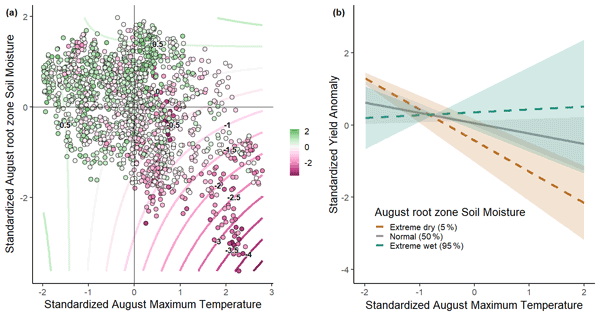
Soy yields in the US are affected by climate variability. We identify the main within-season climate drivers and highlight potential compound events and associated agricultural impacts. Our results show that soy yields are most negatively influenced by the combination of high temperature and low soil moisture during the summer crop reproductive period. Furthermore, we highlight the role of temperature and moisture coupling across the year in generating these hot–dry extremes and linked impacts.
Cited articles
Aerts, J. C. J. H., Botzen, W. J., Clarke, K., Cutter, S. L., Michel-Kerjan, E., Surminski, S., Mysiak, J., Merz, B., Hall, J., and Kunreuther, H.: Including Human Behavior in Flood risk assessment, Nat. Clim. Change, 8, 193–199, 2018.
Agerbeek, B., Knepflé, M., Witsenburg, F., and Jonkman, S. N.: Near real-time flood risk modelling in response to increasing uncertainties in flood predictions: Insights from the Kakhovka Dam breach in Ukraine, Journal of Coastal and Riverine Flood Risk, 3, https://doi.org/10.59490/jcrfr.2024.0016, 2024.
Aldridge, T., Gunawan, O., Moore, R. J., Cole, S. J., Boyce, G., and Cowling, R.: Developing an impact library for forecasting surface water flood risk, J. Flood Risk Manag., 13, e12641, https://doi.org/10.1111/jfr3.12641, 2020.
Alfieri, L., Zsoter, E., Harrigan, S., Hirpa, F. A., Lavaysse, C., Prudhomme, C., and Salamon P.: Range-dependent thresholds for global flood early warning, J. Hydrol., 4, 100034, https://doi.org/10.1016/j.hydroa.2019.100034, 2019.
Apel, H., Vorogushyn, S., and Merz, B.: Brief communication: Impact forecasting could substantially improve the emergency management of deadly floods: case study July 2021 floods in Germany, Nat. Hazards Earth Syst. Sci., 22, 3005–3014, https://doi.org/10.5194/nhess-22-3005-2022, 2022.
Arnal, L., Anspoks, L., Manson, S., Neumann, J., Norton, T., Stephens, E., Wolfenden, L., and Cloke, H. L.: “Are we talking just a bit of water out of bank? Or is it Armageddon?” Front line perspectives on transitioning to probabilistic fluvial flood forecasts in England, Geosci. Commun., 3, 203–232, https://doi.org/10.5194/gc-3-203-2020, 2020.
Bauer, P., Thorpe, A., and Brunet, G.: The quiet revolution of numerical weather prediction, Nature, 525, 47–55, https://doi.org/10.1038/nature14956, 2015.
Becker, G., Huitema, D., and Aerts, J. C. J. H.: Prescriptions for adaptive comanagement: the case of flood management in the German Rhine basin, Ecol. Soc., 20, https://doi.org/10.5751/ES-07562-200301, 2015.
Bischiniotis, K., de Moel, H., van Den Homberg, M., Couasnon, A., Aerts, J., Nobre, G. G., Zsoter, E., and van den Hurk, B.: A framework for comparing permanent and forecast-based flood risk-reduction strategies, Sci. Total Environ., 720, 137572, https://doi.org/10.1016/j.scitotenv.2020.137572, 2020.
Blahak, U.: SINFONY – DWD's New Seamless Forecasting System, https://www.dwd.de/DE/leistungen/pbfb_verlag_promet/promet_107_einzelkapitel_pdf/Promet_107_Kap1_pdf.pdf?__blob=publicationFile&v=3DWD (last access: 10 November 2025), 2024.
Boult, V. L., Black, E., Saado Abdillahi, H., Bailey, M., Harris, C., Kilavi, M., Kniveton, D., MacLeod, D., Mwangi, E., Otieno, G., Rees, E., Rowhani, P., Taylor, O., and Todd, M. C.: Towards drought impact-based forecasting in a multi-hazard context, Climate Risk Management, 35, 100402, https://doi.org/10.1016/J.CRM.2022.100402, 2022.
Buizza, R.: Introduction to the special issue on “25 years of ensemble forecasting”, Q. J. Roy. Meteor. Soc., 145, 1–11, https://doi.org/10.1002/qj.3370, 2019.
Busker, T., de Moel, H., van den Hurk, B., and Aerts, J. C. J. H.: Anticipating Weather and Climate Extremes: The Value of Early Action to Reduce Disaster Impacts, PhD Thesis – Research and graduation internal, Vrije Universiteit Amsterdam, https://doi.org/10.5463/thesis.837, 2024.
Busker, T., van den Hurk, B., de Moel, H., and Aerts, J. C.: The value of precipitation forecasts to anticipate floods, B. Am. Meteor. Soc., 106, E473–E491, 2025.
Cao, A., Nakamura, S., Otsuyama, K., Namba, M., and Yoshimura K.: Current status and challenges in operating flood early warning systems at the local level in Japan, Int. J. Disast. Risk Re., 112, 104802, doi.org/10.1016/j.ijdrr.2024.104802, 2024.
Cloke, H. and Pappenberger, F.: Ensemble flood forecasting: A review, J. Hydrol., 375, 613–626, doi.org/10.1016/j.jhydrol.2009.06.005, 2009.
COT: Rapportage Leerevaluatie: Hoogwater Maas en Roer, https://www.vrln.nl/sites/vrln/files/2022-10/Leerevaluatie_Hoogwater_Maas_en_Roer_VR__Limburg_Noord_2021_rapportage.pdf (last access: 6 September 2026), 2022.
Coughlan de Perez, E., Berse, K. B., Depante, L. A. C., Easton-Calabria, E., Evidente, E. P. R., Ezike, T., Heinrich, D., Jack, C., Lagmay, A. M. F. A., Lendelvo, S., Marunye, J., Maxwell, D. G., Binte Murshed, S., Garimoi Orach, C., Pinto, M., Poole, L. B., Rathod, K., Shampa, and Van Sant, C.: Learning from the past in moving to the future: Invest in communication and response to weather early warnings to reduce death and damage, Climate Risk Management, 38, 100461, https://doi.org/10.1016/j.crm.2022.100461, 2022.
Council of the European Union: Council Conclusions on the comprehensive enhancement of the EU's resilience against flooding, https://data.consilium.europa.eu/doc/document/ST-16841-2024-INIT/en/pdf (last access: 6 July 2025), 2024.
Da Costa, J., Ebert, E., Hoffmann, D., Cloke, H. L., and Neumann, J.: Signals without action: a value chain analysis of Luxembourg's 2021 flood disaster, Nat. Hazards Earth Syst. Sci., 26, 343–366, https://doi.org/10.5194/nhess-26-343-2026, 2026.
Dasgupta, A., Arnal, L., Emerton, R., Harrigan, S., Matthews, G., Muhammad, A., O'Regan, K., Pérez-Ciria, T., Valdez, E., van Osnabrugge, B., Werner, M., Buontempo, C., Cloke, H., Pappenberger, F., Pechlivanidis, I. G., Prudhomme, C., Ramos, M.-H., and Salamon, P.: Connecting hydrological modelling and forecasting from global to local scales: Perspectives from an international, J. Flood Risk Manag., https://doi.org/10.1111/jfr3.12880, 2024.
Demuth, N. and Rademacher, S.: Flood Forecasting in Germany – Challenges of a Federal Structure and Transboundary Cooperation, Flood Forecasting: A Global Perspective, Elsevier, 125–151, https://doi.org/10.1016/B978-0-12-801884-2.00005-0, 2016.
Dewals, B., Erpicum, S., Pirotton, M., and Archambeau, P.: Extreme floods in Belgium, The July 2021 extreme floods in the Belgian part of the Meuse basin, https://henry.baw.de/server/api/core/bitstreams/6b2b809e-becd-465e-bd3b-d24e3a9f467a/content (last access: 2 October 2025), 2021.
DGH: L'hydrométrie en wallonie, https://hydrometrie.wallonie.be/home.html (last access: 21 February 2025), 2024.
DGH: Prévision des crues, https://hydrometrie.wallonie.be/home/en-savoir-plus/prevision-des-crues.html (last access: 16 October 2025), 2025.
DKKV: Governance und Kommunikation im Krisenfall des Hochwasserereignisses im Juli 2021, DKKV-Schriftenreihe Nr. 63, Januar 2024, Bonn, https://dkkv.org/wp-content/uploads/2024/01/HoWas2021_DKKV_Schriftenreihe_63.pdf (last access: 11 March 2026), 2024.
Dottori, F., Kalas, M., Salamon, P., Bianchi, A., Alfieri, L., and Feyen, L.: An operational procedure for rapid flood risk assessment in Europe, Nat. Hazards Earth Syst. Sci., 17, 1111–1126, https://doi.org/10.5194/nhess-17-1111-2017, 2017.
DWD: Bericht zum Ablauf und Umfang der operationellen Warn- und Beratungstätigkeit des Deutschen Wetterdienstes im Vorlauf und während des Unwetters 12–15 Juli 2021 in NRW und Rheinland-Pfalz, ausgelöst durch das Tief “Bernd”, https://www.dwd.de/DE/presse/hintergrundberichte/berichts_warnchronologie.pdf.pdf?__blob=publicationFile&v=2 (last access: 6 August 2025), 2021.
European Commission: European Civil Protection and Humanitarian Aid Operations: Luxembourg, https://civil-protection-humanitarian-aid.ec.europa.eu/what/civil-protection/national-disaster-management-system/luxembourg_en (last access: 18 December 2024), 2024.
European Environment Agency: European Climate Risk Assessment (Publication) Luxembourg: European Environment Agency, https://www.eea.europa.eu/publications/european-climate-risk-assessment (last access: 13 December 2025), 2024.
Endendijk, T., Botzen, W., de Moel, H., Aerts, J., Duijndam, S., Slager, K., Kok, M.: Experience From the 2021 Floods in the Netherlands: Household Survey Results on Impacts and Responses, Journal of Coastal and Riverine Flood Risk, 2, https://doi.org/10.59490/jcrfr.2023.0009, 2023a.
Endendijk, T., Botzen, W., de Moel, H., Aerts, J., Slager, K., and Kok, M.: Flood Vulnerability Models and Household Flood Damage Mitigation Measures: An Econometric Analysis of Survey Data, Water Resour. Res., https://doi.org/10.1029/2022WR034192, 2023b.
ENW: Hoogwater 2021 Feiten en Duiding, https://www.hkv.nl/wp-content/uploads/2021/09/ENW-Hoogwater-2021-Feiten-en-Duiding_BK_etal.pdf (last access: 14 January 2026), 2021.
Frogner, I., Andrae, U., Bojarova, J., Callado, A., Escriba, P., Feddersen, H., Hally, A., Kauhane, J., Randriamampianina, R., Singleton, A., Smet, G., van den Veen, S., and Vignes, A.: HarmonEPS–The HARMONIE Ensemble Prediction System, Weather and Forecasting, https://doi.org/10.1175/WAF-D-19-0030.1, 2019.
Gerard, L., Piriou, J. M., Brožková, R., Geleyn, J. F., and Banciu, D.: Cloud and precipitation parameterization in a meso-gamma-scale operational weather prediction model, Mon. Weather Rev., 137, 3960–3977, 2009.
Global Commission on Adaptation: Adapt now: A global call for leadership on climate resilience, Global Commission on Adaptation, Rotterdam and Washington, D.C., https://gca.org/wp-content/uploads/2019/09/GlobalCommission_Report_FINAL.pdf (last access: 11 March 2026), 2019.
Golding, B., Mittermaier, M., Ross, C., Ebert, B., Panchuk, S., Scolobig, A., and Johnston, D.: A value chain approach to optimising early warning systems, Contributing paper to GAR2019, UNDRR, https://www.preventionweb.net/publications/view/65828 (last access: 15 February 2026), 2019.
Government of Wallonia: Plan Régional de Gestion de Crise, https://cortex.wallonie.be/home/nos-outils/plan-regional-de-gestion-de-crise.html (last access: 27 October 2025), 2025.
Haag, I. and Luce, A.: The integrated water balance and water temperature model LARSIM-WT, Hydrol. Process., 22, 1046–1056, https://doi.org/10.1002/hyp.6983, 2008.
Haag, I., Ehret, U., Demuth, N., and Moritz, K.: ProFoUnD: Ein Werkzeug zur statistischen Analyse von Abfluss-und Wasserstandsvorhersagen und zur Ermittlung von Vorhersageunsicherheiten, https://hdl.handle.net/20.500.11970/113175, 2013.
Haiden, T., Janousek, M., Vitart, F., Bouallègue, Z. B., Ferranti, L., Prates, F., and Richardson, D.: Evaluation of ECMWF forecasts, including the 2018 upgrade, Reading, UK: European Centre for Medium Range Weather Forecast, https://doi.org/10.21957/ldw15ckqi, 2018.
Hofmann, J. and Schüttrumpf, H.: floodGAN: Using Deep Adversarial Learning to Predict Pluvial Flooding in Real Time, Water, 13, 2255, https://doi.org/10.3390/w13162255, 2021.
IIASA: PERC Flood event review “Bernd”, https://pure.iiasa.ac.at/id/eprint/18144/1/Zurich_PERC_Analysis_Bernd_ENG (2).pdf (last access: 12 February 2026), 2022.
IKSMS: Hochwasservorhersage als transnationale Aufgabe des Technischen Ausschusses, http://www.iksms-cipms.org/servlet/is/2002210/ (last access: 16 October 2025), 2025.
Jiang, X., Zhang, L., Liang, Z., Fu, X., Wang, J., Xu, J., Zhang, Y., and Zhong, Q.: Study of early flood warning based on postprocessed predicted precipitation and Xinanjiang model, Weather and Climate Extremes, 42, 100611, doi.org/10.1016/j.wace.2023.100611, 2023.
Journée, M., Goudenhoofdt, E., Vannitsem, S., and Delobbe, L.: Quantitative rainfall analysis of the 2021 mid-July flood event in Belgium, Hydrol. Earth Syst. Sci., 27, 3169–3189, https://doi.org/10.5194/hess-27-3169-2023, 2023.
Kaltenberger, R., Schaffhauser, A., and Staudinger, M.: “What the weather will do” – results of a survey on impact-oriented and impact-based warnings in European NMHSs, Adv. Sci. Res., 17, 29–38, https://doi.org/10.5194/asr-17-29-2020, 2020.
KNMI: Het regent nu harder in Zuid-Limburg door klimaatverandering, https://www.knmi.nl/over-het-knmi/nieuws/extreme-neerslag-in-zuid-limburg (last access: 13 January 2024), 2021.
KNMI: Wat kan ik verwachten en wat kan ik doen bij een weerwaarschuwing?, https://www.knmi.nl/over-het-knmi/nieuws/wat-kan-ik-verwachten-en-wat-kan-ik-doen-bij-een-weerwaarschuwing/ (last access: 4 December 2024), 2024.
KNMI: Uitleg over: Early Warning Centre (EWC), https://www.knmi.nl/kennis-en-datacentrum/uitleg/early-warning-centre (last access: 21 October 2025), 2025.
Kok, K.: Beschrijving en toepassingen van het PASCAL-systeem: Een automatisch waarschuwingssysteem voor gevaarlijk weer, KNMI: technisch rapport, De Bilt, https://cdn.knmi.nl/knmi/pdf/bibliotheek/knmipubTR/TR395.pdf (last access: 11 March 2026), 2022.
Kreibich, H., Hudson, P., and Merz, B.: Knowing What to Do Substantially Improves the Effectiveness of Flood Early Warning, B. Am. Meteor. Soc., E1450–E1463, doi.org/10.1175/BAMS-D-20-0262.1, 2021.
Kiger, M. E. and Varpio, L.: Thematic analysis of qualitative data: AMEE Guide No. 131, Med. Teach., 42, 846–854, 2020.
Kuller, M., Schoenholzer, K., and Lienert, J.: Creating effective flood warnings: A framework from a critical review, J. Hydrol., 602, 126708, doi.org/10.1016/j.jhydrol.2021.126708, 2021.
Landesamt für Umwelt Rheinland-Pfalz: Hochwasservorhersagezentrale Rheinland-Pfalz, https://www.hochwasser.rlp.de/erlaeuterungen#warnkarte-legende (last access: 16 October 2025), 2025.
LANUK: Hochwassermeldepegel des LANUK, https://www.umwelt.nrw.de/system/files/media/document/file/uebersicht_hochwassermeldepegel.pdf (last access: 6 February 2026), 2025.
LAWA: Bericht zur Evaluation der Handlungsempfehlungen zur weiteren Verbesserung von Grundlagen und Qualität der Hochwasservorhersage an den deutschen Binnengewässern, https://www.lawa.de/documents/evaluationsbericht-verbesserung-grundlagen-hw-vorhersage-barrierefrei_1689845670.pdf (11 March 2026), 2020.
Lehmkuhl, F., Schüttrumpf, H., Schwarzbauer, J., Brüll, C., Dietze, M., Letmathe, P., Völker, C., and Hollert, H.: Assessment of the 2021 summer flood in Central Europe, Environmental Sciences Europe, 34, 107, https://doi.org/10.1186/s12302-022-00685-1, 2022.
Leutbecher, M. and Palmer, T. N.: Ensemble forecasting, J. Comput. Phys., 227, 3515–3539, https://doi.org/10.1016/j.jcp.2007.02.014, 2008.
Le gouvernement du Grand-Duché de Luxembourg: Info Crise, https://infocrise.public.lu/en (last access: 27 October 2025), 2025.
Lindenlaub, S., Matthes, K. S., and Thieken, A. H.: Improving the understandability of flood warning messages–Explorative study on design preferences, Int. J. Disast. Risk Re., 111, 104685, https://doi.org/10.1016/j.ijdrr.2024.104685, 2024a.
Lindenlaub, S., Heidenreich, A., Murdock, H., and Thieken, A. H.: Warnsituation in den Einzugsgebieten: Erkenntnisse aus Betroffenenbefragungen, in: Governance und Kommunikation im Krisenfall des Hochwasserereignisses im Juli 2021, DKKV-Schriftenreihe 63, Bonn, 38–52, https://dkkv.org/wp-content/uploads/2024/01/HoWas2021_DKKV_Schriftenreihe_63.pdf (last access: 11 March 2026), 2024b.
Mahdavian, F., Platt, S., Wiens, M., Klein, M., and Schultmann, F.: Communication blackouts in power outages: Findings from scenario exercises in Germany and France, Int. J. Disast. Risk Re., 46, https://doi.org/10.1016/j.ijdrr.2020.101628, 2020.
Meléndez-Landaverde, E. R., Werner, M., and Verkade, J.: Exploring protective decision-making in the context of impact-based flood warnings, J. Flood Risk Manag., 13, e12587, https://doi.org/10.1111/jfr3.12587, 2020.
Merz, B., Kuhlicke, C., Kunz, M., Pittore, M., Babeyko, A., Bresch, D. N., Domeisen, D. I. V., Feser, F., Koszalka, I., Kreibich, H., Pantillon, F., Parolai, S., Pinto, J. G., Punge, H. J., Rivalta, E., Schröter, K., Strehlow, K., Weisse, R., and Wurpts, A.: Impact Forecasting to Support Emergency Management of Natural Hazards, Rev. Geophys., 58, https://doi.org/10.1029/2020RG000704, 2020.
Ministerie van Justitie en Veiligheid: Naar een nieuwe toekomst voor waarschuwing en alarmering, https://open.overheid.nl/documenten/dpc-8d5932adf1c2656e52b2cc870be0c248b7889d69/pdf (last access: 20 February 2025), 2024.
Ministerium des Innern und für Sport Rheinland-Pfalz: Rahmen- Alarm- und Einsatzplan Hochwasser, https://bks-portal.rlp.de/system/files/gruppen/1411/dateien/raep-hochwasser-stand-18.08.2020_0_0.pdf (last access: 19 February 2026), 2020 (in German).
Mohr, S., Ehret, U., Kunz, M., Ludwig, P., Caldas-Alvarez, A., Daniell, J. E., Ehmele, F., Feldmann, H., Franca, M. J., Gattke, C., Hundhausen, M., Knippertz, P., Küpfer, K., Mühr, B., Pinto, J. G., Quinting, J., Schäfer, A. M., Scheibel, M., Seidel, F., and Wisotzky, C.: A multi-disciplinary analysis of the exceptional flood event of July 2021 in central Europe – Part 1: Event description and analysis, Nat. Hazards Earth Syst. Sci., 23, 525–551, https://doi.org/10.5194/nhess-23-525-2023, 2023.
Najafi, H., Kumar Shrestha, P., Rakovec, O., Apel, H., Vorogushyn, S., Kumar, R., Thober, S., Merz, B., and Samaniego, L.: High-resolution impact-based early warning system for riverine flooding, Nat. Commun., 15, 3726, https://doi.org/10.1038/s41467-024-48065-y, 2024.
Ommer, J., Neumann, J., Kalas, M., Blackburn, S., and Cloke, H. L.: Surprise floods: the role of our imagination in preparing for disasters, Nat. Hazards Earth Syst. Sci., 24, 2633–2646, https://doi.org/10.5194/nhess-24-2633-2024, 2024.
Pappenberger, F., Cloke, H. L., Parker, D. J., Wetterhall, F., Richardson, D. S., and Thielen, J.: The monetary benefit of early flood warnings in Europe, Environ. Sci. Policy, https://doi.org/10.1016/j.envsci.2015.04.016, 2015.
Parker, D. and Priest, S.: The Fallibility of Flood Warning Chains: Can Europe's Flood Warnings Be Effective?, Water Resources Management: An International Journal, Published for the European Water Resources Association (EWRA), Springer, European Water Resources Association (EWRA), 26, 2927–2950, 2012.
Poolman, E., Webster, E., Sebego, E., Rae, K. Phillay, D., and van Staden, M.: Project on Developing and Implementing an Impact-based Severe Weather Warning System. South African National Disaster Management Centre – South Africa, https://invest.edendm.gov.za/wp-content/uploads/2018/03/Water-Safety-and-Security-Project-onDeveloping-and-Implementingan-Impact-based-Severe-Weather-Warning-System.pdf (last access: 2 January 2026), 2018.
Red Cross Red Crescent Climate Centre: Met Office, ARRCC, UK AID, Anticipation Hub, & Risk-informed Early Action Partnership: The Future of Forecasts: Impact-based forecasting for early action, https://www.forecast-based-financing.org/wp-content/uploads/2020/09/Impact-based-forecasting-guide-2020.pdf (last access: 12 February 2026), 2020.
Rhein, B. and Kreibich, H.: Causes of the exceptionally high number of fatalities in the Ahr valley, Germany, during the 2021 flood, Nat. Hazards Earth Syst. Sci., 25, 581–589, https://doi.org/10.5194/nhess-25-581-2025, 2025.
Richardson, D. S.: Predictability and economic value, Seminar on Predictability of Weather and Climate, 9–13 September 2002, 321–332, https://www.ecmwf.int/node/11922 (last access: 16 February 2026), 2003.
Rijkswaterstaat: Afvoertabel Maas, Waterberichtgeving, https://waterberichtgeving.rws.nl/owb/waterveiligheid/hoogwater-maas/afvoertabel-maas (last access: 9 March 2026), 2026.
Rodríguez Castro, D., Cools, M., Roucour, S., Archambeau, P., Molinari, D., Scorzini, A. R., Dessers, C., Erpicum, S., Pirotton, M., Teller, J., and Dewals, B.: Can macro-or meso-scale coping capacity variables improve the classification of building flood losses?, Nat. Hazards, 1–31, 2025.
Schroeter, S., Richter, H., Arthur, C., Wilke, D., Dunford, M., Wehner, M., and Ebert, E.: Forecasting the impacts of severe weather, Aust. J. Emergency Manage., 36, 76–83, https://doi.org/10.47389/36.1.76, 2021.
Seebauer, S. and Babcicky, P.: Trust and the communication of flood risks: comparing the roles of local governments, volunteers in emergency services, and neighbours, J. Flood Risk Manag., 11, 305–316, https://doi.org/10.1111/jfr3.12313, 2017.
Smet, G.: RMI-EPS: A prototype convection-permitting EPS for Belgium, https://orfeo.belnet.be/handle/internal/7057, 2017.
Smith, P., Pappenberger, F., Wetterhall, F., Thielen, J., Krzeminski, B., Salamon, P., Muraro, D., Kalas, M., and Baugh, C.: On the operational implementation of the European Flood Awareness System (EFAS), ECMWF Tech. Memorandum 778, ECMWF, Reading, UK, 1–34, https://doi.org/10.1016/B978-0-12-801884-2.00011-6, 2016.
Speight, L. J., Cranston, M. D., White, C. J., and Kelly, L.: Operational and emerging capabilities for surface water flood forecasting, Wiley Interdisciplinary Reviews: Water, 8, e1517, https://doi.org/10.1002/wat2.1517, 2021.
Thieken, A. H., Bubeck, P., Heidenreich, A., von Keyserlingk, J., Dillenardt, L., and Otto, A.: Performance of the flood warning system in Germany in July 2021 – insights from affected residents, Nat. Hazards Earth Syst. Sci., 23, 973–990, https://doi.org/10.5194/nhess-23-973-2023, 2023a.
Thieken, A., Zenker, M.-L., and Bubeck, P.: Flood-related fatalities during the flood of July 2021 in North Rhine-Westphalia, Germany: what can be learnt for future flood risk management?, Journal of Coastal and Riverine Flood Risk, 2, https://doi.org/10.59490/jcrfr.2023.0005, 2023b.
Tradowsky, J. S., Philip, S. Y., Kreienkamp, F., Kew, S. F., Lorenz, P., Arrighi, J., and Wanders, N.: Attribution of the heavy rainfall events leading to severe flooding in Western Europe during July 2021, Climatic Change, 176, 90, https://doi.org/10.1007/s10584-023-03502-7, 2023.
Van Steenbergen, N., Ronsyn, J., and Willems, P.: A non-parametric data-based approach for probabilistic flood forecasting in support of uncertainty communication, Environ. Modell. Softw., 33, 92–105, 2012.
Veiligheidsregio Limburg-Noord and Zuid-Limburg: Rampbestrijdingsplan Hoogwater Limburg 2023–2026, https://www.vrln.nl/sites/vrln/files/2024-04/RBP Hoogwater Limburg 2023-2026_DEF.pdf (last access: 4 January 2026), 2023.
Verkade, J. S. and Werner, M. G. F.: Estimating the benefits of single value and probability forecasting for flood warning, Hydrol. Earth Syst. Sci., 15, 3751–3765, https://doi.org/10.5194/hess-15-3751-2011, 2011.
Verkade, J. S., Brown, J. D., Davids, F., Reggiani, P., and Weerts, A. H.: Estimating predictive hydrological uncertainty by dressing deterministic and ensemble forecasts; a comparison, with application to Meuse and Rhine, J. Hydrol., 555, 257-277, 2017.
Vorogushyn, S., Apel, H., Kemter, M., and Thieken, A. H.: Analyse der Hochwassergefährdung im Ahrtal unter Berücksichtigung historischer Hochwasser, Hydrol. Wasserbewirts., 66, 244–254, https://doi.org/10.5675/HyWa_2022.5_2, 2022.
Weyrich, P., Scolobig, A., and Patt, A.: Dealing with inconsistent weather warnings: Effects on warning quality and intended actions, Meteorol. Appl., 26, 569–583, 2019.
WMCN: Landelijk Draaiboek Hoogwater en Overstromingsdreiging, https://iplo.nl/@250864/landelijk-draaiboek-hoogwater/ (last access: 7 October 2026), 2023 (in Dutch).
WMO: Assessment Guidelines for End-to-End Flood Forecasting and Early Warning Systems, https://library.wmo.int/viewer/58245?medianame=1286_en_#page=1&viewer=picture&o=bookmark&n=0&q= (last access: 22 December 2025), 2023.
Wu, W., Emerton, R., Duan, Q., Wood, A. W., Wetterhall, F., and Robertson, D. E.: Ensemble flood forecasting: Current status and future opportunities, Wiley Interdisciplinary Reviews: Water, 7, e1432, https://doi.org/10.1002/wat2.1432, 2020.
Short summary
In July 2021, the Netherlands, Luxembourg, Germany, and Belgium were hit by an extreme flood event with over 200 fatalities. Our study provides, for the first time, critical insights into the operational flood early-warning systems in this entire region. Based on 14 expert interviews, we conclude that the systems strongly improved in all countries. Interviewees stressed the need for operational impact-based forecasts, but emphasized that its operational implementation is challenging.
In July 2021, the Netherlands, Luxembourg, Germany, and Belgium were hit by an extreme flood...


Altmetrics
Final-revised paper
Preprint