
Articles | Volume 26, issue 2
https://doi.org/10.5194/nhess-26-925-2026
© Author(s) 2026. This work is distributed under
the Creative Commons Attribution 4.0 License.
the Creative Commons Attribution 4.0 License.
https://doi.org/10.5194/nhess-26-925-2026
© Author(s) 2026. This work is distributed under
the Creative Commons Attribution 4.0 License.
the Creative Commons Attribution 4.0 License.
Research article
| 
26 Feb 2026
Research article |
| 26 Feb 2026
| 26 Feb 2026
Flood damage functions for rice: synthesizing evidence and building data-driven models
Alina Bill-Weilandt
CORRESPONDING AUTHOR

Earth Observatory of Singapore, Nanyang Technological University, Singapore
Asian School of the Environment, Nanyang Technological University, Singapore
Potsdam Institute for Climate Impact Research (PIK), Member of the Leibniz Association, Potsdam, Germany
Section 4.4 Hydrology, GFZ Helmholtz Centre for Geosciences, 14473 Potsdam, Germany
Nivedita Sairam
Section 4.4 Hydrology, GFZ Helmholtz Centre for Geosciences, 14473 Potsdam, Germany
Dennis Wagenaar
Asian School of the Environment, Nanyang Technological University, Singapore
Kasra Rafiezadeh Shahi
Potsdam Institute for Climate Impact Research (PIK), Member of the Leibniz Association, Potsdam, Germany
Section 4.4 Hydrology, GFZ Helmholtz Centre for Geosciences, 14473 Potsdam, Germany
Heidi Kreibich
Section 4.4 Hydrology, GFZ Helmholtz Centre for Geosciences, 14473 Potsdam, Germany
Perrine Hamel
Earth Observatory of Singapore, Nanyang Technological University, Singapore
Asian School of the Environment, Nanyang Technological University, Singapore
David Lallemant
Earth Observatory of Singapore, Nanyang Technological University, Singapore
Asian School of the Environment, Nanyang Technological University, Singapore
Related authors
No articles found.
Rui Xue Natalie Teng, Josh L. Hayes, Susanna F. Jenkins, David Lallemant, Mathis Joffrain, Eisuke Fujita, John Wardman, Yousuke Miyagi, and Tomohiro Kubo
EGUsphere, https://doi.org/10.5194/egusphere-2026-5468, https://doi.org/10.5194/egusphere-2026-5468, 2026
This preprint is open for discussion and under review for Natural Hazards and Earth System Sciences (NHESS).
Short summary
Short summary
Natural hazards can damage critical infrastructure and disrupt provision of essential services. We developed a framework to quantify the disruption potential of various hazard sources and locations, applying it to Japan to assess electricity disruption from tephra fall. We identify Fujisan and Asamayama as having the highest disruption potential, with tephra fall over Tokyo likely to cause the greatest disruption. These findings can guide resource prioritisation to minimise future disruptions.
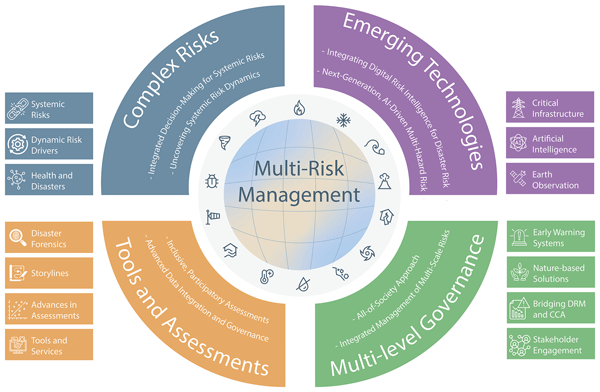
Timothy Tiggeloven, Colin Raymond, Marleen C. de Ruiter, Jana Sillmann, Annegret H. Thieken, Sophie L. Buijs, Roxana Ciurean, Emma Cordier, Julia M. Crummy, Lydia Cumiskey, Kelley De Polt, Melanie Duncan, Davide M. Ferrario, Wiebke S. Jäger, Elco E. Koks, Nicole van Maanen, Heather J. Murdock, Jaroslav Mysiak, Sadhana Nirandjan, Benjamin Poschlod, Peter Priesmeier, Nivedita Sairam, Pia-Johanna Schweizer, Tristian R. Stolte, Marie-Luise Zenker, James E. Daniell, Alexander Fekete, Christian M. Geiß, Marc J. C. van den Homberg, Sirkku K. Juhola, Christian Kuhlicke, Karen Lebek, Robert Šakić Trogrlić, Stefan Schneiderbauer, Silvia Torresan, Cees J. van Westen, Judith N. Claassen, Bijan Khazai, Virginia Murray, Julius Schlumberger, and Philip J. Ward
Geosci. Commun., 9, 185–221, https://doi.org/10.5194/gc-9-185-2026, https://doi.org/10.5194/gc-9-185-2026, 2026
Short summary
Short summary
Natural hazards like floods, earthquakes, and landslides are often interconnected which may create bigger problems than when they occur alone. We studied expert discussions from an international conference to understand how scientists and policymakers can better prepare for these multi-hazards and use new technologies to protect its communities while contributing to dialogues about future international agreements beyond the Sendai Framework and supporting global sustainability goals.
Fuqiang Tian, Murugesu Sivapalan, Sondoss El Sawah, Melissa Haeffner, Anthony Jakeman, Heidi Kreibich, Leyang Liu, Haoyang Lyu, Ana Mijic, Jiale Wang, Jing Wei, and Günter Blöschl
EGUsphere, https://doi.org/10.5194/egusphere-2026-1727, https://doi.org/10.5194/egusphere-2026-1727, 2026
Short summary
Short summary
This opinion paper shows how sociohydrology can better support water management by moving from understanding systems to guiding action. Drawing on ten years of work in the Panta Rhei initiative, it offers a simple way to compare cases, trace how actions lead to intended and unintended outcomes, and improve monitoring, learning, fairness, and legitimacy in decision-making.
Yamile Villafani, Heiko Apel, Laurens J. N. Oostwegel, Thi Thao Nguyen Huynh, Hong Quan Nguyen, Nigel K. Downes, Andrea Cominola, and Nivedita Sairam
EGUsphere, https://doi.org/10.5194/egusphere-2026-850, https://doi.org/10.5194/egusphere-2026-850, 2026
Short summary
Short summary
Flooding is an increasing threat in fast-growing cities, disrupting daily life, damaging homes, and raising disease risks from contaminated water. In Can Tho City, Vietnam, this study estimates household financial damage and the spread of harmful pathogens in floodwaters, then combines these impacts to identify neighborhoods at greatest risk. The results help planners target protection and support where it is most needed.
Ravikumar Guntu, Guilherme Samprogna Mohor, Annegret H. Thieken, Meike Müller, and Heidi Kreibich
Nat. Hazards Earth Syst. Sci., 26, 163–186, https://doi.org/10.5194/nhess-26-163-2026, https://doi.org/10.5194/nhess-26-163-2026, 2026
Short summary
Short summary
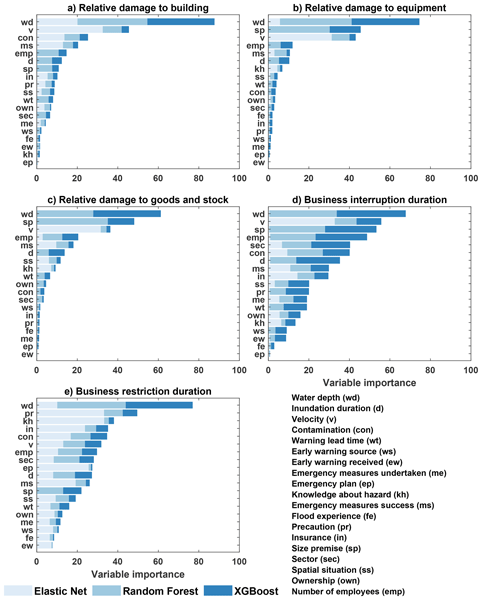
The 2021 flood in Germany caused severe damage to companies, with over half reporting losses above € 100 000. Using probabilistic models, we identify key factors driving direct damage and business interruption. Water depth, flow velocity and company exposure were key factors, but preparedness played a crucial role. Companies that took good precaution recovered faster. Our findings stress the value of early warnings and risk communication to reduce damage from unprecedented flood events.
Nivedita Sairam and Marleen C. de Ruiter
Nat. Hazards Earth Syst. Sci., 26, 119–130, https://doi.org/10.5194/nhess-26-119-2026, https://doi.org/10.5194/nhess-26-119-2026, 2026
Short summary
Short summary
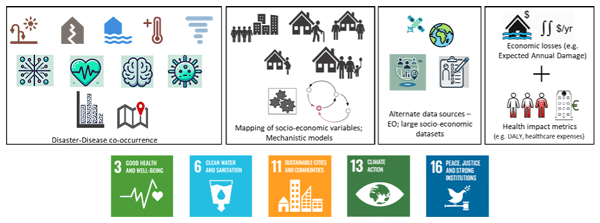
This paper highlights gaps in disaster risk assessments, particularly regarding disease outbreaks after natural hazards. It calls for: (1) learning from compound risk models to understand disaster and disease probabilities, (2) including health metrics in risk frameworks, and (3) improving data and modeling for health impacts. The authors propose a research agenda to enhance disaster risk management.
Apoorva Singh, Ravikumar Guntu, Nivedita Sairam, Kasra Rafiezadeh Shahi, Anna Buch, Melanie Fischer, Chandrika Thulaseedharan Dhanya, and Heidi Kreibich
Nat. Hazards Earth Syst. Sci., 26, 103–118, https://doi.org/10.5194/nhess-26-103-2026, https://doi.org/10.5194/nhess-26-103-2026, 2026
Short summary
Short summary
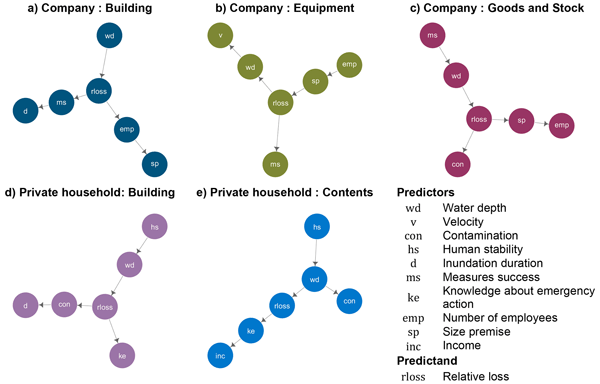
We develop novel probabilistic models to estimate flash flood losses of companies and households in Germany. Using multiple flash flood events, we identify key drivers of flash floods loss. FLEMO flash model reveals that for companies, the effectiveness of emergency measures is crucial in mitigating losses. In contrast, household benefit more from knowledge about emergency action, suggesting adaptation strategies can effectively reduce flash flood losses.
Masashi Watanabe, Adam D. Switzer, Erandani Lakshani Widana Arachchige, Constance Ting Chua, Jun Yu Puah, Elaine Tan, Timothy A. Shaw, and David Lallemant
EGUsphere, https://doi.org/10.5194/egusphere-2025-5703, https://doi.org/10.5194/egusphere-2025-5703, 2025
Short summary
Short summary
We investigated storm surge risk in Singapore using computer simulations to understand how storms of different strengths and paths may affect the city under present and future sea levels. We found that storm surge height changes little as sea level rises, but the flooded area grows greatly. This shows that rising seas are the main cause of increased inundation and highlights the need to consider future sea levels when assessing and preparing for flooding in Singapore.
Aaron Buhrmann, Cecilia I. Nievas, Nivedita Sairam, James E. Daniell, Heidi Kreibich, and Seth Bryant
EGUsphere, https://doi.org/10.5194/egusphere-2025-5172, https://doi.org/10.5194/egusphere-2025-5172, 2025
Short summary
Short summary
Our research lays the groundwork for the next generation of disaster risk modelling by improving how building-level value and use are estimated across Germany. By testing multiple data sources and methods, we identify a transparent, adaptable approach that enhances forecasts of damage and recovery—helping protect lives, property, and communities.
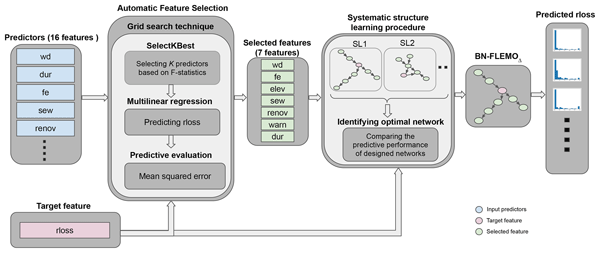
Kasra Rafiezadeh Shahi, Nivedita Sairam, Lukas Schoppa, Le Thanh Sang, Do Ly Hoai Tan, and Heidi Kreibich
Nat. Hazards Earth Syst. Sci., 25, 2845–2861, https://doi.org/10.5194/nhess-25-2845-2025, https://doi.org/10.5194/nhess-25-2845-2025, 2025
Short summary
Short summary
Ho Chi Minh City (HCMC) faces severe flood risks from climatic and socio-economic changes, requiring effective adaptation solutions. Flood loss estimation is crucial, but advanced probabilistic models accounting for key drivers and uncertainty are lacking. This study presents a probabilistic flood loss model with a feature selection paradigm for HCMC’s residential sector. Experiments using new survey data from flood-affected households demonstrate the model's superior performance.
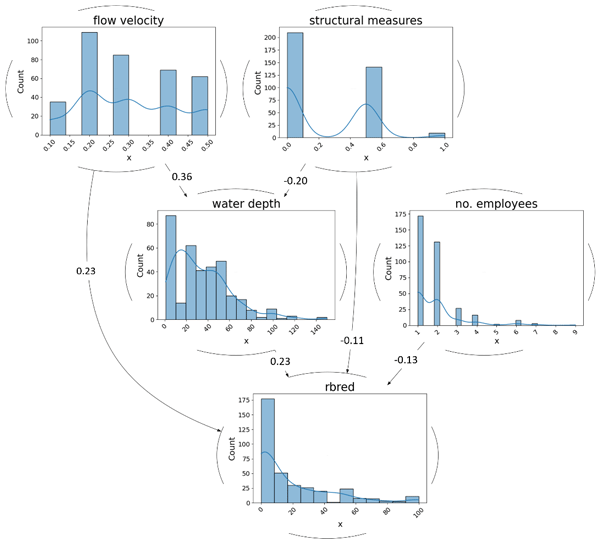
Anna Buch, Dominik Paprotny, Kasra Rafiezadeh Shahi, Heidi Kreibich, and Nivedita Sairam
Nat. Hazards Earth Syst. Sci., 25, 2437–2453, https://doi.org/10.5194/nhess-25-2437-2025, https://doi.org/10.5194/nhess-25-2437-2025, 2025
Short summary
Short summary
Many households in Vietnam depend on revenue from micro-businesses (shop houses). However, losses caused by regular flooding are not modelled. Business turnover, building age, and water depth were found to be the main drivers of flood losses of micro-businesses. We built and validated probabilistic models (non-parametric Bayesian networks) that estimate flood losses of micro-businesses. The results help with flood risk management and adaption decision making for micro-businesses.
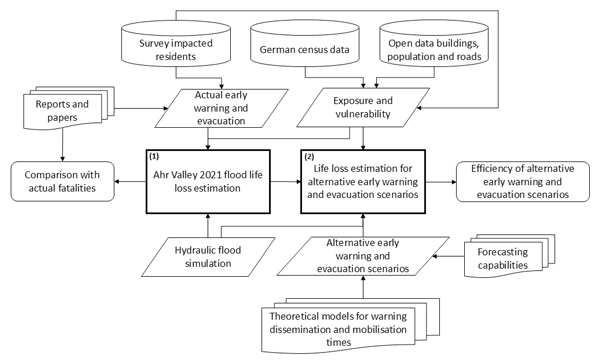
André Felipe Rocha Silva, Julian Cardoso Eleutério, Heiko Apel, and Heidi Kreibich
Nat. Hazards Earth Syst. Sci., 25, 1501–1520, https://doi.org/10.5194/nhess-25-1501-2025, https://doi.org/10.5194/nhess-25-1501-2025, 2025
Short summary
Short summary
This work uses agent-based modelling to evaluate the impact of flood warning and evacuation systems on human losses during the 2021 Ahr Valley flood in Germany. While the first flood warning with evacuation instructions is identified as timely, its lack of detail and effectiveness resulted in low public risk awareness. Better dissemination of warnings and improved risk perception and preparedness among the population could reduce casualties by up to 80 %.
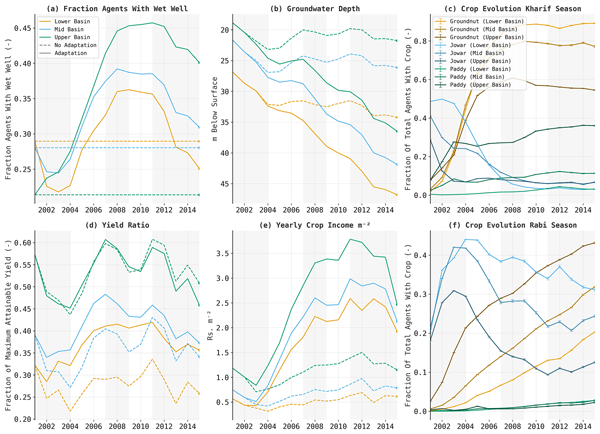
Maurice W. M. L. Kalthof, Jens de Bruijn, Hans de Moel, Heidi Kreibich, and Jeroen C. J. H. Aerts
Nat. Hazards Earth Syst. Sci., 25, 1013–1035, https://doi.org/10.5194/nhess-25-1013-2025, https://doi.org/10.5194/nhess-25-1013-2025, 2025
Short summary
Short summary
Our study explores how farmers in India's Bhima basin respond to consecutive droughts. We simulated farmers' individual choices – like changing crops or digging wells – and their effects on profits, yields, and water resources. Results show these adaptations, while improving incomes, ultimately increase drought vulnerability and damage. Such insights emphasize the need for alternative adaptations and highlight the value of socio-hydrological models in shaping policies to lessen drought impacts.
Nadja Veigel, Heidi Kreibich, Jens A. de Bruijn, Jeroen C. J. H. Aerts, and Andrea Cominola
Nat. Hazards Earth Syst. Sci., 25, 879–891, https://doi.org/10.5194/nhess-25-879-2025, https://doi.org/10.5194/nhess-25-879-2025, 2025
Short summary
Short summary
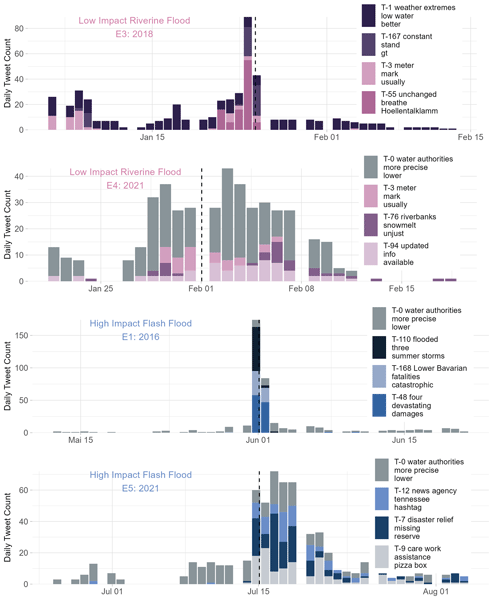
This study explores how social media, specifically Twitter (X), can help us understand public reactions to floods in Germany from 2014 to 2021. Using large language models, we extract topics and patterns of behavior from flood-related tweets. The findings offer insights to improve communication and disaster management. Topics related to low-impact flooding contain descriptive hazard-related content, while the focus shifts to catastrophic impacts and responsibilities during high-impact events.
Belinda Rhein and Heidi Kreibich
Nat. Hazards Earth Syst. Sci., 25, 581–589, https://doi.org/10.5194/nhess-25-581-2025, https://doi.org/10.5194/nhess-25-581-2025, 2025
Short summary
Short summary
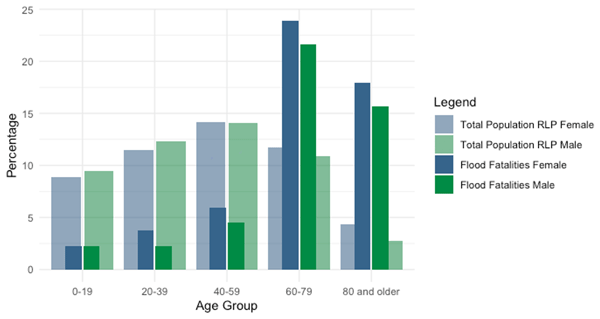
In July 2021, flooding killed 190 people in Germany, 134 of them in the Ahr valley, making it the deadliest flood in recent German history. The flash flood was extreme in terms of water levels, flow velocities and flood extent, and early warning and evacuation were inadequate. Many died on the ground floor or in the street, with older and impaired individuals especially vulnerable. Clear warnings should urge people to seek safety rather than save belongings, and timely evacuations are essential.
Bruno Merz, Günter Blöschl, Robert Jüpner, Heidi Kreibich, Kai Schröter, and Sergiy Vorogushyn
Nat. Hazards Earth Syst. Sci., 24, 4015–4030, https://doi.org/10.5194/nhess-24-4015-2024, https://doi.org/10.5194/nhess-24-4015-2024, 2024
Short summary
Short summary
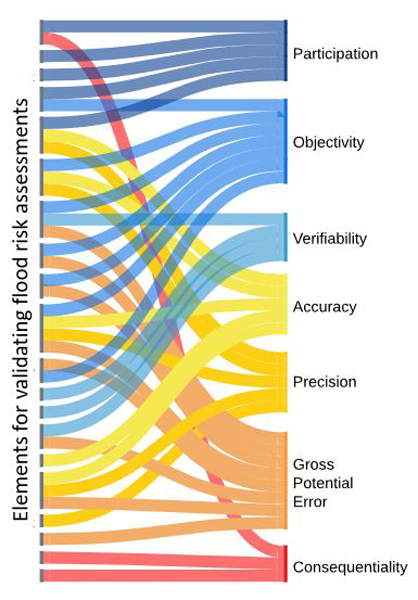
Flood risk assessments help us decide how to reduce the risk of flooding. Since these assessments are based on probabilities, it is hard to check their accuracy by comparing them to past data. We suggest a new way to validate these assessments, making sure they are practical for real-life decisions. This approach looks at both the technical details and the real-world situations where decisions are made. We demonstrate its practicality by applying it to flood emergency planning.
Jun Yu Puah, Ivan D. Haigh, David Lallemant, Kyle Morgan, Dongju Peng, Masashi Watanabe, and Adam D. Switzer
Ocean Sci., 20, 1229–1246, https://doi.org/10.5194/os-20-1229-2024, https://doi.org/10.5194/os-20-1229-2024, 2024
Short summary
Short summary
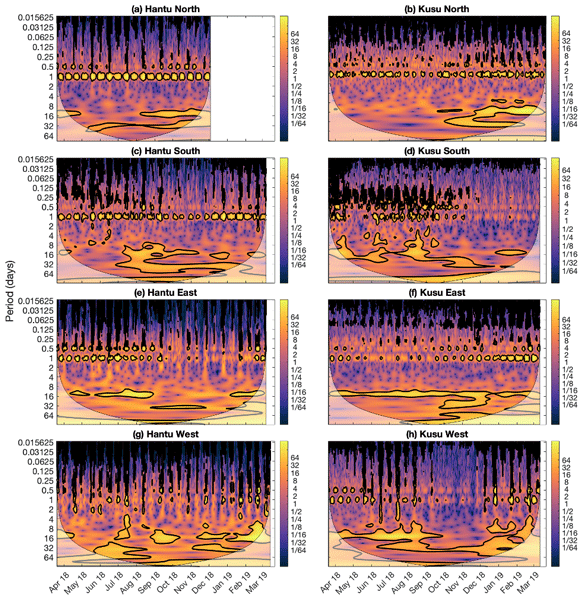
Coastal currents have wide implications for port activities, transport of sediments, and coral reef ecosystems; thus a deeper understanding of their characteristics is needed. We collected data on current velocities for a year using current meters at shallow waters in Singapore. The strength of the currents is primarily affected by tides and winds and generally increases during the monsoon seasons across various frequencies.
Dominik Paprotny, Belinda Rhein, Michalis I. Vousdoukas, Paweł Terefenko, Francesco Dottori, Simon Treu, Jakub Śledziowski, Luc Feyen, and Heidi Kreibich
Hydrol. Earth Syst. Sci., 28, 3983–4010, https://doi.org/10.5194/hess-28-3983-2024, https://doi.org/10.5194/hess-28-3983-2024, 2024
Short summary
Short summary
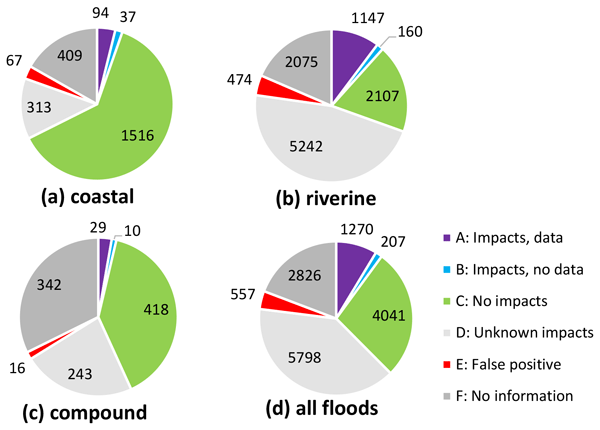
Long-term trends in flood losses are regulated by multiple factors, including climate variation, population and economic growth, land-use transitions, reservoir construction, and flood risk reduction measures. Here, we reconstruct the factual circumstances in which almost 15 000 potential riverine, coastal and compound floods in Europe occurred between 1950 and 2020. About 10 % of those events are reported to have caused significant socioeconomic impacts.
Viet Dung Nguyen, Jeroen Aerts, Max Tesselaar, Wouter Botzen, Heidi Kreibich, Lorenzo Alfieri, and Bruno Merz
Nat. Hazards Earth Syst. Sci., 24, 2923–2937, https://doi.org/10.5194/nhess-24-2923-2024, https://doi.org/10.5194/nhess-24-2923-2024, 2024
Short summary
Short summary
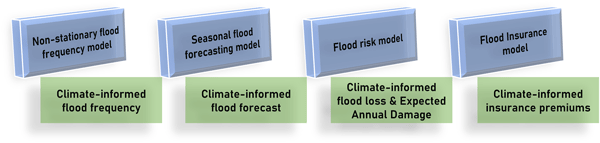
Our study explored how seasonal flood forecasts could enhance insurance premium accuracy. Insurers traditionally rely on historical data, yet climate fluctuations influence flood risk. We employed a method that predicts seasonal floods to adjust premiums accordingly. Our findings showed significant year-to-year variations in flood risk and premiums, underscoring the importance of adaptability. Despite limitations, this research aids insurers in preparing for evolving risks.
Perrine Hamel, Martí Bosch, Léa Tardieu, Aude Lemonsu, Cécile de Munck, Chris Nootenboom, Vincent Viguié, Eric Lonsdorf, James A. Douglass, and Richard P. Sharp
Geosci. Model Dev., 17, 4755–4771, https://doi.org/10.5194/gmd-17-4755-2024, https://doi.org/10.5194/gmd-17-4755-2024, 2024
Short summary
Short summary
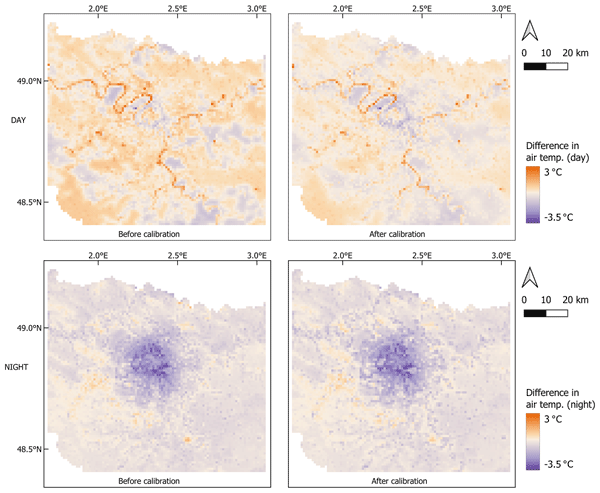
The InVEST Urban Cooling model estimates the cooling effect of vegetation in cities. We further developed an algorithm to facilitate model calibration and evaluation. Applying the algorithm to case studies in France and in the United States, we found that nighttime air temperature estimates compare well with reference datasets. Estimated change in temperature from a land cover scenario compares well with an alternative model estimate, supporting the use of the model for urban planning decisions.
Seth Bryant, Heidi Kreibich, and Bruno Merz
Proc. IAHS, 386, 181–187, https://doi.org/10.5194/piahs-386-181-2024, https://doi.org/10.5194/piahs-386-181-2024, 2024
Short summary
Short summary
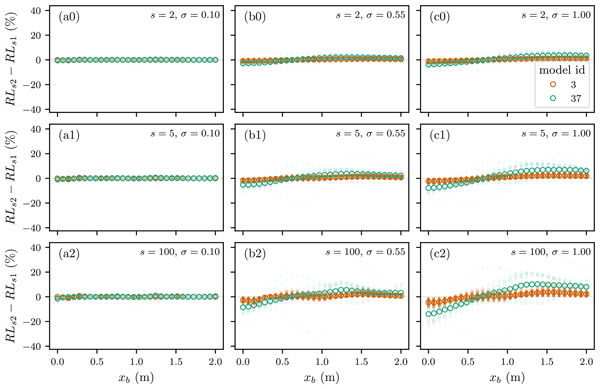
Our study found that simplifying data in flood risk models can introduce errors. We tested 344 damage functions and found errors up to 40 % of the total asset value. This means large-scale flood risk assessments may have significant errors due to the modelling approach. Our research highlights the need for more attention to data aggregation in flood risk models.
Seth Bryant, Guy Schumann, Heiko Apel, Heidi Kreibich, and Bruno Merz
Hydrol. Earth Syst. Sci., 28, 575–588, https://doi.org/10.5194/hess-28-575-2024, https://doi.org/10.5194/hess-28-575-2024, 2024
Short summary
Short summary
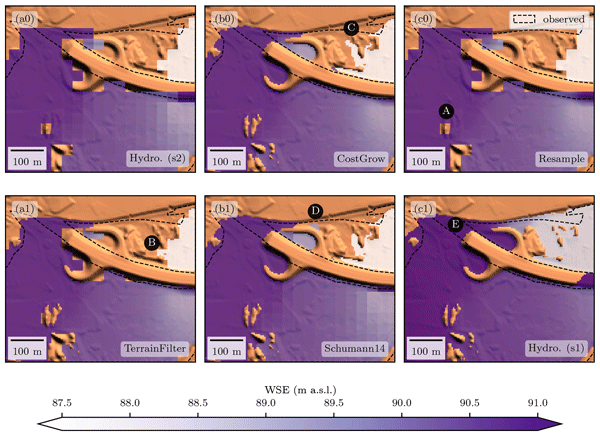
A new algorithm has been developed to quickly produce high-resolution flood maps. It is faster and more accurate than current methods and is available as open-source scripts. This can help communities better prepare for and mitigate flood damages without expensive modelling.
Heidi Kreibich, Kai Schröter, Giuliano Di Baldassarre, Anne F. Van Loon, Maurizio Mazzoleni, Guta Wakbulcho Abeshu, Svetlana Agafonova, Amir AghaKouchak, Hafzullah Aksoy, Camila Alvarez-Garreton, Blanca Aznar, Laila Balkhi, Marlies H. Barendrecht, Sylvain Biancamaria, Liduin Bos-Burgering, Chris Bradley, Yus Budiyono, Wouter Buytaert, Lucinda Capewell, Hayley Carlson, Yonca Cavus, Anaïs Couasnon, Gemma Coxon, Ioannis Daliakopoulos, Marleen C. de Ruiter, Claire Delus, Mathilde Erfurt, Giuseppe Esposito, Didier François, Frédéric Frappart, Jim Freer, Natalia Frolova, Animesh K. Gain, Manolis Grillakis, Jordi Oriol Grima, Diego A. Guzmán, Laurie S. Huning, Monica Ionita, Maxim Kharlamov, Dao Nguyen Khoi, Natalie Kieboom, Maria Kireeva, Aristeidis Koutroulis, Waldo Lavado-Casimiro, Hong-Yi Li, Maria Carmen LLasat, David Macdonald, Johanna Mård, Hannah Mathew-Richards, Andrew McKenzie, Alfonso Mejia, Eduardo Mario Mendiondo, Marjolein Mens, Shifteh Mobini, Guilherme Samprogna Mohor, Viorica Nagavciuc, Thanh Ngo-Duc, Huynh Thi Thao Nguyen, Pham Thi Thao Nhi, Olga Petrucci, Nguyen Hong Quan, Pere Quintana-Seguí, Saman Razavi, Elena Ridolfi, Jannik Riegel, Md Shibly Sadik, Nivedita Sairam, Elisa Savelli, Alexey Sazonov, Sanjib Sharma, Johanna Sörensen, Felipe Augusto Arguello Souza, Kerstin Stahl, Max Steinhausen, Michael Stoelzle, Wiwiana Szalińska, Qiuhong Tang, Fuqiang Tian, Tamara Tokarczyk, Carolina Tovar, Thi Van Thu Tran, Marjolein H. J. van Huijgevoort, Michelle T. H. van Vliet, Sergiy Vorogushyn, Thorsten Wagener, Yueling Wang, Doris E. Wendt, Elliot Wickham, Long Yang, Mauricio Zambrano-Bigiarini, and Philip J. Ward
Earth Syst. Sci. Data, 15, 2009–2023, https://doi.org/10.5194/essd-15-2009-2023, https://doi.org/10.5194/essd-15-2009-2023, 2023
Short summary
Short summary
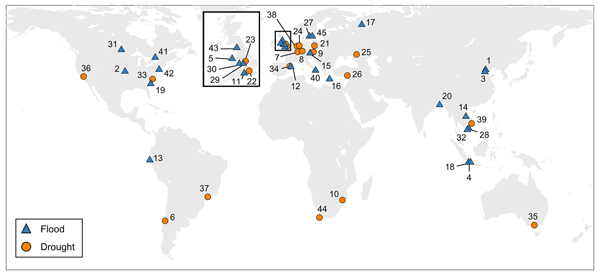
As the adverse impacts of hydrological extremes increase in many regions of the world, a better understanding of the drivers of changes in risk and impacts is essential for effective flood and drought risk management. We present a dataset containing data of paired events, i.e. two floods or two droughts that occurred in the same area. The dataset enables comparative analyses and allows detailed context-specific assessments. Additionally, it supports the testing of socio-hydrological models.
Thulasi Vishwanath Harish, Nivedita Sairam, Liang Emlyn Yang, Matthias Garschagen, and Heidi Kreibich
Nat. Hazards Earth Syst. Sci., 23, 1125–1138, https://doi.org/10.5194/nhess-23-1125-2023, https://doi.org/10.5194/nhess-23-1125-2023, 2023
Short summary
Short summary
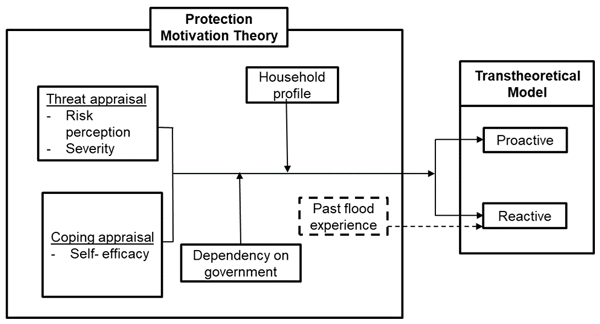
Coastal Asian cities are becoming more vulnerable to flooding. In this study we analyse the data collected from flood-prone houses in Ho Chi Minh City to identify what motivates the households to adopt flood precautionary measures. The results revealed that educating the households about the available flood precautionary measures and communicating the flood protection measures taken by the government encourage the households to adopt measures without having to experience multiple flood events.
Mariano Balbi and David Charles Bonaventure Lallemant
Hydrol. Earth Syst. Sci., 27, 1089–1108, https://doi.org/10.5194/hess-27-1089-2023, https://doi.org/10.5194/hess-27-1089-2023, 2023
Short summary
Short summary
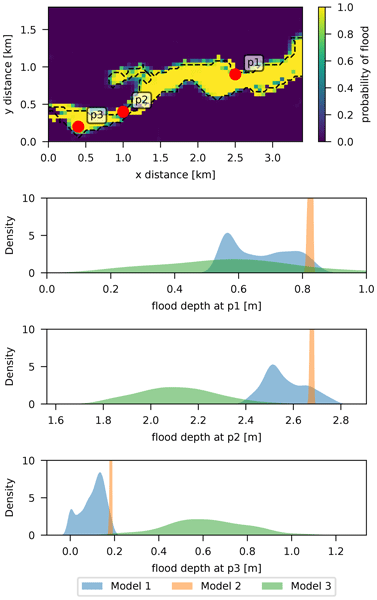
We proposed a methodology to obtain useful and robust probabilistic predictions from computational flood simulators using satellite-borne flood extent observations. We developed a Bayesian framework to obtain the uncertainty in roughness parameters, in observations errors, and in simulator structural deficiencies. We found that it can yield improvements in predictions relative to current methodologies and can potentially lead to consistent ways of combining data from different sources.
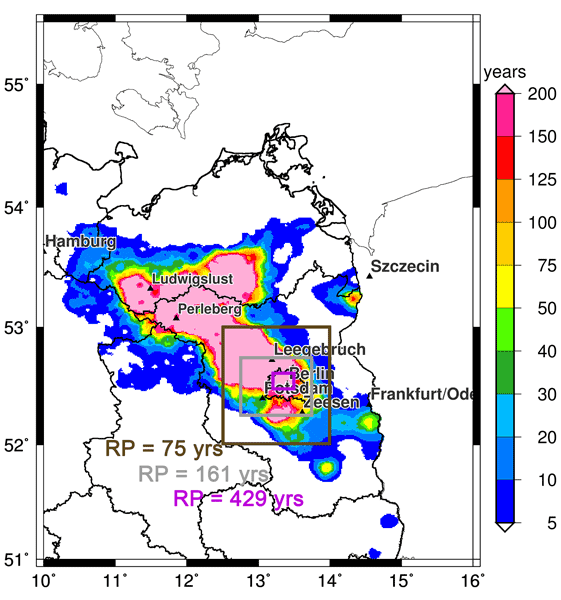
Alberto Caldas-Alvarez, Markus Augenstein, Georgy Ayzel, Klemens Barfus, Ribu Cherian, Lisa Dillenardt, Felix Fauer, Hendrik Feldmann, Maik Heistermann, Alexia Karwat, Frank Kaspar, Heidi Kreibich, Etor Emanuel Lucio-Eceiza, Edmund P. Meredith, Susanna Mohr, Deborah Niermann, Stephan Pfahl, Florian Ruff, Henning W. Rust, Lukas Schoppa, Thomas Schwitalla, Stella Steidl, Annegret H. Thieken, Jordis S. Tradowsky, Volker Wulfmeyer, and Johannes Quaas
Nat. Hazards Earth Syst. Sci., 22, 3701–3724, https://doi.org/10.5194/nhess-22-3701-2022, https://doi.org/10.5194/nhess-22-3701-2022, 2022
Short summary
Short summary
In a warming climate, extreme precipitation events are becoming more frequent. To advance our knowledge on such phenomena, we present a multidisciplinary analysis of a selected case study that took place on 29 June 2017 in the Berlin metropolitan area. Our analysis provides evidence of the extremeness of the case from the atmospheric and the impacts perspectives as well as new insights on the physical mechanisms of the event at the meteorological and climate scales.
Brunella Bonaccorso, Carmelo Cammalleri, Athanasios Loukas, and Heidi Kreibich
Nat. Hazards Earth Syst. Sci., 22, 1857–1862, https://doi.org/10.5194/nhess-22-1857-2022, https://doi.org/10.5194/nhess-22-1857-2022, 2022
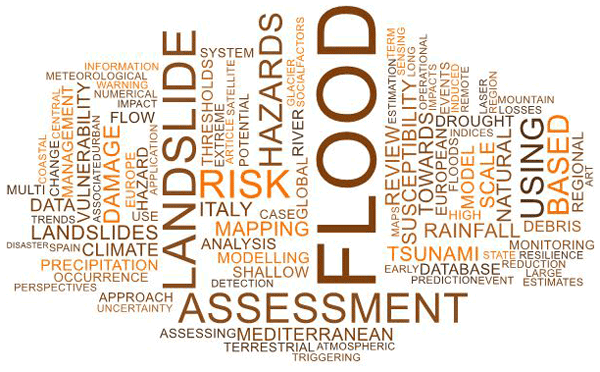
Animesh K. Gain, Yves Bühler, Pascal Haegeli, Daniela Molinari, Mario Parise, David J. Peres, Joaquim G. Pinto, Kai Schröter, Ricardo M. Trigo, María Carmen Llasat, and Heidi Kreibich
Nat. Hazards Earth Syst. Sci., 22, 985–993, https://doi.org/10.5194/nhess-22-985-2022, https://doi.org/10.5194/nhess-22-985-2022, 2022
Short summary
Short summary
To mark the 20th anniversary of Natural Hazards and Earth System Sciences (NHESS), an interdisciplinary and international journal dedicated to the public discussion and open-access publication of high-quality studies and original research on natural hazards and their consequences, we highlight 11 key publications covering major subject areas of NHESS that stood out within the past 20 years.
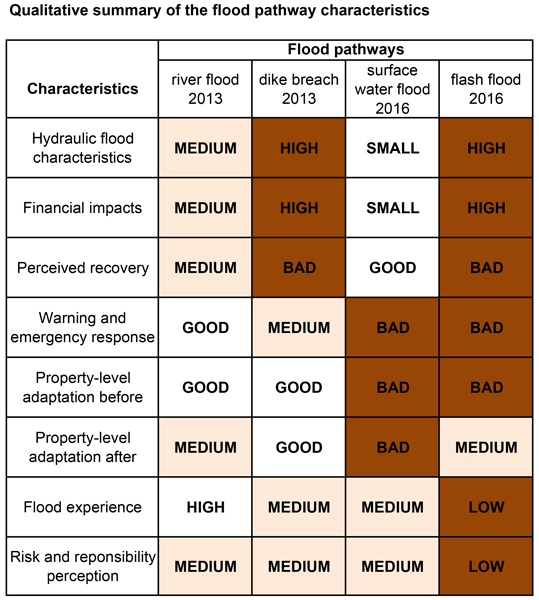
Annegret H. Thieken, Guilherme Samprogna Mohor, Heidi Kreibich, and Meike Müller
Nat. Hazards Earth Syst. Sci., 22, 165–185, https://doi.org/10.5194/nhess-22-165-2022, https://doi.org/10.5194/nhess-22-165-2022, 2022
Short summary
Short summary
Various floods hit Germany recently. While there was a river flood with some dike breaches in 2013, flooding in 2016 resulted directly from heavy rainfall, causing overflowing drainage systems in urban areas and destructive flash floods in steep catchments. Based on survey data, we analysed how residents coped with these different floods. We observed significantly different flood impacts, warnings, behaviour and recovery, offering entry points for tailored risk communication and support.
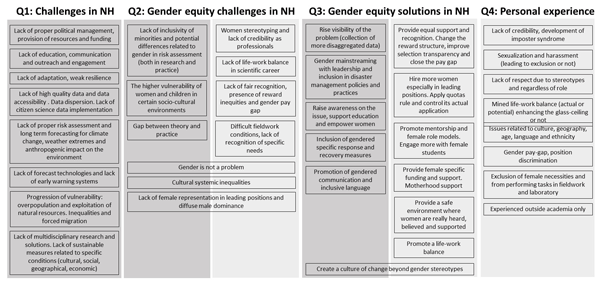
Valeria Cigala, Giulia Roder, and Heidi Kreibich
Nat. Hazards Earth Syst. Sci., 22, 85–96, https://doi.org/10.5194/nhess-22-85-2022, https://doi.org/10.5194/nhess-22-85-2022, 2022
Short summary
Short summary
Non-male scientists constitute a minority in the geoscience professional environment, and they are underrepresented in disaster risk reduction planning. So far the international agenda has failed to effectively promote gender inclusion in disaster policy, preventing non-male scientists from career development and recognition. Here we share the thoughts, experiences, and priorities of women and non-binary scientists as a starting point to expand the discourse and promote intersectional research.
Cited articles
Apel, H., Aronica, G. T., Kreibich, H., and Thieken, A. H.: Flood risk analyses–how detailed do we need to be?, Nat. Hazards, 49, 79–98, https://doi.org/10.1007/s11069-008-9277-8, 2009.
Bill-Weilandt, A., Sairam, N., Wagenaar, D., Rafiezadeh Shahi, K., Kreibich, H., Hamel, P., and Lallemant, D.: Data for “Flood damage functions for rice: synthesizing evidence and building data-driven models”, DR-NTU [data set], https://doi.org/10.21979/N9/OZGWXE, 2026a.
Bill-Weilandt, A., Sairam, N., Wagenaar, D., Rafiezadeh Shahi, K., Kreibich, H., Hamel, P., and Lallemant, D.: Models for “Flood damage functions for rice: synthesizing evidence and building data-driven models”, Zenodo [code], https://doi.org/10.5281/zenodo.18472496, 2026b.
Breiman, L.: Random Forests, Machine Learning, 45, 5–32, 2001.
Brémond, P., Grelot, F., and Agenais, A.-L.: Review Article: Economic evaluation of flood damage to agriculture – review and analysis of existing methods, Nat. Hazards Earth Syst. Sci., 13, 2493–2512, https://doi.org/10.5194/nhess-13-2493-2013, 2013.
Brémond, P., Agenais, A.-L., Grelot, F., and Richert, C.: Process-based flood damage modelling relying on expert knowledge: a methodological contribution applied to the agricultural sector, Nat. Hazards Earth Syst. Sci., 22, 3385–3412, https://doi.org/10.5194/nhess-22-3385-2022, 2022.
Budhathoki, A., Tanaka, T., and Tachikawa, Y.: Developing flood risk curves of agricultural economic damage under climate change in the Lower Chao Phraya River Basin, Thailand, J. Flood Risk Management, 17, e13031, https://doi.org/10.1111/jfr3.13031, 2024.
Davis, B., Mane, E., Gurbuzer, L. Y., Caivano, G., Piedrahita, N., Schneider, K., Azhar, N., Benali, M., Chaudhary, N., Rivera, R., Ambikapathi, R., and Winters, P.: Estimating global and country-level employment in agrifood systems, Food and Agriculture Organization of the United Nations (FAO), Rome, Italy, https://doi.org/10.4060/cc4337en, 2023.
de Moel, H., Asselman, N. E. M., and Aerts, J. C. J. H.: Uncertainty and sensitivity analysis of coastal flood damage estimates in the west of the Netherlands, Nat. Hazards Earth Syst. Sci., 12, 1045–1058, https://doi.org/10.5194/nhess-12-1045-2012, 2012.
Dottori, F., Figueiredo, R., Martina, M. L. V., Molinari, D., and Scorzini, A. R.: INSYDE: a synthetic, probabilistic flood damage model based on explicit cost analysis, Nat. Hazards Earth Syst. Sci., 16, 2577–2591, https://doi.org/10.5194/nhess-16-2577-2016, 2016.
Federal Emergency Management Agency (FEMA): Hazus Flood Model Technical Manual 2.1: Multi-hazard Loss Estimation Methodology Flood Model, https://www.fema.gov/sites/default/files/2020-09/fema_hazus_flood-model_technical-manual_2.1.pdf (last access: 11 July 2025), 2020.
Food and Agriculture Organization of the United Nations (FAO): The Impact of Disasters on Agriculture and Food Security 2023 – Avoiding and reducing losses through investment in resilience, Rome, https://doi.org/10.4060/cc7900en, 2023.
Food and Agriculture Organization of the United Nations (FAO), International Fund for Agricultural Development (IFAD), United Nations Children's Fund (UNICEF), World Food Programme (WFP), and World Health Organization (WHO): The state of food security and nutrition in the world 2024: Financing to end hunger, food insecurity and malnutrition in all its forms, FAO, IFAD, UNICEF, WFP, WHO, https://doi.org/10.4060/cd1254en, 2024.
Förster, S., Kuhlmann, B., Lindenschmidt, K.-E., and Bronstert, A.: Assessing flood risk for a rural detention area, Nat. Hazards Earth Syst. Sci., 8, 311–322, https://doi.org/10.5194/nhess-8-311-2008, 2008.
Gerl, T., Kreibich, H., Franco, G., Marechal, D., and Schröter, K.: A Review of Flood Loss Models as Basis for Harmonization and Benchmarking, PLoS ONE, 11, e0159791, https://doi.org/10.1371/journal.pone.0159791, 2016.
Hothorn, T. and Zeileis, A.: partykit: A Toolkit for Recursive Partytioning, CRAN [code], https://doi.org/10.32614/CRAN.package.partykit, 2023.
Hu, T., Zhang, X., Khanal, S., Wilson, R., Leng, G., Toman, E. M., Wang, X., Li, Y., and Zhao, K.: Climate change impacts on crop yields: A review of empirical findings, statistical crop models, and machine learning methods, Environmental Modelling & Software, 179, 106119, https://doi.org/10.1016/j.envsoft.2024.106119, 2024.
Huang, T. and Merwade, V.: Uncertainty Analysis and Quantification in Flood Insurance Rate Maps Using Bayesian Model Averaging and Hierarchical BMA, J. Hydrol. Eng., 28, 04022038, https://doi.org/10.1061/JHYEFF.HEENG-5851, 2023.
Huizinga, J., de Moel, H., and Szewczyk, W.: Global flood depth-damage functions: methodology and the database with guidelines, Publications Office of the European Union, Luxembourg, https://doi.org/10.2760/16510, 2017.
Intergovernmental Panel on Climate Change (IPCC): Climate Change 2022: Impacts, Adaptation, and Vulnerability, Contribution of Working Group II to the Sixth Assessment Report of the Intergovernmental Panel on Climate Change, edited by: Pörtner, H.-O., Roberts, D. C., Tignor, M., Poloczanska, E. S., Mintenbeck, K., Alegría, A., Craig, M., Langsdorf, S., Löschke, S., Möller, V., Okem, A., and Rama, B., Cambridge University Press, Cambridge, UK and New York, NY, USA, 3056 pp., https://doi.org/10.1017%2F9781009325844, 2022.
James, G., Witten, D., Hastie, T., and Tibshirani, R.: An introduction to statistical learning with applications in R, 1st edn., Springer Science+Business Media, New York, USA, 426 pp., https://doi.org/10.1007/978-1-4614-7138-7_1, 2013.
Jongman, B., Kreibich, H., Apel, H., Barredo, J. I., Bates, P. D., Feyen, L., Gericke, A., Neal, J., Aerts, J. C. J. H., and Ward, P. J.: Comparative flood damage model assessment: towards a European approach, Nat. Hazards Earth Syst. Sci., 12, 3733–3752, https://doi.org/10.5194/nhess-12-3733-2012, 2012.
Kim, Y.-U., Webber, H., Adiku, S. G. K., Nóia Júnior, R. D. S., Deswarte, J.-C., Asseng, S., and Ewert, F.: Mechanisms and modelling approaches for excessive rainfall stress on cereals: Waterlogging, submergence, lodging, pests and diseases, Agricultural and Forest Meteorology, 344, 109819, https://doi.org/10.1016/j.agrformet.2023.109819, 2024.
Lazin, R., Shen, X., and Anagnostou, E.: Estimation of flood-damaged cropland area using a convolutional neural network, Environ. Res. Lett., 16, 054011, https://doi.org/10.1088/1748-9326/abeba0, 2021.
Li, Y., Guan, K., Schnitkey, G. D., DeLucia, E., and Peng, B.: Excessive rainfall leads to maize yield loss of a comparable magnitude to extreme drought in the United States, Global Change Biology, 25, 2325–2337, https://doi.org/10.1111/gcb.14628, 2019.
Liu, W., Li, Z., Li, Y., Ye, T., Chen, S., and Liu, Y.: Heterogeneous impacts of excessive wetness on maize yields in China: Evidence from statistical yields and process-based crop models, Agricultural and Forest Meteorology, 327, 109205, https://doi.org/10.1016/j.agrformet.2022.109205, 2022.
Meinshausen, N.: Quantile Regression Forests, Journal of Machine Learning Research, 7, 983–999, 2006.
Merz, B., Kreibich, H., and Lall, U.: Multi-variate flood damage assessment: a tree-based data-mining approach, Nat. Hazards Earth Syst. Sci., 13, 53–64, https://doi.org/10.5194/nhess-13-53-2013, 2013.
Monteleone, B., Giusti, R., Magnini, A., Arosio, M., Domeneghetti, A., Borzì, I., Petruccelli, N., Castellarin, A., Bonaccorso, B., and Martina, M. L. V.: Estimations of Crop Losses Due to Flood Using Multiple Sources of Information and Models: The Case Study of the Panaro River, Water, 15, 1980, https://doi.org/10.3390/w15111980, 2023a.
Monteleone, B., Borzí, I., Bonaccorso, B., and Martina, M.: Quantifying crop vulnerability to weather-related extreme events and climate change through vulnerability curves, Nat. Hazards, 116, 2761–2796, https://doi.org/10.1007/s11069-022-05791-0, 2023b.
Nguyen, N. Y., Kha, D. D., and Ichikawa, Y.: Developing a multivariable lookup table function for estimating flood damages of rice crop in Vietnam using a secondary research approach, International Journal of Disaster Risk Reduction, 58, 102208, https://doi.org/10.1016/j.ijdrr.2021.102208, 2021.
Nhangumbe, M., Nascetti, A., Georganos, S., and Ban, Y.: Supervised and unsupervised machine learning approaches using Sentinel data for flood mapping and damage assessment in Mozambique, Remote Sensing Applications: Society and Environment, 32, 101015, https://doi.org/10.1016/j.rsase.2023.101015, 2023.
Ospina, R. and Ferrari, S. L. P.: Inflated beta distributions, Stat. Papers, 51, 111–126, https://doi.org/10.1007/s00362-008-0125-4, 2010.
Pasquel, D., Roux, S., Richetti, J., Cammarano, D., Tisseyre, B., and Taylor, J. A.: A review of methods to evaluate crop model performance at multiple and changing spatial scales, Precision Agric., 23, 1489–1513, https://doi.org/10.1007/s11119-022-09885-4, 2022.
Penning-Rowsell, E. C. (Ed.): Flood and coastal erosion risk management: a manual for economic appraisal, Routledge, New York, 448 pp., https://doi.org/10.4324/9780203066393, 2013.
Penning-Rowsell, E. C., Johnson, C., Tunstall, S., Tapsell, S., Morris, J., Chatterton, J., and Green, C.: The benefits of flood and coastal risk management: a handbook of assessment techniques, Middlesex Univ. Press, London, 81 pp., ISBN 1904750516, 2005.
Priyatikanto, R., Lu, Y., Dash, J., and Sheffield, J.: Improving generalisability and transferability of machine-learning-based maize yield prediction model through domain adaptation, Agricultural and Forest Meteorology, 341, 109652, https://doi.org/10.1016/j.agrformet.2023.109652, 2023.
Ramsar: Ramsar Information Sheet for Thailand Lower Songkhram River, https://rsis.ramsar.org/RISapp/files/RISrep/TH2420RIS_2004_en.pdf (last access: 20 July 2025), 2019.
Ramsar Site Information Service: Information Sheet on Ramsar Wetlands, Ramsar Site no. 1431, https://rsis.ramsar.org/RISapp/files/RISrep/MM1431RIS.pdf (last access: 8 July 2025), 2004.
Rözer, V., Kreibich, H., Schröter, K., Müller, M., Sairam, N., Doss-Gollin, J., Lall, U., and Merz, B.: Probabilistic Models Significantly Reduce Uncertainty in Hurricane Harvey Pluvial Flood Loss Estimates, Earth's Future, 7, 384–394, https://doi.org/10.1029/2018EF001074, 2019.
Sairam, N., Schröter, K., Carisi, F., Wagenaar, D., Domeneghetti, A., Molinari, D., Brill, F., Priest, S., Viavattene, C., Merz, B., and Kreibich, H.: Bayesian Data-Driven approach enhances synthetic flood loss models, Environmental Modelling & Software, 132, 104798, https://doi.org/10.1016/j.envsoft.2020.104798, 2020.
Schoppa, L., Sieg, T., Vogel, K., Zöller, G., and Kreibich, H.: Probabilistic Flood Loss Models for Companies, Water Resources Research, 56, e2020WR027649, https://doi.org/10.1029/2020WR027649, 2020.
Schröter, K., Kreibich, H., Vogel, K., Riggelsen, C., Scherbaum, F., and Merz, B.: How useful are complex flood damage models?, Water Resources Research, 50, 3378–3395, https://doi.org/10.1002/2013WR014396, 2014.
Scorzini, A. R., Di Bacco, M., and Manella, G.: Regional flood risk analysis for agricultural crops: Insights from the implementation of AGRIDE-c in central Italy, International Journal of Disaster Risk Reduction, 53, 101999, https://doi.org/10.1016/j.ijdrr.2020.101999, 2021.
Shrestha, B. B., Okazumi, T., Miyamoto, M., and Sawano, H.: Flood damage assessment in the Pampanga River basin of the Philippines, J. Flood Risk Manag., 9, 355–369, https://doi.org/10.1111/jfr3.12174, 2016.
Shrestha, B. B., Kawasaki, A., and Zin, W. W.: Development of flood damage functions for agricultural crops and their applicability in regions of Asia, Journal of Hydrology: Regional Studies, 36, 100872, https://doi.org/10.1016/j.ejrh.2021.100872, 2021.
Stiller, S., Grahmann, K., Ghazaryan, G., and Ryo, M.: Improving spatial transferability of deep learning models for small-field crop yield prediction, ISPRS Open Journal of Photogrammetry and Remote Sensing, 12, 100064, https://doi.org/10.1016/j.ophoto.2024.100064, 2024.
Tapia-Silva, F.-O., Itzerott, S., Foerster, S., Kuhlmann, B., and Kreibich, H.: Estimation of flood losses to agricultural crops using remote sensing, Physics and Chemistry of the Earth, Parts A/B/C, 36, 253–265, https://doi.org/10.1016/j.pce.2011.03.005, 2011.
Wagenaar, D., de Jong, J., and Bouwer, L. M.: Multi-variable flood damage modelling with limited data using supervised learning approaches, Nat. Hazards Earth Syst. Sci., 17, 1683–1696, https://doi.org/10.5194/nhess-17-1683-2017, 2017.
Wagenaar, D., Lüdtke, S., Schröter, K., Bouwer, L. M., and Kreibich, H.: Regional and Temporal Transferability of Multivariable Flood Damage Models, Water Resources Research, 54, 3688–3703, https://doi.org/10.1029/2017WR022233, 2018.
Win, S., Zin, W. W., Kawasaki, A., and San, Z. M. L. T.: Establishment of flood damage function models: A case study in the Bago River Basin, Myanmar, International Journal of Disaster Risk Reduction, 28, 688–700, https://doi.org/10.1016/j.ijdrr.2018.01.030, 2018.
Short summary
Flooding is a major cause of agricultural loss globally. This study evaluates and compares flood damage models for rice crops. We present an inventory with 20 models from 12 countries, representing the most comprehensive review of such models for rice to date. The study offers practical guidance on model selection and expected errors when transferring models across regions. We provide models and lookup tables that can be used in flood risk assessments in rice-producing regions.
Flooding is a major cause of agricultural loss globally. This study evaluates and compares flood...


Altmetrics
Final-revised paper
Preprint