
Articles | Volume 26, issue 10
https://doi.org/10.5194/nhess-26-5315-2026
© Author(s) 2026. This work is distributed under
the Creative Commons Attribution 4.0 License.
the Creative Commons Attribution 4.0 License.
https://doi.org/10.5194/nhess-26-5315-2026
© Author(s) 2026. This work is distributed under
the Creative Commons Attribution 4.0 License.
the Creative Commons Attribution 4.0 License.
Research article
| 
28 Oct 2026
Research article |
| 28 Oct 2026
| 28 Oct 2026
Mobility of dry granular flows over contrasting erodible bed materials in laboratory experiments
Katharina Wetterauer
CORRESPONDING AUTHOR

Mountain River Research Group, University of the Bundeswehr Munich, Neubiberg, Germany
Sebastian Müller
Chair of Hydromechanics and Hydraulic Engineering, University of the Bundeswehr Munich, Neubiberg, Germany
Michael Krautblatter
Chair of Landslide Research, Technical University of Munich, Munich, Germany
Shiva P. Pudasaini
Chair of Landslide Research, Technical University of Munich, Munich, Germany
Ivo Baselt
Mountain River Research Group, University of the Bundeswehr Munich, Neubiberg, Germany
Related authors

Katharina Wetterauer and Dirk Scherler
Earth Surf. Dynam., 11, 1013–1033, https://doi.org/10.5194/esurf-11-1013-2023, https://doi.org/10.5194/esurf-11-1013-2023, 2023
Short summary
Short summary
In glacial landscapes, debris supply rates vary spatially and temporally. Rockwall erosion rates derived from cosmogenic 10Be concentrations in medial moraine debris at five Swiss glaciers around Pigne d'Arolla indicate an increase in erosion from the end of the Little Ice Age towards deglaciation but temporally more stable rates over the last ∼100 years. Rockwall erosion rates are higher where rockwalls are steep and north-facing, suggesting a potential slope and temperature control.
Natalie Barbosa, Carolin Kiefer, Juilson Jubanski, Florian Siegert, Michael Strasser, and Michael Krautblatter
EGUsphere, https://doi.org/10.5194/egusphere-2026-4303, https://doi.org/10.5194/egusphere-2026-4303, 2026
This preprint is open for discussion and under review for Earth Surface Dynamics (ESurf).
Short summary
Short summary
Climate change influences natural hazard frequencies and volumes in the Alps. Historical aerial imagery and lake sediment cores at Plansee (Austria) were analyzed to derive sediment transport volumes from debris flows. Since 1980, the number of debris-flow-initiating rainstorms increased. This led to an increase in erosion and more sediment transport to the lake. The terrestrial and lake records show the same volume over 7 decades, and we see an increase in sediment connectivity.
Maike Offer, Ingo Hartmeyer, Samuel Weber, Markus Keuschnig, and Michael Krautblatter
Earth Surf. Dynam., 14, 661–683, https://doi.org/10.5194/esurf-14-661-2026, https://doi.org/10.5194/esurf-14-661-2026, 2026
Short summary
Short summary
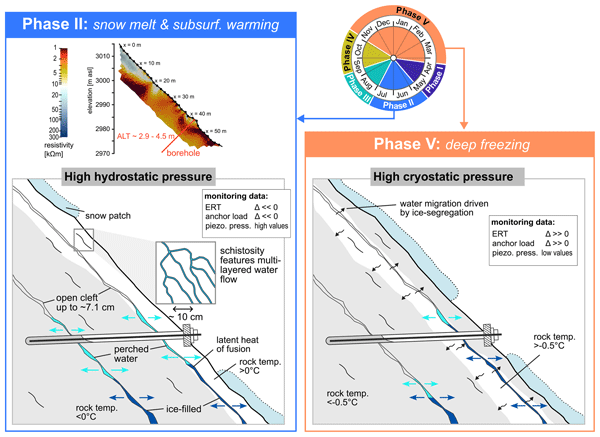
This study presents a year-round automated electrical resistivity tomography monitoring of a steep permafrost rockwall combined with borehole temperature, anchor load and piezometer observations. The joint analysis revealed seasonal phases with enhanced mechanical forcing of rockwalls related to high hydrostatic and cryostatic pressures, which are of particular interest for understanding preconditioning of rock instabilities.
Riccardo Scandroglio, Samuel Weber, Jonas K. Limbrock, and Michael Krautblatter
The Cryosphere, 20, 4787–4809, https://doi.org/10.5194/tc-20-4787-2026, https://doi.org/10.5194/tc-20-4787-2026, 2026
Short summary
Short summary
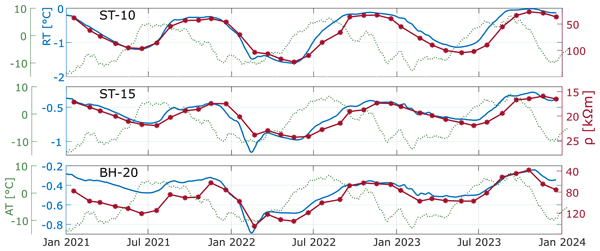
This study monitors changes in frozen rock on Mount Zugspitze over 17 years using monthly electrical resistivity measurements. By linking this data to rock temperature and applying advanced analysis, it reveals a 40 % loss of permafrost in the past decade. Thawing accelerates during summer, highlighting increasing risks of rock instability as temperatures rise.
Felix Pfluger, Samuel Weber, Natalie Barbosa, Florentin Hofmeister, Johannes Leinauer, Peter Wegmann, and Michael Krautblatter
Earth Surf. Dynam., 14, 601–634, https://doi.org/10.5194/esurf-14-601-2026, https://doi.org/10.5194/esurf-14-601-2026, 2026
Short summary
Short summary
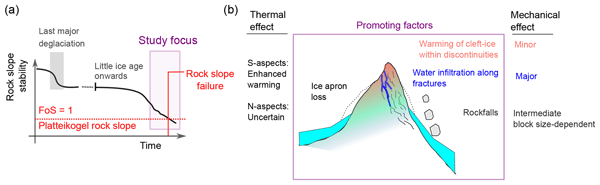
The 2024 Platteikogel rock slope failure (Tyrol, Austria) highlights how cryospheric changes promote slope failure. We demonstrate how the system feedback of ice apron loss, permafrost warming, increase in rockfall activity, and changes in groundwater conditions accelerate mechanical destabilization, and as a consequence likely peaked in the observed failure. Today, rapidly vanishing ice aprons potentially mark source zones for future rock slides.
Julian Bauer, Sebastian Müller, Thomas Heinze, Homa Khanahmadi, and Ivo Baselt
The Cryosphere, 20, 3483–3509, https://doi.org/10.5194/tc-20-3483-2026, https://doi.org/10.5194/tc-20-3483-2026, 2026
Short summary
Short summary
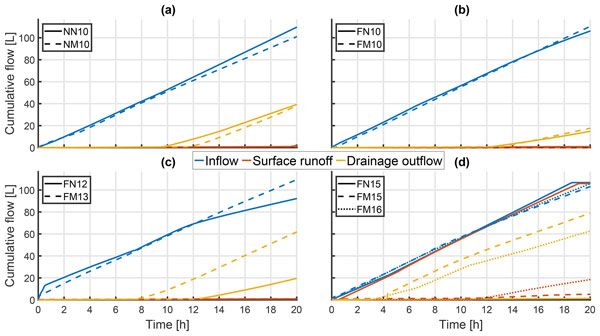
We studied how rainwater infiltrates into frozen slopes. Using large experiments on an artificial soil slope, we found that larger channels, so-called macropores, first speed up infiltration, but later refreeze and block the flow. These results explain when frozen slopes absorb or shed rainwater and help improve predictions of runoff and slope stability in cold regions.
Philipp Daniel Gewalt, Thomas C. Wagner, and Michael Krautblatter
EGUsphere, https://doi.org/10.5194/egusphere-2026-1699, https://doi.org/10.5194/egusphere-2026-1699, 2026
Short summary
Short summary
Sediments move through mountain landscapes during heavy rainfall. Climate change will alter the occurrence of heavy rainfall, potentially changing sediment transport. To understand how, we investigate how mountain sediment transport responded to past climate changes. We show that sediments in small, steep catchments are moved by less extreme precipitation compared to larger, gentler catchments. This means that catchment form and area control future sediment transport in a changing climate.
Benjamin Jacobs, Mohamed Ismael, Mostafa Ezzy, Markus Keuschnig, Alexander Mendler, Johanna Kieser, Michael Krautblatter, Christian U. Grosse, and Hany Helal
Earth Surf. Dynam., 14, 55–74, https://doi.org/10.5194/esurf-14-55-2026, https://doi.org/10.5194/esurf-14-55-2026, 2026
Short summary
Short summary
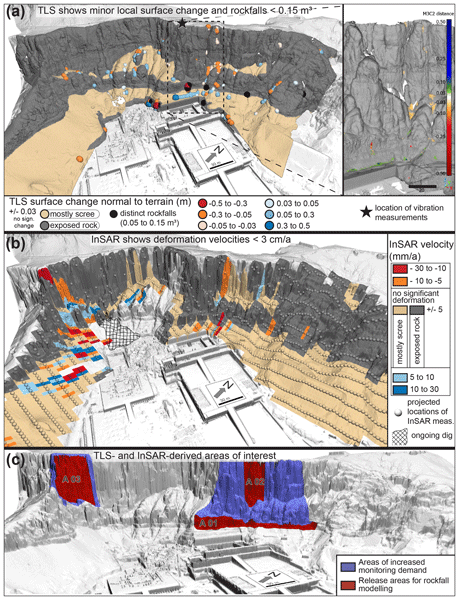
The Mortuary Temple of Hatshepsut is one of Egypt's key heritage sites but is potentially threatened by rockfalls from a 100 m high limestone cliff. We transferred established monitoring techniques from alpine environments to this UNESCO World Heritage Site and evaluated their performance in a historically sensitive desert environment. Our study presents the first evidence-based event and impact analysis of rockfalls at the Temple of Hatshepsut, providing vital data for future risk assessment.
Martin Mergili, Hanna Pfeffer, Andreas Kellerer-Pirklbauer, Christian Zangerl, and Shiva P. Pudasaini
Geosci. Model Dev., 18, 9879–9896, https://doi.org/10.5194/gmd-18-9879-2025, https://doi.org/10.5194/gmd-18-9879-2025, 2025
Short summary
Short summary
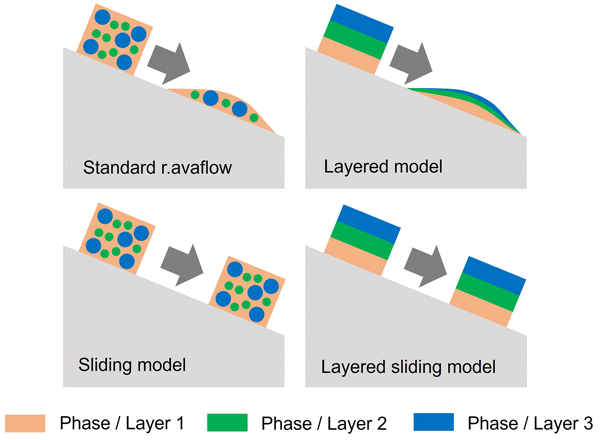
We present a new version of the landslide model r.avaflow. It includes a model where different materials move on top of each other instead of mixing; a model supporting the entire range from block sliding to flowing; a model for slow-moving processes; and an interface for virtual reality visualization. Based on the results for four case studies we conclude that, at the moment, our enhancements are very useful for visualization of landslides for awareness building and environmental education.
Samuel Weber, Jan Beutel, Michael Dietze, Alexander Bast, Robert Kenner, Marcia Phillips, Johannes Leinauer, Simon Mühlbauer, Felix Pfluger, and Michael Krautblatter
Earth Surf. Dynam., 13, 1157–1179, https://doi.org/10.5194/esurf-13-1157-2025, https://doi.org/10.5194/esurf-13-1157-2025, 2025
Short summary
Short summary
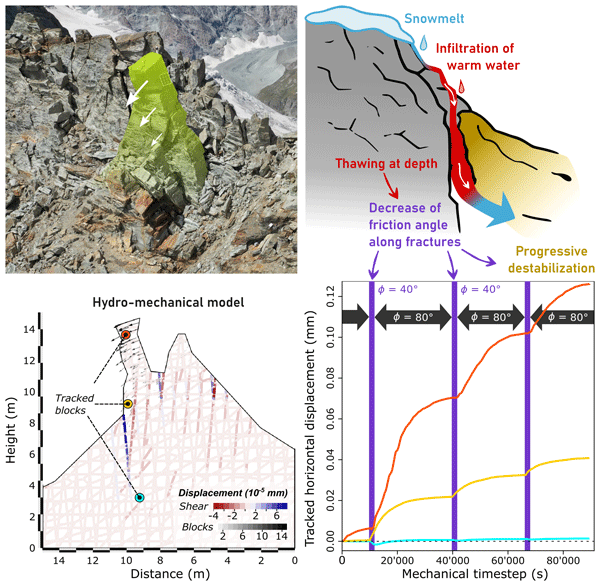
On 13 June 2023, a freestanding rock pillar on the Matterhorn collapsed after years of weakening. Our study examines this progressive destabilization by analyzing field data and integrating lab experiments into a hydro-mechanical model. We highlight the critical role of water infiltration into frozen rock, intensified by climate warming, as a widespread driver of the rising frequency of rockfalls in high mountain permafrost regions.
Riccardo Scandroglio, Samuel Weber, Till Rehm, and Michael Krautblatter
Earth Surf. Dynam., 13, 295–314, https://doi.org/10.5194/esurf-13-295-2025, https://doi.org/10.5194/esurf-13-295-2025, 2025
Short summary
Short summary
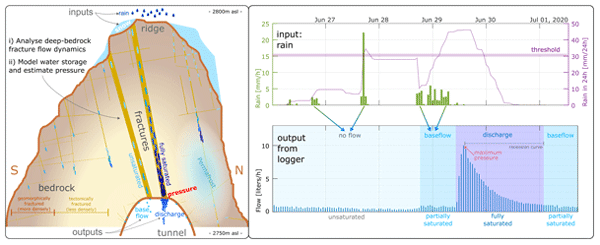
Despite the critical role of water in alpine regions, its presence in bedrock is frequently neglected. This research examines the dynamics of water in fractures using 1 decade of measurements from a tunnel 50 m underground. We provide new insights into alpine groundwater dynamics, revealing that up to 800 L d-1 can flow in one fracture during extreme events. These quantities can saturate the fractures, enhance hydraulic conductivity, and generate pressures that destabilize slopes.
Maike Offer, Samuel Weber, Michael Krautblatter, Ingo Hartmeyer, and Markus Keuschnig
The Cryosphere, 19, 485–506, https://doi.org/10.5194/tc-19-485-2025, https://doi.org/10.5194/tc-19-485-2025, 2025
Short summary
Short summary
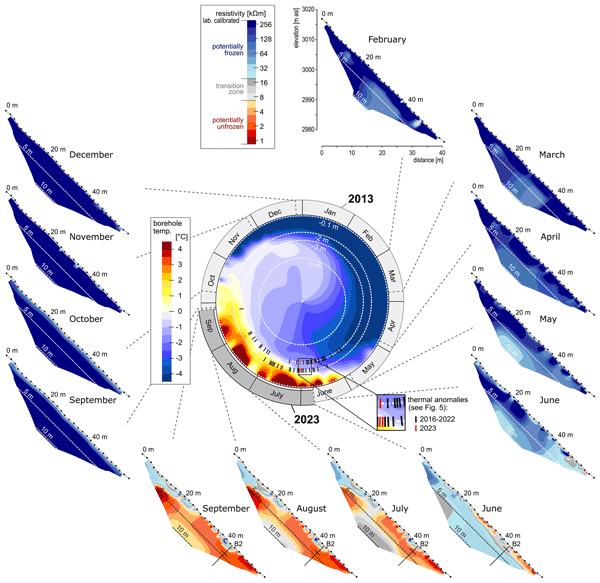
We present a unique long-term dataset of measurements of borehole temperature, repeated electrical resistivity tomography, and piezometric pressure to investigate the complex seasonal water flow in permafrost rockwalls. Our joint analysis shows that permafrost rocks are subjected to enhanced pressurised water flow during the thaw period, resulting in push-like warming events and long-lasting rock temperature regime changes.
Felix Pfluger, Samuel Weber, Joseph Steinhauser, Christian Zangerl, Christine Fey, Johannes Fürst, and Michael Krautblatter
Earth Surf. Dynam., 13, 41–70, https://doi.org/10.5194/esurf-13-41-2025, https://doi.org/10.5194/esurf-13-41-2025, 2025
Short summary
Short summary
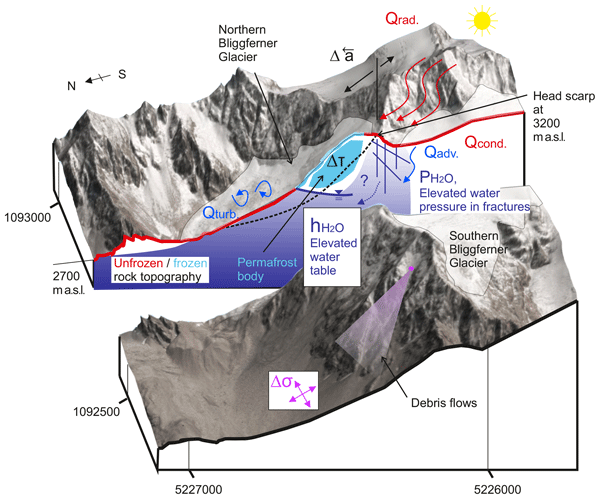
Our study explores permafrost–glacier interactions with a focus on their implications for preparing or triggering high-volume rock slope failures. Using the Bliggspitze rock slide as a case study, we demonstrate a new type of rock slope failure mechanism triggered by the uplift of the cold–warm dividing line in polythermal alpine glaciers, a widespread and currently under-explored phenomenon in alpine environments worldwide.
Johannes Leinauer, Michael Dietze, Sibylle Knapp, Riccardo Scandroglio, Maximilian Jokel, and Michael Krautblatter
Earth Surf. Dynam., 12, 1027–1048, https://doi.org/10.5194/esurf-12-1027-2024, https://doi.org/10.5194/esurf-12-1027-2024, 2024
Short summary
Short summary
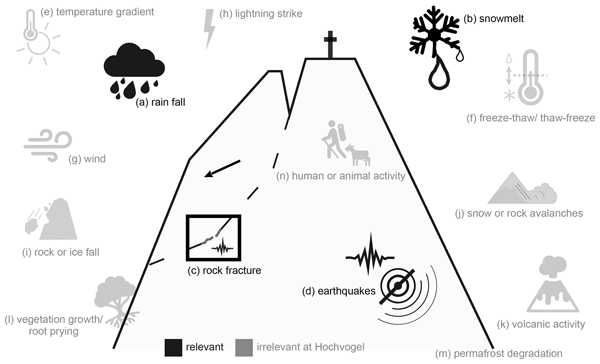
Massive rock slope failures are a significant alpine hazard and change the Earth's surface. Therefore, we must understand what controls the preparation of such events. By correlating 4 years of slope displacements with meteorological and seismic data, we found that water from rain and snowmelt is the most important driver. Our approach is applicable to similar sites and indicates where future climatic changes, e.g. in rain intensity and frequency, may alter the preparation of slope failure.
Natalie Barbosa, Johannes Leinauer, Juilson Jubanski, Michael Dietze, Ulrich Münzer, Florian Siegert, and Michael Krautblatter
Earth Surf. Dynam., 12, 249–269, https://doi.org/10.5194/esurf-12-249-2024, https://doi.org/10.5194/esurf-12-249-2024, 2024
Short summary
Short summary
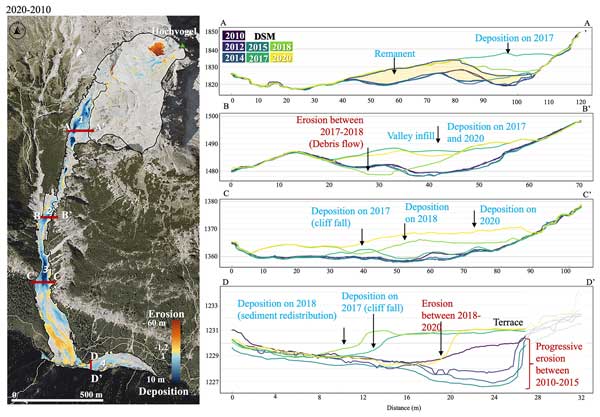
Massive sediment pulses in catchments are a key alpine multi-risk component. Combining high-resolution aerial imagery and seismic information, we decipher a multi-stage >130.000 m³ rockfall and subsequent sediment pulses over 4 years, reflecting sediment deposition up to 10 m, redistribution in the basin, and finally debouchure to the outlet. This study provides generic information on spatial and temporal patterns of massive sediment pulses in highly charged alpine catchments.
Katharina Wetterauer and Dirk Scherler
Earth Surf. Dynam., 11, 1013–1033, https://doi.org/10.5194/esurf-11-1013-2023, https://doi.org/10.5194/esurf-11-1013-2023, 2023
Short summary
Short summary
In glacial landscapes, debris supply rates vary spatially and temporally. Rockwall erosion rates derived from cosmogenic 10Be concentrations in medial moraine debris at five Swiss glaciers around Pigne d'Arolla indicate an increase in erosion from the end of the Little Ice Age towards deglaciation but temporally more stable rates over the last ∼100 years. Rockwall erosion rates are higher where rockwalls are steep and north-facing, suggesting a potential slope and temperature control.
Sibylle Knapp, Michael Schwenk, and Michael Krautblatter
Earth Surf. Dynam., 10, 1185–1193, https://doi.org/10.5194/esurf-10-1185-2022, https://doi.org/10.5194/esurf-10-1185-2022, 2022
Short summary
Short summary
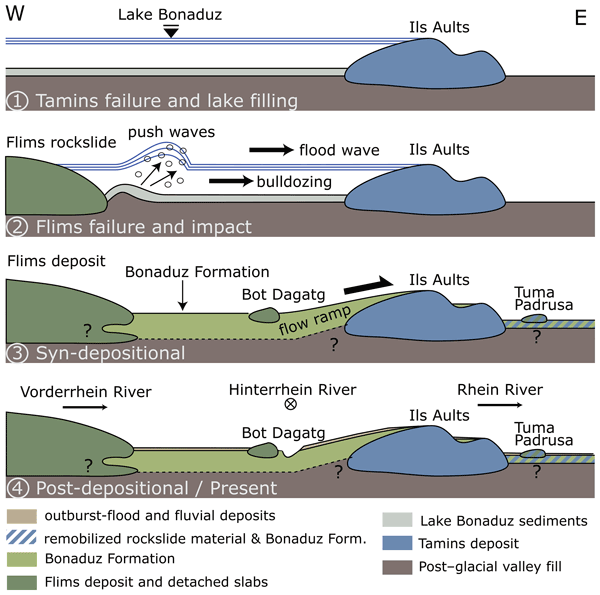
The Flims area in the Swiss Alps has fascinated the researchers with its complex geological history ever since. Especially the order of events related to the Tamins and Flims rockslides has long been debated. This paper presents novel results based on up to 160 m deep geophysical profiles, which show onlaps of the Bonaduz Formation onto the Tamins deposits (Ils Aults) and thus indicate that the Tamins rockslide occurred first. The consecutive evolution of this landscape is shown in four phases.
Shiva P. Pudasaini
Earth Surf. Dynam. Discuss., https://doi.org/10.5194/esurf-2022-31, https://doi.org/10.5194/esurf-2022-31, 2022
Preprint withdrawn
Short summary
Short summary
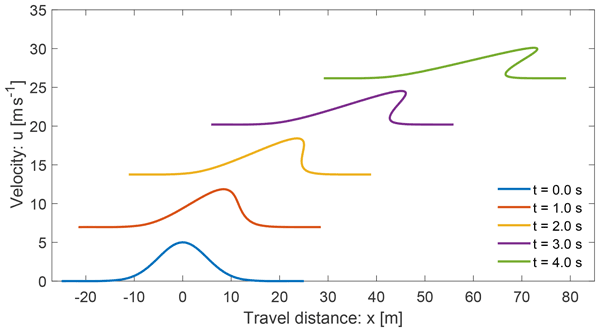
New analytical landslide velocity solutions are unified with existing solutions, provide a complete picture of landslide with accelerating & decelerating movements through entire track. Initially ascending & descending fronts result in strikingly contrasting deposition lengths. Time & space evolution with initial peaks of variable strengths lead to a spectacular propagation pattern. Numerical solutions can be replaced by cost-effective, analytical solutions, offering great practical advantages.
Shiva P. Pudasaini and Michael Krautblatter
Earth Surf. Dynam., 10, 165–189, https://doi.org/10.5194/esurf-10-165-2022, https://doi.org/10.5194/esurf-10-165-2022, 2022
Short summary
Short summary
We present the first physics-based general landslide velocity model incorporating internal deformation and external forces. Voellmy–inviscid Burgers' equations are specifications of the novel advective–dissipative system. Unified analytical solutions constitute a new foundation of landslide velocity, providing key information to instantly estimate impact forces and describe breaking waves and folding, revealing that landslide dynamics are architectured by advection and reigned by forcing.
Bernd Etzelmüller, Justyna Czekirda, Florence Magnin, Pierre-Allain Duvillard, Ludovic Ravanel, Emanuelle Malet, Andreas Aspaas, Lene Kristensen, Ingrid Skrede, Gudrun D. Majala, Benjamin Jacobs, Johannes Leinauer, Christian Hauck, Christin Hilbich, Martina Böhme, Reginald Hermanns, Harald Ø. Eriksen, Tom Rune Lauknes, Michael Krautblatter, and Sebastian Westermann
Earth Surf. Dynam., 10, 97–129, https://doi.org/10.5194/esurf-10-97-2022, https://doi.org/10.5194/esurf-10-97-2022, 2022
Short summary
Short summary
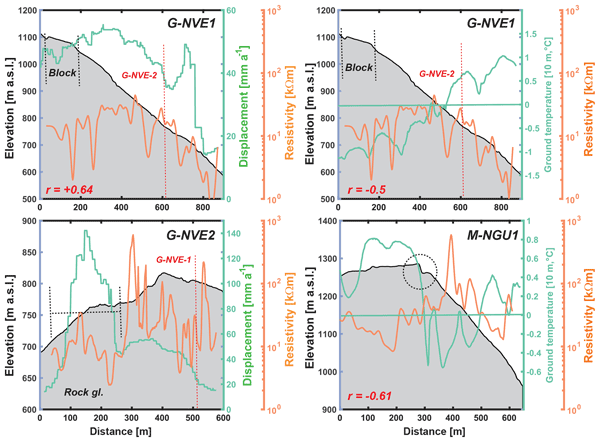
This paper is a multi-authored study documenting the possible existence of permafrost in permanently monitored rockslides in Norway for the first time by combining a multitude of field data, including geophysical surveys in rock walls. The paper discusses the possible role of thermal regime and rockslide movement, and it evaluates the possible impact of atmospheric warming on rockslide dynamics in Norwegian mountains.
Carolin Kiefer, Patrick Oswald, Jasper Moernaut, Stefano Claudio Fabbri, Christoph Mayr, Michael Strasser, and Michael Krautblatter
Earth Surf. Dynam., 9, 1481–1503, https://doi.org/10.5194/esurf-9-1481-2021, https://doi.org/10.5194/esurf-9-1481-2021, 2021
Short summary
Short summary
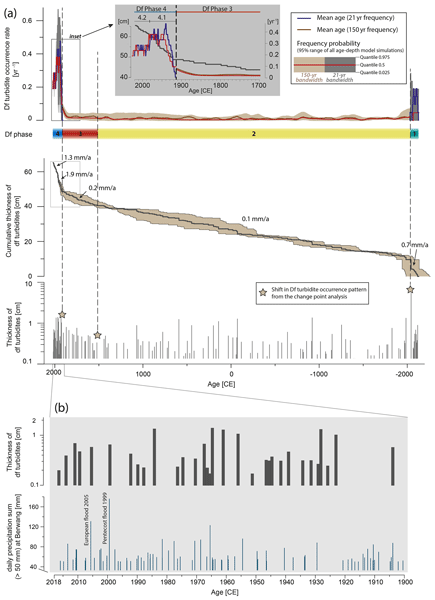
This study provides amphibious investigations of debris flow fans (DFFs). We characterize active DFFs, combining laser scan and sonar surveys at Plansee. We discover a 4000-year debris flow record in sediment cores, providing evidence for a 7-fold debris flow frequency increase in the 20th and 21st centuries, coincident with 2-fold enhanced rainstorm activity in the northern European Alps. Our results indicate climate change as being the main factor controlling debris flow activity.
Cited articles
Aaron, J. and McDougall, S.: Rock avalanche mobility: The role of path material, Eng. Geol., 257, 105126, https://doi.org/10.1016/j.enggeo.2019.05.003, 2019. a
Aaron, J., Langham, J., Spielmann, R., Hirschberg, J., McArdell, B., Boss, S., Johnson, C. G., and Gray, J. M. N. T.: Detailed observations reveal the genesis and dynamics of destructive debris-flow surges, Communications Earth & Environment, 6, 556, https://doi.org/10.1038/s43247-025-02488-7, 2025. a
Adams, T., Grant, C., and Watson, H.: A simple algorithm to relate measured surface roughness to equivalent sand-grain roughness, International Journal of Mechanical Engineering and Mechatronics, 1, 66–71, 2012. a
Ali, U., Kikumoto, M., Ciantia, M., Cui, Y., and Previtali, M.: Systematic effect of particle roundness/angularity on macro-and microscopic behavior of granular materials, Granul. Matter, 25, 51, https://doi.org/10.1007/s10035-023-01341-y, 2023. a
Bahmanpouri, F., Daliri, M., Khoshkonesh, A., Namin, M. M., and Buccino, M.: Bed compaction effect on dam break flow over erodible bed; experimental and numerical modeling, J. Hydrol., 594, 125645, https://doi.org/10.1016/j.jhydrol.2020.125645, 2021. a
Barbolini, M., Biancardi, A., Cappabianca, F., Natale, L., and Pagliardi, M.: Laboratory study of erosion processes in snow avalanches, Cold Reg. Sci. Technol., 43, 1–9, https://doi.org/10.1016/j.coldregions.2005.01.007, 2005. a
Barker, T., Rauter, M., Maguire, E. S. F., Johnson, C. G., and Gray, J. M. N. T.: Coupling rheology and segregation in granular flows, J. Fluid Mech., 909, A22, https://doi.org/10.1017/jfm.2020.973, 2021. a
Baselt, I., de Oliveira, G. Q., Fischer, J.-T., and Pudasaini, S. P.: Evolution of stony debris flows in laboratory experiments, Geomorphology, 372, 107431, https://doi.org/10.1016/j.geomorph.2020.107431, 2021. a, b
Berger, C., McArdell, B., and Schlunegger, F.: Direct measurement of channel erosion by debris flows, Illgraben, Switzerland, J. Geophys. Res.-Earth, 116, https://doi.org/10.1029/2010JF001722, 2011. a, b
Blatny, L., Gray, J. M. N. T., and Gaume, J.: A critical state μ(I)-rheology model for cohesive granular flows, J. Fluid Mech., 997, A67, https://doi.org/10.1017/jfm.2024.643, 2024. a
Cannon, S. H. and Savage, W. Z.: A Mass-Change Model for the Estimation of Debris-Flow Runout, J. Geol., 96, 221–227, https://doi.org/10.1086/629211, 1988. a
Choi, C. E. and Goodwin, S. R.: Effects of interactions between transient granular flows and macroscopically rough beds and their implications for bulk flow dynamics, Can. Geotech. J., 58, 1943–1960, https://doi.org/10.1139/cgj-2020-0160, 2021. a
Cicoira, A., Blatny, L., Li, X., Trottet, B., and Gaume, J.: Towards a predictive multi-phase model for alpine mass movements and process cascades, Eng. Geol., 310, 106866, https://doi.org/10.1016/j.enggeo.2022.106866, 2022. a
Crosta, G. B., Imposimato, S., and Roddeman, D.: Numerical modeling of 2-D granular step collapse on erodible and nonerodible surface, J. Geophys. Res., 114, https://doi.org/10.1029/2008JF001186, 2009. a, b
de Haas, T., Braat, L., Leuven, J. R., Lokhorst, I. R., and Kleinhans, M. G.: Effects of debris flow composition on runout, depositional mechanisms, and deposit morphology in laboratory experiments, J. Geophys. Res.-Earth, 120, 1949–1972, https://doi.org/10.1002/2015JF003525, 2015. a, b
de Haas, T., Nijland, W., De Jong, S., and McArdell, B.: How memory effects, check dams, and channel geometry control erosion and deposition by debris flows, Scientific Reports, 10, 14024, https://doi.org//10.1038/s41598-020-71016-8, 2020. a
de Haas, T., McArdell, B. W., Nijland, W., Åberg, A. S., Hirschberg, J., and Huguenin, P.: Flow and Bed Conditions Jointly Control Debris–Flow Erosion and Bulking, Geophys. Res. Lett., 49, e2021GL097611, https://doi.org/10.1029/2021GL097611, 2022. a
Edwards, A., Rocha, F., Kokelaar, B., Johnson, C., and Gray, J.: Particle-size segregation in self-channelized granular flows, J. Fluid Mech., 955, A38, https://doi.org/10.1017/jfm.2022.1089, 2023. a
Edwards, A. N. and Gray, J. M. N. T.: Erosion–deposition waves in shallow granular free-surface flows, J. Fluid Mech., 762, 35–67, https://doi.org/10.1017/jfm.2014.643, 2015. a, b
Edwards, A. N., Viroulet, S., Kokelaar, B. P., and Gray, J. M. N. T.: Formation of levees, troughs and elevated channels by avalanches on erodible slopes, J. Fluid Mech., 823, 278–315, https://doi.org/10.1017/jfm.2017.309, 2017. a, b, c
Edwards, A. N., Viroulet, S., Johnson, C. G., and Gray, J. M. N. T.: Erosion-deposition dynamics and long distance propagation of granular avalanches, J. Fluid Mech., 915, A9, https://doi.org/10.1017/jfm.2021.34, 2021. a
Egashira, S., Honda, N., and Itoh, T.: Experimental study on the entrainment of bed material into debris flow, Phys. Chem. Earth Pt. C, 26, 645–650, https://doi.org/10.1016/S1464-1917(01)00062-9, 2001. a
Erlichson, H.: A Mass-Change Model for the Estimation of Debris-Flow Runout, a Second Discussion: Conditions for the Application of the Rocket Equation, J. Geol., 99, 633–634, https://doi.org/10.1086/629522, 1991. a
Estrada, N., Azéma, E., Radjai, F., and Taboada, A.: Identification of rolling resistance as a shape parameter in sheared granular media, Phys. Rev. E, 84, 011306, https://doi.org/10.1103/PhysRevE.84.011306, 2011. a
Feng, Z., Fan, X., Ni, T., Deng, Y., Zou, C., Zhang, J., and Xu, Q.: How Ice Particles Increase Mobility of Rock–Ice Avalanches: Insights From Chute Flows Simulation of Granular Rock–Ice Mixtures by Discrete Element Method, J. Geophys. Res.-Earth, 128, https://doi.org/10.1029/2023JF007115, 2023. a
Frank, F., McArdell, B. W., Huggel, C., and Vieli, A.: The importance of entrainment and bulking on debris flow runout modeling: examples from the Swiss Alps, Nat. Hazards Earth Syst. Sci., 15, 2569–2583, https://doi.org/10.5194/nhess-15-2569-2015, 2015. a
Gray, J. and Ancey, C.: Particle-size and-density segregation in granular free-surface flows, J. Fluid Mech., 779, 622–668, https://doi.org/10.1017/jfm.2015.438, 2015. a
Gray, J. and Thornton, A.: A theory for particle size segregation in shallow granular free-surface flows, P. Roy. Soc. A, 461, 1447–1473, https://doi.org/10.1098/rspa.2004.1420, 2005. a
Gray, J. M. N. T.: Granular flow in partially filled slowly rotating drums, J. Fluid Mech., 441, 1–29, https://doi.org/10.1017/S0022112001004736, 2001. a
Gray, J. M. N. T.: Particle Segregation in Dense Granular Flows, Annu. Rev. Fluid Mech., 50, 407–433, https://doi.org/10.1146/annurev-fluid-122316-045201, 2018. a, b
Hungr, O.: A Mass Change Model for the Estimation of Debris Flow Runout: A Discussion, J. Geol., 98, 791, https://doi.org/10.1086/629442, 1990. a
Hungr, O. and Evans, S. G.: Entrainment of debris in rock avalanches: An analysis of a long run-out mechanism, Geol. Soc. Am. Bull., 116, 1240, https://doi.org/10.1130/B25362.1, 2004. a
Hungr, O., McDougall, S., and Bovis, M.: Entrainment of material by debris flows, in: Debris-flow hazards and related phenomena, Springer, 135–158, https://doi.org/10.1007/3-540-27129-5_7, 2005. a, b
Issler, D.: Dynamically consistent entrainment laws for depth-averaged avalanche models, J. Fluid Mech., 759, 701–738, https://doi.org/10.1017/jfm.2014.584, 2014. a
Issler, D.: Comments on “On a Continuum Model for Avalanche Flow and Its Simplified Variants” by S. S. Grigorian and A. V. Ostroumov, Geosciences, 10, 96, https://doi.org/10.3390/geosciences10030096, 2020. a
Issler, D., Gauer, P., Tregaskis, C., and Vicari, H.: Structure of equations for gravity mass flows with entrainment, Nat. Commun., 15, 4613, https://doi.org/10.1038/s41467-024-48605-6, 2024. a
Iverson, R. M.: The physics of debris flows, Rev. Geophys., 35, 245–296, https://doi.org/10.1029/97RG00426, 1997. a
Iverson, R. M.: Elementary theory of bed-sediment entrainment by debris flows and avalanches, J. Geophys. Res.-Earth, 117, https://doi.org/10.1029/2011JF002189, 2012. a, b, c, d
Iverson, R. M.: Scaling and design of landslide and debris-flow experiments, Geomorphology, 244, 9–20, https://doi.org/10.1016/j.geomorph.2015.02.033, 2015. a
Iverson, R. M. and Denlinger, R. P.: Flow of variably fluidized granular masses across three-dimensional terrain: 1. Coulomb mixture theory, J. Geophys. Res., 106, 537–552, https://doi.org/10.1029/2000JB900329, 2001. a, b
Iverson, R. M. and LaHusen, R.: Friction in Debris Flows: Inferences from Large-scale Flume Experiments, in: Hydraulic engineering '93, edited by: Shen, H. W., American Society of Civil Engineers, New York, NY, 1604–1609, ISBN 0872629201, 1993. a
Iverson, R. M. and Ouyang, C.: Entrainment of bed material by Earth–surface mass flows: Review and reformulation of depth–integrated theory, Rev. Geophys., 53, 27–58, https://doi.org/10.1002/2013RG000447, 2015. a, b, c
Jiang, Y., Song, P., Choi, C. E., and Choo, J.: Erosion and Transport of Dry Soil Bed by Collisional Granular Flow: Insights From a Combined Experimental–Numerical Investigation, J. Geophys. Res.-Earth, 128, e2023JF007073, https://doi.org/10.1029/2023JF007073, 2023. a
Johnson, C., Kokelaar, B., Iverson, R. M., Logan, M., LaHusen, R., and Gray, J.: Grain-size segregation and levee formation in geophysical mass flows, J. Geophys. Res.-Earth, 117, https://doi.org/10.1029/2011JF002185, 2012. a, b
Kokelaar, B. P., Graham, R. L., Gray, J. M. N. T., and Vallance, J. W.: Fine-grained linings of leveed channels facilitate runout of granular flows, Earth Planet. Sc. Lett., 385, 172–180, https://doi.org/10.1016/j.epsl.2013.10.043, 2014. a
Kokelaar, B. P., Bahia, R. S., Joy, K. H., Viroulet, S., and Gray, J. M. N. T.: Granular avalanches on the Moon: Mass–wasting conditions, processes, and features, J. Geophys. Res.-Planet., 122, 1893–1925, https://doi.org/10.1002/2017JE005320, 2017. a, b
Komatsu, T. S., Inagaki, S., Nakagawa, N., and Nasuno, S.: Creep motion in a granular pile exhibiting steady surface flow, Phys. Rev. Lett., 86, 1757–1760, https://doi.org/10.1103/PhysRevLett.86.1757, 2001. a, b
Kyburz, M. L., Sovilla, B., Bühler, Y., and Gaume, J.: Potential and challenges of depth-resolved three-dimensional MPM simulations: a case study of the 2019 `Salezer' snow avalanche in Davos, Ann. Glaciol., 65, e19, https://doi.org/10.1017/aog.2024.14, 2025. a
Lanzoni, S., Gregoretti, C., and Stancanelli, L. M.: Coarse–grained debris flow dynamics on erodible beds, J. Geophys. Res.-Earth, 122, 592–614, https://doi.org/10.1002/2016JF004046, 2017a. a
Lanzoni, S., Gregoretti, C., and Stancanelli, L. M.: Coarse-grained debris flow dynamics on erodible beds, J. Geophys. Res.-Earth, 122, 592–614, https://doi.org/10.1002/2016JF004046, 2017b. a, b
Li, P., Hu, K., and Wang, X.: Debris flow entrainment rates in non-uniform channels with convex and concave slopes, J. Hydraul. Res., 56, 156–167, https://doi.org/10.1080/00221686.2017.1313321, 2018. a
Li, P., Wang, J.-d., Hu, K.-h., Qiu, H.-j., and Xie, J.-l.: Experimental investigation on debris flow resistance and entrainment characteristics: effects of the erodible bed with discontinuous grading, J. Mt. Sci., 19, 2397–2419, https://doi.org/10.1007/s11629-022-7365-y, 2022. a, b
Li, X., Sovilla, B., Gray, J. M. N. T., and Gaume, J.: Transient wave activity in snow avalanches is controlled by entrainment and topography, Communications Earth & Environment, 5, 77, https://doi.org/10.1038/s43247-023-01157-x, 2024. a
Liu, H., Zhao, X., Frattini, P., Crosta, G. B., De Blasio, F. V., Wan, Y., and Zhu, X.: Mobility and erosion of granular flows travelling on an erodible substrate: Insights from the small-scale flume experiments, Eng. Geol., 326, 107316, https://doi.org/10.1016/j.enggeo.2023.107316, 2023. a
Lloyd, H. A., Maguire, E., Mistry, D., Reynolds, G. K., Johnson, C. G., and Gray, J. M. N. T.: On the formation of super-stable granular heaps, J. Fluid Mech., 1002, A27, https://doi.org/10.1017/jfm.2024.1106, 2025. a
Lu, P.-y., Yang, X.-g., Xu, F.-g., Hou, T.-x., and Zhou, J.-w.: An analysis of the entrainment effect of dry debris avalanches on loose bed materials, SpringerPlus, 5, 1621, https://doi.org/10.1186/s40064-016-3272-4, 2016. a
Maguire, E., Barker, T., Rauter, M., Johnson, C. G., and Gray, J. M. N. T.: Particle-size segregation patterns in a partially filled triangular rotating drum, J. Fluid Mech., 979, A40, https://doi.org/10.1017/jfm.2023.1022, 2024. a
Mangeney, A.: Landslide boost from entrainment, Nat. Geosci., 4, 77–78, https://doi.org/10.1038/ngeo1077, 2011. a
Mangeney, A., Bouchut, F., Thomas, N., Vilotte, J. P., and Bristeau, M. O.: Numerical modeling of self–channeling granular flows and of their levee–channel deposits, J. Geophys. Res., 112, https://doi.org/10.1029/2006JF000469, 2007a. a, b
Mangeney, A., Tsimring, L., Volfson, D., Aranson, I. S., and Bouchut, F.: Avalanche mobility induced by the presence of an erodible bed and associated entrainment, Geophys. Res. Lett., 34, https://doi.org/10.1029/2007GL031348, 2007b. a, b, c
Mangeney, A., Roche, O., Hungr, O., Mangold, N., Faccanoni, G., and Lucas, A.: Erosion and mobility in granular collapse over sloping beds, J. Geophys. Res.-Earth, 115, https://doi.org/10.1029/2009JF001462, 2010. a, b, c, d
McCoy, S., Kean, J. W., Coe, J. A., Tucker, G., Staley, D. M., and Wasklewicz, T.: Sediment entrainment by debris flows: In situ measurements from the headwaters of a steep catchment, J. Geophys. Res.-Earth, 117, https://doi.org/10.1029/2011JF002278, 2012. a, b, c
McDougall, S. and Hungr, O.: Dynamic modelling of entrainment in rapid landslides, Can. Geotech. J., 42, 1437–1448, https://doi.org/10.1139/t05-064, 2005. a
Medina, V., Hürlimann, M., and Bateman, A.: Application of FLATModel, a 2D finite volume code, to debris flows in the northeastern part of the Iberian Peninsula, Landslides, 5, 127–142, https://doi.org/10.1007/s10346-007-0102-3, 2008. a
Mergili, M., Jaboyedoff, M., Pullarello, J., and Pudasaini, S. P.: Back calculation of the 2017 Piz Cengalo–Bondo landslide cascade with r.avaflow: what we can do and what we can learn, Nat. Hazards Earth Syst. Sci., 20, 505–520, https://doi.org/10.5194/nhess-20-505-2020, 2020. a
Munch, J., Zhuang, Y., Dash, R. K., and Bartelt, P.: Dynamic Thermomechanical Modeling of Rock–Ice Avalanches: Understanding Flow Transitions, Water Dynamics, and Uncertainties, J. Geophys. Res.-Earth, 129, e2024JF007805, https://doi.org/10.1029/2024JF007805, 2024. a
Pandey, N. K. and Satyam, N.: Entrainment-driven morphological changes in debris flow deposits by varying water content at laboratory scale, B. Eng. Geol. Environ., 84, 1–24, https://doi.org/10.1007/s10064-025-04241-y, 2025. a
Papa, M., Egashira, S., and Itoh, T.: Critical conditions of bed sediment entrainment due to debris flow, Nat. Hazards Earth Syst. Sci., 4, 469–474, https://doi.org/10.5194/nhess-4-469-2004, 2004. a
Parez, S. and Aharonov, E.: Long runout landslides: a solution from granular mechanics, Frontiers in Physics, 3, 80, https://doi.org/10.3389/fphy.2015.00080, 2015. a
Parsons, J. D., Whipple, K. X., and Simoni, A.: Experimental study of the grain-flow, fluid-mud transition in debris flows, J. Geol., 109, 427–447, 2001. a
Peng, C., Li, X., Yuan, C., and Huang, Y.: Insights Into the Dynamics of Rock–Ice Avalanches From Small–Scale Experiments With Erodible Beds, J. Geophys. Res.-Earth, 130, e2025JF008303, https://doi.org/10.1029/2025JF008303, 2025. a
Pouliquen, O. and Forterre, Y.: Friction law for dense granular flows: application to the motion of a mass down a rough inclined plane, J. Fluid Mech., 453, 133–151, https://doi.org/10.1017/S0022112001006796, 2002. a
Pudasaini, S. P. and Fischer, J.-T.: A mechanical erosion model for two-phase mass flows, Int. J. Multiphas. Flow, 132, 103416, https://doi.org/10.1016/j.ijmultiphaseflow.2020.103416, 2020. a, b
Pudasaini, S. P. and Miller, S. A.: The hypermobility of huge landslides and avalanches, Eng. Geol., 157, 124–132, https://doi.org/10.1016/j.enggeo.2013.01.012, 2013. a, b
Reid, M. E., Iverson, R. M., Logan, M., Lahusen, R. G., Godt, J. W., and Griswold, J. P.: Entrainment of bed sediment by debris flows: results from large-scale experiments, In: 5th International Conference on Debris- Flow Hazards: Mitigation Mechanics, Prediction and Assessment, edited by: Genevois, R., Padua, Italy, 14–17 June 2011, Rome: Casa Editrice Università La Sapienza (Italian Journal of Engineering Geology and Environment), 367–374, 2011. a, b, c, d
Rickenmann, D.: Empirical relationships for debris flows, Nat. Hazards, 19, 47–77, 1999. a
Rocha, F. M., Johnson, C. G., and Gray, J. M. N. T.: Self-channelisation and levee formation in monodisperse granular flows, J. Fluid Mech., 876, 591–641, https://doi.org/10.1017/jfm.2019.518, 2019. a, b, c, d
Roelofs, L., Colucci, P., and de Haas, T.: How debris-flow composition affects bed erosion quantity and mechanisms: An experimental assessment, Earth Surf. Proc. Land., 47, 2151–2169, https://doi.org/10.1002/esp.5369, 2022. a
Roelofs, L., Nota, E. W., Flipsen, T. C., Colucci, P., and de Haas, T.: How bed composition affects erosion by debris flows – An experimental assessment, Geophys. Res. Lett., 50, e2023GL103294, https://doi.org/10.1029/2023GL103294, 2023. a, b, c, d
Russell, A. S., Johnson, C. G., Edwards, A. N., Viroulet, S., Rocha, F. M., and Gray, J. M. N. T.: Retrogressive failure of a static granular layer on an inclined plane, J. Fluid Mech., 869, 313–340, https://doi.org/10.1017/jfm.2019.215, 2019. a, b
Santi, P. M., DeWolfe, V. G., Higgins, J. D., Cannon, S. H., and Gartner, J. E.: Sources of debris flow material in burned areas, Geomorphology, 96, 310–321, https://doi.org/10.1016/j.geomorph.2007.02.022, 2008. a
Sanvitale, N. and Bowman, E. T.: Visualization of dominant stress-transfer mechanisms in experimental debris flows of different particle-size distribution, Can. Geotech. J., 54, 258–269, https://doi.org/10.1139/cgj-2015-0532, 2017. a
Savage, S. B. and Hutter, K.: The motion of a finite mass of granular material down a rough incline, J. Fluid Mech., 199, 177, https://doi.org/10.1017/S0022112089000340, 1989. a, b
Savage, S. B. and Lun, C. K. K.: Particle size segregation in inclined chute flow of dry cohesionless granular solids, J. Fluid Mech., 189, 311–335, https://doi.org/10.1017/S002211208800103X, 1988. a
Taylor-Noonan, A. M., Bowman, E. T., McArdell, B. W., Kaitna, R., McElwaine, J. N., and Take, W. A.: Influence of pore fluid on grain-scale interactions and mobility of granular flows of differing volume, J. Geophys. Res.-Earth, 127, e2022JF006622, https://doi.org/10.1029/2022JF006622, 2022. a, b
Tian, M., Hu, K.-h., Ma, C., and Lei, F.-h.: Effect of bed sediment entrainment on debris-flow resistance, J. Hydraul. Eng., 140, 115–120, https://doi.org/10.1061/(ASCE)HY.1943-7900.0000805, 2014. a
Tripathi, A. and Khakhar, D.: Density difference-driven segregation in a dense granular flow, J. Fluid Mech., 717, 643–669, https://doi.org/10.1017/jfm.2012.603, 2013. a
Viroulet, S., Edwards, A. N., Johnson, C. G., Kokelaar, B. P., and Gray, J. M. N. T.: Shedding dynamics and mass exchange by dry granular waves flowing over erodible beds, Earth Planet. Sc. Lett., 523, 115700, https://doi.org/10.1016/j.epsl.2019.07.003, 2019. a, b
Wetter, C., Walter, F., McArdell, B. W., Blumenschein, F., Spielmann, R., Aaron, J., Gray, J. M. N. T., Obermann, A., and Fichtner, A.: Formation, propagation, and annihilation of surge waves in debris flows, Eng. Geol., 367, 108648, https://doi.org/10.1016/j.enggeo.2026.108648, 2026. a
Wetterauer, K.: Experimental data on the flow evolution and deposit morphology of dry granular flows over contrasting erodible bed materials, Open Data UniBw M [data set], https://doi.org/10.60776/XRQ8K1, 2026. a
Woodhouse, M. J., Thornton, A. R., Johnson, C. G., Kokelaar, B. P., and Gray, J. M. N. T.: Segregation-induced fingering instabilities in granular free-surface flows, J. Fluid Mech., 709, 543–580, https://doi.org/10.1017/jfm.2012.348, 2012. a
Yang, D., Qiu, H., Quevedo, R. P., Liu, Y., and Glade, T.: Birchgletscher rock-ice avalanche burying the village of Blatten on 28 May 2025, Valais, Switzerland, Landslides, 23, 283–291, https://doi.org/10.1007/s10346-025-02656-y, 2026. a
Zheng, H., Shi, Z., Yu, S., Fan, X., Hanley, K. J., and Feng, S.: Erosion mechanisms of debris flow on the sediment bed, Water Resour. Res., 57, e2021WR030707, https://doi.org/10.1029/2021WR030707, 2021. a
Zheng, H., Hu, X., Shi, Z., McArdell, B. W., and de Haas, T.: Volumetric growth of debris flow on erodible bed by basal shear and collision: Theory and observations, Earth Planet. Sc. Lett., 662, 119404, https://doi.org/10.1016/j.epsl.2025.119404, 2025. a
Zhou, G. G. and Ng, C. W.: Dimensional analysis of natural debris flows, Can. Geotech. J., 47, 719–729, https://doi.org/10.1139/T09-134, 2010. a
Zhu, L., Tang, X., He, S., Yang, Z., Liang, H., Lei, X., Luo, Y., and Zhang, L.: Geomorphology and Sedimentology of the Nyixoi Chongco Rock Avalanche and Implications for Emplacement Mechanisms, J. Geophys. Res.-Earth, 130, e2024JF007666, https://doi.org/10.1029/2024JF007666, 2025. a
Short summary
Contrasting mobility of dry granular flows over erodible beds remains poorly understood. We experimentally investigate erosion, flow evolution, and deposition across bed materials with contrasting solid particle densities. Low-density beds show stronger erosion and longer runout, whereas equal- and high-density beds show similar, shallower erosion and shorter runout. The results show that mobility reflects interacting material properties rather than density contrasts alone.
Contrasting mobility of dry granular flows over erodible beds remains poorly understood. We...


Altmetrics
Final-revised paper
Preprint