
Articles | Volume 26, issue 10
https://doi.org/10.5194/nhess-26-5281-2026
© Author(s) 2026. This work is distributed under
the Creative Commons Attribution 4.0 License.
the Creative Commons Attribution 4.0 License.
https://doi.org/10.5194/nhess-26-5281-2026
© Author(s) 2026. This work is distributed under
the Creative Commons Attribution 4.0 License.
the Creative Commons Attribution 4.0 License.
Research article
| 
27 Oct 2026
Research article |
| 27 Oct 2026
| 27 Oct 2026
Dependence of seismic hazard assessment on the observation time interval: insights from a synthetic earthquake catalogue in southeastern Spain
Elena Pascual-Sánchez
CORRESPONDING AUTHOR

Department of Topographical Engineering and Cartography, Universidad Politécnica de Madrid, Madrid, Spain
José Antonio Álvarez-Gómez
Department of Geodynamics, Stratigraphy and Paleontology, Universidad Complutense de Madrid, Madrid, Spain
Julián García-Mayordomo
CORRESPONDING AUTHOR
Instituto Geológico y Minero de España – CSIC, Madrid, Spain
Paula Herrero-Barbero
Instituto Geológico y Minero de España – CSIC, Madrid, Spain
Related authors
No articles found.
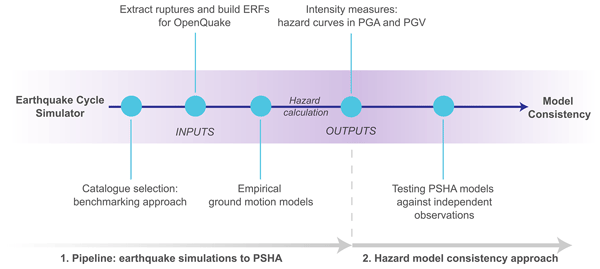
Octavi Gómez-Novell, Francesco Visini, Paula Herrero-Barbero, José A. Álvarez-Gómez, and Julián García-Mayordomo
Nat. Hazards Earth Syst. Sci., 26, 2691–2715, https://doi.org/10.5194/nhess-26-2691-2026, https://doi.org/10.5194/nhess-26-2691-2026, 2026
Short summary
Short summary
Evaluating seismic hazard requires past earthquake observations to perform accurate forecasts. Physics-based earthquake cycle simulators are algorithms that model long-term earthquake sequences on faults, overcoming completeness limitations of observations. We test the performance of physics-based seismic hazard assessments in comparison with traditional approaches in Spain. The physics-based approach yields more accurate forecasts, highlighting the potential of simulators for seismic hazard.
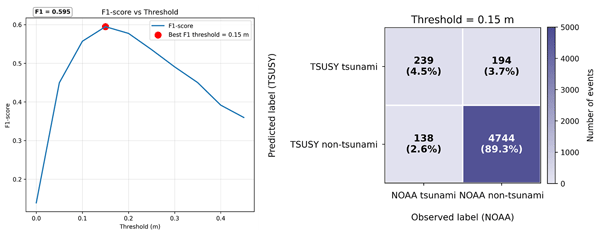
David Galán Pérez, Iñigo Aniel-Quiroga, Albert Gallego, Ignacio Aguirre-Ayerbe, Mauricio González, Omar Quetzalcóatl, Jose A. Álvarez-Gómez, and Luis Pedraz
Nat. Hazards Earth Syst. Sci., 26, 2415–2436, https://doi.org/10.5194/nhess-26-2415-2026, https://doi.org/10.5194/nhess-26-2415-2026, 2026
Short summary
Short summary
Tsunamis can have devastating consequences, yet it remains challenging to identify which earthquakes generate them. This study presents a criterion for identifying tsunamigenic events based on numerical simulations, as well as a global database of tsunami simulations based on historical earthquakes. By comparing the results with historical records, this approach can improve tsunami identification and support tsunami warnings worldwide.
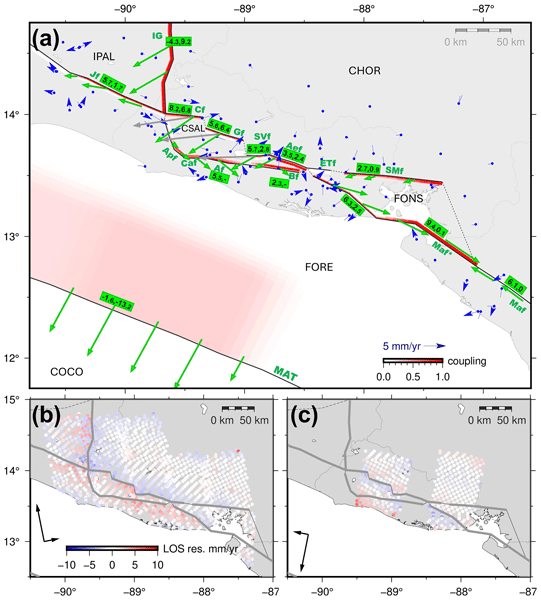
Juan Portela, Marta Béjar-Pizarro, Alejandra Staller, Cécile Lasserre, Beatriz Cosenza-Muralles, José Antonio Álvarez-Gómez, and José Jesús Martínez-Díaz
Solid Earth, 17, 369–387, https://doi.org/10.5194/se-17-369-2026, https://doi.org/10.5194/se-17-369-2026, 2026
Short summary
Short summary
We combined satellite radar and GPS data to model how the faults in El Salvador and nearby regions accumulate deformation. Motion across the central El Salvador Fault Zone is shared by several fault branches, while the offshore subduction zone appears to be weakly locked. These results improve the understanding of regional deformation and seismic hazard in Central America.
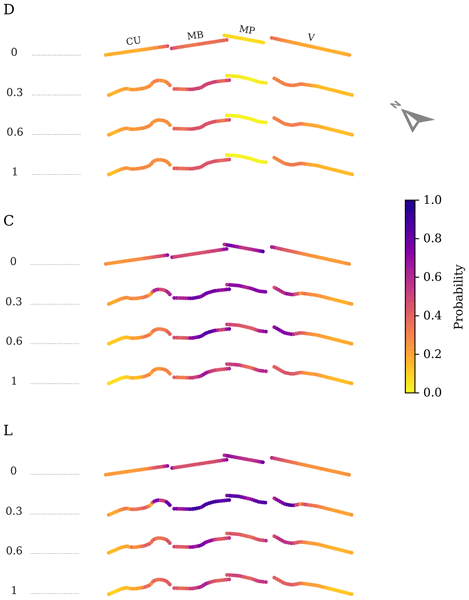
Octavi Gómez-Novell, Francesco Visini, José Antonio Álvarez-Gómez, Bruno Pace, and Julián García-Mayordomo
Nat. Hazards Earth Syst. Sci., 26, 651–673, https://doi.org/10.5194/nhess-26-651-2026, https://doi.org/10.5194/nhess-26-651-2026, 2026
Short summary
Short summary
Earthquake surface ruptures are a hazard for infrastructure and life that requires proper assessment. We use a physics-based earthquake cycle simulator to derive fault displacement hazard statistics in a test fault system and their dependence to fault geometry. Our results show that more complex fault geometries increase surface rupture probabilities and might improve the agreement with observations. Earthquake cycle simulators are thus a promising tool for fault displacement hazard analyses.
Antonio Olaiz, José A. Álvarez Gómez, Gerardo de Vicente, Alfonso Muñoz-Martín, Juan V. Cantavella, Susana Custódio, Dina Vales, and Oliver Heidbach
Solid Earth, 16, 947–1024, https://doi.org/10.5194/se-16-947-2025, https://doi.org/10.5194/se-16-947-2025, 2025
Short summary
Short summary
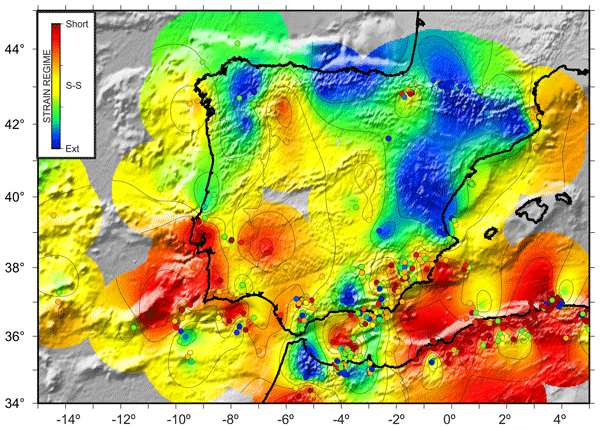
Understanding the stress and strain conditions in the Earth's crust is crucial for various activities, such as oil and gas exploration and assessing seismic hazards. In this article, we have updated the database of moment tensor focal mechanisms for Greater Iberia. We conducted kinematic and dynamic analyses on the selected populations, determining the average focal mechanism, strain and stress orientations, and tectonic regime. The orientation for horizontal compression is primarily N154° E.
Roberto Basili, Laurentiu Danciu, Céline Beauval, Karin Sesetyan, Susana Pires Vilanova, Shota Adamia, Pierre Arroucau, Jure Atanackov, Stéphane Baize, Carolina Canora, Riccardo Caputo, Michele Matteo Cosimo Carafa, Edward Marc Cushing, Susana Custódio, Mine Betul Demircioglu Tumsa, João C. Duarte, Athanassios Ganas, Julián García-Mayordomo, Laura Gómez de la Peña, Eulàlia Gràcia, Petra Jamšek Rupnik, Hervé Jomard, Vanja Kastelic, Francesco Emanuele Maesano, Raquel Martín-Banda, Sara Martínez-Loriente, Marta Neres, Hector Perea, Barbara Šket Motnikar, Mara Monica Tiberti, Nino Tsereteli, Varvara Tsironi, Roberto Vallone, Kris Vanneste, Polona Zupančič, and Domenico Giardini
Nat. Hazards Earth Syst. Sci., 24, 3945–3976, https://doi.org/10.5194/nhess-24-3945-2024, https://doi.org/10.5194/nhess-24-3945-2024, 2024
Short summary
Short summary
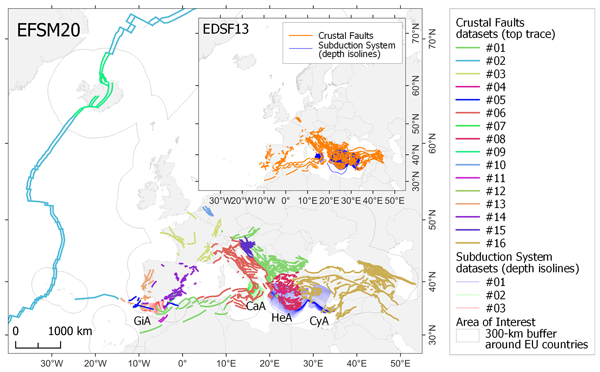
This study presents the European Fault-Source Model 2020 (EFSM20), a dataset of 1248 geologic crustal faults and four subduction systems, each having the necessary parameters to forecast long-term earthquake occurrences in the European continent. This dataset constituted one of the main inputs for the recently released European Seismic Hazard Model 2020, a key instrument to mitigate seismic risk in Europe. EFSM20 adopts recognized open-standard formats, and it is openly accessible and reusable.

José A. Álvarez-Gómez, Paula Herrero-Barbero, and José J. Martínez-Díaz
Nat. Hazards Earth Syst. Sci., 23, 2031–2052, https://doi.org/10.5194/nhess-23-2031-2023, https://doi.org/10.5194/nhess-23-2031-2023, 2023
Short summary
Short summary
The strike-slip Carboneras fault is one of the largest sources in the Alboran Sea, with it being one of the faster faults in the eastern Betics. The dimensions and location of the Carboneras fault imply a high seismic and tsunami threat. In this work, we present tsunami simulations from sources generated with physics-based earthquake simulators. We show that the Carboneras fault has the capacity to generate locally damaging tsunamis with inter-event times between 2000 and 6000 years.
Cited articles
Alfaro, P., Bartolomé, R., Borque Arancón, M. J., Estévez, A., García Mayordomo, J., García-Tortosa, F. J., Francisco, J., Gil, A. J., Grácia, E., and Lacono, C.: The Bajo Segura fault zone: active blind thrusting in the eastern betic cordillera (SE Spain), J. Iber. Geol., 38, 271–284, https://doi.org/10.5209/rev_jige.2012.v38.n1.39217, 2012. a, b, c, d
Alonso-Henar, J., Fernández, C., and Martínez-Díaz, J. J.: Application of the analytic model of general triclinic transpression with oblique extrusion to an active deformation zone: The Alhama de Murcia Fault (SE Iberian Peninsula), J. Struct. Geol., 130, 103924, https://doi.org/10.1016/j.jsg.2019.103924, 2020. a
Álvarez Gómez, J. A., Insúa Arévalo, J. M., Herrero Barbero, P., Martínez Díaz, J. J., Canora Catalán, C., Alonso Henar, J., and García Mayordomo, J.: Potencial de encadenamiento de roturas sísmicas en la zona de cizalla de la Béticas orientales por transferencia de esfuerzos de Coulomb. Reunión Ibérica sobre Fallas Activas y Paleosismología (3a. 2018. Alicante), http://hdl.handle.net/10261/277616 (last access: 9 September 2026), 2018. a
Álvarez-Gómez, J. A., Herrero-Barbero, P., and Martínez-Díaz, J. J.: Seismogenic potential and tsunami threat of the strike-slip Carboneras fault in the western Mediterranean from physics-based earthquake simulations, Nat. Hazards Earth Syst. Sci., 23, 2031–2052, https://doi.org/10.5194/nhess-23-2031-2023, 2023. a, b, c
Álvarez Gómez, J. A., Herrero Barbero, P., and Martínez Díaz, J. J.: Supplementary data for “Seismogenic potential and tsunami threat of the strike-slip Carboneras fault in the western Mediterranean from physics-based earthquake simulations”, Zenodo [data set], https://doi.org/10.5281/zenodo.7994106, 2023. a
Anagnos, T. and Kiremidjian, A. S.: A review of earthquake occurrence models for seismic hazard analysis, Probabilist. Eng. Mech., 3, 3–11, 1988.
Anderson, J. G. and Luco, J. E.: Consequences of slip rate constraints on earthquake occurrence relations, B. Seismol. Soc. Am., 73, 471–496, 1983. a
Argus, D. F., Peltier, W. R., and Watkins, M. M.: Glacial isostatic adjustment observed using very long baseline interferometry & satellite laser ranging geodesy, J. Geophys. Res., 104, 77–93, https://doi.org/10.1029/1999JB000237, 1999. a
Baena Escudero, R.: Evolución cuaternaria de la Depresión del Medio-Bajo Guadalquivir y sus márgenes (Córdoba y Sevilla), Tesis doctoral, Universidad de Sevilla (España), 1993. a
Barbat, H. A., Oller Martínez, S. H., and Vielma, J. C.: Cálculo y diseño sismorresistente de edificios: aplicación de la norma NCSE-02, Centre Internacional de Mètodes Numèrics en Enginyeria (CIMNE), https://upcommons.upc.edu/server/api/core/bitstreams/07b43887-81be-4291-9069-61e5d0d6ae0a/content (last access: 11 September 2026), 2005. a
Beauval, C., Bard, P. Y., Hainzl, S., and Gueguen, P.: Can strong-motion observations be used to constrain probabilistic seismic hazard estimates?, B. Seismol. Soc. Am., 98, 509–520, https://doi.org/10.1785/0120070006, 2008. a
Benedetti, L., Manighetti, I., Gaudemer, Y., Finkel, R., Malavieille, J., Pou, K., Arnold, M., Aumaître, G., Bourlès, D., and Keddadouche, k.: Earthquake synchrony and clustering on Fucino faults (Central Italy) as revealed from in situ 36Cl exposure dating, J. Geophys. Res.-Solid Earth, 118, 4948–4974, https://doi.org/10.1002/jgrb.50299, 2013. a
Ben-Zion, Y. and Rice, J. R.: Earthquake failure sequences along a cellular fault zone in a three-dimensional elastic solid containing asperity and nonasperity regions, J. Geophys. Res.-Solid Earth, 98, 14109–14131, 1993. a
Ben-Zion, Y., Eneva, M., and Liu, Y.: Large earthquake cycles and intermitent criticality on heterogeneous faults due to evolving stress and seismicity, J. Geophys. Res., 108, 4, https://doi.org/10.1029/2002JB002121, 2003. a, b
Bisch, P., Carvalho, E., Degee, H., Fajfar, P., Fardis, M., Franchin, P., Kreslin, K., Pecker, A., Pinto, P., Plumier, A., Somja, H., and Tsionis, G.: Eurocode 8: seismic design of buildings worked examples, Luxembourg: Publications Office of the European Union, https://doi.org/10.2788/91658, 2012. a
Booth-Rea, G., Azañón, J.-M., Azor, A., and García-Dueñas, V.: Influence of strike-slip fault segmentation on drainage evolution and topography. A case study: the Palomares Fault Zone (southeastern Betics, Spain), J. Struct. Geol., 26, 1615–1632, 2004. a
Borque, M., Sánchez-Alzola, A., Martin-Rojas, I., Alfaro, P., Molina, S., Rosa-Cintas, S., Rodríguez-Caderot, G., de Lacy, C., García-Armenteros, J. A., Avilés, M., Herrera-Olmo, A., García-Tortosa, F. J., Estévez, A., and Gil, J.: How Much Nubia-Eurasia Convergence Is Accommodated by the NE End of the Eastern Betic Shear Zone (SE Spain)? Constraints From GPS Velocities, Tectonics, 38, 1824–1839, https://doi.org/10.1029/2018TC004970, 2019. a, b
Cabañas, L., Rivas-Medina, A., Martínez-Solares, J. M., Gaspar-Escribano, J. M., Benito, B., Antón, R., and Ruiz-Barajas, S.: Relationships between M w and other earthquake size parameters in the spanish IGN seismic catalog, Pure Appl. Geophys., 172, 2397–2410, https://doi.org/10.1007/s00024-014-1025-2, 2015. a, b
Campbell, K. W. and Bozorgnia, Y.: NGA-West2 ground motion model for the average horizontal components of PGA, PGV, and 5 % damped linear acceleration response spectra, Earthquake Spect., 30, 1087–1115, https://doi.org/10.1193/062913EQS175M, 2014. a, b
Canora Catalán, C., Roca, C., Martínez Díaz, J. J., Insúa Arévalo, J. M., Martín González, F., Alonso Henar, J., Gómez Ortiz, D., Martínez-Pagán, P., Masana, E., Ortuño, M., Ferrater Gómez, M., and Medialdea, A.: Nuevos datos de actividad paleosísmica de la falla de Alhama de Murcia en el abanico de La salud (segmento Lorca-Totana), Béticas orientales, Geotemas (Madrid), 16, 563–566, 2016. a
Cornell, C. A. and Vanmarcke, E. H.: The major influences on seismic risk. In Proceedings of the fourth world conference on earthquake engineering, Vol. 1, pp. 69–83, 1969. a
Cornell, C. A. and Winterstein, S. R.: Temporal and magnitude dependence in earthquake recurrence models, B. Seismol. Soc. Am., 78, 1522–1537, 1988. a
Cosentino, P., Ficarra, V., and Luzio, D.: Truncated exponential frequency-magnitude relationship in earthquake statistics, B. Seismol. Soc. Am., 67, 1615–1623, 1977. a
Console, R., Vannoli, P., and Carluccio, R.: The seismicity of the Central Apennines (Italy) studied by means of a physics-based earthquake simulator, Geophys. J. Int., 212, 916–929, https://doi.org/10.1093/gji/ggx451, 2018. a
Daniell, J. E., Khazai, B., Wenzel, F., and Vervaeck, A.: The worldwide economic impact of historic earthquakes, in: The 15 World Conference on Earthquake Engineering (Vol. 15), Lisboa, https://www.researchgate.net/publication/258434390_The_Worldwide_Economic_Impact_of_Earthquakes_Paper_No_2038 (last access: 11 September 2026), 2012. a
De Larouziére, F., Bolze, J., Bordet, P., Hernandez, J., Montenat, C., and d’Estevou, P. O.: The Betic segment of the lithospheric Trans-Alboran shear zone during the Late Miocene, Tectonophysics, 152, 41–52, 1988. a
DeMets, C., Gordon, R. G., Argus, D. F., and Stein, S.: Current plate motions, Geophys. J. Int., 101, 425–478, 1990. a
Dieterich, J.: Earthquake simulations with time-dependent nucleation and long range interactions, 9th Proc. Joint Meeting U.J.N.R. Panel Earthq. Predict. Technol., 9, 241–268, 1994. a
Echeverria, A., Khazaradze, G., Asensio, E., Gárate, J., Dávila, J. M., and Suriñach, E.: Crustal deformation in eastern Betics from CuaTeNeo GPS network, Tectonophysics, 608, 600–612, https://doi.org/10.1016/j.tecto.2013.08.020, 2013. a, b, c
Echeverria, A., Khazaradze, G., Asensio, E., and Masana, E.: Geodetic evidence for continuing tectonic activity of the Carboneras fault (SE Spain), Tectonophysics, 663, 302–309, 2015. a
Esteva, L.: Criterios para la construcción de espectros de diseño sísmico. Proceedings of the 3rd Pan-American Symposium of Structures, Caracas, Venezuela, 1967. a
Ferrater, M., Ortuño, M., Masana, E., Pallàs, R., Perea, H., Baize, S., García-Meléndez, E., Martínez-Díaz, J. J., Echeverria, A., Rockwell, T. K., Sharp, W. D., Medialdea, A., and Rhodes, E. J.: Refining seismic parameters in low seismicity areas by 3D trenching: The Alhama de Murcia fault, SE Iberia. Tectonophysics, 680, 122–128, https://doi.org/10.1016/j.tecto.2016.05.020, 2016. a, b
Ferrater Gómez, M., Silva, P., Ortuño Candela, M., Rodríguez Pascua, M. Á., and Masana, E.: Archaeoseismologic Analysis of a Late Bronze Age Site on the Alhama de Murcia Fault, SE Spain, Geoarchaeology, An Int. J., 30, 151–164, https://doi.org/10.1002/gea.21505, 2015. a
Field, E. H., Biasi, G. P., Bird, P., Dawson, T. E., Felzer, K. R., Jackson, D. D., and Zeng, Y.: Long‐term time‐dependent probabilities for the third Uniform California Earthquake Rupture Forecast (UCERF3), B. Seismol. Soc. Am., 105, 511–543, https://doi.org/10.1785/0120140093, 2015. a
García-Mayordomo, J.: Incorporación de datos y criterios geológicos en el análisis de la peligrosidad sísmica en regiones de actividad moderadas: 1. Definición y caracterización de fuentes sismogenéticas, Geogaceta, 41, 87–90, 2007. a
García-Mayordomo, J.: Creación de un modelo de zonas sismogénicas para el cálculo del mapa de peligrosidad sísmica de España. Publicaciones del Instituto Geológico y Minero de España, Serie Riesgos Geológicos/Geotecnia No 5, Madrid, 125 pp., free download: https://web.igme.es/publicaciones/Home/Publicaciones_Gratuitas (last access: 3 September 2026), 2015.
García-Mayordomo, J. and Martínez-Díaz, J. J.: Caracterización sísmica del anticlinorio del Bajo Segura (Alicante): fallas del Bajo Segura, Torrevieja y San Miguel de Salinas, Geogaceta, 40, 19–22, 2006. a
García-Mayordomo, J., Gaspar-Escribano, J. M., and Benito, B.: Seismic hazard assessment of the Province of Murcia (SE Spain): analysis of source contribution to hazard, J. Seismol., 11, 453–471, https://doi.org/10.1007/s10950-007-9064-0, 2007. a
García-Mayordomo, J., Martín-Alfageme, R., Martín-Banda, R., Insua-Arévalo, J. M., Martínez- Díaz, J. J., Jiménez-Díaz, A., Rodríguez-Escudero, E., Rodríguez-Peces, M. A., Cabañas-Rodríguez, L., and Gaspar-Escribano, J. M.: Seismogenic fault-source characterization in SE Spain: Implications for probabilistic seismic hazard assessment. 15th World Conference of Earthquake Engineering, Lisboa, https://www.iitk.ac.in/nicee/wcee/article/WCEE2012_4044.pdf (last access: 11 September 2026), 2012a. a, b, c
García-Mayordomo, J., Insua-Arévalo, J. M., Martínez-Díaz, J. J., Jiménez-Díaz, A., Martín-Banda, R., Martín-Alfageme, S., Álvarez-Gómez, J. A., Rodríguez-Peces, M., Pérez-López, R., and Rodríguez-Pascua, M. A.: The Quaternary active faults database of Iberia (QAFI v. 2.0), J. Iberian Geol., 38, 285–302, https://doi.org/10.5209/rev_JIGE.2012.v38.n1.39219, 2012b. a
García-Mayordomo, J., Martínez-Díaz, J. J., Capote, R., Martín-Banda, R., Insua-Arévalo, J. M., Álvarez-Gómez, J. A., Perea, H., González, Á., Lafuente, P., Martín-González, F., Pérez-López, R., Rodríguez-Pascua, M. A., Giner-Robles, J., Azañón, J. M., Masana, E., Moreno, X., Benito, B., Rivas, A., Gaspar-Escribano, J. M., Cabañas, L., Vilanova, S., Fonseca, J., Nemser, E., and Baize, S.: Modelo de zonas sismogénicas para el cálculo de la peligrosidad sísmica en España. VII Asamblea Hispano Portuguesa de Geodesia y Geofísica, San Sebastián (Spain), 23–28 June 2012, https://doi.org/10.13140/RG.2.1.4536.5608, 2012c.
García-Mayordomo, J., Martín-Banda, R., Insua-Arévalo, J. M., Álvarez-Gómez, J. A., Martínez-Díaz, J. J., and Cabral, J.: Active fault databases: building a bridge between earthquake geologists and seismic hazard practitioners, the case of the QAFI v.3 database, Nat. Hazards Earth Syst. Sci., 17, 1447–1459, https://doi.org/10.5194/nhess-17-1447-2017, 2017.
Gardner, J. K. and Knopoff, L.: Is the sequence of earthquakes in Southern California. with aftershocks removed. Poissonian?, B. Seismol. Soc. Am., 64, 1363–1367, 1974. a
Gokhale, V. A., Joshi, D. R., and Abhayankar, A.: The Psychological and Socio Economic Aspects of Earthquake Occurrence, Vancouver, 13th World Conference on Earthquake Engineering, 2004. a
Gómez Novell, O.: Paleoseismic transect across the Alhama de Murcia Fault and implications of a fault-based seismic hazard assessment for the Eastern Betics, Doctoral thesis, Universitat de Barcelona, España, https://hdl.handle.net/2445/183755 (last access: 11 September 2026), 2021. a
Gómez-Novell, O., García-Mayordomo, J., Ortuño, M., Masana, E., and Chartier, T.: Fault System-Based Probabilistic Seismic Hazard Assessment of a Moderate Seismicity Region: The Eastern Betics Shear Zone (SE Spain), Front. Earth Sci., 8, 579398, https://doi.org/10.3389/feart.2020.579398, 2020. a, b
Gómez‐Novell, O., Visini, F., Pace, B., Álvarez‐Gómez, J. A., and Herrero‐Barbero, P.: A Benchmarking Method to Rank the Performance of Physics‐Based Earthquake Simulations, Seismol. Res. Lett., 96, 231–243, https://doi.org/10.1785/0220240027, 2024 a
González, Á.: The Spanish national earthquake catalogue: Evolution, precision and completeness, J. Seismol., 21, 435–471, https://doi.org/10.1007/s10950-016-9610-8, 2017. a
Gutenberg, B. and Richter, C. F.: Frequency of earthquakes in California, B. Seismol. Soc. Am., 34, 185–188, 1944. a
Herrero Barbero, P.: Modelización 3D de la estructura, la cinemática y el comportamiento sismogénico del sistema de fallas de las Béticas Orientales: aplicación a la amenaza sísmica. Doctoral dissertation. Universidad Complutense de Madrid, España, https://hdl.handle.net/20.500.14352/3643 (last access: 11 September 2026), 2022. a
Herrero-Barbero, P., Álvarez-Gómez, J. A., Martínez-Díaz, J. J., and Klimowitz, J.: Neogene basin inversion and recent slip rate distribution of the northern termination of the Alhama de Murcia Fault (Eastern Betic Shear Zone, SE Spain), J. Geophys. Res.-Tectonics, 39, e2019TC005750, https://doi.org/10.1029/2019TC005750, 2020. a
Herrero‐Barbero, P., Álvarez‐Gómez, J. A., Williams, C., Villamor, P., Insua‐Arévalo, J. M., Alonso‐Henar, J., and Martínez‐Díaz, J. J.: Physics‐based earthquake simulations in slow‐moving faults: a case study from the Eastern Betic Shear Zone (SE Iberian Peninsula), J. Geophys. Res.-Solid Earth, 126, e2020JB021133, https://doi.org/10.1029/2020JB021133, 2021. a, b, c, d, e, f, g, h, i, j, k, l
Herrero-Barbero, P., Álvarez-Gómez, J. A., Tsige, M., and Martinez-Diaz, J. J.: Deterministic seismic hazard analysis from physics-based earthquake simulations in the Eastern Betics (SE Iberia), Eng. Geo., 327, 107364, https://hdl.handle.net/20.500.14352/91475 (last access: 11 September 2026), 2023. a
Instituto Geológico y Minero de España (IGME): ZESIS: Base de Datos de Zonas Sismogénicas de la Península Ibérica y territorios de influencia para el cálculo de la peligrosidad sísmica en España, https://info.igme.es/zesis (last access: 3 September 2026), User’s Guide: https://info.igme.es/zesis/docs/Guia-usuario-ZESIS_20150421.pdf (last access: 3 September 2026), 2015. a, b, c, d, e
Instituto Geológico y Minero de España (IGME): QAFI: Quaternary Active Faults Database of Iberia, https://info.igme.es/QAFI (last access: 3 September 2026), 2022. a
IGN: The Spanish seismic catalog, Catálogo Sísmico Nacional, IGN – Instituto Geográfico Nacional, https://www.ign.es/web/ign/portal/sis-catalogo-terremotos (last access: 3 September 2026), 2019. a
Instituto Geográfico Nacional (IGN): (04 de octubre de 2022) Catálogo de Terremotos, Instituto Geográfico Nacional, Centro Nacional de Información Geográfica (CNIG): Madrid, https://doi.org/10.7419/162.03.2022, 2022. a, b
Instituto Geográfico Nacional (IGN): Universidad Politécnica de Madrid (UPM): Actualización de Mapas de Peligrosidad Sísmica de España 2012. Centro Nacional de Información Geográfica, Madrid, 267 pp., https://www.ign.es/web/libros-digitales/peligrosidad-sismica2012 (last access: 3 September 2026), 2013. a, b, c, d, e, f, g, h, i, j, k, l
Insua Arévalo, M., García Mayordomo, J., Salazar, Á., Rodríguez-Escudero, E., Martín Banda, R., Álvarez Gómez, J. A., Catalán, C., and Martínez-Díaz, J. J.: Paleoseismological evidence of Holocene activity of the los Tollos Fault (Murcia, SE Spain): a lately formed quaternary tectonic feature of the eastern betic shear zone, J. Iberian Geol., 41, 333–350, https://doi.org/10.5209/rev_jige.2015.v41.n3.49948, 2015. a, b
Kotha, S. R., Bindi, D., and Cotton, F.: From ergodic to region-and site-specific probabilistic seismic hazard assessment: Method development and application at European and Middle Eastern sites, Earthquake Spectra, 33, 1433–1453, https://doi.org/10.1193/081016eqs130m, 2017.
López‐Comino, J. Á., Mancilla, F. D. L., Morales, J., and Stich, D.: Rupture directivity of the 2011, Mw 5.2 Lorca earthquake (Spain), Geophys. Res. Lett., 39, https://doi.org/10.1029/2011GL050498, 2012. a
Matsumoto, M. and Nishimura, T.: Mersenne twister: a 623-dimensionally equidistributed uniform pseudo-random number generator, ACM Transactions on Modeling and Computer Simulation (TOMACS), 8, 3–30, 1998. a
Marano, K. D., Wald, D. J., and Allen, T. I.: Global earthquake casualties due to secondary effects: a quantitative analysis for improving rapid loss analyses, Nat. Hazards, 52, 319–328, https://doi.org/10.1007/s11069-009-9372-5, 2010. a
Martín-Banda, R.: Segmentación y evolución reciente del Sistema de Fallas de la Sierra de Carrascoy: Implicaciones en su potencial sismogénico. Doctoral dissertation. Universidad Complutense, https://hdl.handle.net/20.500.14352/11663 (last access: 11 September 2026), 2020. a
Martín‐Banda, R., García‐Mayordomo, J., Insua‐Arévalo, J. M., Salazar, Á. E., Rodríguez‐Escudero, E., Álvarez‐Gómez, J. A., Medialdea, A., and Herrero, M. J.: New insights on the seismogenic potential of the Eastern Betic Shear Zone (SE Iberia): Quaternary activity and paleoseismicity of the SW segment of the Carrascoy Fault Zone, Tectonics, 35, 55–75, https://doi.org/10.1002/2015TC003997, 2016. a, b, c
Martín-Banda, R., Insua-Arévalo, J. M., and García-Mayordomo, J.: Slip rate variation during the last ≈210 ka on a slow fault in a transpressive regime: the Carrascoy Fault (Eastern Betic Shear Zone, SE Spain), Front. Earth Sci., 8, https://doi.org/10.3389/feart.2020.599608, 2021. a
Martínez-Díaz, J. J.: Neotectonica y Tectonica Activa del oeste de Murcia y sur de Almeria (Cordillera Betica). Doctoral dissertation, Universidad Complutense de Madrid, https://docta.ucm.es/entities/publication/ec6cc99d-a1aa-4eba-8893-3864d855ec50 (last access: 11 September 2026), 1998. a
Martínez-Díaz, J. J., Bejar-Pizarro, M., Álvarez-Gómez, J. A., Mancilla, F. d. L., Stich, D., Herrera, G., and Morales, J.: Tectonic and seismic implications of an intersegment rupture, Tectonophysics, 546–547, 28–37, 2012a. a
Martínez Díaz, J. J., Masana, E., and Ortuño, M.: Active tectonics of the Alhama de Murcia fault, Betic Cordillera, Spain, J. Iberian Geol., 38, 253–270, https://doi.org/10.5209/rev_JIGE.2012.v38.n1.39218, 2012b. a, b
Martínez-Díaz, J. J., Alonso-Henar, J., Insua-Arévalo, J. M., Canora, C., Garcia-Mayordomo, J., Rodríguez-Escudero, E., Álvarez-Gómez, J. A., Ferrater, M., Ortuño, M., and Masana, E.: Geological evidences of surface rupture related to a seventeenth century destructive earthquake in Betic Cordillera (SE Spain): constraining the seismic hazard of the Alhama de Murcia fault, J. Iberian Geol., 45, 73–86, https://doi.org/10.1007/s41513-018-0082-2, 2019. a, b
Masana, E., Pallàs, R., Perea, H., Ortuño, M., Martínez‐Díaz, J. J., García‐Melénez, E., and Santanach, P.: Large Holocene morphogenic earthquakes along the Albox Fault, Betic Cordillera, Spain, J. Geodynam., 40, 119–133, https://doi.org/10.1016/j.jog.2005.07.002, 2005.
Masana, E., Gràcia, E., Moreno, X., Bartolomé, R., and Dañobeitia, J. J.: Characterizing the seismic potential of the Eastern Betics Shear Zone (EBSZ), a major source of earthquakes in Southeastern Iberia. Resúmenes de la 1a Reunión Ibérica sobre Fallas Activas y Paleosismología, Sigüenza, España, 101–104, http://hdl.handle.net/10261/82453 (last access: 11 September 2026), 2010. a
Masana, E., Moreno, X., Gràcia, E., Pallàs, R., Ortuño, M., López, R., Gómez-Novell, O., Ruano, R., Perea, H., Stepancikova, P., and Khazaradze, G.: First evidence of paleoearthquakes along the Carboneras fault zone (SE iberian Peninsula): Los trances site, Geol. Acta, 16, 461–476, https://doi.org/10.1344/GeologicaActa2018.16.4.8, 2018. a
McGuire, R. K.: Probabilistic seismic hazard analysis: Early history, Earthq. Eng. Struct. D., 37, 329–338, https://doi.org/10.1002/eqe.765, 2008. a
Moreno, X.: Neotectonic and Paleoseismic Onshore-Offshore integrated study of the Carboneras Fault (Eastern Betics, SE Iberia). Estudio integrado tierra-mar de la Neotectónica y Paleosismología de la Falla de Carboneras (Béticas Orientales, SE Península Ibérica). Tesis doctoral, Universitat de Barcelona (España), https://hdl.handle.net/2445/34931 (last access: 11 September 2026), 2011. a, b
Moreno, X., Masana, E., Pallàs, R., Gràcia, E., Rodés, Á., and Bordonau, J.: Quaternary tectonic activity of the Carboneras Fault in the La Serrata range (SE Iberia): Geomorphological and chronological constraints, Tectonophysics, 663, 78–94, 2015. a
Murphy, P.: Los terremotos de Almería de 1804. En el archivo histórico nacional, Instituto Geográfico Nacional, https://www.ign.es/web/libros-digitales/terremotos-almeria-1804 (last access: 11 September 2026), 2019. a
Ordaz, M. and Salgado-Gálvez, M. A.: R-CRISIS v20 Validation and Verification Document, ERN Technical Report, Mexico City, Mexico, 2020. a
Ordaz, M., Salgado-Gálvez, M. A., and Giraldo, S.: R-CRISIS: 35 years of continuous developments and improvements for probabilistic seismic hazard analysis, B. Earthq. Eng., 19, 2797–2816, https://doi.org/10.1007/s10518-021-01098-w, 2021. a
Ortuño, M., Masana, E., García-Meléndez, E., Martínez-Díaz, J., Štěpančíková, P., Cunha, P. P., and Murray, A. S.: An exceptionally long paleoseismic record of a slow-moving fault: The Alhama de Murcia fault (Eastern Betic shear zone, Spain), GSA Bull., 124, 1474–1494, https://doi.org/10.1130/B30558.1, 2012. a, b, c
Pascual-Sánchez, E., García-Mayordomo, J., and Álvarez-Gómez, J. A.: Catálogo sísmico actualizado para el cálculo de la peligrosidad sísmica en España, IGN/UPM/UCM/IGME, Zenodo [data set], https://doi.org/10.5281/zenodo.10286171, 2023. a
Perea, H., Masana, E., and Santanach, P.: A pragmatic approach to seismic parameters in a region with low seismicity: The case of eastern Iberia, Nat. Hazards, 39, 451–477, https://doi.org/10.1007/s11069-006-0013-y, 2006. a
Perea, H., Masana, E., and Santanach, P.: An active zone characterized by slow normal faults, the northwestern margin of the Valencia trough (NE Iberia): a review. Journal of Iberian Geology, Universidad Complutense de Madrid (UCM), https://doi.org/10.5209/rev_jige.2012.v38.n1.39204, 2012. a, b
Peruzza, L., Pace, B., and Visini, F.: Fault-based earthquake rupture forecast in Central Italy: Remarks after the L’Aquila M w 6.3 event, B. Seismol. Soc. Am., 101, 404–412, https://doi.org/10.1785/0120090276, 2011. a
Reicherter, K. and Hübscher, C.: Evidence for a seafloor rupture of the Carboneras Fault Zone (southern Spain): Relation to the 1522 Almería earthquake?, J. Seismol., 11, 15–26, https://doi.org/10.1007/s10950-006-9024-0, 2007. a
Richards-Dinger, K. and Dieterich, J. H.: RSQSim Earthquake Simulator, Seismol. Res. Lett., 83, 983–990, https://doi.org/10.1785/0220120105, 2012. a, b
Rivas-Medina, A., Benito, B., and Gaspar-Escribano, J. M.: Approach for combining fault and area sources in seismic hazard assessment: application in south-eastern Spain, Nat. Hazards Earth Syst. Sci., 18, 2809–2823, https://doi.org/10.5194/nhess-18-2809-2018, 2018. a
Robinson, R., Van Dissen, R., and Litchfield, N.: Using synthetic seismicity to evaluate seismic hazard in the Wellington region, New Zealand, Geophys. J. Int., 187, 510–528, https://doi.org/10.1111/j.1365-246X.2011.05161.x, 2011. a, b
Rodríguez‐Escudero, E., Martínez‐Díaz, J. J., Álvarez‐Gómez, J. A., Insua‐Arévalo, J. M., and Capote del Villar, R.: Tectonic setting of the recent damaging seismic series in the Southeastern Betic Cordillera, Spain. Bull. Earthq. Eng., 12, 1831–1854, https://doi.org/10.1007/s10518-013-9551-3, 2014. a, b
Roquero, E., Silva, P. G., Rodríguez-Pascua, M. A., Bardají, T., Elez, J., Carrasco-García, P., and Giner-Robles, J. L.: Analysis of faulted fan surfaces and paleosols in the Palomares Fault Zone (Betic Cordillera, SE Spain): Paleoclimatic and paleoseismic implications, Geomorphology, 342, 88–102, https://doi.org/10.1016/j.geomorph.2019.06.003, 2019. a
Rundle, P., Rundle, J., Tiampo, K., Donnellan, A., and Turcotte, D.: Virtural California: fault model, frictional parameters, applications, Pure Appl. Geophys., 163, 1819–1846, https://doi.org/10.1007/978-3-7643-7992-6_7, 2006. a
Sandri, L. and Marzocchi, W.: A technical note on the bias in the estimation of the b-value and its uncertainty through the least squares technique, Ann. Geophys., 50, 329–339, 2007. a
Sanz de Galdeano, C., López Garrido, Á. C., and García Tortosa, F. J.: Nuevos datos para la estimación de los valores de levantamiento desde el Tortoniense Superior a la actualidad en la parte centro-occidental de la Sierra de Carrascoy (provincia de Murcia), Geogaceta, 23, 139–142, http://hdl.handle.net/10261/29336 (last access: 11 September 2026), 1998. a
Savage, J. C.: A dislocation model of strain accumulation and release at a subduction zone, J. Geophys. Res.-Solid Earth, 88, 4984–4996, 1983. a
Serpelloni, E., Vannucci, G., Pondrelli, S., Argnani, A., Casula, G., Anzidei, M., Baldi, P., and Gasperini, P.: Kinematics of the Western Africa-Eurasia plate boundary from focal mechanisms and GPS data, Geophys. J. Int., 169, 1180–1200, https://doi.org/10.1111/j.1365-246X.2007.03367.x, 2007.
Shi, X., Kirby, E., Lu, H., Robinson, R., Furlong, K. P., and Wang, E.: Holocene slip rate along the Gyaring Co Fault, central Tibet, Geophys. Res. Lett., 41, 5829–5837, https://doi.org/10.1002/2014GL060782, 2014. a
Sieh, K., Natawidjaja, D. H., Meltzner, A. J., Shen, C. C., Cheng, H., Li, K. S., Suwargadi, B. W., Galetzka, J., Philibosian, B., and Edwards, R. l.: Earthquake supercycles inferred from sea-level changes recorded in the corals of West Sumatra, Science, 322, 1674–1678, https://doi.org/10.1126/science.1163589, 2008. a
Silva, P. G.: Evolución geodinámica de la depresión del Guadalentín (Murcia) desde el mioceno superior hasta la actualidad: Neotectónica y geomorfología, Doctoral dissertation, Universidad Complutense de Madrid, https://produccioncientifica.ucm.es/documentos/5d1ffb272999521e412dd4f3 (last access: 11 September 2026), 1994. a
Silva, P. G., Goy, J., Zazo, C., and Bardajı, T.: Fault-generated mountain fronts in southeast Spain: geomorphologic assessment of tectonic and seismic activity, Geomorphology, 50, 203–225, 2003. a
Silva, P. G., Bardají, T., Roquero García-Casal, E., Martínez-Graña, A. M., Perucha, M. A., Huerta Hurtado, P., Lario, J., Giner-Robles, J. L., Rodríguez-Pascua, M. A., Pérez-López, R., Cabero, A., Goy, J. L., and Zazo, C.: Paleogeography and paleoseismicity. The ad 1048 Orihuela earthquake case study (lower segura depression, SE Spain), Una visión global del Cuaternario: El hombre como condicionante de procesos geológicos, 198–203 pp., JP Galve, http://hdl.handle.net/10261/250060 (last access: 11 September 2026), 2015. a
Spanish Statistical Office (SSO) (14 de noviembre de 2022) Demografía y población, Padrón, INEbase, https://www.ine.es/dyngs/INEbase/es/categoria.htm?c=Estadistica_P&cid=1254734710990 (last access: 14 November 2022), 2022.
Stich, D., Ammon, C. H., and Morales, J.: Moment tensor solutions for small and moderate earthquakes in the Ibero‐Maghreb region, J. Geophys. Res., 108, 2148, https://doi.org/10.1029/2002JB002057, 2003. a
Stirling, M. W., McVerry, G. H., and Gerstenberger, M.: New National Seismic Hazard Model for New Zealand: Changes to Estimated Long-Term Hazard, in: Proc. 12th New Zealand society for earthquake engineering conference, 13–15, 2012. a
Utsu, T.: A statistical significance test of the difference in b-value between two earthquake groups, J. Phys. Earth, 14, 37–40, https://doi.org/10.4294/jpe1952.14.37, 1966.
Valentini, A., Visini, F., and Pace, B.: Integrating faults and past earthquakes into a probabilistic seismic hazard model for peninsular Italy, Nat. Hazards Earth Syst. Sci., 17, 2017–2039, https://doi.org/10.5194/nhess-17-2017-2017, 2017. a, b
Ward, S.: San Francisco Bay Area earthquake simulations: a step toward a standard physical earthquake model, B. Seismol. Soc. Am., 90, 370–386, https://doi.org/10.1785/0119990026, 2000. a
Wesnousky, S. G.: The Gutenberg-Richter or characteristic earthquake distribution, which is it?, B. Seismol. Soc. Am., 84, 1940–1959, https://doi.org/10.1785/BSSA0840061940, 1994. a
Wiemer, S.: A software package to analyze seismicity: ZMAP, Seismol. Res. Lett., 72, 373–382, https://doi.org/10.1785/gssrl.72.3.373, 2001. a
Wiemer, S. and Wyss, M.: Minimum magnitude of completeness in earthquake catalogs: Examples from Alaska, the western United States, and Japan, B. Seismol. Soc. Am., 90, 859–869, 2000. a
Wilson, J. M., Yoder, M. R., Rundle, J. B., Turcotte, D. L., and Schultz, K. W.: Spatial evaluation and verification of earthquake simulators. Earthquakes and Multi-hazards Around the Pacific Rim, Vol. I. Pageoph Topical Volumes, 174, 2279–2293, https://doi.org/10.1007/978-3-319-71565-0_7, 2017. a
Yazdi, P. and García-Mayordomo, J.: Active fault interaction in the Eastern Betic Cordillera: A model of coseismic and postseismic stress transfer following historical earthquakes in SE Spain, Tectonics, 43, e2024TC008383, https://doi.org/10.1029/2024TC008383, 2024. a
Yazdi, P., García-Mayordomo, J., Álvarez-Gómez, J. A., Gaspar-Escribano, J. M., and Masana, E.: Exploring the connection of XVI-century major historical earthquakes in the Eastern Betic Cordillera, Spain: Insights from viscoelastic relaxation of the lithosphere, Tectonics, 42, e2023TC007917, https://doi.org/10.1029/2023TC007917, 2023. a
Youngs, R. R. and Coppersmith, K. J.: Implications of fault slip rates and earthquake recurrence models to probabilistic seismic hazard estimates, B. Seismol. Soc. Am., 75, 939–964, 1985. a
Short summary
This study explores how the duration of seismic catalogues affects seismic hazard calculation. Using long-term multi-cycle earthquake simulations we show that different observation periods can produce significantly different hazard results. These findings provide new insights into the variability of seismic hazard and support the use of long-term simulations to include the less frequent large magnitude events. This is especially relevant in areas with low deformation rates such as SE Spain.
This study explores how the duration of seismic catalogues affects seismic hazard calculation....


Altmetrics
Final-revised paper
Preprint