
Articles | Volume 26, issue 8
https://doi.org/10.5194/nhess-26-3919-2026
© Author(s) 2026. This work is distributed under
the Creative Commons Attribution 4.0 License.
the Creative Commons Attribution 4.0 License.
https://doi.org/10.5194/nhess-26-3919-2026
© Author(s) 2026. This work is distributed under
the Creative Commons Attribution 4.0 License.
the Creative Commons Attribution 4.0 License.
Research article
| 
19 Aug 2026
Research article |
| 19 Aug 2026
| 19 Aug 2026
Investigating metamodeling capability to predict sea levels and marine flooding maps for early-warning systems: application on the Arcachon Lagoon (France)
Sophie Lecacheux
CORRESPONDING AUTHOR

BRGM, 3 av. C. Guillemin, 45060 Orléans, France
Jeremy Rohmer
BRGM, 3 av. C. Guillemin, 45060 Orléans, France
Eva Membrado
BRGM, 3 av. C. Guillemin, 45060 Orléans, France
Rodrigo Pedreros
BRGM, 3 av. C. Guillemin, 45060 Orléans, France
Andrea Filippini
BRGM, 3 av. C. Guillemin, 45060 Orléans, France
Deborah Idier
BRGM, 3 av. C. Guillemin, 45060 Orléans, France
Servane Gueben-Vénière
KEYROS, 3 bis rue Jules Vallès, 75011 Paris, France
Denis Paradis
METEO-FRANCE, DIROP/MAR/DAS, Toulouse, France
Alice Dalphinet
METEO-FRANCE, DIROP/MAR/DAS, Toulouse, France
David Ayache
METEO-FRANCE, DIROP/MAR/DAS, Toulouse, France
Related authors
No articles found.
Min Chung, Ryota Wada, Jeremy Rohmer, and Philip Jonathan
EGUsphere, https://doi.org/10.5194/egusphere-2026-1899, https://doi.org/10.5194/egusphere-2026-1899, 2026
Short summary
Short summary
This study examines how tropical cyclones cause coastal flooding by combining waves and sea level changes over time. Using long-term storm data for Guadeloupe, we simulated realistic storm evolution rather than relying on single peak values. The results show that accounting for timing reduces errors in estimating extreme flood levels and reveals that wave-driven effects dominate the most severe events, improving reliability for coastal risk planning.
Nathan Gorse, Olivier Roustant, Jérémy Rohmer, and Déborah Idier
Adv. Stat. Clim. Meteorol. Oceanogr., 12, 123–148, https://doi.org/10.5194/ascmo-12-123-2026, https://doi.org/10.5194/ascmo-12-123-2026, 2026
Short summary
Short summary
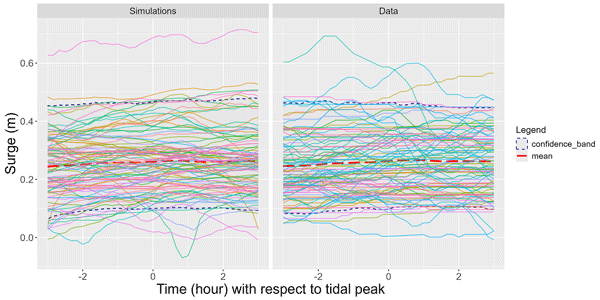
The analysis of the effect of extreme meteoceanic conditions is usually based on physical simulators, which rely on simulated extreme inputs consistent with the observations. However, surge measurements often fail to meet the theoretical assumptions. To address this, we propose a new simulation method which makes it possible to adjust the desired level of extremes after retrieving standard hypotheses. The consistency of simulations with the observations is then validated by using several tools.

Heiko Goelzer, Constantijn J. Berends, Fredrik Boberg, Gael Durand, Tamsin L. Edwards, Xavier Fettweis, Fabien Gillet-Chaulet, Quentin Glaude, Philippe Huybrechts, Sébastien Le clec'h, Ruth Mottram, Brice Noël, Martin Olesen, Charlotte Rahlves, Jeremy Rohmer, Michiel van den Broeke, and Roderik S. W. van de Wal
The Cryosphere, 19, 6887–6906, https://doi.org/10.5194/tc-19-6887-2025, https://doi.org/10.5194/tc-19-6887-2025, 2025
Short summary
Short summary
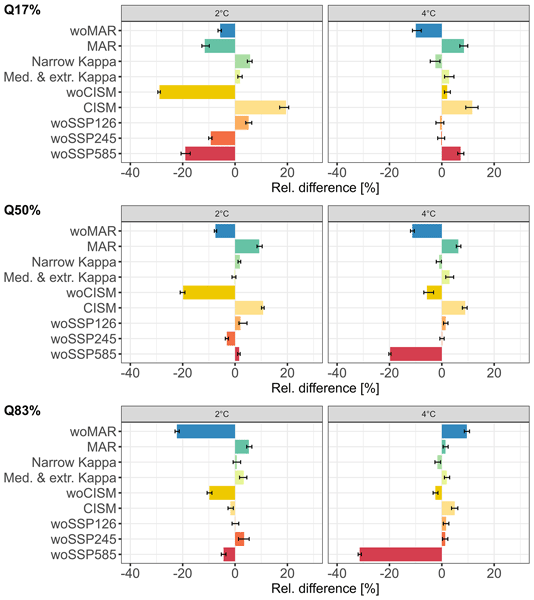
We present an ensemble of ice sheet model projections for the Greenland ice sheet. The focus is on providing projections that improve our understanding of the range future sea-level rise and the inherent uncertainties over the next 100 to 300 years. Compared to earlier work we more fully account for some of the uncertainties in sea-level projections. We include a wider range of climate model output, more climate change scenarios and we extend projections schematically up to year 2300.
Jeremy Rohmer, Heiko Goelzer, Tamsin L. Edwards, Goneri Le Cozannet, and Gael Durand
The Cryosphere, 19, 6421–6444, https://doi.org/10.5194/tc-19-6421-2025, https://doi.org/10.5194/tc-19-6421-2025, 2025
Short summary
Short summary
Developing robust protocols to design multi-model ensembles is of primary importance for the uncertainty quantification of sea level projections. Here, we set up a series of computer experiments to reflect design decisions for the prediction of future sea level contribution of the Greenland ice sheet in 2100. We show the importance of including the most extreme climate scenario and the implications of using a single type of numerical model for ice sheets or regional climate.
Manuel García-León, José María García-Valdecasas, Lotfi Aouf, Alice Dalphinet, Juan Asensio, Stefania Angela Ciliberti, Breogán Gómez, Víctor Aquino, Roland Aznar, and Marcos Sotillo
Ocean Sci., 21, 3265–3290, https://doi.org/10.5194/os-21-3265-2025, https://doi.org/10.5194/os-21-3265-2025, 2025
Short summary
Short summary
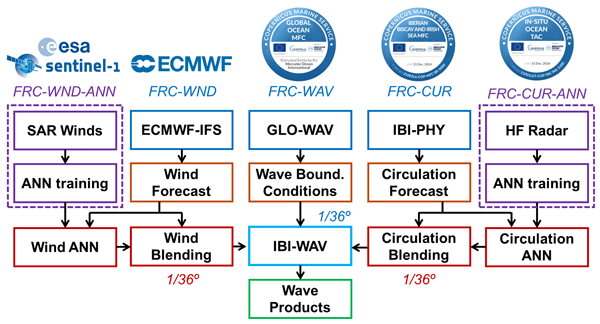
Accurate short-term wave forecasts are key for coastal activities. These forecasts rely on wind and currents as forcing, which in this work were both enhanced using neural networks (NNs) trained with satellite and radar data. Tested at three European sites, the NN-corrected winds were 35 % more accurate, and currents also improved. This led to improved IBI (Iberian–Biscay–Ireland) wave model predictions of wave height and period by 10 % and 17 %, respectively; even correcting under extreme events.
Mirna Badillo-Interiano, Jérémy Rohmer, Gonéri Le Cozannet, and Virginie Duvat
Nat. Hazards Earth Syst. Sci., 25, 4527–4543, https://doi.org/10.5194/nhess-25-4527-2025, https://doi.org/10.5194/nhess-25-4527-2025, 2025
Short summary
Short summary
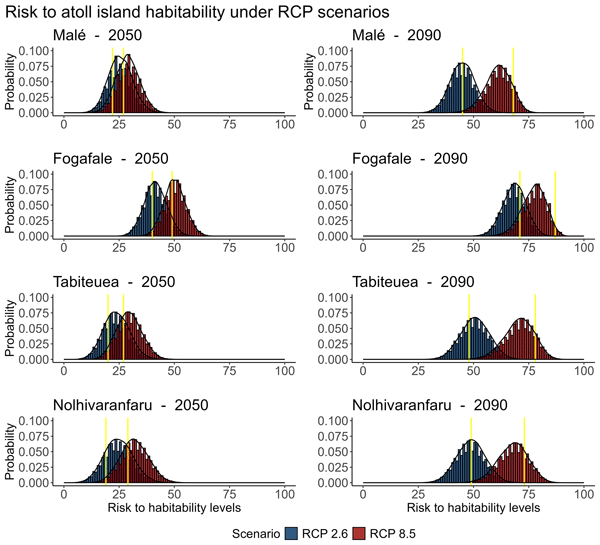
Small islands face increasing threats from climate change. In this context, exploring new modeling approaches is needed to improve climate risk assessments. We applied Bayesian Networks to assess the risk to future habitability on four atoll islands. The findings show that Bayesian Networks are powerful tools for efficiently assessing climate-related risks by combining expert judgments and confidence levels, providing a comprehensive framework to assess risks in data-limited island settings.
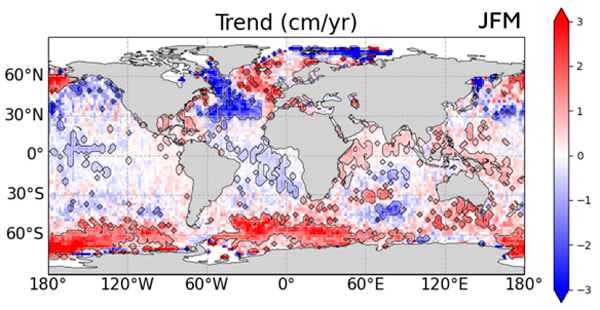
Alice Laloue, Malek Ghantous, Yannice Faugère, Alice Dalphinet, and Lotfi Aouf
State Planet, 4-osr8, 6, https://doi.org/10.5194/sp-4-osr8-6-2024, https://doi.org/10.5194/sp-4-osr8-6-2024, 2024
Short summary
Short summary
Satellite altimetry shows that daily mean significant wave heights (SWHs) and extreme SWHs have increased in the Southern Ocean, the South Atlantic, and the southern Indian Ocean over the last 2 decades. In winter in the North Atlantic, SWH has increased north of 45°N and decreased south of 45°N. SWHs likely to be exceeded every 100 years have also increased in the North Atlantic and the eastern tropical Pacific. However, this study also revealed the need for longer and more consistent series.
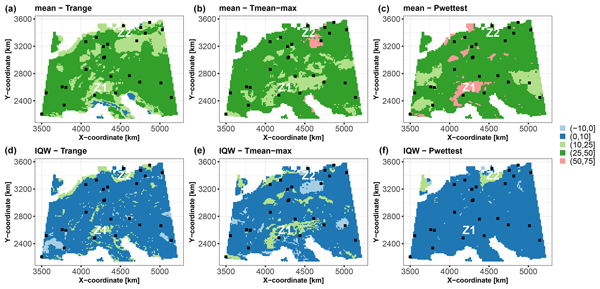
Jeremy Rohmer, Stephane Belbeze, and Dominique Guyonnet
SOIL, 10, 679–697, https://doi.org/10.5194/soil-10-679-2024, https://doi.org/10.5194/soil-10-679-2024, 2024
Short summary
Short summary
Machine learning (ML) models have become key ingredients for digital soil mapping. To explain why the ML model is reliable, we apply a popular method from explainable artificial intelligence to the uncertainty prediction, with an application to the mapping of hydrocarbon pollutants on urban soil. We show the benefit of a joint analysis of the influence on the best estimate and the uncertainty to improve communication with end users and support decisions regarding covariates’ characterisation.
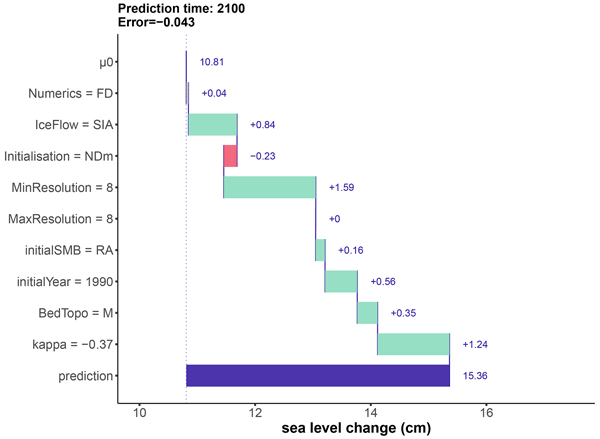
Jeremy Rohmer, Remi Thieblemont, Goneri Le Cozannet, Heiko Goelzer, and Gael Durand
The Cryosphere, 16, 4637–4657, https://doi.org/10.5194/tc-16-4637-2022, https://doi.org/10.5194/tc-16-4637-2022, 2022
Short summary
Short summary
To improve the interpretability of process-based projections of the sea-level contribution from land ice components, we apply the machine-learning-based
SHapley Additive exPlanationsapproach to a subset of a multi-model ensemble study for the Greenland ice sheet. This allows us to quantify the influence of particular modelling decisions (related to numerical implementation, initial conditions, or parametrisation of ice-sheet processes) directly in terms of sea-level change contribution.
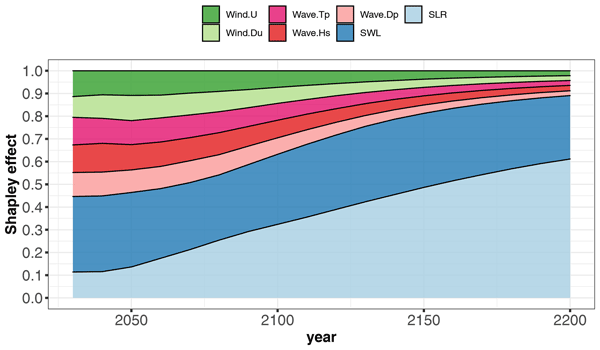
Jeremy Rohmer, Deborah Idier, Remi Thieblemont, Goneri Le Cozannet, and François Bachoc
Nat. Hazards Earth Syst. Sci., 22, 3167–3182, https://doi.org/10.5194/nhess-22-3167-2022, https://doi.org/10.5194/nhess-22-3167-2022, 2022
Short summary
Short summary
We quantify the influence of wave–wind characteristics, offshore water level and sea level rise (projected up to 2200) on the occurrence of flooding events at Gâvres, French Atlantic coast. Our results outline the overwhelming influence of sea level rise over time compared to the others. By showing the robustness of our conclusions to the errors in the estimation procedure, our approach proves to be valuable for exploring and characterizing uncertainties in assessments of future flooding.
Ryota Wada, Jeremy Rohmer, Yann Krien, and Philip Jonathan
Nat. Hazards Earth Syst. Sci., 22, 431–444, https://doi.org/10.5194/nhess-22-431-2022, https://doi.org/10.5194/nhess-22-431-2022, 2022
Short summary
Short summary
Characterizing extreme wave environments caused by tropical cyclones in the Caribbean Sea near Guadeloupe is difficult because cyclones rarely pass near the location of interest. STM-E (space-time maxima and exposure) model utilizes wave data during cyclones on a spatial neighbourhood. Long-duration wave data generated from a database of synthetic tropical cyclones are used to evaluate the performance of STM-E. Results indicate STM-E provides estimates with small bias and realistic uncertainty.
Cited articles
Baldi, P.: Autoencoders, Unsupervised Learning, and Deep Architectures, in: Proceedings of ICML Workshop on Unsupervised and Transfer Learning, JMLR Workshop and Conference Proceedings, 27, 37–49, 2012.
Biolchi, L. G., Unguendoli, S., Bressan, L., Giambastiani, M. S. B., and Valentini, A.: Ensemble technique application to an XBeach-based coastal Early Warning System for the northwest Adriatic Sea (Emilia-Romagna region, Italy), Coast. Eng., 173, 104081, https://doi.org/10.1016/j.coastaleng.2022.104081, 2022.
Beuzen, T., Goldstein, E. B., and Splinter, K. D.: Ensemble models from machine learning: an example of wave runup and coastal dune erosion, Nat. Hazards Earth Syst. Sci., 19, 2295–2309, https://doi.org/10.5194/nhess-19-2295-2019, 2019.
Bischl, B., Binder, M., Lang, M., Pielok, T., Richter, J., and Coors, S.: Hyperparameter optimization: Foundations, algorithms, best practices, and open challenges, WIRES Data Min. Knowl., 13, e1484, https://doi.org/10.1002/widm.1484, 2023.
Bouchet, J. M., Deltreil, J. P., Manaud, F., Maurer, D., and Trut, G.: Etude intégrée du Bassin d'Arcachon Tome 1, Rapport IFREMER R.INT.DEL/97.09/ARCACHON, arXiv [preprint], https://doi.org/10.48550/arXiv.2107.05847, 1997a.
Bouchet, J.-M., Deltreil, J.-P., Manaud, F., Daniele, M., and Gilles, T.: Etude intégrée du Bassin d'Arcachon, https://archimer.ifremer.fr/doc/00081/19254/ (last access: 31 July 2026), 1997b.
Camus, P., Mendez, F. J., Medina, R., and Cofiño, A. S.: Analysis of clustering and selection algorithms for the study of multivariate wave climate, Coast. Eng., 58, 453–462, 2011.
Castelle, B., Bonneton, P., Dupuis, H., and Senechal, N.: Double bar beach dynamics on the high energy meso-macrotudal French Aquitanian coast: a review, Mar. Geol., 245, 141–159, 2007.
Coles, S., Bawa, J., Trenner, L., and Dorazio, P.: An introduction to statistical modeling of extreme values, vol. 208, Springer, London, https://doi.org/10.1007/978-1-4471-3675-0, 2001.
Demeritt, D., Stephens, E. M., Créton-Cazanave, L., Lutoff, C., Ruin, I., and Nobert, S.: Communicating and Using Ensemble Flood Forecasts in Flood Incident Management: Lessons from Social Science, in: Handbook of Hydrometeorological Ensemble Forecasting, edited by: Duan, Q., Pappenberger, F., Thielen, J., Wood, A., Cloke, H., and Schaake, J., Springer, Berlin, Heidelberg, https://doi.org/10.1007/978-3-642-40457-3_44-1, 2016.
Descamps, L., Labadie, C., and Joly, A.: PEARP Météo-France short range ensemble prediction system, Q. J. Roy. Meteor. Soc., 141, 1671–1685, 2015.
Dietrich, J. C., Dawson, C., Proft, J., and Howard, M. T.: Real-Time Forecasting and Visualization of Hurricane Waves and Storm Surge Using SWAN+ADCIRC and FigureGen, Computational Challenges in the Geosciences, 156, 49–70, 2013.
Dupuis, H., Michel, D., and Sottolichio, A.: Wave climate evolution in the Bay of Biscay over two decades, J. Marine Syst., 63, 105–114, 2006.
Filippini, A., Arpaia, L., Perrier, V., Pedreros, R., Bonneton, P., Lannes, D., Marche, F., De Brye, S., Delmas, S., Lecacheux, S., Boulahya, F., and Ricchiuto, M.: An operational discontinuous Galerkin shallow water model for coastal flood assessment, Ocean Model., 192, 102447, https://doi.org/10.1016/j.ocemod.2024.102447, 2024.
Fraehr, N., Wang, Q. J., Wu, W., and Nathan, R.: Assessment of surrogate models for flood inundation: The physics-guided LSG model vs. state-of-the-art machine learning models, Water Res., 252, 121202, https://doi.org/10.1016/j.watres.2024.121202,2024.
Gu, M. and Berger, J. O.: Parallel partial Gaussian process emulation for computer models with massive output, Ann. Appl. Stat., 10, 1317–1347, 2016.
Hastie, T., Tibshirani, R., and Friedman, J.: The Elements of Statistical Learning: Data Mining, Inference, and Prediction, Springer, Berlin, Heidelberg, Germany, https://doi.org/10.1007/978-0-387-84858-7, 2009.
Hauer, M. E., Hardy, D., Kulp, S. A. Mueller, V., Wrathall, D. J., and Clark, P. U.: Assessing population exposure to coastal flooding due to sea level rise, Nat. Commun., 12, 6900, https://doi.org/10.1038/s41467-021-27260-1, 2021.
Heffernan, J. E. and Tawn, J. A.: A conditional approach for multivariate extreme values (with discussion), J. R. Stat. Soc. B, 66, 497–546, 2004.
Irazoqui Apecechea, M., Melet, A., and Armaroli, C.: Towards a pan-European coastal flood awareness system: Skill of extreme sea-level forecasts from the Copernicus Marine Service, Front. Mar. Sci., 9, 1091844, https://doi.org/10.3389/fmars.2022.1091844, 2023.
Irwin, C., Jung, W., Taflanidis, A. A., Nadal-Caraballo, N. C., Aucoin, L. A., and Yawn, M. C.: Emulation of peak storm surge across extended spatial domains using separable Gaussian Process techniques, Coast. Eng., 104945, https://doi.org/10.1016/j.coastaleng.2025.104945, 2025.
Jia, G. and Taflanidis, A. A.: Kriging metamodelling for approximation of high-dimensional wave and surge responses in real-time storm/hurricane risk assessment, Comput. Method. Appl. M., 261, 24–38, 2013.
Jolliffe, I. T.: Principal Component Analysis, 2nd edn., Springer, New York, https://doi.org/10.1007/b98835, 2002.
Jung, W., Taflanidis, A. A., Nadal-Caraballo, N. C., Aucoin, L. A., and Yawn, M. C.: Advances in spatiotemporal storm surge emulation: database imputation and multi-mode latent space projection, Coast. Eng., 104762, https://doi.org/10.1016/j.coastaleng.2025.104762, 2025.
Le Gal, M., Fernández-Montblanc, T., Duo, E., Montes Perez, J., Cabrita, P., Souto Ceccon, P., Gastal, V., Ciavola, P., and Armaroli, C.: A new European coastal flood database for low–medium intensity events, Nat. Hazards Earth Syst. Sci., 23, 3585–3602, https://doi.org/10.5194/nhess-23-3585-2023, 2023.
Le Gal, M., Fernández-Montblanc, T., Montes Perez, J., Duo, E., Souto Ceccon, P., Ciavola, P., and Armaroli, C.: Influence of model configuration for coastal flooding across Europe, Coast. Eng., 192, 104541, ISSN 0378-3839, 2024.
Lecacheux, S., Bonnardot, F., Rousseau, M., Paris, F., Pedreros, R., Alexandre, N.-L., Quetelard, H., and Barbary, D.: Probabilistic Forecast of Coastal Waves for Flood Warning Applications at Reunion Island (Indian Ocean), J. Coast. Res., 85, 776–780, https://doi.org/10.2112/SI85-156.1, 2018..
Lecacheux, S., Pedreros, R., Filippini, A. G., Arpaia, L., Rohmer, J., Louisor, J., Nicolae Lerma, A., Quique, R., and Pragout, J.: Appui à la mission RDI de Gironde : Cartographie des ZIP “ submersion marine ” pour le Bassin d'Arcachon, Rapport final BRGM/RP-73272-FR, BRGM, p. 56, https://infoterre.brgm.fr/rapports/RP-73272-FR.pdf (last access: 31 July 2026), 2023.
Li, M., Wang, R. Q., and Jia, G.: Efficient dimension reduction and surrogate-based sensitivity analysis for expensive models with high-dimensional outputs, Reliab. Eng. Syst. Safe., 195, 106725, https://doi.org/10.1016/j.ress.2019.106725, 2020.
López-Lopera, A. F., Idier, D., Rohmer, J., and Bachoc, F.: Multi-Output Gaussian Processes with Functional Data: A Study on Coastal Flood Hazard Assessment, arXiv [preprint], https://doi.org/10.48550/arXiv.2007.14052, 2020.
Lorente, P., García-Sotillo, M., Amo-Baladrón, A., Aznar, R., Levier, B., Sánchez-Garrido, J. C., Sammartino, S., de Pascual-Collar, Á., Reffray, G., Toledano, C., and Álvarez-Fanjul, E.: Skill assessment of global, regional, and coastal circulation forecast models: evaluating the benefits of dynamical downscaling in IBI (Iberia–Biscay–Ireland) surface waters, Ocean Sci., 15, 967–996, https://doi.org/10.5194/os-15-967-2019, 2019
Luesink, M., Wolbers, J., Duin, M., and Kuipers, S.: Scenario planning to enable foresight in crisis management, in: Proceedings of the International ISCRAM Conference, 2024.
Ma, P., Karagiannis, G., Konomi, B. A., Asher, T. G., Toro, G. R., and Cox, A. T.: Multifidelity computer model emulation with high-dimensional output: An application to storm surge, J. R. Stat. Soc. C-Appl., https://doi.org/10.1111/rssc.12558, 2022.
Ma, Z., Mei, G., and Xu, N.: Generative deep learning for data generation in natural hazard analysis: motivations, advances, challenges, and opportunities, Artif. Intell. Rev., 57, 160, https://doi.org/10.1007/s10462-024-10764-9, 2024.
Macdonald, E., Tubaldi, E., and Patelli, E.: Robust storm surge forecasts for early warning system: a machine learning approach using Monte Carlo Bayesian model selection algorithm, Stoch. Env. Res. Risk A., 39, 2789–2816, 2025.
MEDDE: Guide Méthodologique Plans de Prévention des Risques Littoraux, https://www.ecologie.gouv.fr/sites/default/files/documents/Guide_méthodo_PPRL_%202014.pdf (last access: 31 July 2026), 2014.
Mugica, J., Bulteau, T., Paris, F., and Pedreros, R.: Caractérisation de l'aléa submersion marine dans le cadre des PPRL du Bassin d'Arcachon, (Gironde), Détermination de l'évènement naturel de référence, Rapport intermédiaire BRGM/RP-61408-FR, p. 73, 38 fig., 11 Table, 2 ann, https://infoterre.brgm.fr/rapports/RP-62187-FR.pdf (last access: 31 July 2026), 2014.
Pawar, K. and Attar, V. Z.: Assessment of autoencoder architectures for data representation. In Deep Learning: Concepts and Architectures, Springer International Publishing, Cham, 101–132, https://doi.org/10.1007/978-3-030-31756-0_4 2019.
Perrin, T. V. E., Roustant, O., Rohmer, J., Alata, O., Naulin, J. P., Idier, D., Pedreros, R., Moncoulon, D., and Tinard, P.: Functional principal component analysis for global sensitivity analysis of model with spatial output, arXiv [preprint], https://doi.org/10.48550/arXiv.2005.10285, 2020.
Ragu Ramalingam, N., Johnson, K., Pagani, M., and Martina, M. L. V.: Advancing nearshore and onshore tsunami hazard approximation with machine learning surrogates, Nat. Hazards Earth Syst. Sci., 25, 1655–1679, https://doi.org/10.5194/nhess-25-1655-2025, 2025.
Raoult, C., Joly, A., Andreevsky, M., and Joly-Laugel, A.: ANEMOC-3 : Amélioration de la base de données d'états de mer ANEMOC-2 par prise en compte des effets de la marée, Acte de conférence des 16èmes Journées de l'Hydrodynamique, 27–29 November 2018, Marseille, https://actesjh.ec-nantes.fr/images/16JH/Articles/JH2018_papier_05A_Raoult_et_al.pdf (last access: 31 July 2026), 2018.
Rohmer, J. and Idier, D.: A meta-modelling strategy to identify the critical offshore conditions for coastal flooding, Nat. Hazards Earth Syst. Sci., 12, 2943–2955, https://doi.org/10.5194/nhess-12-2943-2012, 2012.
Rohmer, J., Idier, D., Paris, F., Pedreros, R., and Louisor, J.: Casting light on forcing and breaching scenarios that lead to marine inundation: Combining numerical simulations with a random-forest classification approach, Environ. Model. Softw., 104, 64–80, 2018.
Rohmer, J., Sire, C., Lecacheux, S., Idier, D., and Pedreros, R.: Improved metamodels for predicting high-dimensional outputs by accounting for the dependence structure of the latent variables: application to marine flooding, Stoch. Env. Res. Risk A., 37, 2919–2941, 2021.
Rohmer, J., Lecacheux, S., Idier, D., Filippini, A. G., and Pedreros, R.: Fast Prediction of Flood Maps Based on Machine Learning Techniques: Application to Marine Flooding at Arcachon Lagoon (Gironde, France), in: Advances in Hydroinformatics – SimHydro 2023, vol. 1. SimHydro 2023, edited by: Gourbesville, P. and Caignaert, G., Springer, Singapore, https://doi.org/10.1007/978-981-97-4072-7_10, 2024a.
Rohmer, J., Membrado, E., Lecacheux, S., Idier, D., Filippini, A., Pedreros, R., Dalphinet, A., Paradis, D., and Ayache, D.: Ensemble forecasts of marine flood maps assisted by probabilistic machine learning techniques: Application at Arcachon Lagoon (France), EGU General Assembly 2024, Vienna, Austria, 14–19 April 2024, EGU24-14945, https://doi.org/10.5194/egusphere-egu24-14945, 2024b.
Rohmer, J., Lecacheux, S., Idier, D., Membrado, E., Filippini, A.G., Pedreros, R., Paradis, D., and Dalphinet A.: Uncertainty analysis of a machine learning-aided ensemble forecast for coastal flood maps, Research Square, https://doi.org/10.21203/rs.3.rs-8758359/v1, 2026.
Roustant, O, Ginsbourger, D., and Deville, Y.: DiceKriging, DiceOptim: Two R packages for the analysis of computer experiments by kriging-based metamodelling and optimization, J. Stat. Softw., 51, 1–55, 2012.
Saha, S., Moorthi, S., Pan, H.-L., Wu, X., Wang, J., Nadiga, S., Tripp, P., Kistler, R., Woollen, J., Behringer, D., Liu, H., Stokes, D., Grumbine, R., Gayno, G., Wang, J., Hou, Y.-T., Chuang, H.-Y., Juang, H.-M., Sela, J., and Goldberg, M.: The NCEP Climate Forecast System Reanalysis, B. Am. Meteorol. Soc., 91, 1015–1058, https://doi.org/10.1175/2010BAMS3001.1, 2010.
Saltel, M., Cabaret, O., Bourgine, B., and Loiselet, C.: Gestion des eaux souterraines en Région Aquitaine, Développements et maintenance du Modèle Nord-Aquitain de gestion des nappes, Module 1, Année 4, Convention 2008–2013, Rapport final BRGM/RP-63381-FR, 5 ann., BRGM, p. 49, https://infoterre.brgm.fr/rapports/RP-63381-FR.pdf (last access: 31 July 2026), 2014.
SHOM: Estimation des valeurs extrêmes de niveau d'eau sur le littoral métropolitain, Rapport d'étude No. 22-RE-0188, 2022.
SIBA: SLGRI du Bassin d'Arcachon, https://www.siba-bassin
-arcachon.fr/sites/default/files/2024-03/slgri-document-final_oct -2017.pdf (last access: 31 July 2026), 2015.
Spiller, E. T., Wolpert, R. L., Tierz, P., and Asher, T. G.: The zero problem: Gaussian process emulators for range-constrained computer models, SIAM/ASA Journal on Uncertainty Quantification, 11, 540–566, 2023.
Stansby, P., Chini, N., Apsley, D., Borthwick, A., Bricheno, L., Horrillo-Caraballo, J., McCabe, M., Reeve, D., Rogers, B. D., Saulter, A., Scott, A., Wilson, C., Wolf, J., and Yan, K.: Integrated model system for coastal flood prediction, J. Flood Risk Manag., 6, 229–252, https://doi.org/10.1111/jfr3.12001, 2013.
Toledano, C., Ghantous, M., Lorente, P., Dalphinet, A., Aouf, L., and Sotillo, M. G.: Impacts of an Altimetric Wave Data Assimilation Scheme and Currents-Wave Coupling in an Operational Wave System: The New Copernicus Marine IBI Wave Forecast Service, J. Mar. Sci. Eng., 10, 457, 2022.
Tolman: User manual and system documentation of WAVEWATCH-III version 4.18, NOAA/NWS/NCEP/MMABTech, https://polar.ncep.noaa.gov/waves/wave watch/manual.v4.18.pdf (last access: 31 July 2026), 2014.
Turner, I. L., Leaman, C. K., Harley, M. D., Thran, M. C., David, D. R., Splinter, K. D., and Lowe, R. J.: A framework for national-scale coastal storm hazards early warning, Coast. Eng., 192, 104571, https://doi.org/10.1016/j.coastaleng.2024.104571, 2024.
Van den Dool, H.: Empirical methods in short-term climate prediction, Oxford University Press, Oxford, ISBN 0199202788, 2007.
Williams, C. K. and Rasmussen, C. E.: Gaussian processes for machine learning, MIT press, Cambridge, MA, ISBN 026218253X, 2006.
Wang, W., Wang, Q. J., and Nathan, R.: Gaussian process regression on multiple drivers and attributes for rapid prediction of maximum flood inundation extent and depth, J. Hydrol., 649, 132476, 2025a.
Wang, Z., Leung, M., Mukhopadhyay, S., Sunkara, S., Steinschneider, S., Herman, J., Abellera, M., Kucharski, J., and Ruggiero, P.: Compound coastal flooding in San Francisco Bay under climate change, npj Nat. Hazards, 2, https://doi.org/10.1038/s44304-024-00057-0, 2025b.
Wu, W., Emerton, R., Duan, Q., and Wood, A. W.: Ensemble flood forecasting: Current status and future opportunities, Wiley Interdisciplinary Reviews: Water, 7, e1432, https://doi.org/10.1002/wat2.1432, 2020.
Short summary
This study comparer three data-driven methodologies to overcome the computational burden of numerical simulations for early warning purpose. They are all based on the statistical analysis of pre-calculated databases, to downscale total sea levels and predict marine flooding maps from offshore metocean forecasts. Conclusions highlight the relevance of metamodel-based approaches for fast prediction and the added value of precalculated databases during the prepardness phase.
This study comparer three data-driven methodologies to overcome the computational burden of...


Altmetrics
Final-revised paper
Preprint