
Articles | Volume 26, issue 8
https://doi.org/10.5194/nhess-26-3723-2026
© Author(s) 2026. This work is distributed under
the Creative Commons Attribution 4.0 License.
the Creative Commons Attribution 4.0 License.
https://doi.org/10.5194/nhess-26-3723-2026
© Author(s) 2026. This work is distributed under
the Creative Commons Attribution 4.0 License.
the Creative Commons Attribution 4.0 License.
Research article
| Highlight paper
| 
10 Aug 2026
Research article | Highlight paper |
| 10 Aug 2026
| 10 Aug 2026
Climate change may increase landslide frequency despite generally drier conditions in the Mediterranean area
Daniel Camilo Roman Quintero
CORRESPONDING AUTHOR

Dipartiemento di Ingenieria, Università degli Studi della Campania “Luigi Vanvitelli”, Aversa, Italy
Department of Water Management, Delft University of Technology, Delft, the Netherlands
Ruud van der Ent
Department of Water Management, Delft University of Technology, Delft, the Netherlands
Thom Bogaard
Department of Water Management, Delft University of Technology, Delft, the Netherlands
Roberto Greco
Dipartiemento di Ingenieria, Università degli Studi della Campania “Luigi Vanvitelli”, Aversa, Italy
Related authors
Daniel Camilo Roman Quintero, Pasquale Marino, Abdullah Abdullah, Giovanni Francesco Santonastaso, and Roberto Greco
Nat. Hazards Earth Syst. Sci., 25, 2679–2698, https://doi.org/10.5194/nhess-25-2679-2025, https://doi.org/10.5194/nhess-25-2679-2025, 2025
Short summary
Short summary
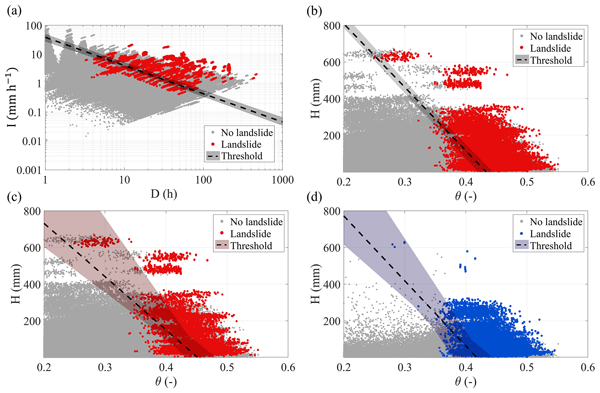
Local thresholds for landslide forecasting, combining hydrologic predisposing factors and rainfall features, are developed from a physically based model of a slope. To extend their application to a wide area, uncertainty due to the spatial variability of geomorphological and hydrologic variables is introduced. The obtained hydrometeorological thresholds, integrating root-zone soil moisture and aquifer water level with rainfall depth, outperform thresholds based on rain intensity and duration.
Daniel Camilo Roman Quintero, Pasquale Marino, Giovanni Francesco Santonastaso, and Roberto Greco
Hydrol. Earth Syst. Sci., 27, 4151–4172, https://doi.org/10.5194/hess-27-4151-2023, https://doi.org/10.5194/hess-27-4151-2023, 2023
Short summary
Short summary
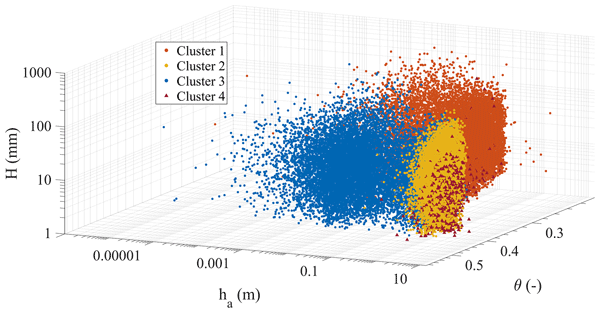
This study shows a methodological approach using machine learning techniques to disentangle the relationships among the variables in a synthetic dataset to identify suitable variables that control the hydrologic response of the slopes. It has been found that not only is the rainfall responsible for the water accumulation in the slope; the ground conditions (soil water content and aquifer water level) also indicate the activation of natural slope drainage mechanisms.
Muhammad Ibrahim, Markus Hrachowitz, Miriam Coenders-Gerrits, and Ruud van der Ent
EGUsphere, https://doi.org/10.5194/egusphere-2026-4226, https://doi.org/10.5194/egusphere-2026-4226, 2026
This preprint is open for discussion and under review for Hydrology and Earth System Sciences (HESS).
Short summary
Short summary
Root zone storage capacity is an important parameter in hydrological and land-surface models and is often estimated using the memory method rather than through model calibration. We evaluated the uncertainty associated with this widely used method across thousands of catchments worldwide. Our results show that uncertainty varies systematically with climate, while memory method estimates remain in close agreement with calibrated values, supporting the commonly used 20-year return period.
Julia M. Rudlang, Thiago V. M. do Nascimento, Ruud van der Ent, Fabrizio Fenicia, and Markus Hrachowitz
Hydrol. Earth Syst. Sci., 30, 4481–4508, https://doi.org/10.5194/hess-30-4481-2026, https://doi.org/10.5194/hess-30-4481-2026, 2026
Short summary
Short summary
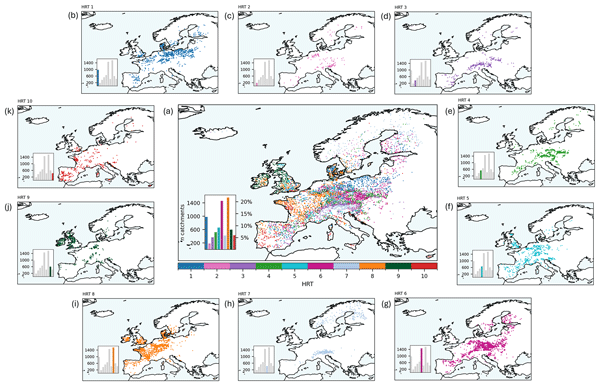
River flow (streamflow) behaviour varies across Europe and is shaped by climate and landscape. Using data from more than 7000 European catchments, we identified 10 hydrological response types based on flow magnitude, timing, and seasonality. At the continental scale, streamflow behaviour is mainly driven by climate, but landscape features are equally or more influential in several regions. These results show that streamflow behaviour emerges from the combined effects of climate and landscape.
Charlotte Braat, Stef Lhermitte, Marie Claire ten Veldhuis, Rolf Hut, and Ruud van der Ent
EGUsphere, https://doi.org/10.5194/egusphere-2026-1439, https://doi.org/10.5194/egusphere-2026-1439, 2026
This preprint is open for discussion and under review for Hydrology and Earth System Sciences (HESS).
Short summary
Short summary
Deforestation influences the regional and global water cycle. In this paper, deforestation data is combined with data that links rainfall to where this water evaporated. We estimate to what extent rainfall in the region is potentially impacted by deforestation elsewhere. We find that most regions are mostly impacted by deforestation outside of the region. We could not yet confirm a generic link with actual rainfall due to limitations, complex system interactions and region specific dynamics.
Francesco Marra, Eleonora Dallan, Marco Borga, Roberto Greco, and Thom Bogaard
Nat. Hazards Earth Syst. Sci., 25, 5055–5061, https://doi.org/10.5194/nhess-25-5055-2025, https://doi.org/10.5194/nhess-25-5055-2025, 2025
Short summary
Short summary
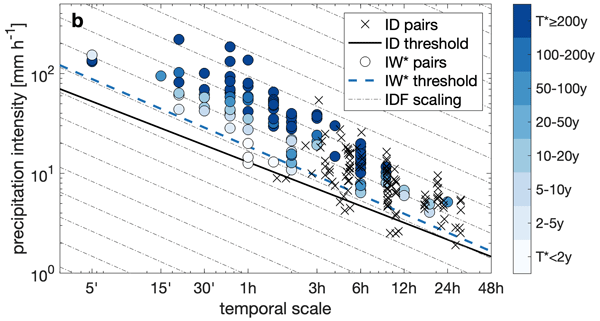
We highlight an important conceptual difference between the duration used in intensity-duration thresholds and the duration used in the intensity-duration-frequency curves that has been overlooked by the landslide literature so far.
Daniel Camilo Roman Quintero, Pasquale Marino, Abdullah Abdullah, Giovanni Francesco Santonastaso, and Roberto Greco
Nat. Hazards Earth Syst. Sci., 25, 2679–2698, https://doi.org/10.5194/nhess-25-2679-2025, https://doi.org/10.5194/nhess-25-2679-2025, 2025
Short summary
Short summary
Local thresholds for landslide forecasting, combining hydrologic predisposing factors and rainfall features, are developed from a physically based model of a slope. To extend their application to a wide area, uncertainty due to the spatial variability of geomorphological and hydrologic variables is introduced. The obtained hydrometeorological thresholds, integrating root-zone soil moisture and aquifer water level with rainfall depth, outperform thresholds based on rain intensity and duration.
Kshitiz Gautam, Astrid Blom, Mathieu Roebroeck, Marijn Wolf, and Thom Bogaard
EGUsphere, https://doi.org/10.5194/egusphere-2025-2926, https://doi.org/10.5194/egusphere-2025-2926, 2025
Short summary
Short summary
The Karnali River in Himalayan Terai of Nepal has shifted from double to single branch since 2009. Likely triggered by a double-peaked monsoon and coarse sediment deposition, this shift has gradually reduced flow into the eastern Geruwa branch. While the Koshi River in Terai is largely shaped by human activity, the Karnali’s shift appears driven by natural, monsoon-driven, sediment dynamics, affecting water distribution and habitats in Bardiya National Park, home to the Bengal tiger.
Peter Kalverla, Imme Benedict, Chris Weijenborg, and Ruud J. van der Ent
Geosci. Model Dev., 18, 4335–4352, https://doi.org/10.5194/gmd-18-4335-2025, https://doi.org/10.5194/gmd-18-4335-2025, 2025
Short summary
Short summary
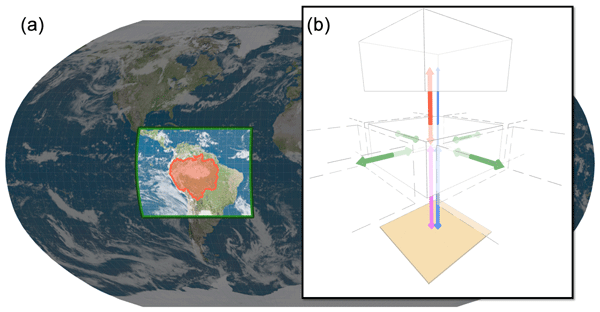
We introduce a new version of WAM2layers (Water Accounting Model – 2 layers), a computer program that tracks how the weather brings water from one place to another. It uses data from weather and climate models, whose resolution is steadily increasing. Processing the latest data had become a challenge, and the updates presented here ensure that WAM2layers runs smoothly again. We also made it easier to use the program and to understand its source code. This makes it more transparent, reliable, and easier to maintain.
Muhammad Ibrahim, Miriam Coenders-Gerrits, Ruud van der Ent, and Markus Hrachowitz
Hydrol. Earth Syst. Sci., 29, 1703–1723, https://doi.org/10.5194/hess-29-1703-2025, https://doi.org/10.5194/hess-29-1703-2025, 2025
Short summary
Short summary
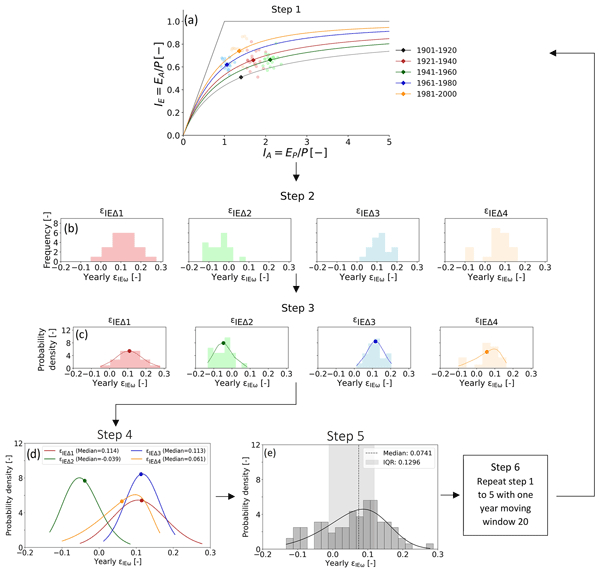
The quantification of precipitation into evaporation and runoff is vital for water resources management. The Budyko framework, based on aridity and evaporative indices of a catchment, can be an ideal tool for that. However, recent research highlights deviations of catchments from the expected evaporative index, casting doubt on its reliability. This study quantifies deviations of 2387 catchments, finding them minor and predictable. Integrating these into predictions upholds the framework's efficacy.
Benjamin B. Mirus, Thom Bogaard, Roberto Greco, and Manfred Stähli
Nat. Hazards Earth Syst. Sci., 25, 169–182, https://doi.org/10.5194/nhess-25-169-2025, https://doi.org/10.5194/nhess-25-169-2025, 2025
Short summary
Short summary
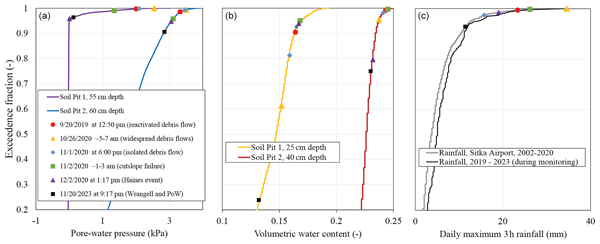
Early warning of increased landslide potential provides situational awareness to reduce landslide-related losses from major storm events. For decades, landslide forecasts relied on rainfall data alone, but recent research points to the value of hydrologic information for improving predictions. In this paper, we provide our perspectives on the value and limitations of integrating subsurface hillslope hydrologic monitoring data and mathematical modeling for more accurate landslide forecasts.
Chandrakant Singh, Ruud van der Ent, Ingo Fetzer, and Lan Wang-Erlandsson
Earth Syst. Dynam., 15, 1543–1565, https://doi.org/10.5194/esd-15-1543-2024, https://doi.org/10.5194/esd-15-1543-2024, 2024
Short summary
Short summary
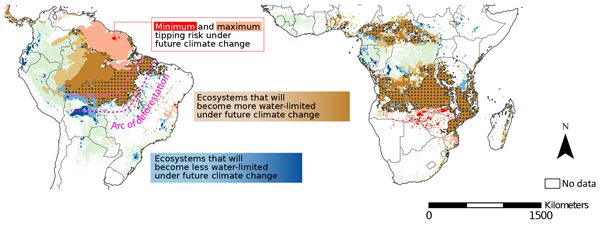
Tropical rainforests risk tipping to savanna under future climate change. By analysing ecosystem root zone dynamics using hydroclimate data from Earth system models, we project the tipping risks for these rainforests. Our findings suggest that although some transition risks may be inevitable, most can still be mitigated by adapting to less severe climate change scenarios. Limiting global surface temperatures to meet the Paris Agreement targets is critical to preserving these ecosystems.
Athanasios Tsiokanos, Martine Rutten, Ruud J. van der Ent, and Remko Uijlenhoet
Hydrol. Earth Syst. Sci., 28, 3327–3345, https://doi.org/10.5194/hess-28-3327-2024, https://doi.org/10.5194/hess-28-3327-2024, 2024
Short summary
Short summary
We focus on past high-flow events to find flood drivers in the Geul. We also explore flood drivers’ trends across various timescales and develop a new method to detect the main direction of a trend. Our results show that extreme 24 h precipitation alone is typically insufficient to cause floods. The combination of extreme rainfall and wet initial conditions determines the chance of flooding. Precipitation that leads to floods increases in winter, whereas no consistent trends are found in summer.
Fransje van Oorschot, Ruud J. van der Ent, Andrea Alessandri, and Markus Hrachowitz
Hydrol. Earth Syst. Sci., 28, 2313–2328, https://doi.org/10.5194/hess-28-2313-2024, https://doi.org/10.5194/hess-28-2313-2024, 2024
Short summary
Short summary
Vegetation plays a crucial role in regulating the water cycle by transporting water from the subsurface to the atmosphere via roots; this transport depends on the extent of the root system. In this study, we quantified the effect of irrigation on roots at a global scale. Our results emphasize the importance of accounting for irrigation in estimating the vegetation root extent, which is essential to adequately represent the water cycle in hydrological and climate models.
Steven J. De Hertog, Carmen E. Lopez-Fabara, Ruud van der Ent, Jessica Keune, Diego G. Miralles, Raphael Portmann, Sebastian Schemm, Felix Havermann, Suqi Guo, Fei Luo, Iris Manola, Quentin Lejeune, Julia Pongratz, Carl-Friedrich Schleussner, Sonia I. Seneviratne, and Wim Thiery
Earth Syst. Dynam., 15, 265–291, https://doi.org/10.5194/esd-15-265-2024, https://doi.org/10.5194/esd-15-265-2024, 2024
Short summary
Short summary
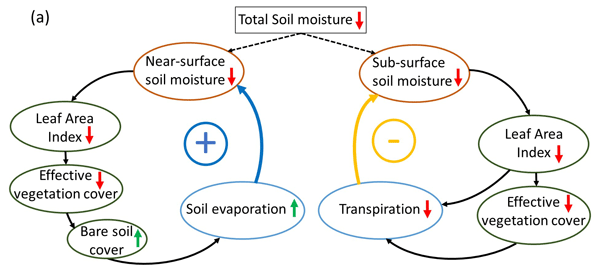
Changes in land use are crucial to achieve lower global warming. However, despite their importance, the effects of these changes on moisture fluxes are poorly understood. We analyse land cover and management scenarios in three climate models involving cropland expansion, afforestation, and irrigation. Results show largely consistent influences on moisture fluxes, with cropland expansion causing a drying and reduced local moisture recycling, while afforestation and irrigation show the opposite.
Adriaan L. van Natijne, Thom A. Bogaard, Thomas Zieher, Jan Pfeiffer, and Roderik C. Lindenbergh
Nat. Hazards Earth Syst. Sci., 23, 3723–3745, https://doi.org/10.5194/nhess-23-3723-2023, https://doi.org/10.5194/nhess-23-3723-2023, 2023
Short summary
Short summary
Landslides are one of the major weather-related geohazards. To assess their potential impact and design mitigation solutions, a detailed understanding of the slope is required. We tested if the use of machine learning, combined with satellite remote sensing data, would allow us to forecast deformation. Our results on the Vögelsberg landslide, a deep-seated landslide near Innsbruck, Austria, show that the formulation of such a machine learning system is not as straightforward as often hoped for.
Fransje van Oorschot, Ruud J. van der Ent, Markus Hrachowitz, Emanuele Di Carlo, Franco Catalano, Souhail Boussetta, Gianpaolo Balsamo, and Andrea Alessandri
Earth Syst. Dynam., 14, 1239–1259, https://doi.org/10.5194/esd-14-1239-2023, https://doi.org/10.5194/esd-14-1239-2023, 2023
Short summary
Short summary
Vegetation largely controls land hydrology by transporting water from the subsurface to the atmosphere through roots and is highly variable in space and time. However, current land surface models have limitations in capturing this variability at a global scale, limiting accurate modeling of land hydrology. We found that satellite-based vegetation variability considerably improved modeled land hydrology and therefore has potential to improve climate predictions of, for example, droughts.
Daniel Camilo Roman Quintero, Pasquale Marino, Giovanni Francesco Santonastaso, and Roberto Greco
Hydrol. Earth Syst. Sci., 27, 4151–4172, https://doi.org/10.5194/hess-27-4151-2023, https://doi.org/10.5194/hess-27-4151-2023, 2023
Short summary
Short summary
This study shows a methodological approach using machine learning techniques to disentangle the relationships among the variables in a synthetic dataset to identify suitable variables that control the hydrologic response of the slopes. It has been found that not only is the rainfall responsible for the water accumulation in the slope; the ground conditions (soil water content and aquifer water level) also indicate the activation of natural slope drainage mechanisms.
En Ning Lai, Lan Wang-Erlandsson, Vili Virkki, Miina Porkka, and Ruud J. van der Ent
Hydrol. Earth Syst. Sci., 27, 3999–4018, https://doi.org/10.5194/hess-27-3999-2023, https://doi.org/10.5194/hess-27-3999-2023, 2023
Short summary
Short summary
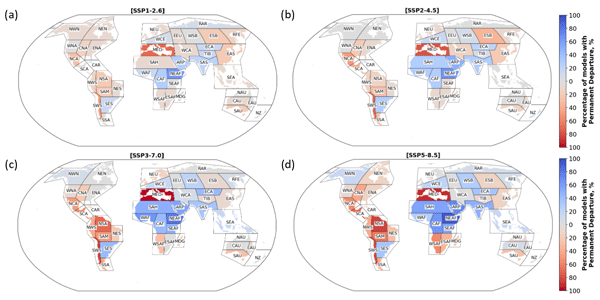
This research scrutinized predicted changes in root zone soil moisture dynamics across different climate scenarios and different climate regions globally between 2021 and 2100. The Mediterranean and most of South America stood out as regions that will likely experience permanently drier conditions, with greater severity observed in the no-climate-policy scenarios. These findings underscore the impact that possible future climates can have on green water resources.
Steven J. De Hertog, Carmen E. Lopez-Fabara, Ruud van der Ent, Jessica Keune, Diego G. Miralles, Raphael Portmann, Sebastian Schemm, Felix Havermann, Suqi Guo, Fei Luo, Iris Manola, Quentin Lejeune, Julia Pongratz, Carl-Friedrich Schleussner, Sonia I. Seneviratne, and Wim Thiery
EGUsphere, https://doi.org/10.5194/egusphere-2023-953, https://doi.org/10.5194/egusphere-2023-953, 2023
Preprint archived
Short summary
Short summary
Land cover and management changes can affect the climate and water availability. In this study we use climate model simulations of extreme global land cover changes (afforestation, deforestation) and land management changes (irrigation) to understand the effects on the global water cycle and local to continental water availability. We show that cropland expansion generally leads to higher evaporation and lower amounts of precipitation and afforestation and irrigation expansion to the opposite.
Yi Luo, Jiaming Zhang, Zhi Zhou, Juan P. Aguilar-Lopez, Roberto Greco, and Thom Bogaard
Hydrol. Earth Syst. Sci., 27, 783–808, https://doi.org/10.5194/hess-27-783-2023, https://doi.org/10.5194/hess-27-783-2023, 2023
Short summary
Short summary
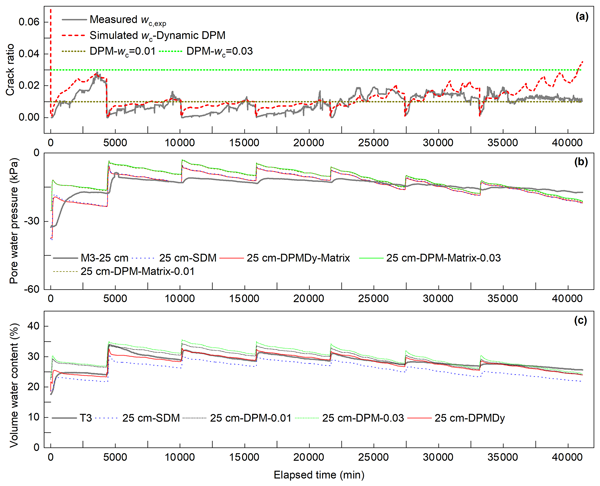
This paper describes an experiment and modeling of the hydrological response of desiccation cracks under long-term wetting–drying cycles. We developed a new dynamic dual-permeability model to quantify the dynamic evolution of desiccation cracks and associated preferential flow and moisture distribution. Compared to other models, the dynamic dual-permeability model could describe the experimental data much better, but it also provided an improved description of the underlying physics.
Judith Uwihirwe, Alessia Riveros, Hellen Wanjala, Jaap Schellekens, Frederiek Sperna Weiland, Markus Hrachowitz, and Thom A. Bogaard
Nat. Hazards Earth Syst. Sci., 22, 3641–3661, https://doi.org/10.5194/nhess-22-3641-2022, https://doi.org/10.5194/nhess-22-3641-2022, 2022
Short summary
Short summary
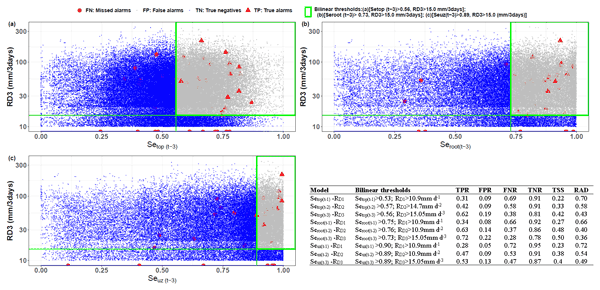
This study compared gauge-based and satellite-based precipitation products. Similarly, satellite- and hydrological model-derived soil moisture was compared to in situ soil moisture and used in landslide hazard assessment and warning. The results reveal the cumulative 3 d rainfall from the NASA-GPM to be the most effective landslide trigger. The modelled antecedent soil moisture in the root zone was the most informative hydrological variable for landslide hazard assessment and warning in Rwanda.

Jan Pfeiffer, Thomas Zieher, Jan Schmieder, Thom Bogaard, Martin Rutzinger, and Christoph Spötl
Nat. Hazards Earth Syst. Sci., 22, 2219–2237, https://doi.org/10.5194/nhess-22-2219-2022, https://doi.org/10.5194/nhess-22-2219-2022, 2022
Short summary
Short summary
The activity of slow-moving deep-seated landslides is commonly governed by pore pressure variations within the shear zone. Groundwater recharge as a consequence of precipitation therefore is a process regulating the activity of landslides. In this context, we present a highly automated geo-statistical approach to spatially assess groundwater recharge controlling the velocity of a deep-seated landslide in Tyrol, Austria.
Judith Uwihirwe, Markus Hrachowitz, and Thom Bogaard
Nat. Hazards Earth Syst. Sci., 22, 1723–1742, https://doi.org/10.5194/nhess-22-1723-2022, https://doi.org/10.5194/nhess-22-1723-2022, 2022
Short summary
Short summary
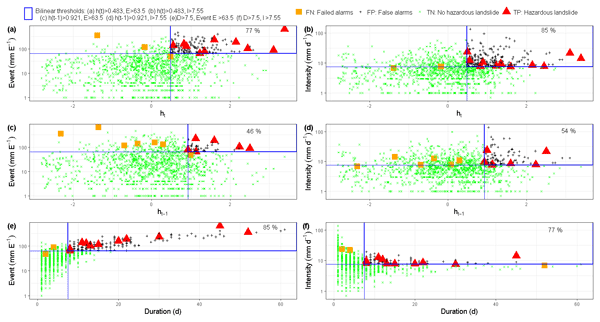
This research tested the value of regional groundwater level information to improve landslide predictions with empirical models based on the concept of threshold levels. In contrast to precipitation-based thresholds, the results indicated that relying on threshold models exclusively defined using hydrological variables such as groundwater levels can lead to improved landslide predictions due to their implicit consideration of long-term antecedent conditions until the day of landslide occurrence.
Punpim Puttaraksa Mapiam, Monton Methaprayun, Thom Bogaard, Gerrit Schoups, and Marie-Claire Ten Veldhuis
Hydrol. Earth Syst. Sci., 26, 775–794, https://doi.org/10.5194/hess-26-775-2022, https://doi.org/10.5194/hess-26-775-2022, 2022
Short summary
Short summary
The density of rain gauge networks plays an important role in radar rainfall bias correction. In this work, we aimed to assess the extent to which daily rainfall observations from a dense network of citizen scientists improve the accuracy of hourly radar rainfall estimates in the Tubma Basin, Thailand. Results show that citizen rain gauges significantly enhance the performance of radar rainfall bias adjustment up to a range of about 40 km from the center of the citizen rain gauge network.
Cited articles
Avino, A., Cimorelli, L., Furcolo, P., Noto, L. V., Pelosi, A., Pianese, D., Villani, P., and Manfreda, S.: Are rainfall extremes increasing in southern Italy?, J. Hydrol. (Amst), 631, 130684, https://doi.org/10.1016/J.JHYDROL.2024.130684, 2024.
Bezak, N., Jemec Auflič, M., and Mikoš, M.: Reanalysis of soil moisture used for rainfall thresholds for rainfall-induced landslides: The Italian case study, Water (Switzerland), 13, https://doi.org/10.3390/w13141977, 2021.
Bogaard, T. and Greco, R.: Landslide hydrology: from hydrology to pore pressure, Wiley Interdisciplinary Reviews: Water, 3, 439–459, https://doi.org/10.1002/wat2.1126, 2016.
Bozzolan, E., Holcombe, E., Pianosi, F., and Wagener, T.: Synthetic libraries of urban landslide simulations to identify slope failure hotspots and drivers across spatial scales and landscapes, Landslides, 22, 637–654, https://doi.org/10.1007/s10346-024-02327-4, 2025.
Bucchignani, E., Montesarchio, M., Zollo, A. L., and Mercogliano, P.: High-resolution climate simulations with COSMO-CLM over Italy: performance evaluation and climate projections for the 21st century, Int. J. Climatol., 36, 735–756, https://doi.org/10.1002/JOC.4379, 2016.
Buonacera, G., Palazzolo, N., Cancelliere, A., and Peres, D. J.: Deriving Future Rainfall Depth-Duration-Frequency Curves from Hourly Regional Climate Projections and Simple Scaling in Sicily, Water Resour. Manage., 1–17, https://doi.org/10.1007/S11269-025-04219-1, 2025.
Capozzi, V., Rocco, A., Annella, C., Cretella, V., Fusco, G., and Budillon, G.: Signals of change in the Campania region rainfall regime: An analysis of extreme precipitation indices (2002–2021), Meteorol. Appl., 30, e2168, https://doi.org/10.1002/MET.2168, 2023.
Celico, F., Naclerio, G., Bucci, A., Nerone, V., Capuano, P., Carcione, M., Allocca, V., and Celico, P.: Influence of pyroclastic soil on epikarst formation: a test study in southern Italy, Terra Nova, 22, 110–115, https://doi.org/10.1111/J.1365-3121.2009.00923.X, 2010.
Cowpertwait, P. S. P., O'Connell, P. E., Metcalfe, A. V., and Mawdsley, J. A.: Stochastic point process modelling of rainfall. I. Single-site fitting and validation, J. Hydrol. (Amst), https://doi.org/10.1016/S0022-1694(96)80004-7, 1996.
Crozier, M. J.: Deciphering the effect of climate change on landslide activity: A review, Geomorphology, 124, 260–267, https://doi.org/10.1016/J.GEOMORPH.2010.04.009, 2010.
Davie, J. C. S., Falloon, P. D., Kahana, R., Dankers, R., Betts, R., Portmann, F. T., Wisser, D., Clark, D. B., Ito, A., Masaki, Y., Nishina, K., Fekete, B., Tessler, Z., Wada, Y., Liu, X., Tang, Q., Hagemann, S., Stacke, T., Pavlick, R., Schaphoff, S., Gosling, S. N., Franssen, W., and Arnell, N.: Comparing projections of future changes in runoff from hydrological and biome models in ISI-MIP, Earth Syst. Dynam., 4, 359–374, https://doi.org/10.5194/esd-4-359-2013, 2013.
Del Soldato, M., Pazzi, V., Segoni, S., De Vita, P., Tofani, V., and Moretti, S.: Spatial modeling of pyroclastic cover deposit thickness (depth to bedrock) in peri-volcanic areas of Campania (southern Italy), Earth Surf. Process. Landf., 43, 1757–1767, https://doi.org/10.1002/ESP.4350, 2018.
De Vita, P. and Nappi, M.: Regional distribution of ash-fall pyroclastic soils for landslide susceptibility assessment, Landslide Science and Practice: Spatial Analysis and Modelling, 3, 103–109, https://doi.org/10.1007/978-3-642-31310-3_15, 2013.
D'Odorico, P., Fagherazzi, S., and Rigon, R.: Potential for landsliding: Dependence on hyetograph characteristics, J. Geophys. Res.-Earth Surf., 110, 1007, https://doi.org/10.1029/2004JF000127, 2005.
Dowdy, A.: A bias correction method designed for weather and climate extremes, Australian Bureau of Meteorology, 63 pp., http://www.bom.gov.au/research/publications/researchreports/BRR-087.pdf (last access: 11 October 2025), 2023.
Ehret, U., Zehe, E., Wulfmeyer, V., Warrach-Sagi, K., and Liebert, J.: HESS Opinions ”Should we apply bias correction to global and regional climate model data?”, Hydrol. Earth Syst. Sci., 16, 3391–3404, https://doi.org/10.5194/hess-16-3391-2012, 2012.
Erdfelder, E., Faul, F., Buchner, A., and Lang, A. G.: Statistical power analyses using G*Power 3.1: Tests for correlation and regression analyses, Behav. Res. Methods, 41, 1149–1160, https://doi.org/10.3758/BRM.41.4.1149, 2009.
Fang, Z., Wang, Y., van Westen, C., and Lombardo, L.: Space-time modeling of landslide size by combining static, dynamic, and unobserved spatiotemporal factors, Catena (Amst), 240, 107989, https://doi.org/10.1016/J.CATENA.2024.107989, 2024.
Gariano, S. L. and Guzzetti, F.: Landslides in a changing climate, Earth. Sci. Rev., 162, 227–252, https://doi.org/10.1016/J.EARSCIREV.2016.08.011, 2016.
Gariano, S. L., Petrucci, O., and Guzzetti, F.: Changes in the occurrence of rainfall-induced landslides in Calabria, southern Italy, in the 20th century, Nat. Hazards Earth Syst. Sci., 15, 2313–2330, https://doi.org/10.5194/nhess-15-2313-2015, 2015.
Gariano, S. L., Rianna, G., Petrucci, O., and Guzzetti, F.: Assessing future changes in the occurrence of rainfall-induced landslides at a regional scale, Sci. Total Environ., 596–597, 417–426, https://doi.org/10.1016/j.scitotenv.2017.03.103, 2017.
Golyandina, N. and Zhigljavsky, A.: Singular Spectrum Analysis for Time Series, Springer Berlin Heidelberg, Berlin, Heidelberg, https://doi.org/10.1007/978-3-642-34913-3, 2013.
Greco, R., Comegna, L., Damiano, E., Guida, A., Olivares, L., and Picarelli, L.: Hydrological modelling of a slope covered with shallow pyroclastic deposits from field monitoring data, Hydrol. Earth Syst. Sci., 17, 4001–4013, https://doi.org/10.5194/hess-17-4001-2013, 2013.
Greco, R., Marino, P., Santonastaso, G. F., and Damiano, E.: Interaction between perched epikarst aquifer and unsaturated soil cover in the initiation of shallow landslides in pyroclastic soils, Water (Switzerland), 10, https://doi.org/10.3390/w10070948, 2018.
Greco, R., Comegna, L., Damiano, E., Marino, P., Olivares, L., and Santonastaso, G. F.: Recurrent rainfall-induced landslides on the slopes with pyroclastic cover of Partenio Mountains (Campania, Italy): Comparison of 1999 and 2019 events, Eng. Geol., 288, 106160, https://doi.org/10.1016/j.enggeo.2021.106160, 2021.
Greco, R., Marino, P., and Bogaard, T. A.: Recent advancements of landslide hydrology, Wiley Interdisciplinary Reviews: Water, e1675, https://doi.org/10.1002/WAT2.1675, 2023.
Gründemann, G. J., van de Giesen, N., Brunner, L., and van der Ent, R.: Rarest rainfall events will see the greatest relative increase in magnitude under future climate change, Commun. Earth Environ., 3, 1–9, https://doi.org/10.1038/S43247-022-00558-8, 2022.
Iadanza, C., Trigila, A., Starace, P., Dragoni, A., Biondo, T., and Roccisano, M.: IdroGEO: A collaborative web mapping application based on REST API services and open data on landslides and floods in Italy, ISPRS Int. J. Geoinf., 10, https://doi.org/10.3390/IJGI10020089, 2021.
Jacob, D., Petersen, J., Eggert, B., Alias, A., Christensen, O. B., Bouwer, L. M., Braun, A., Colette, A., Déqué, M., Georgievski, G., Georgopoulou, E., Gobiet, A., Menut, L., Nikulin, G., Haensler, A., Hempelmann, N., Jones, C., Keuler, K., Kovats, S., Kröner, N., Kotlarski, S., Kriegsmann, A., Martin, E., van Meijgaard, E., Moseley, C., Pfeifer, S., Preuschmann, S., Radermacher, C., Radtke, K., Rechid, D., Rounsevell, M., Samuelsson, P., Somot, S., Soussana, J. F., Teichmann, C., Valentini, R., Vautard, R., Weber, B., and Yiou, P.: EURO-CORDEX: New high-resolution climate change projections for European impact research, Reg. Environ. Change, 14, 563–578, https://doi.org/10.1007/s10113-013-0499-2, 2014.
Jayakody, S. H. S., Uzuoka, R., and Ueda, K.: Unsaturated slopes behavior under antecedent intermittent rainfall patterns: centrifuge and numerical study, Acta Geotechnic., 18, 5773–5790, https://doi.org/10.1007/s11440-023-02017-w, 2023.
Kim, Y., Evans, J. P., and Sharma, A.: Multivariate bias correction of regional climate model boundary conditions, Clim. Dynam., 61, 3253–3269, https://doi.org/10.1007/S00382-023-06718-6, 2023.
Lazzari, M., Piccarreta, M., and Manfreda, S.: The role of antecedent soil moisture conditions on rainfall-triggered shallow landslides, Nat. Hazards Earth Syst. Sci. Discuss. [preprint], https://doi.org/10.5194/nhess-2018-371, 2018.
Lenth, R. V.: Estimated Marginal Means, aka Least-Squares Means, https://doi.org/10.1080/00031305.1980.10483031, 2025.
Marino, P., Comegna, L., Damiano, E., Olivares, L., and Greco, R.: Monitoring the hydrological balance of a landslide-prone slope covered by pyroclastic deposits over limestone fractured bedrock, Water (Switzerland), 12, https://doi.org/10.3390/w12123309, 2020a.
Marino, P., Peres, D. J., Cancelliere, A., Greco, R., and Bogaard, T.: Soil moisture information can improve shallow landslide forecasting using the hydrometeorological threshold approach, Landslides, 17, 2041–2054, https://doi.org/10.1007/s10346-020-01420-8, 2020b.
Marino, P., Santonastaso, G. F., Fan, X., and Greco, R.: Prediction of shallow landslides in pyroclastic-covered slopes by coupled modeling of unsaturated and saturated groundwater flow, Landslides, 18, 31–41, https://doi.org/10.1007/s10346-020-01484-6, 2021.
Moss, R. H., Edmonds, J. A., Hibbard, K. A., Manning, M. R., Rose, S. K., Van Vuuren, D. P., Carter, T. R., Emori, S., Kainuma, M., Kram, T., Meehl, G. A., Mitchell, J. F. B., Nakicenovic, N., Riahi, K., Smith, S. J., Stouffer, R. J., Thomson, A. M., Weyant, J. P., and Wilbanks, T. J.: The next generation of scenarios for climate change research and assessment, Nature, 463, 747–756, https://doi.org/10.1038/NATURE08823, 2010.
Natalia, L. and Yang, J.: Influence of combined antecedent and main rainfall temporal patterns on landslides, Nat. Hazards, 122, 1–31, https://doi.org/10.1007/s11069-025-07789-w, 2026.
Neyman, J. and Scott, E. L.: Statistical Approach to Problems of Cosmology, J. Roy. Stat. Soc. B (Methodological), https://doi.org/10.1111/j.2517-6161.1958.tb00272.x, 1958.
Ng, C. W. W., Wang, B., and Tung, Y. K.: Three-dimensional numerical investigations of groundwater responses in an unsaturated slope subjected to various rainfall patterns, Can. Geotech. J., 38, 1049–1062, https://doi.org/10.1139/t01-057, 2001.
Peres, D. J. and Cancelliere, A.: Derivation and evaluation of landslide-triggering thresholds by a Monte Carlo approach, Hydrol. Earth Syst. Sci., 18, 4913–4931, https://doi.org/10.5194/hess-18-4913-2014, 2014.
Peres, D. J. and Cancelliere, A.: Estimating return period of landslide triggering by Monte Carlo simulation, J. Hydrol. (Amst), 541, 256–271, https://doi.org/10.1016/J.JHYDROL.2016.03.036, 2016.
Peter, J., Vogel, E., Sharples, W., Bende-Michl, U., Wilson, L., Hope, P., Dowdy, A., Kociuba, G., Srikanthan, S., Duong, V. C., Roussis, J., Matic, V., Khan, Z., Oke, A., Turner, M., Baron-Hay, S., Johnson, F., Mehrotra, R., Sharma, A., Thatcher, M., Azarvinand, A., Thomas, S., Boschat, G., Donnelly, C., and Argent, R.: Continental-scale bias-corrected climate and hydrological projections for Australia, Geosci. Model Dev., 17, 2755–2781, https://doi.org/10.5194/gmd-17-2755-2024, 2024.
Picarelli, L., Evangelista, A., Rolandi, G., Paone, A., Nicotera, M. V., Olivares, L., and Scotto di Santolo, A.: Mechanical properties of pyroclastic soils in Campania Region, Proc. 2nd Int. Workshop on Characterisation and Engineering Properties of Natural Soils, Singapore, 29 November–1 December 2006, 4, 2331–2369, 2006.
Picarelli, L., Olivares, L., Lampitiello, S., Darban, R., and Damiano, E.: The undrained behaviour of an air-fall volcanic ash, Geosciences (Switzerland), 10, https://doi.org/10.3390/geosciences10020060, 2020.
Raffa, M., Adinolfi, M., Reder, A., Marras, G. F., Mancini, M., Scipione, G., Santini, M., and Mercogliano, P.: Very High Resolution Projections over Italy under different CMIP5 IPCC scenarios, Sci. Data, 10, 10, 1–13, https://doi.org/10.1038/s41597-023-02144-9, 2023.
Rajczak, J. and Schär, C.: Projections of Future Precipitation Extremes Over Europe: A Multimodel Assessment of Climate Simulations, J. Geophys. Res.-Atmos., 122, 10773–10800, https://doi.org/10.1002/2017JD027176, 2017.
Rodriguez-Iturbe, I., Febres De Power, B., and Valdes, J. B.: Rectangular pulses point process models for rainfall: Analysis of empirical data, J. Geophys. Res.-Atmos., 92, 9645–9656, https://doi.org/10.1029/JD092ID08P09645, 1987.
Roman Quintero, D. C.: dromanq/Bias-Correction-QME: Bias-Correction-QME v1.0.0 – Downscaling & Bias Correction of Precipitation Model Data, Zenodo [data set], https://doi.org/10.5281/zenodo.17644202, November 2025.
Roman Quintero, D. C., Marino, P., Santonastaso, G. F., and Greco, R.: Understanding hydrologic controls of sloping soil response to precipitation through machine learning analysis applied to synthetic data, Hydrol. Earth Syst. Sci., 27, 4151–4172, https://doi.org/10.5194/hess-27-4151-2023, 2023.
Roman Quintero, D. C., Marino, P., Abdullah, A., Santonastaso, G. F., and Greco, R.: Large-scale assessment of rainfall-induced landslide hazard based on hydrometeorological information: application to Partenio Massif (Italy), EGUsphere [preprint], https://doi.org/10.5194/egusphere-2024-2329, 2024a.
Roman Quintero, D. C., Damiano, E., Olivares, L., and Greco, R.: Mechanical and hydraulic properties of unsaturated layered pyroclastic ashes in landslide-prone areas of Campania (Italy), B. Eng. Geol. Environ., 83, 1–12, https://doi.org/10.1007/S10064-024-03783-X, 2024b.
Roman Quintero, D. C., Marino, P., Abdullah, A., Santonastaso, G. F., and Greco, R.: Large-scale assessment of rainfall-induced landslide hazard based on hydrometeorological information: application to Partenio Massif (Italy), Nat. Hazards Earth Syst. Sci., 25, 2679–2698, https://doi.org/10.5194/nhess-25-2679-2025, 2025.
Searle, S. R., Speed, F. M., and Milliken, G. A.: Population marginal means in the linear model: An alternative to least squares means, Am. Stat., 34, 216–221, https://doi.org/10.1080/00031305.1980.10483031, 1980.
Semnani, S. J., Han, Y., Bonfils, C. J., and White, J. A.: Assessing the impact of climate change on rainfall-triggered landslides: a case study in California, Landslides, 22, 1707–1724, https://doi.org/10.1007/S10346-024-02428-0, 2025.
Stoffel, M., Tiranti, D., and Huggel, C.: Climate change impacts on mass movements – Case studies from the European Alps, Sci. Total Environ., 493, 1255–1266, https://doi.org/10.1016/j.scitotenv.2014.02.102, 2014.
Taylor, K. E., Stouffer, R. J., and Meehl, G. A.: An overview of CMIP5 and the experiment design, B. Am. Meteorol. Soc., 93, 485–498, https://doi.org/10.1175/bams-d-11-00094.1, 2012.
Teutschbein, C. and Seibert, J.: Bias correction of regional climate model simulations for hydrological climate-change impact studies: Review and evaluation of different methods, J. Hydrol. (Amst), 456–457, 12–29, https://doi.org/10.1016/J.JHYDROL.2012.05.052, 2012.
van Vuuren, D. P., Edmonds, J., Kainuma, M., Riahi, K., Thomson, A., Hibbard, K., Hurtt, G. C., Kram, T., Krey, V., Lamarque, J. F., Masui, T., Meinshausen, M., Nakicenovic, N., Smith, S. J., and Rose, S. K.: The representative concentration pathways: An overview, Clim. Change, 109, 5–31, https://doi.org/10.1007/S10584-011-0148-Z, 2011.
Vogel, E., Johnson, F., Marshall, L., Bende-Michl, U., Wilson, L., Peter, J. R., Wasko, C., Srikanthan, S., Sharples, W., Dowdy, A., Hope, P., Khan, Z., Mehrotra, R., Sharma, A., Matic, V., Oke, A., Turner, M., Thomas, S., Donnelly, C., and Duong, V. C.: An evaluation framework for downscaling and bias correction in climate change impact studies, J. Hydrol. (Amst), 622, 129693, https://doi.org/10.1016/J.JHYDROL.2023.129693, 2023.
Williams, P. W.: The role of the epikarst in karst and cave hydrogeology: a review, Int. J. Speleol., 37, 1–10, https://doi.org/10.5038/1827-806X.37.1.1, 2008.
Wobbrock, J. O., Findlater, L., Gergle, D., and Higgins, J. J.: The aligned rank transform for nonparametric factorial analyses using only anova procedures, Proc. SIGCHI Conf. on Human Factors in Computing Systems (CHI '11), Vancouver, BC, Canada, 7–12 May 2011, 143–146, https://doi.org/10.1145/1978942.1978963, 2011.
Wu, S. J., Yang, J. C., and Tung, Y. K.: Identification and stochastic generation of representative rainfall temporal patterns in Hong Kong territory, Stoch. Env. Res. Risk A, 20, 171–183, https://doi.org/10.1007/S00477-005-0245-5, 2006.
Editorial statement
The assessment of climate change impacts on rainfall-triggered shallow landslides in the Campania Region shows that, despite the trend toward drier conditions, landslide occurrence is projected to increase. In this study like in some previous ones conducted for a nearby region, projections indicate a greater increase in landslide frequency under the RCP4.5 scenario than under the RCP8.5 scenario. The authors show that this counter-intuitive result is related to the critical role of antecedent soil moisture in landslide initiation.
The assessment of climate change impacts on rainfall-triggered shallow landslides in the...
Short summary
We present a framework linking projected rainfall with hydro-mechanical processes to assess landslide occurrences in a Mediterranean area, under RCP4.5 and RCP8.5. Despite generally drier soils, landslide frequency rises because shifts in the timing and intensity of rainfall, altering antecedent soil moisture during triggering events. This counterintuitive result highlights the importance of rainfall patterns in slope stability and informs climate-risk assessment and adaptation planning.
We present a framework linking projected rainfall with hydro-mechanical processes to assess...


Altmetrics
Final-revised paper
Preprint