
Articles | Volume 26, issue 7
https://doi.org/10.5194/nhess-26-3273-2026
© Author(s) 2026. This work is distributed under
the Creative Commons Attribution 4.0 License.
the Creative Commons Attribution 4.0 License.
https://doi.org/10.5194/nhess-26-3273-2026
© Author(s) 2026. This work is distributed under
the Creative Commons Attribution 4.0 License.
the Creative Commons Attribution 4.0 License.
Research article
| 
15 Jul 2026
Research article |
| 15 Jul 2026
| 15 Jul 2026
Benefits of the simplified MEV for analyzing hourly precipitation extremes in a changing climate

GFZ Helmholtz Centre for Geosciences, Section Hydrology, Potsdam 14473, Germany
Benjamin Poschlod
Research Unit Sustainability and Climate Risks, Center for Earth System Research and Sustainability (CEN), University of Hamburg, Hamburg 20148, Germany
Bruno Merz
GFZ Helmholtz Centre for Geosciences, Section Hydrology, Potsdam 14473, Germany
Institute for Environmental Sciences and Geography, University of Potsdam, Potsdam 14476, Germany
Related authors
Anastasia Vogelbacher, Malte von Szombathely, Marc Lennartz, Benjamin Poschlod, and Jana Sillmann
Nat. Hazards Earth Syst. Sci., 26, 2765–2783, https://doi.org/10.5194/nhess-26-2765-2026, https://doi.org/10.5194/nhess-26-2765-2026, 2026
Short summary
Short summary
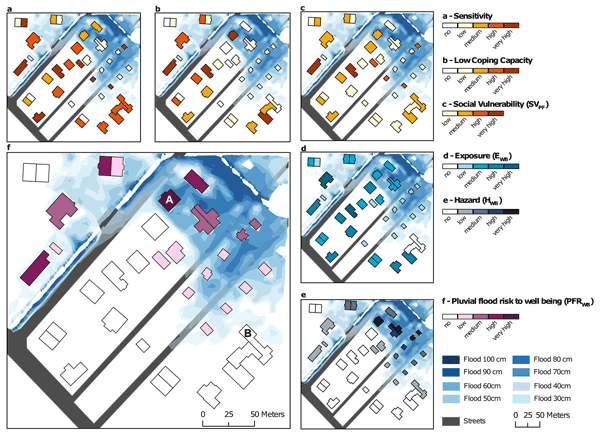
In this study we address risk to pluvial floods by following the risk definition of the Intergovernmental Panel on Climate Change (IPCC), developed in co-operation with stakeholders of the city of Hamburg. We identify buildings in urban areas where residents face higher flood risk due to greater social vulnerability, increased exposure, or elevated flood hazard. We present the development and application of a Python-based ArcGIS toolbox for estimating pluvial flood risk at building scale.
Michel Bechtold, Benjamin Poschlod, Christian Otto, Jan Volkholz, Matthias Büchner, and Florian Zabel
Earth Syst. Sci. Data, 18, 6637–6648, https://doi.org/10.5194/essd-18-6637-2026, https://doi.org/10.5194/essd-18-6637-2026, 2026
Short summary
Short summary
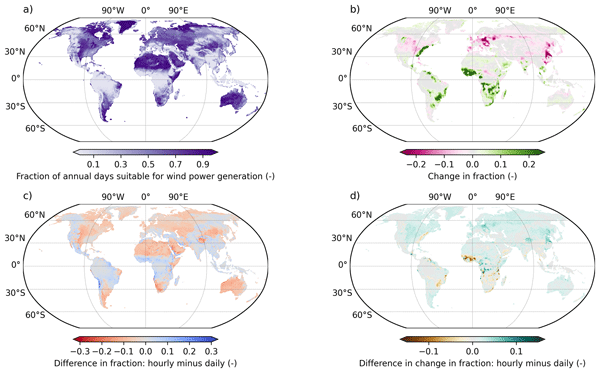
Many climate impacts depend on what happens within a day: heat stress peaks in the afternoon and solar or wind power rise and fall hour by hour. Yet global climate projections are usually published only as daily averages. We converted them into hourly data for global land areas, covering 1850 to 2100 and several future scenarios. The dataset is freely available and lets researchers estimate impacts on health, water and energy far more realistically.
Kai Kornhuber, Emanuele Bevacqua, Mariana Madruga de Brito, Wiebke S. Jäger, Pauline Rivoire, Cassandra D. W. Rogers, Fabiola Banfi, Fulden Batibeniz, James Carruthers, Carlo De Michele, Silvia De Angeli, Cristina Deidda, Marleen C. de Ruiter, Andreas H. Fink, Henrique M. D. Goulart, Katharina Küpfer, Patrick Ludwig, Douglas Maraun, Gabriele Messori, Shruti Nath, Fiachra O'Loughlin, Joaquim G. Pinto, Benjamin Poschlod, Alexandre M. Ramos, Colin Raymond, Andreia F. S. Ribeiro, Deepti Singh, Laura Suarez Gutierrez, Philip J. Ward, and Christopher J. White
Nat. Hazards Earth Syst. Sci., 26, 4309–4334, https://doi.org/10.5194/nhess-26-4309-2026, https://doi.org/10.5194/nhess-26-4309-2026, 2026
Short summary
Short summary
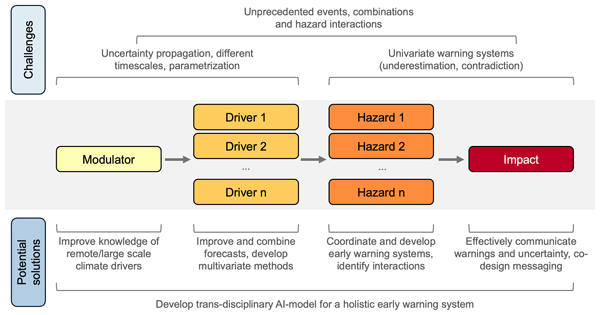
Impacts from extreme weather events may become more severe due to increased likelihood of compounding events under global warming, which challenge present day climate modelling and forecasting capacities. In this perspective we reflect on the usability of compound event research to bridge the gap between academic research and real-world applications.
Tarun Sadana, Jeroen C. J. H. Aerts, Dirk Eilander, Bruno Merz, Hans de Moel, Tim Busker, Veerle C. Bril, and Jens de Bruijn
Hydrol. Earth Syst. Sci., 30, 5491–5519, https://doi.org/10.5194/hess-30-5491-2026, https://doi.org/10.5194/hess-30-5491-2026, 2026
Short summary
Short summary
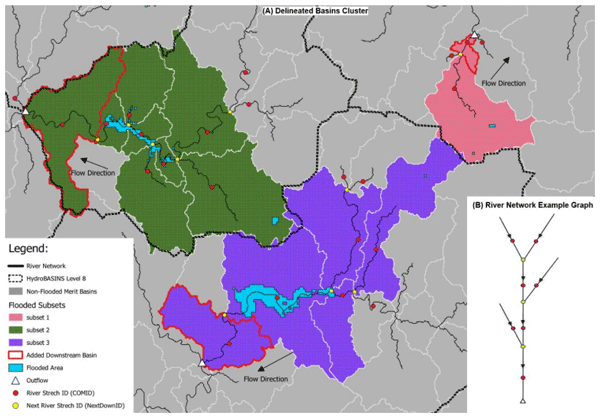
We evaluated the open-source hydrodynamic model SFINCS using satellite data from 499 historical flood events across 96 countries. Our study shows that larger upstream river basins are modelled more accurately, while using observed river gauges and high-resolution elevation data can improve results. Our findings highlight the importance of large-scale validation with satellite data and sensitivity analyses to enhance future global flood hazard assessments and prediction accuracy.
Benjamin Poschlod, Lukas Brunner, and Jana Sillmann
EGUsphere, https://doi.org/10.5194/egusphere-2026-4014, https://doi.org/10.5194/egusphere-2026-4014, 2026
This preprint is open for discussion and under review for Hydrology and Earth System Sciences (HESS).
Short summary
Short summary
Scientists often measure drought by counting the longest run of days without meaningful rain. Comparing high-resolution climate models, radar, and station data across Germany, we found that fine-scale maps show sharp, patchy patterns, because a small shower can break the dry streak in one place but not the next. The high-resolution climate model matches what radar observes, but yearly counts are so sensitive to chance rainfall that they are an unreliable basis for tracking drought.
Jingkun Yang, Benjamin Poschlod, and Felix Ament
EGUsphere, https://doi.org/10.5194/egusphere-2026-4111, https://doi.org/10.5194/egusphere-2026-4111, 2026
Short summary
Short summary
Heavy rainfall is becoming more severe, yet common measures capture only its peak strength, not how long it lasts or how wide an area it covers. Using high-resolution climate simulations for Germany, we rank the 200 most extreme events across past, present and future. We found that future events are not only more intense but also last longer and spread over larger areas. This means future rainfall hazards will be more complex, and assessments must consider strength, duration and extent together.
Anastasia Vogelbacher, Malte von Szombathely, Marc Lennartz, Benjamin Poschlod, and Jana Sillmann
Nat. Hazards Earth Syst. Sci., 26, 2765–2783, https://doi.org/10.5194/nhess-26-2765-2026, https://doi.org/10.5194/nhess-26-2765-2026, 2026
Short summary
Short summary
In this study we address risk to pluvial floods by following the risk definition of the Intergovernmental Panel on Climate Change (IPCC), developed in co-operation with stakeholders of the city of Hamburg. We identify buildings in urban areas where residents face higher flood risk due to greater social vulnerability, increased exposure, or elevated flood hazard. We present the development and application of a Python-based ArcGIS toolbox for estimating pluvial flood risk at building scale.
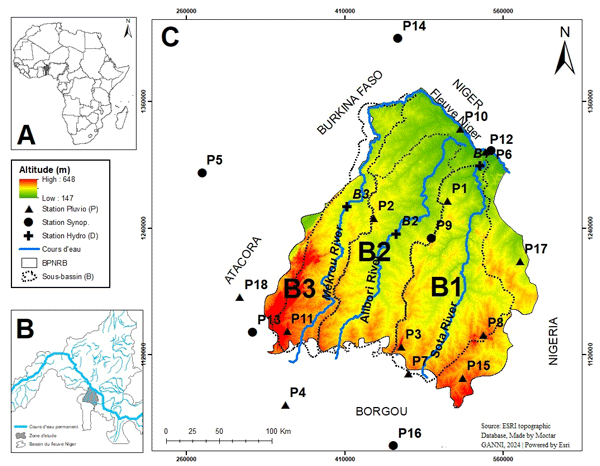
Orou Moctar Ganni Mampo, Kossi François Guedje, Ezéchiel Obada, Halissou Yarou, Bruno Merz, Ravi Kumar Guntu, Jean Hounkpe, and Adéchina Eric Alamou
Proc. IAHS, 388, 33–41, https://doi.org/10.5194/piahs-388-33-2026, https://doi.org/10.5194/piahs-388-33-2026, 2026
Short summary
Short summary
This study explored how droughts have evolved over time in northern Benin, a region that relies heavily on rainfall for farming. By analyzing rainfall and river flow patterns, the research found that while conditions improved after major droughts in the 1970s and 1980s, recent years have seen longer dry spells and worsening water shortages. These results can inform better planning for farming and water use in a changing climate.
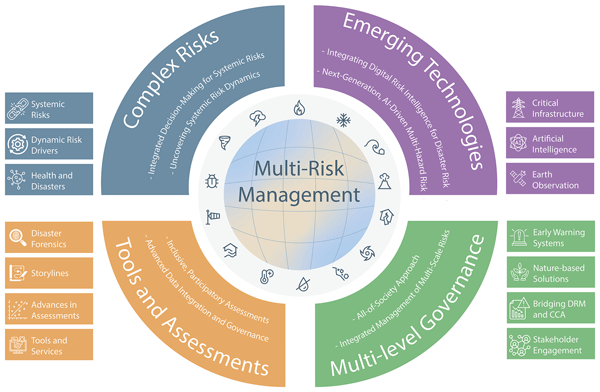
Timothy Tiggeloven, Colin Raymond, Marleen C. de Ruiter, Jana Sillmann, Annegret H. Thieken, Sophie L. Buijs, Roxana Ciurean, Emma Cordier, Julia M. Crummy, Lydia Cumiskey, Kelley De Polt, Melanie Duncan, Davide M. Ferrario, Wiebke S. Jäger, Elco E. Koks, Nicole van Maanen, Heather J. Murdock, Jaroslav Mysiak, Sadhana Nirandjan, Benjamin Poschlod, Peter Priesmeier, Nivedita Sairam, Pia-Johanna Schweizer, Tristian R. Stolte, Marie-Luise Zenker, James E. Daniell, Alexander Fekete, Christian M. Geiß, Marc J. C. van den Homberg, Sirkku K. Juhola, Christian Kuhlicke, Karen Lebek, Robert Šakić Trogrlić, Stefan Schneiderbauer, Silvia Torresan, Cees J. van Westen, Judith N. Claassen, Bijan Khazai, Virginia Murray, Julius Schlumberger, and Philip J. Ward
Geosci. Commun., 9, 185–221, https://doi.org/10.5194/gc-9-185-2026, https://doi.org/10.5194/gc-9-185-2026, 2026
Short summary
Short summary
Natural hazards like floods, earthquakes, and landslides are often interconnected which may create bigger problems than when they occur alone. We studied expert discussions from an international conference to understand how scientists and policymakers can better prepare for these multi-hazards and use new technologies to protect its communities while contributing to dialogues about future international agreements beyond the Sendai Framework and supporting global sustainability goals.
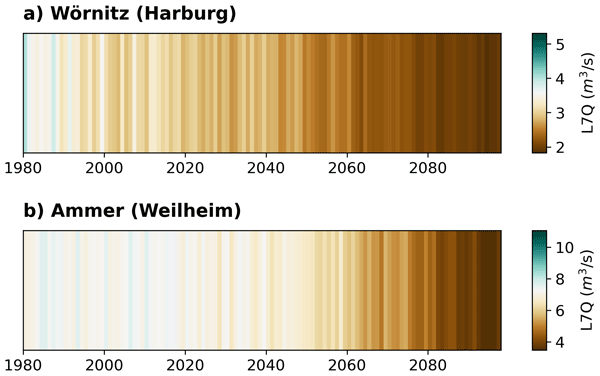
Benjamin Poschlod, Laura Sailer, Alexander Sasse, Anastasia Vogelbacher, and Ralf Ludwig
Hydrol. Earth Syst. Sci., 30, 1165–1188, https://doi.org/10.5194/hess-30-1165-2026, https://doi.org/10.5194/hess-30-1165-2026, 2026
Short summary
Short summary
Europe was hit by severe droughts in recent years resulting in extreme low flow conditions in rivers. Here, we investigate future climate change effects on river droughts in Bavaria. We find increasing severity for the low peak discharge and low flow duration in a warmer climate. This is caused by hotter and drier summers, where the joint occurrence of heat and drought intensifies. Further, we show that conditions in the year before the drought gain more importance in a warmer climate.
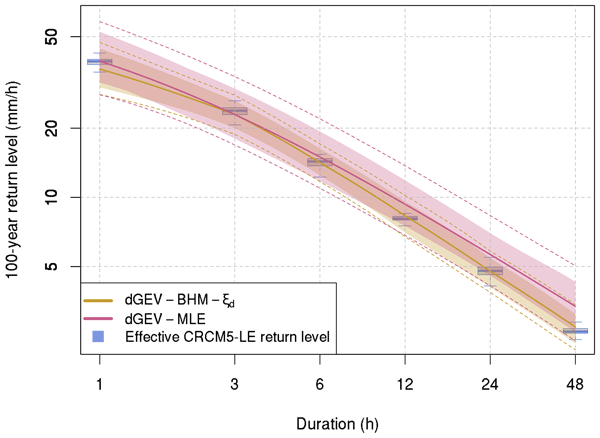
Alexander Lee Rischmuller, Benjamin Poschlod, and Jana Sillmann
Adv. Stat. Clim. Meteorol. Oceanogr., 12, 1–19, https://doi.org/10.5194/ascmo-12-1-2026, https://doi.org/10.5194/ascmo-12-1-2026, 2026
Short summary
Short summary
Extreme precipitation probability estimation is vital for hazard protection design but has high uncertainty. We tested six statistical models using 2000 years of climate data. Our Bayesian hierarchical duration-dependent Generalized Extreme Value model shows the highest accuracy and robustness for sample sizes between 30 and 100 years, making it highly promising for use with limited observational records.
Natalia Castillo Bautista, Marco Gaetani, Leonard F. Borchert, Benjamin Poschlod, Lukas Brunner, Jana Sillmann, and Mario L. V. Martina
EGUsphere, https://doi.org/10.5194/egusphere-2025-5073, https://doi.org/10.5194/egusphere-2025-5073, 2025
Short summary
Short summary
When hot temperatures and drought occur together (compound events), they can cause harmful impacts on crops and society. Using six decades of climate data, we show that such compound events repeatedly occurred in three breadbaskets of the Northern Hemisphere. These events are linked to atmospheric circulation patterns that favor heat and dryness, which in turn interact to amplify the impact. Our study contributes to understand the drivers of these events to support climate impact assessment.
Xiaoxiang Guan, Viet Dung Nguyen, Paul Voit, Bruno Merz, Maik Heistermann, and Sergiy Vorogushyn
Nat. Hazards Earth Syst. Sci., 25, 3075–3086, https://doi.org/10.5194/nhess-25-3075-2025, https://doi.org/10.5194/nhess-25-3075-2025, 2025
Short summary
Short summary
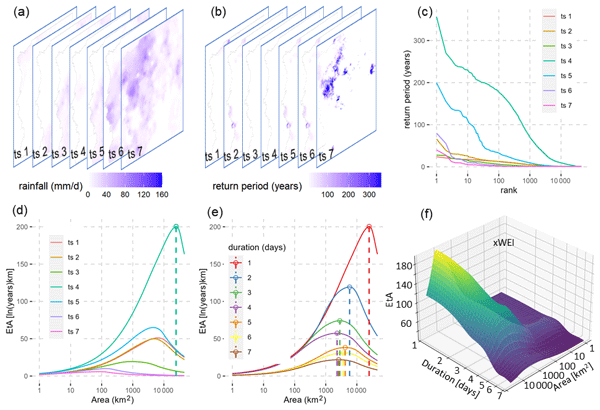
We evaluated a multi-site stochastic regional weather generator (nsRWG) for its ability to capture the cross-scale extremity of heavy-precipitation events (HPEs) in Germany. We generated 100 realizations of 72 years of daily synthetic precipitation data. The performance was assessed using WEI and xWEI indices, which measure event extremity across spatiotemporal scales. The results show that nsRWG simulates the extremity patterns of HPEs well, although it overestimates short-duration small-extent events.
Sergiy Vorogushyn, Li Han, Heiko Apel, Viet Dung Nguyen, Björn Guse, Xiaoxiang Guan, Oldrich Rakovec, Husain Najafi, Luis Samaniego, and Bruno Merz
Nat. Hazards Earth Syst. Sci., 25, 2007–2029, https://doi.org/10.5194/nhess-25-2007-2025, https://doi.org/10.5194/nhess-25-2007-2025, 2025
Short summary
Short summary
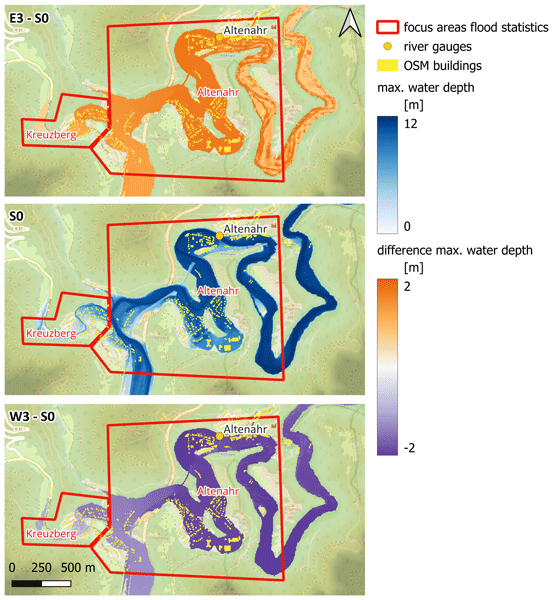
The July 2021 flood in central Europe was one of the deadliest floods in Europe in the recent decades and the most expensive flood in Germany. In this paper, we show that the hydrological impact of this event in the Ahr valley could have been even worse if the rainfall footprint trajectory had been only slightly different. The presented methodology of spatial counterfactuals generates plausible unprecedented events and helps to better prepare for future extreme floods.
Xiaoxiang Guan, Baoying Shan, Viet Dung Nguyen, and Bruno Merz
EGUsphere, https://doi.org/10.5194/egusphere-2025-1509, https://doi.org/10.5194/egusphere-2025-1509, 2025
Preprint archived
Short summary
Short summary
Understanding and predicting extreme floods is crucial for reducing disaster risks, yet existing models struggle with unprecedented events. We tested multiple modeling approaches across 400+ river catchments in Central Europe and found that deep learning models outperform traditional methods but still underestimate extreme floods. Our findings suggest that combining data-driven models with physical knowledge can improve flood predictions, helping communities better prepare for future extremes.
Florian Zabel, Matthias Knüttel, and Benjamin Poschlod
Geosci. Model Dev., 18, 1067–1087, https://doi.org/10.5194/gmd-18-1067-2025, https://doi.org/10.5194/gmd-18-1067-2025, 2025
Short summary
Short summary
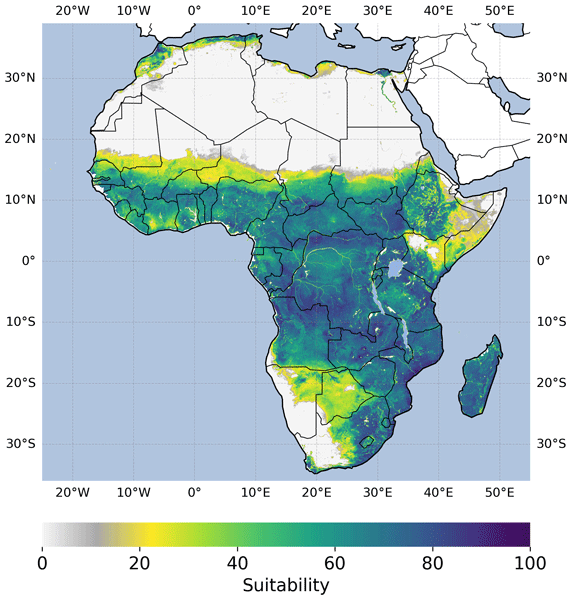
CropSuite is a new open-source crop suitability model. It provides a GUI and a wide range of options, including a spatial downscaling of climate data. We apply CropSuite to 48 staple and opportunity crops at a 1 km spatial resolution in Africa. We find that climate variability significantly impacts suitable areas but also affects optimal sowing dates and multiple cropping potential. The results provide valuable information for climate impact assessments, adaptation, and land-use planning.
Elena Macdonald, Bruno Merz, Viet Dung Nguyen, and Sergiy Vorogushyn
Hydrol. Earth Syst. Sci., 29, 447–463, https://doi.org/10.5194/hess-29-447-2025, https://doi.org/10.5194/hess-29-447-2025, 2025
Short summary
Short summary
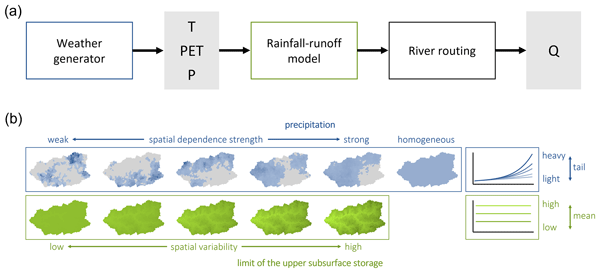
Flood peak distributions indicate how likely the occurrence of an extreme flood is at a certain river. If the distribution has a so-called heavy tail, extreme floods are more likely than might be anticipated. We find heavier tails in small catchments compared to large catchments, and spatially variable rainfall leads to a lower occurrence probability of extreme floods. Spatially variable runoff does not show effects. The results can improve estimations of probabilities of extreme floods.
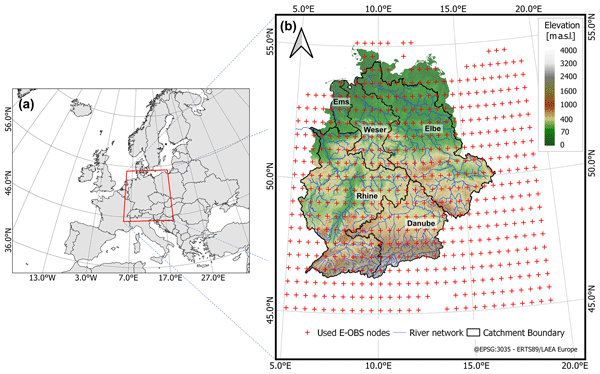
Viet Dung Nguyen, Sergiy Vorogushyn, Katrin Nissen, Lukas Brunner, and Bruno Merz
Adv. Stat. Clim. Meteorol. Oceanogr., 10, 195–216, https://doi.org/10.5194/ascmo-10-195-2024, https://doi.org/10.5194/ascmo-10-195-2024, 2024
Short summary
Short summary
We present a novel stochastic weather generator conditioned on circulation patterns and regional temperature, accounting for dynamic and thermodynamic atmospheric changes. We extensively evaluate the model for the central European region. It statistically downscales precipitation for future periods, generating long, spatially and temporally consistent series. Results suggest an increase in extreme precipitation over the region, offering key benefits for hydrological impact studies.
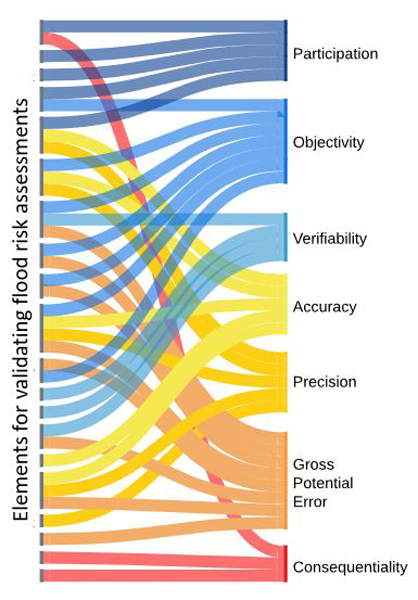
Bruno Merz, Günter Blöschl, Robert Jüpner, Heidi Kreibich, Kai Schröter, and Sergiy Vorogushyn
Nat. Hazards Earth Syst. Sci., 24, 4015–4030, https://doi.org/10.5194/nhess-24-4015-2024, https://doi.org/10.5194/nhess-24-4015-2024, 2024
Short summary
Short summary
Flood risk assessments help us decide how to reduce the risk of flooding. Since these assessments are based on probabilities, it is hard to check their accuracy by comparing them to past data. We suggest a new way to validate these assessments, making sure they are practical for real-life decisions. This approach looks at both the technical details and the real-world situations where decisions are made. We demonstrate its practicality by applying it to flood emergency planning.
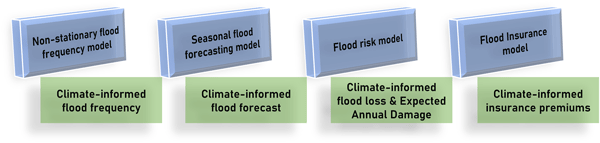
Viet Dung Nguyen, Jeroen Aerts, Max Tesselaar, Wouter Botzen, Heidi Kreibich, Lorenzo Alfieri, and Bruno Merz
Nat. Hazards Earth Syst. Sci., 24, 2923–2937, https://doi.org/10.5194/nhess-24-2923-2024, https://doi.org/10.5194/nhess-24-2923-2024, 2024
Short summary
Short summary
Our study explored how seasonal flood forecasts could enhance insurance premium accuracy. Insurers traditionally rely on historical data, yet climate fluctuations influence flood risk. We employed a method that predicts seasonal floods to adjust premiums accordingly. Our findings showed significant year-to-year variations in flood risk and premiums, underscoring the importance of adaptability. Despite limitations, this research aids insurers in preparing for evolving risks.
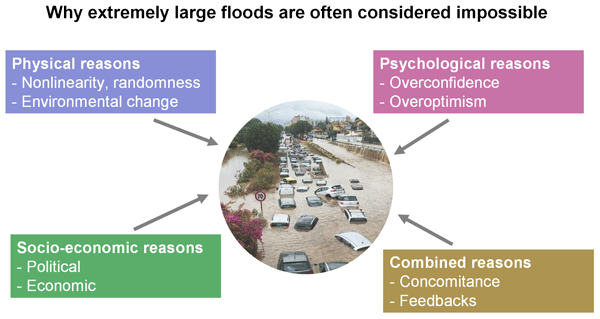
Alberto Montanari, Bruno Merz, and Günter Blöschl
Hydrol. Earth Syst. Sci., 28, 2603–2615, https://doi.org/10.5194/hess-28-2603-2024, https://doi.org/10.5194/hess-28-2603-2024, 2024
Short summary
Short summary
Floods often take communities by surprise, as they are often considered virtually
impossibleyet are an ever-present threat similar to the sword suspended over the head of Damocles in the classical Greek anecdote. We discuss four reasons why extremely large floods carry a risk that is often larger than expected. We provide suggestions for managing the risk of megafloods by calling for a creative exploration of hazard scenarios and communicating the unknown corners of the reality of floods.
Benjamin Poschlod and Anne Sophie Daloz
The Cryosphere, 18, 1959–1981, https://doi.org/10.5194/tc-18-1959-2024, https://doi.org/10.5194/tc-18-1959-2024, 2024
Short summary
Short summary
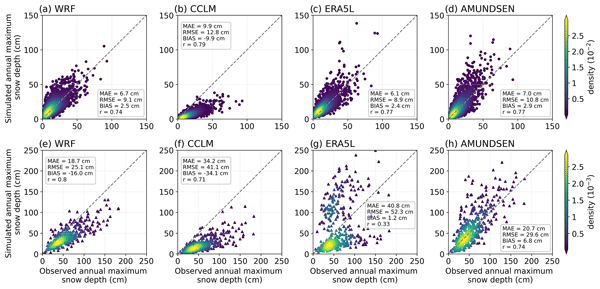
Information about snow depth is important within climate research but also many other sectors, such as tourism, mobility, civil engineering, and ecology. Climate models often feature a spatial resolution which is too coarse to investigate snow depth. Here, we analyse high-resolution simulations and identify added value compared to a coarser-resolution state-of-the-art product. Also, daily snow depth extremes are well reproduced by two models.
Seth Bryant, Heidi Kreibich, and Bruno Merz
Proc. IAHS, 386, 181–187, https://doi.org/10.5194/piahs-386-181-2024, https://doi.org/10.5194/piahs-386-181-2024, 2024
Short summary
Short summary
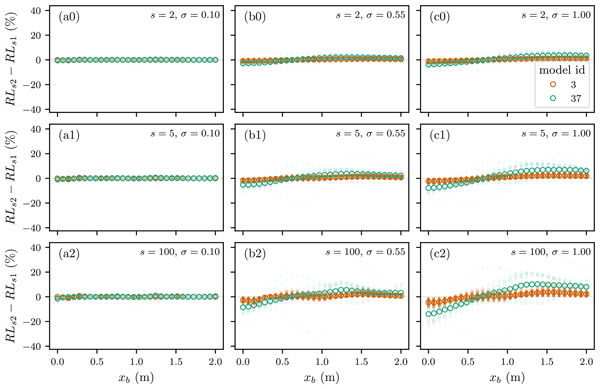
Our study found that simplifying data in flood risk models can introduce errors. We tested 344 damage functions and found errors up to 40 % of the total asset value. This means large-scale flood risk assessments may have significant errors due to the modelling approach. Our research highlights the need for more attention to data aggregation in flood risk models.
Elena Macdonald, Bruno Merz, Björn Guse, Viet Dung Nguyen, Xiaoxiang Guan, and Sergiy Vorogushyn
Hydrol. Earth Syst. Sci., 28, 833–850, https://doi.org/10.5194/hess-28-833-2024, https://doi.org/10.5194/hess-28-833-2024, 2024
Short summary
Short summary
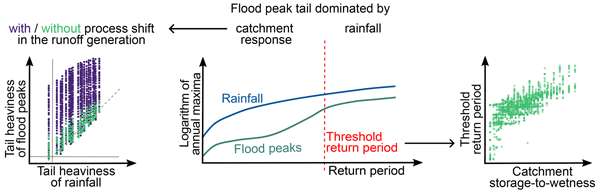
In some rivers, the occurrence of extreme flood events is more likely than in other rivers – they have heavy-tailed distributions. We find that threshold processes in the runoff generation lead to such a relatively high occurrence probability of extremes. Further, we find that beyond a certain return period, i.e. for rare events, rainfall is often the dominant control compared to runoff generation. Our results can help to improve the estimation of the occurrence probability of extreme floods.
Seth Bryant, Guy Schumann, Heiko Apel, Heidi Kreibich, and Bruno Merz
Hydrol. Earth Syst. Sci., 28, 575–588, https://doi.org/10.5194/hess-28-575-2024, https://doi.org/10.5194/hess-28-575-2024, 2024
Short summary
Short summary
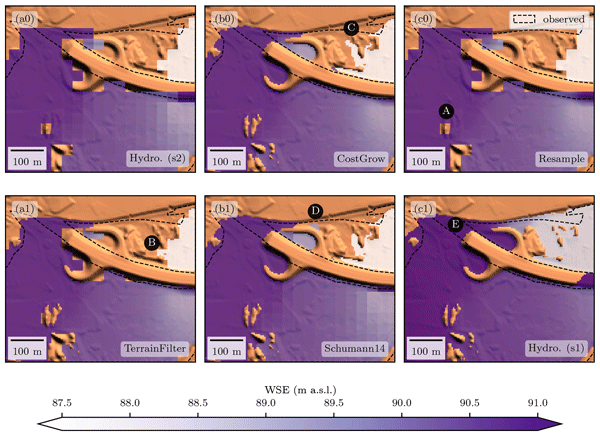
A new algorithm has been developed to quickly produce high-resolution flood maps. It is faster and more accurate than current methods and is available as open-source scripts. This can help communities better prepare for and mitigate flood damages without expensive modelling.
Florian Zabel and Benjamin Poschlod
Geosci. Model Dev., 16, 5383–5399, https://doi.org/10.5194/gmd-16-5383-2023, https://doi.org/10.5194/gmd-16-5383-2023, 2023
Short summary
Short summary
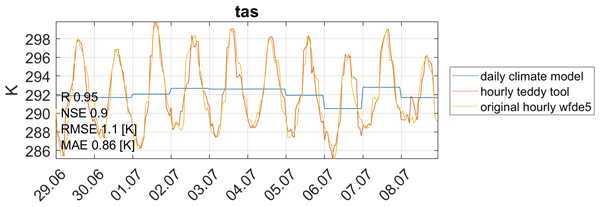
Today, most climate model data are provided at daily time steps. However, more and more models from different sectors, such as energy, water, agriculture, and health, require climate information at a sub-daily temporal resolution for a more robust and reliable climate impact assessment. Here we describe and validate the Teddy tool, a new model for the temporal disaggregation of daily climate model data for climate impact analysis.
Heiko Apel, Sergiy Vorogushyn, and Bruno Merz
Nat. Hazards Earth Syst. Sci., 22, 3005–3014, https://doi.org/10.5194/nhess-22-3005-2022, https://doi.org/10.5194/nhess-22-3005-2022, 2022
Short summary
Short summary
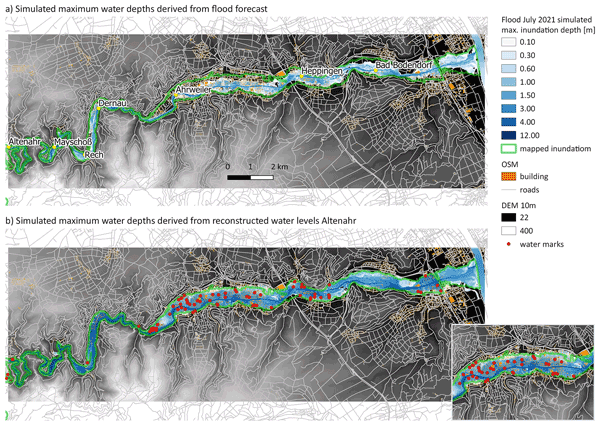
The paper presents a fast 2D hydraulic simulation model for flood propagation that enables operational forecasts of spatially distributed inundation depths, flood extent, flow velocities, and other flood impacts. The detailed spatial forecast of floods and flood impacts is a large step forward from the currently operational forecasts of discharges at selected gauges, thus enabling a more targeted flood management and early warning.
Cited articles
Agilan, V. and Umamahesh, N. V.: What are the best covariates for developing non-stationary rainfall Intensity-Duration-Frequency relationship?, Adv. Water Resour., 101, 11–22, https://doi.org/10.1016/j.advwatres.2016.12.016, 2017. a
Allamano, P., Claps, P., Laio, F., and Thea, C.: A data-based assessment of the dependence of short-duration precipitation on elevation, Phys. Chem. Earth, Parts A/B/C, 34, 635–641, https://doi.org/10.1016/j.pce.2009.01.001, 2009. a
Arakawa, A.: The Cumulus Parameterization Problem: Past, Present, and Future, J. Climate, 17, 2493–2525, https://doi.org/10.1175/1520-0442(2004)017<2493:RATCPP>2.0.CO;2, 2004. a
Araujo, D. S., Marra, F., Ali, H., Fowler, H. J., and Nikolopoulos, E. I.: Relation between storm characteristics and extreme precipitation statistics over CONUS, Adv. Water Resour., 178, 104497, https://doi.org/10.1016/j.advwatres.2023.104497, 2023. a
Arya, S. P.: Introduction to micrometeorology, This is volume 79 in the International geophysics series, Academic Press, San Diego, 2nd edn., ISBN 978-0-12-059354-5, 2001. a
Avanzi, F., De Michele, C., Gabriele, S., Ghezzi, A., and Rosso, R.: Orographic Signature on Extreme Precipitation of Short Durations, J. Hydrometeorol., 16, 278–294, https://doi.org/10.1175/JHM-D-14-0063.1, 2015. a
Barbero, R., Fowler, H. J., Blenkinsop, S., Westra, S., Moron, V., Lewis, E., Chan, S., Lenderink, G., Kendon, E., Guerreiro, S., Li, X.-F., Villalobos, R., Ali, H., and Mishra, V.: A synthesis of hourly and daily precipitation extremes in different climatic regions, Weather Clim. Extrem., 26, 100219, https://doi.org/10.1016/j.wace.2019.100219, 2019. a
Beck, H. E., Zimmermann, N. E., McVicar, T. R., Vergopolan, N., Berg, A., and Wood, E. F.: Present and future Köppen-Geiger climate classification maps at 1-km resolution, Sci. Data, 5, 180214, https://doi.org/10.1038/sdata.2018.214, 2018. a
Berg, P., Christensen, O. B., Klehmet, K., Lenderink, G., Olsson, J., Teichmann, C., and Yang, W.: Summertime precipitation extremes in a EURO-CORDEX 0.11° ensemble at an hourly resolution, Nat. Hazards Earth Syst. Sci., 19, 957–971, https://doi.org/10.5194/nhess-19-957-2019, 2019. a, b
Blanchet, J. and Lehning, M.: Mapping snow depth return levels: smooth spatial modeling versus station interpolation, Hydrol. Earth Syst. Sci., 14, 2527–2544, https://doi.org/10.5194/hess-14-2527-2010, 2010. a
Chen, Y., Paschalis, A., Kendon, E., Kim, D., and Onof, C.: Changing spatial structure of summer heavy rainfall, using convection-permitting ensemble, Geophys. Res. Lett., 48, e2020GL090903, https://doi.org/10.1029/2020GL090903, 2021. a
Cheng, L., AghaKouchak, A., Gilleland, E., and Katz, R. W.: Non-stationary extreme value analysis in a changing climate, Clim. Change, 127, 353–369, https://doi.org/10.1007/s10584-014-1254-5, 2014. a, b
Dallan, E., Marra, F., Fosser, G., Marani, M., Formetta, G., Schär, C., and Borga, M.: How well does a convection-permitting regional climate model represent the reverse orographic effect of extreme hourly precipitation?, Hydrol. Earth Syst. Sci., 27, 1133–1149, https://doi.org/10.5194/hess-27-1133-2023, 2023. a, b, c
De Paola, F., Giugni, M., Pugliese, F., Annis, A., and Nardi, F.: GEV Parameter Estimation and Stationary vs. Non-Stationary Analysis of Extreme Rainfall in African Test Cities, Hydrology, 5, 28, https://doi.org/10.3390/hydrology5020028, 2018. a, b
Fisher, R. A. and Tippett, L. H. C.: Limiting forms of the frequency distribution of the largest or smallest member of a sample, Math. Proc. Cambridge, 24, 180–190, https://doi.org/10.1017/S0305004100015681, 1928. a
Fosser, G., Gaetani, M., Kendon, E., Adinolfi, M., Ban, N., Belušić, D., Caillaud, C., Careto, J., Coppola, E., Demory, M., Vries, H., Dobler, A., Feldmann, H., Goergen, K., Lenderink, G., Pichelli, E., Schär, C., Soares, P., Somot, S., and Tölle, M.: Convection-permitting climate models offer more certain extreme rainfall projections, NPJ Clim. Atmos. Sci., 7, 51, https://doi.org/10.1038/s41612-024-00600-w, 2024. a
Fowler, H. J., Lenderink, G., Prein, A.F., Westra, S., Allan, R., Ban, N., Barbero, R., Berg, P., Blenkinsop, S., Do, H. X., Guerreiro, S., Haerter, J. O., Kendon, E. J., Lewis, E., Schaer, C., Sharma, A., Villarini, G., Wasko, C., and Zhang, X.: Anthropogenic intensification of short-duration rainfall extremes, Nat. Rev. Earth Environ., 2, 107–122, 2021. a
Gentilucci, M., Rossi, A., Pelagagge, N., Aringoli, D., Barbieri, M., and Pambianchi, G.: GEV Analysis of Extreme Rainfall: Comparing Different Time Intervals to Analyse Model Response in Terms of Return Levels in the Study Area of Central Italy, Sustainability, 15, 11656, https://doi.org/10.3390/su151511656, 2023. a
Golz, S., Naumann, T., Neubert, M., and Günther, B.: Heavy rainfall: An underestimated environmental risk for buildings?, E3S Web Conf., 7, 08001, https://doi.org/10.1051/e3sconf/20160708001, 2016. a
Guichard, F., Petch, J. C., Redelsperger, J., Bechtold, P., Chaboureau, J., Cheinet, S., Grabowski, W., Grenier, H., Jones, C. G., Köhler, M., Piriou, J., Tailleux, R., and Tomasini, M.: Modelling the diurnal cycle of deep precipitating convection over land with cloud‐resolving models and single‐column models, Q. J. Roy. Meteorol. Soc., 130, 3139–3172, https://doi.org/10.1256/qj.03.145, 2004. a
Gumbel, E. J.: Statistical Theory of Extreme Values and Some Practical Applications. Lectures by Emit J. Gumbel. National Bureau of Standards, Washington, 51 pp., Diagrams, 40 cents, The J. Roy. Aeronaut. Soc., 58, 792–793, https://doi.org/10.1017/S0368393100099958, 1954. a
Gumbel, E. J.: Statistics of Extremes, Columbia University Press, ISBN 978-0-231-89131-8, https://doi.org/10.7312/gumb92958, 1958. a
Haller, M., Brienen, S., Rybka, H., Brauch, J., Früh, B., and Wetterdienst, D.: Evaluation of extreme precipitation in convection-permitting climate simulations with COSMO-CLM for Germany, in: CLM Community Annual Assembly, https://www.researchgate.net/publication/358849288_Evaluation_of_extreme_precipitation_in_convection-permitting_climate_simulations_with_COSMO-CLM_for_Germany (last access: 7 July 2026), 2021. a
Haller, M., Brienen, S., Brauch, J., and Früh, B.: Historical simulation with COSMO-CLM5-0-16 version V2022.01, Deutscher Wetterdienst [data set], https://doi.org/10.5676/DWD/CPS_HIST_V2022.01, 2022. a
Haslinger, K., Breinl, K., Pavlin, L., Pistotnik, G., Bertola, M., Olefs, M., Greilinger, M., Schöner, W., and Blöschl, G.: Increasing hourly heavy rainfall in Austria reflected in flood changes, Nature, 639, 667–672, https://doi.org/10.1038/s41586-025-08647-2, 2025. a
Hausfather, Z. and Peters, G. P.: Emissions – the “business as usual” story is misleading, Nature, 577, 618–620, https://doi.org/10.1038/d41586-020-00177-3, 2020. a
Hawcroft, M., Shaffrey, L., Hodges, K., and Dacre, H.: How much Northern Hemisphere precipitation is associated with extratropical cyclones?, Geophys. Res. Lett., 39, https://doi.org/10.1029/2012GL053866, 2012. a
Hosking, J. R. M.: L-Moments: Analysis and Estimation of Distributions Using Linear Combinations of Order Statistics, J. Roy. Stat. Soc. B, 52, 105–124, https://doi.org/10.1111/j.2517-6161.1990.tb01775.x, 1990. a
Hosking, J. R. M. and Wallis, J. R.: Regional frequency analysis: an approach based on L-moments, Cambridge University Press, Cambridge; New York, ISBN 978-0-521-43045-6, 1997. a
Jenkinson, A. F.: The frequency distribution of the annual maximum (or minimum) values of meteorological elements, Q. J. Roy. Meteorol. Soc., 81, 158–171, https://doi.org/10.1002/qj.49708134804, 1955. a
Junghänel, T., Ertel, H., and Deutschländer, T.: KOSTRA-DWD-2010R Bericht zur Revision der koordinierten Starkregenregionalisierung und -auswertung des Deutschen Wetterdienstes in der Version 2010, https://www.dwd.de/DE/leistungen/kostra_dwd_rasterwerte/download/bericht_revision_kostra_dwd_2010.pdf;jsessionid=0939F61A90DCF24AAABAB771B725F6D8.live31091?__blob=publicationFile&v=7 (last access: 7 July 2026), 2017. a
Kay, J. E., Deser, C., Phillips, A., Mai, A., Hannay, C., Strand, G., Arblaster, J. M., Bates, S. C., Danabasoglu, G., Edwards, J., Holland, M., Kushner, P., Lamarque, J.-F., Lawrence, D., Lindsay, K., Middleton, A., Munoz, E., Neale, R., Oleson, K., Polvani, L., and Vertenstein, M.: The Community Earth System Model (CESM) Large Ensemble Project: A Community Resource for Studying Climate Change in the Presence of Internal Climate Variability, B. Am. Meteorol. Soc., 96, 1333–1349, https://doi.org/10.1175/BAMS-D-13-00255.1, 2015. a
Kendon, E. J., Roberts, N. M., Fosser, G., Martin, G. M., Lock, A. P., Murphy, J. M., Senior, C. A., and Tucker, S. O.: Greater future UK winter precipitation increase in new convection-permitting scenarios, J. Climate, 33, 7303–7318, 2020. a
Keune, J. and Miralles, D. G.: A Precipitation Recycling Network to Assess Freshwater Vulnerability: Challenging the Watershed Convention, Water Resour. Res., 55, 9947–9961, https://doi.org/10.1029/2019WR025310, 2019. a
Kim, H., Kim, S., Shin, H., and Heo, J.-H.: Appropriate model selection methods for nonstationary generalized extreme value models, J. Hydrol., 547, 557–574, https://doi.org/10.1016/j.jhydrol.2017.02.005, 2017. a
Lang, A. and Poschlod, B.: Updating catastrophe models to today’s climate–an application of a large ensemble approach to extreme rainfall, Clim. Risk Manage., 44, 100594, https://doi.org/10.1016/j.crm.2024.100594, 2024. a
Lenderink, G. and Van Meijgaard, E.: Increase in hourly precipitation extremes beyond expectations from temperature changes, Nat. Geosci., 1, 511–514, https://doi.org/10.1038/ngeo262, 2008. a
Lenderink, G., De Vries, H., Fowler, H. J., Barbero, R., Van Ulft, B., and Van Meijgaard, E.: Scaling and responses of extreme hourly precipitation in three climate experiments with a convection-permitting model, Philos. T. R. Soc. A, 379, 20190544, https://doi.org/10.1098/rsta.2019.0544, 2021. a, b
Lennartz, M. (2026). Using GEV and sMEV to analyze future extreme precipitation (1.0.0), GFZ Helmholtz Centre for Geosciences, Zenodo [data set and software], https://doi.org/10.5281/zenodo.21275531, 2026. a, b
Malitz, G. and Ertel, H.: KOSTRA-DWD-2010 Starkniederschlagshöhen für Deutschland, https://www.dwd.de/DE/leistungen/kostra_dwd_rasterwerte/download/bericht_kostra_dwd_2010_pdf.pdf?__blob=publicationFile&v=11 (last access: 7 July 2026), 2015. a
Marani, M. and Ignaccolo, M.: A metastatistical approach to rainfall extremes, Adv. Water Resour., 79, 121–126, https://doi.org/10.1016/j.advwatres.2015.03.001, 2015. a, b, c
Marra, F.: A Unified Framework for Extreme Sub-daily Precipitation Frequency Analyses based on Ordinary Events – data & codes, Zenodo [software], https://doi.org/10.5281/zenodo.11934843, 2020. a, b
Marra, F. and Peleg, N.: TEmperature-dependent Non-Asymptotic statistical model for eXtreme return levels (TENAX), Zenodo [software], https://doi.org/10.5281/zenodo.19731484, 2023. a, b
Marra, F., Nikolopoulos, E. I., Anagnostou, E. N., and Morin, E.: Metastatistical Extreme Value analysis of hourly rainfall from short records: Estimation of high quantiles and impact of measurement errors, Adv. Water Resour., 117, 27–39, https://doi.org/10.1016/j.advwatres.2018.05.001, 2018. a, b
Marra, F., Borga, M., and Morin, E.: A Unified Framework for Extreme Subdaily Precipitation Frequency Analyses Based on Ordinary Events, Geophys. Res. Lett., 47, e2020GL090209, https://doi.org/10.1029/2020GL090209, 2020. a, b, c
Martel, J.-L., Brissette, F. P., Lucas-Picher, P., Troin, M., and Arsenault, R.: Climate change and rainfall intensity–duration–frequency curves: Overview of science and guidelines for adaptation, J. Hydrol. Eng., 26, 03121001, https://doi.org/10.1061/(ASCE)HE.1943-5584.0002122, 2021. a
Martins, E. S. and Stedinger, J. R.: Generalized maximum‐likelihood generalized extreme‐value quantile estimators for hydrologic data, Water Resour. Res., 36, 737–744, https://doi.org/10.1029/1999WR900330, 2000. a
McSweeney, C., Jones, R., Lee, R. W., and Rowell, D.: Selecting CMIP5 GCMs for downscaling over multiple regions, Clim. Dynam., 44, 3237–3260, 2015. a
Merz, B., Basso, S., Fischer, S., Lun, D., Blöschl, G., Merz, R., Guse, B., Viglione, A., Vorogushyn, S., Macdonald, E., Wietzke, L., and Schumann, A.: Understanding Heavy Tails of Flood Peak Distributions, Water Resour. Res., 58, e2021WR030506, https://doi.org/10.1029/2021WR030506, 2022. a
Miniussi, A. and Marra, F.: Estimation of extreme daily precipitation return levels at-site and in ungauged locations using the simplified MEV approach, J. Hydrol., 603, 126946, https://doi.org/10.1016/j.jhydrol.2021.126946, 2021. a, b
Myhre, G., Alterskjæ r, K., Stjern, C. W., Hodnebrog, Ø., Marelle, L., Samset, B. H., Sillmann, J., Schaller, N., Fischer, E., Schulz, M., and Stohl, A.: Frequency of extreme precipitation increases extensively with event rareness under global warming, Sci. Rep., 9, 16063, https://doi.org/10.1038/s41598-019-52277-4, 2019. a
Pacey, G., Pfahl, S., Schielicke, L., and Wapler, K.: The climatology and nature of warm-season convective cells in cold-frontal environments over Germany, Nat. Hazards Earth Syst. Sci., 23, 3703–3721, https://doi.org/10.5194/nhess-23-3703-2023, 2023. a
Pachauri, R. K., Mayer, L., and Intergovernmental Panel on Climate Change (Eds.): Climate change 2014: synthesis report, Intergovernmental Panel on Climate Change, Geneva, Switzerland, ISBN 978-92-9169-143-2, 2015. a
Poschlod, B.: Using high-resolution regional climate models to estimate return levels of daily extreme precipitation over Bavaria, Nat. Hazards Earth Syst. Sci., 21, 3573–3598, https://doi.org/10.5194/nhess-21-3573-2021, 2021. a
Poschlod, B. and Ludwig, R.: Internal variability and temperature scaling of future sub-daily rainfall return levels over Europe, Environ. Res. Lett., 16, 064097, https://doi.org/10.1088/1748-9326/ac0849, 2021. a, b
Poschlod, B., Ludwig, R., and Sillmann, J.: Ten-year return levels of sub-daily extreme precipitation over Europe, Earth Syst. Sci. Data, 13, 983–1003, https://doi.org/10.5194/essd-13-983-2021, 2021. a
Prein, A. F., Langhans, W., Fosser, G., Ferrone, A., Ban, N., Goergen, K., Keller, M., Tölle, M., Gutjahr, O., Feser, F., Brisson, E., Kollet, S., Schmidli, J., Van Lipzig, N. P. M., and Leung, R.: A review on regional convection‐permitting climate modeling: Demonstrations, prospects, and challenges, Rev. Geophys., 53, 323–361, https://doi.org/10.1002/2014RG000475, 2015. a
Prein, A. F., Rasmussen, R. M., Ikeda, K., Liu, C., Clark, M. P., and Holland, G. J.: The future intensification of hourly precipitation extremes, Nat. Clim. Change, 7, 48–52, 2017. a
Pritchard, D., Lewis, E., Blenkinsop, S., Patino Velasquez, L., Whitford, A., and Fowler, H. J.: An Observation-based dataset of global Sub-daily Precipitation Indices (GSDR-I), Sci. Data, 10, 393, https://doi.org/10.1038/s41597-023-02238-4, 2023. a
Purr, C., Brisson, E., and Ahrens, B.: Convective Shower Characteristics Simulated with the Convection-Permitting Climate Model COSMO-CLM, Atmosphere, 10, 810, https://doi.org/10.3390/atmos10120810, 2019. a
Purr, C., Brisson, E., and Ahrens, B.: Convective rain cell characteristics and scaling in climate projections for Germany, Int. J. Climatol., 41, 3174–3185, https://doi.org/10.1002/joc.7012, 2021. a
Riahi, K., Rao, S., Krey, V., Cho, C., Chirkov, V., Fischer, G., Kindermann, G., Nakicenovic, N., and Rafaj, P.: RCP 8.5 – A scenario of comparatively high greenhouse gas emissions, Clim. Change, 109, 33–57, https://doi.org/10.1007/s10584-011-0149-y, 2011. a
Rockel, B., Will, A., and Hense, A.: The Regional Climate Model COSMO-CLM (CCLM), Meteorol. Z., 17, 347–348, https://doi.org/10.1127/0941-2948/2008/0309, 2008. a, b
Rybka, H., Haller, M., Brienen, S., Brauch, J., Früh, B., Junghänel, T., Lengfeld, K., Walter, A., and Winterrath, T.: Convection-permitting climate simulations with COSMO-CLM for Germany: Analysis of present and future daily and sub-daily extreme precipitation, Meteorol. Z., 32, 91–111, https://doi.org/10.1127/metz/2022/1147, 2023. a, b, c, d
Schellander, H., Lieb, A., and Hell, T.: Error Structure of Metastatistical and Generalized Extreme Value Distributions for Modeling Extreme Rainfall in Austria, Earth Space Sci., 6, 1616–1632, https://doi.org/10.1029/2019EA000557, 2019. a, b, c, d
Schlef, K. E., Kunkel, K. E., Brown, C., Demissie, Y., Lettenmaier, D. P., Wagner, A., Wigmosta, M. S., Karl, T. R., Easterling, D. R., Wang, K. J., François, B., and Yan, E.: Incorporating non-stationarity from climate change into rainfall frequency and intensity-duration-frequency (IDF) curves, J. Hydrol., 616, 128757, https://doi.org/10.1016/j.jhydrol.2022.128757, 2023. a
Seip, K. L., Grøn, Ø., and Wang, H.: The North Atlantic Oscillations: Cycle Times for the NAO, the AMO and the AMOC, Climate, 7, 43, https://doi.org/10.3390/cli7030043, 2019. a
Serinaldi, F. and Kilsby, C. G.: Stationarity is undead: Uncertainty dominates the distribution of extremes, Adv. Water Resour., 77, 17–36, https://doi.org/10.1016/j.advwatres.2014.12.013, 2015. a
Serinaldi, F., Lombardo, F., and Kilsby, C. G.: Non-asymptotic distributions of water extremes: much ado about what?, Hydrol. Earth Syst. Sci., 29, 1159–1181, https://doi.org/10.5194/hess-29-1159-2025, 2025. a
Shehu, B., Willems, W., Stockel, H., Thiele, L.-B., and Haberlandt, U.: Regionalisation of rainfall depth–duration–frequency curves with different data types in Germany, Hydrol. Earth Syst. Sci., 27, 1109–1132, https://doi.org/10.5194/hess-27-1109-2023, 2023. a
Taszarek, M., Allen, J. T., Groenemeijer, P., Edwards, R., Brooks, H. E., Chmielewski, V., and Enno, S.-E.: Severe convective storms across Europe and the United States. Part I: Climatology of lightning, large hail, severe wind, and tornadoes, J. Climate, 33, 10239–10261, 2020. a
Ulbrich, U., Leckebusch, G. C., and Pinto, J. G.: Extra-tropical cyclones in the present and future climate: a review, Theor. Appl. Climatol., 96, 117–131, 2009. a
Valipour, M.: How Much Meteorological Information Is Necessary to Achieve Reliable Accuracy for Rainfall Estimations?, Agriculture, 6, 53, https://doi.org/10.3390/agriculture6040053, 2016. a
Veneziano, D., Langousis, A., and Lepore, C.: New asymptotic and preasymptotic results on rainfall maxima from multifractal theory, Water Resour. Res., 45, 2009WR008257, https://doi.org/10.1029/2009WR008257, 2009. a
Vidrio-Sahagún, C. T. and He, J.: Hydrological frequency analysis under nonstationarity using the Metastatistical approach and its simplified version, Adv. Water Resour., 166, 104244, https://doi.org/10.1016/j.advwatres.2022.104244, 2022. a
Vidrio-Sahagún, C. T., Ruschkowski, J., He, J., and Pietroniro, A.: A practice-oriented framework for stationary and nonstationary flood frequency analysis, Environ. Modell. Softw., 173, 105940, https://doi.org/10.1016/j.envsoft.2024.105940, 2024. a, b
Villarini, G. and Smith, J. A.: Flood peak distributions for the eastern United States, Water Resour. Res., 46, 2009WR008395, https://doi.org/10.1029/2009WR008395, 2010. a
Wang, L.-P., Marra, F., and Onof, C.: Modelling sub-hourly rainfall extremes with short records – a comparison of MEV, Simplified MEV and point process methods, EGU General Assembly 2020, Online, 4–8 May 2020, EGU2020-6061, https://doi.org/10.5194/egusphere-egu2020-6061, 2020. a, b
Watanabe, M., Suzuki, T., O’ishi, R., Komuro, Y., Watanabe, S., Emori, S., Takemura, T., Chikira, M., Ogura, T., Sekiguchi, M., Takata, K., Yamazaki, D., Yokohata, T., Nozawa, T., Hasumi, H., Tatebe, H., and Kimoto, M.: Improved Climate Simulation by MIROC5: Mean States, Variability, and Climate Sensitivity, J. Climate, 23, 6312–6335, https://doi.org/10.1175/2010JCLI3679.1, 2010. a
Wu, Y., Miao, C., Fan, X., Gou, J., Zhang, Q., and Zheng, H.: Quantifying the Uncertainty Sources of Future Climate Projections and Narrowing Uncertainties With Bias Correction Techniques, Earth's Future, 10, e2022EF002963, https://doi.org/10.1029/2022EF002963, 2022. a
Zeder, J. and Fischer, E. M.: Observed extreme precipitation trends and scaling in Central Europe, Weather Clim. Extrem., 29, 100266, https://doi.org/10.1016/j.wace.2020.100266, 2020. a
Zomer, R. J., Xu, J., and Trabucco, A.: Version 3 of the Global Aridity Index and Potential Evapotranspiration Database, Sci. Data, 9, 409, https://doi.org/10.1038/s41597-022-01493-1, 2022. a
Zorzetto, E., Botter, G., and Marani, M.: On the emergence of rainfall extremes from ordinary events, Geophys. Res. Lett., 43, 8076–8082, https://doi.org/10.1002/2016GL069445, 2016. a
Short summary
Predicting hourly rainfall extremes under climate change is crucial yet highly uncertain. Using convection-permitting climate model data over Germany, we compare stationary and non-stationary general extreme value (GEV) and simplified metastatistical extreme value (sMEV) methods. We show that the sMEV approach exhibits lower uncertainty across return periods. Moreover, the non-stationary sMEV better captures climate-change-induced changes, though care is needed when projecting future extremes.
Predicting hourly rainfall extremes under climate change is crucial yet highly uncertain. Using...


Altmetrics
Final-revised paper
Preprint