
Articles | Volume 26, issue 6
https://doi.org/10.5194/nhess-26-2691-2026
© Author(s) 2026. This work is distributed under
the Creative Commons Attribution 4.0 License.
the Creative Commons Attribution 4.0 License.
https://doi.org/10.5194/nhess-26-2691-2026
© Author(s) 2026. This work is distributed under
the Creative Commons Attribution 4.0 License.
the Creative Commons Attribution 4.0 License.
Research article
| 
10 Jun 2026
Research article |
| 10 Jun 2026
| 10 Jun 2026
Consistency of seismic hazard estimates from a physics-based earthquake simulator: a case study in south-eastern Spain
Octavi Gómez-Novell
CORRESPONDING AUTHOR

CN Instituto Geológico y Minero de España, CSIC, Madrid, Spain
now at: Departament de Dinàmica de la Terra i l’Oceà, Universitat de Barcelona, Spain
Francesco Visini
Istituto Nazionale di Geofisica e Vulcanologia, Chieti, Italy
Paula Herrero-Barbero
CN Instituto Geológico y Minero de España, CSIC, Madrid, Spain
José A. Álvarez-Gómez
Universidad Complutense de Madrid, Madrid, Spain
Julián García-Mayordomo
CN Instituto Geológico y Minero de España, CSIC, Madrid, Spain
Related authors
Giulia Alessandrini, Octavi Gómez-Novell, Silvia Castellaro, Michela Giustiniani, and Umberta Tinivella
Nat. Hazards Earth Syst. Sci., 26, 3469–3488, https://doi.org/10.5194/nhess-26-3469-2026, https://doi.org/10.5194/nhess-26-3469-2026, 2026
Short summary
Short summary
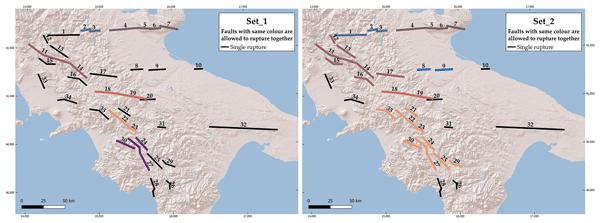
We model fault-based seismicity rates by converting the slip rates of active faults into earthquake occurrence, considering both individual-fault ruptures and ruptures involving multiple adjacent faults. Our results show that multi-fault rupture scenarios better reproduce earthquake catalogues and paleoseismic observations, highlighting the importance of incorporating rupture complexity into future seismic hazard models.
Octavi Gómez-Novell, Francesco Visini, José Antonio Álvarez-Gómez, Bruno Pace, and Julián García-Mayordomo
Nat. Hazards Earth Syst. Sci., 26, 651–673, https://doi.org/10.5194/nhess-26-651-2026, https://doi.org/10.5194/nhess-26-651-2026, 2026
Short summary
Short summary
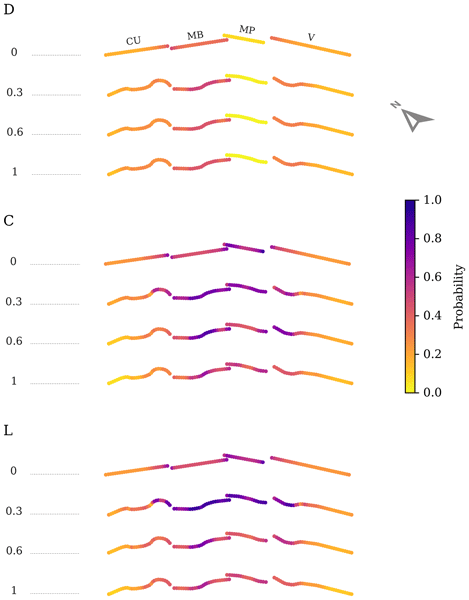
Earthquake surface ruptures are a hazard for infrastructure and life that requires proper assessment. We use a physics-based earthquake cycle simulator to derive fault displacement hazard statistics in a test fault system and their dependence to fault geometry. Our results show that more complex fault geometries increase surface rupture probabilities and might improve the agreement with observations. Earthquake cycle simulators are thus a promising tool for fault displacement hazard analyses.
Octavi Gómez-Novell, Bruno Pace, Francesco Visini, Joanna Faure Walker, and Oona Scotti
Geosci. Model Dev., 16, 7339–7355, https://doi.org/10.5194/gmd-16-7339-2023, https://doi.org/10.5194/gmd-16-7339-2023, 2023
Short summary
Short summary
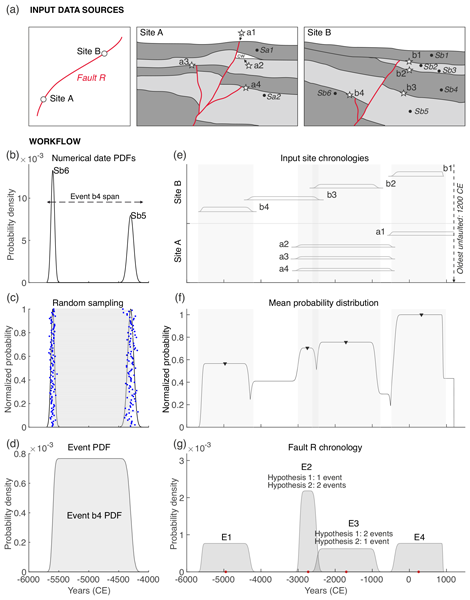
Knowing the rate at which earthquakes happen along active faults is crucial to characterize the hazard that they pose. We present an approach (Paleoseismic EArthquake CHronologies, PEACH) to correlate and compute seismic histories using paleoseismic data, a type of data that characterizes past seismic activity from the geological record. Our approach reduces the uncertainties of the seismic histories and overall can improve the knowledge on fault rupture behavior for the seismic hazard.
Giulia Alessandrini, Octavi Gómez-Novell, Silvia Castellaro, Michela Giustiniani, and Umberta Tinivella
Nat. Hazards Earth Syst. Sci., 26, 3469–3488, https://doi.org/10.5194/nhess-26-3469-2026, https://doi.org/10.5194/nhess-26-3469-2026, 2026
Short summary
Short summary
We model fault-based seismicity rates by converting the slip rates of active faults into earthquake occurrence, considering both individual-fault ruptures and ruptures involving multiple adjacent faults. Our results show that multi-fault rupture scenarios better reproduce earthquake catalogues and paleoseismic observations, highlighting the importance of incorporating rupture complexity into future seismic hazard models.
David Galán Pérez, Iñigo Aniel-Quiroga, Albert Gallego, Ignacio Aguirre-Ayerbe, Mauricio González, Omar Quetzalcóatl, Jose A. Álvarez-Gómez, and Luis Pedraz
Nat. Hazards Earth Syst. Sci., 26, 2415–2436, https://doi.org/10.5194/nhess-26-2415-2026, https://doi.org/10.5194/nhess-26-2415-2026, 2026
Short summary
Short summary
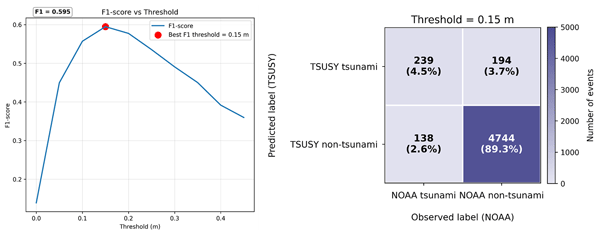
Tsunamis can have devastating consequences, yet it remains challenging to identify which earthquakes generate them. This study presents a criterion for identifying tsunamigenic events based on numerical simulations, as well as a global database of tsunami simulations based on historical earthquakes. By comparing the results with historical records, this approach can improve tsunami identification and support tsunami warnings worldwide.
Juan Portela, Marta Béjar-Pizarro, Alejandra Staller, Cécile Lasserre, Beatriz Cosenza-Muralles, José Antonio Álvarez-Gómez, and José Jesús Martínez-Díaz
Solid Earth, 17, 369–387, https://doi.org/10.5194/se-17-369-2026, https://doi.org/10.5194/se-17-369-2026, 2026
Short summary
Short summary
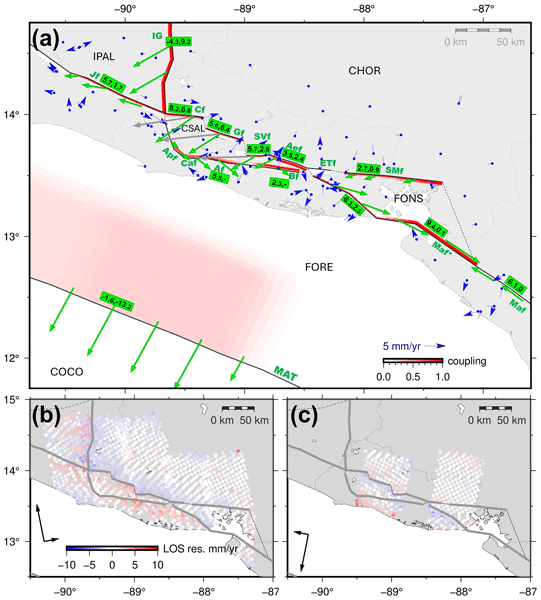
We combined satellite radar and GPS data to model how the faults in El Salvador and nearby regions accumulate deformation. Motion across the central El Salvador Fault Zone is shared by several fault branches, while the offshore subduction zone appears to be weakly locked. These results improve the understanding of regional deformation and seismic hazard in Central America.
Octavi Gómez-Novell, Francesco Visini, José Antonio Álvarez-Gómez, Bruno Pace, and Julián García-Mayordomo
Nat. Hazards Earth Syst. Sci., 26, 651–673, https://doi.org/10.5194/nhess-26-651-2026, https://doi.org/10.5194/nhess-26-651-2026, 2026
Short summary
Short summary
Earthquake surface ruptures are a hazard for infrastructure and life that requires proper assessment. We use a physics-based earthquake cycle simulator to derive fault displacement hazard statistics in a test fault system and their dependence to fault geometry. Our results show that more complex fault geometries increase surface rupture probabilities and might improve the agreement with observations. Earthquake cycle simulators are thus a promising tool for fault displacement hazard analyses.
Elena Pascual-Sánchez, José Antonio Álvarez-Gómez, Julián García-Mayordomo, and Paula Herrero-Barbero
EGUsphere, https://doi.org/10.5194/egusphere-2025-4870, https://doi.org/10.5194/egusphere-2025-4870, 2025
Short summary
Short summary
This study explores whether seismic hazard depends on the time interval over which an earthquake catalogue is recorded. Using a synthetic earthquake catalogue from the Eastern Betics Shear Zone spanning 1 Myr, we divided it into 10,000 sub-catalogues, each with the same duration as the historical and instrumental catalogue – i.e., 1,000 years. The resulting hazard curves, derived from a probabilistic seismic hazard assessment, show that each sub-catalogue yields different return period values.
Antonio Olaiz, José A. Álvarez Gómez, Gerardo de Vicente, Alfonso Muñoz-Martín, Juan V. Cantavella, Susana Custódio, Dina Vales, and Oliver Heidbach
Solid Earth, 16, 947–1024, https://doi.org/10.5194/se-16-947-2025, https://doi.org/10.5194/se-16-947-2025, 2025
Short summary
Short summary
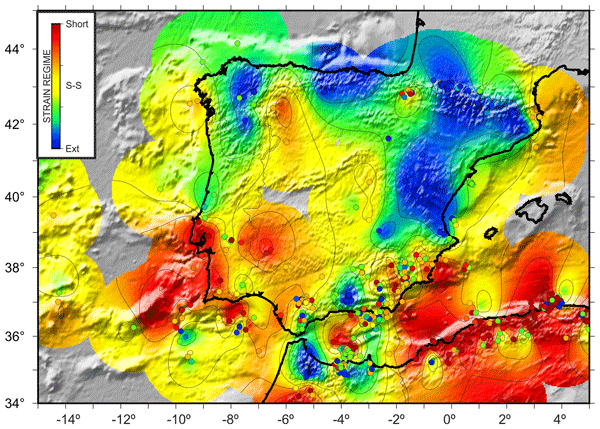
Understanding the stress and strain conditions in the Earth's crust is crucial for various activities, such as oil and gas exploration and assessing seismic hazards. In this article, we have updated the database of moment tensor focal mechanisms for Greater Iberia. We conducted kinematic and dynamic analyses on the selected populations, determining the average focal mechanism, strain and stress orientations, and tectonic regime. The orientation for horizontal compression is primarily N154° E.
Roberto Basili, Laurentiu Danciu, Céline Beauval, Karin Sesetyan, Susana Pires Vilanova, Shota Adamia, Pierre Arroucau, Jure Atanackov, Stéphane Baize, Carolina Canora, Riccardo Caputo, Michele Matteo Cosimo Carafa, Edward Marc Cushing, Susana Custódio, Mine Betul Demircioglu Tumsa, João C. Duarte, Athanassios Ganas, Julián García-Mayordomo, Laura Gómez de la Peña, Eulàlia Gràcia, Petra Jamšek Rupnik, Hervé Jomard, Vanja Kastelic, Francesco Emanuele Maesano, Raquel Martín-Banda, Sara Martínez-Loriente, Marta Neres, Hector Perea, Barbara Šket Motnikar, Mara Monica Tiberti, Nino Tsereteli, Varvara Tsironi, Roberto Vallone, Kris Vanneste, Polona Zupančič, and Domenico Giardini
Nat. Hazards Earth Syst. Sci., 24, 3945–3976, https://doi.org/10.5194/nhess-24-3945-2024, https://doi.org/10.5194/nhess-24-3945-2024, 2024
Short summary
Short summary
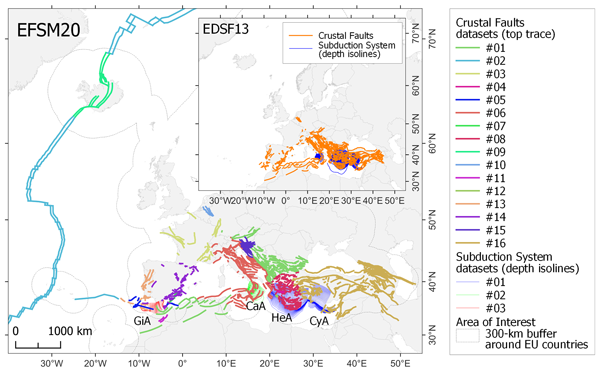
This study presents the European Fault-Source Model 2020 (EFSM20), a dataset of 1248 geologic crustal faults and four subduction systems, each having the necessary parameters to forecast long-term earthquake occurrences in the European continent. This dataset constituted one of the main inputs for the recently released European Seismic Hazard Model 2020, a key instrument to mitigate seismic risk in Europe. EFSM20 adopts recognized open-standard formats, and it is openly accessible and reusable.
Vera D'Amico, Francesco Visini, Andrea Rovida, Warner Marzocchi, and Carlo Meletti
Nat. Hazards Earth Syst. Sci., 24, 1401–1413, https://doi.org/10.5194/nhess-24-1401-2024, https://doi.org/10.5194/nhess-24-1401-2024, 2024
Short summary
Short summary
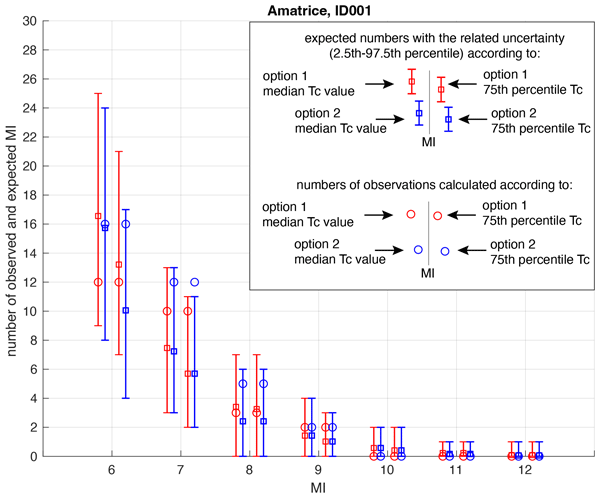
We propose a scoring strategy to rank multiple models/branches of a probabilistic seismic hazard analysis (PSHA) model that could be useful to consider specific requests from stakeholders responsible for seismic risk reduction actions. In fact, applications of PSHA often require sampling a few hazard curves from the model. The procedure is introduced through an application aimed to score and rank the branches of a recent Italian PSHA model according to their fit with macroseismic intensity data.
Octavi Gómez-Novell, Bruno Pace, Francesco Visini, Joanna Faure Walker, and Oona Scotti
Geosci. Model Dev., 16, 7339–7355, https://doi.org/10.5194/gmd-16-7339-2023, https://doi.org/10.5194/gmd-16-7339-2023, 2023
Short summary
Short summary
Knowing the rate at which earthquakes happen along active faults is crucial to characterize the hazard that they pose. We present an approach (Paleoseismic EArthquake CHronologies, PEACH) to correlate and compute seismic histories using paleoseismic data, a type of data that characterizes past seismic activity from the geological record. Our approach reduces the uncertainties of the seismic histories and overall can improve the knowledge on fault rupture behavior for the seismic hazard.

José A. Álvarez-Gómez, Paula Herrero-Barbero, and José J. Martínez-Díaz
Nat. Hazards Earth Syst. Sci., 23, 2031–2052, https://doi.org/10.5194/nhess-23-2031-2023, https://doi.org/10.5194/nhess-23-2031-2023, 2023
Short summary
Short summary
The strike-slip Carboneras fault is one of the largest sources in the Alboran Sea, with it being one of the faster faults in the eastern Betics. The dimensions and location of the Carboneras fault imply a high seismic and tsunami threat. In this work, we present tsunami simulations from sources generated with physics-based earthquake simulators. We show that the Carboneras fault has the capacity to generate locally damaging tsunamis with inter-event times between 2000 and 6000 years.
Francesco Visini, Carlo Meletti, Andrea Rovida, Vera D'Amico, Bruno Pace, and Silvia Pondrelli
Nat. Hazards Earth Syst. Sci., 22, 2807–2827, https://doi.org/10.5194/nhess-22-2807-2022, https://doi.org/10.5194/nhess-22-2807-2022, 2022
Short summary
Short summary
As new data are collected, seismic hazard models can be updated and improved. In the framework of a project aimed to update the Italian seismic hazard model, we proposed a model based on the definition and parametrization of area sources. Using geological data, seismicity and other geophysical constraints, we delineated three-dimensional boundaries and activity rates of a seismotectonic zoning and explored the epistemic uncertainty by means of a logic-tree approach.
Cited articles
Albarello, D., Camassi, R., and Rebez, A.: Detection of space and time heterogeneity in the completeness of a seismic catalog by a statistical approach: an application to the Italian area, B. Seismol. Soc. Am., 91, 1694–1703, https://doi.org/10.1785/0120000058, 2001.
Allam, A. A., Kroll, K. A., Milliner, C. W. D., and Richards-Dinger, K. B.: Effects of fault roughness on coseismic slip and earthquake locations, J. Geophys. Res.-Sol. Ea., 124, 11336–11349 https://doi.org/10.1029/2018JB016216, 2019.
Bindi, D., Massa, M., Luzi, L., Ameri, G., Pacor, F., Puglia, R., and Augliera, P.: Pan-European ground-motion prediction equations for the average horizontal component of PGA, PGV, and 5 %-damped PSA at spectral periods up to 3.0 s using the RESORCE dataset, B. Earthq. Eng., 12, 391–430, https://doi.org/10.1007/s10518-013-9525-5, 2014.
Brune, J. N.: Seismic moment, seismicity, and rate of slip along major fault zones, J. Geophys. Res., 73, 777–784, https://doi.org/10.1029/JB073i002p00777, 1968.
Cappa, F., Perrin, C., Manighetti, I., and Delor, E.: Off-fault long-term damage: A condition to account for generic, triangular earthquake slip profiles, Geochem. Geophy. Geosy., 15, 1476–1493, https://doi.org/10.1002/2013GC005182, 2014.
Cataldi, L., Tiberi, L., and Costa, G.: Estimation of MCS intensity for Italy from high quality accelerometric data, using GMICEs and Gaussian Naïve Bayes classifiers, B. Earthq. Eng., 19, 2325–2342, https://doi.org/10.1007/s10518-021-01064-6, 2021.
Chartier, T., Scotti, O., and Lyon-Caen, H.: SHERIFS: Open-Source Code for Computing Earthquake Rates in Fault Systems and Constructing Hazard Models, Seismol. Res. Lett., 90.4, 1678–1688, https://doi.org/10.1785/0220180332%E2%80%8B%E2%80%8B%E2%80%8B%E2%80%8B%E2%80%8B%E2%80%8B, 2019.
Chartier, T., Scotti, O., Lyon-Caen, H., Richard-Dinger, K., Dieterich, J. H., and Shaw, B. E.: Modelling earthquake rates and associated uncertainties in the Marmara Region, Turkey, Nat. Hazards Earth Syst. Sci., 21, 2733–2751, https://doi.org/10.5194/nhess-21-2733-2021, 2021.
Cornell, C. A.: Engineering Seismic Risk Analysis, B. Seismol. Soc. Am., 58, 1583–1606, https://doi.org/10.1785/BSSA0580051583, 1968.
Cowie, P. A., Roberts, G. P., Bull, J. M., and Visini, F.: Relationships between fault geometry, slip rate variability and earthquake recurrence in extensional settings, Geophys. J. Int., 189, 143–160, https://doi.org/10.1111/j.1365-246X.2012.05378.x, 2012.
D'Amico, V., Visini, F., Rovida, A., Marzocchi, W., and Meletti, C.: Scoring and ranking probabilistic seismic hazard models: an application based on macroseismic intensity data, Nat. Hazards Earth Syst. Sci., 24, 1401–1413, https://doi.org/10.5194/nhess-24-1401-2024, 2024.
Danciu, L., Nandan, S., Reyes, C., Basili, R., Weatherill, G., Beauval, C., Rovida, A., Vilanova, S., Sesetyan, K., Bard, P.-Y., Cotton, F., Wiemer, S., and Giardini, D.: The 2020 update of the European Seismic Hazard Model: Model Overview, EFEHR Technical Report 001, v1.0.0, https://doi.org/10.12686/a15, 2021.
Danciu, L., Giardini, D., Weatherill, G., Basili, R., Nandan, S., Rovida, A., Beauval, C., Bard, P.-Y., Pagani, M., Reyes, C. G., Sesetyan, K., Vilanova, S., Cotton, F., and Wiemer, S.: The 2020 European Seismic Hazard Model: overview and results, Nat. Hazards Earth Syst. Sci., 24, 3049–3073, https://doi.org/10.5194/nhess-24-3049-2024, 2024.
De Larouzière, F., Bolze, J., Bordet, P., Hernandez, J., Montenat, C., and d'Estevou, P. O.: The Betic segment of the lithospheric Trans-Alboran shear zone during the Late Miocene, Tectonophysics, 152, 41–52, https://doi.org/10.1016/0040-1951(88)90028-5, 1988.
Delogkos, E., Howell, A., Seebeck, H., Shaw, B. E., Nicol, A., Mika Liao, Y.-W., and Walsh, J. J.: Impact of Variable Fault Geometries and Slip Rates on Earthquake catalogues From Physics-Based Simulations of a Normal Fault, J. Geophys. Res.-Sol. Ea., 128, e2023JB026746, https://doi.org/10.1029/2023JB026746, 2023.
Dieterich, J. H.: Modeling of rock friction: 1. Experimental results and constitutive equations, J. Geophys. Res., 84, 2161–2168, https://doi.org/10.1029/JB084iB05p02161, 1979.
Esteva, L.: Criterios para la construcción de espectros para diseño sísmico, Proceedings of XII Jornadas Sudamericanas de Ingeniería Estructural y III Simposio Panamericano de Estructuras, Caracas, 1967, Boletín del Instituto de Materiales y Modelos Estructurales, Universidad Central de Venezuela, No. 19, 1967.
Esteva, L.: Bases para la formulación de decisiones de diseño sísmico, PhD thesis, Universidad Autónoma Nacional de México, https://repositorio.unam.mx/contenidos/66310 (last access: 30 May 2026), 1968.
Faure Walker, J. P., Visini, F., Roberts, G., Galasso, C., McCaffrey, K., and Mildon, Z.: Variable Fault Geometry Suggests Detailed Fault-Slip-Rate Profiles and Geometries Are Needed for Fault-Based Probabilistic Seismic Hazard Assessment (PSHA), B. Seismol. Soc. Am., 109, 110–123, https://doi.org/10.1785/0120180137, 2019.
Field, E. H., Jordan, T. H., and Cornell, C. A.: OpenSHA – A developing Community-Modeling Environment for Seismic Hazard Analysis, Seismol. Res. Lett., 74, 406–419, https://doi.org/10.1785/gssrl.74.4.406, 2003.
Field, E. H., Arrowsmith, R. J., Biasi, G. P., Bird, P., Dawson, T. E., Felzer, K. R., Jackson, D. D., Johnson, K. M., Jordan, T. H., Madden, C., Michael, A. J., Milner, K. R., Page, M. T., Parsons, T., Powers, P. M., Shaw, B. E., Thatcher, W. R., Weldon, R. J., and Zeng, Y.: Uniform California Earthquake Rupture Forecast, version 3 (UCERF3) – The time-independent model, B. Seismol. Soc. Am., 104, 1122–1180, https://doi.org/10.1785/0120130164, 2014.
García-Mayordomo, J.: Caracterización y análisis de la peligrosidad sísmica en el sureste de España, PhD thesis, Universidad Complutense de Madrid, Madrid, Spain, https://aplicaciones.ciencia.gob.es/teseo/#/tesis/O124642/detalle (last access: 30 May 2026), 2005.
García-Mayordomo, J.: Creación de un modelo de zonas sismogénicas para el cálculo del mapa de peligrosidad sísmica de España, Instituto Geológico y Minero de España, Madrid, 125 pp., ISBN 978-84-7840-964-8, 2015.
García-Mayordomo, J., Gaspar-Escribano, J. M., and Benito, B.: Seismic hazard assessment of the Province of Murcia (SE Spain): analysis of source contribution to hazard, J. Seismol., 11, 453–471, https://doi.org/10.1007/s10950-007-9064-0, 2007.
García-Mayordomo, J., Martín-Banda, R., Insua-Arévalo, J. M., Álvarez-Gómez, J. A., Martínez-Díaz, J. J., and Cabral, J.: Active fault databases: building a bridge between earthquake geologists and seismic hazard practitioners, the case of the QAFI v.3 database, Nat. Hazards Earth Syst. Sci., 17, 1447–1459, https://doi.org/10.5194/nhess-17-1447-2017, 2017.
Gerstenberger, M. C., Marzocchi, W., Allen, T., Pagani, M., Adams, J., Danciu, L., Field, E. H., Fujiwara, H., Luco, N., Ma, F., Meletti, C., and Petersen, M. D.: Probabilistic Seismic Hazard Analysis at Regional and National Scales: State of the Art and Future Challenges, Rev. Geophys., 58, e2019RG000653, https://doi.org/10.1029/2019RG000653, 2020.
Gerstenberger, M. C., Van Dissen, R., Rollins, C., DiCaprio, C., Thingbaijim, K. K. S., Bora, S., Chamberlain, C., Christophersen, A., Coffey, G. L., Ellis, S. M., Iturrieta, P., Johnson, K. M., Litchfield, N. J., Nicol, A., Milner, K. R., Rastin, S. J., Rhoades, D., Seebeck, H., Shaw, B. E., Stirling, M. W., Wallace, L., Allen, T. I., Bradley, B. A., Charlton, D., Clark, K. J., Fraser, J., Griffin, J., Hamling, I. J., Howell, A., Hudson‐Doyle, E., Hulsey, A., Jurgens, V. O., Kaiser, A. E., Kirkman, R., Langridge, R. M., Maurer, J., Rattenbury, M. S., Ristau, J., Schorlemmer, D., Townend, J., Villamor, P., and Williams, C.: The seismicity rate model for the 2022 Aotearoa New Zealand National Seismic Hazard Model, B. Seismol. Soc. Am., 114, 182–216, https://doi.org/10.1785/0120230165, 2024.
Gneiting, T. and Katzfuss, M.: Probabilistic Forecasting, Annu. Rev. Stat. Appl., 1, 125–151, https://doi.org/10.1146/annurev-statistics-062713-085831, 2014.
Gómez-Capera, A. A., D'Amico, M., Lanzano, G., Locati, M., and Santulin, M.: Relationships between ground motion parameters and macroseismic intensity for Italy, B. Earthq. Eng., 18, 5143–5164, https://doi.org/10.1007/s10518-020-00905-0, 2020.
Gómez-Novell, O.: Simulator to Openquake: release 1, Zenodo [code], https://doi.org/10.5281/zenodo.20442522, 2026.
Gómez-Novell, O., García-Mayordomo, J., Ortuño, M., Masana, E., and Chartier, T.: Fault System-Based Probabilistic Seismic Hazard Assessment of a Moderate Seismicity Region: The Eastern Betics Shear Zone (SE Spain), Front. Earth Sci., 8, 579398, https://doi.org/10.3389/feart.2020.579398, 2020.
Gómez-Novell, O., Ortuño, M., García-Mayordomo, J., Insua-Arévalo, J. M., Rockwell, T. K., Baize, S., Martínez-Díaz, J. J., Pallàs, R., and Masana, E.: Improved geological slip rate estimations in the complex Alhama de Murcia Fault zone (SE Iberia) and its implications for fault behavior, Tectonics, 41, e2022TC007465, https://doi.org/10.1029/2022TC007465, 2022.
Gómez-Novell, O., Pace, B., Visini, F., Faure Walker, J., and Scotti, O.: Deciphering past earthquakes from the probabilistic modeling of paleoseismic records – the Paleoseismic EArthquake CHronologies code (PEACH, version 1), Geosci. Model Dev., 16, 7339–7355, https://doi.org/10.5194/gmd-16-7339-2023, 2023.
Gómez-Novell, O., Visini, F., Pace, B., Álvarez-Gómez, J. A., and Herrero-Barbero, P.: A Benchmarking Method to Rank the Performance of Physics-Based Earthquake Simulations, Seismol. Res. Lett., 96, 231–243, https://doi.org/10.1785/0220240027, 2025a.
Gómez-Novell, O., Visini, F., Herrero-Barbero, P., Álvarez-Gómez, J. A., and García-Mayordomo, J.: Earthquake cycle seismic hazard models for the Eastern Betic Shear Zone, Zenodo [data set], https://doi.org/10.5281/zenodo.19471309, 2025b.
Graves, R., Jordan, T. H., Callaghan, S., Deelman, E., Field, E., Juve, G., Kesselman, C., Maechling, P., Mehta, G., Milner, K., Okaya, D., Small, P., and Vahi, K.: CyberShake: A physics-based seismic hazard model for southern California, Pure Appl. Geophys., 168, 367–381, https://doi.org/10.1007/s00024-010-0161-6, 2011.
Hergert, T. and Heidbach, O.: Slip-rate variability and distributed deformation in the Marmara Sea fault system, Nat. Geosci., 3, 132–135, https://doi.org/10.1038/ngeo739, 2010.
Herrero-Barbero, P., Álvarez-Gómez, J. A., Martínez-Díaz, J. J., and Klimowitz, J.: Neogene Basin inversion and recent slip rate distribution of the northern termination of the Alhama de Murcia Fault (Eastern Betic Shear Zone, SE Spain), Tectonics, 39, 1–25, https://doi.org/10.1029/2019TC005750, 2020.
Herrero-Barbero, P., Álvarez-Gómez, J. A., Williams, C., Villamor, P., Insua-Arévalo, J. M., Alonso-Henar, J., and Martínez-Díaz, J. J.: Physics-based earthquake simulations in slow-moving faults: A case study from the eastern Betic shear zone (SE Iberian Peninsula), J. Geophys. Res.-Sol. Ea., 126, e2020JB021133, https://doi.org/10.1029/2020JB021133, 2021.
Herrero-Barbero, P., Álvarez-Gómez, J. A., Tsige, M., and Martínez-Díaz, J. J.: Deterministic seismic hazard analysis from physics-based earthquake simulations in the Eastern Betics (SE Iberia), Eng. Geol., 327, 107364 https://doi.org/10.1016/j.enggeo.2023.107364, 2023.
Howarth, J. D., Barth, N. C., Fitzsimons, S. J., Richards-Dinger, K., Clark, K. J., Biasi, G. P., Cochran, U. A., Langridge, R. M., Berryman, K. R., and Sutherland, R.: Spatiotemporal clustering of great earthquakes on a transform fault controlled by geometry, Nat. Geosci., 14, 314–320, https://doi.org/10.1038/s41561-021-00721-4, 2021.
Hussain, F., Wu, R.-S., and Wang, J.-X.: Comparative study of very short-term flood forecasting using physics-based numerical model and data-driven prediction model, Nat. Hazards, 107, 249–284, https://doi.org/10.1007/s11069-021-04582-3, 2021.
Iezzi, F., Mildon, Z., Walker, J. F., Roberts, G., Goodall, H., Wilkinson, M., and Robertson, J.: Coseismic Throw Variation Across Along-Strike Bends on Active Normal Faults: Implications for Displacement Versus Length Scaling of Earthquake Ruptures, J. Geophys. Res.-Sol. Ea., 123, 9817–9841, https://doi.org/10.1029/2018JB016732, 2018.
Instituto Geográfico Nacional (IGN) – Universidad Politécnica de Madrid (UPM): Actualización de Mapas de Peligrosidad Sísmica de España 2012, https://doi.org/10.7419/162.05.2017, 2013.
Instituto Geográfico Nacional (IGN): Catálogo de Terremotos, IGN, https://doi.org/10.7419/162.03.2022, 2022.
Instituto Geográfico Nacional (IGN): Seismic Alert Network Stations, https://www.ign.es/web/ca/ign/portal/sis-area-sismicidad (last access: 30 October 2025), 2025.
Instituto Geológico y Minero de España (IGME): ZESIS: Base de Datos de Zonas Sismogénicas de la Península Ibérica y territorios de influencia para el cálculo de la peligrosidad sísmica en España, https://info.igme.es/zesis (last access: 15 September 2025), 2015.
Instituto Geológico y Minero de España (IGME): QAFI v4: Quaternary-Active Faults Database of Iberia, https://info.igme.es/qafi/ (last access: 30 July 2025), 2022.
Kempf, P. and Moernaut, J.: Age uncertainty in recurrence analysis of paleoseismic records, J. Geophys. Res.-Sol. Ea., 126, e2021JB021996, https://doi.org/10.1029/2021JB021996, 2021.
Khodaverdian, A., Zafarani, H., Rahimian, M.: Using a physics-based earthquake simulator to evaluate seismic hazard in NW Iran, Geophys. J. Int., 206, 379–394, https://doi.org/10.1093/gji/ggw157, 2016.
Liu, B., Yun, X., Pan, B., Xu, X., Gaffney, P. P. J., Lu, H., Luo, L., Sun, G., and Tang, Q.: Assess the impacts of climatic change and human activities on streamflow and floods by using a hybrid-physics-data (HPD) model: a case study in the Lancang–Mekong River Basin, Earth Syst. Hydrol. Reg. Stud., 61, 102763, https://doi.org/10.1016/j.ejrh.2025.102763, 2025.
Lombardi, A. M., Cinti, F. R., and Pantosti, D.: Paleoearthquakes modelling and effects of uncertainties on probability assessment of next fault ruptures: the case of Central Italy surface faulting earthquakes, Geophys. J. Int., 241, 1327–1347, https://doi.org/10.1093/gji/ggaf105, 2025.
Martín-Banda, R., Insua-Arévalo, J. M., and García-Mayordomo, J.: Slip Rate Variation During the Last ∼210 ka on a Slow Fault in a Transpressive Regime: The Carrascoy Fault (Eastern Betic Shear Zone, SE Spain), Front. Earth Sci., 8, 1–21, https://doi.org/10.3389/feart.2020.599608, 2021.
Martínez-Díaz, J. J., Bejar-Pizarro, M., Álvarez-Gómez, J. A., Mancilla, Pérez, F. de L., Stich, D., Herrera G., and Morales, J.: Tectonic and seismic implications of an intersegment rupture: The damaging May 11th 2011 Mw 5.2 Lorca, Spain, earthquake, Tectonophysics, 546–547, 28–37, https://doi.org/10.1016/j.tecto.2012.04.010, 2012.
Marzocchi W. and Jordan, T. H.: Testing for ontological errors in probabilistic forecasting models of natural systems, P. Natl. Acad. Sci. USA, 111, 11973–11978, https://doi.org/10.1073/pnas.1410183111, 2014.
Marzocchi W. and Taroni, M.: Some thoughts on declustering in probabilistic seismic hazard analysis, B. Seismol. Soc. Am., 104, 1838–1845, https://doi.org/10.1785/0120130300, 2014.
McGuire, R. K.: FORTRAN computer program for seismic risk analysis, Open-File report 76–67, United States Department of the Interior, Geological Survey, 102 pp., https://doi.org/10.3133/ofr7667, 1976.
Milner, K. R., Shaw, B. E., Goulet, C. A., Richards-Dinger, K. B., Callaghan, S., Jordan, T. H., Dieterich, J. H., and Field, E. H.: Toward Physics-Based Nonergodic PSHA: A Prototype Fully Deterministic Seismic Hazard Model for Southern California, B. Seismol. Soc. Am., X., 1–18, https://doi.org/10.1785/0120200216, 2021.
Milner, K. R., Shaw, B. E., and Field, E. H.: Enumerating plausible multifault ruptures in complex fault systems with physical constraints, B. Seismol. Soc. Am., 112, 1806–1824, https://doi.org/10.1785/0120210322, 2022.
Mika Liao, Y.-W, Fry, B., Howell, A., Williams, C. A., Nicol, A., and Rollins, C.: The role of heterogeneous stress in earthquake cycle models of the Hikurangi–Kermadec subduction zone, Geophys. J. Int., 239, 574–590, https://doi.org/10.1093/gji/ggae266, 2024.
Mohammed, T., Atkinson, G. M., and Assatourians, K.: Uncertainty in recurrence rates of large magnitude events due to short historic catalogs, J. Seismol., 18, 565–573, https://doi.org/10.1007/s10950-014-9428-1, 2014.
Nicol, A., Watterson, J., Walsh, J. J., and Childs, C.: The shapes, major axis orientations and displacement patterns of fault surfaces, J. Struct. Geol., 18, 235–248, https://doi.org/10.1016/S0191-8141(96)80047-2, 1996.
Niemeijer, A. R. and Vissers, R. L. M.: Earthquake rupture propagation inferred from the spatial distribution of fault rock frictional properties, Earth Planet. Sc. Lett., 396, 154–164, https://doi.org/10.1016/j.epsl.2014.04.010, 2014.
Niroula, G. P., Stirling, M. W., Williams, J., and Gerstenberger, M.: Testing and evaluation of the first-generation earthquake rupture simulations for New Zealand, B. Seismol. Soc. Am., 115, 2263–2278, https://doi.org/10.1785/0120250006, 2025.
Pagani, M., Monelli, D., Weatherill, G., Danciu, L., Crowley, H., Silva, V., Henshaw, P., Butler, L., Nastasi, M., and Panzeri, L.: OpenQuake Engine: An Open Hazard (and Risk) Software for the Global Earthquake Model, Seismol. Res. Lett., 85, 692–702, https://doi.org/10.1785/0220130087, 2014.
Rafiei, M., Khodaverdian, A., and Rahimian, M.: A Probabilistic Physics-Based Seismic Hazard Model for the Alborz Region, Iran, S, B. Seismol. Soc. Am., 112, 2141–2155, https://doi.org/10.1785/0120210238, 2022.
Reitman, N. G., Mueller, K. J., and Tucker, G. E.: Surface slip variability on strike-slip faults, Earth Surf. Proc. Land., 47, 908–935, https://doi.org/10.1002/esp.5294, 2022.
Richards-Dinger, K. and Dieterich, J. H.: RSQSim earthquake simulator, Seismol. Res. Lett., 83, 983–990, https://doi.org/10.1785/0220120105, 2012.
Roberts, G. P.: Fault orientation variations along the strike of active normal fault systems in Italy and Greece: Implications for predicting the orientations of subseismic-resolution faults in hydrocarbon reservoirs, AAPG Bull., 91, 1–20, https://doi.org/10.1306/08300605146, 2007.
Rivas-Medina, A., Benito, B., and Gaspar-Escribano, J. M.: Approach for combining fault and area sources in seismic hazard assessment: application in south-eastern Spain, Nat. Hazards Earth Syst. Sci., 18, 2809–2823, https://doi.org/10.5194/nhess-18-2809-2018, 2018.
Rodríguez-Escudero, E.: Implicaciones de la Estructura Interna de una Zona de Falla Activa en la Génesis de Terremotos, PhD thesis, Universidad Autónoma de Madrid, http://hdl.handle.net/10486/682976 (last access: 30 May 2026), 2017.
Rodriguez Piceda, C., Mildon, Z., Andrews, B. J., Visini, F., Ampuero, J. P., and Van Den Ende, M.: Spatially heterogenous Holocene slip rates drive seismic sequence variability on normal faults, Seismica, 4, https://doi.org/10.26443/seismica.v4i2.1682, 2025.
Rong, Y., Mahdyiar, M., Shen-Tu, B., and Shabestari, K.: Magnitude problems in historical earthquake catalogues and their impact on seismic hazard assessment, Geophys. J. Int., 187, 1687–1698, https://doi.org/10.1111/j.1365-246X.2011.05226.x, 2011.
Sanz de Galdeano, C., Azañón, J. M., Cabral, J., Ruano, P., Alfaro, P., Canora, C., Ferrater, M., García-Tortosa, F. J., García-Mayordomo, J., Gràcia, E., Insua-Arévalo, J. M., Jiménez Bonilla, A., Lacan, P. G., Marín-Lechado, C., Martín-Banda, R., Martín González, F., Martínez-Díaz, J. J., Martín-Rojas, I., Masana, E., Ortuño, M., Pedrera, A., Perea, H., and Simón, J. L.: Active faults in Iberia, in: The Geology of Iberia: A Geodynamic Approach, edited by: Quesada, C. and Oliveira, J. T., Regional Geology Reviews, Springer, Cham, 33–75, https://doi.org/10.1007/978-3-030-10931-8_4, 2020.
Schorlemmer, D., Werner, M. J., Marzocchi, W., Jordan, T. H., Ogata, Y., Jackson, D. D., Mak, S., Rhoades, D. A., Gerstenberger, M. C., Hirata, N., Liukis, M., Maechling, P. J., Strader, A., Taroni, M., Wiemer, S., Zechar, J. D., and Zhuang, J.: The collaboratory for the study of earthquake predictability: achievements and priorities, Seismol. Res. Lett., 89, 1305–1313, https://doi.org/10.1785/0220180053, 2018.
Scotti, O., Clément, C., and Baumont, D.: Seismic hazard for design and verification of nuclear installations in France: regulatory context, debated issues and ongoing developments, Boll. Geofis. Teor. Appl., 55, 135–148, https://doi.org/10.4430/bgta0080, 2014.
Shaw, B. E.: Beyond Backslip: Improvement of Earthquake Simulators from New Hybrid Loading Conditions, B. Seismol. Soc. Am., 109, 2159–2167, https://doi.org/10.1785/0120180128, 2019.
Shaw, B. E., Milner, K. R., Field, E. H., Richards-Dinger, K., Gilchrist, J. J., Dieterich, J. H., and Jordan, T. H.: A physics-based earthquake simulator replicates seismic hazard statistics across California, Sci. Adv., 4, eaau0688, https://doi.org/10.1126/sciadv.aau0688, 2018.
Shaw, B. E., Fry, B., Nicol, A., Howell, A., and Gerstenberger, M.: An earthquake simulator for New Zealand, B. Seismol. Soc. Am., 112, 763–778, https://doi.org/10.1785/0120210087, 2022.
Stein, S., Spencer, B. D., and Brooks, E. M.: Metrics for Assessing Earthquake-Hazard Map Performance, B. Seismol. Soc. Am., 105, 2160–2173, https://doi.org/10.1785/0120140164, 2015.
Stirling, M., McVerry, G., Gerstenberger, M., Litchfield, N., Dissen, R., Berryman, K., Barnes, P., Wallace, L., and Villamor, P.: National seismic hazard model for New Zealand: 2010 update, B. Seismol. Soc. Am., 102, 1514–1542, https://doi.org/10.1785/0120110170, 2012.
Valentini, A., Visini, F., and Pace, B.: Integrating faults and past earthquakes into a probabilistic seismic hazard model for peninsular Italy, Nat. Hazards Earth Syst. Sci., 17, 2017–2039, https://doi.org/10.5194/nhess-17-2017-2017, 2017.
Visini, F., Valentini, A., Chartier, T., Scotti, O., and Pace, B.: Computational tools for relaxing the fault segmentation in probabilistic seismic hazard modelling in complex fault systems, Pure Appl. Geophys., 175, 1–23, https://doi.org/10.1007/s00024-019-02114-6, 2020.
Visini, F., Pace, B., Meletti, C., Marzocchi, W., Akinci, A., Azzaro, R., Barani, S., Barberi, G., Barreca, G., Basili, R., Bird, P., Bonini, M., Burrato, P., Busetti, M., Carafa, M. M. C., Cocina, O., Console, R., Corti, G., D’Agostino, N., D'Amico, S., D’Amico, V., Dal Cin, M., Falcone, G., Fracassi, U., Gee, R., Kastelic, V., Lai, C. G., Langer, H., Maesano, F. E., Marchesini, A., Martelli, L., Monaco, C., Murru, M., Peruzza, L., Poli, M. E., Pondrelli, S., Rebez, A., Rotondi, R., Rovida, A., Sani, F., Santulin, M., Scafidi, D., Selva, J., Slejko, D., Spallarossa, D., Tamaro, A., Tarabusi, G., Taroni, M., Tiberti, M. M., Tusa, G., Tuvè, T., Valensise, G., Vannoli, P., Varini, E., Zanferrari, A., and Zuccolo, E.: Earthquake Rupture Forecasts for the MPS19 Seismic Hazard Model of Italy, Ann. Geophys., 64, SE220, https://doi.org/10.4401/ag-8608, 2021.
Wang, B. and Barbot, S.: Rupture segmentation on the East Anatolian fault (Turkey) controlled by along-strike variations in long-term slip rates in a structurally complex fault system, Geology, https://doi.org/10.1130/G52403.1, 2024.
Williams, J. N., Werner, M. J., Goda, K., Wedmore, L. N. J., De Risi, R., Biggs, J., Mdala, H., Dulanya, Z., Fagereng, Å., Mphepo, F., and Chindandali, P.: Fault-based probabilistic seismic hazard analysis in regions with low strain rates and a thick seismogenic layer: a case study from Malawi, Geophys. J. Int., 233, 2172–2207, https://doi.org/10.1093/gji/ggad060, 2023.
Yazdi, P. and García-Mayordomo, J.: Active fault interaction in the Eastern Betic Cordillera: A model of coseismic and postseismic stress transfer following historical earthquakes in SE Spain, Tectonics, 43, e2024TC008383, https://doi.org/10.1029/2024TC008383, 2024.
Zechar, J. D., Gerstenberger, M. C., and Rhoades, D.: Likelihood-based tests for evaluating space-rate-magnitude earthquake forecasts, B. Seismol. Soc. Am., 100, 1184–1195, https://doi.org/10.1785/0120090192, 2010.
Zielke, O. and Mai, P. M.: MCQsim: A multicycle earthquake simulator, B. Seismol. Soc. Am., 113, 889–908, https://doi.org/10.1785/0120220248, 2023.
Short summary
Evaluating seismic hazard requires past earthquake observations to perform accurate forecasts. Physics-based earthquake cycle simulators are algorithms that model long-term earthquake sequences on faults, overcoming completeness limitations of observations. We test the performance of physics-based seismic hazard assessments in comparison with traditional approaches in Spain. The physics-based approach yields more accurate forecasts, highlighting the potential of simulators for seismic hazard.
Evaluating seismic hazard requires past earthquake observations to perform accurate forecasts....


Altmetrics
Final-revised paper
Preprint