
Articles | Volume 26, issue 4
https://doi.org/10.5194/nhess-26-1635-2026
© Author(s) 2026. This work is distributed under
the Creative Commons Attribution 4.0 License.
the Creative Commons Attribution 4.0 License.
https://doi.org/10.5194/nhess-26-1635-2026
© Author(s) 2026. This work is distributed under
the Creative Commons Attribution 4.0 License.
the Creative Commons Attribution 4.0 License.
Review article
| 
08 Apr 2026
Review article |
| 08 Apr 2026
| 08 Apr 2026
Review article: Reviewing Berlin's urban parks from the perspectives of socio-economic inequality, climate resilience, and sustainable management

Institute of Geographical Sciences-Physical Geography, Freie Universität Berlin, Malteserstr. 74-100, 12249 Berlin, Germany
Kei Namba
Integrative Research Institute on Transformations of Human-Environment Systems (IRI-THESys), Humboldt-Universität zu Berlin, Rudower Chaussee 12 B, 12489 Berlin, Germany
Katrin M. Nissen
Institute of Meteorology, Freie Universität Berlin, Carl-Heinrich-Becker-Weg 6–10, 12165 Berlin, Germany
Ehsan Razipoor
Institute of Geographical Sciences-Physical Geography, Freie Universität Berlin, Malteserstr. 74-100, 12249 Berlin, Germany
Stefan Heiland
Integrative Research Institute on Transformations of Human-Environment Systems (IRI-THESys), Humboldt-Universität zu Berlin, Rudower Chaussee 12 B, 12489 Berlin, Germany
Brigitta Schütt
Institute of Geographical Sciences-Physical Geography, Freie Universität Berlin, Malteserstr. 74-100, 12249 Berlin, Germany
Related authors
Pedro Henrique Lima Alencar, Saskia Arndt, Kei Namba, Márk Somogyvári, Frederik Bart, Fabio Brill, Juan F. Dueñas, Peter Feindt, Daniel Johnson, Nariman Mahmoodi, Christoph Merz, Subham Mukherjee, Katrin Nissen, Eva Nora Paton, Tobias Sauter, Dörthe Tetzlaff, Franziska Tügel, Thomas Vogelpohl, Stenka Valentinova Vulova, Behnam Zamani, and Hui Hui Zhang
Nat. Hazards Earth Syst. Sci., 25, 4043–4051, https://doi.org/10.5194/nhess-25-4043-2025, https://doi.org/10.5194/nhess-25-4043-2025, 2025
Short summary
Short summary
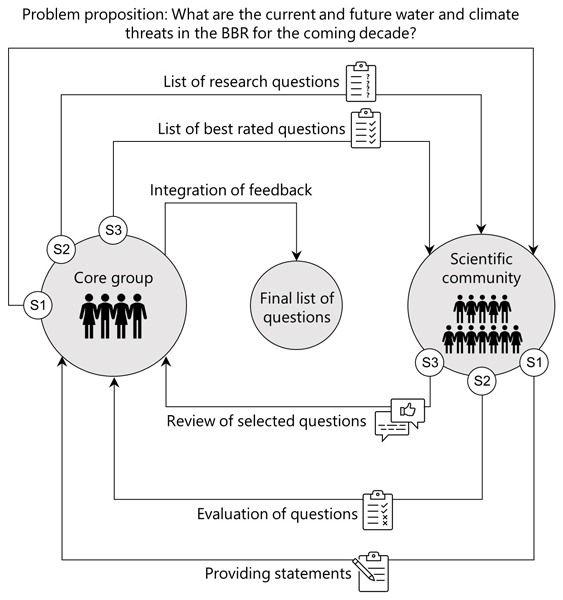
As climate change escalates, the Berlin-Brandenburg region faces new challenges. Climate change-induced extreme events are expected to cause new conflicts to emerge and aggravate existing ones. To guide future research, we co-develop a list of key questions on climate and water challenges in the region. Our findings highlight the need for new research approaches. We expect this list to provide a roadmap for actionable knowledge production to address climate and water challenges in the region.
Franziska Tügel, Katrin M. Nissen, Lennart Steffen, Yangwei Zhang, Uwe Ulbrich, and Reinhard Hinkelmann
Nat. Hazards Earth Syst. Sci., 25, 4673–4692, https://doi.org/10.5194/nhess-25-4673-2025, https://doi.org/10.5194/nhess-25-4673-2025, 2025
Short summary
Short summary
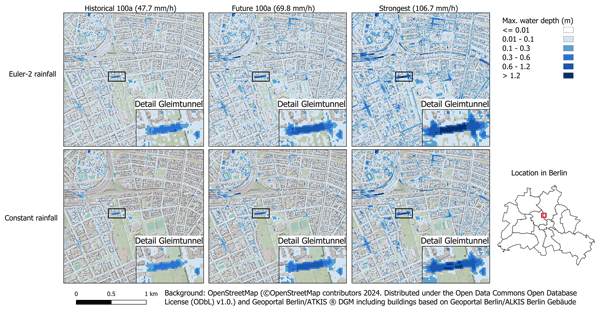
This study examines how extreme rainfall in Berlin, Germany, may intensify due to global warming and how that could worsen flooding in a selected part of the city. We assess the role of the drainage system, infiltration from unsealed surfaces, and a potential adaptation scenario with all roofs as retention roofs in reducing flooding under extreme rainfall. Combining climate and hydrodynamic simulations, we provide insights into future challenges and possible solutions for urban flood management.
Pedro Henrique Lima Alencar, Saskia Arndt, Kei Namba, Márk Somogyvári, Frederik Bart, Fabio Brill, Juan F. Dueñas, Peter Feindt, Daniel Johnson, Nariman Mahmoodi, Christoph Merz, Subham Mukherjee, Katrin Nissen, Eva Nora Paton, Tobias Sauter, Dörthe Tetzlaff, Franziska Tügel, Thomas Vogelpohl, Stenka Valentinova Vulova, Behnam Zamani, and Hui Hui Zhang
Nat. Hazards Earth Syst. Sci., 25, 4043–4051, https://doi.org/10.5194/nhess-25-4043-2025, https://doi.org/10.5194/nhess-25-4043-2025, 2025
Short summary
Short summary
As climate change escalates, the Berlin-Brandenburg region faces new challenges. Climate change-induced extreme events are expected to cause new conflicts to emerge and aggravate existing ones. To guide future research, we co-develop a list of key questions on climate and water challenges in the region. Our findings highlight the need for new research approaches. We expect this list to provide a roadmap for actionable knowledge production to address climate and water challenges in the region.
Elena Xoplaki, Florian Ellsäßer, Jens Grieger, Katrin M. Nissen, Joaquim G. Pinto, Markus Augenstein, Ting-Chen Chen, Hendrik Feldmann, Petra Friederichs, Daniel Gliksman, Laura Goulier, Karsten Haustein, Jens Heinke, Lisa Jach, Florian Knutzen, Stefan Kollet, Jürg Luterbacher, Niklas Luther, Susanna Mohr, Christoph Mudersbach, Christoph Müller, Efi Rousi, Felix Simon, Laura Suarez-Gutierrez, Svenja Szemkus, Sara M. Vallejo-Bernal, Odysseas Vlachopoulos, and Frederik Wolf
Nat. Hazards Earth Syst. Sci., 25, 541–564, https://doi.org/10.5194/nhess-25-541-2025, https://doi.org/10.5194/nhess-25-541-2025, 2025
Short summary
Short summary
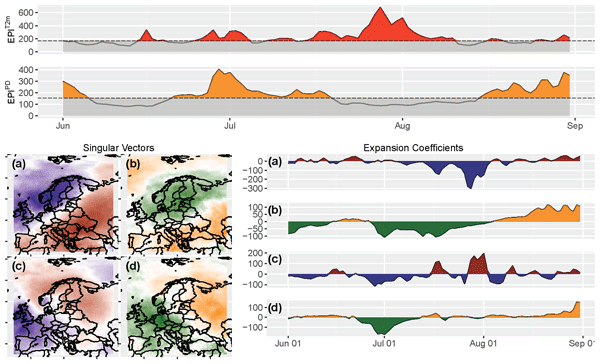
Europe frequently experiences compound events, with major impacts. We investigate these events’ interactions, characteristics, and changes over time, focusing on socio-economic impacts in Germany and central Europe. Highlighting 2018’s extreme events, this study reveals impacts on water, agriculture, and forests and stresses the need for impact-focused definitions and better future risk quantification to support adaptation planning.
Saskia Arndt and Stefan Heiland
Nat. Hazards Earth Syst. Sci., 24, 4369–4383, https://doi.org/10.5194/nhess-24-4369-2024, https://doi.org/10.5194/nhess-24-4369-2024, 2024
Short summary
Short summary
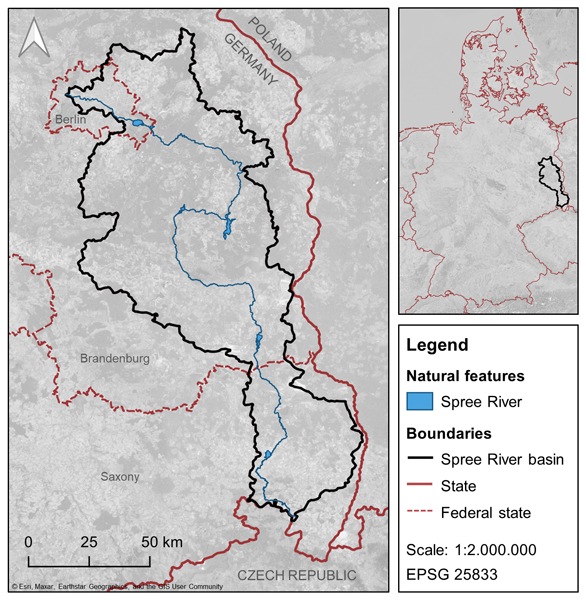
This study provides an overview of the current status of climate change adaptation in plans for water management, spatial planning and landscape planning in the Spree river basin. Only 39 % of 28 plans analysed specify objectives and measures for adaptation to climate change. To fill this gap, more frequent updates of plans, a stronger focus on multifunctional measures, and the adaptation of best-practice examples for systematic integration of climate change impacts and adaptation are needed.
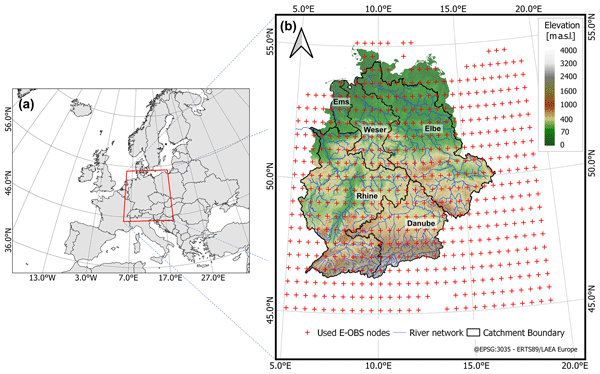
Viet Dung Nguyen, Sergiy Vorogushyn, Katrin Nissen, Lukas Brunner, and Bruno Merz
Adv. Stat. Clim. Meteorol. Oceanogr., 10, 195–216, https://doi.org/10.5194/ascmo-10-195-2024, https://doi.org/10.5194/ascmo-10-195-2024, 2024
Short summary
Short summary
We present a novel stochastic weather generator conditioned on circulation patterns and regional temperature, accounting for dynamic and thermodynamic atmospheric changes. We extensively evaluate the model for the central European region. It statistically downscales precipitation for future periods, generating long, spatially and temporally consistent series. Results suggest an increase in extreme precipitation over the region, offering key benefits for hydrological impact studies.
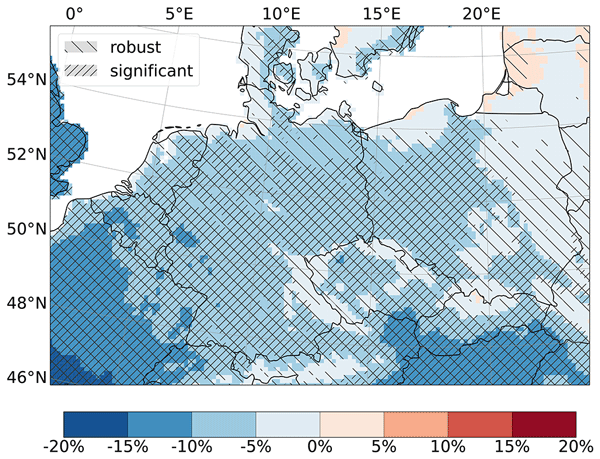
Katrin M. Nissen, Martina Wilde, Thomas M. Kreuzer, Annika Wohlers, Bodo Damm, and Uwe Ulbrich
Nat. Hazards Earth Syst. Sci., 23, 2737–2748, https://doi.org/10.5194/nhess-23-2737-2023, https://doi.org/10.5194/nhess-23-2737-2023, 2023
Short summary
Short summary
The effect of climate change on rockfall probability in the German low mountain regions is investigated in observations and in 23 different climate scenario simulations. Under a pessimistic greenhouse gas scenario, the simulations suggest a decrease in rockfall probability. This reduction is mainly caused by a decrease in the number of freeze–thaw cycles due to higher atmospheric temperatures.
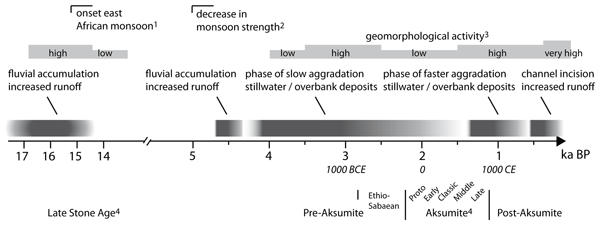
Jacob Hardt, Nadav Nir, Christopher Lüthgens, Thomas M. Menn, and Brigitta Schütt
E&G Quaternary Sci. J., 72, 37–55, https://doi.org/10.5194/egqsj-72-37-2023, https://doi.org/10.5194/egqsj-72-37-2023, 2023
Short summary
Short summary
We investigated the geomorphological and geological characteristics of the archaeological sites Hawelti–Melazo and the surroundings. We performed sedimentological analyses, as well as direct (luminescence) and indirect (radiocarbon) sediment dating, to reconstruct the palaeoenvironmental conditions, which we integrated into the wider context of Tigray.
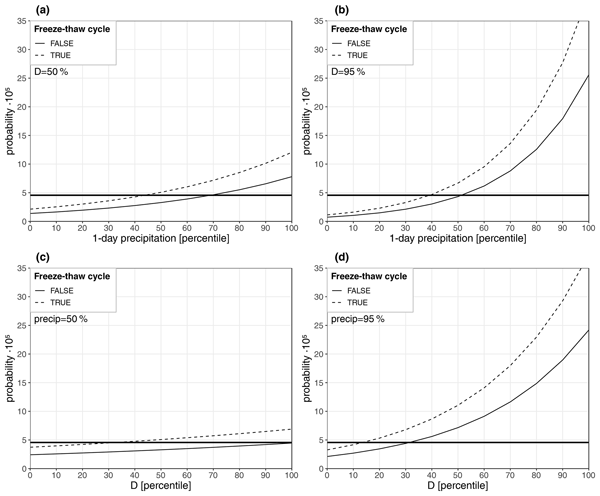
Katrin M. Nissen, Stefan Rupp, Thomas M. Kreuzer, Björn Guse, Bodo Damm, and Uwe Ulbrich
Nat. Hazards Earth Syst. Sci., 22, 2117–2130, https://doi.org/10.5194/nhess-22-2117-2022, https://doi.org/10.5194/nhess-22-2117-2022, 2022
Short summary
Short summary
A statistical model is introduced which quantifies the influence of individual potential triggering factors and their interactions on rockfall probability in central Europe. The most important factor is daily precipitation, which is most effective if sub-surface moisture levels are high. Freeze–thaw cycles in the preceding days can further increase the rockfall hazard. The model can be applied to climate simulations in order to investigate the effect of climate change on rockfall probability.
Michael Dietze, Rainer Bell, Ugur Ozturk, Kristen L. Cook, Christoff Andermann, Alexander R. Beer, Bodo Damm, Ana Lucia, Felix S. Fauer, Katrin M. Nissen, Tobias Sieg, and Annegret H. Thieken
Nat. Hazards Earth Syst. Sci., 22, 1845–1856, https://doi.org/10.5194/nhess-22-1845-2022, https://doi.org/10.5194/nhess-22-1845-2022, 2022
Short summary
Short summary
The flood that hit Europe in July 2021, specifically the Eifel, Germany, was more than a lot of fast-flowing water. The heavy rain that fell during the 3 d before also caused the slope to fail, recruited tree trunks that clogged bridges, and routed debris across the landscape. Especially in the upper parts of the catchments the flood was able to gain momentum. Here, we discuss how different landscape elements interacted and highlight the challenges of holistic future flood anticipation.
Cited articles
Abbass, K., Qasim, M. Z., Song, H., Murshed, M., Mahmood, H., and Younis, I.: A review of the global climate change impacts, adaptation, and sustainable mitigation measures, Environ. Sci. Pollut. Res., 29, 42539–42559, https://doi.org/10.1007/s11356-022-19718-6, 2022.
Aerts, R., Honnay, O., and Van Nieuwenhuyse, A.: Biodiversity and human health: mechanisms and evidence of the positive health effects of diversity in nature and green spaces, Br. Med. Bull., 127, 5–22, https://doi.org/10.1093/bmb/ldy021, 2018.
Alexander, K., Hettiarachchi, S., Ou, Y., and Sharma, A.: Can integrated green spaces and storage facilities absorb the increased risk of flooding due to climate change in developed urban environments?, J. Hydrol., 579, 124201, https://doi.org/10.1016/j.jhydrol.2019.124201, 2019.
Ali, L., Haase, A., and Heiland, S.: Gentrification through green regeneration? analysing the interaction between inner-city green space development and neighbourhood change in the context of regrowth: the case of Lene-Voigt-park in Leipzig, eastern Germany, Land, 9, 24, https://doi.org/10.3390/land9010024, 2020.
Alibašić, H.: Sustainability and resilience planning for local governments, Springer International Publishing, Cham, https://doi.org/10.1007/978-3-319-72568-0, 2018.
Alizadeh, B. and Hitchmough, J.: A review of urban landscape adaptation to the challenge of climate change, Int. J. Clim. Change Strat. Manag., 11, 178–194, https://doi.org/10.1108/IJCCSM-02-2018-0015, 2019.
Amorim-Maia, A. T., Anguelovski, I., Connolly, J., and Chu, E.: Seeking refuge? the potential of urban climate shelters to address intersecting vulnerabilities, Landscape Urban Plan., 238, 104836, https://doi.org/10.1016/j.landurbplan.2023.104836, 2023.
Amt für Statistik Berlin-Brandenburg: Statistik Berlin-Brandenburg, https://www.statistik-berlin-brandenburg.de/ (last access: 10 May 2024), 2024.
Angelo, H.: How green became good: urbanized nature and the making of cities and citizens, University of Chicago Press, Chicago, https://doi.org/10.1111/1468-4446.12898, 2021.
Anguelovski, I., Brand, A. L., Connolly, J. J., Corbera, E., Kotsila, P., Steil, J., Garcia-Lamarca, M., Triguero-Mas, M., Cole, H., Baró, F., and Langemeyer, J.: Expanding the boundaries of justice in urban greening scholarship: toward an emancipatory, antisubordination, intersectional, and relational approach, Ann. Am. Assoc. Geogr., 110, 1743–1769, https://doi.org/10.1080/24694452.2020.1740579, 2020.
Ayers, A. C. and Rehan, S. M.: Supporting bees in cities: how bees are influenced by local and landscape features, Insects, 12, 128, https://doi.org/10.3390/insects12020128, 2021.
Baganz, G. F. and Baganz, D.: Compensating for loss of nature and landscape in a growing city – Berlin case study, Land, 12, 567, https://doi.org/10.3390/land12030567, 2023.
Bartoli, S. and Heyden, M.: Metropolitan commons: spatial commoning in Berlin's Großer Tiergarten and Tempelhofer Feld, in: The Social (Re) Production of Architecture, Routledge, London/New York, 191–210, https://doi.org/10.4324/9781315717180, 2017.
Battisti, L., Pille, L., Wachtel, T., Larcher, F., and Säumel, I.: Residential greenery: state of the art and health-related ecosystem services and disservices in the city of Berlin, Sustainability, 11, 1815, https://doi.org/10.3390/su11061815, 2019.
Bernt, M.: How post-socialist is gentrification? observations in East Berlin and Saint Petersburg, Eurasian Geogr. Econ., 57, 565–587, https://doi.org/10.1080/15387216.2016.1259079, 2016.
Bhatnagar, S., Meena, D., and Singh, S.: Effect of climate change on plants and their pollinators: a review, Int. J. Biotech Trends Technol., 9, 34–39, https://doi.org/10.14445/22490183/IJBTT-V9I3P606, 2019.
Blokland, T. and Vief, R.: Making sense of segregation in a well-connected city: the case of Berlin, in: Urban Socio-Economic Segregation and Income Inequality, 249–268, Routledge, London/New York, https://doi.org/10.1007/978-3-030-64569-4_13, 2021.
Brantz, D. and Dümpelmann, S. (Eds.): Greening the city: urban landscapes in the twentieth century, University of Virginia Press, Charlottesville, https://archive.org/search.php?query=external-identifier£"urn£lcp£greeningcityurba0000unse£lcpdf£b4085bfe-98cf-4e58-aa9b-ce2a028ca562" (last access: 10 May 2024), 2011.
Brenck, M., Hansjürgens, B., Schröter-Schlaack, C., Tröger, U., Wessner, A., and Wittmer, H.: Gesellschaftliche Wertigkeit des Tempelhofer Feldes: Qualitäten erfassen und sichtbar machen, UFZ Discussion Paper, 5/2021, Leipzig, https://hdl.handle.net/10419/246582, 2021.
Breuste, J. and Artmann, M.: Multi-functional urban green spaces, in: Making Green Cities, Springer International Publishing, Cham, 399–526, https://doi.org/10.1007/978-3-030-37716-8_7, 2020
Breuste, J. and Breuste, J.: What constitutes urban nature in the green city concept?, in: The Green City: Urban Nature as an Ideal, Provider of Services and Conceptual Urban Design Approach, Springer International Publishing, Cham, 255–314, https://doi.org/10.1007/978-3-662-63976-4_7, 2022.
Byrne, J.: Urban parks, gardens and greenspace, in: The Routledge Handbook of Environmental Justice, Routledge, London/New York, 437–448, https://doi.org/10.4324/9781315678986, 2017.
Caldas-Alvarez, A., Augenstein, M., Ayzel, G., Barfus, K., Cherian, R., Dillenardt, L., Fauer, F., Feldmann, H., Heistermann, M., Karwat, A., Kaspar, F., Kreibich, H., Lucio-Eceiza, E. E., Meredith, E. P., Mohr, S., Niermann, D., Pfahl, S., Ruff, F., Rust, H. W., Schoppa, L., Schwitalla, T., Steidl, S., Thieken, A. H., Tradowsky, J. S., Wulfmeyer, V., and Quaas, J.: Meteorological, impact and climate perspectives of the 29 June 2017 heavy precipitation event in the Berlin metropolitan area, Nat. Hazards Earth Syst. Sci., 22, 3701–3724, https://doi.org/10.5194/nhess-22-3701-2022, 2022.
Carboni, M., Livingstone, S. W., Isaac, M. E., and Cadotte, M. W.: Invasion drives plant diversity loss through competition and ecosystem modification, J. Ecol., 109, 3587–3601, https://doi.org/10.1111/1365-2745.13739, 2021.
Castán Broto, V. and Neves Alves, S.: Intersectionality challenges for the co-production of urban services: notes for a theoretical and methodological agenda, Environ. Urban., 30, 367–386, https://doi.org/10.1177/0956247818790208, 2018.
Chen, S., Haase, D., Xue, B., Wellmann, T., and Qureshi, S.: Integrating quantity and quality to assess urban green space improvement in the compact city, Land, 10, 1367, https://doi.org/10.3390/land10121367, 2021.
Climate Analytics: Hitzestress und Anpassungsmaßnahmen in der Metropolregion Berlin-Brandenburg, Climate Change Center Berlin Brandenburg, https://ca1-clm.edcdn.com/assets/Berlin-Bericht-final.pdf?v=1706627809 (last access: 24 June 2024), 2024.
Cohen, D. A., Han, B., Park, S., Williamson, S., and Derose, K. P.: Park use and park-based physical activity in low-income neighborhoods, J. Aging Phys. Act., 27, 334–342, https://doi.org/10.1123/japa.2018-0032, 2019.
Colding, J., Barthel, S., Bendt, P., Snep, R., Van der Knaap, W., and Ernstson, H.: Urban green commons: Insights on urban common property systems, Global Environmental Change, 23, 1039–1051 , https://doi.org/10.1016/j.gloenvcha.2013.05.006, 2013.
Collins, C., Haase, D., Heiland, S., and Kabisch, N.: Urban green space interaction and wellbeing: investigating the experience of international students in Berlin during the first COVID-19 lockdown, Urban For. Urban Green., 70, 127543, https://doi.org/10.1016/j.ufug.2022.127543, 2022.
Csizmadia, D., Säumel, I., Pille, L., Szilágyi, K., and Balogh, P. I.: Water sensitive design potentials in Paris, Berlin, and Budapest revisited, Czas. Tech., 1, 113–123, https://doi.org/10.4467/2353737XCT.17.009.6106, 2017.
Czaja, M., Kołton, A., and Muras, P.: The complex issue of urban trees–stress factor accumulation and ecological service possibilities, Forests, 11, 932, https://doi.org/10.3390/f11090932, 2020.
Davis, K.: Intersectionality as critical methodology, in: Writing Academic Texts Differently: Intersectional Feminist Methodologies and the Playful Art of Writing, Routledge, London/New York, 17–29, https://doi.org/10.4324/9781315818566, 2014.
Draus, P., Haase, D., Napieralski, J., Qureshi, S., and Roddy, J.: Lurking in the bushes: informality, illicit activity and transitional green space in Berlin and Detroit, Cult. Geogr., 28, 319–339, https://doi.org/10.1177/1474474020948876, 2021.
Draus, P., Haase, D., Napieralski, J., Sparks, A., Qureshi, S., and Roddy, J.: Wastelands, greenways and gentrification: introducing a comparative framework with a focus on Detroit, USA, Sustainability, 12, 6189, https://doi.org/10.3390/su12156189, 2020.
DWD: Klima und Umwelt, Klimaüberwachung, Zeitreihen und Trends, https://www.dwd.de/DE/leistungen/zeitreihen/zeitreihen.html (last access: 10 October 2025), 2025.
Dylewski, Ł., Maćkowiak, Ł., and Banaszak-Cibicka, W.: Are all urban green spaces a favourable habitat for pollinator communities? bees, butterflies and hoverflies in different urban green areas, Ecol. Entomol., 44, 678–689, https://doi.org/10.1111/een.12744, 2019.
Eckstein, D., Künzel, V., and Schäfer, L.: The global climate risk index 2021, Germanwatch, Bonn, ISBN 978-3-943704-77-8, 2021.
Edwards, A. R.: The sustainability revolution: portrait of a paradigm shift, New Society Publishers, Gabriola Island, ISBN 0-86571-531-9, 2005.
Fenner, D., Holtmann, A., Krug, A., and Scherer, D.: Heat waves in Berlin and Potsdam, Germany: long-term trends and comparison of heat wave definitions from 1893 to 2017, Int. J. Climatol., 39, 2422–2437, https://doi.org/10.1002/joc.5953, 2019.
Ferrari, E.: Along the western margin of Park am Gleisdreieck, an urban hybrid environment, Environ. Hist., 29, 467–475, https://doi.org/10.3197/096734023X16945097374236, 2023.
FIS-Broker: Berlin geodata portal, https://fbinter.stadt-berlin.de/fb/index.jsp (last access: 10 May 2024), 2024.
Fontaine, M.: Corporate social responsibility and sustainability: the new bottom line?, Int. J. Bus. Soc. Sci., 4, 1–8, https://doi.org/10.30845/ijbss, 2013.
Fryd, O., Pauleit, S., and Bühler, O.: The role of urban green space and trees in relation to climate change, CABI Rev., 1–18, https://doi.org/10.1079/PAVSNNR20116053, 2012.
Gabriel, K. M. and Endlicher, W. R.: Urban and rural mortality rates during heat waves in Berlin and Brandenburg, Germany, Environ. Pollut., 159, 2044–2050, https://doi.org/10.1016/j.envpol.2011.01.016, 2011.
Gandy, M.: The fabric of space: water, modernity, and the urban imagination, MIT Press, Cambridge, MA, https://doi.org/10.7551/mitpress/8313.001.0001, 2014.
Gérard, M., Vanderplanck, M., Wood, T., and Michez, D.: Global warming and plant–pollinator mismatches, Emerg. Top. Life Sci., 4, 77–86, https://doi.org/10.1042/ETLS20190139, 2020.
Gill, S. E., Handley, J. F., Ennos, A. R., and Pauleit, S.: Adapting cities for climate change: the role of the green infrastructure, Built Environ., 33, 115–133, https://doi.org/10.2148/benv.33.1.115, 2007.
Gonçalves, P., Grilo, F., Mendes, R. C., Vierikko, K., Elands, B., Marques, T. A., and Santos-Reis, M.: What's biodiversity got to do with it? perceptions of biodiversity and restorativeness in urban parks, Ecol. Soc., 26, 1–12, https://doi.org/10.5751/ ES-12598-260325, 2021.
Green, O. O., Garmestani, A. S., Albro, S., Ban, N. C., Berland, A., Burkman, C. E., Gardiner, M. M., Gunderson, L., Hopton, M. E., Schoon, M. L., and Shuster, W. D.: Adaptive governance to promote ecosystem services in urban green spaces, Urban Ecosyst., 19, 77–93, https://doi.org/10.1007/s11252-015-0476-2, 2016.
Haaland, C. and van den Bosch, C. K.: Challenges and strategies for urban green-space planning in cities undergoing densification: a review, Urban For. Urban Green., 14, 760–771, https://doi.org/10.1016/j.ufug.2015.07.009, 2015.
Hardinghaus, M., Wolf, C., and Cyganski, R.: Case studies of new urban planning policy: effects of redesigning and redistributing public space in Europe, https://elib.dlr.de/143827/1/215_Hardinghaus_ICTR21.pdf (last access: 10 October 2025), 2021.
Hazelton, P. and Murphy, B.: Understanding soils in urban environments, CSIRO Publishing, Clayton, https://doi.org/10.1079/9781789249934.0000, 2021.
Hettiarachchi, S., Wasko, C., and Sharma, A.: Increase in flood risk resulting from climate change in a developed urban watershed – the role of storm temporal patterns, Hydrol. Earth Syst. Sci., 22, 2041–2056, https://doi.org/10.5194/hess-22-2041-2018, 2018.
Heydari, M., Omidipour, R., and Greenlee, J.: Biodiversity: a review of the concept, measurement, opportunities, and challenges, J. Wildl. Biodivers., 4, 26–39, https://doi.org/10.22120/jwb.2020.123209.1124, 2020.
Hsiung, A. C., Boyle, W. A., Cooper, R. J., and Chandler, R. B.: Altitudinal migration: ecological drivers, knowledge gaps, and conservation implications, Biol. Rev., 93, 2049–2070, https://doi.org/10.1111/brv.12435, 2018.
IPCC: Glossary of terms, in: Managing the Risks of Extreme Events and Disasters to Advance Climate Change Adaptation, Cambridge University Press, Cambridge and New York, 555–564, https://archive.ipcc.ch/pdf/special-reports/srex/SREX-Annex_Glossary.pdf (last access: 10 March 2026), 2012.
IPCC: IPCC AR6 risk management framework and definitions: guidance for IPCC authors, Intergovernmental Panel on Climate Change, Geneva, https://www.ipcc.ch/site/assets/uploads/2021/02/Risk-guidance-FINAL_15Feb2021.pdf (last access: 10 October 2025), 2021.
Irfeey, A. M. M., Chau, H. W., Sumaiya, M. M. F., Wai, C. Y., Muttil, N., and Jamei, E.: Sustainable mitigation strategies for urban heat island effects in urban areas, Sustainability, 15, 10767, https://doi.org/10.3390/su151410767, 2023.
Jansson, Å.: Reaching for a sustainable, resilient urban future using the lens of ecosystem services, Ecol. Econ., 86, 285–291, https://doi.org/10.1016/j.ecolecon.2012.06.013, 2013.
Jeffres, L. W., Bracken, C. C., Jian, G., and Casey, M. F.: The impact of third places on community quality of life, Appl. Res. Qual. Life, 4, 333–345, https://doi.org/10.1007/s11482-009-9084-8, 2009.
Kabisch, N. and Haase, D.: Green justice or just green? provision of urban green spaces in Berlin, Germany, Landsc. Urban Plan., 122, 129–139, https://doi.org/10.1016/j.landurbplan.2013.11.016, 2014.
Kabisch, N., Kraemer, R., Masztalerz, O., Hemmerling, J., Püffel, C., and Haase, D.: Impact of summer heat on urban park visitation, perceived health and ecosystem service appreciation, Urban For. Urban Green., 60, 127058, https://doi.org/10.1016/j.ufug.2021.127058, 2021.
Karaye, I., Stone, K. W., Casillas, G. A., Newman, G., and Horney, J. A.: A spatial analysis of possible environmental exposures in recreational areas impacted by Hurricane Harvey flooding, Harris County, Texas, Environ. Manage., 64, 381–390, https://doi.org/10.1007/s00267-019-01204-4, 2019.
Keeffe, G. and Han, Q.: Mapping the flow of forest migration through the city under climate change, Urban Plan., 4, 139–151, https://doi.org/10.17645/up.v4i1.1753, 2019.
Koleček, J., Adamík, P., and Reif, J.: Shifts in migration phenology under climate change: temperature vs. abundance effects in birds, Clim. Change, 159, 177–194, https://doi.org/10.1007/s10584-020-02668-8, 2020.
Kotsila, P., Anguelovski, I., García-Lamarca, M., and Sekulova, F.: Injustice in urban sustainability: ten core drivers, Taylor & Francis, London, 170 pp., https://doi.org/10.4324/9781003221425, 2023.
Kowarik, I.: The “Green Belt Berlin”: establishing a greenway where the Berlin Wall once stood by integrating ecological, social and cultural approaches, Landsc. Urban Plan., 184, 12–22, https://doi.org/10.1016/j.landurbplan.2018.12.008, 2019.
Kowarik, I.: Urban biodiversity, ecosystems and the city: insights from 50 years of the Berlin School of urban ecology, Landsc. Urban Plan., 240, 104877, https://doi.org/10.1016/j.landurbplan.2023.104877, 2023.
Kowarik, I. and Langer, A.: Vegetation einer Berliner Eisenbahnfläche (Schöneberger Südgelände) im vierten Jahrzehnt der Sukzession, Verh. Bot. Ver. Berlin Brandenburg, 127, 5–43, 1994.
Kraemer, R. and Kabisch, N.: Parks under stress: air temperature regulation of urban green spaces under conditions of drought and summer heat, Front. Environ. Sci., 10, 318, https://doi.org/10.3389/fenvs.2022.849965, 2022.
Kronenberg, J., Haase, A., Łaszkiewicz, E., Antal, A., Baravikova, A., Biernacka, M., Dushkova, D., Filčak, R., Haase, D., Ignatieva, M., and Khmara, Y.: Environmental justice in the context of urban green space availability, accessibility, and attractiveness in postsocialist cities, Cities, 106, 102862, https://doi.org/10.1016/j.cities.2020.102862, 2020.
Kubelka, V., Sandercock, B. K., Székely, T., and Freckleton, R. P.: Animal migration to northern latitudes: environmental changes and increasing threats, Trends Ecol. Evol., 37, 30–41, https://doi.org/10.1016/j.tree.2021.08.010, 2022.
Kuhlemann, L., Tetzlaff, D., and Soulsby, C.: Urban water systems under climate stress: an isotopic perspective from Berlin, Germany, Hydrol. Process., 34, 3758–3776, https://doi.org/10.1002/hyp.13850, 2020.
Kurth, D.: City models and preventive planning strategies for resilient cities in Germany, Urban Plan., 7, 90–95, https://doi.org/10.17645/up.v7i4.5803, 2022.
Lachmund, J.: Greening Berlin: the co-production of science, politics, and urban nature, MIT Press, Cambridge, MA, https://doi.org/10.7551/mitpress/9159.001.0001, 2013.
Langer, I., Fakharizadehshirazi, E., and Werner, J.: Spatial variation of physiologically equivalent temperature in different local climate zones of a large city during a hot spell, Meteorol. Z., 30, 115–125, https://doi.org/10.17169/refubium-30928, 2021.
Lehmann, S.: Can rapid urbanisation ever lead to low carbon cities? the case of Shanghai in comparison to Potsdamer Platz Berlin, Sustain. Cities Soc., 3, 1–12, https://doi.org/10.1016/j.scs.2011.08.001, 2012.
Lehmann, S.: Growing biodiverse urban futures: renaturalization and rewilding as strategies to strengthen urban resilience, Sustainability, 13, 2932, https://doi.org/10.3390/su13052932, 2021.
Li, M. (Ed.): Large-scale urban parks on post-industrial sites in contemporary urban landscape conceptions, MDPI, Basel, https://doi.org/10.3390/books978-3-0365-5559-1, 2023.
Lindley, L. M., Nagoshi, J. L., Nagoshi, C. T., Hess, R. III, and Boscia, A.: An eco-developmental framework on the intersectionality of gender and sexual identities in transgender individuals, Psychol. Sex., 12, 261–278, https://doi.org/10.1080/19419899.2020.1713873, 2021.
Lo, A. Y., Jim, C. Y., Cheung, P. K., Wong, G. K., and Cheung, L. T.: Space poverty driving heat stress vulnerability and the adaptive strategy of visiting urban parks, Cities, 127, 103740, https://doi.org/10.1016/j.cities.2022.103740, 2022.
Lorenz, J. M., Kronenberg, R., Bernhofer, C., and Niyogi, D.: Urban rainfall modification: Observational climatology over Berlin, Germany, Journal of Geophysical Research: Atmospheres, 124, 731–746, https://doi.org/10.1029/2018JD028858, 2019.
Marando, F., Heris, M. P., Zulian, G., Udías, A., Mentaschi, L., Chrysoulakis, N., Parastatidis, D., and Maes, J.: Urban heat island mitigation by green infrastructure in European functional urban areas, Sustain. Cities Soc., 77, 103564, https://doi.org/10.1016/j.scs.2021.103564, 2022.
Marshman, J., Blay-Palmer, A., and Landman, K.: Anthropocene crisis: climate change, pollinators, and food security, Environ., 6, 22, https://doi.org/10.3390/environments6020022, 2019.
Martens, D., Öztürk, Ö., Rindt, L., Twarok, J., Steinhardt, U., and Molitor, H.: Supporting biodiversity: structures of participatory actions in urban green spaces, Front. Sustain. Cities, 4, 952790, https://doi.org/10.3389/frsc.2022.952790, 2022.
Mashwani, Z. U. R.: Environment, climate change and biodiversity, in: Environment, Climate, Plant and Vegetation Growth, Springer, Cham, 473–501, https://doi.org/10.1007/978-3-030-49732-3_19, 2020.
Masson-Delmotte, V. P., Zhai, P., Pirani, S. L., Connors, C., Péan, S., Berger, N., Caud, Y., Chen, L., Goldfarb, M. I., and Scheel Monteiro, P. M.: Summary for policymakers, in: Climate Change 2021: The Physical Science Basis, Contribution of Working Group I to the Sixth Assessment Report of the IPCC, Cambridge University Press, Cambridge and New York, 1–41, https://doi.org/10.1017/9781009157896.001, 2021.
McKenzie, T. L., Moody, J. S., Carlson, J. A., Lopez, N. V., and Elder, J. P.: Neighborhood income matters: disparities in community recreation facilities, amenities, and programs, J. Park Recreat. Admin., 31, 12–22, https://pmc.ncbi.nlm.nih.gov/articles/PMC4082954/ (last access: 30 October 2025), 2013.
Mehtab, T. and Kamal, M. A.: Investigating the impact of flood on low lying settlements of Delhi, India: a planning perspective, https://en.front-sci.com/index.php/aes/article/view/1249/1379 (last access: 25 January 2024), 2023.
Mexia, T., Vieira, J., Príncipe, A., Anjos, A., Silva, P., Lopes, N., Freitas, C., Santos-Reis, M., Correia, O., Branquinho, C., and Pinho, P.: Ecosystem services: urban parks under a magnifying glass, Environ. Res., 160, 469–478, https://doi.org/10.1016/j.envres.2017.10.023, 2018.
Michels, K. and Hindin, D. A.: Building collaboration among community land trusts providing affordable housing and conservation land trusts protecting land for ecological value, Lincoln Institute of Land Policy, Cambridge, MA, https://ctconservation.org/wp-content/uploads/Building-Collaboration-Hindin-Michels-LincolnInstitute.pdf (last access: 30 October 2025), 2022.
Miller, S.: Greenspace after a disaster: the need to close the gap with recovery for greater resilience, J. Am. Plan. Assoc., 86, 339–348, https://doi.org/10.1080/01944363.2020.1730223, 2020.
Naumann, S., McKenna, D., Röschel, L., and Barton, D. N.: Methodological review and framework: cultural ecosystem services provided by green and blue infrastructure (ENABLE Deliverable 3.0), https://www.ecologic.eu/sites/default/files/publication/2021/2288-Methodological-framework-Review-D3-0-Enable.pdf (last access: 14 December 2025), 2018.
Nissen, K. M. and Ulbrich, U.: Increasing frequencies and changing characteristics of heavy precipitation events threatening infrastructure in Europe under climate change, Nat. Hazards Earth Syst. Sci., 17, 1177–1190, https://doi.org/10.5194/nhess-17-1177-2017, 2017.
Oldenburg, R.: The great good place: cafés, coffee shops, community centers, beauty parlours, general stores, bars, hangouts, and how they get you through the day, Paragon House, New York, https://archive.org/search?query=external-identifier:"urn:lcp:greatgoodplaceca0000olde:lcpdf:2e9d8cc0-dd1c-4040-aa14-3fec2c8f4b97" (last access: 31 March 2026), 1989.
Owens, M. A.: Geopolitical ecologies: tracing the shift from citizen to user at Tempelhof and the Presidio, PhD thesis, University of California, Berkeley, https://escholarship.org/uc/item/40c4g4jn (last access: 10 March 2026), 2018.
Palliwoda, J., Kowarik, I., and Lippe, M.: Human-biodiversity interactions in urban parks: the species level matters, Landsc. Urban Plan., 157, 394–406, https://doi.org/10.1016/j.landurbplan.2016.09.003, 2017.
Panagopoulos, T., Duque, J. A. G., and Dan, M. B.: Urban planning with respect to environmental quality and human well-being, Environ. Pollut., 208, 137–144, https://doi.org/10.1016/j.envpol.2015.07.038, 2016.
Pancewicz, A.: Climate-friendly cities – blue–green infrastructure activities, IOP Conf. Ser. Mater. Sci. Eng., 1203, 022049, https://doi.org/10.1088/1757-899X/1203/2/022049, 2021.
Park, D. S. and Razafindratsima, O. H.: Anthropogenic threats can have cascading homogenizing effects on the phylogenetic and functional diversity of tropical ecosystems, Ecography, 42, 148–161, https://doi.org/10.1111/ecog.03825, 2019.
Parker, J. and Simpson, G. D.: Public green infrastructure contributes to city livability: a systematic quantitative review, Land, 7, 161, https://doi.org/10.3390/land7040161, 2018.
Pegorer, F.: A beautiful place: postmigrant trajectories in and around Berlin's Tempelhofer Feld, Crossings J. Migr. Cult., 14, 53–70, https://doi.org/10.1386/cjmc_00074_1, 2023.
Pukowiec-Kurda, K.: The urban ecosystem services index as a new indicator for sustainable urban planning and human well-being in cities, Ecol. Indic., 144, 109532, https://doi.org/10.1016/j.ecolind.2022.109532, 2022.
Purnell, D.: Expanding Oldenburg: homes as third places, J. Place Manag. Dev., 8, 51–62, https://doi.org/10.1177/1077800418806612, 2015.
Purnell, D.: Public parks: third places or places eliciting moral panic?, Qual. Inq., 25, 531–534, https://doi.org/10.1177/1077800418806612, 2019.
Qiu, J.: Effects of landscape pattern on pollination, pest control, water quality, flood regulation, and cultural ecosystem services: a literature review and future research prospects, Curr. Landsc. Ecol. Rep., 4, 113–124, https://doi.org/10.1007/s40823-019-00045-5, 2019.
Ranzato, M. and Broggini, F.: Adaptive reuse of an operating urban infrastructure: a conversation with raumlabor about the Floating University Berlin, J. Cult. Herit. Manag. Sustain. Dev., 14, 127–136, https://doi.org/10.1108/JCHMSD-04-2023-0040, 2023
Reisinger, A., Howden, M., Vera, C., Garschagen, M., Hurlbert, M., Kreibich, H., Mach, K. J., Mintenbeck, K., O'Neill, B., Otto, F., Pörtner, H. O., and Zommers, Z.: The concept of risk in the IPCC Sixth Assessment Report: a summary of cross-working group discussions, Intergovernmental Panel on Climate Change, Geneva, 130 pp., https://www.ipcc.ch/site/assets/uploads/2021/01/The-concept-of-risk-in-the-IPCC-Sixth-Assessment-Report.pdf (last access: 14 December 2025), 2020.
Renn, O. and Klinke, A.: A framework of adaptive risk governance for urban planning, Sustainability, 5, 2036–2059, https://doi.org/10.3390/su5052036, 2013.
Requier, F., Pérez-Méndez, N., Andersson, G. K., Blareau, E., Merle, I., and Garibaldi, L. A.: Bee and non-bee pollinator importance for local food security, Trends Ecol. Evol., 38, 196–205, https://doi.org/10.1016/j.tree.2022.10.006, 2023.
Reyes-Riveros, R., Altamirano, A., De La Barrera, F., Rozas-Vásquez, D., Vieli, L., and Meli, P.: Linking public urban green spaces and human well-being: a systematic review, Urban For. Urban Green., 61, 127105, https://doi.org/10.1016/j.ufug.2021.127105, 2021.
Reynaert, S., De Boeck, H. J., Verbruggen, E., Verlinden, M., Flowers, N., and Nijs, I.: Risk of short-term biodiversity loss under more persistent precipitation regimes, Glob. Change Biol., 27, 1614–1626, https://doi.org/10.1111/gcb.15501, 2021.
Ricci, L.: Integrated approaches to ecosystem services: linking culture, circular economy and environment through the re-use of open spaces and buildings in Europe, Land, 11, 1161, https://doi.org/10.3390/land11081161, 2022.
Rigolon, A.: A complex landscape of inequity in access to urban parks: a literature review, Landsc. Urban Plan., 153, 160–169, https://doi.org/10.1016/j.landurbplan.2016.05.017, 2016.
Rigolon, A., Keith, S. J., Harris, B., Mullenbach, L. E., Larson, L. R., and Rushing, J.: More than “just green enough”: helping park professionals achieve equitable greening and limit environmental gentrification, J. Park Recreat. Admin., 38, 1–20, https://doi.org/10.18666/JPRA-2019-9654, 2020.
Rocha, E. A. and Fellowes, M. D.: Urbanisation alters ecological interactions: ant mutualists increase and specialist insect predators decrease on an urban gradient, Sci. Rep., 10, 6406, https://doi.org/10.1038/s41598-020-62422-z, 2020.
Rosen, J.: Community benefits: developers, negotiations, and accountability, University of Pennsylvania Press, Philadelphia, https://www.pennpress.org/9781512824131/community-benefits/ (last access: 14 December 2025), 2023.
Rosol, M.: Public participation in post-Fordist urban green space governance: the case of community gardens in Berlin, Int. J. Urban Reg. Res., 34, 548–563, https://doi.org/10.1111/j.1468-2427.2010.00968.x, 2010.
Sainburg, E. I.: How parks and recreation system master plans are addressing displacement in gentrifying cities, Doctoral dissertation, https://doi.org/10.26153/tsw/46179, 2023.
Sander, H. and Weißermel, S.: Urban heat transition in Berlin: corporate strategies, political conflicts, and just solutions, Urban Plan., 8, 361–371, https://doi.org/10.17645/up.v8i1.6178, 2023.
Sarah, P., Zhevelev, H. M., and Atar, O. Z.: Urban park soil and vegetation: effects of natural and anthropogenic factors, Pedosphere, 25, 392–404, https://doi.org/10.1016/S1002-0160(15)30007-2, 2015.
Scherer, D., Fehrenbach, U., Lakes, T., Lauf, S., Meier, F., and Schuster, C.: Quantification of heat-stress related mortality hazard, vulnerability and risk in Berlin, Germany, Die Erde, 144, 238–259, https://doi.org/10.12854/erde-144-17, 2013.
Schwindt, S., Pasternack, G., Bratovich, P., Rabone, G., and Simodynes, D.: Hydro-morphological parameters generate lifespan maps for stream restoration management, UC Davis, https://doi.org/10.1016/j.jenvman.2018.11.010, 2019.
Senatsverwaltung für Mobilität, Verkehr, Klimaschutz und Umwelt (SenMVKU): Environmental Justice Atlas 2023/2024, http://www.berlin.de/sen/mvku (last access: 10 May 2024), 2023.
Shade, C., Kremer, P., Rockwell, J. S., and Henderson, K. G.: The effects of urban development and current green infrastructure policy on future climate change resilience, Ecol. Soc., 25, https://doi.org/10.5751/ES-12076-250437, 2020.
Sheikh, W. T. and van Ameijde, J.: Promoting livability through urban planning: a comprehensive framework based on the theory of human needs, Cities, 131, 103972, https://doi.org/10.1016/j.cities.2022.103972, 2022.
Sikorski, P., Gawryszewska, B., Sikorska, D., Chormański, J., Schwerk, A., Jojczyk, A., Ciężkowski, W., Archiciński, P., Łepkowski, M., Dymitryszyn, I., and Przybysz, A.: The value of doing nothing: how informal green spaces can provide comparable ecosystem services to cultivated urban parks, Ecosyst. Serv., 50, 101339, https://doi.org/10.1016/j.ecoser.2021.101339, 2021.
Skandrani, Z. and Prévot, A. C.: Beyond green-planning political orientations: contrasted public policies and their relevance to nature perceptions in two European capitals, Environ. Sci. Policy, 52, 140–149, https://doi.org/10.1016/j.envsci.2015.04.015, 2015.
Skendžić, S., Zovko, M., Pajač Živković, I., Lešić, V., and Lemić, D.: Effect of climate change on introduced and native agricultural invasive insect pests in Europe, Insects, 12, 985, https://doi.org/10.3390/insects12110985, 2021.
Southon, M. P. and van der Merwe, C. D.: Flooded with risks or opportunities: exploring flooding impacts on tourist accommodation, Afr. J. Hosp. Tour. Leisure, 7, 1–16, https://www.ajhtl.com/uploads/7/1/6/3/7163688/article_36_vol_7__1__2018.pdf (last access: 14 December 2025), 2018.
Spiliotopoulou, M. and Roseland, M.: Urban sustainability: from theory influences to practical agendas, Sustainability, 12, 7245, https://doi.org/10.3390/su12187245, 2020.
Stoetzer, B.: Ruderal ecologies: rethinking nature, migration, and the urban landscape in Berlin, Cult. Anthropol., 33, 295–323, 2018.
Stoetzer, B.: Ruderal City: Ecologies of Migration, Race, and Urban Nature in Berlin, Duke University Press, Durham, https://doi.org/10.14506/ca33.2.09, 2022.
Storch, D., Šímová, I., Smyčka, J., Bohdalková, E., Toszogyova, A., and Okie, J. G.: Biodiversity dynamics in the Anthropocene: how human activities change equilibria of species richness, Ecography, 2022, https://doi.org/10.1111/ecog.05778, 2022.
Tomczyk, A. M., White, P. C., and Ewertowski, M. W.: Effects of extreme natural events on the provision of ecosystem services in a mountain environment: The importance of trail design in delivering system resilience and ecosystem service co-benefits, Journal of Environmental Management, 166, 156–167, https://doi.org/10.1016/j.jenvman.2015.10.016, 2016.
Triguero-Mas, M., Anguelovski, I., Connolly, J., Martin, N., Matheney, A., Cole, H., Pérez-Del-Pulgar, C., García-Lamarca, M., Shokry, G., Argüelles, L., Conesa, D., Gallez, E., Sarzo, B., Beltrán, M., Máñez, J., Martínez-Minaya, J., Oscilowicz, E., Arcaya, M., and Baró, F.: Exploring green gentrification in 28 global North cities: the role of urban parks and other types of greenspaces, Environ. Res. Lett., 17, https://doi.org/10.1088/1748-9326/ac9325, 2022.
Tsoka, S., Tsikaloudaki, K., Theodosiou, T., and Bikas, D.: Urban warming and cities' microclimates: investigation methods and mitigation strategies – a review, Energies, 13, 1414, https://doi.org/10.3390/en13061414, 2020.
van Ham, C. and Klimmek, H.: Partnerships for nature-based solutions in urban areas – showcasing successful examples, in: Nature-Based Solutions to Climate Change Adaptation in Urban Areas: Linkages between Science, Policy and Practice, Springer, Cham, 275–289, https://doi.org/10.1007/978-3-319-56091-5, 2017.
Vargas-Hernández, J. G., Pallagst, K., and Zdunek-Wielgołaska, J.: Urban green spaces as a component of an ecosystem, in: Sustainable Development and Environmental Stewardship: Global Initiatives Towards Engaged Sustainability, Springer, Cham, 165–198, https://doi.org/10.1007/978-3-031-28885-2_8, 2023.
Vieira, J., Matos, P., Mexia, T., Silva, P., Lopes, N., Freitas, C., Correia, O., Santos-Reis, M., Branquinho, C., and Pinho, P.: Green spaces are not all the same for the provision of air purification and climate regulation services: the case of urban parks, Environ. Res., 160, 306–313, https://doi.org/10.1016/j.envres.2017.10.006, 2018.
Wild, T., Fuchs, G., and Davis, M.: Sitting in our own soup? Combined sewers, climate change and nature-based solutions for urban water management in Berlin, Nature-Based Solutions, 5, 100113, https://doi.org/10.1016/j.nbsj.2024.100113, 2024.
Wolch, J. R., Byrne, J., and Newell, J. P.: Urban green space, public health, and environmental justice: the challenge of making cities “just green enough”, Landsc. Urban Plan., 125, 234–244, 2014.
Wolschke-Bulmahn, J. and Clark, R. (Eds.): From Garden Art to Landscape Architecture: Traditions, Re-Evaluations, and Future Perspectives, Akademische Verlagsgemeinschaft München AVM, München, ISBN 978-3-95477-125-7, 2021.
Wüstemann, H., Kalisch, D., and Kolbe, J.: Access to urban green space and environmental inequalities in Germany, Landsc. Urban Plan., 164, 124–131, https://doi.org/10.1016/j.landurbplan.2017.04.002, 2017.
Xing, Y. and Brimblecombe, P.: Role of vegetation in deposition and dispersion of air pollution in urban parks, Atmos. Environ., https://doi.org/10.1016/j.atmosenv.2018.12.027, 2019.
Xu, C., Chen, G., Huang, Q., Su, M., Rong, Q., Yue, W., and Haase, D.: Can improving the spatial equity of urban green space mitigate the effect of urban heat islands? An empirical study, Sci. Total Environ., 841, 156687, https://doi.org/10.1016/j.scitotenv.2022.156687, 2022.
Yildirim, Y., Keshavarzihaghighi, G., and Aman, A. R.: Sustainable responses of an urban park for disaster resilience: a case study of Hurricane Harvey, Int. J. Sustain. Dev. World Ecol., 28, 720–732, https://doi.org/10.1080/13504509.2020.1870249, 2021.
Zaykova, E.: Nature restoration technologies as a tool for urbanisation management, in: E3S Web of Conferences, Vol. 263, EDP Sciences, 05037, https://doi.org/10.1051/e3sconf/202126305037, 2021.
Zefkili, A.: Urban sustainability, orientation theory and adult education infrastructure in the district – a common approach in the case of the Berlin District Centres of Adult Education, https://doi.org/10.14279/depositonce-2982, 2011.
Zipperer, W. C., Northrop, R., and Andreu, M.: Urban development and environmental degradation, Oxford Research Encyclopedia of Environmental Science, Oxford University Press, https://doi.org/10.1093/acrefore/9780199389414.013.97, 2020.
Short summary
Berlin’s parks are vital for recreation, biodiversity, and climate resilience, yet they face growing challenges from socio-economic inequalities and climate change. Our review examines how factors like gentrification and extreme weather impact access to and sustainability of these parks. By analysing over 200 studies, we highlight the need for inclusive policies, community engagement, and climate-adaptive park designs to ensure that Berlin’s parks remain accessible, resilient, and socially just.
Berlin’s parks are vital for recreation, biodiversity, and climate resilience, yet they face...


Altmetrics
Final-revised paper
Preprint