
Articles | Volume 26, issue 1
https://doi.org/10.5194/nhess-26-1-2026
© Author(s) 2026. This work is distributed under
the Creative Commons Attribution 4.0 License.
the Creative Commons Attribution 4.0 License.
https://doi.org/10.5194/nhess-26-1-2026
© Author(s) 2026. This work is distributed under
the Creative Commons Attribution 4.0 License.
the Creative Commons Attribution 4.0 License.
Research article
| 
07 Jan 2026
Research article |
| 07 Jan 2026
| 07 Jan 2026
Dynamic analysis of drought propagation in the context of climate change and watershed characterization: a quantitative study based on GAMLSS and Copula models
Min Li
CORRESPONDING AUTHOR
College of Hydraulic Science and Engineering, Yangzhou University, Yangzhou 225000, China
Key Laboratory of Flood & Drought Disaster Defense, the Ministry of Water Resources, Nanjing 210029, China
Zilong Feng
JiLin Province Water Resource and Hydropower Consultative Company of P.R CHINA, Changchun 130012, China
Mingfeng Zhang
Guangxi Hydraulic Research Institute, Nanning 530023, China
Lijie Shi
College of Hydraulic Science and Engineering, Yangzhou University, Yangzhou 225000, China
Yuhang Yao
College of Hydraulic Science and Engineering, Yangzhou University, Yangzhou 225000, China
Related authors
Min Li, Ming Ou, Yuhang Yao, and Changman Yin
Hydrol. Earth Syst. Sci., 30, 3925–3944, https://doi.org/10.5194/hess-30-3925-2026, https://doi.org/10.5194/hess-30-3925-2026, 2026
Short summary
Short summary
This study examines the risk of possible water shortages in the Huaihe River Basin and explores whether dry periods can be predicted more reliably. Using decades of daily environmental records, we built a model that separates complex signals into simpler parts and learns their patterns. It forecasts dry conditions more accurately than earlier methods and performs well across regions and time spans. The findings can help the basin prepare for potential water shortages and support better planning.
Min Li, Yuhang Yao, Ming Ou, and Changman Yin
EGUsphere, https://doi.org/10.5194/egusphere-2026-1033, https://doi.org/10.5194/egusphere-2026-1033, 2026
Short summary
Short summary
We built a hybrid machine learning model that first screened many weather and land metrics, retaining only the most informative metrics, and then learned from decades of monthly records to predict droughts. Through the test of 28 regions in the Huaihe River Basin of China from 2011 to 2020, its accuracy is higher than that of multiple comparison models.
Min Li, Yuhang Yao, Zilong Feng, and Ming Ou
Nat. Hazards Earth Syst. Sci., 25, 4299–4316, https://doi.org/10.5194/nhess-25-4299-2025, https://doi.org/10.5194/nhess-25-4299-2025, 2025
Short summary
Short summary
This study proposes an innovative method for predicting drought in the Huaihe River Basin of China using advanced machine learning and interpretable artificial intelligence techniques. By analyzing more than 50 years of data, the model successfully predicted four drought categories with an accuracy of 79.9 %. It used explanatory methods to analyze the contribution of different drought influencing factors, providing key insights for early warning systems and water resources planning.
Min Li, Mingfeng Zhang, Runxiang Cao, Yidi Sun, and Xiyuan Deng
Nat. Hazards Earth Syst. Sci., 23, 1453–1464, https://doi.org/10.5194/nhess-23-1453-2023, https://doi.org/10.5194/nhess-23-1453-2023, 2023
Short summary
Short summary
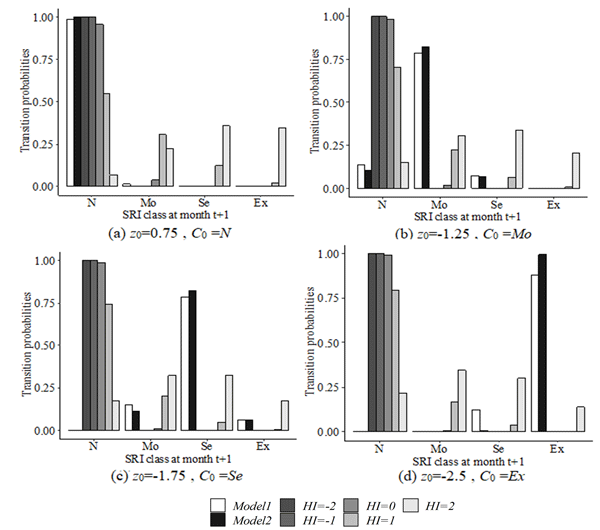
It is an important disaster reduction strategy to forecast hydrological drought. In order to analyse the impact of human activities on hydrological drought, we constructed the human activity factor based on the method of restoration. With the increase of human index (HI) value, hydrological droughts tend to transition to more severe droughts. The conditional distribution model involving of human activity factor can further improve the forecasting accuracy of drought in the Luanhe River basin.
Min Li, Ming Ou, Yuhang Yao, and Changman Yin
Hydrol. Earth Syst. Sci., 30, 3925–3944, https://doi.org/10.5194/hess-30-3925-2026, https://doi.org/10.5194/hess-30-3925-2026, 2026
Short summary
Short summary
This study examines the risk of possible water shortages in the Huaihe River Basin and explores whether dry periods can be predicted more reliably. Using decades of daily environmental records, we built a model that separates complex signals into simpler parts and learns their patterns. It forecasts dry conditions more accurately than earlier methods and performs well across regions and time spans. The findings can help the basin prepare for potential water shortages and support better planning.
Min Li, Yuhang Yao, Ming Ou, and Changman Yin
EGUsphere, https://doi.org/10.5194/egusphere-2026-1033, https://doi.org/10.5194/egusphere-2026-1033, 2026
Short summary
Short summary
We built a hybrid machine learning model that first screened many weather and land metrics, retaining only the most informative metrics, and then learned from decades of monthly records to predict droughts. Through the test of 28 regions in the Huaihe River Basin of China from 2011 to 2020, its accuracy is higher than that of multiple comparison models.
Min Li, Yuhang Yao, Zilong Feng, and Ming Ou
Nat. Hazards Earth Syst. Sci., 25, 4299–4316, https://doi.org/10.5194/nhess-25-4299-2025, https://doi.org/10.5194/nhess-25-4299-2025, 2025
Short summary
Short summary
This study proposes an innovative method for predicting drought in the Huaihe River Basin of China using advanced machine learning and interpretable artificial intelligence techniques. By analyzing more than 50 years of data, the model successfully predicted four drought categories with an accuracy of 79.9 %. It used explanatory methods to analyze the contribution of different drought influencing factors, providing key insights for early warning systems and water resources planning.
Min Li, Mingfeng Zhang, Runxiang Cao, Yidi Sun, and Xiyuan Deng
Nat. Hazards Earth Syst. Sci., 23, 1453–1464, https://doi.org/10.5194/nhess-23-1453-2023, https://doi.org/10.5194/nhess-23-1453-2023, 2023
Short summary
Short summary
It is an important disaster reduction strategy to forecast hydrological drought. In order to analyse the impact of human activities on hydrological drought, we constructed the human activity factor based on the method of restoration. With the increase of human index (HI) value, hydrological droughts tend to transition to more severe droughts. The conditional distribution model involving of human activity factor can further improve the forecasting accuracy of drought in the Luanhe River basin.
Huimin Wang, Gengxi Zhang, Shuyu Zhang, Xiaoling Su, Songbai Song, Lijie Shi, Kai Feng, and Xiaolei Fu
Hydrol. Earth Syst. Sci. Discuss., https://doi.org/10.5194/hess-2022-217, https://doi.org/10.5194/hess-2022-217, 2022
Manuscript not accepted for further review
Short summary
Short summary
A significant increasing trend of compound dry and hot events has been reported in many regions under global warming. However, most of the proposed indices are based on monthly meteorological data and cannot monitor short-term events timely. This study proposes a novel daily-scale compound dry and hot index by jointing daily drought index and heat index. This index can detect spatial evolutions of dry and hot conditions and reflects vegetation losses, indicating its applicability.
Cited articles
Abramowitz, M. and Stegun, I. A.: Handbook of Mathematical Functions [M], American Mathematical Society, 1046, https://doi.org/10.1090/s0025-5718-1983-0717728-4, 1965.
Apurv, T. and Cai, X.: Drought Propagation in Contiguous U. S. Watersheds: A Process-Based Understanding of the Role of Climate and Watershed Properties, Water Resources Research, 56, e2020WR027755, https://doi.org/10.1029/2020WR027755, 2020.
Bhardwaj, K., Shah, D., Aadhar, S., and Mishra, V.: Propagation of Meteorological to Hydrological Droughts in India, Journal of Geophysical Research: Atmospheres, 125, e2020JD033455, https://doi.org/10.1029/2020JD033455, 2020.
Chen, X., Han, R., Feng, P., and Wang, Y.: Combined effects of predicted climate and land use changes on future hydrological droughts in the Luanhe River basin, China, Natural Hazards, 110, 1305–1337, https://doi.org/10.1007/s11069-021-04992-3, 2022.
Cheng, X., Xu, Y., Chen, J., and Liu, Q.: The Impact of Climatic Conditions, Human Activities, and Catchment Characteristics on the Propagation From Meteorological to Agricultural and Hydrological Droughts in China, Journal of Geophysical Research: Atmospheres, 128, e2023JD039735, https://doi.org/10.1029/2023JD039735, 2023.
Das, S., Das, J., and Umamahesh, N. V.: Investigating the propagation of droughts under the influence of large-scale climate indices in India, Journal of Hydrology, 610, 127900, https://doi.org/10.1016/j.jhydrol.2022.127900, 2022.
Dehghani, M., Saghafian, B., and Zargar, M.: Probabilistic hydrological drought index forecasting based on meteorological drought index using Archimedean copulas, Hydrology Research, 50, 1230–1250, https://doi.org/10.2166/nh.2019.051, 2019.
Ding, Y., Xu, J., Wang, X., Cai, H., Zhou, Z., Sun, Y., and Shi, H.: Propagation of meteorological to hydrological drought for different climate regions in China, Journal of Environmental Management, 283, 111980, https://doi.org/10.1016/j.jenvman.2021.111980, 2021.
Gao, G., Li, J., Feng, P., Liu, J., and Wang, Y.: How extreme hydrological events correspond to climate extremes in the context of global warming: A case study in the Luanhe River Basin of North China, International Journal of Climatology, 44, 2391–2405, https://doi.org/10.1002/joc.8459, 2024.
Gao, Y., Niu, Y., Sun, W., Liu, K., Liu, X., Zhao, N., Yue, Y., Wu, H., Meng, F., Wang, J., Wang, X., and Liu, Q.: Climate factors driven typhus group rickettsiosis incidence dynamics in Xishuangbanna Dai autonomous prefecture of Yunnan province in China, 2005–2017, Environmental Health, 19, 3, https://doi.org/10.1186/s12940-019-0558-3, 2020.
Guo, Y., Huang, S., Huang, Q., Leng, G., Fang, W., Wang, L., and Wang, H.: Propagation thresholds of meteorological drought for triggering hydrological drought at various levels, Science of the Total Environment, 712, 136502, https://doi.org/10.1016/j.scitotenv.2020.136502, 2020.
Guo, Y., Huang, Q., Huang, S., Leng, G., Zheng, X., Fang, W., Deng, M., and Song, S.: Elucidating the effects of mega reservoir on watershed drought tolerance based on a drought propagation analytical method, Journal of Hydrology, 598, 125738, https://doi.org/10.1016/j.jhydrol.2020.125738, 2021.
Han, Z., Huang, S., Huang, Q., Leng, G., Wang, H., Bai, Q., Zhao, J., Ma, L., Wang, L., and Du, M.: Propagation dynamics from meteorological to groundwater drought and their possible influence factors, Journal of Hydrology, 578, 124102, https://doi.org/10.1016/j.jhydrol.2019.124102, 2019.
Han, Z., Huang, S., Zhao, J., Leng, G., Huang, Q., Zhang, H., and Li, Z.: Long-chain propagation pathways from meteorological to hydrological, agricultural and groundwater drought and their dynamics in China, Journal of Hydrology, 625, 130131, https://doi.org/10.1016/j.jhydrol.2023.130131, 2023.
Hao, Y., Liu, Q., Li, C., Kharel, G., An, L., Stebler, E., Zhong, Y., and Zou, C. B.: Interactive Effect of Meteorological Drought and Vegetation Types on Root Zone Soil Moisture and Runoff in Rangeland Watersheds, Water, 11, https://doi.org/10.3390/w11112357, 2019.
Huang, S., Chang, J., Leng, G., and Huang, Q.: Integrated index for drought assessment based on variable fuzzy set theory: A case study in the Yellow River basin, China, Journal of Hydrology, 527, 608–618, https://doi.org/10.1016/j.jhydrol.2015.05.032, 2015.
Huang, S., Li, P., Huang, Q., Leng, G., Hou, B., and Ma, L.: The propagation from meteorological to hydrological drought and its potential influence factors, Journal of Hydrology, 547, 184–195, https://doi.org/10.1016/j.jhydrol.2017.01.041, 2017.
Jehanzaib, M., Sattar, M. N., Lee, J.-H., and Kim, T.-W.: Investigating effect of climate change on drought propagation from meteorological to hydrological drought using multi-model ensemble projections, Stochastic Environmental Research and Risk Assessment, 34, 7–21, https://doi.org/10.1007/s00477-019-01760-5, 2020.
Jehanzaib, M., Ali, S., Kim, M. J., and Kim, T.-W.: Modeling hydrological non-stationarity to analyze environmental impacts on drought propagation, Atmospheric Research, 286, 106699, https://doi.org/10.1016/j.atmosres.2023.106699, 2023.
Kolachian, R. and Saghafian, B.: Hydrological drought class early warning using support vector machines and rough sets, Environmental Earth Sciences, 80, 390, https://doi.org/10.1007/s12665-021-09536-3, 2021.
Kumar, S., Kumar, P., Barat, A., Sinha, A. K., Sarthi, P. P., Ranjan, P., and Singh, K. K.: Characteristics of Observed Meteorological Drought and its Linkage with Low-Level Easterly Wind Over India, Pure and Applied Geophysics, 176, 2679–2696, https://doi.org/10.1007/s00024-019-02118-2, 2019.
Le, M. H., Perez, G. C., Solomatine, D., and Nguyen, L. B.: Meteorological Drought Forecasting Based on Climate Signals Using Artificial Neural Network – A Case Study in Khanhhoa Province Vietnam, Procedia Engineering, 154, 1169–1175, https://doi.org/10.1016/j.proeng.2016.07.528, 2016.
Li, J., Tang, L., Yang, J., Qu, L., Meng, F., Jiang, F., Xu, L., and He, S.: Spatial distribution of mine areas in the Luanhe River Basin, China: Clustering implications, Ore and Energy Resource Geology, 17, 100049, https://doi.org/10.1016/j.oreoa.2024.100049, 2024a.
Li, J. Z., Wang, Y. X., Li, S. F., and Hu, R.: A Nonstationary Standardized Precipitation Index incorporating climate indices as covariates, Journal of Geophysical Research: Atmospheres, 120, 12,082-12,095, https://doi.org/10.1002/2015JD023920, 2015.
Li, M., Zhang, T., and Feng, P.: A nonstationary runoff frequency analysis for future climate change and its uncertainties, Hydrological Processes, 33, 2759–2771, https://doi.org/10.1002/hyp.13526, 2019a.
Li, M., Zhang, T., Li, J., and Feng, P.: Hydrological Drought Forecasting Incorporating Climatic and Human-Induced Indices, Weather and Forecasting, 34, 1365–1376, https://doi.org/10.1175/WAF-D-19-0029.1, 2019b.
Li, M., Zhang, T., and Feng, P.: Bivariate frequency analysis of seasonal runoff series under future climate change, Hydrological Sciences Journal, 65, 2439–2452, https://doi.org/10.1080/02626667.2020.1817927, 2020.
Li, M., Feng, Z., Zhang, M., and Yao, Y.: Influence of large-scale climate indices and regional meteorological elements on drought characteristics in the Luanhe River Basin, Atmospheric Research, 300, 107219, https://doi.org/10.1016/j.atmosres.2024.107219, 2024b.
Lilhare, R., Pokorny, S., Déry, S. J., Stadnyk, T. A., and Koenig, K. A.: Sensitivity analysis and uncertainty assessment in water budgets simulated by the variable infiltration capacity model for Canadian subarctic watersheds, Hydrological Processes, 34, 2057–2075, https://doi.org/10.1002/hyp.13711, 2020.
Liu, Q., Yang, Y., Liang, L., Jun, H., Yan, D., Wang, X., Li, C., and Sun, T.: Thresholds for triggering the propagation of meteorological drought to hydrological drought in water-limited regions of China, Science of the Total Environment, 876, 162771, https://doi.org/10.1016/j.scitotenv.2023.162771, 2023.
Liu, Y., Huang, S., Guo, Y., Li, Z., and Huang, Q.: Propagation threshold of meteorological drought to different levels of hydrological drought. A case study of Qinhe River basin, Journal of Hydroelectric Engineering, 41, 9–19, https://doi.org/10.11660/slfdxb.20220202, 2022.
Mahmoudi, P., Rigi, A., and Miri Kamak, M.: Evaluating the sensitivity of precipitation-based drought indices to different lengths of record, Journal of Hydrology, 579, 124181, https://doi.org/10.1016/j.jhydrol.2019.124181, 2019.
Mann, H. B.: Nonparametric tests against trend, Econometrica: Journal of the Econometric Society, 13, 245–259, 1945.
Mao, J. and Yan, B.: Global Monthly Mean Leaf Area Index Climatology, 1981–2015, Version 1, ORNL Distributed Active Archive Center [data set], https://doi.org/10.3334/ORNLDAAC/1653, 2019.
Mckee, T. B., Doesken, N. J., and Kleist, J.: The relationship of drought frequency and duration to time scale, Proceedings of the 8th Conference on Applied Climatology, 17, 179–183, 1993.
Pandey, V., Srivastava, P. K., Mall, R. K., Munoz-Arriola, F., and Han, D.: Multi-satellite precipitation products for meteorological drought assessment and forecasting in Central India, Geocarto International, 37, 1899–1918, https://doi.org/10.1080/10106049.2020.1801862, 2022.
Peña-Gallardo, M., Vicente-Serrano, S. M., Hannaford, J., Lorenzo-Lacruz, J., Svoboda, M., Domínguez-Castro, F., Maneta, M., Tomas-Burguera, M., and Kenawy, A. E.: Complex influences of meteorological drought time-scales on hydrological droughts in natural basins of the contiguous Unites States, Journal of Hydrology, 568, 611–625, https://doi.org/10.1016/j.jhydrol.2018.11.026, 2019.
Rigby, R. A. and Stasinopoulos, D. M.: Generalized Additive Models for Location, Scale and Shape, Journal of the Royal Statistical Society Series C: Applied Statistics, 54, 507–554, https://doi.org/10.1111/j.1467-9876.2005.00510.x, 2005.
Sattar, M. N., Jehanzaib, M., Kim, J. E., Kwon, H.-H., and Kim, T.-W.: Application of the Hidden Markov Bayesian Classifier and Propagation Concept for Probabilistic Assessment of Meteorological and Hydrological Droughts in South Korea, Atmosphere, 11, 1000, https://doi.org/10.3390/atmos11091000, 2020.
Shao, S., Zhang, H., Singh, V. P., Ding, H., Zhang, J., and Wu, Y.: Nonstationary analysis of hydrological drought index in a coupled human-water system: Application of the GAMLSS with meteorological and anthropogenic covariates in the Wuding River basin, China, Journal of Hydrology, 608, 127692, https://doi.org/10.1016/j.jhydrol.2022.127692, 2022.
Shukla, S. and Wood, A. W.: Use of a standardized runoff index for characterizing hydrologic drought, Geophysical Research Letters, 35, https://doi.org/10.1029/2007GL032487, 2008.
Tao, L., Ryu, D., Western, A., and Boyd, D.: A New Drought Index for Soil Moisture Monitoring Based on MPDI-NDVI Trapezoid Space Using MODIS Data, Remote Sensing, 13, 122, https://doi.org/10.3390/rs13010122, 2021.
Vicente-Serrano, S. M., Beguería, S., and López-Moreno, J. I.: A Multiscalar Drought Index Sensitive to Global Warming: The Standardized Precipitation Evapotranspiration Index, Journal of Climate, 23, 1696–1718, https://doi.org/10.1175/2009JCLI2909.1, 2010.
Vorobevskii, I., Kronenberg, R., and Bernhofer, C.: Linking different drought types in a small catchment from a statistical perspective – Case study of the Wernersbach catchment, Germany, Journal of Hydrology X, 15, 100122, https://doi.org/10.1016/j.hydroa.2022.100122, 2022.
Wang, F., Lai, H., Li, Y., Feng, K., Zhang, Z., Tian, Q., Zhu, X., and Yang, H.: Dynamic variation of meteorological drought and its relationships with agricultural drought across China, Agricultural Water Management, 261, 107301, https://doi.org/10.1016/j.agwat.2021.107301, 2022a.
Wang, H., Zhu, Y., Qin, T., and Zhang, X.: Study on the propagation probability characteristics and prediction model of meteorological drought to hydrological drought in basin based on copula function, Frontiers in Earth Science, 10, 961871, https://doi.org/10.3389/feart.2022.961871, 2022b.
Wang, Y., Li, J., Feng, P., and Chen, F.: Effects of large-scale climate patterns and human activities on hydrological drought: a case study in the Luanhe River basin, China, Natural Hazards, 76, 1687–1710, https://doi.org/10.1007/s11069-014-1564-y, 2015a.
Wang, Y., Li, J., Feng, P., and Hu, R.: A Time-Dependent Drought Index for Non-Stationary Precipitation Series, Water Resources Management, 29, 5631–5647, https://doi.org/10.1007/s11269-015-1138-0, 2015b.
Wang, Y., Li, J., Feng, P., and Hu, R.: Analysis of drought characteristics over Luanhe River basin using the joint deficit index, Journal of Water and Climate Change, 7, 340–352, https://doi.org/10.2166/wcc.2015.108, 2016.
Wang, Y., Zhang, T., Chen, X., Li, J., and Feng, P.: Spatial and temporal characteristics of droughts in Luanhe River basin, China, Theoretical and Applied Climatology, 131, 1369–1385, https://doi.org/10.1007/s00704-017-2059-z, 2018.
Wang, Y., Duan, L., Liu, T., Li, J., and Feng, P.: A Non-stationary Standardized Streamflow Index for hydrological drought using climate and human-induced indices as covariates, Science of the Total Environment, 699, 134278, https://doi.org/10.1016/j.scitotenv.2019.134278, 2020.
Wang, Y., Peng, T., He, Y., Singh, V. P., Lin, Q., Dong, X., Fan, T., Liu, J., Guo, J., and Wang, G.: Attribution analysis of non-stationary hydrological drought using the GAMLSS framework and an improved SWAT model, Journal of Hydrology, 627, 130420, https://doi.org/10.1016/j.jhydrol.2023.130420, 2023.
Wossenyeleh, B. K., Worku, K. A., Verbeiren, B., and Huysmans, M.: Drought propagation and its impact on groundwater hydrology of wetlands: a case study on the Doode Bemde nature reserve (Belgium), Nat. Hazards Earth Syst. Sci., 21, 39–51, https://doi.org/10.5194/nhess-21-39-2021, 2021.
Wu, G., Chen, J., Shi, X., Kim, J.-S., Xia, J., and Zhang, L.: Impacts of Global Climate Warming on Meteorological and Hydrological Droughts and Their Propagations, Earths Future, 10, e2021EF002542, https://doi.org/10.1029/2021EF002542, 2022a.
Wu, J., Yao, H., Chen, X., Wang, G., Bai, X., and Zhang, D.: A framework for assessing compound drought events from a drought propagation perspective, Journal of Hydrology, 604, 127228, https://doi.org/10.1016/j.jhydrol.2021.127228, 2022b.
Xu, L., Chen, N., Yang, C., Zhang, C., and Yu, H.: A parametric multivariate drought index for drought monitoring and assessment under climate change, Agricultural and Forest Meteorology, 310, 108657, https://doi.org/10.1016/j.agrformet.2021.108657, 2021.
Yang, H., Ma, F., Yuan, X., Ji, P., and Li, C.: Vegetation greening accelerated the propagation from meteorological to soil droughts in the Loess Plateau from a three-dimensional perspective, Journal of Hydrology, 650, 132522, https://doi.org/10.1016/j.jhydrol.2024.132522, 2025.
Yao, Y., Fu, B., Liu, Y., Li, Y., Wang, S., Zhan, T., Wang, Y., and Gao, D.: Evaluation of ecosystem resilience to drought based on drought intensity and recovery time, Agricultural and Forest Meteorology, 314, 108809, https://doi.org/10.1016/j.agrformet.2022.108809, 2022.
Yeh, H.-F. and Hsu, H.-L.: Using the Markov Chain to Analyze Precipitation and Groundwater Drought Characteristics and Linkage with Atmospheric Circulation, Sustainability, 11, https://doi.org/10.3390/su11061817, 2019.
Zhang, Q., Miao, C., Gou, J., Wu, J., Jiao, W., Song, Y., and Xu, D.: Spatiotemporal characteristics of meteorological to hydrological drought propagation under natural conditions in China, Weather and Climate Extremes, 38, 100505, https://doi.org/10.1016/j.wace.2022.100505, 2022a.
Zhang, T., Su, X., Zhang, G., Wu, H., Wang, G., and Chu, J.: Evaluation of the impacts of human activities on propagation from meteorological drought to hydrological drought in the Weihe River Basin, China, Science of the Total Environment, 819, 153030, https://doi.org/10.1016/j.scitotenv.2022.153030, 2022b.
Zhang, T., Su, X., Wu, L., and Chu, J.: Identification of dynamic drought propagation from a nonstationary perspective and its application to drought warnings, Journal of Hydrology, 626, 130372, https://doi.org/10.1016/j.jhydrol.2023.130372, 2023.
Zhang, X., Hao, Z., Singh, V. P., Zhang, Y., Feng, S., Xu, Y., and Hao, F.: Drought propagation under global warming: Characteristics, approaches, processes, and controlling factors, Science of the Total Environment, 838, 156021, https://doi.org/10.1016/j.scitotenv.2022.156021, 2022c.
Zhang, Y., Hao, Z., Feng, S., Zhang, X., Xu, Y., and Hao, F.: Agricultural drought prediction in China based on drought propagation and large-scale drivers, Agricultural Water Management, 255, 107028, https://doi.org/10.1016/j.agwat.2021.107028, 2021.
Zhao, Q., Zhang, X., Li, C., Xu, Y., Fei, J., Hao, F., and Song, R.: Diverse vegetation response to meteorological drought from propagation perspective using event matching method, Journal of Hydrology, 653, 132776, https://doi.org/10.1016/j.jhydrol.2025.132776, 2025.
Zhong, F., Cheng, Q., and Wang, P.: Meteorological Drought, Hydrological Drought, and NDVI in the Heihe River Basin, Northwest China: Evolution and Propagation, Advances in Meteorology, 2020, 2409068, https://doi.org/10.1155/2020/2409068, 2020.
Zhou, J., Li, Q., Wang, L., Lei, L., Huang, M., Xiang, J., Feng, W., Zhao, Y., Xue, D., Liu, C., Wei, W., and Zhu, G.: Impact of Climate Change and Land-Use on the Propagation from Meteorological Drought to Hydrological Drought in the Eastern Qilian Mountains, Water, 11, 1602, https://doi.org/10.3390/w11081602, 2019.
Zhou, Z., Shi, H., Fu, Q., Ding, Y., Li, T., and Liu, S.: Investigating the Propagation From Meteorological to Hydrological Drought by Introducing the Nonlinear Dependence With Directed Information Transfer Index, Water Resources Research, 57, e2021WR030028, https://doi.org/10.1029/2021WR030028, 2021.
Short summary
This study aims to analyze the impact of climate change and watershed characteristics on the spread of drought. Based on the GAMLSS (Generalized Additive Model for Location, Scale, and Shape) framework and Copula model, the probability and threshold of drought spread in different seasons were calculated without being affected by climate factors. The results show that: the spatiotemporal variability of drought spread is influenced by climate change and watershed characteristics
This study aims to analyze the impact of climate change and watershed characteristics on the...


Altmetrics
Final-revised paper
Preprint