
Articles | Volume 25, issue 12
https://doi.org/10.5194/nhess-25-5055-2025
© Author(s) 2025. This work is distributed under
the Creative Commons Attribution 4.0 License.
the Creative Commons Attribution 4.0 License.
https://doi.org/10.5194/nhess-25-5055-2025
© Author(s) 2025. This work is distributed under
the Creative Commons Attribution 4.0 License.
the Creative Commons Attribution 4.0 License.
Brief communication
| 
22 Dec 2025
Brief communication |
| 22 Dec 2025
| 22 Dec 2025
Brief communication: Threshold and probability. The conceptual difference between ID thresholds for landslide initiation and IDF curves

Department of Geosciences, University of Padova, Padova, Italy
Eleonora Dallan
Department of Land Environment Agriculture and Forestry, University of Padova, Legnaro, Italy
Marco Borga
Department of Land Environment Agriculture and Forestry, University of Padova, Legnaro, Italy
Roberto Greco
Dipartimento di Ingegneria, Università degli Studi della Campania Luigi Vanvitelli, Aversa, Italy
Thom Bogaard
Department Water Management, Faculty of Civil Engineering and Geosciences, Delft University of Technology, Delft, the Netherlands
Related authors
Nathalia Correa-Sánchez, Xiaoli Guo Larsén, Eleonora Dallan, Marco Borga, and Francesco Marra
Wind Energ. Sci., 11, 2961–2985, https://doi.org/10.5194/wes-11-2961-2026, https://doi.org/10.5194/wes-11-2961-2026, 2026
Short summary
Short summary
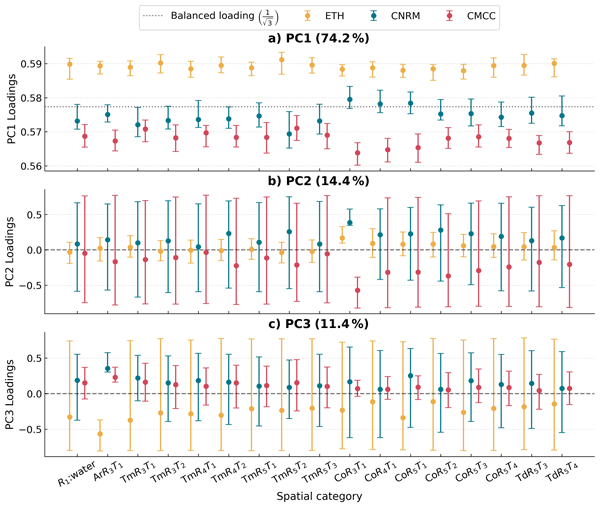
This research presents the first use of the simplified metastatistical extreme value approach for wind extremes, extending it to wind energy applications. We use a categorical framework that combines climate, roughness, and topography to evaluate convection-permitted models. We find that model formulation drives inter-model uncertainties, rather than surface conditions. Convection-permitted models' uncertainty analysis improves the reliability of extreme wind estimates for design parameters.

Ella Thomas, Petr Vohnicky, Marco Borga, Nadav Peleg, and Francesco Marra
Hydrol. Earth Syst. Sci., 30, 4957–4967, https://doi.org/10.5194/hess-30-4957-2026, https://doi.org/10.5194/hess-30-4957-2026, 2026
Short summary
Short summary
Extreme rainfall is expected to grow in magnitude with increasing temperature. We assess whether very rare extremes increase with temperature faster than moderate extremes, and we test methods to include this effect into a model to predict future extremes called TENAX. We find that this dependence on temperature is typically observed but including it in the model without prior information on its magnitude may lead to disproportionately large uncertainty.
Rashid Akbary, Eleonora Dallan, Paul C. Astagneau, Raul R. Wood, Francesco Marra, Manuela I. Brunner, and Marco Borga
Hydrol. Earth Syst. Sci., 30, 4117–4139, https://doi.org/10.5194/hess-30-4117-2026, https://doi.org/10.5194/hess-30-4117-2026, 2026
Short summary
Short summary
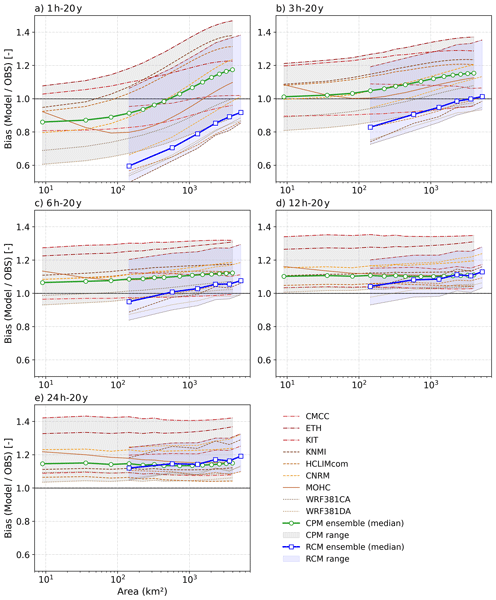
Heavy short rain can trigger flash floods and debris flows. In this study we evaluated how well climate models reproduce these events in Switzerland. We compared finer and coarser resolution models with high-quality hourly precipitation observations across small to large areas. The finer models better captured where short, intense precipitation occurs, but their errors changed with area size. Flood risk studies should therefore account for these scale-related errors.
Talia Rosin, Francesco Marra, Marco Gabella, Urs Germann, Daniel Wolfensberger, and Efrat Morin
EGUsphere, https://doi.org/10.5194/egusphere-2026-1800, https://doi.org/10.5194/egusphere-2026-1800, 2026
Short summary
Short summary
Extreme rainfall in mountainous regions is difficult to assess as it varies strongly across space and time, and rain gauges are often too sparse to capture it. Using 9 years of radar data, we analyse summer rainfall extremes across Switzerland for different durations and areas. We show that rainfall intensity depends strongly on scale and topography, and that radar better captures local extremes, improving flood hazard assessment, as demonstrated for three recent major flood-producing storms.
Nathalia Correa-Sánchez, Xiaoli Guo Larsén, Giorgia Fosser, Eleonora Dallan, Marco Borga, and Francesco Marra
Wind Energ. Sci., 10, 2551–2561, https://doi.org/10.5194/wes-10-2551-2025, https://doi.org/10.5194/wes-10-2551-2025, 2025
Short summary
Short summary
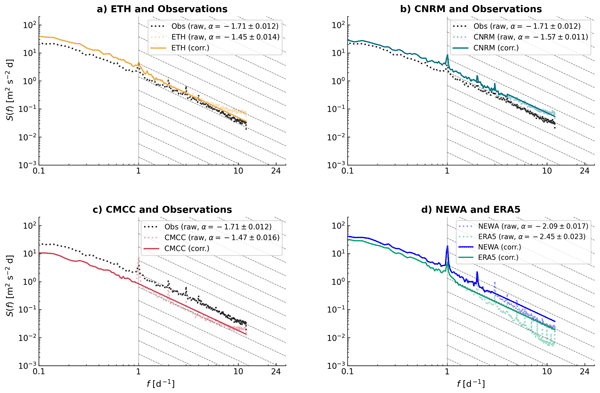
We examined the power spectra of wind speed in three convection-permitting models in central Europe and found that these models have a better representation of wind variability characteristics than standard wind datasets like the New European Wind Atlas, due to different simulation approaches, providing more reliable extreme wind predictions.
Rajani Kumar Pradhan, Yannis Markonis, Francesco Marra, Efthymios I. Nikolopoulos, Simon Michael Papalexiou, and Vincenzo Levizzani
Hydrol. Earth Syst. Sci., 29, 4929–4949, https://doi.org/10.5194/hess-29-4929-2025, https://doi.org/10.5194/hess-29-4929-2025, 2025
Short summary
Short summary
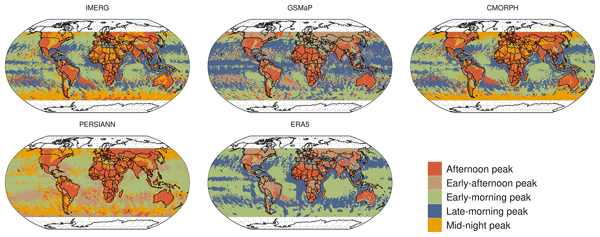
This study compared global satellite and reanalysis precipitation datasets to assess diurnal variability. We found that all datasets capture key diurnal precipitation patterns, with maximum precipitation in the afternoon over land and early morning over the ocean. However, there are differences in the exact timing and amount of precipitation. This suggests that it is better to use a combination of datasets for potential applications rather than relying on a single dataset.
Francesco Marra, Nadav Peleg, Elena Cristiano, Efthymios I. Nikolopoulos, Federica Remondi, and Paolo Tarolli
Nat. Hazards Earth Syst. Sci., 25, 2565–2570, https://doi.org/10.5194/nhess-25-2565-2025, https://doi.org/10.5194/nhess-25-2565-2025, 2025
Short summary
Short summary
Climate change is escalating the risks related to hydro-meteorological extremes. This preface introduces a special issue originating from a European Geosciences Union (EGU) session. It highlights the challenges posed by these extremes, ranging from hazard assessment to mitigation strategies, and covers both water excess events like floods, landslides, and coastal hazards and water deficit events such as droughts and fire weather. The collection aims to advance understanding, improve resilience, and inform policy-making.
Kevin Kenfack, Francesco Marra, Zéphirin Yepdo Djomou, Lucie Angennes Djiotang Tchotchou, Alain Tchio Tamoffo, and Derbetini Appolinaire Vondou
Weather Clim. Dynam., 5, 1457–1472, https://doi.org/10.5194/wcd-5-1457-2024, https://doi.org/10.5194/wcd-5-1457-2024, 2024
Short summary
Short summary
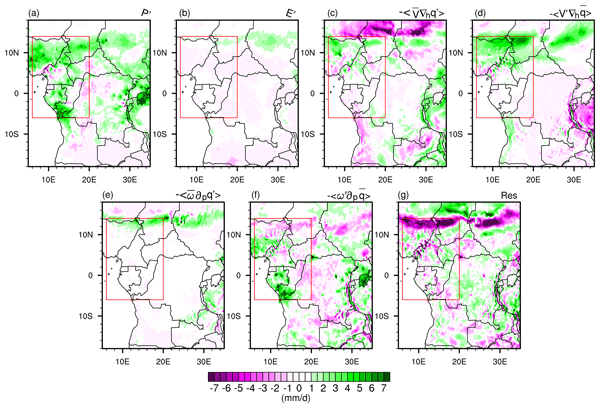
The results of this study show that moisture advection induced by horizontal wind anomalies and vertical moisture advection induced by vertical velocity anomalies were crucial mechanisms behind the anomalous October 2019 exceptional rainfall increase over western central Africa. The information we derive can be used to support risk assessment and management in the region and to improve our resilience to ongoing climate change.
Talia Rosin, Francesco Marra, and Efrat Morin
Hydrol. Earth Syst. Sci., 28, 3549–3566, https://doi.org/10.5194/hess-28-3549-2024, https://doi.org/10.5194/hess-28-3549-2024, 2024
Short summary
Short summary
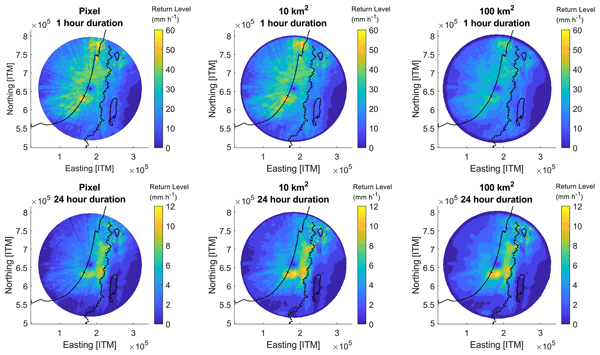
Knowledge of extreme precipitation probability at various spatial–temporal scales is crucial. We estimate extreme precipitation return levels at multiple scales (10 min–24 h, 0.25–500 km2) in the eastern Mediterranean using radar data. We show our estimates are comparable to those derived from averaged daily rain gauges. We then explore multi-scale extreme precipitation across coastal, mountainous, and desert regions.
Francesco Marra, Marika Koukoula, Antonio Canale, and Nadav Peleg
Hydrol. Earth Syst. Sci., 28, 375–389, https://doi.org/10.5194/hess-28-375-2024, https://doi.org/10.5194/hess-28-375-2024, 2024
Short summary
Short summary
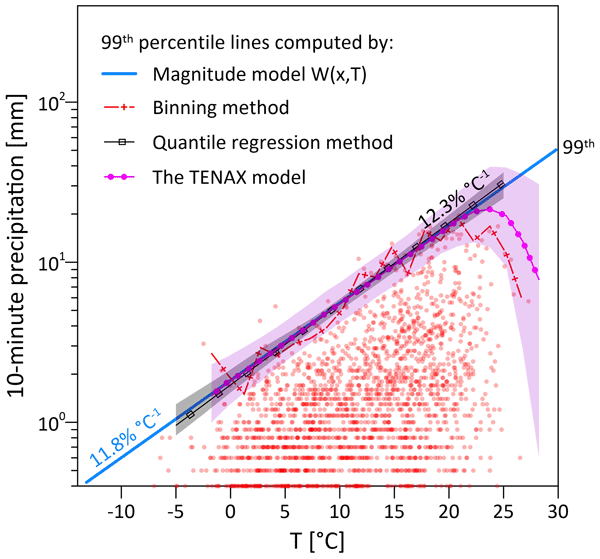
We present a new physical-based method for estimating extreme sub-hourly precipitation return levels (i.e., intensity–duration–frequency, IDF, curves), which are critical for the estimation of future floods. The proposed model, named TENAX, incorporates temperature as a covariate in a physically consistent manner. It has only a few parameters and can be easily set for any climate station given sub-hourly precipitation and temperature data are available.
Stefan Steger, Mateo Moreno, Alice Crespi, Peter James Zellner, Stefano Luigi Gariano, Maria Teresa Brunetti, Massimo Melillo, Silvia Peruccacci, Francesco Marra, Robin Kohrs, Jason Goetz, Volkmar Mair, and Massimiliano Pittore
Nat. Hazards Earth Syst. Sci., 23, 1483–1506, https://doi.org/10.5194/nhess-23-1483-2023, https://doi.org/10.5194/nhess-23-1483-2023, 2023
Short summary
Short summary
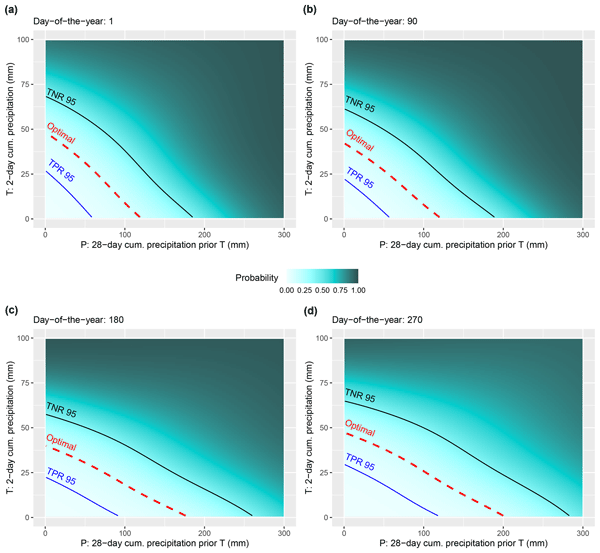
We present a novel data-driven modelling approach to determine season-specific critical precipitation conditions for landslide occurrence. It is shown that the amount of precipitation required to trigger a landslide in South Tyrol varies from season to season. In summer, a higher amount of preparatory precipitation is required to trigger a landslide, probably due to denser vegetation and higher temperatures. We derive dynamic thresholds that directly relate to hit rates and false-alarm rates.

Nadav Peleg, Herminia Torelló-Sentelles, Grégoire Mariéthoz, Lionel Benoit, João P. Leitão, and Francesco Marra
Nat. Hazards Earth Syst. Sci., 23, 1233–1240, https://doi.org/10.5194/nhess-23-1233-2023, https://doi.org/10.5194/nhess-23-1233-2023, 2023
Short summary
Short summary
Floods in urban areas are one of the most common natural hazards. Due to climate change enhancing extreme rainfall and cities becoming larger and denser, the impacts of these events are expected to increase. A fast and reliable flood warning system should thus be implemented in flood-prone cities to warn the public of upcoming floods. The purpose of this brief communication is to discuss the potential implementation of low-cost acoustic rainfall sensors in short-term flood warning systems.
Eleonora Dallan, Francesco Marra, Giorgia Fosser, Marco Marani, Giuseppe Formetta, Christoph Schär, and Marco Borga
Hydrol. Earth Syst. Sci., 27, 1133–1149, https://doi.org/10.5194/hess-27-1133-2023, https://doi.org/10.5194/hess-27-1133-2023, 2023
Short summary
Short summary
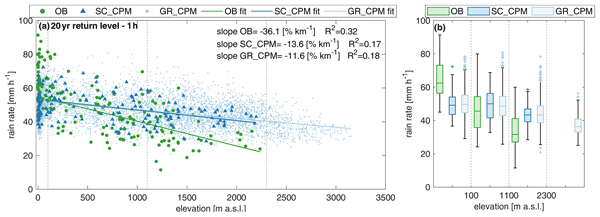
Convection-permitting climate models could represent future changes in extreme short-duration precipitation, which is critical for risk management. We use a non-asymptotic statistical method to estimate extremes from 10 years of simulations in an orographically complex area. Despite overall good agreement with rain gauges, the observed decrease of hourly extremes with elevation is not fully represented by the model. Climate model adjustment methods should consider the role of orography.
Shalev Siman-Tov and Francesco Marra
Nat. Hazards Earth Syst. Sci., 23, 1079–1093, https://doi.org/10.5194/nhess-23-1079-2023, https://doi.org/10.5194/nhess-23-1079-2023, 2023
Short summary
Short summary
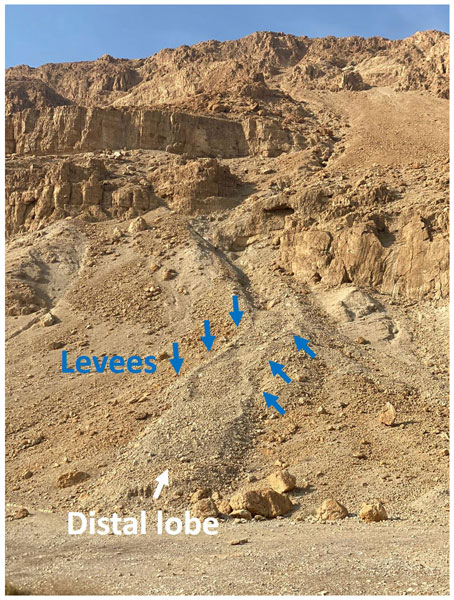
Debris flows represent a threat to infrastructure and the population. In arid areas, they are observed when heavy rainfall hits steep slopes with sediments. Here, we use digital surface models and radar rainfall data to detect and characterize the triggering and non-triggering rainfall conditions. We find that rainfall intensity alone is insufficient to explain the triggering. We suggest that antecedent rainfall could represent a critical factor for debris flow triggering in arid regions.
Assaf Hochman, Francesco Marra, Gabriele Messori, Joaquim G. Pinto, Shira Raveh-Rubin, Yizhak Yosef, and Georgios Zittis
Earth Syst. Dynam., 13, 749–777, https://doi.org/10.5194/esd-13-749-2022, https://doi.org/10.5194/esd-13-749-2022, 2022
Short summary
Short summary
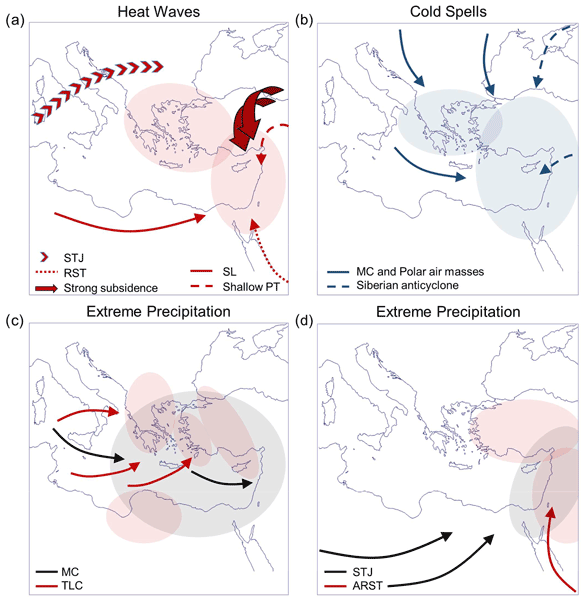
Gaining a complete understanding of extreme weather, from its physical drivers to its impacts on society, is important in supporting future risk reduction and adaptation measures. Here, we provide a review of the available scientific literature, knowledge gaps and key open questions in the study of extreme weather events over the vulnerable eastern Mediterranean region.
Francesco Marra, Moshe Armon, and Efrat Morin
Hydrol. Earth Syst. Sci., 26, 1439–1458, https://doi.org/10.5194/hess-26-1439-2022, https://doi.org/10.5194/hess-26-1439-2022, 2022
Short summary
Short summary
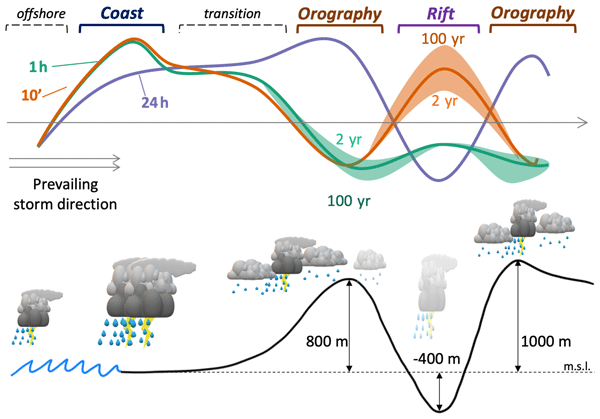
We present a new method for quantifying the probability of occurrence of extreme rainfall using radar data, and we use it to examine coastal and orographic effects on extremes. We identify three regimes, directly related to precipitation physical processes, which respond differently to these forcings. The methods and results are of interest for researchers and practitioners using radar for the analysis of extremes, risk managers, water resources managers, and climate change impact studies.
Yoav Ben Dor, Francesco Marra, Moshe Armon, Yehouda Enzel, Achim Brauer, Markus Julius Schwab, and Efrat Morin
Clim. Past, 17, 2653–2677, https://doi.org/10.5194/cp-17-2653-2021, https://doi.org/10.5194/cp-17-2653-2021, 2021
Short summary
Short summary
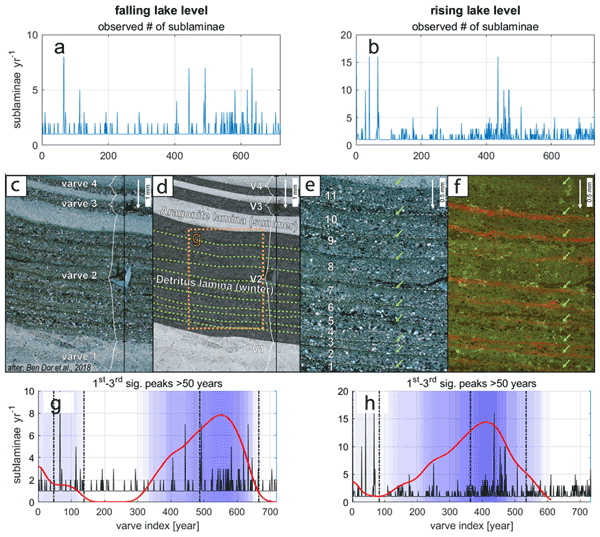
Laminated sediments from the deepest part of the Dead Sea unravel the hydrological response of the eastern Mediterranean to past climate changes. This study demonstrates the importance of geological archives in complementing modern hydrological measurements that do not fully capture natural hydroclimatic variability, which is crucial to configure for understanding the impact of climate change on the hydrological cycle in subtropical regions.
Nathalia Correa-Sánchez, Xiaoli Guo Larsén, Eleonora Dallan, Marco Borga, and Francesco Marra
Wind Energ. Sci., 11, 2961–2985, https://doi.org/10.5194/wes-11-2961-2026, https://doi.org/10.5194/wes-11-2961-2026, 2026
Short summary
Short summary
This research presents the first use of the simplified metastatistical extreme value approach for wind extremes, extending it to wind energy applications. We use a categorical framework that combines climate, roughness, and topography to evaluate convection-permitted models. We find that model formulation drives inter-model uncertainties, rather than surface conditions. Convection-permitted models' uncertainty analysis improves the reliability of extreme wind estimates for design parameters.
Daniel Camilo Roman Quintero, Ruud van der Ent, Thom Bogaard, and Roberto Greco
Nat. Hazards Earth Syst. Sci., 26, 3723–3739, https://doi.org/10.5194/nhess-26-3723-2026, https://doi.org/10.5194/nhess-26-3723-2026, 2026
Short summary
Short summary
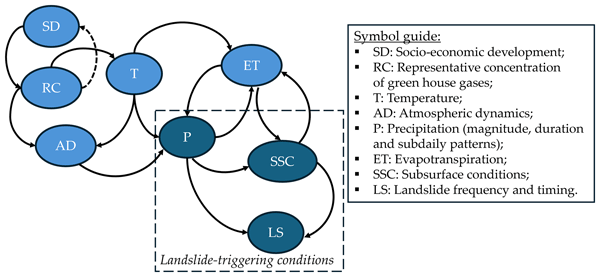
We present a framework linking projected rainfall with hydro-mechanical processes to assess landslide occurrences in a Mediterranean area, under RCP4.5 and RCP8.5. Despite generally drier soils, landslide frequency rises because shifts in the timing and intensity of rainfall, altering antecedent soil moisture during triggering events. This counterintuitive result highlights the importance of rainfall patterns in slope stability and informs climate-risk assessment and adaptation planning.
Ella Thomas, Petr Vohnicky, Marco Borga, Nadav Peleg, and Francesco Marra
Hydrol. Earth Syst. Sci., 30, 4957–4967, https://doi.org/10.5194/hess-30-4957-2026, https://doi.org/10.5194/hess-30-4957-2026, 2026
Short summary
Short summary
Extreme rainfall is expected to grow in magnitude with increasing temperature. We assess whether very rare extremes increase with temperature faster than moderate extremes, and we test methods to include this effect into a model to predict future extremes called TENAX. We find that this dependence on temperature is typically observed but including it in the model without prior information on its magnitude may lead to disproportionately large uncertainty.
Rashid Akbary, Eleonora Dallan, Paul C. Astagneau, Raul R. Wood, Francesco Marra, Manuela I. Brunner, and Marco Borga
Hydrol. Earth Syst. Sci., 30, 4117–4139, https://doi.org/10.5194/hess-30-4117-2026, https://doi.org/10.5194/hess-30-4117-2026, 2026
Short summary
Short summary
Heavy short rain can trigger flash floods and debris flows. In this study we evaluated how well climate models reproduce these events in Switzerland. We compared finer and coarser resolution models with high-quality hourly precipitation observations across small to large areas. The finer models better captured where short, intense precipitation occurs, but their errors changed with area size. Flood risk studies should therefore account for these scale-related errors.
Talia Rosin, Francesco Marra, Marco Gabella, Urs Germann, Daniel Wolfensberger, and Efrat Morin
EGUsphere, https://doi.org/10.5194/egusphere-2026-1800, https://doi.org/10.5194/egusphere-2026-1800, 2026
Short summary
Short summary
Extreme rainfall in mountainous regions is difficult to assess as it varies strongly across space and time, and rain gauges are often too sparse to capture it. Using 9 years of radar data, we analyse summer rainfall extremes across Switzerland for different durations and areas. We show that rainfall intensity depends strongly on scale and topography, and that radar better captures local extremes, improving flood hazard assessment, as demonstrated for three recent major flood-producing storms.
Susen Shrestha, Stefano Terzi, Davide Zoccatelli, Mattia Zaramella, Marco Borga, Andrea Galletti, Mattia Callegari, Roberto Dinale, Massimiliano Pittore, and Giacomo Bertoldi
EGUsphere, https://doi.org/10.5194/egusphere-2025-6387, https://doi.org/10.5194/egusphere-2025-6387, 2026
Short summary
Short summary
Glaciers and snow contribute to buffer river streamflow during droughts. Due to climate change, their role is shrinking with severe implications for water management. Here we investigated the role of glaciers to buffer the 2003, 2005 and 2022 droughts that occurred in the upper Adige River Basin (Italy). Glaciers provided 4 to 12 % of summer water during droughts and their buffering is weakening due to their retreat with lower contribution in 2022 compared to the similar drought of 2003.
Nathalia Correa-Sánchez, Xiaoli Guo Larsén, Giorgia Fosser, Eleonora Dallan, Marco Borga, and Francesco Marra
Wind Energ. Sci., 10, 2551–2561, https://doi.org/10.5194/wes-10-2551-2025, https://doi.org/10.5194/wes-10-2551-2025, 2025
Short summary
Short summary
We examined the power spectra of wind speed in three convection-permitting models in central Europe and found that these models have a better representation of wind variability characteristics than standard wind datasets like the New European Wind Atlas, due to different simulation approaches, providing more reliable extreme wind predictions.
Rajani Kumar Pradhan, Yannis Markonis, Francesco Marra, Efthymios I. Nikolopoulos, Simon Michael Papalexiou, and Vincenzo Levizzani
Hydrol. Earth Syst. Sci., 29, 4929–4949, https://doi.org/10.5194/hess-29-4929-2025, https://doi.org/10.5194/hess-29-4929-2025, 2025
Short summary
Short summary
This study compared global satellite and reanalysis precipitation datasets to assess diurnal variability. We found that all datasets capture key diurnal precipitation patterns, with maximum precipitation in the afternoon over land and early morning over the ocean. However, there are differences in the exact timing and amount of precipitation. This suggests that it is better to use a combination of datasets for potential applications rather than relying on a single dataset.
Daniel Camilo Roman Quintero, Pasquale Marino, Abdullah Abdullah, Giovanni Francesco Santonastaso, and Roberto Greco
Nat. Hazards Earth Syst. Sci., 25, 2679–2698, https://doi.org/10.5194/nhess-25-2679-2025, https://doi.org/10.5194/nhess-25-2679-2025, 2025
Short summary
Short summary
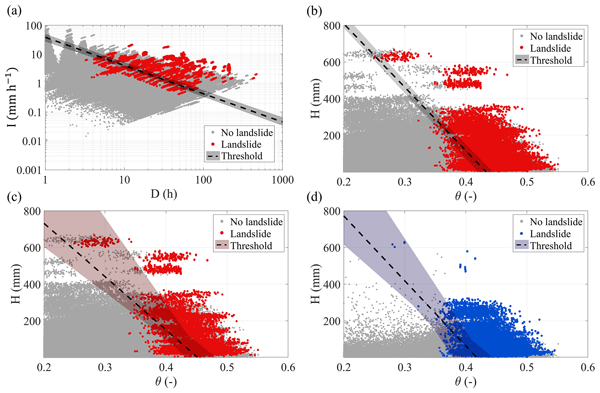
Local thresholds for landslide forecasting, combining hydrologic predisposing factors and rainfall features, are developed from a physically based model of a slope. To extend their application to a wide area, uncertainty due to the spatial variability of geomorphological and hydrologic variables is introduced. The obtained hydrometeorological thresholds, integrating root-zone soil moisture and aquifer water level with rainfall depth, outperform thresholds based on rain intensity and duration.
Francesco Marra, Nadav Peleg, Elena Cristiano, Efthymios I. Nikolopoulos, Federica Remondi, and Paolo Tarolli
Nat. Hazards Earth Syst. Sci., 25, 2565–2570, https://doi.org/10.5194/nhess-25-2565-2025, https://doi.org/10.5194/nhess-25-2565-2025, 2025
Short summary
Short summary
Climate change is escalating the risks related to hydro-meteorological extremes. This preface introduces a special issue originating from a European Geosciences Union (EGU) session. It highlights the challenges posed by these extremes, ranging from hazard assessment to mitigation strategies, and covers both water excess events like floods, landslides, and coastal hazards and water deficit events such as droughts and fire weather. The collection aims to advance understanding, improve resilience, and inform policy-making.
Kshitiz Gautam, Astrid Blom, Mathieu Roebroeck, Marijn Wolf, and Thom Bogaard
EGUsphere, https://doi.org/10.5194/egusphere-2025-2926, https://doi.org/10.5194/egusphere-2025-2926, 2025
Short summary
Short summary
The Karnali River in Himalayan Terai of Nepal has shifted from double to single branch since 2009. Likely triggered by a double-peaked monsoon and coarse sediment deposition, this shift has gradually reduced flow into the eastern Geruwa branch. While the Koshi River in Terai is largely shaped by human activity, the Karnali’s shift appears driven by natural, monsoon-driven, sediment dynamics, affecting water distribution and habitats in Bardiya National Park, home to the Bengal tiger.
Benjamin B. Mirus, Thom Bogaard, Roberto Greco, and Manfred Stähli
Nat. Hazards Earth Syst. Sci., 25, 169–182, https://doi.org/10.5194/nhess-25-169-2025, https://doi.org/10.5194/nhess-25-169-2025, 2025
Short summary
Short summary
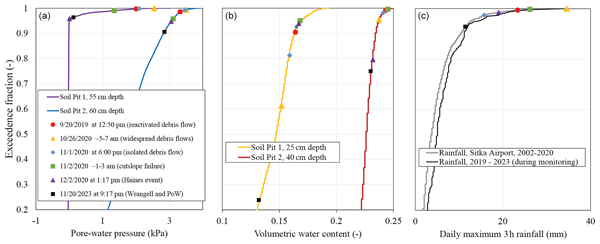
Early warning of increased landslide potential provides situational awareness to reduce landslide-related losses from major storm events. For decades, landslide forecasts relied on rainfall data alone, but recent research points to the value of hydrologic information for improving predictions. In this paper, we provide our perspectives on the value and limitations of integrating subsurface hillslope hydrologic monitoring data and mathematical modeling for more accurate landslide forecasts.
Kevin Kenfack, Francesco Marra, Zéphirin Yepdo Djomou, Lucie Angennes Djiotang Tchotchou, Alain Tchio Tamoffo, and Derbetini Appolinaire Vondou
Weather Clim. Dynam., 5, 1457–1472, https://doi.org/10.5194/wcd-5-1457-2024, https://doi.org/10.5194/wcd-5-1457-2024, 2024
Short summary
Short summary
The results of this study show that moisture advection induced by horizontal wind anomalies and vertical moisture advection induced by vertical velocity anomalies were crucial mechanisms behind the anomalous October 2019 exceptional rainfall increase over western central Africa. The information we derive can be used to support risk assessment and management in the region and to improve our resilience to ongoing climate change.
Talia Rosin, Francesco Marra, and Efrat Morin
Hydrol. Earth Syst. Sci., 28, 3549–3566, https://doi.org/10.5194/hess-28-3549-2024, https://doi.org/10.5194/hess-28-3549-2024, 2024
Short summary
Short summary
Knowledge of extreme precipitation probability at various spatial–temporal scales is crucial. We estimate extreme precipitation return levels at multiple scales (10 min–24 h, 0.25–500 km2) in the eastern Mediterranean using radar data. We show our estimates are comparable to those derived from averaged daily rain gauges. We then explore multi-scale extreme precipitation across coastal, mountainous, and desert regions.
Francesco Marra, Marika Koukoula, Antonio Canale, and Nadav Peleg
Hydrol. Earth Syst. Sci., 28, 375–389, https://doi.org/10.5194/hess-28-375-2024, https://doi.org/10.5194/hess-28-375-2024, 2024
Short summary
Short summary
We present a new physical-based method for estimating extreme sub-hourly precipitation return levels (i.e., intensity–duration–frequency, IDF, curves), which are critical for the estimation of future floods. The proposed model, named TENAX, incorporates temperature as a covariate in a physically consistent manner. It has only a few parameters and can be easily set for any climate station given sub-hourly precipitation and temperature data are available.
Adriaan L. van Natijne, Thom A. Bogaard, Thomas Zieher, Jan Pfeiffer, and Roderik C. Lindenbergh
Nat. Hazards Earth Syst. Sci., 23, 3723–3745, https://doi.org/10.5194/nhess-23-3723-2023, https://doi.org/10.5194/nhess-23-3723-2023, 2023
Short summary
Short summary
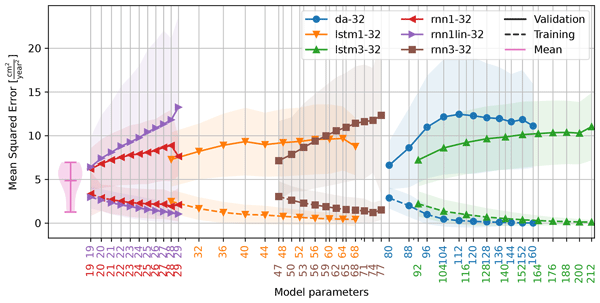
Landslides are one of the major weather-related geohazards. To assess their potential impact and design mitigation solutions, a detailed understanding of the slope is required. We tested if the use of machine learning, combined with satellite remote sensing data, would allow us to forecast deformation. Our results on the Vögelsberg landslide, a deep-seated landslide near Innsbruck, Austria, show that the formulation of such a machine learning system is not as straightforward as often hoped for.
Daniel Camilo Roman Quintero, Pasquale Marino, Giovanni Francesco Santonastaso, and Roberto Greco
Hydrol. Earth Syst. Sci., 27, 4151–4172, https://doi.org/10.5194/hess-27-4151-2023, https://doi.org/10.5194/hess-27-4151-2023, 2023
Short summary
Short summary
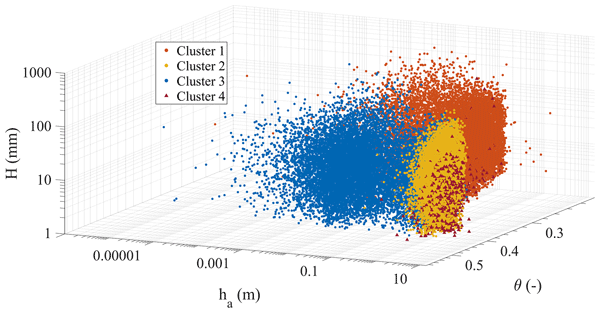
This study shows a methodological approach using machine learning techniques to disentangle the relationships among the variables in a synthetic dataset to identify suitable variables that control the hydrologic response of the slopes. It has been found that not only is the rainfall responsible for the water accumulation in the slope; the ground conditions (soil water content and aquifer water level) also indicate the activation of natural slope drainage mechanisms.
Stefan Steger, Mateo Moreno, Alice Crespi, Peter James Zellner, Stefano Luigi Gariano, Maria Teresa Brunetti, Massimo Melillo, Silvia Peruccacci, Francesco Marra, Robin Kohrs, Jason Goetz, Volkmar Mair, and Massimiliano Pittore
Nat. Hazards Earth Syst. Sci., 23, 1483–1506, https://doi.org/10.5194/nhess-23-1483-2023, https://doi.org/10.5194/nhess-23-1483-2023, 2023
Short summary
Short summary
We present a novel data-driven modelling approach to determine season-specific critical precipitation conditions for landslide occurrence. It is shown that the amount of precipitation required to trigger a landslide in South Tyrol varies from season to season. In summer, a higher amount of preparatory precipitation is required to trigger a landslide, probably due to denser vegetation and higher temperatures. We derive dynamic thresholds that directly relate to hit rates and false-alarm rates.
Nadav Peleg, Herminia Torelló-Sentelles, Grégoire Mariéthoz, Lionel Benoit, João P. Leitão, and Francesco Marra
Nat. Hazards Earth Syst. Sci., 23, 1233–1240, https://doi.org/10.5194/nhess-23-1233-2023, https://doi.org/10.5194/nhess-23-1233-2023, 2023
Short summary
Short summary
Floods in urban areas are one of the most common natural hazards. Due to climate change enhancing extreme rainfall and cities becoming larger and denser, the impacts of these events are expected to increase. A fast and reliable flood warning system should thus be implemented in flood-prone cities to warn the public of upcoming floods. The purpose of this brief communication is to discuss the potential implementation of low-cost acoustic rainfall sensors in short-term flood warning systems.
Eleonora Dallan, Francesco Marra, Giorgia Fosser, Marco Marani, Giuseppe Formetta, Christoph Schär, and Marco Borga
Hydrol. Earth Syst. Sci., 27, 1133–1149, https://doi.org/10.5194/hess-27-1133-2023, https://doi.org/10.5194/hess-27-1133-2023, 2023
Short summary
Short summary
Convection-permitting climate models could represent future changes in extreme short-duration precipitation, which is critical for risk management. We use a non-asymptotic statistical method to estimate extremes from 10 years of simulations in an orographically complex area. Despite overall good agreement with rain gauges, the observed decrease of hourly extremes with elevation is not fully represented by the model. Climate model adjustment methods should consider the role of orography.
Shalev Siman-Tov and Francesco Marra
Nat. Hazards Earth Syst. Sci., 23, 1079–1093, https://doi.org/10.5194/nhess-23-1079-2023, https://doi.org/10.5194/nhess-23-1079-2023, 2023
Short summary
Short summary
Debris flows represent a threat to infrastructure and the population. In arid areas, they are observed when heavy rainfall hits steep slopes with sediments. Here, we use digital surface models and radar rainfall data to detect and characterize the triggering and non-triggering rainfall conditions. We find that rainfall intensity alone is insufficient to explain the triggering. We suggest that antecedent rainfall could represent a critical factor for debris flow triggering in arid regions.
Yi Luo, Jiaming Zhang, Zhi Zhou, Juan P. Aguilar-Lopez, Roberto Greco, and Thom Bogaard
Hydrol. Earth Syst. Sci., 27, 783–808, https://doi.org/10.5194/hess-27-783-2023, https://doi.org/10.5194/hess-27-783-2023, 2023
Short summary
Short summary
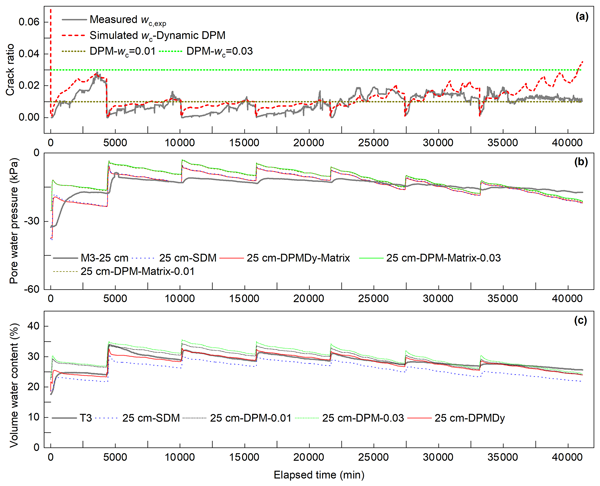
This paper describes an experiment and modeling of the hydrological response of desiccation cracks under long-term wetting–drying cycles. We developed a new dynamic dual-permeability model to quantify the dynamic evolution of desiccation cracks and associated preferential flow and moisture distribution. Compared to other models, the dynamic dual-permeability model could describe the experimental data much better, but it also provided an improved description of the underlying physics.
Judith Uwihirwe, Alessia Riveros, Hellen Wanjala, Jaap Schellekens, Frederiek Sperna Weiland, Markus Hrachowitz, and Thom A. Bogaard
Nat. Hazards Earth Syst. Sci., 22, 3641–3661, https://doi.org/10.5194/nhess-22-3641-2022, https://doi.org/10.5194/nhess-22-3641-2022, 2022
Short summary
Short summary
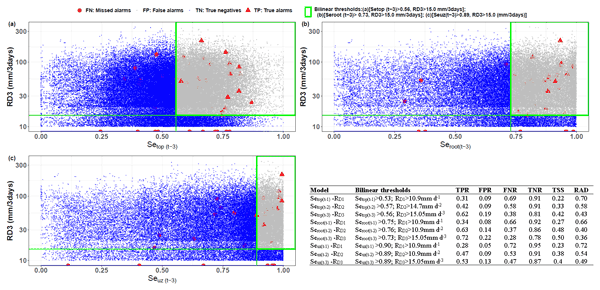
This study compared gauge-based and satellite-based precipitation products. Similarly, satellite- and hydrological model-derived soil moisture was compared to in situ soil moisture and used in landslide hazard assessment and warning. The results reveal the cumulative 3 d rainfall from the NASA-GPM to be the most effective landslide trigger. The modelled antecedent soil moisture in the root zone was the most informative hydrological variable for landslide hazard assessment and warning in Rwanda.
Giulia Zuecco, Anam Amin, Jay Frentress, Michael Engel, Chiara Marchina, Tommaso Anfodillo, Marco Borga, Vinicio Carraro, Francesca Scandellari, Massimo Tagliavini, Damiano Zanotelli, Francesco Comiti, and Daniele Penna
Hydrol. Earth Syst. Sci., 26, 3673–3689, https://doi.org/10.5194/hess-26-3673-2022, https://doi.org/10.5194/hess-26-3673-2022, 2022
Short summary
Short summary
We analyzed the variability in the isotopic composition of plant water extracted by two different methods, i.e., cryogenic vacuum distillation (CVD) and Scholander-type pressure chamber (SPC). Our results indicated that the isotopic composition of plant water extracted by CVD and SPC was significantly different. We concluded that plant water extraction by SPC is not an alternative for CVD as SPC mostly extracts the mobile plant water whereas CVD retrieves all water stored in the sampled tissue.

Jan Pfeiffer, Thomas Zieher, Jan Schmieder, Thom Bogaard, Martin Rutzinger, and Christoph Spötl
Nat. Hazards Earth Syst. Sci., 22, 2219–2237, https://doi.org/10.5194/nhess-22-2219-2022, https://doi.org/10.5194/nhess-22-2219-2022, 2022
Short summary
Short summary
The activity of slow-moving deep-seated landslides is commonly governed by pore pressure variations within the shear zone. Groundwater recharge as a consequence of precipitation therefore is a process regulating the activity of landslides. In this context, we present a highly automated geo-statistical approach to spatially assess groundwater recharge controlling the velocity of a deep-seated landslide in Tyrol, Austria.
Judith Uwihirwe, Markus Hrachowitz, and Thom Bogaard
Nat. Hazards Earth Syst. Sci., 22, 1723–1742, https://doi.org/10.5194/nhess-22-1723-2022, https://doi.org/10.5194/nhess-22-1723-2022, 2022
Short summary
Short summary
This research tested the value of regional groundwater level information to improve landslide predictions with empirical models based on the concept of threshold levels. In contrast to precipitation-based thresholds, the results indicated that relying on threshold models exclusively defined using hydrological variables such as groundwater levels can lead to improved landslide predictions due to their implicit consideration of long-term antecedent conditions until the day of landslide occurrence.
Assaf Hochman, Francesco Marra, Gabriele Messori, Joaquim G. Pinto, Shira Raveh-Rubin, Yizhak Yosef, and Georgios Zittis
Earth Syst. Dynam., 13, 749–777, https://doi.org/10.5194/esd-13-749-2022, https://doi.org/10.5194/esd-13-749-2022, 2022
Short summary
Short summary
Gaining a complete understanding of extreme weather, from its physical drivers to its impacts on society, is important in supporting future risk reduction and adaptation measures. Here, we provide a review of the available scientific literature, knowledge gaps and key open questions in the study of extreme weather events over the vulnerable eastern Mediterranean region.
Francesco Marra, Moshe Armon, and Efrat Morin
Hydrol. Earth Syst. Sci., 26, 1439–1458, https://doi.org/10.5194/hess-26-1439-2022, https://doi.org/10.5194/hess-26-1439-2022, 2022
Short summary
Short summary
We present a new method for quantifying the probability of occurrence of extreme rainfall using radar data, and we use it to examine coastal and orographic effects on extremes. We identify three regimes, directly related to precipitation physical processes, which respond differently to these forcings. The methods and results are of interest for researchers and practitioners using radar for the analysis of extremes, risk managers, water resources managers, and climate change impact studies.
Punpim Puttaraksa Mapiam, Monton Methaprayun, Thom Bogaard, Gerrit Schoups, and Marie-Claire Ten Veldhuis
Hydrol. Earth Syst. Sci., 26, 775–794, https://doi.org/10.5194/hess-26-775-2022, https://doi.org/10.5194/hess-26-775-2022, 2022
Short summary
Short summary
The density of rain gauge networks plays an important role in radar rainfall bias correction. In this work, we aimed to assess the extent to which daily rainfall observations from a dense network of citizen scientists improve the accuracy of hourly radar rainfall estimates in the Tubma Basin, Thailand. Results show that citizen rain gauges significantly enhance the performance of radar rainfall bias adjustment up to a range of about 40 km from the center of the citizen rain gauge network.
Yoav Ben Dor, Francesco Marra, Moshe Armon, Yehouda Enzel, Achim Brauer, Markus Julius Schwab, and Efrat Morin
Clim. Past, 17, 2653–2677, https://doi.org/10.5194/cp-17-2653-2021, https://doi.org/10.5194/cp-17-2653-2021, 2021
Short summary
Short summary
Laminated sediments from the deepest part of the Dead Sea unravel the hydrological response of the eastern Mediterranean to past climate changes. This study demonstrates the importance of geological archives in complementing modern hydrological measurements that do not fully capture natural hydroclimatic variability, which is crucial to configure for understanding the impact of climate change on the hydrological cycle in subtropical regions.
Cited articles
Berti, M., Martina, M. L. V., Franceschini, S., Pignone, S., Simoni, A., and Pizziolo, M.: Probabilistic rainfall thresholds for landslide occurrence using a Bayesian approach, J. Geophys. Res., 117, F04006, https://doi.org/10.1029/2012JF002367, 2012. a
Bezak, N., Šraj, M., and Mikoš, M.: Copula-based IDF curves and empirical rainfall thresholds for flash floods and rainfall-induced landslides, Journal of Hydrology, 541, 272–284, https://doi.org/10.1016/j.jhydrol.2016.02.058,2016. a
Borga, M., Vezzani, C., and Dalla Fontana, G.: Regional rainfall depth–duration–frequency equations for an Alpine region, Nat. Hazards, 36, 221–235, https://doi.org/10.1007/s11069-004-4550-y, 2005. a, b, c
Brunetti, M. T., Peruccacci, S., Rossi, M., Luciani, S., Valigi, D., and Guzzetti, F.: Rainfall thresholds for the possible occurrence of landslides in Italy, Nat. Hazards Earth Syst. Sci., 10, 447–458, https://doi.org/10.5194/nhess-10-447-2010, 2010. a, b
Burlando, P. and Rosso, R.: Scaling and multiscaling models of depth‐duration‐frequency curves for storm precipitation, J. Hydrol., 187, 45–64, https://doi.org/10.1016/S0022-1694(96)03086-7, 1996. a
Cache, T., Bevacqua, E., Zscheischler, J., Müller‐Thomy, H., and Peleg, N.: Simulating realistic design storms: A joint return period approach, Water Resources Research, 61, e2024WR039739, https://doi.org/10.1029/2024WR039739, 2025. a
Caine, N.: The rainfall intensity: duration control of shallow landslides and debris flows, Geogr. Ann. A, 62, 23–27, https://doi.org/10.2307/520449, 1980. a, b
Destro, E., Marra, F., Nikolopoulos, E. I., Zoccatelli, D., Creutin, J. D., and Borga, M.: Spatial estimation of debris flows-triggering rainfall and its dependence on rainfall return period, Geomorphol., 278, 269–279, https://doi.org/10.1016/j.geomorph.2016.11.019, 2017. a
D’Odorico, P., Fagherazzi, S., and Rigon, R.: Potential for landsliding: Dependence on hyetograph characteristics, J. Geophys. Res., 110, F01007, https://doi.org/10.1029/2004JF000127, 2005. a, b, c
Formetta, G., Francesco Marra, E. D., Zaramella, M., and Borga, M.: Differential orographic impact on sub-hourly, hourly, and daily extreme precipitation, Adv. Water Resour., 149, 104085, https://doi.org/10.1016/j.advwatres.2021.104085, 2022. a
Frattini, P., Crosta, G., and Sosio, R.: Approaches for defining thresholds and return periods for rainfall-triggered shallow landslides, Hydrol. Process., 23, 1444–1460, https://doi.org/10.1002/hyp.7269, 2009. a
Guzzetti, F., Peruccacci, S., Rossi, M., and Stark, C. P.: The rainfall intensity-duration control of shallow landslides and debris flows: an update, Landslides, 5, 3–17, https://doi.org/10.1007/s10346-007-0112-1, 2008. a, b, c
Guzzetti, F., Gariano, S. L., Peruccacci, S., Brunetti, M. T., Marchesini, I., Rossi, M., and Melillo, M.: Geographical landslide early warning systems, Earth-Science Reviews, 200, 102973, https://doi.org/10.1016/j.earscirev.2019.102973, 2020. a
Iida, T.: A stochastic hydro-geomorphological model for shallow landsliding due to rainstorm, CATENA, 34, 293–313, https://doi.org/10.1016/S0341-8162(98)00093-9, 1999. a
Koutsoyiannis, D., Kozonis, D., and Manetas, A.: A mathematical framework for studying rainfall intensity-duration-frequency relationships, J. Hydrol., 206, 118–135, https://doi.org/10.1016/S0022-1694(98)00097-3, 1998. a
Langousis, A. and Veneziano, D.: Intensity-duration-frequency curves from scaling representations of rainfall, Water Resour. Res., 43, W02422, https://doi.org/10.1029/2006WR005245, 2007. a
Leonarduzzi, E., Molnar, P., and McArdell, B. W.: Predictive performance of rainfall thresholds for shallow landslides in Switzerland from gridded daily data, Water. Resour. Res., 53, 6612–6625, https://doi.org/10.1002/2017WR021044, 2017. a, b
Marra, F.: Rainfall thresholds for landslide occurrence: systematic underestimation using coarse temporal resolution data, Nat. Hazards, 95, 883–890, https://doi.org/10.1007/s11069-018-3508-4, 2019. a, b
Marra, F.: Thresholds, not probability, Zenodo [data set, code], https://doi.org/10.5281/zenodo.15845771, 2025. a
Marra, F., Nikolopoulos, E. I., Creutin, J. D., and Borga, M.: Radar rainfall estimation for the identification of debris-flow occurrence thresholds, Journal of Hydrology, 519, 1607–1619, https://doi.org/10.1016/j.jhydrol.2014.09.039, 2014. a, b
Marra, F., Nikolopoulos, E. I., Creutin, J. D., and Borga, M.: Space–time organization of debris flows-triggering rainfall and its effect on the identification of the rainfall threshold relationship, J. Hydrol., 541, 246–255, https://doi.org/10.1016/j.jhydrol.2015.10.010, 2016. a, b, c
Marra, F., Borga, M., and Morin, E.: A unified framework for extreme subdaily precipitation frequency analyses based on ordinary events, Geophys. Res. Lett., 47, e2020GL090209, https://doi.org/10.1029/2020GL090209, 2020. a
Melillo, M., Brunetti, M. T., Peruccacci, S., Gariano, S. L., and Guzzetti, F.: An algorithm for the objective reconstruction of rainfall events responsible for landslides, Landslides, 12, 311–320, https://doi.org/10.1007/s10346-014-0471-3, 2015. a, b
Moreno, M., Lombardo, L., Steger, S., de Vugt, L., Zieher, T., Crespi, A., Marra, F., van Westen, C. J., and Opitz, T.: Functional Regression for Space-Time Prediction of Precipitation-Induced Shallow Landslides in South Tyrol, Italy, Journal of Geophysical Research: Earth Surface, 130, e2024JF008219, https://doi.org/10.1029/2024JF008219, 2025. a, b
Nikolopoulos, E. I., Crema, S., Marchi, L., Marra, F., Guzzetti, F., and Borga, M.: Impact of uncertainty in rainfall estimation on the identification of rainfall thresholds for debris flow occurrence, Geomorphol., 221, 286–297, https://doi.org/10.1016/j.geomorph.2014.06.015, 2014. a
Nikolopoulos, E. I., Borga, M., Marra, F., Crema, S., and Marchi, L.: Debris flows in the eastern Italian Alps: seasonality and atmospheric circulation patterns, Nat. Hazards Earth Syst. Sci., 15, 647–656, https://doi.org/10.5194/nhess-15-647-2015, 2015. a
Patton, A. I., Luna, L. V., Roering, J. J., Jacobs, A., Korup, O., and Mirus, B. B.: Landslide initiation thresholds in data-sparse regions: application to landslide early warning criteria in Sitka, Alaska, USA, Nat. Hazards Earth Syst. Sci., 23, 3261–3284, https://doi.org/10.5194/nhess-23-3261-2023, 2023. a
Penna, D., Zuecco, G., Crema, S., Trevisani, S., Cavalli, M., Pianezzola, L., Marchi, L., and Borga, M.: Response time and water origin in a steep nested catchment in the Italian Dolomites, Hydrological Processes, 31, 768–782, https://doi.org/10.1002/hyp.11050, 2017. a
Peres, D. J. and Cancelliere, A.: Comparing methods for determining landslide early warning thresholds: potential use of non-triggering rainfall for locations with scarce landslide data availability, Landslides, 18, 3135–3147, https://doi.org/10.1007/s10346-021-01704-7, 2021. a
Segoni, S., Piciullo, L., and Gariano, S.: A review of the recent literature on rainfall thresholds for landslide occurrence, Landslides, 15, 1483–1501, https://doi.org/10.1007/s10346-018-0966-4, 2018. a
Staley, D. M., Negri, J. A., Kean, J. W., Laber, J. L., Tillery, A. C., and Youberg, A. M.: Prediction of spatially explicit rainfall intensity–duration thresholds for post-fire debris-flow generation in the western United States, Geomorphology, 278, 149–162, https://doi.org/10.1016/j.geomorph.2016.10.019, 2017. a
Tsunetaka, H.: Comparison of the return period for landslide-triggering rainfall events in Japan based on standardization of the rainfall period, Earth Surface Processes and Landforms, 46, 2984–2998, https://doi.org/10.1002/esp.5228, 2021. a
Short summary
We highlight an important conceptual difference between the duration used in intensity-duration thresholds and the duration used in the intensity-duration-frequency curves that has been overlooked by the landslide literature so far.
We highlight an important conceptual difference between the duration used in intensity-duration...


Altmetrics
Final-revised paper
Preprint