
Articles | Volume 26, issue 11
https://doi.org/10.5194/nhess-26-5733-2026
© Author(s) 2026. This work is distributed under
the Creative Commons Attribution 4.0 License.
the Creative Commons Attribution 4.0 License.
https://doi.org/10.5194/nhess-26-5733-2026
© Author(s) 2026. This work is distributed under
the Creative Commons Attribution 4.0 License.
the Creative Commons Attribution 4.0 License.
Research article
| 
11 Nov 2026
Research article |
| 11 Nov 2026
| 11 Nov 2026
Quantifying the attributable impact of the February 2018 sudden stratospheric warming on mortality in the Nordics and United Kingdom

Meteorological Institute Munich, Ludwig Maximilian University of Munich, Munich, Germany
Liliana Vázquez Fernández
Division for Climate and Environmental Health, Norwegian Institute of Public Health, Oslo, Norway
Department of Biostatistics, Institute of Basic Medical Sciences, University of Oslo, Oslo, Norway
William J. M. Seviour
CORRESPONDING AUTHOR
Department of Mathematics and Statistics and Global Systems Institute, University of Exeter, Exeter, UK
Thomas Birner
Meteorological Institute Munich, Ludwig Maximilian University of Munich, Munich, Germany
Deutsches Zentrum für Luft- und Raumfahrt (DLR), Institut für Physik der Atmosphäre, Oberpfaffenhofen, Germany
Related authors
Ninghui Li, Jonathon S. Wright, Philip Rupp, Alison Ming, Shenglong Zhang, and Jie Gao
Weather Clim. Dynam., 7, 1853–1874, https://doi.org/10.5194/wcd-7-1853-2026, https://doi.org/10.5194/wcd-7-1853-2026, 2026
Short summary
Short summary
This study examines how the Asian Summer Monsoon Anticyclone changes during summer. It usually has three main centers over the Iranian Plateau, Tibetan Plateau, and western Pacific. Its movement is mainly controlled by winds, while atmospheric heating influences its strength and development.
William J. M. Seviour, Justin Finkel, Philip Rupp, Regan Mudhar, Amy H. Butler, Chaim I. Garfinkel, Peter Hitchcock, Blanca Ayarzagüena, Dong-Chan Hong, Yu-Kyung Hyun, Hera Kim, Eun-Pa Lim, Daniel De Maeseneire, Gabriele Messori, Gerbrand Koren, Michael Sigmond, Isla R. Simpson, and Seok-Woo Son
Weather Clim. Dynam., 7, 1405–1423, https://doi.org/10.5194/wcd-7-1405-2026, https://doi.org/10.5194/wcd-7-1405-2026, 2026
Short summary
Short summary
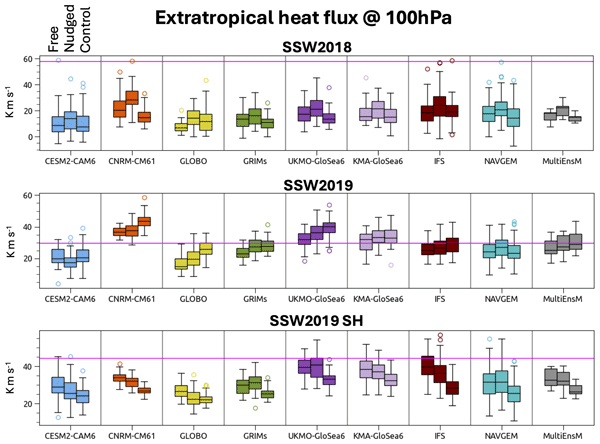
Variability of the stratospheric polar vortex is thought to play a role in driving weather extremes, but quantifying this role for a given event has proved challenging. Using a new set of perturbed subseasonal forecast experiments from 7 modelling centres, we determine the stratospheric contribution to the risk and severity of three recent extreme weather events. The forecast-based methodology that we develop is applicable to understanding a range of other drivers of weather extremes.
Sheena Loeffel, Philip Rupp, Selina Kiefer, Joaquim G. Pinto, Thomas Birner, and Hella Garny
Weather Clim. Dynam., 7, 895–913, https://doi.org/10.5194/wcd-7-895-2026, https://doi.org/10.5194/wcd-7-895-2026, 2026
Short summary
Short summary
We use a dedicated simulation setup to shed light on the question whether, and why, some sudden stratospheric warming events are more likely than others to develop a surface response. We find that the propensity for downward coupling is unique to each event, and that from day one, the chance of a lower-stratospheric response can be predicted – a key step toward anticipating the surface response, moving beyond 'random' surface outcomes to quantified likelihoods of the ensuing surface response.
Philip Rupp, Jonas Spaeth, and Thomas Birner
Weather Clim. Dynam., 7, 767–785, https://doi.org/10.5194/wcd-7-767-2026, https://doi.org/10.5194/wcd-7-767-2026, 2026
Short summary
Short summary
Weather forecasts several weeks ahead are uncertain, but this uncertainty itself can change depending on large-scale atmospheric conditions. We present a new way to measure how well forecasts capture these changes in uncertainty. Our results show that reliability of uncertainty varies strongly with region and is linked to slow, predictable patterns in the atmosphere. These findings help identify periods when forecasts are more trustworthy.
Blanca Ayarzagüena, Amy H. Butler, Peter Hitchcock, Chaim I. Garfinkel, Zac D. Lawrence, Wuhan Ning, Philip Rupp, Zheng Wu, Hilla Afargan-Gerstman, Natalia Calvo, Alvaro de la Cámara, Martin Jucker, Gerbrand Koren, Daniel De Maeseneire, Gloria L. Manney, Marisol Osman, Masakazu Taguchi, Cory Barton, Dong-Chan Hong, Yu-Kyung Hyun, Hera Kim, Jeff Knight, Piero Malguzzi, Daniele Mastrangelo, Jiyoung Oh, Inna Polichtchouk, Jadwiga H. Richter, Isla R. Simpson, Seok-Woo Son, Damien Specq, and Tim Stockdale
Weather Clim. Dynam., 7, 411–437, https://doi.org/10.5194/wcd-7-411-2026, https://doi.org/10.5194/wcd-7-411-2026, 2026
Short summary
Short summary
Sudden Stratospheric Warmings (SSWs) are known to follow a sustained wave dissipation in the stratosphere, which depends on both the tropospheric and stratospheric states. However, the relative role of each state is still unclear. Using a new set of subseasonal to seasonal forecasts, we show that the stratospheric state does not drastically affect the precursors of three recent SSWs, but modulates the stratospheric wave activity, with impacts depending on SSW features.
Philip Rupp, Jonas Spaeth, Hilla Afargan-Gerstman, Dominik Büeler, Michael Sprenger, and Thomas Birner
Weather Clim. Dynam., 5, 1287–1298, https://doi.org/10.5194/wcd-5-1287-2024, https://doi.org/10.5194/wcd-5-1287-2024, 2024
Short summary
Short summary
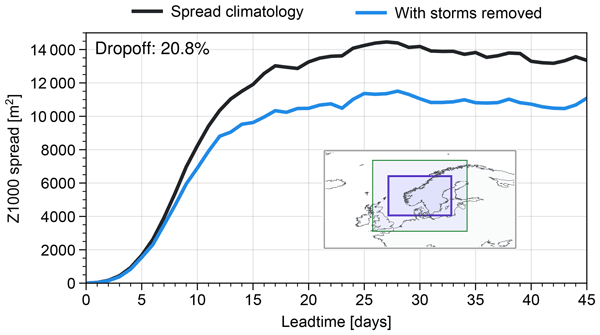
We quantify the occurrence of strong synoptic storms as contributing about 20 % to the uncertainty of subseasonal geopotential height forecasts over northern Europe. We further show that North Atlantic storms are less frequent, weaker and shifted southward following sudden stratospheric warming events, leading to a reduction in northern European forecast uncertainty.
Felix Jäger, Philip Rupp, and Thomas Birner
Weather Clim. Dynam., 4, 49–60, https://doi.org/10.5194/wcd-4-49-2023, https://doi.org/10.5194/wcd-4-49-2023, 2023
Short summary
Short summary
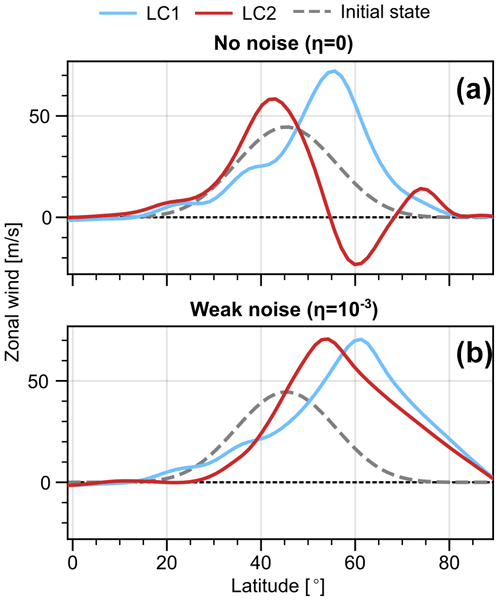
Mid-latitude weather is dominated by the growth, breaking and decay of baroclinic waves and associated jet shifts. A way to study this process is via idealised life-cycle simulations, which are often classified as LC1 (anticyclonic breaking, poleward shift) or LC2 (cyclonic breaking, equatorward shift), depending on details of the initial state. We show that all systems exhibit predominantly anticyclonic character and poleward net shifts if multiple wave modes are allowed to grow simultaneously.
Felix Ploeger, Amelie Mayer, Helena Eckstein, Hongyue Wang, Sean Davis, and Thomas Birner
EGUsphere, https://doi.org/10.5194/egusphere-2026-6385, https://doi.org/10.5194/egusphere-2026-6385, 2026
This preprint is open for discussion and under review for Atmospheric Chemistry and Physics (ACP).
Short summary
Short summary
This study investigates the structure of the extratropical tropopause, the boundary between troposphere and stratosphere. We show that current climate models tend to place the tropopause too high and that this bias is related to excessive water vapour in the lowermost stratosphere in the simulations. Furthermore, correcting the model moist bias by modifying the model's transport scheme improves the representation of the extratropical tropopause in the simulation.
Ninghui Li, Jonathon S. Wright, Philip Rupp, Alison Ming, Shenglong Zhang, and Jie Gao
Weather Clim. Dynam., 7, 1853–1874, https://doi.org/10.5194/wcd-7-1853-2026, https://doi.org/10.5194/wcd-7-1853-2026, 2026
Short summary
Short summary
This study examines how the Asian Summer Monsoon Anticyclone changes during summer. It usually has three main centers over the Iranian Plateau, Tibetan Plateau, and western Pacific. Its movement is mainly controlled by winds, while atmospheric heating influences its strength and development.
William J. M. Seviour, Justin Finkel, Philip Rupp, Regan Mudhar, Amy H. Butler, Chaim I. Garfinkel, Peter Hitchcock, Blanca Ayarzagüena, Dong-Chan Hong, Yu-Kyung Hyun, Hera Kim, Eun-Pa Lim, Daniel De Maeseneire, Gabriele Messori, Gerbrand Koren, Michael Sigmond, Isla R. Simpson, and Seok-Woo Son
Weather Clim. Dynam., 7, 1405–1423, https://doi.org/10.5194/wcd-7-1405-2026, https://doi.org/10.5194/wcd-7-1405-2026, 2026
Short summary
Short summary
Variability of the stratospheric polar vortex is thought to play a role in driving weather extremes, but quantifying this role for a given event has proved challenging. Using a new set of perturbed subseasonal forecast experiments from 7 modelling centres, we determine the stratospheric contribution to the risk and severity of three recent extreme weather events. The forecast-based methodology that we develop is applicable to understanding a range of other drivers of weather extremes.
Sheena Loeffel, Philip Rupp, Selina Kiefer, Joaquim G. Pinto, Thomas Birner, and Hella Garny
Weather Clim. Dynam., 7, 895–913, https://doi.org/10.5194/wcd-7-895-2026, https://doi.org/10.5194/wcd-7-895-2026, 2026
Short summary
Short summary
We use a dedicated simulation setup to shed light on the question whether, and why, some sudden stratospheric warming events are more likely than others to develop a surface response. We find that the propensity for downward coupling is unique to each event, and that from day one, the chance of a lower-stratospheric response can be predicted – a key step toward anticipating the surface response, moving beyond 'random' surface outcomes to quantified likelihoods of the ensuing surface response.
Philip Rupp, Jonas Spaeth, and Thomas Birner
Weather Clim. Dynam., 7, 767–785, https://doi.org/10.5194/wcd-7-767-2026, https://doi.org/10.5194/wcd-7-767-2026, 2026
Short summary
Short summary
Weather forecasts several weeks ahead are uncertain, but this uncertainty itself can change depending on large-scale atmospheric conditions. We present a new way to measure how well forecasts capture these changes in uncertainty. Our results show that reliability of uncertainty varies strongly with region and is linked to slow, predictable patterns in the atmosphere. These findings help identify periods when forecasts are more trustworthy.
Marta Abalos, Thomas Birner, Andreas Chrysanthou, Sean Davis, Alvaro de la Cámara, Sandip Dhomse, Hella Garny, Michaela I. Hegglin, Daan Hubert, Oksana Ivaniha, James Keeble, Marianna Linz, Daniele Minganti, Jessica Neu, David Plummer, Laura Saunders, Kasturi Shah, Gabriele Stiller, Kleareti Tourpali, Darryn Waugh, Nathan Luke Abraham, Hideharu Akiyoshi, Martyn P. Chipperfield, Patrick Jöckel, Béatrice Josse, Marion Marchand, Patrick Martineau, Olaf Morgenstern, Timofei Sukhodolov, Shingo Watanabe, and Yousuke Yamashita
Atmos. Chem. Phys., 26, 5249–5291, https://doi.org/10.5194/acp-26-5249-2026, https://doi.org/10.5194/acp-26-5249-2026, 2026
Short summary
Short summary
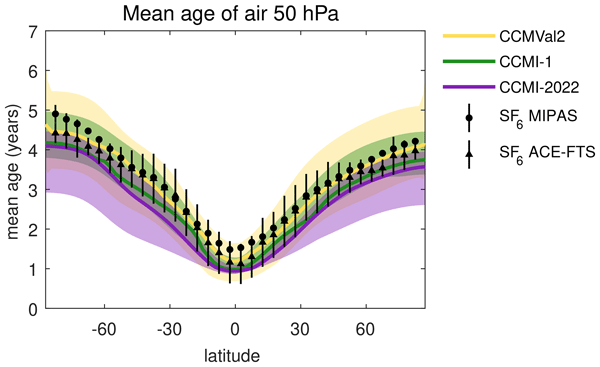
Accurate representation of stratospheric transport in Chemistry-Climate Models is essential for reliable climate projections. This study evaluates three generations of models using observational data and reanalyses, identifying persistent biases and their potential causes. Some biases persist or even worsen in newer models. These findings highlight key limitations and inform efforts to improve models and advance understanding through process-based studies and enhanced observations.
Blanca Ayarzagüena, Amy H. Butler, Peter Hitchcock, Chaim I. Garfinkel, Zac D. Lawrence, Wuhan Ning, Philip Rupp, Zheng Wu, Hilla Afargan-Gerstman, Natalia Calvo, Alvaro de la Cámara, Martin Jucker, Gerbrand Koren, Daniel De Maeseneire, Gloria L. Manney, Marisol Osman, Masakazu Taguchi, Cory Barton, Dong-Chan Hong, Yu-Kyung Hyun, Hera Kim, Jeff Knight, Piero Malguzzi, Daniele Mastrangelo, Jiyoung Oh, Inna Polichtchouk, Jadwiga H. Richter, Isla R. Simpson, Seok-Woo Son, Damien Specq, and Tim Stockdale
Weather Clim. Dynam., 7, 411–437, https://doi.org/10.5194/wcd-7-411-2026, https://doi.org/10.5194/wcd-7-411-2026, 2026
Short summary
Short summary
Sudden Stratospheric Warmings (SSWs) are known to follow a sustained wave dissipation in the stratosphere, which depends on both the tropospheric and stratospheric states. However, the relative role of each state is still unclear. Using a new set of subseasonal to seasonal forecasts, we show that the stratospheric state does not drastically affect the precursors of three recent SSWs, but modulates the stratospheric wave activity, with impacts depending on SSW features.
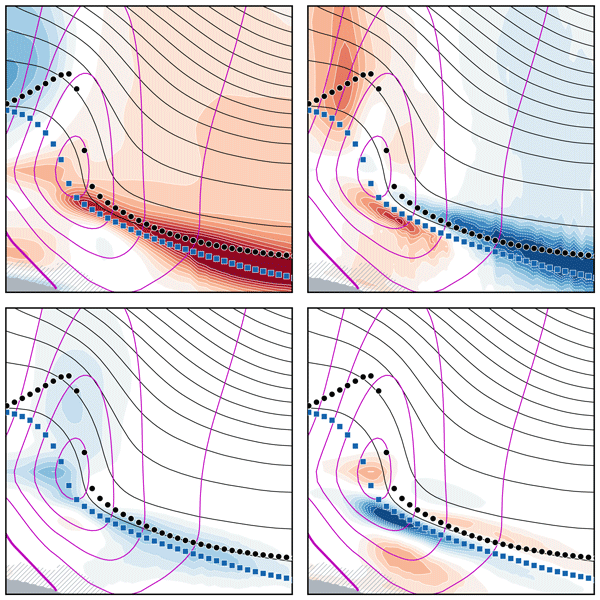
Frederik Harzer, Hella Garny, Felix Ploeger, J. Moritz Menken, and Thomas Birner
Atmos. Chem. Phys., 25, 14909–14921, https://doi.org/10.5194/acp-25-14909-2025, https://doi.org/10.5194/acp-25-14909-2025, 2025
Short summary
Short summary
We study ozone transport in the extratropical lowermost stratosphere using potential temperature as vertical coordinate, thereby distinguishing adiabatic and diabatic processes. We find that on top of known dominant transport processes (quasi-horizontal mixing, slow diabatic descent) vertical mixing plays an important role near the tropopause. Our findings are relevant for understanding ozone's role in climate including its imprint on tropospheric ozone via stratosphere-troposphere air exchange.
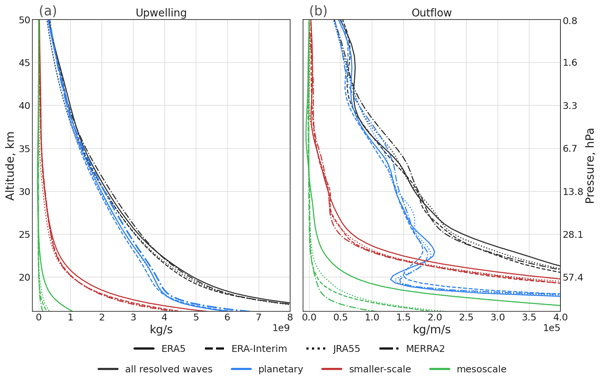
Rasul Baikhadzhaev, Felix Ploeger, Peter Preusse, Manfred Ern, and Thomas Birner
Atmos. Chem. Phys., 25, 12753–12777, https://doi.org/10.5194/acp-25-12753-2025, https://doi.org/10.5194/acp-25-12753-2025, 2025
Short summary
Short summary
Across four reanalyses, the shallow branch of the stratospheric overturning circulation was found to be driven by planetary waves 1 to 3, and the deep branch of the circulation was found to be driven by smaller-scale waves (wave 4 and higher). However, the height of the level separating the branches is dependent on the reanalysis considered. Thus, using the appropriate separation levels in model inter-comparisons could reduce the spread between models regarding climatology and trends in the circulation.
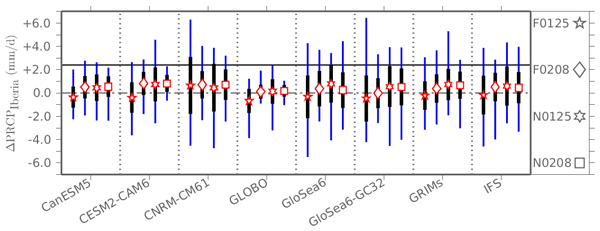
Ying Dai, Peter Hitchcock, Amy H. Butler, Chaim I. Garfinkel, and William J. M. Seviour
Weather Clim. Dynam., 6, 841–862, https://doi.org/10.5194/wcd-6-841-2025, https://doi.org/10.5194/wcd-6-841-2025, 2025
Short summary
Short summary
Using a new database of subseasonal to seasonal (S2S) forecasts, we find that with a successful forecast of the sudden stratospheric warming (SSW), S2S models can capture the European precipitation signals after the 2018 SSW several weeks in advance. The findings indicate that the stratosphere represents an important source of S2S predictability for precipitation over Europe and call for consideration of stratospheric variability in hydrological prediction at S2S timescales.
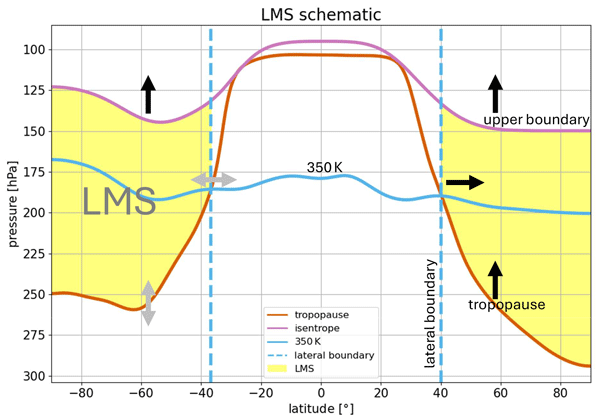
Franziska Weyland, Peter Hoor, Daniel Kunkel, Thomas Birner, Felix Plöger, and Katharina Turhal
Atmos. Chem. Phys., 25, 1227–1252, https://doi.org/10.5194/acp-25-1227-2025, https://doi.org/10.5194/acp-25-1227-2025, 2025
Short summary
Short summary
The lowermost stratosphere (LMS) plays an important role in the Earth's climate, containing strong gradients of ozone and water vapor. Our results indicate that the thermodynamic structure of the LMS was changing between 1979–2019 in response to anthropogenic climate change and the recovery of stratospheric ozone, also indicating large-scale circulation changes. We find that both the upper and the lower LMS boundaries show an (upward) trend, which has implications for the LMS mass.

Katharina Turhal, Felix Plöger, Jan Clemens, Thomas Birner, Franziska Weyland, Paul Konopka, and Peter Hoor
Atmos. Chem. Phys., 24, 13653–13679, https://doi.org/10.5194/acp-24-13653-2024, https://doi.org/10.5194/acp-24-13653-2024, 2024
Short summary
Short summary
The tropopause separates the troposphere, where many greenhouse gases originate, from the stratosphere. This study examines a tropopause defined by potential vorticity – an analogue for angular momentum that changes sharply in the subtropics, creating a transport barrier. Between 1980 and 2017, this tropopause shifted poleward at lower altitudes and equatorward above, suggesting height-dependent changes in atmospheric circulation that may affect greenhouse gas distribution and global warming.
Philip Rupp, Jonas Spaeth, Hilla Afargan-Gerstman, Dominik Büeler, Michael Sprenger, and Thomas Birner
Weather Clim. Dynam., 5, 1287–1298, https://doi.org/10.5194/wcd-5-1287-2024, https://doi.org/10.5194/wcd-5-1287-2024, 2024
Short summary
Short summary
We quantify the occurrence of strong synoptic storms as contributing about 20 % to the uncertainty of subseasonal geopotential height forecasts over northern Europe. We further show that North Atlantic storms are less frequent, weaker and shifted southward following sudden stratospheric warming events, leading to a reduction in northern European forecast uncertainty.
Masatomo Fujiwara, Patrick Martineau, Jonathon S. Wright, Marta Abalos, Petr Šácha, Yoshio Kawatani, Sean M. Davis, Thomas Birner, and Beatriz M. Monge-Sanz
Atmos. Chem. Phys., 24, 7873–7898, https://doi.org/10.5194/acp-24-7873-2024, https://doi.org/10.5194/acp-24-7873-2024, 2024
Short summary
Short summary
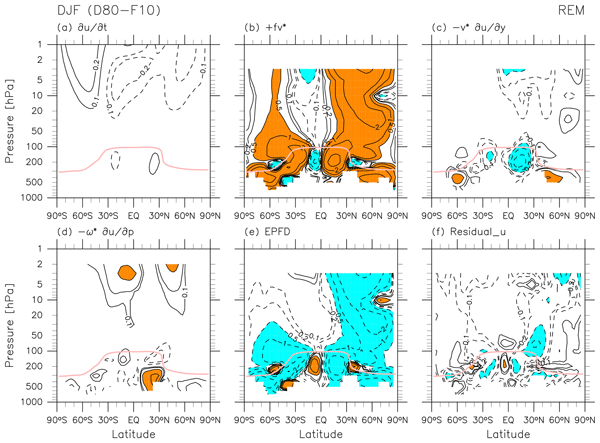
A climatology of the major variables and terms of the transformed Eulerian-mean (TEM) momentum and thermodynamic equations from four global atmospheric reanalyses is evaluated. The spread among reanalysis TEM momentum balance terms is around 10 % in Northern Hemisphere winter and up to 50 % in Southern Hemisphere winter. The largest uncertainties in the thermodynamic equation (about 50 %) are in the vertical advection, which does not show a structure consistent with the differences in heating.
Felix Ploeger, Thomas Birner, Edward Charlesworth, Paul Konopka, and Rolf Müller
Atmos. Chem. Phys., 24, 2033–2043, https://doi.org/10.5194/acp-24-2033-2024, https://doi.org/10.5194/acp-24-2033-2024, 2024
Short summary
Short summary
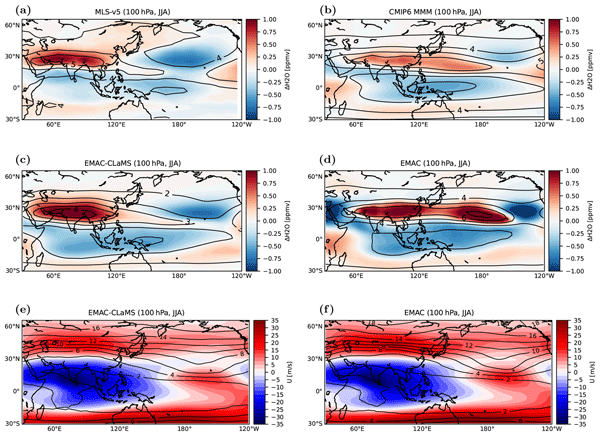
We present a novel mechanism of how regional anomalies in water vapour concentrations in the upper troposphere and lower stratosphere impact regional atmospheric circulation systems. These impacts include a displaced upper-level Asian monsoon circulation and strengthened prevailing westerlies in the Pacific region. Current climate models have biases in simulating these regional water vapour anomalies and circulation impacts, but the biases can be avoided by improving the model transport.
Frederik Harzer, Hella Garny, Felix Ploeger, Harald Bönisch, Peter Hoor, and Thomas Birner
Atmos. Chem. Phys., 23, 10661–10675, https://doi.org/10.5194/acp-23-10661-2023, https://doi.org/10.5194/acp-23-10661-2023, 2023
Short summary
Short summary
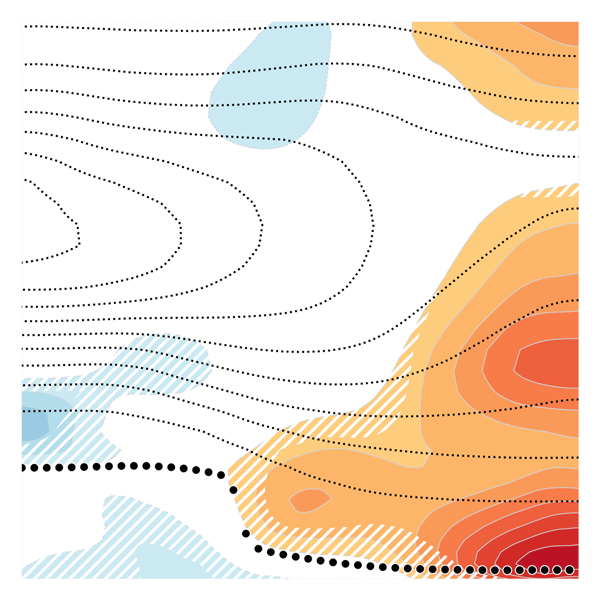
We study the statistical relation between year-by-year fluctuations in winter-mean ozone and the strength of the stratospheric polar vortex. In the latitude–pressure plane, regression analysis shows that anomalously weak polar vortex years are associated with three pronounced local ozone maxima over the polar cap relative to the winter climatology. These response maxima primarily reflect the non-trivial combination of different ozone transport processes with varying relative contributions.

Flossie Brown, Lauren Marshall, Peter H. Haynes, Rolando R. Garcia, Thomas Birner, and Anja Schmidt
Atmos. Chem. Phys., 23, 5335–5353, https://doi.org/10.5194/acp-23-5335-2023, https://doi.org/10.5194/acp-23-5335-2023, 2023
Short summary
Short summary
Large-magnitude volcanic eruptions have the potential to alter large-scale circulation patterns, such as the quasi-biennial oscillation (QBO). The QBO is an oscillation of the tropical stratospheric zonal winds between easterly and westerly directions. Using a climate model, we show that large-magnitude eruptions can delay the progression of the QBO, with a much longer delay when the shear is easterly than when it is westerly. Such delays may affect weather and transport of atmospheric gases.
Felix Jäger, Philip Rupp, and Thomas Birner
Weather Clim. Dynam., 4, 49–60, https://doi.org/10.5194/wcd-4-49-2023, https://doi.org/10.5194/wcd-4-49-2023, 2023
Short summary
Short summary
Mid-latitude weather is dominated by the growth, breaking and decay of baroclinic waves and associated jet shifts. A way to study this process is via idealised life-cycle simulations, which are often classified as LC1 (anticyclonic breaking, poleward shift) or LC2 (cyclonic breaking, equatorward shift), depending on details of the initial state. We show that all systems exhibit predominantly anticyclonic character and poleward net shifts if multiple wave modes are allowed to grow simultaneously.

Jonas Spaeth and Thomas Birner
Weather Clim. Dynam., 3, 883–903, https://doi.org/10.5194/wcd-3-883-2022, https://doi.org/10.5194/wcd-3-883-2022, 2022
Short summary
Short summary
Past research has demonstrated robust stratosphere–troposphere dynamical coupling following stratospheric circulation extremes. Here, we use a large set of extended-range ensemble forecasts to robustly quantify the increased risk for tropospheric circulation extremes following stratospheric extreme events. In particular, we provide estimates of the fraction of tropospheric extremes that may be attributable to preceding stratospheric extremes.
Corwin J. Wright, Richard J. Hall, Timothy P. Banyard, Neil P. Hindley, Isabell Krisch, Daniel M. Mitchell, and William J. M. Seviour
Weather Clim. Dynam., 2, 1283–1301, https://doi.org/10.5194/wcd-2-1283-2021, https://doi.org/10.5194/wcd-2-1283-2021, 2021
Short summary
Short summary
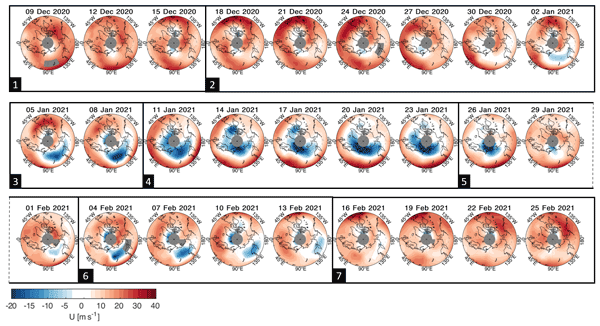
Major sudden stratospheric warmings (SSWs) are some of the most dramatic events in the atmosphere and are believed to help cause extreme winter weather events such as the 2018 Beast from the East in Europe and North America. Here, we use unique data from the European Space Agency's new Aeolus satellite to make the first-ever measurements at a global scale of wind changes due to an SSW in the lower part of the atmosphere to help us understand how SSWs affect the atmosphere and surface weather.
Cited articles
Analitis, A., Katsouyanni, K., Biggeri, A., Baccini, M., Forsberg, B., Bisanti, L., Kirchmayer, U., Ballester, F., Cadum, E., Goodman, P. G., Hojs, A., Sunyer, J., Tiittanen, P., and Michelozzi, P.: Effects of cold weather on mortality: results from 15 European cities within the PHEWE project, Am. J. Epidemiol., 168, 1397–1408, 2008. a, b
Arbuthnott, K., Hajat, S., Heaviside, C., and Vardoulakis, S.: Years of life lost and mortality due to heat and cold in the three largest English cities, Environ. Int., 144, 105966, https://doi.org/10.1016/j.envint.2020.105966, 2020. a
Baldwin, M. P. and Dunkerton, T. J.: Stratospheric harbingers of anomalous weather regimes, Science, 294, 581–584, 2001. a
Baldwin, M. P., Stephenson, D. B., Thompson, D. W., Dunkerton, T. J., Charlton, A. J., and O'Neill, A.: Stratospheric memory and skill of extended-range weather forecasts, Science, 301, 636–640, 2003. a
Baldwin, M. P., Ayarzagüena, B., Birner, T., Butchart, N., Butler, A. H., Charlton-Perez, A. J., Domeisen, D. I., Garfinkel, C. I., Garny, H., Gerber, E. P., Hegglin, M. I., Langematz, U., and Pedatella, N. M.: Sudden stratospheric warmings, Rev. Geophys., 59, e2020RG000708, https://doi.org/10.1029/2020RG000708, 2021. a
Büeler, D., Beerli, R., Wernli, H., and Grams, C. M.: Stratospheric influence on ECMWF sub-seasonal forecast skill for energy-industry-relevant surface weather in European countries, Q. J. Roy. Meteor. Soc., 146, 3675–3694, 2020. a
Büeler, D., Ferranti, L., Magnusson, L., Quinting, J. F., and Grams, C. M.: Year-round sub-seasonal forecast skill for Atlantic–European weather regimes, Q. J. Roy. Meteor. Soc., 147, 4283–4309, 2021. a
Butler, A. H., Sjoberg, J. P., Seidel, D. J., and Rosenlof, K. H.: A sudden stratospheric warming compendium, Earth Syst. Sci. Data, 9, 63–76, https://doi.org/10.5194/essd-9-63-2017, 2017. a
Charlton-Perez, A. J., Huang, W. T. K., and Lee, S. H.: Impact of sudden stratospheric warmings on United Kingdom mortality, Atmos. Sci. Lett., 22, e1013, https://doi.org/10.1002/asl.1013, 2021. a, b
Domeisen, D. I. V., Butler, A. H., Charlton-Perez, A. J., Ayarzagüena, B., Baldwin, M. P., Dunn-Sigouin, E., Furtado, J. C., Garfinkel, C. I., Hitchcock, P., Karpechko, A. Y., Kim, H., Knight, J., Lang, A. L., Lim, E.-P., Marshall, A., Roff, G., Schwartz, C., Simpson, I. R., Son, S.-W., and Taguchi, M.: The Role of the Stratosphere in Subseasonal to Seasonal Prediction: 2. Predictability Arising From Stratosphere-Troposphere Coupling, J. Geophys. Res.-Atmos., 125, e2019JD030923, https://doi.org/10.1029/2019JD030923, 2020. a
ECMWF: ERA5 database, https://www.ecmwf.int/en/forecasts/dataset/ecmwf-reanalysis-v5 (last access: 14 September 2025), 2018. a
ECMWF: IFS documentation, https://www.ecmwf.int/en/publications/ifs-documentation, last access: 14 September 2025. a
Gasparrini, A. and Armstrong, B.: The impact of heat waves on mortality, Epidemiology, 22, 68–73, 2011. a
Gasparrini, A. and Armstrong, B.: Reducing and meta-analysing estimates from distributed lag non-linear models, BMC Med. Res. Methodol., 13, 1, https://doi.org/10.1186/1471-2288-13-1, 2013. a, b
Gasparrini, A. and Leone, M.: Attributable risk from distributed lag models, BMC Med. Res. Methodol., 14, 55, https://doi.org/10.1186/1471-2288-14-55, 2014. a
Gasparrini, A., Armstrong, B., and Scheipl, F.: Distributed lag linear and non-linear models in R: the package dlnm, J. Stat. Softw., 43, 1–20, https://doi.org/10.18637/jss.v043.i08, 2011. a, b, c
Gasparrini, A., Guo, Y., Hashizume, M., Lavigne, E., Zanobetti, A., Schwartz, J., Tobias, A., Tong, S., Rocklöv, J., Forsberg, B., Leone, M., De Sario, M., Bell, M. L., Guo, Y.-L. L., Wu, C.-f., Kan, H., Yi, S.-M., Coelho, M. d. S. Z. S., Saldiva, P. H. N., Honda, Y., Kim, H., and Armstrong, B.: Mortality risk attributable to high and low ambient temperature: a multicountry observational study, The Lancet, 386, 369–375, 2015. a, b, c
Gasparrini, A., Guo, Y., Sera, F., Vicedo-Cabrera, A. M., Huber, V., Tong, S., Coelho, M. d. S. Z. S., Saldiva, P. H. N., Lavigne, E., Matus Correa, P., Valdes Ortega, N., Kan, H., Osorio, S., Kyselý, J., Urban, A., Jaakkola, J. J. K., Ryti, N. R. I., Pascal, M., Goodman, P. G., Zeka, A., Michelozzi, P., Scortichini, M., Hashizume, M., Honda, Y., Hurtado-Diaz, M., Cesar Cruz, J., Seposo, X., Kim, H., Tobias, A., Iñiguez, C., Forsberg, B., Åström, D. O., Ragettli, M. S., Guo, Y. L., Wu, C. F., Zanobetti, A., Schwartz, J., Bell, M. L., Dang, T. N., Van, D. D., Heaviside, C., Vardoulakis, S., Hajat, S., Haines, A., and Armstrong, B.: Projections of temperature-related excess mortality under climate change scenarios, The Lancet Planetary Health, 1, e360–e367, 2017. a, b
Greening, K. and Hodgson, A.: Atmospheric analysis of the cold late February and early March 2018 over the UK, Weather, 74, 79–85, 2019. a
Guo, Y., Gasparrini, A., Armstrong, B. G., Tawatsupa, B., Tobias, A., Lavigne, E., Coelho, M. d. S. Z. S., Pan, X., Kim, H., Hashizume, M., Honda, Y., Guo, Y. L., Wu, C. F., Zanobetti, A., Schwartz, J. D., Bell, M. L., Overcenco, A., Punnasiri, K., Li, S., Tian, L., Saldiva, P., Williams, G., and Tong, S.: Temperature variability and mortality: a multi-country study, Environ. Health Persp., 124, 1554–1559, 2016. a
Hajat, S., Vardoulakis, S., Heaviside, C., and Eggen, B.: Climate change effects on human health: projections of temperature-related mortality for the UK during the 2020s, 2050s and 2080s, J. Epidemiol. Commun. H., 68, 641–648, 2014. a
Hersbach, H., Bell, B., Berrisford, P., Hirahara, S., Horányi, A., Muñoz-Sabater, J., Nicolas, J., Peubey, C., Radu, R., Schepers, D., Simmons, A., Soci, C., Abdalla, S., Abellan, X., Balsamo, G., Bechtold, P., Biavati, G., Bidlot, J., Bonavita, M., De Chiara, G., Dahlgren, P., Dee, D., Diamantakis, M., Dragani, R., Flemming, J., Forbes, R., Fuentes, M., Geer, A., Haimberger, L., Healy, S., Hogan, R. J., Hólm, E., Janisková, M., Keeley, S., Laloyaux, P., Lopez, P., Lupu, C., Radnoti, G., de Rosnay, P., Rozum, I., Vamborg, F., Villaume, S., and Thépaut, J.-N.: The ERA5 global reanalysis, Q. J. Roy. Meteor. Soc., 146, 1999–2049, 2020. a
Hitchcock, P., Butler, A., Charlton-Perez, A., Garfinkel, C. I., Stockdale, T., Anstey, J., Mitchell, D., Domeisen, D. I. V., Wu, T., Lu, Y., Mastrangelo, D., Malguzzi, P., Lin, H., Muncaster, R., Merryfield, B., Sigmond, M., Xiang, B., Jia, L., Hyun, Y.-K., Oh, J., Specq, D., Simpson, I. R., Richter, J. H., Barton, C., Knight, J., Lim, E.-P., and Hendon, H.: Stratospheric Nudging And Predictable Surface Impacts (SNAPSI): a protocol for investigating the role of stratospheric polar vortex disturbances in subseasonal to seasonal forecasts, Geosci. Model Dev., 15, 5073–5092, https://doi.org/10.5194/gmd-15-5073-2022, 2022. a, b, c, d
Huang, C., Barnett, A. G., Wang, X., and Tong, S.: Effects of extreme temperatures on years of life lost for cardiovascular deaths: a time series study in Brisbane, Australia, Circ.-Cardiovasc. Qual., 5, 609–614, 2012. a
Huang, J., Hitchcock, P., Maycock, A. C., McKenna, C. M., and Tian, W.: Northern hemisphere cold air outbreaks are more likely to be severe during weak polar vortex conditions, Communications Earth & Environment, 2, 147, https://doi.org/10.1038/s43247-021-00215-6, 2021. a
Kautz, L.-A., Polichtchouk, I., Birner, T., Garny, H., and Pinto, J. G.: Enhanced extended-range predictability of the 2018 late-winter Eurasian cold spell due to the stratosphere, Q. J. Roy. Meteor. Soc., 146, 1040–1055, 2020. a
Keatinge, W. R., Donaldson, G. C., Cordioli, E., Martinelli, M., Kunst, A. E., Mackenbach, J. P., Nayha, S., and Vuori, I.: Heat related mortality in warm and cold regions of Europe: observational study, BMJ, 321, 670–673, 2000. a
King, A. D., Butler, A. H., Jucker, M., Earl, N. O., and Rudeva, I.: Observed relationships between sudden stratospheric warmings and European climate extremes, J. Geophys. Res.-Atmos., 124, 13943–13961, 2019. a
Kolstad, E. W., Breiteig, T., and Scaife, A. A.: The association between stratospheric weak polar vortex events and cold air outbreaks in the Northern Hemisphere, Q. J. Roy. Meteor. Soc., 136, 886–893, 2010. a
Kretschmer, M., Coumou, D., Agel, L., Barlow, M., Tziperman, E., and Cohen, J.: More-persistent weak stratospheric polar vortex states linked to cold extremes, B. Am. Meteorol. Soc., 99, 49–60, 2018. a
Kysely, J., Pokorna, L., Kyncl, J., and Kriz, B.: Excess cardiovascular mortality associated with cold spells in the Czech Republic, BMC Public Health, 9, 19, https://doi.org/10.1186/1471-2458-9-19, 2009. a, b
Lo, Y. E., Mitchell, D. M., Thompson, R., O'Connell, E., and Gasparrini, A.: Estimating heat-related mortality in near real time for national heatwave plans, Environ. Res. Lett., 17, 024017, https://doi.org/10.1088/1748-9326/ac4cf4, 2022. a
Lowe, R., Ballester, J., Creswick, J., Robine, J.-M., Herrmann, F. R., and Rodó, X.: Evaluating the performance of a climate-driven mortality model during heat waves and cold spells in Europe, Int. J. Env. Res. Pub. He., 12, 1279–1294, 2015. a
Masselot, P. and Gasparrini, A.: Temperature-related mortality exposure-response functions for 854 cities in Europe, Version 2.0.0, Zenodo [data set], https://doi.org/10.5281/zenodo.10288665, 2023. a, b
Mistry, M. N., Schneider, R., Masselot, P., et al.: Comparison of weather station and climate reanalysis data for modelling temperature-related mortality, Scientific Reports, 12, 5178, https://doi.org/10.1038/s41598-022-09049-4, 2022. a, b
Overland, J., Hall, R., Hanna, E., Karpechko, A., Vihma, T., Wang, M., and Zhang, X.: The polar vortex and extreme weather: the Beast from the East in winter 2018, Atmosphere, 11, 664, https://doi.org/10.3390/atmos11060664, 2020. a
Pyrina, M., Vicedo-Cabrera, A. M., Büeler, D., Sivaraj, S., Spirig, C., and Domeisen, D. I.: Subseasonal prediction of heat-related mortality in Switzerland, GeoHealth, 9, e2024GH001199, https://doi.org/10.1029/2024GH001199, 2025. a
Richter, J. H., Glanville, A. A., Edwards, J., Kauffman, B., Davis, N. A., Jaye, A., Kim, H., Pedatella, N. M., Sun, L., Berner, J., Kim, W. M., Yeager, S. G., Danabasoglu, G., Caron, J. M., and Oleson, K. W.: Subseasonal Earth system prediction with CESM2, Weather Forecast., 37, 797–815, 2022. a
Sarofim, M. C., Saha, S., Hawkins, M. D., Mills, D. M., Hess, J., Horton, R., Kinney, P., and Schwartz, J.: Chap. 2: Temperature-Related Death and Illness, Tech. rep., U.S. Global Change Research Program, Washington, DC, 43–68, https://doi.org/10.7930/J0MG7MDX, 2016. a
Sera, F. and Gasparrini, A.: Extended two-stage designs for environmental research, Environ. Health, 21, 41, https://doi.org/10.1186/s12940-022-00853-z, 2022. a
Spaeth, J. and Birner, T.: Stratospheric modulation of Arctic Oscillation extremes as represented by extended-range ensemble forecasts, Weather Clim. Dynam., 3, 883–903, https://doi.org/10.5194/wcd-3-883-2022, 2022. a
Spaeth, J., Rupp, P., Garny, H., and Birner, T.: Stratospheric impact on subseasonal forecast uncertainty in the Northern extratropics, Communications Earth & Environment, 5, 126, https://doi.org/10.1038/s43247-024-01292-z, 2024. a
Swart, N. C., Cole, J. N. S., Kharin, V. V., Lazare, M., Scinocca, J. F., Gillett, N. P., Anstey, J., Arora, V., Christian, J. R., Hanna, S., Jiao, Y., Lee, W. G., Majaess, F., Saenko, O. A., Seiler, C., Seinen, C., Shao, A., Sigmond, M., Solheim, L., von Salzen, K., Yang, D., and Winter, B.: The Canadian Earth System Model version 5 (CanESM5.0.3), Geosci. Model Dev., 12, 4823–4873, https://doi.org/10.5194/gmd-12-4823-2019, 2019. a
Vicedo-Cabrera, A. M., Guo, Y., Sera, F., et al.: Temperature-related mortality impacts under and beyond Paris Agreement climate change scenarios, Climatic Change, 150, 391–402, 2018. a
Vicedo-Cabrera, A. M., Scovronick, N., Sera, F., et al.: The burden of heat-related mortality attributable to recent human-induced climate change, Nat. Clim. Change, 11, 492–500, https://doi.org/10.1038/s41558-021-01058-x, 2021. a
Voldoire, A., Saint-Martin, D., Sénési, S., Decharme, B., Alias, A., Chevallier, M., Colin, J., Guérémy, J.-F., Michou, M., Moine, M.-P., Nabat, P., Roehrig, R., Salas y Mélia, D., Séférian, R., Valcke, S., Beau, I., Belamari, S., Berthet, S., Cassou, C., Cattiaux, J., Deshayes, J., Douville, H., Ethé, C., Franchistéguy, L., Geoffroy, O., Lévy, C., Madec, G., Meurdesoif, Y., Msadek, R., Ribes, A., Sanchez-Gomez, E., Terray, L., and Waldman, R.: Evaluation of CMIP6 deck experiments with CNRM-CM6-1, J. Adv. Model. Earth Sy., 11, 2177–2213, 2019. a
Walkowiak, M. P., Walkowiak, D., and Walkowiak, J.: Exploring the paradoxical nature of cold temperature mortality in Europe, Scientific Reports, 14, 3181, https://doi.org/10.1038/s41598-024-53675-z, 2024. a
Wang, L., Liu, T., Hu, M., Zeng, W., Zhang, Y., Rutherford, S., Lin, H., Xiao, J., Yin, P., Liu, J., Chu, C., Tong, S., Ma, W., and Zhou, M.: The impact of cold spells on mortality and effect modification by cold spell characteristics, Scientific Reports, 6, 38380, https://doi.org/10.1038/srep38380, 2016. a, b
Williams, K. D., Copsey, D., Blockley, E., Bodas-Salcedo, A., Calvert, D., Comer, R., Davis, P., Graham, T., Hewitt, H., Hill, R., Hyder, P., Ineson, S., Johns, T. C., Keen, A. B., Lee, R. W., Megann, A., Milton, S. F., Rae, J. G. L., Roberts, M. J., Scaife, A. A., Schiemann, R., Storkey, D., Thorpe, L., Watterson, I. G., Walters, D. N., West, A., Wood, R. A., Woollings, T., and Xavier, P. K.: The Met Office global coupled model 3.0 and 3.1 (GC3.0 and GC3.1) configurations, J. Adv. Model. Earth Sy., 10, 357–380, 2018. a
Zeka, A., Browne, S., McAvoy, H., and Goodman, P.: The association of cold weather and all-cause and cause-specific mortality in the island of Ireland between 1984 and 2007, Environ. Health, 13, 1–9, 2014. a
Short summary
We study mortality impacts of sudden stratospheric warmings (SSWs) via counterfactual ensemble simulations. SSWs robustly increase the likelihood of cold spells in Northern Europe, but the socio-economic effects remain poorly quantified. Using re-forecasts of the 2018 SSW and mortality records, we attribute hundreds of expected deaths in the UK and Nordics to this event. The strongest impacts emerge from combined post-SSW cold anomalies and heightened mortality sensitivity to these anomalies.
We study mortality impacts of sudden stratospheric warmings (SSWs) via counterfactual ensemble...


Altmetrics
Final-revised paper
Preprint