
Articles | Volume 26, issue 10
https://doi.org/10.5194/nhess-26-4861-2026
© Author(s) 2026. This work is distributed under
the Creative Commons Attribution 4.0 License.
the Creative Commons Attribution 4.0 License.
https://doi.org/10.5194/nhess-26-4861-2026
© Author(s) 2026. This work is distributed under
the Creative Commons Attribution 4.0 License.
the Creative Commons Attribution 4.0 License.
Invited perspectives
| Highlight paper
| 
07 Oct 2026
Invited perspectives | Highlight paper |
| 07 Oct 2026
| 07 Oct 2026
Invited perspective: Uncertainties in natural systems may be uncomfortable, but ignoring them would be absurd
Warner Marzocchi
CORRESPONDING AUTHOR

Department of Earth, Environmental, and Resources Sciences, University of Naples Federico II, Naples, Italy
Interdisciplinary science-technology department, Scuola Superiore Meridionale, Naples, Italy
Alberto Montanari
Department of Civil, Chemical, Environmental, and Materials engineering, University of Bologna, Italy
A full list of authors appears at the end of the paper.
Related authors
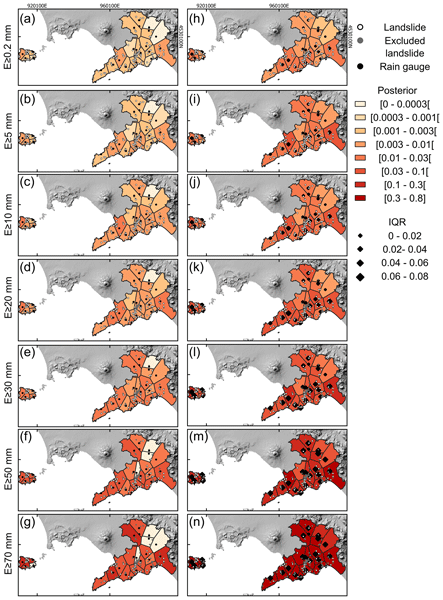
Flavia Ferriero, Fausto Guzzetti, and Warner Marzocchi
Nat. Hazards Earth Syst. Sci., 26, 4457–4477, https://doi.org/10.5194/nhess-26-4457-2026, https://doi.org/10.5194/nhess-26-4457-2026, 2026
Short summary
Short summary
Landslides cause thousands of deaths and billions in damages yearly, yet predicting them remains a major challenge. We developed a Bayesian method that estimates landslide probability as a function of rainfall, explicitly accounting for uncertainty. Applied in southern Italy, landslide probability increases gradually with rainfall, with no sharp thresholds in the triggering conditions. This approach supports a more uncertainty-aware landslide risk management.
Salvatore Ferrara, Jacopo Selva, Jacopo Natale, and Warner Marzocchi
EGUsphere, https://doi.org/10.5194/egusphere-2026-1415, https://doi.org/10.5194/egusphere-2026-1415, 2026
Short summary
Short summary
We develop a probabilistic framework for modeling volcanic eruption sizes. Assuming a power-law distribution on erupted volumes, we analyze how measurement error can cause the observed trend to deviate from such a distribution. We apply this framework to Campi Flegrei, Italy, and Taupo, New Zealand, and observe that when the error is properly accounted for, the data distribution is compatible with a power-law, supporting the use of such a distribution in size forecasting.
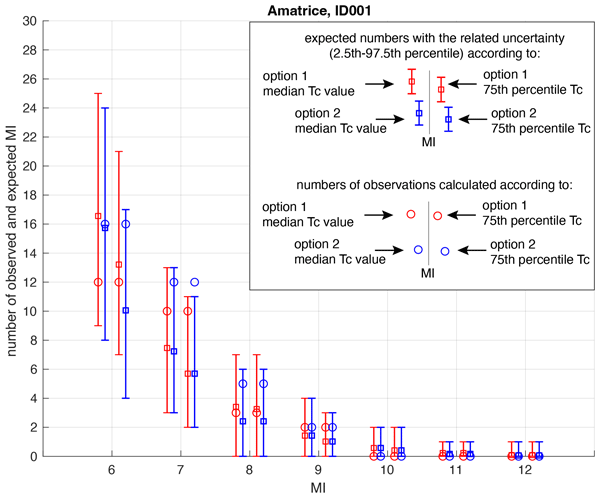
Vera D'Amico, Francesco Visini, Andrea Rovida, Warner Marzocchi, and Carlo Meletti
Nat. Hazards Earth Syst. Sci., 24, 1401–1413, https://doi.org/10.5194/nhess-24-1401-2024, https://doi.org/10.5194/nhess-24-1401-2024, 2024
Short summary
Short summary
We propose a scoring strategy to rank multiple models/branches of a probabilistic seismic hazard analysis (PSHA) model that could be useful to consider specific requests from stakeholders responsible for seismic risk reduction actions. In fact, applications of PSHA often require sampling a few hazard curves from the model. The procedure is introduced through an application aimed to score and rank the branches of a recent Italian PSHA model according to their fit with macroseismic intensity data.
John Douglas, Helen Crowley, Vitor Silva, Warner Marzocchi, Laurentiu Danciu, and Rui Pinho
EGUsphere, https://doi.org/10.5194/egusphere-2023-991, https://doi.org/10.5194/egusphere-2023-991, 2023
Preprint withdrawn
Short summary
Short summary
Estimates of the earthquake ground motions expected during the lifetime of a building or the length of an insurance policy are frequently calculated for locations around the world. Estimates for the same location from different studies can show large differences. These differences affect engineering, financial and risk management decisions. We apply various approaches to understand when such differences have an impact on such decisions and when they are expected because data are limited.
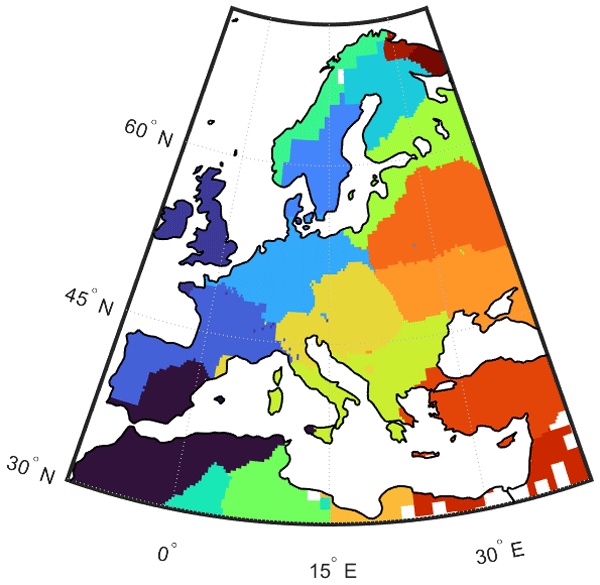
Domenico Giaquinto, Warner Marzocchi, and Jürgen Kurths
Nonlin. Processes Geophys., 30, 167–181, https://doi.org/10.5194/npg-30-167-2023, https://doi.org/10.5194/npg-30-167-2023, 2023
Short summary
Short summary
Despite being among the most severe climate extremes, it is still challenging to assess droughts’ features for specific regions. In this paper we study meteorological droughts in Europe using concepts derived from climate network theory. By exploring the synchronization in droughts occurrences across the continent we unveil regional clusters which are individually examined to identify droughts’ geographical propagation and source–sink systems, which could potentially support droughts’ forecast.
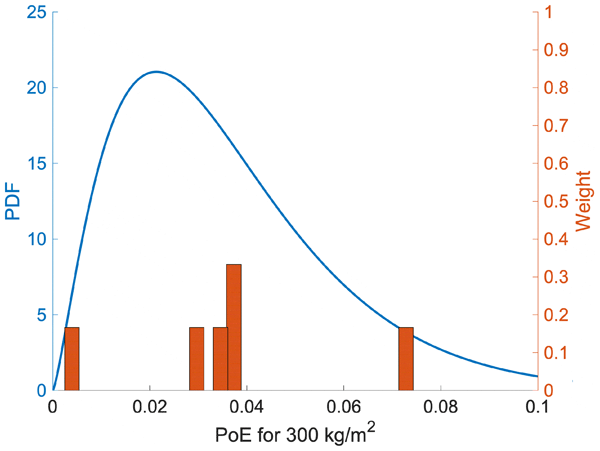
Warner Marzocchi, Jacopo Selva, and Thomas H. Jordan
Nat. Hazards Earth Syst. Sci., 21, 3509–3517, https://doi.org/10.5194/nhess-21-3509-2021, https://doi.org/10.5194/nhess-21-3509-2021, 2021
Short summary
Short summary
Eruption forecasting and volcanic hazard analysis are pervaded by uncertainty of different kinds, such as the natural randomness, our lack of knowledge, and the so-called unknown unknowns. After discussing the limits of how classical probabilistic frameworks handle these uncertainties, we put forward a unified probabilistic framework which unambiguously defines uncertainty of different kinds, and it allows scientific validation of the hazard model against independent observations.
Yue Lai, Rui Guo, and Alberto Montanari
EGUsphere, https://doi.org/10.5194/egusphere-2026-5518, https://doi.org/10.5194/egusphere-2026-5518, 2026
This preprint is open for discussion and under review for Natural Hazards and Earth System Sciences (NHESS).
Short summary
Short summary
Predicting how extreme precipitation will change is vital for flood protection, yet remains difficult. Using one of the longest daily precipitation records, from Bologna, Italy, since 1813, we tested many climate models and combined them into more reliable projections. Extreme precipitation intensity will likely keep rising this century, especially under high emission scenarios. This can provide a solid foundation for regional flood risk management and adaptation planning.
Flavia Ferriero, Fausto Guzzetti, and Warner Marzocchi
Nat. Hazards Earth Syst. Sci., 26, 4457–4477, https://doi.org/10.5194/nhess-26-4457-2026, https://doi.org/10.5194/nhess-26-4457-2026, 2026
Short summary
Short summary
Landslides cause thousands of deaths and billions in damages yearly, yet predicting them remains a major challenge. We developed a Bayesian method that estimates landslide probability as a function of rainfall, explicitly accounting for uncertainty. Applied in southern Italy, landslide probability increases gradually with rainfall, with no sharp thresholds in the triggering conditions. This approach supports a more uncertainty-aware landslide risk management.
Salvatore Ferrara, Jacopo Selva, Jacopo Natale, and Warner Marzocchi
EGUsphere, https://doi.org/10.5194/egusphere-2026-1415, https://doi.org/10.5194/egusphere-2026-1415, 2026
Short summary
Short summary
We develop a probabilistic framework for modeling volcanic eruption sizes. Assuming a power-law distribution on erupted volumes, we analyze how measurement error can cause the observed trend to deviate from such a distribution. We apply this framework to Campi Flegrei, Italy, and Taupo, New Zealand, and observe that when the error is properly accounted for, the data distribution is compatible with a power-law, supporting the use of such a distribution in size forecasting.

Alonso Pizarro, Demetris Koutsoyiannis, and Alberto Montanari
Hydrol. Earth Syst. Sci., 29, 4913–4928, https://doi.org/10.5194/hess-29-4913-2025, https://doi.org/10.5194/hess-29-4913-2025, 2025
Short summary
Short summary
We introduce the ratio of uncertainty to mutual information (RUMI), a new metric to improve rainfall-runoff simulations. RUMI better captures the link between observed and simulated stream flows by considering uncertainty at a core computation step. Tested on 99 catchments and with the GR4J model, it outperforms traditional metrics by providing more reliable and consistent results. RUMI paves the way for more accurate hydrological predictions.
Alberto Montanari, Bruno Merz, and Günter Blöschl
Hydrol. Earth Syst. Sci., 28, 2603–2615, https://doi.org/10.5194/hess-28-2603-2024, https://doi.org/10.5194/hess-28-2603-2024, 2024
Short summary
Short summary
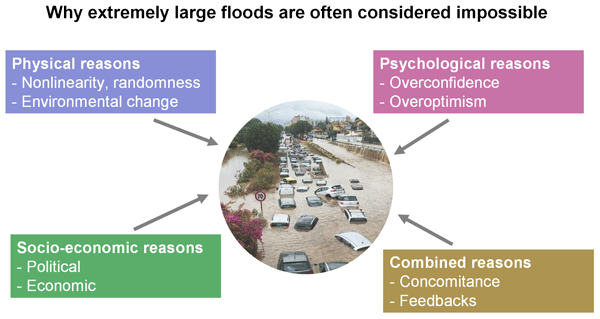
Floods often take communities by surprise, as they are often considered virtually
impossibleyet are an ever-present threat similar to the sword suspended over the head of Damocles in the classical Greek anecdote. We discuss four reasons why extremely large floods carry a risk that is often larger than expected. We provide suggestions for managing the risk of megafloods by calling for a creative exploration of hazard scenarios and communicating the unknown corners of the reality of floods.
Vera D'Amico, Francesco Visini, Andrea Rovida, Warner Marzocchi, and Carlo Meletti
Nat. Hazards Earth Syst. Sci., 24, 1401–1413, https://doi.org/10.5194/nhess-24-1401-2024, https://doi.org/10.5194/nhess-24-1401-2024, 2024
Short summary
Short summary
We propose a scoring strategy to rank multiple models/branches of a probabilistic seismic hazard analysis (PSHA) model that could be useful to consider specific requests from stakeholders responsible for seismic risk reduction actions. In fact, applications of PSHA often require sampling a few hazard curves from the model. The procedure is introduced through an application aimed to score and rank the branches of a recent Italian PSHA model according to their fit with macroseismic intensity data.
Rui Guo and Alberto Montanari
Hydrol. Earth Syst. Sci., 27, 2847–2863, https://doi.org/10.5194/hess-27-2847-2023, https://doi.org/10.5194/hess-27-2847-2023, 2023
Short summary
Short summary
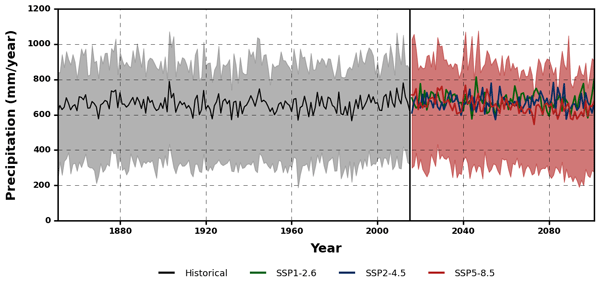
The present study refers to the region of Bologna, where the availability of a 209-year-long daily rainfall series allows us to make a unique assessment of global climate models' reliability and their predicted changes in rainfall and multiyear droughts. Our results suggest carefully considering the impact of uncertainty when designing climate change adaptation policies for droughts. Rigorous use and comprehensive interpretation of the available information are needed to avoid mismanagement.
John Douglas, Helen Crowley, Vitor Silva, Warner Marzocchi, Laurentiu Danciu, and Rui Pinho
EGUsphere, https://doi.org/10.5194/egusphere-2023-991, https://doi.org/10.5194/egusphere-2023-991, 2023
Preprint withdrawn
Short summary
Short summary
Estimates of the earthquake ground motions expected during the lifetime of a building or the length of an insurance policy are frequently calculated for locations around the world. Estimates for the same location from different studies can show large differences. These differences affect engineering, financial and risk management decisions. We apply various approaches to understand when such differences have an impact on such decisions and when they are expected because data are limited.
Domenico Giaquinto, Warner Marzocchi, and Jürgen Kurths
Nonlin. Processes Geophys., 30, 167–181, https://doi.org/10.5194/npg-30-167-2023, https://doi.org/10.5194/npg-30-167-2023, 2023
Short summary
Short summary
Despite being among the most severe climate extremes, it is still challenging to assess droughts’ features for specific regions. In this paper we study meteorological droughts in Europe using concepts derived from climate network theory. By exploring the synchronization in droughts occurrences across the continent we unveil regional clusters which are individually examined to identify droughts’ geographical propagation and source–sink systems, which could potentially support droughts’ forecast.
Warner Marzocchi, Jacopo Selva, and Thomas H. Jordan
Nat. Hazards Earth Syst. Sci., 21, 3509–3517, https://doi.org/10.5194/nhess-21-3509-2021, https://doi.org/10.5194/nhess-21-3509-2021, 2021
Short summary
Short summary
Eruption forecasting and volcanic hazard analysis are pervaded by uncertainty of different kinds, such as the natural randomness, our lack of knowledge, and the so-called unknown unknowns. After discussing the limits of how classical probabilistic frameworks handle these uncertainties, we put forward a unified probabilistic framework which unambiguously defines uncertainty of different kinds, and it allows scientific validation of the hazard model against independent observations.
Cited articles
AAAS (American Association for the Advancement of Science): Science for All Americans: A Project 2061 Report on Literacy Goals in Science, Mathematics, and Technology, American Association for the Advancement of Science, Washington, DC, ISBN 0-87168-341-5, 1989.
Abrahamson, N. A. and Bommer, J. J.: Probability and uncertainty in seismic hazard analysis, Earthq. Spectra, 21, 603–607, 2005.
Ake, J., Munson, C., Stamatakos, J., Juckett, M., Coppersmith, K., and Bommer, J.: Updated Implementation Guidelines for SSHAC Hazard Studies, Office of Nuclear Regulatory Research, U.S. Nuclear Regulatory Commission, Washington, DC, 145 pp., ADAMS Accession No. ML18282A082, 2018.
Ariccio, S., Petruccelli, I., Ganucci Cancellieri, U., Quintana, C., Villagra, P., and Bonaiuto, M.: Loving, leaving, living: evacuation site place attachment predicts natural hazard coping behavior, J. Environ. Psychol., 70, 101431, https://doi.org/10.1016/j.jenvp.2020.101431, 2020.
Ariccio, S., Lema-Blanco, I., and Bonaiuto, M.: Place attachment satisfies psychological needs in the context of environmental risk coping: experimental evidence of a link between self-determination theory and person-place relationship effects, J. Environ. Psychol., 78, 101716, https://doi.org/10.1016/j.jenvp.2021.101716, 2021.
Aspinall, W. P. and Cooke, R. M.: Quantifying scientific uncertainty from expert judgement elicitation, in: Risk and Uncertainty Assessment for Natural Hazards, edited by: Rougier, J., Sparks, S., and Hill, L. J., Cambridge University Press, Cambridge, 64–99, https://doi.org/10.1017/CBO9781139047562.005, 2013.
Aven, T. and Renn, O.: An evaluation of the treatment of risk and uncertainties in the IPCC reports on climate change, Risk Anal., 35, https://doi.org/10.1111/risa.12298, 2015.
Baker, J. W., Bradley, B. A., and Stafford, P. J.: Seismic Hazard and Risk Analysis, Cambridge University Press, Cambridge, UK, https://doi.org/10.1017/9781108425056, 2021.
Berger, J. O. and Smith, L. A.: On the statistical formalism of uncertainty quantification, Annu. Rev. Stat. Appl., 6, 433–460, https://doi.org/10.1146/annurev-statistics-030718-105232, 2019.
Besley, J. C. and Tanner, A. H.: What science communication scholars think about training scientists to communicate, Sci. Commun., 33, 239–263, https://doi.org/10.1177/1075547010386972, 2011.
Beven, K. J., Almeida, S., Aspinall, W. P., Bates, P. D., Blazkova, S., Borgomeo, E., Freer, J., Goda, K., Hall, J. W., Phillips, J. C., Simpson, M., Smith, P. J., Stephenson, D. B., Wagener, T., Watson, M., and Wilkins, K. L.: Epistemic uncertainties and natural hazard risk assessment – Part 1: A review of different natural hazard areas, Nat. Hazards Earth Syst. Sci., 18, 2741–2768, https://doi.org/10.5194/nhess-18-2741-2018, 2018a.
Beven, K. J., Aspinall, W. P., Bates, P. D., Borgomeo, E., Goda, K., Hall, J. W., Page, T., Phillips, J. C., Simpson, M., Smith, P. J., Wagener, T., and Watson, M.: Epistemic uncertainties and natural hazard risk assessment – Part 2: What should constitute good practice?, Nat. Hazards Earth Syst. Sci., 18, 2769–2783, https://doi.org/10.5194/nhess-18-2769-2018, 2018b.
Birkland, T. A.: After Disaster: Agenda Setting, Public Policy, and Focusing Events, Georgetown University Press, Washington, DC, ISBN 978-0-87840-653-1, 1997.
Box, G. E. P.: Science and statistics, J. Am. Stat. Assoc., 71, 791–799, https://doi.org/10.1080/01621459.1976.10480949, 1976.
Box, G. E. P. and Draper, N. R.: Empirical Model-Building and Response Surfaces, John Wiley and Sons, New York, USA, ISBN 978-0-471-81033-9, 1987.
Chow, V. T., Maidment, D. R., and Mays, L. W.: Applied Hydrology, McGraw-Hill, New York, ISBN 978-0-07-010810-3, 1988.
Coolen, F. P. A., Troffaes, M. C. M., and Augustin, T.: Imprecise probability, in: International Encyclopedia of Statistical Science, Springer, Berlin, Heidelberg, 645–648, https://doi.org/10.1007/978-3-642-04898-2_296, 2011.
Cossarini, G., Feudale, L., Teruzzi, A., Bolzon, G., Coidessa, G., Solidoro, C., Di Biagio, V., Amadio, C., Lazzari, P., Brosich, A., and Salon, S.: High-resolution reanalysis of the Mediterranean Sea biogeochemistry (1999–2019), Front. Mar. Sci., 8, 741486, https://doi.org/10.3389/fmars.2021.741486, 2021.
Covello, V. T. and Sandman, P. M.: Risk communication: evolution and revolution, in: Solutions to an Environment in Peril, edited by: Wolbarst, A., Johns Hopkins University Press, Baltimore, MD, 164–178, ISBN 978-0-8018-6594-7, 2001.
de Burgh-Day, C. O. and Leeuwenburg, T.: Machine learning for numerical weather and climate modelling: a review, Geosci. Model Dev., 16, 6433–6477, https://doi.org/10.5194/gmd-16-6433-2023, 2023.
Der Kiureghian, A. and Ditlevsen, O.: Aleatory or epistemic? Does it matter?, Struct. Saf., 31, 105–112, 2009.
Di Bucci, D. and Savadori, L.: Defining the acceptable level of risk for civil protection purposes: a behavioral perspective on the decision process, Nat. Hazards, 90, 293–324, https://doi.org/10.1007/s11069-017-3046-5, 2018.
Dolce, M. and Di Bucci, D.: Risk management: Roles and responsibilities in the decision-making process, in: Geoethics: Ethical Challenges and Case Studies in Earth Sciences, edited by: Wyss, M. and Peppoloni, S., Elsevier, 211–221, https://doi.org/10.1016/B978-0-12-799935-7.00018-6, 2015.
Dolce, M. and Di Bucci, D.: Building an effective collaboration between civil protection decision-makers and scientists for DRR: the Italian experience, Contributing Paper to the UN Global Assessment Report on Disaster Risk Reduction (GAR) 2022, UNDRR, 22 pp., https://www.undrr.org/publication/building-effective-collaboration-between-civil-protection-decision-makers-and (last access: 5 October 2026), 2022.
Draper, D., Hodges, J. S., Mallows, C. L., and Pregibon, D.: Exchangeability and data analysis, J. Roy. Stat. Soc. A Sta., 156, 9–37, https://doi.org/10.2307/2982858, 1993.
Eldred, M. S., Swiler, L. P., and Tang, G.: Mixed aleatory–epistemic uncertainty quantification with stochastic expansions and optimization-based interval estimation, Reliab. Eng. Syst. Safe., 96, 1092–1113, 2011.
Fischhoff, B.: Risk perception and communication unplugged: twenty years of process, Risk Anal., 15, 137–145, https://doi.org/10.1111/j.1539-6924.1995.tb00308.x, 1995.
Gaume, E.: Flood frequency analysis: the Bayesian choice, WIREs Water, 5, e1290, https://doi.org/10.1002/wat2.1290, 2018.
Gelman, A.: Comment: Bayesian Checking of the Second Levels of Hierarchical Models, Stat. Sci., 22, 349–352, https://doi.org/10.1214/07-STS235A, 2007.
Gelman, A. and Hennig, C.: Beyond subjective and objective in statistics, J. R. Stat. Soc. A Stat., 180, 967–1033, 2017.
Gelman, A. and Shalizi, C. R.: Philosophy and the practice of Bayesian statistics, Brit. J. Math. Stat. Psy., 66, 8–38, 2013.
Gerstenberger, M. C., Bora, S., Bradley, B. A., DiCaprio, C., Kaiser, A., Manea, E. F., Nicol, A., Rollins, C., Stirling, M. W., Thingbaijam, K. K. S., Van Dissen, R. J., Abbott, E. R., Atkinson, G. M., Chamberlain, C., Christophersen, A., Clark, K., Coffey, G. L., de la Torre, C. A., Ellis, S. M., Fraser, J., Graham, K., Griffin, J., Hamling, I. J., Hill, M. P., Howell, A., Hulsey, A., Hutchinson, J., Iturrieta, P. C., Johnson, K. M., Jurgens, V. O., Kirkman, R., Langridge, R. M., Lee, R. L., Litchfield, N. J., Maurer, J., Milner, K. R., Rastin, S., Rattenbury, M. S., Rhoades, D. A., Ristau, J., Schorlemmer, D., Seebeck, H., Shaw, B. E., Stafford, P. J., Stolte, A. C., Townend, J., Villamor, P., Wallace, L. M., Weatherill, G., Williams, C. A., and Wotherspoon, L. M.: The 2022 Aotearoa New Zealand National Seismic Hazard Model: process, overview, and results, B. Seismol. Soc. Am., 114, 7–36, https://doi.org/10.1785/0120230182, 2024.
Glahn, H. R. and Lowry, D. A.: The use of Model Output Statistics (MOS) in objective weather forecasting, J. Appl. Meteorol., 11, 1202–1211, 1972.
Gneiting, T. and Katzfuss, M.: Probabilistic forecasting, Annu. Rev. Stat. Appl., 1, 125–151, 2014.
Gneiting, T. and Ranjan, R.: Combining predictive distributions, Electron. J. Stat., 7, 1747–1782, https://doi.org/10.1214/13-EJS823, 2013.
Gneiting, T., Raftery, A. E., Westveld III, A. H., and Goldman, T.: Calibrated probabilistic forecasting using ensemble model output statistics and minimum CRPS estimation, Mon. Weather Rev., 133, 1098–1118, 2005.
Gumbel, E. J.: Statistics of Extremes, Columbia University Press, New York, https://doi.org/10.7312/gumb92958, 1958.
Hanea, A. M., Nane, G. F., Bedford, T., and French, S. (Eds.): Expert Judgement in Risk and Decision Analysis, Springer, Cham, Switzerland, https://doi.org/10.1007/978-3-030-46474-5, 2021.
Hansen, P. R., Lunde, A., and Nason, J. M.: The model confidence set, Econometrica, 79, 453–497, 2011.
Herrmann, M. and Marzocchi, W.: Maximizing the forecasting skill of an ensemble model, Geophys. J. Int., 234, 73–87, https://doi.org/10.1093/gji/ggad020, 2023.
Hüllermeier, E. and Waegeman, W.: Aleatoric and epistemic uncertainty in machine learning: an introduction to concepts and methods, Mach. Learn., 110, 457–506, 2021.
IPCC: Climate Change 2021: The Physical Science Basis, Contribution of Working Group I to the Sixth Assessment Report of the Intergovernmental Panel on Climate Change, edited by: Masson-Delmotte, V., Zhai, P., Pirani, A., Connors, S. L., Péan, C., Berger, S., Caud, N., Chen, Y., Goldfarb, L., Gomis, M. I., Huang, M., Leitzell, K., Lonnoy, E., Matthews, J. B. R., Maycock, T. K., Waterfield, T., Yelekçi, O., Yu, R., and Zhou, B., Cambridge University Press, Cambridge, UK and New York, NY, USA, 2391 pp., https://doi.org/10.1017/9781009157896, 2021.
Italian Republic: Legislative Decree No. 1 of 2 January 2018: Codice della protezione civile [Civil Protection Code], Gazzetta Ufficiale della Repubblica Italiana, No. 17, 22 January 2018, available at: Italian Civil Protection Department – Legislative Decree No. 1/2018, 2018.
Janzwood, S.: Confident, likely, or both? The implementation of the uncertainty language framework in IPCC special reports, Climatic Change, 162, 1655–1675, https://doi.org/10.1007/s10584-020-02746-x, 2020.
Jordan, T. H., Chen, Y.-T., Gasparini, P., Madariaga, R., Main, I., Marzocchi, W., Papadopoulos, G., Sobolev, G., Yamaoka, K., and Zschau, J.: Operational earthquake forecasting: state of knowledge and guidelines for utilization, Ann. Geophys., 54, 315–391, https://doi.org/10.4401/ag-5350, 2011.
Jordan, T. H., Marzocchi, W., Michael, A., and Gerstenberger, M.: Operational earthquake forecasting can enhance earthquake preparedness, Seismol. Res. Lett., 85, 955–959, 2014.
Klemeš, V.: Operational testing of hydrological simulation models, Hydrolog. Sci. J., 31, 13–24, https://doi.org/10.1080/02626668609491024, 1986.
Kolmogorov, A. N.: Foundations of the Theory of Probability (translated by Morrison, N.), Chelsea Publishing, Company, New York, USA, 1950, https://doi.org/10.5281/zenodo.7883088, 1950.
Koutsoyiannis, D. and Montanari, A.: Bluecat: A local uncertainty estimator for deterministic simulations and predictions, Water Resour. Res., 58, e2021WR031215, https://doi.org/10.1029/2021WR031215, 2022.
Krzysztofowicz, R.: The case for probabilistic forecasting in hydrology, J. Hydrol., 249, 2–9, https://doi.org/10.1016/S0022-1694(01)00420-6, 2001.
Laio, F. and Tamea, S.: Verification tools for probabilistic forecasts of continuous hydrological variables, Hydrol. Earth Syst. Sci., 11, 1267–1277, https://doi.org/10.5194/hess-11-1267-2007, 2007.
Li, L., Carver, R., Lopez-Gomez, I., Sha, F., and Anderson, J.: SEEDS: Emulation of Weather Forecast Ensembles with Diffusion Models, arXiv [preprint], https://doi.org/10.48550/arXiv.2306.14066, 2023.
Lindley, D. V.: The philosophy of statistics, Statistician, 49, 293–337, https://doi.org/10.1111/1467-9884.00238, 2000.
Liou, I. and Abrahamson, N.: Framework for aleatory variability and epistemic uncertainty for the ground-motion characterization based on the level of simplification, B. Seismol. Soc. Am., 115, 296–314, https://doi.org/10.1785/0120240141, 2024.
Logan, D. C.: Known knowns, known unknowns and unknown unknowns and the propagation of scientific enquiry, J. Exp. Bot., 60, 712–714, 2009.
March, J. G.: A Primer on Decision Making: How Decisions Happen, Free Press, New York, USA, ISBN 978-0-02-920035-3, 1994.
Marinacci, M.: Model uncertainty, J. Eur. Econ. Assoc., 13, 998–1076, https://doi.org/10.1111/jeea.12164, 2015.
Marzocchi, W. and Jordan, T. H.: Testing for ontological errors in probabilistic forecasting models of natural systems, P. Natl. Acad. Sci. USA, 111, 11973–11978, 2014.
Marzocchi, W. and Jordan, T. H.: A unified probabilistic framework for seismic hazard analysis, Bull. Seismol. Soc. Am., 107, 2738–2744, https://doi.org/10.1785/0120170008, 2017.
Marzocchi, W. and Jordan, T. H.: Experimental concepts for testing probabilistic earthquake forecasting and seismic hazard models, Geophys. J. Int., 215, 780–798, 2018.
Marzocchi, W., Zechar, J. D., and Jordan, T. H.: Bayesian forecast evaluation and ensemble earthquake forecasting, B. Seismol. Soc. Am., 102, 2574–2584, https://doi.org/10.1785/0120110327, 2012.
Marzocchi, W., Papale, P., Sandri, L., and Selva, J.: Reducing the volcanic risk in the frame of the hazard/risk separation principle, in: Forecasting and Planning for Volcanic Hazards, Risks, and Disasters, Vol. 2, Elsevier, Amsterdam, ISBN 978-0-12-818082-2, 545–564, 2021a.
Marzocchi, W., Selva, J., and Jordan, T. H.: A unified probabilistic framework for volcanic hazard and eruption forecasting, Nat. Hazards Earth Syst. Sci., 21, 3509–3517, https://doi.org/10.5194/nhess-21-3509-2021, 2021b.
Meletti, C., Marzocchi, W., D'Amico, V., Lanzano, G., Luzi, L., Martinelli, F., Pace, B., Rovida, A., Taroni, M., and Visini, F.: The new Italian seismic hazard model (MPS19), Ann. Geophys., 64, SE112, https://doi.org/10.4401/ag-8579 2021.
Merz, R. and Blöschl, G.: Flood frequency hydrology: 1. Temporal, spatial, and causal expansion of information, Water Resour. Res., 44, W08432, https://doi.org/10.1029/2007WR006744, 2008.
Merz, B., Basso, S., Fischer, S., Lun, D., Blöschl, G., Merz, R., Guse, B., Viglione, A., Vorogushyn, S., Macdonald, E., Wietzke, L., and Schumann, A.: Understanding heavy tails of flood peak distributions, Water Resour. Res., 58, e2021WR030506, https://doi.org/10.1029/2021WR030506, 2022.
Merz, B., Blöschl, G., Jüpner, R., Kreibich, H., Schröter, K., and Vorogushyn, S.: Invited perspectives: safeguarding the usability and credibility of flood hazard and risk assessments, Nat. Hazards Earth Syst. Sci., 24, 4015–4030, https://doi.org/10.5194/nhess-24-4015-2024, 2024.
Mileti, D. S. and Sorensen, J. H.: Communication of Emergency Public Warnings: A Social Science Perspective and State-of-the-Art Assessment, Oak Ridge National Laboratory, Oak Ridge, TN, TN, Report ORNL-6609, https://doi.org/10.2172/6137387, 1990.
Mondini, A. C., Guzzetti, F., and Melillo, M.: Deep learning forecast of rainfall-induced shallow landslides, Nat. Commun., 14, 2466, https://doi.org/10.1038/s41467-023-38135-y, 2023.
Montanari, A. and Koutsoyiannis, D.: Uncertainty estimation for environmental multimodel predictions: the BLUECAT approach and software, Environ. Modell. Softw., 188, 106419, https://doi.org/10.1016/j.envsoft.2025.106419, 2025.
Moores, S.: Interpreting Audiences: The Ethnography of Media Consumption, SAGE Publications, London, UK, ISBN 978-0-8039-8446-2, 1993.
Morss, R. E., Demuth, J. L., and Lazo, J. K.: Communicating uncertainty in weather forecasts: a survey of the US public, Weather Forecast., 23, 974–991, 2008.
Mosavi, A., Ozturk, P., and Chau, K. W.: Flood prediction using machine learning models: literature review, Water-Sui., 10, 1536, https://doi.org/10.3390/w10111536, 2018.
Oberkampf, W. L., Helton, J. C., Joslyn, C. A., Wojtkiewicz, S. F., and Ferson, S.: Challenge problems: uncertainty in system response given uncertain parameters, Reliab. Eng. Syst. Safe., 85, 11–19, 2004.
Ogata, Y.: Statistical models for earthquake occurrences and residual analysis for point processes, J. Am. Stat. Assoc., 83, 9–27, 1988.
O'Hagan, A.: Eliciting expert beliefs in substantial practical applications, J. Roy. Stat. Soc. D-Sta., 47, 21–35, https://doi.org/10.1111/1467-9884.00114, 1998.
Okoli, K., Breinl, K., Brandimarte, L., Botto, A., Volpi, E., and Di Baldassarre, G.: Model averaging versus model selection: estimating design floods with uncertain river flow data, Hydrolog. Sci. J., 63, 1913–1926, https://doi.org/10.1080/02626667.2018.1546389, 2018.
Oreskes, N., Shrader-Frechette, K., and Belitz, K.: Verification, validation, and confirmation of numerical models in the Earth sciences, Science, 263, 641–646, 1994.
Papalexiou, S. M. and D. Koutsoyiannis: Battle of extreme value distributions: a global survey on extreme daily rainfall, Water Resour. Res., 49, W07511, https://doi.org/10.1029/2012WR012557, 2013.
Paton, D.: Risk communication and natural hazard mitigation: how trust influences its effectiveness, Int. J. Glob. Environ. Issues, 8, 2–16, https://doi.org/10.1504/IJGENVI.2008.017256, 2008.
Pauli, F. and Parolai, S.: A flexible simulation-based predictive approach to compare hazard and risk models: an example application to seismic hazard, Int. J. Disast. Risk. Re., 132, 105947, https://doi.org/10.1016/j.ijdrr.2025.105947, 2026.
Pianosi, F., Sarailidis, G., Styles, K., Oldham, P., Hutchings, S., Lamb, R., and Wagener, T.: Towards global sensitivity analysis of large-scale flood loss models, Nat. Hazards Earth Syst. Sci., 26, 1727–1743, https://doi.org/10.5194/nhess-26-1727-2026, 2026.
Pidgeon, N. and Fischhoff, B.: The role of social and decision sciences in communicating uncertain climate risks, Nat. Clim. Change, 1, 35–41, https://doi.org/10.1038/nclimate1080, 2011.
Raftery, A. E., Gneiting, T., Balabdaoui, F., and Polakowski, M.: Using Bayesian model averaging to calibrate forecast ensembles, Mon. Weather Rev., 133, 1155–1174, 2005.
Reichstein, M., Camps-Valls, G., Stevens, B., Jung, M., Denzler, J., Carvalhais, N., and Prabhat, F.: Deep learning and process understanding for data-driven Earth system science, Nature, 566, 195–204, https://doi.org/10.1038/s41586-019-0912-1, 2019.
Renn, O.: Risk Governance: Coping with Uncertainty in a Complex World, Routledge, London, UK, https://doi.org/10.4324/9781849772440, 2008.
Reyna, V. F. and Brainerd, C. J.: Numeracy, ratio bias, and denominator neglect in judgments of risk and probability, Learn. Individ. Differ., 18, 89–107, 2008.
Rougier, J. and Beven, K.: Model limitations: the sources and implications of epistemic uncertainty, in: Risk and Uncertainty Assessment for Natural Hazards, edited by: Rougier, J., Sparks, R. S. J., and Hill, L. J., Cambridge University Press, Cambridge, UK, 40–63, https://doi.org/10.1017/CBO9781139047562.004, 2013.
Rubin, D. B.: Bayesianly justifiable and relevant frequency calculations for the applied statistician, Ann. Stat., 12, 1151–1172, 1984.
Seeger, M. W.: Best practices in crisis communication: an expert panel process, J. Appl. Commun. Res., 34, 232–244, 2006.
Savadori, L., Ronzani, P., Sillari, G., Di Bucci, D., and Dolce, M.: Communicating seismic risk information: the effect of risk comparisons on risk perception sensitivity, Front. Commun., 7, 743172, https://doi.org/10.3389/fcomm.2022.743172, 2022.
Scherbaum, F. and Kuehn, N. M.: Logic tree branch weights and probabilities: summing up to one is not enough, Earthq. Spectra, 27, 1237–1251, 2011.
Schorlemmer, D., Werner, M. J., Marzocchi, W., Jordan, T. H., Ogata, Y., Jackson, D. D., Mak, S., Rhoades, D. A., Gerstenberger, M. C., Hirata, N., Liukis, M., Maechling, P., Strader, A., Taroni, M., Wiemer, S., Zechar, J. D., and Zhuang, J.: The Collaboratory for the Study of Earthquake Predictability: achievements and priorities, Seismol. Res. Lett., 89, 1305–1313, 2018.
Sellnow, D. D. and Sellnow, T. L.: The IDEA model for effective instructional risk and crisis communication by emergency managers and other key spokespersons, J. Emerg. Manag., 17, 67–78, 2019.
Sellnow, D. D., Lane, D. R., Sellnow, T. L., and Littlefield, R. S.: The IDEA model as a best practice for effective instructional risk and crisis communication, Commun. Stud., 68, 552–567, https://doi.org/10.1080/10510974.2017.1375535, 2017.
Sellnow, T. L. and Seeger, M. W.: Theorizing Crisis Communication, John Wiley and Sons, Hoboken, NJ, USA, ISBN 978-1-119-61591-0, 2021.
Selva, J., Costa, A., Sandri, L., Macedonio, G., and Marzocchi, W.: Probabilistic short-term volcanic hazard in phases of unrest: a case study for tephra fallout, J. Geophys. Res., 119, 8805–8826, 2014.
Selva, J., Lorito, S., Volpe, M., Romano, F., Tonini, R., Perfetti, P., Bernardi, F., Taroni, M., Scala, A., Babeyko, A., Løvholt, F., Gibbons, S. J., Macías, J., Castro, M. J., González-Vida, J. M., Sánchez-Linares, C., Bayraktar, H. B., Basili, R., Maesano, F. E., Tiberti, M. M., Mele, F., Piatanesi, A., and Amato, A.: Probabilistic tsunami hazard analysis in the Mediterranean Sea, Nat. Commun., 12, 5677, https://doi.org/10.1038/s41467-021-25815-w, 2021.
Selva, J., Argyroudis, S., Cotton, F., Esposito, S., Iqbal, S. M., Lorito, S., Stojadinovic, B., Basili, R., Hoechner, A., Mignan, A., Pitilakis, K., Thio, H. K., and Giardini, D.: A novel multiple-expert protocol to manage uncertainty and subjective choices in probabilistic single and multi-hazard risk analyses, Int. J. Disast. Risk. Re., 110, 104641, https://doi.org/10.1016/j.ijdrr.2024.104641, 2024.
Slovic, P.: The Perception of Risk, Earthscan, London, UK, ISBN 978-1-85383-527-8, 2000.
Senior Seismic Hazard Analysis Committee (SSHAC): Recommendations for Probabilistic Seismic Hazard Analysis: Guidance on Uncertainty and Use of Experts, NUREG/CR-6372, UCRL-ID-122160, U.S. Nuclear Regulatory Commission, U.S. Department of Energy, and Electric Power Research Institute, 1997.
Shabestanipour, G., Brodeur, Z., Farmer, W. H., Steinschneider, S., Vogel, R. M., and Lamontagne, J. R.: Stochastic watershed model ensembles for long-range planning: verification and validation, Water Resour. Res., 59, e2022WR032201, https://doi.org/10.1029/2022WR032201, 2023.
Stancu, A., Ariccio, S., De Dominicis, S., Ganucci Cancellieri, U., Petruccelli, I., Ilin, C., and Bonaiuto, M.: The better the bond, the better we cope. The effects of place attachment intensity and place attachment styles on the link between perception of risk and emotional and behavioral coping, Int. J. Disast. Risk. Re., 51, 101771, https://doi.org/10.1016/j.ijdrr.2020.101771, 2020.
Stancu, A., Ariccio, S., De Dominicis, S., Ganucci Cancellieri, U., Petruccelli, I., Theodorou, A., Ilin, C., and Bonaiuto, M.: Place attachment styles predict adaptive and maladaptive conducts under flood risk: evidence via cognitive and affective coping mediation, J. Community Appl. Soc., 35, e70083, https://doi.org/10.1002/casp.70083, 2025.
Stedinger, J. R. and Cohn, T. A.: Flood frequency analysis with historical and paleoflood information, Water Resour. Res., 22, 785–793, https://doi.org/10.1029/WR022i005p00785, 1986.
Todini, E.: Flood forecasting and decision making in the new millennium. Where are We?, Water Resour. Manag., 31, 3111–3129, https://doi.org/10.1007/s11269-017-1693-7, 2017.
van der Bles, A. M., Van Der Linden, S., Freeman, A. L., Mitchell, J., Galvao, A. B., Zaval, L., and Spiegelhalter, D. J.: Communicating uncertainty about facts, numbers and science, Roy. Soc. Open Sci., 6, 181870, https://doi.org/10.1098/rsos.181870, 2019.
van der Bles, A. M., van der Linden, S., Freeman, A. L. J., and Spiegelhalter, D. J.: The effects of communicating uncertainty on public trust in facts and numbers, Proc. Natl. Acad. Sci. USA, 117, 7672–7683, https://doi.org/10.1073/pnas.1913678117, 2020.
Viglione, A., Merz, R., Salinas, J. L., and Blöschl, G.: Flood frequency hydrology: 3. A Bayesian analysis, Water Resour. Res., 49, https://doi.org/10.1029/2011WR010782, 2013.
Villagra, P., Quintana, C., Ariccio, S., and Bonaiuto, M.: Evacuation intention on the Southern Chilean coast: a psychological and spatial study approach, Habitat Int., 117, 102443, https://doi.org/10.1016/j.habitatint.2021.102443, 2021.
Villagra, P., Peña y Lillo, O., Ariccio, S., Bonaiuto, M., and Olivares-Rodríguez, C.: Effect of the Costa Resiliente serious game on community disaster resilience, Int. J. Disast. Risk. Re., 91, 103686, https://doi.org/10.1016/j.ijdrr.2023.103686, 2023.
Viscusi, W. K.: Fatal Tradeoffs: Public and Private Responsibilities for Risk, Oxford University Press, New York, USA, https://doi.org/10.1093/oso/9780195072785.001.0001, 1992.
Wagenmakers, E.-J., Sarafoglou, A., and Aczel, B.: One statistical analysis must not rule them all, Nature, 605, 423–425, https://doi.org/10.1038/d41586-022-01332-8, 2022.
Walley, P.: Statistical Reasoning with Imprecise Probabilities, Chapman and Hall, London, https://doi.org/10.1007/978-1-4899-3472-7, 1991.
Warren, G. W. and Duckett, S. M.: Risk perception and communication, plugged-in: fifty years of process, Risk Anal., 46, e70205, https://doi.org/10.1111/risa.70205, 2026.
Wasserman, L.: Frequentist Bayes is objective, Bayesian Anal., 1, 451–456, https://doi.org/10.1214/06-BA116, 2006.
Weichselberger, K.: The theory of interval probability as a unifying concept for uncertainty, Int. J. Approx. Reason., 24, 149–170, 2000.
Wynne, B.: Misunderstood misunderstanding: social identities and public uptake of science, Public Underst. Sci., 1, 281–304, 1992.
Zanetti, L., Chiffi, D., and Petrini, L.: Philosophical aspects of probabilistic seismic hazard analysis (PSHA): a critical review, Nat. Hazards, 117, 1193–1212, https://doi.org/10.1007/s11069-023-05901-6, 2023.
Editorial statement
The paper advances hazard and risk science by developing a cross-hazard framework for systematically identifying, separating, quantifying, and communicating multiple sources of uncertainty, centred on the novel concept of a “complete forecast.” The paper can be a highlight paper because it bridges traditionally fragmented disciplinary approaches to uncertainty and offers a broadly applicable foundation for more transparent model evaluation, risk communication, and uncertainty-informed decision-making.
The paper advances hazard and risk science by developing a cross-hazard framework for...
Short summary
Natural systems are complex and uncertain, making probabilistic forecasts essential. Representing and communicating all uncertainties is challenging but vital for risk management. A multidisciplinary review identified common challenges across hazards and proposes a shared framework based on a clear hierarchy of uncertainties, complete forecasts, rigorous model evaluation, and effective communication to support decision-making.
Natural systems are complex and uncertain, making probabilistic forecasts essential....


Altmetrics
Final-revised paper
Preprint