
Articles | Volume 26, issue 8
https://doi.org/10.5194/nhess-26-3761-2026
© Author(s) 2026. This work is distributed under
the Creative Commons Attribution 4.0 License.
the Creative Commons Attribution 4.0 License.
https://doi.org/10.5194/nhess-26-3761-2026
© Author(s) 2026. This work is distributed under
the Creative Commons Attribution 4.0 License.
the Creative Commons Attribution 4.0 License.
Research article
| 
13 Aug 2026
Research article |
| 13 Aug 2026
| 13 Aug 2026
Attribution of the record breaking 2025 European fire season to climate change
Theodore R. Keeping
CORRESPONDING AUTHOR

Centre for Environmental Policy, Imperial College London, London, UK
Leverhulme Centre for Wildfires, Environment and Society, Imperial College London, London, UK
Mariam Zachariah
Centre for Environmental Policy, Imperial College London, London, UK
Olivia Haas
Leverhulme Centre for Wildfires, Environment and Society, Imperial College London, London, UK
Laboratory for Climate Sciences and the Environment, Paris Saclay University, Paris, France
Manolis Grillakis
Leverhulme Centre for Wildfires, Environment and Society, Imperial College London, London, UK
School of Chemical and Environmental Engineering, Technical University of Crete, Chania, Greece
Clair Barnes
Centre for Environmental Policy, Imperial College London, London, UK
Gareth D. Clay
Department of Geography, University of Manchester, Manchester, UK
Bikem Ekberzade
Eurasia Institute of Earth Sciences, Istanbul Technical University, Istanbul, Türkiye
Orjeta Jaupaj
Institute of Geosciences, Polytechnic University of Tirana, Tirana, Albania
Andreia Ribeiro
Department of Compound Environmental Risks, Helmholtz Centre for Environmental Research, UFZ, Leipzig, Germany
Institute for Atmospheric and Climate Science, ETH Zurich, Zurich, Switzerland
Ricardo Trigo
Instituto Dom Luiz, Faculdade de Ciências, Universidade de Lisboa, Lisbon, Portugal
Apostolos Voulgarakis
Leverhulme Centre for Wildfires, Environment and Society, Imperial College London, London, UK
School of Chemical and Environmental Engineering, Technical University of Crete, Chania, Greece
Friederike E. L. Otto
Centre for Environmental Policy, Imperial College London, London, UK
Related authors
No articles found.
Bikem Ekberzade
Earth Syst. Sci. Data Discuss., https://doi.org/10.5194/essd-2026-701, https://doi.org/10.5194/essd-2026-701, 2026
Preprint under review for ESSD
Short summary
Short summary
This open dataset presents a geographically validated wildfire inventory for Türkiye (2013–2025), addressing the typographical and spatial inaccuracies that often limit official forestry records. The workflow reconciles location errors via administrative harmonization, satellite detections, and border assessments. All rescued records feature explicit provenance flags for transparency, including those with major spatial errors, kept for statistical integrity.
Kai Kornhuber, Emanuele Bevacqua, Mariana Madruga de Brito, Wiebke S. Jäger, Pauline Rivoire, Cassandra D. W. Rogers, Fabiola Banfi, Fulden Batibeniz, James Carruthers, Carlo De Michele, Silvia De Angeli, Cristina Deidda, Marleen C. de Ruiter, Andreas H. Fink, Henrique M. D. Goulart, Katharina Küpfer, Patrick Ludwig, Douglas Maraun, Gabriele Messori, Shruti Nath, Fiachra O'Loughlin, Joaquim G. Pinto, Benjamin Poschlod, Alexandre M. Ramos, Colin Raymond, Andreia F. S. Ribeiro, Deepti Singh, Laura Suarez Gutierrez, Philip J. Ward, and Christopher J. White
Nat. Hazards Earth Syst. Sci., 26, 4309–4334, https://doi.org/10.5194/nhess-26-4309-2026, https://doi.org/10.5194/nhess-26-4309-2026, 2026
Short summary
Short summary
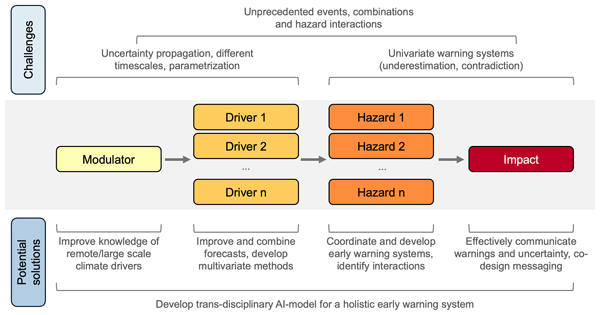
Impacts from extreme weather events may become more severe due to increased likelihood of compounding events under global warming, which challenge present day climate modelling and forecasting capacities. In this perspective we reflect on the usability of compound event research to bridge the gap between academic research and real-world applications.
Bikem Ekberzade
EGUsphere, https://doi.org/10.5194/egusphere-2026-4188, https://doi.org/10.5194/egusphere-2026-4188, 2026
This preprint is open for discussion and under review for Geoscientific Model Development (GMD).
Short summary
Short summary
Validating burned-area predictions from wildfire models against satellite observations is often hindered by differences in spatial grids and projections, requiring complex, project-specific code. This manuscript presents an open-source workflow that introduces a standardized "Master Grid" for accurate spatial harmonization, enabling reproducible, efficient, and consistent benchmarking of wildfire model simulations against satellite-derived observations.

João C. M. Teixeira, Chantelle Burton, Douglas I. Kelley, Gerd A. Folberth, Fiona M. O'Connor, Richard A. Betts, and Apostolos Voulgarakis
Earth Syst. Dynam., 17, 739–767, https://doi.org/10.5194/esd-17-739-2026, https://doi.org/10.5194/esd-17-739-2026, 2026
Short summary
Short summary
Burned area has declined globally since the late 1990s, especially in tropical savannas, yet many climate models miss this trend because they poorly represent human fire use and suppression. We tested whether adding a simple link to human development improves a fire model. This reduced large regional errors and better captured downward trends in several areas, though it increased global underestimation and reduced variability. Human influence is key, but simple assumptions have trade-offs.
Rafaila-Nikola Mourgela, Iulian-Alin Rosu, and Apostolos Voulgarakis
EGUsphere, https://doi.org/10.5194/egusphere-2026-3239, https://doi.org/10.5194/egusphere-2026-3239, 2026
Short summary
Short summary
This study investigates the global radiative and climate impacts of present-day wildfire emissions. Using EC-Earth3 and CMIP6 emissions, we performed atmosphere-only and ocean-atmosphere coupled simulations to study the local and remote impacts. Our results show a net negative radiative effect dominated by aerosol-cloud interactions. The climate response is mainly driven by the slow ocean-mediated response, producing global cooling and strong regional precipitation changes.
Andreia F. S. Ribeiro, Maik Biling, Kirsten Thonicke, Werner von Bloh, Jakob Wessel, Sabine Undorf, Matthias Forkel, and Jakob Zscheischler
EGUsphere, https://doi.org/10.5194/egusphere-2026-2952, https://doi.org/10.5194/egusphere-2026-2952, 2026
Short summary
Short summary
Wildfires are becoming more extreme, yet our state-of-the-art tools fail to capture the full risk. We simulate a large ensemble of wildfire simulations capturing a broader range of physically plausible extreme wildfire events beyond what observations alone can reveal. Extreme fire danger alone does not explain the worst impacts: ignitions, fuel and vegetation-fire feedback need to be incorporated. This modelling framework is transferable to other climate-impact sectors beyond wildfires.
Fang Li, David M. Lawrence, Brendan M. Rogers, Chantelle Burton, Huilin Huang, Yiquan Jiang, Johannes W. Kaiser, Matthew Kasoar, Hanna Lee, Ruby Leung, Lars Nieradzik, Aihui Wang, Daniel S. Ward, Ligeer Ce, Yangchun Li, Zhongda Lin, Apostolos Voulgarakis, and Yongkang Xue
Geosci. Model Dev., 19, 3989–4007, https://doi.org/10.5194/gmd-19-3989-2026, https://doi.org/10.5194/gmd-19-3989-2026, 2026
Short summary
Short summary
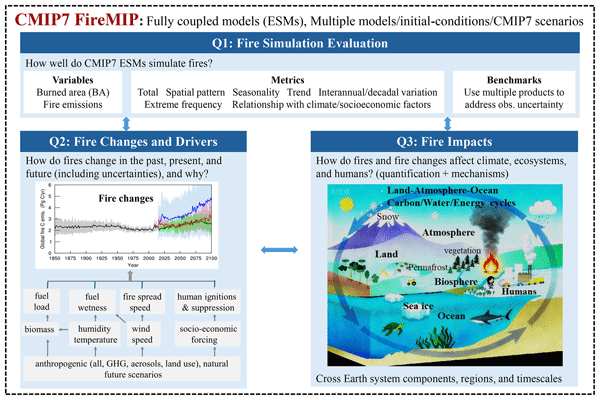
Extreme fire events are increasing, and fires are projected to rise across most regions, posing growing risks to ecosystems and society. As a key Earth system process, fire is now modeled in most Earth System Models (ESMs). FireMIP (Fire Modeling Intercomparison Project) within CMIP7 will evaluate fire simulations in state‑of‑the‑art ESMs, project future fire changes, and provide quantitative, process‑based understanding of fire's role in the Earth system.
Tiago M. Ferreira, Ricardo M. Trigo, Joaquim G. Pinto, Julian Quinting, Svenja Christ, and Alexandre M. Ramos
EGUsphere, https://doi.org/10.5194/egusphere-2026-2313, https://doi.org/10.5194/egusphere-2026-2313, 2026
Short summary
Short summary
The study analyses how atmospheric river characteristics change in relation to warm conveyor belt ascent and how these changes evolve over the extratropical cyclone lifecycle. Using reanalysis data, we show that the ascent intensifies both the moisture content and precipitation values within the atmospheric river, and that this intensification occurs around the maximum deepening point of the extratropical cyclone. These can improve weather forecasts and early warnings for floods in Europe.
Jianing Guo, Xiaoning Xie, Gunnar Myhre, Drew Shindell, Alf Kirkevåg, Trond Iversen, Apostolos Voulgarakis, Toshihiko Takemura, Ke Shang, Xinzhou Li, Zhengguo Shi, Yangang Liu, Xiaodong Liu, and Hong Yan
Atmos. Chem. Phys., 26, 5169–5184, https://doi.org/10.5194/acp-26-5169-2026, https://doi.org/10.5194/acp-26-5169-2026, 2026
Short summary
Short summary
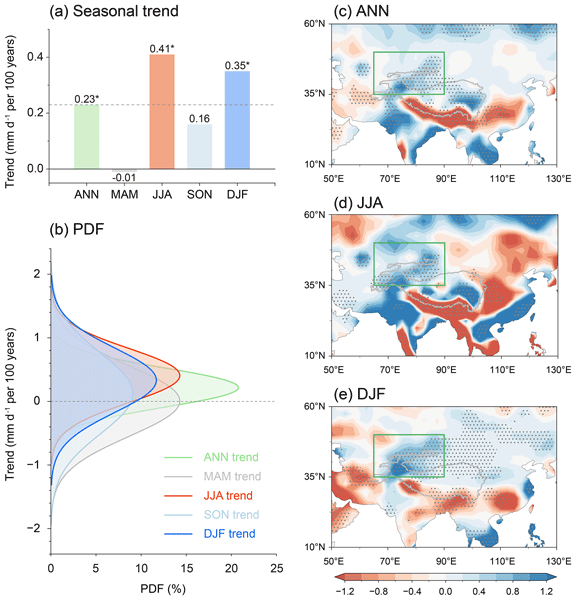
Central Asia has grown wetter in recent decades, but the drivers differ by season. We analyzed observations and climate model experiments to understand these changes and their future. Our analysis reveals that greenhouse gases from human activities drive winter wetting, whereas aerosol from Asia urbanization and industrialization enhances summer precipitation. As future reductions in air pollution, the region may experience drier summers and create new risks for regional water resources.
Bikem Ekberzade
EGUsphere, https://doi.org/10.5194/egusphere-2026-1498, https://doi.org/10.5194/egusphere-2026-1498, 2026
Short summary
Short summary
Will climate change simply cause more wildfires across the Eastern Mediterranean? This research reveals a different threat: a fundamental geographic reorganization of fire risk. While effective firefighting currently masks severe climate-driven risk in forests—creating a hidden "fire debt"—future warming may push frequent wildfires into semi-arid interior regions. Adapting to climate change requires anticipating this spatial shift, not just expecting uniform intensification everywhere.
Laura A. Mansfield, Peer J. Nowack, Edmund M. Ryan, Oliver Wild, and Apostolos Voulgarakis
EGUsphere, https://doi.org/10.5194/egusphere-2025-6046, https://doi.org/10.5194/egusphere-2025-6046, 2025
Short summary
Short summary
We present a fast machine learning emulator that predicts how Earth’s surface temperature reacts within the first five years to changes in greenhouse gases and aerosol pollutants. It is trained on carefully designed simulations from a complex climate model, but can be run much faster. Our emulator can be used to show where the climate is most sensitive to different emissions and can help explore many possible future paths, making it easier to assess the climate effects of policy choices.
Konstantinos V. Varotsos, George Katavoutas, Gianna Kitsara, Anna Karali, Ioannis Lemesios, Platon Patlakas, Maria Hatzaki, Vassilis Tenentes, Athanasios Sarantopoulos, Basil Psiloglou, Aristeidis G. Koutroulis, Manolis G. Grillakis, and Christos Giannakopoulos
Earth Syst. Sci. Data, 17, 4455–4477, https://doi.org/10.5194/essd-17-4455-2025, https://doi.org/10.5194/essd-17-4455-2025, 2025
Short summary
Short summary
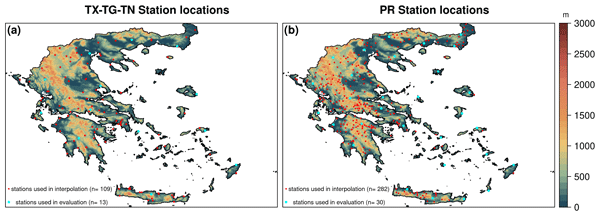
CLIMADAT-GRid is the first, publicly available, daily air temperature and precipitation gridded climate dataset for Greece at a high resolution of 1 km × 1 km and for the period 1981–2019. The dataset is based on quality-controlled station data, and various interpolation techniques were evaluated for generating the daily grids. CLIMADAT-GRid serves as a valuable resource for research and information in climate studies as well as in other areas such as hydrology, agriculture, energy, and health.
Anastasios Rovithakis, Eleanor Burke, Chantelle Burton, Matthew Kasoar, Manolis G. Grillakis, Konstantinos D. Seiradakis, and Apostolos Voulgarakis
Nat. Hazards Earth Syst. Sci., 25, 3185–3200, https://doi.org/10.5194/nhess-25-3185-2025, https://doi.org/10.5194/nhess-25-3185-2025, 2025
Short summary
Short summary
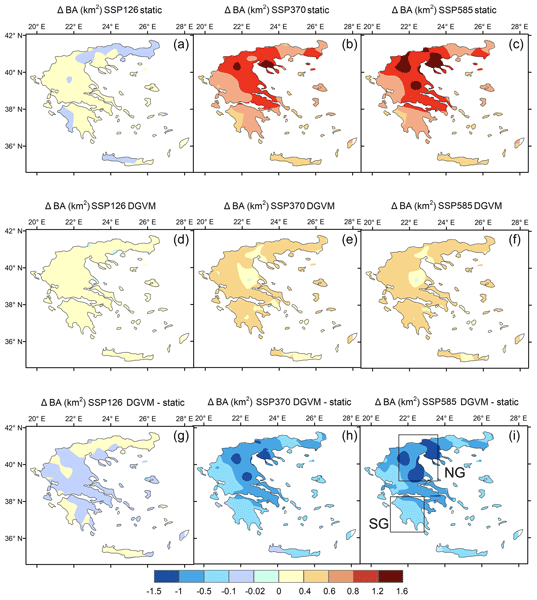
We used a land surface computer model to forecast how climate change will impact wildfires in Greece. Our results show a significant increase in future burnt area due to hotter, drier climate. Allowing vegetation to change with the climate lessens this increase overall, since fire is no longer igniting in areas already burnt, and it even led to projected decreases in the agricultural areas in the north of the country.
Oliver Perkins, Olivia Haas, Matthew Kasoar, Apostolos Voulgarakis, and James D. A. Millington
EGUsphere, https://doi.org/10.5194/egusphere-2025-3728, https://doi.org/10.5194/egusphere-2025-3728, 2025
Short summary
Short summary
Humans impact fire indirectly through climate change, but also directly through land use and different fire management strategies. We compare two recently-developed models of global burned area with very different assumptions about the role of direct human impacts on fire. We contrast their future projections and explore the implications of differences between them for climate change adaptation and fire science more broadly.
Hannes Müller Schmied, Simon Newland Gosling, Marlo Garnsworthy, Laura Müller, Camelia-Eliza Telteu, Atiq Kainan Ahmed, Lauren Seaby Andersen, Julien Boulange, Peter Burek, Jinfeng Chang, He Chen, Lukas Gudmundsson, Manolis Grillakis, Luca Guillaumot, Naota Hanasaki, Aristeidis Koutroulis, Rohini Kumar, Guoyong Leng, Junguo Liu, Xingcai Liu, Inga Menke, Vimal Mishra, Yadu Pokhrel, Oldrich Rakovec, Luis Samaniego, Yusuke Satoh, Harsh Lovekumar Shah, Mikhail Smilovic, Tobias Stacke, Edwin Sutanudjaja, Wim Thiery, Athanasios Tsilimigkras, Yoshihide Wada, Niko Wanders, and Tokuta Yokohata
Geosci. Model Dev., 18, 2409–2425, https://doi.org/10.5194/gmd-18-2409-2025, https://doi.org/10.5194/gmd-18-2409-2025, 2025
Short summary
Short summary
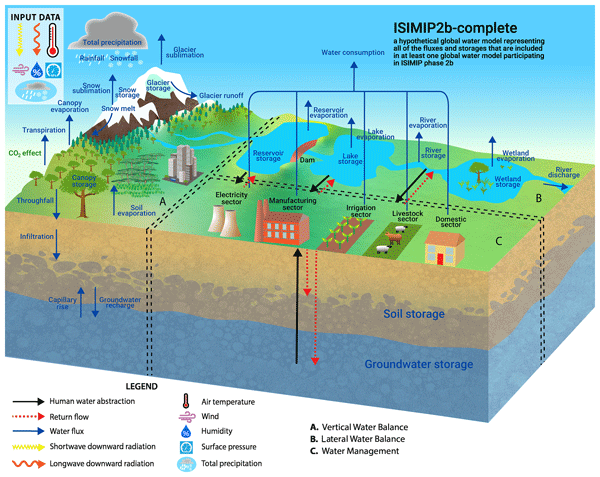
Global water models contribute to the evaluation of important natural and societal issues but are – as all models – simplified representation of reality. So, there are many ways to calculate the water fluxes and storages. This paper presents a visualization of 16 global water models using a standardized visualization and the pathway towards this common understanding. Next to academic education purposes, we envisage that these diagrams will help researchers, model developers, and data users.
Fred Worrall, Gareth Clay, Catherine Moody, and Catherine Hirst
EGUsphere, https://doi.org/10.5194/egusphere-2025-1469, https://doi.org/10.5194/egusphere-2025-1469, 2025
Preprint archived
Short summary
Short summary
Understanding global carbon budgets requires a knowledge of the balance between carbon dioxide and oxygen gas fluxes – oxidative ratio (OR). The OR has proved difficult to measure for terrestrial environments. We present a novel method for measuring OR using an ecosystem's carbon budget and organic matter elemental composition. We found an OR of 0.88, significantly lower than the IPCC's assumed 1.1. This lower OR value implies that terrestrial biosphere carbon budgets have been underestimated.
Tiago M. Ferreira, Ricardo M. Trigo, Tomás H. Gaspar, Joaquim G. Pinto, and Alexandre M. Ramos
Nat. Hazards Earth Syst. Sci., 25, 609–623, https://doi.org/10.5194/nhess-25-609-2025, https://doi.org/10.5194/nhess-25-609-2025, 2025
Short summary
Short summary
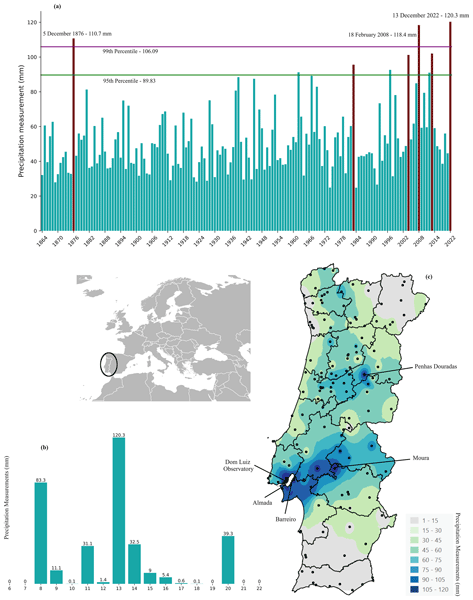
We investigate the synoptic evolution associated with the occurrence of an atmospheric river that led to a 24 h record-breaking extreme precipitation event (120.3 mm) in Lisbon, Portugal, on 13 December 2022. The synoptic background allowed the formation, on 10 December, of an atmospheric river associated with a deep extratropical cyclone and with a high moisture content and an inflow of moisture, due to the warm conveyor belt, throughout its life cycle. The system made landfall on 12 December.
Friederike E. L. Otto, Clair Barnes, Sjoukje Philip, Sarah Kew, Geert Jan van Oldenborgh, and Robert Vautard
Adv. Stat. Clim. Meteorol. Oceanogr., 10, 159–171, https://doi.org/10.5194/ascmo-10-159-2024, https://doi.org/10.5194/ascmo-10-159-2024, 2024
Short summary
Short summary
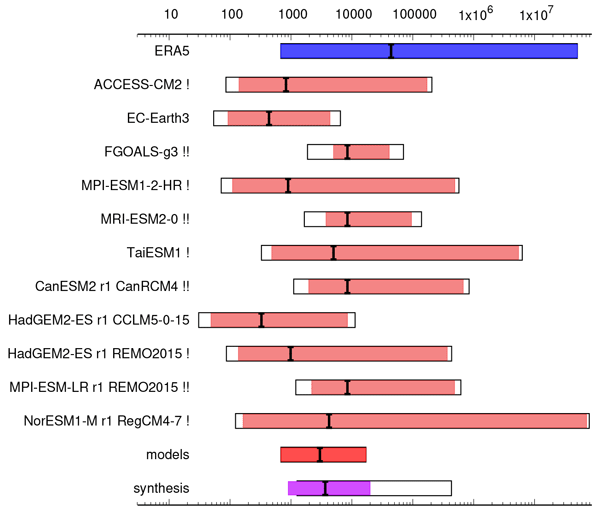
To assess the role of climate change in individual weather events, different lines of evidence need to be combined in order to draw robust conclusions about whether observed changes can be attributed to anthropogenic climate change. Here we present a transparent method, developed over 8 years, to combine such lines of evidence in a single framework and draw conclusions about the overarching role of human-induced climate change in individual weather events.
Sebastian Sippel, Clair Barnes, Camille Cadiou, Erich Fischer, Sarah Kew, Marlene Kretschmer, Sjoukje Philip, Theodore G. Shepherd, Jitendra Singh, Robert Vautard, and Pascal Yiou
Weather Clim. Dynam., 5, 943–957, https://doi.org/10.5194/wcd-5-943-2024, https://doi.org/10.5194/wcd-5-943-2024, 2024
Short summary
Short summary
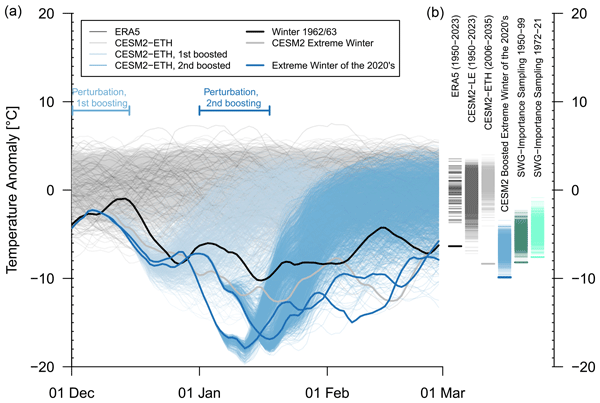
Winter temperatures in central Europe have increased. But cold winters can still cause problems for energy systems, infrastructure, or human health. Here we tested whether a record-cold winter, such as the one observed in 1963 over central Europe, could still occur despite climate change. The answer is yes: it is possible, but it is very unlikely. Our results rely on climate model simulations and statistical rare event analysis. In conclusion, society must be prepared for such cold winters.
Oliver Perkins, Matthew Kasoar, Apostolos Voulgarakis, Cathy Smith, Jay Mistry, and James D. A. Millington
Geosci. Model Dev., 17, 3993–4016, https://doi.org/10.5194/gmd-17-3993-2024, https://doi.org/10.5194/gmd-17-3993-2024, 2024
Short summary
Short summary
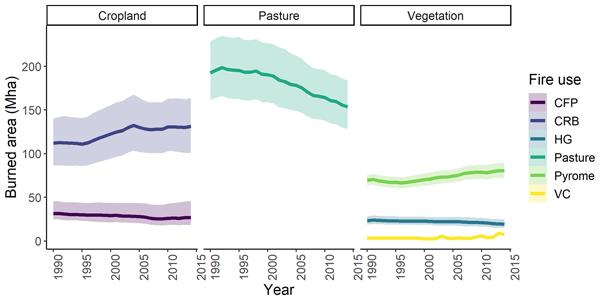
Wildfire is often presented in the media as a danger to human life. Yet globally, millions of people’s livelihoods depend on using fire as a tool. So, patterns of fire emerge from interactions between humans, land use, and climate. This complexity means scientists cannot yet reliably say how fire will be impacted by climate change. So, we developed a new model that represents globally how people use and manage fire. The model reveals the extent and diversity of how humans live with and use fire.
Katie R. Blackford, Matthew Kasoar, Chantelle Burton, Eleanor Burke, Iain Colin Prentice, and Apostolos Voulgarakis
Geosci. Model Dev., 17, 3063–3079, https://doi.org/10.5194/gmd-17-3063-2024, https://doi.org/10.5194/gmd-17-3063-2024, 2024
Short summary
Short summary
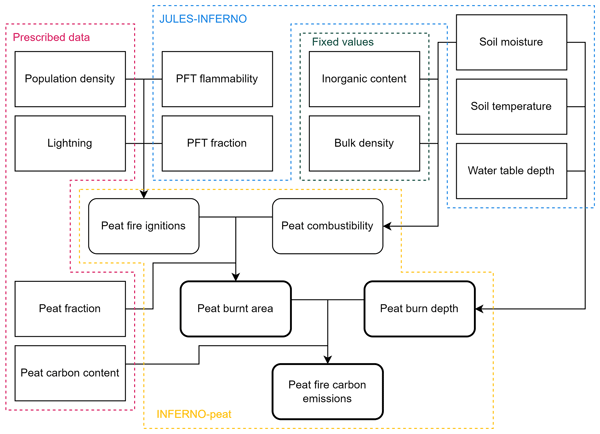
Peatlands are globally important stores of carbon which are being increasingly threatened by wildfires with knock-on effects on the climate system. Here we introduce a novel peat fire parameterization in the northern high latitudes to the INFERNO global fire model. Representing peat fires increases annual burnt area across the high latitudes, alongside improvements in how we capture year-to-year variation in burning and emissions.
Stephanie Fiedler, Vaishali Naik, Fiona M. O'Connor, Christopher J. Smith, Paul Griffiths, Ryan J. Kramer, Toshihiko Takemura, Robert J. Allen, Ulas Im, Matthew Kasoar, Angshuman Modak, Steven Turnock, Apostolos Voulgarakis, Duncan Watson-Parris, Daniel M. Westervelt, Laura J. Wilcox, Alcide Zhao, William J. Collins, Michael Schulz, Gunnar Myhre, and Piers M. Forster
Geosci. Model Dev., 17, 2387–2417, https://doi.org/10.5194/gmd-17-2387-2024, https://doi.org/10.5194/gmd-17-2387-2024, 2024
Short summary
Short summary
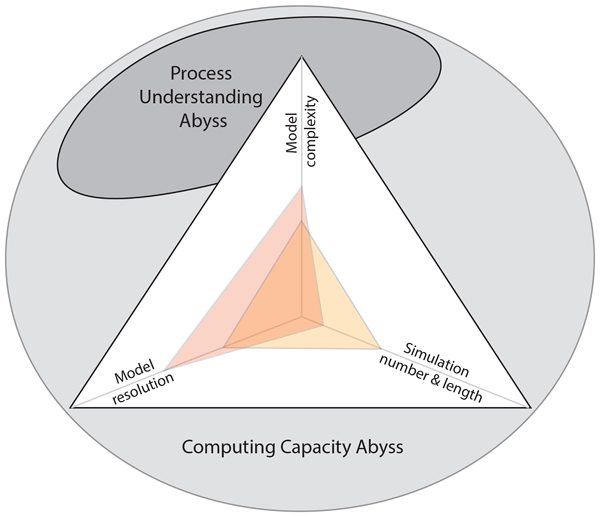
Climate scientists want to better understand modern climate change. Thus, climate model experiments are performed and compared. The results of climate model experiments differ, as assessed in the latest Intergovernmental Panel on Climate Change (IPCC) assessment report. This article gives insights into the challenges and outlines opportunities for further improving the understanding of climate change. It is based on views of a group of experts in atmospheric composition–climate interactions.
Rosa Pietroiusti, Inne Vanderkelen, Friederike E. L. Otto, Clair Barnes, Lucy Temple, Mary Akurut, Philippe Bally, Nicole P. M. van Lipzig, and Wim Thiery
Earth Syst. Dynam., 15, 225–264, https://doi.org/10.5194/esd-15-225-2024, https://doi.org/10.5194/esd-15-225-2024, 2024
Short summary
Short summary
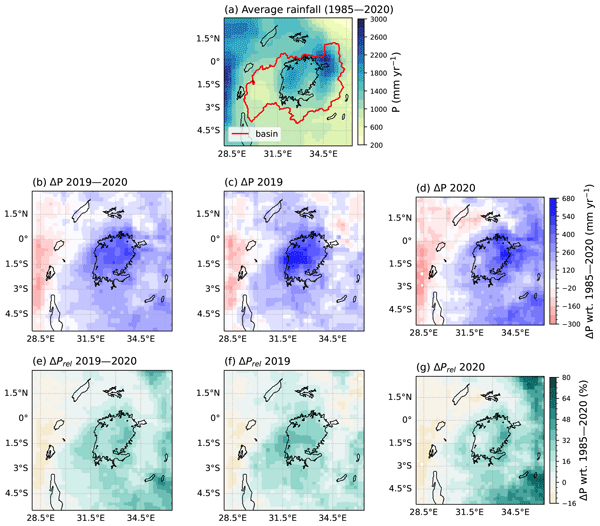
Heavy rainfall in eastern Africa between late 2019 and mid 2020 caused devastating floods and landslides and drove the levels of Lake Victoria to a record-breaking maximum in May 2020. In this study, we characterize the spatial extent and impacts of the floods in the Lake Victoria basin and investigate how human-induced climate change influenced the probability and intensity of the record-breaking lake levels and flooding by applying a multi-model extreme event attribution methodology.
Diego Fernández-Nóvoa, Alexandre M. Ramos, José González-Cao, Orlando García-Feal, Cristina Catita, Moncho Gómez-Gesteira, and Ricardo M. Trigo
Nat. Hazards Earth Syst. Sci., 24, 609–630, https://doi.org/10.5194/nhess-24-609-2024, https://doi.org/10.5194/nhess-24-609-2024, 2024
Short summary
Short summary
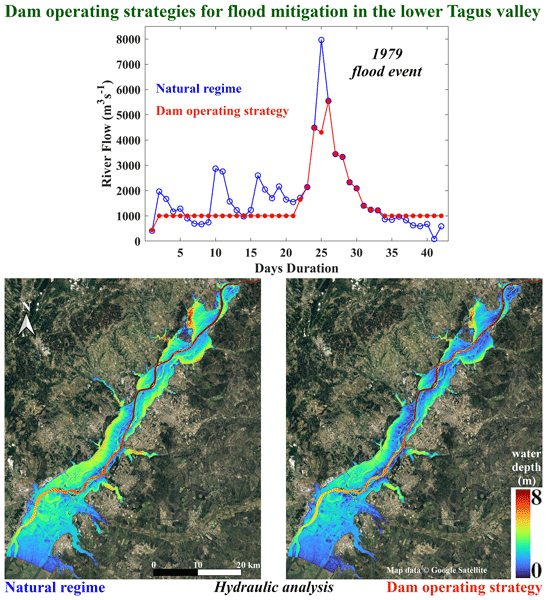
The present study focuses on an in-depth analysis of floods in the lower section of the Tagus River from a hydrodynamic perspective by means of the Iber+ numerical model and on the development of dam operating strategies to mitigate flood episodes using the exceptional floods of February 1979 as a benchmark. The results corroborate the model's capability to evaluate floods in the study area and confirm the effectiveness of the proposed strategies to reduce flood impact in the lower Tagus valley.
Dominik L. Schumacher, Mariam Zachariah, Friederike Otto, Clair Barnes, Sjoukje Philip, Sarah Kew, Maja Vahlberg, Roop Singh, Dorothy Heinrich, Julie Arrighi, Maarten van Aalst, Mathias Hauser, Martin Hirschi, Verena Bessenbacher, Lukas Gudmundsson, Hiroko K. Beaudoing, Matthew Rodell, Sihan Li, Wenchang Yang, Gabriel A. Vecchi, Luke J. Harrington, Flavio Lehner, Gianpaolo Balsamo, and Sonia I. Seneviratne
Earth Syst. Dynam., 15, 131–154, https://doi.org/10.5194/esd-15-131-2024, https://doi.org/10.5194/esd-15-131-2024, 2024
Short summary
Short summary
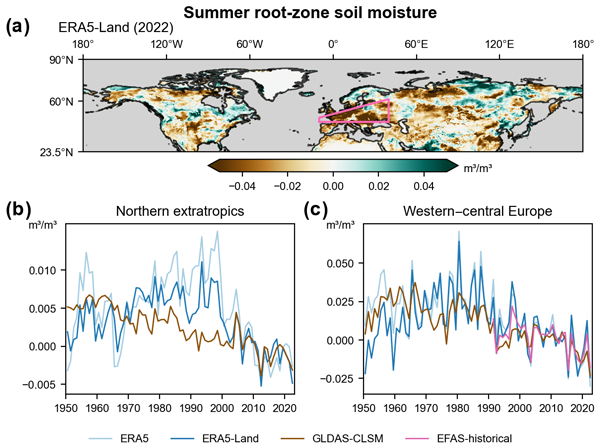
The 2022 summer was accompanied by widespread soil moisture deficits, including an unprecedented drought in Europe. Combining several observation-based estimates and models, we find that such an event has become at least 5 and 20 times more likely due to human-induced climate change in western Europe and the northern extratropics, respectively. Strong regional warming fuels soil desiccation; hence, projections indicate even more potent future droughts as we progress towards a 2 °C warmer world.
Bikem Ekberzade, A. Rita Carrasco, Adam Izdebski, Adriano Sofo, Annegret Larsen, Felicia O. Akinyemi, Viktor J. Bruckman, Noel Baker, Simon Clark, and Chloe Hill
Geosci. Commun., 7, 57–61, https://doi.org/10.5194/gc-7-57-2024, https://doi.org/10.5194/gc-7-57-2024, 2024
Short summary
Short summary
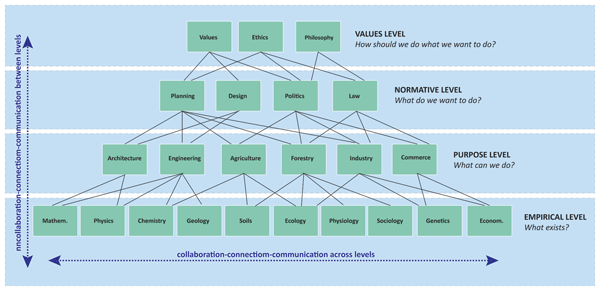
The world is facing a critical issue of biodiversity loss and ecosystem degradation, despite efforts to address it. While positive steps are being taken in the adoption of comprehensive conservation policies, more effective science-for-policy approaches are necessary to foster connectivity, engage communities, and promote transformative change. This study outlines how scientists can drive impactful change within and beyond their communities to contribute to meeting global biodiversity targets.
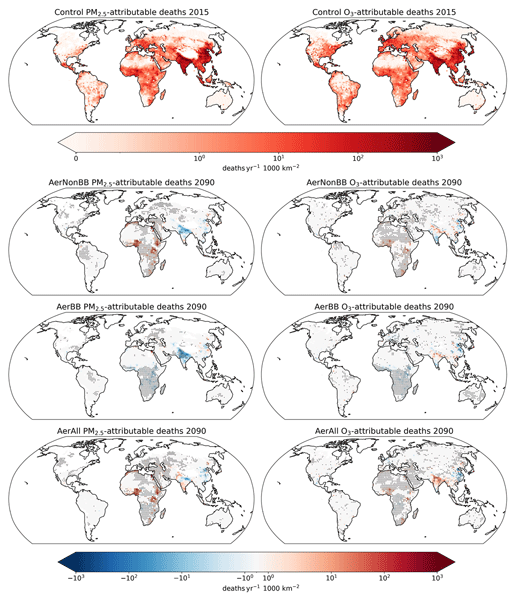
Christopher D. Wells, Matthew Kasoar, Majid Ezzati, and Apostolos Voulgarakis
Atmos. Chem. Phys., 24, 1025–1039, https://doi.org/10.5194/acp-24-1025-2024, https://doi.org/10.5194/acp-24-1025-2024, 2024
Short summary
Short summary
Human-driven emissions of air pollutants, mostly caused by burning fossil fuels, impact both the climate and human health. Millions of deaths each year are caused by air pollution globally, and the future trends are uncertain. Here, we use a global climate model to study the effect of African pollutant emissions on surface level air pollution, and resultant impacts on human health, in several future emission scenarios. We find much lower health impacts under cleaner, lower-emission futures.
Joao Carlos Martins Teixeira, Chantelle Burton, Douglas I. Kelly, Gerd A. Folberth, Fiona M. O'Connor, Richard A. Betts, and Apostolos Voulgarakis
Biogeosciences Discuss., https://doi.org/10.5194/bg-2023-136, https://doi.org/10.5194/bg-2023-136, 2023
Revised manuscript not accepted
Short summary
Short summary
Representing socio-economic impacts on fires is crucial to underpin the confidence in global fire models. Introducing these into INFERNO, reduces biases and improves the modelled burnt area (BA) trends when compared to observations. Including socio-economic factors in the representation of fires in Earth System Models is important for realistically simulating BA, quantifying trends in the recent past, and for understanding the main drivers of those at regional scales.
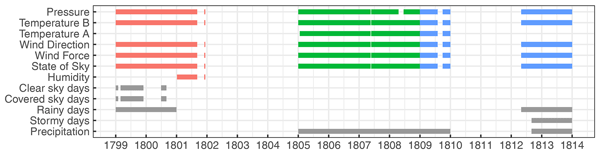
Nieves Bravo-Paredes, María Cruz Gallego, Ricardo M. Trigo, and José Manuel Vaquero
Clim. Past, 19, 1397–1408, https://doi.org/10.5194/cp-19-1397-2023, https://doi.org/10.5194/cp-19-1397-2023, 2023
Short summary
Short summary
We present the earliest records made in San Fernando, very close to Cádiz (SW Spain). Several previous works have already recovered a significant number of meteorological records of interest in these localities. However, more than 40 000 daily meteorological observations recorded at the Royal Observatory of the Spanish Navy (located in San Fernando) were previously unnoticed and remained neither digitized nor studied. We analyze in detail these newly recovered meteorological readings.
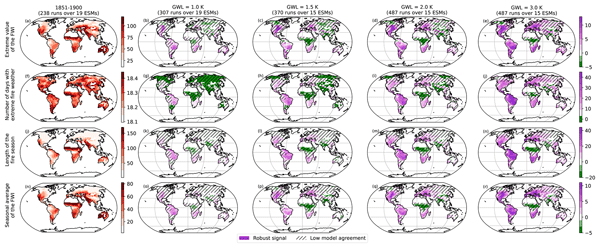
Yann Quilcaille, Fulden Batibeniz, Andreia F. S. Ribeiro, Ryan S. Padrón, and Sonia I. Seneviratne
Earth Syst. Sci. Data, 15, 2153–2177, https://doi.org/10.5194/essd-15-2153-2023, https://doi.org/10.5194/essd-15-2153-2023, 2023
Short summary
Short summary
We present a new database of four annual fire weather indicators over 1850–2100 and over all land areas. In a 3°C warmer world with respect to preindustrial times, the mean fire weather would increase on average by at least 66% in both intensity and duration and even triple for 1-in-10-year events. The dataset is a freely available resource for fire danger studies and beyond, highlighting that the best course of action would require limiting global warming as much as possible.
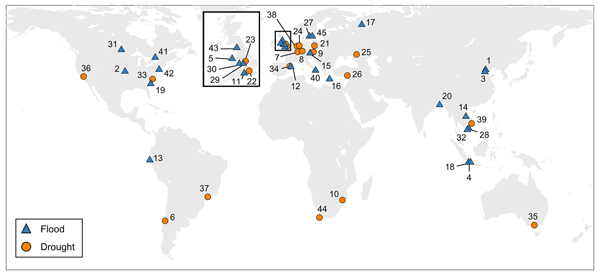
Heidi Kreibich, Kai Schröter, Giuliano Di Baldassarre, Anne F. Van Loon, Maurizio Mazzoleni, Guta Wakbulcho Abeshu, Svetlana Agafonova, Amir AghaKouchak, Hafzullah Aksoy, Camila Alvarez-Garreton, Blanca Aznar, Laila Balkhi, Marlies H. Barendrecht, Sylvain Biancamaria, Liduin Bos-Burgering, Chris Bradley, Yus Budiyono, Wouter Buytaert, Lucinda Capewell, Hayley Carlson, Yonca Cavus, Anaïs Couasnon, Gemma Coxon, Ioannis Daliakopoulos, Marleen C. de Ruiter, Claire Delus, Mathilde Erfurt, Giuseppe Esposito, Didier François, Frédéric Frappart, Jim Freer, Natalia Frolova, Animesh K. Gain, Manolis Grillakis, Jordi Oriol Grima, Diego A. Guzmán, Laurie S. Huning, Monica Ionita, Maxim Kharlamov, Dao Nguyen Khoi, Natalie Kieboom, Maria Kireeva, Aristeidis Koutroulis, Waldo Lavado-Casimiro, Hong-Yi Li, Maria Carmen LLasat, David Macdonald, Johanna Mård, Hannah Mathew-Richards, Andrew McKenzie, Alfonso Mejia, Eduardo Mario Mendiondo, Marjolein Mens, Shifteh Mobini, Guilherme Samprogna Mohor, Viorica Nagavciuc, Thanh Ngo-Duc, Huynh Thi Thao Nguyen, Pham Thi Thao Nhi, Olga Petrucci, Nguyen Hong Quan, Pere Quintana-Seguí, Saman Razavi, Elena Ridolfi, Jannik Riegel, Md Shibly Sadik, Nivedita Sairam, Elisa Savelli, Alexey Sazonov, Sanjib Sharma, Johanna Sörensen, Felipe Augusto Arguello Souza, Kerstin Stahl, Max Steinhausen, Michael Stoelzle, Wiwiana Szalińska, Qiuhong Tang, Fuqiang Tian, Tamara Tokarczyk, Carolina Tovar, Thi Van Thu Tran, Marjolein H. J. van Huijgevoort, Michelle T. H. van Vliet, Sergiy Vorogushyn, Thorsten Wagener, Yueling Wang, Doris E. Wendt, Elliot Wickham, Long Yang, Mauricio Zambrano-Bigiarini, and Philip J. Ward
Earth Syst. Sci. Data, 15, 2009–2023, https://doi.org/10.5194/essd-15-2009-2023, https://doi.org/10.5194/essd-15-2009-2023, 2023
Short summary
Short summary
As the adverse impacts of hydrological extremes increase in many regions of the world, a better understanding of the drivers of changes in risk and impacts is essential for effective flood and drought risk management. We present a dataset containing data of paired events, i.e. two floods or two droughts that occurred in the same area. The dataset enables comparative analyses and allows detailed context-specific assessments. Additionally, it supports the testing of socio-hydrological models.

Christopher D. Wells, Matthew Kasoar, Nicolas Bellouin, and Apostolos Voulgarakis
Atmos. Chem. Phys., 23, 3575–3593, https://doi.org/10.5194/acp-23-3575-2023, https://doi.org/10.5194/acp-23-3575-2023, 2023
Short summary
Short summary
The climate is altered by greenhouse gases and air pollutant particles, and such emissions are likely to change drastically in the future over Africa. Air pollutants do not travel far, so their climate effect depends on where they are emitted. This study uses a climate model to find the climate impacts of future African pollutant emissions being either high or low. The particles absorb and scatter sunlight, causing the ground nearby to be cooler, but elsewhere the increased heat causes warming.

Robert Vautard, Geert Jan van Oldenborgh, Rémy Bonnet, Sihan Li, Yoann Robin, Sarah Kew, Sjoukje Philip, Jean-Michel Soubeyroux, Brigitte Dubuisson, Nicolas Viovy, Markus Reichstein, Friederike Otto, and Iñaki Garcia de Cortazar-Atauri
Nat. Hazards Earth Syst. Sci., 23, 1045–1058, https://doi.org/10.5194/nhess-23-1045-2023, https://doi.org/10.5194/nhess-23-1045-2023, 2023
Short summary
Short summary
A deep frost occurred in early April 2021, inducing severe damages in grapevine and fruit trees in France. We found that such extreme frosts occurring after the start of the growing season such as those of April 2021 are currently about 2°C colder [0.5 °C to 3.3 °C] in observations than in preindustrial climate. This observed intensification of growing-period frosts is attributable, at least in part, to human-caused climate change, making the 2021 event 50 % more likely [10 %–110 %].
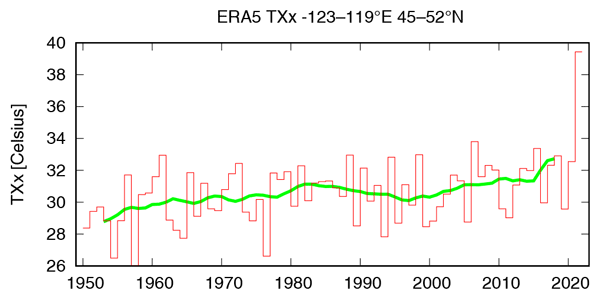
Sjoukje Y. Philip, Sarah F. Kew, Geert Jan van Oldenborgh, Faron S. Anslow, Sonia I. Seneviratne, Robert Vautard, Dim Coumou, Kristie L. Ebi, Julie Arrighi, Roop Singh, Maarten van Aalst, Carolina Pereira Marghidan, Michael Wehner, Wenchang Yang, Sihan Li, Dominik L. Schumacher, Mathias Hauser, Rémy Bonnet, Linh N. Luu, Flavio Lehner, Nathan Gillett, Jordis S. Tradowsky, Gabriel A. Vecchi, Chris Rodell, Roland B. Stull, Rosie Howard, and Friederike E. L. Otto
Earth Syst. Dynam., 13, 1689–1713, https://doi.org/10.5194/esd-13-1689-2022, https://doi.org/10.5194/esd-13-1689-2022, 2022
Short summary
Short summary
In June 2021, the Pacific Northwest of the US and Canada saw record temperatures far exceeding those previously observed. This attribution study found such a severe heat wave would have been virtually impossible without human-induced climate change. Assuming no nonlinear interactions, such events have become at least 150 times more common, are about 2 °C hotter and will become even more common as warming continues. Therefore, adaptation and mitigation are urgently needed to prepare society.

Miguel M. Lima, Célia M. Gouveia, and Ricardo M. Trigo
Ocean Sci., 18, 1419–1430, https://doi.org/10.5194/os-18-1419-2022, https://doi.org/10.5194/os-18-1419-2022, 2022
Short summary
Short summary
This article aims to explore the interaction between tropical cyclones and the ocean in a less studied area regarding these events. Tropical cyclones generally create an area of colder waters behind them, which in turn can contribute to an increase in biological activity. In the Azores region, the intensity, track geometry, and impact area of the cyclones are the most important factors to determine these responses. The speed of the cyclones was found to be more important for biological activity.
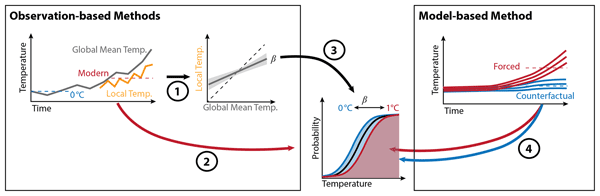
Daniel M. Gilford, Andrew Pershing, Benjamin H. Strauss, Karsten Haustein, and Friederike E. L. Otto
Adv. Stat. Clim. Meteorol. Oceanogr., 8, 135–154, https://doi.org/10.5194/ascmo-8-135-2022, https://doi.org/10.5194/ascmo-8-135-2022, 2022
Short summary
Short summary
We developed a framework to produce global real-time estimates of how human-caused climate change affects the likelihood of daily weather events. A multi-method approach provides ensemble attribution estimates accompanied by confidence intervals, creating new opportunities for climate change communication. Methodological efficiency permits daily analysis using forecasts or observations. Applications with daily maximum temperature highlight the framework's capacity on daily and global scales.
Animesh K. Gain, Yves Bühler, Pascal Haegeli, Daniela Molinari, Mario Parise, David J. Peres, Joaquim G. Pinto, Kai Schröter, Ricardo M. Trigo, María Carmen Llasat, and Heidi Kreibich
Nat. Hazards Earth Syst. Sci., 22, 985–993, https://doi.org/10.5194/nhess-22-985-2022, https://doi.org/10.5194/nhess-22-985-2022, 2022
Short summary
Short summary
To mark the 20th anniversary of Natural Hazards and Earth System Sciences (NHESS), an interdisciplinary and international journal dedicated to the public discussion and open-access publication of high-quality studies and original research on natural hazards and their consequences, we highlight 11 key publications covering major subject areas of NHESS that stood out within the past 20 years.
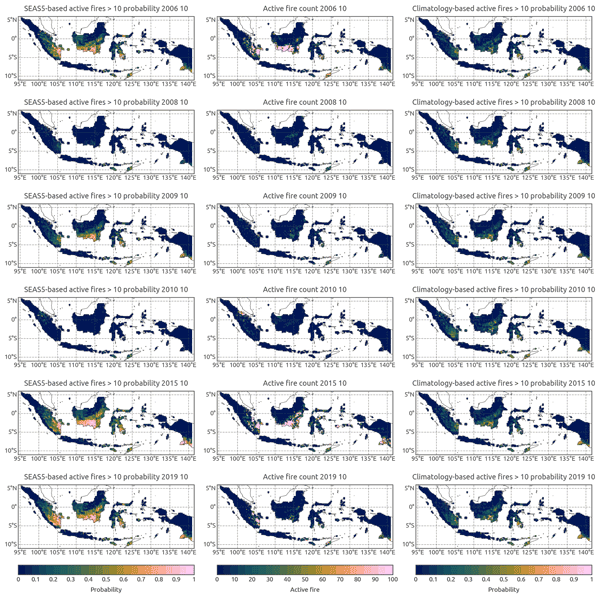
Tadas Nikonovas, Allan Spessa, Stefan H. Doerr, Gareth D. Clay, and Symon Mezbahuddin
Nat. Hazards Earth Syst. Sci., 22, 303–322, https://doi.org/10.5194/nhess-22-303-2022, https://doi.org/10.5194/nhess-22-303-2022, 2022
Short summary
Short summary
Extreme fire episodes in Indonesia emit large amounts of greenhouse gasses and have negative effects on human health in the region. In this study we show that such burning events can be predicted several months in advance in large parts of Indonesia using existing seasonal climate forecasts and forest cover change datasets. A reliable early fire warning system would enable local agencies to prepare and mitigate the worst of the effects.
João C. Teixeira, Gerd A. Folberth, Fiona M. O'Connor, Nadine Unger, and Apostolos Voulgarakis
Geosci. Model Dev., 14, 6515–6539, https://doi.org/10.5194/gmd-14-6515-2021, https://doi.org/10.5194/gmd-14-6515-2021, 2021
Short summary
Short summary
Fire constitutes a key process in the Earth system, being driven by climate as well as affecting climate. However, studies on the effects of fires on atmospheric composition and climate have been limited to date. This work implements and assesses the coupling of an interactive fire model with atmospheric composition, comparing it to an offline approach. This approach shows good performance at a global scale. However, regional-scale limitations lead to a bias in modelling fire emissions.
Gerard van der Schrier, Richard P. Allan, Albert Ossó, Pedro M. Sousa, Hans Van de Vyver, Bert Van Schaeybroeck, Roberto Coscarelli, Angela A. Pasqua, Olga Petrucci, Mary Curley, Mirosław Mietus, Janusz Filipiak, Petr Štěpánek, Pavel Zahradníček, Rudolf Brázdil, Ladislava Řezníčková, Else J. M. van den Besselaar, Ricardo Trigo, and Enric Aguilar
Clim. Past, 17, 2201–2221, https://doi.org/10.5194/cp-17-2201-2021, https://doi.org/10.5194/cp-17-2201-2021, 2021
Short summary
Short summary
The 1921 drought was the most severe drought to hit Europe since the start of the 20th century. Here the climatological description of the drought is coupled to an overview of its impacts, sourced from newspapers, and an analysis of its drivers. The area from Ireland to the Ukraine was affected but hardest hit was the triangle between Brussels, Paris and Lyon. The drought impacts lingered on until well into autumn and winter, affecting water supply and agriculture and livestock farming.
Cited articles
Abatzoglou, J. T., Williams, A. P., and Barbero, R.: Global emergence of anthropogenic climate change in fire weather indices, Geophys. Res. Lett., 46, 326–336, https://doi.org/10.1029/2018GL080959, 2019.
Abatzoglou, J. T., Kolden, C. A., Cullen, A. C., Sadegh, M., Williams, E. L., Turco, M., and Jones, M. W.: Climate change has increased the odds of extreme regional forest fire years globally, Nat. Commun., 16, 6390, https://doi.org/10.1038/s41467-025-61608-1, 2025.
AGIF (Agência de Gestão Integrada de Fogos Rurais): Relatório De Atividades, https://www.sgifr.gov.pt/documents/196633/196678/Relatorio_Atividades_SGIFR_2025_v20260715.pdf (last access: 27 July 2026), 2025.
Arias, P. A., Bellouin, N., Coppola, E., Jones, R. G., Krinner, G., Marotzke, J., Naik, V., Palmer, M. D., Plattner, G. K., Rogelj, J., Rojas, M., Sillmann, J., Storelvmo, T., Thorne, P. W., Trewin, B., Achuta Rao, K., Adhikary, B., Allan, R. P., Armour, K., Bala, G., Barimalala, R., Berger, S., Canadell, J. G., Cassou, C., Cherchi, A., Collins, W., Collins, W. D., Connors, S. L., Corti, S., Cruz, F., Dentener, F. J., Dereczynski, C., Di Luca, A., Diongue Niang, A., Doblas-Reyes, F. J., Dosio, A., Douville, H., Engelbrecht, F., Eyring, V., Fischer, E., Forster, P., Fox-Kemper, B., Fuglestvedt, J. S., Fyfe, J. C., Gillett, N. P., Goldfarb, L., Gorodetskaya, I., Gutierrez, J. M., Hamdi, R., Hawkins, E., Hewitt, H. T., Hope, P., Islam, A. S., Jones, C., Kaufman, D. S., Kopp, R. E., Kosaka, Y., Kossin, J., Krakovska, S., Lee, J.-Y., Li, J., Mauritsen, T., Maycock, T. K., Meinshausen, M., Min, S.-K., Monteiro, P. M. S., Ngo-Duc, T., Otto, F., Pinto, I., Pirani, A., Raghavan, K., Ranasinghe, R., Ruane, A. C., Ruiz, L., Sallée, J.-B., Samset, B. H., Sathyendranath, S., Seneviratne, S. I., Sörensson, A. A., Szopa, S., Takayabu, I., Tréguier, A.-M., van den Hurk, B., Vautard, R., von Schuckmann, K., Zaehle, S., Zhang, X., and Zickfeld, K.: Technical Summary, in: Climate Change 2021: The Physical Science Basis. Contribution of Working Group I to the Sixth Assessment Report of the Intergovernmental Panel on Climate Change Cambridge University Press, Cambridge, United Kingdom and New York, NY, USA, 33–144, https://doi.org/10.1017/9781009157896.002, 2021.
Arnell, N. W., Freeman, A., and Gazzard, R.: The effect of climate change on indicators of fire danger in the UK, Environ. Res. Lett., 16, 044027, https://doi.org/10.1088/1748-9326/abd9f2, 2021.
Arregocés, H. A., Bonivento, G. J., and Rojano, R.: Wind power potential over northern South America using ERA5-Land global reanalysis, Clean Energy, 8, 104–112, https://doi.org/10.1093/ce/zkad096, 2024.
Badia, A., Serra, P., and Modugno, S.: Identifying dynamics of fire ignition probabilities in two representative Mediterranean wildland-urban interface areas, Appl. Geogr., 31, 930–940, https://doi.org/10.1016/j.apgeog.2011.01.016, 2011.
Bakke, S. J., Ionita, M., and Tallaksen, L. M.: Recent European drying and its link to prevailing large-scale atmospheric patterns, Sci. Rep.-UK, 13, 21921, https://doi.org/10.1038/s41598-023-48861-4, 2023.
Barbero, R., Abatzoglou, J. T., Pimont, F., Ruffault, J., and Curt, T.: Attributing increases in fire weather to anthropogenic climate change over France, Front. Earth Sci. 8, 104, https://doi.org/10.3389/feart.2020.00104, 2020.
Basse, A., Callies, D., Grötzner, A., and Pauscher, L.: Seasonal effects in the long-term correction of short-term wind measurements using reanalysis data, Wind Energ. Sci., 6, 1473–1490, https://doi.org/10.5194/wes-6-1473-2021, 2021.
Bassler, H.: “New” EU wildland firefighting force may be close to becoming a reality, https://wildfiretoday.com/new-eu-wildland-firefighting-force-may-be-close-to-becoming-a-reality/, last access: 2 March 2026.
Baudena, M., Santana, V. M., Baeza, M. J., Bautista, S., Eppinga, M. B., Hemerik, L., Garcia Mayor, A., Rodriguez, F., Valdecantos, A., Vallejo, V. R., and Vasques, A.: Increased aridity drives post-fire recovery of Mediterranean forests towards open shrublands, New Phytol., 225, 1500–1515, https://doi.org/10.1111/nph.16252, 2020.
Belcher, C. M., Brown, I., Clay, G. D., Doerr, S. H., Elliott, A., Gazzard, R., Kettridge, N., Morison, J., Perry, M., and Smith, T. E. L.: UK wildfires and their climate challenges, Expert Led report prepared for the third climate change risk assessment, University of Manchester, https://www.ukclimaterisk.org/wp-content/uploads/2021/06/UK-Wildfires-and-their-Climate-Challenges.pdf (last access: 5 August 2026), 2021.
Biçen, T., Ayhan Arslan, A., and Vardar, A.: Regional solar and wind energy characteristics and it's energy potential in northwest of Turkey, Gümüşhane Üniversitesi Fen Bilimleri Dergisi, 12, 527–538, https://doi.org/10.17714/gumusfenbil.898023, 2022.
Bowman, D. M., Williamson, G. J., Abatzoglou, J. T., Kolden, C. A., Cochrane, M. A., and Smith, A. M.: Human exposure and sensitivity to globally extreme wildfire events, Nat. Ecol. Evol., 1, 0058, https://doi.org/10.1038/s41559-016-0058, 2017.
Bowring, S. P., Li, W., Mouillot, F., Rosan, T. M., and Ciais, P.: Road fragment edges enhance wildfire incidence and intensity, while suppressing global burned area, Nat. Commun., 15, 9176, https://doi.org/10.1038/s41467-024-53460-6, 2024
Brune, S., Keller, J. D., and Wahl, S.: Evaluation of wind speed estimates in reanalyses for wind energy applications, Adv. Sci. Res., 18, 115–126, https://doi.org/10.5194/asr-18-115-2021, 2021.
Bruneau, M.: France's Largest Wildfire in Nearly 80 Years Contained, Say Officials, https://earth.org/frances-largest-wildfire-in-nearly-80-years-contained-say-officials/ (last access: 27 July 2026), 2025.
Cai, W. and Prentice, I. C.: Recent trends in gross primary production and their drivers: analysis and modelling at flux-site and global scales, Environ. Res. Lett., 15, 124050, https://doi.org/10.1088/1748-9326/abc64e, 2020.
Calheiros, T., Nunes, J. P., and Pereira, M. G.: Recent evolution of spatial and temporal patterns of burnt areas and fire weather risk in the Iberian Peninsula, Agr. Forest Meteorol., 287, 107923, https://doi.org/10.1016/j.agrformet.2020.107923, 2020.
Castel-Clavera, J., Pimont, F., Opitz, T., Ruffault, J., Rivière, M., and Dupuy, J. L.: Disentangling the factors of spatio-temporal patterns of wildfire activity in south-eastern France, Int. J. Wildland Fire, 32, 15–28, https://doi.org/10.1071/WF22086, 2023.
Chen, G., Guo, Y., Yue, X., Tong, S., Gasparrini, A., Bell, M. L., Armstrong, B., Schwartz, J., Jaakkola, J. J., Zanobetti, A., and Lavigne, E.: Mortality risk attributable to wildfire-related PM2.5 pollution: a global time series study in 749 locations, Lancet Planet. Health, 5, e579–e587, https://doi.org/10.1016/S2542-5196(21)00200-X, 2021.
Chen, J. and Dai, A.: The atmosphere has become increasingly unstable during 1979–2020 over the Northern Hemisphere, Geophys. Res. Lett., 50, e2023GL106125, https://doi.org/10.1029/2023GL106125, 2023.
Copernicus: Image of the day 19/08/2025, https://www.copernicus.eu/en/media/image-day-gallery/burn-scar-aude-region-france#:~:text=A devastating wildfire in France's,hectares, an area... (last access: 2 March 2026), 2025.
Costa-Saura, J. M., Bacciu, V., Sirca, C., Cappelluti, O., Spano, D., and Elia, M.: The growing link between heatwaves and megafires: evidence from southern Mediterranean countries of Europe, Nat. Hazards, 121, 17731–17742, https://doi.org/10.1007/s11069-025-07488-6, 2025.
Cunningham, C. X., Williamson, G. J., and Bowman, D. M. J. S.: Increasing frequency and intensity of the most extreme wildfires on Earth, Nat. Ecol. Evol., 8, 1420–1425, https://doi.org/10.1038/s41559-024-02452-2, 2024.
Curt, T. and Frejaville, T.: Wildfire policy in Mediterranean France: how far is it efficient and sustainable?, Risk Anal., 38, 472–488, https://doi.org/10.1111/risa.12855, 2018.
Davies, G. M., Legg, C. J., O'Hara, R., MacDonald, A. J., and Smith, A. A.: Winter desiccation and rapid changes in the live fuel moisture content of Calluna vulgaris, Plant Ecol. Divers., 3, 289–299, https://doi.org/10.1080/17550874.2010.544335, 2010.
De Luca, P. and Donat, M. G.: Projected changes in hot, dry, and compound hot-dry extremes over global land regions, Geophys. Res. Lett., 50, e2022GL102493, https://doi.org/10.1029/2022GL102493, 2023.
De Onzono, J. I.: Spain's sees worst wildfire season since 1994 with 382 000 hectares burned so far in 2025, https://www.euronews.com/2025/08/21/spains-sees-worst-wildfire-season-since-1994-with-382000-hectares-burned-so-far-in-2025 (last access: 2 March 2026), 2025.
Di Virgilio, G., Evans, J. P., Blake, S. A., Armstrong, M., Dowdy, A. J., Sharples, J., and McRae, R.: Climate change increases the potential for extreme wildfires, Geophys. Res. Lett., 46, 8517–8526, https://doi.org/10.1029/2019GL083699, 2019.
Díaz-Delgado, R., Lloret, F., and Pons, X.: Influence of fire severity on plant regeneration by means of remote sensing imagery, Int. J. Remote Sens., 24, 1751–1763, https://doi.org/10.1080/01431160210144732, 2003.
Duane, A., Castellnou, M., and Brotons, L.: Towards a comprehensive look at global drivers of novel extreme wildfire events, Climatic Change, 165, 43, https://doi.org/10.1007/s10584-021-03066-4, 2021.
Eisfelder, C., Uereyen, S., Asam, S., Hirner, A., Reiners, P., Huth, J., Bachofer, F., Bachmann, M., Holzwarth, S., and Kuenzer, C.: Thirty-Year Analyses of Seasonal NDVI and Climatic Drivers Across Different Land Cover Types and Biogeographical Regions in Europe, IEEE J. Sel. Top. Appl., https://doi.org/10.1109/JSTARS.2025.3558816 2025.
Ekberzade, B.: Forecasting the Flame: Simulating Future Wildfire Regimes in the Northeast Mediterranean, EGUsphere [preprint], https://doi.org/10.5194/egusphere-2026-1498, 2026.
Ekberzade, B., Yetemen, O., Ezber, Y., Sen, O. L., and Dalfes, H. N.: Latitude or altitude as the future refugium? A case for the future of forests in Asia Minor and its surroundings, Ecol. Evol., 14, e11131, https://doi.org/10.1002/ece3.11131, 2024.
Ekberzade, B., Görüm, T., Karabacak, F., Akay, S. S., and Şen, Ö. L.: Up in flames: the human factor behind a megafire in Mediterranean Türkiye, npj Nat. Hazards, 2, 65, https://doi.org/10.1038/s44304-025-00120-4, 2025.
El Garroussi, S., Di Giuseppe, F., Barnard, C., and Wetterhall, F.: Europe faces up to tenfold increase in extreme fires in a warming climate, npj Clim. Atmos. Sci., 7, 30, https://doi.org/10.1038/s41612-024-00575-8, 2024.
European Commission: EFFIS Statistics Portal, https://forest-fire.emergency.copernicus.eu/apps/effis.statistics/, last access: 2 March 2026.
Eyring, V., Bony, S., Meehl, G. A., Senior, C. A., Stevens, B., Stouffer, R. J., and Taylor, K. E.: Overview of the Coupled Model Intercomparison Project Phase 6 (CMIP6) experimental design and organization, Geosci. Model Dev., 9, 1937–1958, https://doi.org/10.5194/gmd-9-1937-2016, 2016.
Fernandez-Anez, N., Krasovskiy, A., Müller, M., Vacik, H., Baetens, J., Hukić, E., Kapovic Solomun, M., Atanassova, I., Glushkova, M., Bogunović, I., and Fajković, H.: Current wildland fire patterns and challenges in Europe: A synthesis of national perspectives, Air Soil Water Res., 14, 11786221211028185, https://doi.org/10.1177/11786221211028185, 2021.
Forestry Commission: Wildfire statistics for England: Report to 2020–21, Forestry Commission England, Bristol, https://assets.publishing.service.gov.uk/media/63ecff77d3bf7f62edc835a1/FC-Wildfire-statistics-for-England-Report-to-2020-21-.pdf (last access: 5 August 2026), 2023.
France 24: Portugal suffers new wildfire death as Spain beats back blazes, https://www.france24.com/en/live-news/20250823-portugal-suffers-new-wildfire-death-as-spain-beats-back-blazes (last access: 2 March 2026), 2025.
Gagkas, Z., Campbell, G., Owen, J., and Davies, M.: Provision of analyses of Scottish fire and rescue service (SFRS) incident reporting system (IRS) data in relation to wildfire incidents, Report Prepared for Scottish Government, https://cairngorms.co.uk/uploads/documents/Local-Development-Plan-Evidence-Report/External-documents/CNPA379-provision-analyses-scottish-fire-rescue-service-sfrs-incident-reporting-system-irs-data-relation-wildfire-incidents.pdf (last access: 5 August 2026), 2022.
Galizia, L. F., Curt, T., Barbero, R., and Rodrigues, M.: Understanding fire regimes in Europe, Int. J. Wildland Fire, 31, 56–66, https://doi.org/10.1071/WF21081, 2022.
Ganteaume, A., Barbero, R., Jappiot, M., and Maillé, E.: Understanding future changes to fires in southern Europe and their impacts on the wildland-urban interface, J. Safety Sci. Resil., 2, 20–29, https://doi.org/10.1016/j.jnlssr.2021.01.001, 2021.
Giannaros, T. M. and Papavasileiou, G.: Changes in European fire weather extremes and related atmospheric drivers, Agr. Forest Meteorol., 342, 109749, https://doi.org/10.1016/j.agrformet.2023.109749, 2023.
Gouveia, C. M., Bastos, A., Trigo, R. M., and DaCamara, C. C.: Drought impacts on vegetation in the pre- and post-fire events over Iberian Peninsula, Nat. Hazards Earth Syst. Sci., 12, 3123–3137, https://doi.org/10.5194/nhess-12-3123-2012, 2012.
Grillakis, M., Voulgarakis, A., Rovithakis, A., Seiradakis, K. D., Koutroulis, A., Field, R. D., Kasoar, M., Papadopoulos, A., and Lazaridis, M.: Climate drivers of global wildfire burned area, Environ. Res. Lett., 17, 045021, https://doi.org/10.1088/1748-9326/ac5fa1, 2022.
Guo, Y., Wang, J., Ge, Y., and Zhou, C.: Global expansion of wildland-urban interface intensifies human exposure to wildfire risk in the 21st century, Sci. Adv., 10, eado9587, https://doi.org/10.1126/sciadv.ado9587, 2024.
Haas, O., Prentice, I. C., and Harrison, S. P.: Global environmental controls on wildfire burnt area, size, and intensity, Environ. Res. Lett., 17, 065004, https://doi.org/10.1088/1748-9326/ac6a69, 2022.
Haas, O., Keeping, T., Gomez-Dans, J., Prentice, I. C., and Harrison, S. P.: The global drivers of wildfire, Frontiers in Environmental Science, 12, 1438262, https://doi.org/10.3389/fenvs.2024.1438262, 2024.
Hantson, S., Pueyo, S., and Chuvieco, E.: Global fire size distribution is driven by human impact and climate, Global Ecol. Biogeogr., 24, 77–86, https://doi.org/10.1111/geb.12246, 2015.
Hargreaves, G. H. and Samani, Z. A.: Estimating potential evapotranspiration, J. Irr. Drain. Div.-ASCE, 108, 225–230, https://doi.org/10.1061/JRCEA4.0001390, 1982.
Hatzianastassiou, N., Katsoulis, B., Pnevmatikos, J., and Antakis, V.: Spatial and temporal variation of precipitation in Greece and surrounding regions based on global precipitation climatology project data, J. Climate, 21, 1349–1370, https://doi.org/10.1175/2007JCLI1682.1, 2008.
Hollingsworth, E.: Karst Regions of the World (KROW) – Populating global karst datasets and generating maps to advance the understanding of karst occurrence and protection of karst species and habitats worldwide, Master's thesis, University of Arkansas, https://digitalcommons.usf.edu/kip_articles/2981 (last access: 5 August 2026), 2009.
Ivison, K., Little, K., Orpin, A., Belcher, C. M., Clay, G. D., Doerr, S. H., Smith, T. E., Andersen, R., Graham, L. J., and Kettridge, N.: Unprecedented UK heatwave harmonised drivers of fuel moisture creating extreme temperate wildfire risk, Commun. Earth Environ., 6, 727, https://doi.org/10.1038/s43247-025-02746-8, 2025.
Jacob, D., Petersen, J., Eggert, B., Alias, A., Christensen, O. B., Bouwer, L. M., Braun, A., Colette, A., Déqué, M., Georgievski, G., and Georgopoulou, E.: EURO-CORDEX: new high-resolution climate change projections for European impact research, Reg. Environ. Change, 14, 563–578, https://doi.org/10.1007/s10113-013-0499-2, 2014.
Jaupaj, O.: Wildfires: Forecasted hazard and real exposure. A conceptual and empirical analysis of wildfires in Albania, Botime Impression, Tirana, in review, 2026 (in Albanian).
Jaupaj, O. and Jaupaj A.: Wildfire hazard and activity patterns in Shkodra, Albania, Agric. Forestry, 71, 71–86, https://doi.org/10.17707/AgricultForest.71.3.04, 2025.
Jeong, S., Ryu, Y., Gentine, P., Lian, X., Fang, J., Li, X., Dechant, B., Kong, J., Choi, W., Jiang, C., and Keenan, T. F.: Persistent global greening over the last four decades using novel long-term vegetation index data with enhanced temporal consistency, Remote Sens. Environ., 311, 114282, https://doi.org/10.1016/j.rse.2024.114282, 2024.
Jeong, S., Ryu, Y., Gentine, P., Lian, X., Fang, J., Li, X., Dechant, B., Liu, J., Kong, J., Wan, L., and Choi, C.: Sustained global greening driven by continuous CO2 fertilization, Research Square [preprint], https://doi.org/10.21203/rs.3.rs-8621169/v1, 2026.
Jiang, C., Ryu, Y., Fang, H., Myneni, R., Claverie, M., and Zhu, Z.: Inconsistencies of interannual variability and trends in long-term satellite leaf area index products, Glob. Change Biol., 23, 4133–4146, https://doi.org/10.1111/gcb.13787, 2017.
Johnston, F. H., Henderson, S. B., Chen, Y., Randerson, J. T., Marlier, M., DeFries, R. S., Kinney, P., Bowman, D. M., and Brauer, M.: Estimated global mortality attributable to smoke from landscape fires, Environ. Health Persp., 120, 695, https://doi.org/10.1289/ehp.1104422, 2012.
Kalabokidis, K., Palaiologou, P., and Xanthopoulos, G.: Pyro-Geography of the Greek Landscape, in: The Geography of Greece, World Regional Geography Book Series, edited by: Darques, R., Sidiropoulos, G., and Kalabokidis, K., Springer, Cham, https://doi.org/10.1007/978-3-031-29819-6_22, 2024.
Keeley, J. E. and Pausas, J. G.: Evolutionary ecology of fire, Annu. Rev. Ecol. Evol. S., 53, 203–225, https://doi.org/10.1146/annurev-ecolsys-102320-095612, 2022.
Keeping, T., Bergin, C., Pinto, I., Ekberzade, B., Voulgarakis, A., Grillakis, M., Papavasileiou, G., Xanthopoulos, G., Lagouvardos, K., Giannaros, T., and Yucel, I.: Weather conditions leading to deadly wildfires in Türkiye, Cyprus and Greece made 10 times more likely due to climate change, WWA, https://doi.org/10.25560/123302, 2025a.
Keeping, T., García García, D., Trigo, R., Santos, F. L. M., Barnes, C., Vahlberg, M., Meyer, R., Otto, F., Philip, S., Singh, R., Casas Osorio, S., Neves, M., and Haro, P.: Extreme fire weather conditions in Spain and Portugal now common due to climate change, WWA, https://doi.org/10.25560/123547, 2025b.
Keeping, T. R.: Attribution of The Record Breaking 2025 European Fire Season to Climate Change, Zenodo [data set], https://doi.org/10.5281/zenodo.18839225, 2026.
Keesstra, S. D., Castellani, C., Lebelt, L., Breil, M., Vandecasteele, I., Pellens, N., Cerdà, A., de Rooij, L. L., and Zimmer, D.: Nature-based solutions for fire-resilient European forests, EEA, https://doi.org/10.2800/8810870, 2025.
Kempf, M.: Enhanced trends in spectral greening and climate anomalies across Europe, Environ. Monit. Assess., 195, 260, https://doi.org/10.1007/s10661-022-10853-8, 2023.
Kirchmeier-Young, M. C., Gillett, N. P., Zwiers, F. W., and Cannon, A. J.: FS Anslow: Attribution of the influence of human-induced climate change on an extreme fire season, Earths Future, 7, 2–10, https://doi.org/10.1029/2018EF001050, 2019.
Kuhn-Régnier, A., Voulgarakis, A., Nowack, P., Forkel, M., Prentice, I. C., and Harrison, S. P.: The importance of antecedent vegetation and drought conditions as global drivers of burnt area, Biogeosciences, 18, 3861–3879, https://doi.org/10.5194/bg-18-3861-2021, 2021.
Lanet, M., Li, L., Ehret, A., Turquety, S., and Le Treut, H.: Attribution of summer 2022 extreme wildfire season in Southwest France to anthropogenic climate change, npj Clim. Atmos. Sci., 7, 267, https://doi.org/10.1038/s41612-024-00821-z, 2024.
Li, S., Sparrow, S. N., Otto, F. E., Rifai, S. W., Oliveras, I., Krikken, F., Anderson, L. O., Malhi, Y., and Wallom, D.: Anthropogenic climate change contribution to wildfire-prone weather conditions in the Cerrado and Arc of deforestation, Environ. Res. Lett., 16, 094051, https://doi.org/10.1088/1748-9326/ac1e3a, 2021.
Li, X., Ault, T., Evans, C. P., Lehner, F., Carrillo, C. M., Donnelly, A., Crimmins, T. M., and Schwartz, M. D.: Growing uncertainty in projected spring onset variability in the Northern Hemisphere, Earth Syst. Sci., https://doi.org/10.1002/essoar.10512515.1, 2022.
Little, K., Graham, L. J., Flannigan, M., Belcher, C. M., and Kettridge, N.: Landscape controls on fuel moisture variability in fire-prone heathland and peatland landscapes, Fire Ecol., 20, 14, https://doi.org/10.1186/s42408-024-00248-0, 2024.
Little, K., Castellanos-Acuna, D., Jain, P., Graham, L., Kettridge, N., and Flannigan, M.: Persistent positive anomalies in geopotential heights drive enhanced wildfire activity across Europe, Philos. T. Roy. Soc. B, 380, https://doi.org/10.1098/rstb.2023.0455, 2025.
Madhusoodanan, J.: Wildfires pose a burning problem for wines and winemakers, P. Natl. Acad. Sci. USA, 118, e2113327118, https://doi.org/10.1073/pnas.2113327118, 2021.
Mantero, G., Morresi, D., Marzano, R., Motta, R., Mladenoff, D. J., and Garbarino, M.: The influence of land abandonment on forest disturbance regimes: a global review, Landscape Ecol., 35, 2723–2744, https://doi.org/10.1007/s10980-020-01147-w, 2020.
McDowell, N., Pockman, W. T., Allen, C. D., Breshears, D. D., Cobb, N., Kolb, T., Plaut, J., Sperry, J., West, A., Williams, D. G., and Yepez, E. A.: Mechanisms of plant survival and mortality during drought: why do some plants survive while others succumb to drought?, New Phytol., 178, 719–739, https://doi.org/10.1111/j.1469-8137.2008.02436.x, 2008.
McNorton, J., Moreno, A., Turco, M., Keune, J., and Di Giuseppe, F.: Hydroclimatic Rebound Drives Extreme Fire in California's Non-Forested Ecosystems, Glob. Change Biol., 31, e70481, https://doi.org/10.1111/gcb.70481, 2025.
Menzel, A., Sparks, T. H., Estrella, N., Koch, E., Aasa, A., Ahas, R., Alm-Kübler, K., Bissolli, P., Braslavská, O. G., Briede, A., and Chmielewski, F. M.: European phenological response to climate change matches the warming pattern, Glob. Change Biol., 12, 1969–1976, https://doi.org/10.1111/j.1365-2486.2006.01193.x, 2006.
Mercer, C.: “Nightmare” wildfire in southern France hits vineyards, https://www.decanter.com/wine-news/nightmare-wildfire-in-southern-france-hits-vineyards-563004/, last access: 2 March 2026.
Miller, J., Touma, D., and Brunner, M. I.: Compounding preconditions of wildfires vary in time and space within Europe, Commun. Earth Environ., 6, 1005, https://doi.org/10.1038/s43247-025-02955-1, 2025.
Moreira, F., Viedma, O., Arianoutsou, M., Curt, T., Koutsias, N., Rigolot, E., Barbati, A., Corona, P., Vaz, P., Xanthopoulos, G., and Mouillot, F.: Landscape–wildfire interactions in southern Europe: implications for landscape management, J. Environ. Manage., 92, 2389–2402, https://doi.org/10.1016/j.jenvman.2011.06.028, 2011.
Muñoz-Sabater, J., Dutra, E., Agustí-Panareda, A., Albergel, C., Arduini, G., Balsamo, G., Boussetta, S., Choulga, M., Harrigan, S., Hersbach, H., Martens, B., Miralles, D. G., Piles, M., Rodríguez-Fernández, N. J., Zsoter, E., Buontempo, C., and Thépaut, J.-N.: ERA5-Land: a state-of-the-art global reanalysis dataset for land applications, Earth Syst. Sci. Data, 13, 4349–4383, https://doi.org/10.5194/essd-13-4349-2021, 2021.
Murcia, J. P., Koivisto, M. J., Luzia, G., Olsen, B. T., Hahmann, A. N., Sørensen, P. E., and Als, M.: Validation of European-scale simulated wind speed and wind generation time series, Appl. Energ., 305, 117794, https://doi.org/10.1016/j.apenergy.2021.117794, 2022.
Myneni, R., Knyazikhin, Y., and Park, T.: MODIS/Terra Leaf Area Index/FPAR 8-Day L4 Global 500 m SIN Grid V061, NASA Land Processes Distributed Active Archive Center [data set], https://doi.org/10.5067/MODIS/MOD15A2H.061 (last access: 2 March 2026), 2021.
Naeher, L. P., Brauer, M., Lipsett, M., Zelikoff, J. T., Simpson, C. D., Koenig, J. Q., and Smith, K. R.: Woodsmoke health effects: a review, Inhal. Toxicol., 19, 67–106, https://doi.org/10.1080/08958370600985875, 2007.
NFCC: Record numbers of wildfires are putting services under huge strain, warn Fire Chiefs, https://nfcc.org.uk/record-numbers-of-wildfires-are-putting-services-under-huge-strain-warn-fire-chiefs/ (last access: 2 March 2026), 2025a.
NFCC: Wildfires position statement, https://nfcc.org.uk/our-services/public-policy/position-statements/wildfires-position-statement/ (last access: 27 July 2026), 2025b.
Nikonovas, T., Santín, C., Belcher, C. M., Clay, G. D., Kettridge, N., Smith, T. E., and Doerr, S. H.: Vegetation phenology as a key driver for fire occurrence in the UK and comparable humid temperate regions, Int. J. Wildland Fire, 33, https://doi.org/10.1071/WF23205, 2024.
Ortiz, A.: Los incendios en Portugal han calcinado cerca de 275 000 hectáreas, casi el 3 % de su territorio, https://elpais.com/internacional/2025-08-21/los-incendios-en-portugal-han-calcinado-cerca-de-275000-hectareas-casi-el-3-de-su-territorio.html (last access: 2 March 2026), 2025.
Otto, F. E. L., Barnes, C., Philip, S., Kew, S., van Oldenborgh, G. J., and Vautard, R.: Formally combining different lines of evidence in extreme-event attribution, Adv. Stat. Clim. Meteorol. Oceanogr., 10, 159–171, https://doi.org/10.5194/ascmo-10-159-2024, 2024.
Parise, M., Qiriazi, P., and Sala, S.: Natural and anthropogenic hazards in karst areas of Albania, Nat. Hazards Earth Syst. Sci., 4, 569–581, https://doi.org/10.5194/nhess-4-569-2004, 2004.
Parrington, M. and McNorton, J.: Extreme wildfires in summer 2025, https://www.ecmwf.int/en/newsletter/185/news/extreme-wildfires-summer-2025 (last access: 27 July 2026), 2025.
Patra, A., Oueslati, B., Chevallier, T., Renaud, P., Kervella, Y., and Dubus, L.: Evaluation of ERA5, COSMO-REA6 and CERRA in simulating wind speed along the French coastline for wind energy applications, Adv. Sci. Res., 22, 69–85, https://doi.org/10.5194/asr-22-69-2025, 2025.
Pausas, J. G. and Fernández-Muñoz, S.: Fire regime changes in the Western Mediterranean Basin: from fuel-limited to drought-driven fire regime, Climatic Change, 110, 215–226, https://doi.org/10.1007/s10584-011-0060-6, 2012.
Pausas, J. G. and Ribeiro, E.: The global fire–productivity relationship, Global Ecol. Biogeogr., 22, 728–736, https://doi.org/10.1111/geb.12043, 2013.
Perry, M. C., Vanvyve, E., Betts, R. A., and Palin, E. J.: Past and future trends in fire weather for the UK, Nat. Hazards Earth Syst. Sci., 22, 559–575, https://doi.org/10.5194/nhess-22-559-2022, 2022.
Philip, S., Kew, S., van Oldenborgh, G. J., Otto, F., Vautard, R., van der Wiel, K., King, A., Lott, F., Arrighi, J., Singh, R., and van Aalst, M.: A protocol for probabilistic extreme event attribution analyses, Adv. Stat. Clim. Meteorol. Oceanogr., 6, 177–203, https://doi.org/10.5194/ascmo-6-177-2020, 2020.
Pimont, F., Fargeon, H., Opitz, T., Ruffault, J., Barbero, R., Martin-StPaul, N., Rigolot, E., Riviere, M., and Dupuy, J. L.: Prediction of regional wildfire activity in the probabilistic Bayesian framework of Firelihood, Ecol. Appl., 31, e02316, https://doi.org/10.1002/eap.2316, 2021.
Potter, B. E. and McEvoy, D.: Weather factors associated with extremely large fires and fire growth days, Earth Interact., 25, 160–176, https://doi.org/10.1175/EI-D-21-0008.1, 2021.
Poynting, M. and Rivault, E.: Area burned by UK wildfires in 2025 already at annual record, https://www.bbc.co.uk/news/articles/c0m9gm3jwljo (last access: 2 March 2026), 2025.
Radeloff, V. C., Helmers, D. P., Kramer, H. A., Mockrin, M. H., Alexandre, P. M., Bar-Massada, A., Butsic, V., Hawbaker, T. J., Martinuzzi, S., Syphard, A. D., and Stewart, S. I.: Rapid growth of the US wildland-urban interface raises wildfire risk, P. Natl. Acad. Sci. USA, 115, 3314–3319, https://doi.org/10.1073/pnas.1718850115, 2018.
Ramos, A. M., Russo, A., DaCamara, C. C., Nunes, S., Sousa, P., Soares, P. M. M., Lima, M. M., Hurduc, A., and Trigo, R. M.: The compound event that triggered the destructive fires of October 2017 in Portugal, iScience, 26, https://doi.org/10.1016/j.isci.2023.106141, 2023.
Resco de Dios, V., Camprubí, À. C., Pérez-Zanón, N., Peña, J. C., Del Castillo, E. M., Rodrigues, M., Yao, Y., Yebra, M., Vega-García, C., and Boer, M. M.: Convergence in critical fuel moisture and fire weather thresholds associated with fire activity in the pyroregions of Mediterranean Europe, Sci. Total Environ., 806, 151462, https://doi.org/10.1016/j.scitotenv.2021.151462, 2022.
Ribes, A., Boé, J., Qasmi, S., Dubuisson, B., Douville, H., and Terray, L.: An updated assessment of past and future warming over France based on a regional observational constraint, Earth Syst. Dynam., 13, 1397–1415, https://doi.org/10.5194/esd-13-1397-2022, 2022.
Robins, A.: France still battling largest wildfire in 75 years, https://www.bbc.co.uk/news/articles/cm2vk4xl204o#:~:text=A woman has died and,in southern France on Tuesday, last access: 2 March 2026.
Rodrigues, M., Trigo, R. M., Vega-García, C., and Cardil, A.: Identifying large fire weather typologies in the Iberian Peninsula, Agr. Forest Meteorol., 280, 107789, https://doi.org/10.1016/j.agrformet.2019.107789, 2020.
Rodrigues, M., de Dios, V. R., Sil, Â., Camprubí, A. C., and Fernandes, P. M.: VPD-based models of dead fine fuel moisture provide best estimates in a global dataset, Agr. Forest Meteorol., 346, 109868, https://doi.org/10.1016/j.agrformet.2023.109868, 2024.
Ruffault, J. and Mouillot, F.: Contribution of human and biophysical factors to the spatial distribution of forest fire ignitions and large wildfires in a French Mediterranean region, Int. J. Wildland Fire, 26, 498–508, https://doi.org/10.1071/WF16181, 2017.
Russo, A., Gouveia, C. M., Páscoa, P., DaCamara, C. C., Sousa, P. M., and Trigo, R. M.: Assessing the role of drought events on wildfires in the Iberian Peninsula, Agr. Forest Meteorol., 237, 50–59, https://doi.org/10.1016/j.agrformet.2017.01.021, 2017.
Ryu, Y., Jiang, C., Kobayashi, H., and Detto, M.: MODIS-derived global land products of shortwave radiation and diffuse and total photosynthetically active radiation at 5 km resolution from 2000, Remote Sens. Environ., 204, 812–825, https://doi.org/10.1016/j.rse.2017.09.021, 2018.
Şahan, E. A., Köse, N., Güner, H. T., Trouet, V., Tavşanoğlu, Ç., Akkemik, Ü., and Dalfes, H. N.: Multi-century spatiotemporal patterns of fire history in black pine forests, Turkey, Forest Ecol. Manag., 518, 120296, https://doi.org/10.1016/j.foreco.2022.120296, 2022.
Şahan, E. A., Gürçay, B., and Güner, H. T.: The history of fire, human and climate in black pine forests of western Anatolia: The Taurus mountains, Dendrochronologia, 82, 126149, https://doi.org/10.1016/j.dendro.2023.126149, 2023.
Salis, M., Del Giudice, L., Jahdi, R., Alcasena-Urdiroz, F., Scarpa, C., Pellizzaro, G., Bacciu, V., Schirru, M., Ventura, A., Casula, M., and Pedes, F.: Spatial patterns and intensity of land abandonment drive wildfire hazard and likelihood in Mediterranean agropastoral areas, Land, 11, 1942, https://doi.org/10.3390/land11111942, 2022.
San-Miguel-Ayanz, J., Moreno, J. M., and Camia, A.: Analysis of large fires in European Mediterranean landscapes: Lessons learned and perspectives, Forest Ecol. Manag., 294, 11–22, https://doi.org/10.1016/j.foreco.2012.10.050, 2013.
Sánchez-Hernández, G., Turco, M., Repeto-Deudero, I., Royé, D., Baudena, M., Montávez, J. P., Pietroiusti, R., Provenzale, A., Santin, C., Torres-Vázquez, M. Á., and Pausas, J. G.: Record-Breaking 2025 European Wildfires Concentrated in Northwest Iberia, Glob. Change Biol., 31, e70649, https://doi.org/10.1111/gcb.70649, 2025.
Schumacher, D. L., Singh, J., Hauser, M., Fischer, E. M., Wild, M., and Seneviratne, S. I.: Exacerbated summer European warming not captured by climate models neglecting long-term aerosol changes, Commun. Earth Environ., 5, 182, https://doi.org/10.1038/s43247-024-01332-8, 2024.
Schwinning, S. and Ehleringer, J. R.: Water use trade-offs and optimal adaptations to pulse-driven arid ecosystems, J. Ecol., 89, 464–480, https://doi.org/10.1046/j.1365-2745.2001.00576.x, 2001.
Senande-Rivera, M., Insua-Costa, D., and Miguez-Macho, G.: Climate change aggravated wildfire behaviour in the Iberian Peninsula in recent years, npj Clim. Atmos. Sci., 8, 19, https://doi.org/10.1038/s41612-025-00906-3, 2025.
Seneviratne, S. I., Zhang, X., Adnan, M., Badi, W., Dereczynski, C., Di Luca, A., Ghosh, S., Iskandar, I., Kossin, J., Lewis, S., Otto, F., Pinto, I., Satoh, M., Vicente-Serrano, S. M., Wehner, M., and Zhou, B.: Weather and Climate Extreme Events in a Changing Climate, in: Climate Change 2021: The Physical Science Basis. Contribution of Working Group I to the Sixth Assessment Report of the Intergovernmental Panel on Climate Change, Camb. Univ. Press, 1513–1766, https://doi.org/10.1017/9781009157896.013, 2021.
Serjani, A., Hallaci, H., Neziraj, A., and Hallaci, A.: Karst and geotops of karst origin in Albania, Bull. Geol. Soc. Greece, 34, 811–817, https://doi.org/10.12681/bgsg.17704, 2001.
Sheridan, L. M., Phillips, C., Orrell, A. C., Berg, L. K., Tinnesand, H., Rai, R. K., Zisman, S., Duplyakin, D., and Flaherty, J. E.: Validation of wind resource and energy production simulations for small wind turbines in the United States, Wind Energ. Sci., 7, 659–676, https://doi.org/10.5194/wes-7-659-2022, 2022.
Sjöström, J. and Granström, A.: A phenology-driven fire danger index for northern grasslands, Int. J. Wildland Fire, 32, 1332–1346, https://doi.org/10.1071/WF23013, 2023.
Sousa, P. M., Trigo, R. M., Pereira, M. G., Bedia, J., and Gutiérrez, J. M.: Different approaches to model future burnt area in the Iberian Peninsula, Agr. Forest Meteorol., 202, 11–25, https://doi.org/10.1016/j.agrformet.2014.11.018, 2015.
Srock, A. F., Charney, J. J., Potter, B. E., and Goodrick, S. L.: The hot-dry-windy index: A new fire weather index, Atmosphere-Basel, 9, 279, https://doi.org/10.3390/atmos9070279, 2018.
Stephens, S. L., Collins, B. M., Fettig, C. J., Finney, M. A., Hoffman, C. M., Knapp, E. E., North, M. P., Safford, H., and Wayman, R. B.: Drought, tree mortality, and wildfire in forests adapted to frequent fire, BioScience, 68, 77–88, https://doi.org/10.1093/biosci/bix146, 2018.
Swain, D. L., Prein, A. F., Abatzoglou, J. T., Albano, C. M., Brunner, M., Diffenbaugh, N. S., Singh, D., Skinner, C. B., and Touma, D.: Hydroclimate volatility on a warming Earth, Nat. Rev. Earth Environ., 6, 35–50, https://doi.org/10.1038/s43017-024-00624-z, 2025.
Tang, Y., Zhong, S., Luo, L., Bian, X., Heilman, W. E., and Winkler, J.: The potential impact of regional climate change on fire weather in the United States, Ann. Assoc. Am. Geogr., 105, 1–21, https://doi.org/10.1080/00045608.2014.968892, 2015.
Travis, W. R.: Weather and climate extremes: Pacemakers of adaptation?, Weather Clim. Extrem., 5, 29–39, https://doi.org/10.1016/j.wace.2014.08.001, 2014.
Trigo, R. M., Sousa, P. M., Pereira, M. G., Rasilla, D., and Gouveia, C. M.: Modelling wildfire activity in Iberia with different atmospheric circulation weather types, Int. J. Climatol., 36, 2761–2778, https://doi.org/10.1002/joc.3749, 2016.
Turco, M., Jerez, S., Augusto, S., Tarín-Carrasco, P., Ratola, N., Jiménez-Guerrero, P., and Trigo, R. M.: Climate drivers of the 2017 devastating fires in Portugal, Sci. Rep., 9, 13886, https://doi.org/10.1038/s41598-019-50281-2, 2019.
United Nations Environment Programme (UNEP): Emissions Gap Report 2024: No more hot air ... please! With a massivegap between rhetoric and reality, countries draft new climate commitments, Nairobi, United Nations Environment Programme (UNEP), https://doi.org/10.59117/20.500.11822/46404, 2024.
Van Oldenborgh, G. J., van Der Wiel, K., Kew, S., Philip, S., Otto, F., Vautard, R., King, A., Lott, F., Arrighi, J., Singh, R., and van Aalst, M.: Pathways and pitfalls in extreme event attribution, Climatic Change, 166, 13, https://doi.org/10.1007/s10584-021-03071-7, 2021.
Vautard, R., Van Aalst, M., Boucher, O., Drouin, A., Haustein, K., Kreienkamp, F., Van Oldenborgh, G. J., Otto, F. E., Ribes, A., Robin, Y., and Schneider, M.: Human contribution to the record-breaking June and July 2019 heatwaves in Western Europe, Environ. Res. Lett., 15, 094077, https://doi.org/10.1088/1748-9326/aba3d4., 2020.
Vautard, R., Kadygrov, N., Iles, C., Boberg, F., Buonomo, E., Bülow, K., Coppola, E., Corre, L., van Meijgaard, E., Nogherotto, R., and Sandstad, M.: Evaluation of the large EURO-CORDEX regional climate model ensemble, J. Geophys. Res.-Atmos. 126, e2019JD032344, https://doi.org/10.1029/2019JD032344, 2021.
Viúdez, J.: Interior ve una mejoría en la extinción de los incendios más graves, aunque preocupa el de Igüeña en León, https://elpais.com/espana/2025-08-28/interior-ve-una-mejoria-en-la-extincion-de-los-incendios-mas-graves-aunque-preocupa-el-de-iguena-en-leon.html (last access: 2 March 2026), 2025.
Von der Leyen, U.: State of the Union Address by President von der Leyen, https://ec.europa.eu/commission/presscorner/detail/ov/SPEECH_25_2053 (last access: 2 March 2026), 2025.
Weekes, S. M. and Tomlin, A. S.: Data efficient measure-correlate-predict approaches to wind resource assessment for small-scale wind energy, Renew. Energ., 63, 162–171, https://doi.org/10.1016/j.renene.2013.08.033, 2014.
Winkler, K., Fuchs, R., Rounsevell, M., and Herold, M.: Global land use changes are four times greater than previously estimated, Nat. Commun., 12, 2501, https://doi.org/10.1038/s41467-021-22702-2, 2021.
WWF: Review of the 2025 Fire Season by WWF Greece and the FLAME Group of the National Observatory of Athens, https://www.wwf.gr/en/?20142366/Review-of-the-2025-Fire-Season-by-WWF-Greece-and-the-FLAME-Group-of-the-National-Observatory-of-Athens#:~:text=Burned area during the 2025,burned area exceeds 50,000 hectares (last access: 2 March 2026), 2025.
Yakupoğlu, T., Dindaroğlu, T., Rodrigo-comino, J., and Cerdà, A.: Stubble burning and wildfires in Turkey considering the Sustainable Development Goals of the United Nations, Eurasian Journal of Soil Science, 11, 66–76, https://doi.org/10.18393/ejss.993611, 2022.
Short summary
2025 broke wildfire records across European regions. For five regions, we identify the weather, vegetation and management conditions that drove these extreme fires. We found the change in the likelihood and intensity of similar driving “fire weather”, from before human-caused warming to present, and from now to a likely future climate. Summer drought and hot, dry and windy conditions have shifted rapidly, with 2025’s conditions no longer rare in some regions despite devastating fires.
2025 broke wildfire records across European regions. For five regions, we identify the weather,...


Altmetrics
Final-revised paper
Preprint