
Articles | Volume 26, issue 7
https://doi.org/10.5194/nhess-26-3579-2026
© Author(s) 2026. This work is distributed under
the Creative Commons Attribution 4.0 License.
the Creative Commons Attribution 4.0 License.
https://doi.org/10.5194/nhess-26-3579-2026
© Author(s) 2026. This work is distributed under
the Creative Commons Attribution 4.0 License.
the Creative Commons Attribution 4.0 License.
Research article
| 
31 Jul 2026
Research article |
| 31 Jul 2026
| 31 Jul 2026
Impact of warming on rainfall changes in damaging Philippine typhoons using high-resolution convection-permitting models
Rafaela Jane Delfino
CORRESPONDING AUTHOR

Institute of Environmental Science & Meteorology, University of the Philippines – Diliman, Quezon City, Philippines
Gerry Bagtasa
Institute of Environmental Science & Meteorology, University of the Philippines – Diliman, Quezon City, Philippines
Pier Luigi Vidale
CORRESPONDING AUTHOR
Department of Meteorology, University of Reading, Reading, United Kingdom
National Center for Atmospheric Sciences, Reading, United Kingdom
Kevin Hodges
Department of Meteorology, University of Reading, Reading, United Kingdom
National Center for Atmospheric Sciences, Reading, United Kingdom
Related authors
No articles found.
Reinhard K. H. Schiemann, Grenville Lister, Rosalyn Hatcher, Dan Hodson, Bryan Lawrence, Len Shaffrey, Jeff Cole, Andrea Dittus, Jenny Mecking, Jon Robson, Simon Wilson, Yevgeny Aksenov, Adam T. Blaker, Ben Harvey, Oscar Martínez-Alvarado, Annette Osprey, Stephanie Rynders, Sharar Ahmadi, Jake Aylmer, Laura Baker, David Case, Emanuele Silvio Gentile, Steve George, Kevin Hodges, Eliza Karlowska, Charlotte Lang, Hua Lu, Niamh O'Callaghan, Weronika Osmolska, Scott Osprey, Tony Phillips, David Schröder, Robin Smith, Andrew G. Turner, Steve Woolnough, Martin Andrews, Andrew Coward, Steven Hardiman, James Harle, John W. Rostron, David M. H. Sexton, Bablu Sinha, Jonny Williams, and Chris Wilson
EGUsphere, https://doi.org/10.5194/egusphere-2026-2281, https://doi.org/10.5194/egusphere-2026-2281, 2026
This preprint is open for discussion and under review for Geoscientific Model Development (GMD).
Short summary
Short summary
This paper presents a new large ensemble of climate model simulations: The CANARI HadGEM3 Large Ensemble (CANARI LE). The CANARI LE has a comparatively high resolution, provides sub-daily output on atmospheric pressure levels, and boundary conditions for driving regional model simulations. The CANARI LE is thus a community resource that lends itself for the study of physical coupled climate processes, weather systems, and impacts in a changing climate.
Stella Bourdin, Kevin Hodges, Yushan Han, Leo Saffin, Alexander Baker, John Methven, and Pier Luigi Vidale
Earth Syst. Sci. Data Discuss., https://doi.org/10.5194/essd-2026-403, https://doi.org/10.5194/essd-2026-403, 2026
Preprint under review for ESSD
Short summary
Short summary
This paper describes a new dataset for the study of historical tropical cyclones. RABTracks is a global dataset that combines official tropical cyclone records with multiple weather reanalyses and tracking methods from 1940 to today. It extends cyclone tracks before formation and after dissipation, adding information on intensity, size, structure, and transition to extratropical storms. The dataset is designed to support improved cyclone risk analysis.
Wenyao Gan, Martin Best, Pier Luigi Vidale, I. Colin Prentice, and Sandy P. Harrison
EGUsphere, https://doi.org/10.5194/egusphere-2026-2804, https://doi.org/10.5194/egusphere-2026-2804, 2026
Short summary
Short summary
Plants dynamically adjust their photosynthetic capacity as environmental conditions change, but most land models represent this with fixed parameters set separately for each plant type. We added a simple optimality-based photosynthesis scheme to the Joint UK Land Environment Simulator, allowing photosynthetic capacity to acclimate, and tested it against flux-tower observations together with the standard setups. The new scheme improves simulated carbon uptake without worsening energy fluxes.
Dorothy Heinrich, Erin Coughlan de Perez, Leanne Archer, Nadia Bloemendaal, Kevin I. Hodges, Helen Hooker, Theodore G. Shepherd, Nathan Sparks, Ralf Toumi, and Elisabeth Stephens
EGUsphere, https://doi.org/10.5194/egusphere-2026-2758, https://doi.org/10.5194/egusphere-2026-2758, 2026
Short summary
Short summary
An unprecedented tropical cyclone (TC) can turn into a disaster if it is unforeseen. In this work, we explore different TC datasets to identify simulated events that could be unprecedented. We look at whether these scenarios could be considered be plausible and how different these would be from past records, and illustrate with examples. We highlight that there is a wealth of scenarios that could be used by disaster managers to imagine and prepare for unprecedented events.
Farrell Morgan, Ben Harvey, Kevin Hodges, and Oscar Martínez-Alvarado
EGUsphere, https://doi.org/10.5194/egusphere-2026-289, https://doi.org/10.5194/egusphere-2026-289, 2026
Short summary
Short summary
The socio-economic risk represented by mid-latitude cyclones in Europe is changing in a warming climate, but these changes are not uniform across all cyclones. Here we investigate climate change effects on contrasting historical cyclones that impacted the UK. We show that the changes in likelihood, intensity and causes do depend on each cyclone’s characteristics. This highlights that accounting for cyclone-specific responses is critical for assessing impacts and developing adaptation strategies.
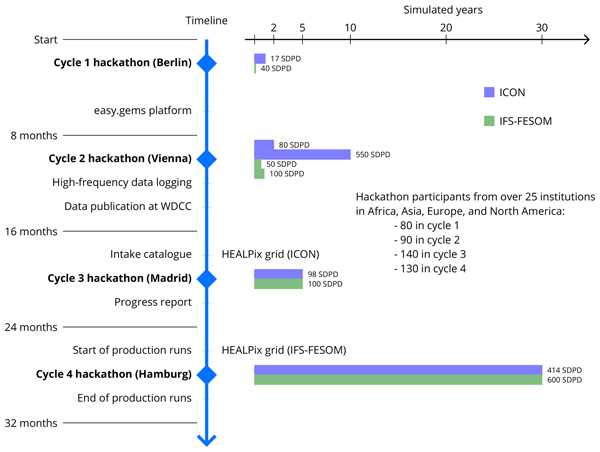
Hans Segura, Xabier Pedruzo-Bagazgoitia, Philipp Weiss, Sebastian K. Müller, Thomas Rackow, Junhong Lee, Edgar Dolores-Tesillos, Imme Benedict, Matthias Aengenheyster, Razvan Aguridan, Gabriele Arduini, Alexander J. Baker, Jiawei Bao, Swantje Bastin, Eulàlia Baulenas, Tobias Becker, Sebastian Beyer, Hendryk Bockelmann, Nils Brüggemann, Lukas Brunner, Suvarchal K. Cheedela, Sushant Das, Jasper Denissen, Ian Dragaud, Piotr Dziekan, Madeleine Ekblom, Jan Frederik Engels, Monika Esch, Richard Forbes, Claudia Frauen, Lilli Freischem, Diego García-Maroto, Philipp Geier, Paul Gierz, Álvaro González-Cervera, Katherine Grayson, Matthew Griffith, Oliver Gutjahr, Helmuth Haak, Ioan Hadade, Kerstin Haslehner, Shabeh ul Hasson, Jan Hegewald, Lukas Kluft, Aleksei Koldunov, Nikolay Koldunov, Tobias Kölling, Shunya Koseki, Sergey Kosukhin, Josh Kousal, Peter Kuma, Arjun U. Kumar, Rumeng Li, Nicolas Maury, Maximilian Meindl, Sebastian Milinski, Kristian Mogensen, Bimochan Niraula, Jakub Nowak, Divya Sri Praturi, Ulrike Proske, Dian Putrasahan, René Redler, David Santuy, Domokos Sármány, Reiner Schnur, Patrick Scholz, Dmitry Sidorenko, Dorian Spät, Birgit Sützl, Daisuke Takasuka, Adrian Tompkins, Alejandro Uribe, Mirco Valentini, Menno Veerman, Aiko Voigt, Sarah Warnau, Fabian Wachsmann, Marta Wacławczyk, Nils Wedi, Karl-Hermann Wieners, Jonathan Wille, Marius Winkler, Yuting Wu, Florian Ziemen, Janos Zimmermann, Frida A.-M. Bender, Dragana Bojovic, Sandrine Bony, Simona Bordoni, Patrice Brehmer, Marcus Dengler, Emanuel Dutra, Saliou Faye, Erich Fischer, Chiel van Heerwaarden, Cathy Hohenegger, Heikki Järvinen, Markus Jochum, Thomas Jung, Johann H. Jungclaus, Noel S. Keenlyside, Daniel Klocke, Heike Konow, Martina Klose, Szymon Malinowski, Olivia Martius, Thorsten Mauritsen, Juan Pedro Mellado, Theresa Mieslinger, Elsa Mohino, Hanna Pawłowska, Karsten Peters-von Gehlen, Abdoulaye Sarré, Pajam Sobhani, Philip Stier, Lauri Tuppi, Pier Luigi Vidale, Irina Sandu, and Bjorn Stevens
Geosci. Model Dev., 18, 7735–7761, https://doi.org/10.5194/gmd-18-7735-2025, https://doi.org/10.5194/gmd-18-7735-2025, 2025
Short summary
Short summary
The Next Generation of Earth Modeling Systems project (nextGEMS) developed two Earth system models that use horizontal grid spacing of 10 km and finer, giving more fidelity to the representation of local phenomena, globally. In its fourth cycle, nextGEMS simulated the Earth System climate over the 2020–2049 period under the SSP3-7.0 scenario. Here, we provide an overview of nextGEMS, insights into the model development, and the realism of multi-decadal, kilometer-scale simulations.
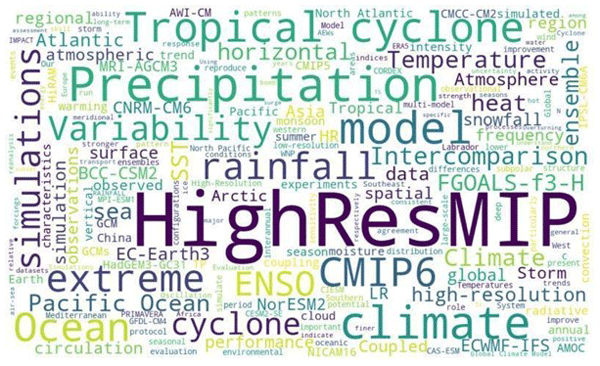
Malcolm J. Roberts, Kevin A. Reed, Qing Bao, Joseph J. Barsugli, Suzana J. Camargo, Louis-Philippe Caron, Ping Chang, Cheng-Ta Chen, Hannah M. Christensen, Gokhan Danabasoglu, Ivy Frenger, Neven S. Fučkar, Shabeh ul Hasson, Helene T. Hewitt, Huanping Huang, Daehyun Kim, Chihiro Kodama, Michael Lai, Lai-Yung Ruby Leung, Ryo Mizuta, Paulo Nobre, Pablo Ortega, Dominique Paquin, Christopher D. Roberts, Enrico Scoccimarro, Jon Seddon, Anne Marie Treguier, Chia-Ying Tu, Paul A. Ullrich, Pier Luigi Vidale, Michael F. Wehner, Colin M. Zarzycki, Bosong Zhang, Wei Zhang, and Ming Zhao
Geosci. Model Dev., 18, 1307–1332, https://doi.org/10.5194/gmd-18-1307-2025, https://doi.org/10.5194/gmd-18-1307-2025, 2025
Short summary
Short summary
HighResMIP2 is a model intercomparison project focusing on high-resolution global climate models, that is, those with grid spacings of 25 km or less in the atmosphere and ocean, using simulations of decades to a century in length. We are proposing an update of our simulation protocol to make the models more applicable to key questions for climate variability and hazard in present-day and future projections and to build links with other communities to provide more robust climate information.
Lorenzo Sangelantoni, Stefano Tibaldi, Leone Cavicchia, Enrico Scoccimarro, Pier Luigi Vidale, Kevin Hodges, Vivien Mavel, Mattia Almansi, Chiara Cagnazzo, and Samuel Almond
EGUsphere, https://doi.org/10.5194/egusphere-2024-4157, https://doi.org/10.5194/egusphere-2024-4157, 2025
Preprint archived
Short summary
Short summary
We introduce a new dataset of European windstorms linked to extratropical cyclones, spanning whole ERA5 reanalysis period (1940–present). Developed under Copernicus Climate Change Service, the dataset provides standardized, high-quality information on windstorm tracks and footprints for industries like insurance and risk management. Preliminary findings show an increase in cold-season windstorms and their impacts in parts of Europe. Tracking methods contribute to uncertainties in key statistics.

Colin G. Jones, Fanny Adloff, Ben B. B. Booth, Peter M. Cox, Veronika Eyring, Pierre Friedlingstein, Katja Frieler, Helene T. Hewitt, Hazel A. Jeffery, Sylvie Joussaume, Torben Koenigk, Bryan N. Lawrence, Eleanor O'Rourke, Malcolm J. Roberts, Benjamin M. Sanderson, Roland Séférian, Samuel Somot, Pier Luigi Vidale, Detlef van Vuuren, Mario Acosta, Mats Bentsen, Raffaele Bernardello, Richard Betts, Ed Blockley, Julien Boé, Tom Bracegirdle, Pascale Braconnot, Victor Brovkin, Carlo Buontempo, Francisco Doblas-Reyes, Markus Donat, Italo Epicoco, Pete Falloon, Sandro Fiore, Thomas Frölicher, Neven S. Fučkar, Matthew J. Gidden, Helge F. Goessling, Rune Grand Graversen, Silvio Gualdi, José M. Gutiérrez, Tatiana Ilyina, Daniela Jacob, Chris D. Jones, Martin Juckes, Elizabeth Kendon, Erik Kjellström, Reto Knutti, Jason Lowe, Matthew Mizielinski, Paola Nassisi, Michael Obersteiner, Pierre Regnier, Romain Roehrig, David Salas y Mélia, Carl-Friedrich Schleussner, Michael Schulz, Enrico Scoccimarro, Laurent Terray, Hannes Thiemann, Richard A. Wood, Shuting Yang, and Sönke Zaehle
Earth Syst. Dynam., 15, 1319–1351, https://doi.org/10.5194/esd-15-1319-2024, https://doi.org/10.5194/esd-15-1319-2024, 2024
Short summary
Short summary
We propose a number of priority areas for the international climate research community to address over the coming decade. Advances in these areas will both increase our understanding of past and future Earth system change, including the societal and environmental impacts of this change, and deliver significantly improved scientific support to international climate policy, such as future IPCC assessments and the UNFCCC Global Stocktake.
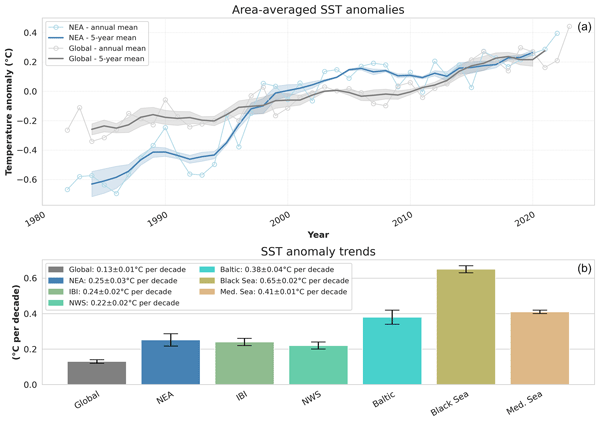
Karina von Schuckmann, Lorena Moreira, Mathilde Cancet, Flora Gues, Emmanuelle Autret, Ali Aydogdu, Lluis Castrillo, Daniele Ciani, Andrea Cipollone, Emanuela Clementi, Gianpiero Cossarini, Alvaro de Pascual-Collar, Vincenzo De Toma, Marion Gehlen, Rianne Giesen, Marie Drevillon, Claudia Fanelli, Kevin Hodges, Simon Jandt-Scheelke, Eric Jansen, Melanie Juza, Ioanna Karagali, Priidik Lagemaa, Vidar Lien, Leonardo Lima, Vladyslav Lyubartsev, Ilja Maljutenko, Simona Masina, Ronan McAdam, Pietro Miraglio, Helen Morrison, Tabea Rebekka Panteleit, Andrea Pisano, Marie-Isabelle Pujol, Urmas Raudsepp, Roshin Raj, Ad Stoffelen, Simon Van Gennip, Pierre Veillard, and Chunxue Yang
State Planet, 4-osr8, 2, https://doi.org/10.5194/sp-4-osr8-2-2024, https://doi.org/10.5194/sp-4-osr8-2-2024, 2024
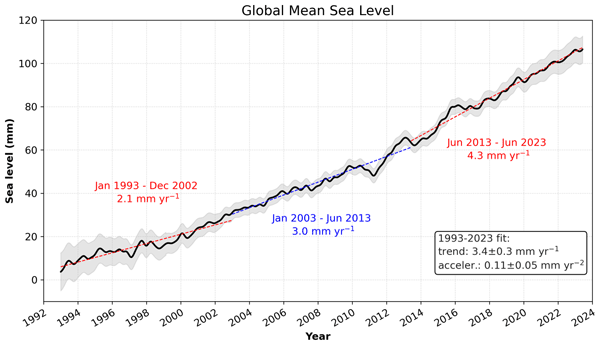
Karina von Schuckmann, Lorena Moreira, Mathilde Cancet, Flora Gues, Emmanuelle Autret, Jonathan Baker, Clément Bricaud, Romain Bourdalle-Badie, Lluis Castrillo, Lijing Cheng, Frederic Chevallier, Daniele Ciani, Alvaro de Pascual-Collar, Vincenzo De Toma, Marie Drevillon, Claudia Fanelli, Gilles Garric, Marion Gehlen, Rianne Giesen, Kevin Hodges, Doroteaciro Iovino, Simon Jandt-Scheelke, Eric Jansen, Melanie Juza, Ioanna Karagali, Thomas Lavergne, Simona Masina, Ronan McAdam, Audrey Minière, Helen Morrison, Tabea Rebekka Panteleit, Andrea Pisano, Marie-Isabelle Pujol, Ad Stoffelen, Sulian Thual, Simon Van Gennip, Pierre Veillard, Chunxue Yang, and Hao Zuo
State Planet, 4-osr8, 1, https://doi.org/10.5194/sp-4-osr8-1-2024, https://doi.org/10.5194/sp-4-osr8-1-2024, 2024
Henri Rossi Pinheiro, Kevin Ivan Hodges, and Manoel Alonso Gan
Weather Clim. Dynam., 5, 881–894, https://doi.org/10.5194/wcd-5-881-2024, https://doi.org/10.5194/wcd-5-881-2024, 2024
Short summary
Short summary
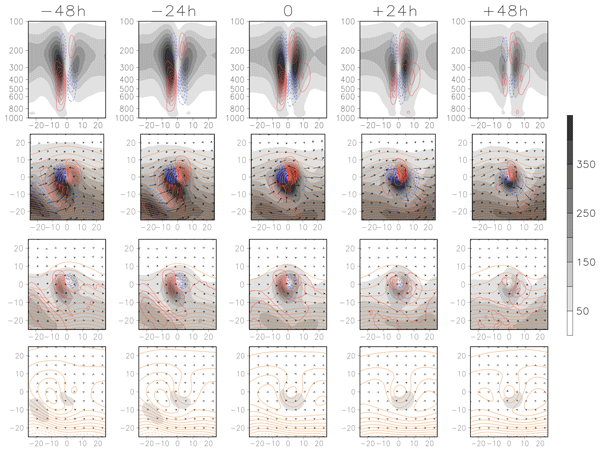
Cut-off lows (COLs) are weather systems with varied structures and lifecycles, from upper atmospheric to deep vortices. Deep, strong COLs are common around Australia and the southwestern Pacific in autumn and spring, while shallow, weak COLs occur more in summer near the Equator. Jet streams play a crucial role in COL development, with different jets influencing its depth and strength. The study also emphasizes the need for better representation of diabatic processes in reanalysis data.
Alexander Frank Vessey, Kevin I. Hodges, Len C. Shaffrey, and Jonathan J. Day
Nat. Hazards Earth Syst. Sci., 24, 2115–2132, https://doi.org/10.5194/nhess-24-2115-2024, https://doi.org/10.5194/nhess-24-2115-2024, 2024
Short summary
Short summary
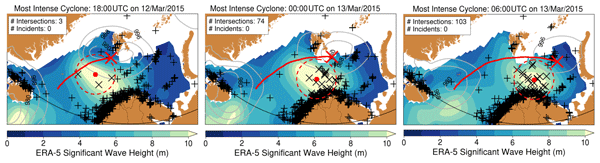
The risk posed to ships by Arctic cyclones has seldom been quantified due to the lack of publicly available historical Arctic ship track data. This study investigates historical Arctic ship tracks, cyclone tracks, and shipping incident reports to determine the number of shipping incidents caused by the passage of Arctic cyclones. Results suggest that Arctic cyclones have not been hazardous to ships and that ships are resilient to the rough sea conditions caused by Arctic cyclones.
Omar V. Müller, Patrick C. McGuire, Pier Luigi Vidale, and Ed Hawkins
Hydrol. Earth Syst. Sci., 28, 2179–2201, https://doi.org/10.5194/hess-28-2179-2024, https://doi.org/10.5194/hess-28-2179-2024, 2024
Short summary
Short summary
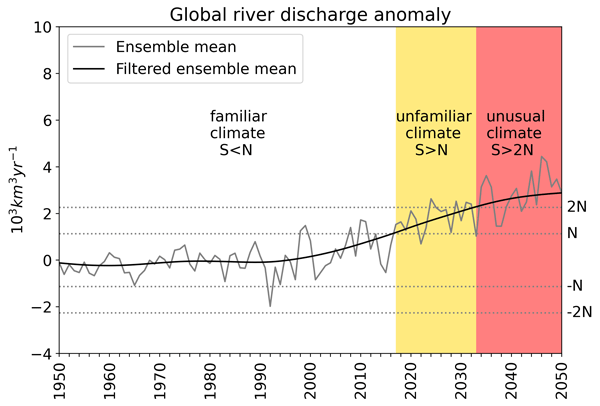
This work evaluates how rivers are projected to change in the near future compared to the recent past in the context of a warming world. We show that important rivers of the world will notably change their flows, mainly during peaks, exceeding the variations that rivers used to exhibit. Such large changes may produce more frequent floods, alter hydropower generation, and potentially affect the ocean's circulation.
Bjorn Stevens, Stefan Adami, Tariq Ali, Hartwig Anzt, Zafer Aslan, Sabine Attinger, Jaana Bäck, Johanna Baehr, Peter Bauer, Natacha Bernier, Bob Bishop, Hendryk Bockelmann, Sandrine Bony, Guy Brasseur, David N. Bresch, Sean Breyer, Gilbert Brunet, Pier Luigi Buttigieg, Junji Cao, Christelle Castet, Yafang Cheng, Ayantika Dey Choudhury, Deborah Coen, Susanne Crewell, Atish Dabholkar, Qing Dai, Francisco Doblas-Reyes, Dale Durran, Ayoub El Gaidi, Charlie Ewen, Eleftheria Exarchou, Veronika Eyring, Florencia Falkinhoff, David Farrell, Piers M. Forster, Ariane Frassoni, Claudia Frauen, Oliver Fuhrer, Shahzad Gani, Edwin Gerber, Debra Goldfarb, Jens Grieger, Nicolas Gruber, Wilco Hazeleger, Rolf Herken, Chris Hewitt, Torsten Hoefler, Huang-Hsiung Hsu, Daniela Jacob, Alexandra Jahn, Christian Jakob, Thomas Jung, Christopher Kadow, In-Sik Kang, Sarah Kang, Karthik Kashinath, Katharina Kleinen-von Königslöw, Daniel Klocke, Uta Kloenne, Milan Klöwer, Chihiro Kodama, Stefan Kollet, Tobias Kölling, Jenni Kontkanen, Steve Kopp, Michal Koran, Markku Kulmala, Hanna Lappalainen, Fakhria Latifi, Bryan Lawrence, June Yi Lee, Quentin Lejeun, Christian Lessig, Chao Li, Thomas Lippert, Jürg Luterbacher, Pekka Manninen, Jochem Marotzke, Satoshi Matsouoka, Charlotte Merchant, Peter Messmer, Gero Michel, Kristel Michielsen, Tomoki Miyakawa, Jens Müller, Ramsha Munir, Sandeep Narayanasetti, Ousmane Ndiaye, Carlos Nobre, Achim Oberg, Riko Oki, Tuba Özkan-Haller, Tim Palmer, Stan Posey, Andreas Prein, Odessa Primus, Mike Pritchard, Julie Pullen, Dian Putrasahan, Johannes Quaas, Krishnan Raghavan, Venkatachalam Ramaswamy, Markus Rapp, Florian Rauser, Markus Reichstein, Aromar Revi, Sonakshi Saluja, Masaki Satoh, Vera Schemann, Sebastian Schemm, Christina Schnadt Poberaj, Thomas Schulthess, Cath Senior, Jagadish Shukla, Manmeet Singh, Julia Slingo, Adam Sobel, Silvina Solman, Jenna Spitzer, Philip Stier, Thomas Stocker, Sarah Strock, Hang Su, Petteri Taalas, John Taylor, Susann Tegtmeier, Georg Teutsch, Adrian Tompkins, Uwe Ulbrich, Pier-Luigi Vidale, Chien-Ming Wu, Hao Xu, Najibullah Zaki, Laure Zanna, Tianjun Zhou, and Florian Ziemen
Earth Syst. Sci. Data, 16, 2113–2122, https://doi.org/10.5194/essd-16-2113-2024, https://doi.org/10.5194/essd-16-2113-2024, 2024
Short summary
Short summary
To manage Earth in the Anthropocene, new tools, new institutions, and new forms of international cooperation will be required. Earth Virtualization Engines is proposed as an international federation of centers of excellence to empower all people to respond to the immense and urgent challenges posed by climate change.
Jon Seddon, Ag Stephens, Matthew S. Mizielinski, Pier Luigi Vidale, and Malcolm J. Roberts
Geosci. Model Dev., 16, 6689–6700, https://doi.org/10.5194/gmd-16-6689-2023, https://doi.org/10.5194/gmd-16-6689-2023, 2023
Short summary
Short summary
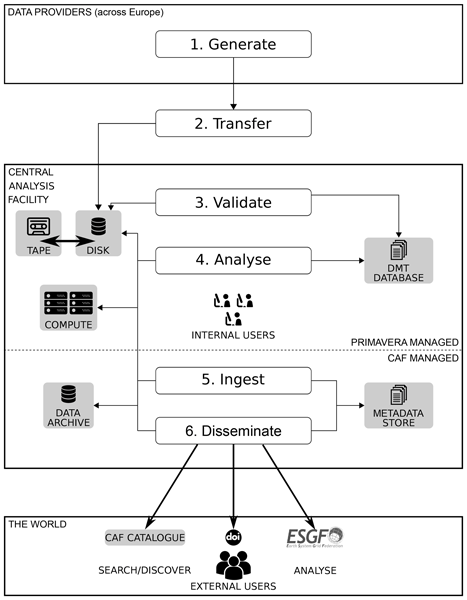
The PRIMAVERA project aimed to develop a new generation of advanced global climate models. The large volume of data generated was uploaded to a central analysis facility (CAF) and was analysed by 100 PRIMAVERA scientists there. We describe how the PRIMAVERA project used the CAF's facilities to enable users to analyse this large dataset. We believe that similar, multi-institute, big-data projects could also use a CAF to efficiently share, organise and analyse large volumes of data.
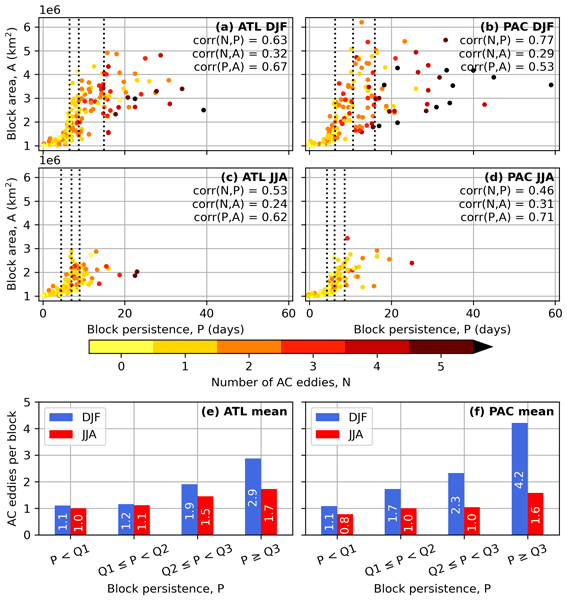
Charlie C. Suitters, Oscar Martínez-Alvarado, Kevin I. Hodges, Reinhard K. H. Schiemann, and Duncan Ackerley
Weather Clim. Dynam., 4, 683–700, https://doi.org/10.5194/wcd-4-683-2023, https://doi.org/10.5194/wcd-4-683-2023, 2023
Short summary
Short summary
Atmospheric blocking describes large and persistent high surface pressure. In this study, the relationship between block persistence and smaller-scale systems is examined. Persistent blocks result from more interactions with small systems, but a block's persistence does not depend as strongly on the strength of these smaller features. This work is important because it provides more knowledge as to how blocks can be allowed to persist, which is something we still do not fully understand.
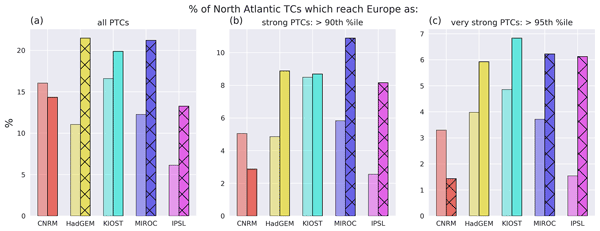
Elliott Michael Sainsbury, Reinhard K. H. Schiemann, Kevin I. Hodges, Alexander J. Baker, Len C. Shaffrey, Kieran T. Bhatia, and Stella Bourdin
Weather Clim. Dynam., 3, 1359–1379, https://doi.org/10.5194/wcd-3-1359-2022, https://doi.org/10.5194/wcd-3-1359-2022, 2022
Short summary
Short summary
Post-tropical cyclones (PTCs) can bring severe weather to Europe. By tracking and identifying PTCs in five global climate models, we investigate how the frequency and intensity of PTCs may change across Europe by 2100. We find no robust change in the frequency or intensity of Europe-impacting PTCs in the future. This study indicates that large uncertainties surround future Europe-impacting PTCs and provides a framework for evaluating PTCs in future generations of climate models.

Rafaela Jane Delfino, Gerry Bagtasa, Kevin Hodges, and Pier Luigi Vidale
Nat. Hazards Earth Syst. Sci., 22, 3285–3307, https://doi.org/10.5194/nhess-22-3285-2022, https://doi.org/10.5194/nhess-22-3285-2022, 2022
Short summary
Short summary
We showed the effects of altering the choice of cumulus schemes, surface flux options, and spectral nudging with a high level of sensitivity to cumulus schemes in simulating an intense typhoon. We highlight the advantage of using an ensemble of cumulus parameterizations to take into account the uncertainty in simulating typhoons such as Haiyan in 2013. This study is useful in addressing the growing need to plan and prepare for as well as reduce the impacts of intense typhoons in the Philippines.
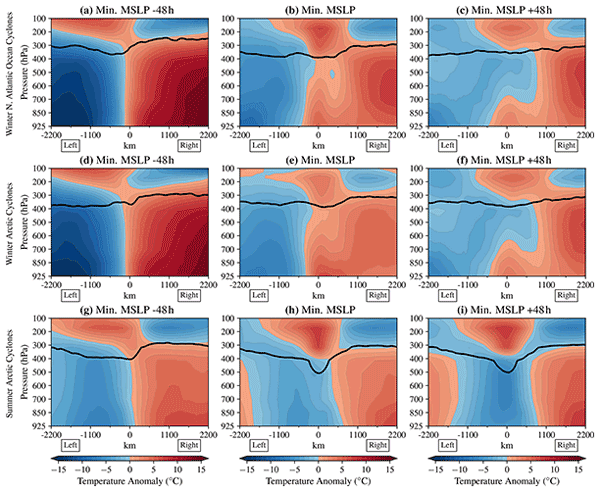
Alexander F. Vessey, Kevin I. Hodges, Len C. Shaffrey, and Jonathan J. Day
Weather Clim. Dynam., 3, 1097–1112, https://doi.org/10.5194/wcd-3-1097-2022, https://doi.org/10.5194/wcd-3-1097-2022, 2022
Short summary
Short summary
Understanding the location and intensity of hazardous weather across the Arctic is important for assessing risks to infrastructure, shipping, and coastal communities. This study describes the typical lifetime and structure of intense winter and summer Arctic cyclones. Results show the composite development and structure of intense summer Arctic cyclones are different from intense winter Arctic and North Atlantic Ocean extra-tropical cyclones and from conceptual models.
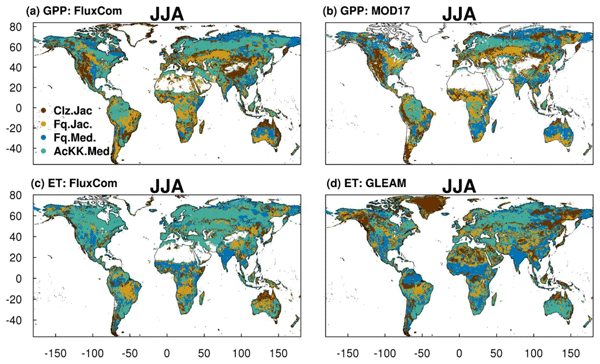
Rebecca J. Oliver, Lina M. Mercado, Doug B. Clark, Chris Huntingford, Christopher M. Taylor, Pier Luigi Vidale, Patrick C. McGuire, Markus Todt, Sonja Folwell, Valiyaveetil Shamsudheen Semeena, and Belinda E. Medlyn
Geosci. Model Dev., 15, 5567–5592, https://doi.org/10.5194/gmd-15-5567-2022, https://doi.org/10.5194/gmd-15-5567-2022, 2022
Short summary
Short summary
We introduce new representations of plant physiological processes into a land surface model. Including new biological understanding improves modelled carbon and water fluxes for the present in tropical and northern-latitude forests. Future climate simulations demonstrate the sensitivity of photosynthesis to temperature is important for modelling carbon cycle dynamics in a warming world. Accurate representation of these processes in models is necessary for robust predictions of climate change.
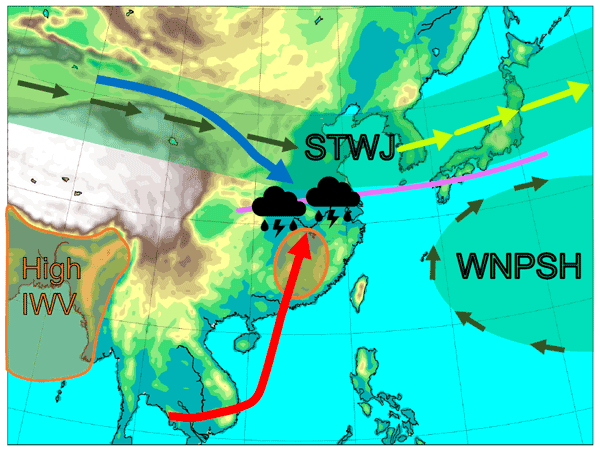
Ambrogio Volonté, Andrew G. Turner, Reinhard Schiemann, Pier Luigi Vidale, and Nicholas P. Klingaman
Weather Clim. Dynam., 3, 575–599, https://doi.org/10.5194/wcd-3-575-2022, https://doi.org/10.5194/wcd-3-575-2022, 2022
Short summary
Short summary
In this study we analyse the complex seasonal evolution of the East Asian summer monsoon. Using reanalysis data, we show the importance of the interaction between tropical and extratropical air masses converging at the monsoon front, particularly during its northward progression. The upper-level flow pattern (e.g. the westerly jet) controls the balance between the airstreams and thus the associated rainfall. This framework provides a basis for studies of extreme events and climate variability.
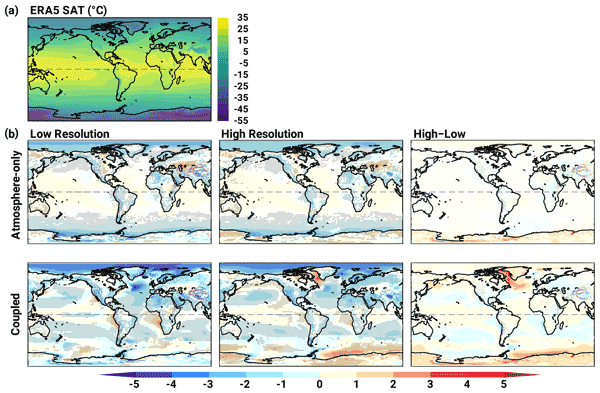
Eduardo Moreno-Chamarro, Louis-Philippe Caron, Saskia Loosveldt Tomas, Javier Vegas-Regidor, Oliver Gutjahr, Marie-Pierre Moine, Dian Putrasahan, Christopher D. Roberts, Malcolm J. Roberts, Retish Senan, Laurent Terray, Etienne Tourigny, and Pier Luigi Vidale
Geosci. Model Dev., 15, 269–289, https://doi.org/10.5194/gmd-15-269-2022, https://doi.org/10.5194/gmd-15-269-2022, 2022
Short summary
Short summary
Climate models do not fully reproduce observations: they show differences (biases) in regional temperature, precipitation, or cloud cover. Reducing model biases is important to increase our confidence in their ability to reproduce present and future climate changes. Model realism is set by its resolution: the finer it is, the more physical processes and interactions it can resolve. We here show that increasing resolution of up to ~ 25 km can help reduce model biases but not remove them entirely.
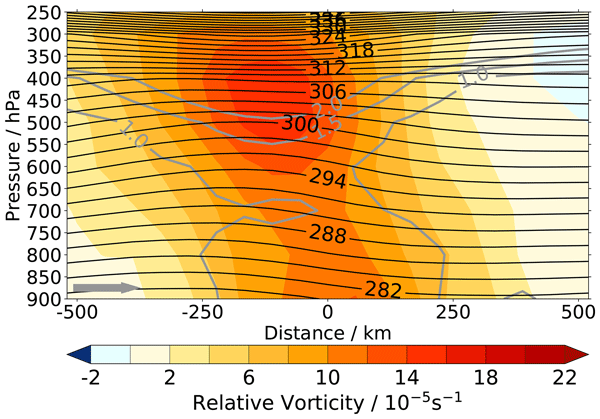
Suzanne L. Gray, Kevin I. Hodges, Jonathan L. Vautrey, and John Methven
Weather Clim. Dynam., 2, 1303–1324, https://doi.org/10.5194/wcd-2-1303-2021, https://doi.org/10.5194/wcd-2-1303-2021, 2021
Short summary
Short summary
This research demonstrates, using feature identification and tracking, that anticlockwise rotating vortices at about 7 km altitude called tropopause polar vortices frequently interact with storms developing in the Arctic region, affecting their structure and where they occur. This interaction has implications for the predictability of Arctic weather, given the long lifetime but a relatively small spatial scale of these vortices compared with the density of the polar observation network.
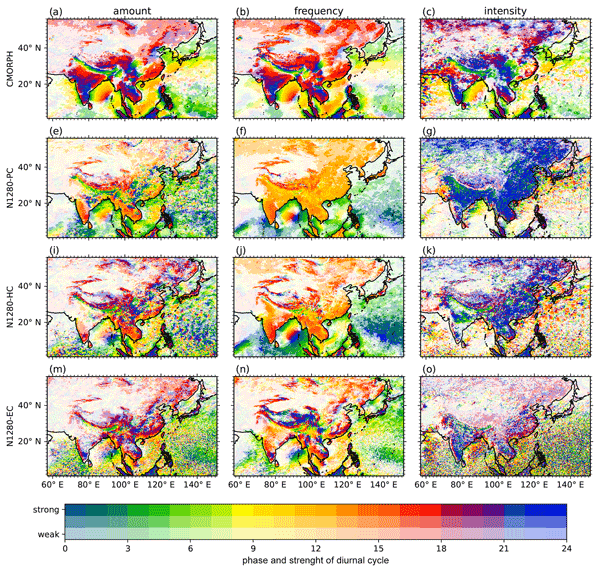
Mark R. Muetzelfeldt, Reinhard Schiemann, Andrew G. Turner, Nicholas P. Klingaman, Pier Luigi Vidale, and Malcolm J. Roberts
Hydrol. Earth Syst. Sci., 25, 6381–6405, https://doi.org/10.5194/hess-25-6381-2021, https://doi.org/10.5194/hess-25-6381-2021, 2021
Short summary
Short summary
Simulating East Asian Summer Monsoon (EASM) rainfall poses many challenges because of its multi-scale nature. We evaluate three setups of a 14 km global climate model against observations to see if they improve simulated rainfall. We do this over catchment basins of different sizes to estimate how model performance depends on spatial scale. Using explicit convection improves rainfall diurnal cycle, yet more model tuning is needed to improve mean and intensity biases in simulated summer rainfall.
Cited articles
Allen, M. R. and Ingram, W. J.: Constraints on future changes in climate and the hydrologic cycle, Nature, 419, 224–232, https://doi.org/10.1038/nature01092, 2002.
Alvey III, G. R., Zawislak, J., and Zipser, E. J.: Precipitation properties observed during tropical cyclone intensity change, Mon. Weather Rev., 143, 4476–4492, https://doi.org/10.1175/MWR-D-15-0065.1, 2015.
Bagtasa, G.: Contribution of tropical cyclones to precipitation in the Philippines, J. Climate, 30, 3621–3633, https://doi.org/10.1175/JCLI-D-16-0150.1, 2017.
Bagtasa, G.: Variability of tropical cyclone precipitation volume in the Philippines, Int. J. Climatol., 42, 7573–7588, https://doi.org/10.1002/joc.7573, 2022.
Cha, E. J., Knutson, T. R., Lee, T. C., Ying, M., and Nakaegawa, T.: Third assessment on impacts of climate change on tropical cyclones in the Typhoon Committee Region – Part II: Future projections, Trop. Cyclone Res. Rev., 9, 75–86, https://doi.org/10.1016/j.tcrr.2020.04.005, 2020.
Chen, J., Toumi, R., Zhang, L., Lu, M., Xi, D., and Shi, X.: Radial rainfall pattern changes of intense over-ocean tropical cyclones under global warming: Insights from an MRI HighRes CMIP6 simulation, Geophys. Res. Lett., 52, https://doi.org/10.1029/2025GL116146, 2025.
Copernicus Climate Change Service: ERA5 hourly data on single levels from 1940 to present, Copernicus Climate Change Service (C3S) Climate Data Store (CDS) [data set], https://doi.org/10.24381/cds.adbb2d47, 2023.
DeMaria, M., Mainelli, M., Shay, L. K., Knaff, J. A., and Kaplan, J.: Further improvement to the Statistical Hurricane Intensity Prediction Scheme (SHIPS), Weather Forecast., 20, 531–543, https://doi.org/10.1175/WAF862.1, 2005.
Delfino, R. J. P., Vidale, P. L. V., Bagtasa, G., and Hodges, K.: Response of damaging tropical cyclone events in the Philippines to climate forcings from selected CMIP6 models using the pseudo global warming technique, Clim. Dynam., 61, 6743–6765, https://doi.org/10.1007/s00382-023-06742-6, 2023.
Delfino, R. J. P., Hodges, K., Vidale, P. L. V., and Bagtasa, G.: Sensitivity of Philippine historically damaging tropical cyclone events to surface and atmospheric temperature forcings, Reg. Stud. Mar. Sci., 69, 103595, https://doi.org/10.1016/j.rsma.2024.103595, 2024.
Eyring, V., Bony, S., Meehl, G. A., Senior, C. A., Stevens, B., Stouffer, R. J., and Taylor, K. E.: Overview of the Coupled Model Intercomparison Project Phase 6 (CMIP6) experimental design and organization, Geosci. Model Dev., 9, 1937–1958, https://doi.org/10.5194/gmd-9-1937-2016, 2016.
Held, I. M. and Soden, B. J.: Robust responses of the hydrological cycle to global warming, J. Climate, 19, 5686–5699, https://doi.org/10.1175/JCLI3990.1, 2006.
Hersbach, H., Bell, B., Berrisford, P., Biavati, G., Horányi, A., Muñoz Sabater, J., Nicolas, J., Peubey, C., Radu, R., Rozum, I., Schepers, D., Simmons, A., Soci, C., Dee, D., and Thépaut, J.-N.: ERA5 hourly data on single levels from 1940 to present, Copernicus Climate Change Service (C3S) Climate Data Store (CDS) [data set], https://doi.org/10.24381/cds.adbb2d47, 2023.
Hendricks, E. A., Peng, M. S., Fu, B., and Li, T.: Quantifying environmental control on tropical cyclone intensity change, Mon. Weather Rev., 138, 3243–3271, https://doi.org/10.1175/2010MWR3185.1, 2010.
Hodges, K., Cobb, A., and Vidale, P. L.: How well are tropical cyclones represented in reanalysis datasets?, J. Climate, 30, 5243–5264, https://doi.org/10.1175/JCLI-D-16-0557.1, 2017.
Hodges, K. I. and Klingaman, N. P.: Prediction errors of tropical cyclones in the western North Pacific in the Met Office global forecast model, Weather Forecast., 34, 1189–1209, https://doi.org/10.1175/WAF-D-19-0005.1, 2019.
Huprikar, A. S., Stansfield, A. M., and Reed, K. A.: A storyline analysis of Hurricane Irma's precipitation under various levels of climate warming, Environ. Res. Lett., 19, 014004, https://doi.org/10.1088/1748-9326/ad0c89, 2024.
Intergovernmental Panel on Climate Change (IPCC): Climate Change 2021: The Physical Science Basis, Cambridge University Press, https://doi.org/10.1017/9781009157896, 2021.
Kaplan, J., DeMaria, M., and Knaff, J. A.: A revised tropical cyclone rapid intensification index for the Atlantic and eastern North Pacific basins, Weather Forecast., 25, 220–241, https://doi.org/10.1175/2009WAF2222280.1, 2010.
Kaplan, J., Rozoff, C. M., DeMaria, M., Sampson, C. R., Kossin, J. P., Velden, C. S., Cione, J. J., Dunion, J. P., Knaff, J. A., Zhang, J. A., Dostalek, J. F., Hawkins, J. D., Lee, T. F., and Solbrig, J. E.: Evaluating environmental impacts on tropical cyclone rapid intensification predictability utilizing statistical models, Weather Forecast., 30, 1374–1396, https://doi.org/10.1175/WAF-D-15-0032.1, 2015.
Knutson, T. R., Camargo, S. J., Chan, J. C. L., Emanuel, K., Ho, C.-H., Kossin, J., Mohapatra, M., Satoh, M., Sugi, M., Walsh, K., and Wu, L.: Tropical cyclones and climate change assessment: Part II: Projected response to anthropogenic warming, B. Am. Meteorol. Soc., 101, E303–E322, https://doi.org/10.1175/BAMS-D-18-0194.1, 2020.
Knutson, T. R., Chung, M. V., Vecchi, G., Sun, J., Hsieh, T.-L., and Smith, A. J. P.: Climate change is probably increasing the intensity of tropical cyclones, ScienceBrief Review, in: Critical Issues in Climate Change Science, edited by: Le Quéré, C., Liss, P., and Forster, P., ScienceBrief, https://doi.org/10.5281/zenodo.4570334, 2021.
Kossin, J. P.: A global slowdown of tropical-cyclone translation speed, Nature, 558, 104–107, https://doi.org/10.1038/s41586-018-0158-3, 2018.
Kubota, H. and Chan, J. C. L.: Interdecadal variability of tropical cyclone landfall in the Philippines from 1902 to 2005, Geophys. Res. Lett., 36, L12802, https://doi.org/10.1029/2009GL038108, 2009.
Kubota, H. and Wang, B.: How much do tropical cyclones affect seasonal and interannual rainfall variability over the western North Pacific?, J. Climate, 22, 5495–5510, https://doi.org/10.1175/2009JCLI2646.1, 2009.
Liu, M., Vecchi, G. A., Smith, J. A., and Murakami, H.: Causes of large projected increases in hurricane precipitation rates with global warming, npj Clim. Atmos. Sci., 2, 38, https://doi.org/10.1038/s41612-019-0095-3, 2019.
Macalalad, R. V., Delfino, R. J. P., Badilla, R. A., Paat Jr., S. F., and Bagtasa, G.: Role of historical warming on the extreme flooding event due to Typhoon Vamco (Ulysses) 2020 in the Philippines, Philipp. J. Sci., 152, 197–212, 2023.
O'Gorman, P. A.: Precipitation extremes under climate change, Curr. Clim. Change Rep., 1, 49–59, https://doi.org/10.1007/s40641-015-0009-3, 2015.
Patricola, C. M. and Wehner, M. F.: Anthropogenic influences on major tropical cyclone events, Nature, 563, 339–346, https://doi.org/10.1038/s41586-018-0673-2, 2018.
Pendergrass, A. G. and Hartmann, D. L.: Two modes of change of the distribution of rain, J. Climate, 27, 8357–8371, https://doi.org/10.1175/JCLI-D-14-00182.1, 2014.
Ribera, P., García-Herrera, R., Gimeno, L., and Hernández, E.: Typhoons in the Philippine Islands, 1901–1934, Clim. Res., 29, 85–90, https://doi.org/10.3354/cr029085, 2005.
Rotunno, R. and Emanuel, K. A.: An air–sea interaction theory for tropical cyclones. Part II: Evolutionary study using a nonhydrostatic axisymmetric numerical model, J. Atmos. Sci., 44, 542–561, https://doi.org/10.1175/1520-0469(1987)044<0542:AAITFT>2.0.CO;2, 1987.
Ruan, Z. and Wu, Q.: Precipitation, convective clouds, and their connections with tropical cyclone intensity and intensity change, Geophys. Res. Lett., 45, 1098–1105, https://doi.org/10.1002/2017GL076611, 2018.
Schär, C., Frei, C., Lüthi, D., and Davies, H. C.: Surrogate climate-change scenarios for regional climate models, Geophys. Res. Lett., 23, 669–672, https://doi.org/10.1029/96GL00265, 1996.
Shi, X., Liu, Y., Chen, J., Chen, H., Wang, Y., Lu, Z., Wang, R.-Q., Fung, J. C.-H., and Ng, C. W. W.: Escalating tropical cyclone precipitation extremes and landslide hazards in South China under global warming, npj Clim. Atmos. Sci., 7, 107, https://doi.org/10.1038/s41612-024-00654-w, 2024.
Skamarock, W. C., Klemp, J. B., Dudhia, J., Gill, D. O., Barker, D. M., Duda, M. G., Huang, X.-Y., Wang, W., and Powers, J. G.: A description of the Advanced Research WRF version 3, NCAR Technical Note NCAR/TN-475+STR, National Center for Atmospheric Research, Boulder, Colorado, https://doi.org/10.5065/D68S4MVH, 2008.
Stansfield, A. M. and Reed, K. A.: Global tropical cyclone precipitation scaling with sea surface temperature, npj Clim. Atmos. Sci., 6, 60, https://doi.org/10.1038/s41612-023-00391-6, 2023.
Tao, C. and Jiang, H.: Distributions of shallow to very deep precipitation-convection in rapidly intensifying tropical cyclones, J. Climate, 28, 8791–8824, https://doi.org/10.1175/JCLI-D-14-00448.1, 2015.
Tierra, M. C. M. and Bagtasa, G.: Identifying the rapid intensification of tropical cyclones using the Himawari-8 satellite and their impacts in the Philippines, Int. J. Climatol., 43, 1–16, https://doi.org/10.1002/joc.7696, 2023.
Trenberth, K. E. and Shea, D. J.: Relationships between precipitation and surface temperature, Geophys. Res. Lett., 32, L14703, https://doi.org/10.1029/2005GL022760, 2005.
Villarini, G., Lavers, D. A., Scoccimarro, E., Zhao, M., Wehner, M. F., Vecchi, G. A., Knutson, T. R., and Reed, K. A.: Sensitivity of tropical cyclone rainfall to idealized global-scale forcings, J. Climate, 27, 4622–4641, https://doi.org/10.1175/JCLI-D-13-00780.1, 2014.
Walsh, K. J. E., Camargo, S. J., Knutson, T. R., Kossin, J., Lee, T.-C., Murakami, H., and Patricola, C.: Tropical cyclones and climate change, Trop. Cyclone Res. Rev., 8, 240–250, https://doi.org/10.1016/j.tcrr.2020.01.004, 2019.
Xi, D., Wang, S., and Lin, N.: Analyzing relationships between tropical cyclone intensity and rain rate over the ocean using numerical simulations, J. Climate, 36, 81–91, https://doi.org/10.1175/JCLI-D-22-0141.1, 2023.
Yamada, Y., Satoh, M., Sugi, M., Kodama, C., Noda, A. T., Nakano, M., and Nasuno, T.: Response of tropical cyclone activity and structure to global warming in a high-resolution global nonhydrostatic model, J. Climate, 30, 9703–9724, https://doi.org/10.1175/JCLI-D-17-0068.1, 2017.
Yang, Y. and Toumi, R.: Large dynamic contributions to tropical cyclone precipitation with increasing sea surface temperature, Environ. Res. Lett., 20, 074013, https://doi.org/10.1088/1748-9326/add753, 2025.
Yumul, G. P., Servando, N. T., Suerte, L. O., Magarzo, M. Y., Juguan, L. V. V., and Dimalanta, C. B.: Tropical cyclone–southwest monsoon interaction and the 2008 floods and landslides in Panay Island, central Philippines: meteorological and geological factors, Nat. Hazards, 62, 827–840, https://doi.org/10.1007/s11069-012-0109-5, 2012.
Short summary
High-resolution simulations reveal that future warming amplifies tropical cyclone extreme rainfall in the Philippines, with inner-core increases exceeding 30–40 %, indicating a shift toward higher-intensity rainfall events. This response is primarily driven by thermodynamic moisture increases, while dynamical changes generally offset part of the increase. Tropical cyclone (TC) rainfall scaling is therefore largely moisture-driven, with TC-specific dynamics modulating the magnitude of rainfall enhancement.
High-resolution simulations reveal that future warming amplifies tropical cyclone extreme...


Altmetrics
Final-revised paper
Preprint