
Articles | Volume 26, issue 6
https://doi.org/10.5194/nhess-26-2579-2026
© Author(s) 2026. This work is distributed under
the Creative Commons Attribution 4.0 License.
the Creative Commons Attribution 4.0 License.
https://doi.org/10.5194/nhess-26-2579-2026
© Author(s) 2026. This work is distributed under
the Creative Commons Attribution 4.0 License.
the Creative Commons Attribution 4.0 License.
Research article
| 
04 Jun 2026
Research article |
| 04 Jun 2026
| 04 Jun 2026
Monitoring the displacement of large alpine rock slope instabilities with L-band SAR interferometric techniques

Gamma Remote Sensing, Gümligen, 3073, Switzerland
Nina Jones
Gamma Remote Sensing, Gümligen, 3073, Switzerland
Federico Agliardi
Università degli Studi di Milano-Bicocca, Milano, 20126, Italy
Alessandro De Pedrini
Scuola universitaria professionale della Svizzera italiana, Mendrisio, 6850, Switzerland
Othmar Frey
Gamma Remote Sensing, Gümligen, 3073, Switzerland
ETH Zurich, Zurich, 8093, Switzerland
Philipp Bernhard
Gamma Remote Sensing, Gümligen, 3073, Switzerland
Rafael Caduff
Gamma Remote Sensing, Gümligen, 3073, Switzerland
Christian Ambrosi
Scuola universitaria professionale della Svizzera italiana, Mendrisio, 6850, Switzerland
Andrea Manconi
Swiss Federal Institute for Forest, Snow and Landscape Research, Davos, 7260, Switzerland
Climate Change, Extremes and Natural Hazards in Alpine Regions Research Centre CERC, Davos, 7260, Switzerland
Related authors
Tazio Strozzi, Barbara Widhalm, Nina Jones, Julia Boike, Sofia Antonova, Birgit Heim, Sebastian Westermann, Andreas Kääb, and Annett Bartsch
EGUsphere, https://doi.org/10.5194/egusphere-2026-5477, https://doi.org/10.5194/egusphere-2026-5477, 2026
This preprint is open for discussion and under review for Earth Observation (EO).
Short summary
Short summary
Monitoring long-term surface subsidence induced by ground ice thaw across the pan-Arctic is crucial to detect permafrost changes and assess impacts caused by recent atmospheric warming. Using Sentinel-1 satellite radar data, we successfully measured subsidence rates in Siberia’s Lena Delta and found that they vary remarkably among the three main geomorphological units. To enable continuous, large-scale monitoring, satellite data records must maintain coherence from one summer season to the next.
Tazio Strozzi, Erik Schytt Mannerfelt, Oliver Cartus, Maurizio Santoro, Thomas Schellenberger, and Andreas Kääb
The Cryosphere, 20, 1679–1697, https://doi.org/10.5194/tc-20-1679-2026, https://doi.org/10.5194/tc-20-1679-2026, 2026
Short summary
Short summary
By analysing 30 years of satellite SAR (Synthetic Aperture Radar) data, we have found that the number of glacier surges over Svalbard has tripled since 2015. We show that this increase is unlikely to be explained solely by improvements in data quality or by random fluctuations in surge frequency, suggesting that this trend is caused by an external forcing mechanism. Given our incomplete understanding of surge initiation, the cause of the observed threefold increase remains however uncertain.
Alexandru Onaca, Flavius Sîrbu, Valentin Poncoş, Christin Hilbich, Tazio Strozzi, Petru Urdea, Răzvan Popescu, Oana Berzescu, Bernd Etzelmüller, Alfred Vespremeanu-Stroe, Mirela Vasile, Delia Teleagă, Dan Birtaş, Iosif Lopătiţă, Simon Filhol, Alexandru Hegyi, and Florina Ardelean
Earth Surf. Dynam., 13, 981–1001, https://doi.org/10.5194/esurf-13-981-2025, https://doi.org/10.5194/esurf-13-981-2025, 2025
Short summary
Short summary
This study establishes a methodology for the study of slow-moving rock glaciers in marginal permafrost and provides the basic knowledge for understanding rock glaciers in South East Europe. By using a combination of different methods (remote sensing, geophysical survey, thermal measurements), we found out that, on the transitional rock glaciers, low ground ice content (i.e. below 20 %) produces horizontal displacements of up to 3 cm per year.
Line Rouyet, Tobias Bolch, Francesco Brardinoni, Rafael Caduff, Diego Cusicanqui, Margaret Darrow, Reynald Delaloye, Thomas Echelard, Christophe Lambiel, Cécile Pellet, Lucas Ruiz, Lea Schmid, Flavius Sirbu, and Tazio Strozzi
Earth Syst. Sci. Data, 17, 4125–4157, https://doi.org/10.5194/essd-17-4125-2025, https://doi.org/10.5194/essd-17-4125-2025, 2025
Short summary
Short summary
Rock glaciers are landforms generated by the creep of frozen ground (permafrost) in cold-climate mountains. Mapping rock glaciers contributes to documenting the distribution and the dynamics of mountain permafrost. We compiled inventories documenting the location, the characteristics, and the extent of rock glaciers in 12 mountain regions around the world. In each region, a team of operators performed the work following common rules and agreed on final solutions when discrepancies were identified.
Andrea Manconi, Gwendolyn Dasser, Mylène Jacquemart, Nicolas Oestreicher, Livia Piermattei, and Tazio Strozzi
Abstr. Int. Cartogr. Assoc., 9, 41, https://doi.org/10.5194/ica-abs-9-41-2025, https://doi.org/10.5194/ica-abs-9-41-2025, 2025
Barbara Widhalm, Annett Bartsch, Tazio Strozzi, Nina Jones, Artem Khomutov, Elena Babkina, Marina Leibman, Rustam Khairullin, Mathias Göckede, Helena Bergstedt, Clemens von Baeckmann, and Xaver Muri
The Cryosphere, 19, 1103–1133, https://doi.org/10.5194/tc-19-1103-2025, https://doi.org/10.5194/tc-19-1103-2025, 2025
Short summary
Short summary
Mapping soil moisture in Arctic permafrost regions is crucial for various activities, but it is challenging with typical satellite methods due to the landscape's diversity. Seasonal freezing and thawing cause the ground to periodically rise and subside. Our research demonstrates that this seasonal ground settlement, measured with Sentinel-1 satellite data, is larger in areas with wetter soils. This method helps to monitor permafrost degradation.
Aldo Bertone, Nina Jones, Volkmar Mair, Riccardo Scotti, Tazio Strozzi, and Francesco Brardinoni
The Cryosphere, 18, 2335–2356, https://doi.org/10.5194/tc-18-2335-2024, https://doi.org/10.5194/tc-18-2335-2024, 2024
Short summary
Short summary
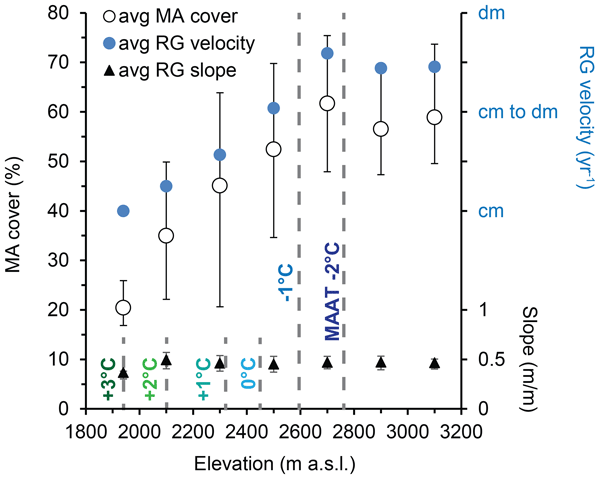
Traditional inventories display high uncertainty in discriminating between intact (permafrost-bearing) and relict (devoid) rock glaciers (RGs). Integration of InSAR-based kinematics in South Tyrol affords uncertainty reduction and depicts a broad elevation belt of relict–intact coexistence. RG velocity and moving area (MA) cover increase linearly with elevation up to an inflection at 2600–2800 m a.s.l., which we regard as a signature of sporadic-to-discontinuous permafrost transition.
Alessandro Cicoira, Samuel Weber, Andreas Biri, Ben Buchli, Reynald Delaloye, Reto Da Forno, Isabelle Gärtner-Roer, Stephan Gruber, Tonio Gsell, Andreas Hasler, Roman Lim, Philippe Limpach, Raphael Mayoraz, Matthias Meyer, Jeannette Noetzli, Marcia Phillips, Eric Pointner, Hugo Raetzo, Cristian Scapozza, Tazio Strozzi, Lothar Thiele, Andreas Vieli, Daniel Vonder Mühll, Vanessa Wirz, and Jan Beutel
Earth Syst. Sci. Data, 14, 5061–5091, https://doi.org/10.5194/essd-14-5061-2022, https://doi.org/10.5194/essd-14-5061-2022, 2022
Short summary
Short summary
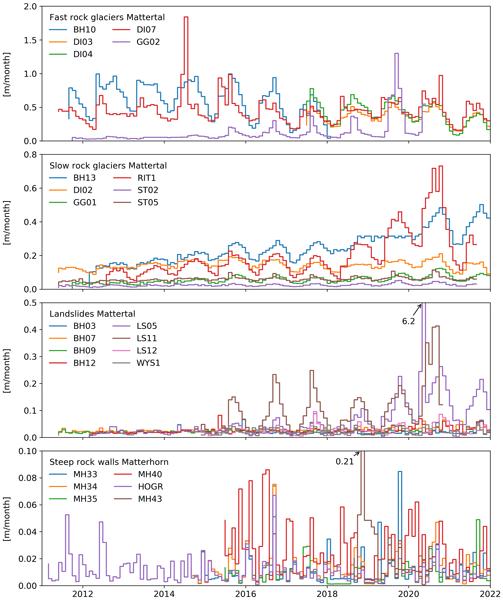
This paper documents a monitoring network of 54 positions, located on different periglacial landforms in the Swiss Alps: rock glaciers, landslides, and steep rock walls. The data serve basic research but also decision-making and mitigation of natural hazards. It is the largest dataset of its kind, comprising over 209 000 daily positions and additional weather data.
Aldo Bertone, Chloé Barboux, Xavier Bodin, Tobias Bolch, Francesco Brardinoni, Rafael Caduff, Hanne H. Christiansen, Margaret M. Darrow, Reynald Delaloye, Bernd Etzelmüller, Ole Humlum, Christophe Lambiel, Karianne S. Lilleøren, Volkmar Mair, Gabriel Pellegrinon, Line Rouyet, Lucas Ruiz, and Tazio Strozzi
The Cryosphere, 16, 2769–2792, https://doi.org/10.5194/tc-16-2769-2022, https://doi.org/10.5194/tc-16-2769-2022, 2022
Short summary
Short summary
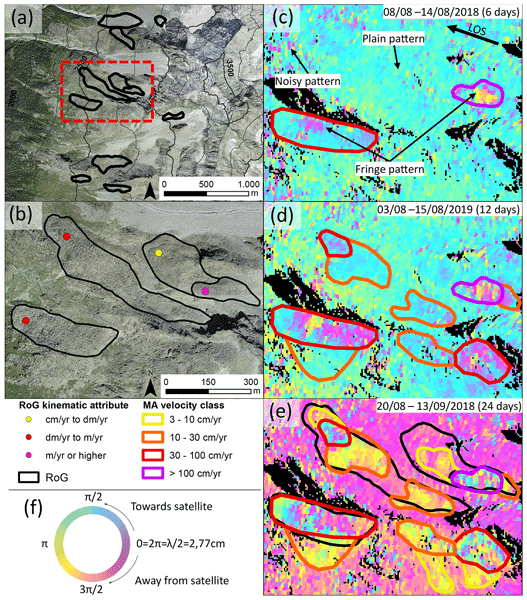
We present the guidelines developed by the IPA Action Group and within the ESA Permafrost CCI project to include InSAR-based kinematic information in rock glacier inventories. Nine operators applied these guidelines to 11 regions worldwide; more than 3600 rock glaciers are classified according to their kinematics. We test and demonstrate the feasibility of applying common rules to produce homogeneous kinematic inventories at global scale, useful for hydrological and climate change purposes.

Frank Paul, Livia Piermattei, Désirée Treichler, Lin Gilbert, Luc Girod, Andreas Kääb, Ludivine Libert, Thomas Nagler, Tazio Strozzi, and Jan Wuite
The Cryosphere, 16, 2505–2526, https://doi.org/10.5194/tc-16-2505-2022, https://doi.org/10.5194/tc-16-2505-2022, 2022
Short summary
Short summary
Glacier surges are widespread in the Karakoram and have been intensely studied using satellite data and DEMs. We use time series of such datasets to study three glacier surges in the same region of the Karakoram. We found strongly contrasting advance rates and flow velocities, maximum velocities of 30 m d−1, and a change in the surge mechanism during a surge. A sensor comparison revealed good agreement, but steep terrain and the two smaller glaciers caused limitations for some of them.
Tazio Strozzi, Andreas Wiesmann, Andreas Kääb, Thomas Schellenberger, and Frank Paul
Earth Syst. Sci. Data Discuss., https://doi.org/10.5194/essd-2022-44, https://doi.org/10.5194/essd-2022-44, 2022
Revised manuscript not accepted
Short summary
Short summary
Knowledge on surface velocity of glaciers and ice caps contributes to a better understanding of a wide range of processes related to glacier dynamics, mass change and response to climate. Based on the release of historical satellite radar data from various space agencies we compiled nearly complete mosaics of winter ice surface velocities for the 1990's over the Eastern Arctic. Compared to the present state, we observe a general increase of ice velocities along with a retreat of glacier fronts.
Nicolas Oestreicher, Florian Denzinger, and Andrea Manconi
EGUsphere, https://doi.org/10.5194/egusphere-2026-5055, https://doi.org/10.5194/egusphere-2026-5055, 2026
This preprint is open for discussion and under review for Earth Observation (EO).
Short summary
Short summary
This study introduces a more accurate way to track ground movements caused by landslides. Understanding how the ground moves is crucial for predicting and managing landslide hazard. We developed a digital image correlation technique that corrects distortions in vertical measurements by accounting for horizontal shifts. We tested this method at a well-monitored landslide site in Switzerland, Brienz/Brinzauls, and compared it with another advanced technique, showing similarly accurate results.
Tazio Strozzi, Barbara Widhalm, Nina Jones, Julia Boike, Sofia Antonova, Birgit Heim, Sebastian Westermann, Andreas Kääb, and Annett Bartsch
EGUsphere, https://doi.org/10.5194/egusphere-2026-5477, https://doi.org/10.5194/egusphere-2026-5477, 2026
This preprint is open for discussion and under review for Earth Observation (EO).
Short summary
Short summary
Monitoring long-term surface subsidence induced by ground ice thaw across the pan-Arctic is crucial to detect permafrost changes and assess impacts caused by recent atmospheric warming. Using Sentinel-1 satellite radar data, we successfully measured subsidence rates in Siberia’s Lena Delta and found that they vary remarkably among the three main geomorphological units. To enable continuous, large-scale monitoring, satellite data records must maintain coherence from one summer season to the next.
Alessandro C. Mondini, Alessandro Simoni, Fabio Bovenga, Alessandro Mercurio, Cristina Reyes-Carmona, Boyun Yu, and Federico Agliardi
EGUsphere, https://doi.org/10.31223/X51B7T, https://doi.org/10.31223/X51B7T, 2026
This preprint is open for discussion and under review for Natural Hazards and Earth System Sciences (NHESS).
Short summary
Short summary
We developed a model to automatically detect landslide displacements from satellite radar interferograms. We introduced geomorphological constraints in the learning process to replicate the interpretative process of expert operators. Our results show the system accurately identifies displacements in very noisy environments. This method allows scientists to rapidly analyse vast regions, offering a fast and practical tool for monitoring natural hazards and protecting environments.
Gwendolyn Dasser, Valentin T. Bickel, Marius Rüetschi, Mylène Jacquemart, Mathias Bavay, Elisabeth Hafner-Aeschbacher, Alec van Herwijnen, David Small, and Andrea Manconi
The Cryosphere, 20, 4811–4837, https://doi.org/10.5194/tc-20-4811-2026, https://doi.org/10.5194/tc-20-4811-2026, 2026
Short summary
Short summary
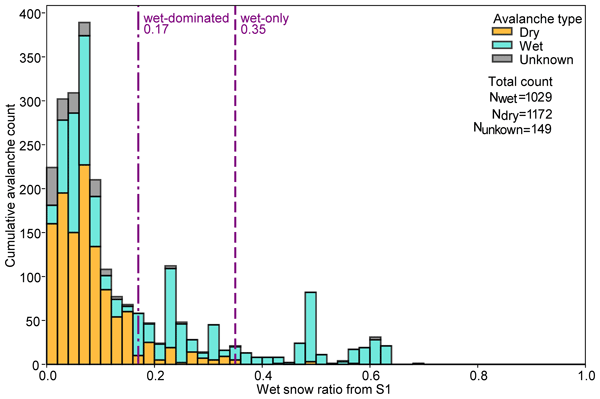
Understanding snowpack wetness is key to predicting wet snow avalanche releases, but detailed data is often limited. Using satellite radar, we monitored snowmelt over several seasons. We extracted a wet snow ratio threshold where the change from dry to wet snow avalanche dominated conditions is expected. By using local resolution weighting composites, we improved spatial resolution and showed our product to be more feasible for use in practice than the publicly available SAR Wet Snow layer.
Stefano Casiraghi, Daniela Bertacchi, Gabriele Benedetti, Silvia Mittempergher, Federico Agliardi, Mattia Martinelli, Francesco Bigoni, Cristian Albertini, and Andrea Bistacchi
EGUsphere, https://doi.org/10.5194/egusphere-2026-2409, https://doi.org/10.5194/egusphere-2026-2409, 2026
Short summary
Short summary
This study proposes a new multi-parametric method to define the representative elementary area (REA) for areal fracture intensity (P21). REA, defined as a range bounded by lower and upper limits, is defined through the evaluation of the shape, mean, and variance of P21 statistical distributions collected with sampling areas with increasing radius, using a combination of statistical tests and diagnostic plots. The methodology is tested on two different fractures limestone outcrops.
Tazio Strozzi, Erik Schytt Mannerfelt, Oliver Cartus, Maurizio Santoro, Thomas Schellenberger, and Andreas Kääb
The Cryosphere, 20, 1679–1697, https://doi.org/10.5194/tc-20-1679-2026, https://doi.org/10.5194/tc-20-1679-2026, 2026
Short summary
Short summary
By analysing 30 years of satellite SAR (Synthetic Aperture Radar) data, we have found that the number of glacier surges over Svalbard has tripled since 2015. We show that this increase is unlikely to be explained solely by improvements in data quality or by random fluctuations in surge frequency, suggesting that this trend is caused by an external forcing mechanism. Given our incomplete understanding of surge initiation, the cause of the observed threefold increase remains however uncertain.
Gwendolyn Dasser, Alessandro Maissen, Michele Volpi, Jordan Aaron, Florian Denzinger, Hugo Raetzo, and Andrea Manconi
EGUsphere, https://doi.org/10.5194/egusphere-2026-375, https://doi.org/10.5194/egusphere-2026-375, 2026
Short summary
Short summary
We aim to improve early landslide detection and monitoring by automating signal segmentation of Sentinel-1 radar interferograms. We first compared how different experts map mass-movement related signals on interferograms using ten case studies, identifying dataset uncertainties and limitations. We then trained and evaluated deep learning approaches to perform segmentation. Finally showing that models can achieve results comparable to expert variability while improving efficiency.
Stefano Casiraghi, Gabriele Benedetti, Daniela Bertacchi, Silvia Mittempergher, Federico Agliardi, Bruno Monopoli, Fabio La Valle, Mattia Martinelli, Francesco Bigoni, Cristian Albertini, and Andrea Bistacchi
Solid Earth, 16, 1351–1382, https://doi.org/10.5194/se-16-1351-2025, https://doi.org/10.5194/se-16-1351-2025, 2025
Short summary
Short summary
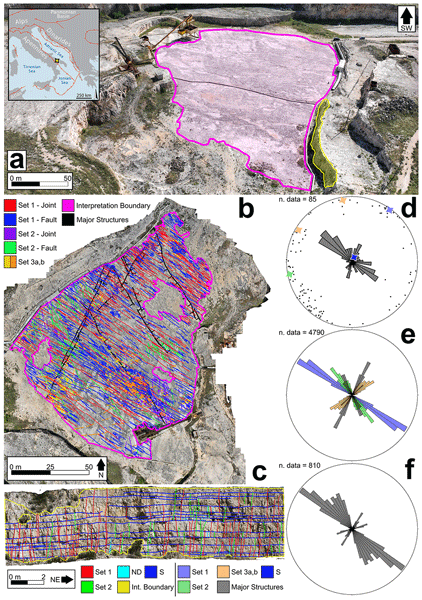
Traditional methods for investigating the subsurface cannot properly investigate fractures between 1m and 100–200m. Digital outcrop models (DOMs) provide a framework for the collection of extensive datasets in outcrop analogues. Here we present a workflow, with a solid statistical foundation, to collect a suite of statistical parameters to be used as input in current stochastic 3D Discrete Fracture Network models, including best practices for an optimal outcrop selection and data acquisition.
Federico Agliardi, Chiara Crippa, Daniele Codara, and Federico Franzosi
The Cryosphere, 19, 5003–5021, https://doi.org/10.5194/tc-19-5003-2025, https://doi.org/10.5194/tc-19-5003-2025, 2025
Short summary
Short summary
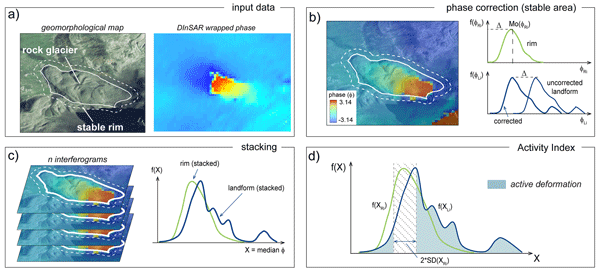
We present a semi-automatic method integrating geomorphological data, permafrost extent, and Sentinel-1 differential interferometric synthetic-aperture radar (DInSAR) wrapped-phase signals to assess the activity of 514 periglacial landforms across 1000 km² in Upper Valtellina (Italian Alps). Four activity classes are identified and validated with geomorphological evidence and multivariate statistics. Results highlight the potential of wrapped DInSAR products, free from unwrapping errors, for regional-scale screening and site-specific study selection.
Kathrin Maier, Zhuoxuan Xia, Lin Liu, Mark J. Lara, Jurjen van der Sluijs, Philipp Bernhard, and Irena Hajnsek
The Cryosphere, 19, 4855–4873, https://doi.org/10.5194/tc-19-4855-2025, https://doi.org/10.5194/tc-19-4855-2025, 2025
Short summary
Short summary
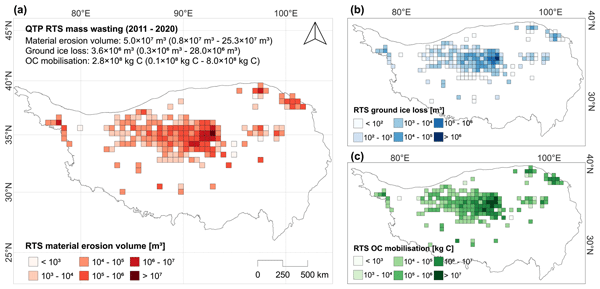
Our study explores how thawing permafrost on the Qinghai-Tibet Plateau triggers landslides, mobilising stored carbon. Using satellite data from 2011 to 2020, we measured soil erosion, ice loss, and carbon mobilisation. While current impacts are modest, increasing landslide activity suggests future significance. This research underscores the need to understand permafrost thaw's role in carbon dynamics and climate change.
Alexandru Onaca, Flavius Sîrbu, Valentin Poncoş, Christin Hilbich, Tazio Strozzi, Petru Urdea, Răzvan Popescu, Oana Berzescu, Bernd Etzelmüller, Alfred Vespremeanu-Stroe, Mirela Vasile, Delia Teleagă, Dan Birtaş, Iosif Lopătiţă, Simon Filhol, Alexandru Hegyi, and Florina Ardelean
Earth Surf. Dynam., 13, 981–1001, https://doi.org/10.5194/esurf-13-981-2025, https://doi.org/10.5194/esurf-13-981-2025, 2025
Short summary
Short summary
This study establishes a methodology for the study of slow-moving rock glaciers in marginal permafrost and provides the basic knowledge for understanding rock glaciers in South East Europe. By using a combination of different methods (remote sensing, geophysical survey, thermal measurements), we found out that, on the transitional rock glaciers, low ground ice content (i.e. below 20 %) produces horizontal displacements of up to 3 cm per year.
Line Rouyet, Tobias Bolch, Francesco Brardinoni, Rafael Caduff, Diego Cusicanqui, Margaret Darrow, Reynald Delaloye, Thomas Echelard, Christophe Lambiel, Cécile Pellet, Lucas Ruiz, Lea Schmid, Flavius Sirbu, and Tazio Strozzi
Earth Syst. Sci. Data, 17, 4125–4157, https://doi.org/10.5194/essd-17-4125-2025, https://doi.org/10.5194/essd-17-4125-2025, 2025
Short summary
Short summary
Rock glaciers are landforms generated by the creep of frozen ground (permafrost) in cold-climate mountains. Mapping rock glaciers contributes to documenting the distribution and the dynamics of mountain permafrost. We compiled inventories documenting the location, the characteristics, and the extent of rock glaciers in 12 mountain regions around the world. In each region, a team of operators performed the work following common rules and agreed on final solutions when discrepancies were identified.
Jane Walden, Mylène Jacquemart, Bretwood Higman, Romain Hugonnet, Andrea Manconi, and Daniel Farinotti
Nat. Hazards Earth Syst. Sci., 25, 2045–2073, https://doi.org/10.5194/nhess-25-2045-2025, https://doi.org/10.5194/nhess-25-2045-2025, 2025
Short summary
Short summary
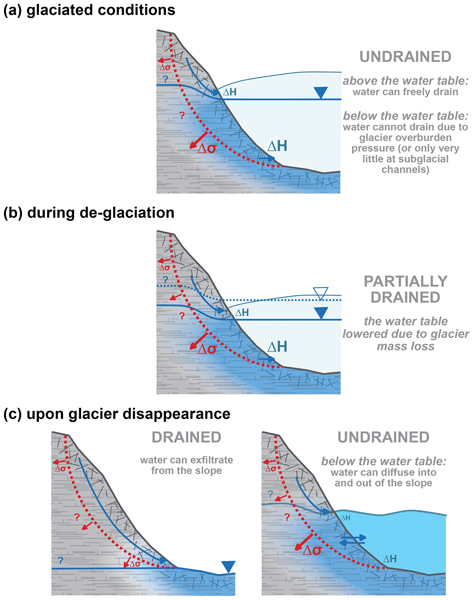
We studied eight glacier-adjacent landslides in Alaska and found that slope movement increased at four sites as the glacier retreated past the landslide area. Movement at other sites may be due to heavy precipitation or increased glacier thinning, and two sites showed little to no motion. We suggest that landslides near waterbodies may be especially vulnerable to acceleration, which we guess is due to faster retreat rates of water-terminating glaciers and changing water flow in the slope.
Shiyi Li, Lanqing Huang, Philipp Bernhard, and Irena Hajnsek
The Cryosphere, 19, 1621–1639, https://doi.org/10.5194/tc-19-1621-2025, https://doi.org/10.5194/tc-19-1621-2025, 2025
Short summary
Short summary
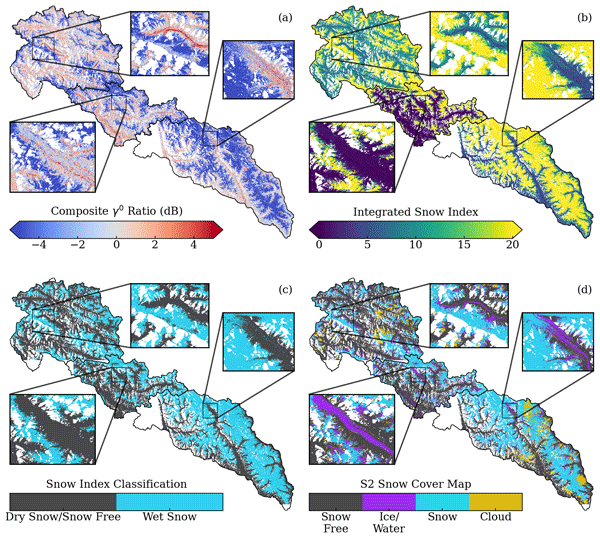
This work presents an improved method for seasonal wet snow mapping in Karakoram using synthetic aperture radar (SAR) data and topographic data. This method enables robust wet snow classification in complex mountainous terrain. Large-scale wet snow maps were generated using the proposed method, covering three major water basins in Karakoram over 4 years (2017–2021). Crucial snow variables were further derived from the maps and provided valuable insights on regional snow melting dynamics.
Andrea Manconi, Gwendolyn Dasser, Mylène Jacquemart, Nicolas Oestreicher, Livia Piermattei, and Tazio Strozzi
Abstr. Int. Cartogr. Assoc., 9, 41, https://doi.org/10.5194/ica-abs-9-41-2025, https://doi.org/10.5194/ica-abs-9-41-2025, 2025
Barbara Widhalm, Annett Bartsch, Tazio Strozzi, Nina Jones, Artem Khomutov, Elena Babkina, Marina Leibman, Rustam Khairullin, Mathias Göckede, Helena Bergstedt, Clemens von Baeckmann, and Xaver Muri
The Cryosphere, 19, 1103–1133, https://doi.org/10.5194/tc-19-1103-2025, https://doi.org/10.5194/tc-19-1103-2025, 2025
Short summary
Short summary
Mapping soil moisture in Arctic permafrost regions is crucial for various activities, but it is challenging with typical satellite methods due to the landscape's diversity. Seasonal freezing and thawing cause the ground to periodically rise and subside. Our research demonstrates that this seasonal ground settlement, measured with Sentinel-1 satellite data, is larger in areas with wetter soils. This method helps to monitor permafrost degradation.
Andrea Manconi, Yves Bühler, Andreas Stoffel, Johan Gaume, Qiaoping Zhang, and Valentyn Tolpekin
Nat. Hazards Earth Syst. Sci., 24, 3833–3839, https://doi.org/10.5194/nhess-24-3833-2024, https://doi.org/10.5194/nhess-24-3833-2024, 2024
Short summary
Short summary
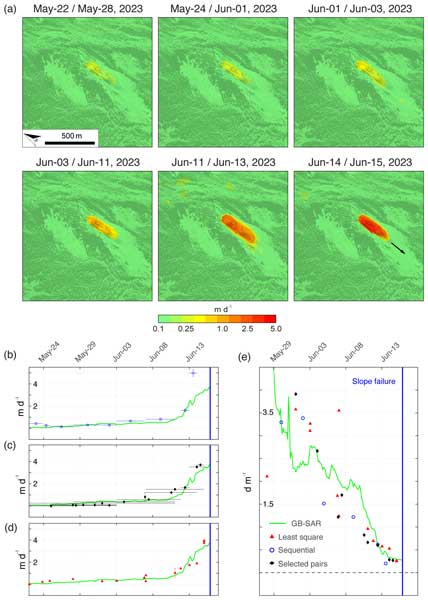
Our research reveals the power of high-resolution satellite synthetic-aperture radar (SAR) imagery for slope deformation monitoring. Using ICEYE data over the Brienz/Brinzauls instability, we measured surface velocity and mapped the landslide event with unprecedented precision. This underscores the potential of satellite SAR for timely hazard assessment in remote regions and aiding disaster mitigation efforts effectively.
Aldo Bertone, Nina Jones, Volkmar Mair, Riccardo Scotti, Tazio Strozzi, and Francesco Brardinoni
The Cryosphere, 18, 2335–2356, https://doi.org/10.5194/tc-18-2335-2024, https://doi.org/10.5194/tc-18-2335-2024, 2024
Short summary
Short summary
Traditional inventories display high uncertainty in discriminating between intact (permafrost-bearing) and relict (devoid) rock glaciers (RGs). Integration of InSAR-based kinematics in South Tyrol affords uncertainty reduction and depicts a broad elevation belt of relict–intact coexistence. RG velocity and moving area (MA) cover increase linearly with elevation up to an inflection at 2600–2800 m a.s.l., which we regard as a signature of sporadic-to-discontinuous permafrost transition.
Kristina Juliana Reinders, Govert Frederik Verhoeven, Luca Sartorelli, Ramon Hanssen, and Andrea Manconi
EGUsphere, https://doi.org/10.5194/egusphere-2023-2321, https://doi.org/10.5194/egusphere-2023-2321, 2023
Preprint archived
Short summary
Short summary
We investigated if radar data from the Sentinel-1 satellite can be used to assess displacements in permafrost areas in the Swiss alps. We discovered that 92 % of the permafrost areas can be visible with Sentinel-1. Next, based on displacement times series derived from radar data we revealed that the ground movements in permafrost areas are 2–3 times as large than in permafrost without areas. This result can help in monitoring permafrost areas and update current permafrost maps.
Jan Freihardt and Othmar Frey
Nat. Hazards Earth Syst. Sci., 23, 751–770, https://doi.org/10.5194/nhess-23-751-2023, https://doi.org/10.5194/nhess-23-751-2023, 2023
Short summary
Short summary
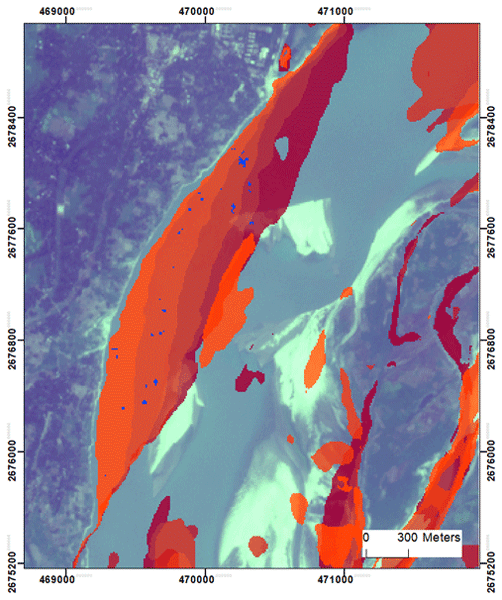
In Bangladesh, riverbank erosion occurs every year during the monsoon and affects thousands of households. Information on locations and extent of past erosion can help anticipate where erosion might occur in the upcoming monsoon season and to take preventive measures. In our study, we show how time series of radar satellite imagery can be used to retrieve information on past erosion events shortly after the monsoon season using a novel interactive online tool based on the Google Earth Engine.
Alessandro Cicoira, Samuel Weber, Andreas Biri, Ben Buchli, Reynald Delaloye, Reto Da Forno, Isabelle Gärtner-Roer, Stephan Gruber, Tonio Gsell, Andreas Hasler, Roman Lim, Philippe Limpach, Raphael Mayoraz, Matthias Meyer, Jeannette Noetzli, Marcia Phillips, Eric Pointner, Hugo Raetzo, Cristian Scapozza, Tazio Strozzi, Lothar Thiele, Andreas Vieli, Daniel Vonder Mühll, Vanessa Wirz, and Jan Beutel
Earth Syst. Sci. Data, 14, 5061–5091, https://doi.org/10.5194/essd-14-5061-2022, https://doi.org/10.5194/essd-14-5061-2022, 2022
Short summary
Short summary
This paper documents a monitoring network of 54 positions, located on different periglacial landforms in the Swiss Alps: rock glaciers, landslides, and steep rock walls. The data serve basic research but also decision-making and mitigation of natural hazards. It is the largest dataset of its kind, comprising over 209 000 daily positions and additional weather data.
Marcel Stefko, Silvan Leinss, Othmar Frey, and Irena Hajnsek
The Cryosphere, 16, 2859–2879, https://doi.org/10.5194/tc-16-2859-2022, https://doi.org/10.5194/tc-16-2859-2022, 2022
Short summary
Short summary
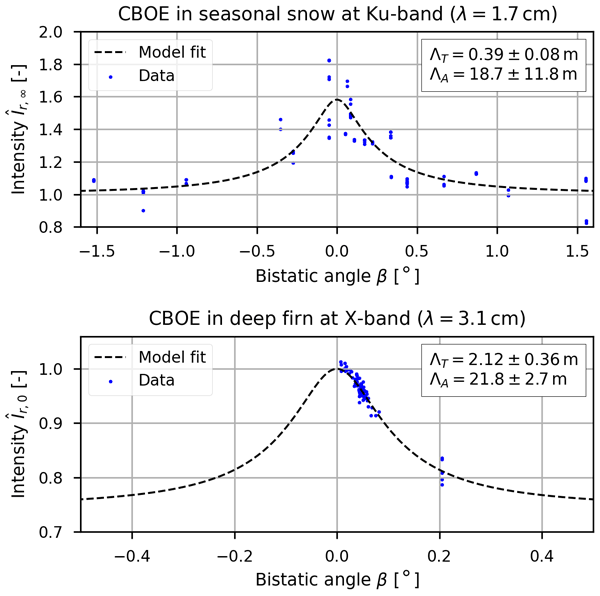
The coherent backscatter opposition effect can enhance the intensity of radar backscatter from dry snow by up to a factor of 2. Despite widespread use of radar backscatter data by snow scientists, this effect has received notably little attention. For the first time, we characterize this effect for the Earth's snow cover with bistatic radar experiments from ground and from space. We are also able to retrieve scattering and absorbing lengths of snow at Ku- and X-band frequencies.
Philipp Bernhard, Simon Zwieback, and Irena Hajnsek
The Cryosphere, 16, 2819–2835, https://doi.org/10.5194/tc-16-2819-2022, https://doi.org/10.5194/tc-16-2819-2022, 2022
Short summary
Short summary
With climate change, Arctic hillslopes above ice-rich permafrost are vulnerable to enhanced carbon mobilization. In this work elevation change estimates generated from satellite observations reveal a substantial acceleration of carbon mobilization on the Taymyr Peninsula in Siberia between 2010 and 2021. The strong increase occurring in 2020 coincided with a severe Siberian heatwave and highlights that carbon mobilization can respond sharply and non-linearly to increasing temperatures.
Aldo Bertone, Chloé Barboux, Xavier Bodin, Tobias Bolch, Francesco Brardinoni, Rafael Caduff, Hanne H. Christiansen, Margaret M. Darrow, Reynald Delaloye, Bernd Etzelmüller, Ole Humlum, Christophe Lambiel, Karianne S. Lilleøren, Volkmar Mair, Gabriel Pellegrinon, Line Rouyet, Lucas Ruiz, and Tazio Strozzi
The Cryosphere, 16, 2769–2792, https://doi.org/10.5194/tc-16-2769-2022, https://doi.org/10.5194/tc-16-2769-2022, 2022
Short summary
Short summary
We present the guidelines developed by the IPA Action Group and within the ESA Permafrost CCI project to include InSAR-based kinematic information in rock glacier inventories. Nine operators applied these guidelines to 11 regions worldwide; more than 3600 rock glaciers are classified according to their kinematics. We test and demonstrate the feasibility of applying common rules to produce homogeneous kinematic inventories at global scale, useful for hydrological and climate change purposes.
Frank Paul, Livia Piermattei, Désirée Treichler, Lin Gilbert, Luc Girod, Andreas Kääb, Ludivine Libert, Thomas Nagler, Tazio Strozzi, and Jan Wuite
The Cryosphere, 16, 2505–2526, https://doi.org/10.5194/tc-16-2505-2022, https://doi.org/10.5194/tc-16-2505-2022, 2022
Short summary
Short summary
Glacier surges are widespread in the Karakoram and have been intensely studied using satellite data and DEMs. We use time series of such datasets to study three glacier surges in the same region of the Karakoram. We found strongly contrasting advance rates and flow velocities, maximum velocities of 30 m d−1, and a change in the surge mechanism during a surge. A sensor comparison revealed good agreement, but steep terrain and the two smaller glaciers caused limitations for some of them.
Andrea Manconi, Alessandro C. Mondini, and the AlpArray working group
Nat. Hazards Earth Syst. Sci., 22, 1655–1664, https://doi.org/10.5194/nhess-22-1655-2022, https://doi.org/10.5194/nhess-22-1655-2022, 2022
Short summary
Short summary
Information on when, where, and how landslide events occur is the key to building complete catalogues and performing accurate hazard assessments. Here we show a procedure that allows us to benefit from the increased density of seismic sensors installed on ground for earthquake monitoring and from the unprecedented availability of satellite radar data. We show how the procedure works on a recent sequence of landslides that occurred at Piz Cengalo (Swiss Alps) in 2017.
Tazio Strozzi, Andreas Wiesmann, Andreas Kääb, Thomas Schellenberger, and Frank Paul
Earth Syst. Sci. Data Discuss., https://doi.org/10.5194/essd-2022-44, https://doi.org/10.5194/essd-2022-44, 2022
Revised manuscript not accepted
Short summary
Short summary
Knowledge on surface velocity of glaciers and ice caps contributes to a better understanding of a wide range of processes related to glacier dynamics, mass change and response to climate. Based on the release of historical satellite radar data from various space agencies we compiled nearly complete mosaics of winter ice surface velocities for the 1990's over the Eastern Arctic. Compared to the present state, we observe a general increase of ice velocities along with a retreat of glacier fronts.
Alessandro De Pedrini, Christian Ambrosi, and Cristian Scapozza
Geogr. Helv., 77, 21–37, https://doi.org/10.5194/gh-77-21-2022, https://doi.org/10.5194/gh-77-21-2022, 2022
Short summary
Short summary
The Monte Crenone rock avalanche of 1513 is well known on the southern side of the Alps because in 1515 it generated the largest inundation that has occurred in Switzerland in the Common Era, the Buzza di Biasca. New geological and historical observations allowed the setup of a numerical model of this major event, permitting a better definition of the chain of consequences that affected the alluvial plain of the river Ticino from Biasca to Lake Maggiore between the 16th and the 19th century.
Philipp Bernhard, Simon Zwieback, Nora Bergner, and Irena Hajnsek
The Cryosphere, 16, 1–15, https://doi.org/10.5194/tc-16-1-2022, https://doi.org/10.5194/tc-16-1-2022, 2022
Short summary
Short summary
We present an investigation of retrogressive thaw slumps in 10 study sites across the Arctic. These slumps have major impacts on hydrology and ecosystems and can also reinforce climate change by the mobilization of carbon. Using time series of digital elevation models, we found that thaw slump change rates follow a specific type of distribution that is known from landslides in more temperate landscapes and that the 2D area change is strongly related to the 3D volumetric change.
Cristian Scapozza, Chantal Del Siro, Christophe Lambiel, and Christian Ambrosi
Geogr. Helv., 76, 401–423, https://doi.org/10.5194/gh-76-401-2021, https://doi.org/10.5194/gh-76-401-2021, 2021
Short summary
Short summary
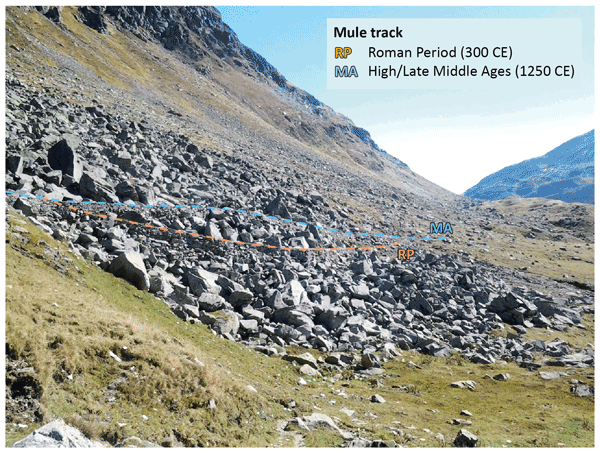
Exposure ages make it possible to determine the time of weathering of a rock surface. They can be determined from rebound values measured with the Schmidt hammer and calibrated on surfaces of known age, defined in this study thanks to historical cartography and two mule tracks built in 300 and 1250 CE, which allowed us to reconstruct glacier fluctuations over the last 3 centuries in Val Scaradra and to define the time of deglaciation and rock glacier development in the Splügenpass region.
Cited articles
Agliardi, F. and Crippa, C.: Deep-Seated Gravitational Slope Deformations, Treatise on Geomorphology, 183–199, https://doi.org/10.1016/b978-0-12-818234-5.00182-6, 2022.
Agliardi, F., Riva, F., Barbarano, M., Zanchetta, S., Scotti, R., and Zanchi, A.: Effects of tectonic structures and long-term seismicity on paraglacial giant slope deformations: Piz Dora (Switzerland), Eng. Geol., 263, 105353, https://doi.org/10.1016/j.enggeo.2019.105353, 2019.
Agliardi, F., Scuderi, M. M., Fusi, N., and Collettini, C.: Slow-to-fast transition of giant creeping rockslides modulated by undrained loading in basal shear zones, Nat. Commun., 11, https://doi.org/10.1038/s41467-020-15093-3, 2020.
Ambrosi, C., Strozzi, T., Scapozza, C., and Wegmüller, U.: Landslide hazard assessment in the Himalayas (Nepal and Bhutan) based on Earth-Observation data, Eng. Geol., 237, 217–228, https://doi.org/10.1016/j.enggeo.2018.02.020, 2018.
Barra, A., Monserrat, O., Crosetto, M., Cuevas-Gonzalez, M., Devanthéry, N., Luzi, G., and Crippa, B.: Sentinel-1 Data Analysis for Landslide Detection and Mapping: First Experiences in Italy and Spain, Advancing Culture of Living with Landslides, 201–208, https://doi.org/10.1007/978-3-319-53487-9_23, 2017.
Berardino, P., Fornaro, G., Lanari, R., and Sansosti, E.: A new algorithm for surface deformation monitoring based on small baseline differential SAR interferograms, IEEE T. Geosci. Remote, 40, 2375–2383, https://doi.org/10.1109/tgrs.2002.803792, 2002.
Bianchini, S., Herrera, G., Mateos, R., Notti, D., Garcia, I., Mora, O., and Moretti, S.: Landslide Activity Maps Generation by Means of Persistent Scatterer Interferometry, Remote Sens., 5, 6198–6222, https://doi.org/10.3390/rs5126198, 2013.
Bürgmann, R., Rosen, P. A., and Fielding, E. J.: Synthetic Aperture Radar Interferometry to Measure Earth's Surface Topography and Its Deformation, Annu. Rev. Earth Planet. Sci., 28, 169–209, https://doi.org/10.1146/annurev.earth.28.1.169, 2000.
Caduff, R. and Strozzi, T.: Terrestrial Radar Interferometry Monitoring During a Landslide Emergency 2016, Ghirone, Switzerland, Advancing Culture of Living with Landslides, 301–309, https://doi.org/10.1007/978-3-319-53487-9_34, 2017.
Caduff, R., Schlunegger, F., Kos, A., and Wiesmann, A.: A review of terrestrial radar interferometry for measuring surface change in the geosciences, Earth Surf. Proc. Land., 40, 208–228, https://doi.org/10.1002/esp.3656, 2014.
Casagli, N., Catani, F., Del Ventisette, C., and Luzi, G.: Monitoring, prediction, and early warning using ground-based radar interferometry, Landslides, 7, 291–301, https://doi.org/10.1007/s10346-010-0215-y, 2010.
Cigna, F., Bianchini, S., and Casagli, N.: How to assess landslide activity and intensity with Persistent Scatterer Interferometry (PSI): the PSI-based matrix approach, Landslides, 10, 267–283, https://doi.org/10.1007/s10346-012-0335-7, 2012.
Cigna, F., Bateson, L. B., Jordan, C. J., and Dashwood, C.: Simulating SAR geometric distortions and predicting Persistent Scatterer densities for ERS-1/2 and ENVISAT C-band SAR and InSAR applications: Nationwide feasibility assessment to monitor the landmass of Great Britain with SAR imagery, Remote Sens. Environ., 152, 441–466, https://doi.org/10.1016/j.rse.2014.06.025, 2014.
Colesanti, C. and Wasowski, J.: Investigating landslides with space-borne Synthetic Aperture Radar (SAR) interferometry, Eng. Geol., 88, 173–199, https://doi.org/10.1016/j.enggeo.2006.09.013, 2006.
Costantini, M.: A novel phase unwrapping method based on network programming, IEEE T. Geosci. Remote, 36, 813–821, https://doi.org/10.1109/36.673674, 1998.
Crippa, C., Franzosi, F., Zonca, M., Manconi, A., Crosta, G. B., Dei Cas, L., and Agliardi, F.: Unraveling Spatial and Temporal Heterogeneities of Very Slow Rock-Slope Deformations with Targeted DInSAR Analyses, Remote Sens., 12, 1329, https://doi.org/10.3390/rs12081329, 2020.
Crippa, C., Valbuzzi, E., Frattini, P., Crosta, G. B., Spreafico, M. C., and Agliardi, F.: Semi-automated regional classification of the style of activity of slow rock-slope deformations using PS InSAR and SqueeSAR velocity data, Landslides, 18, 2445–2463, https://doi.org/10.1007/s10346-021-01654-0, 2021.
Crosetto, M., Bremmer, C., Monserrat, O., and Hanssen, R. F.: Ground motion monitoring using SAR interferometry: quality assessment, European Geologist, 26, 12–15, 2009.
Crosta, G. B., Frattini, P., and Agliardi, F.: Deep seated gravitational slope deformations in the European Alps, Tectonophysics, 605, 13–33, https://doi.org/10.1016/j.tecto.2013.04.028, 2013a.
Crosta, G. B., di Prisco, C., Frattini, P., Frigerio, G., Castellanza, R., and Agliardi, F.: Chasing a complete understanding of the triggering mechanisms of a large rapidly evolving rockslide, Landslides, 11, 747–764, https://doi.org/10.1007/s10346-013-0433-1, 2013b.
Crosta, G. B., Agliardi, F., Rivolta, C., Alberti, S., and Dei Cas, L.: Long-term evolution and early warning strategies for complex rockslides by real-time monitoring, Landslides, 14, 1615–1632, https://doi.org/10.1007/s10346-017-0817-8, 2017.
Darvishi, M., Schlögel, R., Kofler, C., Cuozzo, G., Rutzinger, M., Zieher, T., Toschi, I., Remondino, F., Mejia-Aguilar, A., Thiebes, B., and Bruzzone, L.: Sentinel-1 and Ground-Based Sensors for Continuous Monitoring of the Corvara Landslide (South Tyrol, Italy), Remote Sens., 10, 1781, https://doi.org/10.3390/rs10111781, 2018.
Dehls, J. F., Larsen, Y., Marinkovic, P., Lauknes, T. R., Stodle, D., and Moldestad, D. A.: INSAR.No: A National Insar Deformation Mapping/Monitoring Service In Norway – From Concept To Operations, IGARSS 2019 – 2019 IEEE International Geoscience and Remote Sensing Symposium, https://doi.org/10.1109/igarss.2019.8898614, 2019.
De Luca, C., Roa, Y. L. B., Bonano, M., Casu, F., Euillades, P., Euillades, L., Franzese, M., Manunta, M., Yasir, M., Onorato, G., Striano, P., Dini, L., Tapete, D., and Lanari, R.: SAOCOM-1 L-Band DInSAR Time Series Generation Through the P-SBAS Approach: Algorithm Extension and Products Analysis, IEEE J. Sel. Top. Appl., 18, 2680–2703, https://doi.org/10.1109/jstars.2024.3507554, 2025.
Ferretti, A., Prati, C., and Rocca, F.: Permanent scatterers in SAR interferometry, IEEE T. Geosci. Remote, 39, 8–20, https://doi.org/10.1109/36.898661, 2001.
Frey, O., Magnard, C., Ruegg, M., and Meier, E.: Focusing of Airborne Synthetic Aperture Radar Data From Highly Nonlinear Flight Tracks, IEEE T. Geosci. Remote, 47, 1844–1858, https://doi.org/10.1109/tgrs.2008.2007591, 2009.
Frey, O., Werner, C. L., and Wegmuller, U.: GPU-based parallelized time-domain back-projection processing for Agile SAR platforms, 2014 IEEE Geoscience and Remote Sensing Symposium, 1132–1135, https://doi.org/10.1109/igarss.2014.6946629, 2014.
Frey, O., Werner, C. L., and Coscione, R.: Car-borne and UAV-borne mobile mapping of surface displacements with a compact repeat-pass interferometric SAR system at L-band, 2019 IEEE International Geoscience and Remote Sensing Symposium, https://doi.org/10.1109/igarss.2019.8897827, 2019.
Frey, O., Werner, C. L., Manconi, A., and Coscione, R.: Measurement of surface displacements with a UAV-borne/car-borne L-band DInSAR system: system performance and use cases, 2021 IEEE International Geoscience and Remote Sensing Symposium IGARSS, 628–631, https://doi.org/10.1109/igarss47720.2021.9553573, 2021.
Frey, O., Werner, C., and Caduff, R.: Car-borne Mobile Mapping of Ground Motion by Means of Repeat-Pass SAR Interferometry: Case Studies and Application Development Based on L-Band and Ku-band SAR Data Acquisitions, 2023 IEEE International Geoscience and Remote Sensing Symposium, 1902–1905, https://doi.org/10.1109/igarss52108.2023.10283211, 2023.
Frey, O., Werner, C., and Caduff, R.: Simultaneous Car-Borne SAR Imaging at L-band and Ku-band for DInSAR-Based Mobile Mapping of Ground Motion in Alpine Terrain, EUSAR 2024 – 15th European Conference on Synthetic Aperture Radar, Munich, Germany, 1259–1264, ISBN: 978-3-8007-6286-6, 2024.
Frey, O., Werner, C., Leinss, S., Batt, T., Caduff, R., Dixon, T., Sadeghi Chorsi, T., Van Alphen, R., Schmitt, M., Eitel, M., Sica, F., Deeb, E. J., LeWinter, A. L., Filiano, D. L., Wagner, C. J., and Hoppinen, Z.: Multicopter-UAV- and car-borne repeat-pass SAR interferometry and SAR tomography with the compact Gamma SAR systems: first examples and use cases at S- and L-band, 2025 IEEE International Geoscience and Remote Sensing Symposium, 1374–1377, https://doi.org/10.1109/igarss55030.2025.11243477, 2025.
García-Davalillo, J. C., Herrera, G., Notti, D., Strozzi, T., and Álvarez-Fernández, I.: DInSAR analysis of ALOS PALSAR images for the assessment of very slow landslides: the Tena Valley case study, Landslides, 11, 225–246, https://doi.org/10.1007/s10346-012-0379-8, 2013.
Huggel, C., Clague, J. J., and Korup, O.: Is climate change responsible for changing landslide activity in high mountains?, Earth Surf. Proc. Land., 37, 77–91, https://doi.org/10.1002/esp.2223, 2011.
Jones, N., Strozzi, T., Rabatel, A., Ducasse, E., and Mouginot, J.: Surface Instability Mapping in Alpine Paraglacial Environments Using Sentinel-1 DInSAR Techniques, IEEE J. Sel. Top. Appl., 16, 19–37, https://doi.org/10.1109/jstars.2023.3287285, 2023.
Loew, S., Gschwind, S., Gischig, V., Keller-Signer, A., and Valenti, G.: Monitoring and early warning of the 2012 Preonzo catastrophic rockslope failure, Landslides, 14, 141–154, https://doi.org/10.1007/s10346-016-0701-y, 2016.
Loew, S., Schneider, S., Josuran, M., Figi, D., Thoeny, R., Huwiler, A., Largiadèr, A., and Naenni, C.: Early warning and dynamics of compound rockslides: lessons learnt from the Brienz/Brinzauls 2023 rockslope failure, Landslides, 22, 283–298, https://doi.org/10.1007/s10346-024-02380-z, 2024.
Lundgren, P., Usai, S., Sansosti, E., Lanari, R., Tesauro, M., Fornaro, G., and Berardino, P.: Modeling surface deformation observed with synthetic aperture radar interferometry at Campi Flegrei caldera, J. Geophys. Res., 106, 19355–19366, https://doi.org/10.1029/2001jb000194, 2001.
Manconi, A.: How phase aliasing limits systematic space-borne DInSAR monitoring and failure forecast of alpine landslides, Eng. Geol., 287, 106094, https://doi.org/10.1016/j.enggeo.2021.106094, 2021.
Manconi, A., Kourkouli, P., Caduff, R., Strozzi, T., and Loew, S.: Monitoring Surface Deformation over a Failing Rock Slope with the ESA Sentinels: Insights from Moosfluh Instability, Swiss Alps, Remote Sens., 10, 672, https://doi.org/10.3390/rs10050672, 2018.
Manconi, A., Jones, N., Loew, S., Strozzi, T., Caduff, R., and Wegmueller, U.: Monitoring surface deformation with spaceborne radar interferometry in landslide complexes: insights from the Brienz/Brinzauls slope instability, Swiss Alps, Landslides, 21, 2519–2533, https://doi.org/10.1007/s10346-024-02291-z, 2024a.
Manconi, A., Bühler, Y., Stoffel, A., Gaume, J., Zhang, Q., and Tolpekin, V.: Brief communication: Monitoring impending slope failure with very high-resolution spaceborne synthetic aperture radar, Nat. Hazards Earth Syst. Sci., 24, 3833–3839, https://doi.org/10.5194/nhess-24-3833-2024, 2024b.
Mark, B. G. and Fernández, A.: The significance of mountain glaciers as sentinels of climate and environmental change, Geography Compass, 11, https://doi.org/10.1111/gec3.12318, 2017.
Moretto, S., Bozzano, F., Esposito, C., Mazzanti, P., and Rocca, A.: Assessment of Landslide Pre-Failure Monitoring and Forecasting Using Satellite SAR Interferometry, Geosciences, 7, 36, https://doi.org/10.3390/geosciences7020036, 2017.
Ng, A. H.-M., Ge, L., Li, X., Abidin, H. Z., Andreas, H., and Zhang, K.: Mapping land subsidence in Jakarta, Indonesia using persistent scatterer interferometry (PSI) technique with ALOS PALSAR, Int. J. Appl. Earth Obs., 18, 232–242, https://doi.org/10.1016/j.jag.2012.01.018, 2012.
Nishiguchi, T., Tsuchiya, S., and Imaizumi, F.: Detection and accuracy of landslide movement by InSAR analysis using PALSAR-2 data, Landslides, 14, 1483–1490, https://doi.org/10.1007/s10346-017-0821-z, 2017.
Notti, D., Herrera, G., Bianchini, S., Meisina, C., García-Davalillo, J. C., and Zucca, F.: A methodology for improving landslide PSI data analysis, Int. J. Remote Sens., 35, 2186–2214, https://doi.org/10.1080/01431161.2014.889864, 2014.
Raspini, F., Bianchini, S., Ciampalini, A., Del Soldato, M., Solari, L., Novali, F., Del Conte, S., Rucci, A., Ferretti, A., and Casagli, N.: Continuous, semi-automatic monitoring of ground deformation using Sentinel-1 satellites, Sci. Rep., 8, https://doi.org/10.1038/s41598-018-25369-w, 2018.
Riva, F., Agliardi, F., Amitrano, D., and Crosta, G. B.: Damage-Based Time-Dependent Modeling of Paraglacial to Postglacial Progressive Failure of Large Rock Slopes, J. Geophys. Res.-Earth, 123, 124–141, https://doi.org/10.1002/2017jf004423, 2018.
Schmidt, D. A. and Bürgmann, R.: Time-dependent land uplift and subsidence in the Santa Clara valley, California, from a large interferometric synthetic aperture radar data set, J. Geophys. Res., 108, https://doi.org/10.1029/2002jb002267, 2003.
Seno, S. and Thüring, M.: Large landslides in Ticino, Southern Switzerland: Geometry and kinematics, Eng. Geol., 83, 109–119, https://doi.org/10.1016/j.enggeo.2005.06.027, 2006.
Strozzi, T., Farina, P., Corsini, A., Ambrosi, C., Thüring, M., Zilger, J., Wiesmann, A., Wegmüller, U., and Werner, C.: Survey and monitoring of landslide displacements by means of L-band satellite SAR interferometry, Landslides, 2, 193–201, https://doi.org/10.1007/s10346-005-0003-2, 2005.
Strozzi, T., Klimeš, J., Frey, H., Caduff, R., Huggel, C., Wegmüller, U., and Rapre, A. C.: Satellite SAR interferometry for the improved assessment of the state of activity of landslides: A case study from the Cordilleras of Peru, Remote Sens. Environ., 217, 111–125, https://doi.org/10.1016/j.rse.2018.08.014, 2018.
Strozzi, T., Caduff, R., Manconi, A., Wegmüller, U., and Ambrosi, C.: Monitoring slow-moving landslides in Switzerland with satellite SAR interferometry, Swiss Bull. Angew. Geol. 25, 85–99, 2020.
Strozzi, T., Caduff, R., Jones, N., Manconi, A., and Wegmuller, U.: L-Band StripMap-ScanSAR Persistent Scatterer Interferometry in Alpine Environments with ALOS-2 PALSAR-2, IGARSS 2022 – 2022 IEEE International Geoscience and Remote Sensing Symposium, 1644–1647, https://doi.org/10.1109/igarss46834.2022.9884743, 2022.
Strozzi, T., Jones, N., Caduff, R., and Wegmüller, U.: L-Band DInSAR Surface Motion Products in Alpine Regions with SAOCOM, IGARSS 2024 – 2024 IEEE International Geoscience and Remote Sensing Symposium, 10740–10743, https://doi.org/10.1109/igarss53475.2024.10642327, 2024.
Torres, R., Snoeij, P., Geudtner, D., Bibby, D., Davidson, M., Attema, E., Potin, P., Rommen, B., Floury, N., Brown, M., Traver, I. N., Deghaye, P., Duesmann, B., Rosich, B., Miranda, N., Bruno, C., L'Abbate, M., Croci, R., Pietropaolo, A., Huchler, M., and Rostan, F.: GMES Sentinel-1 mission, Remote Sens. Environ., 120, 9–24, https://doi.org/10.1016/j.rse.2011.05.028, 2012.
Walter, F., Amann, F., Kos, A., Kenner, R., Phillips, M., de Preux, A., Huss, M., Tognacca, C., Clinton, J., Diehl, T., and Bonanomi, Y.: Direct observations of a three million cubic meter rock-slope collapse with almost immediate initiation of ensuing debris flows, Geomorphology, 351, 106933, https://doi.org/10.1016/j.geomorph.2019.106933, 2020.
Wasowski, J. and Bovenga, F.: Investigating landslides and unstable slopes with satellite Multi Temporal Interferometry: Current issues and future perspectives, Eng. Geol., 174, 103–138, https://doi.org/10.1016/j.enggeo.2014.03.003, 2014.
Wegmüller, U., Werner, C., Strozzi, T., and Wiesmann, A.: Multi-temporal interferometric point target analysis, Analysis of Multi-Temporal Remote Sensing Images, 136–144, https://doi.org/10.1142/9789812702630_0015, 2003.
Werner, C. and Wegmüller, U.: Processing strategies for phase unwrapping for InSAR applications, EUSAR 2002 – 4th European Conference on Synthetic Aperture Radar, Cologne, Germany, 353–356, ISBN: 3-8007-2697-1, 2002.
Werner, C., Strozzi, T., and Wegmüller, U.: Deformation Time-Series of the Lost-Hills Oil Field using a Multi-Baseline Interferometric SAR Inversion Algorithm with Finite-Difference Smoothing Constraints, 2012 Fall Meeting, American Geophysical Union, San Francisco, CA, 3–7 December 2012, 2012.
Short summary
The latest satellite technology with longer wavelength radar improves our ability to detect and monitor large alpine rock slope instabilities. This approach works better than current satellite systems in forested areas and on fast-moving slopes, giving experts more reliable data to understand these major hazards. Our results from three locations in Italy and Switzerland also provide important recommendations for the preparation of future satellite radar missions.
The latest satellite technology with longer wavelength radar improves our ability to detect and...


Altmetrics
Final-revised paper
Preprint