
Articles | Volume 26, issue 1
https://doi.org/10.5194/nhess-26-21-2026
© Author(s) 2026. This work is distributed under
the Creative Commons Attribution 4.0 License.
the Creative Commons Attribution 4.0 License.
https://doi.org/10.5194/nhess-26-21-2026
© Author(s) 2026. This work is distributed under
the Creative Commons Attribution 4.0 License.
the Creative Commons Attribution 4.0 License.
Research article
| 
06 Jan 2026
Research article |
| 06 Jan 2026
| 06 Jan 2026
Evaluation of microphysics and boundary layer schemes for simulating extreme rainfall events over Saudi Arabia using WRF-ARW
Rajesh Kumar Sahu
Physical Science and Engineering Division, King Abdullah University of Science and Technology (KAUST), Thuwal, Saudi Arabia
Hamza Kunhu Bangalath
Physical Science and Engineering Division, King Abdullah University of Science and Technology (KAUST), Thuwal, Saudi Arabia
Suleiman Mostamandi
Physical Science and Engineering Division, King Abdullah University of Science and Technology (KAUST), Thuwal, Saudi Arabia
Jason Evans
Climate Change Research Centre, University of New South Wales, Sydney, Australia
Paul A. Kucera
COMET Program, University Corporation for Atmospheric Research, Boulder, Colorado, USA
Hylke E. Beck
CORRESPONDING AUTHOR

Physical Science and Engineering Division, King Abdullah University of Science and Technology (KAUST), Thuwal, Saudi Arabia
Related authors
No articles found.
Youngil Kim and Jason P. Evans
Geosci. Model Dev., 19, 7457–7477, https://doi.org/10.5194/gmd-19-7457-2026, https://doi.org/10.5194/gmd-19-7457-2026, 2026
Short summary
Short summary
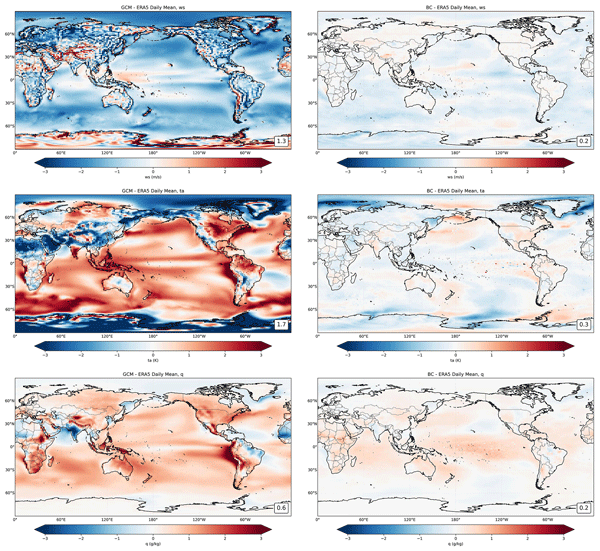
Climate models used to study future climate often contain systematic errors that affect high-resolution simulations. This study presents a new open-source tool that reduces these errors before regional climate simulations are run. By correcting multiple atmospheric variables together and at short time scales, the method improves realism and consistency in simulated climate patterns. This leads to more reliable regional projections, particularly for extreme weather events.
Ather Abbas, Yuan Yang, Ming Pan, Yves Tramblay, Chaopeng Shen, Haoyu Ji, Solomon H. Gebrechorkos, Florian Pappenberger, JongCheol Pyo, Dapeng Feng, George Huffman, Phu Nguyen, Christian Massari, Luca Brocca, Jackson Tan, and Hylke E. Beck
Hydrol. Earth Syst. Sci., 30, 3399–3423, https://doi.org/10.5194/hess-30-3399-2026, https://doi.org/10.5194/hess-30-3399-2026, 2026
Short summary
Short summary
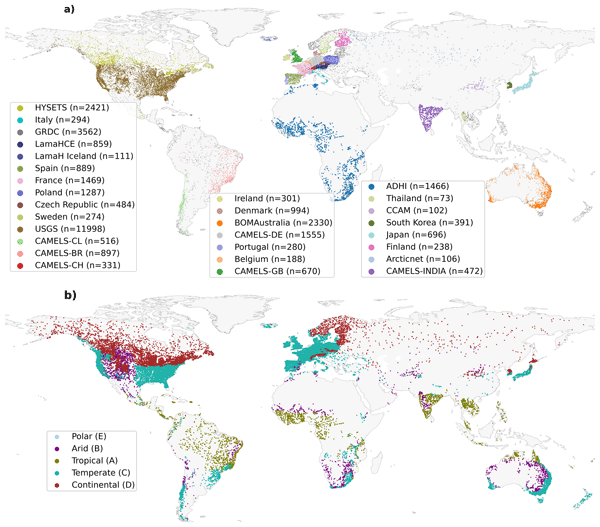
Our study evaluated 24 precipitation datasets using a hydrological model at global scale to assess their suitability and accuracy. We found that MSWEP (Multi-Source Weighted-Ensemble Precipitation) V2.8 excels due to its ability to integrate data from multiple sources, while others, such as IMERG (Integrated Multi-satellitE Retrievals for Global Precipitation Mission) and GDAS (Global Data Assimilation System), demonstrated strong regional performances. This research assists in selecting the appropriate dataset for applications in water resource management, hazard assessment, agriculture, and environmental monitoring.
Moetasim Ashfaq, Erika Coppola, Chris Lennard, Claas Teichmann, Deeksha Rastogi, Elias Massoud, Erasmo Buonomo, Eun-Soon Im, George Zittis, Jason P. Evans, Jesus Fernandez, Katherine J. Evans, Maria Leidinice da Silva, Marianna Adinolfi, Melissa Bukovsky, Rosmeri Porfirio da Rocha, Shabeh ul Hasson, Silvina A. Solman, Stefan Sobolowski, Sushant Das, Swen Brands, Tereza Cavazos, Thanh Ngo-Duc, and Xuejie Gao
EGUsphere, https://doi.org/10.5194/egusphere-2026-2649, https://doi.org/10.5194/egusphere-2026-2649, 2026
Short summary
Short summary
Producing reliable regional climate projections requires carefully selecting which global climate models drive them. We developed a transparent and reproducible framework to identify a balanced, representative subset of models for the Coordinated Regional Climate Downscaling Experiment, a major international effort to generate high-resolution climate projections worldwide. While designed for this initiative, the framework is broadly applicable to other models sub-selection efforts.
Oscar M. Baez-Villanueva, Alfredo Crespo-Otero, Sara Modanesi, Pierre Laluet, Sergio Vicente-Serrano, Jaap Schellekens, Jacopo Dari, Hylke E. Beck, Wouter Dorigo, Christian Massari, Chiara Corbari, Joppe Massant, Kwint Delbare, Olivier Bonte, Aaron Boone, Diego Fernández-Prieto, and Diego G. Miralles
EGUsphere, https://doi.org/10.5194/egusphere-2026-1856, https://doi.org/10.5194/egusphere-2026-1856, 2026
Short summary
Short summary
We developed a new method to estimate daily land evaporation at high resolution across the Iberian Peninsula, explicitly accounting for irrigation. By combining satellite and meteorological data, we show that irrigation can strongly increase evaporation in agricultural areas. The results better match ground observations and improve understanding of water use. This approach can support farming decisions and water management at the regional scale, and will be extended to global applications.
Yinglin Mu, Jason P. Evans, Andréa S. Taschetto, and Chiara Holgate
Geosci. Model Dev., 19, 1367–1385, https://doi.org/10.5194/gmd-19-1367-2026, https://doi.org/10.5194/gmd-19-1367-2026, 2026
Short summary
Short summary
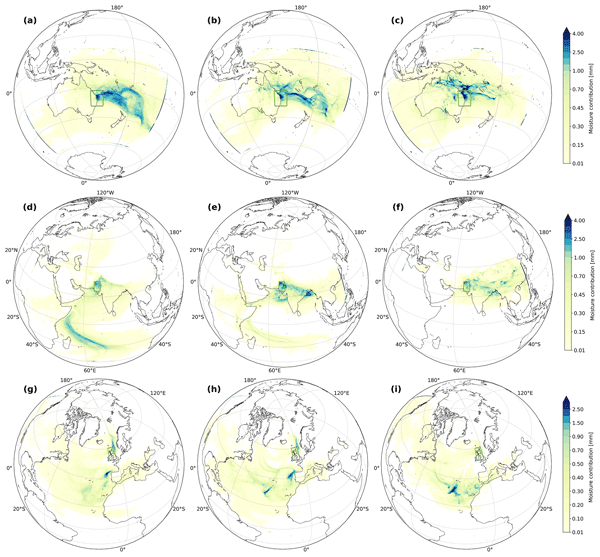
Lagrangian approaches have been increasingly employed due to their suitability for extreme events and climatological studies in finding moisture sources of precipitation. However, as these approaches track independent air parcels carrying moisture – rather than simulate processes based on governing physical equations – they rely on several underlying assumptions. This study tests these assumptions and refines the approaches to enhance their broader applicability.
Xuetong Wang, Raied S. Alharbi, Oscar M. Baez-Villanueva, Amy Green, Matthew F. McCabe, Yoshihide Wada, Albert I. J. M. Van Dijk, Muhammad A. Abid, and Hylke E. Beck
Hydrol. Earth Syst. Sci., 29, 4983–5003, https://doi.org/10.5194/hess-29-4983-2025, https://doi.org/10.5194/hess-29-4983-2025, 2025
Short summary
Short summary
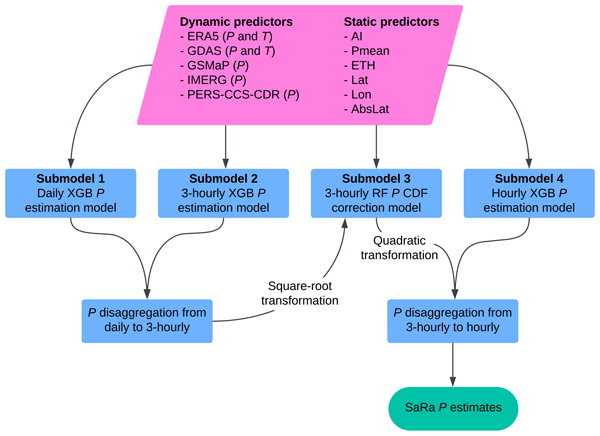
Our paper introduces Saudi Rainfall (SaRa), a high-resolution, near-real-time rainfall product for the Arabian Peninsula. Using machine learning, SaRa combines multiple satellite and (re)analysis datasets with static predictors, outperforming existing products in the region. With the fast development and continuing growth in water demand over this region, SaRa could help to address water challenges and support resource management.
Anjana Devanand, Jason P. Evans, Andy J. Pitman, Sujan Pal, David Gochis, and Kevin Sampson
Hydrol. Earth Syst. Sci., 29, 4491–4513, https://doi.org/10.5194/hess-29-4491-2025, https://doi.org/10.5194/hess-29-4491-2025, 2025
Short summary
Short summary
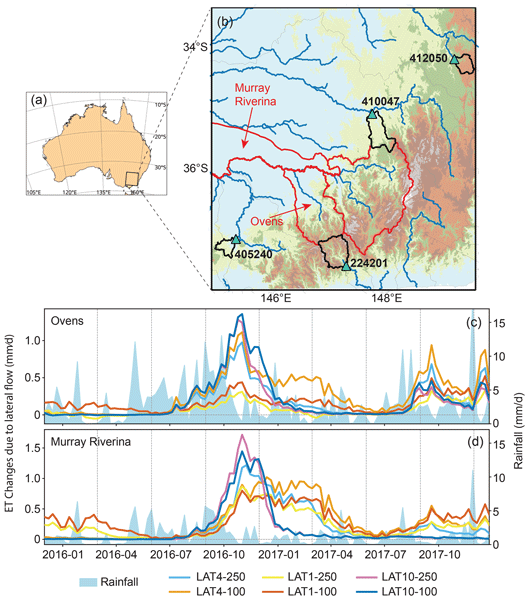
Including lateral flow increases evapotranspiration near major river channels in high-resolution land surface simulations in southeast Australia, consistent with observations. The 1-km resolution model shows a widespread pattern of dry ridges that does not exist at coarser resolutions. Our results have implications for improved simulations of droughts and future water availability.
Giovanni Di Virgilio, Fei Ji, Eugene Tam, Jason P. Evans, Jatin Kala, Julia Andrys, Christopher Thomas, Dipayan Choudhury, Carlos Rocha, Yue Li, and Matthew L. Riley
Geosci. Model Dev., 18, 703–724, https://doi.org/10.5194/gmd-18-703-2025, https://doi.org/10.5194/gmd-18-703-2025, 2025
Short summary
Short summary
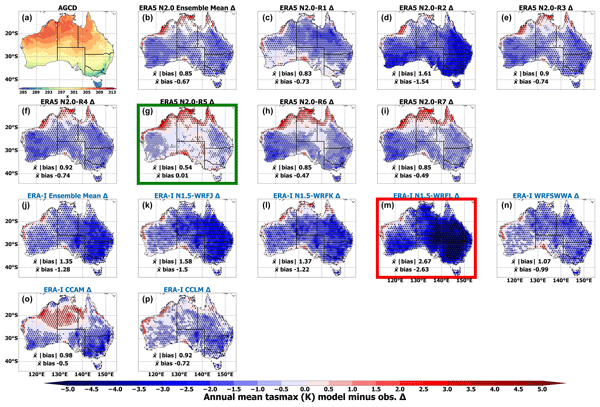
We evaluate the skill in simulating the Australian climate of some of the latest generation of regional climate models. We show when and where the models simulate this climate with high skill versus model limitations. We show how new models perform relative to the previous-generation models, assessing how model design features may underlie key performance improvements. This work is of national and international relevance as it can help guide the use and interpretation of climate projections.
Giovanni Di Virgilio, Jason P. Evans, Fei Ji, Eugene Tam, Jatin Kala, Julia Andrys, Christopher Thomas, Dipayan Choudhury, Carlos Rocha, Stephen White, Yue Li, Moutassem El Rafei, Rishav Goyal, Matthew L. Riley, and Jyothi Lingala
Geosci. Model Dev., 18, 671–702, https://doi.org/10.5194/gmd-18-671-2025, https://doi.org/10.5194/gmd-18-671-2025, 2025
Short summary
Short summary
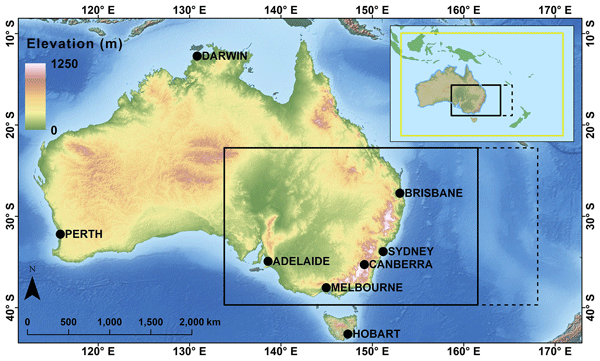
We introduce new climate models that simulate Australia’s future climate at regional scales, including at an unprecedented resolution of 4 km for 1950–2100. We describe the model design process used to create these new climate models. We show how the new models perform relative to previous-generation models and compare their climate projections. This work is of national and international relevance as it can help guide climate model design and the use and interpretation of climate projections.
Aloïs Tilloy, Dominik Paprotny, Stefania Grimaldi, Goncalo Gomes, Alessandra Bianchi, Stefan Lange, Hylke Beck, Cinzia Mazzetti, and Luc Feyen
Earth Syst. Sci. Data, 17, 293–316, https://doi.org/10.5194/essd-17-293-2025, https://doi.org/10.5194/essd-17-293-2025, 2025
Short summary
Short summary
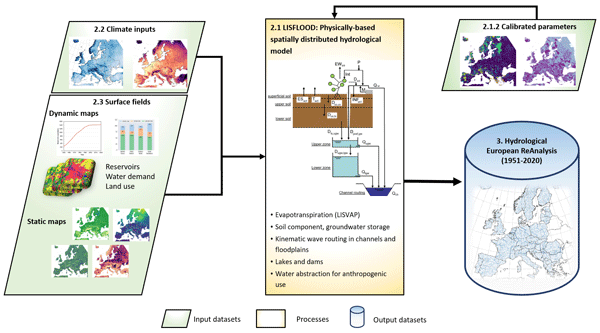
This article presents a reanalysis of Europe's river streamflow for the period 1951–2020. Streamflow is estimated through a state-of-the-art hydrological simulation framework benefitting from detailed information about the landscape, climate, and human activities. The resulting Hydrological European ReAnalysis (HERA) can be a valuable tool for studying hydrological dynamics, including the impacts of climate change and human activities on European water resources and flood and drought risks.
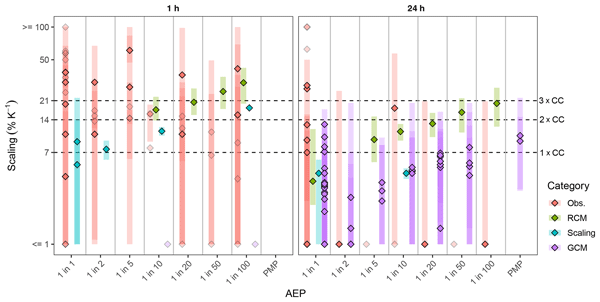
Conrad Wasko, Seth Westra, Rory Nathan, Acacia Pepler, Timothy H. Raupach, Andrew Dowdy, Fiona Johnson, Michelle Ho, Kathleen L. McInnes, Doerte Jakob, Jason Evans, Gabriele Villarini, and Hayley J. Fowler
Hydrol. Earth Syst. Sci., 28, 1251–1285, https://doi.org/10.5194/hess-28-1251-2024, https://doi.org/10.5194/hess-28-1251-2024, 2024
Short summary
Short summary
In response to flood risk, design flood estimation is a cornerstone of infrastructure design and emergency response planning, but design flood estimation guidance under climate change is still in its infancy. We perform the first published systematic review of the impact of climate change on design flood estimation and conduct a meta-analysis to provide quantitative estimates of possible future changes in extreme rainfall.
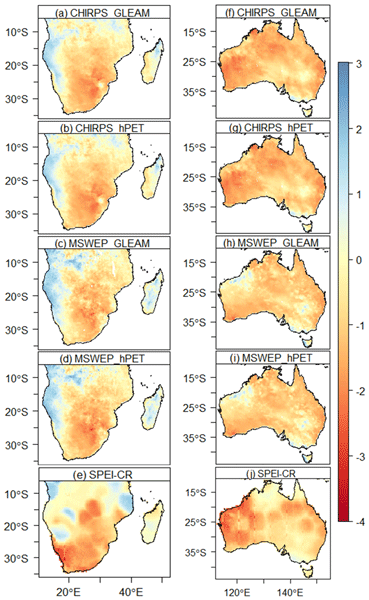
Solomon H. Gebrechorkos, Jian Peng, Ellen Dyer, Diego G. Miralles, Sergio M. Vicente-Serrano, Chris Funk, Hylke E. Beck, Dagmawi T. Asfaw, Michael B. Singer, and Simon J. Dadson
Earth Syst. Sci. Data, 15, 5449–5466, https://doi.org/10.5194/essd-15-5449-2023, https://doi.org/10.5194/essd-15-5449-2023, 2023
Short summary
Short summary
Drought is undeniably one of the most intricate and significant natural hazards with far-reaching consequences for the environment, economy, water resources, agriculture, and societies across the globe. In response to this challenge, we have devised high-resolution drought indices. These indices serve as invaluable indicators for assessing shifts in drought patterns and their associated impacts on a global, regional, and local level facilitating the development of tailored adaptation strategies.
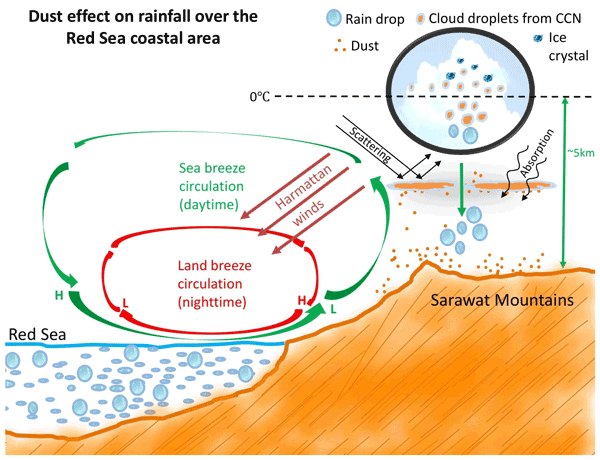
Sagar P. Parajuli, Georgiy L. Stenchikov, Alexander Ukhov, Suleiman Mostamandi, Paul A. Kucera, Duncan Axisa, William I. Gustafson Jr., and Yannian Zhu
Atmos. Chem. Phys., 22, 8659–8682, https://doi.org/10.5194/acp-22-8659-2022, https://doi.org/10.5194/acp-22-8659-2022, 2022
Short summary
Short summary
Rainfall affects the distribution of surface- and groundwater resources, which are constantly declining over the Middle East and North Africa (MENA) due to overexploitation. Here, we explored the effects of dust on rainfall using WRF-Chem model simulations. Although dust is considered a nuisance from an air quality perspective, our results highlight the positive fundamental role of dust particles in modulating rainfall formation and distribution, which has implications for cloud seeding.
Cited articles
Abbas, A., Yang, Y., Pan, M., Tramblay, Y., Shen, C., Ji, H., Gebrechorkos, S. H., Pappenberger, F., Pyo, J. C., Feng, D., Huffman, G., Nguyen, P., Massari, C., Brocca, L., Jackson, T., and Beck, H. E.: Comprehensive Global Assessment of 23 Gridded Precipitation Datasets Across 16,295 Catchments Using Hydrological Modeling, EGUsphere [preprint], https://doi.org/10.5194/egusphere-2024-4194, 2025. a
Abida, R., Addad, Y., Francis, D., Temimi, M., Nelli, N., Fonseca, R., Nesterov, O., and Bosc, E.: Evaluation of the performance of the WRF model in a hyper-arid environment: A sensitivity study, Atmosphere, 13, 985, https://doi.org/10.3390/atmos13060985, 2022. a, b, c
Abosuliman, S. S., Kumar, A., and Alam, F.: Flood disaster planning and management in Jeddah, Saudi Arabia – A Survey, in: Proceedings of the 2014 International Conference on Industrial Engineering and Operations Management Bali, Indonesia, 7–9 January 2014, http://ieomsociety.org/ieom2014/pdfs/507.pdf (last access: 24 June 2024), 2014. a
Al Saud, M.: Assessment of flood hazard of Jeddah area 2009, Saudi Arabia, https://doi.org/10.4236/jwarp.2010.29099, 2010. a
Allan, R. P. and Soden, B. J.: Atmospheric warming and the amplification of precipitation extremes, Science, 321, 1481–1484, 2008. a
Almazroui, M.: Calibration of TRMM rainfall climatology over Saudi Arabia during 1998–2009, Atmos. Res., 99, 400–414, 2011. a
Atif, R. M., Almazroui, M., Saeed, S., Abid, M. A., Islam, M. N., and Ismail, M.: Extreme precipitation events over Saudi Arabia during the wet season and their associated teleconnections, Atmos. Res., 231, 104655, https://doi.org/10.1016/j.atmosres.2019.104655, 2020. a
Attada, R., Dasari, H. P., Ghostine, R., Kondapalli, N. K., Kunchala, R. K., Luong, T. M., and Hoteit, I.: Diagnostic evaluation of extreme winter rainfall events over the Arabian Peninsula using high-resolution weather research and forecasting simulations, Meteorol. Appl., 29, e2095, https://doi.org/10.1002/met.2095, 2022. a, b, c, d
Babu, C., Jayakrishnan, P., and Varikoden, H.: Characteristics of precipitation pattern in the Arabian Peninsula and its variability associated with ENSO, Arab. J. Geosci., 9, 1186, https://doi.org/10.1007/s12517-015-2265-x, 2016. a
Barth, H.-J. and Steinkohl, F.: Origin of winter precipitation in the central coastal lowlands of Saudi Arabia, J. Arid Environ., 57, 101–115, 2004. a
Beck, H. E., Pan, M., Roy, T., Weedon, G. P., Pappenberger, F., van Dijk, A. I. J. M., Huffman, G. J., Adler, R. F., and Wood, E. F.: Daily evaluation of 26 precipitation datasets using Stage-IV gauge-radar data for the CONUS, Hydrol. Earth Syst. Sci., 23, 207–224, https://doi.org/10.5194/hess-23-207-2019, 2019. a, b
Bougeault, P. and Lacarrere, P.: Parameterization of orography-induced turbulence in a mesobeta–scale model, Mon. Weather Rev., 117, 1872–1890, 1989. a
Branch, O., Schwitalla, T., Temimi, M., Fonseca, R., Nelli, N., Weston, M., Milovac, J., and Wulfmeyer, V.: Seasonal and diurnal performance of daily forecasts with WRF V3.8.1 over the United Arab Emirates, Geosci. Model Dev., 14, 1615–1637, https://doi.org/10.5194/gmd-14-1615-2021, 2021. a
Broecker, W.: When climate change predictions are right for the wrong reasons, Climatic Change, 142, 1–6, 2017. a
Chen, F. and Dudhia, J.: Coupling an advanced land surface–hydrology model with the Penn State–NCAR MM5 modeling system. Part I: Model implementation and sensitivity, Mon. Weather Rev., 129, 569–585, 2001. a
Easterling, D. R., Meehl, G. A., Parmesan, C., Changnon, S. A., Karl, T. R., and Mearns, L. O.: Climate extremes: observations, modeling, and impacts, Science, 289, 2068–2074, 2000. a
El Kenawy, A. M., McCabe, M. F., Stenchikov, G. L., and Raj, J.: Multi-decadal classification of synoptic weather types, observed trends and links to rainfall characteristics over Saudi Arabia, Frontiers in Environmental Science, 2, 37, https://doi.org/10.3389/fenvs.2014.00037, 2014. a, b, c
Evans, J. and Imran, H.: The observation range adjusted method: a novel approach to accounting for observation uncertainty in model evaluation, Environmental Research Communications, 6, 071001, https://doi.org/10.1088/2515-7620/ad5ad8, 2024. a, b
Evans, J. and Smith, R.: Water vapor transport and the production of precipitation in the eastern Fertile Crescent, J. Hydrometeorol., 7, 1295–1307, 2006. a
Evans, J. P., Smith, R. B., and Oglesby, R. J.: Middle East climate simulation and dominant precipitation processes, Int. J. Climatol., 24, 1671–1694, https://doi.org/10.1002/joc.1084, 2004. a
Feng, T., Hu, Z., Tang, S., and Huang, J.: Improvement of an extreme heavy rainfall simulation using nudging assimilation, J. Meteorol. Res.-PRC, 35, 313–328, 2021. a
Fowler, H. J., Lenderink, G., Prein, A. F., Westra, S., Allan, R. P., Ban, N., Barbero, R., Berg, P., Blenkinsop, S., Do, H. X., Guerreiro, S., Haerter, J. O., Kendon, E. J., Lewis, E., Schaer, C., Sharma, A., Villarini, G., Wasko, C., and Zhang, X.: Anthropogenic intensification of short-duration rainfall extremes, Nature Reviews Earth & Environment, 2, 107–122, 2021. a
Francis, D., Fonseca, R., Bozkurt, D., Nelli, N., and Guan, B.: Atmospheric river rapids and their role in the extreme rainfall event of April 2023 in the Middle East, Geophys. Res. Lett., 51, e2024GL109446, https://doi.org/10.1029/2024GL109446, 2024. a
Francis, D., Fonseca, R., Nelli, N., Cherif, C., Yarragunta, Y., Zittis, G., and Jan de Vries, A.: From cause to consequence: examining the historic April 2024 rainstorm in the United Arab Emirates through the lens of climate change, npj Climate and Atmospheric Science, 8, 1–14, 2025. a
Gamo, M.: Thickness of the dry convection and large-scale subsidence above deserts, Bound.-Lay. Meteorol., 79, 265–278, 1996. a
Garratt, J. R.: The atmospheric boundary layer, Earth-Sci. Rev., 37, 89–134, 1994. a
Haggag, M. and El-Badry, H.: Mesoscale numerical study of quasi-stationary convective system over Jeddah in November 2009, Atmospheric and Climate Sciences, 3, 73–86, https://doi.org/10.4236/acs.2013.31010, 2013. a
Held, I. M. and Soden, B. J.: Robust responses of the hydrological cycle to global warming, J. Climate, 19, 5686–5699, 2006. a
Hersbach, H., Bell, B., Berrisford, P., Hirahara, S., Horanyi, A., Muñoz-Sabater, J. M., Nicolas, J., Peubey, C., Radu, R., Schepers, D., Simmons, A., Soci, C., Abdalla, S., Abellan, X., Balsamo, G., Bechtold, P., Biavati, G., Bidlot, J., Bonavita, M., Chiara, G. D., Dahlgren, P., Dee, D., Diamantakis, M., Dragani, R., Flemming, J., Forbes, R., Fuentes, M., Geer, A., Haimberger, L., Healy, S., Hogan, R. J., Holm, E., Janiskova, M., Keeley, S., Laloyaux, P., Lopez, P., Radnoti, G., de Rosnay, P., Rozum, I., Vamborg, F., Villaume, S., and Thépaut, J.-N.: The ERA5 global reanalysis, Q. J. Roy. Meteor., Soc., 146, 1999–2049, https://doi.org/10.1002/qj.3803, 2020. a, b
Hijji, M., Amin, S., Iqbal, R., and Harrop, W.: A critical evaluation of the rational need for an IT management system for flash flood events in Jeddah, Saudi Arabia, in: 2013 Sixth International Conference on Developments in eSystems Engineering, 209–214, https://doi.org/10.1109/DeSE.2013.45, 2013. a
Hourdin, F., Mauritsen, T., Gettelman, A., Golaz, J.-C., Balaji, V., Duan, Q., Folini, D., Ji, D., Klocke, D., Qian, Y., et al.: The art and science of climate model tuning, B. Am. Meteorol. Soc., 98, 589–602, 2017. a
Houze Jr., R. A.: Orographic effects on precipitating clouds, Rev. Geophys., 50, RG1001, https://doi.org/10.1029/2011RG000365, 2012. a
Hoyer, S. and Hamman, J.: xarray: N-D labeled arrays and datasets in Python, Journal of Open Research Software, 5, https://doi.org/10.5334/jors.148, 2017. a
Hu, X.-M., Nielsen-Gammon, J. W., and Zhang, F.: Evaluation of three planetary boundary layer schemes in the WRF model, J. Appl. Meteorol. Climatol., 49, 1831–1844, 2010. a
Hu, X.-M., Klein, P. M., and Xue, M.: Evaluation of the updated YSU planetary boundary layer scheme within WRF for wind resource and air quality assessments, J. Geophys. Res.-Atmos., 118, 10490–10505, 2013. a
Huffman, G. J., Bolvin, D. T., Joyce, R., Kelley, O. A., Nelkin, E. J., Portier, A., Stocker, E. F., Tan, J., Watters, D. C., and West, B. J.: IMERG V07 Release Notes, https://gpm.nasa.gov/sites/default/files/2024-12/IMERG_V07_ReleaseNotes_241126.pdf (last access: 16 May 2024), 2023. a
Iacono, M. J., Delamere, J. S., Mlawer, E. J., Shephard, M. W., Clough, S. A., and Collins, W. D.: Radiative forcing by long-lived greenhouse gases: Calculations with the AER radiative transfer models, J. Geophys. Res.-Atmos., 113, D13103, https://doi.org/10.1029/2008JD009944, 2008. a
Kain, J. S. and Fritsch, J. M.: Convective parameterization for mesoscale models: The Kain-Fritsch scheme, in: The representation of cumulus convection in numerical models, Springer, 165–170, https://doi.org/10.1007/978-1-935704-13-3_16, 1993. a
Kessler, E.: On the distribution and continuity of water substance in atmospheric circulations, in: On the distribution and continuity of water substance in atmospheric circulations, Springer, 1–84, https://doi.org/10.1007/978-1-935704-36-2_1, 1969. a, b
Kirchner, J. W.: Getting the right answers for the right reasons: Linking measurements, analyses, and models to advance the science of hydrology, Water Resour. Res., 42, W03S04, https://doi.org/10.1029/2005WR004362, 2006. a, b
Kling, H., Fuchs, M., and Paulin, M.: Runoff conditions in the upper Danube basin under an ensemble of climate change scenarios, J. Hydrol., 424, 264–277, 2012. a
Knoben, W. J. M., Freer, J. E., and Woods, R. A.: Technical note: Inherent benchmark or not? Comparing Nash–Sutcliffe and Kling–Gupta efficiency scores, Hydrol. Earth Syst. Sci., 23, 4323–4331, https://doi.org/10.5194/hess-23-4323-2019, 2019. a
Knutti, R.: The end of model democracy? An editorial comment, Climatic Change, 102, 395–404, 2010. a
Krantz, W., Pierce, D., Goldenson, N., and Cayan, D.: Memorandum on evaluating global climate models for studying regional climate change in California, Tech. Rep., https://www.energy.ca.gov/sites/default/files/2022-09/20220907_CDAWG_MemoEvaluating_GCMs_EPC-20-006_Nov2021-ADA.pdf (last access: 24 June 2024), 2021. a
Kubota, T., Yamamoto, M. K., Ito, M., Tashima, T., Hirose, H., Ushio, T., Aonashi, K., Shige, S., Hamada, A., Yamaji, M., Yoshida, N., and Kachi, M.: Construction of a longer-term and more homogeneous GSMaP precipitation dataset, Springer, 355–373, https://doi.org/10.1007/978-3-030-24568-9_20, 2024. a
Kumar, A., Sarin, M., and Sudheer, A.: Mineral and anthropogenic aerosols in Arabian Sea–atmospheric boundary layer: Sources and spatial variability, Atmos. Environ., 42, 5169–5181, 2008. a
Kundzewicz, Z. W., Kanae, S., Seneviratne, S. I., Handmer, J., Nicholls, N., Peduzzi, P., Mechler, R., Bouwer, L. M., Arnell, N., Mach, K., Muir-Wood, R., Brakenridge, G. R., Kron, W., Benito, G., Honda, Y., Takahashi, K., and Sherstyukov, B.: Flood risk and climate change: global and regional perspectives, Hydrolog. Sci. J., 59, 1–28, 2014. a
Lei, L. and Hacker, J. P.: Nudging, ensemble, and nudging ensembles for data assimilation in the presence of model error, Mon. Weather Rev., 143, 2600–2610, 2015. a
Liu, Y., Chen, Y., Chen, O., Wang, J., Zhuo, L., Rico-Ramirez, M. A., and Han, D.: To develop a progressive multimetric configuration optimisation method for WRF simulations of extreme rainfall events over Egypt, J. Hydrol., 598, 126237, https://doi.org/10.1016/j.jhydrol.2021.126237, 2021. a
Luong, T. M., Dasari, H. P., Attada, R., Chang, H.-I., Risanto, C. B., Castro, C. L., Zampieri, M., Vitart, F., and Hoteit, I.: Rainfall climatology and predictability over the Kingdom of Saudi Arabia at subseasonal scale, Q. J. Roy. Meteor. Soc., 151, e5015, https://doi.org/10.1002/qj.5015, 2025. a
Marsham, J. H., Parker, D. J., Grams, C. M., Johnson, B. T., Grey, W. M. F., and Ross, A. N.: Observations of mesoscale and boundary-layer scale circulations affecting dust transport and uplift over the Sahara, Atmos. Chem. Phys., 8, 6979–6993, https://doi.org/10.5194/acp-8-6979-2008, 2008. a
Mekawy, M., Saber, M., Mekhaimar, S. A., Zakey, A. S., Robaa, S. M., and Abdel Wahab, M.: Evaluation of WRF microphysics schemes performance forced by reanalysis and satellite-based precipitation datasets for early warning system of extreme storms in hyper arid environment, Climate, 11, 8, https://doi.org/10.3390/cli11010008, 2022. a
Messmer, M., González-Rojí, S. J., Raible, C. C., and Stocker, T. F.: Sensitivity of precipitation and temperature over the Mount Kenya area to physics parameterization options in a high-resolution model simulation performed with WRFV3.8.1, Geosci. Model Dev., 14, 2691–2711, https://doi.org/10.5194/gmd-14-2691-2021, 2021. a
Muller, C. and Takayabu, Y.: Response of precipitation extremes to warming: what have we learned from theory and idealized cloud-resolving simulations, and what remains to be learned?, Environ. Res. Lett., 15, 035001, https://doi.org/10.1088/1748-9326/ab7130, 2020. a
Nguyen, T. V., Uniyal, B., Tran, D. A., and Pham, T. B. T.: On the evaluation of both spatial and temporal performance of distributed hydrological models using remote sensing products, Remote Sensing, 14, 1959, https://doi.org/10.3390/rs14091959, 2022. a
Ntoumos, A., Hadjinicolaou, P., Zittis, G., Constantinidou, K., Tzyrkalli, A., and Lelieveld, J.: Evaluation of WRF Model Boundary Layer Schemes in Simulating Temperature and Heat Extremes over the Middle East–North Africa (MENA) Region, J. Appl. Meteorol. Clim., 62, 1315–1332, 2023. a
Parker, W. S.: Understanding pluralism in climate modeling, Found. Sci., 11, 349–368, 2006. a
Patil, S. D. and Stieglitz, M.: Comparing spatial and temporal transferability of hydrological model parameters, J. Hydrol., 525, 409–417, 2015. a
Patlakas, P., Stathopoulos, C., Kalogeri, C., Vervatis, V., Karagiorgos, J., Chaniotis, I., Kallos, A., Ghulam, A. S., Al-omary, M. A., Papageorgiou, I., Diamantis, D., Christidis, Z., Snook, J., Sofianos, S., and Kallos, G.: The Development and Operational Use of an Integrated Numerical Weather Prediction System in the National Center for Meteorology of the Kingdom of Saudi Arabia, Weather Forecast., 38, 2289–2319, 2023. a, b
Pedgley, D. E.: An outline of the weather an climate of the Red Sea, Publ. Cent. Nat. Exploit. Oceans Acres Colloq. Fr., 2, 9–23, 1974. a
Rogers, E., Black, T., Ferrier, B., Lin, Y., Parrish, D., and DiMego, G.: Changes to the NCEP Meso Eta Analysis and Forecast System: Increase in resolution, new cloud microphysics, modified precipitation assimilation, modified 3DVAR analysis, National Weather Service, Office of Climate, Water, and Weather Services, MD, NWS Technical Procedures Bulletin, 488, 1–15, 2001. a, b
Shin, H. H. and Hong, S.-Y.: Intercomparison of planetary boundary-layer parametrizations in the WRF model for a single day from CASES-99, Bound.-Lay. Meteorol., 139, 261–281, 2011. a
Skamarock, W. C., Klemp, J. B., Dudhia, J., Gill, D. O., Liu, Z., Berner, J., Wang, W., Powers, J. G., Duda, M. G., and Barker, D. M.: A description of the advanced research WRF version 4, National Center for Atmospheric Research, Boulder, CO, USA, NCAR Technical Note, NCAR/TN-556+STR, Vol. 145, 2019. a, b
Snook, N., Kong, F., Brewster, K. A., Xue, M., Thomas, K. W., Supinie, T. A., Perfater, S., and Albright, B.: Evaluation of convection-permitting precipitation forecast products using WRF, NMMB, and FV3 for the 2016–17 NOAA hydrometeorology testbed flash flood and intense rainfall experiments, Weather Forecast., 34, 781–804, 2019. a
Soci, C., Hersbach, H., Simmons, A., Poli, P., Bell, B., Berrisford, P., Horányi, A., Muñoz-Sabater, J., Nicolas, J., Radu, R., Schepers, D., Villaume, S., Haimberger, L., Woollen, J., Buontempo, C., and Thépaut, J.-N.: The ERA5 global reanalysis from 1940 to 2022, Q. J. Roy. Meteor. Soc., 150, 4014–4048, https://doi.org/10.1002/qj.4803, 2024. a
Stull, R. B.: Mean boundary layer characteristics, in: An introduction to boundary layer meteorology, Springer, 1–27, https://doi.org/10.1007/978-94-009-3027-8_1, 1988. a
Tao, W.-K.: Goddard Cumulus Ensemble (GCE) model: Application for understanding precipitation processes, Meteorol. Mon., 29, 107–138, 2003. a
Tao, W.-K., Wu, D., Lang, S., Chern, J.-D., Peters-Lidard, C., Fridlind, A., and Matsui, T.: High-resolution NU-WRF simulations of a deep convective-precipitation system during MC3E: Further improvements and comparisons between Goddard microphysics schemes and observations, J. Geophys. Res.-Atmos., 121, 1278–1305, 2016. a, b
Taraphdar, S., Pauluis, O. M., Xue, L., Liu, C., Rasmussen, R., Ajayamohan, R., Tessendorf, S., Jing, X., Chen, S., and Grabowski, W. W.: WRF gray-zone simulations of precipitation over the Middle-East and the UAE: Impacts of physical parameterizations and resolution, J. Geophys. Res.-Atmos., 126, e2021JD034648, https://doi.org/10.1029/2021JD034648, 2021. a, b, c, d, e, f
Tian, J., Liu, J., Wang, J., Li, C., Yu, F., and Chu, Z.: A spatio-temporal evaluation of the WRF physical parameterisations for numerical rainfall simulation in semi-humid and semi-arid catchments of Northern China, Atmos. Res., 191, 141–155, 2017. a
Tudaji, M., Nan, Y., and Tian, F.: Assessing the value of high-resolution rainfall and streamflow data for hydrological modeling: an analysis based on 63 catchments in southeast China, Hydrol. Earth Syst. Sci., 29, 1919–1937, https://doi.org/10.5194/hess-29-1919-2025, 2025. a
Ukhov, A., Mostamandi, S., da Silva, A., Flemming, J., Alshehri, Y., Shevchenko, I., and Stenchikov, G.: Assessment of natural and anthropogenic aerosol air pollution in the Middle East using MERRA-2, CAMS data assimilation products, and high-resolution WRF-Chem model simulations, Atmos. Chem. Phys., 20, 9281–9310, https://doi.org/10.5194/acp-20-9281-2020, 2020. a
Vincent, P.: Saudi Arabia: an environmental overview, CRC Press, https://doi.org/10.1201/9780203030882, 2008. a
Wang, X., Alharbi, R. S., Baez-Villanueva, O. M., Green, A., McCabe, M. F., Wada, Y., Van Dijk, A. I. J. M., Abid, M. A., and Beck, H. E.: Saudi Rainfall (SaRa): hourly 0.1° gridded rainfall (1979–present) for Saudi Arabia via machine learning fusion of satellite and model data, Hydrol. Earth Syst. Sci., 29, 4983–5003, https://doi.org/10.5194/hess-29-4983-2025, 2025. a, b, c, d
WeatherOnline: Saudi Arabia Weather, https://www.weatheronline.co.uk/reports/climate/Saudi-Arabia.htm (last access: 16 May 2024), 2024. a
Xie, B., Fung, J. C., Chan, A., and Lau, A.: Evaluation of nonlocal and local planetary boundary layer schemes in the WRF model, J. Geophys. Res.-Atmos., 117, D12103, https://doi.org/10.1029/2011JD017080, 2012. a
Xie, P., Joyce, R., Wu, S., Yoo, S.-H., Yarosh, Y., Sun, F., Lin, R., and NOAA CDR Program: NOAA Climate Data Record (CDR) of CPC Morphing Technique (CMORPH) High Resolution Global Precipitation Estimates, Version 1, NOAA National Centers for Environmental Information [data set], https://doi.org/10.25921/w9va-q159, 2019. a
Yesubabu, V., Srinivas, C. V., Langodan, S., and Hoteit, I.: Predicting extreme rainfall events over Jeddah, Saudi Arabia: Impact of data assimilation with conventional and satellite observations, Q. J. Roy. Meteor. Soc., 142, 327–348, 2016. a
Youssef, A. M., Sefry, S. A., Pradhan, B., and Alfadail, E. A.: Analysis on causes of flash flood in Jeddah city (Kingdom of Saudi Arabia) of 2009 and 2011 using multi-sensor remote sensing data and GIS, Geomatics, Natural Hazards and Risk, 7, 1018–1042, 2016. a
Zittis, G., Hadjinicolaou, P., and Lelieveld, J.: Comparison of WRF model physics parameterizations over the MENA-CORDEX domain, American Journal of Climate Change, 3, 490–511, 2014. a
Short summary
This study tests 36 combinations of microphysics and boundary layer schemes in the Weather Research and Forecasting model for extreme rainfall over Saudi Arabia. Using the Kling–Gupta Efficiency, the Yonsei University boundary layer with the Thompson microphysics performs best; the Morrison microphysics with the Mellor–Yamada–Nakanishi–Niino boundary layer ranks lowest. Mean temporal efficiency is 0.37, spatial efficiency is 0.26, revealing spatial prediction challenges in arid regions.
This study tests 36 combinations of microphysics and boundary layer schemes in the Weather...


Altmetrics
Final-revised paper
Preprint