
Articles | Volume 26, issue 5
https://doi.org/10.5194/nhess-26-2051-2026
© Author(s) 2026. This work is distributed under
the Creative Commons Attribution 4.0 License.
the Creative Commons Attribution 4.0 License.
https://doi.org/10.5194/nhess-26-2051-2026
© Author(s) 2026. This work is distributed under
the Creative Commons Attribution 4.0 License.
the Creative Commons Attribution 4.0 License.
Research article
| 
08 May 2026
Research article |
| 08 May 2026
| 08 May 2026
The relationships between extreme winter North Atlantic extratropical cyclone hazards and modes of seasonal climate variability
Amanda C. Maycock
CORRESPONDING AUTHOR

Institute for Climate and Atmospheric Science, School of Earth and Environment, University of Leeds, Leeds, UK
Christine M. McKenna
Institute for Climate and Atmospheric Science, School of Earth and Environment, University of Leeds, Leeds, UK
JBA Consulting, Warrington, UK
Matthew D. K. Priestley
Department of Mathematics and Statistics, University of Exeter, Exeter, UK
Jacob Perez
Centre for Doctoral Training in Fluid Dynamics, School of Computing, University of Leeds, Leeds, UK
Institute for Climate and Atmospheric Science, School of Earth and Environment, University of Leeds, Leeds, UK
School of Atmospheric Sciences, Nanjing University, Nanjing, China
Julia F. Lockwood
Met Office Hadley Centre, Exeter, UK
Related authors
Ewa M. Bednarz, Amy H. Butler, James M. Haywood, Matthew Henry, Andy Jones, Ben Kravitz, Walker R. Lee, Douglas G. MacMartin, Amanda C. Maycock, Takashi Sekiya, Shingo Watanabe, and Daniele Visioni
Atmos. Chem. Phys., 26, 12751–12770, https://doi.org/10.5194/acp-26-12751-2026, https://doi.org/10.5194/acp-26-12751-2026, 2026
Short summary
Short summary
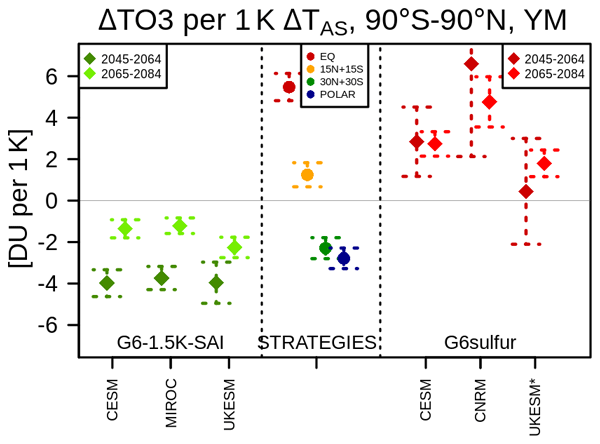
An assessment of the potential impacts of Stratospheric Aerosol Injection, a proposed method to offset global warming, on stratospheric ozone projections over the 21st century using the new multi-model GeoMIP (Geoengineering Model Intercomparison Project) G6-1.5K-SAI (Stratospheric Aerosol Injection) experiment. We discuss drivers of the responses, identify areas of model agreement and disagreement and sources of uncertainty. Our results highlight the need to assess any projected SAI impacts in wider strategy and scenario dimension using a multi-model framework.
Yvonne Anderson, Amanda C. Maycock, Juliane Schwendike, Thomas J. Bracegirdle, Simon A. Josey, and Doug M. Smith
EGUsphere, https://doi.org/10.5194/egusphere-2026-4140, https://doi.org/10.5194/egusphere-2026-4140, 2026
Short summary
Short summary
This study assessed how well climate models represent relationships between the North Atlantic ocean and atmosphere in autumn and winter. While models simulate observed relationships in autumn and winter, they fail to capture them in the transition between seasons. The results suggest the link between autumn sea surface temperatures and the winter atmosphere is driven mainly by atmospheric rather than ocean processes, highlighting important model biases that may limit seasonal forecast skill.
Luisa E. Avilés-Podgurski, Patrick Martineau, Hua Lu, Ayako Yamamoto, Amanda C. Maycock, Andrew Orr, Tony Phillips, Thomas J. Bracegirdle, Anna E. Hogg, Grzegorz Muszynski, and Andrew Fleming
Weather Clim. Dynam., 7, 1051–1071, https://doi.org/10.5194/wcd-7-1051-2026, https://doi.org/10.5194/wcd-7-1051-2026, 2026
Short summary
Short summary
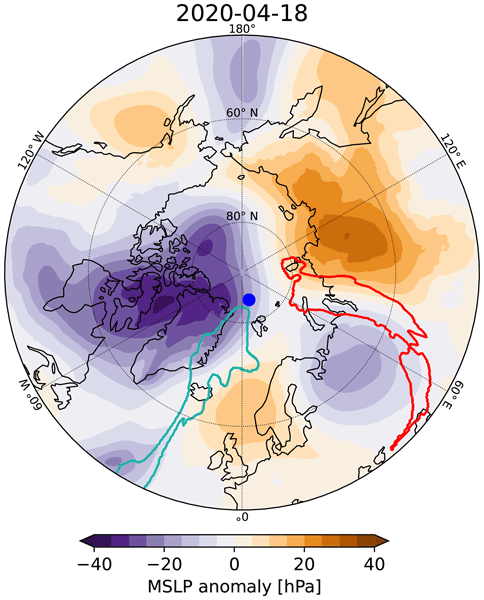
Atmospheric rivers (ARs) are narrow filaments of intense poleward water vapour transport. On rare occasions, they reach the Arctic, driving strong warming and melt. In April 2020, two ARs intruded into the central Arctic within one week, raising near-surface temperatures by up to 30°C and leading to extreme precipitation. Their distinct paths and thermodynamic evolution reveal diverse AR impacts on Arctic sea ice and precipitation extremes.
William J. Dow, Amanda C. Maycock, Andrew N. Ross, Ryan S. Williams, and Thomas J. Bracegirdle
EGUsphere, https://doi.org/10.5194/egusphere-2026-1179, https://doi.org/10.5194/egusphere-2026-1179, 2026
Short summary
Short summary
This study aims to advance understanding of the atmospheric drivers of extreme warm days across the Antarctic Peninsula during summer. We find that these days are linked to a range of large-scale atmospheric circulation patterns. Using a statistical method, we grouped similar events and compared their wind, temperature and pressure features, showing clear differences spatially and temporally. Understanding these dynamics improves understanding of the processes that drive these extreme events.
Weronika Osmolska, Charles Chemel, Amanda Maycock, and Paul Field
Weather Clim. Dynam., 6, 1221–1240, https://doi.org/10.5194/wcd-6-1221-2025, https://doi.org/10.5194/wcd-6-1221-2025, 2025
Short summary
Short summary
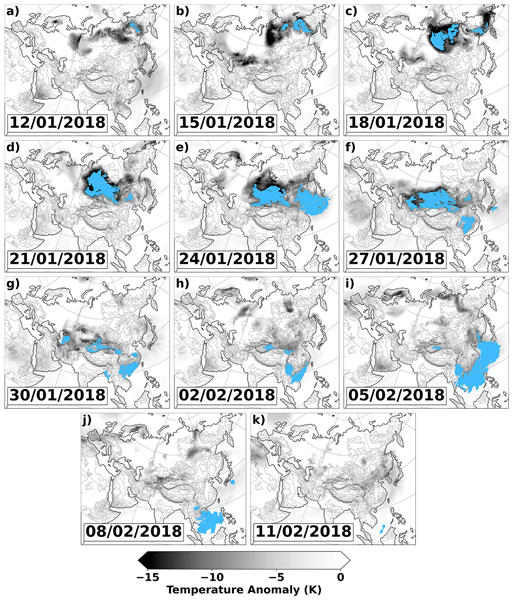
Extreme cold temperatures have widespread impacts on health, agriculture, infrastructures and the economy. We develop for the first time a methodology to build a catalogue of cold spell events, tracked in space and time. This catalogue is used to examine the behaviour of cold spells and its climatology. The results reveal specific pathways through which cold air affect midlatitudes.
Yvonne Anderson, Jacob Perez, and Amanda C. Maycock
Weather Clim. Dynam., 6, 595–608, https://doi.org/10.5194/wcd-6-595-2025, https://doi.org/10.5194/wcd-6-595-2025, 2025
Short summary
Short summary
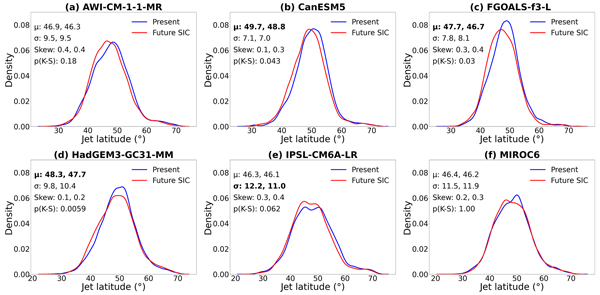
The impact of Arctic sea ice loss on the North Atlantic jet stream is debated, with some linking changes to ice loss and others to natural variability. This study uses a new method to explore how future sea ice loss will affect the jet stream. In half of the models, the jet shifts equatorward, but its speed and tilt are unchanged. Some models also exhibit more jet splitting. The results suggest that future sea ice loss is unlikely to significantly weaken the jet stream or make it more variable.
Jacob Perez, Amanda C. Maycock, Stephen D. Griffiths, Steven C. Hardiman, and Christine M. McKenna
Weather Clim. Dynam., 5, 1061–1078, https://doi.org/10.5194/wcd-5-1061-2024, https://doi.org/10.5194/wcd-5-1061-2024, 2024
Short summary
Short summary
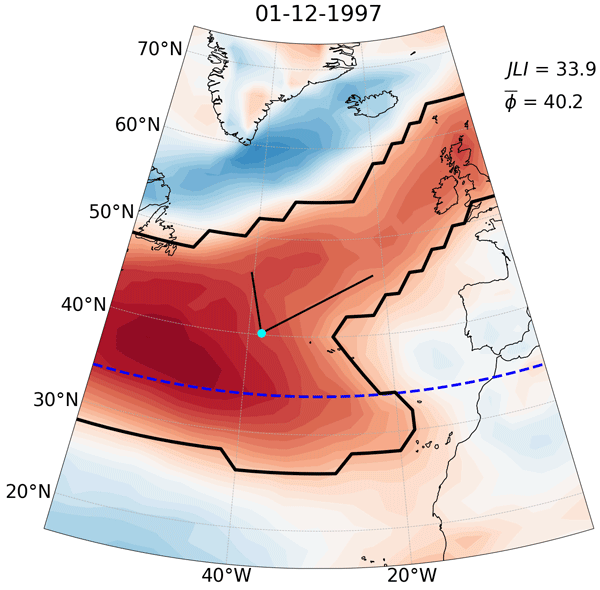
This study assesses existing methods for identifying the position and tilt of the North Atlantic eddy-driven jet, proposing a new feature-based approach. The new method overcomes limitations of other methods, offering a more robust characterisation. Contrary to prior findings, the distribution of daily latitudes shows no distinct multi-modal structure, challenging the notion of preferred jet stream latitudes or regimes. This research enhances our understanding of North Atlantic dynamics.
Rémy Bonnet, Christine M. McKenna, and Amanda C. Maycock
Weather Clim. Dynam., 5, 913–926, https://doi.org/10.5194/wcd-5-913-2024, https://doi.org/10.5194/wcd-5-913-2024, 2024
Short summary
Short summary
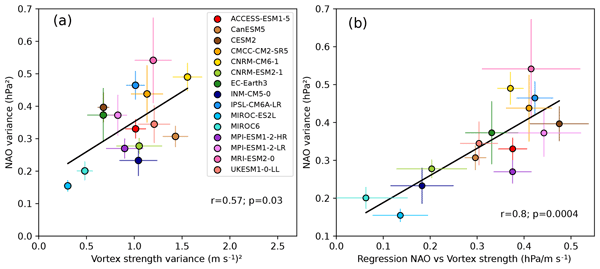
Climate models underestimate multidecadal winter North Atlantic Oscillation (NAO) variability. Understanding the origin of this weak variability is important for making reliable climate projections. We use multi-model climate simulations to explore statistical relationships with drivers that may contribute to NAO variability. We find a relationship between modelled stratosphere–troposphere coupling and multidecadal NAO variability, offering an avenue to improve the simulation of NAO variability.
William J. Dow, Christine M. McKenna, Manoj M. Joshi, Adam T. Blaker, Richard Rigby, and Amanda C. Maycock
Weather Clim. Dynam., 5, 357–367, https://doi.org/10.5194/wcd-5-357-2024, https://doi.org/10.5194/wcd-5-357-2024, 2024
Short summary
Short summary
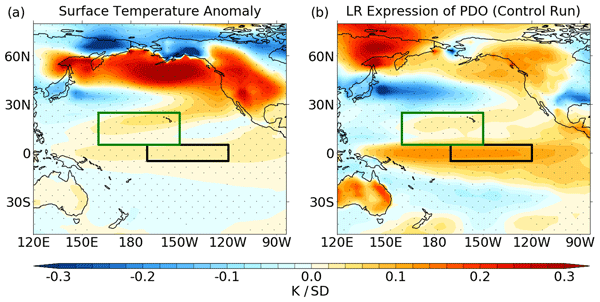
Changes to sea surface temperatures in the extratropical North Pacific are driven partly by patterns of local atmospheric circulation, such as the Aleutian Low. We show that an intensification of the Aleutian Low could contribute to small changes in temperatures across the equatorial Pacific via the initiation of two mechanisms. The effect, although significant, is unlikely to explain fully the recently observed multi-year shift of a pattern of climate variability across the wider Pacific.
Christopher D. Wells, Lawrence S. Jackson, Amanda C. Maycock, and Piers M. Forster
Earth Syst. Dynam., 14, 817–834, https://doi.org/10.5194/esd-14-817-2023, https://doi.org/10.5194/esd-14-817-2023, 2023
Short summary
Short summary
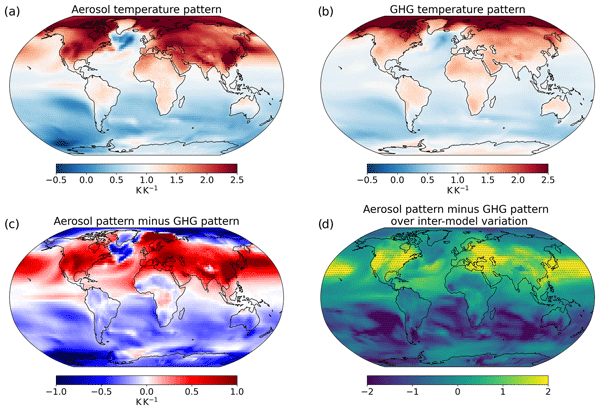
There are many possibilities for future emissions, with different impacts in different places. Complex models can study these impacts but take a long time to run, even on powerful computers. Simple methods can be used to reduce this time by estimating the complex model output, but these are not perfect. This study looks at the accuracy of one of these techniques, showing that there are limitations to its use, especially for low-emission future scenarios.
Ewa M. Bednarz, Amy H. Butler, James M. Haywood, Matthew Henry, Andy Jones, Ben Kravitz, Walker R. Lee, Douglas G. MacMartin, Amanda C. Maycock, Takashi Sekiya, Shingo Watanabe, and Daniele Visioni
Atmos. Chem. Phys., 26, 12751–12770, https://doi.org/10.5194/acp-26-12751-2026, https://doi.org/10.5194/acp-26-12751-2026, 2026
Short summary
Short summary
An assessment of the potential impacts of Stratospheric Aerosol Injection, a proposed method to offset global warming, on stratospheric ozone projections over the 21st century using the new multi-model GeoMIP (Geoengineering Model Intercomparison Project) G6-1.5K-SAI (Stratospheric Aerosol Injection) experiment. We discuss drivers of the responses, identify areas of model agreement and disagreement and sources of uncertainty. Our results highlight the need to assess any projected SAI impacts in wider strategy and scenario dimension using a multi-model framework.
Yvonne Anderson, Amanda C. Maycock, Juliane Schwendike, Thomas J. Bracegirdle, Simon A. Josey, and Doug M. Smith
EGUsphere, https://doi.org/10.5194/egusphere-2026-4140, https://doi.org/10.5194/egusphere-2026-4140, 2026
Short summary
Short summary
This study assessed how well climate models represent relationships between the North Atlantic ocean and atmosphere in autumn and winter. While models simulate observed relationships in autumn and winter, they fail to capture them in the transition between seasons. The results suggest the link between autumn sea surface temperatures and the winter atmosphere is driven mainly by atmospheric rather than ocean processes, highlighting important model biases that may limit seasonal forecast skill.
Luisa E. Avilés-Podgurski, Patrick Martineau, Hua Lu, Ayako Yamamoto, Amanda C. Maycock, Andrew Orr, Tony Phillips, Thomas J. Bracegirdle, Anna E. Hogg, Grzegorz Muszynski, and Andrew Fleming
Weather Clim. Dynam., 7, 1051–1071, https://doi.org/10.5194/wcd-7-1051-2026, https://doi.org/10.5194/wcd-7-1051-2026, 2026
Short summary
Short summary
Atmospheric rivers (ARs) are narrow filaments of intense poleward water vapour transport. On rare occasions, they reach the Arctic, driving strong warming and melt. In April 2020, two ARs intruded into the central Arctic within one week, raising near-surface temperatures by up to 30°C and leading to extreme precipitation. Their distinct paths and thermodynamic evolution reveal diverse AR impacts on Arctic sea ice and precipitation extremes.
Lara C. Mercier, Hilla Afargan-Gerstman, Matthew D. K. Priestley, Jens H. Christensen, and Daniela I. V. Domeisen
EGUsphere, https://doi.org/10.5194/egusphere-2026-1805, https://doi.org/10.5194/egusphere-2026-1805, 2026
Preprint archived
Short summary
Short summary
The study examines how extreme extratropical cyclones in the North Atlantic will change in a warming climate using historical and future projections of CMIP6 models. It shows that while near-surface temperature gradients are weakening, increased moisture is likely to make future storms more intense, suggesting a shift toward moisture-driven dynamics. Our findings provide new insights for improving long-term climate adaptation and risk management for high-impact weather in the midlatitudes.
William J. Dow, Amanda C. Maycock, Andrew N. Ross, Ryan S. Williams, and Thomas J. Bracegirdle
EGUsphere, https://doi.org/10.5194/egusphere-2026-1179, https://doi.org/10.5194/egusphere-2026-1179, 2026
Short summary
Short summary
This study aims to advance understanding of the atmospheric drivers of extreme warm days across the Antarctic Peninsula during summer. We find that these days are linked to a range of large-scale atmospheric circulation patterns. Using a statistical method, we grouped similar events and compared their wind, temperature and pressure features, showing clear differences spatially and temporally. Understanding these dynamics improves understanding of the processes that drive these extreme events.
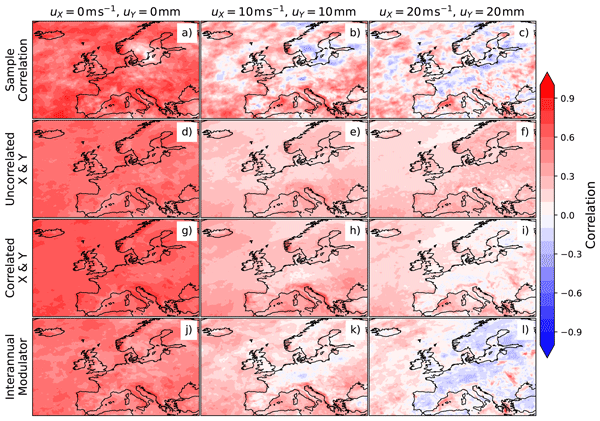
Toby P. Jones, David B. Stephenson, and Matthew D. K. Priestley
Nat. Hazards Earth Syst. Sci., 26, 775–789, https://doi.org/10.5194/nhess-26-775-2026, https://doi.org/10.5194/nhess-26-775-2026, 2026
Short summary
Short summary
Some hazards bring multiple perils, meaning their yearly losses are correlated. For example, storms cause losses from both wind and rain damage each year. Three models to understand the drivers of the relationship between these yearly losses are explored. These models can be applied to other hazards, but this study focuses on understanding drivers of wind and rain from windstorms. Storm duration near a location is important, having a positive/negative effect on windspeed/rainfall respectively.
Weronika Osmolska, Charles Chemel, Amanda Maycock, and Paul Field
Weather Clim. Dynam., 6, 1221–1240, https://doi.org/10.5194/wcd-6-1221-2025, https://doi.org/10.5194/wcd-6-1221-2025, 2025
Short summary
Short summary
Extreme cold temperatures have widespread impacts on health, agriculture, infrastructures and the economy. We develop for the first time a methodology to build a catalogue of cold spell events, tracked in space and time. This catalogue is used to examine the behaviour of cold spells and its climatology. The results reveal specific pathways through which cold air affect midlatitudes.
Yvonne Anderson, Jacob Perez, and Amanda C. Maycock
Weather Clim. Dynam., 6, 595–608, https://doi.org/10.5194/wcd-6-595-2025, https://doi.org/10.5194/wcd-6-595-2025, 2025
Short summary
Short summary
The impact of Arctic sea ice loss on the North Atlantic jet stream is debated, with some linking changes to ice loss and others to natural variability. This study uses a new method to explore how future sea ice loss will affect the jet stream. In half of the models, the jet shifts equatorward, but its speed and tilt are unchanged. Some models also exhibit more jet splitting. The results suggest that future sea ice loss is unlikely to significantly weaken the jet stream or make it more variable.
Jacob Perez, Amanda C. Maycock, Stephen D. Griffiths, Steven C. Hardiman, and Christine M. McKenna
Weather Clim. Dynam., 5, 1061–1078, https://doi.org/10.5194/wcd-5-1061-2024, https://doi.org/10.5194/wcd-5-1061-2024, 2024
Short summary
Short summary
This study assesses existing methods for identifying the position and tilt of the North Atlantic eddy-driven jet, proposing a new feature-based approach. The new method overcomes limitations of other methods, offering a more robust characterisation. Contrary to prior findings, the distribution of daily latitudes shows no distinct multi-modal structure, challenging the notion of preferred jet stream latitudes or regimes. This research enhances our understanding of North Atlantic dynamics.
Rémy Bonnet, Christine M. McKenna, and Amanda C. Maycock
Weather Clim. Dynam., 5, 913–926, https://doi.org/10.5194/wcd-5-913-2024, https://doi.org/10.5194/wcd-5-913-2024, 2024
Short summary
Short summary
Climate models underestimate multidecadal winter North Atlantic Oscillation (NAO) variability. Understanding the origin of this weak variability is important for making reliable climate projections. We use multi-model climate simulations to explore statistical relationships with drivers that may contribute to NAO variability. We find a relationship between modelled stratosphere–troposphere coupling and multidecadal NAO variability, offering an avenue to improve the simulation of NAO variability.
William J. Dow, Christine M. McKenna, Manoj M. Joshi, Adam T. Blaker, Richard Rigby, and Amanda C. Maycock
Weather Clim. Dynam., 5, 357–367, https://doi.org/10.5194/wcd-5-357-2024, https://doi.org/10.5194/wcd-5-357-2024, 2024
Short summary
Short summary
Changes to sea surface temperatures in the extratropical North Pacific are driven partly by patterns of local atmospheric circulation, such as the Aleutian Low. We show that an intensification of the Aleutian Low could contribute to small changes in temperatures across the equatorial Pacific via the initiation of two mechanisms. The effect, although significant, is unlikely to explain fully the recently observed multi-year shift of a pattern of climate variability across the wider Pacific.
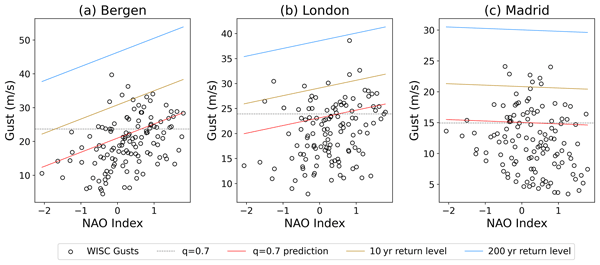
Matthew D. K. Priestley, David B. Stephenson, Adam A. Scaife, Daniel Bannister, Christopher J. T. Allen, and David Wilkie
Nat. Hazards Earth Syst. Sci., 23, 3845–3861, https://doi.org/10.5194/nhess-23-3845-2023, https://doi.org/10.5194/nhess-23-3845-2023, 2023
Short summary
Short summary
This research presents a model for estimating extreme gusts associated with European windstorms. Using observed storm footprints we are able to calculate the return level of events at the 200-year return period. The largest gusts are found across NW Europe, and these are larger when the North Atlantic Oscillation is positive. Using theoretical future climate states we find that return levels are likely to increase across NW Europe to levels that are unprecedented compared to historical storms.
Christopher D. Wells, Lawrence S. Jackson, Amanda C. Maycock, and Piers M. Forster
Earth Syst. Dynam., 14, 817–834, https://doi.org/10.5194/esd-14-817-2023, https://doi.org/10.5194/esd-14-817-2023, 2023
Short summary
Short summary
There are many possibilities for future emissions, with different impacts in different places. Complex models can study these impacts but take a long time to run, even on powerful computers. Simple methods can be used to reduce this time by estimating the complex model output, but these are not perfect. This study looks at the accuracy of one of these techniques, showing that there are limitations to its use, especially for low-emission future scenarios.
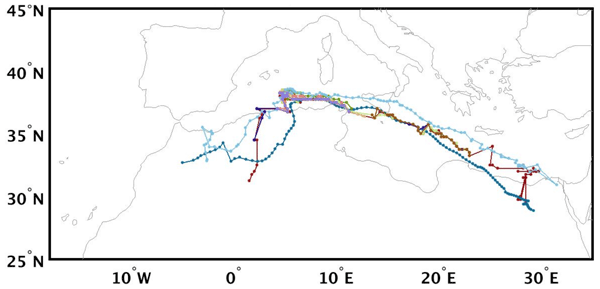
Emmanouil Flaounas, Leonardo Aragão, Lisa Bernini, Stavros Dafis, Benjamin Doiteau, Helena Flocas, Suzanne L. Gray, Alexia Karwat, John Kouroutzoglou, Piero Lionello, Mario Marcello Miglietta, Florian Pantillon, Claudia Pasquero, Platon Patlakas, María Ángeles Picornell, Federico Porcù, Matthew D. K. Priestley, Marco Reale, Malcolm J. Roberts, Hadas Saaroni, Dor Sandler, Enrico Scoccimarro, Michael Sprenger, and Baruch Ziv
Weather Clim. Dynam., 4, 639–661, https://doi.org/10.5194/wcd-4-639-2023, https://doi.org/10.5194/wcd-4-639-2023, 2023
Short summary
Short summary
Cyclone detection and tracking methods (CDTMs) have different approaches in defining and tracking cyclone centers. This leads to disagreements on extratropical cyclone climatologies. We present a new approach that combines tracks from individual CDTMs to produce new composite tracks. These new tracks are shown to correspond to physically meaningful systems with distinctive life stages.
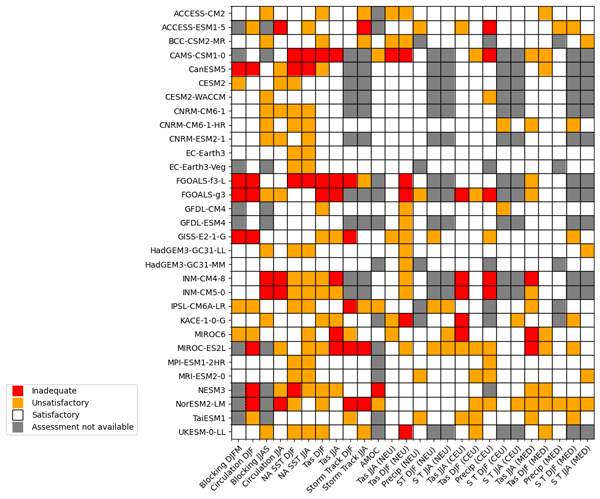
Tamzin E. Palmer, Carol F. McSweeney, Ben B. B. Booth, Matthew D. K. Priestley, Paolo Davini, Lukas Brunner, Leonard Borchert, and Matthew B. Menary
Earth Syst. Dynam., 14, 457–483, https://doi.org/10.5194/esd-14-457-2023, https://doi.org/10.5194/esd-14-457-2023, 2023
Short summary
Short summary
We carry out an assessment of an ensemble of general climate models (CMIP6) based on the ability of the models to represent the key physical processes that are important for representing European climate. Filtering the models with the assessment leads to more models with less global warming being removed, and this shifts the lower part of the projected temperature range towards greater warming. This is in contrast to the affect of weighting the ensemble using global temperature trends.
Julia F. Lockwood, Galina S. Guentchev, Alexander Alabaster, Simon J. Brown, Erika J. Palin, Malcolm J. Roberts, and Hazel E. Thornton
Nat. Hazards Earth Syst. Sci., 22, 3585–3606, https://doi.org/10.5194/nhess-22-3585-2022, https://doi.org/10.5194/nhess-22-3585-2022, 2022
Short summary
Short summary
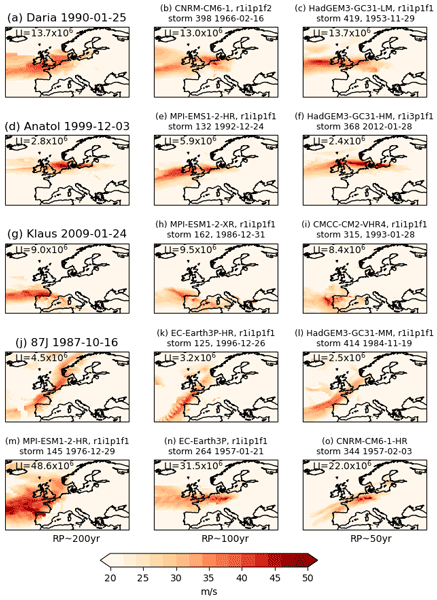
We describe how we developed a set of 1300 years' worth of European winter windstorm footprints, using a multi-model ensemble of high-resolution global climate models, for use by the insurance industry to analyse windstorm risk. The large amount of data greatly reduces uncertainty on risk estimates compared to using shorter observational data sets and also allows the relationship between windstorm risk and predictable large-scale climate indices to be quantified.

Matthew D. K. Priestley and Jennifer L. Catto
Weather Clim. Dynam., 3, 337–360, https://doi.org/10.5194/wcd-3-337-2022, https://doi.org/10.5194/wcd-3-337-2022, 2022
Short summary
Short summary
We use the newest set of climate model experiments from CMIP6 to investigate changes to mid-latitude storm tracks and cyclones from global warming. The overall number of cyclones will decrease. However in winter there will be more of the most intense cyclones, and these intense cyclones are likely to be stronger. Cyclone wind speeds will increase in winter, and as a result the area of strongest wind speeds will increase. By 2100 the area of strong wind speeds may increase by over 30 %.
Cited articles
Bacon, S. and Carter, D. J. T.: A connection between mean wave height and atmospheric pressure gradient in the North Atlantic, Int. J. Climatol., 13, 423–436, https://doi.org/10.1002/joc.3370130406, 1993.
Bandhauer, M., Isotta, F., Lakatos, M., Lussana, C., Båserud, L., Izsák, B., Szentes, O., Tveito, O. E., and Frei, C.: Evaluation of daily precipitation analyses in E-OBS (v19.0e) and ERA5 by comparison to regional high-resolution datasets in European regions, Int. J. Climatol., 42, 727–747, https://doi.org/10.1002/joc.7269, 2022.
Befort, D. J., Wild S., Knight J. R., Lockwood, J. F., Thornton, H. E., Hermanson, L., Bett, P. E., Weisheimer, A., and Leckebusch, G. C.: Seasonal forecast skill for extratropical cyclones and windstorms, Q. J. R. Meteorol. Soc., 2019, 92–104, https://doi.org/10.1002/qj.3406, 2019.
Bennett, B., Leonard, M., Deng, Y., and Westra, S.: An empirical investigation into the effect of antecedent precipitation on flood volume, J. Hydrol., 567, 435–445, https://doi.org/10.1016/j.jhydrol.2018.10.025, 2018.
Bessonova, V., Tapoglou, E., Dorrell, R., Dethlefs, N., and York, K.: Global evaluation of wave data reanalysis: Comparison of the ERA5 dataset to buoy observations, Appl. Ocean Res., 157, 104490, https://doi.org/10.1016/j.apor.2025.104490, 2025.
Bloomfield, H., Hillier, J., Griffin, A., Kay, A., Shaffrey, L., Pianosi, F., James, R., Kumar, D., Champion, A., and Bates, P.: Co-occurring wintertime flooding and extreme wind over Europe, from daily to seasonal timescales, Weather Clim. Extremes, 39, 100550, https://doi.org/10.1016/j.wace.2023.100550, 2023.
Castelle, B., Dodet, G., Masselink, G., and Scott, T.: Increased winter-mean wave height, variability, and periodicity in the northeast Atlantic over 1949–2017, Geophys. Res. Lett., 45, 3586–3596, https://doi.org/10.1002/2017GL076884, 2018.
Center for International Earth Science Information Network (CIESIN), Columbia University: Gridded Population of the World, Version 4 (GPWv4): Population Density, Revision 11. Palisades, NY: Socioeconomic Data and Applications Center (SEDAC), https://doi.org/10.7927/H49C6VHW, 2017.
Chen, T.-C., Collet, F., and Di Luca, A.: Evaluation of ERA5 precipitation and 10-m wind speed associated with extratropical cyclones using station data over North America, Int. J. Climatol., 44, 729–747, https://doi.org/10.1002/joc.8339, 2024.
Clark, P. A. and Gray, S. L.: Sting jets in extratropical cyclones: a review, Q. J. R. Meteorol. Soc., 144, 943–969, https://doi.org/10.1002/qj.3267, 2018.
Copernicus Climate Change Service, Climate Data Store: ERA5 hourly data on single levels from 1940 to present, Copernicus Climate Change Service (C3S) Climate Data Store (CDS) [data set], https://doi.org/10.24381/cds.adbb2d47 (last access: 24 April 2026), 2023.
Degenhardt, L., Leckebusch, G. C., and Scaife, A. A.: Large-scale circulation patterns and their influence on European winter windstorm predictions, Clim. Dynam., 60, 3597–3611, https://doi.org/10.1007/s00382-022-06455-2, 2023.
Degenhardt, L., Leckebusch, G. C., and Scaife, A. A.: Understanding winter windstorm predictability over Europe, Weather Clim. Dynam., 5, 587–607, https://doi.org/10.5194/wcd-5-587-2024, 2024.
Dobrynin, M., Kleine, T., Düsterhus, A., and Baehr, J.: Skilful seasonal prediction of ocean surface waves in the Atlantic Ocean, Geophys. Res. Lett., 46, 1731–1739, https://doi.org/10.1029/2018GL081334, 2019.
Dodet, G., Bertin, X., and Taborda, R.: Wave climate variability in the North-East Atlantic over the last six decades, Ocean Model, 31, 120–131, 2010.
Donat, M. G., Leckebusch, G. C., Pinto, J. G., and Ulbrich, U.: Examination of wind storms over Central Europe with respect to circulation weather types and NAO phases, Int. J. Climatol., 30, 1289–1300, https://doi.org/10.1002/joc.1982, 2010.
ECMWF (European Center for Medium-Range Weather Forecasts) IFS Documentation: IFS Documentation CY45R2 – Part IV: Physical processes, IFS doc, https://doi.org/10.21957/tr5rv27xu, 2016.
Fanti, V., Ferreira, Ó., Kümmerer, V., and Loureiro, C.: Improved estimates of extreme wave conditions in coastal areas from calibrated global reanalyses, Commun. Earth Environ., 4, 151, https://doi.org/10.1038/s43247-023-00819-0, 2023.
Gliksman, D., Averbeck, P., Becker, N., Gardiner, B., Goldberg, V., Grieger, J., Handorf, D., Haustein, K., Karwat, A., Knutzen, F., Lentink, H. S., Lorenz, R., Niermann, D., Pinto, J. G., Queck, R., Ziemann, A., and Franzke, C. L. E.: Review article: A European perspective on wind and storm damage – from the meteorological background to index-based approaches to assess impacts, Nat. Hazards Earth Syst. Sci., 23, 2171–2201, https://doi.org/10.5194/nhess-23-2171-2023, 2023.
Hawcroft, M. K., Shaffrey, L. C., Hodges, K. I., and Dacre, H. F.: How much Northern Hemisphere precipitation is associated with extratropical cyclones?, Geophys. Res. Lett., 39, L24809, https://doi.org/10.1029/2012GL053866, 2012.
Hersbach, H., Bell, B., Berrisford, P., Hirahara, S., Horányi, A., Muñoz-Sabater, J., Nicolas, J., Peubey, C., Radu, R., Schepers, D., Simmons, A., Soci, C., Abdalla, S., Abellan, X., Balsamo, G., Bechtold, P., Biavati, G., Bidlot, J., Bonavita, M., De Chiara, G., Dahlgren, P., Dee, D., Diamantakis, M., Dragani, R., Flemming, J., Forbes, R., Fuentes, M., Geer, A., Haimberger, L., Healy, S., Hogan, R. J., Hólm, E., Janisková, M., Keeley, S., Laloyaux, P., Lopez, P., Lupu, C., Radnoti, G., de Rosnay, P., Rozum, I., Vamborg, F., Villaume, S., and Thépaut, J.-N.: The ERA5 global reanalysis, Q. J. R. Meteorol. Soc., 146, 1999–2049, https://doi.org/10.1002/qj.3803, 2020.
Hillier, J. K., Macdonald, N., Leckebusch, G. C., and Stavrinides, A.: Interactions between apparently primary weather-driven hazards and their cost, Environ. Res. Lett., 10, 104003, https://doi.org/10.1088/1748-9326/10/10/104003, 2015.
Hillier, J. K., Bloomfield, H. C., Manning, C., Garry, F., Shaffrey, L., Bates, P., and Kumar, D.: Increasingly Seasonal Jet Stream Raises Risk of Co-Occurring Flooding and Extreme Wind in Great Britain, Int. J. Climatol., e8763, https://doi.org/10.1002/joc.8763, 2025.
Hodges, K. I.: A General Method for Tracking Analysis and Its Application to Meteorological Data, Mon. Weather Rev., 122, 2573–2586, https://doi.org/10.1175/1520-0493(1994)122<2573:AGMFTA>2.0.CO;2, 1994.
Hodges, K. I.: Feature Tracking on the Unit Sphere, Mon. Weather Rev., 123, 3458–3465, https://doi.org/10.1175/1520-0493(1995)123<3458:FTOTUS>2.0.CO;2, 1995.
Hodges, K. I.: Adaptive Constraints for Feature Tracking, Mon. Weather Rev., 127, 1362–1373, https://doi.org/10.1175/1520-0493(1999)127<1362:ACFFT>2.0.CO;2, 1999.
Hurrell, J. W., Kushnir, Y., Ottersen, G., and Visbeck, M.: An Overview of the North Atlantic Oscillation, in: The North Atlantic Oscillation: Climatic Significance and Environmental Impact, edited by: Hurrell, J. W., Kushnir, Y., Ottersen, G., and Visbeck, M., https://doi.org/10.1029/134GM01, 2003.
Ivancic, T. J. and Shaw, S. B.: Examining why trends in very heavy precipitation should not be mistaken for trends in very high river discharge, Clim. Change, 133, 681–693, https://doi.org/10.1007/s10584-015-1476-1, 2015.
Izaguirre, C., Mendez, F. J., Menendez, M., Luceño, A., and Losada, I. J.: Extreme wave climate variability in southern Europe using satellite data, J. Geophys. Res., 115, C04009, https://doi.org/10.1029/2009JC005802, 2010.
Izaguirre, C., Méndez, F. J., Menéndez, M., and Losada, I. J.: Global extreme wave height variability based on satellite data, Geophys. Res. Lett., 38, L10607, https://doi.org/10.1029/2011GL047302, 2011.
Karremann, M. K., Pinto, J. G., von Bomhard, P. J., and Klawa, M.: On the clustering of winter storm loss events over Germany, Nat. Hazards Earth Syst. Sci., 14, 2041–2052, https://doi.org/10.5194/nhess-14-2041-2014, 2014.
Klawa, M. and Ulbrich, U.: A model for the estimation of storm losses and the identification of severe winter storms in Germany, Nat. Hazards Earth Syst. Sci., 3, 725–732, https://doi.org/10.5194/nhess-3-725-2003, 2003.
Kodama, C., Stevens, B., Mauritsen, T., Seiki, T., and Satoh, M.: A New Perspective for Future Precipitation Change from Intense Extratropical Cyclones, Geophys. Res. Lett., 46, 12435–12444, https://doi.org/10.1029/2019GL084001, 2019.
Lavers, D. A., Simmons, A., Vamborg, F., and Rodwell, M. J.: An evaluation of ERA5 precipitation for climate monitoring, Q. J. Roy. Meteor. Soc., 148, 3152–3165, https://doi.org/10.1002/qj.4351, 2022.
Lockwood, J. F., Dunstone, N., Hermanson, L., Saville, G. R., Scaife, A. A., Smith, D., and Thornton, H. E.: A Decadal Climate Service for Insurance: Skillful Multiyear Predictions of North Atlantic Hurricane Activity and U.S. Hurricane Damage, J. Appl. Meteor. Climatol., 62, 1151–1163, https://doi.org/10.1175/JAMC-D-22-0147.1, 2023.
Lodise, J., Merrifield, S., Collins, C., Behrens, J., and Terrill, E: Performance of ERA5 wind speed and significant wave height within Extratropical cyclones using collocated satellite radar altimeter measurements, Coast. Eng. J., 66, 89–114, https://doi.org/10.1080/21664250.2023.2301181, 2024.
Martínez-Asensio, A., Tsimplis, M. N., Marcos, M., Feng, X., Gomis, D., Jordà, G., and Josey, S. A.: Response of the North Atlantic wave climate to atmospheric modes of variability, Int. J. Climatol., 36, 1210-1225, https://doi.org/10.1002/joc.4415, 2016.
Martius, O., Pfahl, S., and Chevalier, C.: A global quantification of compound precipitation and wind extremes, Geophys. Res. Lett., 43, 7709–7717, https://doi.org/10.1002/2016GL070017, 2016.
Matthews, T., Murphy, C., Wilby, R., and Harrigan, S.: Stormiest winter on record for Ireland and UK, Nat. Clim Change, 4, 738–740, https://doi.org/10.1038/nclimate2336, 2014.
McKenna, C. M. and Maycock, A. C.: The role of the North Atlantic Oscillation for projections of winter mean precipitation in Europe, Geophys. Res. Lett., 49, e2022GL099083, https://doi.org/10.1029/2022gl099083, 2022.
Minola, L., Zhang, F., Azorin-Molina, C., Safaei Pirooz, A. A., Flay, R. G. J., Hersbach, H., and Chen, D.: Near-surface mean and gust wind speeds in ERA5 across Sweden: towards an improved gust parametrization, Clim. Dynam., 55, 887–907, https://doi.org/10.1007/s00382-020-05302-6, 2020.
Moemken, J., Alifdini, I., Ramos, A. M., Georgiadis, A., Brocklehurst, A., Braun, L., and Pinto, J. G.: Insurance loss model vs. meteorological loss index – how comparable are their loss estimates for European windstorms?, Nat. Hazards Earth Syst. Sci., 24, 3445–3460, https://doi.org/10.5194/nhess-24-3445-2024, 2024.
Owen, L. E., Catto, J. L., Stephenson, D. B., and Dunstone, N. J.: Compound precipitation and wind extremes over Europe and their relationship to extratropical cyclones, Weather Clim. Extremes, 33, 100342, https://doi.org/10.1016/j.wace.2021.100342, 2021.
Perez, J., Maycock, A. C., Griffiths, S. D., Hardiman, S. C., and McKenna, C. M.: A new characterisation of the North Atlantic eddy-driven jet using two-dimensional moment analysis, Weather Clim. Dynam., 5, 1061–1078, https://doi.org/10.5194/wcd-5-1061-2024, 2024.
Pinto, J. G., Zacharias, S., Fink, A. H., Leckebusch, G. C., and Ulbrich, U.: Factors contributing to the development of extreme North Atlantic cyclones and their relationship with the NAO, Clim. Dynam., 32, 711–737, https://doi.org/10.1007/s00382-008-0396-4, 2009.
Pinto, J. G., Pantillon, F., Ludwig, P., Déroche, M., Leoncini, G., Raible, C. C., Shaffrey, L. C., and Stephenson, D. B.: From Atmospheric Dynamics to Insurance Losses: An Interdisciplinary Workshop on European Storms, Bull. Amer. Meteor. Soc., 100, ES175–ES178, https://doi.org/10.1175/BAMS-D-19-0026.1, 2019.
Priestley, M. D. K. and Catto, J. L.: Improved representation of extratropical cyclone structure in HighResMIP models, Geophys. Res. Lett., 49, e2021GL096708, https://doi.org/10.1029/2021GL096708, 2022.
Ramon, J., Lledó, L., Torralba, V., Soret, A., and Doblas-Reyes, F. J.: What global reanalysis best represents near-surface winds?, Q. J. R. Meteorol. Soc., 145, 3236–3251, https://doi.org/10.1002/qj.3616, 2019.
Scaife, A. A., Folland, C. K., Alexander, L. V., Moberg, A., and Knight, J. R.: European Climate Extremes and the North Atlantic Oscillation, J. Climate, 21, 72–83, https://doi.org/10.1175/2007JCLI1631.1, 2008.
Scaife, A. A., Arribas, A., Blockley, E., Brookshaw, A., Clark, R. T., Dunstone, N., Eade, R., Fereday, D., Folland, C. K., Gordon, M., Hermanson, L., Knight, J. R., Lea, D. J., MacLachlan, C., Maidens, A., Martin, M., Peterson, A. K., Smith, D., Vellinga, M., Wallace, E., Waters, J., and Williams, A.: Skillful long-range prediction of European and North American winters, Geophys. Res. Lett., 41, 2514–2519, https://doi.org/10.1002/2014GL059637, 2014.
Seneviratne, S. I., Zhang, X., Adnan, M., Badi, W., Dereczynski, C., Di Luca, A., Ghosh, S., Iskandar, I., Kossin, J., Lewis, S., Otto, F., Pinto, I., Satoh, M., Vicente-Serrano, S. M., Wehner, M., and Zhou, B.: Weather and Climate Extreme Events in a Changing Climate, in: Climate Change 2021: The Physical Science Basis. Contribution of Working Group I to the Sixth Assessment Report of the Intergovernmental Panel on Climate Change, edited by: Masson-Delmotte, V., Zhai, P., Pirani, A., Connors, S. L., Péan, C., Berger, S., Caud, N., Chen, Y., Goldfarb, L., Gomis, M. I., Huang, M., Leitzell, K., Lonnoy, E., Matthews, J. B. R., Maycock, T. K., Waterfield, T., Yelekçi, O., Yu, R., and Zhou, B., Cambridge University Press, Cambridge, United Kingdom and New York, NY, USA, pp. 1513–1766, https://doi.org/10.1017/9781009157896.013, 2021.
Stone, D. A.: A hierarchical collection of political/economic regions for analysis of climate extremes, Clim. Change, 155, 639–656, https://doi.org/10.1007/s10584-019-02479-6, 2019.
Thornton, H. E., Smith, D. M., Scaife, A. A., and Dunstone, N. J.: Seasonal predictability of the East Atlantic Pattern in late autumn and early winter, Geophys. Res. Lett., 50, e2022GL100712, https://doi.org/10.1029/2022GL100712, 2023.
Vallis, G. K.: Atmospheric and Oceanic Fluid Dynamics: Fundamentals and Large-Scale Circulation, 2nd edn., Cambridge University Press, https://doi.org/10.1017/9781107588417, 2017.
Short summary
Winter North Atlantic storms cause significant financial losses and damage in Europe. This study shows that modes of seasonal large-scale climate variability called the North Atlantic Oscillation and East Atlantic Pattern modulate the exposure to cyclone related extreme wind, precipitation and storm surge hazards across many parts of Europe. The results have the potential to be combined with skilful seasonal climate forecasts of climate modes to inform the insurance sector.
Winter North Atlantic storms cause significant financial losses and damage in Europe. This study...


Altmetrics
Final-revised paper
Preprint