
Articles | Volume 25, issue 12
https://doi.org/10.5194/nhess-25-5033-2025
© Author(s) 2025. This work is distributed under
the Creative Commons Attribution 4.0 License.
the Creative Commons Attribution 4.0 License.
https://doi.org/10.5194/nhess-25-5033-2025
© Author(s) 2025. This work is distributed under
the Creative Commons Attribution 4.0 License.
the Creative Commons Attribution 4.0 License.
Research article
| 
19 Dec 2025
Research article |
| 19 Dec 2025
| 19 Dec 2025
Assessing the predictive capability of several machine learning algorithms to forecast snow avalanches using numerical weather prediction model in eastern Canada
Francis Gauthier
CORRESPONDING AUTHOR

Laboratoire de géomorphologie et de gestion des risques en montagnes (LGGRM), Département de Biologie, Chimie et Géographie, Université du Québec à Rimouski, Canada
Center for Nordic studies, Université Laval, Québec, Canada
Jacob Laliberté
Laboratoire de géomorphologie et de gestion des risques en montagnes (LGGRM), Département de Biologie, Chimie et Géographie, Université du Québec à Rimouski, Canada
Horos Géomatique, Québec, Canada
Francis Meloche
Laboratoire de géomorphologie et de gestion des risques en montagnes (LGGRM), Département de Biologie, Chimie et Géographie, Université du Québec à Rimouski, Canada
Center for Nordic studies, Université Laval, Québec, Canada
Related authors
Olivia Meier-Legault, Nicholas Brown, Larry Adjun, Michel Allard, Alejandro Alvarez, Maude Auclair, Alex Bevington, Samuel Bilodeau, William Cable, Olivia Carpino, Ariane Castagner, Lin Chen, Alexandre Chiasson, Ryan Connon, Stephanie Coulombe, Jeffrey Crompton, Derek Cronmiller, Gautier Davesne, Mason Dominico, Marc-André Ducharme, Timothy Ensom, Louise Farquharson, Vanessa Foord, Daniel Fortier, Philippe Fortier, Duane Froese, Samuel Gagnon, Francis Gauthier, Marten Geertsema, Etienne Godin, Galina Jonat, Steven V. Kokelj, Michelle Landry, Antoni Lewkowicz, Panya Lipovsky, Emmanual L’Hérault, Hannah Macdonell, Lancelot Massé, Dmitry Nicolsky, Moya Painter, Leesee Papatsie, Victor Pozsgay, William Quinton, Vladimir Romanovsky, Ashley C.A. Rudy, Denis Sarrazin, Emilie Stewart-Jones, Donald Walker, Thomas Wright, Joseph Young, and Stephan Gruber
Earth Syst. Sci. Data Discuss., https://doi.org/10.5194/essd-2026-96, https://doi.org/10.5194/essd-2026-96, 2026
Revised manuscript accepted for ESSD
Short summary
Short summary
Ground temperature data is vital for permafrost and climate research yet data is often fragmented. We created a standardized collection of ground temperatures from over 900 sites across Canada. From 42 published and unpublished sources, we manually verified, cleaned and standardized data with a new software tool. This dataset supports permafrost research on a nationwide scale and can help improve models by acting as a reliable benchmark.
Francis Meloche, Francis Gauthier, and Alexandre Langlois
The Cryosphere, 18, 1359–1380, https://doi.org/10.5194/tc-18-1359-2024, https://doi.org/10.5194/tc-18-1359-2024, 2024
Short summary
Short summary
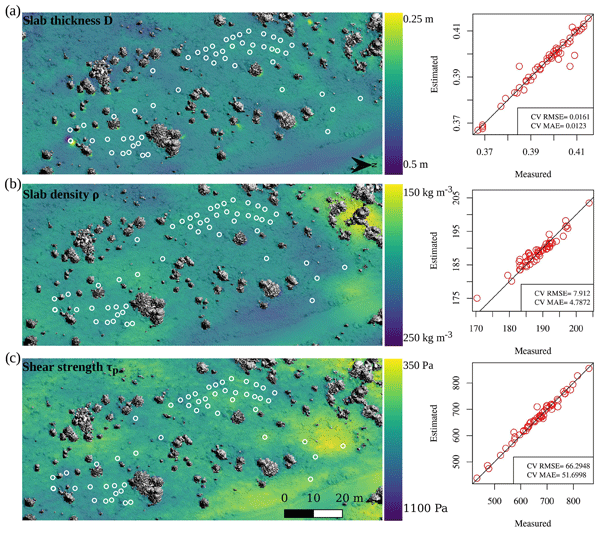
Snow avalanches are a dangerous natural hazard. Backcountry recreationists and avalanche practitioners try to predict avalanche hazard based on the stability of snow cover. However, snow cover is variable in space, and snow stability observations can vary within several meters. We measure the snow stability several times on a small slope to create high-resolution maps of snow cover stability. These results help us to understand the snow variation for scientists and practitioners.
Tom Birien and Francis Gauthier
Nat. Hazards Earth Syst. Sci., 23, 343–360, https://doi.org/10.5194/nhess-23-343-2023, https://doi.org/10.5194/nhess-23-343-2023, 2023
Short summary
Short summary
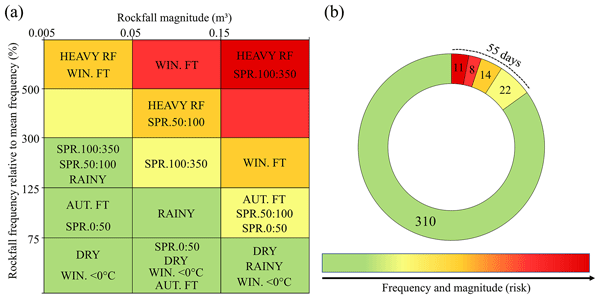
On highly fractured rockwalls such as those found in northern Gaspésie, most rockfalls are triggered by weather conditions. This study highlights that in winter, rockfall frequency is 12 times higher during a superficial thaw than during a cold period in which temperature remains below 0 °C. In summer, rockfall frequency is 22 times higher during a heavy rainfall event than during a mainly dry period. This knowledge could be used to implement a risk management strategy.
Olivia Meier-Legault, Nicholas Brown, Larry Adjun, Michel Allard, Alejandro Alvarez, Maude Auclair, Alex Bevington, Samuel Bilodeau, William Cable, Olivia Carpino, Ariane Castagner, Lin Chen, Alexandre Chiasson, Ryan Connon, Stephanie Coulombe, Jeffrey Crompton, Derek Cronmiller, Gautier Davesne, Mason Dominico, Marc-André Ducharme, Timothy Ensom, Louise Farquharson, Vanessa Foord, Daniel Fortier, Philippe Fortier, Duane Froese, Samuel Gagnon, Francis Gauthier, Marten Geertsema, Etienne Godin, Galina Jonat, Steven V. Kokelj, Michelle Landry, Antoni Lewkowicz, Panya Lipovsky, Emmanual L’Hérault, Hannah Macdonell, Lancelot Massé, Dmitry Nicolsky, Moya Painter, Leesee Papatsie, Victor Pozsgay, William Quinton, Vladimir Romanovsky, Ashley C.A. Rudy, Denis Sarrazin, Emilie Stewart-Jones, Donald Walker, Thomas Wright, Joseph Young, and Stephan Gruber
Earth Syst. Sci. Data Discuss., https://doi.org/10.5194/essd-2026-96, https://doi.org/10.5194/essd-2026-96, 2026
Revised manuscript accepted for ESSD
Short summary
Short summary
Ground temperature data is vital for permafrost and climate research yet data is often fragmented. We created a standardized collection of ground temperatures from over 900 sites across Canada. From 42 published and unpublished sources, we manually verified, cleaned and standardized data with a new software tool. This dataset supports permafrost research on a nationwide scale and can help improve models by acting as a reliable benchmark.
Francis Meloche, Francis Gauthier, and Alexandre Langlois
The Cryosphere, 18, 1359–1380, https://doi.org/10.5194/tc-18-1359-2024, https://doi.org/10.5194/tc-18-1359-2024, 2024
Short summary
Short summary
Snow avalanches are a dangerous natural hazard. Backcountry recreationists and avalanche practitioners try to predict avalanche hazard based on the stability of snow cover. However, snow cover is variable in space, and snow stability observations can vary within several meters. We measure the snow stability several times on a small slope to create high-resolution maps of snow cover stability. These results help us to understand the snow variation for scientists and practitioners.
Tom Birien and Francis Gauthier
Nat. Hazards Earth Syst. Sci., 23, 343–360, https://doi.org/10.5194/nhess-23-343-2023, https://doi.org/10.5194/nhess-23-343-2023, 2023
Short summary
Short summary
On highly fractured rockwalls such as those found in northern Gaspésie, most rockfalls are triggered by weather conditions. This study highlights that in winter, rockfall frequency is 12 times higher during a superficial thaw than during a cold period in which temperature remains below 0 °C. In summer, rockfall frequency is 22 times higher during a heavy rainfall event than during a mainly dry period. This knowledge could be used to implement a risk management strategy.
Cited articles
Bakkehoi, S.: Snow avalanche prediction using a probabilistic method, IAHS publication, 162, 549–555, 1987. a
Blagovechshenskiy, V., Medeu, A., Gulyayeva, T., Zhdanov, V., Ranova, S., Kamalbekova, A., and Aldabergen, U.: Application of Artificial Intelligence in the Assessment and Forecast of Avalanche Danger in the Ile Alatau Ridge, Water, 15, 1438, https://doi.org/10.3390/w15071438, 2023. a
Bois, P., Obled, C., and Good, W.: Multivariate data analysis as a tool for day-by-day avalanche forecast, in: International symposium on snow mechanics, Grindelwald, Switzerland, 1975. a
Breiman, L.: Random Forest, Machine Learning, 45, 5–32, https://doi.org/10.1023/A:1010933404324, 2001. a
Buser, O.: Avalanche forecast with the method of nearest neighbours: An interactive approach, Cold Reg. Sci. Technol., 8, 155–163, https://doi.org/10.1016/0165-232X(83)90006-X, 1983. a
Butler, D. R.: Snow-avalanche hazards in Glacier National Park, Montana: Meteorologic and climatic aspects, Phys. Geogr., 7, 72–87, https://doi.org/10.1080/02723646.1986.10642282, 1986. a
Castebrunet, H., Eckert, N., and Giraud, G.: Snow and weather climatic control on snow avalanche occurrence fluctuations over 50 yr in the French Alps, Clim. Past, 8, 855–875, https://doi.org/10.5194/cp-8-855-2012, 2012. a
Côté, K., Madore, J. B., and Langlois, A.: Uncertainties in the SNOWPACK multilayer snow model for a Canadian avalanche context: sensitivity to climatic forcing data, Phys. Geogr., 38, 124–142, https://doi.org/10.1080/02723646.2016.1277935, 2017. a, b
Couronné, R., Probst, P., and Boulesteix, A.-L.: Random forest versus logistic regression: a large-scale benchmark experiment, BMC Bioinformatics, 19, 270, https://doi.org/10.1186/s12859-018-2264-5, 2018. a
Davis, R. E. and Elder, K.: Application of classification and regression trees: selection of avalanche activity indices at Mammoth Mountain, in: International Snow Science Workshop, 285–294, 1994. a
Davis, R. E., Elder, K., Howlett, D., and Bouzaglou, E.: Relating storm and weather factors to dry slab avalanche activity at Alta, Utah, and Mammoth Mountain, California, using classification and regression trees, Cold Reg. Sci. Technol., 30, 79–89, https://doi.org/10.1016/S0165-232X(99)00032-4, 1999. a
Dormann, C. F., Elith, J., Bacher, S., Buchmann, C., Carl, G., Carré, G., Marquéz, J. R. G., Gruber, B., Lafourcade, B., Leitão, P. J., Münkemüller, T., McClean, C., Osborne, P. E., Reineking, B., Schröder, B., Skidmore, A. K., Zurell, D., and Lautenbach, S.: Collinearity: a review of methods to deal with it and a simulation study evaluating their performance, Ecography, 36, 27–46, https://doi.org/10.1111/j.1600-0587.2012.07348.x, 2013. a, b
Durand, Y., Giraud, G., Brun, E., Mérindol, L., and Martin, E.: A computer-based system simulating snowpack structures as a tool for regional avalanche forecasting, J. Glaciol., 45, 469–484, https://doi.org/10.1017/S0022143000001337, 1999. a
Eckert, N., Corona, C., Giacona, F., Gaume, J., Mayer, S., van Herwijnen, A., Hagenmuller, P., and Stoffel, M.: Climate change impacts on snow avalanche activity and related risks, Nature Reviews Earth & Environment, 5, 369–389, https://doi.org/10.1038/s43017-024-00540-2, 2024. a
Fortin, G. and Hétu, B.: Les extrêmes météorologiques hivernaux et leurs influences sur la couverture neigeuse dans les Monts Chic-Chocs, Gaspésie, Canada, Geographia Technica, Numéro Spé, 181–186, 2009. a
Fortin, G. and Hétu, B.: Estimating winter trends in climatic variables in the Chic-Chocs Mountains, Canada (1970-2009), Int. J. Climatol., 34, 3078–3088, https://doi.org/10.1002/joc.3895, 2014. a
Fortin, G., Hétu, B., and Germain, D.: Climat Hivernal et Régimes avalanches dans le corridors routier de la gaspésie septentrionale (Québec, Canada), Climatologie, 8, https://doi.org/10.4267/climatologie.202, 2011. a, b, c, d
Gauthier, F., Allard, M., and Hétu, B.: Ice wall growth and decay: Meteorological analysis and modelling, Permafrost Periglac., 26, 84–102, https://doi.org/10.1002/ppp.1835, 2015. a
Gauthier, F., Laliberté, J., Birien, T., Boulet, Y., Meloche, F., and Buffin-Bélanger, T.: Influence des variables météorologiques et des changements climatiques sur l’occurrence, la fréquence et la magnitude des mouvements de versant affectant les routes 132 et 198 dans le nord de la Gaspésie, Tech. rep., Ministère des Transports du Québec, 2022. a, b
Germain, D.: La dynamique des avalanches de neige en Gaspésie, PhD thesis, Université Laval, Québec, Canada, 2006. a
Germain, D.: Snow avalanche hazard assessment and risk management in northern Quebec, eastern Canada, Nat. Hazards, 80, 1303–1321, https://doi.org/10.1007/s11069-015-2024-z, 2016. a
Girard, C., Plante, A., Desgagné, M., McTaggart-Cowan, R., Côté, J., Charron, M., Gravel, S., Lee, V., Patoine, A., Qaddouri, A., Roch, M., Spacek, L., Tanguay, M., Vaillancourt, P. A., and Zadra, A.: Staggered Vertical Discretization of the Canadian Environmental Multiscale (GEM) Model Using a Coordinate of the Log-Hydrostatic-Pressure Type, Mon. Weather Rev., 142, 1183–1196, https://doi.org/10.1175/MWR-D-13-00255.1, 2014. a
Hasan, M. A. M., Nasser, M., Ahmad, S., and Molla, K. I.: Feature Selection for Intrusion Detection Using Random Forest, Journal of Information Security, 07, 129–140, https://doi.org/10.4236/jis.2016.73009, 2016. a, b
He, H. and Ma, Y.: Imbalanced learning: foundations, algorithms, and applications, IEEE Press Wiley, ISBN 9781118074626, 2013. a
Hebertson, E. G. and Jenkins, M. J.: Historic climate factors associated with major avalanche years on the Wasatch Plateau, Utah, Cold Reg. Sci. Technol., 37, 315–332, https://doi.org/10.1016/S0165-232X(03)00073-9, 2003. a
Hendrick, M., Techel, F., Volpi, M., Olevski, T., Pérez-Guillén, C., Herwijnen, A. v., and Schweizer, J.: Automated prediction of wet-snow avalanche activity in the Swiss Alps, J. Glaciol., 69, 1365–1378, https://doi.org/10.1017/jog.2023.24, 2023. a, b, c
Hendrikx, J., Owens, I., Carran, W., and Carran, A.: Avalanche activity in an extreme maritime climate: The application of classification trees for forecasting, Cold Reg. Sci. Technol., 43, 104–116, https://doi.org/10.1016/j.coldregions.2005.05.006, 2005. a, b
Herla, F., Haegeli, P., Horton, S., and Mair, P.: A large-scale validation of snowpack simulations in support of avalanche forecasting focusing on critical layers, Nat. Hazards Earth Syst. Sci., 24, 2727–2756, https://doi.org/10.5194/nhess-24-2727-2024, 2024. a
Herla, F., Haegeli, P., Horton, S., and Mair, P.: A quantitative module of avalanche hazard – comparing forecaster assessments of storm and persistent slab avalanche problems with information derived from distributed snowpack simulations, Nat. Hazards Earth Syst. Sci., 25, 625–646, https://doi.org/10.5194/nhess-25-625-2025, 2025. a
Hétu, B.: Les conditions météorologiques propices au déclenchement des avalanches de neige dans les corridors routiers du nord de la Gaspésie, Québec, Canada, Géographie physique et Quaternaire, 61, 165–180, https://doi.org/10.7202/038990ar, 2010. a, b, c, d
Hétu, B., Brown, K., and Germain, D.: Les victimes d’avalanche au Québec entre 1825 et 2009, Canadian Geographies/Géographies canadiennes, 55, 273–287, https://doi.org/10.1111/j.1541-0064.2010.00338.x, 2011. a
Hétu, B., Fortin, G., and Brown, K.: Climat hivernal, aménagement du territoire et dynamique des avalanches au Québec méridional: une analyse à partir des accidents connus depuis 1825, Can. J. Earth Sci., 52, 307–321, https://doi.org/10.1139/cjes-2014-0205, 2015. a
Hosmer, D. and Lemeshow, S.: Applied Logistic Regression, Wiley, 2nd edn., ISBN 9781118625668, 2000. a
Jaboyedoff, M. and Labiouse, V.: Technical Note: Preliminary estimation of rockfall runout zones, Nat. Hazards Earth Syst. Sci., 11, 819–828, https://doi.org/10.5194/nhess-11-819-2011, 2011. a
Jamieson, B. and Stethem, C.: Snow Avalanche Hazards and Management in Canada: Challenges and Progress, Nat. Hazards, 26, 35–53, https://doi.org/10.1023/A:1015212626232, 2002. a
Jomelli, V., Delval, C., Grancher, D., Escande, S., Brunstein, D., Hetu, B., Filion, L., and Pech, P.: Probabilistic analysis of recent snow avalanche activity and weather in the French Alps, Cold Reg. Sci. Technol., 47, 180–192, https://doi.org/10.1016/j.coldregions.2006.08.003, 2007. a, b, c, d
Kavzoglu, T. and Mather, P. M.: The role of feature selection in artificial neural network applications, Int. J. Remote Sens., 23, 2919–2937, https://doi.org/10.1080/01431160110107743, 2002. a
Lehning, M., Bartelt, P., Brown, B., Russi, T., Stockli, U., and Zimmerli, M.: SNOWPACK model calculations for avalanche warning based upon a new network of weather and snow stations, Cold Reg. Sci.d Technol., 30, 145–157, https://doi.org/10.1016/S0165-232X(99)00022-1, 1999. a
Locat, J., Lemieux, J.-M., Locat, A., Gauthier, F., Cloutier, C., and Demers, D.: Considérations sur l’impact des changements climatiques sur les mouvements de masse au Québec, in: Comptes rendus de la 8e conférence canadienne sur la géotechnique et les risques naturels (Géorisques 8), Sociétécanadiennedegéotechnique, Québec, 2022. a
Ma, Z., Mei, G., and Piccialli, F.: Machine learning for landslides prevention: a survey, Neural Comput. Appl., 33, 10881–10907, https://doi.org/10.1007/s00521-020-05529-8, 2021. a
Mayer, S., Techel, F., Schweizer, J., and van Herwijnen, A.: Prediction of natural dry-snow avalanche activity using physics-based snowpack simulations, Nat. Hazards Earth Syst. Sci., 23, 3445–3465, https://doi.org/10.5194/nhess-23-3445-2023, 2023. a, b, c
McClung, D. M.: The encounter probability for mountain slope hazards, Can. Geotech. J., 36, 1195–1196, https://doi.org/10.1139/t99-075, 1999. a
McClung, D. M. and Tweedy, J.: Characteristics of avalanching: Kootenay Pass, British Columbia, Canada, J. Glaciol., 39, 316–322, https://doi.org/10.3189/S0022143000015975, 1993. a
McTaggart-Cowan, R., Vaillancourt, P. A., Zadra, A., Chamberland, S., Charron, M., Corvec, S., Milbrandt, J. A., Paquin-Ricard, D., Patoine, A., Roch, M., Separovic, L., and Yang, J.: Modernization of Atmospheric Physics Parameterization in Canadian NWP, J. Adv. Model. Earth Sy., 11, 3593–3635, https://doi.org/10.1029/2019MS001781, 2019. a
Menard, S.: Standards for Standardized Logistic Regression Coefficients, Soc. Forces, 89, 1409–1428, https://doi.org/10.1093/sf/89.4.1409, 2011. a
Mendeş, M. and Akkartal, E.: Regression tree analysis for predicting slaughter weight in broilers, Ital. J. Anim. Sci., 8, 615–624, https://doi.org/10.4081/ijas.2009.615, 2009. a
Michoud, C., Derron, M.-H., Horton, P., Jaboyedoff, M., Baillifard, F.-J., Loye, A., Nicolet, P., Pedrazzini, A., and Queyrel, A.: Rockfall hazard and risk assessments along roads at a regional scale: example in Swiss Alps, Nat. Hazards Earth Syst. Sci., 12, 615–629, https://doi.org/10.5194/nhess-12-615-2012, 2012. a
Midi, H., Sarkar, S., and Rana, S.: Collinearity diagnostics of binary logistic regression model, Journal of Interdisciplinary Mathematics, 13, 253–267, https://doi.org/10.1080/09720502.2010.10700699, 2010. a, b, c
Morin, S., Horton, S., Techel, F., Bavay, M., Coléou, C., Fierz, C., Gobiet, A., Hagenmuller, P., Lafaysse, M., Ližar, M., Mitterer, C., Monti, F., Müller, K., Olefs, M., Snook, J. S., van Herwijnen, A., and Vionnet, V.: Application of physical snowpack models in support of operational avalanche hazard forecasting: A status report on current implementations and prospects for the future, Cold Reg. Sci. Technol., 170, 102910, https://doi.org/10.1016/j.coldregions.2019.102910, 2020. a
Nguyen, Q. H., Ly, H.-B., Ho, L. S., Al-Ansari, N., Le, H. V., Tran, V. Q., Prakash, I., and Pham, B. T.: Influence of Data Splitting on Performance of Machine Learning Models in Prediction of Shear Strength of Soil, Math. Probl. Eng., 2021, 1–15, https://doi.org/10.1155/2021/4832864, 2021. a
Pedregosa, F., Michel, V., Grisel, O., Blondel, M., Prettenhofer, P., Weiss, R., Vanderplas, J., Cournapeau, D., Pedregosa, F., Varoquaux, G., Gramfort, A., Thirion, B., Grisel, O., Dubourg, V., Passos, A., Brucher, M., Perrot, M., and Duchesnay, E.: Scikit-learn: Machine Learning in Python, Journal of Machine Learning Research, 12, 2825–2830, http://jmlr.org/papers/v12/pedregosa11a.html (last access: 15 May 2025), 2011. a, b, c, d, e, f
Peitzsch, E. H., Hendrikx, J., Fagre, D. B., and Reardon, B.: Examining spring wet slab and glide avalanche occurrence along the Going-to-the-Sun Road corridor, Glacier National Park, Montana, USA, Cold Reg. Sci. Technol., 78, 73–81, https://doi.org/10.1016/j.coldregions.2012.01.012, 2012. a
Pérez-Guillén, C., Techel, F., Hendrick, M., Volpi, M., van Herwijnen, A., Olevski, T., Obozinski, G., Pérez-Cruz, F., and Schweizer, J.: Data-driven automated predictions of the avalanche danger level for dry-snow conditions in Switzerland, Nat. Hazards Earth Syst. Sci., 22, 2031–2056, https://doi.org/10.5194/nhess-22-2031-2022, 2022. a, b, c, d
Pérez-Guillén, C., Techel, F., Volpi, M., and van Herwijnen, A.: Assessing the performance and explainability of an avalanche danger forecast model, Nat. Hazards Earth Syst. Sci., 25, 1331–1351, https://doi.org/10.5194/nhess-25-1331-2025, 2025. a, b, c
Perla, R. I.: On contributory factors in avalanche hazard evaluation, Can. Geotech. J., 7, 414–419, https://doi.org/10.1139/t70-053, 1970. a
Pomeroy, J.: A Process-Based Model of Snow Drifting, Ann. Glaciol., 13, 237–240, https://doi.org/10.3189/S0260305500007965, 1989. a, b, c
Revuelto, J., Billecocq, P., Tuzet, F., Cluzet, B., Lamare, M., Larue, F., and Dumont, M.: Random forests as a tool to understand the snow depth distribution and its evolution in mountain areas, Hydrol. Process., 34, 5384-5401, https://doi.org/10.1002/hyp.13951, 2020. a
Royer, A. and Lemieux, S.: Mapping and classification of potential avalanche sites in the Chic-Chocs Mountains, Québec, Canada, using geographic information systems, in: International Snow Science Workshop, Telluride, Colorado, 411–418, 2006. a
Saito, T. and Rehmsmeier, M.: The Precision-Recall Plot Is More Informative than the ROC Plot When Evaluating Binary Classifiers on Imbalanced Datasets, PLoS ONE, 10, e0118432, https://doi.org/10.1371/journal.pone.0118432, 2015. a
Schirmer, M., Lehning, M., and Schweizer, J.: Statistical forecasting of regional avalanche danger using simulated snow-cover data, J. Glaciol., 55, 761–768, https://doi.org/10.3189/002214309790152429, 2009. a, b
Singh, A., Srinivasan, K., and Ganju, A.: Avalanche forecast using numerical weather prediction in Indian Himalaya, Cold Reg. Sci. Technol., 43, 83–92, https://doi.org/10.1016/j.coldregions.2005.05.009, 2005. a
Statham, G., Haegeli, P., Birkeland, B., Greene, E., Israelson, C., Tremper, B., Stethem, C., McMahon, B., White, B., and Kelly, J.: The North American public avalanche danger scale, in: International Snow Science Workshop, Squaw Valley, 117–123, 2010. a
Stethem, C., Jamieson, B., Schaerer, P., Liverman, D., Germain, D., and Walker, S.: Snow avalanche hazard in Canada – a Review, Nat. Hazards, 28, 487–515, https://doi.org/10.1023/A:1022998512227, 2003. a, b
Strobl, C., Boulesteix, A.-L., Kneib, T., Augustin, T., and Zeileis, A.: Conditional variable importance for random forests, BMC Bioinformatics, 9, 307, https://doi.org/10.1186/1471-2105-9-307, 2008. a
Techel, F., Mayer, S., Pérez-Guillén, C., Schmudlach, G., and Winkler, K.: On the correlation between a sub-level qualifier refining the danger level with observations and models relating to the contributing factors of avalanche danger, Nat. Hazards Earth Syst. Sci., 22, 1911–1930, https://doi.org/10.5194/nhess-22-1911-2022, 2022. a
Techel, F., Purves, R. S., Mayer, S., Schmudlach, G., and Winkler, K.: Can model-based avalanche forecasts match the discriminatory skill of human danger-level forecasts? A comparison from Switzerland, Nat. Hazards Earth Syst. Sci., 25, 3333–3353, https://doi.org/10.5194/nhess-25-3333-2025, 2025. a, b
Viallon-Galinier, L., Hagenmuller, P., and Eckert, N.: Combining modelled snowpack stability with machine learning to predict avalanche activity, The Cryosphere, 17, 2245–2260, https://doi.org/10.5194/tc-17-2245-2023, 2023. a, b
Ward, R.: Avalanche prediction in Scotland: II. Development of a predictive model, Appl. Geogr., 4, 109–133, https://doi.org/10.1016/0143-6228(84)90017-1, 1984. a
Yoo, W., Ference, B. A., Cote, M. L., and Schwartz, A.: A Comparison of Logistic Regression, Logic Regression, Classification Tree, and Random Forests to Identify Effective Gene-Gene and Gene-Environmental Interactions, International Journal of Applied Science and Technology, 2, 268, https://pubmed.ncbi.nlm.nih.gov/23795347/ (last access: 13 November 2025), 2012. a
Short summary
This study uses 4 different machine learning (ML) methods to forecast snow avalanches in northern Gaspésie using Québec's Ministry of Transportation avalanche records, and meteorological data. Comparing unsupervised and expert-driven models, results show similar prediction accuracy. Logistic Regression and Random Forest models perform well in real-time forecasting over 24–48 h. Findings suggest ML can enhance avalanche hazard anticipation and support operational decision-making.
This study uses 4 different machine learning (ML) methods to forecast snow avalanches in...


Altmetrics
Final-revised paper
Preprint