
Articles | Volume 26, issue 11
https://doi.org/10.5194/nhess-26-5941-2026
© Author(s) 2026. This work is distributed under
the Creative Commons Attribution 4.0 License.
the Creative Commons Attribution 4.0 License.
https://doi.org/10.5194/nhess-26-5941-2026
© Author(s) 2026. This work is distributed under
the Creative Commons Attribution 4.0 License.
the Creative Commons Attribution 4.0 License.
Research article
| Highlight paper
| 
19 Nov 2026
Research article | Highlight paper |
| 19 Nov 2026
| 19 Nov 2026
Retreating glaciers and snow cover are amplifying summer droughts in the upper Adige River Basin (Italy)
Susen Shrestha
Eurac Research, Center for Climate Change and Transformation (CCT), Bolzano, Italy
Department of Land, Environment, Agriculture and Forestry, University of Padova, Padova, Italy

Eurac Research, Center for Climate Change and Transformation (CCT), Bolzano, Italy
Davide Zoccatelli
Luxembourg Institute of Science and Technology (LIST), Esch-sur-Alzette, Luxembourg
Mattia Zaramella
Department of Land, Environment, Agriculture and Forestry, University of Padova, Padova, Italy
Marco Borga
Department of Land, Environment, Agriculture and Forestry, University of Padova, Padova, Italy
Andrea Galletti
Eurac Research, Center for Climate Change and Transformation (CCT), Bolzano, Italy
Mattia Callegari
Eurac Research, Institute for Earth Observation, Bolzano, Italy
Roberto Dinale
Ufficio Dighe e Idrologia, Provincia Autonoma di Bolzano, Bolzano, Italy
Massimiliano Pittore
Eurac Research, Center for Climate Change and Transformation (CCT), Bolzano, Italy
Giacomo Bertoldi
Eurac Research, Institute for Alpine Environment, Bolzano, Italy
Related authors
No articles found.
Francesco Avanzi, Stefano Terzi, Mariapina Castelli, Francesca Munerol, Margherita Andreaggi, Marta Galvagno, Andrea Galletti, Tessa Maurer, Christian Massari, Grace Carlson, Manuela Girotto, Giacomo Bertoldi, Edoardo Cremonese, Simone Gabellani, Umberto Morra di Cella, Marco Altamura, Lauro Rossi, and Luca Ferraris
Hydrol. Earth Syst. Sci., 30, 5769–5790, https://doi.org/10.5194/hess-30-5769-2026, https://doi.org/10.5194/hess-30-5769-2026, 2026
Short summary
Short summary
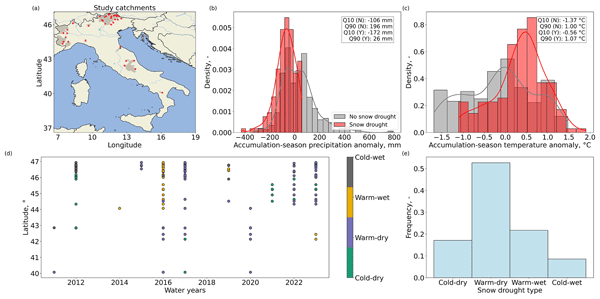
Snow droughts are periods with below-average snow accumulation and are becoming more frequent in a warming climate, yet their ecosystem and societal impacts remain poorly known. Using 13 years of data from 38 Italian catchments, we show that snow droughts reduced snow duration, increased winter melt-out events, and cut summer runoff by ~50 %. Photosynthesis increased by up to 10 % due to earlier meltout. These events also caused widespread water-supply reductions, especially in foothills.
Mario Gallarate, Nicola Colombo, Enrico Gazzola, Mauro Valt, Christian Ronchi, Luca Lanteri, Roberto Dinale, Rudi Nadalet, Stefano Ferraris, Alessio Gentile, Davide Gisolo, Marco Giardino, Michele Freppaz, and Fiorella Acquaotta
The Cryosphere, 20, 5061–5070, https://doi.org/10.5194/tc-20-5061-2026, https://doi.org/10.5194/tc-20-5061-2026, 2026
Short summary
Short summary
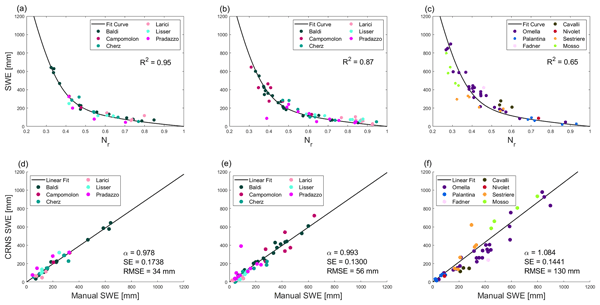
We present a network of 26 sensors measuring snow water equivalent through cosmic rays across the Italian Alps. We study the application of a parameterisation shared by all the probes. The parameters were defined and validated with data taken during two seasons at 13 sites. We show that the parameterisation gives a good estimate of the water equivalent. This finding can contribute to expand data availability by installing similar probes in sites at high elevations and in inaccessible locations.
Nathalia Correa-Sánchez, Xiaoli Guo Larsén, Eleonora Dallan, Marco Borga, and Francesco Marra
Wind Energ. Sci., 11, 2961–2985, https://doi.org/10.5194/wes-11-2961-2026, https://doi.org/10.5194/wes-11-2961-2026, 2026
Short summary
Short summary
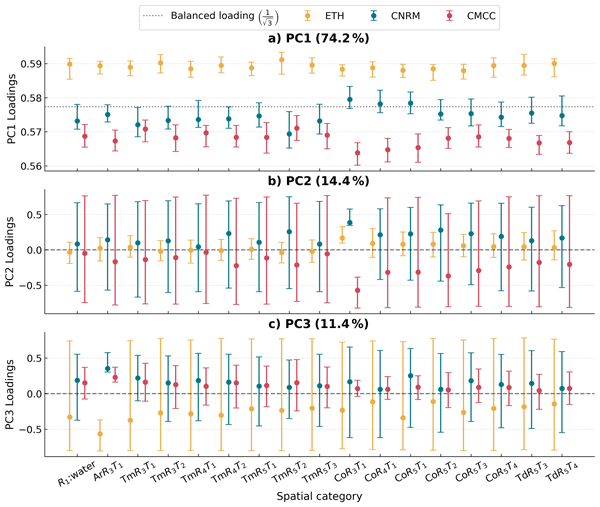
This research presents the first use of the simplified metastatistical extreme value approach for wind extremes, extending it to wind energy applications. We use a categorical framework that combines climate, roughness, and topography to evaluate convection-permitted models. We find that model formulation drives inter-model uncertainties, rather than surface conditions. Convection-permitted models' uncertainty analysis improves the reliability of extreme wind estimates for design parameters.

Ella Thomas, Petr Vohnicky, Marco Borga, Nadav Peleg, and Francesco Marra
Hydrol. Earth Syst. Sci., 30, 4957–4967, https://doi.org/10.5194/hess-30-4957-2026, https://doi.org/10.5194/hess-30-4957-2026, 2026
Short summary
Short summary
Extreme rainfall is expected to grow in magnitude with increasing temperature. We assess whether very rare extremes increase with temperature faster than moderate extremes, and we test methods to include this effect into a model to predict future extremes called TENAX. We find that this dependence on temperature is typically observed but including it in the model without prior information on its magnitude may lead to disproportionately large uncertainty.
Rashid Akbary, Eleonora Dallan, Paul C. Astagneau, Raul R. Wood, Francesco Marra, Manuela I. Brunner, and Marco Borga
Hydrol. Earth Syst. Sci., 30, 4117–4139, https://doi.org/10.5194/hess-30-4117-2026, https://doi.org/10.5194/hess-30-4117-2026, 2026
Short summary
Short summary
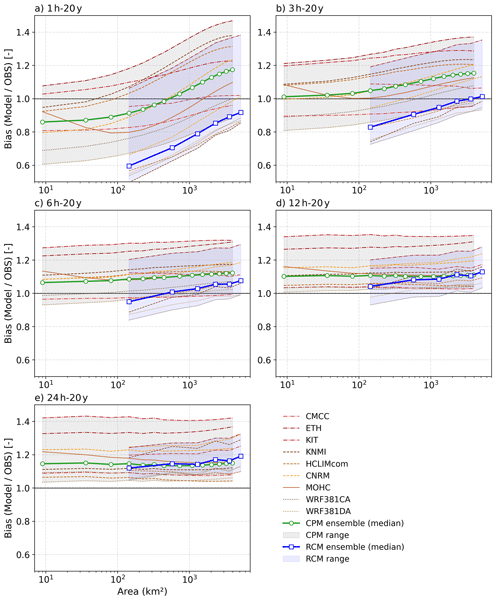
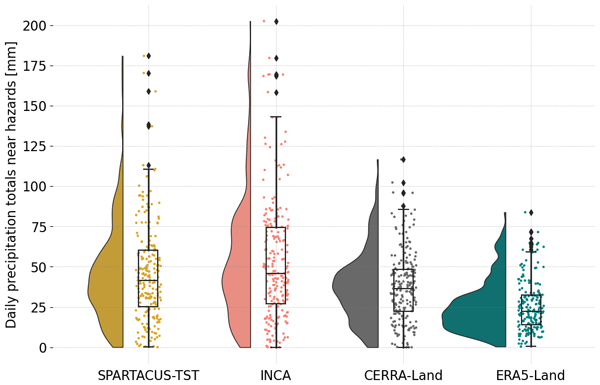
Heavy short rain can trigger flash floods and debris flows. In this study we evaluated how well climate models reproduce these events in Switzerland. We compared finer and coarser resolution models with high-quality hourly precipitation observations across small to large areas. The finer models better captured where short, intense precipitation occurs, but their errors changed with area size. Flood risk studies should therefore account for these scale-related errors.
Alice Crespi, Katharina Enigl, Sebastian Lehner, Klaus Haslinger, and Massimiliano Pittore
Nat. Hazards Earth Syst. Sci., 26, 1975–1996, https://doi.org/10.5194/nhess-26-1975-2026, https://doi.org/10.5194/nhess-26-1975-2026, 2026
Short summary
Short summary
Extreme precipitation poses a risk to the Alpine region as it can trigger geohydrological hazards, such as floods, debris flows, and landslides, with serious impacts on people and their activities. This study focuses on a transboundary Alpine area between Italy and Austria and evaluates data and methods for detecting past precipitation extremes corresponding to hazard occurrences. The results can inform risk managers and support methodological choices for developing early warning systems.
Tim Busker, Daniela Rodriguez Castro, Sergiy Vorogushyn, Jaap Kwadijk, Davide Zoccatelli, Rafaella G. L. Oliveira, Heather J. Murdock, Laurent Pfister, Benjamin Dewals, Kymo Slager, Annegret H. Thieken, Jan Verkade, Patrick Willems, and Jeroen C. J. H. Aerts
Nat. Hazards Earth Syst. Sci., 26, 1457–1478, https://doi.org/10.5194/nhess-26-1457-2026, https://doi.org/10.5194/nhess-26-1457-2026, 2026
Short summary
Short summary
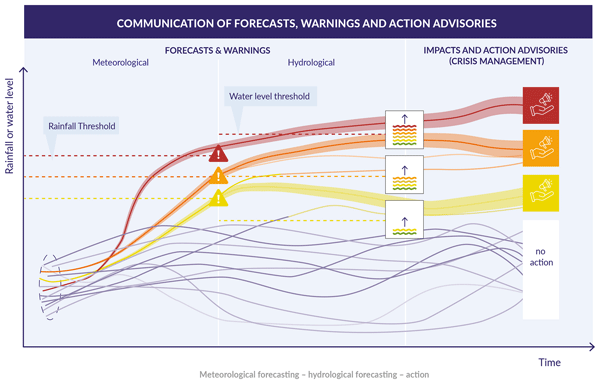
In July 2021, the Netherlands, Luxembourg, Germany, and Belgium were hit by an extreme flood event with over 200 fatalities. Our study provides, for the first time, critical insights into the operational flood early-warning systems in this entire region. Based on 14 expert interviews, we conclude that the systems strongly improved in all countries. Interviewees stressed the need for operational impact-based forecasts, but emphasized that its operational implementation is challenging.
Jess L. Delves, Kathrin Renner, Piero Campalani, Jesica Piñon, Stefan Schneiderbauer, Mateo Moreno, Maria Belen Benito Oterino, Eduardo Perez, and Massimiliano Pittore
Nat. Hazards Earth Syst. Sci., 26, 1347–1373, https://doi.org/10.5194/nhess-26-1347-2026, https://doi.org/10.5194/nhess-26-1347-2026, 2026
Short summary
Short summary
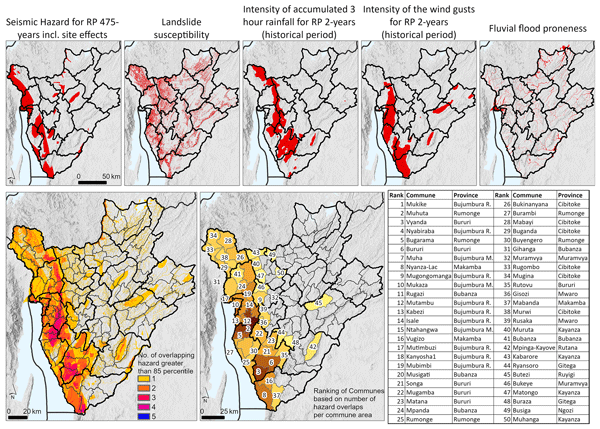
This scientific paper presents a multi-hazard risk assessment for Burundi, focusing on flooding, torrential rains, landslides, earthquakes, and strong winds. The study identifies key risk hotspots with estimated economic losses of 92 million USD (2.5 % of Gross Domestic Product (GDP)). Climate change projections indicate increased precipitation. The paper highlights data limitations and stresses the need for improved hazard models and the consideration of compounding risks in future assessments.
Mattia Callegari, Carlo Marin, Claudia Notarnicola, and Thomas Schellenberger
EGUsphere, https://doi.org/10.5194/egusphere-2025-5779, https://doi.org/10.5194/egusphere-2025-5779, 2026
Short summary
Short summary
We introduce a new satellite-based approach to estimate annual glacier mass balance. Using data from 2000 to 2024, we produced yearly estimates for nearly three thousand glaciers in the Alps, Scandinavia, and Svalbard. Comparison with extensive field measurements shows strong agreement, demonstrating that this method can reliably track annual glacier changes across large regions.
Francesco Marra, Eleonora Dallan, Marco Borga, Roberto Greco, and Thom Bogaard
Nat. Hazards Earth Syst. Sci., 25, 5055–5061, https://doi.org/10.5194/nhess-25-5055-2025, https://doi.org/10.5194/nhess-25-5055-2025, 2025
Short summary
Short summary
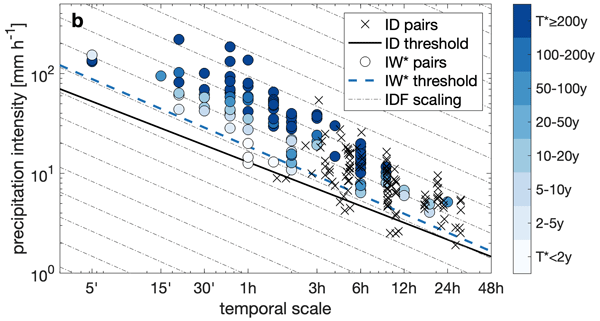
We highlight an important conceptual difference between the duration used in intensity-duration thresholds and the duration used in the intensity-duration-frequency curves that has been overlooked by the landslide literature so far.
Marc Lemus-Canovas, Alice Crespi, Elena Maines, Stefano Terzi, and Massimiliano Pittore
Hydrol. Earth Syst. Sci., 29, 6781–6809, https://doi.org/10.5194/hess-29-6781-2025, https://doi.org/10.5194/hess-29-6781-2025, 2025
Short summary
Short summary
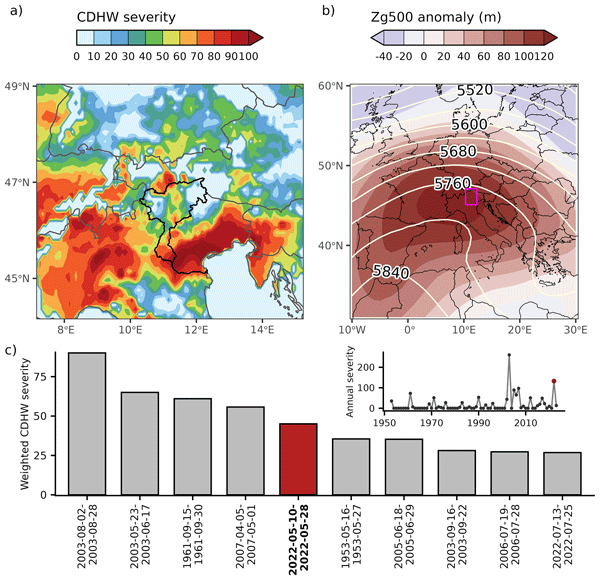
We studied a severe compound drought and heatwave event in the Adige River basin in May 2022 and found that similar events are now hotter and drier due to current warming. These changes worsen water stress and river drying. We show that timing matters: events in June are now more critical than in April, as the snowmelt contribution to streamflow in June has become much lower than in the past. However, many climate models still fail to capture these changes.
Nathalia Correa-Sánchez, Xiaoli Guo Larsén, Giorgia Fosser, Eleonora Dallan, Marco Borga, and Francesco Marra
Wind Energ. Sci., 10, 2551–2561, https://doi.org/10.5194/wes-10-2551-2025, https://doi.org/10.5194/wes-10-2551-2025, 2025
Short summary
Short summary
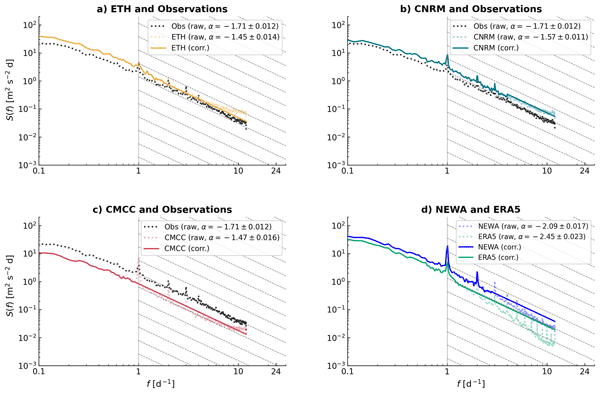
We examined the power spectra of wind speed in three convection-permitting models in central Europe and found that these models have a better representation of wind variability characteristics than standard wind datasets like the New European Wind Atlas, due to different simulation approaches, providing more reliable extreme wind predictions.
Gabriella Tocchi, Massimiliano Pittore, and Maria Polese
Nat. Hazards Earth Syst. Sci., 25, 3665–3692, https://doi.org/10.5194/nhess-25-3665-2025, https://doi.org/10.5194/nhess-25-3665-2025, 2025
Short summary
Short summary
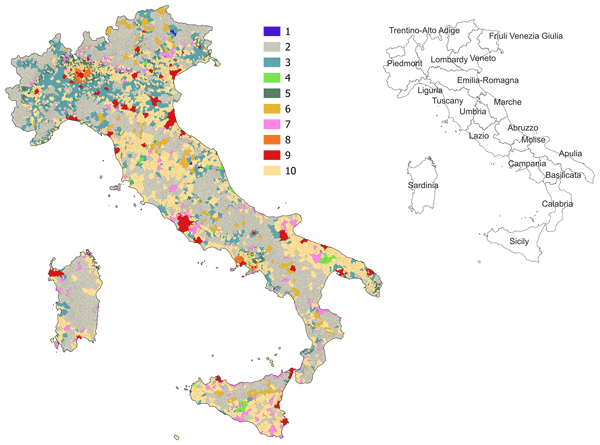
This study identifies different types of urban areas in Italy based on population, location, and economic conditions to understand their vulnerability to risks. Using public data and clustering methods, it defines 18 urban archetypes. These archetypes provide a structured understanding of urban vulnerability, helping policymakers assess disaster risk, allocate adaptation funding, and design targeted resilience strategies for urban settlements at regional and national scales.
Dilara Kim, Enrico Mattea, Mattia Callegari, Tomas Saks, Ruslan Kenzhebayev, Erlan Azisov, Tobias Ullmann, Martin Hoelzle, and Martina Barandun
EGUsphere, https://doi.org/10.5194/egusphere-2025-3978, https://doi.org/10.5194/egusphere-2025-3978, 2025
Short summary
Short summary
We investigated how the snowline changed on four glaciers in the Pamir and Tien Shan mountain ranges in Central Asia. For this we developed a new method of combining different types of satellite images. This detailed record of snowlines shows for the first time how glaciers are responding to climate change during the dry season on almost daily scale. Our results help to understand better when and how much meltwater stored in glaciers can be used for drinking water by people living downstream.
Judith Nijzink, Ralf Loritz, Laurent Gourdol, Davide Zoccatelli, Jean François Iffly, and Laurent Pfister
Earth Syst. Sci. Data Discuss., https://doi.org/10.5194/essd-2024-482, https://doi.org/10.5194/essd-2024-482, 2025
Revised manuscript accepted for ESSD
Short summary
Short summary
The CAMELS-LUX dataset (Catchment Attributes and MEteorology for Large-sample Studies – LUXembourg) contains hydrologic, meteorologic and thunderstorm formation relevant atmospheric time series of 56 Luxembourgish catchments (2004–2021). These catchments are characterized by a large physiographic variety on a relatively small scale in a homogeneous climate. The dataset can be applied for (regional) hydrological analyses.
Raul-David Şerban, Huijun Jin, Mihaela Şerban, Giacomo Bertoldi, Dongliang Luo, Qingfeng Wang, Qiang Ma, Ruixia He, Xiaoying Jin, Xinze Li, Jianjun Tang, and Hongwei Wang
Earth Syst. Sci. Data, 16, 1425–1446, https://doi.org/10.5194/essd-16-1425-2024, https://doi.org/10.5194/essd-16-1425-2024, 2024
Short summary
Short summary
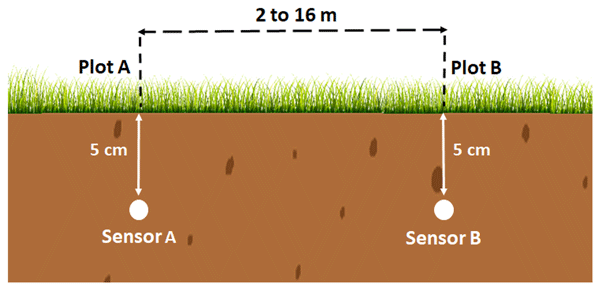
A particular observational network for ground surface temperature (GST) has been established on the northeastern Qinghai–Tibet Plateau, covering various environmental conditions and scales. This analysis revealed the substantial influences of the land cover on the spatial variability in GST over short distances (<16 m). Improving the monitoring of GST is important for the biophysical processes at the land–atmosphere boundary and for understanding the climate change impacts on cold environments.
Luca Carturan, Fabrizio De Blasi, Roberto Dinale, Gianfranco Dragà, Paolo Gabrielli, Volkmar Mair, Roberto Seppi, David Tonidandel, Thomas Zanoner, Tiziana Lazzarina Zendrini, and Giancarlo Dalla Fontana
Earth Syst. Sci. Data, 15, 4661–4688, https://doi.org/10.5194/essd-15-4661-2023, https://doi.org/10.5194/essd-15-4661-2023, 2023
Short summary
Short summary
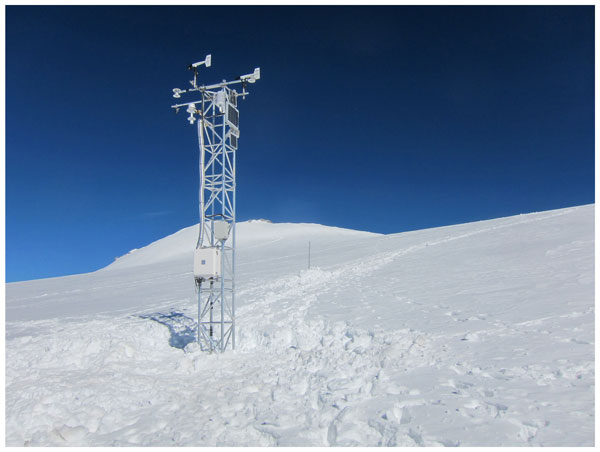
This paper presents a new dataset of air, englacial, soil surface and rock wall temperatures collected between 2010 and 2016 on Mt Ortles, which is the highest summit of South Tyrol, Italy. Details are provided on instrument type and characteristics, field methods, and data quality control and assessment. The obtained data series are available through an open data repository. This is a rare dataset from a summit area lacking observations on permafrost and glaciers and their climatic response.
Valentina Premier, Carlo Marin, Giacomo Bertoldi, Riccardo Barella, Claudia Notarnicola, and Lorenzo Bruzzone
The Cryosphere, 17, 2387–2407, https://doi.org/10.5194/tc-17-2387-2023, https://doi.org/10.5194/tc-17-2387-2023, 2023
Short summary
Short summary
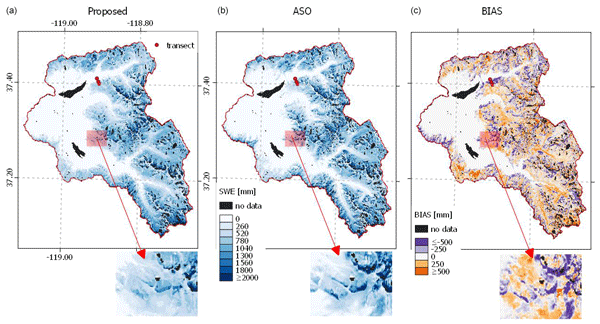
The large amount of information regularly acquired by satellites can provide important information about SWE. We explore the use of multi-source satellite data, in situ observations, and a degree-day model to reconstruct daily SWE at 25 m. The results show spatial patterns that are consistent with the topographical features as well as with a reference product. Being able to also reproduce interannual variability, the method has great potential for hydrological and ecological applications.
Juan Camilo Gómez Zapata, Massimiliano Pittore, Nils Brinckmann, Juan Lizarazo-Marriaga, Sergio Medina, Nicola Tarque, and Fabrice Cotton
Nat. Hazards Earth Syst. Sci., 23, 2203–2228, https://doi.org/10.5194/nhess-23-2203-2023, https://doi.org/10.5194/nhess-23-2203-2023, 2023
Short summary
Short summary
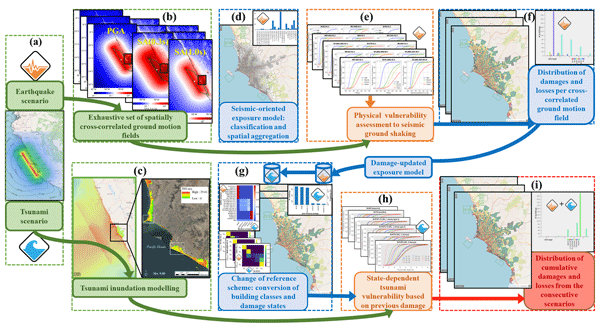
To investigate cumulative damage on extended building portfolios, we propose an alternative and modular method to probabilistically integrate sets of single-hazard vulnerability models that are being constantly developed by experts from various research fields to be used within a multi-risk context. We demonstrate its application by assessing the economic losses expected for the residential building stock of Lima, Peru, a megacity commonly exposed to consecutive earthquake and tsunami scenarios.
Stefan Steger, Mateo Moreno, Alice Crespi, Peter James Zellner, Stefano Luigi Gariano, Maria Teresa Brunetti, Massimo Melillo, Silvia Peruccacci, Francesco Marra, Robin Kohrs, Jason Goetz, Volkmar Mair, and Massimiliano Pittore
Nat. Hazards Earth Syst. Sci., 23, 1483–1506, https://doi.org/10.5194/nhess-23-1483-2023, https://doi.org/10.5194/nhess-23-1483-2023, 2023
Short summary
Short summary
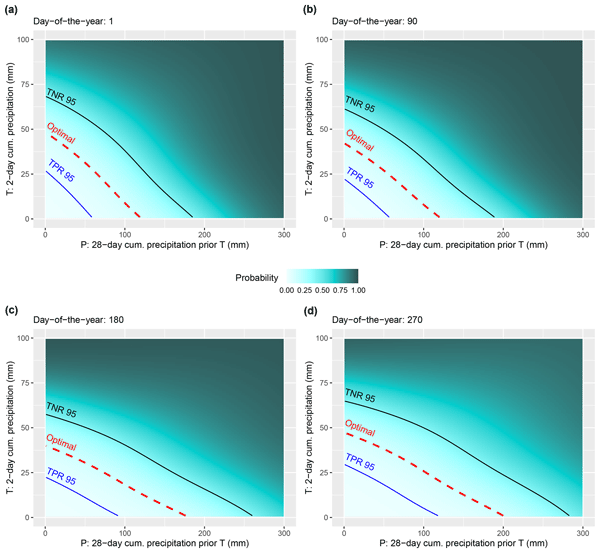
We present a novel data-driven modelling approach to determine season-specific critical precipitation conditions for landslide occurrence. It is shown that the amount of precipitation required to trigger a landslide in South Tyrol varies from season to season. In summer, a higher amount of preparatory precipitation is required to trigger a landslide, probably due to denser vegetation and higher temperatures. We derive dynamic thresholds that directly relate to hit rates and false-alarm rates.
Eleonora Dallan, Francesco Marra, Giorgia Fosser, Marco Marani, Giuseppe Formetta, Christoph Schär, and Marco Borga
Hydrol. Earth Syst. Sci., 27, 1133–1149, https://doi.org/10.5194/hess-27-1133-2023, https://doi.org/10.5194/hess-27-1133-2023, 2023
Short summary
Short summary
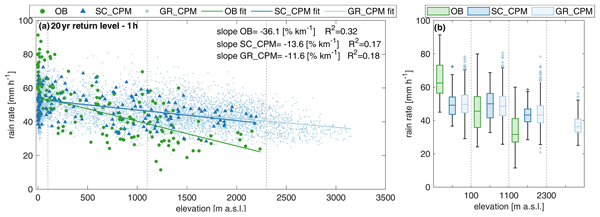
Convection-permitting climate models could represent future changes in extreme short-duration precipitation, which is critical for risk management. We use a non-asymptotic statistical method to estimate extremes from 10 years of simulations in an orographically complex area. Despite overall good agreement with rain gauges, the observed decrease of hourly extremes with elevation is not fully represented by the model. Climate model adjustment methods should consider the role of orography.
Ruth Stephan, Stefano Terzi, Mathilde Erfurt, Silvia Cocuccioni, Kerstin Stahl, and Marc Zebisch
Nat. Hazards Earth Syst. Sci., 23, 45–64, https://doi.org/10.5194/nhess-23-45-2023, https://doi.org/10.5194/nhess-23-45-2023, 2023
Short summary
Short summary
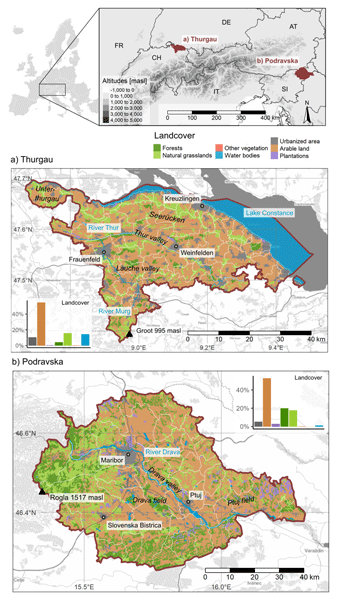
This study maps agriculture's vulnerability to drought in the European pre-Alpine regions of Thurgau (CH) and Podravska (SI). We combine region-specific knowledge with quantitative data mapping; experts of the study regions, far apart, identified a few common but more region-specific factors that we integrated in two vulnerability scenarios. We highlight the benefits of the participatory approach in improving the quantitative results and closing the gap between science and practitioners.
Giulia Zuecco, Anam Amin, Jay Frentress, Michael Engel, Chiara Marchina, Tommaso Anfodillo, Marco Borga, Vinicio Carraro, Francesca Scandellari, Massimo Tagliavini, Damiano Zanotelli, Francesco Comiti, and Daniele Penna
Hydrol. Earth Syst. Sci., 26, 3673–3689, https://doi.org/10.5194/hess-26-3673-2022, https://doi.org/10.5194/hess-26-3673-2022, 2022
Short summary
Short summary
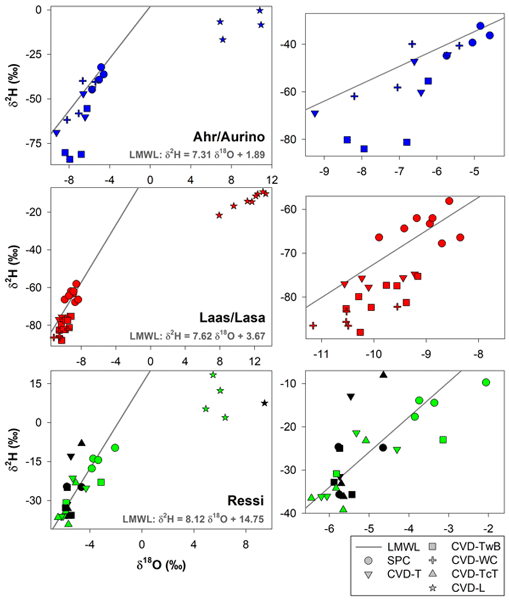
We analyzed the variability in the isotopic composition of plant water extracted by two different methods, i.e., cryogenic vacuum distillation (CVD) and Scholander-type pressure chamber (SPC). Our results indicated that the isotopic composition of plant water extracted by CVD and SPC was significantly different. We concluded that plant water extraction by SPC is not an alternative for CVD as SPC mostly extracts the mobile plant water whereas CVD retrieves all water stored in the sampled tissue.
Juan Camilo Gomez-Zapata, Nils Brinckmann, Sven Harig, Raquel Zafrir, Massimiliano Pittore, Fabrice Cotton, and Andrey Babeyko
Nat. Hazards Earth Syst. Sci., 21, 3599–3628, https://doi.org/10.5194/nhess-21-3599-2021, https://doi.org/10.5194/nhess-21-3599-2021, 2021
Short summary
Short summary
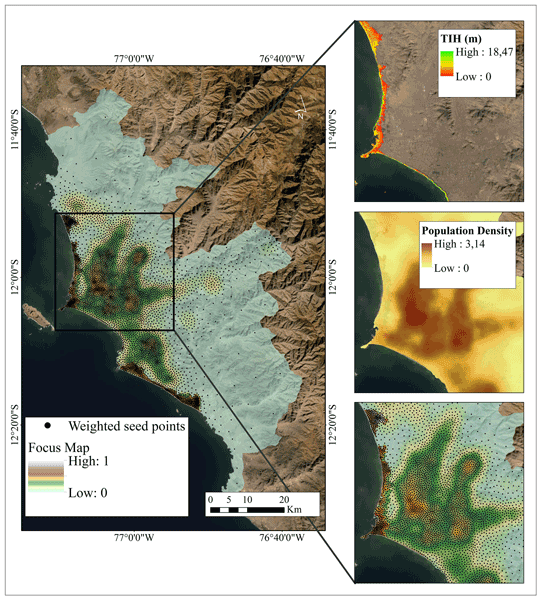
We present variable-resolution boundaries based on central Voronoi tessellations (CVTs) to spatially aggregate building exposure models and physical vulnerability assessment. Their geo-cell sizes are inversely proportional to underlying distributions that account for the combination between hazard intensities and exposure proxies. We explore their efficiency and associated uncertainties in risk–loss estimations and mapping from decoupled scenario-based earthquakes and tsunamis in Lima, Peru.
Stefano Terzi, Janez Sušnik, Stefan Schneiderbauer, Silvia Torresan, and Andrea Critto
Nat. Hazards Earth Syst. Sci., 21, 3519–3537, https://doi.org/10.5194/nhess-21-3519-2021, https://doi.org/10.5194/nhess-21-3519-2021, 2021
Short summary
Short summary
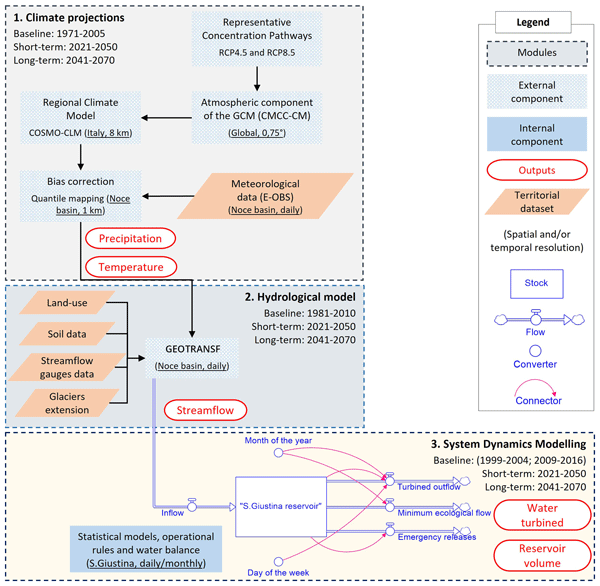
This study combines outputs from multiple models with statistical assessments of past and future water availability and demand for the Santa Giustina reservoir (Autonomous Province of Trento, Italy). Considering future climate change scenarios, results show high reductions for stored volume and turbined water, with increasing frequency, duration and severity. These results call for the need to adapt to reductions in water availability and effects on the Santa Giustina reservoir management.
Cited articles
Avanzi, F., Munerol, F., Milelli, M., Gabellani, S., Massari, C., Girotto, M., Cremonese, E., Galvagno, M., Bruno, G., Morra di Cella, U., Rossi, L., Altamura, M., and Ferraris, L.: Winter snow deficit was a harbinger of summer 2022 socio-hydrologic drought in the Po Basin, Italy, Commun. Earth Environ., 5, 1–12, https://doi.org/10.1038/s43247-024-01222-z, 2024.
Avanzi, F., Terzi, S., Castelli, M., Munerol, F., Andreaggi, M., Galvagno, M., Galletti, A., Maurer, T., Massari, C., Carlson, G., Girotto, M., Bertoldi, G., Cremonese, E., Gabellani, S., di Cella, U. M., Altamura, M., Rossi, L., and Ferraris, L.: Impacts of Mediterranean snow droughts on mountain socio-ecohydrology, Hydrol. Earth Syst. Sci., 30, 5769–5790, https://doi.org/10.5194/hess-30-5769-2026, 2026.
Bertoldi, G., Bozzoli, M., Crespi, A., Matiu, M., Giovannini, L., Zardi, D., and Majone, B.: Diverging snowfall trends across months and elevation in the northeastern Italian Alps, Int. J. Climatol., 43, 2794–2819, https://doi.org/10.1002/joc.8002, 2023.
Biella, R., Shyrokaya, A., Ionita, M., Vignola, R., Sutanto, S. J., Todorovic, A., Teutschbein, C., Cid, D., Llasat, M. C., Alencar, P., Matanó, A., Ridolfi, E., Moccia, B., Pechlivanidis, I., van Loon, A., Wendt, D. E., Stenfors, E., Russo, F., Vidal, J.-P., Barker, L., de Brito, M. M., Lam, M., Bláhová, M., Trambauer, P., Hamed, R., McGrane, S. J., Ceola, S., Bakke, S. J., Krakovska, S., Nagavciuc, V., Tootoonchi, F., Di Baldassarre, G., Hauswirth, S., Maskey, S., Zubkovych, S., Wens, M., and Tallaksen, L. M.: The 2022 drought needs to be a turning point for European drought risk management, Nat. Hazards Earth Syst. Sci., 25, 4475–4501, https://doi.org/10.5194/nhess-25-4475-2025, 2025.
Brock, B. W., Willis, I. C., and Sharp, M. J.: Measurement and parameterization of albedo variations at Haut Glacier d'Arolla, Switzerland, J. Glaciol., 46, 675–688, https://doi.org/10.3189/172756500781832675, 2000.
Cazorzi, F. and Dalla Fontana, G.: Snowmelt modelling by combining air temperature and a distributed radiation index, J. Hydrol., 181, 169–187, https://doi.org/10.1016/0022-1694(95)02913-3, 1996.
Chiogna, G., Majone, B., Paoli, K. C., Diamantini, E., Stella, E., Mallucci, S., Lencioni, V., Zandonai, F., and Bellin, A.: A review of hydrological and chemical stressors in the Adige catchment and its ecological status, Sci. Total Environ., 540, 429–443, https://doi.org/10.1016/j.scitotenv.2015.06.149, 2015.
Clason, C., Rangecroft, S., Owens, P. N., Łokas, E., Baccolo, G., Selmes, N., Beard, D., Kitch, J., Dextre, R. M., Morera, S., and Blake, W.: Contribution of glaciers to water, energy and food security in mountain regions: current perspectives and future priorities, Ann. Glaciol., 63, 73–78, https://doi.org/10.1017/aog.2023.14, 2022.
Colombo, N., Guyennon, N., Valt, M., Salerno, F., Godone, D., Cianfarra, P., Freppaz, M., Maugeri, M., Manara, V., Acquaotta, F., Petrangeli, A. B., and Romano, E.: Unprecedented snow-drought conditions in the Italian Alps during the early 2020s, Environ. Res. Lett., 18, 074014, https://doi.org/10.1088/1748-9326/acdb88, 2023.
Dalla Torre, D., Di Marco, N., Menapace, A., Avesani, D., Righetti, M., and Majone, B.: Suitability of ERA5-Land reanalysis dataset for hydrological modelling in the Alpine region, J. Hydrol. Reg. Stud., 52, 101718, https://doi.org/10.1016/j.ejrh.2024.101718, 2024.
Di Marco, N., Avesani, D., Righetti, M., Zaramella, M., Majone, B., and Borga, M.: Reducing hydrological modelling uncertainty by using MODIS snow cover data and a topography-based distribution function snowmelt model, J. Hydrol., 599, 126020, https://doi.org/10.1016/j.jhydrol.2021.126020, 2021.
Dussaillant, I., Hugonnet, R., Huss, M., Berthier, E., Bannwart, J., Paul, F., and Zemp, M.: Annual mass change of the world's glaciers from 1976 to 2024 by temporal downscaling of satellite data with in situ observations, Earth Syst. Sci. Data, 17, 1977–2006, https://doi.org/10.5194/essd-17-1977-2025, 2025.
Farinotti, D., Huss, M., Bauder, A., Funk, M., and Truffer, M.: A method to estimate the ice volume and ice-thickness distribution of alpine glaciers, J. Glaciol., 55, 422–430, https://doi.org/10.3189/002214309788816759, 2009.
Frans, C., Istanbulluoglu, E., Lettenmaier, D. P., Clarke, G., Bohn, T. J., and Stumbaugh, M.: Implications of decadal to century scale glacio-hydrological change for water resources of the Hood River basin, OR, USA, Hydrol. Process., 30, 4314–4329, https://doi.org/10.1002/hyp.10872, 2016.
Galos, S. P., Klug, R., Prinz, R., Rieg, L., Dinale, R., Sailer, R., and Kaser, G.: Recent glacier changes and related contribution potential to river discharge in the Vinschau/Val Venosta, Italian Alps, Geogr. Fis. E Din. Quat., 143–154, https://doi.org/10.4461/GFDQ.2015.38.13, 2015.
Galos, S. P., Klug, C., and Dinale, R.: 20 Years of Glacier Change: The Homogenized Glacier Inventories for South Tyrol 1997-2005-2017, Geogr. Fis. E Din. Quat., 45, 171–183, https://doi.org/10.4461/gfdq.2022.45.6, 2022.
Glen, J. W.: The creep of polycrystalline ice, Proc. R. Soc. Lond. Math. Phys. Sci., 228, 519–538, https://doi.org/10.1098/rspa.1955.0066, 1955.
Gupta, H. V., Kling, H., Yilmaz, K. K., and Martinez, G. F.: Decomposition of the mean squared error and NSE performance criteria: Implications for improving hydrological modelling, J. Hydrol., 377, 80–91, https://doi.org/10.1016/j.jhydrol.2009.08.003, 2009.
Hartl, L., Covi, F., Stocker-Waldhuber, M., Baldo, A., Fugazza, D., Di Mauro, B., and Naegeli, K.: Loss of accumulation zone exposes dark ice and drives increased ablation at Weißseespitze, Austria, The Cryosphere, 19, 3329–3353, https://doi.org/10.5194/tc-19-3329-2025, 2025.
Hock, R., Rasul, G., Adler, C., Cáceres, B., Gruber, S., Hirabayashi, Y., Jackson, M., Kääb, A., Kang, S., Kutuzov, S., Milner, A., Molau, U., Morin, S., Orlove, B., and Steltzer, H.: High Mountain Areas, in: IPCC Special Report on the Ocean and Cryosphere in a Changing Climate, edited by: Pörtner, H.-O., Roberts, D. C., Masson-Delmotte, V., Zhai, P., Tignor, M., Poloczanska, E., Mintenbeck, K., Alegría, A., Nicolai, M., Okem, A., Petzold, J., Rama, B., Weyer, N. M., 1st ed., Cambridge University Press, https://doi.org/10.1017/9781009157964, 2022.
Huss, M. and Farinotti, D.: Distributed ice thickness and volume of all glaciers around the globe, J. Geophys. Res.-Earth Surf., 117, https://doi.org/10.1029/2012JF002523, 2012.
Huss, M. and Hock, R.: Global-scale hydrological response to future glacier mass loss, Nat. Clim. Change, 8, 135–140, https://doi.org/10.1038/s41558-017-0049-x, 2018.
Huss, M., Farinotti, D., Bauder, A., and Funk, M.: Modelling runoff from highly glacierized alpine drainage basins in a changing climate, Hydrol. Process., 22, 3888–3902, https://doi.org/10.1002/hyp.7055, 2008.
Huss, M., Jouvet, G., Farinotti, D., and Bauder, A.: Future high-mountain hydrology: a new parameterization of glacier retreat, Hydrol. Earth Syst. Sci., 14, 815–829, https://doi.org/10.5194/hess-14-815-2010, 2010.
Jenicek, M., Seibert, J., Zappa, M., Staudinger, M., and Jonas, T.: Importance of maximum snow accumulation for summer low flows in humid catchments, Hydrol. Earth Syst. Sci., 20, 859–874, https://doi.org/10.5194/hess-20-859-2016, 2016.
Knoll, C. and Kerschner, H.: A glacier inventory for South Tyrol, Italy, based on airborne laser-scanner data, Ann. Glaciol., 50, 46–52, https://doi.org/10.3189/172756410790595903, 2009.
Krampe, D., Arndt, A., and Schneider, C.: Energy and glacier mass balance of Fürkeleferner, Italy: past, present, and future, Front. Earth Sci., 10, https://doi.org/10.3389/feart.2022.814027, 2022.
Kreyszig, E., Kreyszig, H., and Norminton, E. J.: Advanced Engineering Mathematics, Tenth., Wiley, Hoboken, NJ, https://drspmaths.wordpress.com/wp-content/uploads/2019/01/advanced-engineering-mathematics_by-erwin-kreyszig-__10th_edition-1.pdf (last access: 8 October 2026), 2011.
Larsen, S., Majone, B., Zulian, P., Stella, E., Bellin, A., Bruno, M. C., and Zolezzi, G.: Combining Hydrologic Simulations and Stream-network Models to Reveal Flow-ecology Relationships in a Large Alpine Catchment, Water Resour. Res., 57, https://doi.org/10.1029/2020wr028496, 2021.
Lemus-Canovas, M., Crespi, A., Maines, E., Terzi, S., and Pittore, M.: More intense heatwaves under drier conditions: a compound event analysis in the Adige River basin (Eastern Italian Alps), Hydrol. Earth Syst. Sci., 29, 6781–6809, https://doi.org/10.5194/hess-29-6781-2025, 2025.
Leone, M., Avanzi, F., Morra di Cella, U., Gabellani, S., Cremonese, E., Isabellon, M., Pogliotti, P., Scotti, R., Monti, A., Ferraris, L., and Colombo, R.: The 2022–2023 snow drought in the Italian Alps doubled glacier contribution to summer streamflow, Hydrol. Earth Syst. Sci., 30, 4649–4666, https://doi.org/10.5194/hess-30-4649-2026, 2026.
Li, H., Beldring, S., Xu, C.-Y., Huss, M., Melvold, K., and Jain, S. K.: Integrating a glacier retreat model into a hydrological model – Case studies of three glacierised catchments in Norway and Himalayan region, J. Hydrol., 527, 656–667, https://doi.org/10.1016/j.jhydrol.2015.05.017, 2015.
Linsbauer, A., Paul, F., Machguth, H., and Haeberli, W.: Comparing three different methods to model scenarios of future glacier change in the Swiss Alps, Ann. Glaciol., 54, 241–253, https://doi.org/10.3189/2013AoG63A400, 2013.
Luo, Y., Arnold, J., Liu, S., Wang, X., and Chen, X.: Inclusion of glacier processes for distributed hydrological modeling at basin scale with application to a watershed in Tianshan Mountains, northwest China, J. Hydrol., 477, 72–85, https://doi.org/10.1016/j.jhydrol.2012.11.005, 2013.
Maussion, F., Butenko, A., Champollion, N., Dusch, M., Eis, J., Fourteau, K., Gregor, P., Jarosch, A. H., Landmann, J., Oesterle, F., Recinos, B., Rothenpieler, T., Vlug, A., Wild, C. T., and Marzeion, B.: The Open Global Glacier Model (OGGM) v1.1, Geosci. Model Dev., 12, 909–931, https://doi.org/10.5194/gmd-12-909-2019, 2019.
Modarres, R.: Streamflow drought time series forecasting, Stoch. Environ. Res. Risk Assess., 21, 223–233, https://doi.org/10.1007/s00477-006-0058-1, 2007.
Montanari, A., Nguyen, H., Rubinetti, S., Ceola, S., Galelli, S., Rubino, A., and Zanchettin, D.: Why the 2022 Po River drought is the worst in the past two centuries, Sci. Adv., 9, eadg8304, https://doi.org/10.1126/sciadv.adg8304, 2023.
Moore, R. J.: The probability-distributed principle and runoff production at point and basin scales, Hydrol. Sci. J., 30, 273–297, https://doi.org/10.1080/02626668509490989, 1985.
Moore, R. J.: The PDM rainfall-runoff model, Hydrol. Earth Syst. Sci., 11, 483–499, https://doi.org/10.5194/hess-11-483-2007, 2007.
National Science Foundation: NASA Shuttle Radar Topography Mission (SRTM) Global, Distributed by OpenTopography: Shuttle Radar Topography Mission (SRTM), https://doi.org/10.5069/G9445JDF, 2013.
Navarro-Ortega, A., Acuña, V., Bellin, A., Burek, P., Cassiani, G., Choukr-Allah, R., Dolédec, S., Elosegi, A., Ferrari, F., Ginebreda, A., Grathwohl, P., Jones, C., Rault, P. K., Kok, K., Koundouri, P., Ludwig, R. P., Merz, R., Milacic, R., Muñoz, I., Nikulin, G., Paniconi, C., Paunović, M., Petrovic, M., Sabater, L., Sabater, S., Skoulikidis, N. Th., Slob, A., Teutsch, G., Voulvoulis, N., and Barceló, D.: Managing the effects of multiple stressors on aquatic ecosystems under water scarcity. The GLOBAQUA project, Sci. Total Environ., 503–504, 3–9, https://doi.org/10.1016/j.scitotenv.2014.06.081, 2015.
Naz, B. S., Frans, C. D., Clarke, G. K. C., Burns, P., and Lettenmaier, D. P.: Modeling the effect of glacier recession on streamflow response using a coupled glacio-hydrological model, Hydrol. Earth Syst. Sci., 18, 787–802, https://doi.org/10.5194/hess-18-787-2014, 2014.
Norbiato, D., Borga, M., Esposti, S. D., Gaume, E., and Anquetin, S.: Flash flood warning based on rainfall thresholds and soil moisture conditions: An assessment for gauged and ungauged basins, J. Hydrol., 362, 274–290, https://doi.org/10.1016/j.jhydrol.2008.08.023, 2008.
Norbiato, D., Borga, M., Merz, R., Blöschl, G., and Carton, A.: Controls on event runoff coefficients in the eastern Italian Alps, J. Hydrol., 375, 312–325, https://doi.org/10.1016/j.jhydrol.2009.06.044, 2009.
Penna, D., Engel, M., Bertoldi, G., and Comiti, F.: Towards a tracer-based conceptualization of meltwater dynamics and streamflow response in a glacierized catchment, Hydrol. Earth Syst. Sci., 21, 23–41, https://doi.org/10.5194/hess-21-23-2017, 2017.
Pepin, N. C., Arnone, E., Gobiet, A., Haslinger, K., Kotlarski, S., Notarnicola, C., Palazzi, E., Seibert, P., Serafin, S., Schöner, W., Terzago, S., Thornton, J. M., Vuille, M., and Adler, C.: Climate Changes and Their Elevational Patterns in the Mountains of the World, Rev. Geophys., 60, e2020RG000730, https://doi.org/10.1029/2020RG000730, 2022.
Radić, V. and Hock, R.: Regional and global volumes of glaciers derived from statistical upscaling of glacier inventory data, J. Geophys. Res.-Earth Surf., 115, https://doi.org/10.1029/2009JF001373, 2010.
Richter, J. N., Arndt, A., Ban, N., Gampierakis, N., Maussion, F., Prinz, R., Scheiter, M., Umlauf, N., and Nicholson, L.: Towards the Bayesian calibration of a glacier surface energy balance model for unmonitored glaciers, EGUsphere [preprint], https://doi.org/10.5194/egusphere-2025-6249, 2026.
Schaefli, B., Manso, P., Fischer, M., Huss, M., and Farinotti, D.: The role of glacier retreat for Swiss hydropower production, Renew. Energy, 132, 615–627, https://doi.org/10.1016/j.renene.2018.07.104, 2019.
Seibert, J., Vis, M. J. P., Kohn, I., Weiler, M., and Stahl, K.: Technical note: Representing glacier geometry changes in a semi-distributed hydrological model, Hydrol. Earth Syst. Sci., 22, 2211–2224, https://doi.org/10.5194/hess-22-2211-2018, 2018.
Shen, C., Appling, A. P., Gentine, P., Bandai, T., Gupta, H., Tartakovsky, A., Baity-Jesi, M., Fenicia, F., Kifer, D., Li, L., Liu, X., Ren, W., Zheng, Y., Harman, C. J., Clark, M., Farthing, M., Feng, D., Kumar, P., Aboelyazeed, D., Rahmani, F., Song, Y., Beck, H. E., Bindas, T., Dwivedi, D., Fang, K., Höge, M., Rackauckas, C., Mohanty, B., Roy, T., Xu, C., and Lawson, K.: Differentiable modelling to unify machine learning and physical models for geosciences, Nat. Rev. Earth Environ., 4, 552–567, https://doi.org/10.1038/s43017-023-00450-9, 2023.
Sommer, C., Malz, P., Seehaus, T. C., Lippl, S., Zemp, M., and Braun, M. H.: Rapid glacier retreat and downwasting throughout the European Alps in the early 21st century, Nat. Commun., 11, 3209, https://doi.org/10.1038/s41467-020-16818-0, 2020.
Stahl, K., Moore, R. D., Shea, J. M., Hutchinson, D., and Cannon, A. J.: Coupled modelling of glacier and streamflow response to future climate scenarios, Water Resour. Res., 44, https://doi.org/10.1029/2007WR005956, 2008.
Stephan, R., Erfurt, M., Terzi, S., Žun, M., Kristan, B., Haslinger, K., and Stahl, K.: An inventory of Alpine drought impact reports to explore past droughts in a mountain region, Nat. Hazards Earth Syst. Sci., 21, 2485–2501, https://doi.org/10.5194/nhess-21-2485-2021, 2021.
Stergiadi, M., Di Marco, N., Avesani, D., Righetti, M., and Borga, M.: Impact of Geology on Seasonal Hydrological Predictability in Alpine Regions by a Sensitivity Analysis Framework, Water, 12, 2255, https://doi.org/10.3390/w12082255, 2020.
Telesca, L., Lovallo, M., Lopez-Moreno, I., and Vicente-Serrano, S.: Investigation of scaling properties in monthly streamflow and Standardized Streamflow Index (SSI) time series in the Ebro basin (Spain), Phys. Stat. Mech. Its Appl., 391, 1662–1678, https://doi.org/10.1016/j.physa.2011.10.023, 2012.
The GlaMBIE Team: Community estimate of global glacier mass changes from 2000 to 2023, Nature, 639, 382–388, https://doi.org/10.1038/s41586-024-08545-z, 2025.
Tscholl, S., Marsoner, T., Bertoldi, G., Bottarin, R., and Egarter Vigl, L.: A High-Resolution Climatic Water Balance for Eco-Hydrological Inference in the Upper Adige Catchment (Italy), Geosci. Data J., 12, e70007, https://doi.org/10.1002/gdj3.70007, 2025.
Ultee, L., Coats, S., and Mackay, J.: Glacial runoff buffers droughts through the 21st century, Earth Syst. Dynam., 13, 935–959, https://doi.org/10.5194/esd-13-935-2022, 2022.
van Tiel, M., Huss, M., Zappa, M., Jonas, T., and Farinotti, D.: Swiss glacier mass loss during the 2022 drought: persistent streamflow contributions amid declining melt water volumes, Hydrol. Earth Syst. Sci., 30, 23–43, https://doi.org/10.5194/hess-30-23-2026, 2026.
Van Tiel, M., Van Loon, A. F., Seibert, J., and Stahl, K.: Hydrological response to warm and dry weather: do glaciers compensate?, Hydrol. Earth Syst. Sci., 25, 3245–3265, https://doi.org/10.5194/hess-25-3245-2021, 2021.
Van Tricht, L., Zekollari, H., Huss, M., Rounce, D. R., Schuster, L., Aguayo, R., Schmitt, P., Maussion, F., Tober, B., and Farinotti, D.: Peak glacier extinction in the mid-twenty-first century, Nat. Clim. Change, 16, 143–147, https://doi.org/10.1038/s41558-025-02513-9, 2026.
Zaramella, M., Borga, M., Zoccatelli, D., and Carturan, L.: TOPMELT 1.0: a topography-based distribution function approach to snowmelt simulation for hydrological modelling at basin scale, Geosci. Model Dev., 12, 5251–5265, https://doi.org/10.5194/gmd-12-5251-2019, 2019.
Zebisch, M., Pedoth, L., Pörnbacher, M., Renner, K., Fritsch, U., Alberton, M., Bertoldi, G., Bisignano, J., Corradini, P., Crespi, A., Crippa, C., Ducati, V., Eisendle, F., Hilpold, A., Hoffmann, C., Horvath, K., Kircher, V., Lun, G., Maino, F., Misconel, S., Obojes, N., Omizzolo, A., Pellegrini, C., Perkmann, U., Prina, M. G., Roveri, G., Sparber, W., Strapazzon, G., and Thaler, F.: Rischi climatici e adattamento – Verso un Alto Adige resiliente al clima, Eurac Research, 188, https://doi.org/10.57749/Q8Y8-TV70, 2025.
Editorial statement
This study quantifies the effects and role of decreasing glacier extensions and snow to the buffering of drought, with a particular focus on the Adige river basin in the Italian Alps. According to this model-bssed study, peak water has been reached or is being approached. A counterfactual
analysis showed that, if glaciers had retained their 1997 extent, their contribution to total runoff during the 2022 drought could have been 41.01% higher than the contribution estimated under the actual 2022 glacier extent.
This study quantifies the effects and role of decreasing glacier extensions and snow to the...
Short summary
Glaciers and snow contribute to buffer river streamflow during droughts, but this function is declining under climate change. Focusing on the 2003, 2005, and 2022 droughts in the Upper Adige River Basin (Italy), we show that glacier melt contributed between 4% and 12% of summer streamflow. Compared with 1997 glacier extent, glacier contributions during the 2022 drought were 41% lower, highlighting the declining capacity of glaciers to buffer drought conditions.
Glaciers and snow contribute to buffer river streamflow during droughts, but this function is...


Altmetrics
Final-revised paper
Preprint