
Articles | Volume 26, issue 11
https://doi.org/10.5194/nhess-26-5633-2026
© Author(s) 2026. This work is distributed under
the Creative Commons Attribution 4.0 License.
the Creative Commons Attribution 4.0 License.
https://doi.org/10.5194/nhess-26-5633-2026
© Author(s) 2026. This work is distributed under
the Creative Commons Attribution 4.0 License.
the Creative Commons Attribution 4.0 License.
Research article
| 
05 Nov 2026
Research article |
| 05 Nov 2026
| 05 Nov 2026
Comparing and validating modelled snow stability metrics

WSL Institute for Snow and Avalanche Research SLF, Davos, Switzerland
Benjamin Reuter
Météo-France, Direction des opérations pour la prévision, Toulouse, France
Météo-France, CNRS, CNRM, Centre d'Etudes de la Neige, Grenoble, France
Christoph Mitterer
Avalanche Warning Service Tyrol, Innsbruck, Austria
Fabiano Monti
Alpsolut S.r.l., Livigno, Italy
Stephanie Mayer
WSL Institute for Snow and Avalanche Research SLF, Davos, Switzerland
Related authors
Melin Walet, Jakob Schöttner, Valentin Adam, Florian Rheinschmidt, Philipp Rosendahl, Philipp Weißgraeber, Jürg Schweizer, and Alec van Herwijnen
EGUsphere, https://doi.org/10.5194/egusphere-2026-3554, https://doi.org/10.5194/egusphere-2026-3554, 2026
This preprint is open for discussion and under review for The Cryosphere (TC).
Short summary
Short summary
Dry snow avalanches start when a weak snow layer fails and a crack spreads through the snowpack, but field data is limited. We tested a weak layer of coarse snow grains in field fracture experiments. Using videos of snow movement, we derived the stiffness of the weak layer and calculated the resistance to crack growth. Crack resistance increased during the season as the grains in the weak layer grew and bonded more strongly. This data can be used to improve avalanche release models.
Michael Lombardo, Amelie Fees, Anders Kaestner, Alec van Herwijnen, Jürg Schweizer, and Peter Lehmann
The Cryosphere, 19, 4437–4458, https://doi.org/10.5194/tc-19-4437-2025, https://doi.org/10.5194/tc-19-4437-2025, 2025
Short summary
Short summary
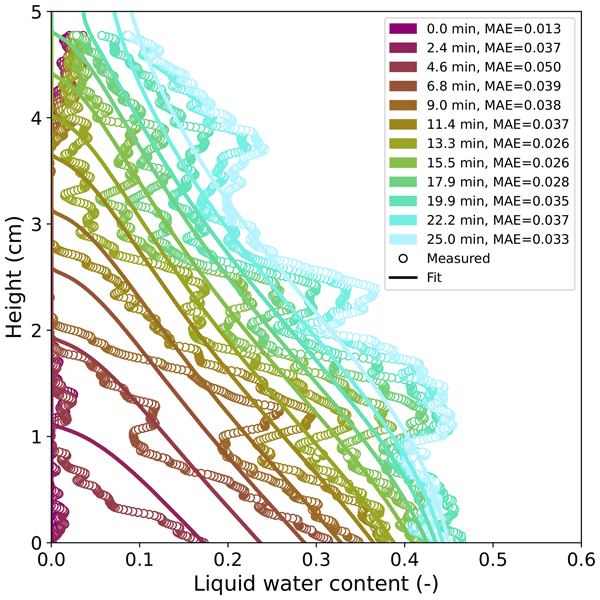
Water flow in snow is important for many applications including snow hydrology and avalanche forecasting. This work investigated the role of capillary forces at the soil-snow interface during capillary rise experiments using neutron radiography. The results showed that the properties of both the snow and the transitional layer below the snow affected the water flow. This work will allow for better representations of water flow across the soil–snow interface in snowpack models.
Grégoire Bobillier, Bertil Trottet, Bastian Bergfeld, Ron Simenhois, Alec van Herwijnen, Jürg Schweizer, and Johan Gaume
Nat. Hazards Earth Syst. Sci., 25, 2215–2223, https://doi.org/10.5194/nhess-25-2215-2025, https://doi.org/10.5194/nhess-25-2215-2025, 2025
Short summary
Short summary
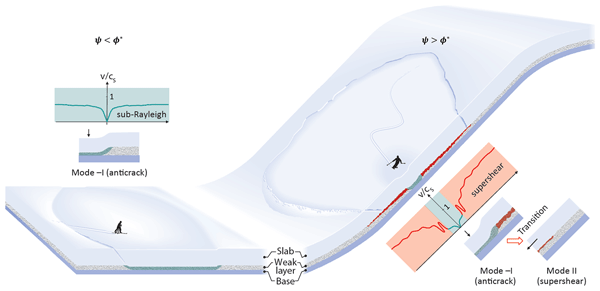
Our study investigates the initiation of snow slab avalanches. Combining experimental data with numerical simulations, we show that on gentle slopes, cracks form and propagate due to compressive fractures within a weak layer. On steeper slopes, crack velocity can increase dramatically after approximately 5 m due to a fracture mode transition from compression to shear. Understanding these dynamics provides a crucial missing piece in the puzzle of dry-snow slab avalanche formation.
Amelie Fees, Michael Lombardo, Alec van Herwijnen, Peter Lehmann, and Jürg Schweizer
The Cryosphere, 19, 1453–1468, https://doi.org/10.5194/tc-19-1453-2025, https://doi.org/10.5194/tc-19-1453-2025, 2025
Short summary
Short summary
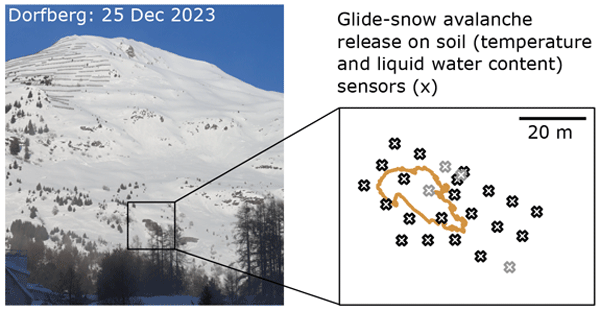
Glide-snow avalanches release at the soil–snow interface due to a loss of friction, which is suspected to be linked to interfacial water. The importance of the interfacial water was investigated with a spatio-temporal monitoring setup for soil and local snow on an avalanche-prone slope. Seven glide-snow avalanches were released on the monitoring grid (winter seasons 2021/22 to 2023/24) and provided insights into the source, quantity, and spatial distribution of interfacial water before avalanche release.
Jan Svoboda, Marc Ruesch, David Liechti, Corinne Jones, Michele Volpi, Michael Zehnder, and Jürg Schweizer
Geosci. Model Dev., 18, 1829–1849, https://doi.org/10.5194/gmd-18-1829-2025, https://doi.org/10.5194/gmd-18-1829-2025, 2025
Short summary
Short summary
Accurately measuring snow height is key for modeling approaches in climate science, snow hydrology, and avalanche forecasting. Erroneous snow height measurements often occur when snow height is low or changes, for instance during snowfall in summer. We prepare a new benchmark dataset with annotated snow height data and demonstrate how to improve the measurement quality using modern deep-learning approaches. Our approach can be easily implemented in a data pipeline for snow modeling.
Stephanie Mayer, Martin Hendrick, Adrien Michel, Bettina Richter, Jürg Schweizer, Heini Wernli, and Alec van Herwijnen
The Cryosphere, 18, 5495–5517, https://doi.org/10.5194/tc-18-5495-2024, https://doi.org/10.5194/tc-18-5495-2024, 2024
Short summary
Short summary
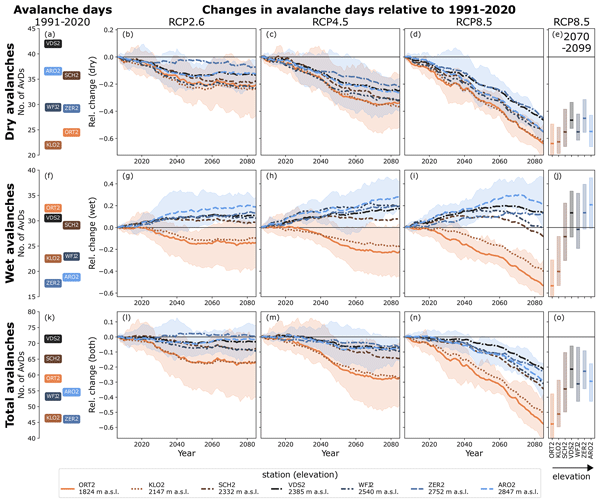
Understanding the impact of climate change on snow avalanche activity is crucial for safeguarding lives and infrastructure. Here, we project changes in avalanche activity in the Swiss Alps throughout the 21st century. Our findings reveal elevation-dependent patterns of change, indicating a decrease in dry-snow avalanches alongside an increase in wet-snow avalanches at elevations above the current treeline. These results underscore the necessity to revisit measures for avalanche risk mitigation.
Amelie Fees, Alec van Herwijnen, Michael Lombardo, Jürg Schweizer, and Peter Lehmann
Nat. Hazards Earth Syst. Sci., 24, 3387–3400, https://doi.org/10.5194/nhess-24-3387-2024, https://doi.org/10.5194/nhess-24-3387-2024, 2024
Short summary
Short summary
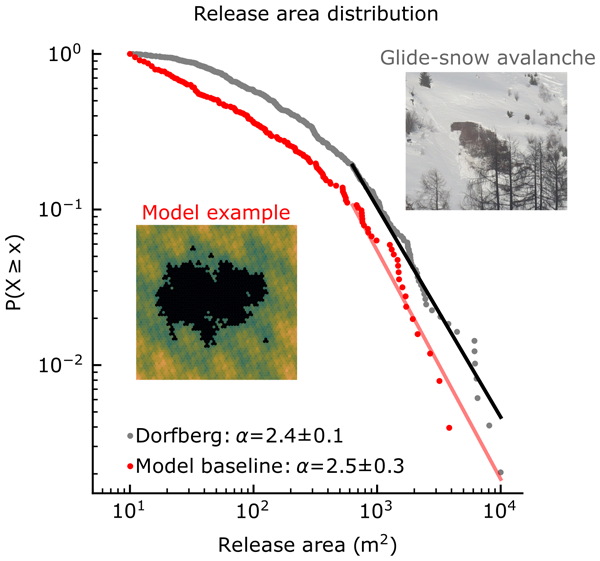
Glide-snow avalanches release at the ground–snow interface, and their release process is poorly understood. To investigate the influence of spatial variability (snowpack and basal friction) on avalanche release, we developed a 3D, mechanical, threshold-based model that reproduces an observed release area distribution. A sensitivity analysis showed that the distribution was mostly influenced by the basal friction uniformity, while the variations in snowpack properties had little influence.
Stephanie Mayer, Frank Techel, Jürg Schweizer, and Alec van Herwijnen
Nat. Hazards Earth Syst. Sci., 23, 3445–3465, https://doi.org/10.5194/nhess-23-3445-2023, https://doi.org/10.5194/nhess-23-3445-2023, 2023
Short summary
Short summary
We present statistical models to estimate the probability for natural dry-snow avalanche release and avalanche size based on the simulated layering of the snowpack. The benefit of these models is demonstrated in comparison with benchmark models based on the amount of new snow. From the validation with data sets of quality-controlled avalanche observations and danger levels, we conclude that these models may be valuable tools to support forecasting natural dry-snow avalanche activity.
Bastian Bergfeld, Alec van Herwijnen, Grégoire Bobillier, Philipp L. Rosendahl, Philipp Weißgraeber, Valentin Adam, Jürg Dual, and Jürg Schweizer
Nat. Hazards Earth Syst. Sci., 23, 293–315, https://doi.org/10.5194/nhess-23-293-2023, https://doi.org/10.5194/nhess-23-293-2023, 2023
Short summary
Short summary
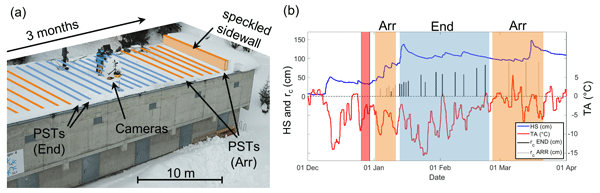
For a slab avalanche to release, the snowpack must facilitate crack propagation over large distances. Field measurements on crack propagation at this scale are very scarce. We performed a series of experiments, up to 10 m long, over a period of 10 weeks. Beside the temporal evolution of the mechanical properties of the snowpack, we found that crack speeds were highest for tests resulting in full propagation. Based on these findings, an index for self-sustained crack propagation is proposed.
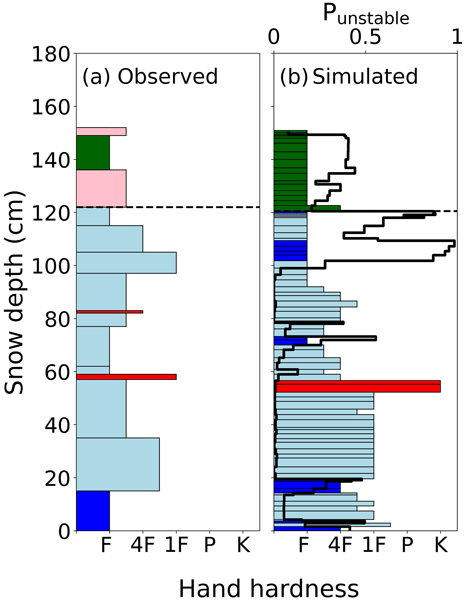
Stephanie Mayer, Alec van Herwijnen, Frank Techel, and Jürg Schweizer
The Cryosphere, 16, 4593–4615, https://doi.org/10.5194/tc-16-4593-2022, https://doi.org/10.5194/tc-16-4593-2022, 2022
Short summary
Short summary
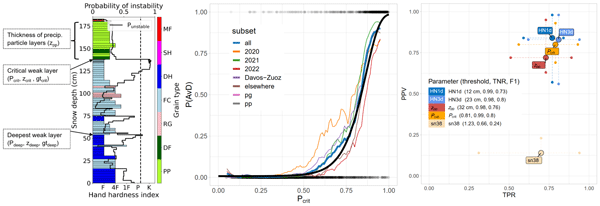
Information on snow instability is crucial for avalanche forecasting. We introduce a novel machine-learning-based method to assess snow instability from snow stratigraphy simulated with the snow cover model SNOWPACK. To develop the model, we compared observed and simulated snow profiles. Our model provides a probability of instability for every layer of a simulated snow profile, which allows detection of the weakest layer and assessment of its degree of instability with one single index.
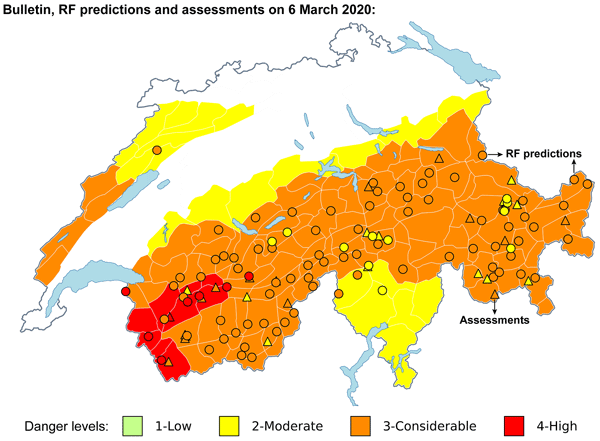
Cristina Pérez-Guillén, Frank Techel, Martin Hendrick, Michele Volpi, Alec van Herwijnen, Tasko Olevski, Guillaume Obozinski, Fernando Pérez-Cruz, and Jürg Schweizer
Nat. Hazards Earth Syst. Sci., 22, 2031–2056, https://doi.org/10.5194/nhess-22-2031-2022, https://doi.org/10.5194/nhess-22-2031-2022, 2022
Short summary
Short summary
A fully data-driven approach to predicting the danger level for dry-snow avalanche conditions in Switzerland was developed. Two classifiers were trained using a large database of meteorological data, snow cover simulations, and danger levels. The models performed well throughout the Swiss Alps, reaching a performance similar to the current experience-based avalanche forecasts. This approach shows the potential to be a valuable supplementary decision support tool for assessing avalanche hazard.
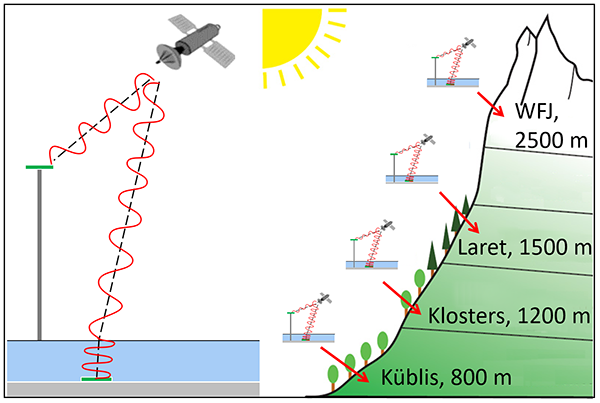
Achille Capelli, Franziska Koch, Patrick Henkel, Markus Lamm, Florian Appel, Christoph Marty, and Jürg Schweizer
The Cryosphere, 16, 505–531, https://doi.org/10.5194/tc-16-505-2022, https://doi.org/10.5194/tc-16-505-2022, 2022
Short summary
Short summary
Snow occurrence, snow amount, snow density and liquid water content (LWC) can vary considerably with climatic conditions and elevation. We show that low-cost Global Navigation Satellite System (GNSS) sensors as GPS can be used for reliably measuring the amount of water stored in the snowpack or snow water equivalent (SWE), snow depth and the LWC under a broad range of climatic conditions met at different elevations in the Swiss Alps.
Melin Walet, Jakob Schöttner, Valentin Adam, Florian Rheinschmidt, Philipp Rosendahl, Philipp Weißgraeber, Jürg Schweizer, and Alec van Herwijnen
EGUsphere, https://doi.org/10.5194/egusphere-2026-3554, https://doi.org/10.5194/egusphere-2026-3554, 2026
This preprint is open for discussion and under review for The Cryosphere (TC).
Short summary
Short summary
Dry snow avalanches start when a weak snow layer fails and a crack spreads through the snowpack, but field data is limited. We tested a weak layer of coarse snow grains in field fracture experiments. Using videos of snow movement, we derived the stiffness of the weak layer and calculated the resistance to crack growth. Crack resistance increased during the season as the grains in the weak layer grew and bonded more strongly. This data can be used to improve avalanche release models.
Alberto Mariani, Jacopo Borsotti, Mattia Gatti, Gianna Giovanoli, Paula Spannring, Martin Metzger, Luca Dellarole, Franz Livio, Ignazio Gallo, and Fabiano Monti
EGUsphere, https://doi.org/10.5194/egusphere-2026-3551, https://doi.org/10.5194/egusphere-2026-3551, 2026
This preprint is open for discussion and under review for The Cryosphere (TC).
Short summary
Short summary
Snow avalanches are difficult to document in mountain regions, limiting risk assessment and forecasting. We used satellite SAR images and a deep learning model to detect avalanche deposits over ten years, assessing capabilities and main cause of failure under variable snow conditions. We firstly USE a SAR-based avalanche dataset to probabilistic runout distance modelling.
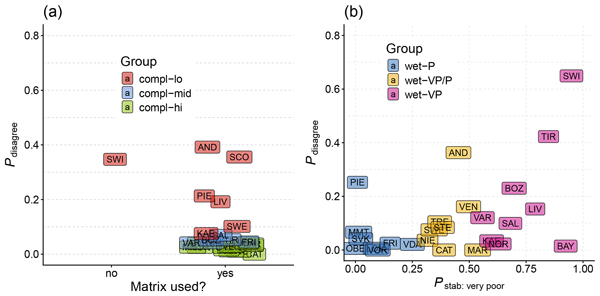
Frank Techel, Karsten Müller, Christopher Marquardt, and Christoph Mitterer
Nat. Hazards Earth Syst. Sci., 26, 1161–1181, https://doi.org/10.5194/nhess-26-1161-2026, https://doi.org/10.5194/nhess-26-1161-2026, 2026
Short summary
Short summary
We examined how avalanche forecasters across Europe use the EAWS (European Avalanche Warning Services) Matrix, a decision-support tool for determining regional avalanche danger levels. Although warning services apply the Matrix differently, we identified both consistent patterns and notable inconsistencies in its application. Our findings highlight where the Matrix works well and where clarification is needed, supporting more consistent and transparent avalanche information for the public.
Alberto Mariani, Jacopo Borsotti, Franz Livio, Giacomo Villa, Martin Metzger, and Fabiano Monti
The Cryosphere, 20, 963–980, https://doi.org/10.5194/tc-20-963-2026, https://doi.org/10.5194/tc-20-963-2026, 2026
Short summary
Short summary
We developed a new model to estimate snow depth using radar satellite data. By correcting for how the viewing angle affects signal reflection, we reduced errors by nearly 40 %. Tested in the Alps and Norway, the method improves fine-scale snow monitoring, supporting avalanche forecasting and water management.
Karsten Müller, Frank Techel, and Christoph Mitterer
Nat. Hazards Earth Syst. Sci., 25, 4503–4525, https://doi.org/10.5194/nhess-25-4503-2025, https://doi.org/10.5194/nhess-25-4503-2025, 2025
Short summary
Short summary
This paper presents the updated EAWS (European Avalanche Warning Services) Matrix, developed to support consistent avalanche danger assessments across Europe. It links snowpack stability, its frequency, and avalanche size to the five danger levels. Based on expert surveys and operational testing, the Matrix supports expert judgment and aligns with the Conceptual Model of Avalanche Hazard while addressing known ambiguities in practice.
Michael Lombardo, Amelie Fees, Anders Kaestner, Alec van Herwijnen, Jürg Schweizer, and Peter Lehmann
The Cryosphere, 19, 4437–4458, https://doi.org/10.5194/tc-19-4437-2025, https://doi.org/10.5194/tc-19-4437-2025, 2025
Short summary
Short summary
Water flow in snow is important for many applications including snow hydrology and avalanche forecasting. This work investigated the role of capillary forces at the soil-snow interface during capillary rise experiments using neutron radiography. The results showed that the properties of both the snow and the transitional layer below the snow affected the water flow. This work will allow for better representations of water flow across the soil–snow interface in snowpack models.
Frank Techel, Ross S. Purves, Stephanie Mayer, Günter Schmudlach, and Kurt Winkler
Nat. Hazards Earth Syst. Sci., 25, 3333–3353, https://doi.org/10.5194/nhess-25-3333-2025, https://doi.org/10.5194/nhess-25-3333-2025, 2025
Short summary
Short summary
We tested how well fully data- and model-driven avalanche forecasts compare to human-made forecasts, which also integrate added context like field observations or model output. Using data from Switzerland over three winters, we found that models – even without this extra input – performed nearly as well. While human forecasts still have a slight edge, model predictions already offer reliable support for daily avalanche forecasting.
Grégoire Bobillier, Bertil Trottet, Bastian Bergfeld, Ron Simenhois, Alec van Herwijnen, Jürg Schweizer, and Johan Gaume
Nat. Hazards Earth Syst. Sci., 25, 2215–2223, https://doi.org/10.5194/nhess-25-2215-2025, https://doi.org/10.5194/nhess-25-2215-2025, 2025
Short summary
Short summary
Our study investigates the initiation of snow slab avalanches. Combining experimental data with numerical simulations, we show that on gentle slopes, cracks form and propagate due to compressive fractures within a weak layer. On steeper slopes, crack velocity can increase dramatically after approximately 5 m due to a fracture mode transition from compression to shear. Understanding these dynamics provides a crucial missing piece in the puzzle of dry-snow slab avalanche formation.
Amelie Fees, Michael Lombardo, Alec van Herwijnen, Peter Lehmann, and Jürg Schweizer
The Cryosphere, 19, 1453–1468, https://doi.org/10.5194/tc-19-1453-2025, https://doi.org/10.5194/tc-19-1453-2025, 2025
Short summary
Short summary
Glide-snow avalanches release at the soil–snow interface due to a loss of friction, which is suspected to be linked to interfacial water. The importance of the interfacial water was investigated with a spatio-temporal monitoring setup for soil and local snow on an avalanche-prone slope. Seven glide-snow avalanches were released on the monitoring grid (winter seasons 2021/22 to 2023/24) and provided insights into the source, quantity, and spatial distribution of interfacial water before avalanche release.
Jan Svoboda, Marc Ruesch, David Liechti, Corinne Jones, Michele Volpi, Michael Zehnder, and Jürg Schweizer
Geosci. Model Dev., 18, 1829–1849, https://doi.org/10.5194/gmd-18-1829-2025, https://doi.org/10.5194/gmd-18-1829-2025, 2025
Short summary
Short summary
Accurately measuring snow height is key for modeling approaches in climate science, snow hydrology, and avalanche forecasting. Erroneous snow height measurements often occur when snow height is low or changes, for instance during snowfall in summer. We prepare a new benchmark dataset with annotated snow height data and demonstrate how to improve the measurement quality using modern deep-learning approaches. Our approach can be easily implemented in a data pipeline for snow modeling.
Christoph Mitterer, Simon Legner, Norbert Lanzanasto, Matthias Walcher, and Patrick Nairz
Abstr. Int. Cartogr. Assoc., 9, 25, https://doi.org/10.5194/ica-abs-9-25-2025, https://doi.org/10.5194/ica-abs-9-25-2025, 2025
Stephanie Mayer, Martin Hendrick, Adrien Michel, Bettina Richter, Jürg Schweizer, Heini Wernli, and Alec van Herwijnen
The Cryosphere, 18, 5495–5517, https://doi.org/10.5194/tc-18-5495-2024, https://doi.org/10.5194/tc-18-5495-2024, 2024
Short summary
Short summary
Understanding the impact of climate change on snow avalanche activity is crucial for safeguarding lives and infrastructure. Here, we project changes in avalanche activity in the Swiss Alps throughout the 21st century. Our findings reveal elevation-dependent patterns of change, indicating a decrease in dry-snow avalanches alongside an increase in wet-snow avalanches at elevations above the current treeline. These results underscore the necessity to revisit measures for avalanche risk mitigation.
Amelie Fees, Alec van Herwijnen, Michael Lombardo, Jürg Schweizer, and Peter Lehmann
Nat. Hazards Earth Syst. Sci., 24, 3387–3400, https://doi.org/10.5194/nhess-24-3387-2024, https://doi.org/10.5194/nhess-24-3387-2024, 2024
Short summary
Short summary
Glide-snow avalanches release at the ground–snow interface, and their release process is poorly understood. To investigate the influence of spatial variability (snowpack and basal friction) on avalanche release, we developed a 3D, mechanical, threshold-based model that reproduces an observed release area distribution. A sensitivity analysis showed that the distribution was mostly influenced by the basal friction uniformity, while the variations in snowpack properties had little influence.
Stephanie Mayer, Frank Techel, Jürg Schweizer, and Alec van Herwijnen
Nat. Hazards Earth Syst. Sci., 23, 3445–3465, https://doi.org/10.5194/nhess-23-3445-2023, https://doi.org/10.5194/nhess-23-3445-2023, 2023
Short summary
Short summary
We present statistical models to estimate the probability for natural dry-snow avalanche release and avalanche size based on the simulated layering of the snowpack. The benefit of these models is demonstrated in comparison with benchmark models based on the amount of new snow. From the validation with data sets of quality-controlled avalanche observations and danger levels, we conclude that these models may be valuable tools to support forecasting natural dry-snow avalanche activity.
Oscar Dick, Léo Viallon-Galinier, François Tuzet, Pascal Hagenmuller, Mathieu Fructus, Benjamin Reuter, Matthieu Lafaysse, and Marie Dumont
The Cryosphere, 17, 1755–1773, https://doi.org/10.5194/tc-17-1755-2023, https://doi.org/10.5194/tc-17-1755-2023, 2023
Short summary
Short summary
Saharan dust deposition can drastically change the snow color, turning mountain landscapes into sepia scenes. Dust increases the absorption of solar energy by the snow cover and thus modifies the snow evolution and potentially the avalanche risk. Here we show that dust can lead to increased or decreased snowpack stability depending on the snow and meteorological conditions after the deposition event. We also show that wet-snow avalanches happen earlier in the season due to the presence of dust.
Bastian Bergfeld, Alec van Herwijnen, Grégoire Bobillier, Philipp L. Rosendahl, Philipp Weißgraeber, Valentin Adam, Jürg Dual, and Jürg Schweizer
Nat. Hazards Earth Syst. Sci., 23, 293–315, https://doi.org/10.5194/nhess-23-293-2023, https://doi.org/10.5194/nhess-23-293-2023, 2023
Short summary
Short summary
For a slab avalanche to release, the snowpack must facilitate crack propagation over large distances. Field measurements on crack propagation at this scale are very scarce. We performed a series of experiments, up to 10 m long, over a period of 10 weeks. Beside the temporal evolution of the mechanical properties of the snowpack, we found that crack speeds were highest for tests resulting in full propagation. Based on these findings, an index for self-sustained crack propagation is proposed.
Stephanie Mayer, Alec van Herwijnen, Frank Techel, and Jürg Schweizer
The Cryosphere, 16, 4593–4615, https://doi.org/10.5194/tc-16-4593-2022, https://doi.org/10.5194/tc-16-4593-2022, 2022
Short summary
Short summary
Information on snow instability is crucial for avalanche forecasting. We introduce a novel machine-learning-based method to assess snow instability from snow stratigraphy simulated with the snow cover model SNOWPACK. To develop the model, we compared observed and simulated snow profiles. Our model provides a probability of instability for every layer of a simulated snow profile, which allows detection of the weakest layer and assessment of its degree of instability with one single index.
Cristina Pérez-Guillén, Frank Techel, Martin Hendrick, Michele Volpi, Alec van Herwijnen, Tasko Olevski, Guillaume Obozinski, Fernando Pérez-Cruz, and Jürg Schweizer
Nat. Hazards Earth Syst. Sci., 22, 2031–2056, https://doi.org/10.5194/nhess-22-2031-2022, https://doi.org/10.5194/nhess-22-2031-2022, 2022
Short summary
Short summary
A fully data-driven approach to predicting the danger level for dry-snow avalanche conditions in Switzerland was developed. Two classifiers were trained using a large database of meteorological data, snow cover simulations, and danger levels. The models performed well throughout the Swiss Alps, reaching a performance similar to the current experience-based avalanche forecasts. This approach shows the potential to be a valuable supplementary decision support tool for assessing avalanche hazard.

Frank Techel, Stephanie Mayer, Cristina Pérez-Guillén, Günter Schmudlach, and Kurt Winkler
Nat. Hazards Earth Syst. Sci., 22, 1911–1930, https://doi.org/10.5194/nhess-22-1911-2022, https://doi.org/10.5194/nhess-22-1911-2022, 2022
Short summary
Short summary
Can the resolution of forecasts of avalanche danger be increased by using a combination of absolute and comparative judgments? Using 5 years of Swiss avalanche forecasts, we show that, on average, sub-levels assigned to a danger level reflect the expected increase in the number of locations with poor snow stability and in the number and size of avalanches with increasing forecast sub-level.
Achille Capelli, Franziska Koch, Patrick Henkel, Markus Lamm, Florian Appel, Christoph Marty, and Jürg Schweizer
The Cryosphere, 16, 505–531, https://doi.org/10.5194/tc-16-505-2022, https://doi.org/10.5194/tc-16-505-2022, 2022
Short summary
Short summary
Snow occurrence, snow amount, snow density and liquid water content (LWC) can vary considerably with climatic conditions and elevation. We show that low-cost Global Navigation Satellite System (GNSS) sensors as GPS can be used for reliably measuring the amount of water stored in the snowpack or snow water equivalent (SWE), snow depth and the LWC under a broad range of climatic conditions met at different elevations in the Swiss Alps.
Antoine Guillemot, Alec van Herwijnen, Eric Larose, Stephanie Mayer, and Laurent Baillet
The Cryosphere, 15, 5805–5817, https://doi.org/10.5194/tc-15-5805-2021, https://doi.org/10.5194/tc-15-5805-2021, 2021
Short summary
Short summary
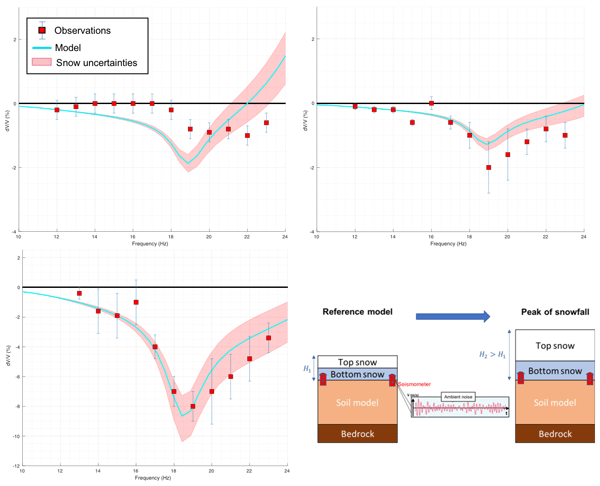
Ambient noise correlation is a broadly used method in seismology to monitor tiny changes in subsurface properties. Some environmental forcings may influence this method, including snow. During one winter season, we studied this snow effect on seismic velocity of the medium, recorded by a pair of seismic sensors. We detected and modeled a measurable effect during early snowfalls: the fresh new snow layer modifies rigidity and density of the medium, thus decreasing the recorded seismic velocity.
Cited articles
Adam, V., Bergfeld, B., Weißgraeber, P., van Herwijnen, A., and Rosendahl, P. L.: Fracture toughness of mixed-mode anticracks in highly porous materials, Nat. Commun., 15, 7379, https://doi.org/10.1038/s41467-024-51491-7, 2024.
Bellaire, S., Schweizer, J., Fierz, C., Lehning, M., and Pielmeier, C.: Predicting snow cover stability with the snow cover model SNOWPACK, Proceedings ISSW 2006. International Snow Science Workshop, Telluride CO, U.S.A., 1–6 October 2006, 38–43, 2006.
Bellaire, S. and Jamieson, B.: Forecasting the formation of critical snow layers using a coupled snow cover and weather model, Cold Reg. Sci. Technol., 94, 37–44, https://doi.org/10.1016/j.coldregions.2013.06.007, 2013.
Bergfeld, B., van Herwijnen, A., Bobillier, G., Rosendahl, P. L., Weißgraeber, P., Adam, V., Dual, J., and Schweizer, J.: Temporal evolution of crack propagation characteristics in a weak snowpack layer: conditions of crack arrest and sustained propagation, Nat. Hazards Earth Syst. Sci., 23, 293–315, https://doi.org/10.5194/nhess-23-293-2023, 2023.
Birkeland, K. W., van Herwijnen, A., Techel, F., Bair, E. H., Reuter, B., Simenhois, R., Jamieson, B., Marienthal, A., Chabot, D., and Schweizer, J.: Comparing stability tests and understanding their limitations, Proceedings ISSW 2023, International Snow Science Workshop, Bend, Oregon, USA, 8–13 October 2023, 64–71, https://arc.lib.montana.edu/snow-science/objects/ISSW2023_O2.05.pdf (last access 1 June 2026), 2023.
Calonne, N., Richter, B., Löwe, H., Cetti, C., ter Schure, J., Van Herwijnen, A., Fierz, C., Jaggi, M., and Schneebeli, M.: The RHOSSA campaign: multi-resolution monitoring of the seasonal evolution of the structure and mechanical stability of an alpine snowpack , The Cryosphere, 14, 1829–1848, https://doi.org/10.5194/tc-14-1829-2020, 2020.
Chalmers, T. S. and Jamieson, J. B.: Extrapolating the skier stability of buried surface hoar layers from study plot measurements, Cold Reg. Sci. Technol., 33, 163–177, https://doi.org/10.1016/S0165-232X(01)00043-X, 2001.
EAWS: Avalanche Problems, https://www.avalanches.org/standards/avalanche-problems/ (last access: 1 June 2026), 2026.
Fierz, C., Armstrong, R. L., Durand, Y., Etchevers, P., Greene, E., McClung, D. M., Nishimura, K., Satyawali, P. K., and Sokratov, S. A.: The International Classification for Seasonal Snow on the Ground, HP-VII Technical Documents in Hydrology, IACS Contribution No 1, UNESCO-IHP, Paris, France, 90 pp., https://unesdoc.unesco.org/ark:/48223/pf0000186462.locale=en (last access: 1 June 2026), 2009.
Föhn, P. M. B.: The stability index and various triggering mechanisms, Symposium at Davos 1986 – Avalanche Formation, Movement and Effects, IAHS Publ., 162, 195–214, https://iahs.info/uploads/dms/6822.195-214-162-Föhn.pdf (lasst access: 1 June 2026), 1987.
Gaume, J. and Reuter, B.: Assessing snow instability in skier-triggered snow slab avalanches by combining failure initiation and crack propagation, Cold Reg. Sci. Technol., 144, 6–15, https://doi.org/10.1016/j.coldregions.2017.05.011, 2017.
Gaume, J., van Herwijnen, A., Chambon, G., Wever, N., and Schweizer, J.: Snow fracture in relation to slab avalanche release: critical state for the onset of crack propagation, The Cryosphere, 11, 217–228, https://doi.org/10.5194/tc-11-217-2017, 2017.
Hendrick, M., Techel, F., Volpi, M., Olevski, T., Pérez-Guillén, C., van Herwijnen, A., and Schweizer, J.: Automated prediction of wet-snow avalanche activity in the Swiss Alps, J. Glaciol., 69, 1365–1378, https://doi.org/10.1017/jog.2023.24, 2023.
Herla, F., Haegeli, P., Horton, S., and Mair, P.: A large-scale validation of snowpack simulations in support of avalanche forecasting focusing on critical layers, Nat. Hazards Earth Syst. Sci., 24, 2727–2756, https://doi.org/10.5194/nhess-24-2727-2024, 2024.
Herla, F., Haegeli, P., Horton, S., and Mair, P.: A quantitative module of avalanche hazard – comparing forecaster assessments of storm and persistent slab avalanche problems with information derived from distributed snowpack simulations, Nat. Hazards Earth Syst. Sci., 25, 625–646, https://doi.org/10.5194/nhess-25-625-2025, 2025.
Jamieson, J. B.: Avalanche prediction for persistent snow slabs, Ph.D. Thesis, Department of Civil Engineering, University of Calgary, Calgary AB, Canada, 258 pp., https://doi.org/10.11575/PRISM/18207, 1995.
Jamieson, J. B. and Johnston, C. D.: Refinements to the stability index for skier-triggered dry slab avalanches, Ann. Glaciol., 26, 296–302, https://doi.org/10.3189/1998AoG26-1-296-302, 1998.
Jamieson, J. B. and Johnston, C. D.: Evaluation of the shear frame test for weak snowpack layers, Ann. Glaciol., 32, 59–68, https://doi.org/10.3189/172756401781819472, 2001.
Jamieson, J. B., Zeidler, A., and Brown, C.: Explanation and limitations of study plot stability indices for forecasting dry snow slab avalanches in surrounding terrain, Cold Reg. Sci. Technol., 50, 23–34, https://doi.org/10.1016/j.coldregions.2007.02.010, 2007.
Lehning, M., Fierz, C., Brown, R. L., and Jamieson, J. B.: Modeling instability for the snow cover model SNOWPACK, Ann. Glaciol., 38, 331–338, https://doi.org/10.3189/172756404781815220, 2004.
Mayer, S., van Herwijnen, A., Techel, F., and Schweizer, J.: A random forest model to assess snow instability from simulated snow stratigraphy, The Cryosphere, 16, 4593–4615, https://doi.org/10.5194/tc-16-4593-2022, 2022.
Mayer, S., Techel, F., Schweizer, J., and van Herwijnen, A.: Prediction of natural dry-snow avalanche activity using physics-based snowpack simulations, Nat. Hazards Earth Syst. Sci., 23, 3445–3465, https://doi.org/10.5194/nhess-23-3445-2023, 2023.
McCammon, I. and Schweizer, J.: A field method for identifying structural weaknesses in the snowpack, Proceedings ISSW 2002, International Snow Science Workshop, Penticton BC, Canada, 29 September–4 October 2002, 477–481, https://arc.lib.montana.edu/snow-science/objects/issw-2002-477-481.pdf (last access: 1 June 2026), 2002.
Monti, F., Cagnati, A., Valt, M., and Schweizer, J.: A new method for visualizing snow stability profiles, Cold Reg. Sci. Technol., 78, 64–72, https://doi.org/10.1016/j.coldregions.2012.02.005, 2012.
Monti, F., and Schweizer, J.: A relative difference approach to detect potential weak layers within a snow profile, Proceedings ISSW 2013. International Snow Science Workshop, Grenoble, France, 7–11 October 2013, 339–343, https://arc.lib.montana.edu/snow-science/objects/ISSW13_paper_P1-30.pdf (last access: 1 June 2026), 2013.
Monti, F., Gaume, J., van Herwijnen, A., and Schweizer, J.: Snow instability evaluation: calculating the skier-induced stress in a multi-layered snowpack, Nat. Hazards Earth Syst. Sci., 16, 775–788, https://doi.org/10.5194/nhess-16-775-2016, 2016.
Morin, S., Horton, S., Techel, F., Bavay, M., Coléou, C., Fierz, C., Gobiet, A., Hagenmuller, P., Lafaysse, M., Liz̆ar, M., Mitterer, C., Monti, F., Müller, K., Olefs, M., Snook, J. S., van Herwijnen, A., and Vionnet, V.: Application of physical snowpack models in support of operational avalanche hazard forecasting: A status report on current implementations and prospects for the future, Cold Reg. Sci. Technol., 170, 102910, https://doi.org/10.1016/j.coldregions.2019.102910, 2020.
Müller, K., Techel, F., and Mitterer, C.: The EAWS matrix, a decision support tool to determine the regional avalanche danger level (Part A): conceptual development, Nat. Hazards Earth Syst. Sci., 25, 4503–4525, https://doi.org/10.5194/nhess-25-4503-2025, 2025.
Pérez-Guillén, C., Techel, F., Hendrick, M., Volpi, M., van Herwijnen, A., Olevski, T., Obozinski, G., Pérez-Cruz, F., and Schweizer, J.: Data-driven automated predictions of the avalanche danger level for dry-snow conditions in Switzerland, Nat. Hazards Earth Syst. Sci., 22, 2031–2056, https://doi.org/10.5194/nhess-22-2031-2022, 2022.
Reuter, B., Schweizer, J., and van Herwijnen, A.: A process-based approach to estimate point snow instability, The Cryosphere, 9, 837–847, https://doi.org/10.5194/tc-9-837-2015, 2015.
Reuter, B., and Bellaire, S.: On combining snow cover and snow instability modelling, Proceedings ISSW 2018. International Snow Science Workshop, Innsbruck, Austria, 7–12 October 2018, 949–953, https://arc.lib.montana.edu/snow-science/objects/ISSW2018_P10.15.pdf (last access: 1 June 2026), 2018.
Reuter, B. and Schweizer, J.: Describing snow instability by failure initiation, crack propagation, and slab tensile support, Geophys. Res. Lett., 45, 7019–7027, https://doi.org/10.1029/2018GL078069, 2018.
Reuter, B., Proksch, M., Löwe, H., van Herwijnen, A., and Schweizer, J.: Comparing measurements of snow mechanical properties relevant for slab avalanche release, J. Glaciol., 65, 55–67, https://doi.org/10.1017/jog.2018.93, 2019.
Reuter, B., Viallon-Galinier, L., Horton, S., van Herwijnen, A., Mayer, S., Hagenmuller, P., and Morin, S.: Characterizing snow instability with avalanche problem types derived from snow cover simulations, Cold Reg. Sci. Technol., 194, 103462, https://doi.org/10.1016/j.coldregions.2021.103462, 2022.
Richter, B., Schweizer, J., Rotach, M. W., and van Herwijnen, A.: Validating modeled critical crack length for crack propagation in the snow cover model SNOWPACK, The Cryosphere, 13, 3353–3366, https://doi.org/10.5194/tc-13-3353-2019, 2019.
Schneebeli, M. and Johnson, J. B.: A constant-speed penetrometer for high-resolution snow stratigraphy, Ann. Glaciol., 26, 107–111, https://doi.org/10.3189/1998AoG26-1-107-111, 1998.
Schweizer, J. and Föhn, P. M. B.: Avalanche forecasting - an expert system approach, J. Glaciol., 42, 318–332, https://doi.org/10.3189/S0022143000004172, 1996.
Schweizer, J., Kronholm, K., and Wiesinger, T.: Verification of regional snowpack stability and avalanche danger, Cold Reg. Sci. Technol., 37, 277–288, https://doi.org/10.1016/S0165-232X(03)00070-3, 2003.
Schweizer, J., Fierz, C., and Jamieson, J. B.: Assessing the probability of skier triggering from snow layer properties, Proceedings ISSW 2004. International Snow Science Workshop, Jackson Hole WY, U.S.A., 19–24 September 2004, 192–198, https://arc.lib.montana.edu/snow-science/objects/issw-2004-192-198.pdf (last access: 1 June 2026), 2005.
Schweizer, J., Bellaire, S., Fierz, C., Lehning, M., and Pielmeier, C.: Evaluating and improving the stability predictions of the snow cover model SNOWPACK, Cold Reg. Sci. Technol., 46, 52–59, https://doi.org/10.1016/j.coldregions.2006.05.007, 2006.
Schweizer, J. and Jamieson, J. B.: A threshold sum approach to stability evaluation of manual snow profiles, Cold Reg. Sci. Technol., 47, 50–59, https://doi.org/10.1016/j.coldregions.2006.08.011, 2007.
Schweizer, J. and Jamieson, J. B.: Snowpack tests for assessing snow-slope instability, Ann. Glaciol., 51, 187–194, https://doi.org/10.3189/172756410791386652, 2010.
Schweizer, J., Reuter, B., van Herwijnen, A., Richter, B., and Gaume, J.: Temporal evolution of crack propagation propensity in snow in relation to slab and weak layer properties, The Cryosphere, 10, 2637–2653, https://doi.org/10.5194/tc-10-2637-2016, 2016.
Schweizer, J., Mitterer, C., Techel, F., Stoffel, A., and Reuter, B.: On the relation between avalanche occurrence and avalanche danger level, The Cryosphere, 14, 737–750, https://doi.org/10.5194/tc-14-737-2020, 2020.
Schweizer, J., Reuter, B., Mitterer, C., Monti, F., and Mayer, S.: On stability measurements and modeling, Proceedings ISSW 2023. International Snow Science Workshop, Bend, Oregon, U.S.A., 8–13 October 2023, 313–320, https://arc.lib.montana.edu/snow-science/objects/ISSW2023_P1.31.pdf (last access: 1 June 2026), 2023.
Schweizer, J., Knappe, L., Reuter, B., and Mayer, S.: On snow and avalanche climates in the Swiss Alps, Proceedings ISSW 2024. International Snow Science Workshop, Tromsø, Norway, 23–27 September 2024, 198–203, https://arc.lib.montana.edu/snow-science/objects/ISSW2024_P1.21.pdf (lasst access: 1 June 2026), 2024.
Schweizer, J., Reuter, B., Mitterer, C., Monti, F., Mayer, S., and van Herwijnen, A.: Snow stability data: field measurements and numerical model evaluation, EnviDat [data set], https://doi.org/10.16904/envidat.818, 2026.
Techel, F., Müller, K., and Schweizer, J.: On the importance of snowpack stability, the frequency distribution of snowpack stability, and avalanche size in assessing the avalanche danger level, The Cryosphere, 14, 3503–3521, https://doi.org/10.5194/tc-14-3503-2020, 2020.
Techel, F., Helfenstein, A., Pérez-Guillén, C., Purves, R., Ruesch, M., Schmudlach, G., Soland, K., Mayer, S., and Winkler, K.: Human vs Machine: who predicts better? Comparing human-made avalanche forecasts with model-driven predictions of snowpack instability and avalanche danger in the Swiss Alps, Proceedings ISSW 2024. International Snow Science Workshop, Tromsø, Norway, 23–27 September 2024, 38, https://arc.lib.montana.edu/snow-science/objects/ISSW2024_O1.6.pdf (last access: 1 June 2026), 2024.
Techel, F., Purves, R. S., Mayer, S., Schmudlach, G., and Winkler, K.: Can model-based avalanche forecasts match the discriminatory skill of human danger-level forecasts? A comparison from Switzerland, Nat. Hazards Earth Syst. Sci., 25, 3333–3353, https://doi.org/10.5194/nhess-25-3333-2025, 2025.
Techel, F., Müller, K., Marquardt, C., and Mitterer, C.: The EAWS matrix, a decision support tool to determine the regional avalanche danger level (Part B): operational testing and use, Nat. Hazards Earth Syst. Sci., 26, 1161–1181, https://doi.org/10.5194/nhess-26-1161-2026, 2026.
van Herwijnen, A., Gaume, J., Bair, E. H., Reuter, B., Birkeland, K. W., and Schweizer, J.: Estimating the effective elastic modulus and specific fracture energy of snowpack layers from field experiments, J. Glaciol., 62, 997–1007, https://doi.org/10.1017/jog.2016.90, 2016.
Viallon-Galinier, L., Hagenmuller, P., Reuter, B., and Eckert, N.: Modelling snowpack stability from simulated snow stratigraphy: Summary and implementation examples, Cold Reg. Sci. Technol., 201, 103596, https://doi.org/10.1016/j.coldregions.2022.103596, 2022.
Viallon-Galinier, L., Hagenmuller, P., and Eckert, N.: Combining modelled snowpack stability with machine learning to predict avalanche activity, The Cryosphere, 17, 2245–2260, https://doi.org/10.5194/tc-17-2245-2023, 2023.
Wever, N., Schmid, L., Heilig, A., Eisen, O., Fierz, C., and Lehning, M.: Verification of the multi-layer SNOWPACK model with different water transport schemes, The Cryosphere, 9, 2271–2293, https://doi.org/10.5194/tc-9-2271-2015, 2015.
Wilks, D. S.: Statistical Methods in the Atmospheric Sciences, 4th ed., Elsevier, Amsterdam, Netherlands, 818 pp., https://doi.org/10.1016/C2017-0-03921-6, 2019.
Zeidler, A. and Jamieson, J. B.: Refinements of empirical models to forecast the shear strength of persistent weak snow layers PART A: Layers of faceted crystals, Cold Reg. Sci. Technol., 44, 194–205, https://doi.org/10.1016/j.coldregions.2005.11.005, 2006.
Short summary
Avalanche forecasting increasingly relies on numerical predictions of snow stability. We present the first detailed comparison of traditional and AI-based stability metrics and validate them against avalanche observations. The metrics show a similar level of performance. Combining both process-based and data-driven metrics provides the most reliable forecasts.
Avalanche forecasting increasingly relies on numerical predictions of snow stability. We present...


Altmetrics
Final-revised paper
Preprint