Articles | Volume 26, issue 11
https://doi.org/10.5194/nhess-26-5609-2026
© Author(s) 2026. This work is distributed under
the Creative Commons Attribution 4.0 License.
https://doi.org/10.5194/nhess-26-5609-2026
© Author(s) 2026. This work is distributed under
the Creative Commons Attribution 4.0 License.
Composition, frequency, and severity of future rain-on-snow floods in Germany

Christian Czakay
CORRESPONDING AUTHOR
Institute for Atmospheric and Environmental Sciences, Goethe University, Frankfurt am Main, Germany
Larisa Tarasova
Department Catchment Hydrology, Helmholtz Centre for Environmental Research – UFZ, Halle (Saale), Germany
Bodo Ahrens
Institute for Atmospheric and Environmental Sciences, Goethe University, Frankfurt am Main, Germany
Related authors
No articles found.
Francesco De Rovere, Giulia Bonino, Ronan McAdam, Enrico Scoccimarro, Samuel Somot, Iván M. Parras-Berrocal, Bodo Ahrens, Vladimir Djurdjevic, Laurent Li, and Simona Masina
Ocean Sci., 22, 2725–2742, https://doi.org/10.5194/os-22-2725-2026, https://doi.org/10.5194/os-22-2725-2026, 2026
Short summary
Short summary
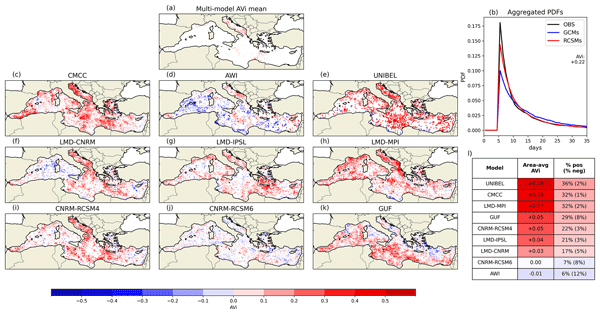
Marine heatwaves in the Mediterranean Sea are intensifying, posing growing threats to marine life and coastal communities. We evaluated if high-resolution regional climate models better capture these extremes compared to the global models driving them. Regional models reliably improve sea surface temperature patterns and marine heatwave duration, but struggle more with heatwave intensity. Higher horizontal resolution alone is not enough, advances in other model components are equally needed.
Mittal Parmar, Kristina Fröhlich, Antonella Sanna, Tobias Stacke, Marianna Benassi, Zhicheng Luo, Daniele Peano, and Bodo Ahrens
The Cryosphere, 20, 4157–4184, https://doi.org/10.5194/tc-20-4157-2026, https://doi.org/10.5194/tc-20-4157-2026, 2026
Short summary
Short summary
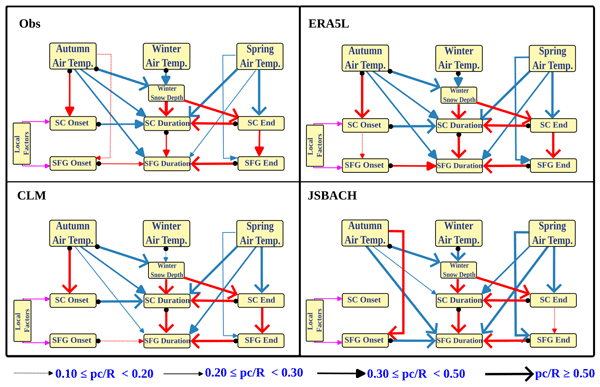
Seasonally frozen ground strongly influences land–atmosphere interactions, yet its simulation remains uncertain in land surface models. This study evaluates 2 standalone LSM simulations forced by reanalysis data (1986-2022) and validates results against reference observations at 26 Russian sites. Results show contrasting biases linked to snow insulation and freeze–thaw processes, highlighting the need for improved snow and soil parameterizations.
Paul Voit, Marie Hundhausen, Larisa Seregina, Hendrik Feldmann, Bodo Ahrens, and Maik Heistermann
EGUsphere, https://doi.org/10.5194/egusphere-2026-1229, https://doi.org/10.5194/egusphere-2026-1229, 2026
Short summary
Short summary
Extreme rainfall is expected to increase with a warming climate. However, it remains unclear how this will impact future floods. This study utilizes an ensemble of 6 new datasets, containing the future projected rainfall, and compares the simulated flash floods of the past (1971–2000) and future (2071–2100) under the RCP8.5 scenario for the German part of the Danube catchment. Our results indicate an increase of 100-yr flood return levels of 30 % across all subcatchments under this scenario.
Fanni Dóra Kelemen, Richard Lohmann, Jiang Zhu, and Bodo Ahrens
Clim. Past, 22, 505–516, https://doi.org/10.5194/cp-22-505-2026, https://doi.org/10.5194/cp-22-505-2026, 2026
Short summary
Short summary
The arrangement of continents and oceans strongly affects climate by shaping large-scale circulation patterns. We study, how early Eocene geography (53.5 Ma) influenced mid-latitude storms and persistent high-pressure systems, focusing on the West Siberian Sea and absent Antarctic Circumpolar Current. The climate model simulation of the early Eocene, shows a more balanced hemispheric distribution, through increased northern and decreased southern mid-latitude storm activity compared to today.
Prashant Singh and Bodo Ahrens
Atmos. Chem. Phys., 25, 17869–17888, https://doi.org/10.5194/acp-25-17869-2025, https://doi.org/10.5194/acp-25-17869-2025, 2025
Short summary
Short summary
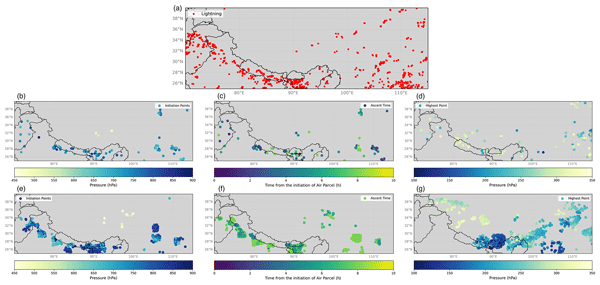
Intense deep convective clouds (e.g. lightning events) can rapidly move water vapour and other gases into the upper troposphere. The Third Pole region, especially the Himalayas, frequently experiences such storms. ICON (Icosahedral Nonhydrostatic )-CLM (climate limited-area mode) (3.3 km) and ERA5 reanalysis data (30 km), these convective events can lift water vapour into the upper troposphere but rarely into the lower stratosphere in the Third Pole. After reaching the upper troposphere, the water vapour tends to move horizontally away from the region.
Zhicheng Luo, Danny Risto, and Bodo Ahrens
The Cryosphere, 19, 6547–6576, https://doi.org/10.5194/tc-19-6547-2025, https://doi.org/10.5194/tc-19-6547-2025, 2025
Short summary
Short summary
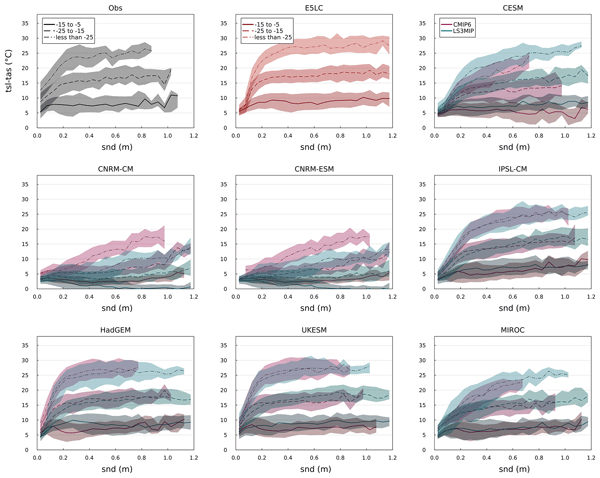
Climate models face challenges in accurately simulating cold regions' soil temperatures and snow conditions. By comparing different models, we found that the land surface models have a strong impact on simulation errors. Additionally, they struggle to account for snow’s insulating effect on the ground properly. Our findings highlight the need for improving frozen soil simulation, which is crucial for understanding the climate impacts of frozen soil.
Richard Lohmann, Christopher Purr, and Bodo Ahrens
EGUsphere, https://doi.org/10.5194/egusphere-2025-3670, https://doi.org/10.5194/egusphere-2025-3670, 2025
Preprint archived
Short summary
Short summary
This study investigates the relationship between atmospheric blocking and the extreme events heatwaves, heavy rainfall and calm events in Germany in atmospheric reanalyses and CMIP6 climate simulations. In the reanalyses, the statistical relationship is more pronounced between blocking and calms than between blocking and heavy precipitation. In the simulated future climate, the frequency of the three extreme event types increases with nearly unchanged relationship of blocking with the extremes.
Ralf Loritz, Alexander Dolich, Eduardo Acuña Espinoza, Pia Ebeling, Björn Guse, Jonas Götte, Sibylle K. Hassler, Corina Hauffe, Ingo Heidbüchel, Jens Kiesel, Mirko Mälicke, Hannes Müller-Thomy, Michael Stölzle, and Larisa Tarasova
Earth Syst. Sci. Data, 16, 5625–5642, https://doi.org/10.5194/essd-16-5625-2024, https://doi.org/10.5194/essd-16-5625-2024, 2024
Short summary
Short summary
The CAMELS-DE dataset features data from 1582 streamflow gauges across Germany, with records spanning from 1951 to 2020. This comprehensive dataset, which includes time series of up to 70 years (median 46 years), enables advanced research on water flow and environmental trends and supports the development of hydrological models.
Matteo Pesce, Alberto Viglione, Jost von Hardenberg, Larisa Tarasova, Stefano Basso, Ralf Merz, Juraj Parajka, and Rui Tong
Proc. IAHS, 385, 65–69, https://doi.org/10.5194/piahs-385-65-2024, https://doi.org/10.5194/piahs-385-65-2024, 2024
Short summary
Short summary
The manuscript describes an application of PArameter Set Shuffling (PASS) approach in the Alpine region. A machine learning decision-tree algorithm is applied for the regional calibration of a conceptual semi-distributed hydrological model. Regional model efficiencies don't decrease significantly when moving in space from catchments used for the regional calibration (training) to catchments used for the procedure validation (test) and, in time, from the calibration to the verification period.
Felipe A. Saavedra, Andreas Musolff, Jana von Freyberg, Ralf Merz, Stefano Basso, and Larisa Tarasova
Hydrol. Earth Syst. Sci., 26, 6227–6245, https://doi.org/10.5194/hess-26-6227-2022, https://doi.org/10.5194/hess-26-6227-2022, 2022
Short summary
Short summary
Nitrate contamination of rivers from agricultural sources is a challenge for water quality management. During runoff events, different transport paths within the catchment might be activated, generating a variety of responses in nitrate concentration in stream water. Using nitrate samples from 184 German catchments and a runoff event classification, we show that hydrologic connectivity during runoff events is a key control of nitrate transport from catchments to streams in our study domain.
Praveen Kumar Pothapakula, Amelie Hoff, Anika Obermann-Hellhund, Timo Keber, and Bodo Ahrens
Earth Syst. Dynam. Discuss., https://doi.org/10.5194/esd-2022-24, https://doi.org/10.5194/esd-2022-24, 2022
Preprint withdrawn
Short summary
Short summary
The Vb-cyclones simulated with a coupled regional climate model with two different driving data sets are compared against each other in historical period, thereafter the future climate predictions were analyzed. The Vb-cyclones in two simulations agree well in terms of their occurrence, intensity and track in two simulations, though there are discrepancies in seasonal cycles and their process linking Mediterranean Sea in historical period. So significant changes were observed in the future.
Cited articles
Beniston, M. and Stoffel, M.: Rain-on-snow events, floods and climate change in the Alps: Events may increase with warming up to 4 °C and decrease thereafter, Sci. Total Environ., 571, 228–236, https://doi.org/10.1016/j.scitotenv.2016.07.146, 2016. a, b
Bertola, M., Viglione, A., Lun, D., Hall, J., and Blöschl, G.: Flood trends in Europe: are changes in small and big floods different?, Hydrol. Earth Syst. Sci., 24, 1805–1822, https://doi.org/10.5194/hess-24-1805-2020, 2020. a
Blöschl, G., Hall, J., Parajka, J., Perdigão, R. A. P., Merz, B., Arheimer, B., Aronica, G. T., Bilibashi, A., Bonacci, O., Borga, M., Čanjevac, I., Castellarin, A., Chirico, G. B., Claps, P., Fiala, K., Frolova, N., Gorbachova, L., Gül, A., Hannaford, J., Harrigan, S., Kireeva, M., Kiss, A., Kjeldsen, T. R., Kohnová, S., Koskela, J. J., Ledvinka, O., Macdonald, N., Mavrova-Guirguinova, M., Mediero, L., Merz, R., Molnar, P., Montanari, A., Murphy, C., Osuch, M., Ovcharuk, V., Radevski, I., Rogger, M., Salinas, J. L., Sauquet, E., Šraj, M., Szolgay, J., Viglione, A., Volpi, E., Wilson, D., Zaimi, K., and Živković, N.: Changing climate shifts timing of European floods, Science, 357, 588–590, https://doi.org/10.1126/science.aan2506, 2017. a
Blöschl, G., Hall, J., Viglione, A., Perdigão, R. A., Parajka, J., Merz, B., Lun, D., Arheimer, B., Aronica, G. T., Bilibashi, A., Boháč, M., Bonacci, O., Borga, M., Čanjevac, I., Castellarin, A., Chirico, G. B., Claps, P., Frolova, N., Ganora, D., Gorbachova, L., Gül, A., Hannaford, J., Harrigan, S., Kireeva, M., Kiss, A., Kjeldsen, T. R., Kohnová, S., Koskela, J. J., Ledvinka, O., Macdonald, N., Mavrova-Guirguinova, M., Mediero, L., Merz, R., Molnar, P., Montanari, A., Murphy, C., Osuch, M., Ovcharuk, V., Radevski, I., Salinas, J. L., Sauquet, E., Šraj, M., Szolgay, J., Volpi, E., Wilson, D., Zaimi, K., and Živković, N.: Changing climate both increases and decreases European river floods, Nature, 573, 108–111, https://doi.org/10.1038/s41586-019-1495-6, 2019. a, b
Camici, S., Brocca, L., Melone, F., and Moramarco, T.: Impact of Climate Change on Flood Frequency Using Different Climate Models and Downscaling Approaches, J. Hydrol. Eng., 19, 04014002, https://doi.org/10.1061/(ASCE)HE.1943-5584.0000959, 2014. a
Cannon, A. J., Sobie, S. R., and Murdock, T. Q.: Bias Correction of GCM Precipitation by Quantile Mapping: How Well Do Methods Preserve Changes in Quantiles and Extremes?, J. Climate, 28, 6938–6959, https://doi.org/10.1175/JCLI-D-14-00754.1, 2015. a
Chegwidden S, O., Rupp, D. E., and Nijssen, B.: Climate change alters flood magnitudes and mechanisms in climatically-diverse headwaters across the northwestern United States, Environ. Res. Lett., 15, 094048, https://doi.org/10.1088/1748-9326/ab986f, 2020. a, b, c
Cohen, J., Ye, H., and Jones, J.: Trends and variability in rain-on-snow events, Geophys. Res. Lett., 42, 7115–7122, https://doi.org/10.1002/2015GL065320, 2015. a, b, c
Comas-Bru, L. and McDermott, F.: Impacts of the EA and SCA patterns on the European twentieth century NAO–winter climate relationship, Q. J. Roy. Meteor. Soc., 140, 354–363, https://doi.org/10.1002/qj.2158, 2014. a
Czakay, C., Tarasova, L., and Ahrens, B.: Streamflow and flood-generating processes for CORDEX-CMIP5-driven streamflow simulations (1950–2100) using an LSTM and XAI, Zenodo [data set], https://doi.org/10.5281/zenodo.16368450, 2025. a
Dee, D. P., Uppala, S. M., Simmons, A. J., Berrisford, P., Poli, P., Kobayashi, S., Andrae, U., Balmaseda, M. A., Balsamo, G., Bauer, P., Bechtold, P., Beljaars, A. C. M., van de Berg, L., Bidlot, J., Bormann, N., Delsol, C., Dragani, R., Fuentes, M., Geer, A. J., Haimberger, L., Healy, S. B., Hersbach, H., Hólm, E. V., Isaksen, L., Kållberg, P., Köhler, M., Matricardi, M., McNally, A. P., Monge-Sanz, B. M., Morcrette, J.-J., Park, B.-K., Peubey, C., de Rosnay, P., Tavolato, C., Thépaut, J.-N., and Vitart, F.: The ERA-Interim reanalysis: configuration and performance of the data assimilation system, Q. J. Roy. Meteor. Soc., 137, 553–597, https://doi.org/10.1002/qj.828, 2011. a
Dong, C. and Menzel, L.: Recent snow cover changes over central European low mountain ranges, Hydrol. Process., 34, 321–338, https://doi.org/10.1002/hyp.13586, 2020. a
ECMWF: IFS Documentation CY41R2 – Part IV: Physical Processes, ECMWF, 108–111, https://doi.org/10.21957/tr5rv27xu, 2016. a
Fischer, S., Lun, D., Schumann, A. H., and Blöschl, G.: Detecting flood-type-specific flood-rich and flood-poor periods in peaks-over-threshold series with application to Bavaria (Germany), Stoch. Env. Res. Risk A., 37, 1395–1413, https://doi.org/10.1007/s00477-022-02350-8, 2023. a
Forsythe, W. C., Rykiel, E. J., Stahl, R. S., i Wu, H., and Schoolfield, R. M.: A model comparison for daylength as a function of latitude and day of year, Ecol. Model., 80, 87–95, https://doi.org/10.1016/0304-3800(94)00034-F, 1995. a
Frame, J. M., Kratzert, F., Klotz, D., Gauch, M., Shalev, G., Gilon, O., Qualls, L. M., Gupta, H. V., and Nearing, G. S.: Deep learning rainfall–runoff predictions of extreme events, Hydrol. Earth Syst. Sci., 26, 3377–3392, https://doi.org/10.5194/hess-26-3377-2022, 2022. a
Gupta, H. V., Kling, H., Yilmaz, K. K., and Martinez, G. F.: Decomposition of the mean squared error and NSE performance criteria: Implications for improving hydrological modelling, J. Hydrol., 377, 80–91, https://doi.org/10.1016/j.jhydrol.2009.08.003, 2009. a
Hersbach, H., Bell, B., Berrisford, P., Hirahara, S., Horányi, A., Muñoz-Sabater, J., Nicolas, J., Peubey, C., Radu, R., Schepers, D., Simmons, A., Soci, C., Abdalla, S., Abellan, X., Balsamo, G., Bechtold, P., Biavati, G., Bidlot, J., Bonavita, M., De Chiara, G., Dahlgren, P., Dee, D., Diamantakis, M., Dragani, R., Flemming, J., Forbes, R., Fuentes, M., Geer, A., Haimberger, L., Healy, S., Hogan, R. J., Hólm, E., Janisková, M., Keeley, S., Laloyaux, P., Lopez, P., Lupu, C., Radnoti, G., de Rosnay, P., Rozum, I., Vamborg, F., Villaume, S., and Thépaut, J.-N.: The ERA5 global reanalysis, Q. J. Roy. Meteor. Soc., 146, 1999–2049, https://doi.org/10.1002/qj.3803, 2020. a
Hochreiter, S. and Schmidhuber, J.: Long Short-Term Memory, Neural Comput., 9, 1735–1780, https://doi.org/10.1162/neco.1997.9.8.1735, 1997. a
Huang, H., Fischella, M. R., Liu, Y., Ban, Z., Fayne, J. V., Li, D., Cavanaugh, K. C., and Lettenmaier, D. P.: Changes in Mechanisms and Characteristics of Western U.S. Floods Over the Last Sixty Years, Geophys. Res. Lett., 49, e2021GL097022, https://doi.org/10.1029/2021GL097022, 2022. a, b
Hurrell, J. W.: Decadal Trends in the North Atlantic Oscillation: Regional Temperatures and Precipitation, Science, 269, 676–679, https://doi.org/10.1126/science.269.5224.676, 1995. a
Jiang, S., Bevacqua, E., and Zscheischler, J.: River flooding mechanisms and their changes in Europe revealed by explainable machine learning, Hydrol. Earth Syst. Sci., 26, 6339–6359, https://doi.org/10.5194/hess-26-6339-2022, 2022a. a, b, c
Jiang, S., Zheng, Y., Wang, C., and Babovic, V.: Uncovering Flooding Mechanisms Across the Contiguous United States Through Interpretive Deep Learning on Representative Catchments, Water Resour. Res., 58, https://doi.org/10.1029/2021WR030185, 2022b. a
Kemter, M., Merz, B., Marwan, N., Vorogushyn, S., and Blöschl, G.: Joint Trends in Flood Magnitudes and Spatial Extents Across Europe, Geophys. Res. Lett., 47, e2020GL087464, https://doi.org/10.1029/2020GL087464, 2020. a, b
Kingma, D. P. and Ba, J.: Adam: A Method for Stochastic Optimization, arXiv [preprint], https://doi.org/10.48550/arXiv.1412.6980, 2017. a
Kouki, K., Luojus, K., and Riihelä, A.: Evaluation of snow cover properties in ERA5 and ERA5-Land with several satellite-based datasets in the Northern Hemisphere in spring 1982–2018, The Cryosphere, 17, 5007–5026, https://doi.org/10.5194/tc-17-5007-2023, 2023. a
Kratzert, F., Klotz, D., Brenner, C., Schulz, K., and Herrnegger, M.: Rainfall–runoff modelling using Long Short-Term Memory (LSTM) networks, Hydrol. Earth Syst. Sci., 22, 6005–6022, https://doi.org/10.5194/hess-22-6005-2018, 2018. a, b
Krug, A., Primo, C., Fischer, S., Schumann, A., and Ahrens, B.: On the temporal variability of widespread rain-on-snow floods, Meteorol. Z., 29, 147–163, https://doi.org/10.1127/metz/2020/0989, 2020. a, b, c
Lang, M., Ouarda, T., and Bobée, B.: Towards operational guidelines for over-threshold modeling, J. Hydrol., 225, 103–117, https://doi.org/10.1016/S0022-1694(99)00167-5, 1999. a
Li, D., Lettenmaier, D. P., Margulis, S. A., and Andreadis, K.: The Role of Rain-on-Snow in Flooding Over the Conterminous United States, Water Resour. Res., 55, 8492–8513, https://doi.org/10.1029/2019WR024950, 2019. a
Maina, F. Z. and Kumar, S. V.: Diverging Trends in Rain-On-Snow Over High Mountain Asia, Earths Future, 11, e2022EF003009, https://doi.org/10.1029/2022EF003009, 2023. a
Maina, F. Z. and Kumar, S. V.: Global patterns of rain-on-snow and its impacts on runoff from past to future projections, Nat. Commun., 16, 1–10, https://doi.org/10.1038/s41467-025-59855-3, 2025. a, b
Mann, H. B. and Whitney, D. R.: On a test of whether one of two random variables is stochastically larger than theother, Ann. Math. Stat., 50–60, https://doi.org/10.1214/aoms/1177730491, 1947. a
Matiu, M. and Hanzer, F.: Bias adjustment and downscaling of snow cover fraction projections from regional climate models using remote sensing for the European Alps, Hydrol. Earth Syst. Sci., 26, 3037–3054, https://doi.org/10.5194/hess-26-3037-2022, 2022. a
McCabe, G. J., Clark, M. P., and Hay, L. E.: Rain-on-Snow Events in the Western United States, B. Am. Meteorol. Soc., 88, 319–328, https://doi.org/10.1175/BAMS-88-3-319, 2007. a, b, c
Merz, B., Elmer, F., Kunz, M., Mühr, B., Schröter, K., and Uhlemann-Elmer, S.: The extreme flood in June 2013 in Germany, La Houille Blanche, 5–10, https://doi.org/10.1051/lhb/2014001, 2014. a
Merz, B., Nguyen, V. D., and Vorogushyn, S.: Temporal clustering of floods in Germany: Do flood-rich and flood-poor periods exist?, J. Hydrol., 541, 824–838, https://doi.org/10.1016/j.jhydrol.2016.07.041, 2016. a, b
Merz, R. and Blöschl, G.: A process typology of regional floods, Water Resour. Res., 39, https://doi.org/10.1029/2002WR001952, 2003. a
Morán-Tejeda, E., López-Moreno, J. I., Stoffel, M., and Beniston, M.: Rain-on-snow events in Switzerland: recent observations and projections for the 21st century, Clim. Res., 71, 111–125, https://doi.org/10.3354/cr01435, 2016. a
Mudryk, L. R., Kushner, P. J., Derksen, C., and Thackeray, C.: Snow cover response to temperature in observational and climate model ensembles, Geophys. Res. Lett., 44, 919–926, https://doi.org/10.1002/2016GL071789, 2017. a
Musselman, K. N., Lehner, F., Ikeda, K., Clark, M. P., Prein, A. F., Liu, C., Barlage, M., and Rasmussen, R.: Projected increases and shifts in rain-on-snow flood risk over western North America, Nat. Clim. Change, 8, 808–812, https://doi.org/10.1038/s41558-018-0236-4, 2018. a
Nash, J. and Sutcliffe, J.: River flow forecasting through conceptual models part I – A discussion of principles, J. Hydrol., 10, 282–290, https://doi.org/10.1016/0022-1694(70)90255-6, 1970. a
Nearing, G., Cohen, D., Dube, V., Gauch, M., Gilon, O., Harrigan, S., Hassidim, A., Klotz, D., Kratzert, F., Metzger, A., Nevo, S., Pappenberger, F., Prudhomme, C., Shalev, G., Shenzis, S., Tekalign, T. Y., Weitzner, D., and Matias, Y.: Global prediction of extreme floods in ungauged watersheds, Nature, 627, 559–563, https://doi.org/10.1038/s41586-024-07145-1, 2024. a
NOAA National Centers for Environmental Information: 2022: ETOPO 2022 15 Arc-Second Global Relief Model, NOAA National Centers for Environmental Information, https://doi.org/10.25921/fd45-gt74, 2022. a
Ohba, M. and Kawase, H.: Rain-on-Snow events in Japan as projected by a large ensemble of regional climate simulations, Clim. Dynam., 55, 2785–2800, https://doi.org/10.1007/s00382-020-05419-8, 2020. a
Ondrej Hotovy, O. N. and Jenicek, M.: Changes in rain-on-snow events in mountain catchments in the rain–snow transition zone, Hydrolog. Sci. J., 68, 572–584, https://doi.org/10.1080/02626667.2023.2177544, 2023. a
Pall, P., Tallaksen, L. M., and Stordal, F.: A Climatology of Rain-on-Snow Events for Norway, J. Climate, 32, 6995–7016, https://doi.org/10.1175/JCLI-D-18-0529.1, 2019. a, b
Petrow, T., Thieken, A. H., Kreibich, H., Merz, B., and Bahlburg, C. H.: Improvements on flood alleviation in Germany: Lessons learned from the Elbe flood in August 2002, Environ. Manage., 38, 717–732, https://doi.org/10.1007/s00267-005-6291-4, 2006. a
Petrow, T., Zimmer, J., and Merz, B.: Changes in the flood hazard in Germany through changing frequency and persistence of circulation patterns, Nat. Hazards Earth Syst. Sci., 9, 1409–1423, https://doi.org/10.5194/nhess-9-1409-2009, 2009. a
Risto, D., Fröhlich, K., and Ahrens, B.: Seasonal Snow Simulation: Sensitivity to Initialization, Parameterization, and Forcing, Earth Systems and Environment, 1–12, https://doi.org/10.1007/s41748-025-00728-6, 2025. a
Rojas, R., Feyen, L., Bianchi, A., and Dosio, A.: Assessment of future flood hazard in Europe using a large ensemble of bias-corrected regional climate simulations, J. Geophys. Res.-Atmos., 117, https://doi.org/10.1029/2012JD017461, 2012. a
Rössler, O., Froidevaux, P., Börst, U., Rickli, R., Martius, O., and Weingartner, R.: Retrospective analysis of a nonforecasted rain-on-snow flood in the Alps – a matter of model limitations or unpredictable nature?, Hydrol. Earth Syst. Sci., 18, 2265–2285, https://doi.org/10.5194/hess-18-2265-2014, 2014. a
Schmocker-Fackel, P. and Naef, F.: Changes in flood frequencies in Switzerland since 1500, Hydrol. Earth Syst. Sci., 14, 1581–1594, https://doi.org/10.5194/hess-14-1581-2010, 2010. a, b
Sezen, C., Šraj, M., Medved, A., and Bezak, N.: Investigation of Rain-On-Snow Floods under Climate Change, Appl. Sci., 10, https://doi.org/10.3390/app10041242, 2020. a, b, c
Smith, A., Bates, P., Freer, J., and Wetterhall, F.: Investigating the application of climate models in flood projection across the UK, Hydrol. Process., 28, 2810–2823, https://doi.org/10.1002/hyp.9815, 2014. a
Song, Y., Sawadekar, K., Frame, J. M., Pan, M., Clark, M., Knoben, W. J. M., Wood, A. W., Lawson, K. E., Patel, T., and Shen, C.: Physics-informed, Differentiable Hydrologic Models for Capturing Unseen Extreme Events, ESS Open Archive, https://doi.org/10.22541/essoar.172304428.82707157/v2, 2025. a
Sørland, S. L., Schär, C., Lüthi, D., and Kjellström, E.: Bias patterns and climate change signals in GCM-RCM model chains, Environ. Res. Lett., 13, 074017, https://doi.org/10.1088/1748-9326/aacc77, 2018. a
Stein, L., Clark, M. P., Knoben, W. J. M., Pianosi, F., and Woods, R. A.: How Do Climate and Catchment Attributes Influence Flood Generating Processes? A Large-Sample Study for 671 Catchments Across the Contiguous USA, Water Resour. Res., 57, e2020WR028300, https://doi.org/10.1029/2020WR028300, 2021. a
Sui, J. and Koehler, G.: Rain-on-snow induced flood events in Southern Germany, J. Hydrol., 252, 205–220, https://doi.org/10.1016/S0022-1694(01)00460-7, 2001. a, b, c
Sundararajan, M., Taly, A., and Yan, Q.: Axiomatic Attribution for Deep Networks, arXiv [preprint], https://doi.org/10.48550/arXiv.1703.01365, 2017. a
Tarasova, L., Merz, R., Kiss, A., Basso, S., Blöschl, G., Merz, B., Viglione, A., Plötner, S., Guse, B., Schumann, A., Fischer, S., Ahrens, B., Anwar, F., Bárdossy, A., Bühler, P., Haberlandt, U., Kreibich, H., Krug, A., Lun, D., Müller-Thomy, H., Pidoto, R., Primo, C., Seidel, J., Vorogushyn, S., and Wietzke, L.: Causative classification of river flood events, WIREs Water, 6, e1353, https://doi.org/10.1002/wat2.1353, 2019. a
Tarasova, L., Basso, S., and Merz, R.: Transformation of Generation Processes From Small Runoff Events to Large Floods, Geophys. Res. Lett., 47, e2020GL090547, https://doi.org/10.1029/2020GL090547, 2020a. a
Tarasova, L., Lun, D., Merz, R., Blöschl, G., Basso, S., Bertola, M., Miniussi, A., Rakovec, O., Samaniego, L., Thober, S., and Kumar, R.: Shifts in flood generation processes exacerbate regional flood anomalies in Europe, Commun. Earth Environ., 4, https://doi.org/10.1038/s43247-023-00714-8, 2023. a, b, c, d, e, f
Taylor, K. E., Stouffer, R. J., and Meehl, G. A.: An Overview of CMIP5 and the Experiment Design, B. Am. Meteorol. Soc., 93, 485–498, https://doi.org/10.1175/BAMS-D-11-00094.1, 2012. a
Terzago, S., von Hardenberg, J., Palazzi, E., and Provenzale, A.: Snow water equivalent in the Alps as seen by gridded data sets, CMIP5 and CORDEX climate models, The Cryosphere, 11, 1625–1645, https://doi.org/10.5194/tc-11-1625-2017, 2017. a
Trubilowicz, J. W. and Moore, R. D.: Quantifying the role of the snowpack in generating water available for run-off during rain-on-snow events from snow pillow records, Hydrol. Process., 31, 4136–4150, https://doi.org/10.1002/hyp.11310, 2017. a, b
Ulbrich, U. and Fink, A.: The January 1995 flood in Germany: Meteorological versus hydrological causes, Phys. Chem. Earth, 20, 439–444, https://doi.org/10.1016/S0079-1946(96)00002-X, 1995. a
Ulbrich, U., Brücher, T., Fink, A. H., Leckebusch, G. C., Krüger, A., and Pinto, J. G.: The central European floods of August 2002: Part 1 – Rainfall periods and flood development, Weather, 58, 371–377, https://doi.org/10.1256/wea.61.03A, 2003. a
Villarini, G., Smith, J. A., Vitolo, R., and Stephenson, D. B.: On the temporal clustering of US floods and its relationship to climate teleconnection patterns, Int. J. Climatol., 33, 629–640, https://doi.org/10.1002/joc.3458, 2013. a, b
Xiao, X. and Liang, S.: Assessment of snow cover mapping algorithms from Landsat surface reflectance data and application to automated snowline delineation, Remote Sens. Environ., 307, 114163, https://doi.org/10.1016/j.rse.2024.114163, 2024. a
Ye, H., Yang, D., and Robinson, D.: Winter rain on snow and its association with air temperature in northern Eurasia, Hydrol. Process., 22, 2728–2736, https://doi.org/10.1002/hyp.7094, 2008. a
Short summary
In this study, we simulated streamflow in German river catchments for climate projections using a deep learning model. Flood-generating processes were identified using explainable artificial intelligence. In the median, the models project mostly less rain-on-snow floods in Germany in the future and an overall lower importance of snowmelt. The average and strongest rain-on-snow floods will have a higher magnitude. The trends found for the individual climate models can vary considerably.
In this study, we simulated streamflow in German river catchments for climate projections using...
Altmetrics
Final-revised paper
Preprint