Articles | Volume 26, issue 11
https://doi.org/10.5194/nhess-26-5389-2026
© Author(s) 2026. This work is distributed under
the Creative Commons Attribution 4.0 License.
https://doi.org/10.5194/nhess-26-5389-2026
© Author(s) 2026. This work is distributed under
the Creative Commons Attribution 4.0 License.
Residual error modelling for process-based flood frequency analysis

Jonathan Romero-Cuellar
CORRESPONDING AUTHOR
Department of Civil and Environmental Engineering, University of Waterloo, Waterloo, N2L 3G1, Canada
James R. Craig
Department of Civil and Environmental Engineering, University of Waterloo, Waterloo, N2L 3G1, Canada
Bryan A. Tolson
Department of Civil and Environmental Engineering, University of Waterloo, Waterloo, N2L 3G1, Canada
Rezgar Arabzadeh
Department of Civil and Environmental Engineering, University of Waterloo, Waterloo, N2L 3G1, Canada
Related authors
No articles found.
Aida Jabbari, Biljana Music, David Huard, James Craig, Richard Turcotte, Mohammad Bizhanimanzar, Simon Lachance-Cloutier, Charles Malenfant, and François Anctil
EGUsphere, https://doi.org/10.5194/egusphere-2026-4806, https://doi.org/10.5194/egusphere-2026-4806, 2026
This preprint is open for discussion and under review for Geoscientific Model Development (GMD).
Short summary
Short summary
Reliable streamflow predictions are important for managing water resources and preparing for floods. We developed and tested 48 versions of a hydrological model to explore how differences in model design and weather data affect predictions. We found that combining several models and accounting for uncertainty in weather data produced more reliable predictions while using fewer models. This approach can support more robust water management and flood forecasting.
Hongren Shen, Bryan A. Tolson, James R. Craig, Robert A. Metcalfe, Jonathan Romero-Cuellar, and Jamie Luce
Earth Syst. Sci. Data Discuss., https://doi.org/10.5194/essd-2026-286, https://doi.org/10.5194/essd-2026-286, 2026
Revised manuscript accepted for ESSD
Short summary
Short summary
This study presents the first province-wide map of streamflow alteration across Ontario, Canada. We developed a network-based method to trace how dams, reservoirs, waterpower facilities, and control structures may influence flows downstream through connected river networks. The result is a practical screening dataset that helps identify where rivers likely remain natural and where upstream infrastructure may affect flow, supporting hydrologic modeling and water resources management.
Robert Chlumsky, James R. Craig, and Bryan A. Tolson
Geosci. Model Dev., 18, 3387–3403, https://doi.org/10.5194/gmd-18-3387-2025, https://doi.org/10.5194/gmd-18-3387-2025, 2025
Short summary
Short summary
We aim to improve mapping of floods and present a new method for hydraulic modelling that uses a combination of novel geospatial analysis and existing hydraulic modelling approaches. This method is wrapped into a modelling software called Blackbird. We compared Blackbird with two other existing options for flood mapping and found that the Blackbird model outperformed both. The Blackbird model has the potential to support real-time and large-scale flood mapping applications in the future.
Raoul A. Collenteur, Ezra Haaf, Mark Bakker, Tanja Liesch, Andreas Wunsch, Jenny Soonthornrangsan, Jeremy White, Nick Martin, Rui Hugman, Ed de Sousa, Didier Vanden Berghe, Xinyang Fan, Tim J. Peterson, Jānis Bikše, Antoine Di Ciacca, Xinyue Wang, Yang Zheng, Maximilian Nölscher, Julian Koch, Raphael Schneider, Nikolas Benavides Höglund, Sivarama Krishna Reddy Chidepudi, Abel Henriot, Nicolas Massei, Abderrahim Jardani, Max Gustav Rudolph, Amir Rouhani, J. Jaime Gómez-Hernández, Seifeddine Jomaa, Anna Pölz, Tim Franken, Morteza Behbooei, Jimmy Lin, and Rojin Meysami
Hydrol. Earth Syst. Sci., 28, 5193–5208, https://doi.org/10.5194/hess-28-5193-2024, https://doi.org/10.5194/hess-28-5193-2024, 2024
Short summary
Short summary
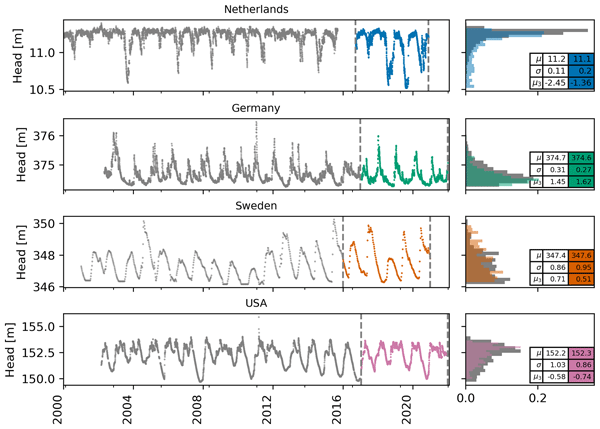
We show the results of the 2022 Groundwater Time Series Modelling Challenge; 15 teams applied data-driven models to simulate hydraulic heads, and three model groups were identified: lumped, machine learning, and deep learning. For all wells, reasonable performance was obtained by at least one team from each group. There was not one team that performed best for all wells. In conclusion, the challenge was a successful initiative to compare different models and learn from each other.
Qiutong Yu, Bryan A. Tolson, Hongren Shen, Ming Han, Juliane Mai, and Jimmy Lin
Hydrol. Earth Syst. Sci., 28, 2107–2122, https://doi.org/10.5194/hess-28-2107-2024, https://doi.org/10.5194/hess-28-2107-2024, 2024
Short summary
Short summary
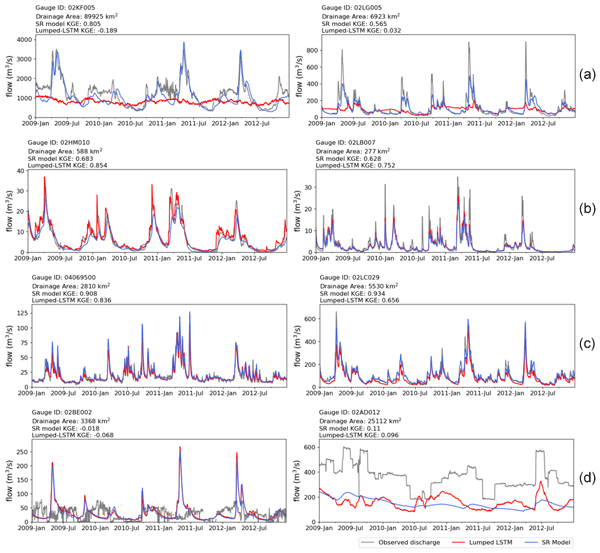
It is challenging to incorporate input variables' spatial distribution information when implementing long short-term memory (LSTM) models for streamflow prediction. This work presents a novel hybrid modelling approach to predict streamflow while accounting for spatial variability. We evaluated the performance against lumped LSTM predictions in 224 basins across the Great Lakes region in North America. This approach shows promise for predicting streamflow in large, ungauged basin.
Samah Larabi, Juliane Mai, Markus Schnorbus, Bryan A. Tolson, and Francis Zwiers
Hydrol. Earth Syst. Sci., 27, 3241–3263, https://doi.org/10.5194/hess-27-3241-2023, https://doi.org/10.5194/hess-27-3241-2023, 2023
Short summary
Short summary
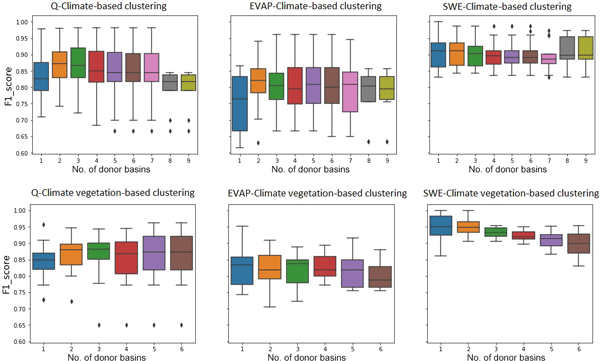
The computational cost of sensitivity analysis (SA) becomes prohibitive for large hydrologic modeling domains. Here, using a large-scale Variable Infiltration Capacity (VIC) deployment, we show that watershed classification helps identify the spatial pattern of parameter sensitivity within the domain at a reduced cost. Findings reveal the opportunity to leverage climate and land cover attributes to reduce the cost of SA and facilitate more rapid deployment of large-scale land surface models.
Robert Chlumsky, Juliane Mai, James R. Craig, and Bryan A. Tolson
Hydrol. Earth Syst. Sci. Discuss., https://doi.org/10.5194/hess-2023-69, https://doi.org/10.5194/hess-2023-69, 2023
Revised manuscript not accepted
Short summary
Short summary
A blended model allows multiple hydrologic processes to be represented in a single model, which allows for a model to achieve high performance without the need to modify its structure for different catchments. Here, we improve upon the initial blended version by testing more than 30 blended models in twelve catchments to improve the overall model performance. We validate our proposed, updated blended model version with independent catchments, and make this version available for open use.
Robert Chlumsky, James R. Craig, Simon G. M. Lin, Sarah Grass, Leland Scantlebury, Genevieve Brown, and Rezgar Arabzadeh
Geosci. Model Dev., 15, 7017–7030, https://doi.org/10.5194/gmd-15-7017-2022, https://doi.org/10.5194/gmd-15-7017-2022, 2022
Short summary
Short summary
We introduce the open-source RavenR package, which has been built to support the use of the hydrologic modelling framework Raven. The R package contains many functions that may be useful in each step of the model-building process, including preparing model input files, running the model, and analyzing the outputs. We present six reproducible use cases of the RavenR package for the Liard River basin in Canada to demonstrate how it may be deployed.
Juliane Mai, Hongren Shen, Bryan A. Tolson, Étienne Gaborit, Richard Arsenault, James R. Craig, Vincent Fortin, Lauren M. Fry, Martin Gauch, Daniel Klotz, Frederik Kratzert, Nicole O'Brien, Daniel G. Princz, Sinan Rasiya Koya, Tirthankar Roy, Frank Seglenieks, Narayan K. Shrestha, André G. T. Temgoua, Vincent Vionnet, and Jonathan W. Waddell
Hydrol. Earth Syst. Sci., 26, 3537–3572, https://doi.org/10.5194/hess-26-3537-2022, https://doi.org/10.5194/hess-26-3537-2022, 2022
Short summary
Short summary
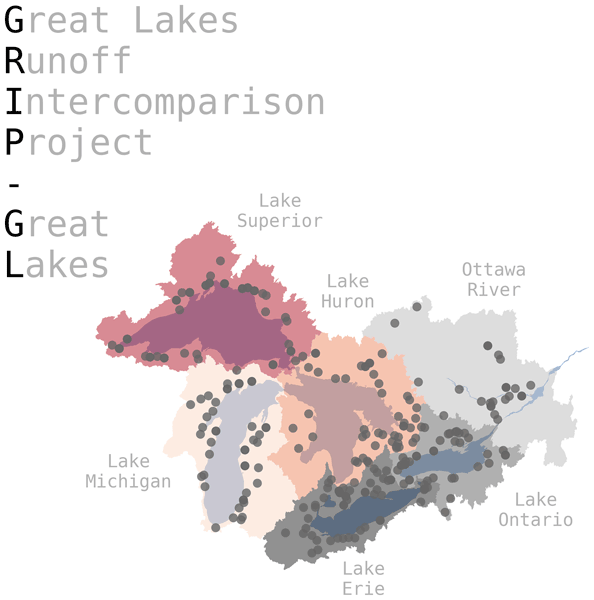
Model intercomparison studies are carried out to test various models and compare the quality of their outputs over the same domain. In this study, 13 diverse model setups using the same input data are evaluated over the Great Lakes region. Various model outputs – such as streamflow, evaporation, soil moisture, and amount of snow on the ground – are compared using standardized methods and metrics. The basin-wise model outputs and observations are made available through an interactive website.
Cited articles
Andersen, C. B., Wright, D. B., and Thorndahl, S.: CON-SST-RAIN: Continuous Stochastic Space–Time Rainfall generation based on Markov chains and transposition of weather radar data, J. Hydrol. (Amst.), 637, 131385, https://doi.org/10.1016/J.JHYDROL.2024.131385, 2024.
Apel, H., Thieken, A. H., Merz, B., and Blöschl, G.: Flood risk assessment and associated uncertainty, Nat. Hazards Earth Syst. Sci., 4, 295–308, https://doi.org/10.5194/nhess-4-295-2004, 2004.
Arnaud, P. and Lavabre, J.: Coupled rainfall model and discharge model for flood frequency estimation, Water Resour. Res., 38, https://doi.org/10.1029/2001WR000474, 2002.
Arnaud, P., Cantet, P., and Odry, J.: Uncertainties of flood frequency estimation approaches based on continuous simulation using data resampling, J. Hydrol. (Amst.), 554, https://doi.org/10.1016/j.jhydrol.2017.09.011, 2017.
Baâ, K. M., Díaz-Delgado, C., and Caârsteanu, A.: Confidence intervals of quantiles in hydrology computed by an analytical method, Nat. Hazards, 24, 1–12, https://doi.org/10.1023/A:1011101700032, 2001.
Baer, J. A., Sebastian, A., Grimley, L. E., Doss-Gollin, J., Wright, D. B., Hussain, M. A., and Webber, M. K.: Neglecting spatiotemporal rainfall variability misrepresents flood hazard and risk, npj Nat. Hazards, https://doi.org/10.1038/S44304-026-00208-5, 2026.
Beck, H. E., van Dijk, A. I. J. M., de Roo, A., Miralles, D. G., McVicar, T. R., Schellekens, J., and Bruijnzeel, L. A.: Global-scale regionalization of hydrologic model parameters, Water Resour. Res., 52, 3599–3622, https://doi.org/10.1002/2015WR018247, 2016.
Benito, G., Lang, M., Barriendos, M., Llasat, M. C., Francés, F., Ouarda, T., Thorndycraft, V. R., Enzel, Y., Bardossy, A., Coeur, D., and Bobée, B.: Use of systematic, palaeoflood and historical data for the improvement of flood risk estimation. Review of scientific method, Nat. Hazards, 31, 623–643, https://doi.org/10.1023/B:NHAZ.0000024895.48463.EB, 2004.
Blazkova, S. and Beven, K.: A limits of acceptability approach to model evaluation and uncertainty estimation in flood frequency estimation by continuous simulation: Skalka catchment, Czech Republic, Water Resour. Res., 45, W00B16, https://doi.org/10.1029/2007WR006726, 2009.
Bomers, A., Schielen, R. M. J., and Hulscher, S. J. M. H.: Decreasing uncertainty in flood frequency analyses by including historic flood events in an efficient bootstrap approach, Nat. Hazards Earth Syst. Sci., 19, 1895–1908, https://doi.org/10.5194/nhess-19-1895-2019, 2019.
Box, G. E. P. and Cox, D. R.: An Analysis of Transformations, J. R. Stat. Soc., 26, 211–252, 1964.
Brunner, M. I. and Slater, L. J.: Extreme floods in Europe: going beyond observations using reforecast ensemble pooling, Hydrol. Earth Syst. Sci., 26, 469–482, https://doi.org/10.5194/hess-26-469-2022, 2022.
Brunner, M. I., Melsen, L. A., Wood, A. W., Rakovec, O., Mizukami, N., Knoben, W. J. M., and Clark, M. P.: Flood spatial coherence, triggers, and performance in hydrological simulations: large-sample evaluation of four streamflow-calibrated models, Hydrol. Earth Syst. Sci., 25, 105–119, https://doi.org/10.5194/hess-25-105-2021, 2021.
Burn, D. H.: The use of resampling for estimating confidence intervals for single site and pooled frequency analysis/Utilisation d'un rééchantillonnage pour l'estimation des intervalles de confiance lors d'analyses fréquentielles mono et multi-site, Hydrolog. Sci. J., 48, 25–38, https://doi.org/10.1623/HYSJ.48.1.25.43485, 2003.
Burn, D. H. and Whitfield, P. H.: Climate related changes to flood regimes show an increasing rainfall influence, J. Hydrol. (Amst.), 617, 129075, https://doi.org/10.1016/J.JHYDROL.2023.129075, 2023.
Buttle, J. M., Allen, D. M., Caissie, D., Davison, B., Hayashi, M., Peters, D. L., Pomeroy, J. W., Simonovic, S., St-Hilaire, A., and Whitfield, P. H.: Flood processes in Canada: Regional and special aspects, Can. Water Resour. J./Revue canadienne des ressources hydriques, 41, 7–30, https://doi.org/10.1080/07011784.2015.1131629, 2016.
Cameron, D., Beven, K., Tawn, J., and Naden, P.: Flood frequency estimation by continuous simulation (with likelihood based uncertainty estimation), Hydrol. Earth Syst. Sci., 4, 23–34, https://doi.org/10.5194/hess-4-23-2000, 2000.
Coles, S.: An Introduction to Statistical Modeling of Extreme Values, Springer Series in Statistics, Springer-Verlag, Berlin, https://doi.org/10.1007/978-1-4471-3675-0, 2001.
Costa, V. and Fernandes, W.: Bayesian estimation of extreme flood quantiles using a rainfall-runoff model and a stochastic daily rainfall generator, J. Hydrol. (Amst.), 554, 137–154, https://doi.org/10.1016/J.JHYDROL.2017.09.003, 2017.
Craig, J. R., Brown, G., Chlumsky, R., Jenkinson, R. W., Jost, G., Lee, K., Mai, J., Serrer, M., Sgro, N., Shafii, M., Snowdon, A. P., and Tolson, B. A.: Flexible watershed simulation with the Raven hydrological modelling framework, Environ. Model. Softw., 129, https://doi.org/10.1016/j.envsoft.2020.104728, 2020.
Cunnane, C.: Methods and merits of regional flood frequency analysis, J. Hydrol. (Amst)., 100, 269–290, https://doi.org/10.1016/0022-1694(88)90188-6, 1988.
Dallan, E., Borga, M., Fosser, G., Canale, A., Roghani, B., Marani, M., and Marra, F.: A Method to Assess and Explain Changes in Sub-Daily Precipitation Return Levels From Convection-Permitting Simulations, Water Resour. Res., 60, e2023WR035969, https://doi.org/10.1029/2023WR035969, 2024.
Eagleson, P. S.: Dynamics of flood frequency, Water Resour. Res., 8, 878–898, https://doi.org/10.1029/WR008I004P00878, 1972.
England, J. F., Cohn, T. A., Faber, B. A., Stedinger, J. R., Thomas Jr., W. O., Veilleux, A. G., Kiang, J. E., and Mason Jr., R. R.: Guidelines for determining flood flow frequency – Bulletin 17C, in: U.S. Geological Survey Techniques and Methods, book 4, U.S. Geological Survey Techniques and Methods, Reston, VA, 148, https://doi.org/10.3133/TM4B5, 2018.
Evin, G., Thyer, M., Kavetski, D., McInerney, D., and Kuczera, G.: Comparison of joint versus postprocessor approaches for hydrological uncertainty estimation accounting for error autocorrelation and heteroscedasticity, Water Resour. Res., 50, 2350–2375, https://doi.org/10.1002/2013WR014185, 2014.
Farmer, W. H. and Vogel, R. M.: On the deterministic and stochastic use of hydrologic models, Water Resour. Res., 52, 5619–5633, https://doi.org/10.1002/2016WR019129, 2016.
Fischer, S. and Schumann, A. H.: Multivariate Flood Frequency Analysis in Large River Basins Considering Tributary Impacts and Flood Types, Water Resour. Res., 57, e2020WR029029, https://doi.org/10.1029/2020WR029029, 2021.
Fischer, S., Dallan, E., Fiori, A., Grimaldi, S., Kochanek, K., Prieto, C., Reis, D. S., and Volpi, E.: Hydrological design in the HELPING decade – inspiring the community to innovate the hydrological design concept, Hydrolog. Sci. J., 70, 375–389, https://doi.org/10.1080/02626667.2024.2436634, 2025.
Franchini, M., Helmlinger, K. R., Foufoula-Georgiou, E., and Todini, E.: Stochastic storm transposition coupled with rainfall–runoff modeling for estimation of exceedance probabilities of design floods, J. Hydrol. (Amst)., 175, 511–532, https://doi.org/10.1016/S0022-1694(96)80022-9, 1996.
Gilleland, E. and Katz, R. W.: extRemes 2.0: An Extreme Value Analysis Package in R, J. Stat. Softw., 72, 1–39, https://doi.org/10.18637/JSS.V072.I08, 2016.
Grimaldi, S., Schumann, G. J. P., Shokri, A., Walker, J. P., and Pauwels, V. R. N.: Challenges, Opportunities, and Pitfalls for Global Coupled Hydrologic-Hydraulic Modeling of Floods, Water Resour. Res., 55, 5277–5300, https://doi.org/10.1029/2018WR024289, 2019.
Gupta, H. V., Kling, H., Yilmaz, K. K., and Martinez, G. F.: Decomposition of the mean squared error and NSE performance criteria: Implications for improving hydrological modelling, J. Hydrol. (Amst.), 377, 80–91, 2009.
Haberlandt, U. and Radtke, I.: Hydrological model calibration for derived flood frequency analysis using stochastic rainfall and probability distributions of peak flows, Hydrol. Earth Syst. Sci., 18, 353–365, https://doi.org/10.5194/hess-18-353-2014, 2014.
Hamed, K. H. and Ramachandra Rao, A.: Flood Frequency Analysis, 1st edn., CRC Press, Boca Raton, 376 pp., https://doi.org/10.1201/9780429128813, 2019.
Hamilton, A. S., Hutchinson, D. G., and Moore, R. D.: Estimating Winter Streamflow Using Conceptual Streamflow Model, J. Cold Reg. Eng., 14, 158–175, https://doi.org/10.1061/(ASCE)0887-381X(2000)14:4(158), 2000.
Hazelton, M. L.: Methods of Moments Estimation BT, in: International Encyclopedia of Statistical Science, edited by: Lovric, M., Springer Berlin Heidelberg, Berlin, 816–817, https://doi.org/10.1007/978-3-642-04898-2, 2011.
Honti, M., Stamm, C., and Reichert, P.: Integrated uncertainty assessment of discharge predictions with a statistical error model, Water Resour. Res., 49, 4866–4884, https://doi.org/10.1002/wrcr.20374, 2013.
Hunter, J., Thyer, M., McInerney, D., and Kavetski, D.: Achieving high-quality probabilistic predictions from hydrological models calibrated with a wide range of objective functions, J. Hydrol. (Amst.), 603, 126578, https://doi.org/10.1016/J.JHYDROL.2021.126578, 2021.
Jenkinson, A. F.: The frequency distribution of the annual maximum (or minimum) values of meteorological elements, Q. J. Roy. Meteor. Soc., 81, 158–171, https://doi.org/10.1002/QJ.49708134804, 1955.
Jiang, X., Gupta, H. V., Liang, Z., and Li, B.: Toward Improved Probabilistic Predictions for Flood Forecasts Generated Using Deterministic Models, Water Resour. Res., 55, 9519–9543, https://doi.org/10.1029/2019WR025477, 2019.
Koutsoyiannis, D. and Montanari, A.: Bluecat: A Local Uncertainty Estimator for Deterministic Simulations and Predictions, Water Resour. Res., 58, e2021WR031215, https://doi.org/10.1029/2021WR031215, 2022.
Lamb, R., Faulkner, D., Wass, P., and Cameron, D.: Have applications of continuous rainfall–runoff simulation realized the vision for process-based flood frequency analysis?, Hydrol. Process., 30, 2463–2481, https://doi.org/10.1002/HYP.10882, 2016.
Li, M., Wang, Q. J., Bennett, J. C., and Robertson, D. E.: Error reduction and representation in stages (ERRIS) in hydrological modelling for ensemble streamflow forecasting, Hydrol. Earth Syst. Sci., 20, 3561–3579, https://doi.org/10.5194/hess-20-3561-2016, 2016.
Liang, Z., Chang, W., and Li, B.: Bayesian flood frequency analysis in the light of model and parameter uncertainties, Stoch. Env. Res. Risk A., 26, 721–730, 2012.
McInerney, D., Thyer, M., Kavetski, D., Lerat, J., and Kuczera, G.: Improving probabilistic prediction of daily streamflow by identifying Pareto optimal approaches for modeling heteroscedastic residual errors, Water Resour. Res., 53, 2199–2239, https://doi.org/10.1002/2016WR019168, 2017.
McInerney, D., Thyer, M., Kavetski, D., Laugesen, R., Tuteja, N., and Kuczera, G.: Multi-temporal Hydrological Residual Error Modeling for Seamless Subseasonal Streamflow Forecasting, Water Resour. Res., 56, e2019WR026979, https://doi.org/10.1029/2019WR026979, 2020.
Merz, B. and Thieken, A. H.: Separating natural and epistemic uncertainty in flood frequency analysis, J. Hydrol. (Amst.), 309, 114–132, https://doi.org/10.1016/J.JHYDROL.2004.11.015, 2005.
Milly, P. C. D., Wetherald, R. T., Dunne, K. A., and Delworth, T. L.: Increasing risk of great floods in a changing climate, Nature, 415, 514–517, https://doi.org/10.1038/415514a, 2002.
Mirzaei, M., Huang, Y. F., El-Shafie, A., Chimeh, T., Lee, J., Vaizadeh, N., and Adamowski, J.: Uncertainty analysis for extreme flood events in a semi-arid region, Nat. Hazards, 78, 1947–1960, https://doi.org/10.1007/S11069-015-1812-9, 2015.
Montanari, A. and Koutsoyiannis, D.: A blueprint for process-based modeling of uncertain hydrological systems, Water Resour. Res., 48, W09555, https://doi.org/10.1029/2011WR011412, 2012.
Newman, A. J., Stone, A. G., Saharia, M., Holman, K. D., Addor, N., and Clark, M. P.: Identifying sensitivities in flood frequency analyses using a stochastic hydrologic modeling system, Hydrol. Earth Syst. Sci., 25, 5603–5621, https://doi.org/10.5194/hess-25-5603-2021, 2021.
Papalexiou, S. M.: Unified theory for stochastic modelling of hydroclimatic processes: Preserving marginal distributions, correlation structures, and intermittency, Adv. Water Resour., 115, 234–252, https://doi.org/10.1016/J.ADVWATRES.2018.02.013, 2018.
Pappenberger, F. and Beven, K. J.: Ignorance is bliss: Or seven reasons not to use uncertainty analysis, Water Resour. Res., 42, W05302, https://doi.org/10.1029/2005WR004820, 2006.
Parkes, B. and Demeritt, D.: Defining the hundred year flood: A Bayesian approach for using historic data to reduce uncertainty in flood frequency estimates, J. Hydrol. (Amst.), 540, 1189–1208, https://doi.org/10.1016/J.JHYDROL.2016.07.025, 2016.
Perez, G., Mantilla, R., Krajewski, W. F., and Wright, D. B.: Using Physically Based Synthetic Peak Flows to Assess Local and Regional Flood Frequency Analysis Methods, Water Resour. Res., 55, 8384–8403, https://doi.org/10.1029/2019WR024827, 2019.
Perez, G., Coon, E. T., Rathore, S. S., and Le, P. V. V.: Advancing process-based flood frequency analysis for assessing flood hazard and population flood exposure, J. Hydrol. (Amst.), 639, 131620, https://doi.org/10.1016/J.JHYDROL.2024.131620, 2024.
Romero-Cuellar, J., Arabzadeh, R., Craig, J. R., Tolson, B. A., and Mai, J.: A multi-model evaluation of probabilistic streamflow predictions via residual error modelling, J. Hydrol. (Amst.), 635, 131152, https://doi.org/10.1016/J.JHYDROL.2024.131152, 2024.
Romero-Cuellar, J., Craig, J., Tolson, B., and Arabzadeh, R.: UQ-flood: Residual Error Modelling for Process-Based Flood Frequency Analysis, Version 1.0.0, Zenodo [data set and code], https://doi.org/10.5281/zenodo.23697697, 2026.
Seibert, J. and Bergström, S.: A retrospective on hydrological catchment modelling based on half a century with the HBV model, Hydrol. Earth Syst. Sci., 26, 1371–1388, https://doi.org/10.5194/hess-26-1371-2022, 2022.
Seibert, J. and Vis, M. J. P.: Teaching hydrological modeling with a user-friendly catchment-runoff-model software package, Hydrol. Earth Syst. Sci., 16, 3315–3325, https://doi.org/10.5194/hess-16-3315-2012, 2012.
Serinaldi, F.: Assessing the applicability of fractional order statistics for computing confidence intervals for extreme quantiles, J. Hydrol. (Amst)., 376, 528–541, https://doi.org/10.1016/J.JHYDROL.2009.07.065, 2009.
Shabestanipour, G., Brodeur, Z., Farmer, W. H., Steinschneider, S., Vogel, R. M., and Lamontagne, J. R.: Stochastic Watershed Model Ensembles for Long-Range Planning: Verification and Validation, Water Resour. Res., 59, e2022WR032201, https://doi.org/10.1029/2022WR032201, 2023.
Sikorska, A. E., Viviroli, D., and Seibert, J.: Flood-type classification in mountainous catchments using crisp and fuzzy decision trees, Water Resour. Res., 51, 7959–7976, https://doi.org/10.1002/2015WR017326, 2015.
Sivapalan, M. and Samuel, J. M.: Transcending limitations of stationarity and the return period: process-based approach to flood estimation and risk assessment, Hydrol. Process., 23, 1671–1675, https://doi.org/10.1002/HYP.7292, 2009.
Sivapalan, M., Blöschl, G., Merz, R., and Gutknecht, D.: Linking flood frequency to long-term water balance: Incorporating effects of seasonality, Water Resour. Res., 41, 1–17, https://doi.org/10.1029/2004WR003439, 2005.
Spellman, P., Webster, V., and Watkins, D.: Bias correcting instantaneous peak flows generated using a continuous, semi-distributed hydrologic model, J. Flood Risk Manag., 11, e12342, https://doi.org/10.1111/JFR3.12342, 2018.
Stahl, K., Moore, R. D., Shea, J. M., Hutchinson, D., and Cannon, A. J.: Coupled modelling of glacier and streamflow response to future climate scenarios, Water Resour. Res., 44, https://doi.org/10.1029/2007WR005956, 2008.
Stedinger, J. R., Vogel, R. M., Lee, S. U., and Batchelder, R.: Appraisal of the generalized likelihood uncertainty estimation (GLUE) method, Water Resour. Res., 44, W00B06, https://doi.org/10.1029/2008WR006822, 2008.
Su, H. T. and Tung, Y. K.: Incorporating uncertainty of distribution parameters due to sampling errors in flood-damage-reduction project evaluation, Water Resour. Res., 49, 1680–1692, https://doi.org/10.1002/WRCR.20116, 2013.
Todini, E.: A model conditional processor to assess predictive uncertainty in flood forecasting, International Journal of River Basin Management, 6, 123–137, https://doi.org/10.1080/15715124.2008.9635342, 2008.
Tolson, B. A. and Shoemaker, C. A.: Efficient prediction uncertainty approximation in the calibration of environmental simulation models, Water Resour. Res., 44, 4411, https://doi.org/10.1029/2007WR005869, 2008.
Vogel, R. M.: Stochastic watershed models for hydrologic risk management, Water Secur., 1, 28–35, https://doi.org/10.1016/J.WASEC.2017.06.001, 2017.
Vogel, R. M. and Wilson, I.: Probability Distribution of Annual Maximum, Mean, and Minimum Streamflows in the United States, J. Hydrol. Eng., 1, 69–76, https://doi.org/10.1061/(ASCE)1084-0699(1996)1:2(69), 1996.
Whitfield, P. H. and Cannon, A. J.: Recent Variations in Climate and Hydrology in Canada, Can. Water Resour. J., 25, 19–65, https://doi.org/10.4296/CWRJ2501019, 2000.
Wright, D. B., Yu, G., and England, J. F.: Six decades of rainfall and flood frequency analysis using stochastic storm transposition: Review, progress, and prospects, J. Hydrol. (Amst.), 585, 124816, https://doi.org/10.1016/J.JHYDROL.2020.124816, 2020.
Yu, G., Wright, D. B., Zhu, Z., Smith, C., and Holman, K. D.: Process-based flood frequency analysis in an agricultural watershed exhibiting nonstationary flood seasonality, Hydrol. Earth Syst. Sci., 23, 2225–2243, https://doi.org/10.5194/hess-23-2225-2019, 2019.
Yu, G., Liu, T., McGuire, L. A., Wright, D. B., Hatchett, B. J., Miller, J. J., Berli, M., Giovando, J., Bartles, M., and Floyd, I. E.: Process-Based Quantification of the Role of Wildfire in Shaping Flood Frequency, Water Resour. Res., 59, e2023WR035013, https://doi.org/10.1029/2023WR035013, 2023.
Zaghloul, M., Papalexiou, S. M., Elshorbagy, A., and Coulibaly, P.: Revisiting flood peak distributions: A pan-Canadian investigation, Adv. Water Resour., 145, 103720, https://doi.org/10.1016/J.ADVWATRES.2020.103720, 2020.
Zégre, N., Skaugset, A. E., Som, N. A., McDonnell, J. J., and Ganio, L. M.: In lieu of the paired catchment approach: Hydrologic model change detection at the catchment scale, Water Resour. Res., 46, W11544, https://doi.org/10.1029/2009WR008601, 2010.
Short summary
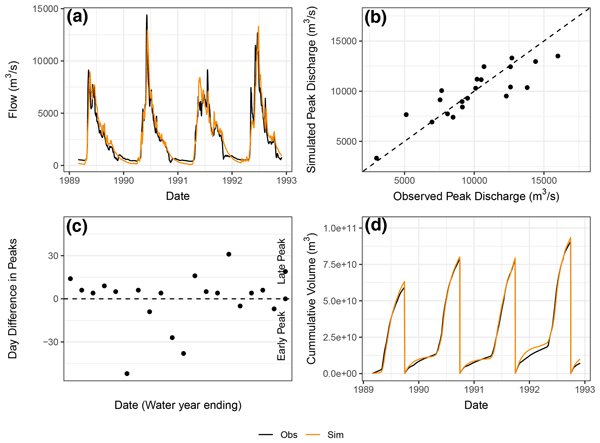
Reliable flood estimates are difficult when river records are short. We developed a method that combines recorded weather and river flow with computer simulations of many possible years, while correcting errors in predicted flood peaks. Tests in three Canadian watersheds showed that estimates based on 30 years of data agreed with benchmarks from much longer records. The method could support clearer, more informed decisions about flood protection and infrastructure where data are limited.
Reliable flood estimates are difficult when river records are short. We developed a method that...
Altmetrics
Final-revised paper
Preprint