
Articles | Volume 26, issue 9
https://doi.org/10.5194/nhess-26-4429-2026
© Author(s) 2026. This work is distributed under
the Creative Commons Attribution 4.0 License.
the Creative Commons Attribution 4.0 License.
https://doi.org/10.5194/nhess-26-4429-2026
© Author(s) 2026. This work is distributed under
the Creative Commons Attribution 4.0 License.
the Creative Commons Attribution 4.0 License.
Research article
| 
15 Sep 2026
Research article |
| 15 Sep 2026
| 15 Sep 2026
Storm Gloria (2020): coexisting types of compound flooding in the West Mediterranean Region
Montserrat Llasat-Botija
CORRESPONDING AUTHOR

GAMA, Department of Applied Physics, Universitat de Barcelona, Barcelona, 08028, Spain
IdRA, Water Research Institute, Universitat de Barcelona, Barcelona, 08028, Spain
Raül Marcos-Matamoros
GAMA, Department of Applied Physics, Universitat de Barcelona, Barcelona, 08028, Spain
Maria Aguilera-Vidal
Laboratori d'Enginyeria Marítima, Universitat Politècnica de Catalunya, BarcelonaTech, Barcelona, 08034, Spain
José Antonio Jimenez
Laboratori d'Enginyeria Marítima, Universitat Politècnica de Catalunya, BarcelonaTech, Barcelona, 08034, Spain
María Carmen Llasat
GAMA, Department of Applied Physics, Universitat de Barcelona, Barcelona, 08028, Spain
IdRA, Water Research Institute, Universitat de Barcelona, Barcelona, 08028, Spain
Related authors
María Carmen Llasat, Montserrat Llasat-Botija, Erika Pardo, Raül Marcos-Matamoros, and Marc Lemus-Canovas
Nat. Hazards Earth Syst. Sci., 24, 3423–3443, https://doi.org/10.5194/nhess-24-3423-2024, https://doi.org/10.5194/nhess-24-3423-2024, 2024
Short summary
Short summary
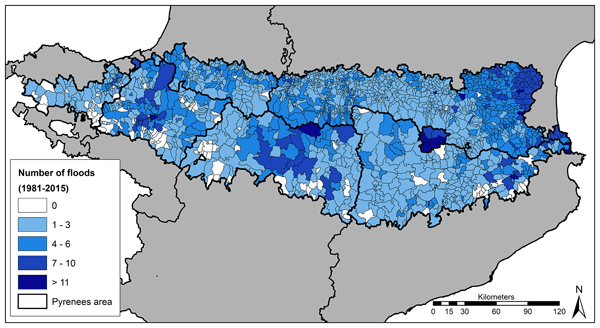
This paper shows the first public and systematic dataset of flood episodes referring to the entire Pyrenees massif, at municipal scale, named PIRAGUA_flood. Of the 181 flood events (1981–2015) that produced 154 fatalities, 36 were transnational, with the eastern part of the massif most affected. Dominant weather types show a southern component flow, with a talweg on the Iberian Peninsula and a depression in the vicinity. A positive and significant trend was found in Nouvelle-Aquitaine.
Arnau Amengual, Romu Romero, María Carmen Llasat, Alejandro Hermoso, and Montserrat Llasat-Botija
Nat. Hazards Earth Syst. Sci., 24, 2215–2242, https://doi.org/10.5194/nhess-24-2215-2024, https://doi.org/10.5194/nhess-24-2215-2024, 2024
Short summary
Short summary
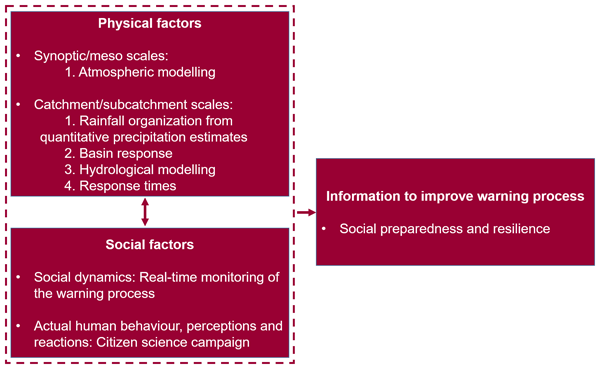
On 22 October 2019, the Francolí River basin experienced a heavy precipitation event, resulting in a catastrophic flash flood. Few studies comprehensively address both the physical and human dimensions and their interrelations during extreme flash flooding. This research takes a step forward towards filling this gap in knowledge by examining the alignment among all these factors.
Arnau Garcia Mesa, Lluís Palma, Markus Donat, Stefano Materia, Bruna Gràvalos Talló, and Raül Marcos Matamoros
Weather Clim. Dynam., 7, 1709–1731, https://doi.org/10.5194/wcd-7-1709-2026, https://doi.org/10.5194/wcd-7-1709-2026, 2026
Short summary
Short summary
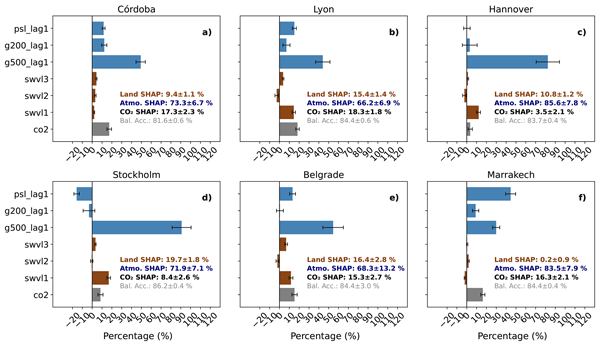
Explainable Artificial Intelligence was used to quantify and disentangle the role of the drivers of summer heat extremes at six sites in Europe and North Africa. Large-scale atmospheric circulation, especially mid-tropospheric geopotential, dominates, while soil drying amplifies heat in temperate and northern regions, and rising carbon dioxide contributes to long-term trends. Results were robust across data sources and help target climate risk and model improvements.
Riccardo Biella, Anastasiya Shyrokaya, Ilias Pechlivanidis, Daniela Cid, Maria Carmen Llasat, Faranak Tootoonchi, Marthe Wens, Marleen Lam, Elin Stenfors, Samuel Sutanto, Elena Ridolfi, Serena Ceola, Pedro Alencar, Giuliano Di Baldassarre, Monica Ionita, Mariana Madruga de Brito, Scott J. McGrane, Benedetta Moccia, Viorica Nagavciuc, Fabio Russo, Svitlana Krakovska, Andrijana Todorovic, Patricia Trambauer, Raffaele Vignola, and Claudia Teutschbein
Nat. Hazards Earth Syst. Sci., 26, 955–979, https://doi.org/10.5194/nhess-26-955-2026, https://doi.org/10.5194/nhess-26-955-2026, 2026
Short summary
Short summary
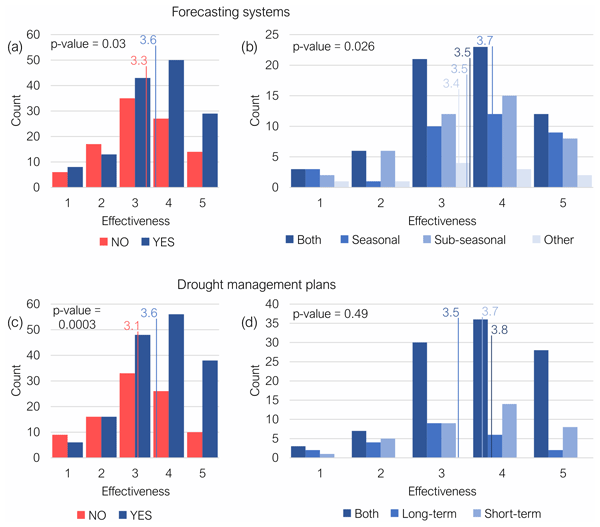
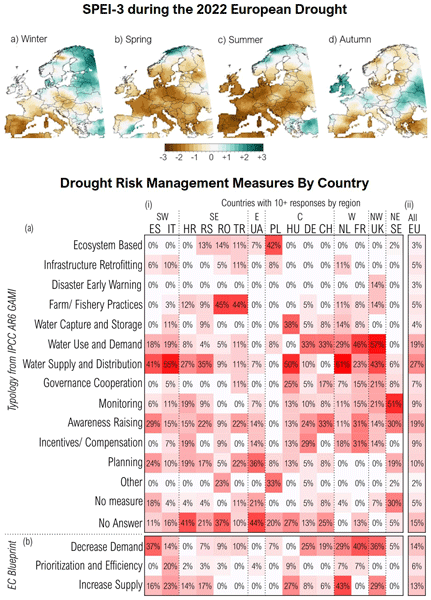
This research by the Drought in the Anthropocene (DitA) network highlights the crucial role of forecasting systems and Drought Management Plans in European drought risk management. Based on a survey of water managers during the 2022 European drought, it underscores the impact of preparedness on response and the evolution of drought management strategies across the continent, showing how organisations with preparedness measures in place responded faster and more effectively.
Riccardo Biella, Anastasiya Shyrokaya, Monica Ionita, Raffaele Vignola, Samuel J. Sutanto, Andrijana Todorovic, Claudia Teutschbein, Daniela Cid, Maria Carmen Llasat, Pedro Alencar, Alessia Matanó, Elena Ridolfi, Benedetta Moccia, Ilias Pechlivanidis, Anne van Loon, Doris E. Wendt, Elin Stenfors, Fabio Russo, Jean-Philippe Vidal, Lucy Barker, Mariana Madruga de Brito, Marleen Lam, Monika Bláhová, Patricia Trambauer, Raed Hamed, Scott J. McGrane, Serena Ceola, Sigrid J. Bakke, Svitlana Krakovska, Viorica Nagavciuc, Faranak Tootoonchi, Giuliano Di Baldassarre, Sandra Hauswirth, Shreedhar Maskey, Svitlana Zubkovych, Marthe Wens, and Lena M. Tallaksen
Nat. Hazards Earth Syst. Sci., 25, 4475–4501, https://doi.org/10.5194/nhess-25-4475-2025, https://doi.org/10.5194/nhess-25-4475-2025, 2025
Short summary
Short summary
The DitA (Drought in the Anthropocene) network's study on the 2022 European drought reveals growing risks, varied impacts, and fragmented, short-term management. Based on a survey of water managers, it explores risk, impacts, strategies, and their evolution. While challenges persist, signs of improvement show readiness for change. The authors call for a European Drought Directive to unify and guide future drought risk management.
Pep Cos, Matias Olmo, Diego Campos, Raül Marcos-Matamoros, Lluís Palma, Ángel G. Muñoz, and Francisco J. Doblas-Reyes
Weather Clim. Dynam., 6, 609–626, https://doi.org/10.5194/wcd-6-609-2025, https://doi.org/10.5194/wcd-6-609-2025, 2025
Short summary
Short summary
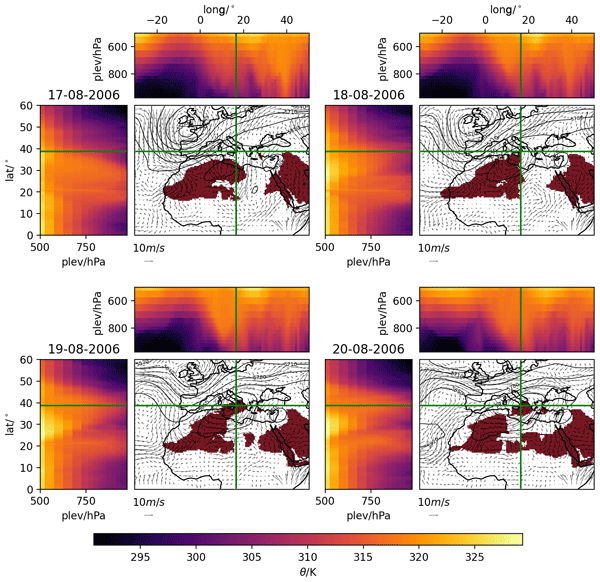
This work presents the identification of Saharan warm-air intrusions in the western Mediterranean, which are the displacement of air masses formed over the Sahara toward the west of the Mediterranean region. We focus on the recent past and obtain a catalogue of intrusion days. The results show the existence of different types of intrusions, important impacts on extremely high temperatures in the Mediterranean and Europe, and the dynamic mechanisms that can cause the onset of these events.
José A. Jiménez, Gundula Winter, Antonio Bonaduce, Michael Depuydt, Giulia Galluccio, Bart van den Hurk, H. E. Markus Meier, Nadia Pinardi, Lavinia G. Pomarico, and Natalia Vazquez Riveiros
State Planet, 3-slre1, 3, https://doi.org/10.5194/sp-3-slre1-3-2024, https://doi.org/10.5194/sp-3-slre1-3-2024, 2024
Short summary
Short summary
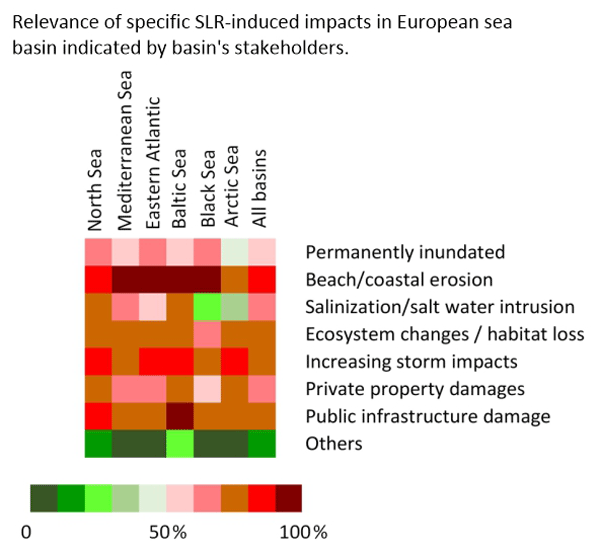
The Knowledge Hub on Sea Level Rise (SLR) has done a scoping study involving stakeholders from government and academia to identify gaps and needs in SLR information, impacts, and policies across Europe. Gaps in regional SLR projections and uncertainties were found, while concerns were raised about shoreline erosion and emerging problems like saltwater intrusion and ineffective adaptation plans. The need for improved communication to make better decisions on SLR adaptation was highlighted.
Bart van den Hurk, Nadia Pinardi, Alexander Bisaro, Giulia Galluccio, José A. Jiménez, Kate Larkin, Angélique Melet, Lavinia Giulia Pomarico, Kristin Richter, Kanika Singh, Roderik van de Wal, and Gundula Winter
State Planet, 3-slre1, 1, https://doi.org/10.5194/sp-3-slre1-1-2024, https://doi.org/10.5194/sp-3-slre1-1-2024, 2024
Short summary
Short summary
The Summary for Policymakers compiles findings from “Sea Level Rise in Europe: 1st Assessment Report of the Knowledge Hub on Sea Level Rise”. It covers knowledge gaps, observations, projections, impacts, adaptation measures, decision-making principles, and governance challenges. It provides information for each European basin (Mediterranean, Black Sea, North Sea, Baltic Sea, Atlantic, and Arctic) and aims to assist policymakers in enhancing the preparedness of European coasts for sea level rise.
María Carmen Llasat, Montserrat Llasat-Botija, Erika Pardo, Raül Marcos-Matamoros, and Marc Lemus-Canovas
Nat. Hazards Earth Syst. Sci., 24, 3423–3443, https://doi.org/10.5194/nhess-24-3423-2024, https://doi.org/10.5194/nhess-24-3423-2024, 2024
Short summary
Short summary
This paper shows the first public and systematic dataset of flood episodes referring to the entire Pyrenees massif, at municipal scale, named PIRAGUA_flood. Of the 181 flood events (1981–2015) that produced 154 fatalities, 36 were transnational, with the eastern part of the massif most affected. Dominant weather types show a southern component flow, with a talweg on the Iberian Peninsula and a depression in the vicinity. A positive and significant trend was found in Nouvelle-Aquitaine.
Arnau Amengual, Romu Romero, María Carmen Llasat, Alejandro Hermoso, and Montserrat Llasat-Botija
Nat. Hazards Earth Syst. Sci., 24, 2215–2242, https://doi.org/10.5194/nhess-24-2215-2024, https://doi.org/10.5194/nhess-24-2215-2024, 2024
Short summary
Short summary
On 22 October 2019, the Francolí River basin experienced a heavy precipitation event, resulting in a catastrophic flash flood. Few studies comprehensively address both the physical and human dimensions and their interrelations during extreme flash flooding. This research takes a step forward towards filling this gap in knowledge by examining the alignment among all these factors.
Marc Sanuy, Juan C. Peña, Sotiris Assimenidis, and José A. Jiménez
Hydrol. Earth Syst. Sci., 28, 283–302, https://doi.org/10.5194/hess-28-283-2024, https://doi.org/10.5194/hess-28-283-2024, 2024
Short summary
Short summary
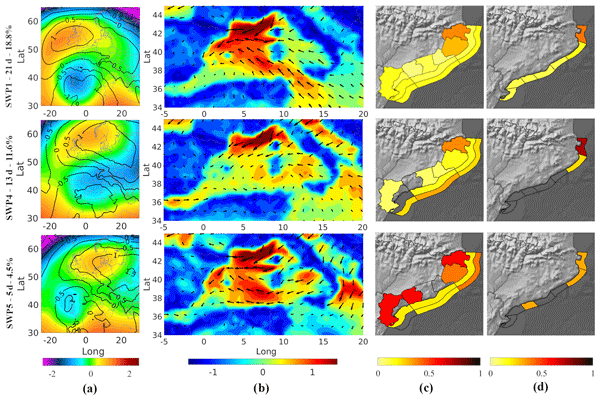
The work presents the first classification of weather types associated to compound events of extreme rainfall and coastal storms. These are found to be characterized by upper-level lows and troughs in conjunction with Mediterranean cyclones, resulting in severe to extreme coastal storms combined with convective systems. We used objective classification methods coupled with a Bayesian Network, testing different variables, domains and number of weather types.
Heidi Kreibich, Kai Schröter, Giuliano Di Baldassarre, Anne F. Van Loon, Maurizio Mazzoleni, Guta Wakbulcho Abeshu, Svetlana Agafonova, Amir AghaKouchak, Hafzullah Aksoy, Camila Alvarez-Garreton, Blanca Aznar, Laila Balkhi, Marlies H. Barendrecht, Sylvain Biancamaria, Liduin Bos-Burgering, Chris Bradley, Yus Budiyono, Wouter Buytaert, Lucinda Capewell, Hayley Carlson, Yonca Cavus, Anaïs Couasnon, Gemma Coxon, Ioannis Daliakopoulos, Marleen C. de Ruiter, Claire Delus, Mathilde Erfurt, Giuseppe Esposito, Didier François, Frédéric Frappart, Jim Freer, Natalia Frolova, Animesh K. Gain, Manolis Grillakis, Jordi Oriol Grima, Diego A. Guzmán, Laurie S. Huning, Monica Ionita, Maxim Kharlamov, Dao Nguyen Khoi, Natalie Kieboom, Maria Kireeva, Aristeidis Koutroulis, Waldo Lavado-Casimiro, Hong-Yi Li, Maria Carmen LLasat, David Macdonald, Johanna Mård, Hannah Mathew-Richards, Andrew McKenzie, Alfonso Mejia, Eduardo Mario Mendiondo, Marjolein Mens, Shifteh Mobini, Guilherme Samprogna Mohor, Viorica Nagavciuc, Thanh Ngo-Duc, Huynh Thi Thao Nguyen, Pham Thi Thao Nhi, Olga Petrucci, Nguyen Hong Quan, Pere Quintana-Seguí, Saman Razavi, Elena Ridolfi, Jannik Riegel, Md Shibly Sadik, Nivedita Sairam, Elisa Savelli, Alexey Sazonov, Sanjib Sharma, Johanna Sörensen, Felipe Augusto Arguello Souza, Kerstin Stahl, Max Steinhausen, Michael Stoelzle, Wiwiana Szalińska, Qiuhong Tang, Fuqiang Tian, Tamara Tokarczyk, Carolina Tovar, Thi Van Thu Tran, Marjolein H. J. van Huijgevoort, Michelle T. H. van Vliet, Sergiy Vorogushyn, Thorsten Wagener, Yueling Wang, Doris E. Wendt, Elliot Wickham, Long Yang, Mauricio Zambrano-Bigiarini, and Philip J. Ward
Earth Syst. Sci. Data, 15, 2009–2023, https://doi.org/10.5194/essd-15-2009-2023, https://doi.org/10.5194/essd-15-2009-2023, 2023
Short summary
Short summary
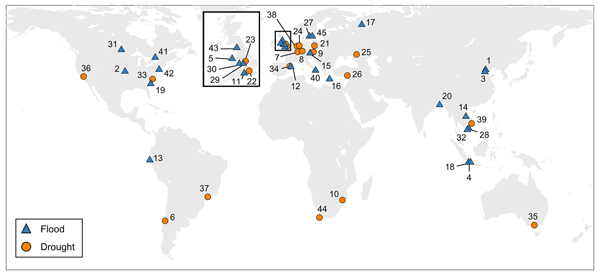
As the adverse impacts of hydrological extremes increase in many regions of the world, a better understanding of the drivers of changes in risk and impacts is essential for effective flood and drought risk management. We present a dataset containing data of paired events, i.e. two floods or two droughts that occurred in the same area. The dataset enables comparative analyses and allows detailed context-specific assessments. Additionally, it supports the testing of socio-hydrological models.
Jaime Gaona, Pere Quintana-Seguí, María José Escorihuela, Aaron Boone, and María Carmen Llasat
Nat. Hazards Earth Syst. Sci., 22, 3461–3485, https://doi.org/10.5194/nhess-22-3461-2022, https://doi.org/10.5194/nhess-22-3461-2022, 2022
Short summary
Short summary
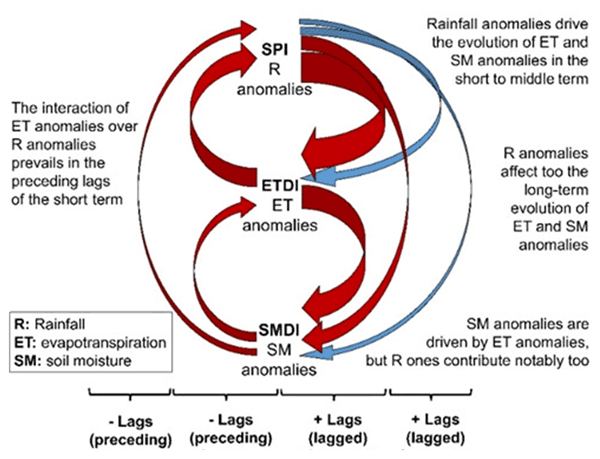
Droughts represent a particularly complex natural hazard and require explorations of their multiple causes. Part of the complexity has roots in the interaction between the continuous changes in and deviation from normal conditions of the atmosphere and the land surface. The exchange between the atmospheric and surface conditions defines feedback towards dry or wet conditions. In semi-arid environments, energy seems to exceed water in its impact over the evolution of conditions, favoring drought.
Animesh K. Gain, Yves Bühler, Pascal Haegeli, Daniela Molinari, Mario Parise, David J. Peres, Joaquim G. Pinto, Kai Schröter, Ricardo M. Trigo, María Carmen Llasat, and Heidi Kreibich
Nat. Hazards Earth Syst. Sci., 22, 985–993, https://doi.org/10.5194/nhess-22-985-2022, https://doi.org/10.5194/nhess-22-985-2022, 2022
Short summary
Short summary
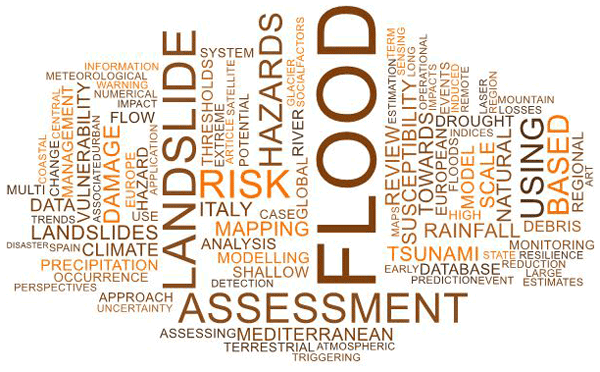
To mark the 20th anniversary of Natural Hazards and Earth System Sciences (NHESS), an interdisciplinary and international journal dedicated to the public discussion and open-access publication of high-quality studies and original research on natural hazards and their consequences, we highlight 11 key publications covering major subject areas of NHESS that stood out within the past 20 years.
Josep Cos, Francisco Doblas-Reyes, Martin Jury, Raül Marcos, Pierre-Antoine Bretonnière, and Margarida Samsó
Earth Syst. Dynam., 13, 321–340, https://doi.org/10.5194/esd-13-321-2022, https://doi.org/10.5194/esd-13-321-2022, 2022
Short summary
Short summary
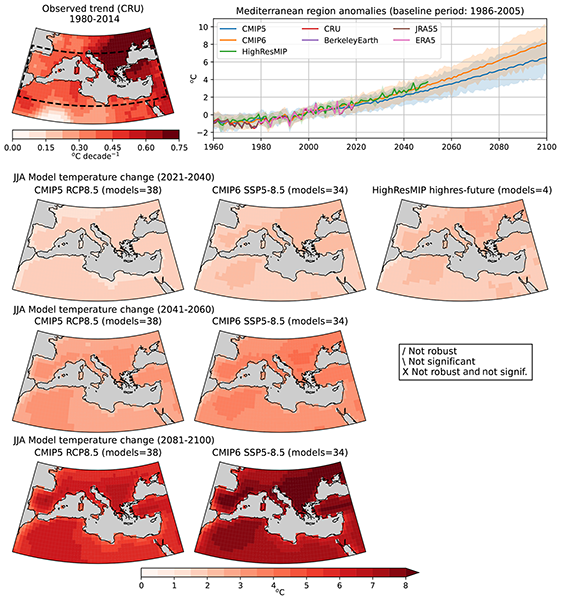
The Mediterranean has been identified as being more affected by climate change than other regions. We find that amplified warming during summer and annual precipitation declines are expected for the 21st century and that the magnitude of the changes will mainly depend on greenhouse gas emissions. By applying a method giving more importance to models with greater performance and independence, we find that the differences between the last two community modelling efforts are reduced in the region.
Cited articles
AEMET: Informe de episodio meteorológico de temporal invernal, aemetBlog, https://aemetblog.es/2020/01/28/informe-de-episodio-meteorologico-de-temporal-invernal/ (last access: 19 June 2026), 28 January 2020.
AEMET: Borrascas con gran impacto de la temporada 2019–2020, https://www.aemet.es/ca/conocermas/borrascas/2019-2020, last access: 25 March 2025.
Aguilera-Vidal, M., Sanuy, M., Ortego, M. I., and Jiménez, J. A.: Rainfall and wave storms interdependence in the western Spanish Mediterranean coast, J. Hydrol.: Reg. Stud., 62, 102873, https://doi.org/10.1016/j.ejrh.2025.102873, 2025.
Aguilera-Vidal, M., Sanuy, M., and Jiménez, J. A.: Beyond localized hotspots: hazard connectivity in spatially compound rainfall-coastal storm events, Environ. Res. Lett., 21, 144021, https://doi.org/10.1088/1748-9326/ae8a69, 2026.
Amaro, J., Gayà, M., Aran, M., and Llasat, M. C.: Preliminary results of the Social Impact Research Group of MEDEX: the request database (2000–2002) of two Meteorological Services, Nat. Hazards Earth Syst. Sci., 10, 2643–2652, https://doi.org/10.5194/nhess-10-2643-2010, 2010.
Amores, A., Marcos, M., Carrió, D. S., and Gómez-Pujol, L.: Coastal impacts of Storm Gloria (January 2020) over the north-western Mediterranean, Nat. Hazards Earth Syst. Sci., 20, 1955–1968, https://doi.org/10.5194/nhess-20-1955-2020, 2020.
Bevacqua, E., Maraun, D., Vousdoukas, M. I., Voukouvalas, E., Vrac, M., Mentaschi, L., and Widmann, M.: Higher probability of compound flooding from precipitation and storm surge in Europe under anthropogenic climate change, Sci. Adv., 5, eaaw5531, https://doi.org/10.1126/sciadv.aaw5531, 2019.
Camus, P., Haigh, I. D., Nasr, A. A., Wahl, T., Darby, S. E., and Nicholls, R. J.: Regional analysis of multivariate compound coastal flooding potential around Europe and environs: sensitivity analysis and spatial patterns, Nat. Hazards Earth Syst. Sci., 21, 2021–2040, https://doi.org/10.5194/nhess-21-2021-2021, 2021.
Canals, M. and Miranda, J.: Sobre el temporal Gloria (19–23.01.20), els seus efectes sobre el país i el que se'n deriva, Report de Resposta Ràpida, edited by: Canals Artigas, M. and Miranda i Canals, J., 201 pp., ISBN 978-84-9965-552-9, 2020.
Coles, S., Heffernan, J., and Tawn, J.: Dependence Measures for Extreme Value Analyses, Extremes, 2, 339–365, https://doi.org/10.1023/A:1009963131610, 1999.
Coles, S. G. and Tawn, J. A.: Modelling extreme multivariate events, J. Roy. Stat. Soc. B, 53, 377–392, https://doi.org/10.1111/j.2517-6161.1991.tb01830.x, 1991.
Comisionado del Gobierno frente al Reto Demográfico (CGRD): Diagnóstico: Estrategia Nacional frente al Reto Demográfico. Eje Efectos de la Población Flotante, Ministerio para la Transición Ecológica y el Reto Demográfico, https://www.miteco.gob.es/content/dam/miteco/es/reto-demografico/temas/analisis-cartografia/diagnostico_eje_flotante_tcm30-517771.pdf (last access: 25 September 2025), 2019.
Cortès, M., Turco, M., Llasat-Botija, M., and Llasat, M. C.: The relationship between precipitation and insurance data for floods in a Mediterranean region (northeast Spain), Nat. Hazards Earth Syst. Sci., 18, 857–868, https://doi.org/10.5194/nhess-18-857-2018, 2018.
Cortès, M., Turco, M., Ward, P., Sánchez-Espigares, J. A., Alfieri, L., and Llasat, M. C.: Changes in flood damage with global warming on the eastern coast of Spain, Nat. Hazards Earth Syst. Sci., 19, 2855–2877, https://doi.org/10.5194/nhess-19-2855-2019, 2019.
De Alfonso, M., Lin-Ye, J., García-Valdecasas, J. M., Pérez-Rubio, S., Luna, M. Y., Santos-Muñoz, D., Ruiz, M. I., Pérez-Gómez, B., and Álvarez-Fanjul, E.: Storm Gloria: Sea State Evolution Based on in situ Measurements and Modeled Data and Its Impact on Extreme Values, Front. Mar. Sci., 8, 646873, https://doi.org/10.3389/fmars.2021.646873, 2021.
de Ruiter, M. C., Couasnon, A., van den Homberg, M. J. C., Daniell, J. E., Gill, J. C., and Ward, P. J.: Why we can no longer ignore consecutive disasters, Earths Future, 8, e2019EF001425, https://doi.org/10.1029/2019EF001425, 2020.
Del Río, L., Plomaritis, T. A., Benavente, J., Valladares, M., and Ribera, P.: Establishing storm thresholds for the Spanish Gulf of Cádiz coast, Geomorphology, 143–144, 13–23, https://doi.org/10.1016/j.geomorph.2011.04.048, 2012.
Del Rosal Salido, J., Bermudez, M., Ortega, M., Sanuy, M., Silva-Santana, M., and Jiménez, J. A.: A composite index framework for compound flood risk assessment, Comm. Earth Environ., 6, 342, https://doi.org/10.1038/s43247-025-02331-z, 2025.
Genest, C. and Favre, A.-C.: Everything you always wanted to know about copula modeling but were afraid to ask, J. Hydrol. Eng., 12, 347–368, https://doi.org/10.1061/(ASCE)1084-0699(2007)12:4(347), 2007.
Gobierno de España: Informe sobre el temporal de lluvia, nieve, viento y fenómenos costeros acaecido en el este peninsular y Baleares como consecuencia de la borrasca “Gloria”, La Moncloa, https://www.lamoncloa.gob.es/consejodeministros/Paginas/enlaces/280120-enlace-gloria.aspx (last access: 19 June 2026), 2020.
González, M. (Coord.): El temporal Gloria (19–23/01/2020): els efectes dels processos geològics sobre el territori, Institut Cartogràfic i Geològic de Catalunya, Barcelona, 122 pp., ISBN 978-84-18199-34-9, 2020.
Green, J., Haigh, I. D., Quinn, N., Neal, J., Wahl, T., Wood, M., Eilander, D., de Ruiter, M., Ward, P., and Camus, P.: Review article: A comprehensive review of compound flooding literature with a focus on coastal and estuarine regions, Nat. Hazards Earth Syst. Sci., 25, 747–816, https://doi.org/10.5194/nhess-25-747-2025, 2025.
Haigh, I. D., Wadey, M. P., Wahl, T., Ozsoy, O., Nicholls, R. J., Brown, J. M., Horsburgh, K., and Gouldby, B.: Spatial and temporal analysis of extreme sea level and storm surge events around the coastline of the UK, Sci. Data, 3, 160107, https://doi.org/10.1038/sdata.2016.107, 2016.
Iglesias, J., Cuesta, I., Salueña, C., Moré, J., and Solé, J.: Analysis and comparison of coupled and uncoupled simulations with the COAWST model during the Gloria Storm (January 2020) in the northwestern Mediterranean Sea, Environ. Modell. Softw., 169, 105830, https://doi.org/10.1016/j.envsoft.2023.105830, 2023.
IPCC: Managing the Risks of Extreme Events and Disasters to Advance Climate Change Adaptation. A Special Report of Working Groups I and II of the Intergovernmental Panel on Climate Change (IPCC), Cambridge University Press, Cambridge, UK, and New York, NY, USA, 582 pp., ISBN 978-1-107-60780-4, 2012.
Jiménez, J. A., Sanuy, M., Ballesteros, C., and Valdemoro, H. I.: The Tordera Delta, a hotspot to storm impacts in the coast northwards of Barcelona (NW Mediterranean), Coast. Eng., 134, 148–158, https://doi.org/10.1016/j.coastaleng.2017.08.012, 2018.
Khodayar, S., Kushta, J., Catto, J. L., Dafis, S., Davolio, S., Ferrarin, C., Flaounas, E., Groenemeijer, P., Hatzaki, M., Hochman, A., Kotroni, V., Landa, J., Láng-Ritter, I., Lazoglou, G., Liberato, M. L. R., Miglietta, M. M., Papagiannaki, K., Patlakas, P., Stojanov, R., and Zittis, G.: Mediterranean cyclones in a changing climate: a review on their socio-economic impacts, Rev. Geophys., 63, e2024RG000853, https://doi.org/10.1029/2024RG000853, 2025.
Leeding, R., Riboldi, J., and Messori, G.: On Pan-Atlantic cold, wet and windy compound extremes, Weather Clim. Extrem., 39, https://doi.org/10.1016/j.wace.2022.100524, 2022.
Leonard, M., Westra, S., Phatak, A., Lambert, M. F., van den Hurk, B., McInnes, K. L., Risbey, J. S., Schuster, S., Jakob, D., and Stafford-Smith, M.: A compound event framework for understanding extreme impacts, WIREs Clim. Change, 5, 113–128, https://doi.org/10.1002/wcc.252, 2014.
Llasat, M. C., Llasat-Botija, M., Pardo, E., and Esbrí, L.: Informe tècnic de l'episodi d'inundacions del 19 a 23 de gener de 2020, Informe d'Estudi Projecte Agora 22, Universitat de Barcelona, https://agora.ub.edu/portal-historic/ (last access: 13 February 2026), 2023.
Luján López, A.: Las siniestralidades de Gloria, Consorseguros: Revista Digital, 16, 1–14, https://www.consorsegurosdigital.com/es/numero-16/sumario/colaboraciones/las-siniestralidades-de-gloria/ (last access: 13 February 2026), 2022.
Marco-Méndez, C., Marbà, N., Amores, Á., Romero, J., Minguito-Frutos, M., García, M., Pagès, J. F., Prado, P., Boada, J., Sánchez-Lizaso, J. L., Ruiz, J. M., Muñoz-Ramos, G., Sanmartí, N., Mayol, E., Buñuel, X., Bernardeau-Esteller, J., Navarro-Martinez, P. C., Marín-Guirao, L., Morell, C., Wesselmann, M., Font, R., Hendriks, I. E., Seglar, X., Camps-Castella, J., Bonfill, E., Requena-Gutiérrez, A., Blanco-Murillo, F., Aguilar-Escribano, J., Jimenez-Gutierrez, S., Martínez-Vidal, J., Guillén, J. E., Cefalì, M. E., Pérez, M., Marcos, M., and Alcoverro, T.: Evaluating the extent and impact of the extreme Storm Gloria on Posidonia oceanica seagrass meadows, Sci. Total Environ., 908, 168404, https://doi.org/10.1016/j.scitotenv.2023.168404, 2024.
MedECC: Climate and Environmental Coastal Risks in the Mediterranean, edited by: Djoundourian, S., Lionello, P., Llasat, M. C., Guiot, J., Cramer, W., Driouech, F., Gattacceca, J. C., and Marini, K., MedECC Reports, MedECC Secretariat, Marseille, France, Zenodo, https://doi.org/10.5281/zenodo.13754020, 2024.
Mendoza, E. T., Jimenez, J. A., and Mateo, J.: A coastal storms intensity scale for the Catalan sea (NW Mediterranean), Nat. Hazards Earth Syst. Sci., 11, 2453–2462, https://doi.org/10.5194/nhess-11-2453-2011, 2011.
Messner, F. and Meyer, V.: Flood damage, vulnerability and risk perception – challenges for flood damage research, in: Flood Risk Management: Hazards, Vulnerability and Mitigation Measures, edited by: Schanze, J., Zeman, E., and Marsalek, J., NATO Science Series IV: Earth and Environmental Sciences, 67, Springer, Dordrecht, the Netherlands, 149–167, https://doi.org/10.1007/978-1-4020-4598-1_13, 2006.
MITECO (Ministerio para la Transición Ecológica y el Reto Demográfico): Guías de adaptación al riesgo de inundación: edificaciones, caso piloto: Ayuntamiento de Los Alcázares (Murcia), Dirección General del Agua, 29 pp., https://www.miteco.gob.es/content/dam/miteco/es/agua/temas/gestion-de-los-riesgos-de-inundacion/4-ayuntamiento-losalcazares-murcia_tcm30-530660.pdf (last access: 13 February 2026), 2020.
Moftakhari, H. R., Salvadori, G., AghaKouchak, A., Sanders, B. F., and Matthew, R. A.: Compounding effects of sea level rise and fluvial flooding, P. Natl. Acad. Sci. USA, 114, 9785–9790, https://doi.org/10.1073/pnas.1620325114, 2017.
Nagler, T., Schepsmeier, U., Stoeber, J., Brechmann, E. C., Graeler, B., and Erhardt, T.: VineCopula: Statistical Inference of Vine Copulas, R package version 2.6.1, https://doi.org/10.32614/CRAN.package.VineCopula, 2025.
National Academies of Sciences, Engineering, and Medicine (NASEM): Resilience for Compounding and Cascading Events, The National Academies Press, Washington, DC, USA, 68 pp., https://doi.org/10.17226/26659, 2022.
OCCC (Oficina Catalana del Canvi Climàtic): L'impacte de la tempesta Glòria, Generalitat de Catalunya, 6 pp., https://canviclimatic.gencat.cat/web/.content/03_AMBITS/adaptacio/ESCACC_2021_2030/Informe-Gloria.pdf (last access: 13 February 2026), 2020.
Palau, R. M., Berenguer, M., Hürlimann, M., and Sempere-Torres, D.: Application of a fuzzy verification framework for the evaluation of a regional-scale landslide early warning system during the January 2020 Gloria storm in Catalonia (NE Spain), Landslides, 19, 1599–1616, https://doi.org/10.1007/s10346-022-01854-2, 2022.
Pantaleoni Reluy, N., Hürlimann, M., and Lantada, N.: How are public compensation efforts implemented in multi-hazard events? Insights from the 2020 Gloria storm in Catalonia, Nat. Hazards Earth Syst. Sci., 25, 3483–3504, https://doi.org/10.5194/nhess-25-3483-2025, 2025.
Pérez-Gómez, B., García-León, M., García-Valdecasas, J., Clementi, E., Mösso Aranda, C., Pérez-Rubio, S., Masina, S., Coppini, G., Molina-Sánchez, R., Muñoz-Cubillo, A., García Fletcher, A., Sánchez González, J. F., Sánchez-Arcilla, A., and Álvarez Fanjul, E.: Understanding Sea Level Processes During Western Mediterranean Storm Gloria, Front. Mar. Sci., 8, 647437, https://doi.org/10.3389/fmars.2021.647437, 2021.
Petrucci, O. and Llasat, M. C.: Impact of disasters in Mediterranean regions: an overview in the framework of the HYMEX project, in: Landslide Science and Practice, Vol. 7: Social and Economic Impact and Policies, edited by: Margottini, C., Canuti, P., and Sassa, K., Springer, Berlin and Heidelberg, Germany, 137–143, https://doi.org/10.1007/978-3-642-31313-4_18, 2013.
Pintó, J., Garcia-Lozano, C., Sardá, R., Roig-Munar, F. X., and Martí, C.: Efectes del temporal Glòria sobre el litoral, Treb. Soc. Catalana Geogr., 89, 89–109, https://doi.org/10.2436/20.3002.01.192, 2020.
Rivas, V., Garmendia, C., and Rasilla, D.: Analysis of ocean parameters as sources of coastal storm damage: regional empirical thresholds in northern Spain, Climate, 10, 88, https://doi.org/10.3390/cli10060088, 2022.
ROM: Recomendaciones de Obras Marítimas 0.3 Wave Annex E1. Wave climate of the Spanish coast, Puertos del Estado, ISBN 978-84-7433-814-0, 1991.
Romero-Martín, R., Caballero-Leiva, I., Llasat, M. C., Llasat-Botija, M., Rigo, T., Valdemoro, H. I., Gilabert, J., Cortès, M., and Jiménez, J. A.: Mapping cumulative compound hydrometeorological and marine-induced risks on the NW Mediterranean coast, Sci. Rep.-UK, 14, 3237, https://doi.org/10.1038/s41598-024-53899-z, 2024.
Romero-Martín, R., Sanuy, M., and Jiménez, J. A.: Unveiling the role of storm surges as a driver of flooding on the western Mediterranean: a case study of the Ebro Delta, Nat. Hazards, 121, 4961–4984, https://doi.org/10.1007/s11069-024-06984-5, 2025.
Santasusagna Riu, A. and Tort Donada, J.: El temporal Glòria: consideracions sobre la seva afecció a la Costa Central Catalana, Treb. Soc. Catalana Geogr., 89, 191–220, https://doi.org/10.2436/20.3002.01.196, 2020.
Sanuy, M. and Jiménez, J. A.: Probabilistic characterisation of coastal storm-induced risks using Bayesian networks, Nat. Hazards Earth Syst. Sci., 21, 219–238, https://doi.org/10.5194/nhess-21-219-2021, 2021.
Sanuy, M., Rigo, T., Jiménez, J. A., and Llasat, M. C.: Classifying compound coastal storm and heavy rainfall events in the north-western Spanish Mediterranean, Hydrol. Earth Syst. Sci., 25, 3759–3781, https://doi.org/10.5194/hess-25-3759-2021, 2021.
Seneviratne, S. I., Nicholls, N., Easterling, D., Goodess, C. M., Kanae, S., Kossin, J., Luo, Y., Marengo, J., McInnes, K., Rahimi, M., Reichstein, M., Sorteberg, A., Vera, C., and Zhang, X.: Changes in climate extremes and their impacts on the natural physical environment, in: Managing the Risks of Extreme Events and Disasters to Advance Climate Change Adaptation. A Special Report of Working Groups I and II of the Intergovernmental Panel on Climate Change (IPCC), edited by: Field, C. B., Barros, V., Stocker, T. F., Qin, D., Dokken, D. J., Ebi, K. L., Mastrandrea, M. D., Mach, K. J., Plattner, G.-K., Allen, S. K., Tignor, M., and Midgley, P. M., Cambridge University Press, Cambridge, UK, and New York, NY, USA, 109–230, https://doi.org/10.7916/d8-6nbt-s431, 2012.
Shan, B., Verhoest, N. E. C., and De Baets, B.: Identification of compound drought and heatwave events on a daily scale and across four seasons, Hydrol. Earth Syst. Sci., 28, 2065–2080, https://doi.org/10.5194/hess-28-2065-2024, 2024.
SMC (Servei Meteorològic de Catalunya): Balanç d'una llevantada històrica a Catalunya, Technical report, 1–11, 2020.
Sotillo, M. G., Mourre, B., Mestres, M., Lorente, P., Aznar, R., García-León, M., Liste, M., Santana, A., Espino, M., and Álvarez, E.: Evaluation of the Operational CMEMS and Coastal Downstream Ocean Forecasting Services During the Storm Gloria (January 2020), Front. Mar. Sci., 8, 644525, https://doi.org/10.3389/fmars.2021.644525, 2021.
Toomey, T., Amores, A., Marcos, M., and Orfila, A.: Coastal sea levels and wind-waves in the Mediterranean Sea since 1950 from a high-resolution ocean reanalysis, Front. Mar. Sci., 9, https://doi.org/10.3389/fmars.2022.991504, 2022.
Wahl, T., Jain, S., Bender, J., Meyers, S. D., and Luther, M. E.: Increasing risk of compound flooding from storm surge and rainfall for major US cities, Nat. Clim. Change, 5, 1093–1097, https://doi.org/10.1038/nclimate2736, 2015.
Zscheischler, J., Martius, O., Westra, S., Bevacqua, E., Raymond, C., Horton, R. M., van den Hurk, B., AghaKouchak, A., Jézéquel, A., Mahecha, M. D., Maraun, D., Ramos, A. M., Ridder, N. N., Thiery, W., and Vignotto, E.: A typology of compound weather and climate events, Nat. Rev. Earth Environ., 1, 333–347, https://doi.org/10.1038/s43017-020-0060-z, 2020.
Short summary
Was Storm Gloria (19-25 January 2020) exceptional, and were its impacts greater because of its multi-compound character? We combined rainfall, wind, wave and insurance data along Spain’s Mediterranean coast to analyse it. Interacting river and coastal floods amplified impacts, simultaneous events widened the affected area, and consecutive floods hindered recovery. Highest losses where severe hazard conditions, but exposure, vulnerability and insurance coverage played a definitive role in them.
Was Storm Gloria (19-25 January 2020) exceptional, and were its impacts greater because of its...


Altmetrics
Final-revised paper
Preprint