
Articles | Volume 26, issue 9
https://doi.org/10.5194/nhess-26-4383-2026
© Author(s) 2026. This work is distributed under
the Creative Commons Attribution 4.0 License.
the Creative Commons Attribution 4.0 License.
https://doi.org/10.5194/nhess-26-4383-2026
© Author(s) 2026. This work is distributed under
the Creative Commons Attribution 4.0 License.
the Creative Commons Attribution 4.0 License.
Research article
| 
11 Sep 2026
Research article |
| 11 Sep 2026
| 11 Sep 2026
1950–2100 climate trends in avalanche activity in Haute-Maurienne, French Alps
François Doussot
Météo-France, CNRS, Univ. Grenoble Alpes, Univ. Toulouse, CNRM, Centre d’Études de la Neige, 38000 Grenoble, France
Léo Viallon-Galinier
Météo-France, CNRS, Univ. Grenoble Alpes, Univ. Toulouse, CNRM, Centre d’Études de la Neige, 38000 Grenoble, France
Nicolas Eckert
Univ. Grenoble Alpes, INRAE, CNRS, IRD, Grenoble INP, IGE, Grenoble, France
Pascal Hagenmuller
CORRESPONDING AUTHOR

Météo-France, CNRS, Univ. Grenoble Alpes, Univ. Toulouse, CNRM, Centre d’Études de la Neige, 38000 Grenoble, France
Related authors
No articles found.
Louis Védrine, Marius Brun, Mathis Bozon, Benoit Laurent, and Pascal Hagenmuller
The Cryosphere, 20, 5813–5828, https://doi.org/10.5194/tc-20-5813-2026, https://doi.org/10.5194/tc-20-5813-2026, 2026
Short summary
Short summary
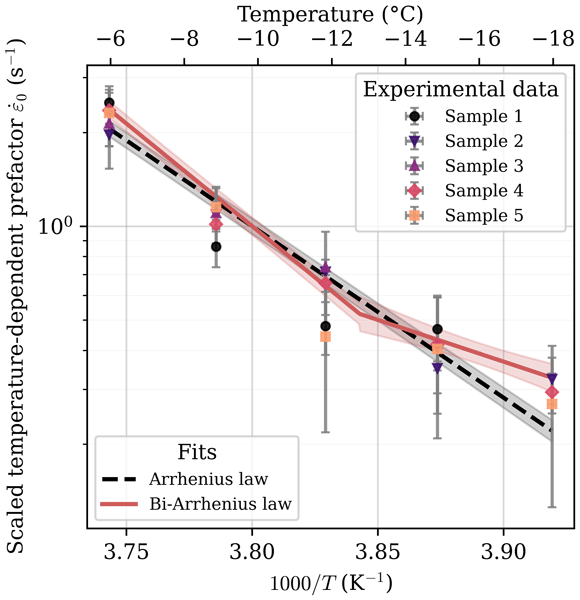
Snow slowly compacts under its own weight, and this process depends strongly on temperature, but past estimates vary widely. We developed a device to precisely control temperature and tested the same snow sample under different conditions. We found two distinct temperature regimes and a stronger sensitivity than assumed in existing snowpack models, improving how snow compaction is represented.
Neige Calonne, Pascal Hagenmuller, Rémi Granger, Lisa Bouvet, Kévin Fourteau, Julien Brondex, François Tuzet, Yves Lejeune, Anne Dufour, Mathieu Fructus, Teruo Aoki, and Marie Dumont
Earth Syst. Sci. Data Discuss., https://doi.org/10.5194/essd-2026-718, https://doi.org/10.5194/essd-2026-718, 2026
Preprint under review for ESSD
Short summary
Short summary
We collected weekly measurements of snow microstructural properties over two winters at Col de Porte in the French Alps, a relatively warm alpine site, using complementary techniques including X-ray tomography, the SnowMicroPen, and optical instruments. The dataset captures snowpack evolution at fine vertical resolution and is a valuable resource for snow model evaluation and instrument comparisons. It also provides guidance for future snow monitoring campaigns in warm mountain environments.
Oscar Dick, Neige Calonne, and Pascal Hagenmuller
EGUsphere, https://doi.org/10.5194/egusphere-2026-4897, https://doi.org/10.5194/egusphere-2026-4897, 2026
This preprint is open for discussion and under review for The Cryosphere (TC).
Short summary
Short summary
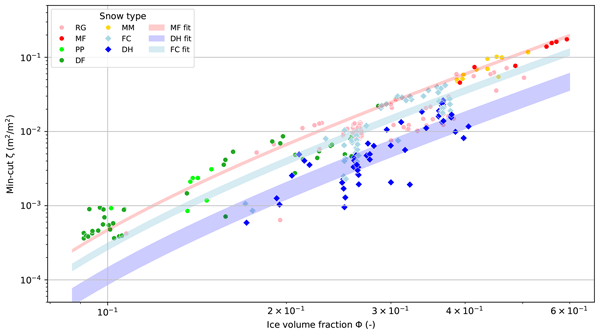
This work aims to pave the way towards an objective description of snow microstructure in snowpack models. We investigate the temporal evolution of several grain-size and grain-shape descriptors under a large range of dry snow metamorphism scenarios. Our results reveal that the evolution of several geometrical descriptors is more diverse than generally assumed, and that future models could benefit from representing multiple grain-size and shape descriptors.
Diego Monteiro, Léo Viallon-Galinier, Kévin Fourteau, Oscar Dick, and Pascal Hagenmuller
The Cryosphere, 20, 4515–4536, https://doi.org/10.5194/tc-20-4515-2026, https://doi.org/10.5194/tc-20-4515-2026, 2026
Short summary
Short summary
This research aims to improve dry-snow slab avalanche forecasts, particularly the propagation of cracks in weak layers, as current models rely on uncertain and difficult-to-measure parameters. We combined snowpack simulations with field measurements to link fracture energy to measurable and modelable snow properties. This new approach better reproduces observed crack lengths and allows weak layers to be tracked throughout the season, thereby improving operational avalanche risk assessment.
Matthieu Lafaysse, Marie Dumont, Basile De Fleurian, Mathieu Fructus, Rafife Nheili, Léo Viallon-Galinier, Matthieu Baron, Aaron Boone, Axel Bouchet, Julien Brondex, Carlo Carmagnola, Bertrand Cluzet, Kévin Fourteau, Ange Haddjeri, Pascal Hagenmuller, Giulia Mazzotti, Marie Minvielle, Samuel Morin, Louis Quéno, Léon Roussel, Pierre Spandre, François Tuzet, and Vincent Vionnet
Geosci. Model Dev., 19, 6273–6334, https://doi.org/10.5194/gmd-19-6273-2026, https://doi.org/10.5194/gmd-19-6273-2026, 2026
Short summary
Short summary
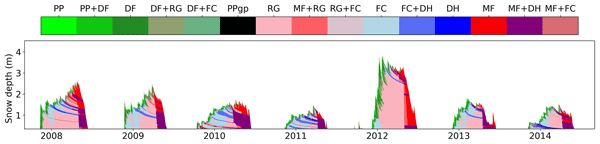
This article is a comprehensive description of the 3.0.2 stable release of the Crocus snowpack model. It describes various new implementations since the last reference article in 2012 and a review of the available scientific evaluations and applications of the model. This provides guidance for the future of numerical snow modelling.
Suvrat Kaushik, Fatima Karbou, Léo Viallon-Galinier, and Adrien Mauss
ISPRS Ann. Photogramm. Remote Sens. Spatial Inf. Sci., XI-3-2026, 903–910, https://doi.org/10.5194/isprs-annals-XI-3-2026-903-2026, https://doi.org/10.5194/isprs-annals-XI-3-2026-903-2026, 2026
Oscar Dick, Neige Calonne, Benoît Laurent, and Pascal Hagenmuller
Earth Syst. Sci. Data, 18, 2875–2889, https://doi.org/10.5194/essd-18-2875-2026, https://doi.org/10.5194/essd-18-2875-2026, 2026
Short summary
Short summary
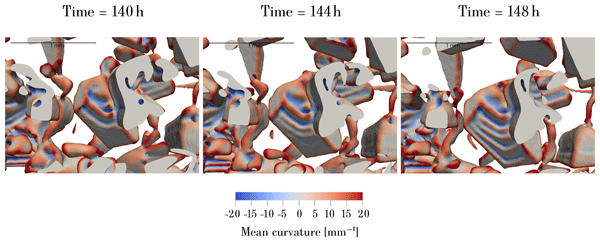
Snow microstructure undergoes constant shape transformations known as snow metamorphism. Observing first-hand snow metamorphism is key to improving the modelling of these transformations. In this work, we monitor snow microstructure evolution during metamorphism by X-ray tomography. We provide a data set at high spatial and temporal resolution of 3D images of snow microstructure evolving through a wide range of experimental conditions, along with videos showing these transformations.
Simon Filhol, Clément Misset, Noélie Bontemps, Diego Cusicanqui, Emmanuel Paquet, Marie Dumont, Olivier Gagliardini, Pascal Lacroix, Simon Gascoin, Guillaume Thirel, Julien Brondex, Pascal Hagenmuller, Eric Larose, Philipp Schoeneich, Denis Roy, Emmanuel Thibert, Nicolas Eckert, Félix de Montety, Robin Mainieri, Alexandre Hauet, Frédéric Gottardi, Johan Berthet, Alexandre Baratier, Frédéric Liébault, Małgorzata Chmiel, Guillaume Piton, Guillaume Chambon, Guillaume James, Philippe Frey, Philip Deline, Laurent Astrade, Christian Vincent, Dominique Laigle, Alain Recking, Fatima Karbou, Adrien Mauss, Mylène Bonnefoy-Demongeot, Firmin Fontaine, Mickael Langlais, Etienne Berthier, and Antoine Blanc
EGUsphere, https://doi.org/10.5194/egusphere-2026-971, https://doi.org/10.5194/egusphere-2026-971, 2026
Short summary
Short summary
On June 21 2024, the village of La Bérarde, in the French Alps, was devastated by a flood destroying centuries old buildings. This study is an interdisciplinary work to decipher the causes and chronology of the event. The flood started with decadal rain falling on a thick snowpack. A lake observed on top of a glacier few days prior, had drained post event. With climate change, should we expect more similar compound events for alpine communities?
Erich H. Peitzsch, Justin T. Martin, Ethan M. Greene, Nicolas Eckert, Adrien Favillier, Jason Konigsberg, Nickolas Kichas, Daniel K. Stahle, Karl W. Birkeland, Kelly Elder, and Gregory T. Pederson
Nat. Hazards Earth Syst. Sci., 26, 1059–1074, https://doi.org/10.5194/nhess-26-1059-2026, https://doi.org/10.5194/nhess-26-1059-2026, 2026
Short summary
Short summary
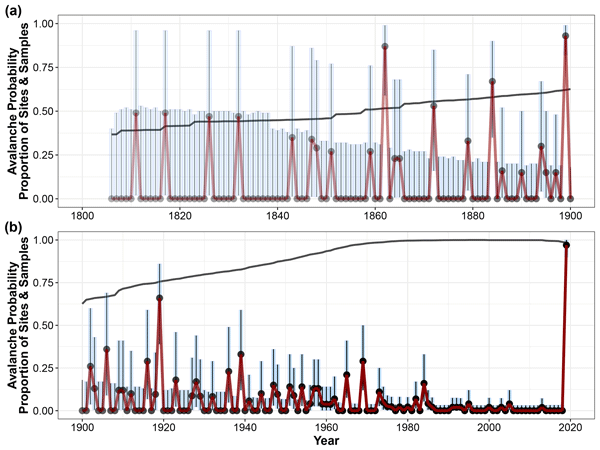
Snow avalanches pose substantial risks to communities and public safety in Colorado. We studied tree growth patterns impacted by avalanches from 1698 to 2020 alongside meteorological data. We found variations in avalanche frequency revealing a decline in regional avalanche activity and shifts in the causes of these types of large and widespread avalanche events. This knowledge can enhance avalanche safety measures and infrastructure design.

Louis Védrine and Pascal Hagenmuller
The Cryosphere, 20, 1257–1277, https://doi.org/10.5194/tc-20-1257-2026, https://doi.org/10.5194/tc-20-1257-2026, 2026
Short summary
Short summary
This study investigates how snow settles under its own weight. Using three-dimensional simulations of real snow microstructures and more than 178 past experiments, we show that settlement follows a power law depending on stress and density. This unifies previously conflicting approaches, reconciles contradictory results, and provides a solid basis for improving the representation of snowpack.
Louise Dallons Thanneur, Florie Giacona, Nicolas Eckert, and Philippe Frey
Nat. Hazards Earth Syst. Sci., 25, 4881–4906, https://doi.org/10.5194/nhess-25-4881-2025, https://doi.org/10.5194/nhess-25-4881-2025, 2025
Short summary
Short summary
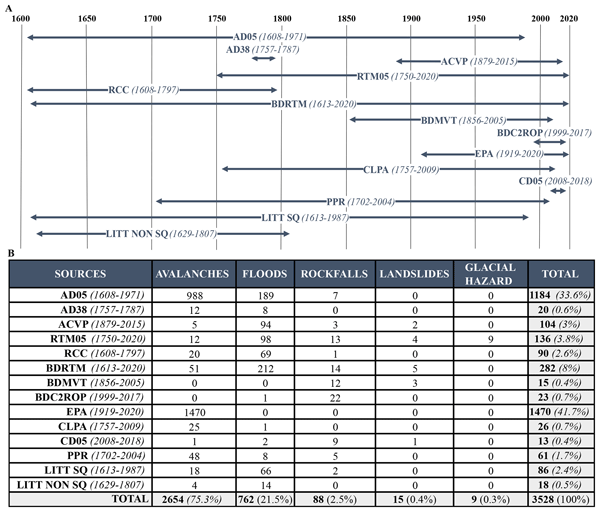
This paper proposes a methodology to develop a long-range multirisk database. Combining scattered pre-existing records and intensive research in historical archives provides a 1600–2020 record of past events in a valley of the French Alps. It goes far beyond any inventory existing in terms of number of events, temporal coverage and detailed description of events characteristics in a mountain context. Spatio-temporal patterns are analysed, opening perspective for multirisk assessment.
Clémence Herny, Pascal Hagenmuller, Guillaume Chambon, Isabel Peinke, and Jacques Roulle
The Cryosphere, 18, 3787–3805, https://doi.org/10.5194/tc-18-3787-2024, https://doi.org/10.5194/tc-18-3787-2024, 2024
Short summary
Short summary
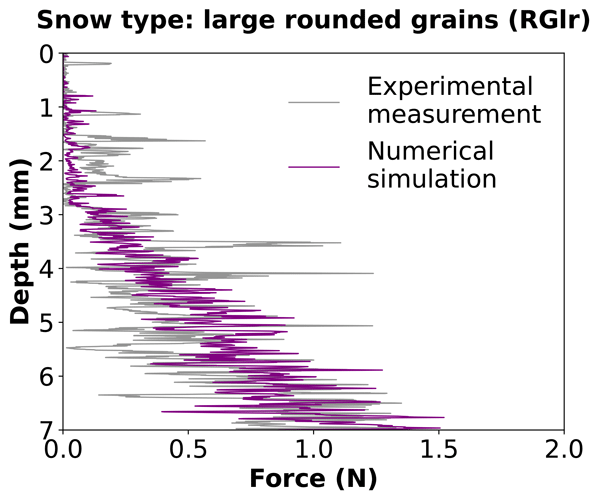
This paper presents the evaluation of a numerical discrete element method (DEM) by simulating cone penetration tests in different snow samples. The DEM model demonstrated a good ability to reproduce the measured mechanical behaviour of the snow, namely the force evolution on the cone and the grain displacement field. Systematic sensitivity tests showed that the mechanical response depends not only on the microstructure of the sample but also on the mechanical parameters of grain contacts.
Julien Brondex, Kévin Fourteau, Marie Dumont, Pascal Hagenmuller, Neige Calonne, François Tuzet, and Henning Löwe
Geosci. Model Dev., 16, 7075–7106, https://doi.org/10.5194/gmd-16-7075-2023, https://doi.org/10.5194/gmd-16-7075-2023, 2023
Short summary
Short summary
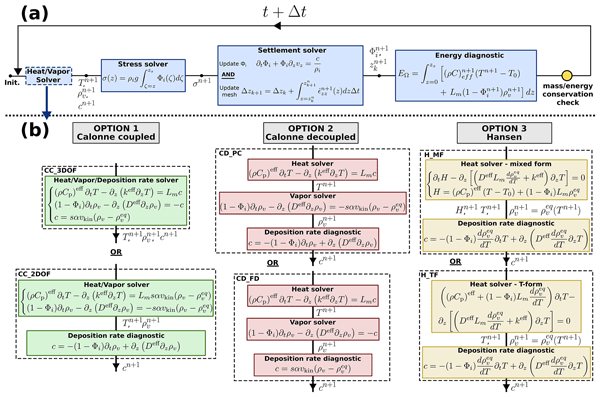
Vapor diffusion is one of the main processes governing snowpack evolution, and it must be accounted for in models. Recent attempts to represent vapor diffusion in numerical models have faced several difficulties regarding computational cost and mass and energy conservation. Here, we develop our own finite-element software to explore numerical approaches and enable us to overcome these difficulties. We illustrate the capability of these approaches on established numerical benchmarks.
Erwan Le Roux, Guillaume Evin, Raphaëlle Samacoïts, Nicolas Eckert, Juliette Blanchet, and Samuel Morin
The Cryosphere, 17, 4691–4704, https://doi.org/10.5194/tc-17-4691-2023, https://doi.org/10.5194/tc-17-4691-2023, 2023
Short summary
Short summary
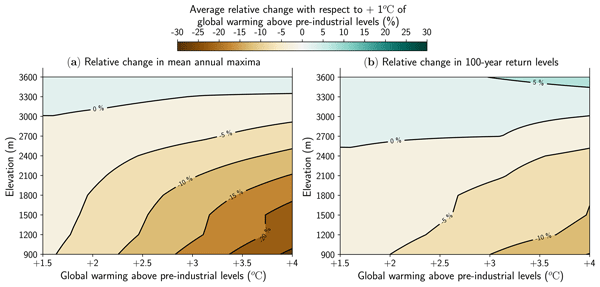
We assess projected changes in snowfall extremes in the French Alps as a function of elevation and global warming level for a high-emission scenario. On average, heavy snowfall is projected to decrease below 3000 m and increase above 3600 m, while extreme snowfall is projected to decrease below 2400 m and increase above 3300 m. At elevations in between, an increase is projected until +3 °C of global warming and then a decrease. These results have implications for the management of risks.
Marie Dumont, Simon Gascoin, Marion Réveillet, Didier Voisin, François Tuzet, Laurent Arnaud, Mylène Bonnefoy, Montse Bacardit Peñarroya, Carlo Carmagnola, Alexandre Deguine, Aurélie Diacre, Lukas Dürr, Olivier Evrard, Firmin Fontaine, Amaury Frankl, Mathieu Fructus, Laure Gandois, Isabelle Gouttevin, Abdelfateh Gherab, Pascal Hagenmuller, Sophia Hansson, Hervé Herbin, Béatrice Josse, Bruno Jourdain, Irene Lefevre, Gaël Le Roux, Quentin Libois, Lucie Liger, Samuel Morin, Denis Petitprez, Alvaro Robledano, Martin Schneebeli, Pascal Salze, Delphine Six, Emmanuel Thibert, Jürg Trachsel, Matthieu Vernay, Léo Viallon-Galinier, and Céline Voiron
Earth Syst. Sci. Data, 15, 3075–3094, https://doi.org/10.5194/essd-15-3075-2023, https://doi.org/10.5194/essd-15-3075-2023, 2023
Short summary
Short summary
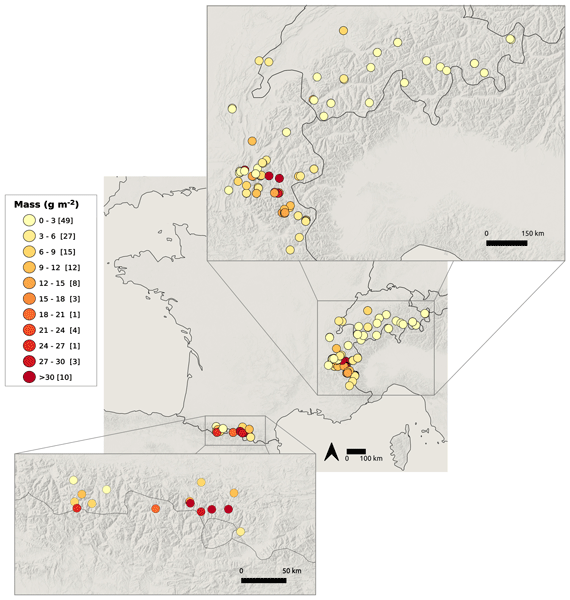
Saharan dust outbreaks have profound effects on ecosystems, climate, health, and the cryosphere, but the spatial deposition pattern of Saharan dust is poorly known. Following the extreme dust deposition event of February 2021 across Europe, a citizen science campaign was launched to sample dust on snow over the Pyrenees and the European Alps. This campaign triggered wide interest and over 100 samples. The samples revealed the high variability of the dust properties within a single event.
Léo Viallon-Galinier, Pascal Hagenmuller, and Nicolas Eckert
The Cryosphere, 17, 2245–2260, https://doi.org/10.5194/tc-17-2245-2023, https://doi.org/10.5194/tc-17-2245-2023, 2023
Short summary
Short summary
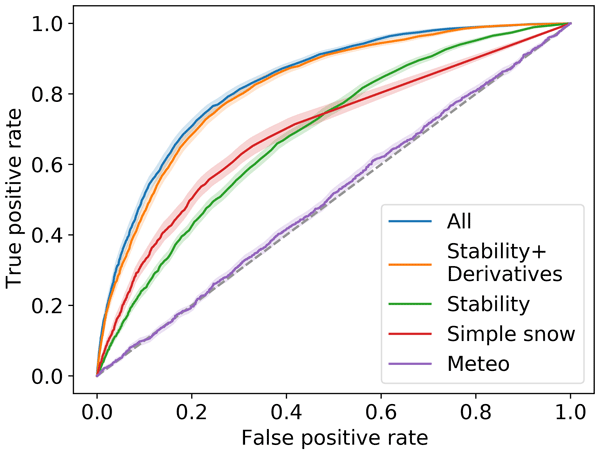
Avalanches are a significant issue in mountain areas where they threaten recreationists and human infrastructure. Assessments of avalanche hazards and the related risks are therefore an important challenge for local authorities. Meteorological and snow cover simulations are thus important to support operational forecasting. In this study we combine it with mechanical analysis of snow profiles and find that observed avalanche data improve avalanche activity prediction through statistical methods.
Oscar Dick, Léo Viallon-Galinier, François Tuzet, Pascal Hagenmuller, Mathieu Fructus, Benjamin Reuter, Matthieu Lafaysse, and Marie Dumont
The Cryosphere, 17, 1755–1773, https://doi.org/10.5194/tc-17-1755-2023, https://doi.org/10.5194/tc-17-1755-2023, 2023
Short summary
Short summary
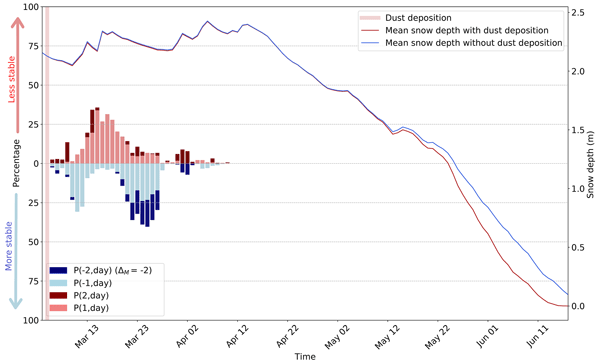
Saharan dust deposition can drastically change the snow color, turning mountain landscapes into sepia scenes. Dust increases the absorption of solar energy by the snow cover and thus modifies the snow evolution and potentially the avalanche risk. Here we show that dust can lead to increased or decreased snowpack stability depending on the snow and meteorological conditions after the deposition event. We also show that wet-snow avalanches happen earlier in the season due to the presence of dust.
Cécile Duvillier, Nicolas Eckert, Guillaume Evin, and Michael Deschâtres
Nat. Hazards Earth Syst. Sci., 23, 1383–1408, https://doi.org/10.5194/nhess-23-1383-2023, https://doi.org/10.5194/nhess-23-1383-2023, 2023
Short summary
Short summary
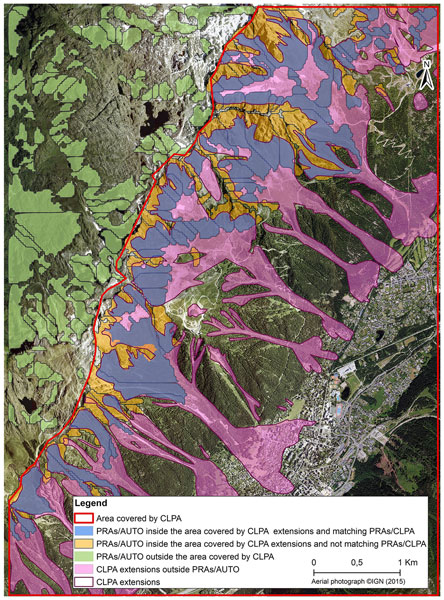
This study develops a method that identifies individual potential release areas (PRAs) of snow avalanches based on terrain analysis and watershed delineation and demonstrates its efficiency in the French Alps context using an extensive cadastre of past avalanche limits. Results may contribute to better understanding local avalanche hazard. The work may also foster the development of more efficient PRA detection methods based on a rigorous evaluation scheme.
Pyei Phyo Lin, Isabel Peinke, Pascal Hagenmuller, Matthias Wächter, M. Reza Rahimi Tabar, and Joachim Peinke
The Cryosphere, 16, 4811–4822, https://doi.org/10.5194/tc-16-4811-2022, https://doi.org/10.5194/tc-16-4811-2022, 2022
Short summary
Short summary
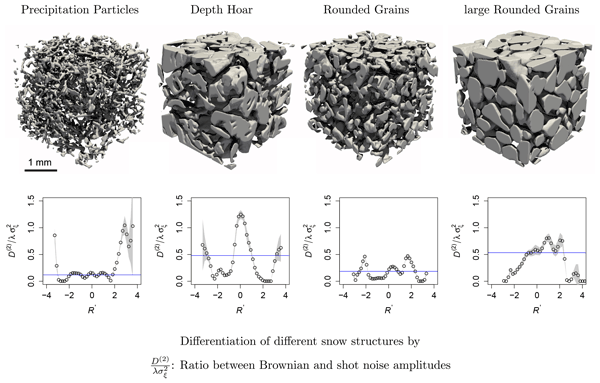
Characterization of layers of snowpack with highly resolved micro-cone penetration tests leads to detailed fluctuating signals. We used advanced stochastic analysis to differentiate snow types by interpreting the signals as a mixture of continuous and discontinuous random fluctuations. These two types of fluctuation seem to correspond to different mechanisms of drag force generation during the experiments. The proposed methodology provides new insights into the characterization of snow layers.
Erwan Le Roux, Guillaume Evin, Nicolas Eckert, Juliette Blanchet, and Samuel Morin
Earth Syst. Dynam., 13, 1059–1075, https://doi.org/10.5194/esd-13-1059-2022, https://doi.org/10.5194/esd-13-1059-2022, 2022
Short summary
Short summary
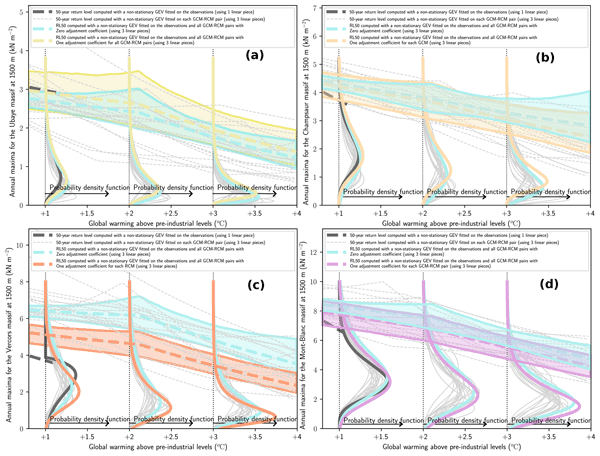
Anticipating risks related to climate extremes is critical for societal adaptation to climate change. In this study, we propose a statistical method in order to estimate future climate extremes from past observations and an ensemble of climate change simulations. We apply this approach to snow load data available in the French Alps at 1500 m elevation and find that extreme snow load is projected to decrease by −2.9 kN m−2 (−50 %) between 1986–2005 and 2080–2099 for a high-emission scenario.

Matthieu Vernay, Matthieu Lafaysse, Diego Monteiro, Pascal Hagenmuller, Rafife Nheili, Raphaëlle Samacoïts, Deborah Verfaillie, and Samuel Morin
Earth Syst. Sci. Data, 14, 1707–1733, https://doi.org/10.5194/essd-14-1707-2022, https://doi.org/10.5194/essd-14-1707-2022, 2022
Short summary
Short summary
This paper introduces the latest version of the freely available S2M dataset which provides estimates of both meteorological and snow cover variables, as well as various avalanche hazard diagnostics at different elevations, slopes and aspects for the three main French high-elevation mountainous regions. A complete description of the system and the dataset is provided, as well as an overview of the possible uses of this dataset and an objective assessment of its limitations.
Luuk Dorren, Frédéric Berger, Franck Bourrier, Nicolas Eckert, Charalampos Saroglou, Massimiliano Schwarz, Markus Stoffel, Daniel Trappmann, Hans-Heini Utelli, and Christine Moos
Nat. Hazards Earth Syst. Sci. Discuss., https://doi.org/10.5194/nhess-2022-32, https://doi.org/10.5194/nhess-2022-32, 2022
Publication in NHESS not foreseen
Short summary
Short summary
In the daily practice of rockfall hazard analysis, trajectory simulations are used to delimit runout zones. To do so, the expert needs to separate "realistic" from "unrealistic" simulated groups of trajectories. This is often done on the basis of reach probability values. This paper provides a basis for choosing a reach probability threshold value for delimiting the rockfall runout zone, based on recordings and simulations of recent rockfall events at 18 active rockfall sites in Europe.
Cited articles
Abril-Pla, O., Andreani, V., Carroll, C., Dong, L., Fonnesbeck, C. J., Kochurov, M., Kumar, R., Lao, J., Luhmann, C. C., Martin, O. A., Osthege, M., Vieira, R., Wiecki, T., and Zinkov, R.: PyMC: a modern, and comprehensive probabilistic programming framework in Python, PeerJ Computer Science, 9, e1516, https://doi.org/10.7717/peerj-cs.1516, 2023. a, b
Ballesteros-Cánovas, J. A., Trappmann, D., Madrigal-González, J., Eckert, N., and Stoffel, M.: Climate warming enhances snow avalanche risk in the Western Himalayas, P. Natl. Acad. Sci. USA, 115, 3410–3415, https://doi.org/10.1073/pnas.1716913115, 2018. a, b
Barkat, I., Lin-Kwong-Chon, C., Duclos, A., Carrel, M., Staehly, S., and Bourgeois, G.: Optical monitoring of avalanche release zones in Bessans, Haute Maurienne Valley, France, with a remote and energy self-sufficient camera system, in: ISSW – International Snow Science Workshop, Tromsø, Norway, 1041–1048, https://hal.science/hal-04850783 (last access: 1 June 2025), 2024. a
Beniston, M. and Stoffel, M.: Rain-on-snow events, floods and climate change in the Alps: Events may increase with warming up to 4 °C and decrease thereafter, Sci. Total Environ., 571, 228–236, https://doi.org/10.1016/j.scitotenv.2016.07.146, 2016. a
Bonsoms, J., López-Moreno, J. I., Lemus-Cánovas, M., and Oliva, M.: Future winter snowfall and extreme snow events in the Pyrenees, Atmos. Res., 315, 107912, https://doi.org/10.1016/j.atmosres.2025.107912, 2025. a, b, c
Bourova, E., Maldonado, E., Leroy, J.-B., Alouani, R., Eckert, N., Bonnefoy-Demongeot, M., and Deschatres, M.: A new web-based system to improve the monitoring of snow avalanche hazard in France, Nat. Hazards Earth Syst. Sci., 16, 1205–1216, https://doi.org/10.5194/nhess-16-1205-2016, 2016. a, b, c
Bozzoli, M., Crespi, A., Matiu, M., Majone, B., Giovannini, L., Zardi, D., Brugnara, Y., Bozzo, A., Berro, D. C., Mercalli, L., and Bertoldi, G.: Long-term snowfall trends and variability in the Alps, Int. J. Climatol., 44, 4571–4591, https://doi.org/10.1002/joc.8597, 2024. a
Cannon, A. J., Sobie, S. R., and Murdock, T. Q.: Bias Correction of GCM Precipitation by Quantile Mapping: How Well Do Methods Preserve Changes in Quantiles and Extremes?, J. Climate, 28, 6938–6959, https://doi.org/10.1175/JCLI-D-14-00754.1, 2015. a
Cappabianca, F., Barbolini, M., and Natale, L.: Snow avalanche risk assessment and mapping: A new method based on a combination of statistical analysis, avalanche dynamics simulation and empirically-based vulnerability relations integrated in a GIS platform, Cold Reg. Sci. Technol., 54, 193–205, 2008. a
Castebrunet, H., Eckert, N., Giraud, G., Durand, Y., and Morin, S.: Projected changes of snow conditions and avalanche activity in a warming climate: the French Alps over the 2020–2050 and 2070–2100 periods, The Cryosphere, 8, 1673–1697, https://doi.org/10.5194/tc-8-1673-2014, 2014. a
Castebrunet, H., Eckert, N., and Giraud, G.: Snow and weather climatic control on snow avalanche occurrence fluctuations over 50 yr in the French Alps, Clim. Past, 8, 855–875, https://doi.org/10.5194/cp-8-855-2012, 2012. a
Chen, T. and Guestrin, C.: XGBoost: A Scalable Tree Boosting System, in: Proceedings of the 22nd ACM SIGKDD International Conference on Knowledge Discovery and Data Mining, 785–794, https://doi.org/10.1145/2939672.2939785, 2016. a
Coles, S.: An Introduction to Statistical Modeling of Extreme Values, Springer London, London, https://doi.org/10.1007/978-1-4471-3675-0, ISBN 978-1-84996-874-4, 2001. a, b
Corona, C., Lopez Saez, J., Stoffel, M., Bonnefoy, M., Richard, D., Astrade, L., and Berger, F.: How much of the real avalanche activity can be captured with tree rings? An evaluation of classic dendrogeomorphic approaches and comparison with historical archives, Cold Reg. Sci. Technol., 74–75, 31–42, https://doi.org/10.1016/j.coldregions.2012.01.003, 2012. a
Decharme, B., Boone, A., Delire, C., and Noilhan, J.: Local evaluation of the Interaction between Soil Biosphere Atmosphere soil multilayer diffusion scheme using four pedotransfer functions, J. Geophys. Res.-Atmos., 116, D20126, https://doi.org/10.1029/2011JD016002, 2011. a
Dumont, M., Monteiro, D., Filhol, S., Gascoin, S., Marty, C., Hagenmuller, P., Morin, S., Choler, P., and Thuiller, W.: The European Alps in a changing climate: physical trends and impacts, C. R. Geosci., 357, 25–42, https://doi.org/10.5802/crgeos.288, 2025. a, b, c
Durand, Y., Giraud, G., Brun, E., Mérindol, L., and Martin, E.: A computer-based system simulating snowpack structures as a tool for regional avalanche forecasting, J. Glaciol., 45, 469–484, https://doi.org/10.3189/S0022143000001337, 1999. a, b, c
Durand, Y., Giraud, G., Laternser, M., Etchevers, P., Mérindol, L., and Lesaffre, B.: Reanalysis of 47 Years of Climate in the French Alps (1958–2005): Climatology and Trends for Snow Cover, J. Appl. Meteorol. Clim., 48, 2487–2512, https://doi.org/10.1175/2009JAMC1810.1, 2009. a
Eckert, N. and Giacona, F.: Towards a holistic paradigm for long-term snow avalanche risk assessment and mitigation, Ambio, 52, 711–732, 2023. a
Eckert, N., Baya, H., and Deschâtres, M.: Assessing the response of snow avalanche runout altitudes to climate fluctuations using hierarchical modeling: application to 61 winters of data in France, J. Climate, 23, 3157–3180, 2010a. a
Eckert, N., Coleou, C., Castebrunet, H., Deschâtres, M., Giraud, G., and Gaume, J.: Cross-comparison of meteorological and avalanche data for characterising avalanche cycles: the example of December 2008 in the eastern part of the French Alps, Cold Reg. Sci. Technol., 64, 119–136, 2010b. a
Eckert, N., Naaim, M., and Parent, E.: Long-term avalanche hazard assessment with a Bayesian depth-averaged propagation model, J. Glaciol., 56, 563–586, 2010c. a
Eckert, N., Parent, E., Kies, R., and Baya, H.: A spatio-temporal modelling framework for assessing the fluctuations of avalanche occurrence resulting from climate change: application to 60 years of data in the northern French Alps, Climatic Change, 101, 515–553, 2010d. a
Eckert, N., Keylock, C., Bertrand, D., Parent, E., Faug, T., Favier, P., and Naaim, M.: Quantitative risk and optimal design approaches in the snow avalanche field: Review and extensions, Cold Reg. Sci. Technol., 79, 1–19, 2012. a
Eckert, N., Keylock, C. J., Castebrunet, H., Lavigne, A., and Naaim, M.: Temporal trends in avalanche activity in the French Alps and subregions: from occurrences and runout altitudes to unsteady return periods, J. Glaciol., 59, 93–114, https://doi.org/10.3189/2013JoG12J091, 2013. a, b, c, d
Eckert, N., Corona, C., and Giacona, F.: Climate change impacts on snow avalanche activity and related risks, Nature Reviews Earth and Environment, 5, 369–389, https://doi.org/10.1038/s43017-024-00540-2, 2024. a, b, c, d
European Avalanche Warning Services (EAWS): Typical Avalanche Problems, Approved by the General Assembly of EAWS, Davos, https://www.avalanches.org/wp-content/uploads/2022/09/EN_EAWS_avalanche_problems.pdf (last access: 1 June 2025), 2022. a
Evin, G., Dkengne Sielenou, P., Eckert, N., Naveau, P., Hagenmuller, P., and Morin, S.: Extreme avalanche cycles: Return levels and probability distributions depending on snow and meteorological conditions, Weather and Climate Extremes, 33, 100344, https://doi.org/10.1016/j.wace.2021.100344, 2021. a, b
Fischer, J.-T., Kofler, A., Huber, A., Fellin, W., Mergili, M., and Oberguggenberger, M.: Bayesian inference in snow avalanche simulation with r.avaflow, Geosciences, 10, 191, https://doi.org/10.3390/geosciences10050191, 2020. a
Fuchs, S., Thöni, M., McAlpin, M. C., Gruber, U., and Bründl, M.: Avalanche hazard mitigation strategies assessed by cost effectiveness analyses and cost benefit analyses—evidence from Davos, Switzerland, Nat. Hazards, 41, 113–129, 2007. a
Fuchs, S., Keiler, M., Sokratov, S., and Shnyparkov, A.: Spatiotemporal dynamics: the need for an innovative approach in mountain hazard risk management, Nat. Hazards, 68, 1217–1241, 2013. a
Fávero, L. P. L., Duarte, A., and Santos, H. P.: A New Computational Algorithm for Assessing Overdispersion and Zero-Inflation in Machine Learning Count Models with Python, Computers, 13, 88, https://doi.org/10.3390/computers13040088, 2024. a
Gaume, J., van Herwijnen, A., Chambon, G., Wever, N., and Schweizer, J.: Snow fracture in relation to slab avalanche release: critical state for the onset of crack propagation, The Cryosphere, 11, 217–228, https://doi.org/10.5194/tc-11-217-2017, 2017. a
Giacona, F., Eckert, N., and Martin, B.: A 240-year history of avalanche risk in the Vosges Mountains based on non-conventional (re)sources, Nat. Hazards Earth Syst. Sci., 17, 887–904, https://doi.org/10.5194/nhess-17-887-2017, 2017. a, b
Giacona, F., Eckert, N., Corona, C., Mainieri, R., Morin, S., Stoffel, M., Martin, B., and Naaim, M.: Upslope migration of snow avalanches in a warming climate, P. Natl. Acad. of Sci. USA, 118, e2107306118, https://doi.org/10.1073/pnas.2107306118, 2021. a, b, c
Giacona, F., Eckert, N., and Martin, B.: Comment interpréter une chronologie événementielle en géohistoire? L’exemple de deux siècles et demi d’avalanches dans le Massif vosgien, Cybergeo: European Journal of Geography, 1033, https://doi.org/10.4000/cybergeo.39644, 2022. a
Hafner, E. D., Techel, F., Leinss, S., and Bühler, Y.: Mapping avalanches with satellites – evaluation of performance and completeness, The Cryosphere, 15, 983–1004, https://doi.org/10.5194/tc-15-983-2021, 2021. a
Heck, M., Hobiger, M., van Herwijnen, A., Schweizer, J., and Fäh, D.: Localization of seismic events produced by avalanches using multiple signal classification, Geophys. J. Int., 216, 201–217, https://doi.org/10.1093/gji/ggy394, 2018. a
Hendrick, M., Techel, F., Volpi, M., Olevski, T., Pérez-Guillén, C., van Herwijnen, A., and Schweizer, J.: Automated prediction of wet-snow avalanche activity in the Swiss Alps, J. Glaciol., 69, 1–14, https://doi.org/10.1017/jog.2023.24, 2023. a, b, c
Höller, P.: Avalanche hazards and mitigation in Austria: a review, Nat. Hazards, 43, 81–101, https://doi.org/10.1007/s11069-007-9109-2, 2007. a
Jacob, D., Petersen, J., Eggert, B., Alias, A., Christensen, O. B., Bouwer, L. M., Braun, A., Colette, A., Déqué, M., Georgievski, G., Georgopoulou, E., Gobiet, A., Menut, L., Nikulin, G., Haensler, A., Hempelmann, N., Jones, C., Keuler, K., Kovats, S., Kröner, N., Kotlarski, S., Kriegsmann, A., Martin, E., van Meijgaard, E., Moseley, C., Pfeifer, S., Preuschmann, S., Radermacher, C., Radtke, K., Rechid, D., Rounsevell, M., Samuelsson, P., Somot, S., Soussana, J.-F., Teichmann, C., Valentini, R., Vautard, R., Weber, B., and Yiou, P.: EURO-CORDEX: new high-resolution climate change projections for European impact research, Reg. Environ. Change, 14, 563–578, https://doi.org/10.1007/s10113-013-0499-2, 2014. a
Johnson, A. L. and Smith, D. J.: Geomorphology of snow avalanche impact landforms in the southern Canadian Cordillera, Canadian Geographies/Géographies canadiennes, 54, 87–103, https://doi.org/10.1111/j.1541-0064.2009.00275.x, 2010. a
Karas, A., Karbou, F., Giffard-Roisin, S., Durand, P., and Eckert, N.: Automatic Color Detection-Based Method Applied to Sentinel-1 SAR Images for Snow Avalanche Debris Monitoring, IEEE T. Geosci. Remote, 60, 1–17, https://doi.org/10.1109/TGRS.2021.3131853, 2022. a
Kern, H., Jomelli, V., Eckert, N., Grancher, D., and Deschatres, M.: Variability of avalanche deposits volumes and relationships with corridor morphology (Bessans, Savoie, France), Géomorphologie: relief, processus, environnement, 26, 127–140, https://doi.org/10.4000/geomorphologie.14361, 2020. a, b
Kotlarski, S., Gobiet, A., Morin, S., Olefs, M., Rajczak, J., and Samacoïts, R.: 21st Century alpine climate change, Clim. Dynam., 60, 65–86, https://doi.org/10.1007/s00382-022-06303-3, 2023. a
Kronholm, K., Vikhamar-Schuler, D., Jaedicke, C., Isaksen, K., Sorteberg, A., and Kristensen, K.: Forecasting snow avalanche days from meteorological data using classification trees; Grasdalen, western Norway, Proceedings, International Snow Science Workshop, Telluride, Colorado, 1–6 October 2006, 1–10, 2006. a
Kruyt, B., Wever, N., Mayer, S., Vergara-Temprado, J., and Schär, C.: Avalanche activity in a changing climate: changes in wet and dry slab avalanches based on climate simulations over Switzerland, in: Proceedings, International Snow Science Workshop, Bend, Oregon, 8–13 October 2023, 566–571, 2023. a, b
Lazar, B. and Williams, M.: Climate change in western ski areas: Potential changes in the timing of wet avalanches and snow quality for the Aspen ski area in the years 2030 and 2100, Cold Reg. Sci. Technol., 51, 219–228, https://doi.org/10.1016/j.coldregions.2007.03.015, 2008. a
Le Roux, E., Evin, G., Eckert, N., Blanchet, J., and Morin, S.: A non-stationary extreme-value approach for climate projection ensembles: application to snow loads in the French Alps, Earth Syst. Dynam., 13, 1059–1075, https://doi.org/10.5194/esd-13-1059-2022, 2022. a
Le Roux, E., Evin, G., Samacoïts, R., Eckert, N., Blanchet, J., and Morin, S.: Projection of snowfall extremes in the French Alps as a function of elevation and global warming level, The Cryosphere, 17, 4691–4704, https://doi.org/10.5194/tc-17-4691-2023, 2023. a, b, c
Mainieri, R., Favillier, A., Lopez-Saez, J., Eckert, N., Zgheib, T., Morel, P., Saulnier, M., Peiry, J.-L., Stoffel, M., and Corona, C.: Impacts of land-cover changes on snow avalanche activity in the French Alps, Anthropocene, 30, 100244, https://doi.org/10.1016/j.ancene.2020.100244, 2020. a
Marty, C., Schlögl, S., Bavay, M., and Lehning, M.: How much can we save? Impact of different emission scenarios on future snow cover in the Alps, The Cryosphere, 11, 517–529, https://doi.org/10.5194/tc-11-517-2017, 2017. a, b
Masson, D. and Frei, C.: Long-term variations and trends of mesoscale precipitation in the Alps: Recalculation and update for 1901–2008, Int. J. Climatol., 36, 492–500, https://doi.org/10.1002/joc.4343, 2015. a
Matiu, M., Crespi, A., Bertoldi, G., Carmagnola, C. M., Marty, C., Morin, S., Schöner, W., Cat Berro, D., Chiogna, G., De Gregorio, L., Kotlarski, S., Majone, B., Resch, G., Terzago, S., Valt, M., Beozzo, W., Cianfarra, P., Gouttevin, I., Marcolini, G., Notarnicola, C., Petitta, M., Scherrer, S. C., Strasser, U., Winkler, M., Zebisch, M., Cicogna, A., Cremonini, R., Debernardi, A., Faletto, M., Gaddo, M., Giovannini, L., Mercalli, L., Soubeyroux, J.-M., Sušnik, A., Trenti, A., Urbani, S., and Weilguni, V.: Observed snow depth trends in the European Alps: 1971 to 2019, The Cryosphere, 15, 1343–1382, https://doi.org/10.5194/tc-15-1343-2021, 2021. a
Matiu, M., Napoli, A., Kotlarski, S., Zardi, D., Bellin, A., and Majone, B.: Elevation-dependent biases of raw and bias-adjusted EURO-CORDEX regional climate models in the European Alps, Clim. Dynam., 62, 9013–9030, https://doi.org/10.1007/s00382-024-07376-y, 2024. a
Maurer, E. P. and Pierce, D. W.: Bias correction can modify climate model simulated precipitation changes without adverse effect on the ensemble mean, Hydrol. Earth Syst. Sci., 18, 915–925, https://doi.org/10.5194/hess-18-915-2014, 2014. a
Mayer, S., van Herwijnen, A., Techel, F., and Schweizer, J.: A random forest model to assess snow instability from simulated snow stratigraphy, The Cryosphere, 16, 4593–4615, https://doi.org/10.5194/tc-16-4593-2022, 2022. a, b, c
McClung, D. M.: Fracture mechanical models of dry slab avalanche release, J. Geophys. Res.-Sol. Ea., 86, 10783–10790, https://doi.org/10.1029/JB086iB11p10783, 1981. a
Mitterer, C. and Schweizer, J.: Analysis of the snow-atmosphere energy balance during wet-snow instabilities and implications for avalanche prediction, The Cryosphere, 7, 205–216, https://doi.org/10.5194/tc-7-205-2013, 2013. a
Moen, J., Aune, K., Edenius, L., and Angerbjörn, A.: Potential Effects of Climate Change on Treeline Position in the Swedish Mountains, Ecology and Society, 9, 11 pp., http://www.jstor.org/stable/26267652 (last access: 1 June 2025), 2004. a
Mott, R., Schirmer, M., Bavay, M., Grünewald, T., and Lehning, M.: Understanding snow-transport processes shaping the mountain snow-cover, The Cryosphere, 4, 545–559, https://doi.org/10.5194/tc-4-545-2010, 2010. a
Nakicenović, N. and Swart, R. (Eds.): Special Report on Emissions Scenarios: A Special Report of Working Group III of the Intergovernmental Panel on Climate Change, Cambridge University Press, Cambridge, UK, ISBN 0-521-80493-0, http://digitallibrary.un.org/record/466938 (last access: 1 June 2025), 2000. a
Orhobor, O. I., Grinberg, N. F., Soldatova, L. N., and King, R. D.: Imbalanced regression using regressor-classifier ensembles, Mach. Learn., 112, 1365–1387, https://doi.org/10.1007/s10994-022-06199-4, 2023. a
Ortner, G., Michel, A., Kropf, C. M., Bründl, M., and Bresch, D. N.: Assessing the impacts of climate change on snow avalanche-induced risk in alpine regions, Nat. Hazards, 121, 10877–10904, https://doi.org/10.1007/s11069-025-07229-9, 2025. a, b
Peitzsch, E. H., Pederson, G. T., Birkeland, K. W., Hendrikx, J., and Fagre, D. B.: Climate drivers of large magnitude snow avalanche years in the U.S. northern Rocky Mountains, Scientific Reports, 11, 10032, https://doi.org/10.1038/s41598-021-89547-z, 2021. a, b
Reuter, B., Viallon-Galinier, L., Horton, S., van Herwijnen, A., Mayer, S., Hagenmuller, P., and Morin, S.: Characterizing snow instability with avalanche problem types derived from snow cover simulations, Cold Reg. Sci. Technol., 194, 103462, https://doi.org/10.1016/j.coldregions.2021.103462, 2022. a, b, c
Reuter, B., Hagenmuller, P., and Eckert, N.: Trends in avalanche problems in the French Alps between 1958 and 2020, Cold Reg. Sci. Technol., 238, 104555, https://doi.org/10.1016/j.coldregions.2025.104555, 2025. a, b
Roch, A.: Les déclenchements d’avalanche, in: Symposium at Davos 1965 – Scientific Aspects of Snow and Ice Avalanches, International Association of Scientific Hydrology Publication 69, 182–195, 1966. a
Rožanec, J. M., Petelin, G., Costa, J., Bertalanič, B., Cerar, G., Guček, M., Papa, G., and Mladenić, D.: Dealing with zero-inflated data: achieving SOTA with a two-fold machine learning approach, arXiv [preprint], https://doi.org/10.48550/arXiv.2310.08088, 2023. a
Schneebeli, M. and Sokratov, S.: Tomography of temperature gradient metamorphism of snow and associated changes in heat conductivity, Hydrol. Process., 18, 3655–3665, https://doi.org/10.1002/hyp.5800, 2004. a
Schweizer, J., Jamieson, B., and Schneebeli, M.: Snow avalanche formation, Rev. Geophys., 41, 1016, https://doi.org/10.1029/2002RG000123, 2003. a, b, c, d
Serquet, G., Marty, C., Dulex, J.-P., and Rebetez, M.: Seasonal trends and temperature dependence of the snowfall/precipitation-day ratio in Switzerland, Geophys. Res. Lett., 38, L07703, https://doi.org/10.1029/2011GL046976, 2011. a
Sielenou, P. D., Viallon-Galinier, L., Hagenmuller, P., Naveau, P., Morin, S., Dumont, M., Verfaillie, D., and Eckert, N.: Combining random forests and class-balancing to discriminate between three classes of avalanche activity in the French Alps, Cold Reg. Sci. Technol., 187, 103276, https://doi.org/10.1016/j.coldregions.2021.103276, 2021. a, b, c, d, e
Smiatek, G., Kunstmann, H., and Senatore, A.: EURO-CORDEX regional climate model analysis for the Greater Alpine Region: Performance and expected future change, J. Geophys. Res.-Atmos., 121, 7710–7728, https://doi.org/10.1002/2015JD024727, 2016. a
Techel, F., Jarry, F., Kronthaler, G., Mitterer, S., Nairz, P., Pavšek, M., Valt, M., and Darms, G.: Avalanche fatalities in the European Alps: long-term trends and statistics, Geogr. Helv., 71, 147–159, https://doi.org/10.5194/gh-71-147-2016, 2016. a
Teich, M., Zurbriggen, N., Bartelt, P., Grêt-Regamey, A., Marty, C., Ulrich, M., and Bebi, P.: Potential Impacts of Climate Change on Snow Avalanches Starting in Forested Terrain, in: Proceedings, 2012 International Snow Science Workshop, Anchorage, Alaska, 16–21 September 2012, 244–251, 2012. a
Themeßl, M. J., Gobiet, A., and Leuprecht, A.: Empirical-statistical downscaling and error correction of daily precipitation from regional climate models, Int. J. Climatol., 31, 1530–1544, https://doi.org/10.1002/joc.2168, 2011. a
Uppala, S. M., Kållberg, P. W., Simmons, A. J., Andrae, U., Bechtold, V. D. C., Fiorino, M., Gibson, J. K., Haseler, J., Hernandez, A., Kelly, G. A., Li, X., Onogi, K., Saarinen, S., Sokka, N., Allan, R. P., Andersson, E., Arpe, K., Balmaseda, M. A., Beljaars, A. C. M., Berg, L. V. D., Bidlot, J., Bormann, N., Caires, S., Chevallier, F., Dethof, A., Dragosavac, M., Fisher, M., Fuentes, M., Hagemann, S., Hólm, E., Hoskins, B. J., Isaksen, L., Janssen, P. A. E. M., Jenne, R., Mcnally, A. P., Mahfouf, J.-F., Morcrette, J.-J., Rayner, N. A., Saunders, R. W., Simon, P., Sterl, A., Trenberth, K. E., Untch, A., Vasiljevic, D., Viterbo, P., and Woollen, J.: The ERA-40 re-analysis, Q. J. Roy. Meteor. Soc. 131, 2961–3012, https://doi.org/10.1256/qj.04.176, 2005. a
Van Vuuren, D., Edmonds, J. A., Kainuma, M., Riahi, K., Thomson, A. M., Hibbard, K. A., Hurtt, G., Kram, T., Krey, V., Lamarque, J.-F., Masui, T., Meinshausen, M., Nakicenovic, N., Smith, S. J., and Rose, S. K.: The Representative Concentration Pathways: An Overview, Climatic Change, 109, 5, https://doi.org/10.1007/s10584-011-0148-z, 2011. a
Vautard, R., Kadygrov, N., Iles, C., Boberg, F., Buonomo, E., Bülow, K., Coppola, E., Corre, L., van Meijgaard, E., Nogherotto, R., Sandstad, M., Schwingshackl, C., Somot, S., Aalbers, E., Christensen, O. B., Ciarlo, J. M., Demory, M.-E., Giorgi, F., Jacob, D., Jones, R. G., Keuler, K., Kjellström, E., Lenderink, G., Levavasseur, G., Nikulin, G., Sillmann, J., Solidoro, C., Sørland, S. L., Steger, C., Teichmann, C., Warrach-Sagi, K., and Wulfmeyer, V.: Evaluation of the Large EURO-CORDEX Regional Climate Model Ensemble, J. Geophys. Res.-Atmos., 126, e2019JD032344, https://doi.org/10.1029/2019JD032344, 2021. a
Verfaillie, D., Déqué, M., Morin, S., and Lafaysse, M.: The method ADAMONT v1.0 for statistical adjustment of climate projections applicable to energy balance land surface models, Geosci. Model Dev., 10, 4257–4283, https://doi.org/10.5194/gmd-10-4257-2017, 2017. a, b, c, d
Verfaillie, D., Lafaysse, M., Déqué, M., Eckert, N., Lejeune, Y., and Morin, S.: Multi-component ensembles of future meteorological and natural snow conditions for 1500 m altitude in the Chartreuse mountain range, Northern French Alps, The Cryosphere, 12, 1249–1271, https://doi.org/10.5194/tc-12-1249-2018, 2018. a, b
Vernay, M., Lafaysse, M., Hagenmuller, P., Nheili, R., Verfaillie, D., and Morin, S.: The S2M meteorological and snow cover reanalysis in the French mountainous areas (1958–present), AERIS [data set], https://doi.org/10.25326/37#v2020.2, 2022a. a
Vernay, M., Lafaysse, M., Monteiro, D., Hagenmuller, P., Nheili, R., Samacoïts, R., Verfaillie, D., and Morin, S.: The S2M meteorological and snow cover reanalysis over the French mountainous areas: description and evaluation (1958–2021), Earth Syst. Sci. Data, 14, 1707–1733, https://doi.org/10.5194/essd-14-1707-2022, 2022b. a, b, c
Vionnet, V., Brun, E., Morin, S., Boone, A., Faroux, S., Le Moigne, P., Martin, E., and Willemet, J.-M.: The detailed snowpack scheme Crocus and its implementation in SURFEX v7.2, Geosci. Model Dev., 5, 773–791, https://doi.org/10.5194/gmd-5-773-2012, 2012. a
Wang, Z., Goetz, J., and Brenning, A.: Transfer learning for landslide susceptibility modeling using domain adaptation and case-based reasoning, Geosci. Model Dev., 15, 8765–8784, https://doi.org/10.5194/gmd-15-8765-2022, 2022. a
Ying, X.: An Overview of Overfitting and its Solutions, J. Phys. Conf. Ser., 1168, 022022, https://doi.org/10.1088/1742-6596/1168/2/022022, 2019. a
Young, D. S., Roemmele, E. S., and Yeh, P.: Zero-inflated modeling part I: Traditional zero-inflated count regression models, their applications, and computational tools, WIREs Computational Statistics, 14, e1541, https://doi.org/10.1002/wics.1541, 2022. a
Zgheib, T., Giacona, F., Granet-Abisset, A.-M., Morin, S., and Eckert, N.: One and a half century of avalanche risk to settlements in the upper Maurienne valley inferred from land cover and socio-environmental changes, Global Environ. Chang., 65, 102149, https://doi.org/10.1016/j.gloenvcha.2020.102149, 2020. a
Zgheib, T., Giacona, F., Granet-Abisset, A.-M., Morin, S., Lavigne, A., and Eckert, N.: Spatio-temporal variability of avalanche risk in the French Alps, Reg. Environ. Change, 22, 8, https://doi.org/10.1007/s10113-021-01838-3, 2022. a
Short summary
Avalanches are sensitive to climate warming, but long and reliable records are rare. We combined avalanche observations with weather and snow simulations in the Haute-Maurienne valley (French Alps). This allowed us to reconstruct past avalanche activity and explore future changes. The results show a strong long-term decline in avalanche occurrence, especially in spring, while extreme events decrease more slowly. This study provides quantitative insights to support mountain risk management.
Avalanches are sensitive to climate warming, but long and reliable records are rare. We combined...


Altmetrics
Final-revised paper
Preprint