Articles | Volume 26, issue 8
https://doi.org/10.5194/nhess-26-3749-2026
© Author(s) 2026. This work is distributed under
the Creative Commons Attribution 4.0 License.
https://doi.org/10.5194/nhess-26-3749-2026
© Author(s) 2026. This work is distributed under
the Creative Commons Attribution 4.0 License.
Can aerosols improve urban flood forecasting? A case study of 2015 Chennai extreme event

Oscar Paul
Department of Civil Engineering, Indian Institute of Technology Madras, Chennai, Tamil Nadu, India
N. Nithila Devi
Department of Civil Engineering, Indian Institute of Technology Madras, Chennai, Tamil Nadu, India
Section 4.4: Hydrology, GFZ Helmholtz Centre for Geosciences, Potsdam, Germany
Rakesh Teja Konduru
Earth Observation Research Center, Japan Aerospace Exploration Agency (JAXA), Tsukuba Space Center, Tsukuba, Ibaraki, Japan
Soumendra Nath Kuiry
Department of Civil Engineering, Indian Institute of Technology Madras, Chennai, Tamil Nadu, India
Kundan Lal Shrestha
Department of Chemical Science and Engineering, Kathmandu University, Dhulikhel, Nepal
Chandan Sarangi
CORRESPONDING AUTHOR
Department of Civil Engineering, Indian Institute of Technology Madras, Chennai, Tamil Nadu, India
Related authors
No articles found.
Amit Singh Chandel, Chandan Sarangi, Nurun Nahar, Saqib Ahmad Zargar, Poul Cherian, Xena Mansoura, Vijay P. Kanawade, Bhishma Tyagi, Antti-Pekka Hyvärinen, Aki Virkkula, Harendra S. Negi, Swarup China, and Rakesh K. Hooda
EGUsphere, https://doi.org/10.5194/egusphere-2026-424, https://doi.org/10.5194/egusphere-2026-424, 2026
Short summary
Short summary
Dust storms reaching the western Himalayas often mix with pollution during transport. Using high-altitude measurements from May 2023, we show that this polluted dust has altered intrinsic optical properties, scattering and absorbing more sunlight than clean dust, with important implications for atmospheric heating and regional climate.
Sougat Kumar Sarangi, Chandan Sarangi, Niravkumar Patel, Bomidi Lakshmi Madhavan, Shantikumar Singh Ningombam, Belur Ravindra, and Madineni Venkat Ratnam
Atmos. Meas. Tech., 18, 5637–5648, https://doi.org/10.5194/amt-18-5637-2025, https://doi.org/10.5194/amt-18-5637-2025, 2025
Short summary
Short summary
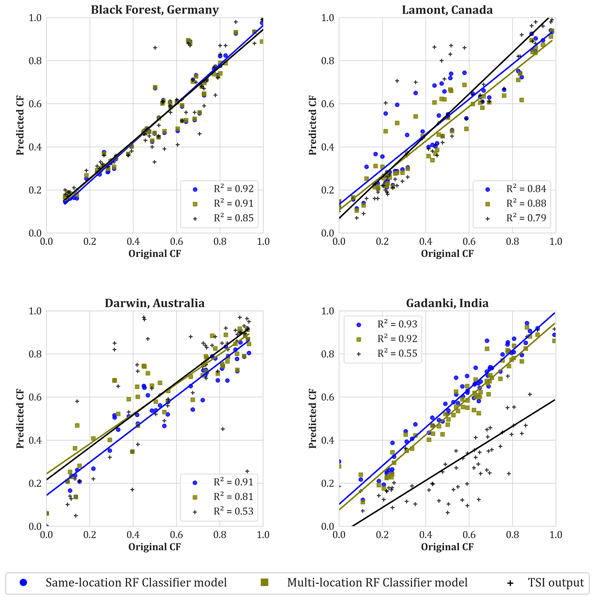
This study introduces a new approach to measure cloud cover from image data taken by ground-based sky observations. Our method used diverse sky images taken from various locations across the globe to train our machine learning model. We achieved a very high accuracy in detecting cloud cover, even in polluted areas. Our model surpasses traditional methods by running efficiently with minimal computational needs.
J. Krishnanand, Argha Banerjee, R. Shankar, Himanshu Kaushik, Mohd. Farooq Azam, and Chandan Sarangi
EGUsphere, https://doi.org/10.5194/egusphere-2025-3756, https://doi.org/10.5194/egusphere-2025-3756, 2025
Short summary
Short summary
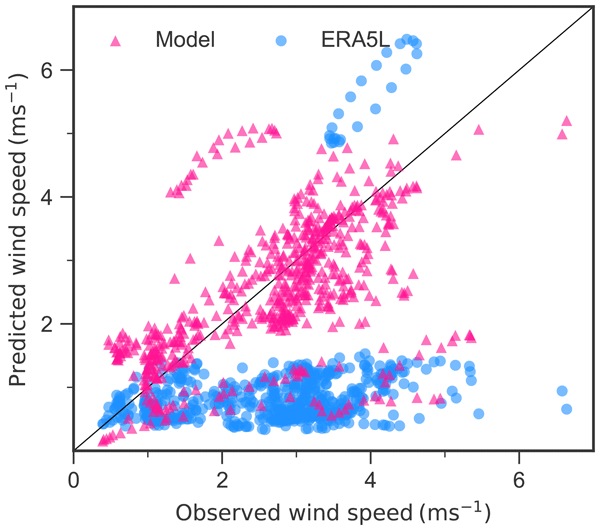
Glacierised valleys create unique local-scale winds. Most glaciers in the world are ungauged, making it hard to estimate the melt contribution of heat exchanged by these winds. We developed a model that predicts wind speed on any glacier without requiring any in-situ data, enabling wind predictions on ungauged glaciers. Our predictions are about three times more accurate than a standard climate product, helping improve estimates of glacier melt and runoff in a warming climate.
Saleem Ali, Chandan Sarangi, and Sanjay Kumar Mehta
Atmos. Chem. Phys., 25, 8769–8783, https://doi.org/10.5194/acp-25-8769-2025, https://doi.org/10.5194/acp-25-8769-2025, 2025
Short summary
Short summary
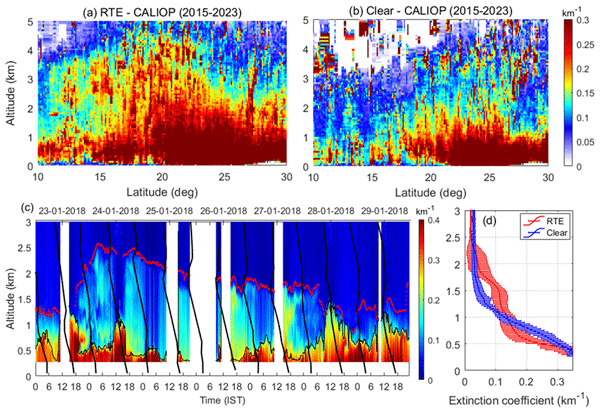
The pollutants over northern India are transported towards southern India under the influence of the prevalent wind system, especially during the winter season. This long-range transport induces widespread haziness over southern India, lasting for days. We evaluated the occurrence of such transport episodes over southern India using observational methods and found that it suppresses the boundary layer height by approximately 40 % compared to clear days, while exacerbating the surface pollution by approximately 50 %–60 %.
Shahin Khosh Bin Ghomash, Nithila Devi Nallasamy, and Heiko Apel
Hydrol. Earth Syst. Sci. Discuss., https://doi.org/10.5194/hess-2024-314, https://doi.org/10.5194/hess-2024-314, 2024
Manuscript not accepted for further review
Short summary
Short summary
Urbanization and climate change raise flood risk in cities, emphasizing the need for accurate building representation in flood hydrodynamic models. We examine the effects of different building representation techniques on flood modeling using the 2021 Ahr Valley flood data. We demonstrate that building representation significantly affects flood extent and flow dynamics, highlighting the need to choose the appropriate method based on model resolution for effective flood impact assessments.
Kundan Lal Shrestha, Rijan Bhakta Kayastha, and Rakesh Kayastha
Proc. IAHS, 387, 25–31, https://doi.org/10.5194/piahs-387-25-2024, https://doi.org/10.5194/piahs-387-25-2024, 2024
Short summary
Short summary
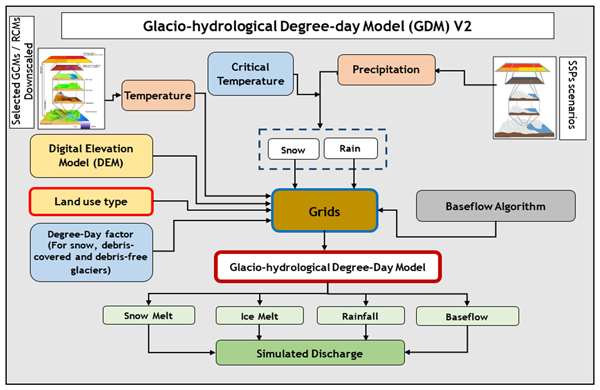
The Himalayan river basins have complex terrain and lack detailed hydrological and meteorological information. This has motivated us to develop a fast and distributed model named PyGDM to simulate the hydrology of this region, which is home to both glaciers and snow. PyGDM is good at simulating glacier and snow melt. Hence, the model is suitable for studying different aspects of the Himalayan region, such as the impact of climate change and hydropower scenarios.
Rakesh Kayastha, Rijan Bhakta Kayastha, Kundan Lal Shrestha, and Smriti Gurung
Proc. IAHS, 387, 53–58, https://doi.org/10.5194/piahs-387-53-2024, https://doi.org/10.5194/piahs-387-53-2024, 2024
Short summary
Short summary
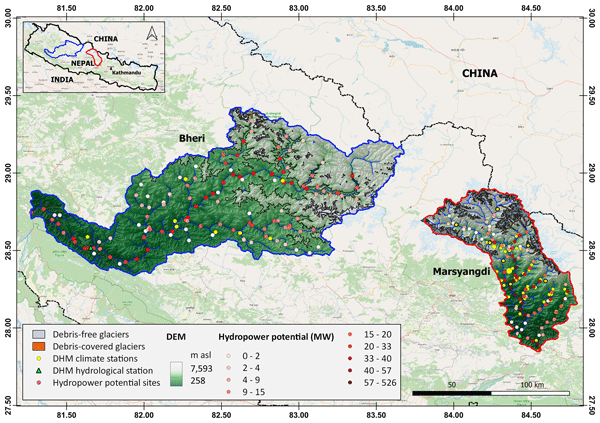
We have estimated hydropower potential in the two glacierized river basins of the Nepalese Himalayas. The Glacio-hydrological Degree-Day Model (GDM) was used with different geospatial criteria. In order to force the model simulation and to assess potential future hydrological regimes, a variety of climate variables were combined and used. The sensitivity of climate variables and their impact on hydropower potential were investigated with a combination of different climate variables.
Dinesh Joshi, Rijan Bhakta Kayastha, Kundan Lal Shrestha, and Rakesh Kayastha
Proc. IAHS, 387, 17–24, https://doi.org/10.5194/piahs-387-17-2024, https://doi.org/10.5194/piahs-387-17-2024, 2024
Short summary
Short summary
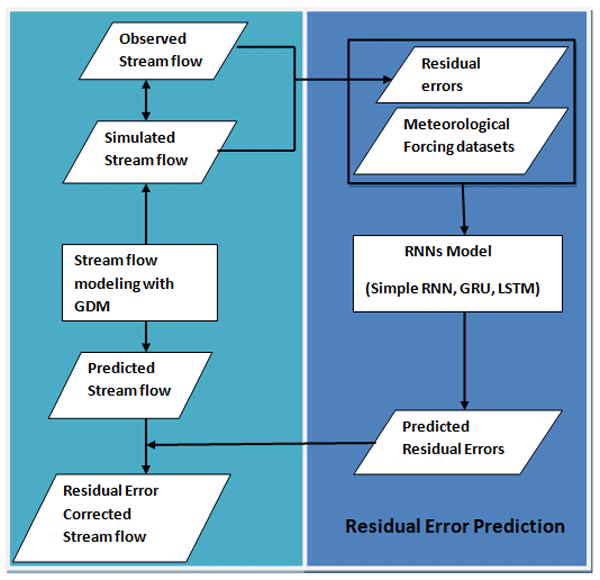
This study explores the potential of integrating data science models to enhance the predictive capacity of a theory-guided glacier hydrological model for improved river discharge simulations in the Himalayan basins. By combining data science and physical process models, the study addresses the limitations inherent in each approach.
Chandan Sarangi, Yun Qian, L. Ruby Leung, Yang Zhang, Yufei Zou, and Yuhang Wang
Atmos. Chem. Phys., 23, 1769–1783, https://doi.org/10.5194/acp-23-1769-2023, https://doi.org/10.5194/acp-23-1769-2023, 2023
Short summary
Short summary
We show that for air quality, the densely populated eastern US may see even larger impacts of wildfires due to long-distance smoke transport and associated positive climatic impacts, partially compensating the improvements from regulations on anthropogenic emissions. This study highlights the tension between natural and anthropogenic contributions and the non-local nature of air pollution that complicate regulatory strategies for improving future regional air quality for human health.
Chandan Sarangi, TC Chakraborty, Sachchidanand Tripathi, Mithun Krishnan, Ross Morrison, Jonathan Evans, and Lina M. Mercado
Atmos. Chem. Phys., 22, 3615–3629, https://doi.org/10.5194/acp-22-3615-2022, https://doi.org/10.5194/acp-22-3615-2022, 2022
Short summary
Short summary
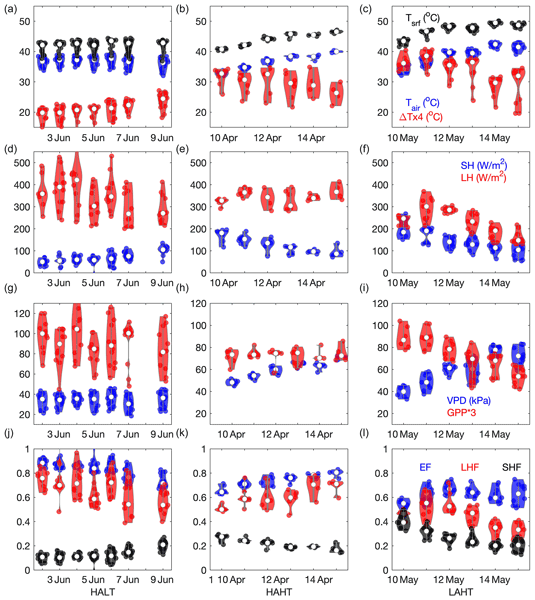
Transpiration fluxes by vegetation are reduced under heat stress to conserve water. However, in situ observations over northern India show that the strength of the inverse association between transpiration and atmospheric vapor pressure deficit is weakening in the presence of heavy aerosol loading. This finding not only implicates the significant role of aerosols in modifying the evaporative fraction (EF) but also warrants an in-depth analysis of the aerosol–plant–temperature–EF continuum.
Cited articles
Barros, A. P., Shrestha, P., Chavez, S., and Duan, Y.: Modeling aerosol-cloud-precipitation interactions in mountainous regions: Challenges in the representation of indirect microphysical effects with impacts at subregional scales, in: Rainfall-extremes, distribution and properties, IntechOpen, https://doi.org/10.5772/intechopen.80025, 2018.
Boyaj, A., Ashok, K., Ghosh, S., Devanand, A., and Dandu, G.: The Chennai extreme rainfall event in 2015: The Bay of Bengal connection, Clim. Dynam., 50, 2867–2879, https://doi.org/10.1007/s00382-017-3778-7, 2018.
Brown, J. D., Spencer, T., and Moeller, I.: Modeling storm surge flooding of an urban area with particular reference to modeling uncertainties: A case study of Canvey Island, United Kingdom, Water Resour. Res., 43, W06402, https://doi.org/10.1029/2005WR004597, 2007.
Buchard, V., Randles, C. A., da Silva, A. M., Darmenov, A., Colarco, P. R., Govindaraju, R., Ferrare, R., Hair, J., Beyersdorf, A. J., Ziemba, L. D., and Yu, H.: The MERRA-2 aerosol reanalysis, 1980 onward. Part II: Evaluation and case studies, J. Climate, 30, 6851–6872, https://doi.org/10.1175/JCLI-D-16-0613.1, 2017.
Chakraborty, A.: A synoptic-scale perspective of heavy rainfall over Chennai in November 2015, Curr. Sci., 111, 201–207, https://doi.org/10.18520/cs/v111/i1/201-207, 2016.
Chen, F. and Dudhia, J.: Coupling an advanced land surface–hydrology model with the Penn State–NCAR MM5 modeling system. Part I: Model implementation and sensitivity, Mon. Weather Rev., 129, 569–585, https://doi.org/10.1175/1520-0493(2001)129<0569:CAALSH>2.0.CO;2, 2001.
Global Modeling and Assimilation Office (GMAO): MERRA-2 inst3_3d_aer_Nv: 3d, 3-Hourly, Instantaneous, Model-Level, Assimilation, Aerosol Mixing Ratio V5.12.4, NASA GES DISC, Earth data [data set], https://doi.org/10.5067/LTVB4GPCOTK2, 2015.
Ghosh, S., Karmakar, S., Saha, A., Mohanty, M. P., Ali, S., Raju, S. K., Krishnakumar, V., Sebastian, M., Behera, M. R., Ashrit, R., Murty, P. L. N., Srinivas, K., Narasimhan, B., Usha, T., Murthy, M. V. R., Thiruvengadam, P., Indu, J., Thirumalaivasan, D., George, J. P., Gedam, S., Inamdar, A. B., Murty, B. S., Mujumdar, P. P., Mohapatra, M., Bhardwaj, A., Basu, S., and Nayak, S.: Development of India's first integrated expert urban flood forecasting system for Chennai, Curr. Sci., 117, 741–745, https://www.jstor.org/stable/27138336 (last access: 15 January 2026), 2019.
Gomez, M., Sharma, S., Reed, S., and Mejia, A.: Skill of ensemble flood inundation forecasts at short- to medium-range timescales, J. Hydrol., 568, 207–220, https://doi.org/10.1016/j.jhydrol.2018.10.063, 2019.
Goswami, B. N., Venugopal, V., Sengupta, D., Madhusoodanan, M. S., and Xavier, P. K.: Increasing trend of extreme rain events over India in a warming environment, Science, 314, 1442–1445, https://doi.org/10.1126/science.1132027, 2006.
Grell, G. A. and Freitas, S. R.: A scale and aerosol aware stochastic convective parameterization for weather and air quality modeling, Atmos. Chem. Phys., 14, 5233–5250, https://doi.org/10.5194/acp-14-5233-2014, 2014.
Hazra, A., Chaudhari, H. S., Ranalkar, M., and Chen, J. P.: Role of interactions between cloud microphysics, dynamics and aerosol in the heavy rainfall event of June 2013 over Uttarakhand, India, Q. J. Roy. Meteor. Soc., 143, 986–998, https://doi.org/10.1002/qj.2983, 2017.
Huffman, G. J., Stocker, E. F., Bolvin, D. T., Nelkin, E. J., and Tan, J.: GPM IMERG Final precipitation L3 half hourly 0.1° × 0.1° V07, Goddard Earth Sciences Data and Information Services Center (GES DISC), Greenbelt, MD, Earth data [data set], https://doi.org/10.5067/GPM/IMERG/3B-HH/07, 2023.
Hunter, N. M., Bates, P. D., Neelz, S., Pender, G., Villanueva, I., Wright, N. G., Liang, D., Falconer, R. A., Lin, B., Waller, S., Crossley, A. J., and Mason, D. C.: Benchmarking 2D hydraulic models for urban flooding, Proc. Inst. Civ. Eng. Water Manag., 161, 13–30, https://doi.org/10.1680/wama.2008.161.1.13, 2008.
Konduru, R. T., Mrudula, G., Singh, V., Srivastava, A. K., and Singh, A. K.: Unravelling the causes of 2015 winter monsoon extreme rainfall and floods over Chennai: Influence of atmospheric variability and urbanization on the hydrological cycle, Urban Clim., 47, 101395, https://doi.org/10.1016/j.uclim.2022.101395, 2023.
Kuiry, S. N., Sen, D., and Bates, P. D.: Coupled 1D–Quasi-2D flood inundation model with unstructured grids, J. Hydraul. Eng., 136, 493–506, https://doi.org/10.1061/(ASCE)HY.1943-7900.0000211, 2010.
Kusaka, H. and Kimura, F.: Coupling a Single-Layer Urban Canopy Model with a Simple Atmospheric Model: Impact on Urban Heat Island Simulation for an Idealized Case, J. Meteorol. Soc. Jpn., 82, 67–80, 2004.
Kusaka, H., Kondo, H., Kikegawa, Y., and Kimura, F.: A simple single-layer urban canopy model for atmospheric models: Comparison with multi-layer and slab models, Bound.-Lay. Meteorol., 101, 329–358, 2001.
Laakso, L., Grönholm, T., Rannik, Ü., Kosmale, M., Fiedler, V., Vehkamäki, H., and Kulmala, M.: Ultrafine particle scavenging coefficients calculated from 6 years field measurements, Atmos. Environ., 37, 3605–3613, https://doi.org/10.1016/S1352-2310(03)00326-1, 2003.
Lu, C.-H., Liu, Q., Wei, S.-W., Johnson, B. T., Dang, C., Stegmann, P. G., Grogan, D., Ge, G., Hu, M., and Lueken, M.: The Aerosol Module in the Community Radiative Transfer Model (v2.2 and v2.3): accounting for aerosol transmittance effects on the radiance observation operator, Geosci. Model Dev., 15, 1317–1329, https://doi.org/10.5194/gmd-15-1317-2022, 2022.
Lyapustin, A., Wang, Y., Korkin, S., and Huang, D.: MODIS Collection 6 MAIAC algorithm, Atmos. Meas. Tech., 11, 5741–5765, https://doi.org/10.5194/amt-11-5741-2018, 2018.
Mallinson, H. M. and Lasher-Trapp, S. G.: An investigation of hydrometeor latent cooling upon convective cold pool formation, sustainment, and properties, Mon. Weather Rev., 147, 3205–3222, https://doi.org/10.1175/MWR-D-18-0382.1, 2019.
Mishra, V. and Shah, H. L.: Hydroclimatological perspective of the Kerala flood of 2018, J. Geol. Soc. India, 92, 645–650, https://doi.org/10.1007/s12594-018-1079-3, 2018.
Mlawer, E. J., Taubman, S. J., Brown, P. D., Iacono, M. J., and Clough, S. A.: Radiative transfer for inhomogeneous atmospheres: RRTM, a validated correlated-k model for the longwave, J. Geophys. Res.-Atmos., 102, 16663–16682, https://doi.org/10.1029/97JD00237, 1997.
Nakanishi, M. and Niino, H.: Development of an improved turbulence closure model for the atmospheric boundary layer, J. Meteorol. Soc. Jpn., 87, 895–912, https://doi.org/10.2151/jmsj.87.895, 2009.
Narasimhan, B., Bhallamudi, S. M., Mondal, A., Ghosh, S., and Mujumdar, P. P.: Chennai Floods 2015: A Rapid Assessment, Interdisciplinary Centre for Water Research (ICWaR), Indian Institute of Science, Bangalore, India, https://www.cag.org.in/sites/default/files/database/chennai-floods-rapid-assessment-report_1.pdf (last access: 1 September 2025), 2016.
Nithila Devi, N. and Kuiry, S. N.: An urbanization-hydrologic-hydraulic modelling framework for short and long- term flood management strategies, PhD thesis, Indian Institute of Technology Madras, 2023.
Nithila Devi, N. and Kuiry, S. N.: Evaluation of predictive skill of short-term raw ensemble forecasts for mapping of extreme floods, in: Springer Proc., 163–173, https://doi.org/10.1007/978-981-97-6009-1_17, 2024.
Nithila Devi, N. and Kuiry, S. N.: Urbanization-informed, uncertainty-based calibration approach for simulating the impact of urbanization on flooding in a data-limited region, J. Water Clim. Change, 16, 211–229, https://doi.org/10.2166/wcc.2025.604, 2025.
Nithila Devi, N., Sridharan, B., and Kuiry, S. N.: Impact of urban sprawl on future flooding in Chennai city, India, J. Hydrol., 574, 486–496, https://doi.org/10.1016/j.jhydrol.2019.04.041, 2019.
Nithila Devi, N., Sridharan, B., Bindhu, V. M., Narasimhan, B., Bhallamudi, S. M., Bhatt, C. M., Usha, T., Vasan, D. T., and Kuiry, S. N.: Investigation of Role of Retention Storage in Tanks (Small Water Bodies) on Future Urban Flooding: A Case Study of Chennai City, India, Water, 12, 2875, https://doi.org/10.3390/w12102875, 2020.
Panchanthan, A., La Rocca, M., and Lakshmanan, E.: Significance of reservoir operation during extreme rainfall event in flood mitigation and water demand management in a metropolitan city of India: a case study , EGU General Assembly 2020, Online, 4–8 May 2020, EGU2020-6409, https://doi.org/10.5194/egusphere-egu2020-6409, 2020
Panda, J. and Rath, S. S.: Observed and Simulated Characteristics of 2015 Chennai Heavy Rain Event: Impact of Land-Use Change, SST, and High-Resolution Global Analyses, Pure Appl. Geophys., 179, 3391–3409, https://doi.org/10.1007/s00024-022-03113-w, 2022.
Pattanaik, D. R. and Rajeevan, M.: Variability of extreme rainfall events over India during southwest monsoon season, Meteorol. Appl., 17, 88–104, https://doi.org/10.1002/met.164, 2010.
Paul, O.: Accumulated rainfall data for all sensitivity experiments, Zenodo [data set], https://doi.org/10.5281/zenodo.17897013, 2026.
Phadtare, J.: Role of Eastern Ghats orography and cold pool in an extreme rainfall event over Chennai on 1 December 2015, Mon. Weather Rev., 146, 943–965, https://doi.org/10.1175/MWR-D-16-0473.1, 2018.
Rai, P. K., Sarangi, C., Arun, N., Kuiry, S. N., and Leung, L. R.: The Dichotomy of Wet and Dry Trends Over India by Aerosol Indirect Effects in CMIP5 Models, Earth's Future, 11, https://doi.org/10.1029/2022EF003266, 2023.
Rani, S. I., Arulalan, T., George, J. P., Rajagopal, E. N., Renshaw, R., Maycock, A., Barker, D. M., and Rajeevan, M.: IMDAA: High Resolution Satellite-era Reanalysis for the Indian Monsoon Region, J. Climate, https://doi.org/10.1175/JCLI-D-20-0412.1, 2021.
Rath, S. S. and Panda, J.:A Study of Near-Surface Boundary Layer Characteristics During the 2015 Chennai Flood in the Context of Urban-Induced Land Use Changes, Pure Appl. Geophys., 176, 2607–2629, https://doi.org/10.1007/s00024-018-2069-5, 2019.
Reshmi Mohan, P., Srinivas, C. V., Yesubabu, V., Baskaran, R., and Venkatraman, B.: Simulation of a heavy rainfall event over Chennai in Southeast India using WRF: Sensitivity to microphysics parameterization, Atmos. Res., 210, 83–99, https://doi.org/10.1016/j.atmosres.2018.04.005, 2018.
Roxy, M. K., Ghosh, S., Pathak, A., Athulya, R., Mujumdar, M., Murtugudde, R., Terray, P., and Rajeevan, M.: A threefold rise in widespread extreme rain events over central India, Nat. Commun., 8, 708, https://doi.org/10.1038/s41467-017-00744-9, 2017.
Sarangi, C., Tripathi, S. N., Kanawade, V. P., Koren, I., and Pai, D. S.: Investigation of the aerosol–cloud–rainfall association over the Indian summer monsoon region, Atmos. Chem. Phys., 17, 5185–5204, https://doi.org/10.5194/acp-17-5185-2017, 2017.
Sarangi, C., Kanawade, V. P., Tripathi, S. N., Thomas, A., and Ganguly, D.: Aerosol-induced intensification of cooling effect of clouds during Indian summer monsoon, Nat. Commun., 9, 5095, https://doi.org/10.1038/s41467-018-06015-5, 2018a.
Sarangi, C., Tripathi, S. N., Qian, Y., Kumar, S., and Leung, L. R.: Aerosol and Urban Land Use Effect on Rainfall Around Cities in Indo-Gangetic Basin From Observations and Cloud Resolving Model Simulations, J. Geophys. Res.-Atmos., 123, 3645–3667, https://doi.org/10.1002/2017JD028004, 2018b.
Schlemmer, L. and Hohenegger, C.: The formation of wider and deeper clouds as a result of cold-pool dynamics, J. Atmos. Sci., 71, 2842–2858, https://doi.org/10.1175/JAS-D-13-0170.1, 2014.
Schlemmer, L. and Hohenegger, C.: Modifications of the atmospheric moisture field as a result of cold-pool dynamics, Q. J. Roy. Meteor. Soc., 142, 30–42, https://doi.org/10.1002/qj.2625, 2016.
Schubert, J. E. and Sanders, B. F.: Building treatments for urban flood inundation models and implications for predictive skill and modeling efficiency, Adv. Water Resour., 41, 49–64, https://doi.org/10.1016/j.advwatres.2012.02.012, 2012.
Skamarock, W. C., Klemp, J. B., Dudhia, J., Gill, D. O., Barker, D. M., Duda, M. G., Huang, X.-Y., Wang, W., and Powers, J. G.: A Description of the Advanced Research WRF Version 3, NCAR Tech. Note NCAR/TN-475+STR, https://www2.mmm.ucar.edu/wrf/users/docs/attic/arw_v3_bw.pdf (last access: 15 September 2025), 2008.
Srinivas, C. V., Yesubabu, V., Hari Prasad, D., Hari Prasad, K. B. R. R., Greeshma, M. M., Baskaran, R., and Venkatraman, B.: Simulation of an extreme heavy rainfall event over Chennai, India using WRF: Sensitivity to grid resolution and boundary layer physics, Atmos. Res., 210, 66–82, https://doi.org/10.1016/j.atmosres.2018.04.014, 2018.
Tewari, M., Chen, F., Dudhia, J., Ray, P., Miao, S., Nikolopoulos, E., and Treinish, L.: Understanding the sensitivity of WRF hindcast of Beijing extreme rainfall of 21 July 2012 to microphysics and model initial time, Atmos. Res., 271, 106085, https://doi.org/10.1016/j.atmosres.2022.106085, 2022.
Thompson, G. and Eidhammer, T.: A study of aerosol impacts on clouds and precipitation development in a large winter cyclone, J. Atmos. Sci., 71, 3636–3658, https://doi.org/10.1175/JAS-D-13-0305.1, 2014.
van Oldenborgh, G. J., Otto, F. E. L., Haustein, K., and AchutaRao, K.: The Heavy Precipitation Event of December 2015 in Chennai, India, B. Am. Meteorol. Soc., 97, S87–S91, https://doi.org/10.1175/BAMS-D-16-0129.1, 2016.
Virtanen, P., Gommers, R., Oliphant, T. E., Haberland, M., Reddy, T., Cournapeau, D., Burovski, E., Peterson, P., Weckesser, W., Bright, J., van der Walt, S. J., Brett, M., Wilson, J., Millman, K. J., Mayorov, N., Nelson, A. R. J., Jones, E., Kern, R., Larson, E., Carey, C. J., Polat, İ., Feng, Y., Moore, E. W., VanderPlas, J., Laxalde, D., Perktold, J., Cimrman, R., Henriksen, I., Quintero, E. A., Harris, C. R., Archibald, A. M., Ribeiro, A. H., Pedregosa, F., van Mulbregt, P., Vázquez-Baeza, Y., and SciPy 1.0 Contributors: SciPy 1.0: Fundamental algorithms for scientific computing in Python, Nat. Methods, 17, 261–272, https://doi.org/10.1038/s41592-019-0686-2, 2020.
Zou, Y. L., Hu, F. L., Zhou, C. C., Li, C. L., and Dunn, K. J.: Analysis of radial basis function interpolation approach, Appl. Geophys., 10, 397–410, https://doi.org/10.1007/s11770-013-0407-z, 2013.
Short summary
Despite computationally intensive high-resolution weather models, accurate spatio-temporal rainfall simulation at complex urban scales remains challenging. Using the December 2015 Chennai 1-in-100-year flood as a case study, we show that explicit aerosol representation significantly influences rainfall simulations, improving flood extent mapping by up to 50 %. Our approach resolves urban-scale aerosol microphysics and can be systematically extended to other extreme events across regions.
Despite computationally intensive high-resolution weather models, accurate spatio-temporal...
Altmetrics
Final-revised paper
Preprint