
Articles | Volume 26, issue 8
https://doi.org/10.5194/nhess-26-3637-2026
© Author(s) 2026. This work is distributed under
the Creative Commons Attribution 4.0 License.
the Creative Commons Attribution 4.0 License.
https://doi.org/10.5194/nhess-26-3637-2026
© Author(s) 2026. This work is distributed under
the Creative Commons Attribution 4.0 License.
the Creative Commons Attribution 4.0 License.
Research article
| 
06 Aug 2026
Research article |
| 06 Aug 2026
| 06 Aug 2026
Dynamic spatial modelling of mass movement impacts for large areas: a data-driven framework for impact-based early warning

GeoSphere Austria, Vienna, Austria
Raphael Spiekermann
GeoSphere Austria, Vienna, Austria
Mateo Moreno
OpenGeoHub Foundation, Doorwerth, the Netherlands
Sebastian Lehner
GeoSphere Austria, Vienna, Austria
Department for Meteorology and Geophysics, University of Vienna, Vienna, Austria
Katharina Enigl
GeoSphere Austria, Vienna, Austria
Department for Meteorology and Geophysics, University of Vienna, Vienna, Austria
Alice Crespi
Center for Climate Change and Transformation, Eurac Research, Bozen/Bolzano, Italy
Matthias Schlögl
GeoSphere Austria, Vienna, Austria
Department of Landscape, Water and Infrastructure, BOKU University, Vienna, Austria
Related authors
Jess L. Delves, Kathrin Renner, Piero Campalani, Jesica Piñon, Stefan Schneiderbauer, Mateo Moreno, Maria Belen Benito Oterino, Eduardo Perez, and Massimiliano Pittore
Nat. Hazards Earth Syst. Sci., 26, 1347–1373, https://doi.org/10.5194/nhess-26-1347-2026, https://doi.org/10.5194/nhess-26-1347-2026, 2026
Short summary
Short summary
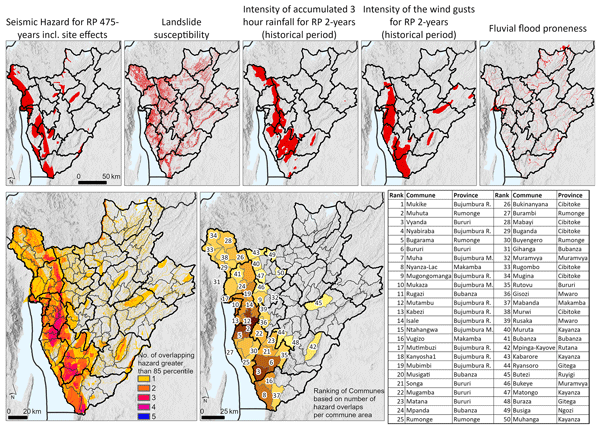
This scientific paper presents a multi-hazard risk assessment for Burundi, focusing on flooding, torrential rains, landslides, earthquakes, and strong winds. The study identifies key risk hotspots with estimated economic losses of 92 million USD (2.5 % of Gross Domestic Product (GDP)). Climate change projections indicate increased precipitation. The paper highlights data limitations and stresses the need for improved hazard models and the consideration of compounding risks in future assessments.
Chiara Crippa, Stefan Steger, Giovanni Cuozzo, Francesca Bearzot, Volkmar Mair, and Claudia Notarnicola
The Cryosphere, 19, 3493–3515, https://doi.org/10.5194/tc-19-3493-2025, https://doi.org/10.5194/tc-19-3493-2025, 2025
Short summary
Short summary
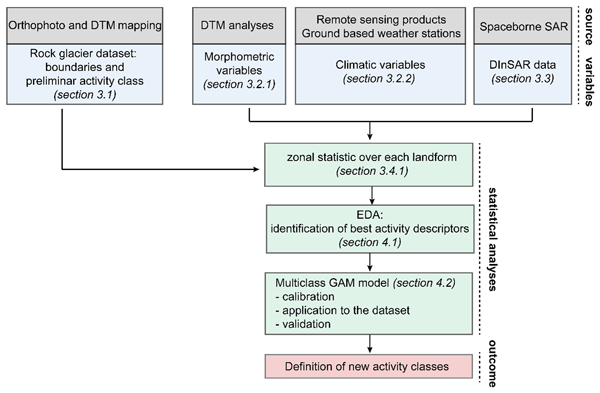
Our study, focused on South Tyrol (NE Italy), develops an updated and comprehensive activity classification system for all rock glaciers in the current regional inventory. Using multisource products, we integrate climatic, morphological, and differential interferometric synthetic aperture radar (DInSAR) data in replicable routines and multivariate statistical methods, producing a comprehensive classification based on the updated Rock Glacier Inventories and Kinematic (RGIK) 2023 guidelines. Results leave only 3.5 % of the features non-classified, as opposed to 13–18.5 % in previous studies.
Matthias Schlögl, Anita Graser, Raphael Spiekermann, Jasmin Lampert, and Stefan Steger
Nat. Hazards Earth Syst. Sci., 25, 1425–1437, https://doi.org/10.5194/nhess-25-1425-2025, https://doi.org/10.5194/nhess-25-1425-2025, 2025
Short summary
Short summary
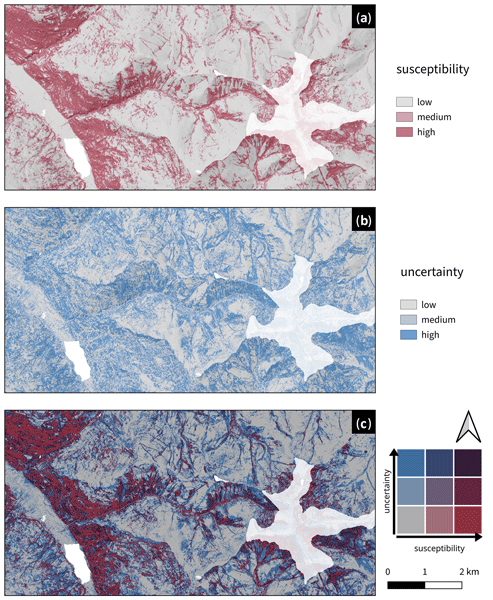
Communicating uncertainties is a crucial yet challenging aspect of spatial modelling – especially in applied research, where results inform decisions. In disaster risk reduction, susceptibility maps for natural hazards guide planning and risk assessment, yet their uncertainties are often overlooked. We present a new type of landslide susceptibility map that visualizes both susceptibility and associated uncertainty alongside guidelines for creating such maps using free and open-source software.
Stefan Steger, Mateo Moreno, Alice Crespi, Peter James Zellner, Stefano Luigi Gariano, Maria Teresa Brunetti, Massimo Melillo, Silvia Peruccacci, Francesco Marra, Robin Kohrs, Jason Goetz, Volkmar Mair, and Massimiliano Pittore
Nat. Hazards Earth Syst. Sci., 23, 1483–1506, https://doi.org/10.5194/nhess-23-1483-2023, https://doi.org/10.5194/nhess-23-1483-2023, 2023
Short summary
Short summary
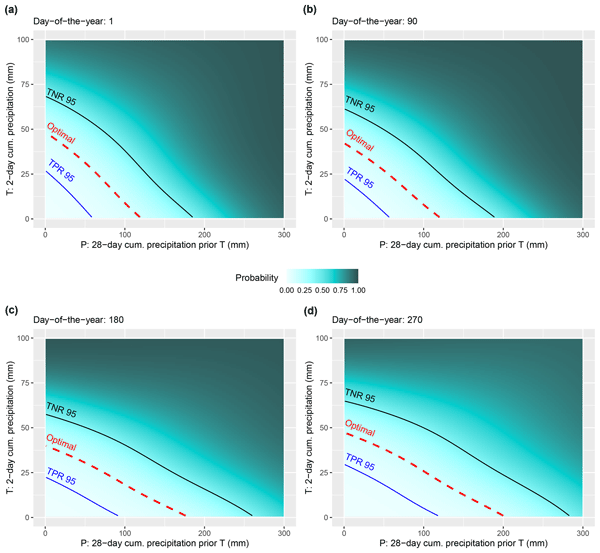
We present a novel data-driven modelling approach to determine season-specific critical precipitation conditions for landslide occurrence. It is shown that the amount of precipitation required to trigger a landslide in South Tyrol varies from season to season. In summer, a higher amount of preparatory precipitation is required to trigger a landslide, probably due to denser vegetation and higher temperatures. We derive dynamic thresholds that directly relate to hit rates and false-alarm rates.
Mateo Moreno, Leandro Parente, Lars Hein, Carmelo Bonannella, Qin Xu, Mustafa Serkan Isik, Maulana Ikram Wibisana, Michelle Piccoli, and Tomislav Hengl
EGUsphere, https://doi.org/10.5194/egusphere-2026-5540, https://doi.org/10.5194/egusphere-2026-5540, 2026
This preprint is open for discussion and under review for Earth Observation (EO).
Short summary
Short summary
We present two new global land cover maps at 10 m and 30 m resolution for 2020–2024. We combined 24 existing satellite datasets using transparent, documented rules so that each mapped area can be traced to its source data. The maps identify more than 40 land cover types and show high overall accuracy, although wetlands and sparsely vegetated areas remain challenging. The openly available maps and code can support land monitoring, ecosystem assessment, agriculture, and biodiversity studies.
Alice Crespi, Katharina Enigl, Sebastian Lehner, Klaus Haslinger, and Massimiliano Pittore
Nat. Hazards Earth Syst. Sci., 26, 1975–1996, https://doi.org/10.5194/nhess-26-1975-2026, https://doi.org/10.5194/nhess-26-1975-2026, 2026
Short summary
Short summary
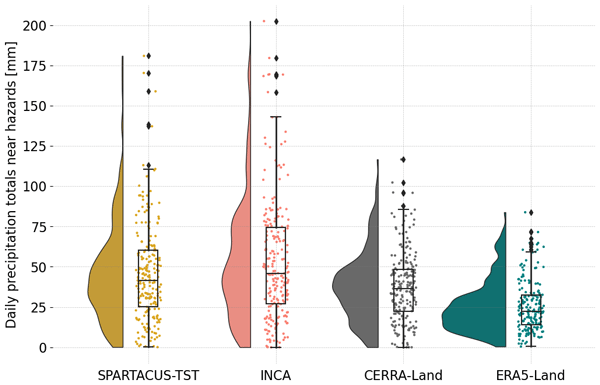
Extreme precipitation poses a risk to the Alpine region as it can trigger geohydrological hazards, such as floods, debris flows, and landslides, with serious impacts on people and their activities. This study focuses on a transboundary Alpine area between Italy and Austria and evaluates data and methods for detecting past precipitation extremes corresponding to hazard occurrences. The results can inform risk managers and support methodological choices for developing early warning systems.
Sebastian Lehner, Harald Schellander, Theresa Schellander-Gorgas, Matthias Schlögl, and Klaus Haslinger
EGUsphere, https://doi.org/10.5194/egusphere-2026-1825, https://doi.org/10.5194/egusphere-2026-1825, 2026
Short summary
Short summary
In September 2024, Central & Eastern Europe experienced heavy precipitation. Northeastern Austria was particularly affected, with several station records broken. In order to characterize how extreme this event was, we analyze five-day total precipitation compared to historical observations. We find that this event broke records in a larger area of Austria compared to previous major floods. New records are up to 2.6 times higher compared to the past, making this event exceptionally severe & rare.
Jess L. Delves, Kathrin Renner, Piero Campalani, Jesica Piñon, Stefan Schneiderbauer, Mateo Moreno, Maria Belen Benito Oterino, Eduardo Perez, and Massimiliano Pittore
Nat. Hazards Earth Syst. Sci., 26, 1347–1373, https://doi.org/10.5194/nhess-26-1347-2026, https://doi.org/10.5194/nhess-26-1347-2026, 2026
Short summary
Short summary
This scientific paper presents a multi-hazard risk assessment for Burundi, focusing on flooding, torrential rains, landslides, earthquakes, and strong winds. The study identifies key risk hotspots with estimated economic losses of 92 million USD (2.5 % of Gross Domestic Product (GDP)). Climate change projections indicate increased precipitation. The paper highlights data limitations and stresses the need for improved hazard models and the consideration of compounding risks in future assessments.
Marc Lemus-Canovas, Alice Crespi, Elena Maines, Stefano Terzi, and Massimiliano Pittore
Hydrol. Earth Syst. Sci., 29, 6781–6809, https://doi.org/10.5194/hess-29-6781-2025, https://doi.org/10.5194/hess-29-6781-2025, 2025
Short summary
Short summary
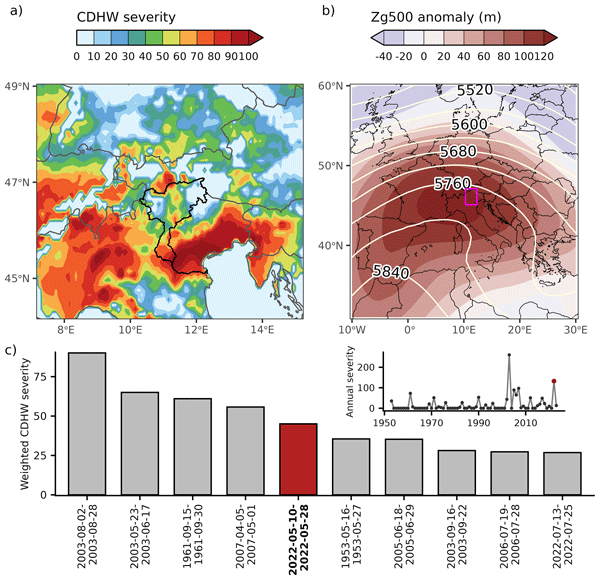
We studied a severe compound drought and heatwave event in the Adige River basin in May 2022 and found that similar events are now hotter and drier due to current warming. These changes worsen water stress and river drying. We show that timing matters: events in June are now more critical than in April, as the snowmelt contribution to streamflow in June has become much lower than in the past. However, many climate models still fail to capture these changes.
Matthias Schlögl, Laura Waltersdorfer, Peter Regner, Andrea Siposova, and Alexander Brenning
EGUsphere, https://doi.org/10.5194/egusphere-2025-5210, https://doi.org/10.5194/egusphere-2025-5210, 2025
This preprint is open for discussion and under review for Natural Hazards and Earth System Sciences (NHESS).
Short summary
Short summary
Reproducibility is essential for reliable scientific research, yet it remains challenging in (geo-)scientific practice. This perspective explores how to improve reproducibility in geospatial analyses by identifying key barriers and proposing actionable solutions. By encouraging both a cultural shift and offering strategies tailored to the unique needs of the field, our aim is to provide clear implementation strategies that foster transparent and reproducible geospatial research.
Chiara Crippa, Stefan Steger, Giovanni Cuozzo, Francesca Bearzot, Volkmar Mair, and Claudia Notarnicola
The Cryosphere, 19, 3493–3515, https://doi.org/10.5194/tc-19-3493-2025, https://doi.org/10.5194/tc-19-3493-2025, 2025
Short summary
Short summary
Our study, focused on South Tyrol (NE Italy), develops an updated and comprehensive activity classification system for all rock glaciers in the current regional inventory. Using multisource products, we integrate climatic, morphological, and differential interferometric synthetic aperture radar (DInSAR) data in replicable routines and multivariate statistical methods, producing a comprehensive classification based on the updated Rock Glacier Inventories and Kinematic (RGIK) 2023 guidelines. Results leave only 3.5 % of the features non-classified, as opposed to 13–18.5 % in previous studies.
Matthias Schlögl, Anita Graser, Raphael Spiekermann, Jasmin Lampert, and Stefan Steger
Nat. Hazards Earth Syst. Sci., 25, 1425–1437, https://doi.org/10.5194/nhess-25-1425-2025, https://doi.org/10.5194/nhess-25-1425-2025, 2025
Short summary
Short summary
Communicating uncertainties is a crucial yet challenging aspect of spatial modelling – especially in applied research, where results inform decisions. In disaster risk reduction, susceptibility maps for natural hazards guide planning and risk assessment, yet their uncertainties are often overlooked. We present a new type of landslide susceptibility map that visualizes both susceptibility and associated uncertainty alongside guidelines for creating such maps using free and open-source software.
Giulio Bongiovanni, Michael Matiu, Alice Crespi, Anna Napoli, Bruno Majone, and Dino Zardi
Earth Syst. Sci. Data, 17, 1367–1391, https://doi.org/10.5194/essd-17-1367-2025, https://doi.org/10.5194/essd-17-1367-2025, 2025
Short summary
Short summary
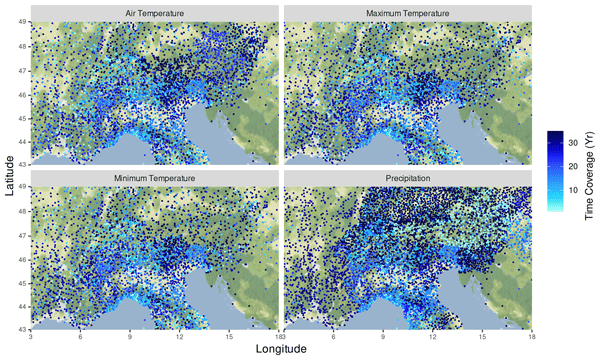
EEAR-Clim is a new and unprecedented observational dataset gathering in situ daily measurements of air temperature and precipitation from a network of about 9000 weather stations covering the European Alps. Data collected, including time series from recordings up to 2020 and time series significantly enhancing data coverage at high elevations, were tested for quality and homogeneity. The dataset aims to serve as a powerful tool for better understanding climate change over the European Alpine region.
Stefan Steger, Mateo Moreno, Alice Crespi, Peter James Zellner, Stefano Luigi Gariano, Maria Teresa Brunetti, Massimo Melillo, Silvia Peruccacci, Francesco Marra, Robin Kohrs, Jason Goetz, Volkmar Mair, and Massimiliano Pittore
Nat. Hazards Earth Syst. Sci., 23, 1483–1506, https://doi.org/10.5194/nhess-23-1483-2023, https://doi.org/10.5194/nhess-23-1483-2023, 2023
Short summary
Short summary
We present a novel data-driven modelling approach to determine season-specific critical precipitation conditions for landslide occurrence. It is shown that the amount of precipitation required to trigger a landslide in South Tyrol varies from season to season. In summer, a higher amount of preparatory precipitation is required to trigger a landslide, probably due to denser vegetation and higher temperatures. We derive dynamic thresholds that directly relate to hit rates and false-alarm rates.
Cited articles
Ahmed, M., Tanyas, H., Huser, R., Dahal, A., Titti, G., Borgatti, L., Francioni, M., and Lombardo, L.: Dynamic rainfall-induced landslide susceptibility: A step towards a unified forecasting system, Int. J. Appl. Earth Obs., 125, 103593, https://doi.org/10.1016/j.jag.2023.103593, 2023.
Alfieri, L., Salamon, P., Pappenberger, F., Wetterhall, F., and Thielen, J.: Operational early warning systems for water-related hazards in Europe, Environ. Sci. Policy, 21, 35–49, https://doi.org/10.1016/j.envsci.2012.01.008, 2012.
Alfieri, L., Libertino, A., Campo, L., Dottori, F., Gabellani, S., Ghizzoni, T., Masoero, A., Rossi, L., Rudari, R., Testa, N., Trasforini, E., Amdihun, A., Ouma, J., Tramblay, Y., Wu, H., and Massabò, M.: Impact-based flood forecasting in the Greater Horn of Africa, Nat. Hazards Earth Syst. Sci., 24, 199–224, https://doi.org/10.5194/nhess-24-199-2024, 2024.
Alvioli, M., Marchesini, I., Reichenbach, P., Rossi, M., Ardizzone, F., Fiorucci, F., and Guzzetti, F.: Automatic delineation of geomorphological slope units with r.slopeunits v1.0 and their optimization for landslide susceptibility modeling, Geosci. Model Dev., 9, 3975–3991, https://doi.org/10.5194/gmd-9-3975-2016, 2016.
Antonetti, G., Gentilucci, M., Aringoli, D., and Pambianchi, G.: Analysis of landslide Susceptibility and Tree Felling Due to an Extreme Event at Mid-Latitudes: Case Study of Storm Vaia, Italy, Land, 11, 1808, https://doi.org/10.3390/land11101808, 2022.
Ardizzone, F., Cardinali, M., Carrara, A., Guzzetti, F., and Reichenbach, P.: Impact of mapping errors on the reliability of landslide hazard maps, Nat. Hazards Earth Syst. Sci., 2, 3–14, https://doi.org/10.5194/nhess-2-3-2002, 2002.
Auflič, M. J., Šinigoj, J., Krivic, M., Podboj, M., Peternel, T., and Komac, M.: Landslide prediction System for rainfall induced landslides in Slovenia (Masprem), Geologija, 59, 259–271, https://doi.org/10.5474/geologija.2016.016, 2016.
Benestad, R., Caron, L.-P., Parding, K., Iturbide, M., Llorente, J. M. G., Mezghani, A., and Doblas-Reyes, F. J.: Using statistical downscaling to assess skill of decadal predictions, Tellus A Dyn. Meteorol. Oceanogr., 71, https://doi.org/10.1080/16000870.2019.1652882, 2019.
BMNT: Richtlinie für den Wildbach- und Lawinenkataster (WLK-RL), BMLFUW-LE.3.3.3/0034-III/5/2017 Fassung: Mai 2018, https://www.bmluk.gv.at/dam/jcr:ad84fd20-46ab-4560-9789-ecb861fbc3b4/Richtlinie%20f%C3%BCr%20den%20Wildbach-%20und%20Lawinenkataster.pdf (last access: 22 January 2026), 2018.
Brenning, A. and Suesse, T.: Aligning Validation with Deployment in Spatial Prediction: Target-Weighted Cross-Validation, arXiv, https://doi.org/10.48550/arXiv.2603.29981, 2026.
Broeckx, J., Vanmaercke, M., Duchateau, R., and Poesen, J.: A data-based landslide susceptibility map of Africa, Earth Sci. Rev., 185, 102–121, https://doi.org/10.1016/j.earscirev.2018.05.002, 2018.
Brunetti, M. T., Peruccacci, S., Rossi, M., Luciani, S., Valigi, D., and Guzzetti, F.: Rainfall thresholds for the possible occurrence of landslides in Italy, Nat. Hazards Earth Syst. Sci., 10, 447–458, https://doi.org/10.5194/nhess-10-447-2010, 2010.
Budimir, M., Šakić Trogrlić, R., Almeida, C., Arestegui, M., Chuquisengo Vásquez, O., Cisneros, A., Cuba Iriarte, M., Dia, A., Lizon, L., Madueño, G., Ndiaye, A., Ordoñez Caldas, M., Rahman, T., RanaTharu, B., Sall, A., Uprety, D., Anderson, C., and McQuistan, C.: Opportunities and challenges for people-centered multi-hazard early warning systems: Perspectives from the Global South, iScience, 28, 112353, https://doi.org/10.1016/j.isci.2025.112353, 2025.
Caleca, F., Confuorto, P., Raspini, F., Segoni, S., Tofani, V., Casagli, N., and Moretti, S.: Shifting from traditional landslide occurrence modeling to scenario estimation with a “glass-box” machine learning, Sci. Total Environ., 950, 175277, https://doi.org/10.1016/j.scitotenv.2024.175277, 2024.
Caleca, F., Lombardo, L., Steger, S., Tanyas, H., Raspini, F., Dahal, A., Nefros, C., Mărgărint, M. C., Drouin, V., Jemec-Auflič, M., Novellino, A., Tonini, M., Loche, M., Casagli, N., and Tofani, V.: Pan-European Landslide Risk Assessment: From Theory to Practice, Rev. Geophys., 63, https://doi.org/10.1029/2023RG000825, 2025.
Casteel, M. A.: Communicating Increased Risk: An Empirical Investigation of the National Weather Service's Impact-Based Warnings, Weather Clim. Soc, 8, https://doi.org/10.1175/WCAS-D-15-0044.1, 2016.
Cavaleri, L., Bajo, M., Barbariol, F., Bastianini, M., Benetazzo, A., Bertotti, L., Chiggiato, J., Davolio, S., Ferrarin, C., Magnusson, L., Papa, A., Pezzutto, P., Pomaro, A., and Umgiesser, G.: The October 29, 2018 storm in Northern Italy – An exceptional event and its modeling, Prog. Oceanogr., 178, 102178, https://doi.org/10.1016/j.pocean.2019.102178, 2019.
Clement, T. P.: Complexities in Hindcasting Models—When Should We Say Enough Is Enough?, Groundwater, 49, 620–629, https://doi.org/10.1111/j.1745-6584.2010.00765.x, 2011.
Collini, E., Palesi, L. A. I., Nesi, P., Pantaleo, G., Nocentini, N., and Rosi, A.: Predicting and Understanding Landslide Events With Explainable AI, IEEE Access, 10, 31175–31189, https://doi.org/10.1109/ACCESS.2022.3158328, 2022.
Conrad, O., Bechtel, B., Bock, M., Dietrich, H., Fischer, E., Gerlitz, L., Wehberg, J., Wichmann, V., and Böhner, J.: System for Automated Geoscientific Analyses (SAGA) v. 2.1.4, Geosci. Model Dev., 8, 1991–2007, https://doi.org/10.5194/gmd-8-1991-2015, 2015.
Corominas, J., van Westen, C., Frattini, P., Cascini, L., Malet, J.-P., Fotopoulou, S., Catani, F., Van Den Eeckhaut, M., Mavrouli, O., Agliardi, F., Pitilakis, K., Winter, M. G., Pastor, M., Ferlisi, S., Tofani, V., Hervás, J., and Smith, J. T.: Recommendations for the quantitative analysis of landslide risk, Bull. Eng. Geol. Environ., https://doi.org/10.1007/s10064-013-0538-8, 2013.
Crespi, A., Enigl, K., Lehner, S., Haslinger, K., and Pittore, M.: Detection and characterization of precipitation extremes and geohydrological hazards over a transboundary Alpine area based on different methods and climate datasets, Nat. Hazards Earth Syst. Sci., 26, 1975–1996, https://doi.org/10.5194/nhess-26-1975-2026, 2026.
Crozier, M. J.: Landslides: causes, consequences & environment, Routledge, London; New York, ISBN 9780415039673, 1989.
Crozier, M. J.: Prediction of rainfall-triggered landslides: a test of the Antecedent Water Status Model, Earth Surf. Process. Landf., 24, 825–833, https://doi.org/10.1002/(SICI)1096-9837(199908)24:9<825::AID-ESP14>3.0.CO;2-M, 1999.
Dai, F. C., Lee, C. F., and Ngai, Y. Y.: Landslide risk assessment and management: an overview, Eng. Geol., 64, 65–87, https://doi.org/10.1016/S0013-7952(01)00093-X, 2002.
D'Amboise, C., Teich, M., Hormes, A., Steger, S., and Berger, F.: Modeling Protective Forests for Gravitational Natural Hazards and How It Relates to Risk-Based Decision Support Tools, https://doi.org/10.5772/intechopen.99510, 2021.
Donnini, M., Marchesini, I., and Zucchini, A.: A new Alpine geo-lithological map (Alpine-Geo-LiM) and global carbon cycle implications, GSA Bulletin, 132, 2004–2022, https://doi.org/10.1130/B35236.1, 2020.
Dornik, A., Drăguţ, L., Oguchi, T., Hayakawa, Y., and Micu, M.: Influence of sampling design on landslide susceptibility modeling in lithologically heterogeneous areas, Sci. Rep., 12, 2106, https://doi.org/10.1038/s41598-022-06257-w, 2022.
Dupire, S., Toe, D., Barré, J.-B., Bourrier, F., and Berger, F.: Harmonized mapping of forests with a protection function against rockfalls over European Alpine countries, App. Geogr., 120, 102221, https://doi.org/10.1016/j.apgeog.2020.102221, 2020.
Farvacque, M., Lopez-Saez, J., Corona, C., Toe, D., Bourrier, F., and Eckert, N.: How is rockfall risk impacted by land-use and land-cover changes? Insights from the French Alps, Glob. Planet. Change, 174, 138–152, https://doi.org/10.1016/j.gloplacha.2019.01.009, 2019.
Fawcett, T.: An introduction to ROC analysis, Pattern Recognit. Lett., 27, 861–874, https://doi.org/10.1016/j.patrec.2005.10.010, 2006.
Fosser, G., Khodayar, S., and Berg, P.: Benefit of convection permitting climate model simulations in the representation of convective precipitation, Clim. Dyn., 44, 45–60, https://doi.org/10.1007/s00382-014-2242-1, 2015.
Fosser, G., Gaetani, M., Kendon, E. J., Adinolfi, M., Ban, N., Belušić, D., Caillaud, C., Careto, J. A. M., Coppola, E., Demory, M.-E., de Vries, H., Dobler, A., Feldmann, H., Goergen, K., Lenderink, G., Pichelli, E., Schär, C., Soares, P. M. M., Somot, S., and Tölle, M. H.: Convection-permitting climate models offer more certain extreme rainfall projections, npj Clim. Atmos. Sci., 7, 51, https://doi.org/10.1038/s41612-024-00600-w, 2024.
Fuchs, S., Röthlisberger, V., Thaler, T., Zischg, A., and Keiler, M.: Natural Hazard Management from a Coevolutionary Perspective: Exposure and Policy Response in the European Alps, Ann. Am. Assoc. Geogr., 107, 382–392, https://doi.org/10.1080/24694452.2016.1235494, 2017.
Gariano, S. L. and Guzzetti, F.: Landslides in a changing climate, Earth Sci. Rev., 162, 227–252, https://doi.org/10.1016/j.earscirev.2016.08.011, 2016.
Giorgi, F., Torma, C., Coppola, E., Ban, N., Schär, C., and Somot, S.: Enhanced summer convective rainfall at Alpine high elevations in response to climate warming, Nature Geosci., 9, 584–589, https://doi.org/10.1038/ngeo2761, 2016.
Giovannini, L., Davolio, S., Zaramella, M., Zardi, D., and Borga, M.: Multi-model convection-resolving simulations of the October 2018 Vaia storm over Northeastern Italy, Atmos. Res., 253, 105455, https://doi.org/10.1016/j.atmosres.2021.105455, 2021.
Godina, R. and Müller, G.: Das Hochwasser in Österreich vom 22. bis 30. Juni 2009, Beschreibung der hydrologischen Situation Abteilung VII/3–Wasserhaushalt (HZB), Bundesministerium für Land-und Forstwirtschaft, Umwelt und Wasserwirtschaft, Vienna, https://www.bmluk.gv.at/dam/jcr:82a5bf7d-85cc-4d55-81e4-1a94d362bee8/Bericht_20Hochwasser_20_20VII3_Juni_202009_20HP_20V1_01[].pdf (last access: 5 August 2026), 2009.
Goetz, J. N., Brenning, A., Petschko, H., and Leopold, P.: Evaluating machine learning and statistical prediction techniques for landslide susceptibility modeling, Comput. Geosci., 81, 1–11, https://doi.org/10.1016/j.cageo.2015.04.007, 2015.
Goodchild, M. F.: Citizens as sensors: the world of volunteered geography, GeoJournal, 69, 211–221, https://doi.org/10.1007/s10708-007-9111-y, 2007.
Greenwell, B. and Boehmke, B.: Variable Importance Plots-An Introduction to the vip Package, The R Journal, 12, 343–366, https://doi.org/10.32614/RJ-2020-013, 2020.
Günther, A., Van Den Eeckhaut, M., Malet, J.-P., Reichenbach, P., and Hervás, J.: Climate-physiographically differentiated Pan-European landslide susceptibility assessment using spatial multi-criteria evaluation and transnational landslide information, Geomorphology, 224, 69–85, https://doi.org/10.1016/j.geomorph.2014.07.011, 2014.
Guo, Z., Tian, B., Zhu, Y., He, J., and Zhang, T.: How do the landslide and non-landslide sampling strategies impact landslide susceptibility assessment? – A catchment-scale case study from China, J. Rock Mech. Geotech. Eng., 16, 877–894, https://doi.org/10.1016/j.jrmge.2023.07.026, 2024.
Guzzetti, F., Reichenbach, P., Ardizzone, F., Cardinali, M., and Galli, M.: Estimating the quality of landslide susceptibility models, Geomorphology, 81, 166–184, https://doi.org/10.1016/j.geomorph.2006.04.007, 2006.
Guzzetti, F., Gariano, S. L., Peruccacci, S., Brunetti, M. T., Marchesini, I., Rossi, M., and Melillo, M.: Geographical landslide early warning systems, Earth Sci. Rev., 200, 102973, https://doi.org/10.1016/j.earscirev.2019.102973, 2020.
Hearn, G. J. and Hart, A. B.: Landslide susceptibility mapping: a practitioner's view, Bull. Eng. Geol. Environ., 78, 5811–5826, https://doi.org/10.1007/s10064-019-01506-1, 2019.
Heiser, M., Hübl, J., and Scheidl, C.: Completeness analyses of the Austrian torrential event catalog, Landslides, 16, 2115–2126, https://doi.org/10.1007/s10346-019-01218-3, 2019.
Heiser, M., Schlögl, M., Spangl, B., Fuchs, S., Rickenmann, D., Zimmermann, M., and Scheidl, C.: Repose time patterns of debris-flow events in alpine catchments, Earth Surf. Process. Landf., 48, 1034–1051, https://doi.org/10.1002/esp.5533, 2023.
Hofstätter, M. and Chimani, B.: Van Bebber's cyclone tracks at 700 hPa in the Eastern Alps for 1961–2002 and their comparison to Circulation Type Classifications, Meteorol. Z., 459–473, https://doi.org/10.1127/0941-2948/2012/0473, 2012.
Hornich, R. and Adelwöhrer, R.: Landslides in Styria in 2009/Hangrutschungsereignisse 2009 in der Steiermark, Geomech. Tunn., 3, 455–461, https://doi.org/10.1002/geot.201000042, 2010.
Horton, P., Jaboyedoff, M., Rudaz, B., and Zimmermann, M.: Flow-R, a model for susceptibility mapping of debris flows and other gravitational hazards at a regional scale, Nat. Hazards Earth Syst. Sci., 13, 869–885, https://doi.org/10.5194/nhess-13-869-2013, 2013.
Iadanza, C., Trigila, A., Starace, P., Dragoni, A., Biondo, T., and Roccisano, M.: IdroGEO: A Collaborative Web Mapping Application Based on REST API Services and Open Data on Landslides and Floods in Italy, ISPRS Int. J. Geo-Inf., 10, 89, https://doi.org/10.3390/ijgi10020089, 2021.
Kaitna, R., Schlögl, M., Becsi, B., Rieder, H., and Formayer, H.: Climate induced increase in frequency and area affected by critical rainfall conditions triggering debris flows in Austria, Commun. Earth Environ., 6, 793, https://doi.org/10.1038/s43247-025-02760-w, 2025.
Kaltenberger, R., Schaffhauser, A., and Staudinger, M.: “What the weather will do” – results of a survey on impact-oriented and impact-based warnings in European NMHSs, Adv. Sci. Res., 17, 29–38, https://doi.org/10.5194/asr-17-29-2020, 2020.
Keiler, M. and Fuchs, S.: Vulnerability and Exposure to Geomorphic Hazards: Some Insights from the European Alps, in: Geomorphology and Society, edited by: Meadows, M. E. and Lin, J.-C., Springer Japan, Tokyo, 165–180, https://doi.org/10.1007/978-4-431-56000-5_10, 2016.
Knevels, R., Petschko, H., Proske, H., Leopold, P., Maraun, D., and Brenning, A.: Event-Based Landslide Modeling in the Styrian Basin, Austria: Accounting for Time-Varying Rainfall and Land Cover, Geosciences, 10, 217, https://doi.org/10.3390/geosciences10060217, 2020.
Krøgli, I. K., Devoli, G., Colleuille, H., Boje, S., Sund, M., and Engen, I. K.: The Norwegian forecasting and warning service for rainfall- and snowmelt-induced landslides, Nat. Hazards Earth Syst. Sci., 18, 1427–1450, https://doi.org/10.5194/nhess-18-1427-2018, 2018.
Lazoglou, G., Economou, T., Anagnostopoulou, C., Zittis, G., Tzyrkalli, A., Georgiades, P., and Lelieveld, J.: Multivariate adjustment of drizzle bias using machine learning in European climate projections, Geosci. Model Dev., 17, 4689–4703, https://doi.org/10.5194/gmd-17-4689-2024, 2024.
Lima, P., Steger, S., and Glade, T.: Counteracting flawed landslide data in statistically based landslide susceptibility modelling for very large areas: a national-scale assessment for Austria, Landslides, 18, 3531–3546, https://doi.org/10.1007/s10346-021-01693-7, 2021.
Lima, P., Steger, S., Glade, T., and Murillo-García, F. G.: Literature review and bibliometric analysis on data-driven assessment of landslide susceptibility, J. Mt. Sci., 19, 1670–1698, https://doi.org/10.1007/s11629-021-7254-9, 2022.
Lima, P., Steger, S., Glade, T., and Mergili, M.: Conventional data-driven landslide susceptibility models may only tell us half of the story: Potential underestimation of landslide impact areas depending on the modeling design, Geomorphology, 430, 108638, https://doi.org/10.1016/j.geomorph.2023.108638, 2023.
Lin, Q., Steger, S., Pittore, M., Zhang, Y., Zhang, J., Zhou, L., Wang, L., Wang, Y., and Jiang, T.: Contrasting Population Projections to Induce Divergent Estimates of Landslides Exposure Under Climate Change, Earth's Future, 11, https://doi.org/10.1029/2023EF003741, 2023.
Loche, M., Alvioli, M., Marchesini, I., Bakka, H., and Lombardo, L.: Landslide susceptibility maps of Italy: Lesson learnt from dealing with multiple landslide types and the uneven spatial distribution of the national inventory, Earth Sci. Rev., 232, 104125, https://doi.org/10.1016/j.earscirev.2022.104125, 2022.
Lombardo, L., Opitz, T., and Huser, R.: Point process-based modeling of multiple debris flow landslides using INLA: an application to the 2009 Messina disaster, Stoch. Environ. Res. Risk Assess., 32, 2179–2198, https://doi.org/10.1007/s00477-018-1518-0, 2018.
Lombardo, L., Opitz, T., Ardizzone, F., Guzzetti, F., and Huser, R.: Space-time landslide predictive modelling, Earth Sci. Rev., 209, 103318, https://doi.org/10.1016/j.earscirev.2020.103318, 2020.
Luna, L. V. and Korup, O.: Seasonal Landslide Activity Lags Annual Precipitation Pattern in the Pacific Northwest, Geophys. Res. Lett., 49, https://doi.org/10.1029/2022GL098506, 2022.
Luna, L. V., Woodard, J. B., Bytheway, J. L., Belair, G. M., and Mirus, B. B.: Constraining landslide frequency across the United States to inform county-level risk reduction, Nat. Hazards Earth Syst. Sci., 25, 3279–3307, https://doi.org/10.5194/nhess-25-3279-2025, 2025.
Maier, H. R., Rosa Taghikhah, F., Nabavi, E., Razavi, S., Gupta, H., Wu, W., Radford, D. A. G., and Huang, J.: How much X is in XAI: Responsible use of “Explainable” artificial intelligence in hydrology and water resources, J. Hydrol. X, 25, 100185, https://doi.org/10.1016/j.hydroa.2024.100185, 2024.
Malinowski, R., Lewiński, S., Rybicki, M., Gromny, E., Jenerowicz, M., Krupiński, M., Nowakowski, A., Wojtkowski, C., Krätzschmar, E., and Schauer, P.: Automated Production of a Land Cover/Use Map of Europe Based on Sentinel-2 Imagery, Remote Sens., 12, 3523, https://doi.org/10.3390/rs12213523, 2020.
Maraun, D., Knevels, R., Mishra, A. N., Truhetz, H., Bevacqua, E., Proske, H., Zappa, G., Brenning, A., Petschko, H., Schaffer, A., Leopold, P., and Puxley, B. L.: A severe landslide event in the Alpine foreland under possible future climate and land-use changes, Commun. Earth Environ., 3, 1–11, https://doi.org/10.1038/s43247-022-00408-7, 2022.
Marchesini, I., Althuwaynee, O., Santangelo, M., Alvioli, M., Cardinali, M., Mergili, M., Reichenbach, P., Peruccacci, S., Balducci, V., Agostino, I., Esposito, R., and Rossi, M.: National-scale assessment of railways exposure to rapid flow-like landslides, Eng. Geol., 332, 107474, https://doi.org/10.1016/j.enggeo.2024.107474, 2024.
Marra, F., Nikolopoulos, E. I., Creutin, J. D., and Borga, M.: Space–time organization of debris flows-triggering rainfall and its effect on the identification of the rainfall threshold relationship, J. Hydrol., 541, 246–255, https://doi.org/10.1016/j.jhydrol.2015.10.010, 2016.
Marra, G. and Wood, S. N.: Practical variable selection for generalized additive models, Comput. Stat. Data Anal., 55, 2372–2387, https://doi.org/10.1016/j.csda.2011.02.004, 2011.
Menegatto, M., Freschi, G., Bulfon, M., and Zamperini, A.: Collectively Remembering Environmental Disasters: The Vaia Storm as a Case Study, Sustainability, 16, 8418, https://doi.org/10.3390/su16198418, 2024.
Ménégoz, M., Valla, E., Jourdain, N. C., Blanchet, J., Beaumet, J., Wilhelm, B., Gallée, H., Fettweis, X., Morin, S., and Anquetin, S.: Contrasting seasonal changes in total and intense precipitation in the European Alps from 1903 to 2010, Hydrol. Earth Syst. Sci., 24, 5355–5377, https://doi.org/10.5194/hess-24-5355-2020, 2020.
Menk, J., Berger, F., Moos, C., and Dorren, L.: Towards an improved rapid assessment tool for rockfall protection forests using field-mapped deposited rocks, Geomorphology, 422, 108520, https://doi.org/10.1016/j.geomorph.2022.108520, 2023.
Mergili, M., Krenn, J., and Chu, H.-J.: r.randomwalk v1, a multi-functional conceptual tool for mass movement routing, Geosci. Model Dev., 8, 4027–4043, https://doi.org/10.5194/gmd-8-4027-2015, 2015.
Mergili, M., Schwarz, L., and Kociu, A.: Combining release and runout in statistical landslide susceptibility modeling, Landslides, 16, 2151–2165, https://doi.org/10.1007/s10346-019-01222-7, 2019.
Merz, B., Kuhlicke, C., Kunz, M., Pittore, M., Babeyko, A., Bresch, D. N., Domeisen, D. I. V., Feser, F., Koszalka, I., Kreibich, H., Pantillon, F., Parolai, S., Pinto, J. G., Punge, H. J., Rivalta, E., Schröter, K., Strehlow, K., Weisse, R., and Wurpts, A.: Impact Forecasting to Support Emergency Management of Natural Hazards, Rev. Geophys., 58, https://doi.org/10.1029/2020RG000704, 2020.
Metz, C. E.: Basic principles of ROC analysis, Semin. Nucl. Med., 8, 283–298, https://doi.org/10.1016/S0001-2998(78)80014-2, 1978.
Mirus, B. B., Becker, R. E., Baum, R. L., and Smith, J. B.: Integrating real-time subsurface hydrologic monitoring with empirical rainfall thresholds to improve landslide early warning, Landslides, 15, 1909–1919, https://doi.org/10.1007/s10346-018-0995-z, 2018.
Mishra, A. N., Maraun, D., Knevels, R., Truhetz, H., Brenning, A., and Proske, H.: Climate change amplified the 2009 extreme landslide event in Austria, Clim. Change, 176, 124, https://doi.org/10.1007/s10584-023-03593-2, 2023.
Molnar, C.: Interpretable Machine Learning. A Guide for Making Black Box Models Explainable, 320 pp., https://christophm.github.io/interpretable-ml-book (last access: 22 January 2026), 2025.
Mondini, A. C., Guzzetti, F., Melillo, M., and Pievatolo, A.: Short to long term space-time prediction of rain-induced landslides under uncertainty, Sci. Total Environ., 984, 179453, https://doi.org/10.1016/j.scitotenv.2025.179453, 2025.
Moreno, M., Lombardo, L., Crespi, A., Zellner, P. J., Mair, V., Pittore, M., van Westen, C., and Steger, S.: Space-time data-driven modeling of precipitation-induced shallow landslides in South Tyrol, Italy, Sci. Total Environ., 912, 169166, https://doi.org/10.1016/j.scitotenv.2023.169166, 2024.
Moreno, M., Lombardo, L., Steger, S., de Vugt, L., Zieher, T., Crespi, A., Marra, F., van Westen, C., and Opitz, T.: Functional Regression for Space-Time Prediction of Precipitation-Induced Shallow Landslides in South Tyrol, Italy, J. Geophys. Res.-Earth Surf., 130, https://doi.org/10.1029/2024JF008219, 2025.
Najafi, H., Shrestha, P. K., Rakovec, O., Apel, H., Vorogushyn, S., Kumar, R., Thober, S., Merz, B., and Samaniego, L.: High-resolution impact-based early warning system for riverine flooding, Nat. Commun., 15, 3726, https://doi.org/10.1038/s41467-024-48065-y, 2024.
Neteler, M., Bowman, M. H., Landa, M., and Metz, M.: GRASS GIS: A multi-purpose open source GIS, Environ. Modell. Softw., 31, 124–130, 2012.
Nocentini, N., Rosi, A., Segoni, S., and Fanti, R.: Towards landslide space-time forecasting through machine learning: the influence of rainfall parameters and model setting, Front. Earth Sci., 11, https://doi.org/10.3389/feart.2023.1152130, 2023.
Nocentini, N., Rosi, A., Piciullo, L., Liu, Z., Segoni, S., and Fanti, R.: Regional-scale spatiotemporal landslide probability assessment through machine learning and potential applications for operational warning systems: a case study in Kvam (Norway), Landslides, 21, 2369–2387, https://doi.org/10.1007/s10346-024-02287-9, 2024.
Oh, J. and Bartos, M.: Flood early warning system with data assimilation enables site-level forecasting of bridge impacts, npj Nat. Hazards, 2, 64, https://doi.org/10.1038/s44304-025-00116-0, 2025.
Ozturk, U., Saito, H., Matsushi, Y., Crisologo, I., and Schwanghart, W.: Can global rainfall estimates (satellite and reanalysis) aid landslide hindcasting?, Landslides, 18, 3119–3133, https://doi.org/10.1007/s10346-021-01689-3, 2021.
Ozturk, U., Bozzolan, E., Holcombe, E. A., Shukla, R., Pianosi, F., and Wagener, T.: How climate change and unplanned urban sprawl bring more landslides, Nature, 608, 262–265, https://doi.org/10.1038/d41586-022-02141-9, 2022.
Pacheco Quevedo, R., Velastegui-Montoya, A., Montalván-Burbano, N., Morante-Carballo, F., Korup, O., and Daleles Rennó, C.: Land use and land cover as a conditioning factor in landslide susceptibility: a literature review, Landslides, 20, 967–982, https://doi.org/10.1007/s10346-022-02020-4, 2023.
Pedersen, E. J., Miller, D. L., Simpson, G. L., and Ross, N.: Hierarchical generalized additive models in ecology: an introduction with mgcv, PeerJ, 7, https://doi.org/10.7717/peerj.6876, 2019.
Peres, D. J. and Cancelliere, A.: Comparing methods for determining landslide early warning thresholds: potential use of non-triggering rainfall for locations with scarce landslide data availability, Landslides, 18, 3135–3147, https://doi.org/10.1007/s10346-021-01704-7, 2021.
Petschko, H., Brenning, A., Bell, R., Goetz, J., and Glade, T.: Assessing the quality of landslide susceptibility maps – case study Lower Austria, Nat. Hazards Earth Syst. Sci., 14, 95–118, https://doi.org/10.5194/nhess-14-95-2014, 2014.
Piciullo, L., Calvello, M., and Cepeda, J. M.: Territorial early warning systems for rainfall-induced landslides, Earth Sci. Rev., 179, 228–247, https://doi.org/10.1016/j.earscirev.2018.02.013, 2018.
Pisano, L., Zumpano, V., Malek, Ž., Rosskopf, C. M., and Parise, M.: Variations in the susceptibility to landslides, as a consequence of land cover changes: A look to the past, and another towards the future, Sci. Total Environ., 601–602, 1147–1159, https://doi.org/10.1016/j.scitotenv.2017.05.231, 2017.
Pittore, M., Wieland, M., and Fleming, K.: Perspectives on global dynamic exposure modelling for geo-risk assessment, Nat. Hazards, 86, 7–30, https://doi.org/10.1007/s11069-016-2437-3, 2017.
Potter, S., Harrison, S., and Kreft, P.: The Benefits and Challenges of Implementing Impact-Based Severe Weather Warning Systems: Perspectives of Weather, Flood, and Emergency Management Personnel, Weather Clim. Soc., 13, 303–314, https://doi.org/10.1175/WCAS-D-20-0110.1, 2021.
Rabby, Y. W., Li, Y., and Hilafu, H.: An objective absence data sampling method for landslide susceptibility mapping, Sci. Rep., 13, 1740, https://doi.org/10.1038/s41598-023-28991-5, 2023.
Reichenbach, P., Rossi, M., Malamud, B. D., Mihir, M., and Guzzetti, F.: A review of statistically-based landslide susceptibility models, Earth Sci. Rev., 180, 60–91, https://doi.org/10.1016/j.earscirev.2018.03.001, 2018.
Reichstein, M., Benson, V., Blunk, J., Camps-Valls, G., Creutzig, F., Fearnley, C. J., Han, B., Kornhuber, K., Rahaman, N., Schölkopf, B., Tárraga, J. M., Vinuesa, R., Dall, K., Denzler, J., Frank, D., Martini, G., Nganga, N., Maddix, D. C., and Weldemariam, K.: Early warning of complex climate risk with integrated artificial intelligence, Nat. Commun., 16, 2564, https://doi.org/10.1038/s41467-025-57640-w, 2025.
Renwick, W. H.: Equilibrium, disequilibrium, and nonequilibrium landforms in the landscape, Geomorphology, 5, 265–276, https://doi.org/10.1016/0169-555X(92)90008-C, 1992.
Ridal, M., Bazile, E., Le Moigne, P., Randriamampianina, R., Schimanke, S., Andrae, U., Berggren, L., Brousseau, P., Dahlgren, P., Edvinsson, L., El-Said, A., Glinton, M., Hagelin, S., Hopsch, S., Isaksson, L., Medeiros, P., Olsson, E., Unden, P., and Wang, Z. Q.: CERRA, the Copernicus European Regional Reanalysis system, Q. J. R. Meteorol. Soc., 150, 3385–3411, https://doi.org/10.1002/qj.4764, 2024.
Rosi, A., Segoni, S., Canavesi, V., Monni, A., Gallucci, A., and Casagli, N.: Definition of 3D rainfall thresholds to increase operative landslide early warning system performances, Landslides, 18, 1045–1057, https://doi.org/10.1007/s10346-020-01523-2, 2021.
Schär, C., Davies, T. D., Frei, C., Wanner, H., Widmann, M., Wild, M., and Davies, H. C.: Current alpine climate, Views from the Alps: Regional perspectives on climate change, 21, 63, ISBN 0-262-03252-X, 1998.
Schisterman, E. F., Perkins, N. J., Liu, A., and Bondell, H.: Optimal cut-point and its corresponding Youden Index to discriminate individuals using pooled blood samples, Epidemiology, 73–81, https://doi.org/10.1097/01.ede.0000147512.81966.ba, 2005.
Schlögl, M., Richter, G., Avian, M., Thaler, T., Heiss, G., Lenz, G., and Fuchs, S.: On the nexus between landslide susceptibility and transport infrastructure – an agent-based approach, Nat. Hazards Earth Syst. Sci., 19, 201–219, https://doi.org/10.5194/nhess-19-201-2019, 2019.
Schlögl, M., Fuchs, S., Scheidl, C., and Heiser, M.: Trends in torrential flooding in the Austrian Alps: A combination of climate change, exposure dynamics, and mitigation measures, Clim. Risk Manag., 32, 100294, https://doi.org/10.1016/j.crm.2021.100294, 2021.
Schlögl, M., Graser, A., Spiekermann, R., Lampert, J., and Steger, S.: Brief communication: Visualizing uncertainties in landslide susceptibility modelling using bivariate mapping, Nat. Hazards Earth Syst. Sci., 25, 1425–1437, https://doi.org/10.5194/nhess-25-1425-2025, 2025a.
Schlögl, M., Spiekermann, R., and Steger, S.: Towards a holistic assessment of landslide susceptibility models: insights from the Central Eastern Alps, Environ. Earth Sci., 84, 113, https://doi.org/10.1007/s12665-024-12041-y, 2025b.
Schmaltz, E. M., Van Beek, L. P. H., Bogaard, T. A., Kraushaar, S., Steger, S., and Glade, T.: Strategies to improve the explanatory power of a dynamic slope stability model by enhancing land cover parameterisation and model complexity, Earth Surf. Process. Landf., 44, 1259–1273, https://doi.org/10.1002/esp.4570, 2019.
Schmid, T., Portmann, R., Villiger, L., Schröer, K., and Bresch, D. N.: An open-source radar-based hail damage model for buildings and cars, Nat. Hazards Earth Syst. Sci., 24, 847–872, https://doi.org/10.5194/nhess-24-847-2024, 2024.
Schratz, P., Becker, M., Lang, M., and Brenning, A.: Mlr3spatiotempcv: Spatiotemporal resampling methods for machine learning in R, J. Stat. Softw., 111, 1–36, https://doi.org/10.18637/jss.v111.i07, 2024.
Sebald, J., Senf, C., Heiser, M., Scheidl, C., Pflugmacher, D., and Seidl, R.: The effects of forest cover and disturbance on torrential hazards: large-scale evidence from the Eastern Alps, Environ. Res. Lett., 14, 114032, https://doi.org/10.1088/1748-9326/ab4937, 2019.
Segoni, S., Piciullo, L., and Gariano, S. L.: A review of the recent literature on rainfall thresholds for landslide occurrence, Landslides, 15, 1483–1501, https://doi.org/10.1007/s10346-018-0966-4, 2018.
Segoni, S., Nocentini, N., Barbadori, F., Medici, C., Gatto, A., Rosi, A., and Casagli, N.: A novel prototype national-scale landslide nowcasting system for Italy combining rainfall thresholds and risk indicators, Landslides, 22, 1341–1366, https://doi.org/10.1007/s10346-024-02452-0, 2025.
Sidle, R. C. and Ochiai, H.: Natural Factors Influencing Landslides, in: Landslides: Processes, Prediction, and Land Use, American Geophysical Union (AGU), 41–119, https://doi.org/10.1002/9781118665954.ch3, 2006.
Simpson, G. L.: Gratia: An R package for exploring generalized additive models, JOSS, 9, 6962, https://doi.org/10.21105/joss.06962, 2024.
Sivle, A. D., Agersten, S., Schmid, F., and Simon, A.: Use and perception of weather forecast information across Europe, Meteorol. Appl., 29, https://doi.org/10.1002/met.2053, 2022.
Smith, H. G., Neverman, A. J., Betts, H., and Spiekermann, R.: The influence of spatial patterns in rainfall on shallow landslides, Geomorphology, 437, 108795, https://doi.org/10.1016/j.geomorph.2023.108795, 2023.
Sonny: Open LiDAR Digital Terrain Models of Europe; v18, available at: https://sonny.4lima.de (last access: 10 December 2025), 2023.
Stähli, M., Sättele, M., Huggel, C., McArdell, B. W., Lehmann, P., Van Herwijnen, A., Berne, A., Schleiss, M., Ferrari, A., Kos, A., Or, D., and Springman, S. M.: Monitoring and prediction in early warning systems for rapid mass movements, Nat. Hazards Earth Syst. Sci., 15, 905–917, https://doi.org/10.5194/nhess-15-905-2015, 2015.
Stanley, T. A., Kirschbaum, D. B., Benz, G., Emberson, R. A., Amatya, P. M., Medwedeff, W., and Clark, M. K.: Data-Driven Landslide Nowcasting at the Global Scale, Front. Earth Sci., 9, https://doi.org/10.3389/feart.2021.640043, 2021.
Steen, V. A., Tingley, M. W., Paton, P. W. C., and Elphick, C. S.: Spatial thinning and class balancing: Key choices lead to variation in the performance of species distribution models with citizen science data, Methods Ecol. Evol., 12, 216–226, https://doi.org/10.1111/2041-210X.13525, 2021.
Steger, S.: Supplement “Dynamic spatial modelling of mass movement impacts for large areas: A data-driven framework for impact-based early warning”, figshare [video], https://doi.org/10.6084/m9.figshare.30271795.v2, 2025.
Steger, S. and Glade, T.: The Challenge of “Trivial Areas” in Statistical Landslide Susceptibility Modelling, in: Advancing Culture of Living with Landslides, edited by: Mikos, M., Tiwari, B., Yin, Y., and Sassa, K., Springer International Publishing, Cham, 803–808, https://doi.org/10.1007/978-3-319-53498-5_92, 2017.
Steger, S. and Schlögl, M.: Supplementary code and data to “Dynamic spatial modelling of mass movement impacts for large areas: A data-driven framework for impact-based early warning”, Version v1.0, Zenodo [code], https://doi.org/10.5281/zenodo.21645145, 2026.
Steger, S., Brenning, A., Bell, R., Petschko, H., and Glade, T.: Exploring discrepancies between quantitative validation results and the geomorphic plausibility of statistical landslide susceptibility maps, Geomorphology, 262, 8–23, https://doi.org/10.1016/j.geomorph.2016.03.015, 2016a.
Steger, S., Brenning, A., Bell, R., and Glade, T.: The propagation of inventory-based positional errors into statistical landslide susceptibility models, Nat. Hazards Earth Syst. Sci., 16, 2729–2745, https://doi.org/10.5194/nhess-16-2729-2016, 2016b.
Steger, S., Mair, V., Kofler, C., Pittore, M., Zebisch, M., and Schneiderbauer, S.: Correlation does not imply geomorphic causation in data-driven landslide susceptibility modelling – Benefits of exploring landslide data collection effects, Sci. Total Environ., 776, 145935, https://doi.org/10.1016/j.scitotenv.2021.145935, 2021.
Steger, S., Moreno, M., Crespi, A., Zellner, P. J., Gariano, S. L., Brunetti, M. T., Melillo, M., Peruccacci, S., Marra, F., Kohrs, R., Goetz, J., Mair, V., and Pittore, M.: Deciphering seasonal effects of triggering and preparatory precipitation for improved shallow landslide prediction using generalized additive mixed models, Nat. Hazards Earth Syst. Sci., 23, 1483–1506, https://doi.org/10.5194/nhess-23-1483-2023, 2023.
Steger, S., Moreno, M., Crespi, A., Luigi Gariano, S., Teresa Brunetti, M., Melillo, M., Peruccacci, S., Marra, F., de Vugt, L., Zieher, T., Rutzinger, M., Mair, V., and Pittore, M.: Adopting the margin of stability for space–time landslide prediction – A data-driven approach for generating spatial dynamic thresholds, Geosci. Front., 15, 101822, https://doi.org/10.1016/j.gsf.2024.101822, 2024.
Sun, J., Xue, M., Wilson, J. W., Zawadzki, I., Ballard, S. P., Onvlee-Hooimeyer, J., Joe, P., Barker, D. M., Li, P.-W., Golding, B., Xu, M., and Pinto, J.: Use of NWP for Nowcasting Convective Precipitation: Recent Progress and Challenges, Bull. Am. Meteorol. Soc., 95, https://doi.org/10.1175/BAMS-D-11-00263.1, 2014.
Themessl, M., Enigl, K., Reisenhofer, S., Köberl, J., Kortschak, D., Reichel, S., Ostermann, M., Kienberger, S., Tiede, D., Bresch, D. N., Röösli, T., Lehner, D., Schubert, C., Pichler, A., Leitner, M., and Balas, M.: Collection, Standardization and Attribution of Robust Disaster Event Information – A Demonstrator of a National Event-Based Loss and Damage Database in Austria, Geosciences, 12, 283, https://doi.org/10.3390/geosciences12080283, 2022.
Tiranti, D. and Ronchi, C.: Climate Change Impacts on Shallow Landslide Events and on the Performance of the Regional Shallow Landslide Early Warning System of Piemonte (Northwestern Italy), GeoHazards, 4, 475–496, https://doi.org/10.3390/geohazards4040027, 2023.
Trigila, A., Iadanza, C., and Spizzichino, D.: Quality assessment of the Italian Landslide Inventory using GIS processing, Landslides, 7, 455–470, https://doi.org/10.1007/s10346-010-0213-0, 2010.
Uccellini, L. W. and Hoeve, J. E. T.: Evolving the National Weather Service to Build a Weather-Ready Nation: Connecting Observations, Forecasts, and Warnings to Decision-Makers through Impact-Based Decision Support Services, Bull. Am. Meteorol. Soc., 100, https://doi.org/10.1175/BAMS-D-18-0159.1, 2019.
van Natijne, A. L., Bogaard, T. A., Zieher, T., Pfeiffer, J., and Lindenbergh, R. C.: Machine-learning-based nowcasting of the Vögelsberg deep-seated landslide: why predicting slow deformation is not so easy, Nat. Hazards Earth Syst. Sci., 23, 3723–3745, https://doi.org/10.5194/nhess-23-3723-2023, 2023.
van Westen, C. J., Castellanos, E., and Kuriakose, S. L.: Spatial data for landslide susceptibility, hazard, and vulnerability assessment: An overview, Eng. Geol., 102, 112–131, https://doi.org/10.1016/j.enggeo.2008.03.010, 2008.
Vinuesa, R. and Sirmacek, B.: Interpretable deep-learning models to help achieve the Sustainable Development Goals, Nat. Mach. Intell., 3, 926–926, https://doi.org/10.1038/s42256-021-00414-y, 2021.
Wang, Z., Goetz, J., and Brenning, A.: Transfer learning for landslide susceptibility modeling using domain adaptation and case-based reasoning, Geosci. Model Dev., 15, 8765–8784, https://doi.org/10.5194/gmd-15-8765-2022, 2022.
Weyrich, P., Scolobig, A., Bresch, D. N., and Patt, A.: Effects of Impact-Based Warnings and Behavioral Recommendations for Extreme Weather Events, Weather Clim. Soc., 10, 781–796, https://doi.org/10.1175/WCAS-D-18-0038.1, 2018.
Weyrich, P., Scolobig, A., Walther, F., and Patt, A.: Responses to severe weather warnings and affective decision-making, Nat. Hazards Earth Syst. Sci., 20, 2811–2821, https://doi.org/10.5194/nhess-20-2811-2020, 2020.
Wichmann, V.: The Gravitational Process Path (GPP) model (v1.0) – a GIS-based simulation framework for gravitational processes, Geosci. Model Dev., 10, 3309–3327, https://doi.org/10.5194/gmd-10-3309-2017, 2017.
Wicki, A., Lehmann, P., Hauck, C., Seneviratne, S. I., Waldner, P., and Stähli, M.: Assessing the potential of soil moisture measurements for regional landslide early warning, Landslides, 17, 1881–1896, https://doi.org/10.1007/s10346-020-01400-y, 2020.
WMO: World Meteorological Organization: guidelines on multi‐hazard impact‐based forecast and warning services, WMO Doc., 1150, ISBN 978-92-63-11150-0, 2015.
Wood, S. N.: Generalized Additive Models: An Introduction with R, 2nd edn., Chapman and Hall/CRC, New York, 496 pp., https://doi.org/10.1201/9781315370279, 2017.
Wood, S. N., Goude, Y., and Shaw, S.: Generalized Additive Models for Large Data Sets, J. R. Stat. Soc. Ser. C. Appl. Stat., 64, 139–155, https://doi.org/10.1111/rssc.12068, 2015.
Woodard, J. B., Mirus, B. B., Wood, N. J., Allstadt, K. E., Leshchinsky, B. A., and Crawford, M. M.: Slope Unit Maker (SUMak): an efficient and parameter-free algorithm for delineating slope units to improve landslide modeling, Nat. Hazards Earth Syst. Sci., 24, 1–12, https://doi.org/10.5194/nhess-24-1-2024, 2024.
Zhou, Q., Zhang, Y., Chang, K., and Brovelli, M. A.: Assessing OSM building completeness for almost 13,000 cities globally, Int. J. Digit. Earth, 15, 2400–2421, https://doi.org/10.1080/17538947.2022.2159550, 2022.
Zhu, A.-X., Miao, Y., Liu, J., Bai, S., Zeng, C., Ma, T., and Hong, H.: A similarity-based approach to sampling absence data for landslide susceptibility mapping using data-driven methods, CATENA, 183, 104188, https://doi.org/10.1016/j.catena.2019.104188, 2019.
Zuur, A., Ieno, E. N., Walker, N., Saveliev, A. A., and Smith, G. M.: Mixed Effects Models and Extensions in Ecology with R, Springer, New York, NY, 574 pp., ISBN 9780387874586, 2009.
Short summary
We developed three space-time models to predict the daily impact potential of mass movements on infrastructure in the Alps, distinguishing slides, flows, and falls. The basin-scale approach accounts for potential process paths and integrates meteorological, geo-environmental, and exposure information. Results indicate suitability for impact-based warning. We discuss the broad applicability of the modelling framework to other impacts and beyond the warning context.
We developed three space-time models to predict the daily impact potential of mass movements on...


Altmetrics
Final-revised paper
Preprint