
Articles | Volume 26, issue 1
https://doi.org/10.5194/nhess-26-343-2026
© Author(s) 2026. This work is distributed under
the Creative Commons Attribution 4.0 License.
the Creative Commons Attribution 4.0 License.
https://doi.org/10.5194/nhess-26-343-2026
© Author(s) 2026. This work is distributed under
the Creative Commons Attribution 4.0 License.
the Creative Commons Attribution 4.0 License.
Research article
| 
20 Jan 2026
Research article |
| 20 Jan 2026
| 20 Jan 2026
Signals without action: a value chain analysis of Luxembourg's 2021 flood disaster
Jeff Da Costa
CORRESPONDING AUTHOR

Department Geography and Environmental Science, University of Reading, RG6 6AB, Reading, United Kingdom
Elizabeth Ebert
Bureau of Meteorology, 3001, Melbourne, Victoria, Australia
David Hoffmann
Bureau of Meteorology, 3001, Melbourne, Victoria, Australia
Hannah L. Cloke
Department Geography and Environmental Science, University of Reading, RG6 6AB, Reading, United Kingdom
Department of Meteorology, University of Reading, RG6 6ET, Reading, United Kingdom
Jessica Neumann
Department Geography and Environmental Science, University of Reading, RG6 6AB, Reading, United Kingdom
Related authors
No articles found.
Cinzia Mazzetti, Hannah Cloke, Dai Yamazaki, Gianpaolo Balsamo, Souhail Boussetta, Jasper Denissen, Michel Wortmann, Gabriele Arduini, Gurpreet Dass, Joe McNorton, Anna Agusti-Panareda, Maliko Tanguy, Ervin Zsoter, Margarita Choulga, Emanuel Dutra, Florian Pappenberger, Christoph Rüdiger, and Christel Prudhomme
EGUsphere, https://doi.org/10.5194/egusphere-2026-4305, https://doi.org/10.5194/egusphere-2026-4305, 2026
This preprint is open for discussion and under review for Geoscientific Model Development (GMD).
Short summary
Short summary
Rivers are an essential component of the water cycle, yet many Earth system and weather prediction models do not explicitly represent river flow. We integrated a global river model into ECMWF's forecasting system, enabling the simulation of river discharge, water levels, and flooding within a single operational framework. This development lays the foundation for future land–river–atmosphere interactions, paving the way for more complete Earth system models and improved predictions.
Douglas Mulangwa, Evet Naturinda, Charles Koboji, Benon T. Zaake, Emily Black, Hannah Cloke, and Elisabeth M. Stephens
Hydrol. Earth Syst. Sci., 30, 5297–5325, https://doi.org/10.5194/hess-30-5297-2026, https://doi.org/10.5194/hess-30-5297-2026, 2026
Short summary
Short summary
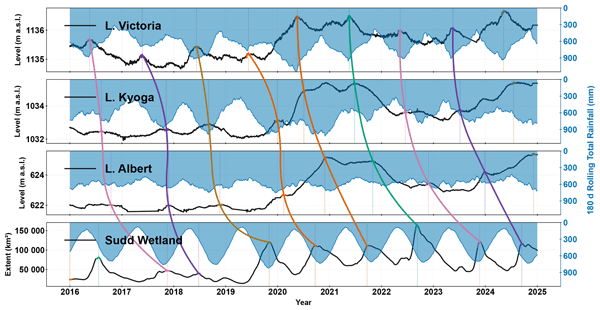
This study traced how water moved from Lake Victoria to the Sudd wetlands to explain the prolonged flooding in South Sudan between 2019 and 2024. Using satellite observations, rainfall records, and lake and river measurements, we found that water takes about 17 months to travel through the system, much longer than previously assumed 5 months. The results show that lakes and wetlands can store and slowly release water over several years, helping improve flood forecasting and early warning.
Karan Ruparell, Dai Yamazaki, Kieran Hunt, Hannah Cloke, Christel Prudhomme, Florian Pappenberger, and Matthew Chantry
EGUsphere, https://doi.org/10.5194/egusphere-2026-2909, https://doi.org/10.5194/egusphere-2026-2909, 2026
Short summary
Short summary
Reservoirs change how rivers behave, making them harder to predict. We tested whether machine learning models can learn these effects by training on river sites with and without upstream reservoirs across Great Britain. Models without reservoir training overestimated regulated flows, while reservoir-only models performed poorly on natural rivers. Training on both performed well everywhere. All models failed at heavily managed reservoirs where human decisions dominate river flow.
Hamidreza Mosaffa, Florian Pappenberger, Christel Prudhomme, Matthew Chantry, Christoph Rüdiger, and Hannah Cloke
Hydrol. Earth Syst. Sci., 30, 2079–2092, https://doi.org/10.5194/hess-30-2079-2026, https://doi.org/10.5194/hess-30-2079-2026, 2026
Short summary
Short summary
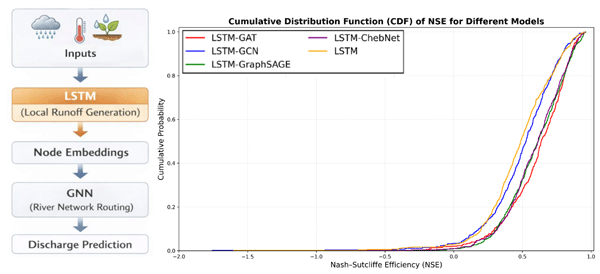
This study improves river flow prediction by combining two types of artificial intelligence models. One model estimates how rainfall becomes runoff in each part of a river basin, while another represents how water moves through the river network. By linking these processes, the approach better captures how water travels across large basins. The results show more accurate streamflow predictions, which can support water management and flood forecasting.
Fatima M. Pillosu, Mariana Claire, Calum Baugh, Florian Pappenberger, Christel Prudhome, and Hannah L. Cloke
EGUsphere, https://doi.org/10.5194/egusphere-2026-1591, https://doi.org/10.5194/egusphere-2026-1591, 2026
Short summary
Short summary
This paper presents the first global, medium-range probabilistic forecasts of flash flood occurrence. A single XGBoost model trained on coarse impact reports achieves skilful predictions, challenging assumptions that complex architectures and high-resolution data are required. At a time of heightened attention to flash flood risk and early warning, this work demonstrates that skilful global forecasting is achievable in data-sparse regions where flash flood risk is highest.
Gwyneth Matthews, Hannah L. Cloke, Sarah L. Dance, and Christel Prudhomme
Hydrol. Earth Syst. Sci., 29, 6157–6179, https://doi.org/10.5194/hess-29-6157-2025, https://doi.org/10.5194/hess-29-6157-2025, 2025
Short summary
Short summary
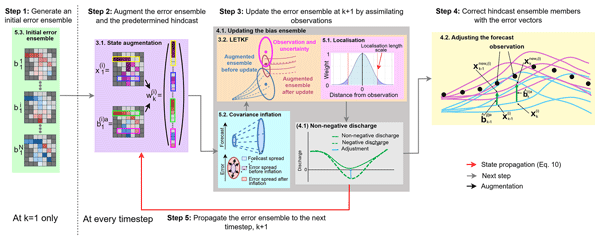
Forecasts provide information crucial for managing floods and for water resource planning, but they often have errors. “Post-processing” reduces these errors but is usually only applied at river gauges, leaving areas without gauges uncorrected. We developed a new method that uses spatial information contained within the forecast to spread information about the errors from gauged locations to ungauged areas. Our results show that the method successfully makes river forecasts more accurate.
Joy Ommer, Milan Kalas, Jessica Neumann, Sophie Blackburn, and Hannah L. Cloke
Nat. Hazards Earth Syst. Sci., 25, 2929–2938, https://doi.org/10.5194/nhess-25-2929-2025, https://doi.org/10.5194/nhess-25-2929-2025, 2025
Short summary
Short summary
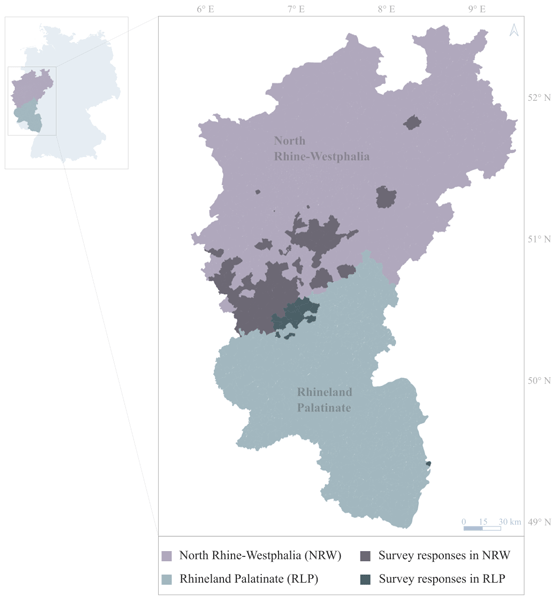
What do we regret about our disaster preparedness? This paper explores the regrets of 438 citizens who were affected by flooding in Germany in 2021. It shows that regret can primarily be associated with inaction (instead of actions), which contrasts with psychological studies from fields other than disaster science. The findings of this study suggest that the no-regret approach could be a suitable framework for moving towards longer-term disaster preparedness to reduce future regrets.
Joy Ommer, Jessica Neumann, Milan Kalas, Sophie Blackburn, and Hannah L. Cloke
Nat. Hazards Earth Syst. Sci., 24, 2633–2646, https://doi.org/10.5194/nhess-24-2633-2024, https://doi.org/10.5194/nhess-24-2633-2024, 2024
Short summary
Short summary
What’s the worst that could happen? Recent floods are often claimed to be beyond our imagination. Imagination is the picturing of a situation in our mind and the emotions that we connect with this situation. But why is this important for disasters? This survey found that when we cannot imagine a devastating flood, we are not preparing in advance. Severe-weather forecasts and warnings need to advance in order to trigger our imagination of what might happen and enable us to start preparing.
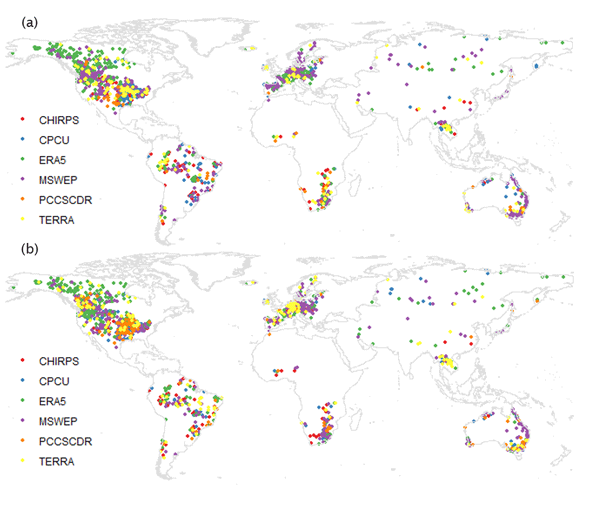
Solomon H. Gebrechorkos, Julian Leyland, Simon J. Dadson, Sagy Cohen, Louise Slater, Michel Wortmann, Philip J. Ashworth, Georgina L. Bennett, Richard Boothroyd, Hannah Cloke, Pauline Delorme, Helen Griffith, Richard Hardy, Laurence Hawker, Stuart McLelland, Jeffrey Neal, Andrew Nicholas, Andrew J. Tatem, Ellie Vahidi, Yinxue Liu, Justin Sheffield, Daniel R. Parsons, and Stephen E. Darby
Hydrol. Earth Syst. Sci., 28, 3099–3118, https://doi.org/10.5194/hess-28-3099-2024, https://doi.org/10.5194/hess-28-3099-2024, 2024
Short summary
Short summary
This study evaluated six high-resolution global precipitation datasets for hydrological modelling. MSWEP and ERA5 showed better performance, but spatial variability was high. The findings highlight the importance of careful dataset selection for river discharge modelling due to the lack of a universally superior dataset. Further improvements in global precipitation data products are needed.
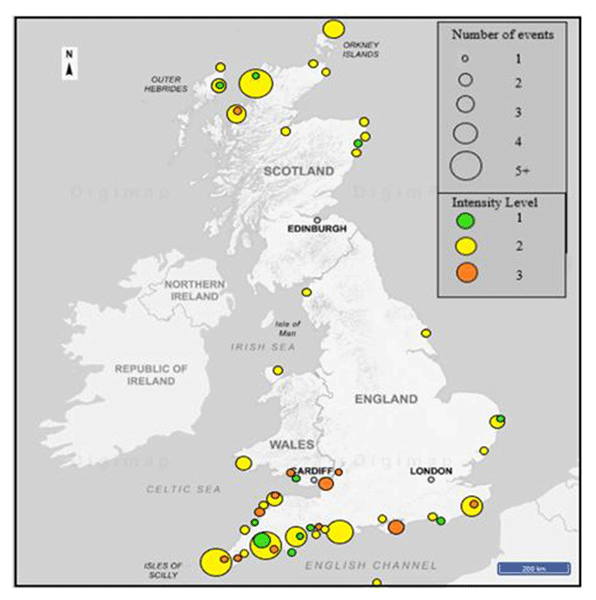
Clare Lewis, Tim Smyth, Jess Neumann, and Hannah Cloke
Nat. Hazards Earth Syst. Sci., 24, 121–131, https://doi.org/10.5194/nhess-24-121-2024, https://doi.org/10.5194/nhess-24-121-2024, 2024
Short summary
Short summary
Meteotsunami are the result of atmospheric disturbances and can impact coastlines causing injury, loss of life, and damage to assets. This paper introduces a novel intensity index to allow for the quantification of these events at the shoreline. This has the potential to assist in the field of natural hazard assessment. It was trialled in the UK but designed for global applicability and to become a widely accepted standard in coastal planning, meteotsunami forecasting, and early warning systems.
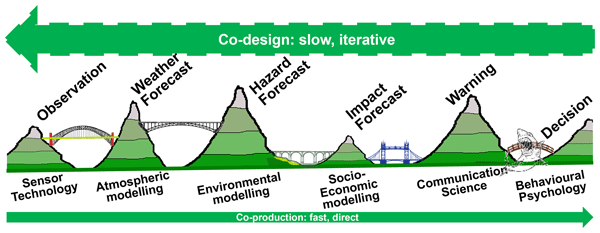
Brian Golding, Elizabeth Ebert, David Hoffmann, and Sally Potter
Adv. Sci. Res., 20, 85–90, https://doi.org/10.5194/asr-20-85-2023, https://doi.org/10.5194/asr-20-85-2023, 2023
Short summary
Short summary
In 2021, several weather disasters occurred in which conditions surpassed recorded extremes. Comparative analysis of the warnings issued for these disasters shows that the conditions were generally forecast but that lack of preparedness and/or communication failures led to loss of life in particularly vulnerable groups.
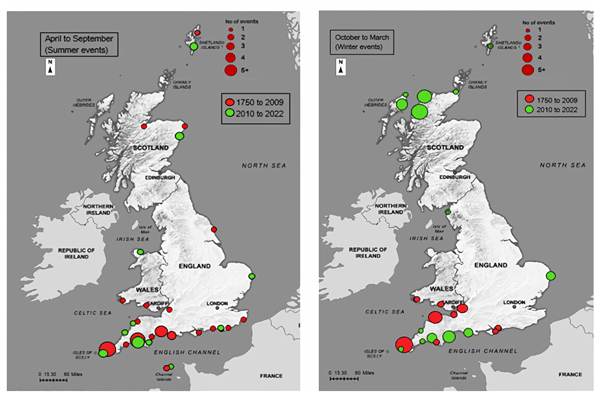
Clare Lewis, Tim Smyth, David Williams, Jess Neumann, and Hannah Cloke
Nat. Hazards Earth Syst. Sci., 23, 2531–2546, https://doi.org/10.5194/nhess-23-2531-2023, https://doi.org/10.5194/nhess-23-2531-2023, 2023
Short summary
Short summary
Meteotsunami are globally occurring water waves initiated by atmospheric disturbances. Previous research has suggested that in the UK, meteotsunami are a rare phenomenon and tend to occur in the summer months. This article presents a revised and updated catalogue of 98 meteotsunami that occurred between 1750 and 2022. Results also demonstrate a larger percentage of winter events and a geographical pattern highlighting the
hotspotregions that experience these events.
David Hoffmann, Elizabeth E. Ebert, Carla Mooney, Brian Golding, and Sally Potter
Adv. Sci. Res., 20, 73–79, https://doi.org/10.5194/asr-20-73-2023, https://doi.org/10.5194/asr-20-73-2023, 2023
Short summary
Short summary
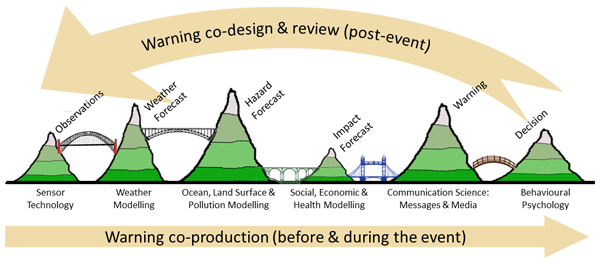
The weather information value chain is a framework that describes how information is produced, communicated, and used in an end-to-end warning system for weather and hazard monitoring. A project under the WMO aims to explore value chain approaches to describe and evaluate high-impact weather events. The project developed a template for high-impact weather event case study collection, which allows scientists and practitioners to assess the effectiveness of warning value chains.
Shaun Harrigan, Ervin Zsoter, Hannah Cloke, Peter Salamon, and Christel Prudhomme
Hydrol. Earth Syst. Sci., 27, 1–19, https://doi.org/10.5194/hess-27-1-2023, https://doi.org/10.5194/hess-27-1-2023, 2023
Short summary
Short summary
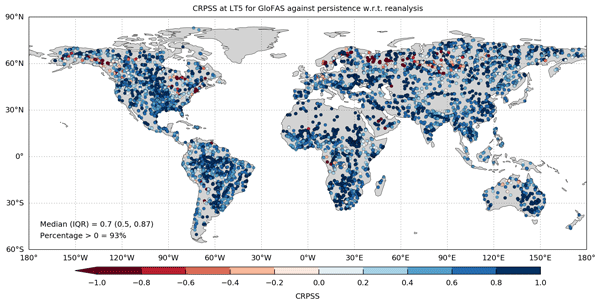
Real-time river discharge forecasts and reforecasts from the Global Flood Awareness System (GloFAS) have been made publicly available, together with an evaluation of forecast skill at the global scale. Results show that GloFAS is skillful in over 93 % of catchments in the short (1–3 d) and medium range (5–15 d) and skillful in over 80 % of catchments in the extended lead time (16–30 d). Skill is summarised in a new layer on the GloFAS Web Map Viewer to aid decision-making.
Gwyneth Matthews, Christopher Barnard, Hannah Cloke, Sarah L. Dance, Toni Jurlina, Cinzia Mazzetti, and Christel Prudhomme
Hydrol. Earth Syst. Sci., 26, 2939–2968, https://doi.org/10.5194/hess-26-2939-2022, https://doi.org/10.5194/hess-26-2939-2022, 2022
Short summary
Short summary
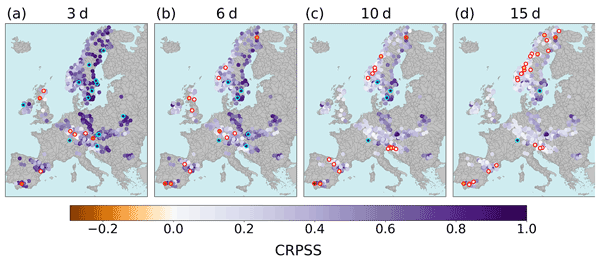
The European Flood Awareness System creates flood forecasts for up to 15 d in the future for the whole of Europe which are made available to local authorities. These forecasts can be erroneous because the weather forecasts include errors or because the hydrological model used does not represent the flow in the rivers correctly. We found that, by using recent observations and a model trained with past observations and forecasts, the real-time forecast can be corrected, thus becoming more useful.
Cited articles
ACA: Inondations de juillet 2021: 6300 victimes indemnisées, Association des Compagnies d'Assurances et de Réassurances du Grand-Duché de Luxembourg, https://www.aca.lu/fr/inondations-de-juillet-2021-6300-victimes-indemnisees/ (last access: 13 January 2026), 2021.
AGE: Hochwasserereignis Juli 2021, https://eau.gouvernement.lu/
dam-assets/actualites/2021/documents/2021-07-19-PK-Heischw aasser-PRES-Hochwasser-Juli-2021-210716-13.pdf (last access: 13 January 2026), 2021a.
AGE: Hochwasserinformation: Lageberichte 13.–17. Juli 2021, Administration de la Gestion de l'Eau, Ministère de l'Environnement, du Climat et du Développement durable, Luxembourg, https://eau.gouvernement.lu/fr/actualites/2021/07-juillet/Hochwasserereignis2021.html (last access: 13 January 2026), 2021b.
AGE: Hochwasserrisiko-Managementplan 2021–2027, Flood Risk management Plan, https://eau.gouvernement.lu/fr/administration/directives/directiveinondation/2ieme-cycle/2hochwasserrisikomanagementplan.html (last access: 13 January 2026), 2021c.
Alcántara-Ayala, I. and Oliver-Smith, A.: Forensic Investigations of Disasters (FORIN): A Conceptual Framework and Guide to Research, Integrated Research on Disaster Risk (IRDR), https://doi.org/10.1007/s13753-019-00231-3, 2016.
Alcántara-Ayala, I. and Oliver-Smith, A.: Early Warning Systems: Lost in Translation or Late by Definition? A FORIN Approach, Int. J. Disast. Risk Sc., 10, 317–331, https://doi.org/10.1007/s13753-019-00231-3, 2019.
Alfieri, L., Salamon, P., Pappenberger, F., Wetterhall, F., and Thielen, J.: Operational early warning systems for water-related hazards in Europe, Environ. Sci. Policy, 21, 35–49, https://doi.org/10.1016/j.envsci.2012.01.008, 2012.
Amarnath, G., Alahacoon, N., Attoh, E., and Jampani, M.: The AWARE Platform – Promoting Early Warning of and Effective Response to Climate Hazards, International Water Management Institute (IWMI), CGIAR, https://hdl.handle.net/10568/137194 (last access: 13 January 2026), 2023.
Antwi-Agyakwa, K. T., Afenyo, M. K., and Angnuureng, D. B.: Know to predict, forecast to warn: A review of flood risk prediction tools, Water, 15, 427, https://doi.org/10.3390/w15030427, 2023.
Arnal, L., Anspoks, L., Manson, S., Neumann, J., Norton, T., Stephens, E., Wolfenden, L., and Cloke, H. L.: “Are we talking just a bit of water out of bank? Or is it Armageddon?” Front line perspectives on transitioning to probabilistic fluvial flood forecasts in England, Geosci. Commun., 3, 203–232, https://doi.org/10.5194/gc-3-203-2020, 2020.
Aznar-Crespo, P., Aledo, A., Ortiz, G., and Tur-Vives, J.: Cómo escribir mensajes de alerta frente a inundaciones, Agua Y Territorio Water and Landscape, 24, e8059, https://doi.org/10.17561/at.24.8059, 2024.
Ball, N.: The myth of natural disasters, The Ecologist, 5, 368–369, 1975.
Basher, R.: Global early warning systems for natural hazards: systematic and people-centred, Philos. T. Roy. Soc. A, 364, 2167–2182, https://doi.org/10.1098/rsta.2006.1819, 2006.
Becker, G., Evers, M., and Slootjes, N.: Transboundary flood risk management: The role of coordination and communication in early warning and crisis response, Int. J. Disast. Risk Re., 31, 1054–1061, https://doi.org/10.1016/j.ijdrr.2018.01.034, 2018.
Benoy, F.: Interpellation au sujet de la réduction des risques d'inondations No. 3638: Motion 1, Chamber of Deputies, https://www.chd.lu/en/motion_resolution/3638 (last access: 13 January 2026), 2021.
Berke, P. R., Kartez, J., and Wenger, D.: Recovery after disaster: Achieving sustainable development, mitigation and equity, Disasters, 17, 93–109, https://doi.org/10.1111/j.1467-7717.1993.tb01137.x, 1993.
Biancalana, D.: Interpellation au sujet de la gestion de catastrophes naturelles No. 3635: Motion 2, Chamber of Deputies, https://www.chd.lu/en/motion_resolution/3635 (last access: 13 January 2026), 2021.
BMI and BMF: Bericht zur Hochwasserkatastrophe 2021: Katastrophenhilfe, Wiederaufbau und Evaluierungsprozesse, Bericht zur Hochwasserkatastrophe 2021, Bundesministerium des Inneren, https://www.bmi.bund.de/SharedDocs/downloads/DE/veroeffentlichungen/2022/abschlussbericht-hochwasserkatastrophe.html (last access: 13 January 2026), 2022.
Bosher, L., Chmutina, K., and Van Niekerk, D.: Stop going around in circles: towards a reconceptualisation of disaster risk management phases, Disaster Prev. Manag., 30, 525–537, https://doi.org/10.1108/DPM-03-2021-0071, 2021.
Bouttier, F. and Marchal, H.: Probabilistic short-range forecasts of high-precipitation events: optimal decision thresholds and predictability limits, Nat. Hazards Earth Syst. Sci., 24, 2793–2816, https://doi.org/10.5194/nhess-24-2793-2024, 2024.
Busker, T., Rodriguez Castro, D., Vorogushyn, S., Kwadijk, J., Zoccatelli, D., Loureiro, R., Murdock, H. J., Pfister, L., Dewals, B., Slager, K., Thieken, A. H., Verkade, J., Willems, P., and Aerts, J. C. J. H.: Comparing Flood Forecasting and Early Warning Systems in Transboundary River Basins, EGUsphere [preprint], https://doi.org/10.5194/egusphere-2025-828, 2025.
CEMS: EMSN139: Retrospective Flood Analysis in Luxembourg, July 2021, Copernicus Emergency Management Services, https://mapping.emergency.copernicus.eu/activations/EMSN139/ (last access: 13 January 2026), 2022.
CGDIS: Rapport d'activité 2021, Corps Grand-Ducal d”Incendie et de Secours, https://112.public.lu/fr/publications/rapports-activite/rapport-activite-2021.html (last access: 13 January 2026), 2022.
CGDIS Law: Loi du 27 mars 2018 portant organisation de la sécurité civile et création d'un Corps grand-ducal d'incendie et de secours, Law of 27 March 2018 on the organisation of civil security and the creation of the CGDIS, https://legilux.public.lu/eli/etat/leg/loi/2018/03/27/a221/consolide/20230101 (last access: 13 January 2026), 2018.
CHD: Motion no. 3634 concernant les inondations des 14 et 15 juillet 2021, déposée par Gilles Roth (CSV) et co-signée par ADR, Déi Lénk et Piraten, Motion parlementaire, Chamber of Deputies, https://www.chd.lu/en/motion_resolution/3634 (last access: 13 January 2026), 2021a.
CHD: Procès-verbal de la réunion du 7 octobre 2021, Chamber of Deputies, https://www.chd.lu/fr/meeting/11565 (last access: 13 January 2026), 2021b.
CHD: Réponse à la question parlementaire no 984 sur la collaboration et la fusion éventuelle des services météorologiques publics, Chamber of Deputies, https://www.chd.lu/fr/question/27260 (last access: 13 January 2026), 2024.
Cloke, H. L. and Pappenberger, F.: Ensemble flood forecasting: A review, J. Hydrol., 375, 613–626, https://doi.org/10.1016/j.jhydrol.2009.06.005, 2009.
Cosson, C., Jordan, F., and Berne, A.: Ensemble approach for flash flood forecasting in alpine watersheds, Master's thesis, École Polytechnique Fédérale de Lausanne (EPFL), https://infoscience.epfl.ch/bitstreams/54a786fc-b9c5-4008-9aa7
-5e554ed96982/download (last access: 13 January 2026), 2024.
Coughlan de Perez, E., Harrison, L., Berse, K., Easton-Calabria, E., Marunye, J., Marake, M., Murshed, S. B., Shampa, and Zauisomue, E.-H.: Adapting to climate change through anticipatory action: The potential use of weather-based early warnings, Weather and Climate Extremes, 38, 100508, https://doi.org/10.1016/j.wace.2022.100508, 2022.
Dasgupta, A., Arnal, L., Emerton, R., Harrigan, S., Matthews, G., Muhammad, A., O'Regan, K., Pérez-Ciria, T., Valdez, E., van Osnabrugge, B., Werner, M., Buontempo, C., Cloke, H., Pappenberger, F., Pechlivanidis, I. G., Prudhomme, C., Ramos, M.-H., and Salamon, P.: Connecting Hydrological Modelling and Forecasting from Global to Local Scales: Perspectives from an International Joint Virtual Workshop, J. Flood Risk Manag., 18, e12880, https://doi.org/10.1111/jfr3.12880, 2025.
De Coning, E., Pegram, E., and Poolman, E.: Improvement of early preparedness and early warning systems for extreme climatic events – flood warnings, Water Research Commission, https://www.wrc.org.za/wp-content/uploads/mdocs/2068-1-15.pdf (last access: 13 January 2026), 2015.
ENW (Expertisenetwerk Waterveiligheid): Hoogwater 2021, Feiten en Duiding, Delft University of Technology, Deltares, HKV Consultants, VU Amsterdam, University of Utrecht, KNMI, Wageningen University and Research, Erasmus MC, University of Twente https://www.enwinfo.nl/publish/pages/183541/211102_enw_hoogwater_2021-dv-def.pdf (last access: 13 January 2026), 2021.
Diederichs, O., Louviau, P., Catoire, S., and Torterotot, J.-P.: Retour d'expérience des inondations des 14 et 15 juillet 2021, Inspection Générale de l'Administration (IGA), Conseil Général de l'Environnement et du Développement Durable (CGEDD), Conseil Général de l'Économie (CGE), https://www.interieur.gouv.fr/Publications/Rapports-de-l-IGA/Rapports-recents/Retour-d-experience-des-inondations-des-14-et-15-juillet-2021 (last access: 13 January 2026), 2023.
Dieschbourg, C. and Bofferding, T.: Réponse à la question parlementaire no 4675 au sujet du système européen d'alerte pour les inondations (EFAS), Chamber of Deputies, https://www.chd.lu/fr/question/21924 (last access: 13 January 2026), 2021.
Douinot, A., Iffly, J. F., Tailliez, C., Meisch, C., and Pfister, L.: Flood patterns in a catchment with mixed bedrock geology and a hilly landscape: identification of flashy runoff contributions during storm events, Hydrol. Earth Syst. Sci., 26, 5185–5206, https://doi.org/10.5194/hess-26-5185-2022, 2022.
Ebert, E., Hoffmann, D., Da Costa, J., Liang, X., Mills, B., Mooney, C., Msemo, H., Pastor-Paz, J., Perrels, A., and Tupper, A.: A framework and guide for using value chain approaches to understand, improve, measure, and design early warning systems, EMS Annual Meeting 2023, Bratislava, Slovakia, 4–8 Sep 2023, EMS2023-498, https://doi.org/10.5194/ems2023-498, 2023.
Ebert, E., Hoffmann, D., and Mooney, C.: Warning Value Chain Questionnaire and Guide, Zenodo, https://doi.org/10.5281/zenodo.10457433, 2024.
Endendijk, T., Botzen, W., Moel, H. D., Aerst, J., Duijndam, S., Slager, K., Kolen, B., and Kok, M.: Experience From the 2021 Floods in the Netherlands, Journal of Coastal and Riverine Flood Risk, 2, https://doi.org/10.59490/jcrfr.2023.0009, 2023.
EUMETSAT: Case Study: Devastating floods in Western Europe, EUMETSAT, https://user.eumetsat.int/resources/case-studies/devastating-floods-in-western-europe (last access: 13 Janaury 2026), 2021.
European Commission: Directorate-General for Environment, Assessment of Second Cycle Preliminary Flood Risk Assessments and Identification of Areas of Potential Significant Flood Risk under the Floods Directive – Member State – Luxembourg, Publications Office of the European Union, 2021, https://data.europa.eu/doi/10.2779/428210 (last access: 13 Janaury 2026), 2021.
Galvez-Hernandez, P., Dai, Y., and Muntaner, C.: The DANA disaster: Unraveling the political and economic determinants for Valencia's floods devastation, Int. J. Equity Health, 24, 64, https://doi.org/10.1186/s12939-025-02435-0, 2025.
Glantz, M. H. and Pierce, G.: For the Record: Second Thoughts on Early Warning, Early Action (EWEA), EW4All, or EWEA4All?, Atmosphere, 14, 1631, https://doi.org/10.3390/atmos14111631, 2023.
Golding, B. (Ed.): Towards the “Perfect” Weather Warning, Springer International Publishing, https://doi.org/10.1007/978-3-030-98989-7, 2022.
Gould, K., Remes, J., and Garcia, M.: Beyond “natural-disasters-are-not-natural”: the work of state and nature after the 2010 earthquake in Chile, Journal of Political Ecology, 23, https://doi.org/10.2458/v23i1.20181, 2016.
Grimaldi, S., Thiemig, V., Pechlivanidis, I., Sprokkereef, E., Harrigan, S., Mazzetti, C., Prudhomme, C., Ziese, M., Schirmeister, Z., Carpintero Salvo, I., Márquez Arroyo, M., F., and Salamon, P.: The European Flood Awareness System – A technical assessment of the EFAS performance during the Meuse and Rhine floods in July 2021, European Commission, JRC135679, 2023.
Haag, I., Krumm, J., Aigner, D., Steinbrich, A., and Weiler, M.: Simulation von Hochwasserereignissen in Folge lokaler Starkregen mit dem Wasserhaushaltsmodell LARSIM, Hydrol. Wasserbewirts., 66, 6–27, 2022.
Hagenlocher, M., Okamoto, S., Nagabhatla, N., Dietrich, S., Hassel, J., van der Heijden, S., Kreft, S., De Lombarde, P., Nick, F., Oakes, R., Rackelmann, F., Rimmert, M., Sandholz, S., Sebesvari, Z., Shen, X., Skripka, T., Stojanovic, T., Szarzynski, J., Van de Walle, B., and Werners, S.: Building climate Resilience: Lessons from the 2021 Floods in Western Europe, UNU-EHS, https://doi.org/10.53324/INCS5390, 2023.
Hannes, K., Thyssen, P., Bengough, T., Dawson, S., Paque, K., Talboom, S., Tuand, K., Vandendriessche, T., Van De Veerdonk, W., Wopereis, D., and Vandamme, A.-M.: Inclusive Crisis Communication in a Pandemic Context: A Rapid Review, Int. J. Env. Res. Pub. He., 21, 1216, https://doi.org/10.3390/ijerph21091216, 2024.
HCPN: Plan d'intervention d'urgence en cas d'inondations (PIU inondations), Haut-Commissariat à la Protection nationale (HCPN), https://infocrise.public.lu/dam-assets/publications/innondation/Innondation-Plan-d'intervention-d'urgence.pdf (last access: 13 January 2026), 2019.
HCPN Law: Loi du 23 juillet 2016 portant création d'un Haut-Commissariat à la Protection nationale, Journal officiel du Grand-Duché de Luxembourg, https://legilux.public.lu/eli/etat/leg/loi/2016/07/23/n1/consolide/20220703 (last access: 13 January 2026), 2016.
Hegger, D. L. T., Driessen, P. P. J., Wiering, M., Van Rijswick, H. F. M. W., Kundzewicz, Z. W., Matczak, P., Crabbé, A., Raadgever, G. T., Bakker, M. H. N., Priest, S. J., Larrue, C., and Ek, K.: Toward more flood resilience: Is a diversification of flood risk management strategies the way forward?, E&S, 21, art52, https://doi.org/10.5751/ES-08854-210452, 2016.
Hermans, T. D. G., Trogrlić, R. Š., Homberg, M. J. C. van den, Bailon, H., Sarku, R., and Mosurska, A.: Exploring the integration of local and scientific knowledge in early warning systems for disaster risk reduction: a review, Nat. Hazards, 114, 1125–1152, https://doi.org/10.1007/s11069-022-05468-8, 2022.
Hersbach, H., Bell, B., Berrisford, P., Hirahara, S., Horányi, A., Muñoz-Sabater, J., Nicolas, J., Peubey, C., Radu, R., Schepers, D., Simmons, A., Soci, C., Abdalla, S., Abellan, X., Balsamo, G., Bechtold, P., Biavati, G., Bidlot, J., Bonavita, M., Chiara, G. D., Dahlgren, P., Dee, D., Diamantakis, M., Dragani, R., Flemming, J., Forbes, R., Fuentes, M., Geer, A., Haimberger, L., Healy, S., Hogan, R. J., Hólm, E., Janisková, M., Keeley, S., Laloyaux, P., Lopez, P., Lupu, C., Radnoti, G., Rosnay, P. de, Rozum, I., Vamborg, F., Villaume, S., and Thépaut, J. N.: The ERA5 global reanalysis, Q. J. Roy. Meteor. Soc., 146, 1999–2049, https://doi.org/10.1002/qj.3803, 2020.
Hoffmann, D., Ebert, E. E., Mooney, C., Golding, B., and Potter, S.: Using value chain approaches to evaluate the end-to-end warning chain, Adv. Sci. Res., 20, 73–79, https://doi.org/10.5194/asr-20-73-2023, 2023.
Jaime, C., de Perez, E. C., van Aalst, M., and Raju, E.: What was known: Weather forecast availability and communication in conflict-affected countries, Int. J. Disast. Risk Re., 79, 103182, https://doi.org/10.1016/j.ijdrr.2022.103182, 2022.
Kalogiannidis, S., Kalfas, D., Kontsas, S., Papaevangelou, O., and Chatzitheodoridis, F.: Evaluating the Effectiveness of Early Warning Systems in Reducing Loss of Life in Natural Disasters: A case study of Greece, JRACR, 15, 33, https://doi.org/10.54560/jracr.v15i1.547, 2025.
Kelman, I. and Glantz, M. H.: Early Warning Systems Defined, in: Reducing Disaster: Early Warning Systems For Climate Change, Springer Netherlands, 89–108, https://doi.org/10.1007/978-94-017-8598-3_5, 2014.
Kobs, D.: Application and verification of ECMWF products 2018 – Luxembourg, in: Green Book 2018, ECMWF, https://www.ecmwf.int/en/elibrary/80798-application-and-veri
fication-ecmwf-products-2018-luxembourg (last access: 13 January 2026), 2018.
Lang, A. and Poschlod, B.: Updating catastrophe models to today's climate – An application of a large ensemble approach to extreme rainfall, Climate Risk Management, 44, 100594, https://doi.org/10.1016/j.crm.2024.100594, 2024.
Lietaer, S., Nagabhatla, N., Scheerens, C., Mycroft, M., and Lombaerde, P. D.: Blind Spots in Belgian Flood Risk Governance: The Case of the Summer 2021 Floods in Wallonia, UNU-CRIS Research Report, 2, 2024, https://doi.org/10.13140/RG.2.2.28192.39688, 2024.
Ludwig, P., Ehmele, F., Franca, M. J., Mohr, S., Caldas-Alvarez, A., Daniell, J. E., Ehret, U., Feldmann, H., Hundhausen, M., Knippertz, P., Küpfer, K., Kunz, M., Mühr, B., Pinto, J. G., Quinting, J., Schäfer, A. M., Seidel, F., and Wisotzky, C.: A multi-disciplinary analysis of the exceptional flood event of July 2021 in central Europe – Part 2: Historical context and relation to climate change, Nat. Hazards Earth Syst. Sci., 23, 1287–1311, https://doi.org/10.5194/nhess-23-1287-2023, 2023.
Luxembourg Government: Briefing de presse: Conseil de gouvernement extraordinaire suite aux intempéries (15 juillet 2021), https://gouvernement.lu/fr/actualites/toutes_actualites/vi
deo-conference-presse/2021/07-juillet/15-briefing-bettel-bofferding.html (last access: 13 January 2026), 2021.
Luxembourg Government: Rapport relatif à la gestion de crise dans le cadre des intempéries des 14 et 15 juillet 2021 depuis la phase de préalerte, Gouvernement du Grand-Duché de Luxembourg, 2023.
Magnusson, L.: ECMWF Severe Event Catalogue for Evaluation of Multi-scale Prediction of Extreme Weather, ECMWF Technical Memoranda, https://doi.org/10.21957/i2pbf6pe, 2019.
Magnusson, L., Simmons, A., Harrigan, S., and Pappenberger, F.: Extreme rain in Germany and Belgium in July 2021, ECMWF Newsletter, Number 169 – Autumn 2021, https://www.ecmwf.int/en/newsletter/169/news/extreme-rain-germany-and-belgium-july-2021 (last access: 15 January 2026), 2021.
Martin-Moreno, J. M. and Garcia-Lopez, E.: Devastating “DANA” Floods in Valencia: Insights on Resilience, Challenges, and Strategies Addressing Future Disasters, Public Health Rev., 46, 1608297, https://doi.org/10.3389/phrs.2025.1608297, 2025.
McDermott, R., Fraser, A., Ensor, J., and Seddighi, H.: The role of forensic investigation in systemic risk enquiry: Reflections from case studies of disasters in Istanbul, Kathmandu, Nairobi and Quito, Progress in Disaster Science, 16, 100262, https://doi.org/10.1016/j.pdisas.2022.100262, 2022.
McEntire, D. A.: Disaster Response and Recovery: Strategies and Tactics for Resilience, CRC Press, ISBN: 978-1-119-81003-2, 2021.
MeteoLux: Retour sur les pluies diluviennes du 14 et 15 juillet 2021, Administration de la Navigation Aérienne, https://www.meteolux.lu/fr/actualites/retour-sur-les-pluies-diluviennes-du-14-et-15-juillet-2021/ (last access 13 January 2026), 2021.
Mileti, D. S. and Sorensen, J. H.: Communication of emergency public warnings: A social science perspective and state-of-the-art assessment, Oak Ridge National Laboratory (ORNL), https://doi.org/10.2172/6137387, 1990.
Ministère de l'Intérieur: Plan national d’organisation des secours (PNOS) – Contrat opérationnel du Corps grand-ducal d’incendie et de secours, Gouvernement du Grand-Duché de Luxembourg, Luxembourg, https://maint.gouvernement.lu/en/dossiers/2021/PNOS.html (last access: 13 January 2026), 2021.
Ministère d’État, Ministère du Développement durable et des Infrastructures, and Ministère de l’Intérieur: Plan d'intervention d'urgence (PIU) en cas d'intempéries “Plan Intempéries”, Severe Weather Emergency Intervention Plan, https://infocrise.public.lu/dam-assets/publications/intemp%C3%A9ries/PLAN-INTEMPERIES-VERSION-PUBLIQUE-2018-07.pdf (last access 13/01/2026), 2015.
Mohr, S., Ehret, U., Kunz, M., Ludwig, P., Caldas-Alvarez, A., Daniell, J. E., Ehmele, F., Feldmann, H., Franca, M. J., Gattke, C., Hundhausen, M., Knippertz, P., Küpfer, K., Mühr, B., Pinto, J. G., Quinting, J., Schäfer, A. M., Scheibel, M., Seidel, F., and Wisotzky, C.: A multi-disciplinary analysis of the exceptional flood event of July 2021 in central Europe – Part 1: Event description and analysis, Nat. Hazards Earth Syst. Sci., 23, 525–551, https://doi.org/10.5194/nhess-23-525-2023, 2023.
Montanari, A., Merz, B., and Blöschl, G.: HESS Opinions: The sword of Damocles of the impossible flood, Hydrol. Earth Syst. Sci., 28, 2603–2615, https://doi.org/10.5194/hess-28-2603-2024, 2024.
Moselle Convention States: Convention on the Canalisation of the Moselle, Convention on the Canalisation of the Moselle, Moselkommission, https://moselkommission.org/downloads/regelwerke/moselvertrag (last access: 13 January 2026), 1956.
Netherlands Court of Audit: Beyond the Dyke: Flood protection, spatial adaptation and crisis management, Netherlands Court of Audit, https://english.rekenkamer.nl/documents/2023/10/12/beyond-the-dyke (last access: 13 January 2026), 2024.
Oliver-Smith, A.: Disasters and Large-Scale Population Dislocations: International and National Responses, in: Oxford Research Encyclopedia of Natural Hazard Science, Oxford University Press, https://doi.org/10.1093/acrefore/9780199389407.013.224, 2018.
Our-Sauer-Moselle: Treaty between the Federal Republic of Germany and the Grand Duchy of Luxembourg on the demarcation of the border between the two States, United Nations Treaty Series (UNTS), Vol. 2735, https://treaties.un.org/Pages/showDetails.aspx?objid=08000002800c2961 (last access: 13 January 2026), 1984.
Pot, W., de Ridder, Y., and Dewulf, A.: Avoiding future surprises after acute shocks: long-term flood risk lessons catalysed by the 2021 summer flood in the Netherlands, Environmental Sciences Europe, 36, 138, https://doi.org/10.1186/s12302-024-00960-3, 2024.
Reichstein, M., Benson, V., Blunk, J., Camps-Valls, G., Creutzig, F., Fearnley, C. J., Han, B., Kornhuber, K., Rahaman, N., Schölkopf, B., Tárraga, J. M., Vinuesa, R., Dall, K., Denzler, J., Frank, D., Martini, G., Nganga, N., Maddix, D. C., and Weldemariam, K.: Early warning of complex climate risk with integrated artificial intelligence, Nat. Commun., 16, 2564, https://doi.org/10.1038/s41467-025-57640-w, 2025.
Rhein, B. and Kreibich, H.: Causes of the exceptionally high number of fatalities in the Ahr valley, Germany, during the 2021 flood, Nat. Hazards Earth Syst. Sci., 25, 581–589, https://doi.org/10.5194/nhess-25-581-2025, 2025.
RTL: De Journal vum 13. Juli 2021, https://www.rtl.lu/ (last access: 13 January 2026), 2021a.
RTL: Xavier Bettel: Situatioun ass offiziell als Naturkatastroph agestuuft ginn, https://www.rtl.lu/ (last access: 13 January 2026), 2021b.
Šakić Trogrlić, R. and Van Den Homberg, M.: Early Warning Systems and Their Role in Disaster Risk Reduction, in: Forecasting and Early Warning Systems in Disaster Risk Reduction, Springer, https://doi.org/10.1007/978-3-030-98989-7_2, 2022.
Schanze, J.: Flood Risk Management: Basic Understanding and Integrated Methodologies, in: Methodologies for Integrated Flood Risk Management: Research Advances at European Pilot Sites, edited by: Schanze, J., Bakonyi, P., Borga, M., Marchand, M., Jimenez, J. A., and Kaiser, G., FLOODsite Report T21-09-08, 3–13, 2009.
STATEC: Luxembourg en chiffres 2022, Institut national de la statistique et des études économiques du Grand-Duché de Luxembourg (STATEC), ISSN: 1019-6471, 2022.
Szönyi, M., Roezer, V., Deubelli, T., Ulrich, J., MacClune, K., Laurien, F., and Norton, R.: PERC floods following “Bernd,” Zurich Insurance Company, https://pure.iiasa.ac.at/18144 (last access: 13 January 2026), 2022.
Tan, M. L., Hoffmann, D., Ebert, E., Cui, A., and Johnston, D.: Exploring the potential role of citizen science in the warning value chain for high impact weather, Frontiers in Communication, 7, https://doi.org/10.3389/fcomm.2022.949949, 2022.
Thieken, A. H., Bubeck, P., Heidenreich, A., von Keyserlingk, J., Dillenardt, L., and Otto, A.: Performance of the flood warning system in Germany in July 2021 – insights from affected residents, Nat. Hazards Earth Syst. Sci., 23, 973–990, https://doi.org/10.5194/nhess-23-973-2023, 2023.
Thompson, V., Coumou, D., Beyerle, U., and Ommer, J.: Alternative rainfall storylines for the Western European July 2021 floods from ensemble boosting, Communications Earth & Environment, 6, 427, https://doi.org/10.1038/s43247-025-02386-y, 2025.
Tobias, S.: Wetterwarnungen in Luxemburg Nach Serverpanne Meteolux erwägt Wechsel zu staatlichem Server, Tageblatt, 27 July 2021.
Tradowsky, J. S., Philip, S. Y., Kreienkamp, F., Kew, S. F., Lorenz, P., Arrighi, J., Bettmann, T., Caluwaerts, S., Chan, S. C., Cruz, L. D., Vries, H. de, Demuth, N., Ferrone, A., Fischer, E. M., Fowler, H. J., Goergen, K., Heinrich, D., Henrichs, Y., Kaspar, F., Lenderink, G., Nilson, E., Otto, F. E. L., Ragone, F., Seneviratne, S. I., Singh, R. K., Skålevåg, A., Termonia, P., Thalheimer, L., Aalst, M. van, Bergh, J. V. den, Vyver, H. V. de, Vannitsem, S., Oldenborgh, G. J. van, Schaeybroeck, B. V., Vautard, R., Vonk, D., and Wanders, N.: Attribution of the heavy rainfall events leading to severe flooding in Western Europe during July 2021, Climatic Change, 176, 90, https://doi.org/10.1007/s10584-023-03502-7, 2023.
Trošelj, J., Lee, H. S., and Hobohm, L.: Enhancing a Real-Time Flash Flood Predictive Accuracy Approach for the Development of Early Warning Systems: Hydrological Ensemble Hindcasts and Parameterizations, Sustainability, 15, 13897, https://doi.org/10.3390/su151813897, 2023.
Tupper, A. C. and Fearnley, C. J.: Disaster early-warning systems can succeed – but collective action is needed, Nature, 623, 478–482, https://doi.org/10.1038/d41586-023-03510-8, 2023.
UCL: The UCL Warning Database, https://www.ucl.ac.uk/sts/warning-research-centre/ucl-warning-database; last access: 13 January 20262025.
UNDRR: Sendai Framework for Disaster Risk Reduction 2015–2030, https://www.undrr.org/publication/sendai-framework-di saster-risk-reduction-2015-2030 (last access: 13 January 2026), 2015.
UNDRR: Global Status Report on Disaster Risk Reduction and Early Warning Systems, https://www.undrr.org/publication/global-status-multi-hazard-early-warning-systems-2022 (last access: 13 January 2026), 2022.
Wilkinson, E.: Transforming disaster risk management: a political economy approach, ODI, London, https://odi.org/documents/278/7555.pdf (last access: 13 January 2026), 2012.
WMO: Early Warnings for All: The UN Global Early Warning Initiative for the Implementation of Climate Adaptation – Executive Action Plan 2023–2027, Executive Action Plan 2023–2027, 56 pp., https://library.wmo.int/idurl/4/58209 (last access: 13 January 2026), 2022.
WMO: Hydromet Gap Report 2024: Closing the Early Warning Gap by 2027, World Meteorological Organization, https://library.wmo.int/idurl/4/68926 (last access: 13 January 2026), 2024a.
WMO: Value Chain Approaches to Describe, Improve, Value and Co-Design Early Warning Systems, World Meteorological Organization, https://library.wmo.int/idurl/4/69103 (last access: 13 January 2026), 2024b.
Zaiotti, R.: Cultures of border control: Schengen and the evolution of Europe's frontiers, University of Chicago Press, https://doi.org/10.7208/chicago/9780226977881.001.0001, 2011.
Zander, K. K., Nguyen, D., Mirbabaie, M., and Garnett, S. T.: Aware but not prepared: understanding situational awareness during the century flood in Germany in 2021, Int. J. Disast. Risk Re., 96, 103936, https://doi.org/10.1016/j.ijdrr.2023.103936, 2023.
Short summary
This paper examines why multiple early indicators of the July 2021 floods in Luxembourg did not lead to better anticipatory action. Using a value chain approach and the Waterdrop Model, it identifies how thresholds, procedures, and institutional responsibilities limited the use of available forecast information under uncertainty. The findings show how aligning information with decision processes can improve timely disaster response.
This paper examines why multiple early indicators of the July 2021 floods in Luxembourg did not...


Altmetrics
Final-revised paper
Preprint