
Articles | Volume 26, issue 1
https://doi.org/10.5194/nhess-26-215-2026
© Author(s) 2026. This work is distributed under
the Creative Commons Attribution 4.0 License.
the Creative Commons Attribution 4.0 License.
https://doi.org/10.5194/nhess-26-215-2026
© Author(s) 2026. This work is distributed under
the Creative Commons Attribution 4.0 License.
the Creative Commons Attribution 4.0 License.
Review article
| Highlight paper
| 
27 Jan 2026
Review article | Highlight paper |
| 27 Jan 2026
| 27 Jan 2026
Review article: Social media for managing disasters triggered by natural hazards: a critical review of data collection strategies and actionable insights
Lakshmi S. Gopal
CORRESPONDING AUTHOR

Center for Wireless Networks & Applications (WNA), Amrita Vishwa Vidyapeetham, Amritapuri, India
Rekha Prabha
Center for Wireless Networks & Applications (WNA), Amrita Vishwa Vidyapeetham, Amritapuri, India
deceased
Hemalatha Thirugnanam
Center for Wireless Networks & Applications (WNA), Amrita Vishwa Vidyapeetham, Amritapuri, India
Maneesha Vinodini Ramesh
Center for Wireless Networks & Applications (WNA), Amrita Vishwa Vidyapeetham, Amritapuri, India
Bruce D. Malamud
CORRESPONDING AUTHOR
Institute of Hazard, Risk and Resilience (IHRR), Durham University, Durham, DH1 3LE, UK
Related authors
No articles found.
Uldis Zandovskis, Davide Pigoli, and Bruce D. Malamud
Nat. Hazards Earth Syst. Sci., 26, 4997–5033, https://doi.org/10.5194/nhess-26-4997-2026, https://doi.org/10.5194/nhess-26-4997-2026, 2026
Short summary
Short summary
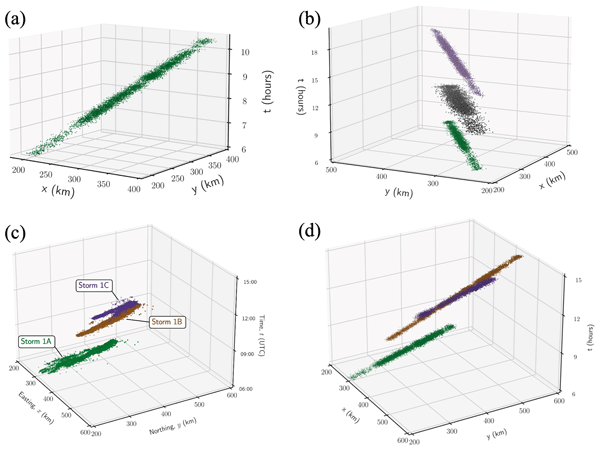
This study looks at how lightning strikes happen over time and space, focusing on six storms in the UK during 2012 and 2015. By using real data, the research examines how often lightning strikes occur, how fast the storms move, and how far the strikes spread. The storms had different speeds (13–31 m s –1) and times between strikes (0.01 to 100 s), with strikes spreading up to 80 km. The study’s findings help create models to better characterise severe storms.
Harriet E. Thompson, Joel C. Gill, Robert Šakić Trogrlić, Faith E. Taylor, and Bruce D. Malamud
Nat. Hazards Earth Syst. Sci., 25, 353–381, https://doi.org/10.5194/nhess-25-353-2025, https://doi.org/10.5194/nhess-25-353-2025, 2025
Short summary
Short summary
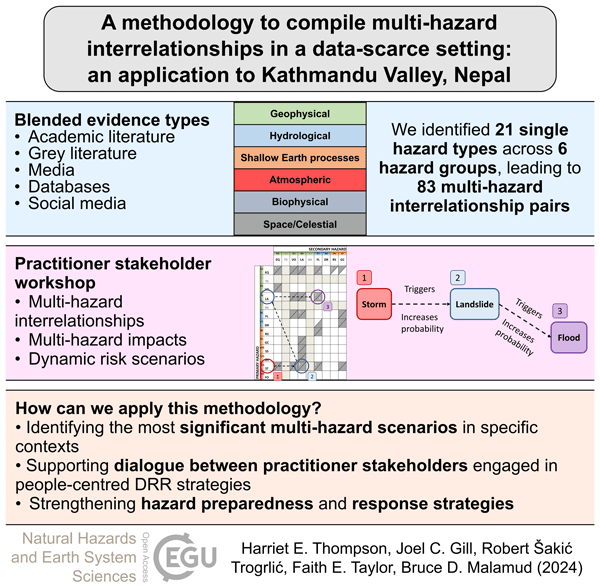
We present a methodology to compile single hazards and multi-hazard interrelationships in data-scarce urban settings, which we apply to the Kathmandu Valley, Nepal. Using blended sources, we collate evidence of 21 single natural hazard types and 83 multi-hazard interrelationships that could impact the Kathmandu Valley. We supplement these exemplars with multi-hazard scenarios developed by practitioner stakeholders, emphasising the need for inclusive disaster preparedness and response approaches.
Robert Šakić Trogrlić, Amy Donovan, and Bruce D. Malamud
Nat. Hazards Earth Syst. Sci., 22, 2771–2790, https://doi.org/10.5194/nhess-22-2771-2022, https://doi.org/10.5194/nhess-22-2771-2022, 2022
Short summary
Short summary
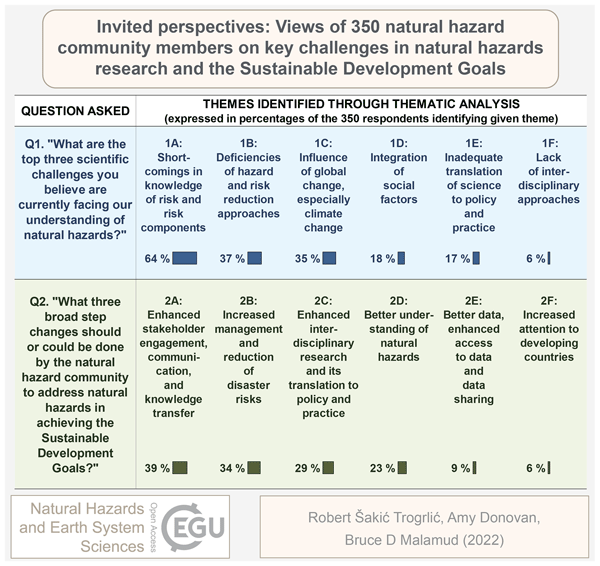
Here we present survey responses of 350 natural hazard community members to key challenges in natural hazards research and step changes to achieve the Sustainable Development Goals. Challenges identified range from technical (e.g. model development, early warning) to governance (e.g. co-production with community members). Step changes needed are equally broad; however, the majority of answers showed a need for wider stakeholder engagement, increased risk management and interdisciplinary work.
Aloïs Tilloy, Bruce D. Malamud, and Amélie Joly-Laugel
Earth Syst. Dynam., 13, 993–1020, https://doi.org/10.5194/esd-13-993-2022, https://doi.org/10.5194/esd-13-993-2022, 2022
Short summary
Short summary
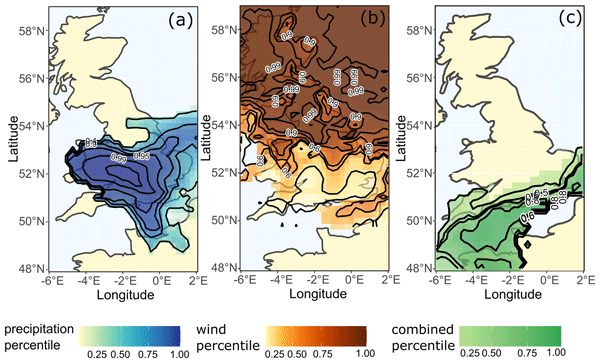
Compound hazards occur when two different natural hazards impact the same time period and spatial area. This article presents a methodology for the spatiotemporal identification of compound hazards (SI–CH). The methodology is applied to compound precipitation and wind extremes in Great Britain for the period 1979–2019. The study finds that the SI–CH approach can accurately identify single and compound hazard events and represent their spatial and temporal properties.
Cited articles
Abedin, B. and Babar, A.: Institutional vs. non-institutional use of social media during emergency response: A case of twitter in 2014 Australian bush fire, Inf. Syst. Front., 20, 729–740, https://doi.org/10.1007/s10796-017-9789-4, 2018. a, b
Abel, F., Hauff, C., Houben, G.-J., Stronkman, R., and Tao, K.: Semantics + filtering + search = twitcident. exploring information in social web streams, in: Proceedings of the 23rd ACM conference on Hypertext and social media, 285–294, https://doi.org/10.1145/2309996.2310043, 2012. a, b, c
Aboualola, M., Abualsaud, K., Khattab, T., Zorba, N., and Hassanein, H. S.: Edge Technologies for Disaster Management: A Survey of Social Media and Artificial Intelligence Integration, IEEE Access, 11, https://doi.org/10.1109/ACCESS.2023.3293035, 2023. a
Acikara, T., Xia, B., Yigitcanlar, T., and Hon, C.: Contribution of Social Media Analytics to Disaster Response Effectiveness: A Systematic Review of the Literature, Sustainability, 15, 8860, https://doi.org/10.3390/su15118860, 2023. a
Adam, N. R., Shafiq, B., and Staffin, R.: Spatial computing and social media in the context of disaster management, IEEE Intell Syst., 27, 90–96, https://doi.org/10.1109/MIS.2012.113, 2012. a
Ahmad, K., Pogorelov, K., Riegler, M., Conci, N., and Halvorsen, P.: Social media and satellites: Disaster event detection, linking and summarization, Multimed. Tools Appl., 78, 2837–2875, https://doi.org/10.1007/s11042-018-5982-9, 2019. a, b
Ai, F., Comfort, L. K., Dong, Y., and Znati, T.: A dynamic decision support system based on geographical information and mobile social networks: A model for tsunami risk mitigation in Padang, Indonesia, Safety Sci., 90, 62–74, https://doi.org/10.1016/j.ssci.2015.09.022, 2016. a
Aisha, T. S., Wok, S., Manaf, A. M. A., and Ismail, R.: Exploring the use of social media during the 2014 flood in Malaysia, Procd. Soc. Behv., 211, 931–937, https://doi.org/10.1016/j.sbspro.2015.11.123, 2015. a, b
Akhter, M. P., Zheng, J., Afzal, F., Lin, H., Riaz, S., and Mehmood, A.: Supervised ensemble learning methods towards automatically filtering Urdu fake news within social media, PeerJ Comput. Sci., 7, e425, https://doi.org/10.7717/peerj-cs.425, 2021. a
Akter, S. and Wamba, S. F.: Big data and disaster management: a systematic review and agenda for future research, Ann. Oper. Res., 283, 939–959, https://doi.org/10.1007/s10479-017-2584-2, 2019. a
Alam, F., Ofli, F., and Imran, M.: CrisisMMD: Multimodal twitter datasets from natural disasters, in: Proceedings of the international AAAI conference on web and social media, California, USA, 25–28 June 2018, vol. 12, https://doi.org/10.1609/icwsm.v12i1.14983, 2018. a
Alampay, E. A., Asuncion, X. V., and Santos, M. d.: Management of social media for disaster risk reduction and mitigation in Philippine local government units, in: Proceedings of the 11th International Conference on Theory and Practice of Electronic Governance, Galway, Ireland, 4–6 April 2018, 183–190, https://doi.org/10.1145/3209415.3209452, 2018. a
Albris, K.: The switchboard mechanism: How social media connected citizens during the 2013 floods in Dresden, J. Conting. Crisis Man., 26, 350–357, https://doi.org/10.1111/1468-5973.12201, 2018. a
Alexander, D. E.: Social media in disaster risk reduction and crisis management, Sci. Eng. Ethics, 20, 717–733, https://doi.org/10.1007/s11948-013-9502-z, 2014. a
Anson, S., Watson, H., Wadhwa, K., and Metz, K.: Analysing social media data for disaster preparedness: Understanding the opportunities and barriers faced by humanitarian actors, Int. J. Disaster Risk Reduct., 21, 131–139, https://doi.org/10.1016/j.ijdrr.2016.11.014, 2017. a, b
Arapostathis, S. G.: Utilising Twitter for disaster management of fire events: steps towards efficient automation, Arab. J. Geosci., 14, 667, https://doi.org/10.1007/s12517-021-06768-2, 2021. a
Banujan, K., Kumara, B. T., and Paik, I.: Twitter and online news analytics for enhancing post-natural disaster management activities, in: 2018 9th International Conference on Awareness Science and Technology (iCAST), Fukuoka, Japan, 19–21 September 2018, IEEE, 302–307, https://doi.org/10.1109/ICAwST.2018.8517195, 2018. a
Batrinca, B. and Treleaven, P. C.: Social media analytics: a survey of techniques, tools and platforms, AI Soc., 30, 89–116, https://doi.org/10.1007/s00146-014-0549-4, 2015. a
Beigi, G., Hu, X., Maciejewski, R., and Liu, H.: An overview of sentiment analysis in social media and its applications in disaster relief, in: Sentiment Analysis and Ontology Engineering, edited by: Pedrycz, W., and Chen, S.-M., https://doi.org/10.1007/978-3-319-30319-2_13, 2016. a
Black, A., Mascaro, C., Gallagher, M., and Goggins, S. P.: Twitter zombie: Architecture for capturing, socially transforming and analyzing the Twittersphere, in: Proceedings of the 2012 ACM International Conference on Supporting Group Work, Florida, USA, 27–31 October 2012, 229–238, https://doi.org/10.1145/2389176.2389211, 2012. a, b
Boas, I., Chen, C., Wiegel, H., and He, G.: The role of social media-led and governmental information in China's urban disaster risk response: The case of Xiamen, Int. J. Disaster Risk Reduct., 51, 101905, https://doi.org/10.1016/j.ijdrr.2020.101905, 2020. a
Boaz, A., Ashby, D., and Young, K.: Systematic reviews: what have they got to offer evidence based policy and practice?, ESRC, UK Centre for Evidence Based Policy and Practice, London, https://hdl.voced.edu.au/10707/73337 (last access: 1 January 2024), 2002. a
Brangbour, E., Bruneau, P., Marchand-Maillet, S., Hostache, R., Matgen, P., Chini, M., and Tamisier, T.: Extracting localized information from a Twitter corpus for flood prevention, arXiv [preprint], arXiv:1903.04748, 2019. a
Brangbour, E., Bruneau, P., Marchand-Maillet, S., Hostache, R., Chini, M., Matgen, P., and Tamisier, T.: Computing flood probabilities using Twitter: application to the Houston urban area during Harvey, arXiv [preprint], arXiv:2012.03731, 2020. a, b
Branz, L. and Brockmann, P.: Sentiment analysis of Twitter data: towards filtering, analyzing and interpreting social network data, in: Proceedings of the 12th ACM International Conference on Distributed and Event-based Systems, Hamilton, New Zealand, 25–29 June 2018, 238–241, https://doi.org/10.1145/3210284.3219769, 2018. a, b
Brena, G., Brambilla, M., Ceri, S., Di Giovanni, M., Pierri, F., and Ramponi, G.: News sharing user behaviour on twitter: A comprehensive data collection of news articles and social interactions, in: Proceedings of the International AAAI Conference on Web and Social Media, Münich, Germany, 11–14 June 2019, vol. 13, 592–597, https://doi.org/10.1609/icwsm.v13i01.3256, 2019. a
Bruns, A. and Liang, Y. E.: Tools and methods for capturing Twitter data during natural disasters, First Monday, 17, 1–8, https://doi.org/10.5210/fm.v17i4.3937, 2012. a, b, c
Bukar, U. A., Sidi, F., Jabar, M. A., Nor, R. N. H., Abdullah, S., Ishak, I., Alabadla, M., and Alkhalifah, A.: How Advanced Technological Approaches Are Reshaping Sustainable Social Media Crisis Management and Communication: A Systematic Review, Sustainability, 14, 5854, https://doi.org/10.3390/su14105854, 2022. a, b
Bunney, S., Ward, S., and Butler, D.: Inter-organisational resilience for flood focussed emergency planning: examining multi-agency connectedness through Twitter, Water Pract. Technol., 13, 321–327, https://doi.org/10.2166/wpt.2018.043, 2018. a
Cameron, M. A., Power, R., Robinson, B., and Yin, J.: Emergency situation awareness from twitter for crisis management, in: Proceedings of the 21st international conference on world wide web, Lyon, France, 16–20 April 2012, 695–698, https://doi.org/10.1145/2187980.2188183, 2012. a
Campan, A., Atnafu, T., Truta, T. M., and Nolan, J.: Is data collection through twitter streaming api useful for academic research?, in: 2018 IEEE international conference on big data (big data), 10–13 December 2018, IEEE, 3638–3643, https://doi.org/10.1109/BigData44402.2018, 2018. a, b, c
Carley, K. M., Malik, M., Landwehr, P. M., Pfeffer, J., and Kowalchuck, M.: Crowd sourcing disaster management: The complex nature of Twitter usage in Padang Indonesia, Safety Sci., 90, 48–61, https://doi.org/10.1016/j.ssci.2016.04.002, 2016a. a, b, c
Carley, K. M., Malik, M., Landwehr, P. M., Pfeffer, J., and Kowalchuck, M.: Crowd sourcing disaster management: The complex nature of Twitter usage in Padang Indonesia, Safety Sci., 90, 48–61, https://doi.org/10.1016/j.ssci.2016.04.002, 2016b. a
Carter, L., Thatcher, J. B., and Wright, R.: Social media and emergency management: Exploring state and local tweets, in: 2014 47th Hawaii International Conference on System Sciences, Waikoloa, HI, USA, 6–9 January 2014, IEEE, 1968–1977, https://doi.org/10.1109/HICSS.2014.249, 2014. a
Castillo, C., Mendoza, M., and Poblete, B.: Predicting information credibility in time-sensitive social media, Internet Res., 23, 560–588, https://doi.org/10.1108/IntR-05-2012-0095, 2013. a
Cenni, D., Nesi, P., Pantaleo, G., and Zaza, I.: Twitter vigilance: A multi-user platform for cross-domain Twitter data analytics, NLP and sentiment analysis, in: 2017 IEEE SmartWorld, Ubiquitous Intelligence & Computing, Advanced & Trusted Computed, Scalable Computing & Communications, Cloud & Big Data Computing, Internet of People and Smart City Innovation (SmartWorld/SCALCOM/UIC/ATC/CBDCom/IOP/SCI), California, USA, 4–8 August 2017, IEEE, 1–8, https://doi.org/10.1109/UIC-ATC.2017.8397589, 2017. a, b, c
Cervone, G., Sava, E., Huang, Q., Schnebele, E., Harrison, J., and Waters, N.: Using Twitter for tasking remote-sensing data collection and damage assessment: 2013 Boulder flood case study, Int. J. Remote Sens., 37, 100–124, https://doi.org/10.1080/01431161.2015.1117684, 2016. a
Chae, J., Thom, D., Bosch, H., Jang, Y., Maciejewski, R., Ebert, D. S., and Ertl, T.: Spatiotemporal social media analytics for abnormal event detection and examination using seasonal-trend decomposition, in: 2012 IEEE conference on visual analytics science and technology (VAST), Seattle, WA, 14–19 October 2012, IEEE, 143–152, https://doi.org/10.1109/VAST.2012.6400557, 2012. a, b
Chae, J., Thom, D., Jang, Y., Kim, S., Ertl, T., and Ebert, D. S.: Public behavior response analysis in disaster events utilizing visual analytics of microblog data, Comput. Graph., 38, 51–60, https://doi.org/10.1016/j.cag.2013.10.008, 2014. a, b
Chatfield, A. T. and Brajawidagda, U.: Twitter early tsunami warning system: A case study in Indonesia's natural disaster management, in: 2013 46th Hawaii international conference on system sciences, Maui, USA, 7–10 January 2013, IEEE, 2050–2060, https://doi.org/10.1109/HICSS.2013.579, 2013. a, b, c
Chen, M., Mao, S., and Liu, Y.: Big data: A survey, Mob. Netw. Appl., 19, 171–209, https://doi.org/10.1007/s11036-013-0489-0, 2014. a, b
Chen, X., Elmes, G., Ye, X., and Chang, J.: Implementing a real-time Twitter-based system for resource dispatch in disaster management, GeoJournal, 81, 863–873, https://doi.org/10.1007/s10708-016-9745-8, 2016. a, b
Cheng, J. W., Mitomo, H., Otsuka, T., and Jeon, S. Y.: Cultivation effects of mass and social media on perceptions and behavioural intentions in post-disaster recovery–The case of the 2011 Great East Japan Earthquake, Telemat. Inform., 33, 753–772, https://doi.org/10.1016/j.tele.2015.12.001, 2016. a
Choi, S. and Bae, B.: The real-time monitoring system of social big data for disaster management, in: Computer Science and its Applications: Ubiquitous Information Technologies, Saida, Algeria, 20–21 May 2015, Springer, 809–815, https://doi.org/10.1007/978-3-662-45402-2_115, 2015. a
Čišija, M., Žunić, E., and Đonko, D.: Collection and sentiment analysis of twitter data on the political atmosphere, in: 2018 14th symposium on neural networks and applications (NEUREL), Belgrade, Serbia, 20–21 November 2018, IEEE, 1–5, https://doi.org/10.1109/NEUREL.2018.8586980, 2018. a
Dashti, S., Palen, L., Heris, M. P., Anderson, K. M., Anderson, T. J., and Anderson, S.: Supporting disaster reconnaissance with social media data: A design-oriented case study of the 2013 Colorado floods, in: ISCRAM 2014 Conference Proceedings – 11th International Conference on Information Systems for Crisis Response and Management, USA, 632–641, ISBN 978-0-692-21194-6, 2014. a, b, c
De Albuquerque, J. P., Herfort, B., Brenning, A., and Zipf, A.: A geographic approach for combining social media and authoritative data towards identifying useful information for disaster management, Int. J. Geogr. Inf. Sci., 29, 667–689, https://doi.org/10.1080/13658816.2014.996567, 2015. a, b, c
de Oliveira, H. B. and Guelpeli, M. V. C.: Performance analysis of the Oráculo framework for data collection from Twitter, Braz. J. Dev., 6, 100969–100986, https://doi.org/10.34117/bjdv6n12-549, 2020. a, b
Delilah Roque, A., Pijawka, D., and Wutich, A.: The role of social capital in resiliency: Disaster recovery in Puerto Rico, Risk Hazards Crisis Public Policy, 11, 204–235, https://doi.org/10.1002/rhc3.12187, 2020. a, b, c, d
Domala, J., Dogra, M., Masrani, V., Fernandes, D., D'souza, K., Fernandes, D., and Carvalho, T.: Automated identification of disaster news for crisis management using machine learning and natural language processing, in: 2020 International Conference on Electronics and Sustainable Communication Systems (ICESC), Coimbatore, India, 2–4 July 2020, IEEE, 503–508, https://doi.org/10.1109/ICESC48915.2020, 2020. a, b, c
Driscoll, K. and Walker, S.: Big data, big questions | working within a black box: Transparency in the collection and production of big twitter data, Int. J. Commun.-US, 8, 20, 1932–8036/20140005, 2014. a
Earle, P. S., Bowden, D., and Guy, M.: Twitter earthquake detection: earthquake monitoring in a social world, Ann. Geophys., 54, 708–715, https://doi.org/10.4401/ag-5364, 2011. a, b
Eckert, S., Sopory, P., Day, A., Wilkins, L., Padgett, D., Novak, J., Noyes, J., Allen, T., Alexander, N., Vanderford, M., and Gamhewage, G.: Health-related disaster communication and social media: mixed-method systematic review, Health Commun., 33, 1389–1400, https://doi.org/10.1080/10410236.2017.1351278, 2018. a
Eilander, D., Trambauer, P., Wagemaker, J., and Van Loenen, A.: Harvesting social media for generation of near real-time flood maps, Procedia Eng., 154, 176–183, https://doi.org/10.1016/j.proeng.2016.07.441, 2016. a
Eriksson, M.: Lessons for crisis communication on social media: A systematic review of what research tells the practice, Int. J. Strateg. Commun., 12, 526–551, https://doi.org/10.1080/1553118X.2018.1510405, 2018. a
Fan, C., Esparza, M., Dargin, J., Wu, F., Oztekin, B., and Mostafavi, A.: Spatial biases in crowdsourced data: Social media content attention concentrates on populous areas in disasters, Comput. Environ. Urban., 83, 101514, https://doi.org/10.1016/j.compenvurbsys.2020.101514, 2020. a
Fan, C., Zhang, C., Yahja, A., and Mostafavi, A.: Disaster City Digital Twin: A vision for integrating artificial and human intelligence for disaster management, Int. J. Inform. Manage., 56, 102049, https://doi.org/10.1016/j.ijinfomgt.2019.102049, 2021. a
Fang, J., Hu, J., Shi, X., and Zhao, L.: Assessing disaster impacts and response using social media data in China: A case study of 2016 Wuhan rainstorm, Int. J. Disaster Risk Reduct., 34, 275–282, https://doi.org/10.1016/j.ijdrr.2018.11.027, 2019. a
Fauzi, M. A.: Social media in disaster management: review of the literature and future trends through bibliometric analysis, Nat. Hazards, 118, 953–975, https://doi.org/10.1007/s11069-023-06079-7, 2023. a, b
Ferris, T., Moreno-Centeno, E., Yates, J., Sung, K., El-Sherif, M., and Matarrita-Cascante, D.: Studying the usage of social media and mobile technology during extreme events and their implications for evacuation decisions: A case study of Hurricane Sandy, Int. J. Mass Emerg. Disasters, 34, 204–230, https://doi.org/10.1177/028072701603400202, 2016. a, b, c
Fohringer, J., Dransch, D., Kreibich, H., and Schröter, K.: Social media as an information source for rapid flood inundation mapping, Nat. Hazards Earth Syst. Sci., 15, 2725–2738, https://doi.org/10.5194/nhess-15-2725-2015, 2015. a, b, c
Freberg, K., Saling, K., Vidoloff, K. G., and Eosco, G.: Using value modeling to evaluate social media messages: The case of Hurricane Irene, Public Relat. Rev., 39, 185–192, https://doi.org/10.1016/j.pubrev.2013.02.010, 2013. a
Gao, H., Barbier, G., and Goolsby, R.: Harnessing the crowdsourcing power of social media for disaster relief, IEEE Intell Syst., 26, 10–14, https://doi.org/10.1109/MIS.2011.52, 2011. a
Gaspar, R., Pedro, C., Panagiotopoulos, P., and Seibt, B.: Beyond positive or negative: Qualitative sentiment analysis of social media reactions to unexpected stressful events, Comput. Hum. Behav., 56, 179–191, https://doi.org/10.1016/j.chb.2015.11.040, 2016. a
Gautam, G. and Yadav, D.: Sentiment analysis of twitter data using machine learning approaches and semantic analysis, in: 2014 Seventh international conference on contemporary computing (IC3), Noida, India, 7–9 August 2014, IEEE, 437–442, https://doi.org/10.1109/IC3.2014.6897213, 2014. a, b
Gerlitz, C. and Rieder, B.: Mining one percent of Twitter: Collections, baselines, sampling, M/C J., 16, https://doi.org/10.5204/mcj.620, 2013. a, b
Ghani, N. A., Hamid, S., Hashem, I. A. T., and Ahmed, E.: Social media big data analytics: A survey, Comput. Hum. Behav., 101, 417–428, https://doi.org/10.1016/j.chb.2018.08.039, 2019. a
Ghawana, T., Pashova, L., and Zlatanova, S.: Geospatial data utilisation in national disaster management frameworks and the priorities of multilateral disaster management frameworks: case studies of India and Bulgaria, ISPRS Int. Geo-Inf., 10, 610, https://doi.org/10.3390/ijgi10090610, 2021. a
Gopal, L. S., Prabha, R., Pullarkatt, D., and Ramesh, M. V.: Machine learning based classification of online news data for disaster management, in: 2020 IEEE Global Humanitarian Technology Conference (GHTC), IEEE, 1–8, https://doi.org/10.1109/GHTC46280.2020.9342921, 2020. a
Gopal, L. S., Prabha, R., and Ramesh, M. V.: Developing information extraction system for disaster impact factor retrieval from Web News Data, in: Information and Communication Technology for Competitive Strategies (ICTCS 2021) Intelligent Strategies for ICT, Springer, 357–365, https://doi.org/10.1007/978-981-19-0098-3_35, 2022. a
Goswami, S., Chakraborty, S., Ghosh, S., Chakrabarti, A., and Chakraborty, B.: A review on application of data mining techniques to combat natural disasters, Ain Shams Eng. J., 9, 365–378, https://doi.org/10.1016/j.asej.2016.01.012, 2018. a
Granell, C. and Ostermann, F. O.: Beyond data collection: Objectives and methods of research using VGI and geo-social media for disaster management, Comput. Environ. Urban., 59, 231–243, https://doi.org/10.1016/j.compenvurbsys.2016.01.006, 2016. a, b
Guan, X. and Chen, C.: Using social media data to understand and assess disasters, Nat. Hazards, 74, 837–850, https://doi.org/10.1007/s11069-014-1217-1, 2014. a
Gulnerman, A. G. and Karaman, H.: Spatial reliability assessment of social media mining techniques with regard to disaster domain-based filtering, ISPRS Int. Geo-Inf., 9, 245, https://doi.org/10.3390/ijgi9040245, 2020. a
Gunawong, P. and Butakhieo, N.: Social media in local administration: An empirical study of twitter use in flood management, in: 2016 Conference for E-Democracy and Open Government (CeDEM), Krems, Austria, 18–20 May, 2016, IEEE, 77–83, https://doi.org/10.1109/CeDEM.2016.30, 2016. a
Guntha, R., Rao, S. N., and Ramesh, M. V.: Architectural considerations for building a robust crowdsourced disaster relief application, in: 2020 international conference on COMmunication Systems & NETworkS (COMSNETS), IEEE, 638–641, https://doi.org/10.1109/COMSNETS48256.2020.9027394, 2020a. a
Guntha, R., Rao, S. N., and Shivdas, A.: Lessons learned from deploying crowdsourced technology for disaster relief during Kerala floods, Procedia Comput. Sci., 171, 2410–2419, https://doi.org/10.1016/j.procs.2020.04.313, 2020b. a
Gupta, A., Lamba, H., Kumaraguru, P., and Joshi, A.: Faking sandy: characterizing and identifying fake images on twitter during hurricane sandy, in: Proceedings of the 22nd international conference on World Wide Web, 729–736, https://doi.org/10.1145/2487788.2488033, 2013. a, b, c, d
Guy, M., Earle, P., Ostrum, C., Gruchalla, K., and Horvath, S.: Integration and dissemination of citizen reported and seismically derived earthquake information via social network technologies, in: Advances in Intelligent Data Analysis IX: 9th International Symposium, IDA 2010, Tucson, AZ, USA, 19–21 May, 2010, Proceedings 9, Springer, 42–53, https://doi.org/10.1007/978-3-642-13062-5_6, 2010. a
Han, X., Wang, J., Zhang, M., and Wang, X.: Using social media to mine and analyze public opinion related to COVID-19 in China, Int. J. Env. Res. Pub. He., 17, 2788, https://doi.org/10.3390/ijerph17082788, 2020. a, b
Hao, H. and Wang, Y.: Leveraging multimodal social media data for rapid disaster damage assessment, Int. J. Disaster Risk Reduct., 51, 101760, https://doi.org/10.1016/j.ijdrr.2020.101760, 2020. a
Hara, Y.: Behaviour analysis using tweet data and geo-tag data in a natural disaster, Transp. Res. Proc., 11, 399–412, https://doi.org/10.1016/j.trpro.2015.12.033, 2015. a
Haworth, B. and Bruce, E.: A review of volunteered geographic information for disaster management, Geogr. Compass, 9, 237–250, https://doi.org/10.1111/gec3.12213, 2015. a, b
Healy, E., Siddiqui, H., and Olmsted, A.: Classifying influenza outbreaks by analyzing and filtering Twitter data, in: 2017 12th International Conference for Internet Technology and Secured Transactions (ICITST), Cambridge, 11–14 December 2017, IEEE, 205–207, https://doi.org/10.23919/ICITST41748.2017, 2017. a
Henry, D.: TwiScraper: a collaborative project to enhance twitter data collection, in: Proceedings of the 14th ACM international conference on web search and data mining, 886–889, https://doi.org/10.1145/3437963.3441716, 2021. a
Herfort, B., de Albuquerque, J. P., Schelhorn, S.-J., and Zipf, A.: Exploring the geographical relations between social media and flood phenomena to improve situational awareness: A study about the river Elbe flood in June 2013, in: Connecting a digital Europe through location and place, Springer, https://doi.org/10.1007/978-3-319-03611-3_4, pp. 55–71, 2014. a
Hodas, N. O., Ver Steeg, G., Harrison, J., Chikkagoudar, S., Bell, E., and Corley, C. D.: Disentangling the lexicons of disaster response in twitter, in: Proceedings of the 24th International Conference on World Wide Web, Florence, Italy, 18–22 May 2015, 1201–1204, https://doi.org/10.1145/2740908.2741728, 2015. a, b, c
Houston, J. B., Pfefferbaum, B., and Rosenholtz, C. E.: Disaster news: Framing and frame changing in coverage of major US natural disasters, 2000–2010, J. Mass Commun. Q., 89, 606–623, https://doi.org/10.1177/1077699012456022, 2012. a, b, c, d
Houston, J. B., Hawthorne, J., Perreault, M. F., Park, E. H., Goldstein Hode, M., Halliwell, M. R., Turner McGowen, S. E., Davis, R., Vaid, S., McElderry, J. A., and Griffith, S. A.: Social media and disasters: a functional framework for social media use in disaster planning, response, and research, Disasters, 39, 1–22, https://doi.org/10.1111/disa.12092, 2015. a
Howe, A. W., Jennex, M. E., Bressler, G. H., and Frost, E.: Exercise 24: Using social media for crisis response, Int. J. Inf. Syst. Crisis Response Manag., 3, 36–54, https://doi.org/10.4018/jiscrm.2011100103, 2011. a
Hristidis, V., Chen, S.-C., Li, T., Luis, S., and Deng, Y.: Survey of data management and analysis in disaster situations, J. Syst. Software, 83, 1701–1714, https://doi.org/10.1016/j.jss.2010.04.065, 2010. a
Htein, M. K., Lim, S., and Zaw, T. N.: The evolution of collaborative networks towards more polycentric disaster responses between the 2015 and 2016 Myanmar floods, Int. J. Disast. Risk Reduct., 31, 964–982, https://doi.org/10.1016/j.ijdrr.2018.08.003, 2018. a, b, c
Hu, X., Zhang, X., and Wei, J.: Public attention to natural hazard warnings on social media in China, Weather Clim. Soc., 11, 183–197, https://doi.org/10.1175/WCAS-D-17-0039.1, 2019. a
Huang, P.-Y., Liang, J., Lamare, J.-B., and Hauptmann, A. G.: Multimodal filtering of social media for temporal monitoring and event analysis, in: Proceedings of the 2018 ACM on International Conference on Multimedia Retrieval, Yokohama, Japan, 11–14 June 2018, 450–457, https://doi.org/10.1145/3206025.3206079, 2018. a
Huang, Q. and Xiao, Y.: Geographic situational awareness: mining tweets for disaster preparedness, emergency response, impact, and recovery, ISPRS Int. Geo-Inf., 4, 1549–1568, https://doi.org/10.3390/ijgi4031549, 2015. a
Huang, Y., Guo, D., Kasakoff, A., and Grieve, J.: Understanding US regional linguistic variation with Twitter data analysis, Comput. Environ. Urban., 59, 244–255, https://doi.org/10.1016/j.compenvurbsys.2015.12.003, 2016. a, b
Ilieva, R. T. and McPhearson, T.: Social-media data for urban sustainability, Nat. Sustain., 1, 553–565, https://doi.org/10.1038/s41893-018-0153-6, 2018. a
Imran, M., Elbassuoni, S., Castillo, C., Diaz, F., and Meier, P.: Practical extraction of disaster-relevant information from social media, in: Proceedings of the 22nd international conference on world wide web, Rio de Janeiro, Brazil, 13–17 May 2013, 1021–1024, https://doi.org/10.1145/2487788.2488109, 2013b. a
Imran, M., Castillo, C., Diaz, F., and Vieweg, S.: Processing social media messages in mass emergency: A survey, ACM Comput. Surv., 47, 1–38, https://doi.org/10.1145/2771588, 2015. a, b
Imran, M., Ofli, F., Caragea, D., and Torralba, A.: Using AI and social media multimodal content for disaster response and management: Opportunities, challenges, and future directions, Information Processing & Management, 57, https://doi.org/10.1016/j.ipm.2020.102261, 2020. a, b
Islam, R. and Walkerden, G.: How do links between households and NGOs promote disaster resilience and recovery?: A case study of linking social networks on the Bangladeshi coast, Nat. Hazards, 78, 1707–1727, https://doi.org/10.1007/s11069-015-1797-4, 2015. a, b
Jamali, M., Nejat, A., Ghosh, S., Jin, F., and Cao, G.: Social media data and post-disaster recovery, Int. J. Inform. Manage., 44, 25–37, https://doi.org/10.1016/j.ijinfomgt.2018.09.005, 2019. a, b, c
Jiang, L., Shi, L., Liu, L., Yao, J., and Ali, M. E.: User interest community detection on social media using collaborative filtering, Wirel. Netw., 28, https://doi.org/10.1007/s11276-018-01913-4, 2022. a, b
Jitkajornwanich, K., Kongthong, C., Khongsoontornjaroen, N., Kaiyasuan, J., Lawawirojwong, S., Srestasathiern, P., Srisonphan, S., and Vateekul, P.: Utilizing Twitter Data for Early Flood Warning in Thailand, in: 2018 IEEE International Conference on Big Data (Big Data), Seattle, USA, 10–13 December 2018, IEEE, 5165–5169, https://doi.org/10.1109/BigData.2018.8621961, 2018. a, b, c, d, e
Jongman, B., Wagemaker, J., Revilla Romero, B., and Coughlan de Perez, E.: Early flood detection for rapid humanitarian response: harnessing near real-time satellite and Twitter signals, ISPRS Int. Geo-Inf., 4, 2246–2266, https://doi.org/10.3390/ijgi4042246, 2015. a, b, c
Joseph, K., Landwehr, P. M., and Carley, K. M.: An approach to selecting keywords to track on twitter during a disaster, in: ISCRAM 2014 Conference Proceedings – 11th International Conference on Information Systems for Crisis Response and Management, Pennsylvania, USA, 18–21 May 2014, 38, ISBN 978-0-692-21194-6, 2014. a, b
Jung, C.-T., Tsou, M.-H., and Issa, E.: Developing a real-time situation awareness viewer for monitoring disaster impacts using location-based social media messages in Twitter, in: International Conference on Location-Based Social Media Data, Athens, GA, USA March, 12–14, 2015. a
Jurgens, M. and Helsloot, I.: The effect of social media on the dynamics of (self) resilience during disasters: A literature review, J. Conting. Crisis Man., 26, 79–88, https://doi.org/10.1111/1468-5973.12212, 2018. a
Kaewkitipong, L., Chen, C. C., and Ractham, P.: A community-based approach to sharing knowledge before, during, and after crisis events: A case study from Thailand, Comput. Hum. Behav., 54, 653–666, https://doi.org/10.1016/j.chb.2015.07.063, 2016. a
Kankanamge, N., Yigitcanlar, T., and Goonetilleke, A.: How engaging are disaster management related social media channels? The case of Australian state emergency organisations, Int. J. Disaster Risk Reduct., 48, 101571, https://doi.org/10.1016/j.ijdrr.2020.101571, 2020a. a, b, c
Kankanamge, N., Yigitcanlar, T., Goonetilleke, A., and Kamruzzaman, M.: Determining disaster severity through social media analysis: Testing the methodology with South East Queensland Flood tweets, Int. J. Disast. Risk Reduct., 42, 101360, https://doi.org/10.1016/j.ijdrr.2019.101360, 2020b. a, b, c
Kanth, A. K., Abhirami, S., Chitra, P., and Sowmya, G. S.: Real time twitter based disaster response system for indian scenarios, in: 2019 26th International Conference on High Performance Computing, Data and Analytics Workshop (HiPCW), Hyderabad, India, 17–20 December 2019, IEEE, 82–86, https://doi.org/10.1109/HiPCW.2019.00029, 2019. a
Karimiziarani, M. and Moradkhani, H.: Social response and Disaster management: Insights from twitter data Assimilation on Hurricane Ian, Int. J. Disast. Risk Reduct., 95, 103865, https://doi.org/10.1016/j.ijdrr.2023.103865, 2023. a, b
Kejriwal, M. and Gu, Y.: A pipeline for rapid post-crisis twitter data acquisition, filtering and visualization, Technologies, 7, 33, https://doi.org/10.3390/technologies7020033, 2019. a
Khaleq, A. A. and Ra, I.: Cloud-based disaster management as a service: A microservice approach for hurricane twitter data analysis, in: 2018 IEEE Global Humanitarian Technology Conference (GHTC), San Jose, CA, 18–21 October 2018, IEEE, 1–8, https://doi.org/10.1109/GHTC.2018.8601887, 2018. a, b, c
Kibanov, M., Stumme, G., Amin, I., and Lee, J. G.: Mining social media to inform peatland fire and haze disaster management, Soc. Netw. Anal. Min., 7, 1–19, https://doi.org/10.1007/s13278-017-0446-1, 2017. a
Kim, J. and Hastak, M.: Social network analysis: Characteristics of online social networks after a disaster, Int. J. Inform. Manage., 38, 86–96, https://doi.org/10.1016/j.ijinfomgt.2017.08.003, 2018. a
Kim, J., Bae, J., and Hastak, M.: Emergency information diffusion on online social media during storm Cindy in US, Int. J. Inform. Manage., 40, 153–165, https://doi.org/10.1016/j.ijinfomgt.2018.02.003, 2018. a
Kim, T.: Observation on copying and pasting behavior during the Tohoku earthquake: Retweet pattern changes, Int. J. Inform. Manage., 34, 546–555, https://doi.org/10.1016/j.ijinfomgt.2014.03.001, 2014. a
Kitazawa, K. and Hale, S. A.: Social media and early warning systems for natural disasters: A case study of Typhoon Etau in Japan, Int. J. Disaster Risk Reduct., 52, 101926, https://doi.org/10.1016/j.ijdrr.2020.101926, 2021. a, b
Kogan, M., Palen, L., and Anderson, K. M.: Think local, retweet global: Retweeting by the geographically-vulnerable during Hurricane Sandy, in: Proceedings of the 18th ACM conference on computer supported cooperative work & social computing, Vancouver, BC, Canada, 14–18 March 2015, 981–993, https://doi.org/10.1145/2675133.2675218, 2015. a, b
Kurkcu, A., Zuo, F., Gao, J., Morgul, E. F., and Ozbay, K.: Crowdsourcing incident information for disaster response using twitter, in: Proceedings of the 65th Annual Meeting of Transportation Research Board, 2017. a
Lachlan, K. A., Westerman, D. K., and Spence, P. R.: Disaster news and subsequent information seeking: Exploring the role of spatial presence and perceptual realism, Electron. News, 4, 203–217, https://doi.org/10.1177/1931243110387092, 2010. a, b
Landwehr, P. M. and Carley, K. M.: Social media in disaster relief: Usage patterns, data mining tools, and current research directions, in: Data mining and knowledge discovery for big data: Methodologies, Challenge and Opportunities, Springer, https://doi.org/10.1007/978-3-642-40837-3_7, pp. 225–257, 2014. a
Laylavi, F., Rajabifard, A., and Kalantari, M.: Event relatedness assessment of Twitter messages for emergency response, Inform. Process Manag., 53, 266–280, https://doi.org/10.1016/j.ipm.2016.09.002, 2017. a
Le Coz, J., Patalano, A., Collins, D., Guillén, N. F., García, C. M., Smart, G. M., Bind, J., Chiaverini, A., Le Boursicaud, R., Dramais, G., and Braud, I.: Crowdsourced data for flood hydrology: Feedback from recent citizen science projects in Argentina, France and New Zealand, J. Hydrol., 541, 766–777, https://doi.org/10.1016/j.jhydrol.2016.07.036, 2016. a, b
Lee, C.-H., Yang, H.-C., Chien, T.-F., and Wen, W.-S.: A novel approach for event detection by mining spatio-temporal information on microblogs, in: 2011 International Conference on Advances in Social Networks Analysis and Mining, Kaohsiung, Taiwan, 25–27 July 2011, IEEE, 254–259, https://doi.org/10.1109/ASONAM.2011.74, 2011. a, b, c
Leon, E., Alberoni, C., Wister, M., and Hernández-Nolasco, J. A.: Flood early warning system by Twitter using LoRa, in: The Twelfth International Conference on Mobile Ubiquitous Computing, Systems, Services and Technologies, Athens, Greece, 18–22 November 2018, vol. 2, MDPI, 1213, https://doi.org/10.3390/proceedings2191213, 2018. a, b
Li, H., Guevara, N., Herndon, N., Caragea, D., Neppalli, K., Caragea, C., Squicciarini, A. C., and Tapia, A. H.: Twitter Mining for Disaster Response: A Domain Adaptation Approach. in: The 12th International Conference on Information Systems for Crisis Response and Management, Norway, 24–27 May 2015, ISBN 9788271177881, 2015. a, b
Li, L., Zhang, Q., Tian, J., and Wang, H.: Characterizing information propagation patterns in emergencies: A case study with Yiliang Earthquake, Int. J. Inform. Manage., 38, 34–41, https://doi.org/10.1016/j.ijinfomgt.2017.08.008, 2018a. a, b
Li, L., Bensi, M., Cui, Q., Baecher, G. B., and Huang, Y.: Social media crowdsourcing for rapid damage assessment following a sudden-onset natural hazard event, Int. J. Inform. Manage., 60, 102378, https://doi.org/10.1016/j.ijinfomgt.2021.102378, 2021. a
Li, Z., Wang, C., Emrich, C. T., and Guo, D.: A novel approach to leveraging social media for rapid flood mapping: a case study of the 2015 South Carolina floods, Cartogr. Geogr. Inf. Sc., 45, 97–110, https://doi.org/10.1080/15230406.2016.1271356, 2018b. a, b, c, d
Lin, W.-Y., Wu, T.-H., Tsai, M.-H., Hsu, W.-C., Chou, Y.-T., and Kang, S.-C.: Filtering disaster responses using crowdsourcing, Automat. Constr., 91, 182–192, https://doi.org/10.1016/j.autcon.2018.03.016, 2018. a, b
Lin, X., Spence, P. R., Sellnow, T. L., and Lachlan, K. A.: Crisis communication, learning and responding: Best practices in social media, Comput. Hum. Behav., 65, 601–605, https://doi.org/10.1016/j.chb.2016.05.080, 2016. a, b
Liu, F. and Lee, H. J.: Use of social network information to enhance collaborative filtering performance, Expert Syst. Appl., 37, 4772–4778, https://doi.org/10.1016/j.eswa.2009.12.061, 2010. a
Liu, L. and Stevenson, M. D.: A cross-cultural analysis of stance in disaster news reports, Aust. Rev. Appl. Linguist., 36, 197–220, https://doi.org/10.1075/aral.36.2.05liu, 2013. a, b
Liu, W., Lai, C.-H., and Xu, W. W.: Tweeting about emergency: A semantic network analysis of government organizations' social media messaging during hurricane Harvey, Public Relat. Rev., 44, 807–819, https://doi.org/10.1016/j.pubrev.2018.10.009, 2018. a, b, c
Liu, X., Kar, B., Ishino, F. A. M., Zhang, C., and Williams, F.: Extracting Reliable Twitter Data for Flood Risk Communication using Manual Assessment and Google Vision API from Text and Images, Preprints.org [preprint], https://doi.org/10.20944/preprints202008.0487.v1, 2020. a, b, c
López-Marrero, T.: An integrative approach to study and promote Nat Hazards. adaptive capacity: A case study of two flood-prone communities in puerto rico, Geogr. J., 176, 150–163, https://doi.org/10.1111/j.1475-4959.2010.00353.x, 2010. a, b, c, d
Loynes, C., Ouenniche, J., and De Smedt, J.: The detection and location estimation of disasters using Twitter and the identification of Non-Governmental Organisations using crowdsourcing, Ann. Oper. Res., 308, 339–371, https://doi.org/10.1007/s10479-020-03684-8, 2022. a, b, c
Lu, H. and Yuan, S.: What motivates information sharing about disaster victims on social media? Exploring the role of compassion, sadness, expectancy violation, and enjoyment, Int. J. Disaster Risk Reduct., 63, 102431, https://doi.org/10.1016/j.ijdrr.2021.102431, 2021. a, b
Lu, Y. and Yang, D.: Information exchange in virtual communities under extreme disaster conditions, Decis. Support. Syst., 50, 529–538, https://doi.org/10.1016/j.dss.2010.11.011, 2011. a
Luna, S. and Pennock, M. J.: Social media applications and emergency management: A literature review and research agenda, Int. J. Disast. Risk Reduct., 28, 565–577, https://doi.org/10.1016/j.ijdrr.2018.01.006, 2018. a
Mac Kim, S., Wan, S., Paris, C., Jin, B., and Robinson, B.: The effects of data collection methods in Twitter, in: Proceedings of the First Workshop on NLP and Computational Social Science, 86–91, https://doi.org/10.18653/v1/W16-56, 2016. a
Madichetty, S.: Classifying informative and non-informative tweets from the twitter by adapting image features during disaster, Multimed. Tools Appl., 79, 28901–28923, https://doi.org/10.1007/s11042-020-09343-1, 2020. a, b, c, d
Madichetty, S. and Sridevi, M.: A novel method for identifying the damage assessment tweets during disaster, Future Gener. Comput. Syst., 116, 440–454, https://doi.org/10.1016/j.future.2020.10.037, 2021. a
Mandel, B., Culotta, A., Boulahanis, J., Stark, D., Lewis, B., and Rodrigue, J.: A demographic analysis of online sentiment during hurricane Irene, in: Proceedings of the second workshop on language in social media, Montréal, Canada, June 2012, 27–36, ISBN 978-1-62276-549-2, https://aclanthology.org/W12-21/ (last access: 1 January 2024), 2012. a
Martín, Y., Li, Z., and Cutter, S. L.: Leveraging Twitter to gauge evacuation compliance: Spatiotemporal analysis of Hurricane Matthew, PLOS ONE, 12, e0181701, https://doi.org/10.1371/journal.pone.0181701, 2017. a
Martínez-Rojas, M., del Carmen Pardo-Ferreira, M., and Rubio-Romero, J. C.: Twitter as a tool for the management and analysis of emergency situations: A systematic literature review, Int. J. Inform. Manage., 43, 196–208, https://doi.org/10.1016/j.ijinfomgt.2018.07.008, 2018. a
Mazoyer, B., Cagé, J., Hudelot, C., and Viaud, M.-L.: Real-time collection of reliable and representative tweets datasets related to news events, in: First International Workshop on Analysis of Broad Dynamic Topics over Social Media (BroDyn 2018) co-located with the 40th European Conference on Information Retrieval (ECIR 2018), Grenoble, France, 26 March 2018, https://ceur-ws.org/Vol-2078 (last access: 1 January 2024), 2018. a, b, c
McClendon, S. and Robinson, A. C.: Leveraging geospatially-oriented social media communications in disaster response, Int. J. Inf. Syst. Crisis Response Manag., 5, 22–40, https://doi.org/10.4018/jiscrm.2013010102, 2013. a
McCormick, T. H., Lee, H., Cesare, N., Shojaie, A., and Spiro, E. S.: Using Twitter for demographic and social science research: Tools for data collection and processing, Sociol. Method. Res., 46, 390–421, https://doi.org/10.1177/0049124115605339, 2017. a, b, c
Mendoza, M., Poblete, B., and Castillo, C.: Twitter under crisis: Can we trust what we RT?, in: Proceedings of the first workshop on social media analytics, Washington, DC, District of Columbia, 25–28 July 2010, 71–79, https://doi.org/10.1145/1964858.1964869, 2010. a, b
Middleton, S. E., Middleton, L., and Modafferi, S.: Real-time crisis mapping of natural disasters using social media, IEEE Intell Syst., 29, 9–17, https://doi.org/10.1109/MIS.2013.126, 2013. a, b, c
Muhammad, K., Ahmad, J., and Baik, S. W.: Early fire detection using convolutional neural networks during surveillance for effective disaster management, Neurocomputing, 288, 30–42, https://doi.org/10.1016/j.neucom.2017.04.083, 2018. a, b, c
Mukkamala, A. M. and Beck, R.: Enhancing Disaster Management Through Social Media Analytics To Develop Situation Awareness: What Can Be Learned From Twitter Messages About Hurricane Sandy?, in: PACIS 2016 Proceedings, Chiayi, Taiwan, 27 June-1 -July 2016, AIS Electronic Library (AISeL), ISBN 9789860491029, 2016. a, b
Nazer, T. H., Xue, G., Ji, Y., and Liu, H.: Intelligent disaster response via social media analysis a survey, ACM SIGKDD Explor. Newsl., 19, 46–59, https://doi.org/10.1145/3137597.3137602, 2017. a, b
Neppalli, V. K., Caragea, C., Squicciarini, A., Tapia, A., and Stehle, S.: Sentiment analysis during Hurricane Sandy in emergency response, Int. J. Disast. Risk Reduct., 21, 213–222, https://doi.org/10.1016/j.ijdrr.2016.12.011, 2017. a, b, c, d
Neubaum, G., Rösner, L., Rosenthal-von der Pütten, A. M., and Krämer, N. C.: Psychosocial functions of social media usage in a disaster situation: A multi-methodological approach, Comput. Hum. Behav., 34, 28–38, https://doi.org/10.1016/j.chb.2014.01.021, 2014. a, b
Nguyen, D. T., Ofli, F., Imran, M., and Mitra, P.: Damage assessment from social media imagery data during disasters, in: Proceedings of the 2017 IEEE/ACM international conference on advances in social networks analysis and mining, Sydney, Australia, 31 July–3 August 2017, 569–576, https://doi.org/10.1145/3110025.3110109, 2017. a
Niles, M. T., Emery, B. F., Reagan, A. J., Dodds, P. S., and Danforth, C. M.: Social media usage patterns during natural hazards, PLOS ONE, 14, e0210484, https://doi.org/10.1371/journal.pone.0210484, 2019. a
Ofli, F., Meier, P., Imran, M., Castillo, C., Tuia, D., Rey, N., Briant, J., Millet, P., Reinhard, F., Parkan, M., and Joost, S.: Combining human computing and machine learning to make sense of big (aerial) data for disaster response, Big Data, 4, 47–59, https://doi.org/10.1089/big.2014.0064, 2016. a
Ogie, R. I., Clarke, R. J., Forehead, H., and Perez, P.: Crowdsourced social media data for disaster management: Lessons from the PetaJakarta. org project, Comput. Environ. Urban., 73, 108–117, https://doi.org/10.1016/j.compenvurbsys.2018.09.002, 2019. a
Olteanu, A., Castillo, C., Diaz, F., and Vieweg, S.: CrisisLex: A lexicon for collecting and filtering microblogged communications in crises, in: Proceedings of the international AAAI conference on web and social media, Ann Arbor, Michigan USA, 1–4 June 2014, vol. 8, 376–385, https://doi.org/10.1609/icwsm.v8i1.14538, 2014. a, b
Olteanu, A., Vieweg, S., and Castillo, C.: What to expect when the unexpected happens: Social media communications across crises, in: Proceedings of the 18th ACM conference on computer supported cooperative work & social computing, Vancouver BC Canada, 14–18 March 2015, 994–1009, https://doi.org/10.1145/2675133.2675242, 2015. a, b
Omitola, T. and Wills, G.: Emergency response ontology informatics: using ontologies to improve emergency and hazard management, Int. J. Intell. Comput. Res., 10, 1022–1032, https://doi.org/10.20533/ijicr.2042.4655.2019.0124, 2019. a
Oussalah, M., Bhat, F., Challis, K., and Schnier, T.: A software architecture for Twitter collection, search and geolocation services, Knowl.-Based Syst., 37, 105–120, https://doi.org/10.1016/j.knosys.2012.07.017, 2013. a
Palen, L. and Hughes, A. L.: Social media in disaster communication, in: Handbook of disaster research, edited by: Rodríguez, H., Donner, W., and Trainor, J. E., Springer, 497–518, https://doi.org/10.1007/978-3-319-63254-4_24, 2018. a
Palen, L., Starbird, K., Vieweg, S., and Hughes, A.: Twitter-based information distribution during the 2009 Red River Valley flood threat, Bull. Am. Soc. Inf. Sci. Technol., 36, 13–17, https://doi.org/10.1002/bult.2010.1720360505, 2010. a
Panagiotopoulos, P., Barnett, J., Bigdeli, A. Z., and Sams, S.: Social media in emergency management: Twitter as a tool for communicating risks to the public, Technol. Forecast. Soc., 111, 86–96, https://doi.org/10.1016/j.techfore.2016.06.010, 2016. a
Pender, B., Currie, G., Delbosc, A., and Shiwakoti, N.: Social media use during unplanned transit network disruptions: A review of literature, Transport Rev., 34, 501–521, https://doi.org/10.1080/01441647.2014.915442, 2014. a
Phengsuwan, J., Thekkummal, N. B., Shah, T., James, P., Thakker, D., Sun, R., Pullarkatt, D., Hemalatha, T., Ramesh, M. V., and Ranjan, R.: Context-based knowledge discovery and querying for social media data, in: 2019 IEEE 20th International Conference on Information Reuse and Integration for Data Science (IRI), IEEE, 307–314, https://doi.org/10.1109/IRI.2019.00056, 2019. a
Plachouras, V., Stavrakas, Y., and Andreou, A.: Assessing the coverage of data collection campaigns on Twitter: A case study, in: On the Move to Meaningful Internet Systems: OTM 2013 Workshops: Confederated International Workshops: OTM Academy, OTM Industry Case Studies Program, ACM, EI2N, ISDE, META4eS, ORM, SeDeS, SINCOM, SMS, and SOMOCO 2013, Graz, Austria, 9–13 September 2013, Proceedings, Springer, 598–607, https://doi.org/10.1007/978-3-642-41033-8_76, 2013. a, b
Podhoranyi, M.: A comprehensive social media data processing and analytics architecture by using big data platforms: a case study of twitter flood-risk messages, Earth Sci. Inform., 14, 913–929, https://doi.org/10.1007/s12145-021-00601-w, 2021. a, b, c, d
Pourebrahim, N., Sultana, S., Edwards, J., Gochanour, A., and Mohanty, S.: Understanding communication dynamics on Twitter during natural disasters: A case study of Hurricane Sandy, Int. J. Disast. Risk Reduct., 37, 101176, https://doi.org/10.1016/j.ijdrr.2019.101176, 2019. a, b, c
Purohit, H., Castillo, C., Diaz, F., Sheth, A., and Meier, P.: Emergency-relief coordination on social media: Automatically matching resource requests and offers, First Monday, 19, https://doi.org/10.5210/fm.v19i1.4848, 2014. a
Qarabash, N. A. and Qarabash, H. A.: Twitter location-based data: evaluating the methods of data collection provided by twitter API, Int. J. Comput., 19, 583–589, https://doi.org/10.47839/ijc.19.4.1992, 2018. a
Radianti, J., Hiltz, S. R., and Labaka, L.: An overview of public concerns during the recovery period after a major earthquake: Nepal twitter analysis, in: 2016 49th Hawaii international conference on system sciences (HICSS), Koloa, HI, USA, 5–8 January 2016, IEEE, 136–145, https://doi.org/10.1109/HICSS.2016.25, 2016. a, b, c, d, e
Ragini, J. R., Anand, P. R., and Bhaskar, V.: Big data analytics for disaster response and recovery through sentiment analysis, Int. J. Inform. Manage., 42, 13–24, https://doi.org/10.1016/j.ijinfomgt.2018.05.004, 2018. a, b
Rahmadan, M. C., Hidayanto, A. N., Ekasari, D. S., Purwandari, B., and Theresiawati: Sentiment analysis and topic modelling using the lda method related to the flood disaster in jakarta on twitter, in: 2020 International Conference on Informatics, Multimedia, Cyber and Information System (ICIMCIS), Jakarta, 19–20 November 2020, IEEE, 126–130, https://doi.org/10.1109/ICIMCIS51567.2020.9354320, 2020. a, b
Rajput, A. A., Li, Q., Zhang, C., and Mostafavi, A.: Temporal network analysis of inter-organizational communications on social media during disasters: A study of Hurricane Harvey in Houston, Int. J. Disast. Risk Reduct., 46, 101622, https://doi.org/10.1016/j.ijdrr.2020.101622, 2020. a
Ravi Shankar, A., Fernandez-Marquez, J. L., Pernici, B., Scalia, G., Mondardini, M. R., and Serugendo, G.: CROWD4EMS: A CROWDSOURCING PLATFORM FOR GATHERING AND GEOLOCATING SOCIAL MEDIA CONTENT IN DISASTER RESPONSE, Int. Arch. Photogramm. Remote Sens. Spatial Inf. Sci., XLII-3/W8, 331–340, https://doi.org/10.5194/isprs-archives-XLII-3-W8-331-2019, 2019. a
Remy, C., Pervin, N., Toriumi, F., and Takeda, H.: Information diffusion on twitter: everyone has its chance, but all chances are not equal, in: 2013 International Conference on Signal-Image Technology & Internet-Based Systems, NW, Washington, DC, United States, 2–5 December 2013, IEEE, 483–490, https://doi.org/10.1109/SITIS.2013.84, 2013. a
Resch, B., Usländer, F., and Havas, C.: Combining machine-learning topic models and spatiotemporal analysis of social media data for disaster footprint and damage assessment, Cartogr. Geogr. Inf. Sc., 45, 362–376, https://doi.org/10.1080/15230406.2017.1356242, 2018. a
Reuter, C. and Kaufhold, M.-A.: Fifteen years of social media in emergencies: a retrospective review and future directions for crisis informatics, J. Conting. Crisis Man., 26, 41–57, https://doi.org/10.1111/1468-5973.12196, 2018. a, b
Reuter, C. and Schröter, J.: Microblogging during the European floods 2013: What Twitter may contribute in German emergencies, Int. J. Inf. Syst. Crisis Response Manag., 7, 22–41, https://doi.org/10.4018/IJISCRAM.2015010102, 2015. a, b
Reuter, C. and Spielhofer, T.: Towards social resilience: A quantitative and qualitative survey on citizens' perception of social media in emergencies in Europe, Technol. Forecast. Soc., 121, 168–180, https://doi.org/10.1016/j.techfore.2016.07.038, 2017. a
Reynard, D. and Shirgaokar, M.: Harnessing the power of machine learning: Can Twitter data be useful in guiding resource allocation decisions during a natural disaster?, Transport. Res. D-Tr. E., 77, 449–463, https://doi.org/10.1016/j.trd.2019.03.002, 2019. a, b
Rosser, J. F., Leibovici, D. G., and Jackson, M. J.: Rapid flood inundation mapping using social media, remote sensing and topographic data, Nat. Hazards, 87, 103–120, https://doi.org/10.1007/s11069-017-2755-0, 2017. a
Rossi, C., Acerbo, F. S., Ylinen, K., Juga, I., Nurmi, P., Bosca, A., Tarasconi, F., Cristoforetti, M., and Alikadic, A.: Early detection and information extraction for weather-induced floods using social media streams, Int. J. Disast. Risk Reduct., 30, 145–157, https://doi.org/10.1016/j.ijdrr.2018.03.002, 2018. a
Said, N., Ahmad, K., Riegler, M., Pogorelov, K., Hassan, L., Ahmad, N., and Conci, N.: Natural disasters detection in social media and satellite imagery: a survey, Multimed. Tools Appl., 78, 31267–31302, https://doi.org/10.1007/s11042-019-07942-1, 2019. a
Sakaki, T., Okazaki, M., and Matsuo, Y.: Earthquake shakes twitter users: real-time event detection by social sensors, in: Proceedings of the 19th international conference on World wide web, Raleigh, USA, 26–30 April 2010, 851–860, https://doi.org/10.1145/1772690.1772777, 2010. a
Sakaki, T., Okazaki, M., and Matsuo, Y.: Tweet analysis for real-time event detection and earthquake reporting system development, IEEE T. Knowl. Data En., 25, 919–931, https://doi.org/10.1109/TKDE.2012.29, 2012. a, b
Saroj, A. and Pal, S.: Use of social media in crisis management: A survey, Int. J. Disast. Risk Reduct., 48, 101584, https://doi.org/10.1016/j.ijdrr.2020.101584, 2020. a
Schempp, T., Zhang, H., Schmidt, A., Hong, M., and Akerkar, R.: A framework to integrate social media and authoritative data for disaster relief detection and distribution optimization, Int. J. Disaster Risk Reduct., 39, 101143, https://doi.org/10.1016/j.ijdrr.2019.101143, 2019. a, b, c
Shi, Y., Sayama, T., Takara, K., and Ohtake, K.: Detecting flood inundation information through Twitter: The 2015 Kinu River flood disaster in Japan, Journal of Natural Disaster Science, 40, 1–13, https://doi.org/10.2328/jnds.40.1, 2019. a
Shibuya, Y. and Tanaka, H.: Using social media to detect socio-economic disaster recovery, IEEE Intell Syst., 34, 29–37, https://doi.org/10.1109/MIS.2019.2918245, 2019. a
Simon, T., Goldberg, A., and Adini, B.: Socializing in emergencies—A review of the use of social media in emergency situations, Int. J. Inform. Manage., 35, 609–619, https://doi.org/10.1016/j.ijinfomgt.2015.07.001, 2015. a
Singh, J. P., Dwivedi, Y. K., Rana, N. P., Kumar, A., and Kapoor, K. K.: Event classification and location prediction from tweets during disasters, Ann. Oper. Res., 283, 737–757, https://doi.org/10.1007/s10479-017-2522-3, 2019. a
Smith, L., Liang, Q., James, P., and Lin, W.: Assessing the utility of social media as a data source for flood risk management using a real-time modelling framework, J. Flood Risk Manag., 10, 370–380, https://doi.org/10.1111/jfr3.12154, 2017. a, b, c
Son, J., Lee, H. K., Jin, S., and Lee, J.: Content features of tweets for effective communication during disasters: A media synchronicity theory perspective, Int. J. Inform. Manage., 45, 56–68, https://doi.org/10.1016/j.ijinfomgt.2018.10.012, 2019. a
Spence, P. R., Lachlan, K. A., Lin, X., and Del Greco, M.: Variability in Twitter content across the stages of a natural disaster: Implications for crisis communication, Commun. Q., 63, 171–186, https://doi.org/10.1080/01463373.2015.1012219, 2015. a, b
Spence, P. R., Lachlan, K. A., and Rainear, A. M.: Social media and crisis research: Data collection and directions, Comput. Hum. Behav., 54, 667–672, https://doi.org/10.1016/j.chb.2015.08.045, 2016. a
Spinsanti, L. and Ostermann, F.: Automated geographic context analysis for volunteered information, Appl. Geogr., 43, 36–44, https://doi.org/10.1016/j.apgeog.2013.05.005, 2013. a, b
Sriram, B., Fuhry, D., Demir, E., Ferhatosmanoglu, H., and Demirbas, M.: Short text classification in twitter to improve information filtering, in: Proceedings of the 33rd international ACM SIGIR conference on Research and development in information retrieval, Geneva, Switzerland, 19–23 July 2010, 841–842, https://doi.org/10.1145/1835449.1835643, 2010. a
Srivastava, S., Singh, J. P., and Mangal, D.: Time and Domain Specific Twitter Data Mining for Plastic Ban based on Public Opinion, in: 2020 2nd International Conference on Innovative Mechanisms for Industry Applications (ICIMIA), Bengaluru, India, 5–7 March 2020, IEEE, 755–761, https://doi.org/10.1109/ICIMIA48430.2020.9074935, 2020. a, b
St Denis, L., Hughes, A., Diaz, J., Solvik, K., Joseph, M., and Balch, J. K.: `What I Need to Know is What I Don't Know!': Filtering Disaster Twitter Data for Information from Local Individuals, in: Proceedings of 17th International Conference on Information Systems for Crisis Response and Management, Virginia, USA, 24–27 May 2020, 730–743, ISBN 2411-3452, 2020. a, b
Starbird, K., Palen, L., Hughes, A. L., and Vieweg, S.: Chatter on the red: what hazards threat reveals about the social life of microblogged information, in: Proceedings of the 2010 ACM conference on Computer supported cooperative work, Savannah Georgia, USA, 6–10 February 2010, 241–250, https://doi.org/10.1145/1718918.1718965, 2010. a
Steelman, T. A., McCaffrey, S. M., Velez, A.-L. K., and Briefel, J. A.: What information do people use, trust, and find useful during a disaster? Evidence from five large wildfires, Nat. Hazards, 76, 615–634, https://doi.org/10.1007/s11069-014-1512-x, 2015. a, b, c
Steiger, E., De Albuquerque, J. P., and Zipf, A.: An advanced systematic literature review on spatiotemporal analyses of twitter data, T. GIS, 19, 809–834, https://doi.org/10.1111/tgis.12132, 2015. a
Stephenson, J., Vaganay, M., Coon, D., Cameron, R., and Hewitt, N.: The role of Facebook and Twitter as organisational communication platforms in relation to flood events in Northern Ireland, J. Flood Risk Manag., 11, 339–350, https://doi.org/10.1111/jfr3.12329, 2018. a, b, c
Stieglitz, S., Mirbabaie, M., Ross, B., and Neuberger, C.: Social media analytics–Challenges in topic discovery, data collection, and data preparation, Int. J. Inform. Manage., 39, 156–168, https://doi.org/10.1016/j.ijinfomgt.2017.12.002, 2018. a
Suzuki, Y.: Filtering method for twitter streaming data using human-in-the-loop machine learning, J. Inf. Process., 27, 404–410, https://doi.org/10.2197/ipsjjip.27.404, 2019. a
Tandoc Jr, E. C. and Takahashi, B.: Log in if you survived: Collective coping on social media in the aftermath of Typhoon Haiyan in the Philippines, New Media Soc., 19, 1778–1793, https://doi.org/10.1177/1461444816642755, 2017. a
Tang, J., Yang, S., and Wang, W.: Social media-based disaster research: Development, trends, and obstacles, Int. J. Disaster Risk Reduct., 55, 102095, https://doi.org/10.1016/j.ijdrr.2021.102095, 2021. a, b
Tang, Z., Zhang, L., Xu, F., and Vo, H.: Examining the role of social media in California's drought risk management in 2014, Nat. Hazards, 79, 171–193, https://doi.org/10.1007/s11069-015-1835-2, 2015. a
Terpstra, T., Stronkman, R., de Vries, A., and Paradies, G. L.: Towards a realtime Twitter analysis during crises for operational crisis management, in: 9th Proceedings of the International Conference on Information Systems for Crisis Response and Management, Vancouver, Canada, 22–25 April 2012, ISBN 9780864913326, 2012. a
Tim, Y., Pan, S. L., Ractham, P., and Kaewkitipong, L.: Digitally enabled disaster response: the emergence of social media as boundary objects in a flooding disaster, Inform. Syst. J., 27, 197–232, https://doi.org/10.1111/isj.12114, 2017. a
Tsao, S.-F., Chen, H., Tisseverasinghe, T., Yang, Y., Li, L., and Butt, Z. A.: What social media told us in the time of COVID-19: a scoping review, Lancet Digit. Health, 3, e175–e194, https://doi.org/10.1016/S2589-7500(20)30315-0, 2021. a
Uchida, O., Kosugi, M., Endo, G., Funayama, T., Utsu, K., Tajima, S., Tomita, M., Kajita, Y., and Yamamoto, Y.: A real-time information sharing system to support self-, mutual-, and public-help in the aftermath of a disaster utilizing Twitter, IEICE Trans. Fundam. Electron. Commun. Comput. Sci., 99, 1551–1554, https://doi.org/10.1587/transfun.e99.a.1551, 2016. a
Valenzuela, S., Puente, S., and Flores, P. M.: Comparing disaster news on Twitter and television: An intermedia agenda setting perspective, J. Broadcast. Electron. Media, 61, 615–637, https://doi.org/10.1080/08838151.2017.1344673, 2017. a, b, c
Veil, S. R., Buehner, T., and Palenchar, M. J.: A work-in-process literature review: Incorporating social media in risk and crisis communication, J. Conting. Crisis Man., 19, 110–122, https://doi.org/10.1111/j.1468-5973.2011.00639.x, 2011. a
Verma, R., Karimi, S., Lee, D., Gnawali, O., and Shakery, A.: Newswire versus social media for disaster response and recovery, in: 2019 Resilience Week (RWS), Texas, USA, 4–7 November 2019, vol. 1, IEEE, 132–141, https://doi.org/10.1109/RWS47064.2019.8971973, 2019. a, b
Volkova, S.: Twitter data collection: Crawling users, neighbors and their communication for personal attribute prediction in social media, Tech. rep., Center for Language and Speech Processing, Johns Hopkins University, 2014. a
Vongkusolkit, J. and Huang, Q.: Situational awareness extraction: a comprehensive review of social media data classification during natural hazards, Ann. GIS, 27, 5–28, 2021. a
Wachowicz, M., Arteaga, M. D., Cha, S., and Bourgeois, Y.: Developing a streaming data processing workflow for querying space–time activities from geotagged tweets, Comput. Environ. Urban., 59, 256–268, https://doi.org/10.1016/j.compenvurbsys.2015.12.001, 2016. a
Wang, R.-Q., Mao, H., Wang, Y., Rae, C., and Shaw, W.: Hyper-resolution monitoring of urban flooding with social media and crowdsourcing data, Comput. Geosci., 111, 139–147, https://doi.org/10.1016/j.cageo.2017.11.008, 2018. a, b, c, d
Wang, Y., Hao, H., and Platt, L. S.: Examining risk and crisis communications of government agencies and stakeholders during early-stages of COVID-19 on Twitter, Comput. Hum. Behav., 114, 106568, https://doi.org/10.1016/j.chb.2020.106568, 2021. a, b
Wang, Z. and Ye, X.: Social media analytics for natural disaster management, Int. J. Geogr. Inf. Sci., 32, 49–72, https://doi.org/10.1080/13658816.2017.1367003, 2018. a
Wang, Z., Ye, X., and Tsou, M.-H.: Spatial, temporal, and content analysis of Twitter for wildfire hazards, Nat. Hazards, 83, 523–540, https://doi.org/10.1007/s11069-016-2329-6, 2016. a, b, c, d
Wendt, J. D., Wells, R., Field, R. V., and Soundarajan, S.: On data collection, graph construction, and sampling in twitter, in: 2016 IEEE/ACM International Conference on Advances in Social Networks Analysis and Mining (ASONAM), California, 18–21 August 2016, IEEE, 985–992, https://doi.org/10.1109/ASONAM.2016.7752360, 2016. a
Westerman, D., Spence, P. R., and Van Der Heide, B.: Social media as information source: Recency of updates and credibility of information, J. Comput.-Mediat. Comm., 19, 171–183, https://doi.org/10.1111/jcc4.12041, 2014. a
Williams, B. D., Valero, J. N., and Kim, K.: Social media, trust, and disaster: Does trust in public and nonprofit organizations explain social media use during a disaster?, Qual. Quant., 52, 537–550, https://doi.org/10.1007/s11135-017-0594-4, 2018. a
Win, S. S. M. and Aung, T. N.: Target oriented tweets monitoring system during natural disasters, in: 2017 IEEE/ACIS 16th International Conference on Computer and Information Science (ICIS), Wuhan, China, 24–26 May 2017, IEEE, 143–148, https://doi.org/10.2991/ijndc.2017.5.3.2, 2017. a
Wu, D. and Cui, Y.: Disaster early warning and damage assessment analysis using social media data and geo-location information, Decis. Support Syst., 111, 48–59, https://doi.org/10.1016/j.dss.2018.04.005, 2018. a, b
Wu, Q., Ma, S., and Liu, Y.: Sub-event discovery and retrieval during natural hazards on social media data, World Wide Web, 19, 277–297, https://doi.org/10.1007/s11280-015-0359-8, 2016. a
Xiao, Y., Huang, Q., and Wu, K.: Understanding social media data for disaster management, Nat. Hazards, 79, 1663–1679, https://doi.org/10.1007/s11069-015-1918-0, 2015. a
Xu, Z., Zhang, H., Sugumaran, V., Choo, K.-K. R., Mei, L., and Zhu, Y.: Participatory sensing-based semantic and spatial analysis of urban emergency events using mobile social media, EURASIP J. Wirel. Comm., 2016, 1–9, https://doi.org/10.1186/s13638-016-0553-0, 2016. a, b, c
Yabe, T. and Ukkusuri, S. V.: Integrating information from heterogeneous networks on social media to predict post-disaster returning behavior, J. Comput. Sci.-Neth., 32, 12–20, https://doi.org/10.1016/j.jocs.2019.02.002, 2019. a
Yan, Y., Eckle, M., Kuo, C.-L., Herfort, B., Fan, H., and Zipf, A.: Monitoring and assessing post-disaster tourism recovery using geotagged social media data, ISPRS Int. Geo-Inf., 6, 144, https://doi.org/10.3390/ijgi6050144, 2017. a, b
Yang, J., Yu, M., Qin, H., Lu, M., and Yang, C.: A twitter data credibility framework—Hurricane Harvey as a use case, ISPRS Int. Geo-Inf., 8, 111, https://doi.org/10.3390/ijgi8030111, 2019a. a
Yang, T., Xie, J., Li, G., Mou, N., Li, Z., Tian, C., and Zhao, J.: Social media big data mining and spatio-temporal analysis on public emotions for disaster mitigation, ISPRS Int. Geo-Inf., 8, 29, https://doi.org/10.3390/ijgi8010029, 2019b. a, b
Yeo, J., Knox, C. C., and Hu, Q.: Disaster recovery communication in the digital era: Social media and the 2016 southern Louisiana flood, Risk Anal., 42, 1670–1685, https://doi.org/10.1111/risa.13652, 2022. a
Yigitcanlar, T., Regona, M., Kankanamge, N., Mehmood, R., D'Costa, J., Lindsay, S., Nelson, S., and Brhane, A.: Detecting natural hazard-related disaster impacts with social media analytics: the case of Australian states and territories, Sustainability, 14, 810, https://doi.org/10.3390/su14020810, 2022. a
Yin, J., Lampert, A., Cameron, M., Robinson, B., and Power, R.: Using social media to enhance emergency situation awareness, IEEE Intell Syst., 27, 52–59, https://doi.org/10.1109/MIS.2012.6, 2012. a
Yoo, E., Rand, W., Eftekhar, M., and Rabinovich, E.: Evaluating information diffusion speed and its determinants in social media networks during humanitarian crises, J. Oper. Manag., 45, 123–133, https://doi.org/10.1016/j.jom.2016.05.007, 2016. a
Yu, M., Yang, C., and Li, Y.: Big data in natural disaster management: a review, Geosci. J., 8, 165, https://doi.org/10.3390/geosciences8050165, 2018. a, b
Yuan, F. and Liu, R.: Feasibility study of using crowdsourcing to identify critical affected areas for rapid damage assessment: Hurricane Matthew case study, Int. J. Disaster Risk Reduct., 28, 758–767, https://doi.org/10.1016/j.ijdrr.2018.02.003, 2018. a, b
Yuan, F., Li, M., Liu, R., Zhai, W., and Qi, B.: Social media for enhanced understanding of disaster resilience during Hurricane Florence, Int. J. Inform. Manage., 57, 102289, https://doi.org/10.1016/j.ijinfomgt.2020.102289, 2021. a, b, c
Zhang, A. J., Albrecht, L., and Scott, S. D.: Using twitter for data collection with health-care consumers: a scoping review, Int. J. Qual. Meth., 17, 1609406917750782, https://doi.org/10.1177/1609406917750782, 2018. a
Zhang, C., Fan, C., Yao, W., Hu, X., and Mostafavi, A.: Social media for intelligent public information and warning in disasters: An interdisciplinary review, Int. J. Inform. Manage., 49, 190–207, https://doi.org/10.1016/j.ijinfomgt.2019.04.004, 2019a. a
Zhang, H., Fang, Q., Qian, S., and Xu, C.: Multi-modal knowledge-aware event memory network for social media rumor detection, in: Proceedings of the 27th ACM international conference on multimedia, France, 21–25 October 2019, 1942–1951, https://doi.org/10.1145/3343031.3350850, 2019b. a, b, c
Zhou, L., Wu, X., Xu, Z., and Fujita, H.: Emergency decision making for natural disasters: An overview, Int. J. Disast. Risk Reduct., 27, 567–576, https://doi.org/10.1016/j.ijdrr.2017.09.037, 2018. a
Zhou, Y., Yang, L., Van de Walle, B., and Han, C.: Classification of microblogs for support emergency responses: Case study Yushu earthquake in China, in: 2013 46th Hawaii International Conference on System Sciences, Maui, USA, 7–10 January 2013, IEEE, 1553–1562, https://doi.org/10.1109/HICSS.2013.129, 2013. a
Editorial statement
This paper systematically reviews 250 studies (2010–2023) on the use of social media data (SMD) in disaster management, highlighting its applications in relevance filtering, actionable information extraction, and decision-making enhancement. It develops a comprehensive literature database and identifies key trends, advantages, and challenges, proposing best practices for leveraging SMD to improve disaster response, communication, and management strategies.
This paper systematically reviews 250 studies (2010–2023) on the use of social media data...
Short summary
This paper critically reviews 250 studies (2010–2023) on how social media are used to manage disasters triggered by natural hazards. Supported by a newly created Social Media Literature Database, it identifies trends, data collection and analysis strategies, actionable information types, and major research gaps. Best practices are proposed for community use of social media during disasters and for researchers seeking to enhance its integration into disaster management and resilience strategies.
This paper critically reviews 250 studies (2010–2023) on how social media are used to manage...


Altmetrics
Final-revised paper
Preprint