
Articles | Volume 26, issue 4
https://doi.org/10.5194/nhess-26-1835-2026
© Author(s) 2026. This work is distributed under
the Creative Commons Attribution 4.0 License.
the Creative Commons Attribution 4.0 License.
https://doi.org/10.5194/nhess-26-1835-2026
© Author(s) 2026. This work is distributed under
the Creative Commons Attribution 4.0 License.
the Creative Commons Attribution 4.0 License.
Research article
| 
24 Apr 2026
Research article |
| 24 Apr 2026
| 24 Apr 2026
Leveraging reforecasts for flood estimation with long continuous simulation: a proof-of-concept study
Daniel Viviroli
CORRESPONDING AUTHOR

Department of Geography, University of Zurich, Zurich, Switzerland
Martin Jury
Wegener Center for Climate and Global Change, University of Graz, Graz, Austria
Maria Staudinger
Department of Geography, University of Zurich, Zurich, Switzerland
Martina Kauzlaric
Institute of Geography, University of Bern, Bern, Switzerland
Oeschger Centre for Climate Change Research, University of Bern, Bern, Switzerland
Heimo Truhetz
Wegener Center for Climate and Global Change, University of Graz, Graz, Austria
Douglas Maraun
Wegener Center for Climate and Global Change, University of Graz, Graz, Austria
Related authors
Eleni Kritidou, Martina Kauzlaric, Maria Staudinger, Guillaume Evin, Marc Vis, and Daniel Viviroli
EGUsphere, https://doi.org/10.5194/egusphere-2026-2338, https://doi.org/10.5194/egusphere-2026-2338, 2026
Short summary
Short summary
In mountain regions, precipitation varies with elevation, but models often simplify this relationship. We used simulations combining a weather generator and a hydrological model to explore how different precipitation different lapse rates affect runoff and floods in Switzerland. We found that they impact yearly and seasonal river flow and flood behavior. Higher-elevation catchments were less sensitive, and higher lapse rates increased summer floods, while lower rates increased winter floods.
Maria Staudinger, Martina Kauzlaric, Alexandre Mas, Guillaume Evin, Benoit Hingray, and Daniel Viviroli
Nat. Hazards Earth Syst. Sci., 25, 247–265, https://doi.org/10.5194/nhess-25-247-2025, https://doi.org/10.5194/nhess-25-247-2025, 2025
Short summary
Short summary
Various combinations of antecedent conditions and precipitation result in floods of varying degrees. Antecedent conditions played a crucial role in generating even large ones. The key predictors and spatial patterns of antecedent conditions leading to flooding at the basin's outlet were distinct. Precipitation and soil moisture from almost all sub-catchments were important for more frequent floods. For rarer events, only the predictors of specific sub-catchments were important.
Sarah Hanus, Lilian Schuster, Peter Burek, Fabien Maussion, Yoshihide Wada, and Daniel Viviroli
Geosci. Model Dev., 17, 5123–5144, https://doi.org/10.5194/gmd-17-5123-2024, https://doi.org/10.5194/gmd-17-5123-2024, 2024
Short summary
Short summary
This study presents a coupling of the large-scale glacier model OGGM and the hydrological model CWatM. Projected future increase in discharge is less strong while future decrease in discharge is stronger when glacier runoff is explicitly included in the large-scale hydrological model. This is because glacier runoff is projected to decrease in nearly all basins. We conclude that an improved glacier representation can prevent underestimating future discharge changes in large river basins.
Marvin Höge, Martina Kauzlaric, Rosi Siber, Ursula Schönenberger, Pascal Horton, Jan Schwanbeck, Marius Günter Floriancic, Daniel Viviroli, Sibylle Wilhelm, Anna E. Sikorska-Senoner, Nans Addor, Manuela Brunner, Sandra Pool, Massimiliano Zappa, and Fabrizio Fenicia
Earth Syst. Sci. Data, 15, 5755–5784, https://doi.org/10.5194/essd-15-5755-2023, https://doi.org/10.5194/essd-15-5755-2023, 2023
Short summary
Short summary
CAMELS-CH is an open large-sample hydro-meteorological data set that covers 331 catchments in hydrologic Switzerland from 1 January 1981 to 31 December 2020. It comprises (a) daily data of river discharge and water level as well as meteorologic variables like precipitation and temperature; (b) yearly glacier and land cover data; (c) static attributes of, e.g, topography or human impact; and (d) catchment delineations. CAMELS-CH enables water and climate research and modeling at catchment level.
Daniel Viviroli, Anna E. Sikorska-Senoner, Guillaume Evin, Maria Staudinger, Martina Kauzlaric, Jérémy Chardon, Anne-Catherine Favre, Benoit Hingray, Gilles Nicolet, Damien Raynaud, Jan Seibert, Rolf Weingartner, and Calvin Whealton
Nat. Hazards Earth Syst. Sci., 22, 2891–2920, https://doi.org/10.5194/nhess-22-2891-2022, https://doi.org/10.5194/nhess-22-2891-2022, 2022
Short summary
Short summary
Estimating the magnitude of rare to very rare floods is a challenging task due to a lack of sufficiently long observations. The challenge is even greater in large river basins, where precipitation patterns and amounts differ considerably between individual events and floods from different parts of the basin coincide. We show that a hydrometeorological model chain can provide plausible estimates in this setting and can thus inform flood risk and safety assessments for critical infrastructure.
Kai Kornhuber, Emanuele Bevacqua, Mariana Madruga de Brito, Wiebke S. Jäger, Pauline Rivoire, Cassandra D. W. Rogers, Fabiola Banfi, Fulden Batibeniz, James Carruthers, Carlo De Michele, Silvia De Angeli, Cristina Deidda, Marleen C. de Ruiter, Andreas H. Fink, Henrique M. D. Goulart, Katharina Küpfer, Patrick Ludwig, Douglas Maraun, Gabriele Messori, Shruti Nath, Fiachra O'Loughlin, Joaquim G. Pinto, Benjamin Poschlod, Alexandre M. Ramos, Colin Raymond, Andreia F. S. Ribeiro, Deepti Singh, Laura Suarez Gutierrez, Philip J. Ward, and Christopher J. White
Nat. Hazards Earth Syst. Sci., 26, 4309–4334, https://doi.org/10.5194/nhess-26-4309-2026, https://doi.org/10.5194/nhess-26-4309-2026, 2026
Short summary
Short summary
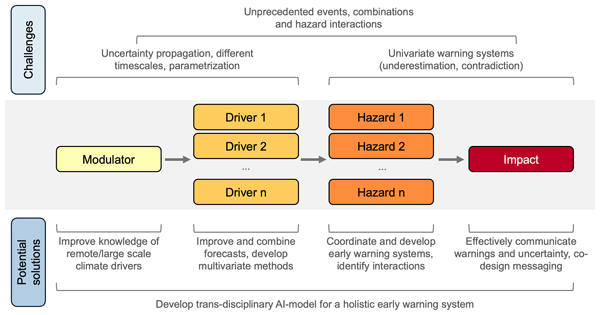
Impacts from extreme weather events may become more severe due to increased likelihood of compounding events under global warming, which challenge present day climate modelling and forecasting capacities. In this perspective we reflect on the usability of compound event research to bridge the gap between academic research and real-world applications.
Beate Geyer, Angelo Campanale, Evgenii Churiulin, Hendrik Feldmann, Klaus Goergen, Stefan Hagemann, Ha Thi Minh Ho-Hagemann, Muhammed Muhshif Karadan, Klaus Keuler, Pavel Khain, Divyaja Lawand, Patrick Ludwig, Vera Maurer, Sergei Petrov, Stefan Poll, Christopher Purr, Emmanuele Russo, Martina Schubert-Frisius, Jan-Peter Schulz, Shweta Singh, Christian Steger, Heimo Truhetz, and Andreas Will
Geosci. Model Dev., 19, 5439–5490, https://doi.org/10.5194/gmd-19-5439-2026, https://doi.org/10.5194/gmd-19-5439-2026, 2026
Short summary
Short summary
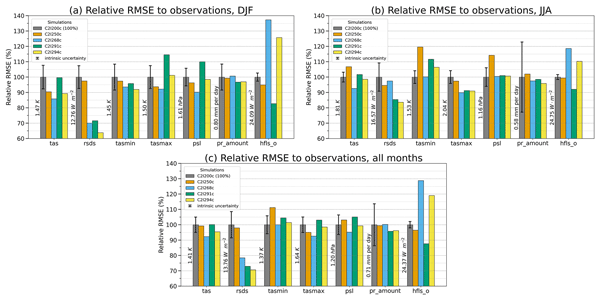
Complex models in environmental science typically have a lot of tuning parameters, which has to be set by the users depending on the application. This study presents a new method of objective tuning of a huge number of parameters, by combining expert judgement with automated tuning called Linear Meta-Model optimisation (LiMMo). The method is successfully applied to the regional climate model named ICON (Icosahedral Non-hydrostatic)-CLM (Climate Limited-area Modelling) over Europe.
David Kneidinger, Armin Schaffer, and Douglas Maraun
Geosci. Model Dev., 19, 5119–5137, https://doi.org/10.5194/gmd-19-5119-2026, https://doi.org/10.5194/gmd-19-5119-2026, 2026
Short summary
Short summary
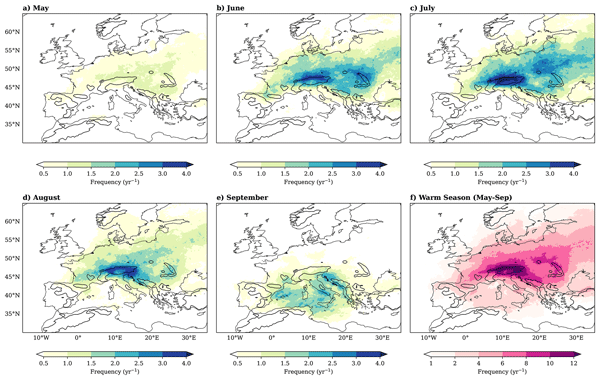
Mesoscale Convective Systems cause extreme weather and flash floods, yet they remain difficult to simulate in climate models. We developed a tracking tool to identify these storms using standard model data. Our 27-year record for Europe shows these systems drive over 60 percent of heavy hourly rain in the warm-season. This algorithm allows us to evaluate climate model performance and investigate how these intense storms will change in a warming climate.
Eleni Kritidou, Martina Kauzlaric, Maria Staudinger, Guillaume Evin, Marc Vis, and Daniel Viviroli
EGUsphere, https://doi.org/10.5194/egusphere-2026-2338, https://doi.org/10.5194/egusphere-2026-2338, 2026
Short summary
Short summary
In mountain regions, precipitation varies with elevation, but models often simplify this relationship. We used simulations combining a weather generator and a hydrological model to explore how different precipitation different lapse rates affect runoff and floods in Switzerland. We found that they impact yearly and seasonal river flow and flood behavior. Higher-elevation catchments were less sensitive, and higher lapse rates increased summer floods, while lower rates increased winter floods.
Armin Schaffer, Albert Ossó, and Douglas Maraun
EGUsphere, https://doi.org/10.5194/egusphere-2026-1712, https://doi.org/10.5194/egusphere-2026-1712, 2026
Short summary
Short summary
Atmospheric fronts are a major cause of heavy rainfall in Europe. To understand how climate change affects these events, we analyzed two sets of global and regional climate models. We found that while changing weather patterns may reduce frontal frequency in some areas, the number of heavy rain events will surge. Extreme rainfall events are projected to more than double per degree of warming, driven by increased humidity rather than storm dynamics.
Armin Schaffer, Tobias Lichtenegger, Albert Ossó, and Douglas Maraun
Weather Clim. Dynam., 6, 1815–1830, https://doi.org/10.5194/wcd-6-1815-2025, https://doi.org/10.5194/wcd-6-1815-2025, 2025
Short summary
Short summary
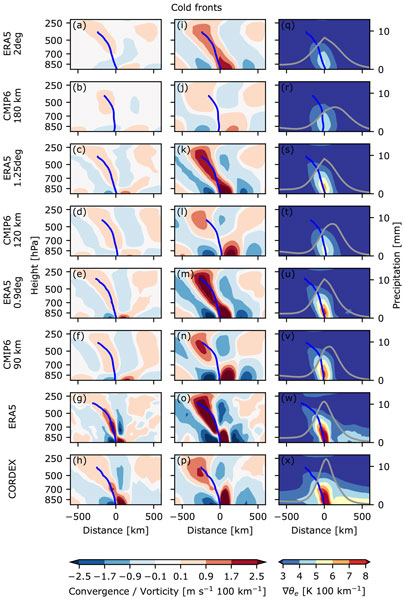
Heavy rainfall in Europe is often linked to weather fronts. To understand how these events may change in the future, we first need to evaluate how well climate models represent them. We found that all models show substantial biases, particularly for cold fronts, while higher-resolution models improve their simulation. Warm fronts also show biases, though they are generally better represented than cold fronts. This highlights the importance of high-resolution models for reliable projections.
Maria Staudinger, Anna Herzog, Ralf Loritz, Tobias Houska, Sandra Pool, Diana Spieler, Paul D. Wagner, Juliane Mai, Jens Kiesel, Stephan Thober, Björn Guse, and Uwe Ehret
Hydrol. Earth Syst. Sci., 29, 5005–5029, https://doi.org/10.5194/hess-29-5005-2025, https://doi.org/10.5194/hess-29-5005-2025, 2025
Short summary
Short summary
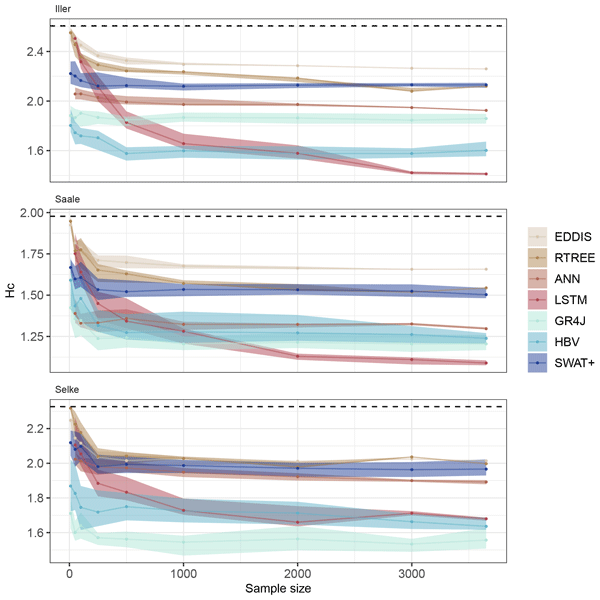
Three process-based and four data-driven hydrological models are compared using different training data. We found that process-based models perform better with small datasets but stop learning soon, while data-driven models learn longer. The study highlights the importance of memory in data and the impact of different data sampling methods on model performance. The direct comparison of these models is novel and provides a clear understanding of their performance under various data conditions.
Maria Staudinger, Martina Kauzlaric, Alexandre Mas, Guillaume Evin, Benoit Hingray, and Daniel Viviroli
Nat. Hazards Earth Syst. Sci., 25, 247–265, https://doi.org/10.5194/nhess-25-247-2025, https://doi.org/10.5194/nhess-25-247-2025, 2025
Short summary
Short summary
Various combinations of antecedent conditions and precipitation result in floods of varying degrees. Antecedent conditions played a crucial role in generating even large ones. The key predictors and spatial patterns of antecedent conditions leading to flooding at the basin's outlet were distinct. Precipitation and soil moisture from almost all sub-catchments were important for more frequent floods. For rarer events, only the predictors of specific sub-catchments were important.
Sarah Hanus, Lilian Schuster, Peter Burek, Fabien Maussion, Yoshihide Wada, and Daniel Viviroli
Geosci. Model Dev., 17, 5123–5144, https://doi.org/10.5194/gmd-17-5123-2024, https://doi.org/10.5194/gmd-17-5123-2024, 2024
Short summary
Short summary
This study presents a coupling of the large-scale glacier model OGGM and the hydrological model CWatM. Projected future increase in discharge is less strong while future decrease in discharge is stronger when glacier runoff is explicitly included in the large-scale hydrological model. This is because glacier runoff is projected to decrease in nearly all basins. We conclude that an improved glacier representation can prevent underestimating future discharge changes in large river basins.
Marvin Höge, Martina Kauzlaric, Rosi Siber, Ursula Schönenberger, Pascal Horton, Jan Schwanbeck, Marius Günter Floriancic, Daniel Viviroli, Sibylle Wilhelm, Anna E. Sikorska-Senoner, Nans Addor, Manuela Brunner, Sandra Pool, Massimiliano Zappa, and Fabrizio Fenicia
Earth Syst. Sci. Data, 15, 5755–5784, https://doi.org/10.5194/essd-15-5755-2023, https://doi.org/10.5194/essd-15-5755-2023, 2023
Short summary
Short summary
CAMELS-CH is an open large-sample hydro-meteorological data set that covers 331 catchments in hydrologic Switzerland from 1 January 1981 to 31 December 2020. It comprises (a) daily data of river discharge and water level as well as meteorologic variables like precipitation and temperature; (b) yearly glacier and land cover data; (c) static attributes of, e.g, topography or human impact; and (d) catchment delineations. CAMELS-CH enables water and climate research and modeling at catchment level.
Colin Manning, Martin Widmann, Douglas Maraun, Anne F. Van Loon, and Emanuele Bevacqua
Weather Clim. Dynam., 4, 309–329, https://doi.org/10.5194/wcd-4-309-2023, https://doi.org/10.5194/wcd-4-309-2023, 2023
Short summary
Short summary
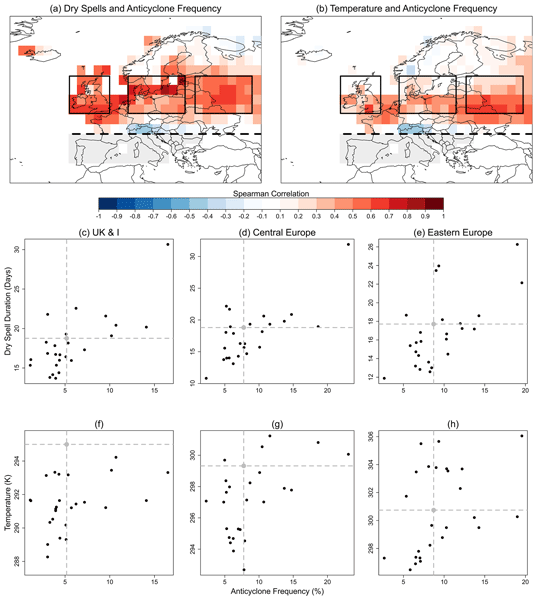
Climate models differ in their representation of dry spells and high temperatures, linked to errors in the simulation of persistent large-scale anticyclones. Models that simulate more persistent anticyclones simulate longer and hotter dry spells, and vice versa. This information is important to consider when assessing the likelihood of such events in current and future climate simulations so that we can assess the plausibility of their future projections.
Yi Yang, Douglas Maraun, Albert Ossó, and Jianping Tang
Nat. Hazards Earth Syst. Sci., 23, 693–709, https://doi.org/10.5194/nhess-23-693-2023, https://doi.org/10.5194/nhess-23-693-2023, 2023
Short summary
Short summary
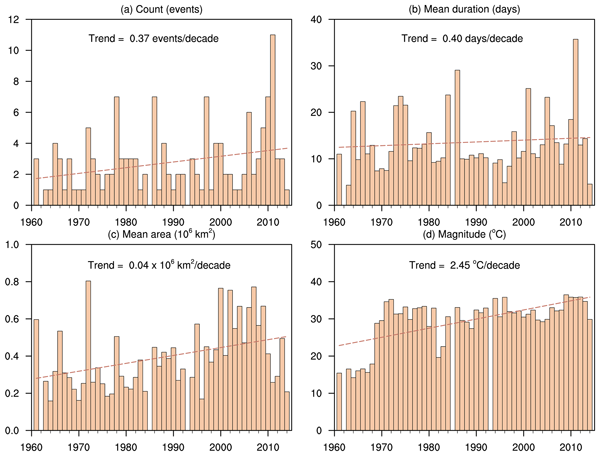
This study quantifies the spatiotemporal variation and characteristics of compound long-duration dry and hot events in China over the 1961–2014 period. The results show that over the past few decades, there has been a substantial increase in the frequency of these compound events across most parts of China, which is dominated by rising temperatures. We detect a strong increase in the spatially contiguous areas experiencing concurrent dry and hot conditions.
Raphael Knevels, Helene Petschko, Herwig Proske, Philip Leopold, Aditya N. Mishra, Douglas Maraun, and Alexander Brenning
Nat. Hazards Earth Syst. Sci., 23, 205–229, https://doi.org/10.5194/nhess-23-205-2023, https://doi.org/10.5194/nhess-23-205-2023, 2023
Short summary
Short summary
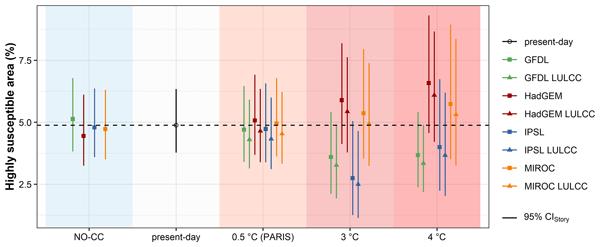
In summer 2009 and 2014, rainfall events occurred in the Styrian Basin (Austria), triggering thousands of landslides. Landslide storylines help to show potential future changes under changing environmental conditions. The often neglected uncertainty quantification was the aim of this study. We found uncertainty arising from the landslide model to be of the same order as climate scenario uncertainty. Understanding the dimensions of uncertainty is crucial for allowing informed decision-making.
Daniel Viviroli, Anna E. Sikorska-Senoner, Guillaume Evin, Maria Staudinger, Martina Kauzlaric, Jérémy Chardon, Anne-Catherine Favre, Benoit Hingray, Gilles Nicolet, Damien Raynaud, Jan Seibert, Rolf Weingartner, and Calvin Whealton
Nat. Hazards Earth Syst. Sci., 22, 2891–2920, https://doi.org/10.5194/nhess-22-2891-2022, https://doi.org/10.5194/nhess-22-2891-2022, 2022
Short summary
Short summary
Estimating the magnitude of rare to very rare floods is a challenging task due to a lack of sufficiently long observations. The challenge is even greater in large river basins, where precipitation patterns and amounts differ considerably between individual events and floods from different parts of the basin coincide. We show that a hydrometeorological model chain can provide plausible estimates in this setting and can thus inform flood risk and safety assessments for critical infrastructure.
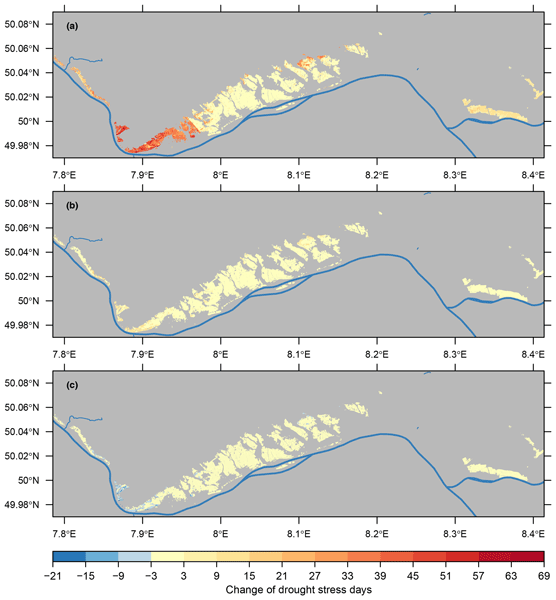
Marco Hofmann, Claudia Volosciuk, Martin Dubrovský, Douglas Maraun, and Hans R. Schultz
Earth Syst. Dynam., 13, 911–934, https://doi.org/10.5194/esd-13-911-2022, https://doi.org/10.5194/esd-13-911-2022, 2022
Short summary
Short summary
We modelled water budget developments of viticultural growing regions on the spatial scale of individual vineyard plots with respect to landscape features like the available water capacity of the soils, slope, and aspect of the sites. We used an ensemble of climate simulations and focused on the occurrence of drought stress. The results show a high bandwidth of projected changes where the risk of potential drought stress becomes more apparent in steep-slope regions.
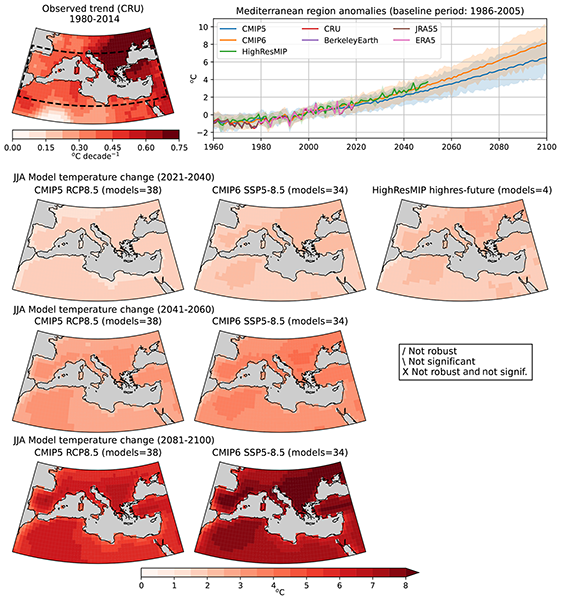
Josep Cos, Francisco Doblas-Reyes, Martin Jury, Raül Marcos, Pierre-Antoine Bretonnière, and Margarida Samsó
Earth Syst. Dynam., 13, 321–340, https://doi.org/10.5194/esd-13-321-2022, https://doi.org/10.5194/esd-13-321-2022, 2022
Short summary
Short summary
The Mediterranean has been identified as being more affected by climate change than other regions. We find that amplified warming during summer and annual precipitation declines are expected for the 21st century and that the magnitude of the changes will mainly depend on greenhouse gas emissions. By applying a method giving more importance to models with greater performance and independence, we find that the differences between the last two community modelling efforts are reduced in the region.
Cited articles
Andres, N., Steeb, N., Badoux, A., and Hegg, C. (eds.): Grundlagen Extremhochwasser Aare: Hauptbericht Projekt EXAR. Methodik und Resultate, in: WSL Berichte, vol. 104, Swiss Federal Institute for Forest Snow and Landscape Research WSL, Birmensdorf, https://www.wsl.ch/de/publikationen/extremhochwasser-an-der-aare-hauptbericht-projekt-exar-methodik-und-resultate/ (last access: 19 April 2026), 2021. a, b
Ban, N., Caillaud, C., Coppola, E., Pichelli, E., Sobolowski, S., Adinolfi, M., Ahrens, B., Alias, A., Anders, I., Bastin, S., Belušić, D., Berthou, S., Brisson, E., Cardoso, R. M., Chan, S. C., Christensen, O. B., Fernández, J., Fita, L., Frisius, T., Gašparac, G., Giorgi, F., Goergen, K., Haugen, J. E., Hodnebrog, Ø., Kartsios, S., Katragkou, E., Kendon, E. J., Keuler, K., Lavin-Gullon, A., Lenderink, G., Leutwyler, D., Lorenz, T., Maraun, D., Mercogliano, P., Milovac, J., Panitz, H.-J., Raffa, M., Remedio, A. R., Schär, C., Soares, P. M. M., Srnec, L., Steensen, B. M., Stocchi, P., Tölle, M. H., Truhetz, H., Vergara-Temprado, J., de Vries, H., Warrach-Sagi, K., Wulfmeyer, V., and Zander, M. J.: The first multi-model ensemble of regional climate simulations at kilometer-scale resolution, part I: evaluation of precipitation, Clim. Dynam., 57, 275–302, https://doi.org/10.1007/s00382-021-05708-w, 2021. a
Baumgartner, E., Boldi, M.-O., Kan, C., and Schick, S.: Hochwasserstatistik am BAFU – Diskussion eines neuen Methodensets, Wasser, Energie, Luft, 105, 103–110, 2013. a
Bertola, M., Blöschl, G., Bohac, M., Borga, M., Castellarin, A., Chirico, G. B., Claps, P., Dallan, E., Danilovich, I., Ganora, D., Gorbachova, L., Ledvinka, O., Mavrova-Guirguinova, M., Montanari, A., Ovcharuk, V., Viglione, A., Volpi, E., Arheimer, B., Aronica, G. T., Bonacci, O., Čanjevac, I., Csik, A., Frolova, N., Gnandt, B., Gribovszki, Z., Gül, A., Günther, K., Guse, B., Hannaford, J., Harrigan, S., Kireeva, M., Kohnová, S., Komma, J., Kriauciuniene, J., Kronvang, B., Lawrence, D., Lüdtke, S., Mediero, L., Merz, B., Molnar, P., Murphy, C., Oskoruš, D., Osuch, M., Parajka, J., Pfister, L., Radevski, I., Sauquet, E., Schröter, K., Šraj, M., Szolgay, J., Turner, S., Valent, P., Veijalainen, N., Ward, P. J., Willems, P., and Zivkovic, N.: Megafloods in Europe can be anticipated from observations in hydrologically similar catchments, Nat. Geosci., 16, 982–988, https://doi.org/10.1038/s41561-023-01300-5, 2023. a, b, c
Brunner, M. I. and Slater, L. J.: Extreme floods in Europe: going beyond observations using reforecast ensemble pooling, Hydrol. Earth Syst. Sci., 26, 469–482, https://doi.org/10.5194/hess-26-469-2022, 2022. a
Bundesamt für Umwelt (BAFU): Hochwasserstatistik Stationsbericht Aare – Thun, https://www.hydrodaten.admin.ch/documents/Hochwasserstatistikberichte/2030_hq_Bericht.pdf (last access: 19 April 2026), 2020. a
Bundesamt für Umwelt BAFU: Die biogeografischen Regionen der Schweiz, Federal Office for the Environment FOEN, https://geo.ld.admin.ch/data/biogeographicalRegions?lang=en (last access: 19 April 2026), 2022. a
Cornes, R. C., van der Schrier, G., van den Besselaar, E. J. M., and Jones, P. D.: An Ensemble Version of the E-OBS Temperature and Precipitation Data Sets, J. Geophys. Res.-Atmos., 123, 9391–9409, https://doi.org/10.1029/2017JD028200, 2018. a
Cucchi, M., Weedon, G. P., Amici, A., Bellouin, N., Lange, S., Müller Schmied, H., Hersbach, H., and Buontempo, C.: WFDE5: bias-adjusted ERA5 reanalysis data for impact studies, Earth Syst. Sci. Data, 12, 2097–2120, https://doi.org/10.5194/essd-12-2097-2020, 2020. a
de Bruijn, K., van den Hurk, B., Slager, K., Rongen, G., Hegnauer, M., and van Heeringen, K. J.: Storylines of the impacts in the Netherlands of alternative realizations of the Western Europe July 2021 floods, Journal of Coastal and Riverine Flood Risk, 2, https://doi.org/10.59490/jcrfr.2023.0008, 2023. a
Doury, A., Somot, S., Gadat, S., Ribes, A., and Corre, L.: Regional climate model emulator based on deep learning: concept and first evaluation of a novel hybrid downscaling approach, Clim. Dynam., 60, 1751–1779, https://doi.org/10.1007/s00382-022-06343-9, 2023. a
Doury, A., Somot, S., and Gadat, S.: On the suitability of a convolutional neural network based RCM-emulator for fine spatio-temporal precipitation, Clim. Dynam., 62, 8587–8613, https://doi.org/10.1007/s00382-024-07350-8, 2024. a
Evin, G., Favre, A.-C., and Hingray, B.: Stochastic generation of multi-site daily precipitation focusing on extreme events, Hydrol. Earth Syst. Sci., 22, 655–672, https://doi.org/10.5194/hess-22-655-2018, 2018. a
Evin, G., Favre, A.-C., and Hingray, B.: Stochastic generators of multi-site daily temperature: comparison of performances in various applications, Theor. Appl. Climatol., 135, 811–824, https://doi.org/10.1007/s00704-018-2404-x, 2019. a
Farinotti, D., Usselmann, S., Huss, M., Bauder, A., and Funk, M.: Runoff evolution in the Swiss Alps: projections for selected high-alpine catchments based on ENSEMBLES scenarios, Hydrol. Process., 26, 1909–1924, https://doi.org/10.1002/hyp.8276, 2012. a
Fukutome, S., Schindler, A., and Capobianco, A.: MeteoSwiss extreme value analyses: User manual and documentation, Federal Office for Meteorology and Climatology MeteoSwiss, https://www.meteoswiss.admin.ch/dam/jcr:7be312d2-7f2f-4adc-9f98-312ecf6dd904/nidex_technical_report_20181114.pdf (last access: 19 April 2026), 2018. a
Ganapathy, A., Hannah, D. M., and Agarwal, A.: Improved estimation of extreme floods with data pooling and mixed probability distribution, J. Hydrol., 629, 130633, https://doi.org/10.1016/j.jhydrol.2024.130633, 2024. a
García Hernández, J., Foehn, A., Fluixá-Sanmartín, J., Roquier, B., Brauchli, T., Paredes Arquiola, J., and de Cesare, G.: RS MINERVE – Technical manual, v2.25, https://crealp.ch/wp-content/uploads/2021/09/rsminerve_technical_manual_v2.25.pdf (last access: 19 April 2026), 2020. a
Germann, U., Boscacci, M., Clementi, L., Gabella, M., Hering, A., Sartori, M., Sideris, I. V., and Calpini, B.: Weather Radar in Complex Orography, Remote Sens.-Basel, 14, 503, https://doi.org/10.3390/rs14030503, 2022. a
Gringorten, I. I.: A plotting rule for extreme probability paper, J. Geophys. Res., 68, 813–814, https://doi.org/10.1029/JZ068i003p00813, 1963. a
Hillier, J. K. and Dixon, R. S.: Seasonal impact-based mapping of compound hazards, Environ. Res. Lett., 15, 114013, https://doi.org/10.1088/1748-9326/abbc3d, 2020. a
Hundecha, Y., Arheimer, B., Donnelly, C., and Pechlivanidis, I.: A regional parameter estimation scheme for a pan-European multi-basin model, Journal of Hydrology: Regional Studies, 6, 90–111, https://doi.org/10.1016/j.ejrh.2016.04.002, 2016. a
Hunziker, Zarn & Partner: Gefahrenkartierung Naturgefahren Thur: Technischer Bericht, https://maps.zh.ch/system/docs/awel_wb/Gefahrenkarten/GK_THU_TB.pdf (last access: 19 April 2026), 2017. a
Jakob Themeßl, M., Gobiet, A., and Leuprecht, A.: Empirical-statistical downscaling and error correction of daily precipitation from regional climate models, Int. J. Climatol., 31, 1530–1544, https://doi.org/10.1002/joc.2168, 2011. a
Johnson, S. J., Stockdale, T. N., Ferranti, L., Balmaseda, M. A., Molteni, F., Magnusson, L., Tietsche, S., Decremer, D., Weisheimer, A., Balsamo, G., Keeley, S. P. E., Mogensen, K., Zuo, H., and Monge-Sanz, B. M.: SEAS5: the new ECMWF seasonal forecast system, Geosci. Model Dev., 12, 1087–1117, https://doi.org/10.5194/gmd-12-1087-2019, 2019. a
Kay, A. L., Dunstone, N., Kay, G., Bell, V. A., and Hannaford, J.: Demonstrating the use of UNSEEN climate data for hydrological applications: case studies for extreme floods and droughts in England, Nat. Hazards Earth Syst. Sci., 24, 2953–2970, https://doi.org/10.5194/nhess-24-2953-2024, 2024. a
Kay, G., Dunstone, N., Smith, D., Dunbar, T., Eade, R., and Scaife, A.: Current likelihood and dynamics of hot summers in the UK, Environ. Res. Lett., 15, 094099, https://doi.org/10.1088/1748-9326/abab32, 2020. a
Kelder, T., Müller, M., Slater, L. J., Marjoribanks, T. I., Wilby, R. L., Prudhomme, C., Bohlinger, P., Ferranti, L., and Nipen, T.: Using UNSEEN trends to detect decadal changes in 100-year precipitation extremes, npj Climate and Atmospheric Science, 3, https://doi.org/10.1038/s41612-020-00149-4, 2020. a, b
Kelder, T., Marjoribanks, T. I., Slater, L. J., Prudhomme, C., Wilby, R. L., Wagemann, J., and Dunstone, N.: An open workflow to gain insights about low–likelihood high–impact weather events from initialized predictions, Meteorol. Appl., 29, https://doi.org/10.1002/met.2065, 2022. a, b
Kelder, T., Heinrich, D., Klok, L., Thompson, V., Goulart, H. M. D., Hawkins, E., Slater, L. J., Suarez-Gutierrez, L., Wilby, R. L., Coughlan de Perez, E., Stephens, E. M., Burt, S., van den Hurk, B., de Vries, H., van der Wiel, K., Schipper, E. L. F., Carmona Baéz, A., van Bueren, E., and Fischer, E. M.: How to stop being surprised by unprecedented weather, Nat. Commun., 16, 2382, https://doi.org/10.1038/s41467-025-57450-0, 2025. a
Kienzler, P. M. and Scherrer, S.: Verzeichnis grosser Hochwasserabflüsse in Schweizerischen Einzugsgebieten: Auswertung und graphische Aufbereitung, Reinach, https://www.bafu.admin.ch/de/verzeichnis-grosser-hochwasserabfluesse-in-schweizer-einzugsgebieten (last access: 19 April 2026), 2018. a, b, c
Klehmet, K., Berg, P., Bozhinova, D., Crochemore, L., Du, Y., Pechlivanidis, I., Photiadou, C., and Yang, W.: Robustness of hydrometeorological extremes in surrogated seasonal forecasts, Int. J. Climatol., 44, 1725–1738, https://doi.org/10.1002/joc.8407, 2024. a
Kossieris, P., Makropoulos, C., Onof, C., and Koutsoyiannis, D.: A rainfall disaggregation scheme for sub-hourly time scales: Coupling a Bartlett–Lewis based model with adjusting procedures, J. Hydrol., 556, 980–992, https://doi.org/10.1016/j.jhydrol.2016.07.015, 2018. a
Kritidou, E., Kauzlaric, M., Staudinger, M., Evin, G., Hingray, B., Vis, M., Seibert, J., and Viviroli, D.: Impact of different weather generator scenarios on extreme flood estimates in Switzerland, Stoch. Env. Res. Risk A., 39, 847–866, https://doi.org/10.1007/s00477-024-02843-8, 2025. a
Kritidou, E., Kauzlaric, M., Staudinger, M., Evin, G., Hingray, B., Vis, M., and Viviroli, D.: Partitioning uncertainties of extreme flood estimates using long continuous simulations, J. Hydrol., 668, 134804, https://doi.org/10.1016/j.jhydrol.2025.134804, 2026. a, b
Lamb, R., Faulkner, D., Wass, P., and Cameron, D.: Have applications of continuous rainfall-runoff simulation realised the vision for process-based flood frequency analysis?, Hydrol. Process., 30, 2463–2481, https://doi.org/10.1002/hyp.10882, 2016. a, b
Lindström, G., Johansson, B., Persson, M., Gardelin, M., and Bergström, S.: Development and test of the distributed HBV-96 hydrological model, J. Hydrol., 201, 272–288, https://doi.org/10.1016/S0022-1694(97)00041-3, 1997. a
Mahlstein, I., Bhend, J., Spirig, C., and Martius, O.: Developing an Automated Medium-Range Flood Awareness System for Switzerland Based on Probabilistic Forecasts of Integrated Water Vapor Fluxes, Weather Forecast, 34, 1759–1776, https://doi.org/10.1175/WAF-D-18-0189.1, 2019. a
Maraun, D.: Bias Correction, Quantile Mapping, and Downscaling: Revisiting the Inflation Issue, J. Climate, 26, 2137–2143, https://doi.org/10.1175/JCLI-D-12-00821.1, 2013. a
Maraun, D. and Widmann, M.: Statistical downscaling and bias correction for climate research, Cambridge University Press, Cambridge, https://doi.org/10.1017/9781107588783, 2018. a
Maraun, D., Shepherd, T. G., Widmann, M., Zappa, G., Walton, D., Gutiérrez, J. M., Hagemann, S., Richter, I., Soares, P. M. M., Hall, A., and Mearns, L. O.: Towards process-informed bias correction of climate change simulations, Nat. Clim. Change, 7, 764–773, https://doi.org/10.1038/NCLIMATE3418, 2017. a, b
Margot, A., Schädler, B., Sigg, R., and Weingartner, R.: Influence on Rivers by Water Power Stations (≥300 kW) and the Lake Control, in: Hydrologischer Atlas der Schweiz, Plate 5.3, Bundesamt für Umwelt BAFU, Bern, https://hydrologicalatlas.ch/products/printed-issue/rivers-and-lakes/plate-5-3 (last access: 19 April 2026) 1992. a
Ménégoz, M., Valla, E., Jourdain, N. C., Blanchet, J., Beaumet, J., Wilhelm, B., Gallée, H., Fettweis, X., Morin, S., and Anquetin, S.: Contrasting seasonal changes in total and intense precipitation in the European Alps from 1903 to 2010, Hydrol. Earth Syst. Sci., 24, 5355–5377, https://doi.org/10.5194/hess-24-5355-2020, 2020. a
MeteoSwiss: Documentation of MeteoSwiss Grid-Data Products: Daily Precipitation (final analysis): RhiresD, https://www.meteoswiss.admin.ch/dam/jcr:4f51f0f1-0fe3-48b5-9de0-15666327e63c/ProdDoc_RhiresD.pdf (last access: 19 April 2026), 2021a. a
MeteoSwiss: Daily Mean, Minimum and Maximum Temperature: TabsD, TminD, TmaxD, https://www.meteoswiss.admin.ch/dam/jcr:818a4d17-cb0c-4e8b-92c6-1a1bdf5348b7/ProdDoc_TabsD.pdf (last access: 19 April 2026), 2021b. a
MeteoSwiss: MeteoSwiss – Open Data, https://github.com/MeteoSwiss/opendata/blob/main/README.md (last access: 19 April 2026), 2025. a
Näf-Huber, D., Scherrer, S., and Kienzler, P.: Le grandi piene della Maggia (Ct. Ticino). Studio principale. Derivazione delle portate di piena per diversi periodi di ritorno lungo la Maggia, Reinach, technial report, 2021. a
Osinski, R., Lorenz, P., Kruschke, T., Voigt, M., Ulbrich, U., Leckebusch, G. C., Faust, E., Hofherr, T., and Majewski, D.: An approach to build an event set of European windstorms based on ECMWF EPS, Nat. Hazards Earth Syst. Sci., 16, 255–268, https://doi.org/10.5194/nhess-16-255-2016, 2016. a
Owens, R. and Hewson, T.: ECMWF Forecast User Guide. Technical report, https://www.ecmwf.int/node/16559 (last access: 19 April 2026), 2018. a
Redmond, K. T., Enzel, Y., House, P. K., and Biondi, F.: Climate Variability and Flood Frequency at Decadal to Millennial Time Scales, in: Ancient floods, modern hazards, edited by: House, P. K., Water Science and Application, American Geophysical Union, Washington, DC, 21–45, https://doi.org/10.1029/WS005p0021, 2010. a
Ritzhaupt, N. and Maraun, D.: Consistency of Seasonal Mean and Extreme Precipitation Projections Over Europe Across a Range of Climate Model Ensembles, J. Geophys. Res.-Atmos., 128, e2022JD037845, https://doi.org/10.1029/2022JD037845, 2023. a
Robertson, A. W. and Vitart, F. (eds.): Sub-Seasonal to Seasonal Prediction, Elsevier, https://doi.org/10.1016/C2016-0-01594-2, 2019. a
Ruelland, D.: Should altitudinal gradients of temperature and precipitation inputs be inferred from key parameters in snow-hydrological models?, Hydrol. Earth Syst. Sci., 24, 2609–2632, https://doi.org/10.5194/hess-24-2609-2020, 2020. a
Scherrer, S., Frauchiger, R., Näf, D., and Scheible, G.: Historische Hochwasser: Weshalb der Blick zurück ein Fortschritt bei Hochwasserabschätzungen ist, Wasser, Energie, Luft, 103, 7–13, 2011. a
Schmocker-Fackel, P. and Naef, F.: Changes in flood frequencies in Switzerland since 1500, Hydrol. Earth Syst. Sci., 14, 1581–1594, https://doi.org/10.5194/hess-14-1581-2010, 2010a. a
Schmocker-Fackel, P. and Naef, F.: More frequent flooding? Changes in flood frequency in Switzerland since 1850, J. Hydrol., 381, 1–8, https://doi.org/10.1016/j.jhydrol.2009.09.022, 2010b. a
Seibert, J. and Vis, M. J. P.: Teaching hydrological modeling with a user-friendly catchment-runoff-model software package, Hydrol. Earth Syst. Sci., 16, 3315–3325, https://doi.org/10.5194/hess-16-3315-2012, 2012. a
Sideris, I. V., Gabella, M., Erdin, R., and Germann, U.: Real-time radar-rain-gauge merging using spatio-temporal co-kriging with external drift in the alpine terrain of Switzerland, Q. J. Roy. Meteor. Soc., 140, 1097–1111, https://doi.org/10.1002/qj.2188, 2014. a
Staudinger, M., Kauzlaric, M., Mas, A., Evin, G., Hingray, B., and Viviroli, D.: The role of antecedent conditions in translating precipitation events into extreme floods at the catchment scale and in a large-basin context, Nat. Hazards Earth Syst. Sci., 25, 247–265, https://doi.org/10.5194/nhess-25-247-2025, 2025. a
Switanek, M., Maraun, D., and Bevacqua, E.: Stochastic downscaling of gridded precipitation to spatially coherent subgrid precipitation fields using a transformed Gaussian model, Int. J. Climatol., 42, 6126–6147, https://doi.org/10.1002/joc.7581, 2022. a, b, c
Thompson, V., Dunstone, N. J., Scaife, A. A., Smith, D. M., Slingo, J. M., Brown, S., and Belcher, S. E.: High risk of unprecedented UK rainfall in the current climate, Nat. Commun., 8, 107, https://doi.org/10.1038/s41467-017-00275-3, 2017. a, b
Thompson, V., Dunstone, N. J., Scaife, A. A., Smith, D. M., Hardiman, S. C., Ren, H.-L., Lu, B., and Belcher, S. E.: Risk and dynamics of unprecedented hot months in South East China, Clim. Dynam., 52, 2585–2596, https://doi.org/10.1007/s00382-018-4281-5, 2019. a
Trenberth, K., Zhang, R., and National Center for Atmospheric Research Staff: The Climate Data Guide: Atlantic Multi-decadal Oscillation (AMO) and Atlantic Multidecadal Variability (AMV), https://climatedataguide.ucar.edu/climate-data/atlantic-multi-decadal-oscillation-amo (last access: 19 April 2026), 2023. a
van den Brink, H. W., Können, G. P., Opsteegh, J. D., van Oldenborgh, G. J., and Burgers, G.: Improving 104-year surge level estimates using data of the ECMWF seasonal prediction system, Geophys. Res. Lett., 31, https://doi.org/10.1029/2004GL020610, 2004. a
Viviroli, D., Sikorska-Senoner, A. E., Evin, G., Staudinger, M., Kauzlaric, M., Chardon, J., Favre, A.-C., Hingray, B., Nicolet, G., Raynaud, D., Seibert, J., Weingartner, R., and Whealton, C.: Comprehensive space–time hydrometeorological simulations for estimating very rare floods at multiple sites in a large river basin, Nat. Hazards Earth Syst. Sci., 22, 2891–2920, https://doi.org/10.5194/nhess-22-2891-2022, 2022. a, b, c, d, e, f, g
Viviroli, D., Staudinger, M., and Kauzlaric, M.: Extreme Floods in Switzerland. Hydrological scenarios for large catchments. Project report commissioned by the Federal Office for the Environment (FOEN) and the Swiss Federal Office of Energy (SFOE), https://www.bafu.admin.ch/de/projekt-extremhochwasser-schweiz-exch (last access: 19 April 2026), 2025. a, b, c, d
Volosciuk, C., Maraun, D., Vrac, M., and Widmann, M.: A combined statistical bias correction and stochastic downscaling method for precipitation, Hydrol. Earth Syst. Sci., 21, 1693–1719, https://doi.org/10.5194/hess-21-1693-2017, 2017. a
Weingartner, R. and Aschwanden, H.: Discharge Regime – the Basis for the Estimation of Average Flows, in: Hydrological Atlas of Switzerland, Plate 5.2, Federal Office for the Environment FOEN, Bern, https://hydrologicalatlas.ch/products/printed-issue/rivers-and-lakes/plate-5-2 (last access: 19 April 2026), 1992. a
Westerberg, I. K., Sikorska-Senoner, A. E., Viviroli, D., Vis, M., and Seibert, J.: Hydrological model calibration with uncertain discharge data, Hydrolog. Sci. J., 2441–2456, https://doi.org/10.1080/02626667.2020.1735638, 2020. a
Wilks, D. S.: Multisite generalization of a daily stochastic precipitation generation model, J. Hydrol., 210, 178–191, https://doi.org/10.1016/S0022-1694(98)00186-3, 1998. a
World Meteorological Organization: Manual on Estimation of Probable Maximum Precipitation (PMP), in: WMO Publ., vol. 1045, World Meteorological Organization, ISBN 978-92-63-11045-9, 2009. a
Zeder, J. and Fischer, E. M.: Decadal to centennial extreme precipitation disaster gap – Long-term variability and implications for extreme value modelling, Weather and Climate Extremes, 43, 100636, https://doi.org/10.1016/j.wace.2023.100636, 2024. a
Short summary
Estimating the frequency and magnitude of floods is challenging due to the limited length of streamflow records. Here, we explore whether an extensive archive of meteorological forecasts run over past dates can assist in this context. After processing and concatenating these data for use as input to a hydrological model, we derive flood statistics from simulated streamflow. Results are promising for the larger catchments studied, providing a valuable complementary perspective on rare floods.
Estimating the frequency and magnitude of floods is challenging due to the limited length of...


Altmetrics
Final-revised paper
Preprint