
Articles | Volume 26, issue 4
https://doi.org/10.5194/nhess-26-1727-2026
© Author(s) 2026. This work is distributed under
the Creative Commons Attribution 4.0 License.
the Creative Commons Attribution 4.0 License.
https://doi.org/10.5194/nhess-26-1727-2026
© Author(s) 2026. This work is distributed under
the Creative Commons Attribution 4.0 License.
the Creative Commons Attribution 4.0 License.
Research article
| 
15 Apr 2026
Research article |
| 15 Apr 2026
| 15 Apr 2026
Towards global sensitivity analysis of large-scale flood loss models
Francesca Pianosi
CORRESPONDING AUTHOR

School of Civil, Aerospace and Design Engineering, University of Bristol, Bristol, United Kingdom
Cabot Institute, University of Bristol, Bristol, United Kingdom
Georgios Sarailidis
School of Civil, Aerospace and Design Engineering, University of Bristol, Bristol, United Kingdom
JBA Risk Management Limited, Skipton, United Kingdom
Kirsty Styles
JBA Risk Management Limited, Skipton, United Kingdom
Philip Oldham
JBA Risk Management Limited, Skipton, United Kingdom
Stephen Hutchings
JBA Risk Management Limited, Skipton, United Kingdom
JBA Trust, Skipton, United Kingdom
Lancaster Environment Centre, Lancaster University, Lancaster, United Kingdom
Thorsten Wagener
Institute of Environmental Science and Geography, University of Potsdam, Potsdam, Germany
Related authors
Tamara Leins, Nikolai Späth, Jan Seibert, Francesca Pianosi, Christian Reinhardt-Imjela, and Andreas Hartmann
EGUsphere, https://doi.org/10.5194/egusphere-2026-4470, https://doi.org/10.5194/egusphere-2026-4470, 2026
This preprint is open for discussion and under review for Hydrology and Earth System Sciences (HESS).
Short summary
Short summary
In this study, we found large uncertainties in the simulation of Subsurface Stormflow (SSF) in a lumped hydrological model using only discharge data for parameter estimation. High-flow-based parameter estimation could extract some additional information, but SSF-specific data remain necessary to achieve more realistic SSF simulations. Occurrence uncertainty dominated total SSF uncertainty, suggesting proxy data on SSF occurrence could already substantially reduce SSF simulation uncertainties.
Qidong Fang, Mostaquimur Rahman, Thorsten Wagener, and Francesca Pianosi
EGUsphere, https://doi.org/10.5194/egusphere-2026-3267, https://doi.org/10.5194/egusphere-2026-3267, 2026
This preprint is open for discussion and under review for Hydrology and Earth System Sciences (HESS).
Short summary
Short summary
It is unclear whether deep learning models can predict groundwater level at places without measurements using attributes of the places. Our deep learning model captured temporal variation well, especially in more responsive aquifers, similarly to a process-based model. Interpretation tools showed that meteorological and environmental information at places helped predictions at unseen wells. We highlight the potential of deep learning models for regional groundwater level predictions.
Doris E. Wendt, Gemma Coxon, Saskia Salwey, and Francesca Pianosi
Hydrol. Earth Syst. Sci., 30, 2837–2857, https://doi.org/10.5194/hess-30-2837-2026, https://doi.org/10.5194/hess-30-2837-2026, 2026
Short summary
Short summary
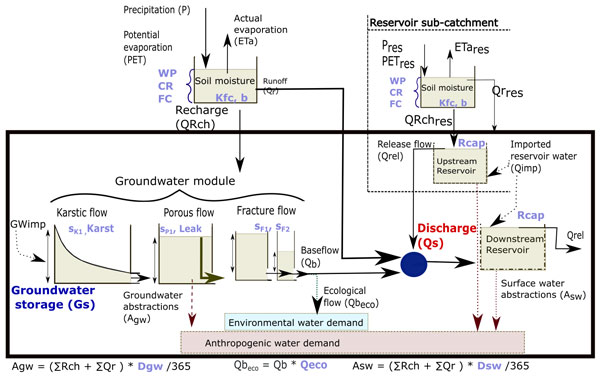
Groundwater is a highly-used water source, which drought management is complicated. We introduce a socio-hydrological water resource model (SHOWER) to aid drought management in groundwater-rich managed environments. Results show which and when drought management interventions influence surface water and groundwater storage, with integrated interventions having most effect on reducing droughts. This encourages further exploration to reduce water shortages and improve future drought resilience.
Yongshin Lee, Andres Peñuela, Francesca Pianosi, and Miguel Angel Rico-Ramirez
Hydrol. Earth Syst. Sci., 29, 1429–1447, https://doi.org/10.5194/hess-29-1429-2025, https://doi.org/10.5194/hess-29-1429-2025, 2025
Short summary
Short summary
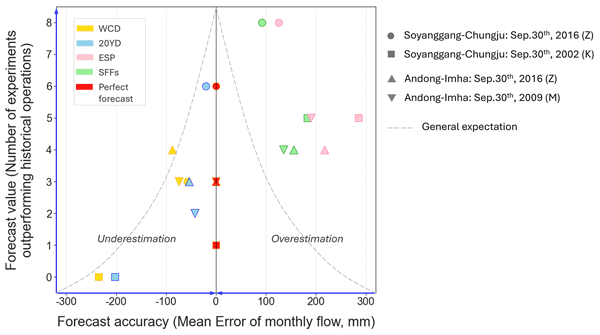
This study assesses the value of seasonal flow forecasts (SFFs) in informing decision-making for drought management in South Korea and introduces a novel method for assessing values benchmarked against historical operations. Our results showed the importance of considering flow forecast uncertainty in reservoir operations. There was no significant correlation between the forecast accuracy and value. The method for selecting a compromise release schedule was a key control of the value.
Saskia Salwey, Gemma Coxon, Francesca Pianosi, Rosanna Lane, Chris Hutton, Michael Bliss Singer, Hilary McMillan, and Jim Freer
Hydrol. Earth Syst. Sci., 28, 4203–4218, https://doi.org/10.5194/hess-28-4203-2024, https://doi.org/10.5194/hess-28-4203-2024, 2024
Short summary
Short summary
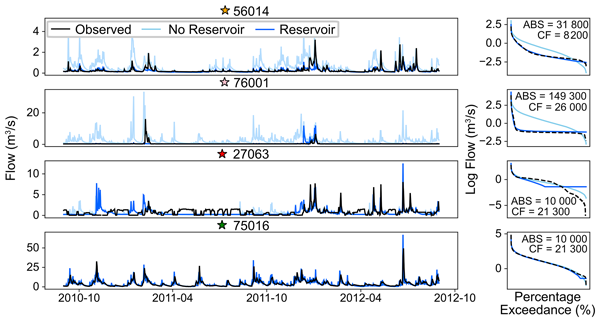
Reservoirs are essential for water resource management and can significantly impact downstream flow. However, representing reservoirs in hydrological models can be challenging, particularly across large scales. We design a new and simple method for simulating river flow downstream of water supply reservoirs using only open-access data. We demonstrate the approach in 264 reservoir catchments across Great Britain, where we can significantly improve the simulation of reservoir-impacted flow.
Yongshin Lee, Francesca Pianosi, Andres Peñuela, and Miguel Angel Rico-Ramirez
Hydrol. Earth Syst. Sci., 28, 3261–3279, https://doi.org/10.5194/hess-28-3261-2024, https://doi.org/10.5194/hess-28-3261-2024, 2024
Short summary
Short summary
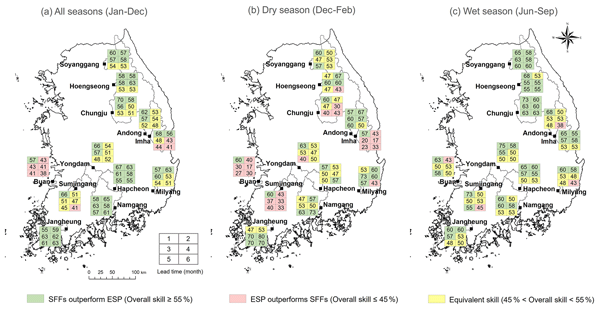
Following recent advancements in weather prediction technology, we explored how seasonal weather forecasts (1 or more months ahead) could benefit practical water management in South Korea. Our findings highlight that using seasonal weather forecasts for predicting flow patterns 1 to 3 months ahead is effective, especially during dry years. This suggest that seasonal weather forecasts can be helpful in improving the management of water resources.
Dung Trung Vu, Thanh Duc Dang, Francesca Pianosi, and Stefano Galelli
Hydrol. Earth Syst. Sci., 27, 3485–3504, https://doi.org/10.5194/hess-27-3485-2023, https://doi.org/10.5194/hess-27-3485-2023, 2023
Short summary
Short summary
The calibration of hydrological models over extensive spatial domains is often challenged by the lack of data on river discharge and the operations of hydraulic infrastructures. Here, we use satellite data to address the lack of data that could unintentionally bias the calibration process. Our study is underpinned by a computational framework that quantifies this bias and provides a safe approach to the calibration of models in poorly gauged and heavily regulated basins.
Trevor Page, Paul Smith, Keith Beven, Francesca Pianosi, Fanny Sarrazin, Susana Almeida, Liz Holcombe, Jim Freer, Nick Chappell, and Thorsten Wagener
Hydrol. Earth Syst. Sci., 27, 2523–2534, https://doi.org/10.5194/hess-27-2523-2023, https://doi.org/10.5194/hess-27-2523-2023, 2023
Short summary
Short summary
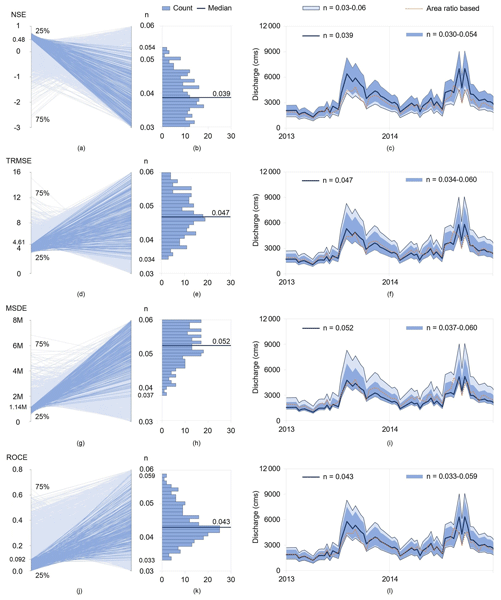
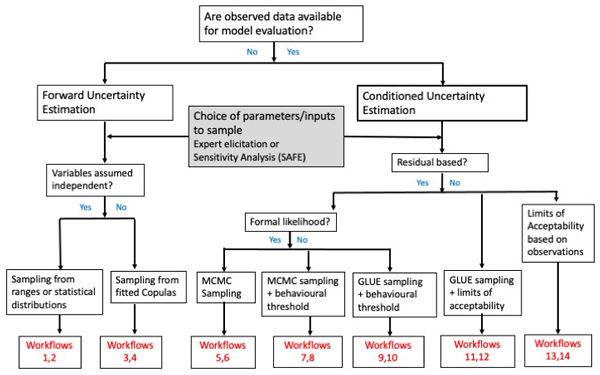
This publication provides an introduction to the CREDIBLE Uncertainty Estimation (CURE) toolbox. CURE offers workflows for a variety of uncertainty estimation methods. One of its most important features is the requirement that all of the assumptions on which a workflow analysis depends be defined. This facilitates communication with potential users of an analysis. An audit trail log is produced automatically from a workflow for future reference.
Tamara Leins, Nikolai Späth, Jan Seibert, Francesca Pianosi, Christian Reinhardt-Imjela, and Andreas Hartmann
EGUsphere, https://doi.org/10.5194/egusphere-2026-4470, https://doi.org/10.5194/egusphere-2026-4470, 2026
This preprint is open for discussion and under review for Hydrology and Earth System Sciences (HESS).
Short summary
Short summary
In this study, we found large uncertainties in the simulation of Subsurface Stormflow (SSF) in a lumped hydrological model using only discharge data for parameter estimation. High-flow-based parameter estimation could extract some additional information, but SSF-specific data remain necessary to achieve more realistic SSF simulations. Occurrence uncertainty dominated total SSF uncertainty, suggesting proxy data on SSF occurrence could already substantially reduce SSF simulation uncertainties.

John Ashcroft, Alison Poulston, Marius Koch, Georg Ertl, Kirsty Brown, James Butler, Anthony Hammond, Owen Jordan, Sarah Warren, Rob Lamb, Paul J. Young, and David Wood
Nat. Hazards Earth Syst. Sci., 26, 3129–3161, https://doi.org/10.5194/nhess-26-3129-2026, https://doi.org/10.5194/nhess-26-3129-2026, 2026
Short summary
Short summary
Floods cause major social and economic losses, but estimating risk is difficult because extreme events are rare. We used artificial intelligence to generate over a thousand realistic winter weather seasons and river flows for the Elbe basin. The approach reproduced observed patterns and produced a wider range of extreme storms, showing that artificial intelligence can expand plausible flood scenarios for improved risk assessment.
Simon P. Heselschwerdt, Thorsten Wagener, Lan Wang-Erlandsson, Anna M. Ukkola, Yannis Markonis, Yuting Yang, and Peter Greve
Earth Syst. Dynam., 17, 811–827, https://doi.org/10.5194/esd-17-811-2026, https://doi.org/10.5194/esd-17-811-2026, 2026
Short summary
Short summary
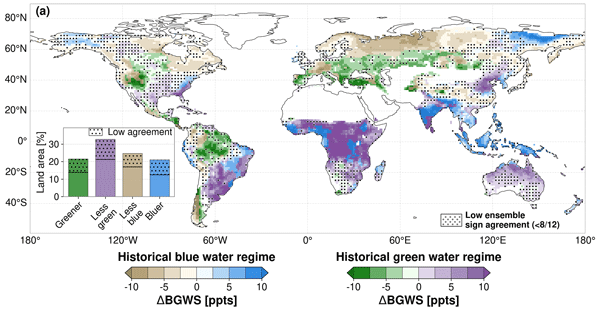
Precipitation on land is split into different pathways, contributing to runoff (blue water) or to plant water use (green water). Climate change alters this balance and shapes how future precipitation is divided. We use Earth system models to study these changes and their controls. We find that stronger extreme five-day precipitation is the main control and routes more future precipitation into blue water, even where average precipitation decreases, with implications for freshwater availability.
Qidong Fang, Mostaquimur Rahman, Thorsten Wagener, and Francesca Pianosi
EGUsphere, https://doi.org/10.5194/egusphere-2026-3267, https://doi.org/10.5194/egusphere-2026-3267, 2026
This preprint is open for discussion and under review for Hydrology and Earth System Sciences (HESS).
Short summary
Short summary
It is unclear whether deep learning models can predict groundwater level at places without measurements using attributes of the places. Our deep learning model captured temporal variation well, especially in more responsive aquifers, similarly to a process-based model. Interpretation tools showed that meteorological and environmental information at places helped predictions at unseen wells. We highlight the potential of deep learning models for regional groundwater level predictions.
Doris E. Wendt, Gemma Coxon, Saskia Salwey, and Francesca Pianosi
Hydrol. Earth Syst. Sci., 30, 2837–2857, https://doi.org/10.5194/hess-30-2837-2026, https://doi.org/10.5194/hess-30-2837-2026, 2026
Short summary
Short summary
Groundwater is a highly-used water source, which drought management is complicated. We introduce a socio-hydrological water resource model (SHOWER) to aid drought management in groundwater-rich managed environments. Results show which and when drought management interventions influence surface water and groundwater storage, with integrated interventions having most effect on reducing droughts. This encourages further exploration to reduce water shortages and improve future drought resilience.
Sacha W. Ruzzante, Wouter J. M. Knoben, Thorsten Wagener, Tom Gleeson, and Markus Schnorbus
Hydrol. Earth Syst. Sci., 30, 2337–2355, https://doi.org/10.5194/hess-30-2337-2026, https://doi.org/10.5194/hess-30-2337-2026, 2026
Short summary
Short summary
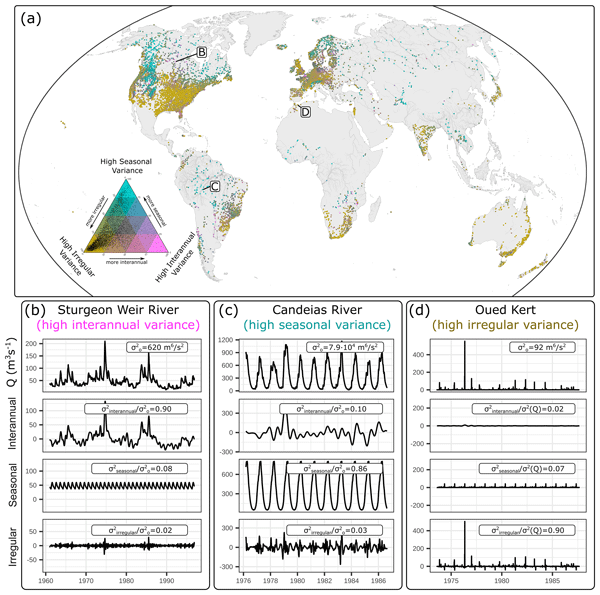
Common metrics used to evaluate hydrologic models make it relatively easy to achieve high performance scores in highly seasonal catchments. However, we analysed 18 hydrologic models and found that almost all were worse at simulating interannual variability and change in seasonal streamflow regimes. This suggests that climate change impacts on streamflow may not be accurately predicted in highly seasonal tropical, alpine, and polar regions, which are highly vulnerable to climate change.
Yongshin Lee, Andres Peñuela, Francesca Pianosi, and Miguel Angel Rico-Ramirez
Hydrol. Earth Syst. Sci., 29, 1429–1447, https://doi.org/10.5194/hess-29-1429-2025, https://doi.org/10.5194/hess-29-1429-2025, 2025
Short summary
Short summary
This study assesses the value of seasonal flow forecasts (SFFs) in informing decision-making for drought management in South Korea and introduces a novel method for assessing values benchmarked against historical operations. Our results showed the importance of considering flow forecast uncertainty in reservoir operations. There was no significant correlation between the forecast accuracy and value. The method for selecting a compromise release schedule was a key control of the value.
Saskia Salwey, Gemma Coxon, Francesca Pianosi, Rosanna Lane, Chris Hutton, Michael Bliss Singer, Hilary McMillan, and Jim Freer
Hydrol. Earth Syst. Sci., 28, 4203–4218, https://doi.org/10.5194/hess-28-4203-2024, https://doi.org/10.5194/hess-28-4203-2024, 2024
Short summary
Short summary
Reservoirs are essential for water resource management and can significantly impact downstream flow. However, representing reservoirs in hydrological models can be challenging, particularly across large scales. We design a new and simple method for simulating river flow downstream of water supply reservoirs using only open-access data. We demonstrate the approach in 264 reservoir catchments across Great Britain, where we can significantly improve the simulation of reservoir-impacted flow.
Yongshin Lee, Francesca Pianosi, Andres Peñuela, and Miguel Angel Rico-Ramirez
Hydrol. Earth Syst. Sci., 28, 3261–3279, https://doi.org/10.5194/hess-28-3261-2024, https://doi.org/10.5194/hess-28-3261-2024, 2024
Short summary
Short summary
Following recent advancements in weather prediction technology, we explored how seasonal weather forecasts (1 or more months ahead) could benefit practical water management in South Korea. Our findings highlight that using seasonal weather forecasts for predicting flow patterns 1 to 3 months ahead is effective, especially during dry years. This suggest that seasonal weather forecasts can be helpful in improving the management of water resources.
Dung Trung Vu, Thanh Duc Dang, Francesca Pianosi, and Stefano Galelli
Hydrol. Earth Syst. Sci., 27, 3485–3504, https://doi.org/10.5194/hess-27-3485-2023, https://doi.org/10.5194/hess-27-3485-2023, 2023
Short summary
Short summary
The calibration of hydrological models over extensive spatial domains is often challenged by the lack of data on river discharge and the operations of hydraulic infrastructures. Here, we use satellite data to address the lack of data that could unintentionally bias the calibration process. Our study is underpinned by a computational framework that quantifies this bias and provides a safe approach to the calibration of models in poorly gauged and heavily regulated basins.
Trevor Page, Paul Smith, Keith Beven, Francesca Pianosi, Fanny Sarrazin, Susana Almeida, Liz Holcombe, Jim Freer, Nick Chappell, and Thorsten Wagener
Hydrol. Earth Syst. Sci., 27, 2523–2534, https://doi.org/10.5194/hess-27-2523-2023, https://doi.org/10.5194/hess-27-2523-2023, 2023
Short summary
Short summary
This publication provides an introduction to the CREDIBLE Uncertainty Estimation (CURE) toolbox. CURE offers workflows for a variety of uncertainty estimation methods. One of its most important features is the requirement that all of the assumptions on which a workflow analysis depends be defined. This facilitates communication with potential users of an analysis. An audit trail log is produced automatically from a workflow for future reference.
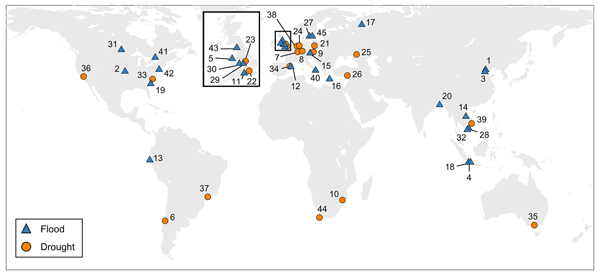
Heidi Kreibich, Kai Schröter, Giuliano Di Baldassarre, Anne F. Van Loon, Maurizio Mazzoleni, Guta Wakbulcho Abeshu, Svetlana Agafonova, Amir AghaKouchak, Hafzullah Aksoy, Camila Alvarez-Garreton, Blanca Aznar, Laila Balkhi, Marlies H. Barendrecht, Sylvain Biancamaria, Liduin Bos-Burgering, Chris Bradley, Yus Budiyono, Wouter Buytaert, Lucinda Capewell, Hayley Carlson, Yonca Cavus, Anaïs Couasnon, Gemma Coxon, Ioannis Daliakopoulos, Marleen C. de Ruiter, Claire Delus, Mathilde Erfurt, Giuseppe Esposito, Didier François, Frédéric Frappart, Jim Freer, Natalia Frolova, Animesh K. Gain, Manolis Grillakis, Jordi Oriol Grima, Diego A. Guzmán, Laurie S. Huning, Monica Ionita, Maxim Kharlamov, Dao Nguyen Khoi, Natalie Kieboom, Maria Kireeva, Aristeidis Koutroulis, Waldo Lavado-Casimiro, Hong-Yi Li, Maria Carmen LLasat, David Macdonald, Johanna Mård, Hannah Mathew-Richards, Andrew McKenzie, Alfonso Mejia, Eduardo Mario Mendiondo, Marjolein Mens, Shifteh Mobini, Guilherme Samprogna Mohor, Viorica Nagavciuc, Thanh Ngo-Duc, Huynh Thi Thao Nguyen, Pham Thi Thao Nhi, Olga Petrucci, Nguyen Hong Quan, Pere Quintana-Seguí, Saman Razavi, Elena Ridolfi, Jannik Riegel, Md Shibly Sadik, Nivedita Sairam, Elisa Savelli, Alexey Sazonov, Sanjib Sharma, Johanna Sörensen, Felipe Augusto Arguello Souza, Kerstin Stahl, Max Steinhausen, Michael Stoelzle, Wiwiana Szalińska, Qiuhong Tang, Fuqiang Tian, Tamara Tokarczyk, Carolina Tovar, Thi Van Thu Tran, Marjolein H. J. van Huijgevoort, Michelle T. H. van Vliet, Sergiy Vorogushyn, Thorsten Wagener, Yueling Wang, Doris E. Wendt, Elliot Wickham, Long Yang, Mauricio Zambrano-Bigiarini, and Philip J. Ward
Earth Syst. Sci. Data, 15, 2009–2023, https://doi.org/10.5194/essd-15-2009-2023, https://doi.org/10.5194/essd-15-2009-2023, 2023
Short summary
Short summary
As the adverse impacts of hydrological extremes increase in many regions of the world, a better understanding of the drivers of changes in risk and impacts is essential for effective flood and drought risk management. We present a dataset containing data of paired events, i.e. two floods or two droughts that occurred in the same area. The dataset enables comparative analyses and allows detailed context-specific assessments. Additionally, it supports the testing of socio-hydrological models.
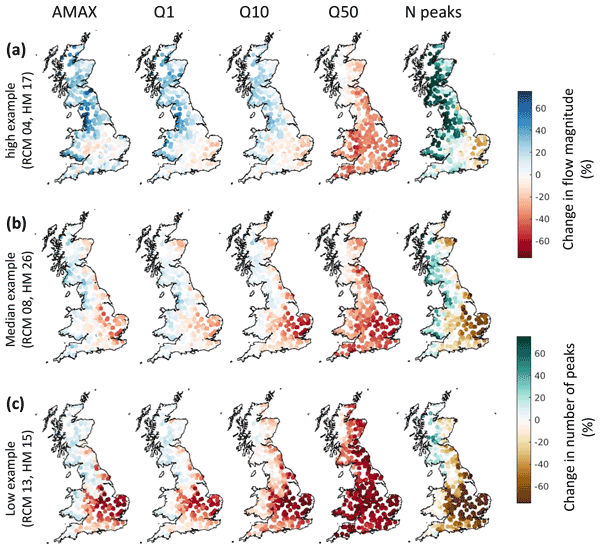
Rosanna A. Lane, Gemma Coxon, Jim Freer, Jan Seibert, and Thorsten Wagener
Hydrol. Earth Syst. Sci., 26, 5535–5554, https://doi.org/10.5194/hess-26-5535-2022, https://doi.org/10.5194/hess-26-5535-2022, 2022
Short summary
Short summary
This study modelled the impact of climate change on river high flows across Great Britain (GB). Generally, results indicated an increase in the magnitude and frequency of high flows along the west coast of GB by 2050–2075. In contrast, average flows decreased across GB. All flow projections contained large uncertainties; the climate projections were the largest source of uncertainty overall but hydrological modelling uncertainties were considerable in some regions.
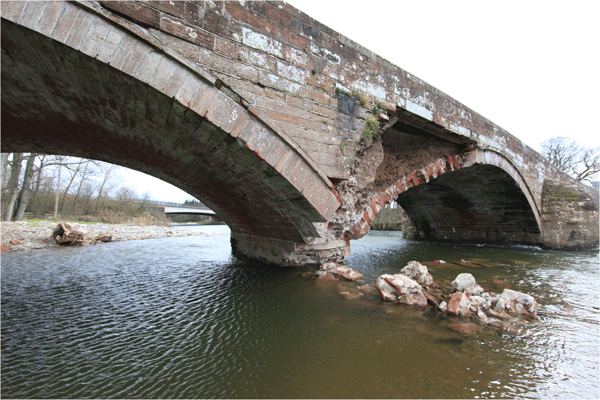
Enrico Tubaldi, Christopher J. White, Edoardo Patelli, Stergios Aristoteles Mitoulis, Gustavo de Almeida, Jim Brown, Michael Cranston, Martin Hardman, Eftychia Koursari, Rob Lamb, Hazel McDonald, Richard Mathews, Richard Newell, Alonso Pizarro, Marta Roca, and Daniele Zonta
Nat. Hazards Earth Syst. Sci., 22, 795–812, https://doi.org/10.5194/nhess-22-795-2022, https://doi.org/10.5194/nhess-22-795-2022, 2022
Short summary
Short summary
Bridges are critical infrastructure components of transport networks. A large number of these critical assets cross or are adjacent to waterways and are therefore exposed to the potentially devastating impact of floods. This paper discusses a series of issues and areas where improvements in research and practice are required in the context of risk assessment and management of bridges exposed to flood hazard, with the ultimate goal of guiding future efforts in improving bridge flood resilience.
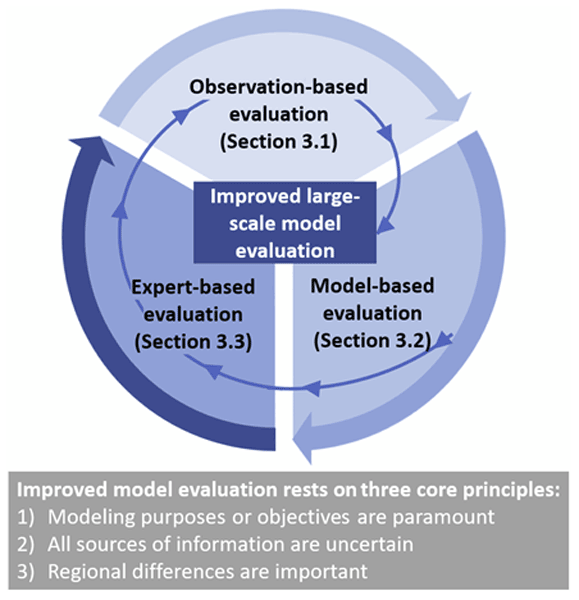
Tom Gleeson, Thorsten Wagener, Petra Döll, Samuel C. Zipper, Charles West, Yoshihide Wada, Richard Taylor, Bridget Scanlon, Rafael Rosolem, Shams Rahman, Nurudeen Oshinlaja, Reed Maxwell, Min-Hui Lo, Hyungjun Kim, Mary Hill, Andreas Hartmann, Graham Fogg, James S. Famiglietti, Agnès Ducharne, Inge de Graaf, Mark Cuthbert, Laura Condon, Etienne Bresciani, and Marc F. P. Bierkens
Geosci. Model Dev., 14, 7545–7571, https://doi.org/10.5194/gmd-14-7545-2021, https://doi.org/10.5194/gmd-14-7545-2021, 2021
Short summary
Short summary
Groundwater is increasingly being included in large-scale (continental to global) land surface and hydrologic simulations. However, it is challenging to evaluate these simulations because groundwater is
hiddenunderground and thus hard to measure. We suggest using multiple complementary strategies to assess the performance of a model (
model evaluation).
Cited articles
Aerts, J. C. J. H., Bates, P. D., Botzen, W. J. W. de Bruijn, J., Hall, J. W., van den Hurk, B., Kreibich, H., Merz, B., Muis, S., Mysiak, J., Tate, E., and Berkhout, F.: Exploring the limits and gaps of flood adaptation, Nat. Water 2, 719–728, https://doi.org/10.1038/s44221-024-00274-x, 2024.
Andrews, F. and Guillaume, J.: Hydromad: hydrological model assessment and development (R package; version 0.9-20), https://hydromad.github.io (last accessed: March 2026), 2014.
Apel, H., Thieken, A. H., Merz, B., and Blöschl, G.: Flood risk assessment and associated uncertainty, Nat. Hazards Earth Syst. Sci., 4, 295–308, https://doi.org/10.5194/nhess-4-295-2004, 2004.
Apel, H., Merz, B., and Thieken, A. H.: Quantification of uncertainties in flood risk assessments, Int. J. River Basin Manag., 6, https://doi.org/10.1080/15715124.2008.9635344, 2008.
Arino, O., Ramos Perez, J. J., Kalogirou, V., Bontemps, S., Defourny, P., and Van Bogaert, E.: Global Land Cover Map for 2009 (GlobCover 2009), https://doi.org/10.1594/PANGAEA.787668, 2012.
Arribas, A., Fairgrieve, R., Dhu, T., Bell, J. Cornforth, R., Gooley, G., Hilson, C. J., Luers, A., Shepherd, T. G., Street, R., and Wood, N.: Climate risk assessment needs urgent improvement, Nat. Commun., 13, 4326, https://doi.org/10.1038/s41467-022-31979-w, 2022.
Becher, O., Pant, R., Verschuur, J., Mandal, A., Paltan, H., Lawless, M., Raven, E., and Hall, J.: A multi-hazard risk framework to stress-test water supply systems to climate-related disruptions, Earth's Future, 11, https://doi.org/10.1029/2022EF002946, 2023.
Cammerer, H., Thieken, A. H., and Lammel, J.: Adaptability and transferability of flood loss functions in residential areas, Nat. Hazards Earth Syst. Sci., 13, 3063–3081, https://doi.org/10.5194/nhess-13-3063-2013, 2013.
CRED-UNDRR: The human cost of disasters: an overview of the last 20 years (2000–2019), https://www.undrr.org/publication/human-cost-disasters-overview-last-20~years-2000-2019 (last accessed: March 2026), 2020.
Darlington, C., Raikes, J., Henstra, D., Thistlethwaite, J., and Raven, E. K.: Mapping current and future flood exposure using a 5 m flood model and climate change projections, Nat. Hazards Earth Syst. Sci., 24, 699–714, https://doi.org/10.5194/nhess-24-699-2024, 2024.
Dawkins, L. C., Bernie, D. J., Pianosi, F., Lowe, J. A., and Economou, T.: Quantifying uncertainty and sensitivity in climate risk assessments: Varying hazard, exposure and vulnerability modelling choices, Clim. Risk Manag., 40, 100511, https://doi.org/10.1016/j.crm.2023.100511, 2023.
D'Ayala, D., Wang, K., Yan, Y., Smith, H., Massam, A., Filipova, V., and Pereira, J. J.: Flood vulnerability and risk assessment of urban traditional buildings in a heritage district of Kuala Lumpur, Malaysia, Nat. Hazards Earth Syst. Sci., 20, 2221–2241, https://doi.org/10.5194/nhess-20-2221-2020, 2020.
de Moel, H., Bouwer, L. M., and Aerts, J. C. J. H.: Uncertainty and sensitivity of flood risk calculations for a dike ring in the south of the Netherlands, Sci. Total Environ., 473–474, https://doi.org/10.1016/j.scitotenv.2013.12.015, 2014.
Déroche, M.-S.: Invited perspectives: An insurer's perspective on the knowns and unknowns in natural hazard risk modelling, Nat. Hazards Earth Syst. Sci., 23, 251–259, https://doi.org/10.5194/nhess-23-251-2023, 2023.
Devitt, L., Neal, J., Coxon, G., Savage, J., and Wagener, T.: Flood hazard potential reveals global floodplain settlement patterns, Nat. Commun., 14, 2801, https://doi.org/10.1038/s41467-023-38297-9, 2023.
EC JRC (European Commission Joint Research Centre): PESETA programme – River floods: https://joint-research-centre.ec.europa.eu/projects-and-activities/peseta-climate-change-projects/jrc-peseta-iv/river-floods_en, last accessed: March 2026.
Franco, G., Becker, J. F., and Arguimbau, N.: Evaluation methods of flood risk models in the (re)insurance industry, Water Security, 11, https://doi.org/10.1016/j.wasec.2020.100069, 2020.
Galloway, E., Massam, A., Allard, J., Oldham, P., Sarailidis, G., Catto., J., Germon-Duret, C., and Young, P.: Catastrophe risk models as quantitative tools for climate change loss and damage: A demonstration for flooding Malawi, Vietnam, and the Philippines, Journal of Catastrophe Risk and Resilience, https://doi.org/10.63024/0y4e-cdqp, 2025.
Grossi, P. and Kunreuther, H.: Catastrophe Modeling: A New Approach to Managing Risk, Kluwer Academic Publishers, https://doi.org/10.1007/b100669, 2005.
Hosseini-Shakib, I., Alipour, A., Seiyon Lee, B., Srikrishnan, V., Nicholas, R. E., Keller, K., and Sharma, S.: What drives uncertainty surrounding riverine flood risks?, J. Hydrol., 634, 131055, https://doi.org/10.1016/j.jhydrol.2024.131055, 2024.
Jakeman, A. J., Littlewood, I. G., and Whitehead, P. G.: Computation of the instantaneous unit hydrograph and identifiable component flows with application to two small upland catchments, J. Hydrol., 117, 275–300, https://doi.org/10.1016/0022-1694(90)90097-H, 1990.
Jongman, B., Kreibich, H., Apel, H., Barredo, J. I., Bates, P. D., Feyen, L., Gericke, A., Neal, J., Aerts, J. C. J. H., and Ward, P. J.: Comparative flood damage model assessment: towards a European approach, Nat. Hazards Earth Syst. Sci., 12, 3733–3752, https://doi.org/10.5194/nhess-12-3733-2012, 2012.
Kaczmarska, J., Jewson, S., and Bellone, E.: Quantifying the sources of simulation uncertainty in natural catastrophe models, Stoch. Env. Res. Risk A., 32, https://doi.org/10.1007/s00477-017-1393-0, 2018.
Kay, L. A., Booth, N., Lamb, R., Raven, E., Schaller, N., and Sparrow, S.: Flood event attribution and damage estimation using national-scale grid-based modelling: Winter 2013/2014 in Great Britain, Int. J. Climatol., 38, 5205–5219, https://doi.org/10.1002/joc.5721, 2018.
Keef, C., Tawn, J. A., and Lamb, R.: Estimating the probability of widespread flood events, Environmetrics, 24, 13–21, https://doi.org/10.1002/env.2190, 2013.
Kjeldsen, T. R., Jones, D. A., and Bayliss, A. C.: Improving the FEH statistical procedures for flood frequency estimation, Science Report SC050050, Environment Agency of England and Wales, ISBN 978-1-84432-920-5, 2008.
Kreibich, H., Van Loon, A. F., Schröter, K., et al.: The challenge of unprecedented floods and droughts in risk management, Nature, 608, 80–86, https://doi.org/10.1038/s41586-022-04917-5, 2022.
Lamb, R., Crossley, M., and Waller, S.: A fast two-dimensional floodplain inundation model, P. I. Cicil Eng.-Wat. M., 162, 363–370, https://doi.org/10.1680/wama.2009.162.6.363, 2009.
Lamb, R., Keef, C., Tawn, J., Laeger, S., Meadowcroft, I., Surendran, S., Dunning, P., and Batstone, C.: A new method to assess the risk of local and widespread flooding on rivers and coasts, J. Flood Risk Manag., 3, https://doi.org/10.1111/j.1753 318X.2010.01081.x, 2010.
Lamb, R., Aspinall, W., Odbert, H., and Wagener, T.: Vulnerability of bridges to scour: insights from an international expert elicitation workshop, Nat. Hazards Earth Syst. Sci., 17, 1393–1409, https://doi.org/10.5194/nhess-17-1393-2017, 2017.
Lenton, T. M., Held, H., Kriegler, E., Hall, J. W., Lucht, W., Rahmstorf, S., and Schellnhuber, H. J.: Tipping elements in the Earth's climate system, P. Natl. Acad. Sci. USA, 105, 1786–1793, https://doi.org/10.1073/pnas.0705414105, 2008.
Lighthill Risk Network: Flood Research Needs of the (Re)insurance sector, https://lighthillrisknetwork.org/reports/ (last access: March 2026), 2019.
Lo Piano, S., Sheikholeslami, R., Puy, A., and Saltelli, A.: Unpacking the modelling process via sensitivity auditing, Futures, 144, 103041, https://doi.org/10.1016/j.futures.2022.103041, 2022.
Maqsood, T., Wehner, M., Ryu, H., Edwards, M., Dale, K., and Miller, V.: GAR15 Regional Vulnerability Functions: Reporting on the UNISDR/GA SE Asian Regional Workshop on Structural Vulnerability Models for the GAR Global Risk Assessment, 11–14 November 2013, Geoscience Australia, Canberra, Australia, Geoscience Australia, [online], https://doi.org/10.11636/Record.2014.038, 2014.
Metin, A. D., Dung, N. V., Schröter, K., Guse, B., Apel, H., Kreibich, H., Vorogushyn, S., and Merz, B.: How do changes along the risk chain affect flood risk?, Nat. Hazards Earth Syst. Sci., 18, 3089–3108, https://doi.org/10.5194/nhess-18-3089-2018, 2018.
Merz, B., Blöschl, G., Vorogushyn, S., Dottori, F., Aerts, J. C., Bates, P., Bertola, M., Kemter, M., Kreibich, H., Lall, U., and Macdonald, E.: Causes, impacts and patterns of disastrous river floods, Nat. Rev. Earth Environ., 2, 592–609, https://doi.org/10.1038/s43017-021-00195-3, 2021.
Merz, B., Blöschl, G., Jüpner, R., Kreibich, H., Schröter, K., and Vorogushyn, S.: Invited perspectives: safeguarding the usability and credibility of flood hazard and risk assessments, Nat. Hazards Earth Syst. Sci., 24, 4015–4030, https://doi.org/10.5194/nhess-24-4015-2024, 2024.
Mitchell-Wallace, K., Jones, M., Hillier, J., and Foote, M.: Natural catastrophe risk management and modelling: A practitioner's guide, John Wiley & Sons, https://doi.org/10.1002/9781118906057, 2017.
Molinari, D., De Bruijn, K. M., Castillo-Rodriìxguez, J. T., Aronica, G. T., and Bouwer, L. M.: Validation of flood risk models: Current practice and possible improvements, Int. J. Disast. Risk Re., 33, 441–448, https://doi.org/10.1016/j.ijdrr.2018.10.022, 2019.
Morris, M. D.: Factorial Sampling Plans for Preliminary Computational Experiments, Technometrics, 33, 161–174, https://doi.org/10.1080/00401706.1991.10484804, 1991.
O'Hagan, A., Buck, C., Daneshkhah, A., Eiser, J. R., Garthwaite, P. H., Jenkinson, D. J., Oakley, J. E., and Rakow, T.: Uncertain Judgements: Eliciting Experts' Probabilities, Wiley, https://doi.org/10.1002/0470033312, 2006.
Otto, F. E. L. and Raju, E.: Harbingers of decades of unnatural disasters, Commun. Earth Environ., 4, 280, https://doi.org/10.1038/s43247-023-00943-x, 2023.
Page, T., Smith, P., Beven, K., Pianosi, F., Sarrazin, F., Almeida, S., Holcombe, L., Freer, J., Chappell, N., and Wagener, T.: Technical note: The CREDIBLE Uncertainty Estimation (CURE) toolbox: facilitating the communication of epistemic uncertainty, Hydrol. Earth Syst. Sci., 27, 2523–2534, https://doi.org/10.5194/hess-27-2523-2023, 2023.
Paleari, L. and Confalonieri, R.: Sensitivity analysis of a sensitivity analysis: We are likely overlooking the impact of distributional assumptions, Ecol. Model., 340, 57–63, https://doi.org/10.1016/j.ecolmodel.2016.09.008, 2016.
Paprotny, D., Hart, C. M. P., and Morales-Nápoles, O.: Evolution of flood protection levels and flood vulnerability in Europe since 1950 estimated with vine-copula models, Nat. Hazards, 121, 6155–6184, https://doi.org/10.1007/s11069-024-07039-5, 2025.
Penning-Rowsell, E., Priest, S., Parker, D., Morris, J., Tunstall, S., Viavattene, C., Chatterton, J., and Owen, D.: Flood and Coastal Erosion Risk Management: A Manual for Economic Appraisal, 1st edn., Routledge, London, https://doi.org/10.4324/9780203066393, 2014.
Pianosi, F. and Wagener, T.: A simple and efficient method for global sensitivity analysis based on cumulative distribution functions, Environ. Modell. Softw., 67, 1–11, https://doi.org/10.1016/j.envsoft.2015.01.004, 2015.
Pianosi, F. and Wagener, T.: Distribution-based sensitivity analysis from a generic input-output sample, Environ. Modell. Softw., 108, https://doi.org/10.1016/j.envsoft.2018.07.019, 2018.
Pianosi, F., Sarrazin, F., and Wagener, T.: A Matlab toolbox for Global Sensitivity Analysis, Environ. Modell. Softw., 70, 80–85, https://doi.org/10.1016/j.envsoft.2015.04.009, 2015.
Pianosi, F., Beven, K., Freer, J. W., Hall, J., Rougier, J., Stephenson, D. B., and Wagener, T.: Sensitivity analysis of environmental models: A systematic review with practical workflow, Environ. Model. Softw., 79, 214–232, https://doi.org/10.1016/j.envsoft.2016.02.008, 2016.
Saha, S., Moorthi, S., Pan, H.-L., Wu, X., Wang, J., Nadiga, S., Tripp, P., Kistler, R., Woollen, J., et al.: The NCEP climate forecast system reanalysis, B. Am. Meteorol. Soc., 91, 1015–1058, https://doi.org/10.1175/2010BAMS3001.1, 2010.
Saltelli, A., Ratto, M., Andres, T., Campolongo, F., Cariboni, J., Gatelli, D., Saisana, M., and Tarantola, S.: Global Sensitivity Analysis, The Primer, Wiley, https://doi.org/10.1002/9780470725184, 2007.
Saltelli, A., Aleksankina, K., Becker, W., Fennell, P., Ferretti, F., Holst, N., Li, S., and Wu, Q.: Why so many published sensitivity analyses are false: A systematic review of sensitivity analysis practices, Environ. Modell. Softw., 114, 29–39, https://doi.org/10.1016/j.envsoft.2019.01.012, 2019.
Sarailidis, G.: Uncertainty quantification and attribution in flood risk modelling, PhD Thesis, University of Bristol, https://hdl.handle.net/1983/df451ec1-2e9d-42ee-8977-dc10bac48ca3 (last access: March 2026), 2023.
Sarrazin, F. J., Pianosi, F., and Wagener, T.: Global Sensitivity Analysis of environmental models: Convergence and validation, Environ. Modell. Softw., 79, 135–152, https://doi.org/10.1016/j.envsoft.2016.02.005, 2016.
Savage, J., Pianosi, F., Bates, P., Freer, J., and Wagener, T.: Quantifying the importance of spatial resolution and other factors through global sensitivity analysis of a flood inundation model, Water Resour. Res., 52, 9146–9163, https://doi.org/10.1002/2015WR018198, 2016.
Scussolini, P., Aerts, J. C. J. H., Jongman, B., Bouwer, L. M., Winsemius, H. C., de Moel, H., and Ward, P. J.: FLOPROS: an evolving global database of flood protection standards, Nat. Hazards Earth Syst. Sci., 16, 1049–1061, https://doi.org/10.5194/nhess-16-1049-2016, 2016.
Song, X., Zhang, J., Zhan, C., Xuan, Y., Ye, M., and Xu, C.: Global sensitivity analysis in hydrological modeling: review of concepts, methods, theoretical framework, and applications, J. Hydrol., 523, 739–757, https://doi.org/10.1016/j.jhydrol.2015.02.013, 2015.
Sudret, B.: Global sensitivity analysis using polynomial chaos expansions, Reliab. Eng. Syst. Safe., 93, 964–979, https://doi.org/10.1007/s00366-023-01851-6, 2008.
Tate, E., Muñoz, C., and Suchan, J.: Uncertainty and Sensitivity Analysis of the HAZUS-MH Flood Model, Nat. Hazards Rev., 16, https://doi.org/10.1061/(ASCE)NH.1527-6996.0000167, 2014.
Tesselaar, M., Botzen, W. J. W., Robinson, P. J. Jeroen, Aerts, C. J. H., and Zhou, F.: Charity hazard and the flood insurance protection gap: An EU scale assessment under climate change, Ecol. Econ., 193, https://doi.org/10.1016/j.ecolecon.2021.107289, 2022.
Vousdoukas, M. I., Bouziotas, D., Giardino, A., Bouwer, L. M., Mentaschi, L., Voukouvalas, E., and Feyen, L.: Understanding epistemic uncertainty in large-scale coastal flood risk assessment for present and future climates, Nat. Hazards Earth Syst. Sci., 18, 2127–2142, https://doi.org/10.5194/nhess-18-2127-2018, 2018.
Wagener, T., Reinecke, R., and Pianosi, F.: On the evaluation of climate change impact models, WIREs Clim. Change, 13, https://doi.org/10.1002/wcc.772, 2022.
Ward, P. J., Jongman, B., Salamon, P., Simpson, A., Bates, P., De Groeve, T., Muis, S., de Perez, E. C., Rudari, R., Trigg, M. A., and Winsemius, H. C.: Usefulness and limitations of global flood risk models, Nat. Clim. Change, 5, 712–715, https://doi.org/10.1038/nclimate2742, 2015.
Wing, O. E. J., Pinter, N., Bates, P. D., and Kousky, C.: New insights into US flood vulnerability revealed from flood insurance big data, Nat. Commun., 11, 1444, https://doi.org/10.1038/s41467-020-15264-2, 2020.
Winter, B., Schneeberger, K., Huttenlau, M., and Stötter, J.: Sources of uncertainty in a probabilistic flood risk model, Nat. Hazards, 91, 431–446, https://doi.org/10.1007/s11069-017-3135-5, 2018.
Yukimoto, S. Kawai, H., Koshioro, T., Oshima, N., Yoshida, K., Urakawa, S., Tsujino, H., Deushi, M., Tanaka, T., Hosaka, M., Yabu, S., Yoshimura, H., Shindo, E., Mizuta, R., Obata, A., Adachi, Y., and Ishii, M.: The Meteorological Research Institute Earth System Model Version 2.0, MRI-ESM2.0: Description and Basic Evaluation of the Physical Component, J. Meteorol. Soc.Jpn., 2019-051, https://doi.org/10.2151/jmsj.2019-051, 2019.
Zobler, L.: Global Soil Types, 1-Degree Grid (Zobler) (Version 1), ORNL Distributed Active Archive Center, https://doi.org/10.3334/ORNLDAAC/418, 1999.
Short summary
Mathematical modelling is essential to support flood risk management. As these models simulate complex interactions between climate, the natural and the built environment, they unavoidably embed a range of simplifying assumptions. In this paper, we propose a more rigorous approach to analyse the impact of uncertain assumptions on modelling results. This is important to improve model transparency and set priorities for improving models.
Mathematical modelling is essential to support flood risk management. As these models simulate...


Altmetrics
Final-revised paper
Preprint