
the Creative Commons Attribution 4.0 License.
the Creative Commons Attribution 4.0 License.
 | 19 Mar 2026
Climate and impact attribution of compound flooding induced by tropical cyclone Idai in Mozambique
Doris M. Vertegaal

Bart J. J. M. van den Hurk
Anaïs Couasnon
Natalia Aleksandrova
Tycho Bovenschen
Fernaldi Gradiyanto
Tim W. B. Leijnse
Henrique M. D. Goulart
Sanne Muis
Related authors
Coastal cities face growing flood risk from rising seas and storms. Scientists estimate dangerous water levels using satellite measurements of sea level and computer models of ocean behaviour, but the two are often combined inconsistently. We reviewed this research and found the real challenge is not merging the data, but making sure both methods measure the same thing, the same way. Solving this could lead to more reliable, consistent flood-risk estimates for coastal communities worldwide.
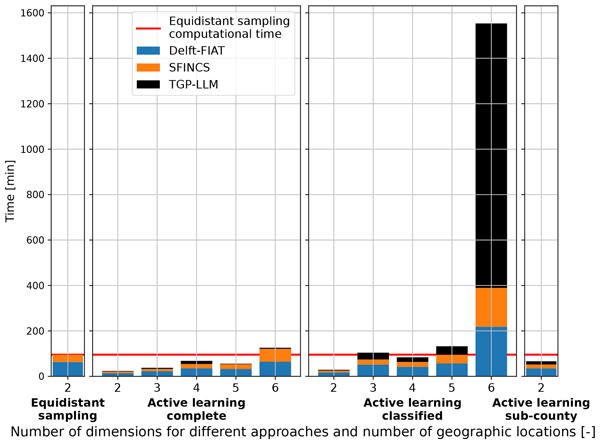
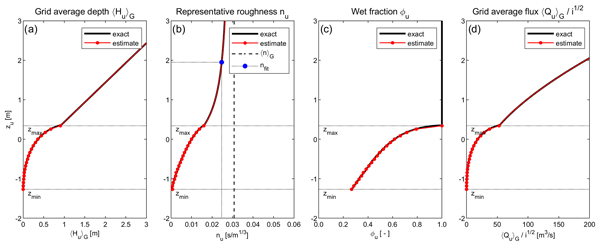
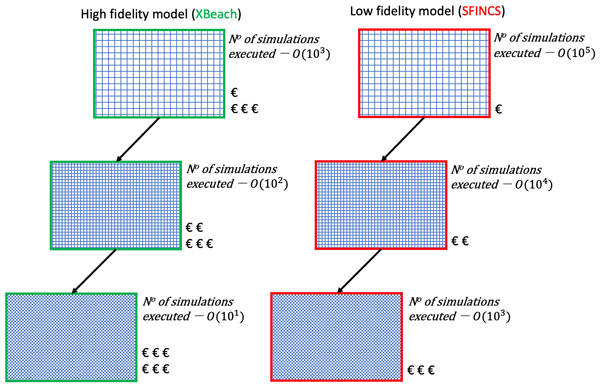
Accurate flood risk assessments are crucial for storm protection. To achieve efficiency, computational costs must be minimized. This paper introduces a novel subgrid approach for linear inertial equations (LIEs) with bed level and friction variations, implemented in the Super-Fast INundation of CoastS (SFINCS) model. Pre-processed lookup tables enhance simulation precision with lower costs. Validations show significant accuracy improvement even at coarser resolutions.
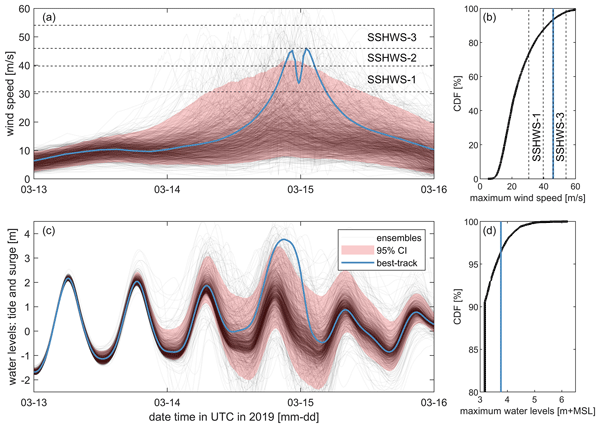
Forecasting tropical cyclones and their flooding impact is challenging. Our research introduces the Tropical Cyclone Forecasting Framework (TC-FF), enhancing cyclone predictions despite uncertainties. TC-FF generates global wind and flood scenarios, valuable even in data-limited regions. Applied to cases like Cyclone Idai, it showcases potential in bettering disaster preparation, marking progress in handling cyclone threats.

Cited articles
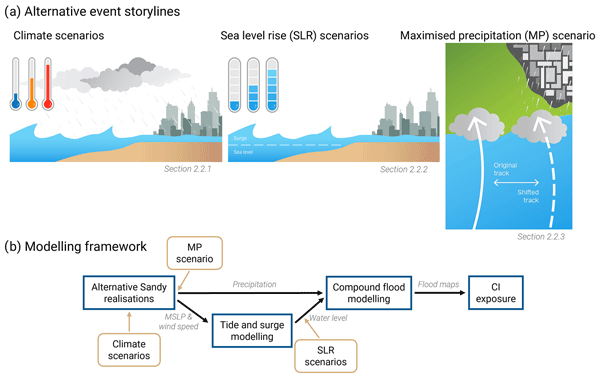
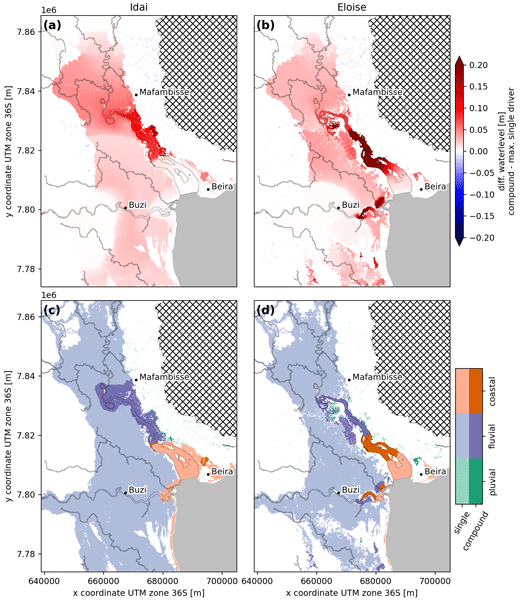
This study highlights the need to disentangle climate change effects on flood drivers using storyline attribution. Whether information is presented as change in one or multiple drivers, or as change in hazard or impact, determines the attribution statement. For compound flooding from tropical cyclone Idai, that hit Mozambique in 2019, we attribute 1–19 % of the flood hazard and 8–35 % of the damage to climate change. The attribution framework can be applied to other events worldwide.
This study highlights the need to disentangle climate change effects on flood drivers using...


