Articles | Volume 26, issue 1
https://doi.org/10.5194/nhess-26-119-2026
© Author(s) 2026. This work is distributed under
the Creative Commons Attribution 4.0 License.

Special issue:
https://doi.org/10.5194/nhess-26-119-2026
© Author(s) 2026. This work is distributed under
the Creative Commons Attribution 4.0 License.
Invited perspectives: Redefining disaster risk – the convergence of natural hazards and health crises
Nivedita Sairam

Section Hydrology, GFZ German Research Centre for Geosciences, Potsdam, Germany
Institute for Environmental Studies, Vrije Universiteit Amsterdam, De Boelelaan 1111, 1081HV, Amsterdam, the Netherlands
Related authors
Apoorva Singh, Ravikumar Guntu, Nivedita Sairam, Kasra Rafiezadeh Shahi, Anna Buch, Melanie Fischer, Chandrika Thulaseedharan Dhanya, and Heidi Kreibich
Nat. Hazards Earth Syst. Sci., 26, 103–118, https://doi.org/10.5194/nhess-26-103-2026, https://doi.org/10.5194/nhess-26-103-2026, 2026
Short summary
Short summary
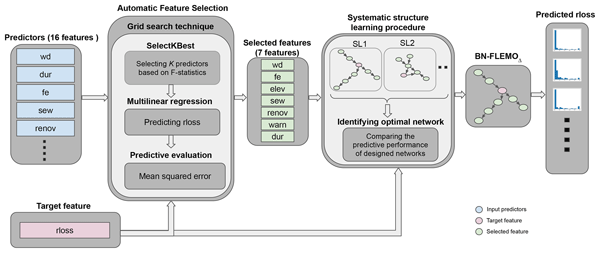
We develop novel probabilistic models to estimate flash flood losses of companies and households in Germany. Using multiple flash flood events, we identify key drivers of flash floods loss. FLEMO flash model reveals that for companies, the effectiveness of emergency measures is crucial in mitigating losses. In contrast, household benefit more from knowledge about emergency action, suggesting adaptation strategies can effectively reduce flash flood losses.
Alina Bill-Weilandt, Nivedita Sairam, Dennis Wagenaar, Kasra Rafiezadeh Shahi, Heidi Kreibich, Perrine Hamel, and David Lallemant
EGUsphere, https://doi.org/10.5194/egusphere-2025-3706, https://doi.org/10.5194/egusphere-2025-3706, 2025
Short summary
Short summary
Flooding is a major cause of agricultural loss globally. We introduce a framework for developing and evaluating flood damage models for crops. The study presents the most comprehensive review of such models for rice to date and offers practical guidance on model selection and expected errors when transferring models across regions. We provide models and lookup tables that can be used in flood risk assessments in rice-producing regions.
Kasra Rafiezadeh Shahi, Nivedita Sairam, Lukas Schoppa, Le Thanh Sang, Do Ly Hoai Tan, and Heidi Kreibich
Nat. Hazards Earth Syst. Sci., 25, 2845–2861, https://doi.org/10.5194/nhess-25-2845-2025, https://doi.org/10.5194/nhess-25-2845-2025, 2025
Short summary
Short summary
Ho Chi Minh City (HCMC) faces severe flood risks from climatic and socio-economic changes, requiring effective adaptation solutions. Flood loss estimation is crucial, but advanced probabilistic models accounting for key drivers and uncertainty are lacking. This study presents a probabilistic flood loss model with a feature selection paradigm for HCMC’s residential sector. Experiments using new survey data from flood-affected households demonstrate the model's superior performance.
Timothy Tiggeloven, Colin Raymond, Marleen C. de Ruiter, Jana Sillmann, Annegret H. Thieken, Sophie L. Buijs, Roxana Ciurean, Emma Cordier, Julia M. Crummy, Lydia Cumiskey, Kelley De Polt, Melanie Duncan, Davide M. Ferrario, Wiebke S. Jäger, Elco E. Koks, Nicole van Maanen, Heather J. Murdock, Jaroslav Mysiak, Sadhana Nirandjan, Benjamin Poschlod, Peter Priesmeier, Nivedita Sairam, Pia-Johanna Schweizer, Tristian R. Stolte, Marie-Luise Zenker, James E. Daniell, Alexander Fekete, Christian M. Geiß, Marc J. C. van den Homberg, Sirkku K. Juhola, Christian Kuhlicke, Karen Lebek, Robert Šakić Trogrlić, Stefan Schneiderbauer, Silvia Torresan, Cees J. van Westen, Judith N. Claassen, Bijan Khazai, Virginia Murray, Julius Schlumberger, and Philip J. Ward
EGUsphere, https://doi.org/10.5194/egusphere-2025-2771, https://doi.org/10.5194/egusphere-2025-2771, 2025
Short summary
Short summary
Natural hazards like floods, earthquakes, and landslides are often interconnected which may create bigger problems than when they occur alone. We studied expert discussions from an international conference to understand how scientists and policymakers can better prepare for these multi-hazards and use new technologies to protect its communities while contributing to dialogues about future international agreements beyond the Sendai Framework and supporting global sustainability goals.
Anna Buch, Dominik Paprotny, Kasra Rafiezadeh Shahi, Heidi Kreibich, and Nivedita Sairam
Nat. Hazards Earth Syst. Sci., 25, 2437–2453, https://doi.org/10.5194/nhess-25-2437-2025, https://doi.org/10.5194/nhess-25-2437-2025, 2025
Short summary
Short summary
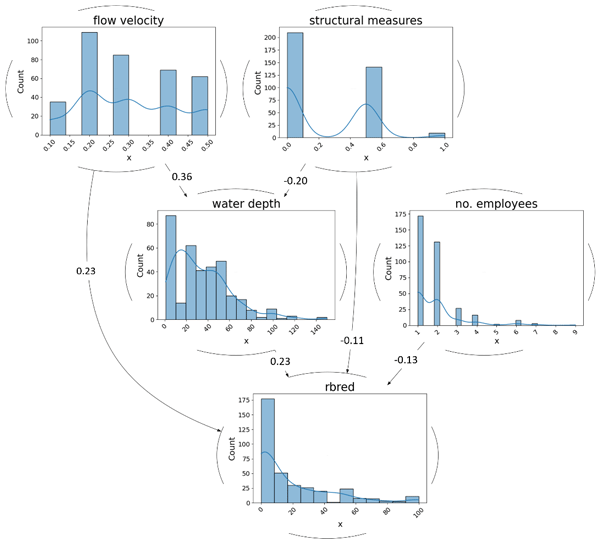
Many households in Vietnam depend on revenue from micro-businesses (shop houses). However, losses caused by regular flooding are not modelled. Business turnover, building age, and water depth were found to be the main drivers of flood losses of micro-businesses. We built and validated probabilistic models (non-parametric Bayesian networks) that estimate flood losses of micro-businesses. The results help with flood risk management and adaption decision making for micro-businesses.
Heidi Kreibich, Kai Schröter, Giuliano Di Baldassarre, Anne F. Van Loon, Maurizio Mazzoleni, Guta Wakbulcho Abeshu, Svetlana Agafonova, Amir AghaKouchak, Hafzullah Aksoy, Camila Alvarez-Garreton, Blanca Aznar, Laila Balkhi, Marlies H. Barendrecht, Sylvain Biancamaria, Liduin Bos-Burgering, Chris Bradley, Yus Budiyono, Wouter Buytaert, Lucinda Capewell, Hayley Carlson, Yonca Cavus, Anaïs Couasnon, Gemma Coxon, Ioannis Daliakopoulos, Marleen C. de Ruiter, Claire Delus, Mathilde Erfurt, Giuseppe Esposito, Didier François, Frédéric Frappart, Jim Freer, Natalia Frolova, Animesh K. Gain, Manolis Grillakis, Jordi Oriol Grima, Diego A. Guzmán, Laurie S. Huning, Monica Ionita, Maxim Kharlamov, Dao Nguyen Khoi, Natalie Kieboom, Maria Kireeva, Aristeidis Koutroulis, Waldo Lavado-Casimiro, Hong-Yi Li, Maria Carmen LLasat, David Macdonald, Johanna Mård, Hannah Mathew-Richards, Andrew McKenzie, Alfonso Mejia, Eduardo Mario Mendiondo, Marjolein Mens, Shifteh Mobini, Guilherme Samprogna Mohor, Viorica Nagavciuc, Thanh Ngo-Duc, Huynh Thi Thao Nguyen, Pham Thi Thao Nhi, Olga Petrucci, Nguyen Hong Quan, Pere Quintana-Seguí, Saman Razavi, Elena Ridolfi, Jannik Riegel, Md Shibly Sadik, Nivedita Sairam, Elisa Savelli, Alexey Sazonov, Sanjib Sharma, Johanna Sörensen, Felipe Augusto Arguello Souza, Kerstin Stahl, Max Steinhausen, Michael Stoelzle, Wiwiana Szalińska, Qiuhong Tang, Fuqiang Tian, Tamara Tokarczyk, Carolina Tovar, Thi Van Thu Tran, Marjolein H. J. van Huijgevoort, Michelle T. H. van Vliet, Sergiy Vorogushyn, Thorsten Wagener, Yueling Wang, Doris E. Wendt, Elliot Wickham, Long Yang, Mauricio Zambrano-Bigiarini, and Philip J. Ward
Earth Syst. Sci. Data, 15, 2009–2023, https://doi.org/10.5194/essd-15-2009-2023, https://doi.org/10.5194/essd-15-2009-2023, 2023
Short summary
Short summary
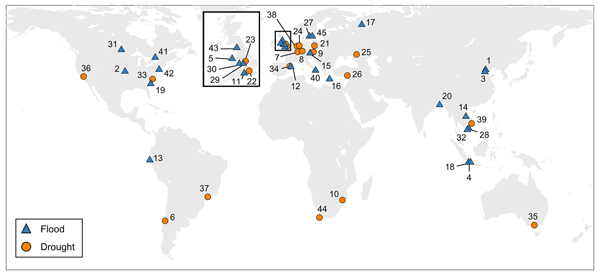
As the adverse impacts of hydrological extremes increase in many regions of the world, a better understanding of the drivers of changes in risk and impacts is essential for effective flood and drought risk management. We present a dataset containing data of paired events, i.e. two floods or two droughts that occurred in the same area. The dataset enables comparative analyses and allows detailed context-specific assessments. Additionally, it supports the testing of socio-hydrological models.
Thulasi Vishwanath Harish, Nivedita Sairam, Liang Emlyn Yang, Matthias Garschagen, and Heidi Kreibich
Nat. Hazards Earth Syst. Sci., 23, 1125–1138, https://doi.org/10.5194/nhess-23-1125-2023, https://doi.org/10.5194/nhess-23-1125-2023, 2023
Short summary
Short summary
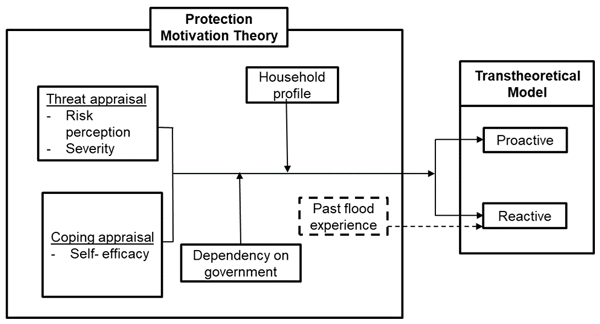
Coastal Asian cities are becoming more vulnerable to flooding. In this study we analyse the data collected from flood-prone houses in Ho Chi Minh City to identify what motivates the households to adopt flood precautionary measures. The results revealed that educating the households about the available flood precautionary measures and communicating the flood protection measures taken by the government encourage the households to adopt measures without having to experience multiple flood events.
Yiting Zhu, Marleen de Ruiter, Sophie Buijs, and Nicole van Maanen
EGUsphere, https://doi.org/10.5194/egusphere-2026-94, https://doi.org/10.5194/egusphere-2026-94, 2026
This preprint is open for discussion and under review for Natural Hazards and Earth System Sciences (NHESS).
Short summary
Short summary
Restoring wetlands mitigates climate change, yet fears persist that they spread mosquito-borne diseases. We mapped environmental data across Indonesia to test this. Surprisingly, we found no significant link between high conservation value and disease risk. This proves that protecting nature does not necessarily endanger public health. Our results identify safe areas for conservation, demonstrating that we can safeguard both ecosystems and human communities simultaneously.
Apoorva Singh, Ravikumar Guntu, Nivedita Sairam, Kasra Rafiezadeh Shahi, Anna Buch, Melanie Fischer, Chandrika Thulaseedharan Dhanya, and Heidi Kreibich
Nat. Hazards Earth Syst. Sci., 26, 103–118, https://doi.org/10.5194/nhess-26-103-2026, https://doi.org/10.5194/nhess-26-103-2026, 2026
Short summary
Short summary
We develop novel probabilistic models to estimate flash flood losses of companies and households in Germany. Using multiple flash flood events, we identify key drivers of flash floods loss. FLEMO flash model reveals that for companies, the effectiveness of emergency measures is crucial in mitigating losses. In contrast, household benefit more from knowledge about emergency action, suggesting adaptation strategies can effectively reduce flash flood losses.
Julius Schlumberger, Tristian R. Stolte, Helena M. Garcia, Antonia Sebastian, Wiebke Jäger, Philip J. Ward, Marleen C. de Ruiter, Robert Šakić Trogrlić, Annegien Tijssen, and Mariana Madruga de Brito
EGUsphere, https://doi.org/10.5194/egusphere-2025-6132, https://doi.org/10.5194/egusphere-2025-6132, 2026
This preprint is open for discussion and under review for Natural Hazards and Earth System Sciences (NHESS).
Short summary
Short summary
Flood vulnerability is too often analysed for one moment in time (static), whereas vulnerability is highly dynamic. We reviewed 67 articles for their flood vulnerability methodologies and found that traditional methods for unraveling flood vulnerability deal differently with dynamic vulnerability. Each method seems to lend itself well for specific concepts of dynamics and different aspects of vulnerability. We recommend to use the complementary strengths of these approaches to improve the field.
Nicole van Maanen, Marleen de Ruiter, Wiebke Jäger, Veronica Casartelli, Roxana Ciurean, Noemi Padrón-Fumero, Anne Sophie Daloz, David Geurts, Stefania Gottardo, Stefan Hochrainer-Stigler, Abel López Diez, Jaime Díaz Pacheco, Pedro Dorta Antequera, Tamara Febles Arévalo, Sara García González, Raúl Hernández-Martín, Carmen Alvarez-Albelo, Juan José Diaz-Hernandez, Lin Ma, Letizia Monteleone, Karina Reiter, Tristian Stolte, Robert Šakić Trogrlić, Silvia Torresan, Sharon Tatman, David Romero Manrique de Lara, Yeray Hernández González, and Philip J. Ward
Earth Syst. Dynam., 16, 2295–2311, https://doi.org/10.5194/esd-16-2295-2025, https://doi.org/10.5194/esd-16-2295-2025, 2025
Short summary
Short summary
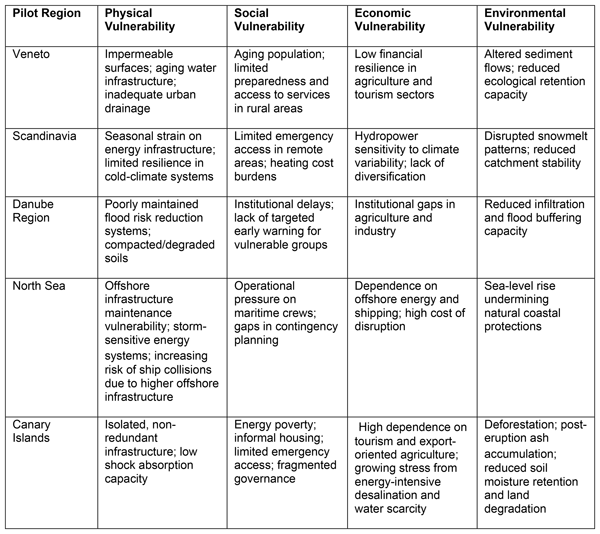
Disaster risk management faces growing challenges from multiple, changing hazards. Interviews with stakeholders in five European regions reveal that climate change, urban growth, and socio-economic shifts increase vulnerability and exposure. Measures to reduce one risk can worsen others, highlighting the need for better coordination. The study calls for flexible, context-specific strategies that connect scientific risk assessments with real-world decision-making.
Philip J. Ward, Sophie Buijs, Roxana Ciurean, Judith Claassen, James Daniell, Kelley De Polt, Melanie Duncan, Stefania Gottardo, Stefan Hochrainer-Stigler, Robert Šakić Trogrlić, Julius Schlumberger, Timothy Tiggeloven, Silvia Torresan, Nicole van Maanen, Andrew Warren, Carmen D. Álvarez-Albelo, Vanessa Banks, Benjamin Blanz, Veronica Casartelli, Jordan Correa González, Julia Crummy, Anne Sophie Daloz, Marleen C. de Ruiter, Juan José Díaz-Hernández, Jaime Díaz-Pacheco, Pedro Dorta Antequera, Davide Ferrario, Sara García-González, Joel Gill, Raúl Hernández-Martín, Wiebke Jäger, Abel López-Díez, Lin Ma, Jaroslav Mysiak, Diep Ngoc Nguyen, Noemi Padrón Fumero, Eva-Cristina Petrescu, Karina Reiter, Jana Sillmann, and Lara Smale
EGUsphere, https://doi.org/10.5194/egusphere-2025-5897, https://doi.org/10.5194/egusphere-2025-5897, 2025
This preprint is open for discussion and under review for Natural Hazards and Earth System Sciences (NHESS).
Short summary
Short summary
Disasters often result from interactions between different hazards, like floods triggering landslides, or earthquakes followed by tropical cyclones, so-called multi-hazards. People and societies are increasingly exposed and vulnerable to these multi-hazards. Assessing these aspects is referred to as multi-(hazard-)risk assessment and management. In this paper we synthesise key learnings from the MYRIAD-EU project, reflecting on progress and challenges faced in addressing multi-(hazard-)risk.
Gwendoline Ducros, Timothy Tiggeloven, Lin Ma, Anne Sophie Daloz, Nina Schuhen, Judith Claassen, and Marleen C. de Ruiter
Nat. Hazards Earth Syst. Sci., 25, 4693–4712, https://doi.org/10.5194/nhess-25-4693-2025, https://doi.org/10.5194/nhess-25-4693-2025, 2025
Short summary
Short summary
Our study finds that heatwave, drought and wildfire events occurring simultaneously in Scandinavia are pronounced in the summer months; and the heat-drought 2018 event led to a drop in gross domestic product, affecting agriculture and forestry imports, further impacting Europe's trade balance. This research shows the importance of ripple effects of multi-hazard, and that forest management and adaptation measures are vital to reducing the risks of heat-related multi-hazards in vulnerable areas.
Kai Kornuber, Emanuele Bevacqua, Mariana Madruga de Brito, Wiebke S. Jäger, Pauline Rivoire, Cassandra D. W. Rogers, Fabiola Banfi, Fulden Batibeniz, James Carruthers, Carlo de Michele, Silvia de Angeli, Cristina Deidda, Marleen C. de Ruiter, Andreas H. Fink, Henrique M. D. Goulart, Katharina Küpfer, Patrick Ludwig, Douglas Maraun, Gabriele Messori, Shruti Nath, Fiachra O’Loughlin, Joaquim G. Pinto, Benjamin Poschlod, Alexandre M. Ramos, Colin Raymond, Andreia F. S. Ribeiro, Deepti Singh, Laura Suarez Gutierrez, Philip J. Ward, and Christopher J. White
EGUsphere, https://doi.org/10.5194/egusphere-2025-4683, https://doi.org/10.5194/egusphere-2025-4683, 2025
Short summary
Short summary
Impacts from extreme weather events are becoming increasingly severe under global warming, in particular when events occur simultaneously or successively. While these complex event combinations are often difficult to analyse as impact data, early warning schemes or modelling frameworks might not be fit for purpose. In this perspective we reflect on the usability of compound event research to bridge the gap between academic research and real-world applications, by formulating a set of guidelines.
Julius Schlumberger, Robert Šakić Trogrlić, Jeroen C. J. H. Aerts, Jung-Hee Hyun, Stefan Hochrainer-Stigler, Marleen de Ruiter, and Marjolijn Haasnoot
Nat. Hazards Earth Syst. Sci., 25, 4089–4113, https://doi.org/10.5194/nhess-25-4089-2025, https://doi.org/10.5194/nhess-25-4089-2025, 2025
Short summary
Short summary
This study presents a dashboard to help decision-makers manage risks in a changing climate. Using interactive visualizations, it simplifies complex choices, even with uncertain information. Tested with 54 users of varying expertise, it enabled accurate responses to 71–80 % of questions. Users valued its scenario exploration and detailed data features. While effective, the guidance and set of visualizations could be extended and the prototype could be adapted for broader applications.
Alina Bill-Weilandt, Nivedita Sairam, Dennis Wagenaar, Kasra Rafiezadeh Shahi, Heidi Kreibich, Perrine Hamel, and David Lallemant
EGUsphere, https://doi.org/10.5194/egusphere-2025-3706, https://doi.org/10.5194/egusphere-2025-3706, 2025
Short summary
Short summary
Flooding is a major cause of agricultural loss globally. We introduce a framework for developing and evaluating flood damage models for crops. The study presents the most comprehensive review of such models for rice to date and offers practical guidance on model selection and expected errors when transferring models across regions. We provide models and lookup tables that can be used in flood risk assessments in rice-producing regions.
Kasra Rafiezadeh Shahi, Nivedita Sairam, Lukas Schoppa, Le Thanh Sang, Do Ly Hoai Tan, and Heidi Kreibich
Nat. Hazards Earth Syst. Sci., 25, 2845–2861, https://doi.org/10.5194/nhess-25-2845-2025, https://doi.org/10.5194/nhess-25-2845-2025, 2025
Short summary
Short summary
Ho Chi Minh City (HCMC) faces severe flood risks from climatic and socio-economic changes, requiring effective adaptation solutions. Flood loss estimation is crucial, but advanced probabilistic models accounting for key drivers and uncertainty are lacking. This study presents a probabilistic flood loss model with a feature selection paradigm for HCMC’s residential sector. Experiments using new survey data from flood-affected households demonstrate the model's superior performance.
Sophie L. Buijs, Inga J. Sauer, Chahan M. Kropf, Samuel Juhel, Zélie Stalhandske, and Marleen C. De Ruiter
EGUsphere, https://doi.org/10.5194/egusphere-2025-3200, https://doi.org/10.5194/egusphere-2025-3200, 2025
Short summary
Short summary
We studied how repeated disasters affect recovery across housing, health, economic systems, and governance. Our findings show that failing to recover fully between events can increase long-term risks but also offers opportunities for learning and adaptation. Understanding these dynamics can help societies plan better, reduce vulnerability, and build resilience to increasingly frequent and severe hazards.
Wiebke S. Jäger, Marleen C. de Ruiter, Timothy Tiggeloven, and Philip J. Ward
Nat. Hazards Earth Syst. Sci., 25, 2751–2769, https://doi.org/10.5194/nhess-25-2751-2025, https://doi.org/10.5194/nhess-25-2751-2025, 2025
Short summary
Short summary
Multiple hazards, occurring simultaneously or consecutively, can have more extreme impacts than single hazards. We examined the disaster records in the global emergency events database EM-DAT to better understand this phenomenon. We developed a method to identify such multi-hazards and analysed their reported impacts using statistics. Multi-hazards have accounted for a disproportionate number of the impacts, but there appear to be different archetypal patterns in which the impacts compound.
Timothy Tiggeloven, Colin Raymond, Marleen C. de Ruiter, Jana Sillmann, Annegret H. Thieken, Sophie L. Buijs, Roxana Ciurean, Emma Cordier, Julia M. Crummy, Lydia Cumiskey, Kelley De Polt, Melanie Duncan, Davide M. Ferrario, Wiebke S. Jäger, Elco E. Koks, Nicole van Maanen, Heather J. Murdock, Jaroslav Mysiak, Sadhana Nirandjan, Benjamin Poschlod, Peter Priesmeier, Nivedita Sairam, Pia-Johanna Schweizer, Tristian R. Stolte, Marie-Luise Zenker, James E. Daniell, Alexander Fekete, Christian M. Geiß, Marc J. C. van den Homberg, Sirkku K. Juhola, Christian Kuhlicke, Karen Lebek, Robert Šakić Trogrlić, Stefan Schneiderbauer, Silvia Torresan, Cees J. van Westen, Judith N. Claassen, Bijan Khazai, Virginia Murray, Julius Schlumberger, and Philip J. Ward
EGUsphere, https://doi.org/10.5194/egusphere-2025-2771, https://doi.org/10.5194/egusphere-2025-2771, 2025
Short summary
Short summary
Natural hazards like floods, earthquakes, and landslides are often interconnected which may create bigger problems than when they occur alone. We studied expert discussions from an international conference to understand how scientists and policymakers can better prepare for these multi-hazards and use new technologies to protect its communities while contributing to dialogues about future international agreements beyond the Sendai Framework and supporting global sustainability goals.
Anna Buch, Dominik Paprotny, Kasra Rafiezadeh Shahi, Heidi Kreibich, and Nivedita Sairam
Nat. Hazards Earth Syst. Sci., 25, 2437–2453, https://doi.org/10.5194/nhess-25-2437-2025, https://doi.org/10.5194/nhess-25-2437-2025, 2025
Short summary
Short summary
Many households in Vietnam depend on revenue from micro-businesses (shop houses). However, losses caused by regular flooding are not modelled. Business turnover, building age, and water depth were found to be the main drivers of flood losses of micro-businesses. We built and validated probabilistic models (non-parametric Bayesian networks) that estimate flood losses of micro-businesses. The results help with flood risk management and adaption decision making for micro-businesses.
Hunter C. Quintal, Antonia Sebastian, Marc L. Serre, Wiebke S. Jäger, and Marleen C. de Ruiter
EGUsphere, https://doi.org/10.5194/egusphere-2025-2870, https://doi.org/10.5194/egusphere-2025-2870, 2025
Short summary
Short summary
High quality weather event datasets are crucial to community preparedness and resilience. Researchers create such datasets using clustering methods, which we advance by addressing current limitation in the relationship between space and time. We propose a method to determine the appropriate factor by which to resample the spatial resolution of the data prior to clustering. Ultimately, our approach increases the ability to detect historic heatwaves over current methods.
Sophie Kaashoek, Žiga Malek, Nadia Bloemendaal, and Marleen C. de Ruiter
Nat. Hazards Earth Syst. Sci., 25, 1963–1974, https://doi.org/10.5194/nhess-25-1963-2025, https://doi.org/10.5194/nhess-25-1963-2025, 2025
Short summary
Short summary
Tropical storms are expected to get stronger all over the world, and this will have a big impact on people, buildings and important activities like growing bananas. Already, in different parts of the world, banana farms are being hurt by these storms, which makes banana prices go up and affects the people who grow them. We are not sure how these storms will affect bananas everywhere in the future. We assessed what happened to banana farms during storms in different parts of the world.
Ekta Aggarwal, Marleen C. de Ruiter, Kartikeya S. Sangwan, Rajiv Sinha, Sophie Buijs, Ranjay Shrestha, Sanjeev Gupta, and Alexander C. Whittaker
EGUsphere, https://doi.org/10.5194/egusphere-2024-3901, https://doi.org/10.5194/egusphere-2024-3901, 2025
Preprint archived
Short summary
Short summary
The occurrence of frequent floods in recent years due to changing weather, heavy rainfall, and the natural landscape, has caused major damage to lives and property. This study looks at flood risks in the Ganga Basin, focusing on the factors that cause floods, the areas affected, and the vulnerability of people. The study uses NASA's night-time lights to track human activities. This helps to show how risks are connected to expanding human activities, and changing resilience to floods.
Julius Schlumberger, Tristian Stolte, Helena Margaret Garcia, Antonia Sebastian, Wiebke Jäger, Philip Ward, Marleen de Ruiter, Robert Šakić Trogrlić, Annegien Tijssen, and Mariana Madruga de Brito
EGUsphere, https://doi.org/10.5194/egusphere-2025-850, https://doi.org/10.5194/egusphere-2025-850, 2025
Preprint archived
Short summary
Short summary
The risk flood of flood impacts is dynamic as society continuously responds to specific events or ongoing developments. We analyzed 28 studies that assess such dynamics of vulnerability. Most research uses surveys and basic statistics data, while integrated, flexible models are seldom used. The studies struggle to link specific events or developments to the observed changes. Our findings highlight needs and possible directions towards a better assessment of vulnerability dynamics.
Joshua Green, Ivan D. Haigh, Niall Quinn, Jeff Neal, Thomas Wahl, Melissa Wood, Dirk Eilander, Marleen de Ruiter, Philip Ward, and Paula Camus
Nat. Hazards Earth Syst. Sci., 25, 747–816, https://doi.org/10.5194/nhess-25-747-2025, https://doi.org/10.5194/nhess-25-747-2025, 2025
Short summary
Short summary
Compound flooding, involving the combination or successive occurrence of two or more flood drivers, can amplify flood impacts in coastal/estuarine regions. This paper reviews the practices, trends, methodologies, applications, and findings of coastal compound flooding literature at regional to global scales. We explore the types of compound flood events, their mechanistic processes, and the range of terminology. Lastly, this review highlights knowledge gaps and implications for future practices.
Heidi Kreibich, Kai Schröter, Giuliano Di Baldassarre, Anne F. Van Loon, Maurizio Mazzoleni, Guta Wakbulcho Abeshu, Svetlana Agafonova, Amir AghaKouchak, Hafzullah Aksoy, Camila Alvarez-Garreton, Blanca Aznar, Laila Balkhi, Marlies H. Barendrecht, Sylvain Biancamaria, Liduin Bos-Burgering, Chris Bradley, Yus Budiyono, Wouter Buytaert, Lucinda Capewell, Hayley Carlson, Yonca Cavus, Anaïs Couasnon, Gemma Coxon, Ioannis Daliakopoulos, Marleen C. de Ruiter, Claire Delus, Mathilde Erfurt, Giuseppe Esposito, Didier François, Frédéric Frappart, Jim Freer, Natalia Frolova, Animesh K. Gain, Manolis Grillakis, Jordi Oriol Grima, Diego A. Guzmán, Laurie S. Huning, Monica Ionita, Maxim Kharlamov, Dao Nguyen Khoi, Natalie Kieboom, Maria Kireeva, Aristeidis Koutroulis, Waldo Lavado-Casimiro, Hong-Yi Li, Maria Carmen LLasat, David Macdonald, Johanna Mård, Hannah Mathew-Richards, Andrew McKenzie, Alfonso Mejia, Eduardo Mario Mendiondo, Marjolein Mens, Shifteh Mobini, Guilherme Samprogna Mohor, Viorica Nagavciuc, Thanh Ngo-Duc, Huynh Thi Thao Nguyen, Pham Thi Thao Nhi, Olga Petrucci, Nguyen Hong Quan, Pere Quintana-Seguí, Saman Razavi, Elena Ridolfi, Jannik Riegel, Md Shibly Sadik, Nivedita Sairam, Elisa Savelli, Alexey Sazonov, Sanjib Sharma, Johanna Sörensen, Felipe Augusto Arguello Souza, Kerstin Stahl, Max Steinhausen, Michael Stoelzle, Wiwiana Szalińska, Qiuhong Tang, Fuqiang Tian, Tamara Tokarczyk, Carolina Tovar, Thi Van Thu Tran, Marjolein H. J. van Huijgevoort, Michelle T. H. van Vliet, Sergiy Vorogushyn, Thorsten Wagener, Yueling Wang, Doris E. Wendt, Elliot Wickham, Long Yang, Mauricio Zambrano-Bigiarini, and Philip J. Ward
Earth Syst. Sci. Data, 15, 2009–2023, https://doi.org/10.5194/essd-15-2009-2023, https://doi.org/10.5194/essd-15-2009-2023, 2023
Short summary
Short summary
As the adverse impacts of hydrological extremes increase in many regions of the world, a better understanding of the drivers of changes in risk and impacts is essential for effective flood and drought risk management. We present a dataset containing data of paired events, i.e. two floods or two droughts that occurred in the same area. The dataset enables comparative analyses and allows detailed context-specific assessments. Additionally, it supports the testing of socio-hydrological models.
Thulasi Vishwanath Harish, Nivedita Sairam, Liang Emlyn Yang, Matthias Garschagen, and Heidi Kreibich
Nat. Hazards Earth Syst. Sci., 23, 1125–1138, https://doi.org/10.5194/nhess-23-1125-2023, https://doi.org/10.5194/nhess-23-1125-2023, 2023
Short summary
Short summary
Coastal Asian cities are becoming more vulnerable to flooding. In this study we analyse the data collected from flood-prone houses in Ho Chi Minh City to identify what motivates the households to adopt flood precautionary measures. The results revealed that educating the households about the available flood precautionary measures and communicating the flood protection measures taken by the government encourage the households to adopt measures without having to experience multiple flood events.
Philip J. Ward, James Daniell, Melanie Duncan, Anna Dunne, Cédric Hananel, Stefan Hochrainer-Stigler, Annegien Tijssen, Silvia Torresan, Roxana Ciurean, Joel C. Gill, Jana Sillmann, Anaïs Couasnon, Elco Koks, Noemi Padrón-Fumero, Sharon Tatman, Marianne Tronstad Lund, Adewole Adesiyun, Jeroen C. J. H. Aerts, Alexander Alabaster, Bernard Bulder, Carlos Campillo Torres, Andrea Critto, Raúl Hernández-Martín, Marta Machado, Jaroslav Mysiak, Rene Orth, Irene Palomino Antolín, Eva-Cristina Petrescu, Markus Reichstein, Timothy Tiggeloven, Anne F. Van Loon, Hung Vuong Pham, and Marleen C. de Ruiter
Nat. Hazards Earth Syst. Sci., 22, 1487–1497, https://doi.org/10.5194/nhess-22-1487-2022, https://doi.org/10.5194/nhess-22-1487-2022, 2022
Short summary
Short summary
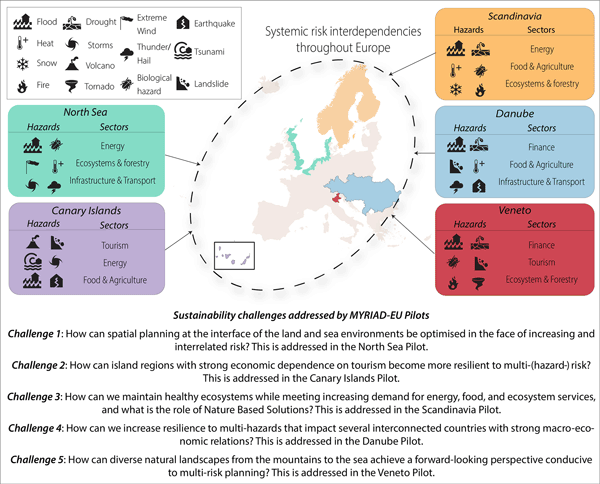
The majority of natural-hazard risk research focuses on single hazards (a flood, a drought, a volcanic eruption, an earthquake, etc.). In the international research and policy community it is recognised that risk management could benefit from a more systemic approach. In this perspective paper, we argue for an approach that addresses multi-hazard, multi-risk management through the lens of sustainability challenges that cut across sectors, regions, and hazards.
Lucas Wouters, Anaïs Couasnon, Marleen C. de Ruiter, Marc J. C. van den Homberg, Aklilu Teklesadik, and Hans de Moel
Nat. Hazards Earth Syst. Sci., 21, 3199–3218, https://doi.org/10.5194/nhess-21-3199-2021, https://doi.org/10.5194/nhess-21-3199-2021, 2021
Short summary
Short summary
This research introduces a novel approach to estimate flood damage in Malawi by applying a machine learning model to UAV imagery. We think that the development of such a model is an essential step to enable the swift allocation of resources for recovery by humanitarian decision-makers. By comparing this method (EUR 10 140) to a conventional land-use-based approach (EUR 15 782) for a specific flood event, recommendations are made for future assessments.
Marleen Carolijn de Ruiter, Anaïs Couasnon, and Philip James Ward
Geosci. Commun., 4, 383–397, https://doi.org/10.5194/gc-4-383-2021, https://doi.org/10.5194/gc-4-383-2021, 2021
Short summary
Short summary
Many countries can get hit by different hazards, such as earthquakes and floods. Generally, measures and policies are aimed at decreasing the potential damages of one particular hazard type despite their potential of having unwanted effects on other hazard types. We designed a serious game that helps professionals to improve their understanding of these potential negative effects of measures and policies that reduce the impacts of disasters across many different hazard types.
Cited articles
Abbas, H. B. and Routray, J. K.: A semi-quantitative risk assessment model of primary health care service interruption during flood: Case study of Aroma locality, Kassala State of Sudan, Int. J. Disast. Risk Re., 6, 118–128, https://doi.org/10.1016/J.IJDRR.2013.10.002, 2013.
Adshead, D., Thacker, S., Fuldauer, L. I., and Hall, J. W.: Delivering on the Sustainable Development Goals through long-term infrastructure planning, Global Environ. Chang., 59, 101975, https://doi.org/10.1016/j.gloenvcha.2019.101975, 2019.
Agache, I., Sampath, V., Aguilera, J., Bousquet, J., Chivato, T., Chu, D. K., De Blay, F., Eguiluz-Gracia, I., Fonacier, L., Gaga, M., González-Díaz, S., Hellings, P., Jutel, M., Klimek, L., Levin, M., Larenas-Linnemann, D., Muraro, A., Pawankar, R., Pfaar, O., Scadding, G. K., Sheikh, A., Taramarcaz, P., Vlahos, I., and Akdis, C. A.: Climate change and global health: A call to more research and more action, Allergy, 77, 1389–1407, https://doi.org/10.1111/all.15229, 2022.
AghaKouchak, A., Chiang, F., Huning, L. S., Love, C. A., Mallakpour, I., Mazdiyasni, O., Moftakhari, H., Papalexiou, S. M., Ragno, E., and Sadegh, M.: Climate extremes and compound hazards in a warming world, Annu. Rev. Earth Pl. Sc., 48, 519–548, https://doi.org/10.1146/annurev-earth-071719-055228, 2020.
Aitsi-Selmi, A. and Murray, V.: Protecting the health and well-being of populations from disasters: health and health care in The Sendai Framework for Disaster Risk Reduction 2015–2030, Prehosp. Disaster Med., 31, 74–78, 2016.
Alcayna, T., Kellerhaus, F., and Goodermote, R.: Applying Anticipatory Action Ahead of Disease Outbreaks and Epidemics: A Conceptual Framework for the International Red Cross and Red Crescent Movement, Anticipation Hub, Berlin, https://www.anticipation-hub.org/Documents/Reports/AH-Working-Paper_Epidemics_FINAL.pdf (last access: 20 October 2024), 2024.
Alfieri, L., Feyen, L., Dottori, F., and Bianchi, A.: Ensemble flood risk assessment in Europe under high end climate scenarios, Global Environ. Chang., 35, 199–212, 2015.
Apel, D. and Coenen, M.: Physical symptoms and health-care utilization in victims of the 2013 flood disaster in Germany, Int. J. Disast. Risk Re., 52, 101949, https://doi.org/10.1016/j.ijdrr.2020.101949, 2020.
Barendrecht, M. H., Viglione, A., Kreibich, H., Merz, B., Vorogushyn, S., and Blöschl, G.: The value of empirical data for estimating the parameters of a sociohydrological flood risk model, Water Resour. Res., 55, 1312–1336, https://doi.org/10.1029/2018WR024128, 2019.
Bauskar, S. R., Madhavaram, C. R., Galla, E. P., Sunkara, J. R., and Gollangi, H. K.: Predicting disease outbreaks using AI and Big Data: A new frontier in healthcare analytics, European Chemical Bulletin, Green Publication, 17745, https://doi.org/10.53555/ecb.v11:i12, 2022.
Beltrame, L., Dunne, T., Vineer, H. R., Walker, J. G., Morgan, E. R., Vickerman, P., McCann, C. M., Williams, D. J. L., and Wagener, T.: A mechanistic hydro-epidemiological model of liver fluke risk, J. R. Soc. Interface, 15, 20180072, https://doi.org/10.1098/rsif.2018.0072, 2018.
Berry, H. L., Waite, T. D., Dear, K. B., Capon, A. G., and Murray, V.: The case for systems thinking about climate change and mental health, Nat. Clim. Chang., 8, 282–290, 2018.
Bevacqua, E., Zappa, G., Lehner, F., and Zscheischler, J.: Precipitation trends determine future occurrences of compound hot–dry events, Nat. Clim. Chang., 12, 350–355, 2022.
Bubeck, P., Berghäuser, L., Hudson, P., and Thieken, A. H.: Using panel data to understand the dynamics of human behavior in response to flooding, Risk Anal., 40, 2340–2359, 2020.
Cabas, A., Lorenzo-Velazquez, C., Ingabire Abayo, N., Ji, C., Ramirez, J., Garcia, F. E., Pérodin, J., Hwang, Y. W., Dashti, S., Ganapati, N. E., and Nicolas, S.: Intersectional Impacts of the 2021 Mw 7.2 Nippes, Haiti, Earthquake from Geotechnical and Social Perspectives, B. Seismol. Soc. Am., 113, 73–98, https://doi.org/10.1785/0120220118, 2023.
Caribbean Disaster Emergency Management Agency (CDEMA): Situation Report #11 – Haiti Earthquake, https://reliefweb.int/report/haiti/situation-report-11-haiti-earthquake-500-pm-9-september-2021 (last access: 20 October 2024), 2021.
Castangia, M., Grajales, L. M. M., Aliberti, A., Rossi, C., Macii, A., Macii, E., and Patti, E.: Transformer neural networks for interpretable flood forecasting, Environ. Modell. Softw., 160, 105581, https://doi.org/10.1016/j.envsoft.2022.105581, 2023.
Cavallo, E., Alvarez, L. G., and Powell, A.: Estimating the Potential Economic Impact of Haiti's 2021 Earthquake, Technical Note No. IDB-TN-2297, Inter-American Development Bank (IDB), https://publications.iadb.org/en/publications/english/viewer/ Estimating-the-Potential-Economic-Impact-of-Haitis-2021-Earthquake.pdf (last access: 10 December 2023), 2021.
Centers for Disease Control and Prevention: Burden of waterborne disease estimates, U.S. Department of Health & Human Services, https://www.cdc.gov/healthy-water-data/waterborne-disease-in-us/results.html (last access: 20 October 2024), 2023.
Charnley, G. E., Kelman, I., Gaythorpe, K. A., and Murray, K. A.: Traits and risk factors of post-disaster infectious disease outbreaks: a systematic review, Sci. Rep., 11, 1–14, 2021.
Chatterton, J., Viavattene, C., Morris, J., Penning-Rowsell, E., and Tapsell, S.: The costs of the summer 2007 floods in England, Flood Hazard Research Centre and Cranfield University, Department of Natural Resources, Bristol, UK Environment Agency, ISBN 978-1-84911-146-1, 2010.
Claassen, J. N., Ward, P. J., Daniell, J., Tiggeloven, T., and de Ruiter, Marleen C.: A new method to compile global multi-hazard event sets, Sci. Rep., 13, 13808, https://doi.org/10.1038/s41598-023-40400-5, 2023.
Couasnon, A., Eilander, D., Muis, S., Veldkamp, T. I. E., Haigh, I. D., Wahl, T., Winsemius, H. C. and Ward, P. J.: Measuring compound flood potential from river discharge and storm surge extremes at the global scale, Nat. Hazards Earth Syst. Sci., 20, 489–504, https://doi.org/10.5194/nhess-20-489-2020, 2020.
Cutter, S. L.: Compound, cascading, or complex disasters: what's in a name?, Environ. Sci. Policy Sustain. Dev., 60, 16–25, 2018.
Daniels, J. P.: Earthquake compounds Haiti's health challenges, The Lancet, 398, 944–945, https://doi.org/10.1016/S0140-6736(21)02009-2, 2021.
De Angeli, S., Malamud, B. D., Rossi, L., Taylor, F. E., Trasforini, E., and Rudari, R.: A multi-hazard framework for spatial-temporal impact analysis, Int. J. Disast. Risk Re., 73, 102829, https://doi.org/10.1016/j.ijdrr.2022.102829, 2022.
De Groote, H., Kimenju, S. C., Munyua, B., Palmas, S., Kassie, M., and Bruce, A.: Spread and impact of fall armyworm (Spodoptera frugiperda J.E. Smith) in maize production areas of Kenya, Agr. Ecosyst. Environ., 292, 106804, https://doi.org/10.1016/j.agee.2019.106804, 2020.
De Luca, P., Hillier, J. K., Wilby, R. L., Quinn, N. W., and Harrigan, S.: Extreme multi-basin flooding linked with extra-tropical cyclones, Environ. Res. Lett., 12, 114009, https://doi.org/10.1088/1748-9326/aa868e, 2017.
de Ruiter, M. C. and Van Loon, A. F.: The challenges of dynamic vulnerability and how to assess it, IScience, 25, https://doi.org/10.1016/j.isci.2022.104720, 2022.
de Ruiter, M. C., Couasnon, A., van den Homberg, M., Daniell, J. E., Gill, J. C., and Ward, P. J.: Why we can no longer ignore consecutive disasters, Earth's Future, 8, e2019EF001425, https://doi.org/10.1029/2019EF001425, 2020.
Drakes, O. and Tate, E.: Social vulnerability in a multi-hazard context: a systematic review, Environ. Res. Lett., 17, 033001, https://doi.org/10.1088/1748-9326/ac5140, 2022.
DSB: Fremgangsmte for utarbeidelse av Nasjonalt risikobilde (NRB), https://www.dsbinfo.no/DSBno/2014/Tema/FremgangsmteforutarbeidelseavNasjonaltrisikobildeNRB (last access: 15 July 2025), 2014.
Ferrario, D. M., Sanò, M., Maraschini, M., Critto, A., and Torresan, S.: Review article: Harnessing Machine Learning methods for climate multi-hazard and multi-risk assessment, EGUsphere [preprint], https://doi.org/10.5194/egusphere-2025-670, 2025.
FEWS NET: Ethiopia: Food Security Outlook: October 2018 to May 2019, https://reliefweb.int/sites/reliefweb.int/files/resources/ETHIOPIA_Food_Security_Outlook_October2018.pdf (last access: 20 October 2024), 2019a. FEWS NET: Kenya: Food Security Outlook Update 2018, https://fews.net/east-africa/kenya/food-security-outlook-update/september-2018/print (last access: 20 October 2024), 2019b.
Foudi, S., Osés-Eraso, N., and Galarraga, I.: The effect of flooding on mental health: Lessons learned for building resilience, Water Resour. Res., 53, 5831–5844, https://doi.org/10.1002/2017WR020435, 2017.
Funk, C., Hoell, A., Nicholson, S., Korecha, D., Galu, G., Artan, G., and Eilerts, G.: Examining the potential contributions of extreme “Western V” sea surface temperatures to the 2017 March–June East African Drought, B. Am. Meteorol. Soc., 100, S55–S60, https://doi.org/10.1175/BAMS-D-18-0108.1, 2019.
Gill, J. C. and Malamud, B. D.: Reviewing and visualizing the interactions of natural hazards, Rev. Geophys., 52, 680–722, 2014.
Gonzalo Ladera, L. A. and Tiemroth, A.: Typhoon Disaster Response amid the COVID-19 Pandemic: A Case Study of Successive Typhoons in The Philippines in 2020, https://lup.lub.lu.se/luur/download?func=downloadFile&recordOId=9058385&fileOId=9059700 (last access: 20 October 2024), 2021.
Government of Haiti (GoH): Post-Disaster Needs Assessment in Haiti: Earthquake of 14 August 2021 in the southern peninsula – executive summary, https://www.ilo.org/sites/default/files/wcmsp5/groups/public/%40ed_emp/documents/publication/wcms_831127.pdf (last access: 1 November 2025), 2021.
Haer, T. and de Ruiter, M.: A multi-hazard perspective on equitable adaptation and how to assess it, PLOS Climate, 3, e0000521, https://doi.org/10.1371/journal.pclm.0000521, 2024.
Hagenlocher, M., Meza, I., Anderson, C. C., Min, A., Renaud, F. G., Walz, Y., Siebert, S., and Sebesvari, Z.: Drought vulnerability and risk assessments: state of the art, persistent gaps, and research agenda. Environ. Res. Lett., 14, 083002, https://doi.org/10.1088/1748-9326/ab225d, 2019.
Hashizume, M., Wagatsuma, Y., Faruque, A. S. G., Hayashi, T., Hunter, P. R., Armstrong, B., and Sack, D. A.: Factors determining vulnerability to diarrhoea during and after severe floods in Bangladesh, J. Water Health, 6, 323–332, https://doi.org/10.2166/wh.2008.062, 2008.
Hillier, J. K., Matthews, T., Wilby, R. L., and Murphy, C.: Multi-hazard dependencies can increase or decrease risk, Nat. Clim. Chang., 10, 595–598, 2020.
Huynh, T. T. N., Hofstra, N., Nguyen, H. Q., Baker, S., Pathirana, A., Corzo Perez, G. A., and Zevenbergen, C.: Estimating disease burden of rotavirus in floodwater through traffic in the urban areas: A case study of Can Tho city, Vietnam, J. Flood Risk Manag., 17, e12955, https://doi.org/10.1111/jfr3.12955, 2024.
International Federation of Red Cross and Red Crescent Societies (IFRC): Haiti, Americas Region: Earthquake and Cholera – Revised Emergency Appeal No. MDRHT018, https://www.ifrc.org/ (last access: 28 January 2025), 2022.
Jato-Espino, D., Manchado, C., and Roldán-Valcarce, A.: A compact multi-hazard assessment model to identify urban areas prone to heat islands, floods and particulate matter, Int. J. Disast. Risk Re., 105277, https://doi.org/10.1016/j.ijdrr.2025.105277, 2025.
Jutla, A., Khan, R., and Colwell, R.: Natural disasters and cholera outbreaks: current understanding and future outlook, Curr. Environ. Heal. Reports, 4, 99–107, 2017.
Kelman, I.: Disaster by Choice: How Our Actions Turn Natural Hazards into Catastrophes, Oxford University Press, ISBN-10 0198841345, ISBN-13 978-0198841340, 2020.
Khakzad, N.: Application of dynamic Bayesian network to risk analysis of domino effects in chemical infrastructures, Reliab. Eng. Syst. Saf., 138, 263–272, 2015.
Kilavi, M., MacLeod, D., Ambani, M., Robbins, J., Dankers, R., Graham, R., and Arshadi, M. A.: Extreme rainfall and flooding over central Kenya including Nairobi city during the long-rains season 2018: Causes, predictability, and potential for early warning and actions, Atmosphere, 9, 472, https://doi.org/10.3390/atmos9120472, 2018.
Kino, S., Aida, J., Kondo, K., and Kawachi, I.: Do disasters exacerbate socioeconomic inequalities in health among older people?, Int. J. Disast. Risk Re., 98, 104071, https://doi.org/10.1016/j.ijdrr.2023.104071, 2023.
Kouadio, I. K., Aljunid, S., Kamigaki, T., Hammad, K. and Oshitani, H.: Infectious diseases following natural disasters: prevention and control measures, Expert Rev. Anti-Infe., 10, 95–104, https://doi.org/10.1586/eri.11.155, 2012.
Kraemer, M. U. G., Tsui, J. L.-H., Chang, S. Y., Lytras, S., Khurana, M. P., Vanderslott, S., Bajaj, S., Scheidwasser, N., Curran-Sebastian, J. L., Semenova, E., Zhang, M., Unwin, H. J. T., Watson, O. J., Mills, C., Dasgupta, A., Ferretti, L., Scarpino, S. V., Koua, E., Morgan, O., Tegally, H., Paquet, U., Moutsianas, L., Fraser, C., Ferguson, N. M., Topol, E. J., Duchêne, D. A., Stadler, T., Kingori, P., Parker, M. J., Dominici, F., Shadbolt, N., Suchard, M. A., Ratmann, O., Flaxman, S., Holmes, E. C., Gomez-Rodriguez, M., Schölkopf, B., Donnelly, C. A., Pybus, O. G., Cauchemez, S., and Bhatt, S.: Artificial intelligence for modelling infectious disease epidemics, Nature, 638, 623–635, 2025.
Krol, L., Langezaal, M., Budidarma, L., Wassenaar, D., Didaskalou, E. A., Trimbos, K., van Vliet, J. A., and Schrama, M.: Distribution of Culex pipiens life stages across urban green and grey spaces in Leiden, The Netherlands, Parasite. Vector., 17, 37, https://doi.org/10.1186/s13071-024-06120-z, 2024.
Kumela, T., Simiyu, J., Sisay, B., Likhayo, P., Mendesil, E., Gohole, L., and Tefera, T.: Farmers' knowledge, perceptions, and management practices of the new invasive pest, fall armyworm (Spodoptera frugiperda) in Ethiopia and Kenya, Int. J. Pest Manage., 65, 9, https://doi.org/10.1080/09670874.2017.1423129, 2019.
Lee, J., Perera, D., Glickman, T. and Taing, L.: Water-related disasters and their health impacts: A global review, Progress in Disaster Science, 8, 100123, ISSN 2590-0617, https://doi.org/10.1016/j.pdisas.2020.100123, 2020.
Leonard, M., Westra, S., Phatak, A., Lambert, M., van den Hurk, B., McInnes, K., Risbey, J., Schuster, S., Jakob, D., and Stafford-Smith, M.: A compound event framework for understanding extreme impacts, Wiley Interdisciplinary Reviews: Climate Change, 5, 113–128, https://doi.org/10.1002/wcc.252, 2014.
Liang, Y., and Lu, P.: Health-Related Quality of Life and the Adaptation of Residents to Harsh Post-Earthquake Conditions in China, Disaster Med. Public, 8, 390–396, https://doi.org/10.1017/dmp.2014.94, 2014.
Lin, L., Wang, Y., and Liu, T.: Perception of recovery of households affected by 2008 Wenchuan earthquake: A structural equation model, PLoS ONE, 12, e0183631, https://doi.org/10.1371/journal.pone.0183631, 2017.
Liu, Z., Nadim, F., Garcia-Aristizabal, A., Mignan, A., Fleming, K., and Luna, B. Q.: A three-level framework for multi-risk assessment, Georisk, 9, 59–74, https://doi.org/10.1080/17499518.2015.1041989, 2015.
Lo Iacono, G., Armstrong, B., Fleming, L. E., Elson, R., Kovats, S., Vardoulakis, S., and Wilkinson, P.: Challenges in developing methods for quantifying the effects of weather and climate on water-associated diseases: A systematic review, PLoS Negl. Trop. Dis., 11, e0005659, https://doi.org/10.1371/journal.pntd.0005659, 2017.
Marzocchi, W., Garcia-Aristizabal, A., Gasparini, P., Mastellone, M. L., and Ruocco Di, A.: Basic principles of multi-risk assessment: A case study in Italy, Nat. Hazards, 62, 551–573, https://doi.org/10.1007/s11069-012-0092-x, 2012.
Matanó, A., de Ruiter, M. C., Koehler, J., Ward, P. J., and Van Loon, A. F.: Caught Between Extremes: Understanding Human-Water Interactions During Drought-To-Flood Events in the Horn of Africa, Earth's Future, 10, e2022EF002747, https://doi.org/10.1029/2022EF002747, 2022.
Matthews, T., Wilby, R. L., and Murphy, C.: An emerging tropical cyclone–deadly heat compound hazard, Nat. Clim. Chang., 9, 602–606, https://doi.org/10.1038/s41558-019-0525-6, 2019.
Mavrouli, M., Mavroulis, S., Lekkas, E., and Tsakris, A.: The Impact of Earthquakes on Public Health: A Narrative Review of Infectious Diseases in the Post-Disaster Period Aiming to Disaster Risk Reduction, Microorganisms, 11, 419, https://doi.org/10.3390/microorganisms11020419, 2023.
Mazdiyasni, O. and AghaKouchak, A.: Natural disasters are prejudiced against disadvantaged and vulnerable populations: The lack of publicly available health-related data hinders research at the cusp of the global climate crisis, GeoHealth, 4, e2019GH000219, https://doi.org/10.1029/2019GH000219, 2020.
McMichael, A. J.: Human population health: sentinel criterion of environmental sustainability, Curr. Opin. Environ. Sustain., 1, 101–106, 2009.
Moftakhari, H., Schubert, J. E., AghaKouchak, A., Matthew, R. A., and Sanders, B. F.: Linking statistical and hydrodynamic modeling for compound flood hazard assessment in tidal channels and estuaries, Adv. Water Resour., 128, 28–38, https://doi.org/10.1016/j.advwatres.2019.04.009, 2019.
Mora, C., McKenzie, T., Gaw, I. M., Dean, J. M., von Hammerstein, H., Knudson, T. A., Setter, R. O., Smith, C. Z., Webster, K. M., Patz, J. A., and Franklin, E. C.: Over half of known human pathogenic diseases can be aggravated by climate change, Nat. Clim. Chang., 12, 869–875, 2022.
Murray, V.: UNDRR Hazard Definition & Classification Review, http://undrr.org/publication/hazard-definition-and-classifi cation-review (last access: 20 October 2024), 2020.
Njogu, H. W.: Effects of floods on infrastructure users in Kenya, J. Flood Risk Manag., 14, e12746, https://doi.org/10.1111/jfr3.12746, 2021.
Nusrat, F., Haque, M., Rollend, D., Christie, G., and Akanda, A. S.: A High-Resolution Earth Observations and Machine Learning-Based Approach to Forecast Waterborne Disease Risk in Post-Disaster Settings, Climate, 10, 48, https://doi.org/10.3390/cli10040048, 2022.
Paprotny, D., Kreibich, H., Morales-Nápoles, O., Wagenaar, D., Castellarin, A., Carisi, F., Bertin, X., Merz, B., and Schröter, K.: A probabilistic approach to estimating residential losses from different flood types, Nat. Hazards, 105, 2569–2601, 2021.
Paranjothy, S., Gallacher, J., Amlôt, R., Rubin, G. J., Page, L., Baxter, T., and Palmer, S. R.: Psychosocial impact of the summer 2007 floods in England, BMC Public Health, 11, 1–8, 2011.
Philip, S., Kew, S. F., van Oldenborgh, G. J., Otto, F., O'Keefe, S., Haustein, K., and Tadesse, T.: Attribution analysis of the Ethiopian drought of 2015, J. Climate, 31, 2465–2486, https://doi.org/10.1175/JCLI-D-17-0274.1, 2018.
Pugliese Viloria, A. D. J., Folini, A., Carrion, D., and Brovelli, M. A.: Hazard susceptibility mapping with machine and deep learning: a literature review, Remote Sens., 16, 3374, https://doi.org/10.3390/rs16183374, 2024.
Raymond, C., Horton, R. M., Zscheischler, J., Martius, O., AghaKouchak, A., Balch, J., Bowen, S. G., Camargo, S. J., Hess, J., Kornhuber, K., and Oppenheimer, M.: Understanding and managing connected extreme events, Nat. Clim. Change, 10, 611–621, 2020.
Reichstein, M., Camps-Valls, G., Stevens, B., Jung, M., Denzler, J., Carvalhais, N., and Prabhat: Deep learning and process understanding for data-driven Earth system science, Nature, 566, 195–204, 2019.
Reinhart, B. J. and Berg, R.: National hurricane center tropical cyclone report: Hurricane Grace, Report No. AL072021, National Oceanic and Atmospheric Administration (NOAA), https://www.nhc.noaa.gov/data/tcr/AL072021_Grace.pdf (last access: 20 October 2024 ), 2022.
Ridder, N. N., Pitman, A. J., Westra, S., Ukkola, A., Do, H. X., Bador, M., Hirsch, A. L., Evans, J. P., Di Luca, A., and Zscheischler, J.: Global hotspots for the occurrence of compound events, Nat. Commun., 11, 5956, https://doi.org/10.1038/s41467-020-19639-3, 2020.
Sairam, N., Brill, F., Sieg, T., Farrag, M., Kellermann, P., Nguyen, V. D., Lüdtke, S., Merz, B., Schröter, K., Vorogushyn, S., and Kreibich, H.: Process-based flood risk assessment for Germany, Earth's Future, 9, e2021EF002259, https://doi.org/10.1029/2021EF002259, 2021.
Sairam, N., Buch, A., Zenker, M.-L., Dillenardt, L., Coenen, M., Thieken, A. H., and Jung-Sievers, C.: Health-related quality of life and everyday functioning in the flood-affected population in Germany – A case study of the 2021 floods in west Germany, GeoHealth, 9, e2024GH001135, https://doi.org/10.1029/2024GH001135, 2025.
Savigny, D. D. and Taghreed, A. (Eds.): Systems Thinking for Health System Strengthening, World Health Organization, https://doi.org/10.1093/heapol/czs084, 2009.
Scheiber, L., Sairam, N., Hoballah Jalloul, M., Rafiezadeh Shahi, K., Jordan, C., Visscher, J., Nguyen, D. G. C., and Sett, D.: Effective adaptation options to alleviate nuisance flooding in coastal megacities – learning from Ho Chi Minh City, Vietnam, Earth's Future, 12, e2024EF004766, https://doi.org/10.1029/2024EF004766, 2024.
Schipper, E. L. F.: Maladaptation: when adaptation to climate change goes very wrong, One Earth, 3, 409–414, https://doi.org/10.1016/j.oneear.2020.09.014, 2020.
Sett, D., Trinh, T. P., Wasim, T., Ortiz-Vargas, A., Nguyen, D. G. C., Büche, K., van Maanen, N., and Hagenlocher, M.: Advancing understanding of the complex nature of flood risks to inform comprehensive risk management: Findings from an urban region in Central Vietnam, Int. J. Disast. Risk Re., 110, 104652, https://doi.org/10.1016/j.ijdrr.2024.104652, 2024.
Shah, A., Kantamaneni, K., Ravan, S. and Campos, L. C.: A systematic review investigating the use of earth observation for the assistance of water, sanitation and hygiene in disaster response and recovery, Sustainability, 15, 3290, https://doi.org/10.3390/su15043290, 2023.
Simpson, N. P., Mach, K. J., Constable, A., and Berrang-Ford, L.: A framework for complex climate change risk assessment, One Earth, 4, 489–501, 2021.
Sogno, P., Kuenzer, C., Bachofer, F., and Traidl-Hoffmann, C.: Earth observation for exposome mapping of Germany: analyzing environmental factors relevant to non-communicable diseases, Int. J. Appl. Earth Obs., 114, 103084, https://doi.org/10.1016/j.jag.2022.103084, 2022.
Sperotto, A., Molina, J.-L., Torresan, S., Critto, A., and Marcomini, A.: Reviewing Bayesian Networks potentials for climate change impacts assessment and management: A multi-risk perspective, J. Environ. Manage., 202, 320–331, 2017.
Speis, P. D., Andreadakis, E., Diakakis, M., Daidassi, E., and Sarigiannis, G.: Psychosocial vulnerability and demographic characteristics in extreme flash floods: The case of Mandra 2017 flood in Greece, Int. J. Disast. Risk Re., 41, 101285, https://doi.org/10.1016/j.ijdrr.2019.101285, 2019.
Stalhandske, Z., de Ruiter, M. C., Chambers, J., Zimmermann, S., Colón-González, F. J., Sairam, N., Bresch, D. N., and Kropf, C. M.: Global assessment of population exposure to multiple climate-related hazards from 2003 to 2021: a retrospective analysis, The Lancet Planetary Health, 9, https://doi.org/10.1016/j.lanplh.2025.101295, 2025.
Stanke, C., Murray, V., Amlôt, R., Nurse, J., and Williams, R.: The Effects of Flooding on Mental Health: Outcomes and Recommendations from a Review of the Literature, Edition 1, PLOS Currents Disasters, https://doi.org/10.1371/4f9f1fa9c3cae, 2012.
Steinhausen, M., Paprotny, D., Dottori, F., Sairam, N., Mentaschi, L., Alfieri, L., Lüdtke, S., Kreibich, H., and Schröter, K.: Drivers of future fluvial flood risk change for residential buildings in Europe, Global Environ. Chang., 76, 102559, https://doi.org/10.1016/j.gloenvcha.2022.102559, 2022.
Suk, J. E., Vaughan, E. C., Cook, R. G., and Semenza, J. C.: Natural disasters and infectious disease in Europe: a literature review to identify cascading risk pathways, Eur. J. Public Health, 30, 928–935, 2020.
Sutanto, S. J., Vitolo, C., Di Napoli, C., D'Andrea, M., and Van Lanen, H. A. J.: Heatwaves, droughts, and fires: Exploring compound and cascading dry hazards at the pan-European scale, Environ. Int., 134, 105276, https://doi.org/10.1016/j.envint.2019.105276, 2020.
Tilloy, A., Malamud, B. D., Winter, H., and Joly-Laugel, A.: A review of quantification methodologies for multi-hazard interrelationships, Earth-Sci. Rev., 196, 102881, https://doi.org/10.1016/j.earscirev.2019.102881, 2019.
Tripathy, S. S., Bhatia, U., Mohanty, M., Karmakar, S., and Ghosh, S.: Flood evacuation during pandemic: a multi-objective framework to handle compound hazard, Environ. Res. Lett., 16, 034034, https://doi.org/10.1088/1748-9326/abda70, 2021.
Uhe, P., Philip, S., Kew, S., Shah, K., Kimutai, J., Mwangi, E., van Oldenborgh, G. J., Singh, R., Arrighi, J., Jjemba, E., and Cullen, H.: Attributing drivers of the 2016 Kenyan drought, Int. J. Climatol., 38, e554–e568, https://doi.org/10.1002/joc.5389, 2018.
UNDRR: Sendai Framework for Disaster Risk Reduction 2015–2030, United Nations Office for Disaster Risk Reduction (UNDRR), https://unisdr.org/files/43291_sendaiframeworkfordrren.pdf (last access: 28 January 2025), 2015.
UNDRR: Disaster Resilience Scorecard for Cities: Public Health System Resilience – Addendum Version 2.0, United Nations Office for Disaster Risk Reduction (UNDRR), https://mcr2030.undrr.org/sites/default/files/2021-06/UNDRR_Public%20Health%20Scorecard%20Addendum%20v2.0_English-Jan2021.pdf (last access: 14 July 2025), 2021.
UNDRR: Our World at Risk: Transforming Governance for a Resilient Future, United Nations Office for Disaster Risk Reduction (UNDRR), ISBN 978-92-1-232028-1, 2022.
United Nations (UN): Paris Agreement, https://unfccc.int/resource/docs/2015/cop21/eng/l09r01.pdf (last access: 28 January 2025), 2015.
United Nations Development Programme (UNDP): Human development data (1990–2025), https://hdr.undp.org/data-center (last access: 20 October 2024), 2025.
United Nations Office for the Coordination of Humanitarian Affairs (OCHA): Haiti: Earthquake Situation Report No. 6, https://reliefweb.int/report/haiti/haiti-earthquake-situa
tion-report-no-6-23-september-2021 (last access: 14 July 2025), 2021.
van Maanen, N., de Ruiter, M., and Ward, P. J.: Workshop report: The role of Earth Observation for multi-(hazard-) risk assessment and management, iScience, 27, https://doi.org/10.1016/j.isci.2024.110833, 2024.
Waddell, S. L., Jayaweera, D. T., Mirsaeidi, M., Beier, J. C., and Kumar, N.: Perspectives on the Health Effects of Hurricanes: A Review and Challenges, Int. J. Env. Res. Pub. He., 18, 2756, https://doi.org/10.3390/ijerph18052756, 2021.
Wahl, T., Jain, S., Bender, J., Meyers, S. D., and Luther, M. E.: Increasing risk of compound flooding from storm surge and rainfall for major US cities, Nat. Clim. Change, 5, 1093–1097, https://doi.org/10.1038/nclimate2736, 2015.
Walker-Springett, K., Butler, C., and Adger, W. N.: Wellbeing in the aftermath of floods, Health Place, 43, 66–74, 2017.
Ward, P. J., Daniell, J., Duncan, M., Dunne, A., Hananel, C., Hochrainer-Stigler, S., Tijssen, A., Torresan, S., Ciurean, R., Gill, J. C., Sillmann, J., Couasnon, A., Koks, E., Padrón-Fumero, N., Tatman, S., Tronstad Lund, M., Adesiyun, A., Aerts, J. C. J. H., Alabaster, A., Bulder, B., Campillo Torres, C., Critto, A., Hernández-Martín, R., Machado, M., Mysiak, J., Orth, R., Palomino Antolín, I., Petrescu, E.-C., Reichstein, M., Tiggeloven, T., Van Loon, A. F., Vuong Pham, H., and de Ruiter, M. C.: Invited perspectives: A research agenda towards disaster risk management pathways in multi-(hazard-)risk assessment, Nat. Hazards Earth Syst. Sci., 22, 1487–1497, https://doi.org/10.5194/nhess-22-1487-2022, 2022.
WHO: Health Emergency and Disaster Risk Management Framework, World Health Organization, https://apps.who.int/iris/handle/10665/326106 (last access: 14 July 2025), 2019.
WHO/UNICEF Joint Monitoring Programme: Global data on Water Supply, Sanitation and Hygiene (WASH), https://washdata.org/data (last access: 20 October 2024), 2024.
Wu, X., Lu, Y., Zhou, S., Chen, L., and Xu, B.: Impact of climate change on human infectious diseases: Empirical evidence and human adaptation, Environ. Int., 86, 14–23, 2016.
Xoplaki, E., Ellsäßer, F., Grieger, J., Nissen, K. M., Pinto, J. G., Augenstein, M., Chen, T.-C., Feldmann, H., Friederichs, P., Gliksman, D., Goulier, L., Haustein, K., Heinke, J., Jach, L., Knutzen, F., Kollet, S., Luterbacher, J., Luther, N., Mohr, S., Mudersbach, C., Müller, C., Rousi, E., Simon, F., Suarez-Gutierrez, L., Szemkus, S., Vallejo-Bernal, S. M., Vlachopoulos, O., and Wolf, F.: Compound events in Germany in 2018: drivers and case studies, Nat. Hazards Earth Syst. Sci., 25, 541–564, https://doi.org/10.5194/nhess-25-541-2025, 2025.
Ye, M., Ward, P. J., Bloemendaal, N., and Krol, L.: Risk of Tropical Cyclones and Floods to Power Grids in Southeast and East Asia, Int. J. Disaster Risk Sci., 15, 494–507, https://doi.org/10.1007/s13753-024-00573-7, 2024.
Zscheischler, J., Westra, S., Van Den Hurk, B. J., Seneviratne, S. I., Ward, P. J., Pitman, A., AghaKouchak, A., Bresch, D. N., Leonard, M., Wahl, T., and Zhang, X.: Future climate risk from compound events, Nat. Clim. Change, 8, 469–477, https://doi.org/10.1038/s41558-018-0156-3, 2018.
Short summary
This paper highlights gaps in disaster risk assessments, particularly regarding disease outbreaks after natural hazards. It calls for: (1) learning from compound risk models to understand disaster and disease probabilities, (2) including health metrics in risk frameworks, and (3) improving data and modeling for health impacts. The authors propose a research agenda to enhance disaster risk management.
This paper highlights gaps in disaster risk assessments, particularly regarding disease...
Special issue
Altmetrics
Final-revised paper
Preprint