
Articles | Volume 25, issue 11
https://doi.org/10.5194/nhess-25-4713-2025
© Author(s) 2025. This work is distributed under
the Creative Commons Attribution 4.0 License.
the Creative Commons Attribution 4.0 License.
https://doi.org/10.5194/nhess-25-4713-2025
© Author(s) 2025. This work is distributed under
the Creative Commons Attribution 4.0 License.
the Creative Commons Attribution 4.0 License.
Research article
| 
28 Nov 2025
Research article |
| 28 Nov 2025
| 28 Nov 2025
Assessing human-caused wildfire ignition likelihood across Europe
Pere Joan Gelabert
Department of Agriculture and Forest Engineering, University of Lleida, Alcalde Rovira Roure 191, 25198 Lleida, Spain
Adrián Jiménez-Ruano
Department of Agriculture and Forest Engineering, University of Lleida, Alcalde Rovira Roure 191, 25198 Lleida, Spain
GEOFOREST Group, University Institute of Research in Environmental Sciences (IUCA), University of Zaragoza, Zaragoza, Spain
University Institute of Research in Environmental Sciences (IUCA), University of Zaragoza, Zaragoza, Spain
Clara Ochoa
Department of Geology, Geography and the Environment, University of Alcalá, Alcalá de Henares, Madrid, Spain
Fermín Alcasena
Institute for Sustainability & Food Chain Innovation, Department of Engineering, Public University of Navarre, Campus Arrosadia, 31006 Pamplona, Spain
Johan Sjöström
Research Institutes of Sweden (RISE), Göteborg, Sweden
Christopher Marrs
Technische Universität Dresden, Dresden, Germany
Luís Mário Ribeiro
Department of Mechanical Engineering, Universidade de Coimbra, ADI, Coimbra, Portugal
Palaiologos Palaiologou
Department of Forestry and Natural Resources Management, Agricultural University of Athens, Karpenisi, Greece
Carmen Bentué Martínez
GEOT Group, University Institute of Research in Environmental Sciences (IUCA), University of Zaragoza, Zaragoza, Spain
Emilio Chuvieco
Department of Geology, Geography and the Environment, University of Alcalá, Alcalá de Henares, Madrid, Spain
Cristina Vega-García
Department of Agriculture and Forest Engineering, University of Lleida, Alcalde Rovira Roure 191, 25198 Lleida, Spain
Marcos Rodrigues
CORRESPONDING AUTHOR

Department of Agriculture and Forest Engineering, University of Lleida, Alcalde Rovira Roure 191, 25198 Lleida, Spain
GEOFOREST Group, University Institute of Research in Environmental Sciences (IUCA), University of Zaragoza, Zaragoza, Spain
University Institute of Research in Environmental Sciences (IUCA), University of Zaragoza, Zaragoza, Spain
Related authors
No articles found.
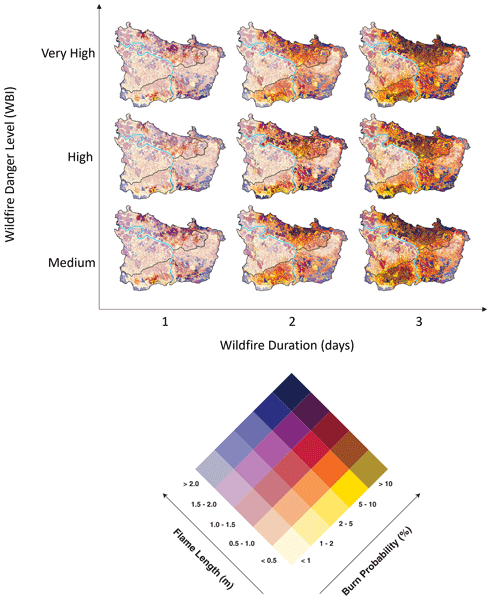
Evripidis Avouris, Christopher Marrs, Kristina Beetz, Lucie Kudláčková, Johanna Kranz, Markéta Poděbradská, Miroslav Trnka, and Matthias Forkel
Nat. Hazards Earth Syst. Sci., 26, 4013–4044, https://doi.org/10.5194/nhess-26-4013-2026, https://doi.org/10.5194/nhess-26-4013-2026, 2026
Short summary
Short summary
Wildfires are increasing in Central Europe. We studied how they could threaten settlements in the Saxon–Czech border region. Using satellite information, local data, and computer simulations, we mapped where fires are most likely and how intense they could be. We tested our results against a destructive fire that occurred in 2022. An interactive web map presents these results with the aim of helping residents and agencies improve preparedness and coordinate cross-border disaster response.
Chantelle Burton, Francesca Di Giuseppe, Matthew W. Jones, Douglas I. Kelley, Maria L. F. Barbosa, Joe McNorton, Robert Potts, Carlota Segura-Garcia, John T. Abatzoglou, Iulian Alin Rosu, Niels Andela, Liana O. Anderson, Sally Archibald, Esther Brambleby, Emilio Chuvieco, Andy Ciavarella, Hamish Clarke, Francisco de la Barrera, Carlos M. Di Bella, Enza Di Tomaso, Kebonye Dintwe, Tim S. Doherty, Victoria M. Donovan, Jonathan M. Eden, Paulo M. Fernandes, Lukas Fiedler, Louis Giglio, Olivia Haas, Douglas Hamilton, Stijn Hantson, Sarah Harris, Andrew J. Hartley, Theodore R. Keeping, Crystal A. Kolden, Jean-Luc Kouassi, Elena Kukavskaya, Seppe Lampe, Zhongwei Liu, Guilherme Mataveli, Sarah Meier, Duarte Oom, Mark Parrington, Yuquan Qu, Victor Resco de Dios, Julien Ruffault, Mojtaba Sadegh, Cristina Santín, Fernando Sedano, Jacquelyn K. Shuman, Patrícia S. Silva, Fiona R. Spuler, Carmen B. Steinmann, Veerachai Tanpipat, Miguel Ángel Torres-Vazquez, Marco Turco, Guido R. van der Werf, Dave van Wees, Sander Veraverbeke, Jakob B. Wessel, and Bo Zheng
Earth Syst. Sci. Data Discuss., https://doi.org/10.5194/essd-2026-587, https://doi.org/10.5194/essd-2026-587, 2026
Revised manuscript under review for ESSD
Short summary
Short summary
The third State of Wildfires report examines extreme wildfire events from 2025 to early 2026. It analyses key regional events in Midwestern Canadian Shield Forests, Northwest Iberia, and Chilean Temperate Forests and Matorral, assessing their impacts, drivers, and attributing them to climate change. Climate change greatly increased the likelihood of these fires, and without strong mitigation, such events will become more frequent.
Erika Solano-Romero, Carlota Segura-Garcia, M. Lucrecia Pettinari, Amin Khairoun, Miguel Ángel Torres-Vázquez, and Emilio Chuvieco
Earth Syst. Sci. Data Discuss., https://doi.org/10.5194/essd-2026-236, https://doi.org/10.5194/essd-2026-236, 2026
Revised manuscript under review for ESSD
Short summary
Short summary
To better understand where and when the world’s most unusual fires occur, we created the first global database of extreme fire events for 2003 to 2022. Using satellite observations of burned land and fire energy, we identified 19,951 extreme events and found clear differences across regions and seasons. This new resource can help researchers and decision makers improve studies of climate, ecosystems, and future fire risk.
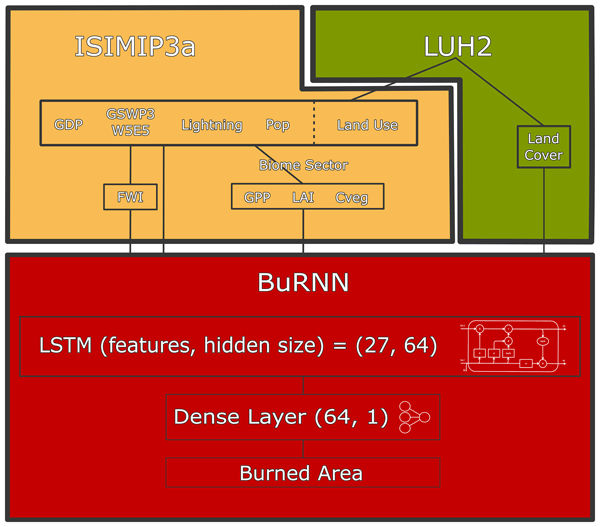
Seppe Lampe, Lukas Gudmundsson, Basil Kraft, Stijn Hantson, Douglas Kelley, Vincent Humphrey, Bertrand Le Saux, Emilio Chuvieco, and Wim Thiery
Geosci. Model Dev., 19, 955–988, https://doi.org/10.5194/gmd-19-955-2026, https://doi.org/10.5194/gmd-19-955-2026, 2026
Short summary
Short summary
We introduce BuRNN (BUrned area modelling by Recurrent Neural Networks), a model which estimates monthly burned area based on satellite observations and climate, vegetation, and socio-economic data using machine learning. BuRNN outperforms existing process-based fire models, which improves our capabilities of modelling past and future burned areas.
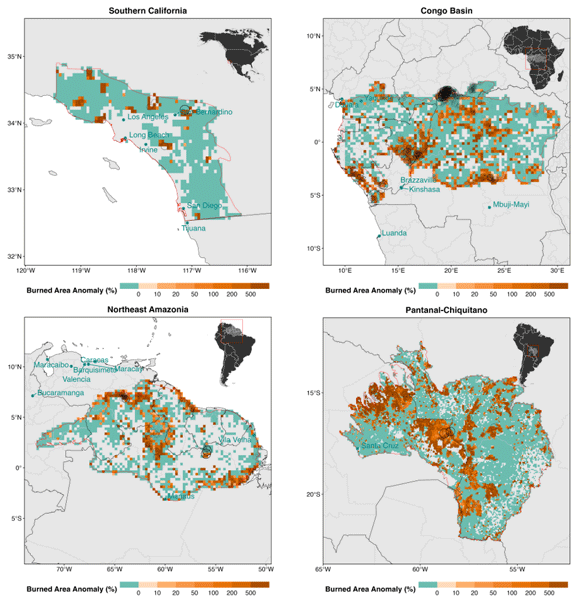
Douglas I. Kelley, Chantelle Burton, Francesca Di Giuseppe, Matthew W. Jones, Maria L. F. Barbosa, Esther Brambleby, Joe R. McNorton, Zhongwei Liu, Anna S. I. Bradley, Katie Blackford, Eleanor Burke, Andrew Ciavarella, Enza Di Tomaso, Jonathan Eden, Igor José M. Ferreira, Lukas Fiedler, Andrew J. Hartley, Theodore R. Keeping, Seppe Lampe, Anna Lombardi, Guilherme Mataveli, Yuquan Qu, Patrícia S. Silva, Fiona R. Spuler, Carmen B. Steinmann, Miguel Ángel Torres-Vázquez, Renata Veiga, Dave van Wees, Jakob B. Wessel, Emily Wright, Bibiana Bilbao, Mathieu Bourbonnais, Cong Gao, Carlos M. Di Bella, Kebonye Dintwe, Victoria M. Donovan, Sarah Harris, Elena A. Kukavskaya, Aya Brigitte N'Dri, Cristina Santín, Galia Selaya, Johan Sjöström, John T. Abatzoglou, Niels Andela, Rachel Carmenta, Emilio Chuvieco, Louis Giglio, Douglas S. Hamilton, Stijn Hantson, Sarah Meier, Mark Parrington, Mojtaba Sadegh, Jesus San-Miguel-Ayanz, Fernando Sedano, Marco Turco, Guido R. van der Werf, Sander Veraverbeke, Liana O. Anderson, Hamish Clarke, Paulo M. Fernandes, and Crystal A. Kolden
Earth Syst. Sci. Data, 17, 5377–5488, https://doi.org/10.5194/essd-17-5377-2025, https://doi.org/10.5194/essd-17-5377-2025, 2025
Short summary
Short summary
The second State of Wildfires report examines extreme wildfire events from 2024 to early 2025. It analyses key regional events in Southern California, Northeast Amazonia, Pantanal–Chiquitano, and the Congo Basin, assessing their drivers and predictability and attributing them to climate change and land use. Seasonal outlooks and decadal projections are provided. Climate change greatly increased the likelihood of these fires, and without strong mitigation, such events will become more frequent.
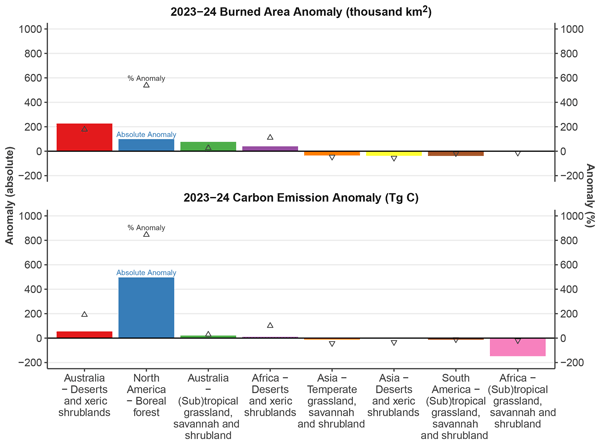
Matthew W. Jones, Douglas I. Kelley, Chantelle A. Burton, Francesca Di Giuseppe, Maria Lucia F. Barbosa, Esther Brambleby, Andrew J. Hartley, Anna Lombardi, Guilherme Mataveli, Joe R. McNorton, Fiona R. Spuler, Jakob B. Wessel, John T. Abatzoglou, Liana O. Anderson, Niels Andela, Sally Archibald, Dolors Armenteras, Eleanor Burke, Rachel Carmenta, Emilio Chuvieco, Hamish Clarke, Stefan H. Doerr, Paulo M. Fernandes, Louis Giglio, Douglas S. Hamilton, Stijn Hantson, Sarah Harris, Piyush Jain, Crystal A. Kolden, Tiina Kurvits, Seppe Lampe, Sarah Meier, Stacey New, Mark Parrington, Morgane M. G. Perron, Yuquan Qu, Natasha S. Ribeiro, Bambang H. Saharjo, Jesus San-Miguel-Ayanz, Jacquelyn K. Shuman, Veerachai Tanpipat, Guido R. van der Werf, Sander Veraverbeke, and Gavriil Xanthopoulos
Earth Syst. Sci. Data, 16, 3601–3685, https://doi.org/10.5194/essd-16-3601-2024, https://doi.org/10.5194/essd-16-3601-2024, 2024
Short summary
Short summary
This inaugural State of Wildfires report catalogues extreme fires of the 2023–2024 fire season. For key events, we analyse their predictability and drivers and attribute them to climate change and land use. We provide a seasonal outlook and decadal projections. Key anomalies occurred in Canada, Greece, and western Amazonia, with other high-impact events catalogued worldwide. Climate change significantly increased the likelihood of extreme fires, and mitigation is required to lessen future risk.
Elena Aragoneses, Mariano García, Michele Salis, Luís M. Ribeiro, and Emilio Chuvieco
Earth Syst. Sci. Data, 15, 1287–1315, https://doi.org/10.5194/essd-15-1287-2023, https://doi.org/10.5194/essd-15-1287-2023, 2023
Short summary
Short summary
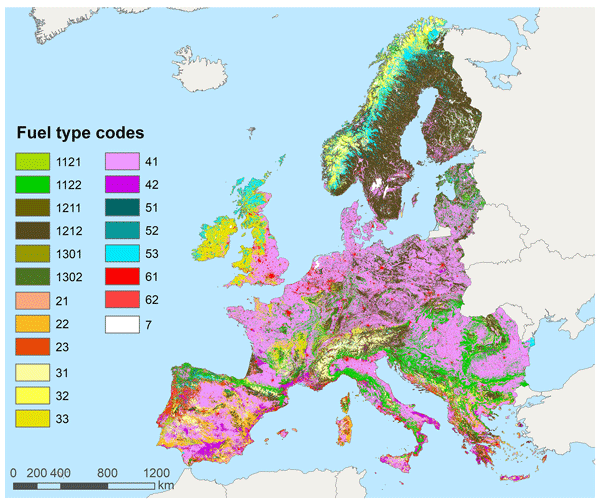
We present a new hierarchical fuel classification system with a total of 85 fuels that is useful for preventing fire risk at different spatial scales. Based on this, we developed a European fuel map (1 km resolution) using land cover datasets, biogeographic datasets, and bioclimatic modelling. We validated the map by comparing it to high-resolution data, obtaining high overall accuracy. Finally, we developed a crosswalk for standard fuel models as a first assignment of fuel parameters.
Fátima Arrogante-Funes, Inmaculada Aguado, and Emilio Chuvieco
Nat. Hazards Earth Syst. Sci., 22, 2981–3003, https://doi.org/10.5194/nhess-22-2981-2022, https://doi.org/10.5194/nhess-22-2981-2022, 2022
Short summary
Short summary
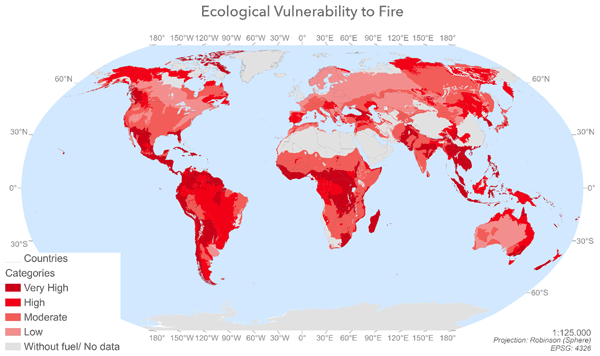
We show that ecological value might be reduced by 50 % due to fire perturbation in ecosystems that have not developed in the presence of fire and/or that present changes in the fire regime. The biomes most affected are tropical and subtropical forests, tundra, and mangroves. Integration of biotic and abiotic fire regime and regeneration factors resulted in a powerful way to map ecological vulnerability to fire and develop assessments to generate adaptation plans of management in forest masses.
Cited articles
Alcasena, F., Rodrigues, M., Gelabert, P., Ager, A., Salis, M., Ameztegui, A., Cervera, T., and Vega-García, C.: Fostering carbon credits to finance wildfire risk reduction forest management in mediterranean landscapes, Land, 10, 1104, https://doi.org/10.3390/land10101104, 2021.
Aragoneses, E., García, M., Salis, M., Ribeiro, L. M., and Chuvieco, E.: Classification and mapping of European fuels using a hierarchical, multipurpose fuel classification system, Earth Syst. Sci. Data, 15, 1287–1315, https://doi.org/10.5194/essd-15-1287-2023, 2023.
Badia, A., Serra, P., and Modugno, S.: Identifying dynamics of fire ignition probabilities in two representative Mediterranean wildland-urban interface areas, Appl. Geogr., 31, 930–940, https://doi.org/10.1016/j.apgeog.2011.01.016, 2011.
Bar-Massada, A., Alcasena, F., Schug, F., and Radeloff, V. C.: The wildland – urban interface in Europe: Spatial patterns and associations with socioeconomic and demographic variables, Landscape Urban Plan., 235, 104759, https://doi.org/10.1016/j.landurbplan.2023.104759, 2023.
Behrens, T., Schmidt, K., Viscarra Rossel, R. A., Gries, P., Scholten, T., and MacMillan, R. A.: Spatial modelling with Euclidean distance fields and machine learning, Eur. J. Soil Sci., 69, 757–770, https://doi.org/10.1111/ejss.12687, 2018.
Boer, M. M., Nolan, R. H., Resco De Dios, V., Clarke, H., Price, O. F., and Bradstock, R. A.: Changing Weather Extremes Call for Early Warning of Potential for Catastrophic Fire, Earth's Future, 5, 1196–1202, https://doi.org/10.1002/2017EF000657, 2017.
Bowman, D. M. J. S., Kolden, C. A., Abatzoglou, J. T., Johnston, F. H., Van Der Werf, G. R., and Flannigan, M.: Vegetation fires in the Anthropocene, Nature Reviews Earth & Environment, 1, 500–515, https://doi.org/10.1038/s43017-020-0085-3, 2020.
Breiman, L.: Random forests, Machine Learning, 45, 5–32, https://doi.org/10.1023/A:1010933404324, 2001.
Calviño-Cancela, M., Chas-Amil, M. L., García-Martínez, E. D., and Touza, J.: Interacting effects of topography, vegetation, human activities and wildland-urban interfaces on wildfire ignition risk, Forest Ecol. Manag., 397, 10–17, https://doi.org/10.1016/j.foreco.2017.04.033, 2017.
Camia, A., Durrant, T., and San-Miguel-Ayanz, J.: Harmonized classification scheme of fire causes in the EU adopted for the European Fire Database of EFFIS, Publications Office of the European Union, Luxembourg, https://doi.org/10.2788/86859, 2013.
Chicas, S. D. and Østergaard Nielsen, J.: Who are the actors and what are the factors that are used in models to map forest fire susceptibility? A systematic review, Nat. Hazards, 114, 2417–2434, https://doi.org/10.1007/s11069-022-05495-5, 2022.
Chou, Y. H.: Spatial autocorrelation analysis and weighting functions in the distribution of wildland fires, Int. J. Wildland Fire, 2, 169–176, 1992.
Chuvieco, E., Martínez, S., Román, M. V., Hantson, S., and Pettinari, M. L.: Integration of ecological and socio-economic factors to assess global vulnerability to wildfire, Global Ecol. Biogeogr., 23, 245–258, https://doi.org/10.1111/geb.12095, 2014.
Chuvieco, E., Pettinari, M. L., Koutsias, N., Forkel, M., Hantson, S., and Turco, M.: Human and climate drivers of global biomass burning variability, Sci. Total Environ., 779, 146361, https://doi.org/10.1016/j.scitotenv.2021.146361, 2021.
Chuvieco, E., Yebra, M., Martino, S., Thonicke, K., Gómez-Giménez, M., San-Miguel, J., Oom, D., Velea, R., Mouillot, F., Molina, J. R., Miranda, A. I., Lopes, D., Salis, M., Bugaric, M., Sofiev, M., Kadantsev, E., Gitas, I. Z., Stavrakoudis, D., Eftychidis, G., Bar-Massada, A., Neidermeier, A., Pampanoni, V., Pettinari, M. L., Arrogante-Funes, F., Ochoa, C., Moreira, B., and Viegas, D.: Towards an Integrated Approach to Wildfire Risk Assessment: When, Where, What and How May the Landscapes Burn, Fire, 6, 215, https://doi.org/10.3390/fire6050215, 2023.
Ciesielski, M., Balazy, R., Borkowski, B., Szczesny, W., Zasada, M., Kaczmarowski, J., Kwiatkowski, M., Szczygiel, R., and Milanovic, S.: Contribution of anthropogenic, vegetation, and topographic features to forest fire occurrence in Poland, iForest - Biogeosciences and Forestry, 15, 307–314, https://doi.org/10.3832/ifor4052-015, 2022.
Colantoni, A., Egidi, G., Quaranta, G., D'Alessandro, R., Vinci, S., Turco, R., and Salvati, L.: Sustainable Land Management, Wildfire Risk and the Role of Grazing in Mediterranean Urban-Rural Interfaces: A Regional Approach from Greece, Land, 9, 21, https://doi.org/10.3390/land9010021, 2020.
Coogan, S. C. P., Cai, X., Jain, P., and Flannigan, M. D.: Seasonality and trends in human- and lightning-caused wildfires ≥ 2 ha in Canada, 1959–2018, Int. J. Wildland Fire, 29, 473–485, https://doi.org/10.1071/WF19129, 2020.
Copernicus Climate Change Service: ERA5-Land monthly averaged data from 1950 to present, C3S CDS, https://doi.org/10.24381/CDS.68D2BB30, 2019.
Copernicus Emergency Management Service (CEMS): Fire danger indices historical data from the Copernicus Emergency Management Service, Copernicus Climate Change Service (C3S) Climate Data Store (CDS) [data set], https://doi.org/10.24381/cds.0e89c522, 2019.
Costafreda-Aumedes, S., Comas, C., and Vega-Garcia, C.: Human-caused fire occurrence modelling in perspective: a review, Int. J. Wildland Fire, 26, 983–998, https://doi.org/10.1071/WF17026, 2017.
D'Este, M., Ganga, A., Elia, M., Lovreglio, R., Giannico, V., Spano, G., Colangelo, G., Lafortezza, R., and Sanesi, G.: Modeling fire ignition probability and frequency using Hurdle models: a cross-regional study in Southern Europe, Ecological Processes, 9, 54, https://doi.org/10.1186/s13717-020-00263-4, 2020.
Dormann, C. F., McPherson, J. M., Araújo, M. B., Bivand, R., Bolliger, J., Carl, G., G. Davies, R., Hirzel, A., Jetz, W., Daniel Kissling, W., Kühn, I., Ohlemüller, R., Peres-Neto, P. R., Reineking, B., Schröder, B., M. Schurr, F., and Wilson, R.: Methods to account for spatial autocorrelation in the analysis of species distributional data: a review, Ecography, 30, 609–628, https://doi.org/10.1111/j.2007.0906-7590.05171.x, 2007.
Dupuy, J., Fargeon, H., Martin-StPaul, N., Pimont, F., Ruffault, J., Guijarro, M., Hernando, C., Madrigal, J., and Fernandes, P.: Climate change impact on future wildfire danger and activity in southern Europe: a review, Ann. Forest Sci., 77, 35, https://doi.org/10.1007/s13595-020-00933-5, 2020.
European Environment Agency: CORINE Land Cover 2018 (raster 100 m), Europe, 6-yearly - version 2020_20u1, May 2020 (20.01) [data set], https://doi.org/10.2909/960998C1-1870-4E82-8051-6485205EBBAC, 2019.
European Environment Agency: Tree Cover Density 2018 (raster 100 m), Europe, 3-yearly, Sep. 2020 (02.00) [data set], https://doi.org/10.2909/C7BF34EA-755C-4DBD-85B6-4EFC5FD302A2, 2020.
Galizia, L. F., Curt, T., Barbero, R., and Rodrigues, M.: Understanding fire regimes in Europe, Int. J. Wildland Fire, 31, 56–66, https://doi.org/10.1071/WF21081, 2021.
Galizia, L. F., Barbero, R., Rodrigues, M., Ruffault, J., Pimont, F., and Curt, T.: Global Warming Reshapes European Pyroregions, Earth's Future, 11, e2022EF003182, https://doi.org/10.1029/2022EF003182, 2023.
Ganteaume, A., Camia, A., Jappiot, M., San-Miguel-Ayanz, J., Long-Fournel, M., and Lampin, C.: A review of the main driving factors of forest fire ignition over Europe, Environ. Manage., 51, 651–662, https://doi.org/10.1007/s00267-012-9961-z, 2013.
Gelabert, P., Rodrigues, M., de la Riva, J., Ameztegui, A., Sebastià, M. T., and Vega-Garcia, C.: LandTrendr smoothed spectral profiles enhance woody encroachment monitoring, Remote Sens. Environ., 262, 112521, https://doi.org/10.1016/j.rse.2021.112521, 2021.
Gelabert, P. J., Jiménez-Ruano, A., Ochoa, C., Alcasena, F., Sjöström, J., Mars, C., Ribeiro, L. M., Palaiologou, P., Bentué Martíne, C., Chuvieco, E., Vega-García, C., and Rodrigues, M.: Model predictions of “Assessing human-caused wildfire ignition likelihood across Europe”, Zenodo [data set], https://doi.org/10.5281/zenodo.17660557, 2025.
Guélat, J. and Kéry, M.: Effects of spatial autocorrelation and imperfect detection on species distribution models, Methods Ecol. Evol., 9, 1614–1625, https://doi.org/10.1111/2041-210X.12983, 2018.
Guo, F., Zhang, L., Jin, S., Tigabu, M., Su, Z., and Wang, W.: Modeling Anthropogenic Fire Occurrence in the Boreal Forest of China Using Logistic Regression and Random Forests, Forests, 7, 250, https://doi.org/10.3390/f7110250, 2016.
Harrell, F. E.: Regression Modeling Strategies: With Applications to Linear Models, Logistic and Ordinal Regression, and Survival Analysis, 2nd edn., Springer, New York, https://doi.org/10.1007/978-3-319-19425-7, 2015.
Hetzer, J., Forrest, M., Ribalaygua, J., Prado-López, C., and Hickler, T.: The fire weather in Europe: large-scale trends towards higher danger, Environ. Res. Lett., 19, 084017, https://doi.org/10.1088/1748-9326/ad5b09, 2024.
Hijmans, R. J.: terra: Spatial Data Analysis, R package version 1.7-78 [software], https://CRAN.R-project.org/package=terra (last access: 18 May 2025), 2024.
Jiménez-Ruano, A., Jolly, W. M., Freeborn, P. H., Vega-Nieva, D. J., Monjarás-Vega, N. A., Briones-Herrera, C. I., and Rodrigues, M.: Spatial Predictions of Human and Natural-Caused Wildfire Likelihood across Montana (USA), Forests, 13, 1–16, https://doi.org/10.3390/f13081200, 2022.
Jiménez-Ruano, A., Mimbrero, M. R., Urdíroz, F. A., Sjöström, J., Marrs, C., Ribeiro, L. M., Palaiologou, P., Chuvieco, E., Gelabert, P. J., and Vega-García, C.: Assessing human-caused wildfire ignition likelihood across Europe, in: 2023 8th International Conference on Smart and Sustainable Technologies (SpliTech), Split/Bol, Croatia, 1–6, https://doi.org/10.23919/SpliTech58164.2023.10193249, 2023.
Jurdao, S., Chuvieco, E., and Arevalillo, J. M.: Modelling Fire Ignition Probability from Satellite Estimates of Live Fuel Moisture Content, Fire Ecol., 8, 77–97, https://doi.org/10.4996/fireecology.0801077, 2012.
Keeping, T., Harrison, S. P., and Prentice, I. C.: Modelling the daily probability of wildfire occurrence in the contiguous United States, Environ. Res. Lett., 19, 024036, https://doi.org/10.1088/1748-9326/ad21b0, 2024.
Kelly, L. T., Fletcher, M.-S., Menor, I. O., Pellegrini, A. F. A., Plumanns-Pouton, E. S., Pons, P., Williamson, G. J., and Bowman, D. M. J. S.: Understanding Fire Regimes for a Better Anthropocene, Annu. Rev. Env. Resour., 48, 207–235, https://doi.org/10.1146/annurev-environ-120220-055357, 2023.
Kim, S. J., Lim, C. H., Kim, G. S., Lee, J., Geiger, T., Rahmati, O., Son, Y., and Lee, W. K.: Multi-temporal analysis of forest fire probability using socio-economic and environmental variables, Remote Sensing, 11, 86, https://doi.org/10.3390/rs11010086, 2019.
Kolanek, A., Szymanowski, M., and Raczyk, A.: Human activity affects forest fires: The impact of anthropogenic factors on the density of forest fires in Poland, Forests, 12, 1–21, https://doi.org/10.3390/f12060728, 2021.
Kottek, M., Grieser, J., Beck, C., Rudolf, B., and Rubel, F.: World Map of the Köppen-Geiger climate classification updated, Meteorol. Z., 15, 259–263, https://doi.org/10.1127/0941-2948/2006/0130, 2006.
Kotzamanis, B.: Greece, Demographic Changes, and Challenges, in: The Geography of Greece, edited by: Darques, R., Sidiropoulos, G., and Kalabokidis, K., Springer International Publishing, Cham, 465–477, https://doi.org/10.1007/978-3-031-29819-6_27, 2024.
Kuhn, M.: Building predictive models in R using the caret package, J. Stat. Softw., 28, 1–26, 2008.
Lasanta, T. and Vicente-Serrano, S. M.: Complex land cover change processes in semiarid Mediterranean regions: An approach using Landsat images in northeast Spain, Remote Sens. Environ., 124, 1–14, https://doi.org/10.1016/j.rse.2012.04.023, 2012.
Leone, V., Koutsias, N., Martínez, J., Vega-García, C., Allgöwer, B., and Lovreglio, R.: The Human Factor in Fire Danger Assessment, in: Wildland Fire Danger Estimation and Mapping, WORLD SCIENTIFIC, 143–196, https://doi.org/10.1142/9789812791177_0006, 2003.
Martín, Y., Zúñiga-Antón, M., and Rodrigues Mimbrero, M.: Modelling temporal variation of fire-occurrence towards the dynamic prediction of human wildfire ignition danger in northeast Spain, Geomat. Nat. Haz. Risk, 10, 385–411, https://doi.org/10.1080/19475705.2018.1526219, 2018.
Meira Castro, A. C., Nunes, A., Sousa, A., and Lourenço, L.: Mapping the Causes of Forest Fires in Portugal by Clustering Analysis, Geosciences, 10, 53, https://doi.org/10.3390/geosciences10020053, 2020.
Metz, C. E.: Basic principles of ROC analysis, Semin. Nucl. Med., 8, 283–298, https://doi.org/10.1016/S0001-2998(78)80014-2, 1978.
Milà, C., Ludwig, M., Pebesma, E., Tonne, C., and Meyer, H.: Random forests with spatial proxies for environmental modelling: opportunities and pitfalls, Geosci. Model Dev., 17, 6007–6033, https://doi.org/10.5194/gmd-17-6007-2024, 2024.
Milanović, S., Milanović, S. D., Marković, N., Pamučar, D., Gigović, L., and Kostić, P.: Forest fire probability mapping in eastern serbia: Logistic regression versus random forest method, Forests, 12, 1–17, https://doi.org/10.3390/f12010005, 2021.
Moran, P. A. P.: Notes on continuous stochastic phenomena, Biometrika, 37, 17–23, 1950.
Mozny, M., Trnka, M., and Brázdil, R.: Climate change driven changes of vegetation fires in the Czech Republic, Theor. Appl. Climatol., 143, 691–699, https://doi.org/10.1007/s00704-020-03443-6, 2021.
Ochoa, C., Bar-Massada, A., and Chuvieco, E.: A European-scale analysis reveals the complex roles of anthropogenic and climatic factors in driving the initiation of large wildfires, Sci. Total Environ., 917, 170443, https://doi.org/10.1016/j.scitotenv.2024.170443, 2024.
Oliveira, S., Oehler, F., San-Miguel-Ayanz, J., Camia, A., and Pereira, J. M. C.: Modeling spatial patterns of fire occurrence in Mediterranean Europe using Multiple Regression and Random Forest, Forest Ecol. Manag., 275, 117–129, https://doi.org/10.1016/j.foreco.2012.03.003, 2012.
Oliveira, S., Pereira, J. M. C., San-Miguel-Ayanz, J., and Lourenço, L.: Exploring the spatial patterns of fire density in Southern Europe using Geographically Weighted Regression, Appl. Geogr., 51, 143–157, https://doi.org/10.1016/j.apgeog.2014.04.002, 2014.
Pais, C., Gonzalez-Olabarria, J. R., Elimbi Moudio, P., Garcia-Gonzalo, J., González, M. C., and Shen, Z.-J. M.: Global scale coupling of pyromes and fire regimes, Communications Earth & Environment, 4, 267, https://doi.org/10.1038/s43247-023-00881-8, 2023.
Paradis, E. and Schliep, K.: ape 5.0: an environment for modern phylogenetics and evolutionary analyses in R, Bioinformatics, 35, 526–528, https://doi.org/10.1093/bioinformatics/bty633, 2019.
Parente, J., Pereira, M. G., Amraoui, M., and Tedim, F.: Negligent and intentional fires in Portugal: Spatial distribution characterization, Sci. Total Environ., 624, 424–437, https://doi.org/10.1016/j.scitotenv.2017.12.013, 2018.
Pebesma, E.: Simple Features for R: Standardized Support for Spatial Vector Data, The R Journal, 10, 439, https://doi.org/10.32614/rj-2018-009, 2018.
Perpiña Castillo, C., Ribeiro Barranco, R., Curtale, R., Kompil, M., Jacobs-Crisioni, C., Vallecillo Rodriguez, S., Aurambout, J.-P., Batista e Silva, F., Sulis, P., and Auteri, D.: Are remote rural areas in Europe remarkable? Challenges and opportunities, J. Rural Stud., 105, 103180, https://doi.org/10.1016/j.jrurstud.2023.103180, 2024.
Pettinari, M. L. and Chuvieco, E.: Fire Danger Observed from Space, Surv. Geophys., 41, 1437–1459, https://doi.org/10.1007/s10712-020-09610-8, 2020.
Pinto, G. A. S. J., Rousseu, F., Niklasson, M., and Drobyshev, I.: Effects of human-related and biotic landscape features on the occurrence and size of modern forest fires in Sweden, Agr. Forest Meteorol., 291, 108084, https://doi.org/10.1016/j.agrformet.2020.108084, 2020.
Potapov, P., Li, X., Hernandez-Serna, A., Tyukavina, A., Hansen, M. C., Kommareddy, A., Pickens, A., Turubanova, S., Tang, H., Silva, C. E., Armston, J., Dubayah, R., Blair, J. B., and Hofton, M.: Mapping global forest canopy height through integration of GEDI and Landsat data, Remote Sens. Environ., 253, 112165, https://doi.org/10.1016/j.rse.2020.112165, 2021.
Probeck, M., Ruiz, I., Ramminger, G., Fourie, C., Maier, P., Ickerott, M., Storch, C., Homolka, A., Muller, S. J., Tiwari, H., Stumpf, A., Chun, S., Mattos, C., Lindmayer, A., Jahangir, F., Endara, P., Berndt, F., Dohr, M., Kapferer, W., Schleicher, C., Ralser, S., Innerbichler, F., Riffler, M., Siklar, M., Aifantopoulou, D., Paralykidis, S., Pinet, C., Jaffrain, G., Di Federico, A., Corsi, M., Langanke, T., and Dufourmont, H.: CLC+ Backbone: Set the Scene in Copernicus for the Coming Decade, in: 2021 IEEE International Geoscience and Remote Sensing Symposium IGARSS, IGARSS 2021 - 2021 IEEE International Geoscience and Remote Sensing Symposium, Brussels, Belgium, 2076–2079, https://doi.org/10.1109/IGARSS47720.2021.9553252, 2021.
R Core Team: R: A Language and Environment for Statistical Computing, R Foundation for Statistical Computing, Vienna, Austria [software], https://www.R-project.org/ (last access: 18 May 2025), 2024.
Resco de Dios, V., Cunill Camprubí, À., Pérez-Zanón, N., Peña, J. C., Martínez Del Castillo, E., Rodrigues, M., Yao, Y., Yebra, M., Vega-García, C., and Boer, M. M.: Convergence in critical fuel moisture and fire weather thresholds associated with fire activity in the pyroregions of Mediterranean Europe, Sci. Total Environ., 806, 151462, https://doi.org/10.1016/j.scitotenv.2021.151462, 2022.
Robin, X., Turck, N., Hainard, A., Tiberti, N., Lisacek, F., Sanchez, J.-C., and Müller, M.: pROC: an open-source package for R and S+ to analyze and compare ROC curves, BMC Bioinformatics, 12, 77, https://doi.org/10.1186/1471-2105-12-77, 2011.
Rodrigues, M. and De la Riva, J.: An insight into machine-learning algorithms to model human-caused wildfire occurrence, Environ. Modell. Softw., 57, 192–201, https://doi.org/10.1016/j.envsoft.2014.03.003, 2014.
Rodrigues, M., de la Riva, J., and Fotheringham, S.: Modeling the spatial variation of the explanatory factors of human-caused wildfires in Spain using geographically weighted logistic regression, Appl. Geogr., 48, 52–63, https://doi.org/10.1016/j.apgeog.2014.01.011, 2014.
Rodrigues, M., Jiménez, A., and de la Riva, J.: Analysis of recent spatial–temporal evolution of human driving factors of wildfires in Spain, Nat. Hazards, 84, 2049–2070, https://doi.org/10.1007/s11069-016-2533-4, 2016.
Rodrigues, M., Jiménez-Ruano, A., Peña-Angulo, D., and de la Riva, J.: A comprehensive spatial-temporal analysis of driving factors of human-caused wildfires in Spain using Geographically Weighted Logistic Regression, J. Environ. Manage., 225, 177–192, https://doi.org/10.1016/j.jenvman.2018.07.098, 2018.
Rodrigues, M., Alcasena, F., and Vega-García, C.: Modeling initial attack success of wildfire suppression in Catalonia, Spain, Sci. Total Environ., 666, 915–927, https://doi.org/10.1016/j.scitotenv.2019.02.323, 2019.
Rodrigues, M., Trigo, R. M., Vega-García, C., and Cardil, A.: Identifying large fire weather typologies in the Iberian Peninsula, Agr. Forest Meteorol., 280, 107789, https://doi.org/10.1016/j.agrformet.2019.107789, 2020.
Rodrigues, M., Zúñiga-Antón, M., Alcasena, F., Gelabert, P., and Vega-Garcia, C.: Integrating geospatial wildfire models to delineate landscape management zones and inform decision-making in Mediterranean areas, Safety Sci., 147, 105616, https://doi.org/10.1016/j.ssci.2021.105616, 2022.
Rodrigues, M., Camprubí, À. C., Balaguer-Romano, R., Megía, C. J. C., Castañares, F., Ruffault, J., Fernandes, P. M., and Dios, V. R. de: Drivers and implications of the extreme 2022 wildfire season in Southwest Europe, Sci. Total Environ., 859, 160320, https://doi.org/10.1016/j.scitotenv.2022.160320, 2023.
Rodrigues, M., Resco De Dios, V., Sil, Â., Cunill Camprubí, À., and Fernandes, P. M.: VPD-based models of dead fine fuel moisture provide best estimates in a global dataset, Agr. Forest Meteorol., 346, 109868, https://doi.org/10.1016/j.agrformet.2023.109868, 2024.
Salis, M., Del Giudice, L., Jahdi, R., Alcasena-Urdiroz, F., Scarpa, C., Pellizzaro, G., Bacciu, V., Schirru, M., Ventura, A., Casula, M., Pedes, F., Canu, A., Duce, P., and Arca, B.: Spatial Patterns and Intensity of Land Abandonment Drive Wildfire Hazard and Likelihood in Mediterranean Agropastoral Areas, Land, 11, 1942, https://doi.org/10.3390/land11111942, 2022.
San-Miguel-Ayanz, J., Schulte, E., Schmuck, G., Camia, A., Strobl, P., Liberta, G., Giovando, C., Boca, R., Sedano, F., Kempeneers, P., McInerney, D., Withmore, C., Santos de Oliveira, S., Rodrigues, M., Durrant, T., Corti, P., Oehler, F., Vilar, L., and Amatulli, G.: Comprehensive monitoring of wildfires in europe: the European Forest Fire Information System (EFFIS), in: Approaches to Managing Disaster - Assessing Hazards, Emergencies and Disaster Impacts, edited by: Tiefenbacher, J., 87–105, https://doi.org/10.5772/28441, 2012.
Schiavina, M., Freire, S., and MacManus, K.: GHS-POP R2023A - GHS population grid multitemporal (1975-2030) [data set], https://doi.org/10.2905/2FF68A52-5B5B-4A22-8F40-C41DA8332CFE, 2023.
Schlobohm, P. and Brain, J.: Gaining an Understanding of the National Fire Danger Rating System, (PMS 932), National Wildfire Coordinating Group Report NFES 2665, Boise, ID, USA, https://gacc.nifc.gov/rmcc/predictive/nfdrs_gaining_understanding.pdf (last access: 10 November 2022), 2002.
Schug, F., Bar-Massada, A., Carlson, A. R., Cox, H., Hawbaker, T. J., Helmers, D., Hostert, P., Kaim, D., Kasraee, N. K., Martinuzzi, S., Mockrin, M. H., Pfoch, K. A., and Radeloff, V. C.: The global wildland–urban interface, Nature, 621, 94–99, https://doi.org/10.1038/s41586-023-06320-0, 2023.
Sebastián-López, A., Salvador-Civil, R., Gonzalo-Jiménez, J., and San-Miguel-Ayanz, J.: Integration of socio-economic and environmental variables for modelling long-term fire danger in Southern Europe, Eur. J. Forest Res., 127, 149–163, https://doi.org/10.1007/s10342-007-0191-5, 2008.
Sjöström, J. and Granström, A.: Human activity and demographics drive the fire regime in a highly developed European boreal region, Fire Safety J., 136, 103743, https://doi.org/10.1016/j.firesaf.2023.103743, 2023.
Sjöström, J., Plathner, F. V., and Granström, A.: Wildfire ignition from forestry machines in boreal Sweden, Int. J. Wildland Fire, 28, 666–677, https://doi.org/10.1071/WF18229, 2019.
Stocks, B. J., Lynham, T. J., Lawson, B. D., Alexander, M. E., Wagner, C. E. V., McAlpine, R. S., and Dubé, D. E.: The Canadian Forest Fire Danger Rating System: An Overview, Forest. Chron., 65, 450–457, https://doi.org/10.5558/tfc65450-6, 1989.
Syphard, A. D., Radeloff, V. C., Keeley, J. E., Hawbaker, T. J., Clayton, M. K., Stewart, S. I., and Hammer, R. B.: HUMAN INFLUENCE ON CALIFORNIA FIRE REGIMES, Ecol. Appl., 17, 1388–1402, https://doi.org/10.1890/06-1128.1, 2007.
Tedim, F., Leone, V., Lovreglio, R., Xanthopoulos, G., Chas-Amil, M.-L., Ganteaume, A., Efe, R., Royé, D., Fuerst-Bjeliš, B., Nikolov, N., Musa, S., Milenković, M., Correia, F., Conedera, M., and Boris Pezzatti, G.: Forest Fire Causes and Motivations in the Southern and South-Eastern Europe through Experts' Perception and Applications to Current Policies, Forests, 13, 562, https://doi.org/10.3390/f13040562, 2022.
Tobler, W. R.: A Computer Movie Simulating Urban Growth in the Detroit Region, Econ. Geogr., 46, 234–240, https://doi.org/10.2307/143141, 1970.
Trucchia, A., Meschi, G., Fiorucci, P., Gollini, A., and Negro, D.: Defining Wildfire Susceptibility Maps in Italy for Understanding Seasonal Wildfire Regimes at the National Level, Fire, 5, 30, https://doi.org/10.3390/fire5010030, 2022a.
Trucchia, A., Izadgoshasb, H., Isnardi, S., Fiorucci, P., and Tonini, M.: Machine-Learning Applications in Geosciences: Comparison of Different Algorithms and Vegetation Classes' Importance Ranking in Wildfire Susceptibility, Geosciences, 12, 424, https://doi.org/10.3390/geosciences12110424, 2022b.
Trucchia, A., Meschi, G., Fiorucci, P., Provenzale, A., Tonini, M., and Pernice, U.: Wildfire hazard mapping in the eastern Mediterranean landscape, Int. J. Wildland Fire, 32, 417–434, https://doi.org/10.1071/WF22138, 2023.
Turner, J. R.: Area Under the Curve (AUC), in: Encyclopedia of Behavioral Medicine, edited by: Gellman, M. D., Springer International Publishing, Cham, 146–146, https://doi.org/10.1007/978-3-030-39903-0_986, 2020.
Vacchiano, G., Foderi, C., Berretti, R., Marchi, E., and Motta, R.: Modeling anthropogenic and natural fire ignitions in an inner-alpine valley, Nat. Hazards Earth Syst. Sci., 18, 935–948, https://doi.org/10.5194/nhess-18-935-2018, 2018.
Van Wagner, C. E.: Development and structure of the Canadian Forest Fire Weather Index System, Canadian Forestry Service, Headquarters, Ottawa, Forestry Technical Report 35, ISBN 0-662-15198-4, 1987.
Vilar del Hoyo, L., Martín Isabel, M. P., and Martínez Vega, F. J.: Logistic regression models for human-caused wildfire risk estimation: analysing the effect of the spatial accuracy in fire occurrence data, Eur. J. Forest Res., 130, 983–996, https://doi.org/10.1007/s10342-011-0488-2, 2011.
Wickham, H., Averick, M., Bryan, J., Chang, W., McGowan, L. D., François, R., Grolemund, G., Hayes, A., Henry, L., Hester, J., Kuhn, M., Pedersen, T. L., Miller, E., Bache, S. M., Müller, K., Ooms, J., Robinson, D., Seidel, D. P., Spinu, V., Takahashi, K., Vaughan, D., Wilke, C., Woo, K., and Yutani, H.: Welcome to the tidyverse, Journal of Open Source Software, 4, 1686, https://doi.org/10.21105/joss.01686, 2019.
Wright, M. N. and Ziegler, A.: ranger: A Fast Implementation of Random Forests for High Dimensional Data in C
Short summary
Wildfires threaten ecosystems and communities across Europe. Our study developed models to predict where and why these ignitions occur in different European environments. We found that weather anomalies and human factors, like proximity to urban areas and roads, are key drivers. Using Machine Learning our models achieved strong predictive accuracy. These insights help design better wildfire prevention strategies, ensuring safer landscapes and communities as fire risks grow with climate change.
Wildfires threaten ecosystems and communities across Europe. Our study developed models to...


Altmetrics
Final-revised paper
Preprint