
Articles | Volume 26, issue 2
https://doi.org/10.5194/nhess-26-845-2026
© Author(s) 2026. This work is distributed under
the Creative Commons Attribution 4.0 License.
the Creative Commons Attribution 4.0 License.
https://doi.org/10.5194/nhess-26-845-2026
© Author(s) 2026. This work is distributed under
the Creative Commons Attribution 4.0 License.
the Creative Commons Attribution 4.0 License.
Research article
| Highlight paper
| 
20 Feb 2026
Research article | Highlight paper |
| 20 Feb 2026
| 20 Feb 2026
Towards an operational European Drought Impacts Database (EDID)
Kerstin Stahl
CORRESPONDING AUTHOR

Faculty of Environment and Natural Resources, University of Freiburg, 79089 Freiburg, Germany
Kathrin Szillat
Faculty of Environment and Natural Resources, University of Freiburg, 79089 Freiburg, Germany
Veit Blauhut
Faculty of Environment and Natural Resources, University of Freiburg, 79089 Freiburg, Germany
Monika Hlavsová
Global Change Research Institute CAS, Brno, Czechia
Lauro Rossi
International Center for Environmental Monitoring, CIMA Research Foundation, Savona, Italy
Dario Masante
European Commission Joint Research Centre, Ispra, Italy
Andrea Toreti
European Commission Joint Research Centre, Ispra, Italy
Related authors
Jonas Pyschik, Kerstin Stahl, and Thomas Harter
EGUsphere, https://doi.org/10.5194/egusphere-2026-4870, https://doi.org/10.5194/egusphere-2026-4870, 2026
This preprint is open for discussion and under review for Hydrology and Earth System Sciences (HESS).
Short summary
Short summary
Warming climate shrinks mountain snow and reduce summer streamflow, while local water withdrawals can add pressure. Using nine catchments in Northern California, we separated climate effects from human impacts. Total yearly water stayed similar, but summer flows fell. Earlier decades showed roughly equal roles; in the megadrought climate drove about two-thirds. Cutting withdrawals alone may not suffice.
Monika Hlavsová, Lauro Rossi, Kathrin Szillat, Kerstin Stahl, Mirko D'Andrea, Veit Blauhut, Gabriela Ivaňáková, Livia Labudová, and Miroslav Trnka
EGUsphere, https://doi.org/10.5194/egusphere-2026-3041, https://doi.org/10.5194/egusphere-2026-3041, 2026
This preprint is open for discussion and under review for Natural Hazards and Earth System Sciences (NHESS).
Short summary
Short summary
Information about drought impacts is often incomplete because collecting such data requires substantial time and resources. We tested whether online news articles available in all official EU languages could help fill gaps in the European Drought Impact Database. The approach added many new records, especially for recent droughts, but results varied strongly between countries and sectors. Online sources can improve drought monitoring, but expert observations and local reporting remain essential.
Amelie Herzog, Jost Hellwig, and Kerstin Stahl
Hydrol. Earth Syst. Sci., 28, 4065–4083, https://doi.org/10.5194/hess-28-4065-2024, https://doi.org/10.5194/hess-28-4065-2024, 2024
Short summary
Short summary
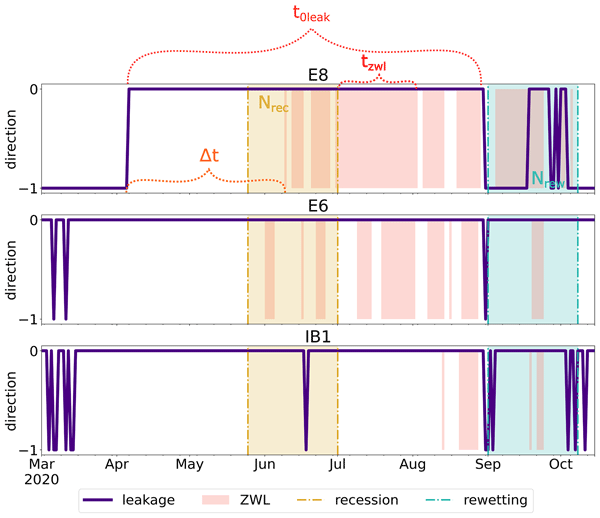
Surface water–groundwater interaction can vary along a river. This study used a groundwater model that reproduced relative observed longitudinal and vertical connectivity patterns in the river network to assess the system's response to imposed stress tests. For the case study, imposed groundwater abstraction appears to influence connectivity relatively more than altered recharge, but a quantification of absolute exchange flows will require further model improvements.
Yonca Cavus, Kerstin Stahl, and Hafzullah Aksoy
Hydrol. Earth Syst. Sci., 27, 3427–3445, https://doi.org/10.5194/hess-27-3427-2023, https://doi.org/10.5194/hess-27-3427-2023, 2023
Short summary
Short summary
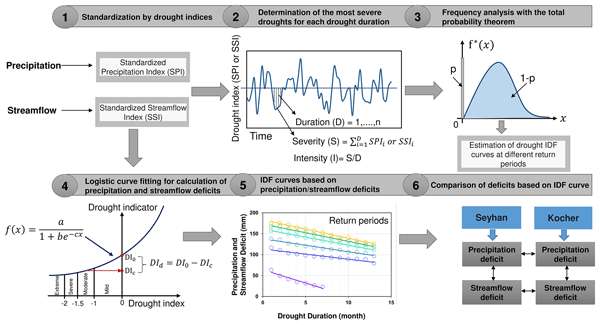
With intensified extremes under climate change, water demand increases. Every drop of water is more valuable than before when drought is experienced particularly. We developed drought intensity–duration–frequency curves using physical indicators, the deficit in precipitation and streamflow, for a more straightforward interpretation. Tests with the observed major droughts in two climatologically different catchments confirmed the practical applicability of the curves under drought conditions.
Heidi Kreibich, Kai Schröter, Giuliano Di Baldassarre, Anne F. Van Loon, Maurizio Mazzoleni, Guta Wakbulcho Abeshu, Svetlana Agafonova, Amir AghaKouchak, Hafzullah Aksoy, Camila Alvarez-Garreton, Blanca Aznar, Laila Balkhi, Marlies H. Barendrecht, Sylvain Biancamaria, Liduin Bos-Burgering, Chris Bradley, Yus Budiyono, Wouter Buytaert, Lucinda Capewell, Hayley Carlson, Yonca Cavus, Anaïs Couasnon, Gemma Coxon, Ioannis Daliakopoulos, Marleen C. de Ruiter, Claire Delus, Mathilde Erfurt, Giuseppe Esposito, Didier François, Frédéric Frappart, Jim Freer, Natalia Frolova, Animesh K. Gain, Manolis Grillakis, Jordi Oriol Grima, Diego A. Guzmán, Laurie S. Huning, Monica Ionita, Maxim Kharlamov, Dao Nguyen Khoi, Natalie Kieboom, Maria Kireeva, Aristeidis Koutroulis, Waldo Lavado-Casimiro, Hong-Yi Li, Maria Carmen LLasat, David Macdonald, Johanna Mård, Hannah Mathew-Richards, Andrew McKenzie, Alfonso Mejia, Eduardo Mario Mendiondo, Marjolein Mens, Shifteh Mobini, Guilherme Samprogna Mohor, Viorica Nagavciuc, Thanh Ngo-Duc, Huynh Thi Thao Nguyen, Pham Thi Thao Nhi, Olga Petrucci, Nguyen Hong Quan, Pere Quintana-Seguí, Saman Razavi, Elena Ridolfi, Jannik Riegel, Md Shibly Sadik, Nivedita Sairam, Elisa Savelli, Alexey Sazonov, Sanjib Sharma, Johanna Sörensen, Felipe Augusto Arguello Souza, Kerstin Stahl, Max Steinhausen, Michael Stoelzle, Wiwiana Szalińska, Qiuhong Tang, Fuqiang Tian, Tamara Tokarczyk, Carolina Tovar, Thi Van Thu Tran, Marjolein H. J. van Huijgevoort, Michelle T. H. van Vliet, Sergiy Vorogushyn, Thorsten Wagener, Yueling Wang, Doris E. Wendt, Elliot Wickham, Long Yang, Mauricio Zambrano-Bigiarini, and Philip J. Ward
Earth Syst. Sci. Data, 15, 2009–2023, https://doi.org/10.5194/essd-15-2009-2023, https://doi.org/10.5194/essd-15-2009-2023, 2023
Short summary
Short summary
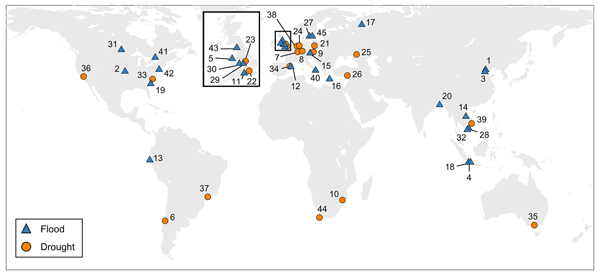
As the adverse impacts of hydrological extremes increase in many regions of the world, a better understanding of the drivers of changes in risk and impacts is essential for effective flood and drought risk management. We present a dataset containing data of paired events, i.e. two floods or two droughts that occurred in the same area. The dataset enables comparative analyses and allows detailed context-specific assessments. Additionally, it supports the testing of socio-hydrological models.
Ruth Stephan, Stefano Terzi, Mathilde Erfurt, Silvia Cocuccioni, Kerstin Stahl, and Marc Zebisch
Nat. Hazards Earth Syst. Sci., 23, 45–64, https://doi.org/10.5194/nhess-23-45-2023, https://doi.org/10.5194/nhess-23-45-2023, 2023
Short summary
Short summary
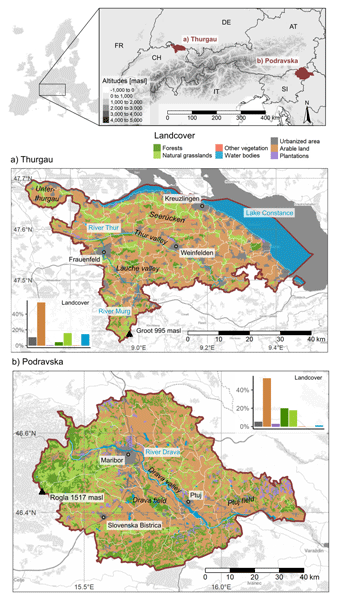
This study maps agriculture's vulnerability to drought in the European pre-Alpine regions of Thurgau (CH) and Podravska (SI). We combine region-specific knowledge with quantitative data mapping; experts of the study regions, far apart, identified a few common but more region-specific factors that we integrated in two vulnerability scenarios. We highlight the benefits of the participatory approach in improving the quantitative results and closing the gap between science and practitioners.
Erik Tijdeman, Veit Blauhut, Michael Stoelzle, Lucas Menzel, and Kerstin Stahl
Nat. Hazards Earth Syst. Sci., 22, 2099–2116, https://doi.org/10.5194/nhess-22-2099-2022, https://doi.org/10.5194/nhess-22-2099-2022, 2022
Short summary
Short summary
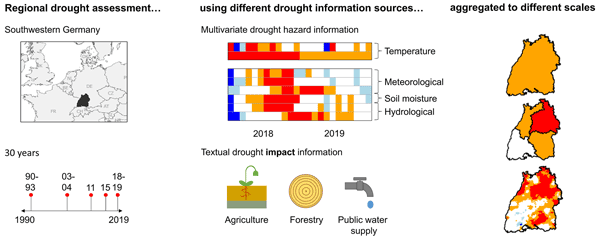
We identified different drought types with typical hazard and impact characteristics. The summer drought type with compounding heat was most impactful. Regional drought propagation of this drought type exhibited typical characteristics that can guide drought management. However, we also found a large spatial variability that caused distinct differences among propagating drought signals. Accordingly, local multivariate drought information was needed to explain the full range of drought impacts.
Francesco Avanzi, Stefano Terzi, Mariapina Castelli, Francesca Munerol, Margherita Andreaggi, Marta Galvagno, Andrea Galletti, Tessa Maurer, Christian Massari, Grace Carlson, Manuela Girotto, Giacomo Bertoldi, Edoardo Cremonese, Simone Gabellani, Umberto Morra di Cella, Marco Altamura, Lauro Rossi, and Luca Ferraris
Hydrol. Earth Syst. Sci., 30, 5769–5790, https://doi.org/10.5194/hess-30-5769-2026, https://doi.org/10.5194/hess-30-5769-2026, 2026
Short summary
Short summary
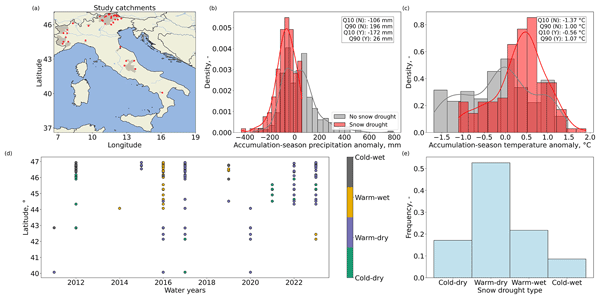
Snow droughts are periods with below-average snow accumulation and are becoming more frequent in a warming climate, yet their ecosystem and societal impacts remain poorly known. Using 13 years of data from 38 Italian catchments, we show that snow droughts reduced snow duration, increased winter melt-out events, and cut summer runoff by ~50 %. Photosynthesis increased by up to 10 % due to earlier meltout. These events also caused widespread water-supply reductions, especially in foothills.
Jonas Pyschik, Kerstin Stahl, and Thomas Harter
EGUsphere, https://doi.org/10.5194/egusphere-2026-4870, https://doi.org/10.5194/egusphere-2026-4870, 2026
This preprint is open for discussion and under review for Hydrology and Earth System Sciences (HESS).
Short summary
Short summary
Warming climate shrinks mountain snow and reduce summer streamflow, while local water withdrawals can add pressure. Using nine catchments in Northern California, we separated climate effects from human impacts. Total yearly water stayed similar, but summer flows fell. Earlier decades showed roughly equal roles; in the megadrought climate drove about two-thirds. Cutting withdrawals alone may not suffice.
Monika Hlavsová, Lauro Rossi, Kathrin Szillat, Kerstin Stahl, Mirko D'Andrea, Veit Blauhut, Gabriela Ivaňáková, Livia Labudová, and Miroslav Trnka
EGUsphere, https://doi.org/10.5194/egusphere-2026-3041, https://doi.org/10.5194/egusphere-2026-3041, 2026
This preprint is open for discussion and under review for Natural Hazards and Earth System Sciences (NHESS).
Short summary
Short summary
Information about drought impacts is often incomplete because collecting such data requires substantial time and resources. We tested whether online news articles available in all official EU languages could help fill gaps in the European Drought Impact Database. The approach added many new records, especially for recent droughts, but results varied strongly between countries and sectors. Online sources can improve drought monitoring, but expert observations and local reporting remain essential.
Andrea Ficchì, Davide Bavera, Stefania Grimaldi, Francesca Moschini, Alberto Pistocchi, Carlo Russo, Peter Salamon, and Andrea Toreti
EGUsphere, https://doi.org/10.5194/egusphere-2026-43, https://doi.org/10.5194/egusphere-2026-43, 2026
Short summary
Short summary
This study introduces a new metric for hydrological model calibration combining traditional model efficiency measures with a new component to better assess similarity between observed and simulated river flows. Tests on two hydrological models and large catchment samples show improved low-flow simulations without degrading high-flow accuracy. The new metric can support more reliable modeling for droughts and floods and is already being adopted in operational monitoring and forecasting systems.
Riccardo Biella, Anastasiya Shyrokaya, Monica Ionita, Raffaele Vignola, Samuel J. Sutanto, Andrijana Todorovic, Claudia Teutschbein, Daniela Cid, Maria Carmen Llasat, Pedro Alencar, Alessia Matanó, Elena Ridolfi, Benedetta Moccia, Ilias Pechlivanidis, Anne van Loon, Doris E. Wendt, Elin Stenfors, Fabio Russo, Jean-Philippe Vidal, Lucy Barker, Mariana Madruga de Brito, Marleen Lam, Monika Bláhová, Patricia Trambauer, Raed Hamed, Scott J. McGrane, Serena Ceola, Sigrid J. Bakke, Svitlana Krakovska, Viorica Nagavciuc, Faranak Tootoonchi, Giuliano Di Baldassarre, Sandra Hauswirth, Shreedhar Maskey, Svitlana Zubkovych, Marthe Wens, and Lena M. Tallaksen
Nat. Hazards Earth Syst. Sci., 25, 4475–4501, https://doi.org/10.5194/nhess-25-4475-2025, https://doi.org/10.5194/nhess-25-4475-2025, 2025
Short summary
Short summary
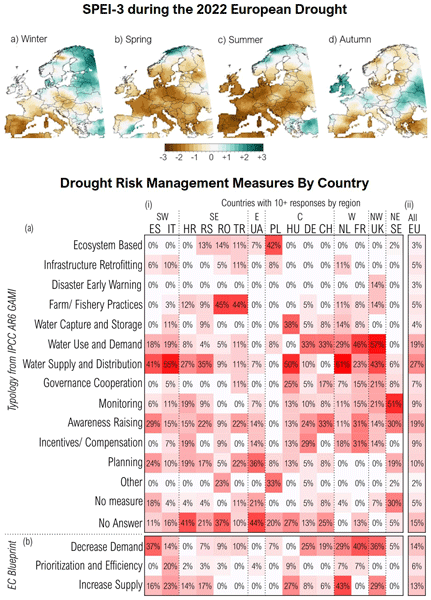
The DitA (Drought in the Anthropocene) network's study on the 2022 European drought reveals growing risks, varied impacts, and fragmented, short-term management. Based on a survey of water managers, it explores risk, impacts, strategies, and their evolution. While challenges persist, signs of improvement show readiness for change. The authors call for a European Drought Directive to unify and guide future drought risk management.
Juan C. Acosta Navarro, Alvise Aranyossy, Paolo De Luca, Markus G. Donat, Arthur Hrast Essenfelder, Rashed Mahmood, Andrea Toreti, and Danila Volpi
Earth Syst. Dynam., 16, 1723–1737, https://doi.org/10.5194/esd-16-1723-2025, https://doi.org/10.5194/esd-16-1723-2025, 2025
Short summary
Short summary
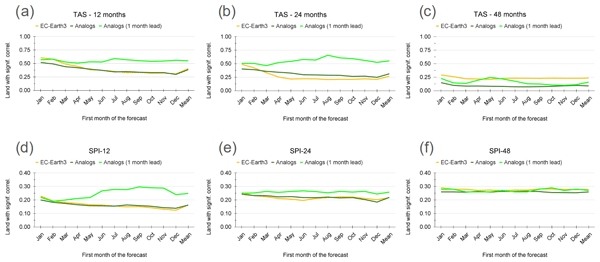
A computationally inexpensive climate model analog method yields skillful climate predictions across timescales, from seasons to multiple years, complementing existing climate prediction systems and potentially providing valuable information for sectors like agriculture and energy.
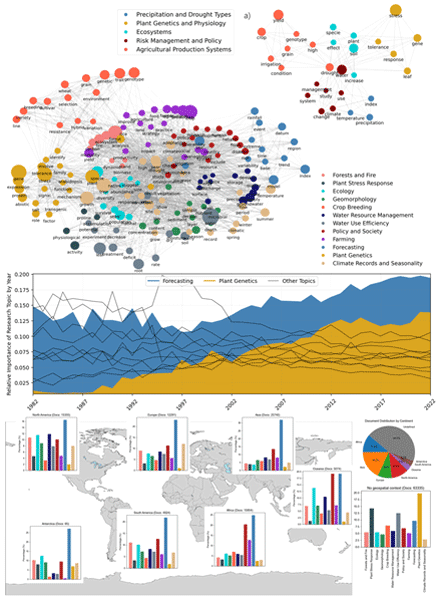
Roland Baatz, Gohar Ghazaryan, Michael Hagenlocher, Claas Nendel, Andrea Toreti, and Ehsan Eyshi Rezaei
Hydrol. Earth Syst. Sci., 29, 1379–1393, https://doi.org/10.5194/hess-29-1379-2025, https://doi.org/10.5194/hess-29-1379-2025, 2025
Short summary
Short summary
Our global review of 130 000 peer-reviewed articles reveals that drought forecasting and plant genetics dominate drought research priorities. Using topic modelling, we traced evolving themes from 1901 to 2022, highlighting a shift from ecology to cutting-edge technologies. By applying unsupervised machine learning, we offer insights into how integrated approaches matter, guiding future priorities to strengthen drought resilience and to safeguard water resources.
Amelie Herzog, Jost Hellwig, and Kerstin Stahl
Hydrol. Earth Syst. Sci., 28, 4065–4083, https://doi.org/10.5194/hess-28-4065-2024, https://doi.org/10.5194/hess-28-4065-2024, 2024
Short summary
Short summary
Surface water–groundwater interaction can vary along a river. This study used a groundwater model that reproduced relative observed longitudinal and vertical connectivity patterns in the river network to assess the system's response to imposed stress tests. For the case study, imposed groundwater abstraction appears to influence connectivity relatively more than altered recharge, but a quantification of absolute exchange flows will require further model improvements.
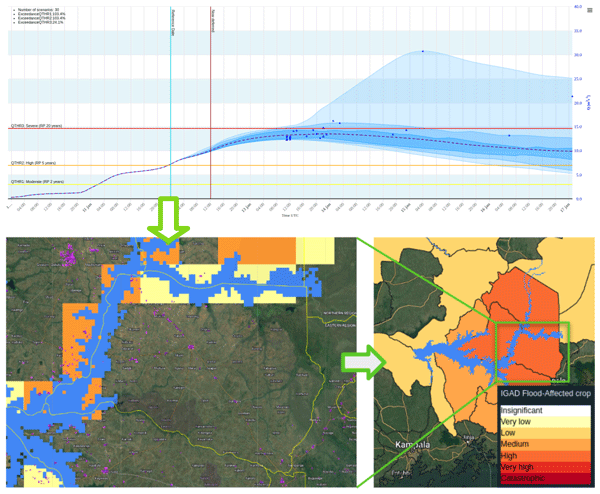
Lorenzo Alfieri, Andrea Libertino, Lorenzo Campo, Francesco Dottori, Simone Gabellani, Tatiana Ghizzoni, Alessandro Masoero, Lauro Rossi, Roberto Rudari, Nicola Testa, Eva Trasforini, Ahmed Amdihun, Jully Ouma, Luca Rossi, Yves Tramblay, Huan Wu, and Marco Massabò
Nat. Hazards Earth Syst. Sci., 24, 199–224, https://doi.org/10.5194/nhess-24-199-2024, https://doi.org/10.5194/nhess-24-199-2024, 2024
Short summary
Short summary
This work describes Flood-PROOFS East Africa, an impact-based flood forecasting system for the Greater Horn of Africa. It is based on hydrological simulations, inundation mapping, and estimation of population and assets exposed to upcoming river floods. The system supports duty officers in African institutions in the daily monitoring of hydro-meteorological disasters. A first evaluation shows the system performance for the catastrophic floods in the Nile River basin in summer 2020.
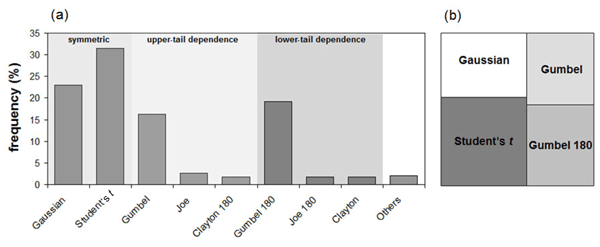
Carmelo Cammalleri, Carlo De Michele, and Andrea Toreti
Hydrol. Earth Syst. Sci., 28, 103–115, https://doi.org/10.5194/hess-28-103-2024, https://doi.org/10.5194/hess-28-103-2024, 2024
Short summary
Short summary
Precipitation and soil moisture have the potential to be jointly used for the modeling of drought conditions. In this research, we analysed how their statistical inter-relationship varies across Europe. We found some clear spatial patterns, especially in the so-called tail dependence (which measures the strength of the relationship for the extreme values). The results suggest that the tail dependence needs to be accounted for to correctly assess the value of joint modeling for drought.
Yonca Cavus, Kerstin Stahl, and Hafzullah Aksoy
Hydrol. Earth Syst. Sci., 27, 3427–3445, https://doi.org/10.5194/hess-27-3427-2023, https://doi.org/10.5194/hess-27-3427-2023, 2023
Short summary
Short summary
With intensified extremes under climate change, water demand increases. Every drop of water is more valuable than before when drought is experienced particularly. We developed drought intensity–duration–frequency curves using physical indicators, the deficit in precipitation and streamflow, for a more straightforward interpretation. Tests with the observed major droughts in two climatologically different catchments confirmed the practical applicability of the curves under drought conditions.
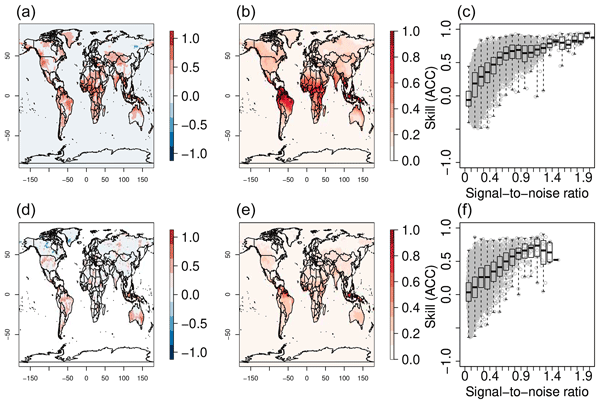
Juan Camilo Acosta Navarro and Andrea Toreti
Weather Clim. Dynam., 4, 823–831, https://doi.org/10.5194/wcd-4-823-2023, https://doi.org/10.5194/wcd-4-823-2023, 2023
Short summary
Short summary
Droughts and heatwaves have become some of the clearest manifestations of a changing climate. Near-term adaptation strategies can benefit from seasonal predictions, but these predictions still have limitations. We found that an intrinsic property of multi-system forecasts can serve to better anticipate extreme high-temperature and low-precipitation events during boreal summer in several regions of the Northern Hemisphere with different levels of predictability.
Heidi Kreibich, Kai Schröter, Giuliano Di Baldassarre, Anne F. Van Loon, Maurizio Mazzoleni, Guta Wakbulcho Abeshu, Svetlana Agafonova, Amir AghaKouchak, Hafzullah Aksoy, Camila Alvarez-Garreton, Blanca Aznar, Laila Balkhi, Marlies H. Barendrecht, Sylvain Biancamaria, Liduin Bos-Burgering, Chris Bradley, Yus Budiyono, Wouter Buytaert, Lucinda Capewell, Hayley Carlson, Yonca Cavus, Anaïs Couasnon, Gemma Coxon, Ioannis Daliakopoulos, Marleen C. de Ruiter, Claire Delus, Mathilde Erfurt, Giuseppe Esposito, Didier François, Frédéric Frappart, Jim Freer, Natalia Frolova, Animesh K. Gain, Manolis Grillakis, Jordi Oriol Grima, Diego A. Guzmán, Laurie S. Huning, Monica Ionita, Maxim Kharlamov, Dao Nguyen Khoi, Natalie Kieboom, Maria Kireeva, Aristeidis Koutroulis, Waldo Lavado-Casimiro, Hong-Yi Li, Maria Carmen LLasat, David Macdonald, Johanna Mård, Hannah Mathew-Richards, Andrew McKenzie, Alfonso Mejia, Eduardo Mario Mendiondo, Marjolein Mens, Shifteh Mobini, Guilherme Samprogna Mohor, Viorica Nagavciuc, Thanh Ngo-Duc, Huynh Thi Thao Nguyen, Pham Thi Thao Nhi, Olga Petrucci, Nguyen Hong Quan, Pere Quintana-Seguí, Saman Razavi, Elena Ridolfi, Jannik Riegel, Md Shibly Sadik, Nivedita Sairam, Elisa Savelli, Alexey Sazonov, Sanjib Sharma, Johanna Sörensen, Felipe Augusto Arguello Souza, Kerstin Stahl, Max Steinhausen, Michael Stoelzle, Wiwiana Szalińska, Qiuhong Tang, Fuqiang Tian, Tamara Tokarczyk, Carolina Tovar, Thi Van Thu Tran, Marjolein H. J. van Huijgevoort, Michelle T. H. van Vliet, Sergiy Vorogushyn, Thorsten Wagener, Yueling Wang, Doris E. Wendt, Elliot Wickham, Long Yang, Mauricio Zambrano-Bigiarini, and Philip J. Ward
Earth Syst. Sci. Data, 15, 2009–2023, https://doi.org/10.5194/essd-15-2009-2023, https://doi.org/10.5194/essd-15-2009-2023, 2023
Short summary
Short summary
As the adverse impacts of hydrological extremes increase in many regions of the world, a better understanding of the drivers of changes in risk and impacts is essential for effective flood and drought risk management. We present a dataset containing data of paired events, i.e. two floods or two droughts that occurred in the same area. The dataset enables comparative analyses and allows detailed context-specific assessments. Additionally, it supports the testing of socio-hydrological models.
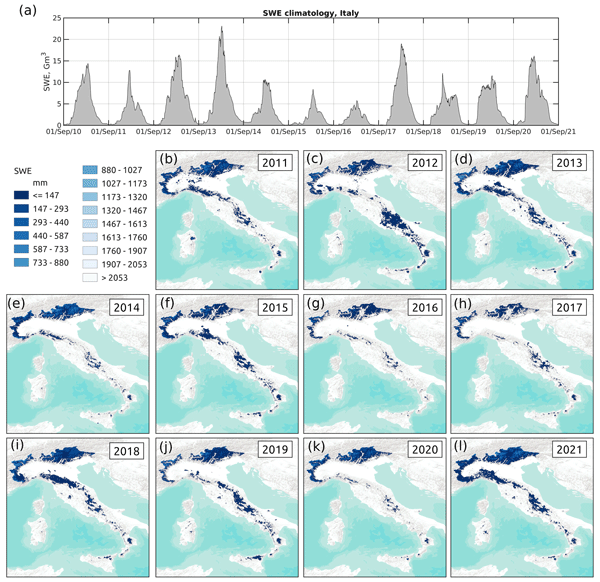
Francesco Avanzi, Simone Gabellani, Fabio Delogu, Francesco Silvestro, Flavio Pignone, Giulia Bruno, Luca Pulvirenti, Giuseppe Squicciarino, Elisabetta Fiori, Lauro Rossi, Silvia Puca, Alexander Toniazzo, Pietro Giordano, Marco Falzacappa, Sara Ratto, Hervè Stevenin, Antonio Cardillo, Matteo Fioletti, Orietta Cazzuli, Edoardo Cremonese, Umberto Morra di Cella, and Luca Ferraris
Earth Syst. Sci. Data, 15, 639–660, https://doi.org/10.5194/essd-15-639-2023, https://doi.org/10.5194/essd-15-639-2023, 2023
Short summary
Short summary
Snow cover has profound implications for worldwide water supply and security, but knowledge of its amount and distribution across the landscape is still elusive. We present IT-SNOW, a reanalysis comprising daily maps of snow amount and distribution across Italy for 11 snow seasons from September 2010 to August 2021. The reanalysis was validated using satellite images and snow measurements and will provide highly needed data to manage snow water resources in a warming climate.
Ruth Stephan, Stefano Terzi, Mathilde Erfurt, Silvia Cocuccioni, Kerstin Stahl, and Marc Zebisch
Nat. Hazards Earth Syst. Sci., 23, 45–64, https://doi.org/10.5194/nhess-23-45-2023, https://doi.org/10.5194/nhess-23-45-2023, 2023
Short summary
Short summary
This study maps agriculture's vulnerability to drought in the European pre-Alpine regions of Thurgau (CH) and Podravska (SI). We combine region-specific knowledge with quantitative data mapping; experts of the study regions, far apart, identified a few common but more region-specific factors that we integrated in two vulnerability scenarios. We highlight the benefits of the participatory approach in improving the quantitative results and closing the gap between science and practitioners.
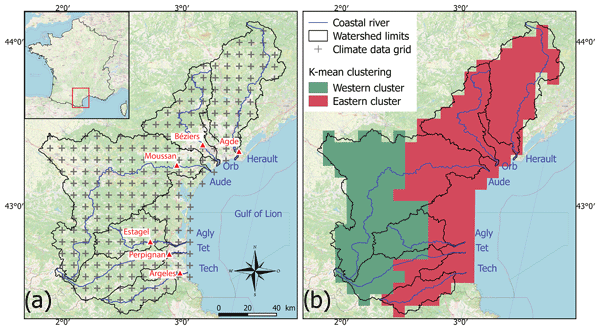
Camille Labrousse, Wolfgang Ludwig, Sébastien Pinel, Mahrez Sadaoui, Andrea Toreti, and Guillaume Lacquement
Hydrol. Earth Syst. Sci., 26, 6055–6071, https://doi.org/10.5194/hess-26-6055-2022, https://doi.org/10.5194/hess-26-6055-2022, 2022
Short summary
Short summary
The interest of this study is to demonstrate that we identify two zones in our study area whose hydroclimatic behaviours are uneven. By investigating relationships between the hydroclimatic conditions in both clusters for past observations with the overall atmospheric functioning, we show that the inequalities are mainly driven by a different control of the atmospheric teleconnection patterns over the area.
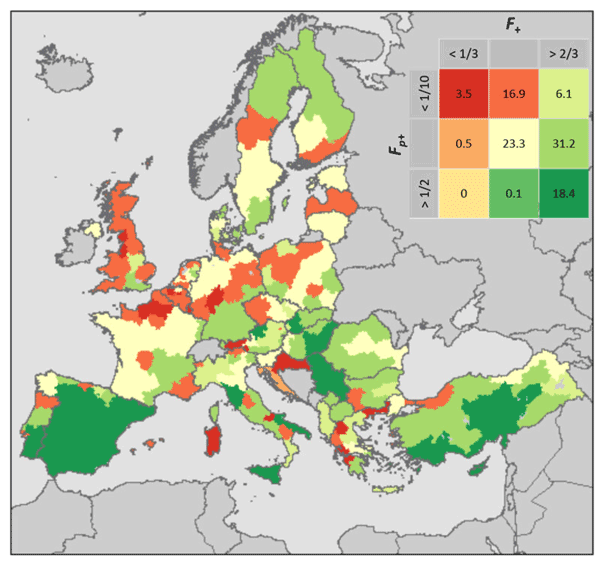
Carmelo Cammalleri, Niall McCormick, and Andrea Toreti
Nat. Hazards Earth Syst. Sci., 22, 3737–3750, https://doi.org/10.5194/nhess-22-3737-2022, https://doi.org/10.5194/nhess-22-3737-2022, 2022
Short summary
Short summary
We evaluated the ability of vegetation indices derived from satellite data to capture annual yield variations across Europe. The strength of the relationship varies throughout the year, with March–October representing the optimal period in most cases. Spatial differences were also observed, with the best results obtained in the Mediterranean regions.
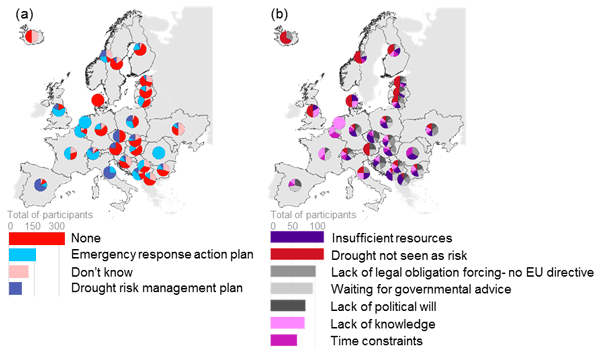
Veit Blauhut, Michael Stoelzle, Lauri Ahopelto, Manuela I. Brunner, Claudia Teutschbein, Doris E. Wendt, Vytautas Akstinas, Sigrid J. Bakke, Lucy J. Barker, Lenka Bartošová, Agrita Briede, Carmelo Cammalleri, Ksenija Cindrić Kalin, Lucia De Stefano, Miriam Fendeková, David C. Finger, Marijke Huysmans, Mirjana Ivanov, Jaak Jaagus, Jiří Jakubínský, Svitlana Krakovska, Gregor Laaha, Monika Lakatos, Kiril Manevski, Mathias Neumann Andersen, Nina Nikolova, Marzena Osuch, Pieter van Oel, Kalina Radeva, Renata J. Romanowicz, Elena Toth, Mirek Trnka, Marko Urošev, Julia Urquijo Reguera, Eric Sauquet, Aleksandra Stevkov, Lena M. Tallaksen, Iryna Trofimova, Anne F. Van Loon, Michelle T. H. van Vliet, Jean-Philippe Vidal, Niko Wanders, Micha Werner, Patrick Willems, and Nenad Živković
Nat. Hazards Earth Syst. Sci., 22, 2201–2217, https://doi.org/10.5194/nhess-22-2201-2022, https://doi.org/10.5194/nhess-22-2201-2022, 2022
Short summary
Short summary
Recent drought events caused enormous damage in Europe. We therefore questioned the existence and effect of current drought management strategies on the actual impacts and how drought is perceived by relevant stakeholders. Over 700 participants from 28 European countries provided insights into drought hazard and impact perception and current management strategies. The study concludes with an urgent need to collectively combat drought risk via a European macro-level drought governance approach.
Erik Tijdeman, Veit Blauhut, Michael Stoelzle, Lucas Menzel, and Kerstin Stahl
Nat. Hazards Earth Syst. Sci., 22, 2099–2116, https://doi.org/10.5194/nhess-22-2099-2022, https://doi.org/10.5194/nhess-22-2099-2022, 2022
Short summary
Short summary
We identified different drought types with typical hazard and impact characteristics. The summer drought type with compounding heat was most impactful. Regional drought propagation of this drought type exhibited typical characteristics that can guide drought management. However, we also found a large spatial variability that caused distinct differences among propagating drought signals. Accordingly, local multivariate drought information was needed to explain the full range of drought impacts.
Cited articles
Aldea, J., Dahlgren, J., Holmström, E., and Löf, M.: Current and future drought vulnerability for three dominant boreal tree species, Glob. Change Biol., 30, https://doi.org/10.1111/gcb.17079, 2024.
Bachmair, S., Svensson, C., Prosdocimi, I., Hannaford, J., and Stahl, K.: Developing drought impact functions for drought risk management, Nat. Hazards Earth Syst. Sci., 17, 1947–1960, https://doi.org/10.5194/nhess-17-1947-2017, 2017.
Bartošová, L., Fischer, M., Balek, J., Bláhová, M., Kudláčková, L., Chuchma, F., Hlavinka, P., Možný, M., Zahradníček, P., Wall, N., Hayes, M., Hain, C., Anderson, M., Wagner, W., Žalud, Z., and Trnka, M.: Validity and reliability of drought reporters in estimating soil water content and drought impacts in central Europe, Agr. Forest Meteorol., 315, https://doi.org/10.1016/j.agrformet.2022.108808, 2022.
Blauhut, V.: The triple complexity of drought risk analysis and its visualisation via mapping: a reveiw across scales and sectors, Earth-Science Reviews, 210, 103345, https://doi.org/10.1016/j.earscirev.2020.103345, 2020.
Blauhut, V., Stahl, K., Stagge, J. H., Tallaksen, L. M., De Stefano, L., and Vogt, J.: Estimating drought risk across Europe from reported drought impacts, drought indices, and vulnerability factors, Hydrol. Earth Syst. Sci., 20, 2779–2800, https://doi.org/10.5194/hess-20-2779-2016, 2016.
Blauhut, V., Stephan, R., and Stahl, K.: The European Drought Impact report Inventory (EDII V2.0), FreiDok plus [data set], https://doi.org/10.6094/UNIFR/230922, 2022.
Bulut, B., Magee, E., Armitage, R., Adedipe, O. E., Tanguy, M., Barker, L. J., and Hannaford, J.: Towards impact-based early warning of drought: a generic framework for drought impact prediction in the UK, EGUsphere [preprint], https://doi.org/10.5194/egusphere-2025-3176, 2025.
de Brito, M. M., Kuhlicke, C., and Marx, A.: Near-real-time drought impact assessment: a text mining approach on the 2018/19 drought in Germany, Enviro. Res. Lett., 15, https://doi.org/10.1088/1748-9326/aba4ca, 2020.
Díaz de Otálora, X., Dragoni, F., Del Prado, A., Estellés, F., Wilfart, A., Krol, D., Balaine, L., Anestis, V., and Amon, B.: Identification of representative dairy cattle and fodder crop production typologies at regional scale in Europe, Agron. Sustain. Dev., 42, https://doi.org/10.1007/s13593-022-00830-3, 2022.
Erian, W., Pulwarty, R., Vogt, J. V., AbuZeid, K., Bert, F., Bruntrup, M., El-Askary, H., de Estrada, M., Gaupp, F., Grundy, M., Hadwen, T., Hagenlocher, M., Kairu, G., Lamhauge, N., Li, W., Mahon, R., Maia, R., Martins, E. S. P. R., Meza, I., de los Milagos Skansi, M., Moderc, A., Naumann, G., Negri, R., Partey, S. T., Podestá, G., Quesada, M., Rakhmatova, N., Riley, J. E., Rudari, R., Shanmugasundaram, J., Silveira Reis Junior, D., Singh, C., Spennemann, P., Srinivasan, G., Stefanski, R., Sušnik, A., Svoboda, M., Trotman, A., Tsegai, D., Ünver, O., Van Meerbeeck, C., Wens, M., Abdullaeva, S., Agarwal, A., Ballantyne, D., Belikov, D., Belorussova, O., Bonnet, G., Brown, G., Browne, T., Cammalleri, C., Conijn, S., Ehlert, K., Fagan, L., Khasankhanova, G., Kibaroğlu, A., Klein, R., Kovalevskaya, Y., Van Loon, A., Massabò, M., Miguel Saraiva, A., de Moel, H., Murray, V., Nemani, R., Nishonov, B., Özgüler, H., Pai, D.S., Pascual, V., Rakhmatova, V., Ramesh, K. J., Richards, V., Rossi, L., Savitskiy, A., Schaan, G., Shardakova, L., Spinoni, J., Stone, R., Stoute, S., Subbiah, A., Tarayannikova, R., Yildiz, D., Young, S., and Zougmore, R. B.: GAR Special Report on Drought 2021, United Nations Office for Disaster Risk Reduction (UNDRR), https://doi.org/10.18356/9789210057882, 2021.
Espinosa-Tasón, J., Berbel, J., Gutiérrez-Martín, C., and Musolino, D. A.: Socioeconomic impact of 2005–2008 drought in Andalusian agriculture, Sci. Total Environ., 826, https://doi.org/10.1016/j.scitotenv.2022.154148, 2022.
Hagenlocher, M., Naumann, G., Meza, I., Blauhut, V., Cotti, D., Döll, P., Ehlert, K., Gaupp, F., Van Loon, A. F., Marengo, J. A., Rossi, L., Sabino Siemons, A. S., Siebert, S., Tsehayu, A. T., Toreti, A., Tsegai, D., Vera, C., Vogt, J., and Wens, M.: Tackling growing drought risks – the need for a systemic perspective, Earth's Future, 11, https://doi.org/10.1029/2023EF003857, 2023.
Hao, Z., Hao, F., Xia, Y., Feng, S., Sun, C., Zhang, X., Fu, Y., Hao, Y., Zhang, Y., and Meng, Y.: Compound droughts and hot extremes: Characteristics, drivers, changes, and impacts, Earth-Sci. Rev., 235, https://doi.org/10.1016/j.earscirev.2022.104241, 2022.
Hlavsová, M., Poděbradská, M., Fischer, M., Žalud, Z., and Trnka, M.: Global Drought Impacts in Near-Real-Time: A Media-Based Database for Drought Impact Reporting, Environ. Res. Lett., 20, https://doi.org/10.1088/1748-9326/ade819, 2025.
Ionita, M. and Nagavciuc, V.: Changes in drought features at the European level over the last 120 years, Nat. Hazards Earth Syst. Sci., 21, 1685–1701, https://doi.org/10.5194/nhess-21-1685-2021, 2021.
Jakubínský, J., Bláhová, M., Bartošová, L., Steinerová, K., Balek, J., Dížková, P., Semerádová, D., Alexandru, D., Bardarska, G., Bokal, S., Borojević, G., Bucur, A., Kalin, K. C., Barbu, A. C., Debre, B., Đorđević, M., Đurić, I., Mircea, B. F., Gatarić, S., Gregorič, G., Hasenauer, S., Ivanov, M., Kircsi, A., Labudová, L., Turňa, M., Marinović, I., Marković, M., Mateescu, E., Oblišar, G., Popescu, A., Srđević, Z., Savić-Šljivić, T., Supić, D., Sušnik, A., Pazin, N., Drljevic, M., Kuc, T., Mitrovic, L., Micev, S., Wagner, W., Eitzinger, J., Daneu, V., Blauhut, V., Stahl, K., and Trnka, M.: Repository of drought event impacts across the Danube catchment countries between 1981 and 2016 using publicly available sources, Acta Universitatis Agriculturae et Silviculturae Mendelianae Brunensis, 67, 925–938, https://doi.org/10.11118/actaun201967040925, 2019.
Jobbová, E., Crampsie, A., Seifert, N., Myslinski, T., Sente, L., Murphy, C., McLeman, R. A., Ludlow, F., and Horvath, C.: Irish Drought Impacts Database v.1.0 (IDID), Zenodo [data set], https://doi.org/10.5281/zenodo.7216126, 2022.
Jobbová, E., Crampsie, A., Murphy, C., Ludlow, F., McLeman, R., Horvath, C., Seifert, N., Myslinski, T., and Sente, L.: The Irish drought impacts database: A 287 year database of drought impacts derived from newspaper archives, Geosci. Data J., 11, 1007–1023, https://doi.org/10.1002/gdj3.272, 2024.
Maetens, W., Masante, D. , Barbosa, P., Rossi L., Wens M., De Moel, H., Van Loon, A. F., Cotti, D., Sabino-Siemons, A. S., Hagenlocher, M., Bláhová, M., Blauhut, V., Szillat, K., Stahl, K., and Toreti, A.: The European Drought Observatory for Resilience and Adaptation (EDORA), Science for Policy Brief, European Commission, Ispra, JRC136695, COI:20.500.12592/905qmqm, 2024.
Naumann, G., Cammalleri, C., Mentaschi, L., and Feyen, L.: Increased economic drought impacts in Europe with anthropogenic warming, Nature Climate Change, 11, 485–491, https://doi.org/10.1038/s41558-021-01044-3, 2021.
NDMC: The National Drought Impact Reporter, https://go.unl.edu/dirdash, last access date: 10 January 2025.
Orth, R., Zscheischler, J., and Seneviratne, S. I.: Record dry summer in 2015 challenges precipitation projections in Central Europe, Scientific Reports, 6, https://doi.org/10.1038/srep28334, 2016.
Rossi, L., Wens, M., De Moel, H., Cotti, D., Sabino Siemons, A., Toreti, A., Maetens, W., Masante, D., Van Loon, A., Hagenlocher, M., Rudari, R., Naumann, G., Meroni, M., Avanzi, F., Isabellon, M., and Barbosa, P.: European Drought Risk Atlas, Publications Office of the European Union, Luxembourg, https://doi.org/10.2760/33211, 2023.
Shyrokaya, A., Pappenberger, F., Pechlivanidis, I., Messori, G., Khatami, S., Mazzoleni, M., and Di Baldassarre, G.: Advances and gaps in the science and practice of impact-based forecasting of droughts, WIREs Water, 11, https://doi.org/10.1002/wat2.1698, 2024.
Sodoge, J., Kuhlicke, C., and de Brito, M. M.: Automatized spatio-temporal detection of drought impacts from newspaper articles using natural language processing and machine learning, Weather and Climate Extremes, 41, https://doi.org/10.1016/j.wace.2023.100574, 2023.
Stahl, K., Kohn, I., Blauhut, V., Urquijo, J., De Stefano, L., Acácio, V., Dias, S., Stagge, J. H., Tallaksen, L. M., Kampragou, E., Van Loon, A. F., Barker, L. J., Melsen, L. A., Bifulco, C., Musolino, D., de Carli, A., Massarutto, A., Assimacopoulos, D., and Van Lanen, H. A. J.: Impacts of European drought events: insights from an international database of text-based reports, Nat. Hazards Earth Syst. Sci., 16, 801–819, https://doi.org/10.5194/nhess-16-801-2016, 2016.
Stahl, K., Blauhut, V., Barker, L. J., and Stagge, J. H.: Chapter 12 Drought Impacts, in: HYDROLOGICAL DROUGHT – Processes and Estimation Methods, 2nd edn., edited by: Tallaksen, L. M. and van Lanen, H. A. J., Development in Water Sciences no. 48, Elsevier Publ. NL, https://doi.org/10.1016/B978-0-12-819082-1.00005-9, 2024.
Stephan, R., Erfurt, M., Terzi, S., Žun, M., Kristan, B., Haslinger, K., and Stahl, K.: An inventory of Alpine drought impact reports to explore past droughts in a mountain region, Nat. Hazards Earth Syst. Sci., 21, 2485–2501, https://doi.org/10.5194/nhess-21-2485-2021, 2021.
Stephan, R., Stahl, K., and Dormann, C. F.: Drought impact prediction across time and space: limits and potentials of text reports, Environ. Res. Lett., 18, https://doi.org/10.1088/1748-9326/acd8da, 2023.
Sutanto, S. J., van der Weert, M., Wanders, N., Blauhut, V., and Van Lanen, H. A. J.: Moving from drought hazard to impact forecasts, Nat. Commun., 10, 1–7, https://doi.org/10.1038/s41467-019-12840-z, 2019.
Szillat, K., Hlavsová, M., Rossi, L., Blauhut, V., and Stahl, K.: Transformation of text-based drought impact data from EDII (European Drought Impact report Inventory) to EDID (European Drought Impact Database): Guidelines, Freiburg HydroNotes no. 8, https://doi.org/10.6094/UNIFR/271380, 2025.
Toreti, A., Belward, A., Perez-Dominguez, I., Naumann, G., Luterbacher, J., Cronie, O., Seguini, L., Manfron, G., Lopez-Lozano, R., Baruth, B., van den Berg, M., Dentener, F., Ceglar, A., Chatzopoulos, T., and Zampieri, M.: The exceptional 2018 European water seesaw calls for action on adaptation, Earth's Future, 7, 652–663, https://doi.org/10.1029/2019EF001170, 2019.
Toreti, A., Tsegai, D., Rossi, L., Mauer, T., Cremonese, E., Wens, M., de Moel, H., Siemons, A.-S., Acosta Navarro, J., Hrast Essenfelder, A., Volpi, D., Cotti, D., Sparkes, E., and Hagenlocher, M.: World drought atlas, edited by: Toreti, A., Tsegai, D., and Rossi, L., Publications Office of the European Union, https://doi.org/10.2760/3842670, 2024.
Trnka, M., Hlavinka, P., Možný, M., Semerádová, D., Štěpánek, P., Balek, J., Bartošová, L., Zahradníček, P., Bláhová, M., Skalák, P., Farda, A., Hayes, M., Svoboda, M., Wagner, W., Eitzinger, J., Fischer, M., and Žalud, Z.: Czech Drought Monitor System for monitoring and forecasting agricultural drought and drought impacts, Int. J. Climatol., 40, 5941–5958, https://doi.org/10.1002/joc.6557, 2020.
Wilhite, D. A., Svoboda, M. D., and Hayes, M. J.: Understanding the complex impacts of drought: A key to enhancing drought mitigation and preparedness, Water Resour. Manag., 21, 763–774, https://doi.org/10.1007/s11269-006-9076-5, 2007.
Editorial statement
The paper operationalises the European Drought Impact Database (EDID), addressing a critical gap in the systematic collection, harmonisation, and use of drought impact data for proactive drought risk management in Europe. By demonstrating how diverse regional datasets can be integrated into an accessible, policy-relevant platform linked to the Copernicus European Drought Observatory, the study provides a foundation for improved impact forecasting, model validation, and evidence-based drought adaptation strategies.
The paper operationalises the European Drought Impact Database (EDID), addressing a critical gap...
Short summary
Drought impact information is important for risk assessment. But, there is little consensus on impact data monitoring. The European Drought Impacts Database (EDID) combines several existing text-based datasets with the results from new searches for impact information into a structured database with spatial and temporal attributes. Allowing research as well as operational use, its contents show where and when in Europe drought has affected agriculture, water supply, ecosystems, and other sectors.
Drought impact information is important for risk assessment. But, there is little consensus on...


Altmetrics
Final-revised paper
Preprint