
Articles | Volume 26, issue 2
https://doi.org/10.5194/nhess-26-827-2026
© Author(s) 2026. This work is distributed under
the Creative Commons Attribution 4.0 License.
the Creative Commons Attribution 4.0 License.
https://doi.org/10.5194/nhess-26-827-2026
© Author(s) 2026. This work is distributed under
the Creative Commons Attribution 4.0 License.
the Creative Commons Attribution 4.0 License.
Research article
| 
19 Feb 2026
Research article |
| 19 Feb 2026
| 19 Feb 2026
Using seasonal forecasts to enhance our understanding of extreme wind and precipitation impacts from extratropical cyclones
Jacob W. Maddison
CORRESPONDING AUTHOR

Department of Mathematics and Statistics, University of Exeter, Exeter, UK
Jennifer L. Catto
Department of Mathematics and Statistics, University of Exeter, Exeter, UK
Sandra Hansen
Guy Carpenter & Company Limited, London, UK
Ching Ho Justin Ng
Guy Carpenter & Company Limited, London, UK
Stefan Siegert
Department of Mathematics and Statistics, University of Exeter, Exeter, UK
Related authors
Jacob William Maddison, Jennifer Louise Catto, Sandra Hansen, Ching Ho Justin Ng, and Stefan Siegert
EGUsphere, https://doi.org/10.5194/egusphere-2024-686, https://doi.org/10.5194/egusphere-2024-686, 2024
Preprint archived
Short summary
Short summary
In this work we estimate the impact of the most extreme European windstorms that could occur in the current climate. Using a large dataset of windstorm footprints created seasonal forecast model output, we find windstorms that are more extreme than any previously observed for most of the countries considered. Impacts from these extreme windstorms are expected to be around 1.5 times stronger than the most extreme storm on record. This information is highly valuable in the insurance industry.
Svenja Christ, Tyler C. Leicht, Jennifer L. Catto, Jacob Maddison, Julian Quinting, and Joaquim G. Pinto
EGUsphere, https://doi.org/10.5194/egusphere-2026-4772, https://doi.org/10.5194/egusphere-2026-4772, 2026
Short summary
Short summary
This study compares the pressure tendency equation (PTE) and piecewise potential vorticity (PV) inversion to assess methodological uncertainty in quantifying diabatic contributions to extratropical cyclone intensification for four high-impact European cyclones. For most cyclones, PTE and PV inversion yield consistent results regarding the role of diabatic processes, with cyclones with strong diabatic heating contributions tending to be associated with enhanced low- to mid-level PV forcing.
Paul Bell, Jennifer Catto, Anne Jones, and Stefan Siegert
EGUsphere, https://doi.org/10.5194/egusphere-2025-4110, https://doi.org/10.5194/egusphere-2025-4110, 2025
Preprint archived
Short summary
Short summary
Precipitation weather generators are statistical models that simulate local precipitation for downscaling applications. This study develops a precipitation weather generator for the UK that uses a recent dataset of discrete storm types which assigns areas to be thunderstorms, cyclones or fronts. Results show this dataset improves the weather generator, with improvement quantified using proper scoring rules, which score the weather generator on how close its output is to observations.
Trish E. Nowak, Andy T. Augousti, Benno I. Simmons, and Stefan Siegert
Geosci. Model Dev., 18, 3509–3532, https://doi.org/10.5194/gmd-18-3509-2025, https://doi.org/10.5194/gmd-18-3509-2025, 2025
Short summary
Short summary
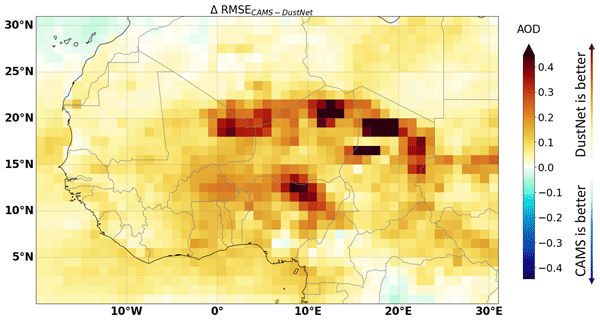
The DustNet model uses deep neural networks to accurately predict Saharan mineral dust transport in the atmosphere. It offers fast and precise forecasts with predictions achieved in just 2.1 s on a standard computer. This innovative approach outperforms traditional models, which take hours to produce a forecast and use high-energy supercomputers. By making high-quality dust monitoring accessible and efficient, DustNet can improve weather, climate, and air quality forecasts.
Raphaël Rousseau-Rizzi, Shira Raveh-Rubin, Jennifer L. Catto, Alice Portal, Yonatan Givon, and Olivia Martius
Weather Clim. Dynam., 5, 1079–1101, https://doi.org/10.5194/wcd-5-1079-2024, https://doi.org/10.5194/wcd-5-1079-2024, 2024
Short summary
Short summary
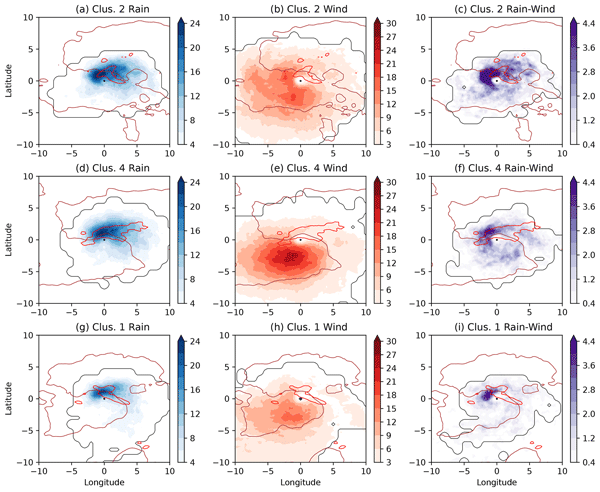
We identify situations when rain and wind, rain and wave, or heat and dust hazards co-occur within Mediterranean cyclones. These hazard combinations are associated with risk to infrastructure, risk of coastal flooding and risk of respiratory issues. The presence of Mediterranean cyclones is associated with increased probability of all three hazard combinations. We identify weather configurations and cyclone structures, particularly those associated with specific co-occurrence combinations.
Philip G. Sansom and Jennifer L. Catto
Geosci. Model Dev., 17, 6137–6151, https://doi.org/10.5194/gmd-17-6137-2024, https://doi.org/10.5194/gmd-17-6137-2024, 2024
Short summary
Short summary
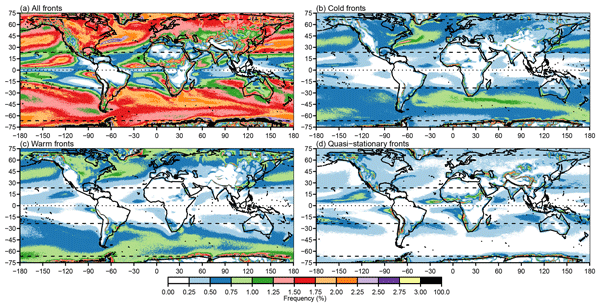
Weather fronts bring a lot of rain and strong winds to many regions of the mid-latitudes. We have developed an updated method of identifying these fronts in gridded data that can be used on new datasets with small grid spacing. The method can be easily applied to different datasets due to the use of open-source software for its development and shows improvements over similar previous methods. We present an updated estimate of the average frequency of fronts over the past 40 years.
Alice Portal, Shira Raveh-Rubin, Jennifer L. Catto, Yonatan Givon, and Olivia Martius
Weather Clim. Dynam., 5, 1043–1060, https://doi.org/10.5194/wcd-5-1043-2024, https://doi.org/10.5194/wcd-5-1043-2024, 2024
Short summary
Short summary
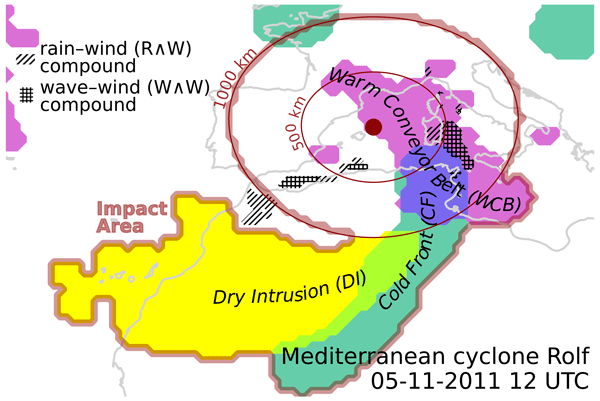
Mediterranean cyclones are associated with extended rain, wind, and wave impacts. Although beneficial for regional water resources, their passage may induce extreme weather, which is especially impactful when multiple hazards combine together. Here we show how the passage of Mediterranean cyclones increases the likelihood of rain–wind and wave–wind compounding and how compound–cyclone statistics vary by region and season, depending on the presence of specific airflows around the cyclone.
Jacob William Maddison, Jennifer Louise Catto, Sandra Hansen, Ching Ho Justin Ng, and Stefan Siegert
EGUsphere, https://doi.org/10.5194/egusphere-2024-686, https://doi.org/10.5194/egusphere-2024-686, 2024
Preprint archived
Short summary
Short summary
In this work we estimate the impact of the most extreme European windstorms that could occur in the current climate. Using a large dataset of windstorm footprints created seasonal forecast model output, we find windstorms that are more extreme than any previously observed for most of the countries considered. Impacts from these extreme windstorms are expected to be around 1.5 times stronger than the most extreme storm on record. This information is highly valuable in the insurance industry.
Yonatan Givon, Or Hess, Emmanouil Flaounas, Jennifer Louise Catto, Michael Sprenger, and Shira Raveh-Rubin
Weather Clim. Dynam., 5, 133–162, https://doi.org/10.5194/wcd-5-133-2024, https://doi.org/10.5194/wcd-5-133-2024, 2024
Short summary
Short summary
A novel classification of Mediterranean cyclones is presented, enabling a separation between storms driven by different atmospheric processes. The surface impact of each cyclone class differs greatly by precipitation, winds, and temperatures, providing an invaluable tool to study the climatology of different types of Mediterranean storms and enhancing the understanding of their predictability, on both weather and climate scales.
Victoria A. Sinclair and Jennifer L. Catto
Weather Clim. Dynam., 4, 567–589, https://doi.org/10.5194/wcd-4-567-2023, https://doi.org/10.5194/wcd-4-567-2023, 2023
Short summary
Short summary
We studied the relationship between the strength of mid-latitude cyclones and their precipitation, how this may change in the future, and whether it depends of the type of cyclone. The relationship between cyclone strength and precipitation increases in warmer climates and depends strongly on the type of cyclone. For some cyclone types there is no relation between cyclone strength and precipitation. For all cyclone types, precipitation increases with uniform warming and polar amplification.

Matthew D. K. Priestley and Jennifer L. Catto
Weather Clim. Dynam., 3, 337–360, https://doi.org/10.5194/wcd-3-337-2022, https://doi.org/10.5194/wcd-3-337-2022, 2022
Short summary
Short summary
We use the newest set of climate model experiments from CMIP6 to investigate changes to mid-latitude storm tracks and cyclones from global warming. The overall number of cyclones will decrease. However in winter there will be more of the most intense cyclones, and these intense cyclones are likely to be stronger. Cyclone wind speeds will increase in winter, and as a result the area of strongest wind speeds will increase. By 2100 the area of strong wind speeds may increase by over 30 %.
Cited articles
Bandhauer, M., Isotta, F., Lakatos, M., Lussana, C., Båserud, L., Izsák, B., Szentes, O., Tveito, O. E., and Frei, C.: Evaluation of daily precipitation analyses in E-OBS (v19. 0e) and ERA5 by comparison to regional high-resolution datasets in European regions, Int. J. Climatol, 42, 727–747, 2022. a
Befort, D. J., Wild, S., Knight, J. R., Lockwood, J. F., Thornton, H. E., Hermanson, L., Bett, P. E., Weisheimer, A., and Leckebusch, G. C.: Seasonal forecast skill for extratropical cyclones and windstorms, Q. J. Roy. Meteor. Soc., 145, 92–104, 2019. a
Bloomfield, H., Hillier, J., Griffin, A., Kay, A., Shaffrey, L. C., Pianosi, F., James, R., Kumar, D., Champion, A., and Bates, P.: Co-occurring wintertime flooding and extreme wind over Europe, from daily to seasonal timescales, Weather and Climate Extremes, 39, 100550, https://doi.org/10.1016/j.wace.2023.100550, 2023. a, b
Castillo, E. and Hadi, A. S.: Fitting the generalized Pareto distribution to data, J. Am. Stat. Assoc., 92, 1609–1620, 1997. a
Cotterill, D. F., Mitchell, D., Stott, P. A., and Bates, P.: Using UNSEEN approach to attribute regional UK winter rainfall extremes, Int. J. Climatol., 44, 2406–2424, 2024. a
Dawkins, L. C., Stephenson, D. B., Lockwood, J. F., and Maisey, P. E.: The 21st century decline in damaging European windstorms, Nat. Hazards Earth Syst. Sci., 16, 1999–2007, https://doi.org/10.5194/nhess-16-1999-2016, 2016. a, b
Donat, M. G., Leckebusch, G. C., Wild, S., and Ulbrich, U.: Future changes in European winter storm losses and extreme wind speeds inferred from GCM and RCM multi-model simulations, Nat. Hazards Earth Syst. Sci., 11, 1351–1370, https://doi.org/10.5194/nhess-11-1351-2011, 2011. a, b
Donat, M. G., Leckebusch, G. C., Pinto, J. G., and Ulbrich, U.: Examination of wind storms over Central Europe with respect to circulation weather types and NAO phases, Int. J. Climatol., 30, 1289–1300, 2010. a
Dunstone, N., Smith, D., Scaife, A., Hermanson, L., Eade, R., Robinson, N., Andrews, M., and Knight, J.: Skilful predictions of the winter North Atlantic Oscillation one year ahead, Nat. Geosci., 9, 809–814, 2016. a
Easterling, D. R., Meehl, G. A., Parmesan, C., Changnon, S. A., Karl, T. R., and Mearns, L. O.: Climate extremes: observations, modeling, and impacts, Science, 289, 2068–2074, 2000. a
Fenn, T., Clarke, C., Burgess-Gamble, L., Harding, E., Ogunyoye, F., Hick, E., Dawks, S., Morris, J., and Chatterton, J.: The costs and impacts of the winter 2013/14 floods in England and Wales, E3S Web Conf., 7, 05004, https://doi.org/10.1051/e3sconf/20160705004, 2016. a, b
Flynn, C. M., Moemken, J., Pinto, J. G., Schutte, M. K., and Messori, G.: CLIMK–WINDS: a new database of extreme European winter windstorms, Earth Syst. Sci. Data, 17, 4431–4453, https://doi.org/10.5194/essd-17-4431-2025, 2025. a
Gliksman, D., Averbeck, P., Becker, N., Gardiner, B., Goldberg, V., Grieger, J., Handorf, D., Haustein, K., Karwat, A., Knutzen, F., Lentink, H. S., Lorenz, R., Niermann, D., Pinto, J. G., Queck, R., Ziemann, A., and Franzke, C. L. E.: Review article: A European perspective on wind and storm damage – from the meteorological background to index-based approaches to assess impacts, Nat. Hazards Earth Syst. Sci., 23, 2171–2201, https://doi.org/10.5194/nhess-23-2171-2023, 2023. a
Hassler, B. and Lauer, A.: Comparison of reanalysis and observational precipitation datasets including ERA5 and WFDE5, Atmosphere, 12, 1462, https://doi.org/10.3390/atmos12111462, 2021. a
Hawcroft, M., Shaffrey, L., Hodges, K., and Dacre, H.: How much Northern Hemisphere precipitation is associated with extratropical cyclones?, Geophys. Res. Lett., 39, L24809, https://doi.org/10.1029/2012GL053866, 2012. a
Hawcroft, M. K., Shaffrey, L. C., Hodges, K. I., and Dacre, H. F.: Can climate models represent the precipitation associated with extratropical cyclones?, Clim. Dynam., 47, 679–695, 2016. a
Hersbach, H., Bell, B., Berrisford, P., Hirahara, S., Horányi, A., Muñoz-Sabater, J., Nicolas, J., Peubey, C., Radu, R., Schepers, D., Simmons, A., Soci, C., Abdalla, S., Abellan, X., Balsamo, G., Bechtold, P., Biavati, G., Bidlot, J., Bonavita, M., De Chiara, G., Dahlgren, P., Dee, D., Diamantakis, M., Dragani, R., Flemming, J., Forbes, R., Fuentes, M., Geer, A., Haimberger, L., Healy, S., Hogan, R. J., Hólm, E., Janisková, M., Keeley, S., Laloyaux, P., Lopez, P., Lupu, C., Radnoti, G., de Rosnay, P., Rozum, I., Vamborg, F., Villaume, S., and Thépaut, J.-N.: The ERA5 global reanalysis, Q. J. Roy. Meteor. Soc., 146, 1999–2049, https://doi.org/10.1002/qj.3803, 2020. a
Hillier, J. K., Macdonald, N., Leckebusch, G. C., and Stavrinides, A.: Interactions between apparently 'primary' weather-driven hazards and their cost, Environ. Res. Lett., 10, 104003, https://doi.org/10.1088/1748-9326/10/10/104003, 2015. a
Hodges, K.: Feature tracking on the unit sphere, Mon. Weather Rev., 123, 3458–3465, 1995. a
Hodges, K.: Adaptive constraints for feature tracking, Mon. Weather Rev., 127, 1362–1373, 1999. a
Hodges, K. I.: A general method for tracking analysis and its application to meteorological data, Mon. Weather Rev., 122, 2573–2586, 1994. a
Hoskins, B. J. and Hodges, K. I.: New perspectives on the Northern Hemisphere winter storm tracks, J. Atmos. Sci., 59, 1041–1061, 2002. a
Jones, T. P., Stephenson, D. B., and Priestley, M. D.: Correlation of wind and precipitation annual aggregate severity of European cyclones, Weather, 79, 176–181, https://doi.org/10.1002/wea.4573, 2024. a
Karremann, M. K., Pinto, J. G., von Bomhard, P. J., and Klawa, M.: On the clustering of winter storm loss events over Germany, Nat. Hazards Earth Syst. Sci., 14, 2041–2052, https://doi.org/10.5194/nhess-14-2041-2014, 2014. a
Kay, G., Dunstone, N., Smith, D., Dunbar, T., Eade, R., and Scaife, A.: Current likelihood and dynamics of hot summers in the UK, Environ. Res. Lett., 15, 094099, https://doi.org/10.1088/1748-9326/abab32, 2020. a
Kelder, T., Müller, M., Slater, L., Marjoribanks, T., Wilby, R., Prudhomme, C., Bohlinger, P., Ferranti, L., and Nipen, T.: Using UNSEEN trends to detect decadal changes in 100-year precipitation extremes, npj Climate and Atmospheric Science, 3, 47, https://doi.org/10.1038/s41612-020-00149-4, 2020. a
Kent, C., Dunstone, N., Tucker, S., Scaife, A. A., Brown, S., Kendon, E. J., Smith, D., McLean, L., and Greenwood, S.: Estimating unprecedented extremes in UK summer daily rainfall, Environ. Res. Lett., 17, 014041, https://doi.org/10.1088/1748-9326/ac42fb, 2022. a
Kron, W., Löw, P., and Kundzewicz, Z. W.: Changes in risk of extreme weather events in Europe, Environ. Sci. Policy, 100, 74–83, 2019. a
Lawrence, B. N., Bennett, V. L., Churchill, J., Juckes, M., Kershaw, P., Pascoe, S., Pepler, S., Pritchard, M., and Stephens, A.: Storing and manipulating environmental big data with JASMIN, in: 2013 IEEE international conference on big data, IEEE, 68–75, https://doi.org/10.1109/BigData.2013.6691556, 2013. a
Leckebusch, G. C., Ulbrich, U., Fröhlich, L., and Pinto, J. G.: Property loss potentials for European midlatitude storms in a changing climate, Geophys. Res. Lett., 34, L05703, https://doi.org/10.1029/2006GL027663, 2007. a
Leckebusch, G. C., Renggli, D., and Ulbrich, U.: Development and application of an objective storm severity measure for the Northeast Atlantic region, Meteorol. Z., 17, 575–587, https://doi.org/10.1127/0941-2948/2008/0323, 2008. a
Little, A. S., Priestley, M. D., and Catto, J. L.: Future increased risk from extratropical windstorms in northern Europe, Nat. Commun., 14, 4434, https://doi.org/10.1038/s41467-023-40102-6, 2023. a
Lockwood, J. F., Guentchev, G. S., Alabaster, A., Brown, S. J., Palin, E. J., Roberts, M. J., and Thornton, H. E.: Using high-resolution global climate models from the PRIMAVERA project to create a European winter windstorm event set, Nat. Hazards Earth Syst. Sci., 22, 3585–3606, https://doi.org/10.5194/nhess-22-3585-2022, 2022. a, b, c, d, e, f, g, h, i, j, k
Maksimović, Č., Prodanović, D., Boonya-Aroonnet, S., Leitao, J. P., Djordjević, S., and Allitt, R.: Overland flow and pathway analysis for modelling of urban pluvial flooding, J. Hydraul. Res., 47, 512–523, 2009. a
Merz, R. and Blöschl, G.: A process typology of regional floods, Water Resour. Res., 39, 1340, https://doi.org/10.1029/2002WR001952, 2003. a
Miao, H., Xu, H., Huang, G., and Yang, K.: Evaluation and future projections of wind energy resources over the Northern Hemisphere in CMIP5 and CMIP6 models, Renewable Energy, 211, 809–821, 2023. a
Moemken, J., Alifdini, I., Ramos, A. M., Georgiadis, A., Brocklehurst, A., Braun, L., and Pinto, J. G.: Insurance loss model vs. meteorological loss index – how comparable are their loss estimates for European windstorms?, Nat. Hazards Earth Syst. Sci., 24, 3445–3460, https://doi.org/10.5194/nhess-24-3445-2024, 2024a. a
Moemken, J., Messori, G., and Pinto, J. G.: Windstorm losses in Europe – What to gain from damage datasets, Weather and Climate Extremes, 44, 100661, https://doi.org/10.1016/j.wace.2024.100661, 2024b. a
Molteni, F., Buizza, R., Palmer, T. N., and Petroliagis, T.: The ECMWF ensemble prediction system: Methodology and validation, Q. J. Roy. Meteor. Soc., 122, 73–119, 1996. a
Munich Re: Loss events in Europe 1980–2014: 10 costliest winter storms ordered by insured losses, Tech. rep., Münchener Rückversicherungs-Gesellschaft, Geo Risks Research, NatCatSERVICE, https://www.preventionweb.net/files/44281_19802014paketworldusde4zu3.pdf?startDownload=true (last access: 12 February 2026), 2015. a, b
Munich Re: Geo Risks Research, NatCatSERVICE, https://natcatservice.munichre.com/ (last access: October 2023), 2017. a
Osinski, R., Lorenz, P., Kruschke, T., Voigt, M., Ulbrich, U., Leckebusch, G. C., Faust, E., Hofherr, T., and Majewski, D.: An approach to build an event set of European windstorms based on ECMWF EPS, Nat. Hazards Earth Syst. Sci., 16, 255–268, https://doi.org/10.5194/nhess-16-255-2016, 2016. a, b, c, d, e
Owen, L. E., Catto, J. L., Stephenson, D. B., and Dunstone, N. J.: Compound precipitation and wind extremes over Europe and their relationship to extratropical cyclones, Weather and Climate Extremes, 33, 100342, https://doi.org/10.1016/j.wace.2021.100342, 2021. a, b
Palla, A., Colli, M., Candela, A., Aronica, G., and Lanza, L.: Pluvial flooding in urban areas: The role of surface drainage efficiency, J. Flood Risk Manag., 11, S663–S676, 2018. a
Palmer, T. N., Buizza, R., Leutbecher, M., Hagedorn, R., Jung, T., Rodwell, M., Vitart, F., Berner, J., Hagel, E., Lawrence, A., and Pappenberger, F.: The ensemble prediction system–recent and ongoing developments, ECMWF Technical Memoranda, 53 pp., https://doi.org/10.21957/bh84yl1rj, 2007. a
Pathiraja, S., Westra, S., and Sharma, A.: Why continuous simulation? The role of antecedent moisture in design flood estimation, Water Resour. Res., 48, W06534, https://doi.org/10.1029/2011WR010997, 2012. a
PERILS AG: Extratropical Windstorm Event Losses, https://www.perils.org/losses?year=&classification=1012&status=#event-losses(last access: 12 February 2026), 2022. a
Pfahl, S. and Wernli, H.: Quantifying the relevance of cyclones for precipitation extremes, J. Climate, 25, 6770–6780, 2012. a
Pithan, F., Shepherd, T. G., Zappa, G., and Sandu, I.: Climate model biases in jet streams, blocking and storm tracks resulting from missing orographic drag, Geophys. Res. Lett., 43, 7231–7240, 2016. a
Priestley, M. D. and Catto, J. L.: Improved representation of extratropical cyclone structure in HighResMIP models, Geophys. Res. Lett., 49, e2021GL096708, https://doi.org/10.1029/2021GL093540, 2022. a, b
Priestley, M. D. K., Dacre, H. F., Shaffrey, L. C., Hodges, K. I., and Pinto, J. G.: The role of serial European windstorm clustering for extreme seasonal losses as determined from multi-centennial simulations of high-resolution global climate model data, Nat. Hazards Earth Syst. Sci., 18, 2991–3006, https://doi.org/10.5194/nhess-18-2991-2018, 2018. a, b
Priestley, M. D. K., Stephenson, D. B., Scaife, A. A., Bannister, D., Allen, C. J. T., and Wilkie, D.: Return levels of extreme European windstorms, their dependency on the North Atlantic Oscillation, and potential future risks, Nat. Hazards Earth Syst. Sci., 23, 3845–3861, https://doi.org/10.5194/nhess-23-3845-2023, 2023. a, b
Schröter, K., Kunz, M., Elmer, F., Mühr, B., and Merz, B.: What made the June 2013 flood in Germany an exceptional event? A hydro-meteorological evaluation, Hydrol. Earth Syst. Sci., 19, 309–327, https://doi.org/10.5194/hess-19-309-2015, 2015. a
Sibley, A.: Analysis of extreme rainfall and flooding in Cumbria 18–20 November 2009, Weather, 65, 287–292, https://doi.org/10.1002/wea.672, 2010. a
Squire, D. T., Richardson, D., Risbey, J. S., Black, A. S., Kitsios, V., Matear, R. J., Monselesan, D., Moore, T. S., and Tozer, C. R.: Likelihood of unprecedented drought and fire weather during Australia's 2019 megafires, npj Climate and Atmospheric Science, 4, 64, https://doi.org/10.1038/s41612-021-00220-8, 2021. a
Thompson, V., Dunstone, N. J., Scaife, A. A., Smith, D. M., Hardiman, S. C., Ren, H.-L., Lu, B., and Belcher, S. E.: Risk and dynamics of unprecedented hot months in South East China, Clim. Dynam., 52, 2585–2596, 2019. a
Thrasher, B., Maurer, E. P., McKellar, C., and Duffy, P. B.: Technical Note: Bias correcting climate model simulated daily temperature extremes with quantile mapping, Hydrol. Earth Syst. Sci., 16, 3309–3314, https://doi.org/10.5194/hess-16-3309-2012, 2012. a
Tian, Q., Huang, G., Hu, K., and Niyogi, D.: Observed and global climate model based changes in wind power potential over the Northern Hemisphere during 1979–2016, Energy, 167, 1224–1235, 2019. a
Verhoest, N., Vandenberghe, S., Cabus, P., Onof, C., Meca-Figueras, T., and Jameleddine, S.: Are stochastic point rainfall models able to preserve extreme flood statistics?, Hydrol. Process., 24, 3439–3445, 2010. a
Williams, K., Copsey, D., Blockley, E., Bodas-Salcedo, A., Calvert, D., Comer, R., Davis, P., Graham, T., Hewitt, H., Hill, R., Hyder, P., Ineson, S., Johns, T. C., Keen, A. B., Lee, R. W., Megann, A., Milton, S. F., Rae, J. G. L., Roberts, M. J., Scaife, A. A., Schiemann, R., Storkey, D., Thorpe, L., Watterson, I. G., Walters, D. N., West, A., Wood, R. A., Woollings, T., and Xavier, P. K.: The Met Office global coupled model 3.0 and 3.1 (GC3.0 and GC3.1) configurations, J. Adv. Model. Earth Sy., 10, 357–380, 2018. a
Short summary
Strong winds and heavy precipitation in extratropical cyclones can cause significant damage, and also considerable losses. Here, we estimate the worst case scenarios in terms of impacts that could occur in todays climate resulting from wind and precipitation in extratropical cyclones. We find impacts roughly 1.5 times more severe than any in the historical record for 14 countries considered in Northwestern/Central Europe. These damages would incur costs into the billions of pounds for insurers.
Strong winds and heavy precipitation in extratropical cyclones can cause significant damage, and...


Altmetrics
Final-revised paper
Preprint