
Articles | Volume 26, issue 11
https://doi.org/10.5194/nhess-26-6117-2026
© Author(s) 2026. This work is distributed under
the Creative Commons Attribution 4.0 License.
https://doi.org/10.5194/nhess-26-6117-2026
© Author(s) 2026. This work is distributed under
the Creative Commons Attribution 4.0 License.
Research article
| 
25 Nov 2026
Research article |
| 25 Nov 2026
Modelling firebrand dynamics in a coupled Fire-Atmosphere models: an Eulerian approach
Alberto Alonso-Pinar
SPE UMR6134, Université de Corse, Campus Grimaldi, Corse, France
Faculty of Science, The University of Melbourne, 4 Water St., Creswick, Victoria, Australia
Jean-Baptiste Filippi
CORRESPONDING AUTHOR

SPE UMR6134, Université de Corse, Campus Grimaldi, Corse, France
Adrien Guyot
Australian Bureau of Meteorology, Melbourne, Victoria, Australia
Nicholas McCarthy
Country Fire Authority, Burwood East, Victoria, Australia
Pierre Tulet
CNRM Météo France, Toulouse, France
Alexander Filkov
Faculty of Science, The University of Melbourne, 4 Water St., Creswick, Victoria, Australia
Related authors
No articles found.
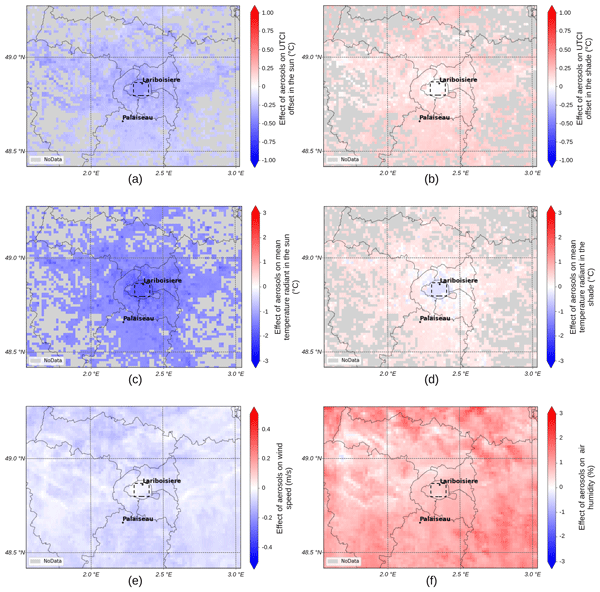
Jérémy Bernard, Tim Nagel, Valéry Masson, Aude Lemonsu, Jean Wurtz, Pierre Tulet, and Quentin Rodier
Atmos. Chem. Phys., 26, 12729–12749, https://doi.org/10.5194/acp-26-12729-2026, https://doi.org/10.5194/acp-26-12729-2026, 2026
Short summary
Short summary
Cities are particularly vulnerable to heat-waves because of their dense population combined with an amplification of the heat hazard caused by the urban heat island phenomenon. Heat event are sometimes associated with aerosol plume in the atmosphere, which affect the thermal comfort. This study shows that aerosol plumes can result in a heat stress reduction of up to 1 °C in sunny areas in cities while no difference in the shade of suburban areas.
Adrien Guyot, Jacob Vile, Louis Soulard-Fischer, Hamish McGowan, Alain Protat, and Caroline Poulsen
EGUsphere, https://doi.org/10.5194/egusphere-2026-1907, https://doi.org/10.5194/egusphere-2026-1907, 2026
Short summary
Short summary
We studied how extreme wildfire clouds are detected from space and compared this with weather radar and lightning observations. We found that satellites can reliably detect when these clouds begin, but later tend to track spreading cloud tops rather than the active storm itself. This can make events appear larger and longer-lasting than they are. Combining different types of observations is therefore essential to better understand and monitor these dangerous fire-driven storms.
Adrien Guyot, Hamish McGowan, Jean-Baptiste Filippi, Alberto Alonso-Pinar, Alain Protat, Nicholas McCarthy, Simon Webster, and Amie Taylor
EGUsphere, https://doi.org/10.5194/egusphere-2026-2256, https://doi.org/10.5194/egusphere-2026-2256, 2026
Short summary
Short summary
Wildfires are becoming more extreme, yet current tools struggle to track rapid changes. We studied how mobile weather radar can observe fire plumes in detail by analysing past studies and a recent wildfire case. Radar reveals how plumes grow, change, and create dangerous wind shifts. Our results show it can improve understanding and help firefighters anticipate hazardous conditions.
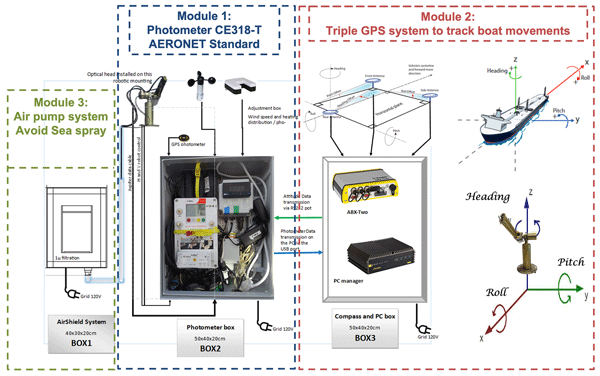
Benjamin Torres, Luc Blarel, Philippe Goloub, Gaël Dubois, Maria Fernanda Sanchez-Barrero, Ioana Elisabeta Popovici, Fabrice Maupin, Elena Lind, Alexander Smirnov, Ilya Slutsker, Julien Chimot, Ramiro González, Michaël Sicard, Jean Marc Metzger, and Pierre Tulet
Atmos. Meas. Tech., 18, 4809–4838, https://doi.org/10.5194/amt-18-4809-2025, https://doi.org/10.5194/amt-18-4809-2025, 2025
Short summary
Short summary
This study shows that it is possible to automatically monitor atmospheric aerosols from research vessels using automated instruments, following the same standards as AERONET (AErosol RObotic NETwork) land-based stations. By collecting 3 years of data in the Indian Ocean, we demonstrate that high-quality measurements can be made, even on a moving platform. These results open new possibilities for observing aerosols over the ocean and improving satellite data and climate studies.
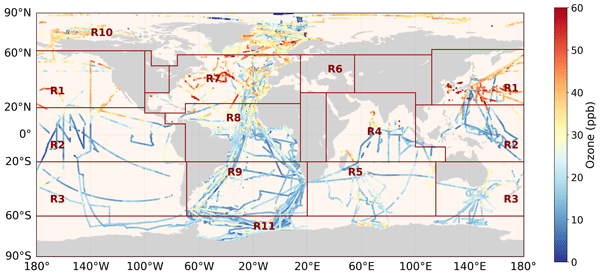
Yugo Kanaya, Roberto Sommariva, Alfonso Saiz-Lopez, Andrea Mazzeo, Theodore K. Koenig, Kaori Kawana, James E. Johnson, Aurélie Colomb, Pierre Tulet, Suzie Molloy, Ian E. Galbally, Rainer Volkamer, Anoop Mahajan, John W. Halfacre, Paul B. Shepson, Julia Schmale, Hélène Angot, Byron Blomquist, Matthew D. Shupe, Detlev Helmig, Junsu Gil, Meehye Lee, Sean C. Coburn, Ivan Ortega, Gao Chen, James Lee, Kenneth C. Aikin, David D. Parrish, John S. Holloway, Thomas B. Ryerson, Ilana B. Pollack, Eric J. Williams, Brian M. Lerner, Andrew J. Weinheimer, Teresa Campos, Frank M. Flocke, J. Ryan Spackman, Ilann Bourgeois, Jeff Peischl, Chelsea R. Thompson, Ralf M. Staebler, Amir A. Aliabadi, Wanmin Gong, Roeland Van Malderen, Anne M. Thompson, Ryan M. Stauffer, Debra E. Kollonige, Juan Carlos Gómez Martin, Masatomo Fujiwara, Katie Read, Matthew Rowlinson, Keiichi Sato, Junichi Kurokawa, Yoko Iwamoto, Fumikazu Taketani, Hisahiro Takashima, Mónica Navarro-Comas, Marios Panagi, and Martin G. Schultz
Earth Syst. Sci. Data, 17, 4901–4932, https://doi.org/10.5194/essd-17-4901-2025, https://doi.org/10.5194/essd-17-4901-2025, 2025
Short summary
Short summary
The first comprehensive dataset of tropospheric ozone over oceans/polar regions is presented, including 77 ship/buoy and 48 aircraft campaign observations (1977–2022, 0–5000 m altitude), supplemented by ozonesonde and surface data. Air masses isolated from land for 72+ hours are systematically selected as essentially oceanic. Among the 11 global regions, they show daytime decreases of 11–16 % in the tropics, while near-zero depletions are rare, unlike in the Arctic, implying different mechanisms.
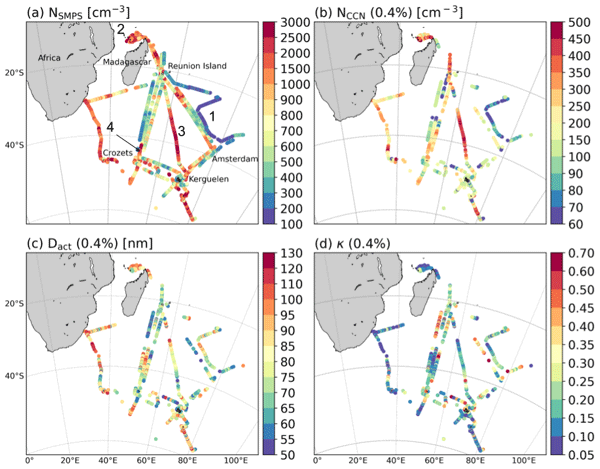
Meredith Dournaux, Pierre Tulet, Joris Pianezze, Jérome Brioude, Jean-Marc Metzger, Melilotus Thyssen, and Gilles Athier
Atmos. Chem. Phys., 25, 10315–10335, https://doi.org/10.5194/acp-25-10315-2025, https://doi.org/10.5194/acp-25-10315-2025, 2025
Short summary
Short summary
Aerosol measurements collected during six oceanographic campaigns carried out in 2021 and 2023 in the southwestern Indian Ocean are presented and analyzed in this paper. The results highlight large variability in the aerosol concentration, size, and water vapor affinity depending on in situ conditions and air mass transport over the ocean. Marine aerosol chemical composition is highly variable over this region and should be considered to better study the impacts of aerosols on regional weather and climate.
Catalina Poraicu, Jean-François Müller, Trissevgeni Stavrakou, Crist Amelynck, Bert W. D. Verreyken, Niels Schoon, Corinne Vigouroux, Nicolas Kumps, Jérôme Brioude, Pierre Tulet, and Camille Mouchel-Vallon
Atmos. Chem. Phys., 25, 6903–6941, https://doi.org/10.5194/acp-25-6903-2025, https://doi.org/10.5194/acp-25-6903-2025, 2025
Short summary
Short summary
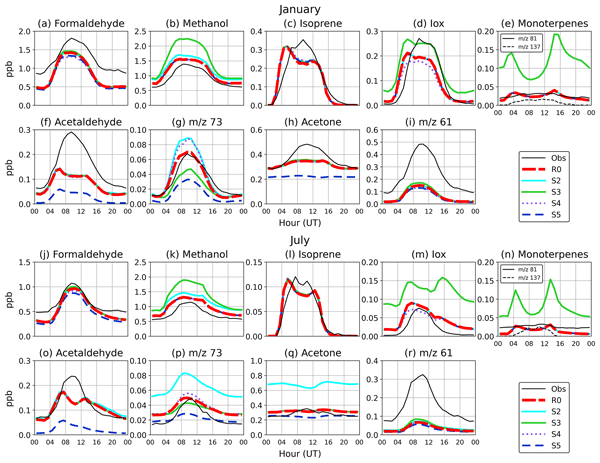
We investigated the sources and impacts of nitrogen oxides and organic compounds over a remote tropical island. Simulations of the high-resolution Weather Research and Forecasting model coupled with chemistry (WRF-Chem) were evaluated using in situ Fourier transform infrared spectroscopy (FTIR) and satellite measurements. This work highlights gaps in current models, like missing sources of key organic compounds and inaccuracies in emission inventories, emphasizing the importance of improving chemical and dynamical processes in atmospheric modelling for budget estimates in tropical regions.
Ruth Reef, Edoardo Daly, Tivanka Anandappa, Eboni-Jane Vienna-Hallam, Harriet Robertson, Matthew Peck, and Adrien Guyot
Biogeosciences, 22, 1149–1162, https://doi.org/10.5194/bg-22-1149-2025, https://doi.org/10.5194/bg-22-1149-2025, 2025
Short summary
Short summary
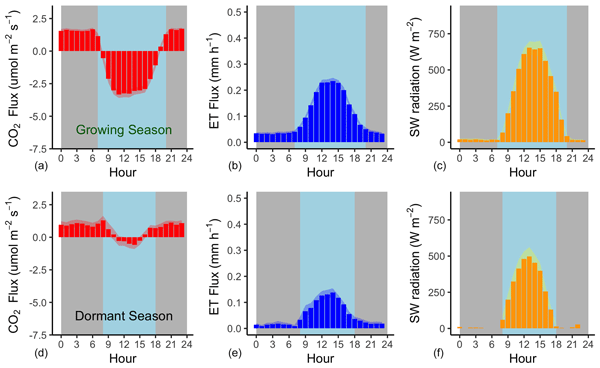
Studies show that saltmarshes excel at capturing carbon from the atmosphere. In this study, we measured CO2 flux in an Australian temperate saltmarsh on French Island. The temperate saltmarsh exhibited strong seasonality. During the warmer growing season, the saltmarsh absorbed 10.5 g CO2 m−2 on average daily from the atmosphere. Even in winter, when plants were dormant, it continued to be a CO2 sink, albeit a smaller one. Cool temperatures and high cloud cover inhibit carbon sequestration.
Luke Edgar Whitehead, Adrian James McDonald, and Adrien Guyot
Atmos. Meas. Tech., 17, 5765–5784, https://doi.org/10.5194/amt-17-5765-2024, https://doi.org/10.5194/amt-17-5765-2024, 2024
Short summary
Short summary
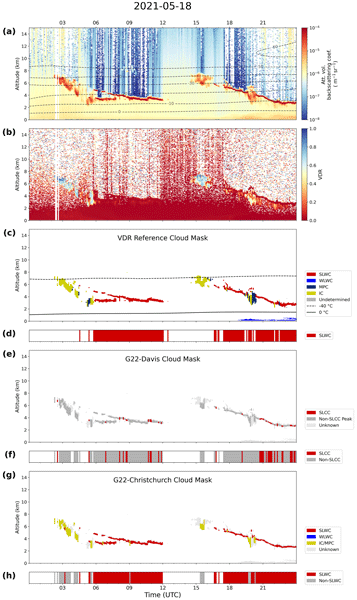
Supercooled liquid water cloud is important to represent in weather and climate models, particularly in the Southern Hemisphere. Previous work has developed a new machine learning method for measuring supercooled liquid water in Antarctic clouds using simple lidar observations. We evaluate this technique using a lidar dataset from Christchurch, New Zealand, and develop an updated algorithm for accurate supercooled liquid water detection at mid-latitudes.
Pierre Tulet, Joel Van Baelen, Pierre Bosser, Jérome Brioude, Aurélie Colomb, Philippe Goloub, Andrea Pazmino, Thierry Portafaix, Michel Ramonet, Karine Sellegri, Melilotus Thyssen, Léa Gest, Nicolas Marquestaut, Dominique Mékiès, Jean-Marc Metzger, Gilles Athier, Luc Blarel, Marc Delmotte, Guillaume Desprairies, Mérédith Dournaux, Gaël Dubois, Valentin Duflot, Kevin Lamy, Lionel Gardes, Jean-François Guillemot, Valérie Gros, Joanna Kolasinski, Morgan Lopez, Olivier Magand, Erwan Noury, Manuel Nunes-Pinharanda, Guillaume Payen, Joris Pianezze, David Picard, Olivier Picard, Sandrine Prunier, François Rigaud-Louise, Michael Sicard, and Benjamin Torres
Earth Syst. Sci. Data, 16, 3821–3849, https://doi.org/10.5194/essd-16-3821-2024, https://doi.org/10.5194/essd-16-3821-2024, 2024
Short summary
Short summary
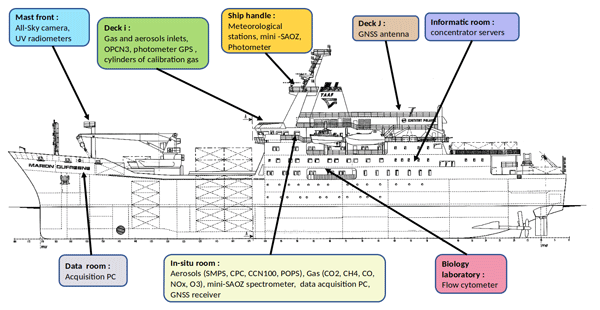
The MAP-IO program aims to compensate for the lack of atmospheric and oceanographic observations in the Southern Ocean by equipping the ship Marion Dufresne with a set of 17 scientific instruments. This program collected 700 d of measurements under different latitudes, seasons, sea states, and weather conditions. These new data will support the calibration and validation of numerical models and the understanding of the atmospheric composition of this region of Earth.
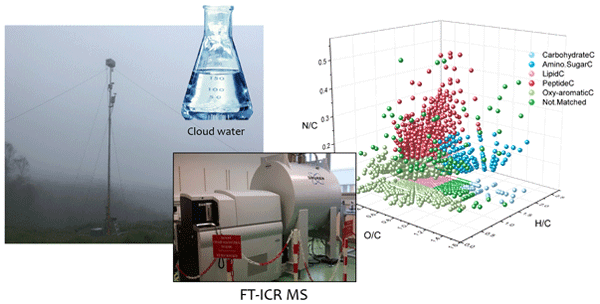
Lucas Pailler, Laurent Deguillaume, Hélène Lavanant, Isabelle Schmitz, Marie Hubert, Edith Nicol, Mickaël Ribeiro, Jean-Marc Pichon, Mickaël Vaïtilingom, Pamela Dominutti, Frédéric Burnet, Pierre Tulet, Maud Leriche, and Angelica Bianco
Atmos. Chem. Phys., 24, 5567–5584, https://doi.org/10.5194/acp-24-5567-2024, https://doi.org/10.5194/acp-24-5567-2024, 2024
Short summary
Short summary
The composition of dissolved organic matter of cloud water has been investigated through non-targeted high-resolution mass spectrometry on only a few samples collected in the Northern Hemisphere. In this work, the chemical composition of samples collected at Réunion Island (SH) is investigated and compared to samples collected at Puy de Dôme (NH). Sampling, analysis and data treatment with the same methodology produced a unique dataset for investigating the molecular composition of clouds.

Safae Oumami, Joaquim Arteta, Vincent Guidard, Pierre Tulet, and Paul David Hamer
Geosci. Model Dev., 17, 3385–3408, https://doi.org/10.5194/gmd-17-3385-2024, https://doi.org/10.5194/gmd-17-3385-2024, 2024
Short summary
Short summary
In this paper, we coupled the SURFEX and MEGAN models. The aim of this coupling is to improve the estimation of biogenic fluxes by using the SURFEX canopy environment model. The coupled model results were validated and several sensitivity tests were performed. The coupled-model total annual isoprene flux is 442 Tg; this value is within the range of other isoprene estimates reported. The ultimate aim of this coupling is to predict the impact of climate change on biogenic emissions.
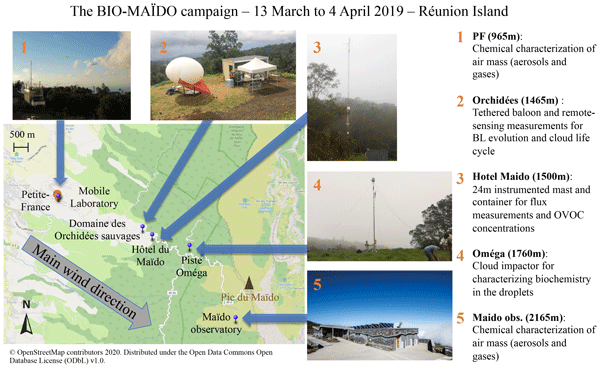
Maud Leriche, Pierre Tulet, Laurent Deguillaume, Frédéric Burnet, Aurélie Colomb, Agnès Borbon, Corinne Jambert, Valentin Duflot, Stéphan Houdier, Jean-Luc Jaffrezo, Mickaël Vaïtilingom, Pamela Dominutti, Manon Rocco, Camille Mouchel-Vallon, Samira El Gdachi, Maxence Brissy, Maroua Fathalli, Nicolas Maury, Bert Verreyken, Crist Amelynck, Niels Schoon, Valérie Gros, Jean-Marc Pichon, Mickael Ribeiro, Eric Pique, Emmanuel Leclerc, Thierry Bourrianne, Axel Roy, Eric Moulin, Joël Barrie, Jean-Marc Metzger, Guillaume Péris, Christian Guadagno, Chatrapatty Bhugwant, Jean-Mathieu Tibere, Arnaud Tournigand, Evelyn Freney, Karine Sellegri, Anne-Marie Delort, Pierre Amato, Muriel Joly, Jean-Luc Baray, Pascal Renard, Angelica Bianco, Anne Réchou, and Guillaume Payen
Atmos. Chem. Phys., 24, 4129–4155, https://doi.org/10.5194/acp-24-4129-2024, https://doi.org/10.5194/acp-24-4129-2024, 2024
Short summary
Short summary
Aerosol particles in the atmosphere play a key role in climate change and air pollution. A large number of aerosol particles are formed from the oxidation of volatile organic compounds (VOCs and secondary organic aerosols – SOA). An important field campaign was organized on Réunion in March–April 2019 to understand the formation of SOA in a tropical atmosphere mostly influenced by VOCs emitted by forest and in the presence of clouds. This work synthesizes the results of this campaign.
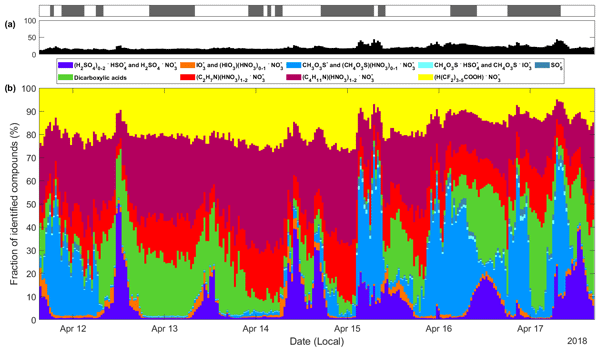
Romain Salignat, Matti Rissanen, Siddharth Iyer, Jean-Luc Baray, Pierre Tulet, Jean-Marc Metzger, Jérôme Brioude, Karine Sellegri, and Clémence Rose
Atmos. Chem. Phys., 24, 3785–3812, https://doi.org/10.5194/acp-24-3785-2024, https://doi.org/10.5194/acp-24-3785-2024, 2024
Short summary
Short summary
Using mass spectrometry data collected at the Maïdo Observatory (2160 m a.s.l., Réunion), we provide the first detailed analysis of molecular cluster chemical composition specifically in the marine free troposphere. The abundance of the identified species is related both to in situ meteorological parameters and air mass history, which also provide insight into their origin. Our work makes an important contribution to documenting the chemistry and physics of the marine free troposphere.
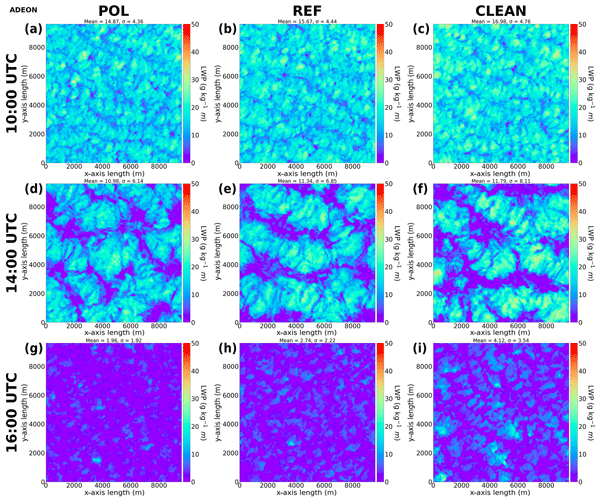
Lambert Delbeke, Chien Wang, Pierre Tulet, Cyrielle Denjean, Maurin Zouzoua, Nicolas Maury, and Adrien Deroubaix
Atmos. Chem. Phys., 23, 13329–13354, https://doi.org/10.5194/acp-23-13329-2023, https://doi.org/10.5194/acp-23-13329-2023, 2023
Short summary
Short summary
Low-level stratiform clouds (LLSCs) appear frequently over southern West Africa during the West African monsoon. Local and remote aerosol sources (biomass burning aerosols from central Africa) play a significant role in the LLSC life cycle. Based on measurements by the DACCIWA campaign, large-eddy simulation (LES) was conducted using different aerosol scenarios. The results show that both indirect and semi-direct effects can act individually or jointly to influence the life cycles of LLSCs.
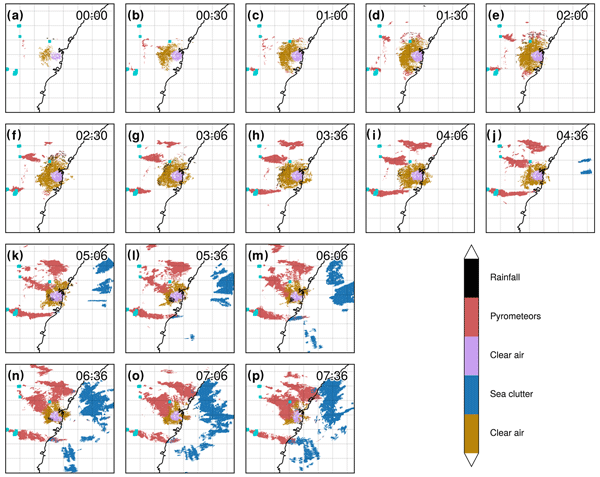
Adrien Guyot, Jordan P. Brook, Alain Protat, Kathryn Turner, Joshua Soderholm, Nicholas F. McCarthy, and Hamish McGowan
Atmos. Meas. Tech., 16, 4571–4588, https://doi.org/10.5194/amt-16-4571-2023, https://doi.org/10.5194/amt-16-4571-2023, 2023
Short summary
Short summary
We propose a new method that should facilitate the use of weather radars to study wildfires. It is important to be able to identify the particles emitted by wildfires on radar, but it is difficult because there are many other echoes on radar like clear air, the ground, sea clutter, and precipitation. We came up with a two-step process to classify these echoes. Our method is accurate and can be used by fire departments in emergencies or by scientists for research.

Adrien Guyot, Alain Protat, Simon P. Alexander, Andrew R. Klekociuk, Peter Kuma, and Adrian McDonald
Atmos. Meas. Tech., 15, 3663–3681, https://doi.org/10.5194/amt-15-3663-2022, https://doi.org/10.5194/amt-15-3663-2022, 2022
Short summary
Short summary
Ceilometers are instruments that are widely deployed as part of operational networks. They are usually not able to detect cloud phase. Here, we propose an evaluation of various methods to detect supercooled liquid water with ceilometer observations, using an extensive dataset from Davis, Antarctica. Our results highlight the possibility for ceilometers to detect supercooled liquid water in clouds.
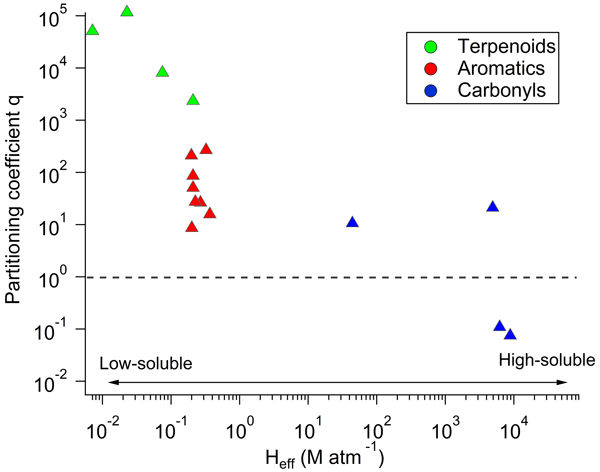
Pamela A. Dominutti, Pascal Renard, Mickaël Vaïtilingom, Angelica Bianco, Jean-Luc Baray, Agnès Borbon, Thierry Bourianne, Frédéric Burnet, Aurélie Colomb, Anne-Marie Delort, Valentin Duflot, Stephan Houdier, Jean-Luc Jaffrezo, Muriel Joly, Martin Leremboure, Jean-Marc Metzger, Jean-Marc Pichon, Mickaël Ribeiro, Manon Rocco, Pierre Tulet, Anthony Vella, Maud Leriche, and Laurent Deguillaume
Atmos. Chem. Phys., 22, 505–533, https://doi.org/10.5194/acp-22-505-2022, https://doi.org/10.5194/acp-22-505-2022, 2022
Short summary
Short summary
We present here the results obtained during an intensive field campaign conducted in March to April 2019 in Reunion. Our study integrates a comprehensive chemical and microphysical characterization of cloud water. Our investigations reveal that air mass history and cloud microphysical properties do not fully explain the variability observed in their chemical composition. This highlights the complexity of emission sources, multiphasic exchanges, and transformations in clouds.
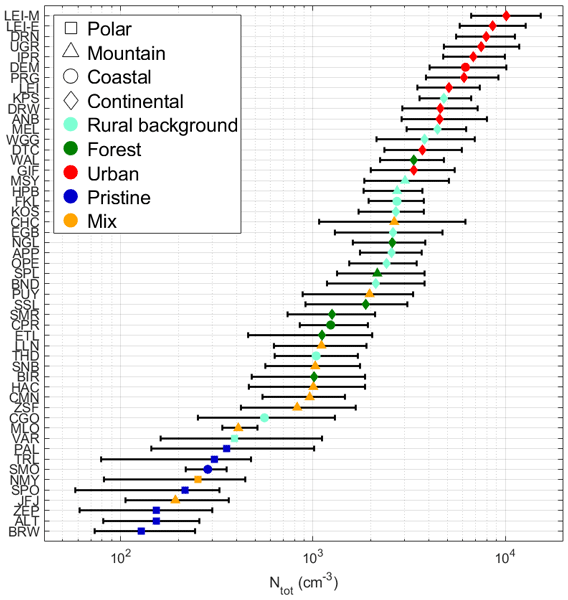
Clémence Rose, Martine Collaud Coen, Elisabeth Andrews, Yong Lin, Isaline Bossert, Cathrine Lund Myhre, Thomas Tuch, Alfred Wiedensohler, Markus Fiebig, Pasi Aalto, Andrés Alastuey, Elisabeth Alonso-Blanco, Marcos Andrade, Begoña Artíñano, Todor Arsov, Urs Baltensperger, Susanne Bastian, Olaf Bath, Johan Paul Beukes, Benjamin T. Brem, Nicolas Bukowiecki, Juan Andrés Casquero-Vera, Sébastien Conil, Konstantinos Eleftheriadis, Olivier Favez, Harald Flentje, Maria I. Gini, Francisco Javier Gómez-Moreno, Martin Gysel-Beer, Anna Gannet Hallar, Ivo Kalapov, Nikos Kalivitis, Anne Kasper-Giebl, Melita Keywood, Jeong Eun Kim, Sang-Woo Kim, Adam Kristensson, Markku Kulmala, Heikki Lihavainen, Neng-Huei Lin, Hassan Lyamani, Angela Marinoni, Sebastiao Martins Dos Santos, Olga L. Mayol-Bracero, Frank Meinhardt, Maik Merkel, Jean-Marc Metzger, Nikolaos Mihalopoulos, Jakub Ondracek, Marco Pandolfi, Noemi Pérez, Tuukka Petäjä, Jean-Eudes Petit, David Picard, Jean-Marc Pichon, Veronique Pont, Jean-Philippe Putaud, Fabienne Reisen, Karine Sellegri, Sangeeta Sharma, Gerhard Schauer, Patrick Sheridan, James Patrick Sherman, Andreas Schwerin, Ralf Sohmer, Mar Sorribas, Junying Sun, Pierre Tulet, Ville Vakkari, Pieter Gideon van Zyl, Fernando Velarde, Paolo Villani, Stergios Vratolis, Zdenek Wagner, Sheng-Hsiang Wang, Kay Weinhold, Rolf Weller, Margarita Yela, Vladimir Zdimal, and Paolo Laj
Atmos. Chem. Phys., 21, 17185–17223, https://doi.org/10.5194/acp-21-17185-2021, https://doi.org/10.5194/acp-21-17185-2021, 2021
Short summary
Short summary
Aerosol particles are a complex component of the atmospheric system the effects of which are among the most uncertain in climate change projections. Using data collected at 62 stations, this study provides the most up-to-date picture of the spatial distribution of particle number concentration and size distribution worldwide, with the aim of contributing to better representation of aerosols and their interactions with clouds in models and, therefore, better evaluation of their impact on climate.
Cited articles
Albini, F. A.: Spot fire distance from burning trees: a predictive model, USDA Forest Service, Intermountain Forest and Range Experiment Station 73, https://www.frames.gov/catalog/8153 (last access: 19 November 2026), 1979.
Albini, F. A.: Spot Fire Distance from Isolated Sources: Extensions of a Predictive Model, USDA Forest Service, Intermountain Forest and Range Experiment Station, https://agris.fao.org/search/en/providers/122535/records/65ddd4e90f3e94b9e5c57f72 (last access: 19 November 2026), 1981.
Albini, F. A.: Transport of Firebrands by Line Thermals, Combust. Sci. Technol., 32, 277–288, https://doi.org/10.1080/00102208308923662, 1983.
Albini, F. A., Alexander, M. E., and Cruz, M. G.: A mathematical model for predicting the maximum potential spotting distance from a crown fire, Int. J. Wildland Fire, 21, 609–627, https://doi.org/10.1071/WF11020, 2012.
Alonso Pinar, A.: Simulation files for Eulerian modelling of spotting using a coupled Fire-Atmosphere approach, Zenodo [data set], https://doi.org/10.5281/zenodo.17241970, 2025.
Alonso-Pinar, A., Filippi, J.-B., and Filkov, A.: Modelling aerodynamics and combustion of firebrands in long-range spotting, Fire Safety J., 152, https://doi.org/10.1016/j.firesaf.2025.104348, 2025a.
Alonso-Pinar, A., Filippi, J.-B., Nguyen, H.-N., and Filkov, A.: A simplified model to incorporate firebrand transport into coupled fire atmosphere models, Int. J. Wildland Fire, 34, https://doi.org/10.1071/wf24200, 2025b.
Anand, C., Shotorban, B., and Mahalingam, S.: Dispersion and deposition of firebrands in a turbulent boundary layer, Int. J. Multiphas. Flow, 109, 98–113, https://doi.org/10.1016/j.ijmultiphaseflow.2018.07.012, 2018.
Baggio, R., Filippi, J. B., Truchot, B., and Couto, F. T.: Local to continental scale coupled fire-atmosphere simulation of large industrial fire plume, Fire Safety J., 134, 103699, https://doi.org/10.1016/j.firesaf.2022.103699, 2022.
Barr, B. W. and Ezekoye, O. A.: Thermo-mechanical modeling of firebrand breakage on a fractal tree, P. Combust. Inst., 34, 2649–2656, https://doi.org/10.1016/j.proci.2012.07.066, 2013.
Bhutia, S., Jenkins, M. A., and Sun, R.: Comparison of firebrand propagation prediction by a plume model and a coupled-fire/atmosphere large-eddy simulator, J. Adv. Model. Earth Sy., 2, 4, https://doi.org/10.3894/JAMES.2010.2.4, 2010.
Bougeault, P. and Lacarrere, P.: Parameterization of Orography-Induced Turbulence in a Mesobeta–Scale Model, Mon. Weather Rev., 117, 1872–1890, https://doi.org/10.1175/1520-0493(1989)117<1872:POOITI>2.0.CO;2, 1989.
Caniaux, G., Redelsperger, J.-L., and Lafore, J.-P.: A Numerical Study of the Stratiform Region of a Fast-Moving Squall Line. Part I: General Description and Water and Heat Budgets, J. Atmos. Sci., 51, 2046–2074, https://doi.org/10.1175/1520-0469(1994)051<2046:ANSOTS>2.0.CO;2, 1994.
Castellnou Ribau, M., Bachfischer, M., Guarque, P., Estivill, L., Miralles Bover, M., Ruiz, B., Pagès, J., Verhoeven, B., Ntasiou, Z., Stokkeland, O., van Heerwaarden, C., Roelofs, T., Janssens, M., Stoof, C. R., and Vilà-Guerau de Arellano, J.: Integrating fireline observations to characterize fire plumes during pyroconvective extreme wildfire events: implications for firefighter safety and plume modeling, Atmos. Meas. Tech., 18, 7805–7831, https://doi.org/10.5194/amt-18-7805-2025, 2025.
Cervantes, A. Q.: Numerical Modeling of Firebrand Transport, MSc thesis, San Jose State University, San Jose, CA, USA, https://doi.org/10.31979/etd.ddm6-vzya, 2023.
Colella, P. and Woodward, P. R.: The Piecewise Parabolic Method (PPM) for gas-dynamical simulations, J. Comput. Phys., 54, 174–201, https://doi.org/10.1016/0021-9991(84)90143-8, 1984.
Costa, A., Macedonio, G., and Folch, A.: A three-dimensional Eulerian model for transport and deposition of volcanic ashes, Earth Planet. Sc. Lett., 241, 634–647, https://doi.org/10.1016/j.epsl.2005.11.019, 2006.
Couto, F. T., Filippi, J.-B., Baggio, R., Campos, C., and Salgado, R.: Numerical investigation of the Pedrógão Grande pyrocumulonimbus using a fire to atmosphere coupled model, Atmos. Res., 299, 107223, https://doi.org/10.1016/j.atmosres.2024.107223, 2024.
Cruz, M. G., Gould, J. S., Alexander, M. E., Sullivan, A. L., McCaw, W. L., and Matthews, S.: A guide to rate of fire spread models for Australian vegetation, Australasian Fire and Emergency Service Authorities Council Ltd and Commonwealth Scientific and Industrial Research Organisation, East Melbourne, Victoria, ISBN: 978-0-9872065-4-1, 2015.
Cuxart, J., Bougeault, P., and Redelsperger, J.-L.: A turbulence scheme allowing for mesoscale and large-eddy simulations, Q. J. Roy. Meteor. Soc., 126, 1–30, https://doi.org/10.1002/qj.49712656202, 2000.
Dupont, S., Brunet, Y., and Jarosz, N.: Eulerian modelling of pollen dispersal over heterogeneous vegetation canopies, Agr. Forest Meteorol., 141, 82–104, https://doi.org/10.1016/j.agrformet.2006.09.004, 2006.
Escobar, J., Wautelet, P., Pianezze, J., Pantillon, F., Dauhut, T., Barthe, C., and Chaboureau, J.-P.: Porting the Meso-NH atmospheric model on different GPU architectures for the next generation of supercomputers (version MESONH-v55-OpenACC), Geosci. Model Dev., 18, 2679–2700, https://doi.org/10.5194/gmd-18-2679-2025, 2025.
Filippi, J. B., Bosseur, F., Mari, C., Lac, C., Le Moigne, P., Cuenot, B., Veynante, D., Cariolle, D., and Balbi, J.: Coupled Atmosphere-Wildland Fire Modelling, J. Adv. Model. Earth Sy., 1, 4, https://doi.org/10.3894/JAMES.2009.1.11, 2009.
Filippi, J.-B., Bosseur, F., Pialat, X., Santoni, P.-A., Strada, S., and Mari, C.: Simulation of Coupled Fire/Atmosphere Interaction with the MesoNH-ForeFire Models, J. Combust., 540390, https://doi.org/10.1155/2011/540390, 2011.
Filippi, J.-B., Pialat, X., and Clements, C. B.: Assessment of ForeFire/Meso-NH for wildland fire/atmosphere coupled simulation of the FireFlux experiment, P. Combust. Inst., 34, 2633–2640, https://doi.org/10.1016/j.proci.2012.07.022, 2013.
Filippi, J.-B., Bosseur, F., Mari, C., and Lac, C.: Simulation of a Large Wildfire in a Coupled Fire-Atmosphere Model, Atmosphere, 9, 218, https://doi.org/10.3390/atmos9060218, 2018.
Filippi, J.-B., Baggio, R., Paugam, R., Bosseur, F., Leblanc, A., and Alonso-Pinar, A.: ForeFire: A Modular, Scriptable C++ Simulation Engine and Library for Wildland-Fire Spread, Journal of Open Source Software, 10, 8680, https://doi.org/10.21105/joss.08680, 2025.
Filkov, A., Prohanov, S., Mueller, E., Kasymov, D., Martynov, P., Houssami, M. E., Thomas, J., Skowronski, N., Butler, B., Gallagher, M., Clark, K., Mell, W., Kremens, R., Hadden, R. M., and Simeoni, A.: Investigation of firebrand production during prescribed fires conducted in a pine forest, P. Combust. Inst., 36, 3263–3270, https://doi.org/10.1016/j.proci.2016.06.125, 2017.
Frediani, M., Shamsaei, K., Juliano, T. W., Ebrahimian, H., Kosović, B., Knievel, J. C., and Tessendorf, S. A.: Modeling Firebrand Spotting in WRF-Fire for Coupled Fire–Weather Prediction, Fire, 8, 374, https://doi.org/10.3390/fire8100374, 2025.
Goodrick, S. L., Achtemeier, G. L., Larkin, N. K., Liu, Y., and Strand, T. M.: Modelling smoke transport from wildland fires: a review, Int. J. Wildland Fire, 22, 83–94, https://doi.org/10.1071/WF11116, 2013.
Guyot, A., Brook, J. P., Protat, A., Turner, K., Soderholm, J., McCarthy, N. F., and McGowan, H.: Segmentation of polarimetric radar imagery using statistical texture, Atmos. Meas. Tech., 16, 4571–4588, https://doi.org/10.5194/amt-16-4571-2023, 2023.
Haider, A. and Levenspiel, O.: Drag coefficient and terminal velocity of spherical and nonspherical particles, Powder Technol., 58, 63–70, https://doi.org/10.1016/0032-5910(89)80008-7, 1989.
Hersbach, H., Bell, B., Berrisford, P., Biavati, G., Horányi, A., Muñoz Sabater, J., Nicolas, J., Peubey, R., Radu, R., Rozum, I., Schepers, D., Simmons, A., Soci, C., Dee, D., and Thépaut, J.-N.: ERA5 hourly data on single levels from 1940 to present, Copernicus Climate Change Service (C3S) Climate Data Store (CDS) [data set], https://doi.org/10.24381/CDS.ADBB2D47, 2023.
Himoto, K. and Tanaka, T.: Transport of disk-shaped firebrands in a turbulent boundary layer, Fire Safety Sci., 8, 433–444, https://publications.iafss.org/publications/fss/8/433 (last access: 19 November 2026), 2005.
Hunter, J. D.: Matplotlib: A 2D graphics environment, Comput. Sci. Eng., 9, 90–95, https://doi.org/10.1109/MCSE.2007.55, 2007.
Ju, X., Conkling, M., Hajilou, M., Lin, S., Mostafa, F., Ayyar, A., McDowell, A., Lisano, M., and Gollner, M. J.: Laboratory quantification of firebrand generation from WUI fuels for model development, Fire Safety J., 141, 103921, https://doi.org/10.1016/j.firesaf.2023.103921, 2023.
Kepert, J. D., Thurston, W., and Tory, K. J.: A fast, physically based model of firebrand transport by bushfire plumes, Agr. Forest Meteorol., 345, 109839, https://doi.org/10.1016/j.agrformet.2023.109839, 2024.
Kochanski, A. K., Krueger, S. K., Jenkins, M. A., Mandel, J., and Beezley, J. D.: Coupled Atmosphere-Fire Simulations of Fireflux: Impacts of Model Resolution on Model Performance, arXiv [preprint], https://doi.org/10.48550/arXiv.1112.0494, 2011.
Kochanski, A. K., Jenkins, M. A., Mandel, J., Beezley, J. D., Clements, C. B., and Krueger, S.: Evaluation of WRF-SFIRE performance with field observations from the FireFlux experiment, Geosci. Model Dev., 6, 1109–1126, https://doi.org/10.5194/gmd-6-1109-2013, 2013.
Kochanski, A. K., Jenkins, M. A., Yedinak, K., Mandel, J., Beezley, J. D., and Lamb, B.: Toward an integrated system for fire, smoke, and air quality simulations, Int. J. Wildland Fire, 25, 534–546, https://doi.org/10.1071/WF14074, 2016.
Kochanski, A.K., Herron-Thorpe, F., Mallia, D.V., Mandel, J., and Vaughan, J.K.: Integration of a coupled fire-atmosphere model into a regional air quality forecasting system for wildfire events, Front. For. Glob. Change, 4, 728726, https://doi.org/10.3389/ffgc.2021.728726, 2021.
Koo, E., Pagni, P. J., Weise, D. R., and Woycheese, J. P.: Firebrands and spotting ignition in large-scale fires, Int. J. Wildland Fire, 19, 818–843, https://doi.org/10.1071/WF07119, 2010.
Lac, C., Chaboureau, J.-P., Masson, V., Pinty, J.-P., Tulet, P., Escobar, J., Leriche, M., Barthe, C., Aouizerats, B., Augros, C., Aumond, P., Auguste, F., Bechtold, P., Berthet, S., Bielli, S., Bosseur, F., Caumont, O., Cohard, J.-M., Colin, J., Couvreux, F., Cuxart, J., Delautier, G., Dauhut, T., Ducrocq, V., Filippi, J.-B., Gazen, D., Geoffroy, O., Gheusi, F., Honnert, R., Lafore, J.-P., Lebeaupin Brossier, C., Libois, Q., Lunet, T., Mari, C., Maric, T., Mascart, P., Mogé, M., Molinié, G., Nuissier, O., Pantillon, F., Peyrillé, P., Pergaud, J., Perraud, E., Pianezze, J., Redelsperger, J.-L., Ricard, D., Richard, E., Riette, S., Rodier, Q., Schoetter, R., Seyfried, L., Stein, J., Suhre, K., Taufour, M., Thouron, O., Turner, S., Verrelle, A., Vié, B., Visentin, F., Vionnet, V., and Wautelet, P.: Overview of the Meso-NH model version 5.4 and its applications, Geosci. Model Dev., 11, 1929–1969, https://doi.org/10.5194/gmd-11-1929-2018, 2018.
Lafore, J. P., Stein, J., Asencio, N., Bougeault, P., Ducrocq, V., Duron, J., Fischer, C., Héreil, P., Mascart, P., Masson, V., Pinty, J. P., Redelsperger, J. L., Richard, E., and Vilà-Guerau de Arellano, J.: The Meso-NH Atmospheric Simulation System. Part I: adiabatic formulation and control simulations, Ann. Geophys., 16, 90–109, https://doi.org/10.1007/s00585-997-0090-6, 1998.
Lareau, N. P.: Plume Dynamics Drive Extreme Long-Range Spotting During California's Dixie Fire, J. Geophys. Res.-Atmos., 130, e2024JD043167, https://doi.org/10.1029/2024JD043167, 2025.
López-De-Castro, M., Trucchia, A., Morra Di Cella, U., Fiorucci, P., Cardillo, A., and Pagnini, G.: Fire-spotting modelling in operational wildfire simulators based on Cellular Automata: A comparison study, Agr. Forest Meteorol., 350, 109989, https://doi.org/10.1016/j.agrformet.2024.109989, 2024.
McCarthy, N., McGowan, H., Guyot, A., and Dowdy, A.: Mobile X-Pol Radar: a new tool for investigating pyroconvection and associated wildfire meteorology, B. Am. Meteorol. Soc., 99, 1177–1195, https://doi.org/10.1175/bams-d-16-0118.1, 2018.
McCarthy, N. F., Guyot, A., Protat, A., Dowdy, A. J., and McGowan, H.: Tracking pyrometeors with meteorological radar using unsupervised machine learning, Geophys. Res. Lett., 47, e2019GL084305, https://doi.org/10.1029/2019GL084305, 2020.
Noble, I. R., Gill, A. M., and Bary, G. A. V.: McArthur's fire-danger meters expressed as equations, Aust. J. Ecol., 5, 201–203, https://doi.org/10.1111/j.1442-9993.1980.tb01243.x, 1980.
Oliveira, L. A., Lopes, A. G., Baliga, B. R., Almeida, M., and Viegas, D. X.: Numerical prediction of size, mass, temperature and trajectory of cylindrical wind-driven firebrands, Int. J. Wildland Fire, 23, 698–708, https://doi.org/10.1071/WF13080, 2014.
Peace, M., Mattner, T., Mills, G., Kepert, J., and McCaw, L.: Fire-Modified Meteorology in a Coupled Fire–Atmosphere Model, J. Appl. Meteorol. Clim., 54, 704–720, https://doi.org/10.1175/JAMC-D-14-0063.1, 2015.
Peace, M., Mattner, T., Mills, G., Kepert, J., and McCaw, L.: Coupled Fire–Atmosphere Simulations of the Rocky River Fire Using WRF-SFIRE, J. Appl. Meteorol. Clim., 55, 1151–1168, https://doi.org/10.1175/JAMC-D-15-0157.1, 2016.
Peace, M., Greenslade, J., Ye, H., and Kepert, J. D.: Simulations of the Waroona fire using the coupled atmosphere–fire model ACCESS-Fire, J. South. Hemisph. Earth Syst. Sci., 72, 126–138, https://doi.org/10.1071/ES22013, 2022.
Peace, M., Ye, H., Greenslade, J., and Kepert, J. D.: The Destructive Sir Ivan Fire in New South Wales, Australia; Simulations Using a Coupled Fire-Atmosphere Model, Fire, 6, 438, https://doi.org/10.3390/fire6110438, 2023.
Pedregosa, F., Varoquaux, G., Gramfort, A., Michel, V., Thirion, B., Grisel, O., Blondel, M., Prettenhofer, P., Weiss, R., Dubourg, V., Vanderplas, J., Passos, A., Cournapeau, D., Brucher, M., Perrot, M., and Duchesnay, E.: Scikit-learn: Machine learning in Python, J. Mach. Learn. Res., 12, 2825–2830, 2011.
Pinty, J.-P., Cosma, S., Cohard, J.-M., Richard, E., and Chaboureau, J.-P.: CCN sensitivity of a warm precipitation event over fine scale orography with an advanced microphysical scheme, Atmos. Res., 59–60, 419–446, https://doi.org/10.1016/S0169-8095(01)00128-4, 2001.
Qin, Y. and Trouvé, A.: A numerically accurate mathematical framework for simulations of firebrand transport in landscape-scale fire spread models, Fire Safety J., 152, 104343, https://doi.org/10.1016/j.firesaf.2025.104343, 2025.
Rew, R. and Davis, G.: NetCDF: an interface for scientific data access, IEEE Comput. Graph.,10, 76–82, https://doi.org/10.1109/38.56302, 1990.
Roberts, N. M. and Lean, H. W.: Scale-Selective Verification of Rainfall Accumulations from High-Resolution Forecasts of Convective Events, Mon. Weather Rev., 136, 78–97, https://doi.org/10.1175/2007MWR2123.1, 2008.
Rossum, G.: Python reference manual, Centre for Mathematics and Computer Science, https://dl.acm.org/doi/abs/10.5555/869369 (last access: 19 November 2026), 1995.
Rothermel, R.: A mathematical model for predicting fire spread in wildland fuels, Intermountain Forest & Range Experiment Station, Forest Service, US Department of Agriculture, Ogden, Research Paper INT-115, https://doi.org/10.2737/INT-RP-115, 1972.
Sardoy, N., Consalvi, J., Porterie, B., and Fernandez-Pello, A.: Modeling transport and combustion of firebrands from burning trees, Combust. Flame, 150, 151–169, https://doi.org/10.1016/j.combustflame.2007.04.008, 2007.
Sardoy, N., Consalvi, J. L., Kaiss, A., Fernandez-Pello, A. C., and Porterie, B.: Numerical study of ground-level distribution of firebrands generated by line fires, Combust. Flame, 154, 478–488, https://doi.org/10.1016/j.combustflame.2008.05.006, 2008.
Simpson, C. C., Sharples, J. J., Evans, J. P., and McCabe, M. F.: Large eddy simulation of atypical wildland fire spread on leeward slopes, Int. J. Wildland Fire, 22, 599–614, https://doi.org/10.1071/WF12072, 2013.
Simpson, C. C., Sharples, J. J., and Evans, J. P.: Resolving vorticity-driven lateral fire spread using the WRF-Fire coupled atmosphere–fire numerical model, Nat. Hazards Earth Syst. Sci., 14, 2359–2371, https://doi.org/10.5194/nhess-14-2359-2014, 2014.
Skamarock, W. C.: Positive-Definite and Monotonic Limiters for Unrestricted-Time-Step Transport Schemes, Mon. Weather Rev., 134, 2241–2250, https://doi.org/10.1175/MWR3170.1, 2006.
Soderholm, J., McGowan, H., Richter, H., Walsh, K., Weckwerth, T., and Coleman, M.: The Coastal Convective Interactions Experiment (CCIE): Understanding the Role of Sea Breezes for Hailstorm Hotspots in Eastern Australia, B. Am. Meteorol. Soc., 97, 1687–1698, https://doi.org/10.1175/BAMS-D-14-00212.1, 2016.
Storey, M. A., Price, O. F., Sharples, J. J., and Bradstock, R. A.: Drivers of long-distance spotting during wildfires in south-eastern Australia, Int. J. Wildland Fire, 29, 459–472, https://doi.org/10.1071/WF19124, 2020.
Sullivan, A. L.: Wildland surface fire spread modelling, 1990–2007. 1: Physical and quasi-physical models, Int. J. Wildland Fire, 18, 349–368, https://doi.org/10.1071/WF06143, 2009.
Suzuki, S. and Manzello, S. L.: Role of accumulation for ignition of fuel beds by firebrands, Appl. Energ. Combust. Sci., 1–4, 100002, https://doi.org/10.1016/j.jaecs.2020.100002, 2020.
Tarifa, C. S., del Notario, P. P., and Moreno, F. G.: On the flight paths and lifetimes of burning particles of wood, Int. Symp. on Comb., 10, 1021–1037, https://doi.org/10.1016/S0082-0784(65)80244-2, 1965.
Tarifa, C. S., del Notario, P. P., and Moreno, F. G.: Transport and combustion of firebrands, Instituto Nacional de Técnica Aeroespacial, https://oa.upm.es/6521/ (last access: 19 November 2026), 1967.
Thomas, C. M., Sharples, J. J., and Evans, J. P.: Modelling the dynamic behaviour of junction fires with a coupled atmosphere–fire model, Int. J. Wildland Fire, 26, 331–344, https://doi.org/10.1071/WF16079, 2017.
Thomas, C. M., Sharples, J. J., and Evans, J. P.: The terminal-velocity assumption in simulations of long-range ember transport, Math. Comput. Simulat., 175, 96–107, https://doi.org/10.1016/j.matcom.2019.08.008, 2020.
Thurston, W., Kepert, J. D., Tory, K. J., and Fawcett, R. J. B.: The contribution of turbulent plume dynamics to long-range spotting, Int. J. Wildland Fire, 26, 317–330, https://doi.org/10.1071/WF16142, 2017.
Trucchia, A., Egorova, V., Butenko, A., Kaur, I., and Pagnini, G.: RandomFront 2.3: a physical parameterisation of fire spotting for operational fire spread models – implementation in WRF-SFIRE and response analysis with LSFire+, Geosci. Model Dev., 12, 69–87, https://doi.org/10.5194/gmd-12-69-2019, 2019.
van der Walt, S., Colbert, S. C., and Varoquaux, G.: The NumPy array: a structure for efficient numerical computation, Comput. Sci. Eng., 13, 22–30, https://doi.org/10.1109/MCSE.2011.37, 2011.
Virtanen, P., Gommers, R., Oliphant, T. E., Haberland, M., Reddy, T., Cournapeau, D., Burovski, E., Peterson, P., Weckesser, W., Bright, J., van der Walt, S. J., Brett, M., Wilson, J., Millman, K. J., Mayorov, N., Nelson, A. R. J., Jones, E., Kern, R., Larson, E., Carey, C. J., Polat, İ., Feng, Y., Moore, E. W., VanderPlas, J., Laxalde, D., Perktold, J., Cimrman, R., Henriksen, I., Quintero, E. A., Harris, C. R., Archibald, A. M., Ribeiro, A. H., Pedregosa, F., and van Mulbregt, P.: SciPy 1.0: fundamental algorithms for scientific computing in Python, Nat. Methods, 17, 261–272, https://doi.org/10.1038/s41592-019-0686-2, 2020.
Werth, P. A., Potter, B. E., Clements, C. B., Finney, M. A., Goodrick, S. L., Alexander, M. E., Cruz, M. G., Forthofer, J. A., and McAllister, S. S.: Synthesis of knowledge of extreme fire behavior: volume I for fire managers, U.S. Department of Agriculture, Forest Service, Pacific Northwest Research Station, Portland, OR, Gen. Tech. Rep. PNW-GTR-854, 144 pp., https://doi.org/10.2737/PNW-GTR-854, 2011.
Werth, P. A., Potter, B. E., Alexander, M. E., Clements, C. B., Cruz, M. G., Finney, M. A., Forthofer, J. M., Goodrick, S. L., Hoffman, C., Jolly, W. M., McAllister, S. S., Ottmar, R. D., and Parsons, R. A.: Synthesis of knowledge of extreme fire behavior: volume 2 for fire behavior specialists, researchers, and meteorologists, U.S. Department of Agriculture, Forest Service, Pacific Northwest Research Station, Portland, OR, Gen. Tech. Rep. PNW-GTR-891, 258 pp., https://doi.org/10.2737/PNW-GTR-891, 2016.
Wickramasinghe, A., Khan, N., and Moinuddin, K.: Determining Firebrand Generation Rate Using Physics-Based Modelling from Experimental Studies through Inverse Analysis, Fire, 5, 6, https://doi.org/10.3390/fire5010006, 2022.
Short summary
Wildfires can spread quickly when firebrands are carried by wind to ignite new fires, a process known as spotting. Predicting this process is vital for safety and firefighting, but it is difficult to model. This paper introduces a faster way to simulate spotting using a coupled fire–atmosphere model. Tested on real and ideal cases, our approach reproduced realistic fire spread and timing, showing faster and more reliable forecasts to support wildfire management and decision-making.
Wildfires can spread quickly when firebrands are carried by wind to ignite new fires, a process...


Altmetrics
Final-revised paper
Preprint